Road Trippin’ Behind the Iron Curtain

When my son Luke floated the idea of taking a road trip together, I said yes immediately. Being able to host even just one of my kids over here was a big part of the equation for moving to Europe in the first place. Besides, Luke’s unbridled enthusiasm for traveling and seeing new things is a delight to witness, so I looked forward to the adventure. Especially since prior to 1991, most of the countries we visited were behind the iron curtain, so this kind of trip likely wouldn’t have even been possible back then.

Of course, it seems like only yesterday I was changing his diapers, rubbing Desitin all over his rashy butt, and chasing him around the house with a spatula for smearing peanut butter all over the dog. Now we’re two adults driving around in all sorts of European countries with only a loose plan for our exact destinations.

Freed from travel constraints by having a rental car and a credit card, the main idea eventually ended up being to set foot in as many cities and countries as possible, which clearly doesn’t do each destination full justice. Accordingly, this and the upcoming entries will suck as a travel blog. Because I think it’s a bit like a single man going into a high class brothel, paying the $1,000 cover charge, walking down the line of gorgeous hookers and just kissing them each on the cheek, and then leaving. Not that I would know anything about any of that, including that the cutest one was named Lola, who might’ve been a man.
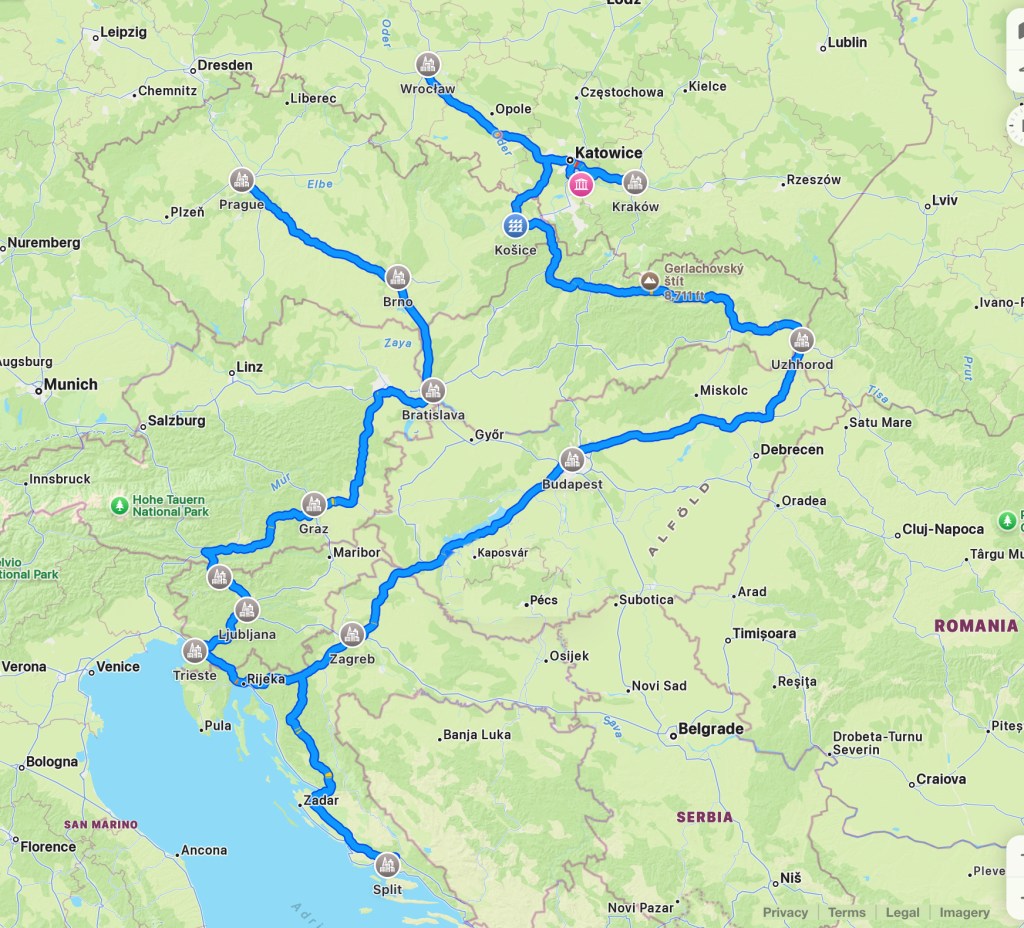
We decided to start everything from Wroclaw, Poland. We booked a hotel there as well as a couple of nights in Krakow, plus the last night in Prague because we knew we needed to be there for our return flight. Everyplace else, we’d just figure out the night before.

Since it was the tail end of tourist season, I assumed we’d be able to find accommodations fairly easily; and that assumption turned out to be correct; in fact we got some great deals.

We also toyed with the idea of making a stop inside Ukraine. Neither of us had ever been in a foreign country while it’s at war (the U.S. always seems to be one, just not on its shores), so that sounded like a fun time, but we left that as a game-time decision.

But as to the beginning, we flew into Wroclaw, which we had been pronouncing “Row-Claw,” as one does. However, the Polish apparently have this odd notion that their language should be pronounced the way they want it to, so it’s pronounced, “ˈvrɔtswaf,” where the “ɔ” is pronounced, y’know, like it usually does, like an upside-down “c” of course.

The way I would write it phonetically is: “Vlrawts wahf,” because the “V” has to get kinda rolled a little bit.
Since my short term memory is about as reliable as a two dollar hooker (I’ll keep running with the hooker metaphor until it peters out), I like to use mnemonics of ideas or phrases that come to mind easily to help me remember words. So I was able to remember how to say Wroclaw by thinking, “Rotten wife.” I only had to add the “v” sound in front and drop the “ten” from “Rotten,” and voila! Vrots-wahf rolled off my tongue like a two doll –um, anyway, it rolled. Now I could ask for directions to the town we were already in using my very best Polish.

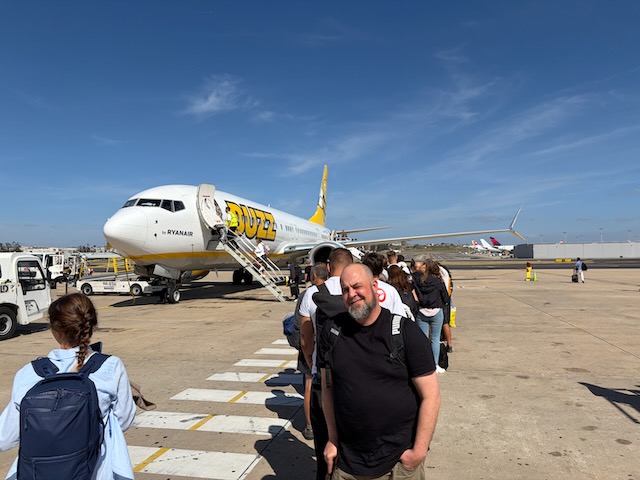
We weren’t nervous at all flying with an airline called “Buzz,” because bees hardly ever crash into things and plummet to the ground in fiery blazes. Plus Buzz Aldrin went all the way to the moon using that name, Buzz definitely wasn’t one of the names of the hookers at that brothel I never went to, and, well, Buzz is just one of the most professional and classy names I could ever imagine for an airline, so we immediately felt warm and fuzzy flying with ol’ Buzzy. Anyway, we made it most the way across Europe with barely any crashing and screaming and stuff.
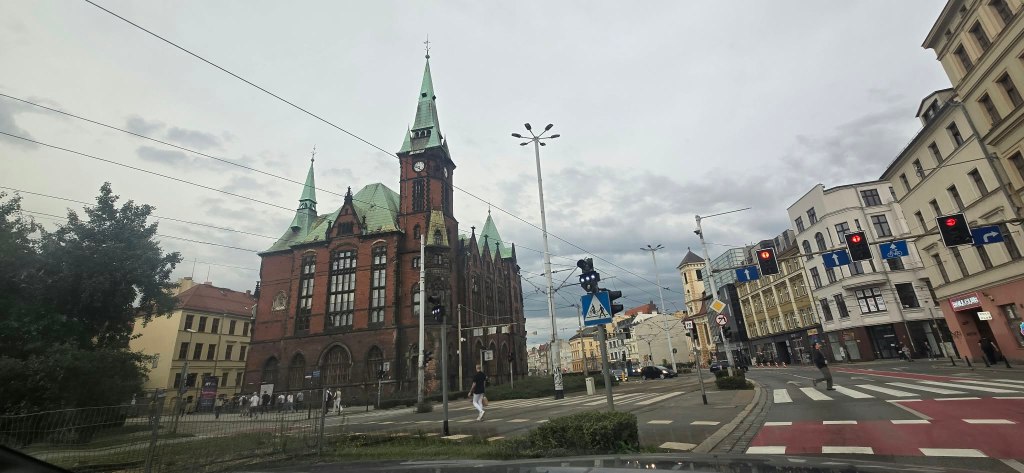
We chose Wroclaw (remember, “Rotten Wife” = Vlrawts wahf”) to fly into because Luke wanted to see Auschwitz (AU shwitz) and I’ve already been to there and Krakow (KRAH-koof), so we picked a city I’ve never been to and unknowingly could not pronounce (prə-NOWNS).

The Rotten Wife’s official population is approaching 700,000, making it Poland’s third largest city. The population of the Wroclaw metropolitan area is around 1.25 million, which is about the size of Salt Lake City, which has a lot more salt, a half a million more Mormons, and almost always the proper pronunciation of its name.
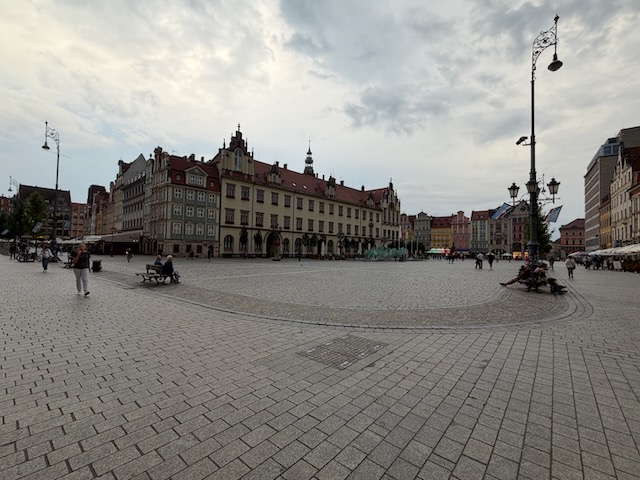
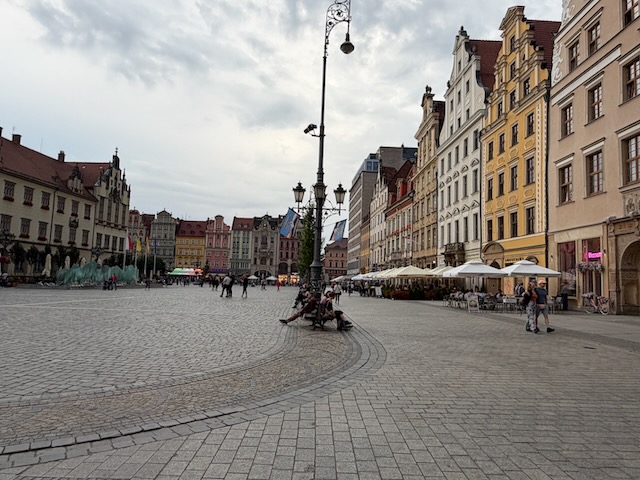
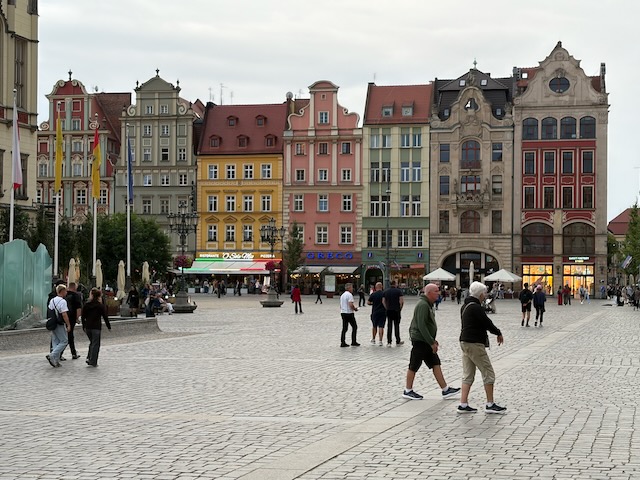
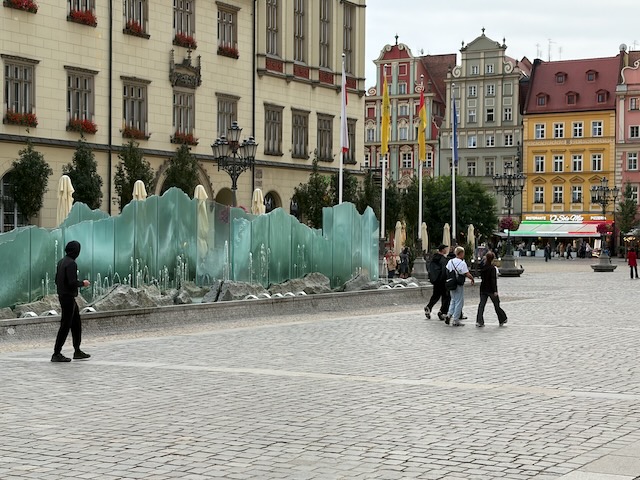
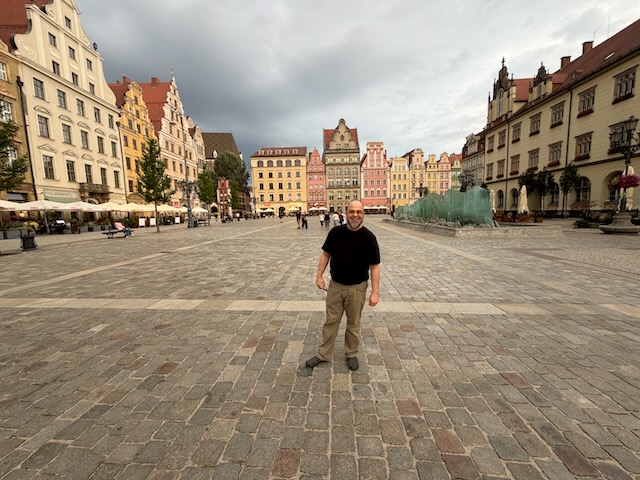
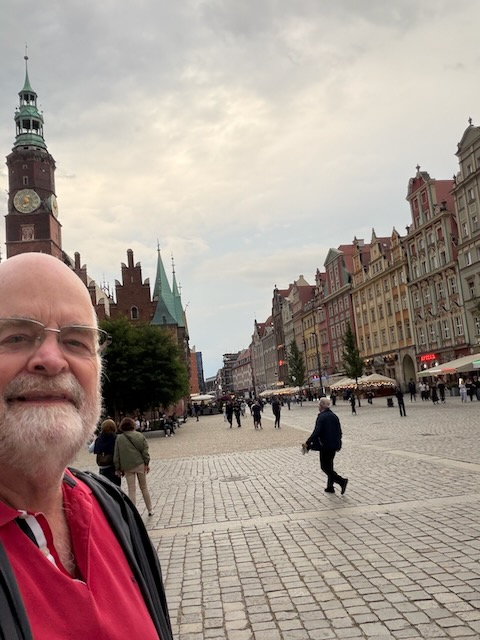
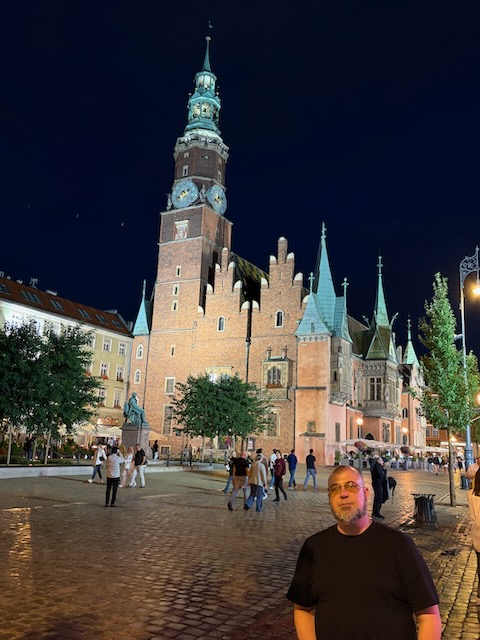
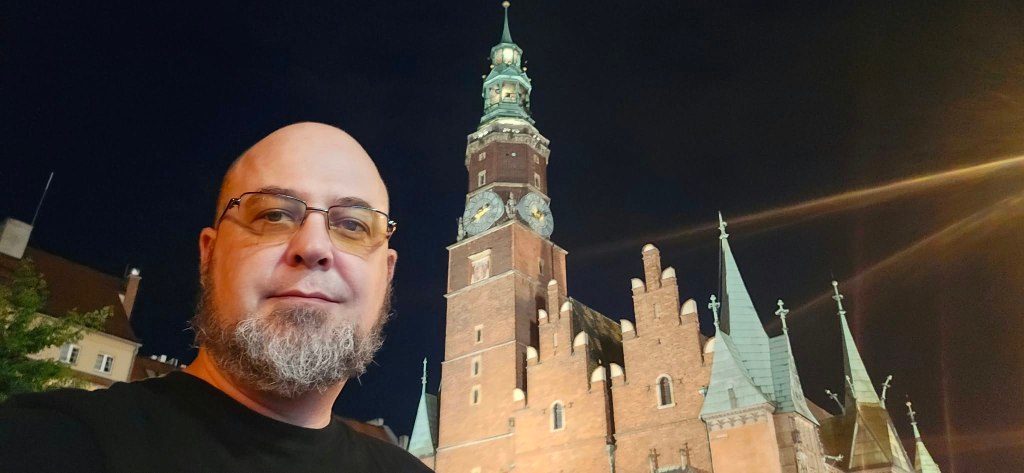
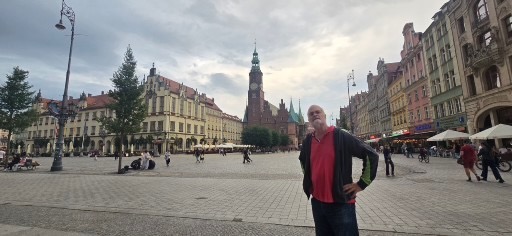
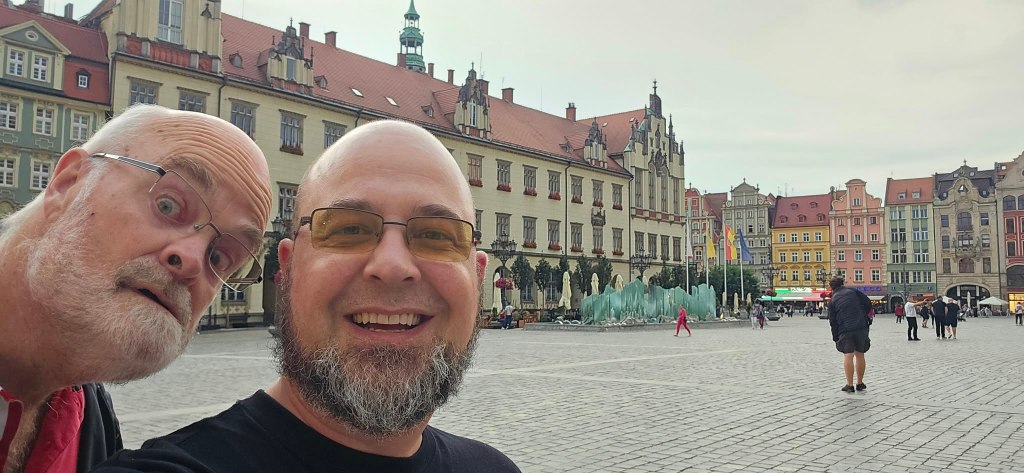
Like in Krakow, the town square dominates both the city and the tourism. Town squares are unfailingly cool, I don’t know why so few U.S. cities have anything like it. They’re just good old fashioned fun for casual strolls, or better yet, running through flocks of pigeons scaring the literal shit out of them, picking up hookers, dancing naked in the fountains, and pickpocketing unsuspecting tourists. It’s like Disneyland for people who shouldn’t ever be allowed in Disneyland.
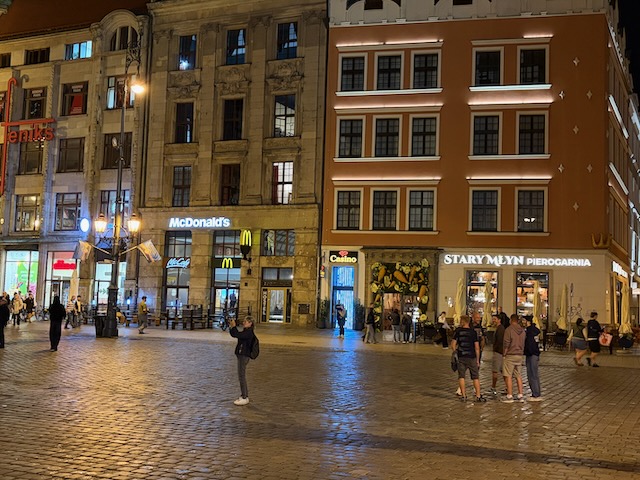
I got a kick out of the name of the restaurant on the right, “Pierogarnia.” That told me they were specialists in Pierogi, pretty much the national food of Poland. But the thing with pierogi is that the dumplings themselves have very little flavor; it’s the fillings they put in them that turn them into an enjoyable meal. So it seems to me that place like that should call themselves a “Fillingarnia” because that’s what I want them to be an expert at.

By the way, Pierogi has some extensive vocabulary related to it:

  • Pieróg is the singular Polish word for one single filled dumpling, while pierogi is the plural form
  • Pierożek: a diminutive form meaning a small pieróg. (Might be an effective Polish insult.)
  • Pierogomat: an automated vending machine that dispenses pierogi. (We never got to see one of those.)
  • Pierogowy: an adjective relating to pierogi. (Her bottom was very Pierogowy-like.)
  • Pierogarnie is the plural of Pierogarnia. (So there’s more than one of those restaurants!)
  • PierSmak: Seafood that tastes like licking a pier. (I just made that word up, but smak means flavor in Polish– so it’s perfect!)
  • McPieróg is still not a thing at McDonald’s for some reason.
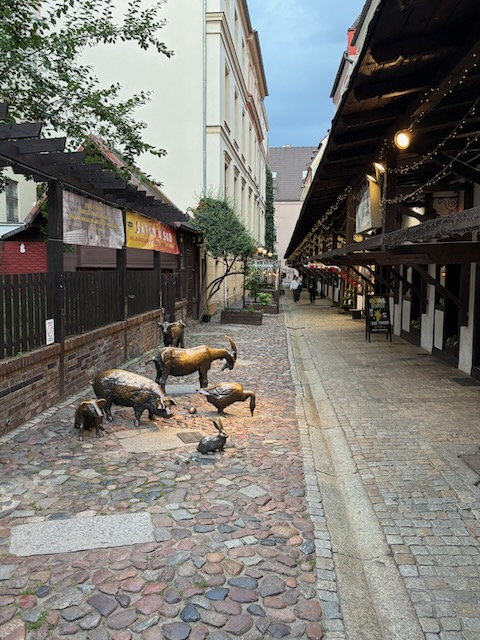
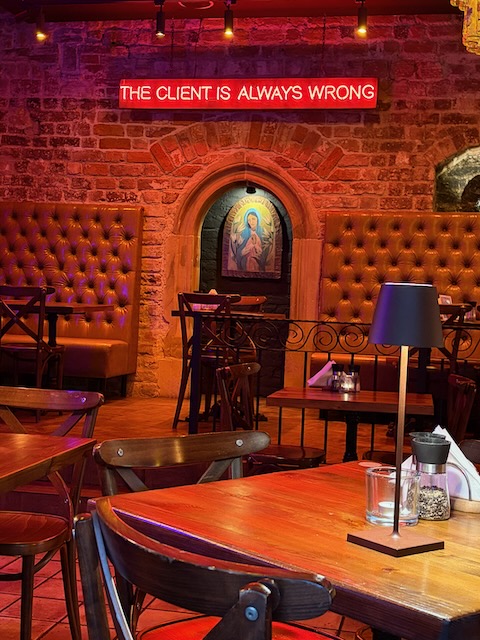
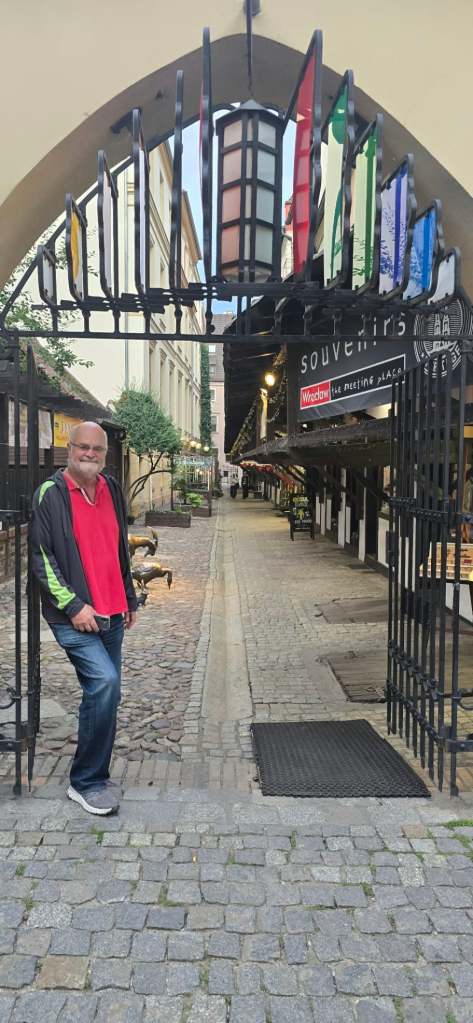
The Polish demonstrate their fun approach to life by taking farm animals and dumping them alive into hot cauldrons of molten bronze in order to create these charming and heartwarming scenes in alleys. In the next photo, you can see many Polish people apparently believe customers are always wrong, which is heresy for Americans, but actually refreshing for someone like me who ran multiple computer retail stores for a long time and can attest to the fact that when it comes to technology, customers are in fact often wrong, and the wronger they are, the louder they get (just like in politics). I did consider going inside that bar and loudly proclaiming, “I am wrong!” …and since I have to be wrong according to them, that would mean I’m actually right, but I can’t be right because I’m always wrong, but–– ach! Now that’s how you make a Polish head explode.
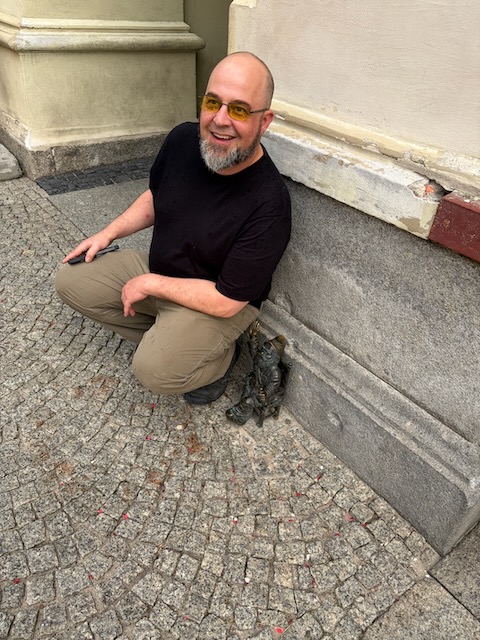
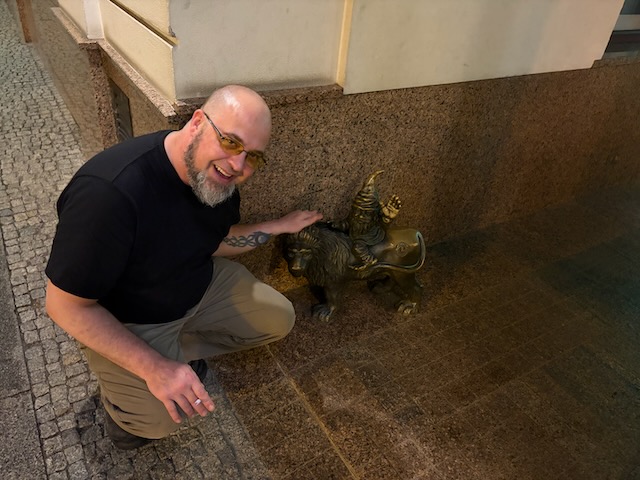
Dwarfs (it can be spelled “dwarves” too… just in case one of you was winding up to show off your grammar Nazism) are commonly spotted around the Wroclaw streets, as you can can see here as one crouches next to a very small dwarf statue. As to the statues, there are roughly 1,000 small bronze Wroclaw Dwarfs scattered across Wroclaw. They evolved from a 1980s anti-communist peaceful protest movement into a well-loved (except for those who keep tripping over them) civic symbol. But I think they’re only well-loved because it reminds most people to have some gratitude that they weren’t born a dwarf. Not that there’s anything wrong with that; dwarfs are pretty adept at killing dragons and orcs and growing amazing beards after all. Anyway, Luke kept asking me if I wanted to take more pictures of him with them every time he saw one, but I said, “I think everyone gets the idea. No one spends $100 per year on a baldsasquatch.com subscription to see 1,000 pictures of little dwarfs.” He started responding with what sounded like a question as to who the hell would ever spend– but I cut him off by saying I just saw a store.
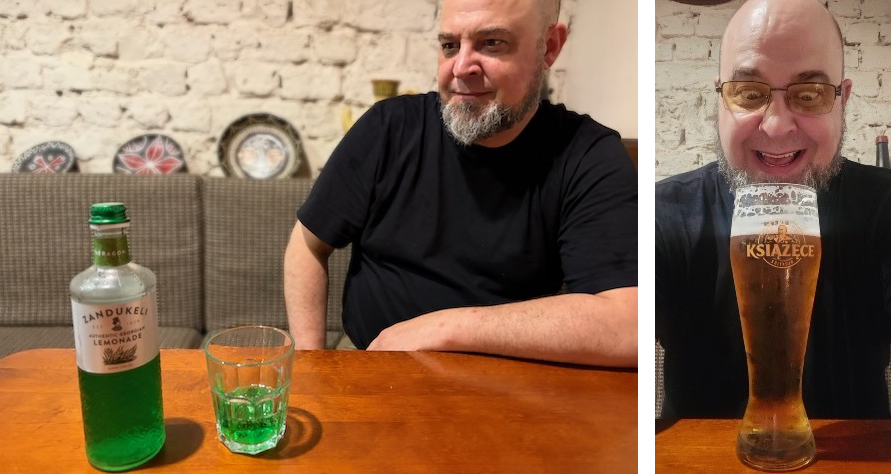
One restaurant we ate at featured a Georgian green lemonade drink that was recommended in a review, as in “Don’t pass up their amazing green lemonade drink!” I’m always intrigued by things I’ve never tasted (food and drink, mostly), so I ordered a bottle. After tasting it and then looking at the ingredients, I can tell you that all it is is sugar water with some licorice flavoring. Supposedly it’s all the rage in the country of Georgia. Luke is very simple-minded sometimes; he just kept staring at the “green juice” being unable to fathom how there could be green lemonade, and I could only calm him down by buying him a beer.
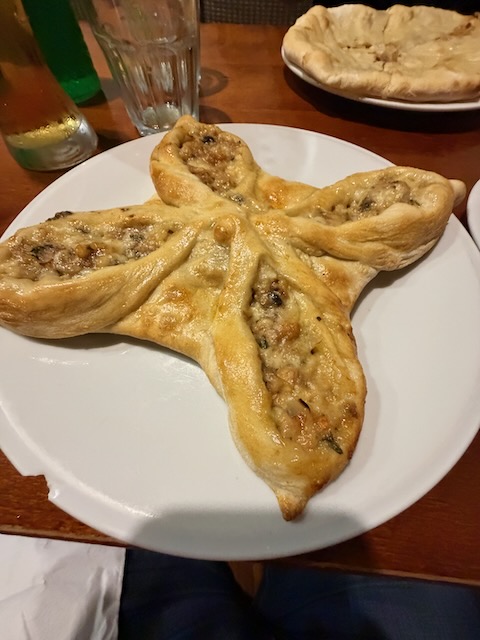
Their meat-and-potato heavy cuisine also features the occasional alien fetus. At least that’s what I told Luke it was because I liked that better than what I ordered and he immediately offered to switch after hearing that. He’s apparently on an alien-free diet.
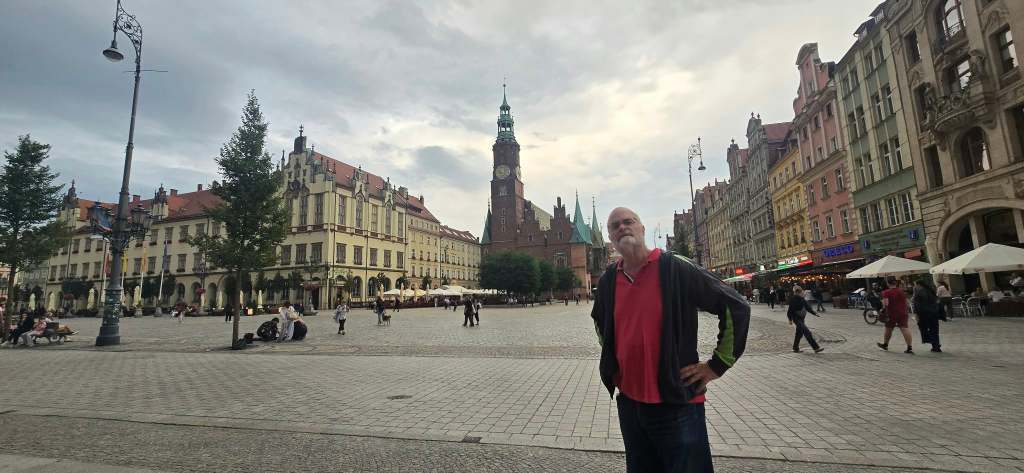
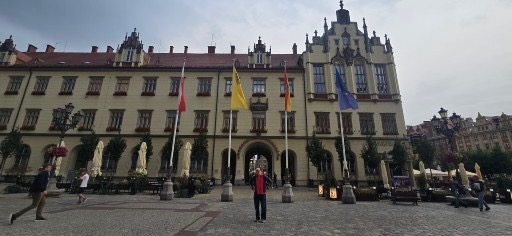
Wroclaw used to be called Breslau (BRESL-ow) when it was a part of Germany. The Unification of Germany in 1871 made Breslau the sixth-largest city in the German Empire, which they’d eventually come to regret.
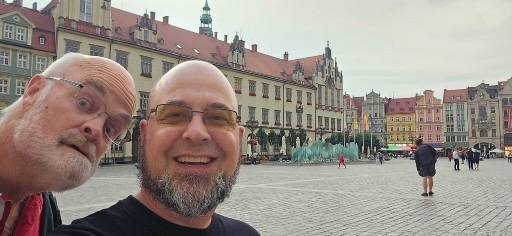
In 1944, Adolf Hitler declared Breslau to be a fortress to be held at all costs. An attempted evacuation of the city took place in January 1945, with 18,000 people freezing to death in icy snowstorms of −20 °C (−4 °F) (−f**king cold) weather. Soon the city became part of the front lines and was the site of the brutal Siege of Breslau, which by coincidence was the same name as the city itself. By the end of the three-month siege, half the city had been destroyed, with about 80,000 civilian deaths. Breslau was the last major city in Germany to surrender, capitulating only two days before the end of the war in Europe.
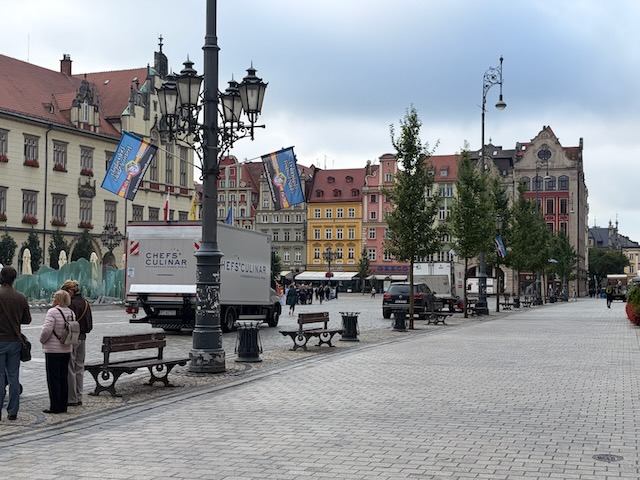
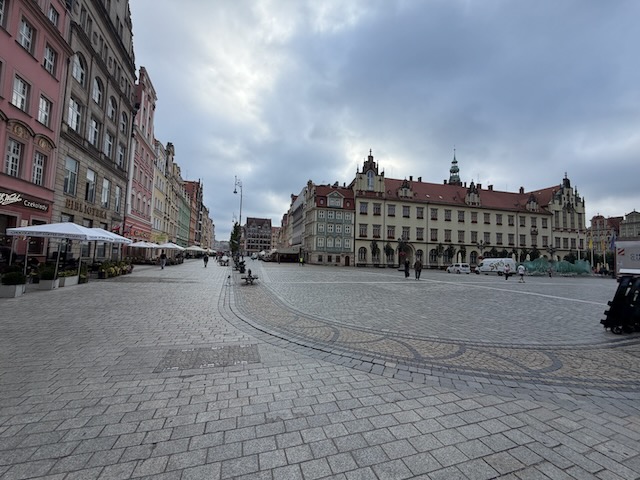
At the Yalta Conference in February of 1945 it was decreed that the city would become again a part of Poland in exchange for Poland’s loss of the city of Lwów (like, lwow man) along with the massive territory of Kresy in the east, which had been annexed by the Soviet Union. The Polish name of Wroclaw was declared official, even though no one could pronounce it except for ex-husbands.
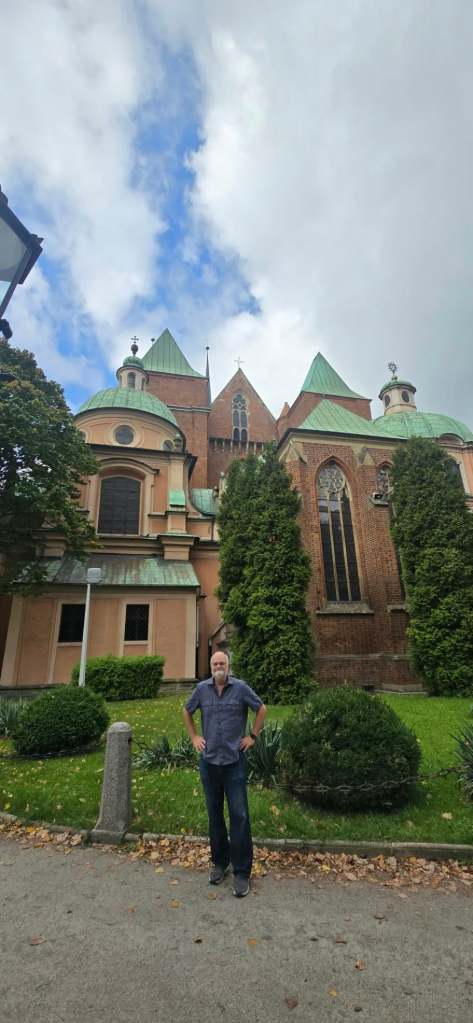
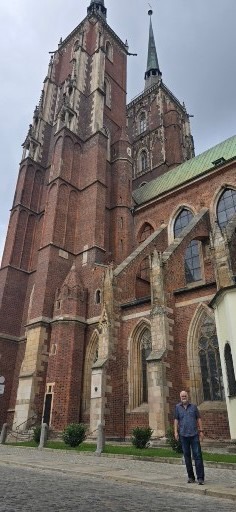
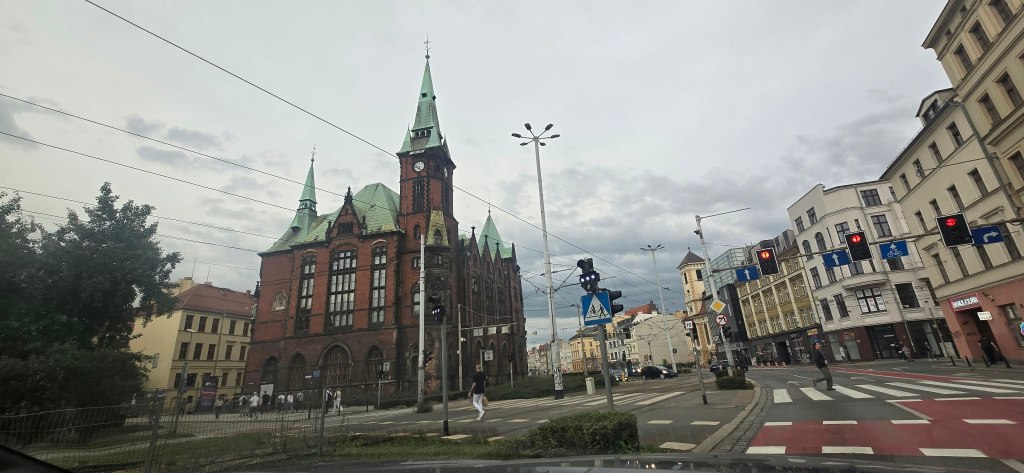
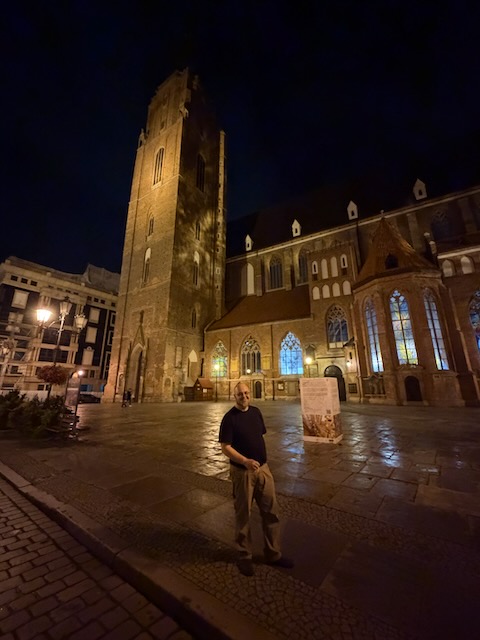
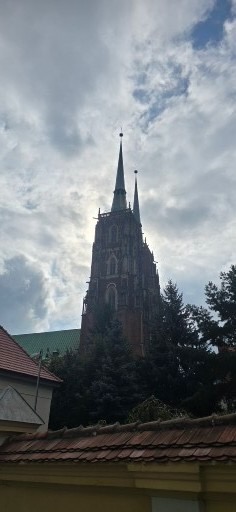
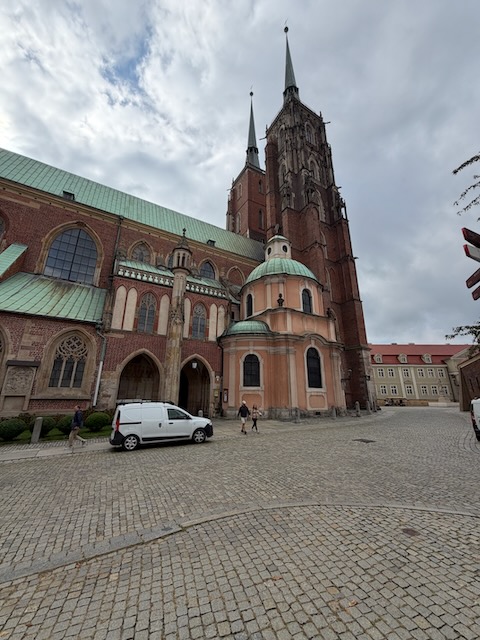
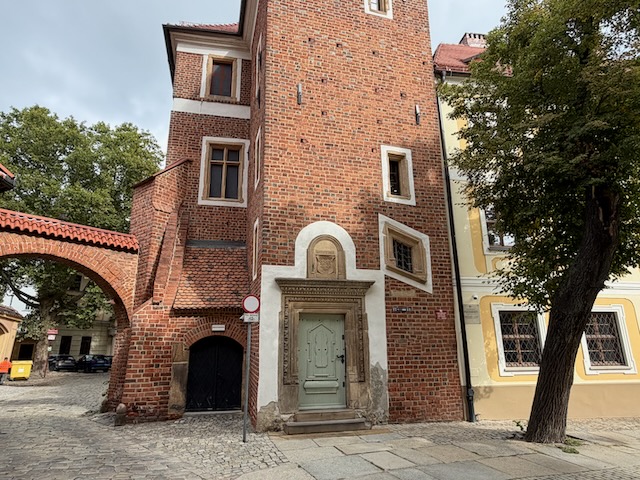
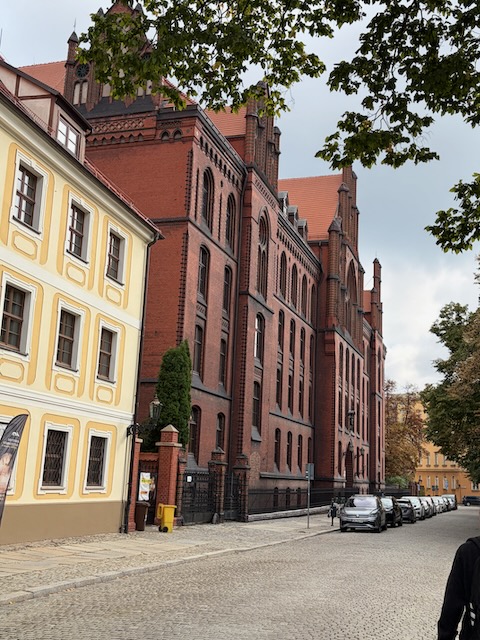
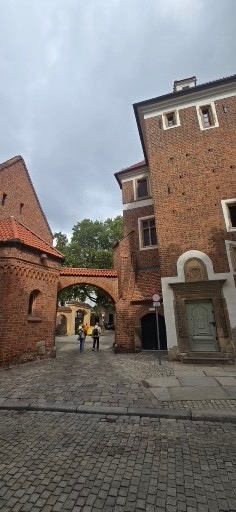
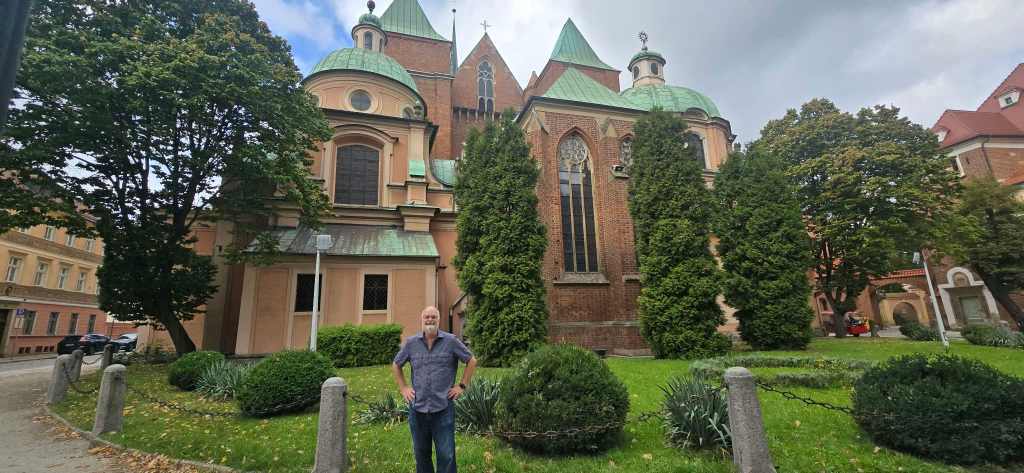
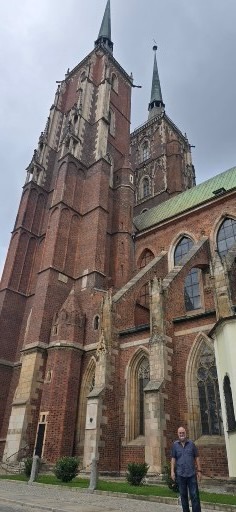
The Old Town of Wroclaw is listed in the Registry of Objects of Cultural Heritage, on Poland’s list of National Monuments, and in Baby’s First Book of Cool Old Buildings. Its historic buildings include examples of Brick Gothic and Baroque architecture. Examples of Neoclassicism, Gründerzeit and Historicism can also be found in the city centre. If any of the pictures we took illustrate any of those things, it was completely on purpose.
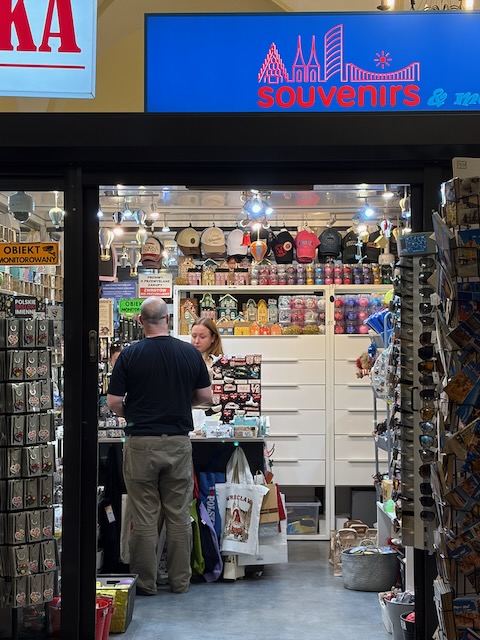
Luke rarely walked past a souvenir shop without stopping, as he looked for the latest in refrigerator magnet technology, shot glass design, hoodies, and touristy gifts for his wife and son. He returned to the US with an extra piece of luggage just to carry everything he bought. The bad news is once he got all the refrigerator magnets in place and opened the door for the first time, the weight of all those magnets tore the door right off its hinges.
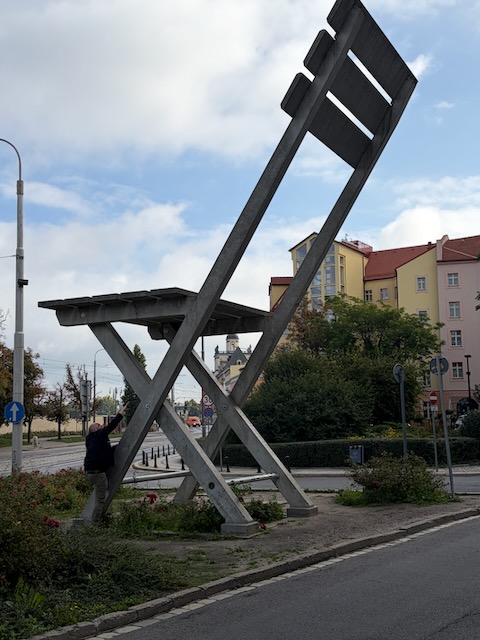
This is a giant chair in front of our hotel. If you have to ask why, you simply don’t get it.

I don’t get it.
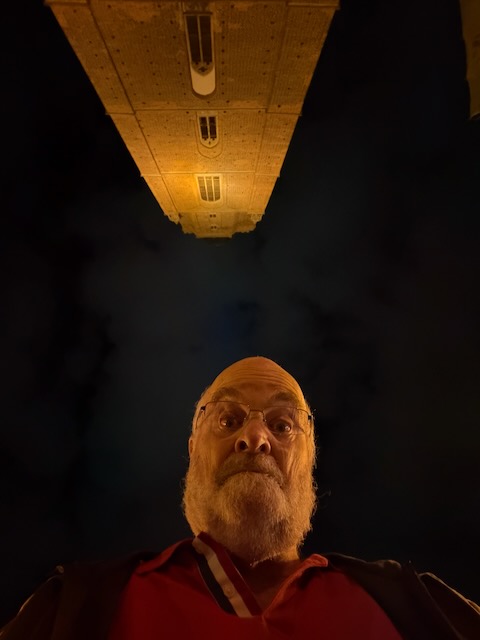
Maybe we shoulda just shared a camera. But then again, I was able to select the best giant chair shot from both libraries so maybe having two shots of everything wasn’t a horrible idea.

Once we had conquered Wroclaw’s many tourist shops, we made the drive down to Auschwitz, which, as all my most ardent followers know, I had visited before, detailing everything in this blog entry.
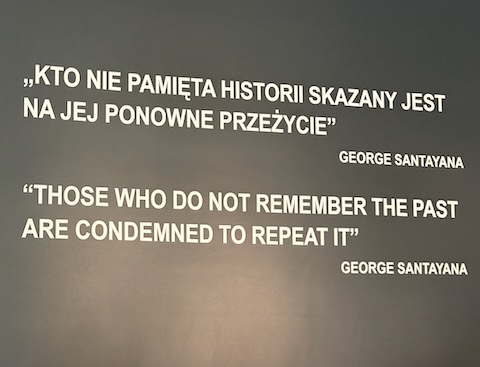
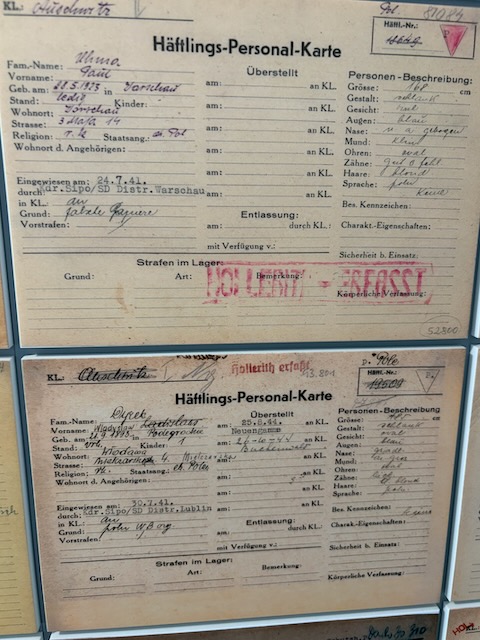
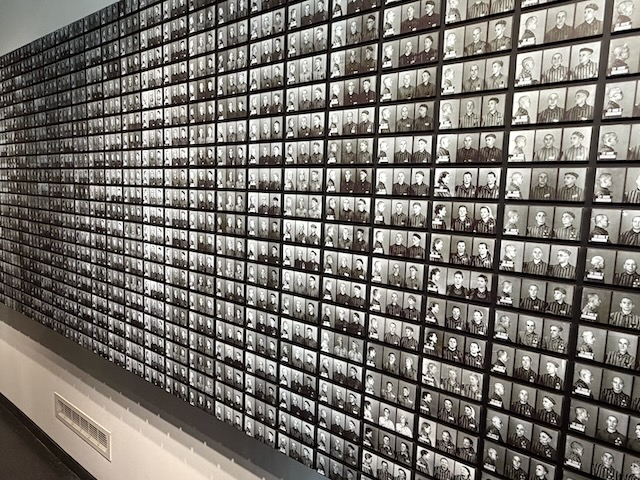
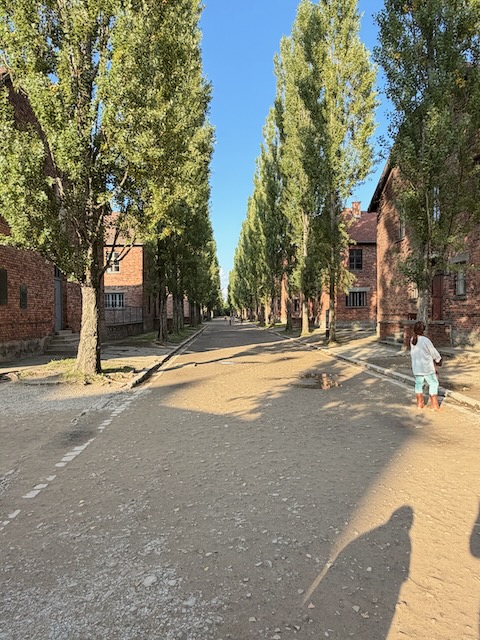
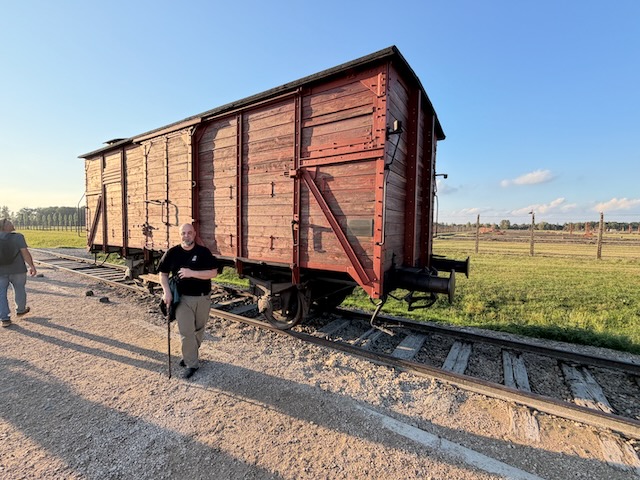
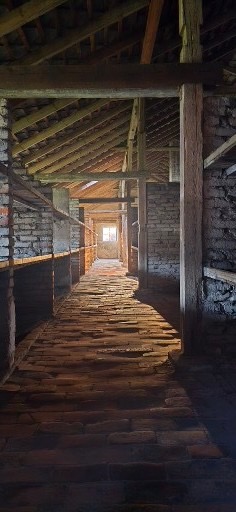
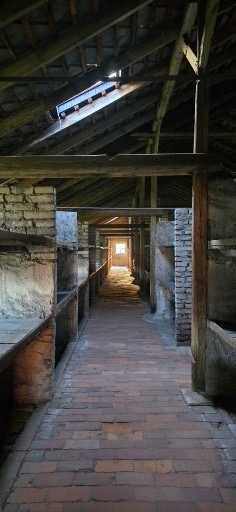
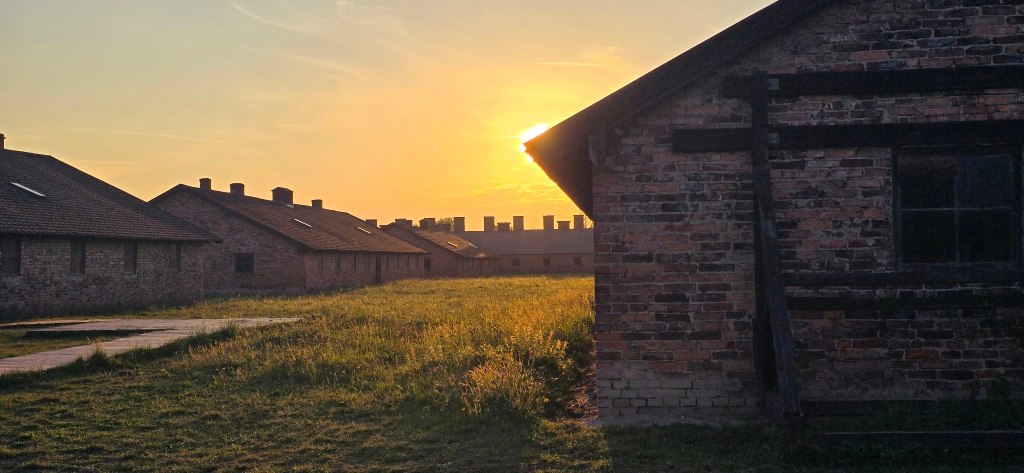
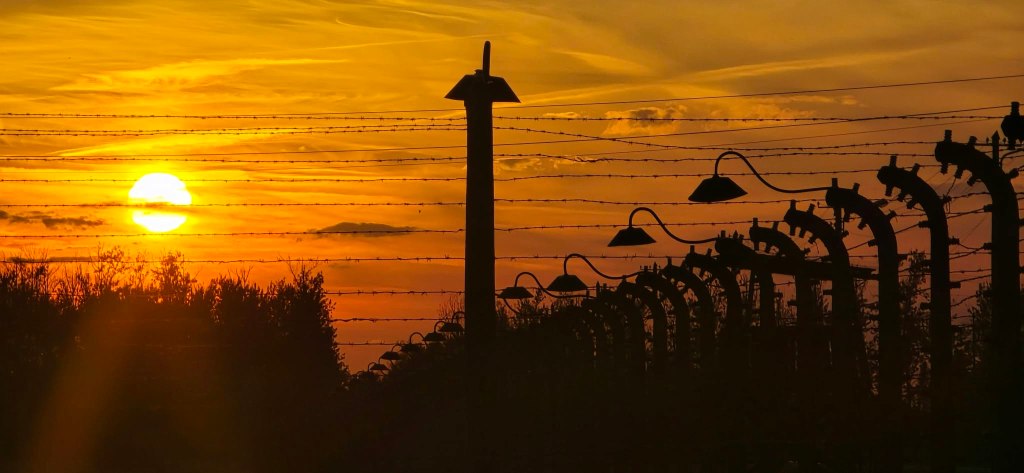
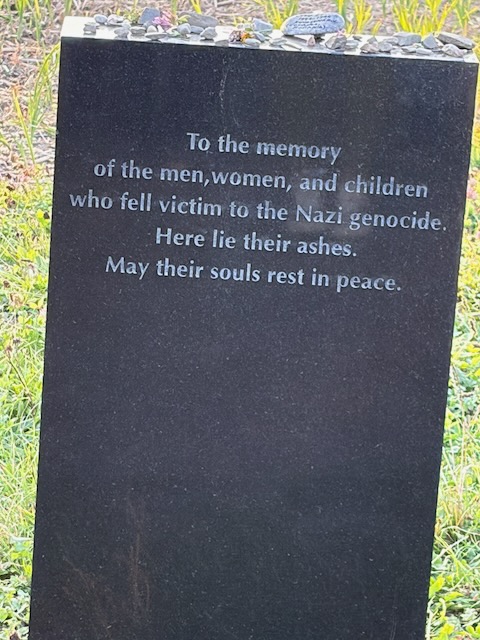
Since the above quote is still maddeningly accurate, especially in light of current world events where we’re seeing the far right popping up again in Germany, Russia doing everything it can to prove it’s still the world’s worst neighbor, and the US shooting itself in the foot so many times internationally that it may well pave the way for the country going metric since it won’t have any feet left, we’ll offer up a few new photos as reminders of one of the most horrific places in human history. And, sadly for me because it’s such a struggle to write that way, for the rest of this entry I have to tamp down the humor. What? Yes there was humor up there, I’m sure you at least snickered at some point. If not, sometimes you just have to read slower. Oh wait, I do have one more joke I have to sneak in before we get all serious:

Y’ know, Hitler wasn’t all bad. After all, he did kill Adolph Hitler.
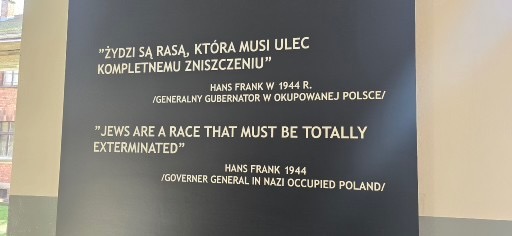
Okay, so now with my serious hat sitting firmly on my head:

For me, Auschwitz, if we use it to represent the German desire to exterminate all Jews, is an example of something that just maybe should remind us of the following: You are absolutely not smart enough to have unshakable opinions on any political or economic matter, ever.
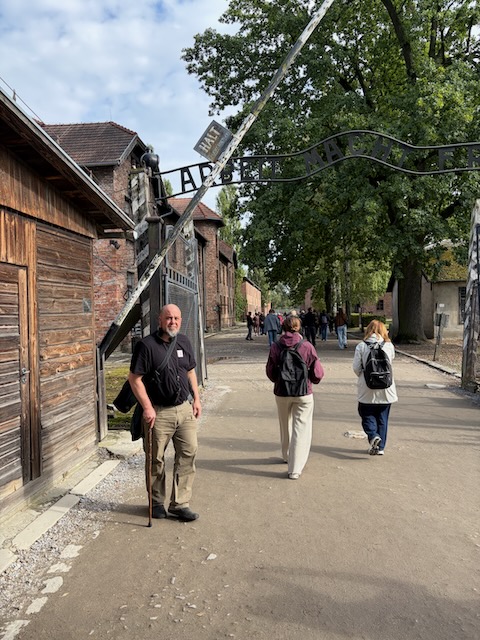
Auschwitz teaches us that. Why? Because Auschwitz reminds us that the modern, first-world human brain can be so unfailingly stupid and impressionable that a good percentage of them actually believed that a “race” of any kind was responsible for their misery, including their loss in WWI, so maybe extermination wasn’t such a bad thing. The country and its citizens believed that so much so that the country created tens of thousands of labor camps, transit camps, and ghettos during the war, so it’s not like it was hidden. It’s not just Auschwitz and a handful of other famous camps. It’s tens of thousands. When you truly process that, the only real conclusion possible is that we should always remember that we’re just too damn stupid to be certain of anything, so allow for the possibility you could be wrong, always.

That’s just my take and opinion. Which could be wrong! But I think an accurate truism is that it’s usually the most ignorant people who have the most certainty that their opinions are right.

So don’t be dumb. Reserve the right to be wrong.
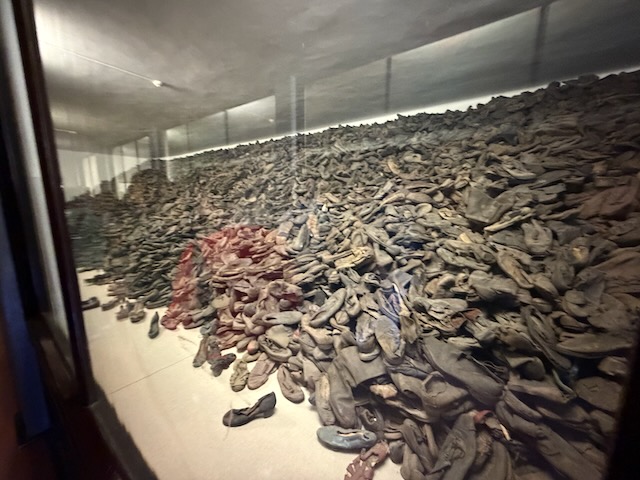
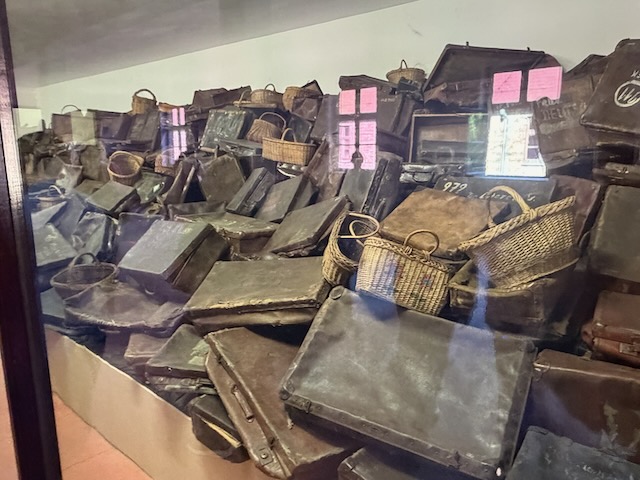
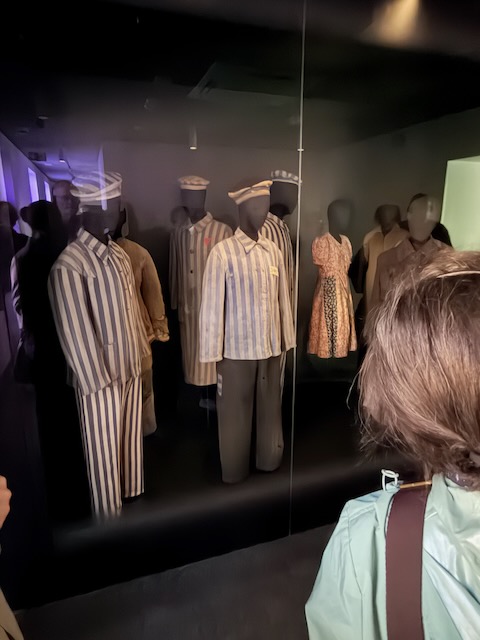
These were all real people, with lives, and loves, and families, and all they were ever trying to do is just live a happy, peaceful life. The idea that they should be exterminated is so completely ridiculous it absolutely has to call into question how our brains work.
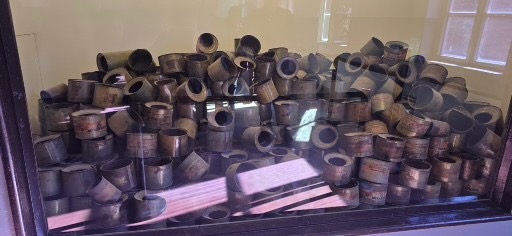
Insecticide became the method of choice for industrial-level mass extermination. Which is ironic because the perpetrators of this madness were only using insect-sized portions of their brain.
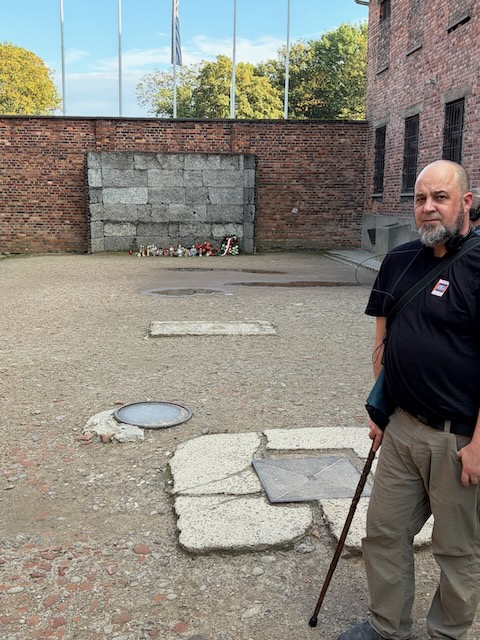
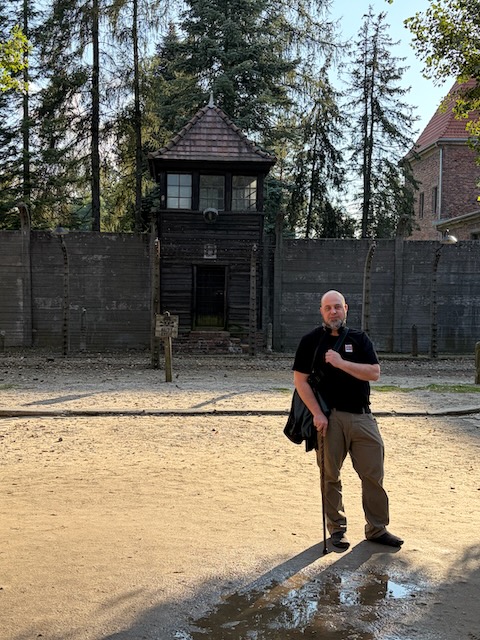
At Auschwitz itself, victims can be broken down into the following groups with these estimated number of deaths:

Jews: 1,000,000 deaths
Poles: 70,000 deaths
Roma and Sinti: 21,000 deaths
Soviet prisoners of war: 15,000 deaths
Other nationalities and groups: 12,000 deaths
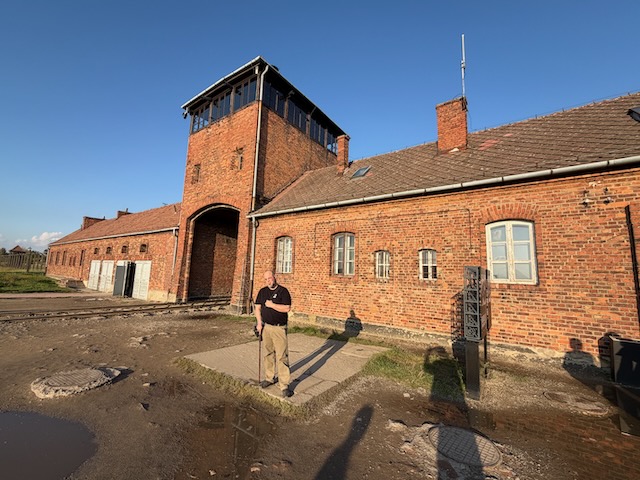
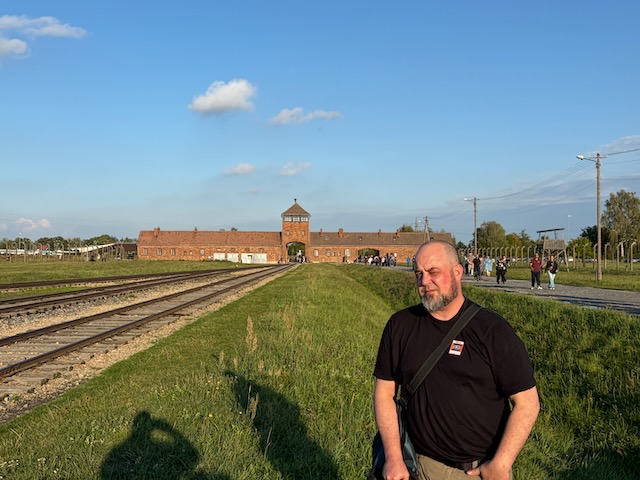
Auschwitz was the largest and deadliest of the six Nazi extermination camps—a place where over a million innocent people were systematically tortured, dehumanized, and murdered during World War II and the Holocaust as part of Hitler’s genocidal campaign.
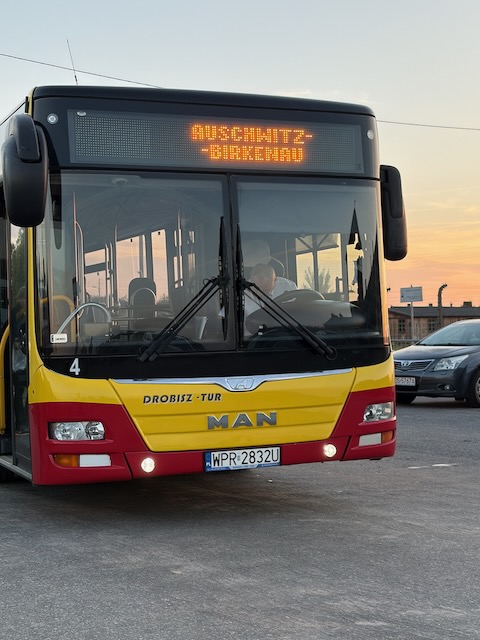
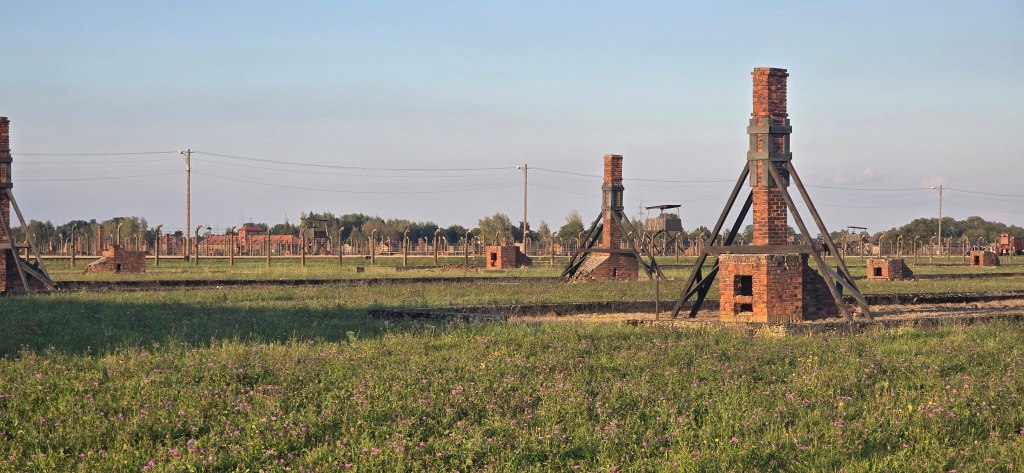
Auschwitz was not a single camp, but a massive complex consisting of three main camps and nearly 50 sub-camps, The three primary camps each served distinct, horrific roles within the Nazi regime:

  • Auschwitz I (The Stammlager / Main Camp): Established in 1940 in Oświęcim, this was the original camp and served as the administrative center for the entire complex. It primarily held Polish political prisoners, Soviet prisoners of war, and other targeted groups under brutal conditions.
  • Auschwitz II-Birkenau (The Extermination Camp): Opened in 1941, this vast site was located about two miles from the main camp. It was designed primarily for the systematic mass murder of European Jews. It contained the infamous railway tracks leading directly into the camp, massive wooden barracks, and the primary gas chambers and crematoria.
  • Auschwitz III-Monowitz (Buna): Established in 1942, this was a massive forced-labor camp built to provide enslaved workers for a synthetic rubber and fuel plant operated by the German chemical conglomerate IG Farben.
(Scroll down to see previous entries.)

Should you use Polish polish to polish your Polish?

We were very excited to shop for Polish polish, figuring that if nothing else, the repetition of the word would confirm that you are indeed holding polish. Carolyn, being an Interior Designer, talked about Polish polish in almost mystical terms, kind of like Cuban cigars or yogurt-pooping unicorns. We never did find any, probably because “polish” in Polish is “pastować.” I saw a bottle of that and thought it was something you smash spaghetti with.

We made the four hour drive (well, it was supposed to be four hours anyway; bladders and castles wreak havoc on driving times) from Trenčín to Kraków, checking off two countries we had never been to, bringing our total to 21 European countries so far, give or take.

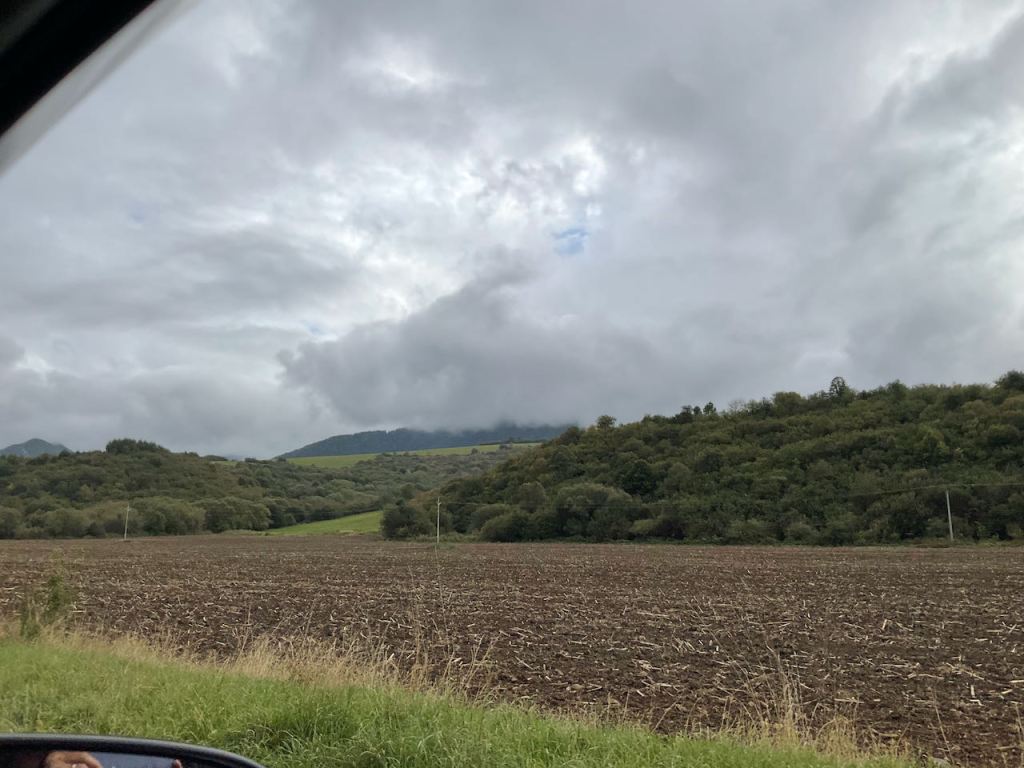
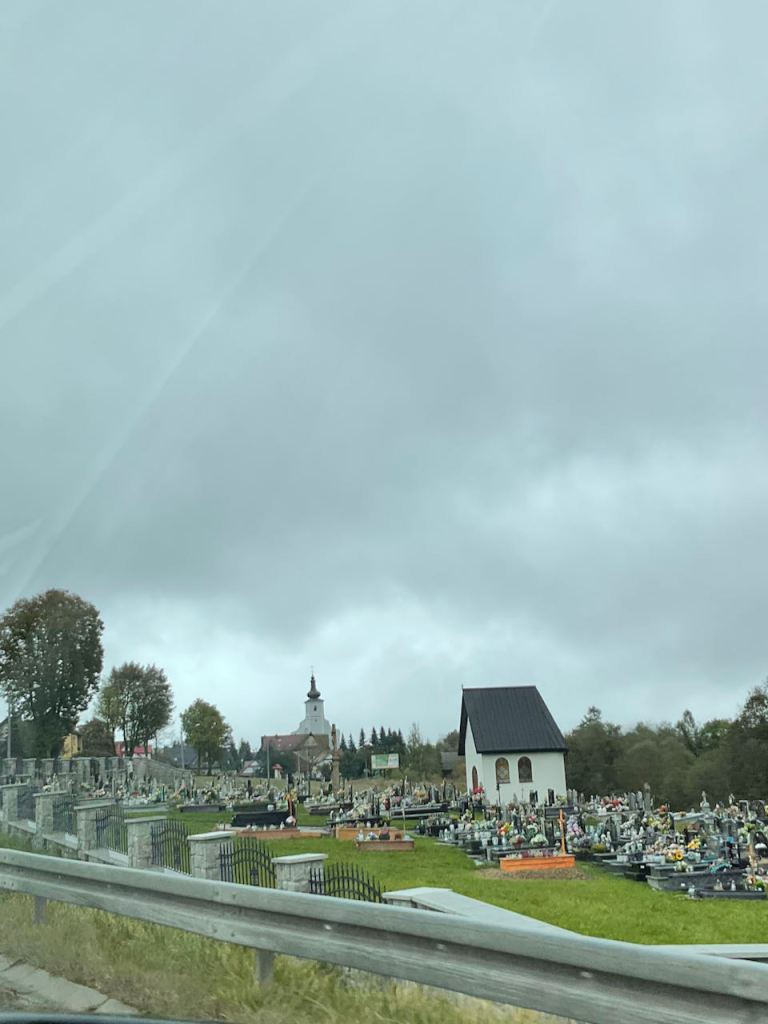
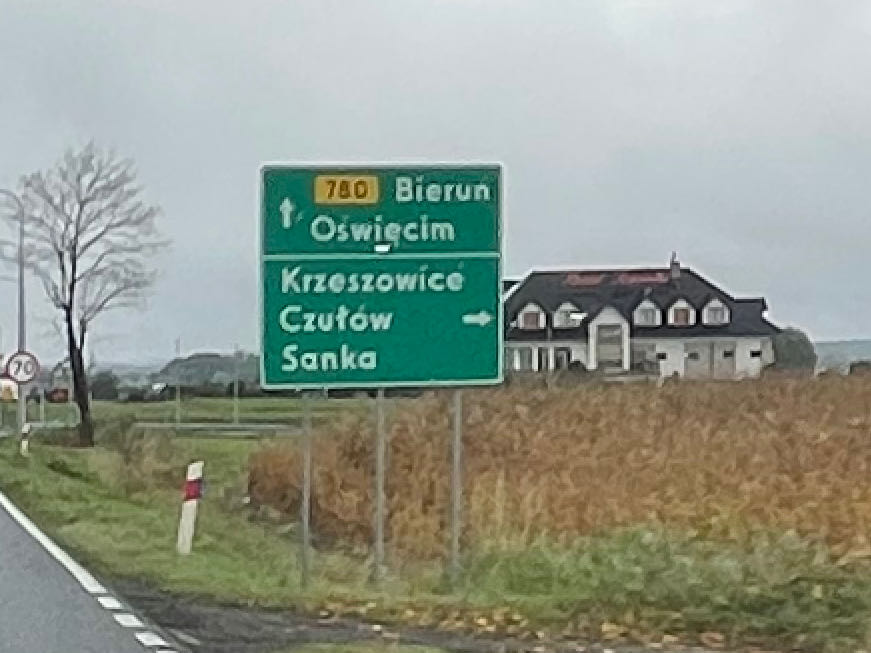
The above was among our first views of Poland’s landscape. We discovered that the countryside was largely the same as Slovakia’s. It’s almost as if nature doesn’t really care about human borders. Psscht. Stupid nature. Doesn’t she know that humans are the only things that matter?

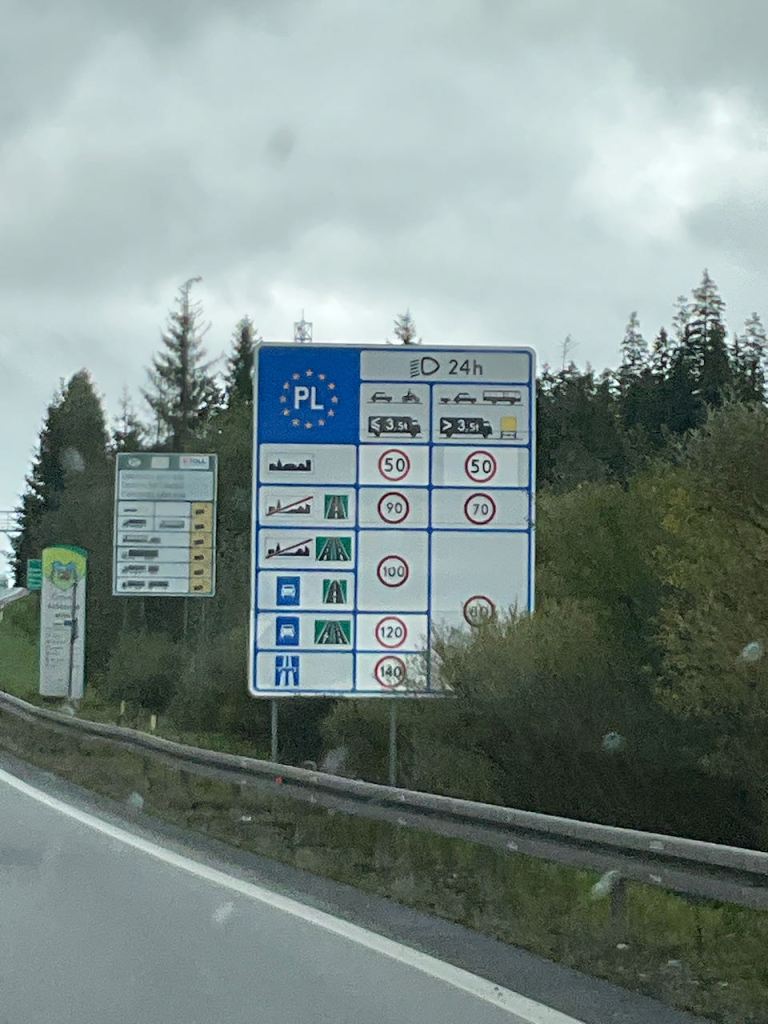
To show nature who’s boss, humans put up a big sign letting us know we were in, um, Ploland? The license plates in Portugal, which is the only other country in the EU that even starts with a “P,” simply have a “P” on them because Portugal joined the EU in 1986, whereas Poland didn’t make it in until 2004, so Portugal got first dibs. But why not use “PO?” Maybe it’s because in Polish, “po” means “after,” while in Portuguese, it means “dust,” while in American English, it means a penniless hooker. Oh wait, that’s actually “po-ho,” so we’ll settle for it being how they say “pour” in the south. Or poor. Or pore. My God I’m glad I’m not still learning English.

Whatever the reason for the “PL,” those in the know and who want to save time just say “Pluh” when referring to Poland. Now you can be an insider too! In fact, you can try it out on the next Polish person you meet. Just say, “I’m thinking of flying to Kraków, Pluh.” Your Polish friend will be so impressed!

When I think of Poland, I think of potatoes, polish vodka, and long skinny sticks. However nowadays, Poland is only the eighth-largest producer of potatoes in the world. While I don’t know the above is a potato field, I’m sticking to my story that it is, especially since I don’t see any long skinny sticks.

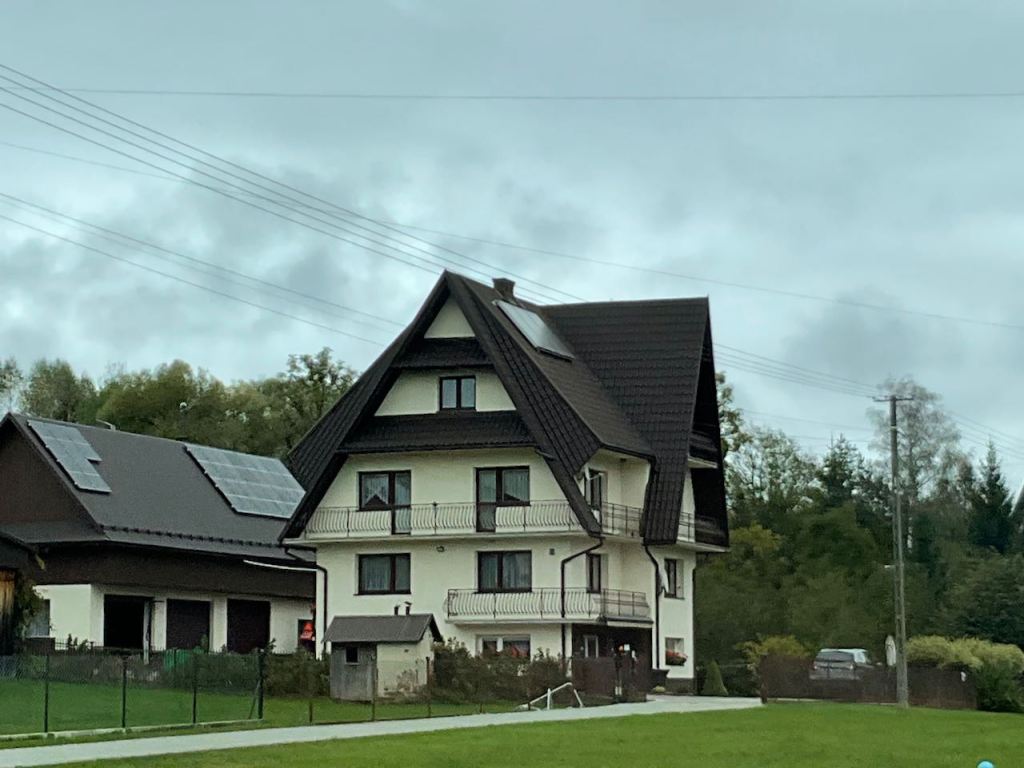
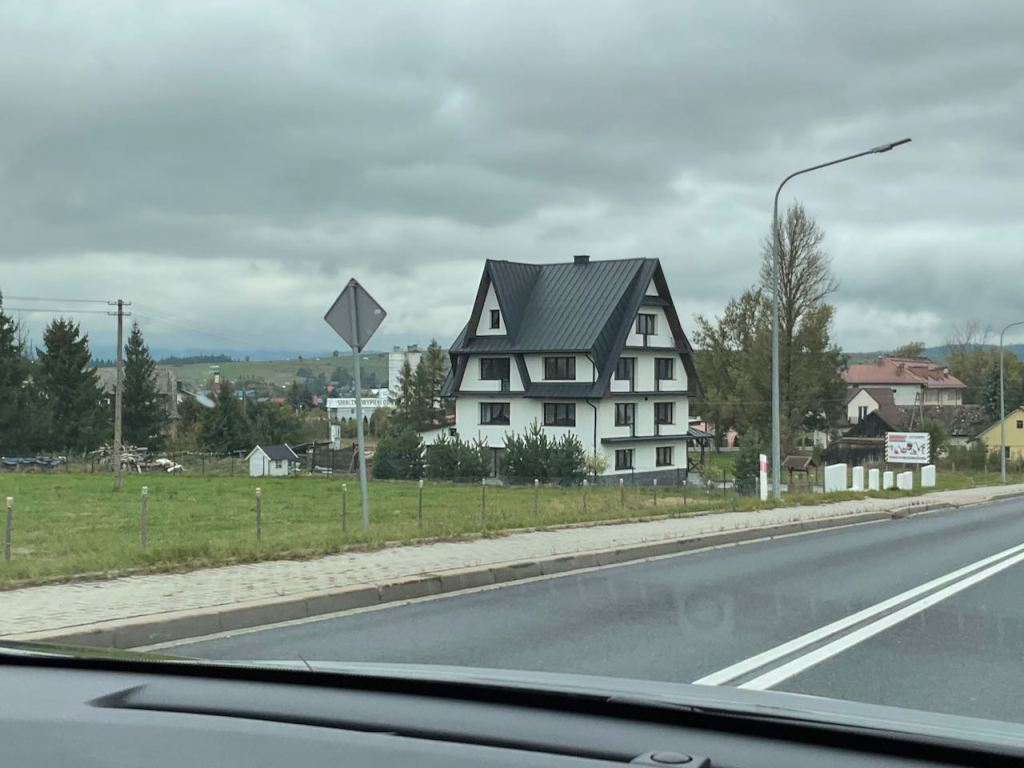
As we drove toward Kraków, we noticed a distinct difference in the housing from what we saw in Slovakia. Many, if not most, of the houses we saw were at least two or three stories tall, which each level being nearly identical to the one below. It seemed a little contrary to what we know of Poland, since it suffered through a Communist regime after World War II until 1989, and it usually takes a while for prosperity for the middle classes to catch up after being subjected to what really was just a dictatorship, controlled by Moscow.

So we asked a Polish guide why they had so many multi-story houses and he told us it was because during the Communist regime, people had to save money so those houses were designed to be multigenerational. So you just lived with your parents and maybe grandma and grandpa, like those lazy old people from Charlie and the Chocolate Factory who wouldn’t even get of bed until they learned that Charlie was going to get a tour of Willy Wonka’s factory. Oh then grandpa’s able to jump out of bed and dance a jig. Lazy old bastards; their muscle tone must’ve been just one step away from jellyfish, so I think grandpa might’ve snorted a bit of meth before doing that jig. Do you ingest meth by snorting it? I have no idea and I hope you don’t either.

A couple of the residences we saw were capable of housing families the size of small towns while others offered permanent sleeping arrangements.

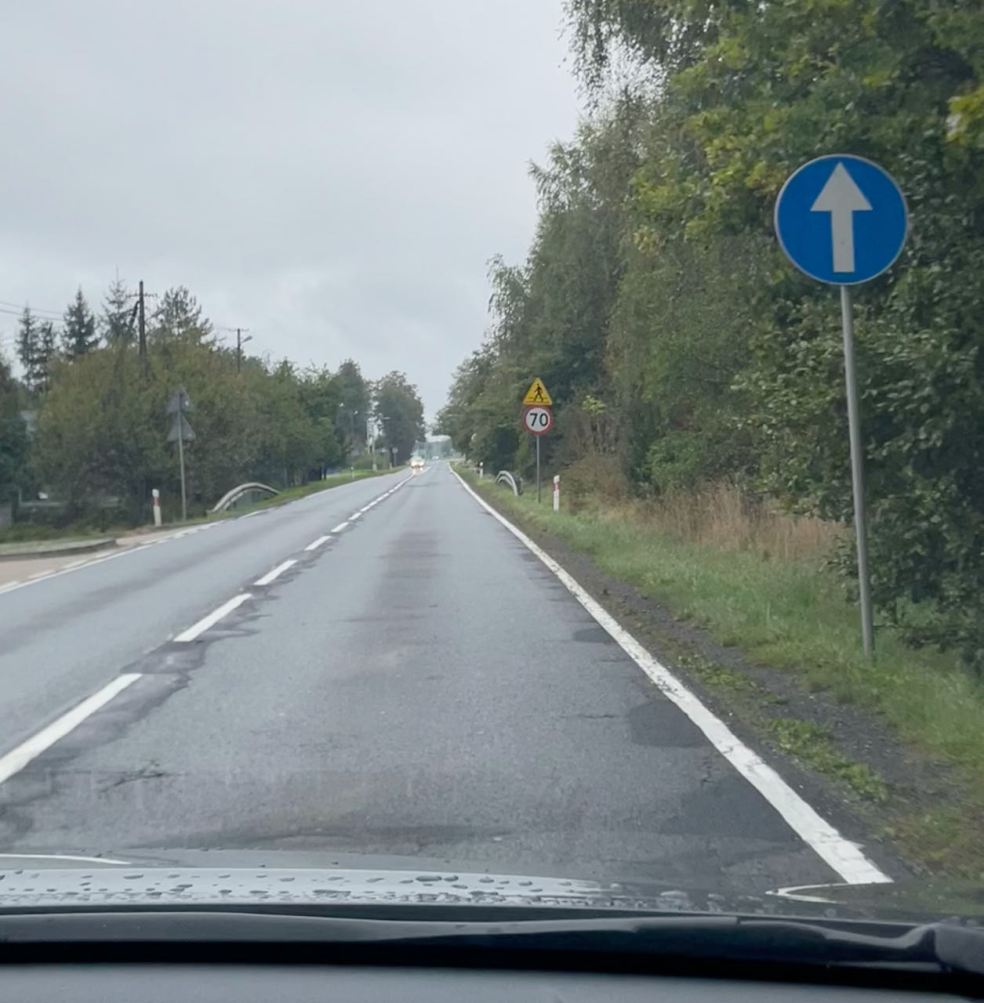
The purpose of this boring photo of the road is to remind me to tell the story of what it’s like to drive in Poland. At least on the two-lane roads (we were told there aren’t that many four-lane highways in Poland, although we found at least one), you discover that 70 km/hr is pretty much the standard cruising speed, but you have to lower it to 50 km/hr and sometimes 30 km/hr when entering a town. Often the towns are close enough together that within a minute you go from 70 to 50 to 30, and then just as quickly back to 50 and then 70 because many of the towns are quite small. This happens over and over and over again. It’s like driving in a mini version of Groundhog Day.

I try my best to drive the speed limit in foreign countries; but my best isn’t always good enough because they have radar cameras everywhere so I’ve gotten speeding tickets in about four different countries. The two hardest things about driving within those speed limits is that some cars have a little chime they spew –trust me, it’s spew– when you go even ONE kilometer over the speed limit. I’m trying to keep it at 70, but of course sometimes it slips up to 71, BING! Dammit. I go back down to 68, look at some sight and apparently press ever so slightly on the gas, BING! Our drives consisted of a lot of bings. And you can’t really use cruise control because you’re speeding up and slowing down so often.

On top of all that, if you do adhere to the posted speed limit you end up with a long line of impatient drivers behind you who apparently don’t mind that there are cameras and who passed us whenever they got the chance.

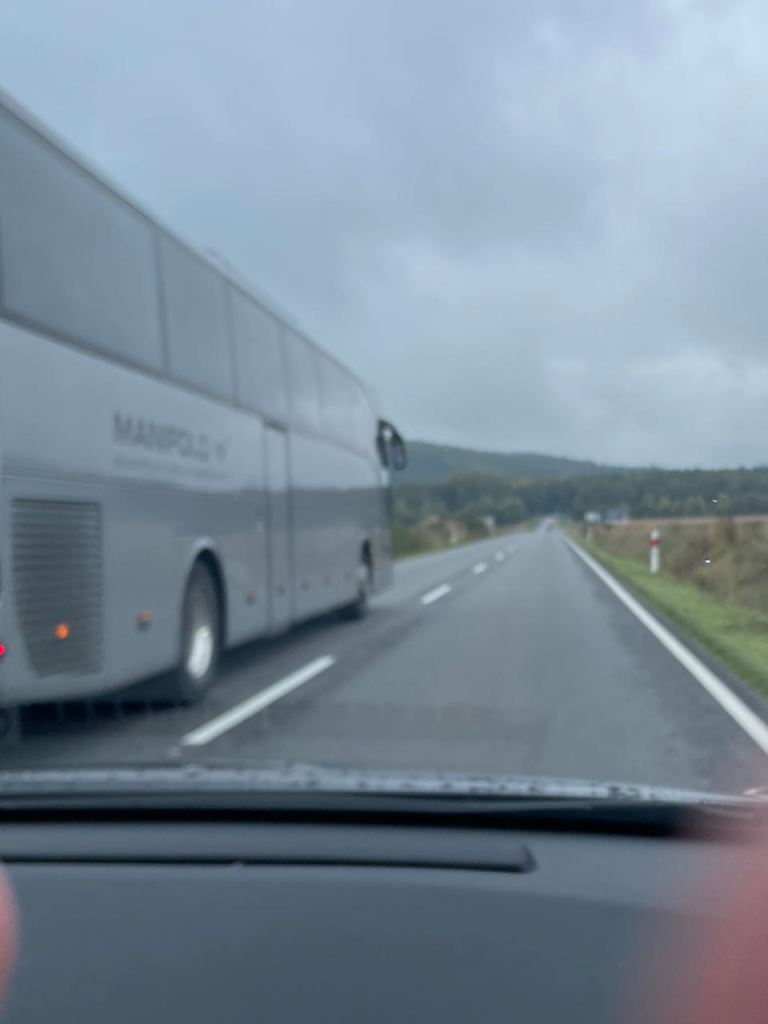
We took a picture of this bus passing us because… a bus passed us. We were doing the speed limit. There was one time I was probably doing something like 10km or so over the speed limit for about ten seconds, we got a nice big flash in our face telling me that we’re gonna have yet another country’s ticket coming. You know, in Iceland we never saw one speeder. If the sign said 100, then by golly that’s what everyone did. Not so in Poland, despite the fact that they have plentiful cameras and they’re not afraid to flash drivers. Out of curiosity I looked up speeding ticket averages in Iceland and Poland. Perhaps predictably, Iceland’s ranges from USD $195- $460 or more, while Poland’s ranges from $25 to $100. I think I’ll be finding out how true that is soon enough.

So it’s either piss off the locals, or risk getting a speeding ticket. BING!

After all that stressful driving we needed to find someplace where we could get drinks to pour into our alkoholes.

One of the ideas I’ve embraced after traveling all around Europe is that if we’re going to use a hotel, which is almost always a good idea if you’re going to stay right in the middle of downtown, is that I favor American-branded hotels over any other. It’s not that European hotels are bad, it’s just that Americans, well, they’re pretty damn good at providing comfort, and their usual cheery helpfulness can be very appreciated when you’re needing help, and most American-branded services in Europe have at least a little touch of American customer service in them. That said, throughout my entire life I have avoided Holiday Inn. In my mind, they’re just a small step from Motel 6, and are often shabby or rundown. So look at the above picture and gaze in wonder on what is easily the most beautiful and amazing Holiday Inn I’ve ever seen. On top of that, it was right on the border of old town Kraków, which is exactly where we wanted to be. We had a lovely stay and I’d highly recommend it if you’re staying in Kraków. It’s affordable too, just over 100 euros per night for a standard room.

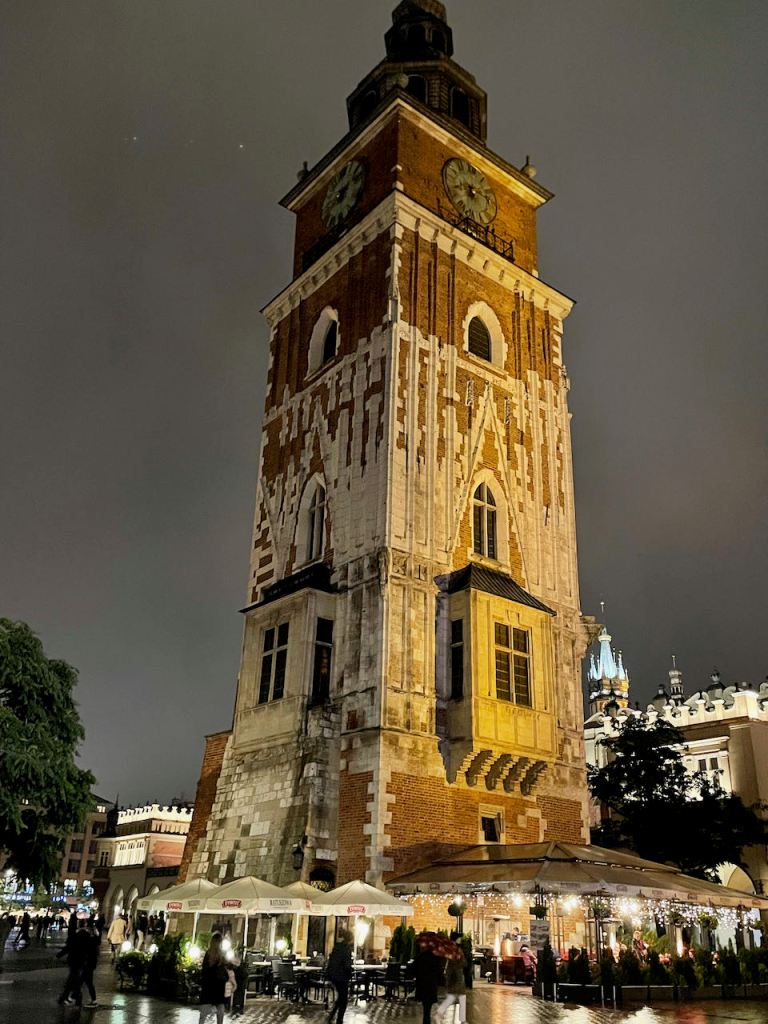
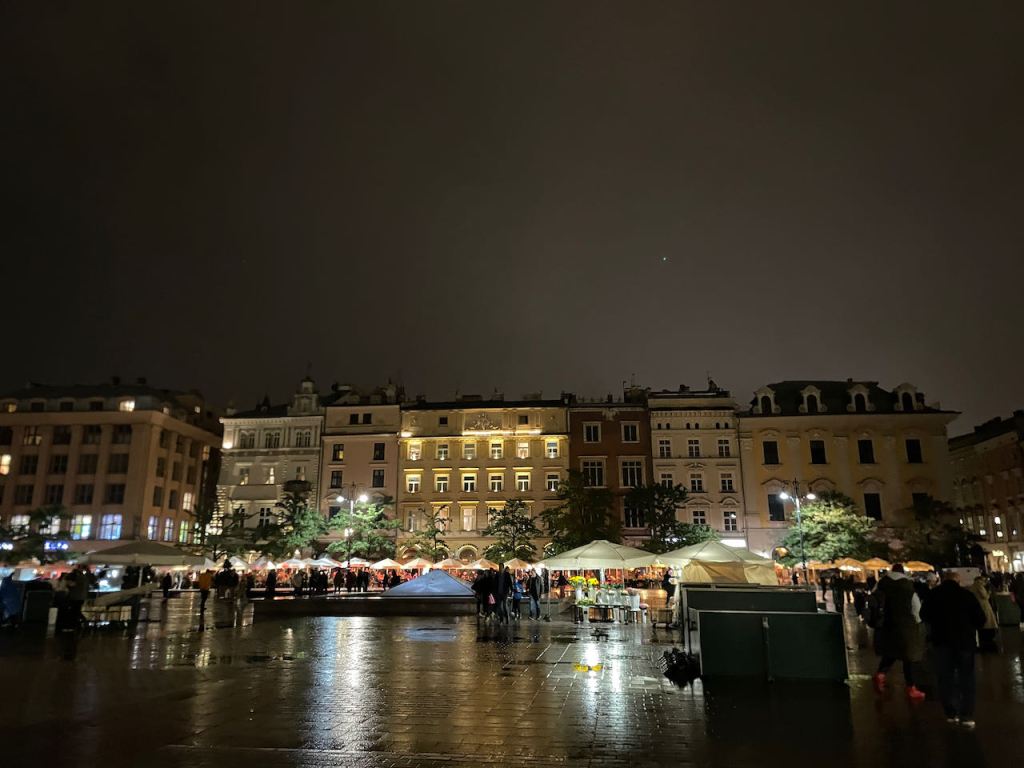
Without a lot of time to spare, we felt fortunate that the best sights of Kraków are experienced in old town, called “Stare Miasto” in Polish. Most city guides you see about Kraków pretty much focus on this area of the city, and our favorite Holiday Inn ever was only a short walk away.

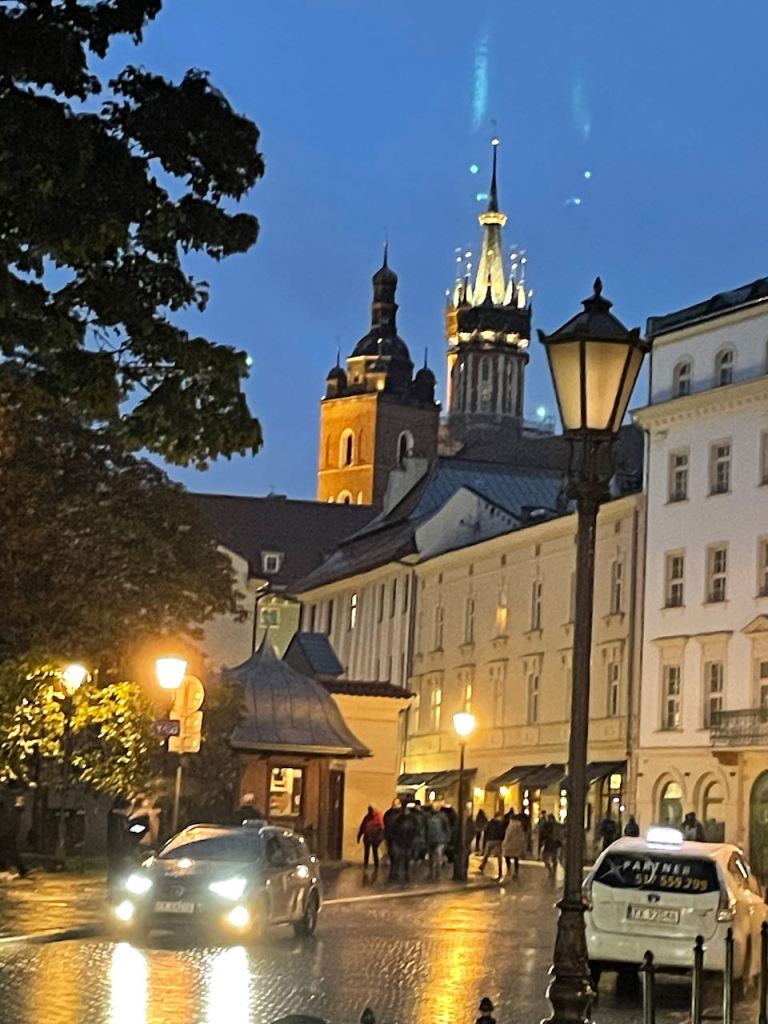
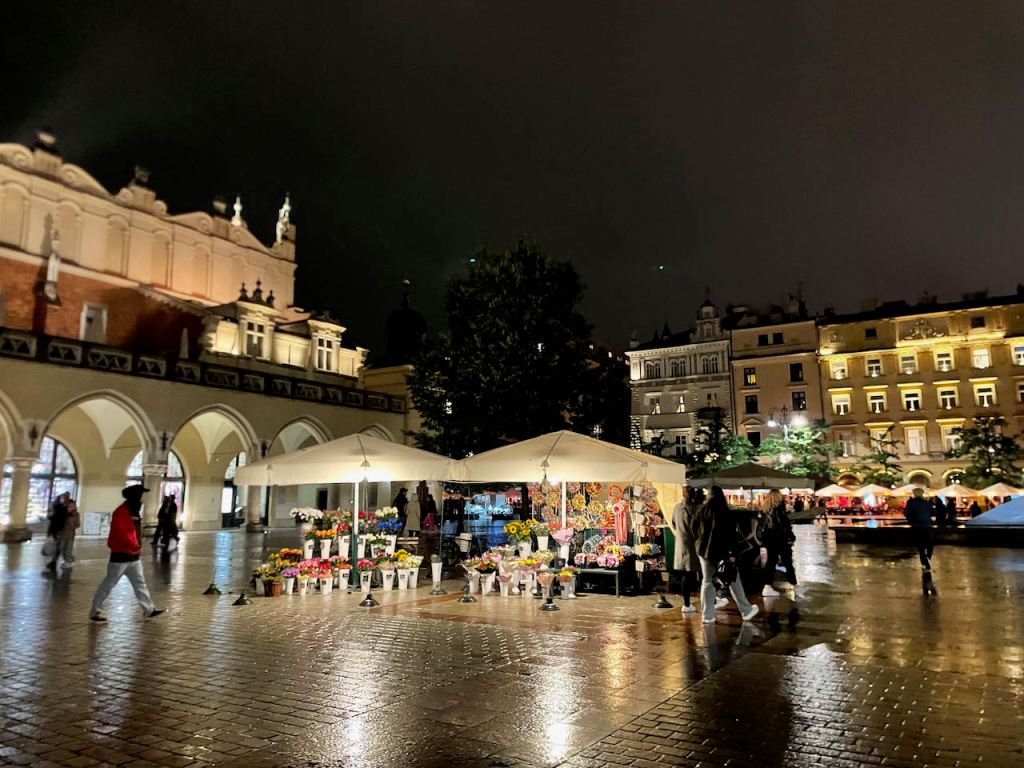
The area didn’t disappoint. It was alive with tourists and beautiful old buildings, and even though it was well-touristed, the area felt safe and we weren’t bothered by any blatant touristy hassles.

I could go do some research and detail the names and purpose of each building (actually, many of them were churches and castles so we hardly needed much help there), but the truth is we didn’t much care about the details while we were seeing them, so I’m imagining most readers wouldn’t either. We just enjoyed their grandeur and beauty. I did find it interesting that the largest and most imposing building is the Cloth Hall (Sukiennice), rebuilt in 1555, in the photo below. Basically it’s the world’s oldest shopping mall. We figured it had to be some sort of palace or government building, but no, it was, and is still, a shopping mall.

Kraków wasn’t bombed during WWII, which is part of the reason these buildings are still standing. They had the Kraków Ghetto, established to exploit, persecute, and terrorize local Polish Jews, because of course it was so obvious that the Polish Jews are the reason Germany lost WWI. Kraków has some WWII memorials and museums, such as the Jewish Ghetto, the Schindler’s Factory Museum, the former Plaszow Labour and Concentration Camp, and the original Gestapo Prison, but we were only going to have time to visit the biggest monstrosity of them all: Auschwitz.

If you were to tell anyone who asks how to find the most frequented tourist spots in a European city, just tell them to look for the horse-drawn carriages. Many if not most large European cities seem to have them out there in tourist areas. It looks romantic, I suppose, but after riding in one or two over the years we’re happy to settle for photos and fewer horse farts.

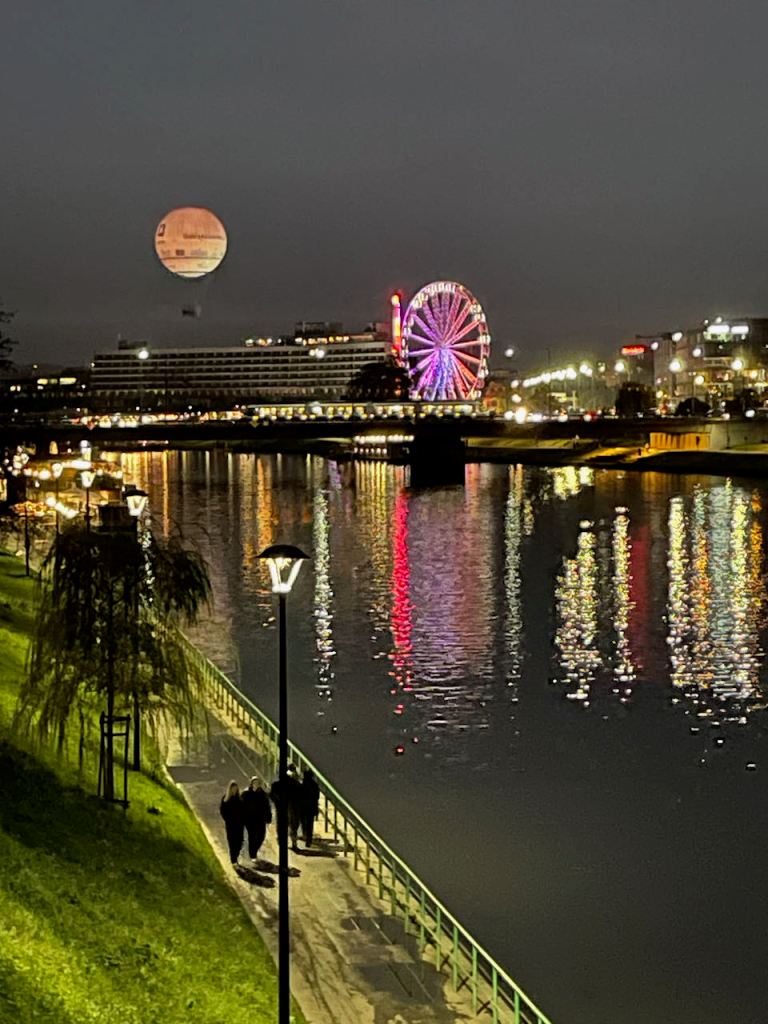
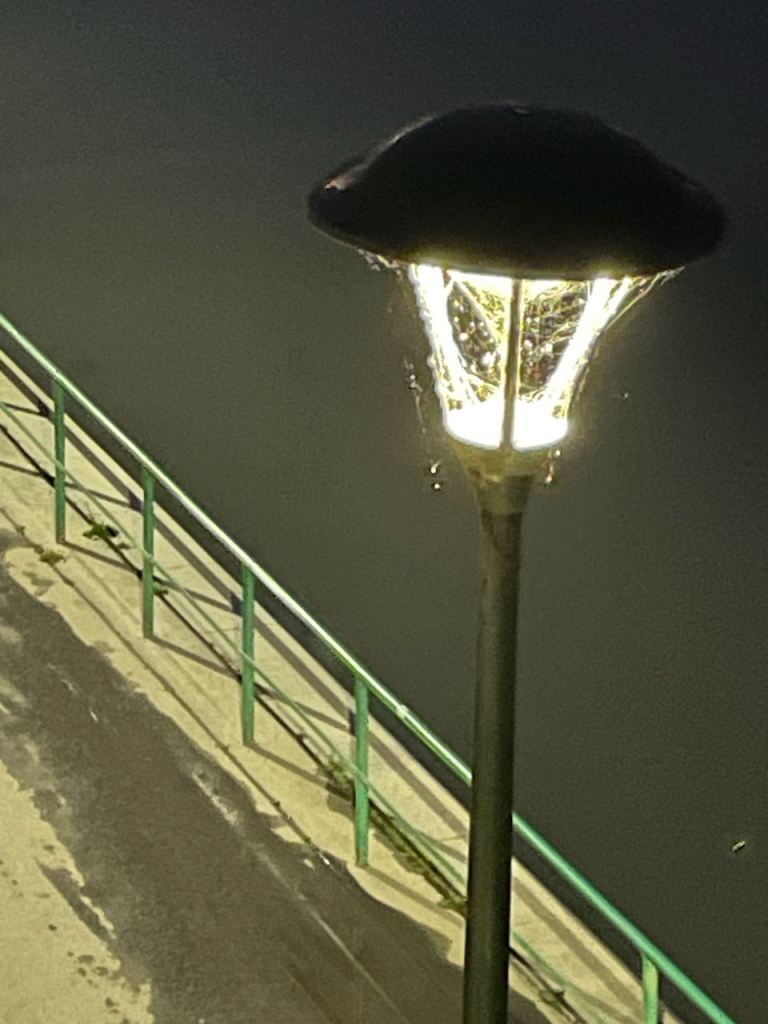
As we wandered around the area we spotted this amusement park across the water. That’s not the moon to its left, it’s a hot air balloon. We took a closer look at one of the lamps and saw that it was a feeding ground for what had to be some very fat and happy spiders. Letting them stay that way seems like a very eco-friendly way to keep the bug population down. It must work, we weren’t bugged by anything.

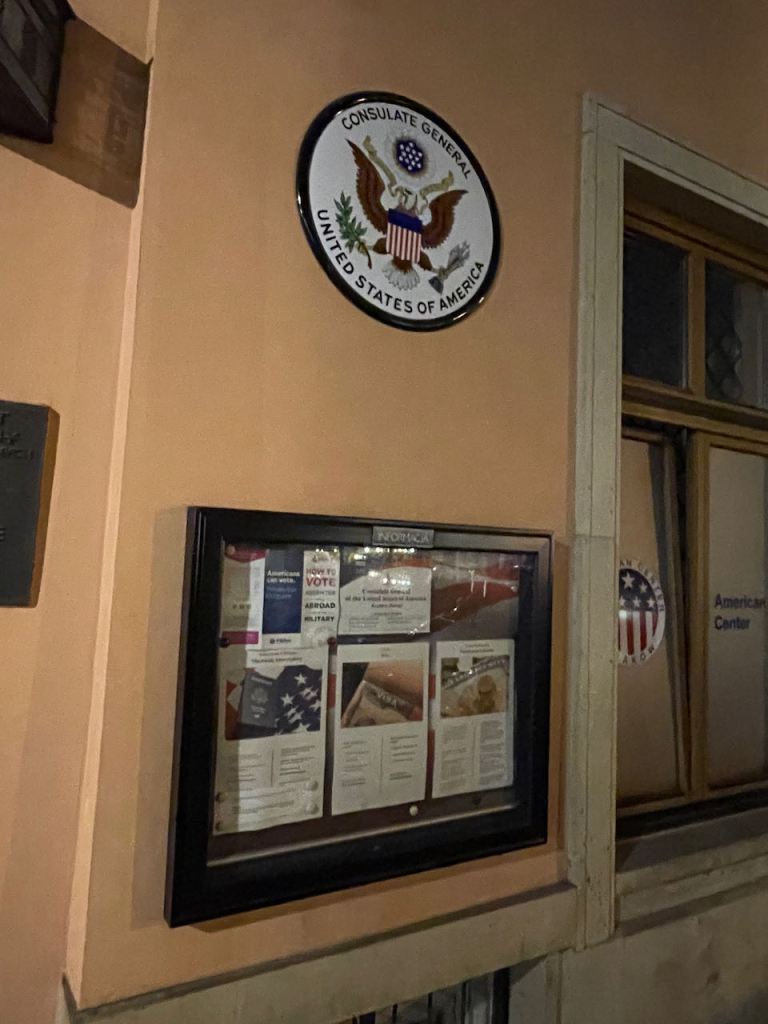
Somewhere along the way we spotted the American Consulate. I tucked its location away in my brain in case I succumbed to a desire to shoplift or beat up a local again. Of course, seeing as how my brain can only retain about the last ten minutes of information, I promptly forgot where it was and so decided I had better behave.

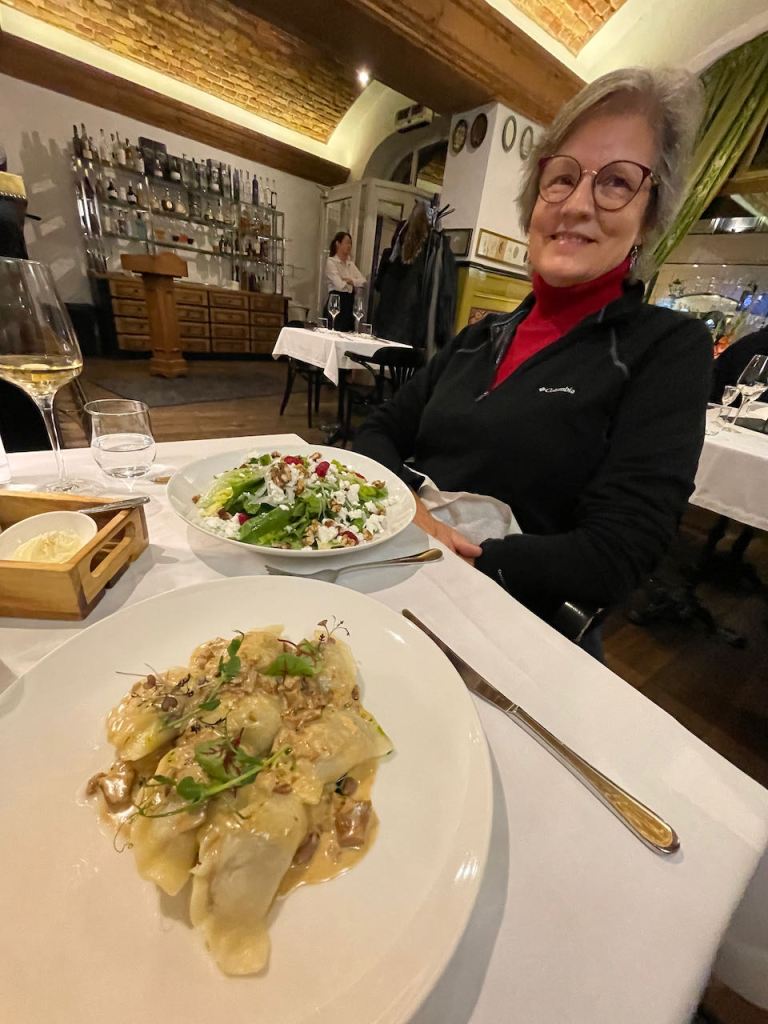
We found a nearby restaurant that featured good old fashioned Polish food (we’re not foodies, but I always try and seek out the local dishes just to slightly immerse into that country’s culture). I promised our friends who couldn’t make the trip with us that I’d try and report on pierogi: Polish dumplings, a common food in Poland. It’s a dish invented almost 800 years ago that stuck around because potatoes are a cheap staple. The dumplings themselves don’t have much flavor, so it’s all about what’s inside. They didn’t have any with hot fudge sundaes in them, so I had to settle for whatever this was, I don’t remember. But it was tasty.

The next day we drove past this ominous sign. That’ll be the next blog entry.

(Scroll down to see previous entries.)
Note to Austria, Czechia, Germany, Poland, and Slovakia: you can run, but you can’t hide!

As our bodies slowly but surely ooze their way into old age, the idea of a long, arduous travel itinerary with lots of stops just doesn’t feel like something we want to do anymore. So what did we do? We booked a long, arduous travel itinerary with lots of stops. That’s the problem with getting older, you forget what you vowed never to do again until you’re in the middle of it wondering who else you can blame.

If a sightseeing vacation is like a buffet, then many Americans who travel to Europe often plan to stuff as much into their sightseeing gullet as possible, sometimes resulting in what I call “mental vomiting” (and by “what I call,” I mean I made it up just now), whereby all the sights and experiences just regurgitate into a big, smelly, often hard-to-remember mess. (Way to ensnare your audience so artfully by talking about vomit in the second paragraph, Anderson! Woohoo! Anyway, I’ve already given up my dreams of a Pulitzer for the Best Travel Blog Featuring a Hairy, Fictitious Animal, so yeah, vomit ho!)
But since we live in Europe, we are able to be a little less stressed out by the Buffet d’Travel, because we know two things: 1) Coming back to a place is almost always an option because we don’t have to do that grueling 20 hour expedition from the states, and 2) We will never ever see everything there is to see even if we were on the road 363 days a year (we’d take Christmas and New Year’s off), and so we don’t sweat it if we don’t see everything.

However, the cornerstone we built this whole trip around was Auschwitz. We felt as if it was our duty to see it. Humanity has done some awful things to each other throughout our existence, and I think it’s important that we don’t sugarcoat histories or forget them. There are holocaust deniers out there as well as some extremists who proclaim that the camps were “humane.” I would beg to differ (actually I wouldn’t beg, they just need to be slapped upside the head), I think Auschwitz provides the very definition of “inhumane.” So the more of us that see the place of atrocities firsthand, the less traction these dipshits might get with their hateful revisionist histories.

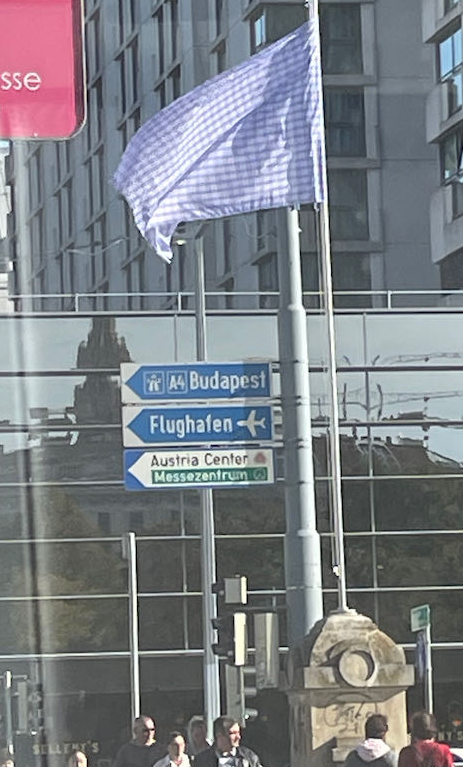
Once we decided on Auschwitz, we realized Krakow is very near there, so hey, let’s spend a few days in Krakow (which was not on our bucket list but should have been), and as long as we have a car let’s drive through Slovakia and Czechia and y’know what? Carolyn always wanted to see Hallstatt and that’s on the way to Munich during October, so free beer for us, yay! Oh wait, there’s Innsbruck too, where they held the winter Olympics twice, so let’s take a daytrip down there and maybe we’ll see a famous skier. And then we saw a road sign to Budapest, so I’m like, “Honey! You wanna drive to Budapest too?” We seriously considered it because even though it wasn’t on our bucket list, how often are you close enough to drive to a place like Budapest? Ultimately we decided that a city named after big flying bugs that look like fat bald men was probably not worth it, because of course Buddha Pest was the original name of the city. And Buddha Pest insecticide is almost impossible to find nowadays, so yeah, naw.

We flew into Vienna because we had original plans with some good friends, but sadly they had to back out at the last minute due to family issues, so our itinerary became a little fluid. While flying into Krakow would have saved some driving time, we likely wouldn’t have added Slovakia to our countries-visited list, nor would we have discovered the charming little town of Trenčín. So fly into Vienna we did, where we promptly hopped into our rental car and left the city in our rearview mirror. “We shall return!” we cried. No one in Vienna cared.

Anyway, this sign for the Vienna State Opera greeted us and I couldn’t help wondering whether the woman in the photo was looking shocked because the man was singing an opera at full volume right into her ear, or whether he’s whispering, “Opera is stupid” even though he’s an opera singer, or whether he is admitting that he just peed his pants.

We decided to put a couple of hours in on the road because Vienna to Krakow is a five hour drive, so I had selected Trenčín because it was the desired distance away and it is in Slovakia, plus I liked the little bowl on top of the “c.” I was going to make a joke about that, but then I looked up how to pronounce “č” and I thought the instructions were funnier than anything I could come up with: Your tongue is positioned at the front end of the hard palate (i.e. the roof of the mouth), close to the front teeth. č – (“tvrdo” č – the “hard” č) = tš. Try to blend the sounds t and š into one “hard” sound and there you go! The tongue is positioned more backward against the hard palate.

Yeah, well, I like my “c’s” to take as little work as possible, thank you very much, so I’ll stick to my English and bad Portuguese, the latter of which has already damaged my nasal cavities. However, you have to admit the USA’s full name would look much more exotic if it were spelled: The United States of Američa. Naw, now that I see it, that’d be Socialist-y fer sure. Plus I still don’t know how to pronounce “č.”

So let’s move to our Trenčín experience. Raise your hand if you’ve ever been to, or even heard of, Trenčín. Yeah I thought not, but if you have, why are you raising your hand when you’re alone reading?

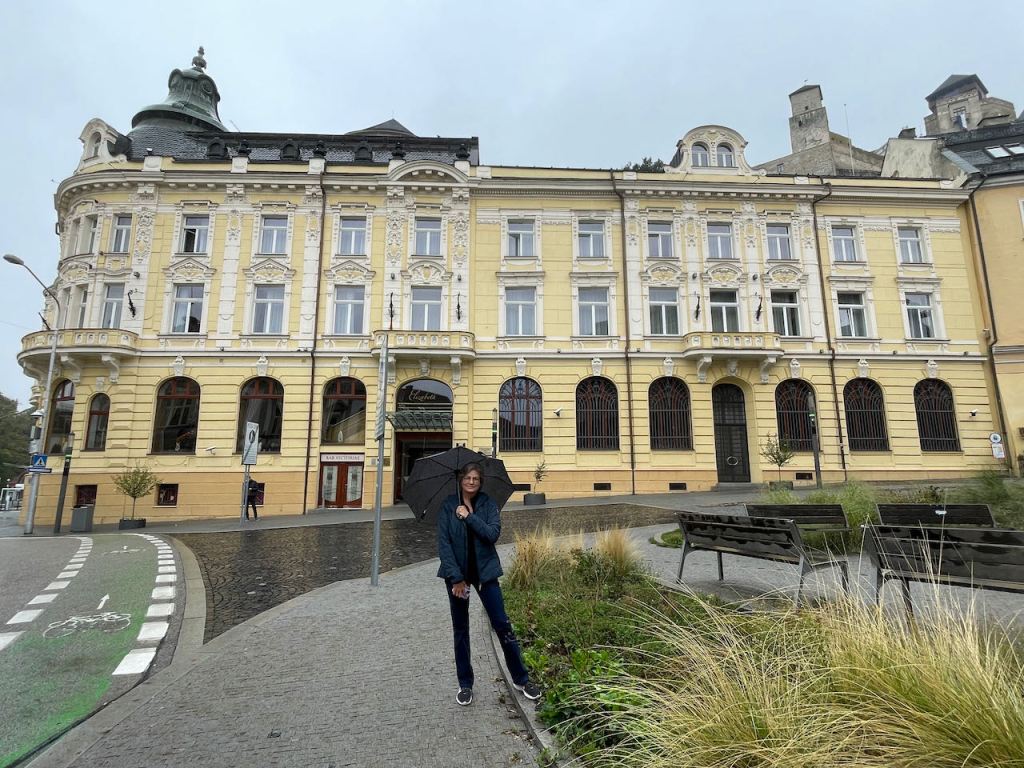
We’ll begin with the Hotel Elizabeth, because that’s where we stayed. The hotel started operations in 1902, I think making it one of the newest buildings in all of our photos from the trip. He he. Anyway, it’s a charming hotel, and sits just beneath the medieval Castle of Trenčín, and was otherwise the perfect destination for our one night stay.

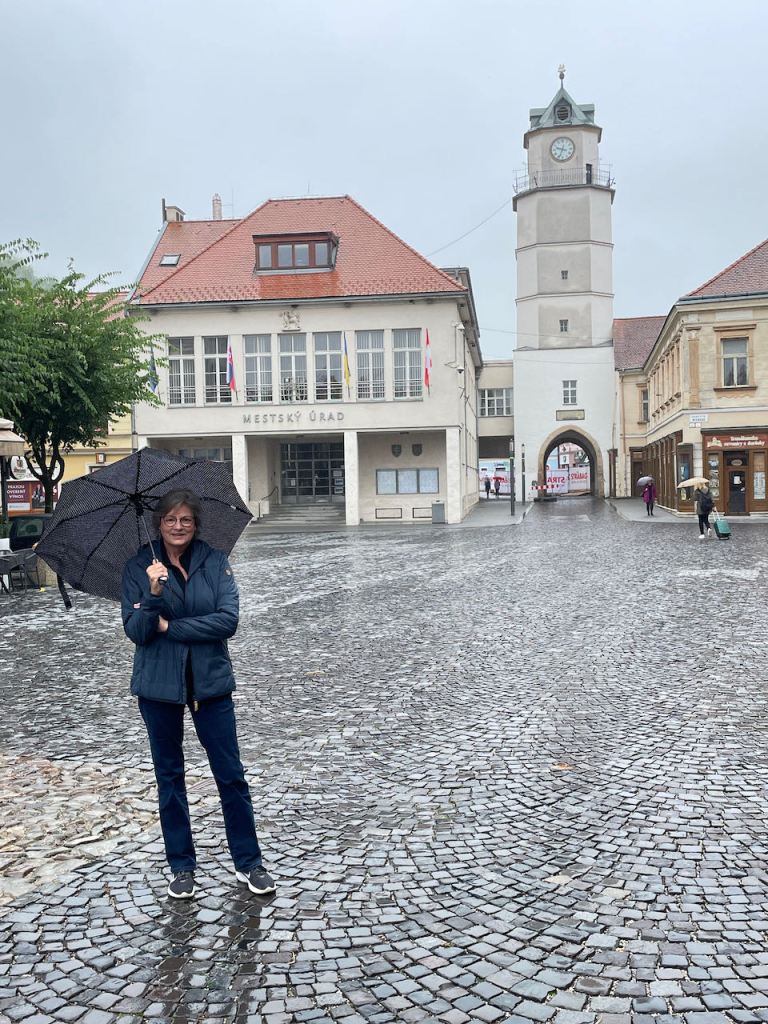
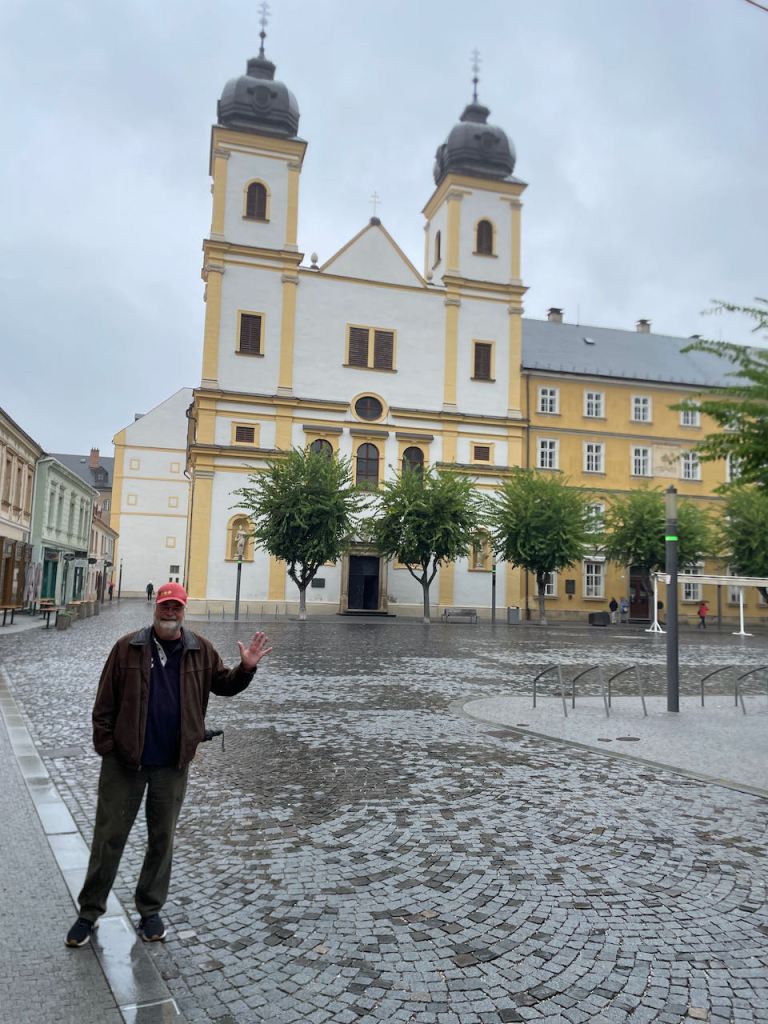
As you can see, it was a bit of a dreary morning and we still had to drive off to Krakow, but there was a cute little town square and so we wandered around just enjoying the ambiance of this little Slovakian town. It made me wonder about the hundreds and hundreds of small charming towns all around Europe we’ll never see or hear of. Like I said earlier, we can’t see ’em all, but the ones we do we sure enjoy!

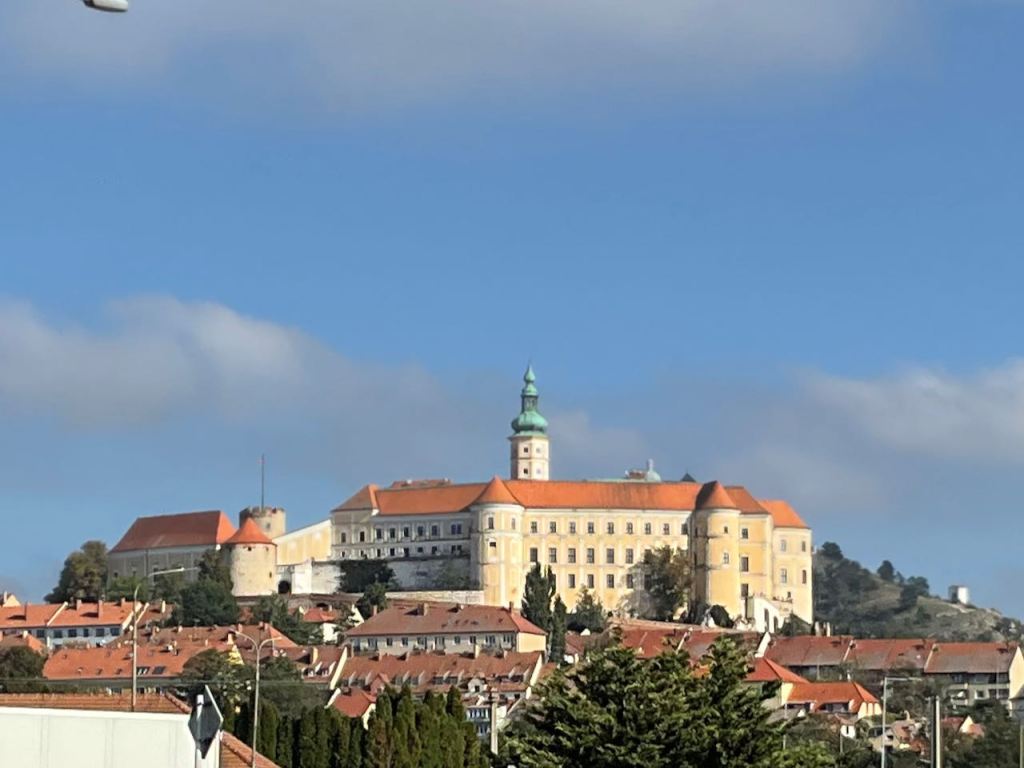
The town’s skyline is dominated by the Castle of Trenčín, whose history dates back all the way to Roman times. A cliff with a large inscription abuts the hotel, and tells of a victory by the Romans in 179 AD. Of course, I’m taking their word for it, it may be an ancient No Parking sign for all I know.

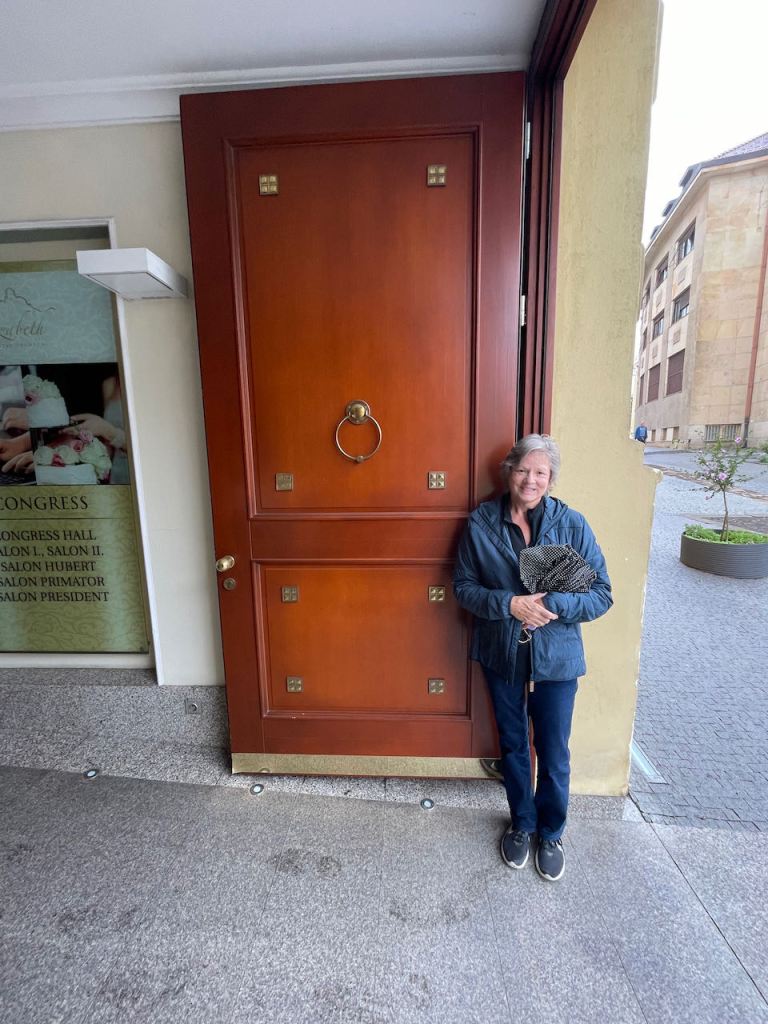
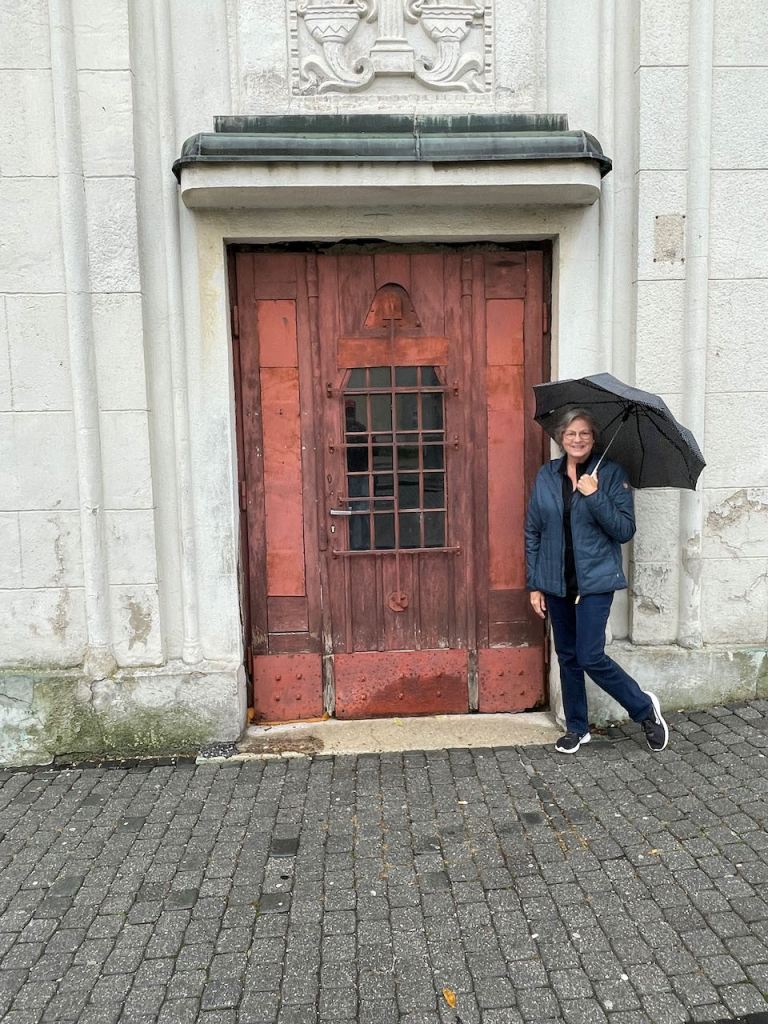
Carolyn scored two Doors of the Day in Trenčín, so she left happy.

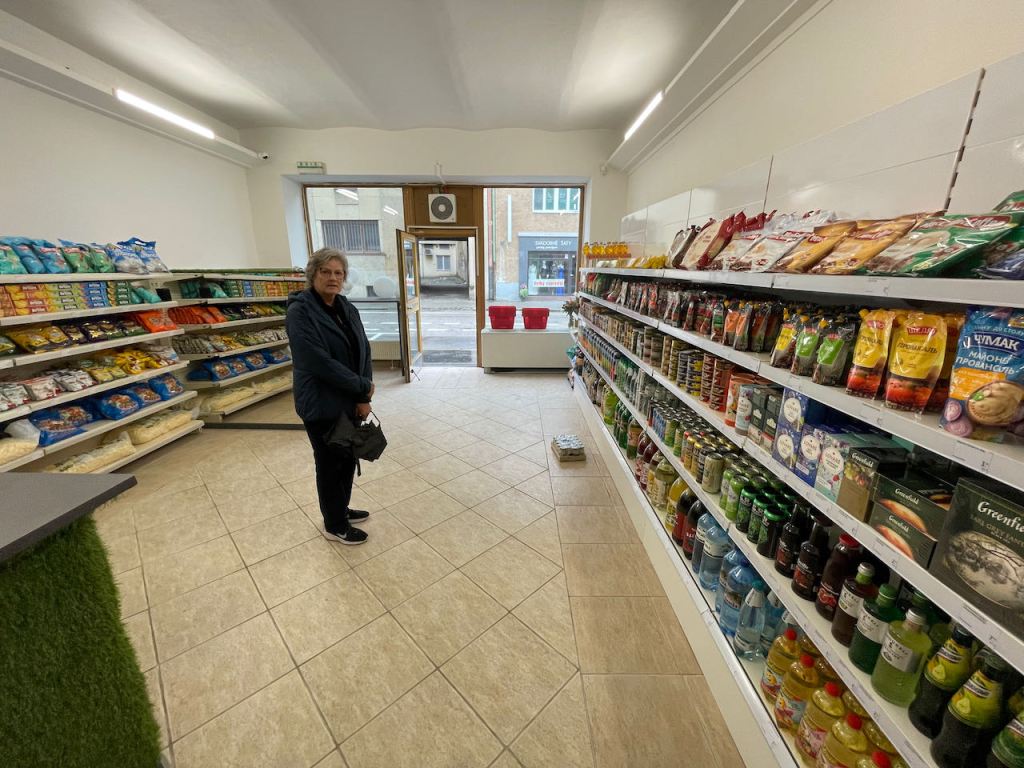
We’ll move on from Trenčín just as soon as we grab a snack from the local 7-11. To be honest, I have no idea if most Slovakian convenience stores leave this much floor space open or if the owner of this shop is some sort of neat freak, but I was kind of bemused at the sight. In the USA, you’d have to walk past huge stacks of six packs with big cardboard cutouts of your favorite racer showing how awesome beer and car racing go together, along with racks of candy, and then more racks of candy, plus 38 varieties of chips just to reach the cashier sitting behind a counter that looks like it was merchandised by a hoarder. In comparison, this store just puts one 20-pack of soda on the floor and decides that’s about all the floor space they can sacrifice.

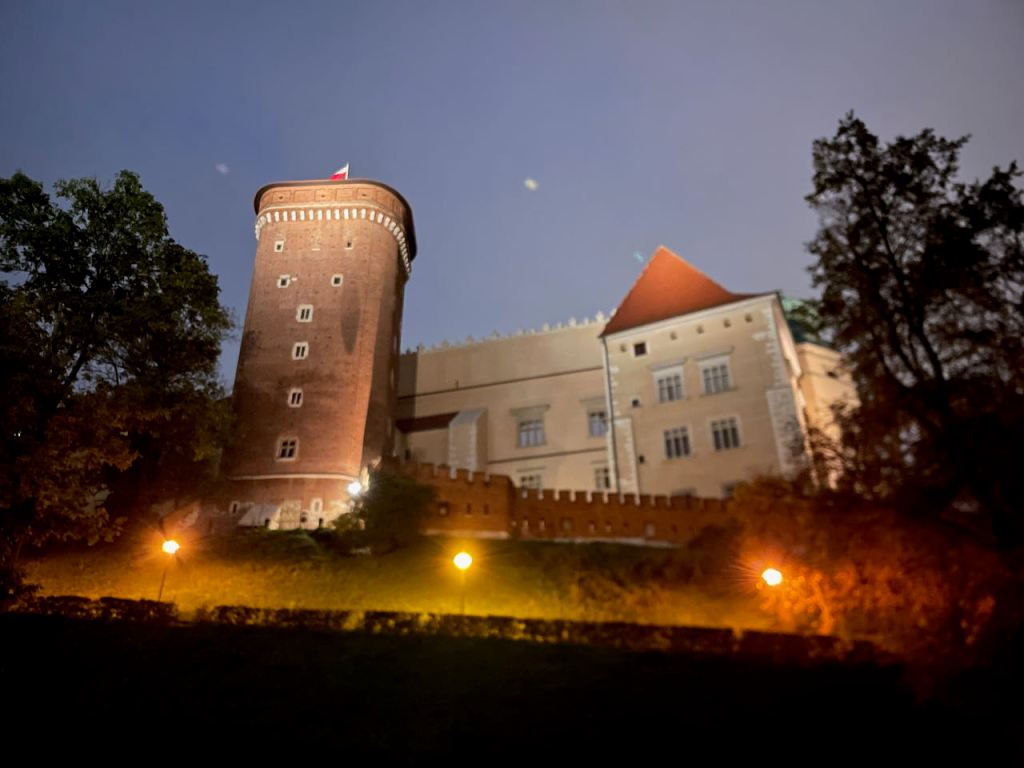
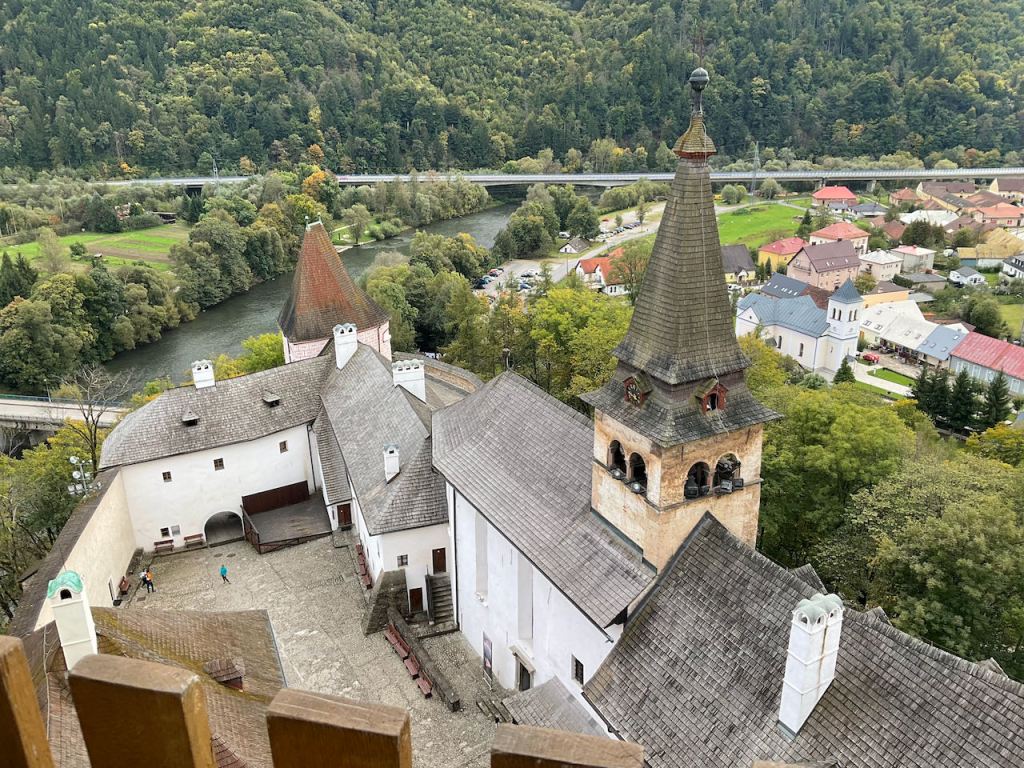
While in Slovakia, we learned that it’s quite renown for all of its castles, somewhat to our chagrin because we were just passing through. But we did stop at one that was along the way to Krakow, and that’s the Orava Castle, named after Orava, a famous sword-wielding flying squirrel with a cape. Orava actually does mean squirrel, so boy howdy that little rodent must’ve been quite the specimen! Of course, nothing instills fear into an enemy like facing an angry squirrel. “The squirrels are attacking! The squirrels are attacking! Aaaaaah! Run for the hills!”

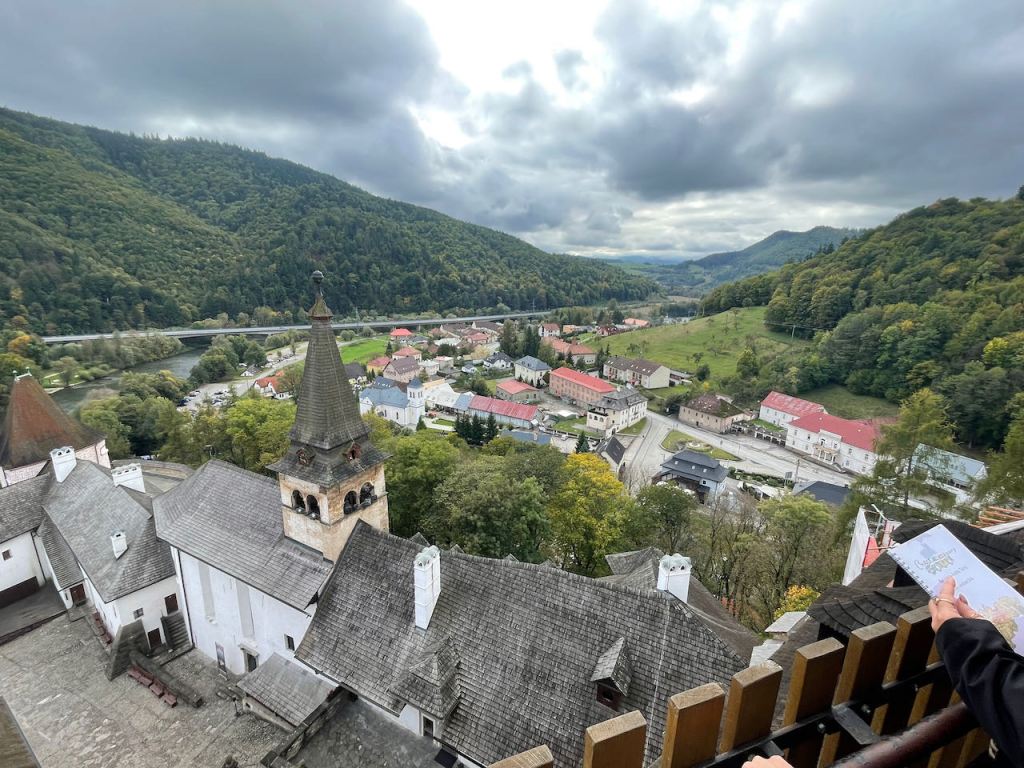
The castle was built when the area was part of Hungary, with the oldest parts being built in the thirteenth century and the most recent parts in the early seventeenth century. Of course one of the main things we like about castles are the views, and the Squirrel Castle didn’t disappoint in that regard. We didn’t go nuts for it, but it was nice.

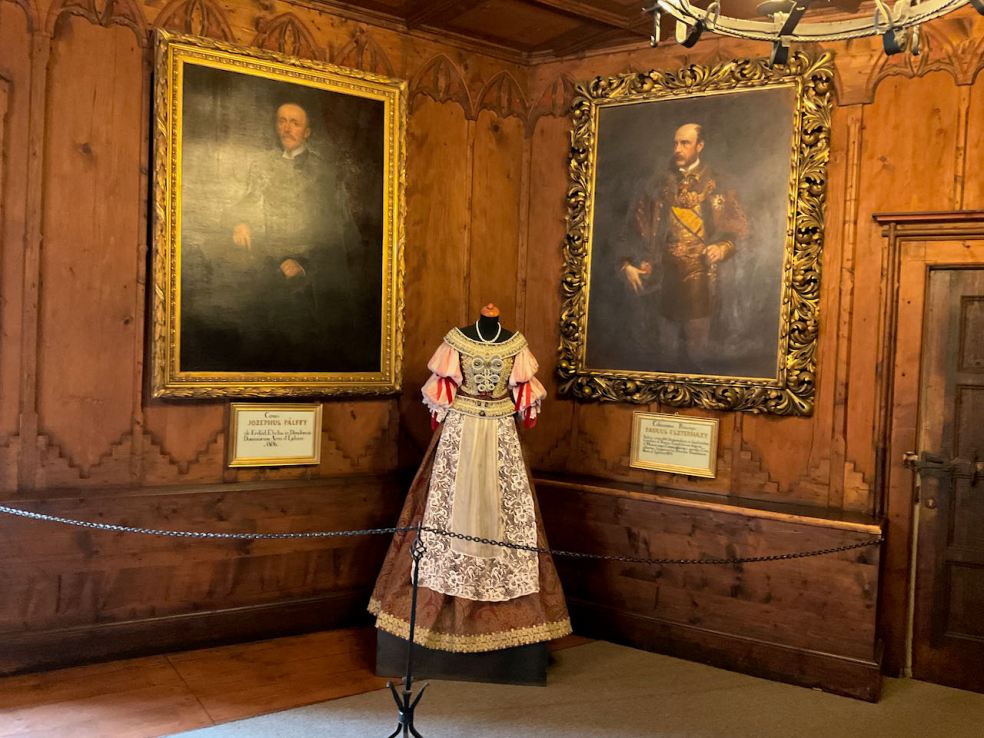
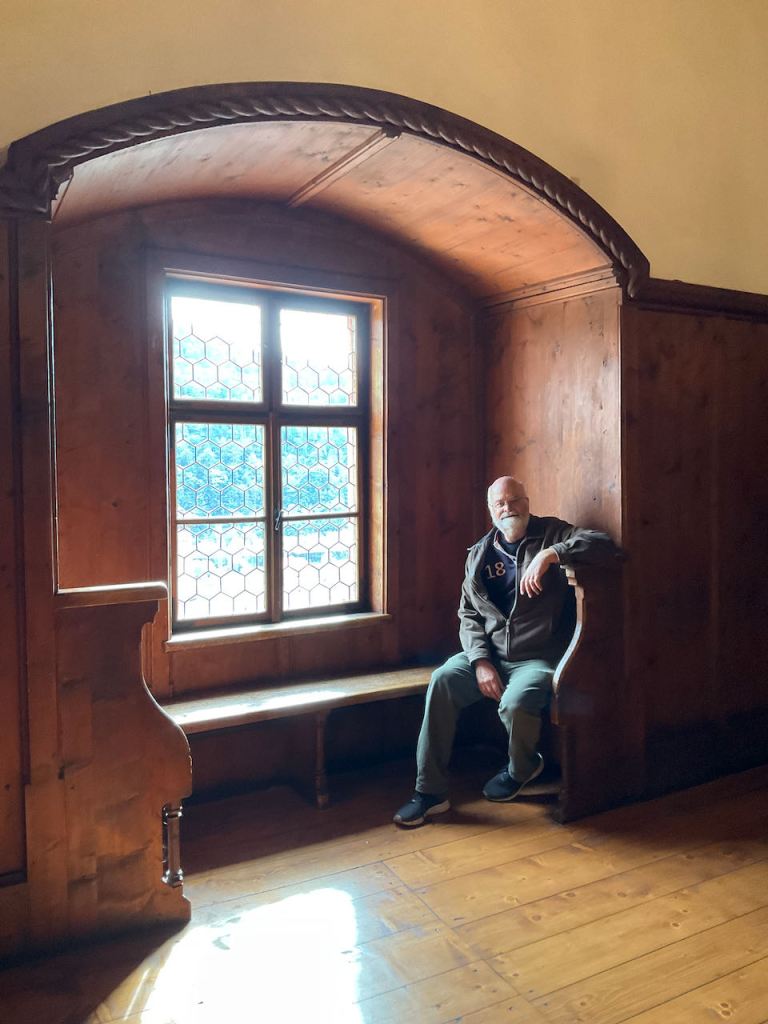
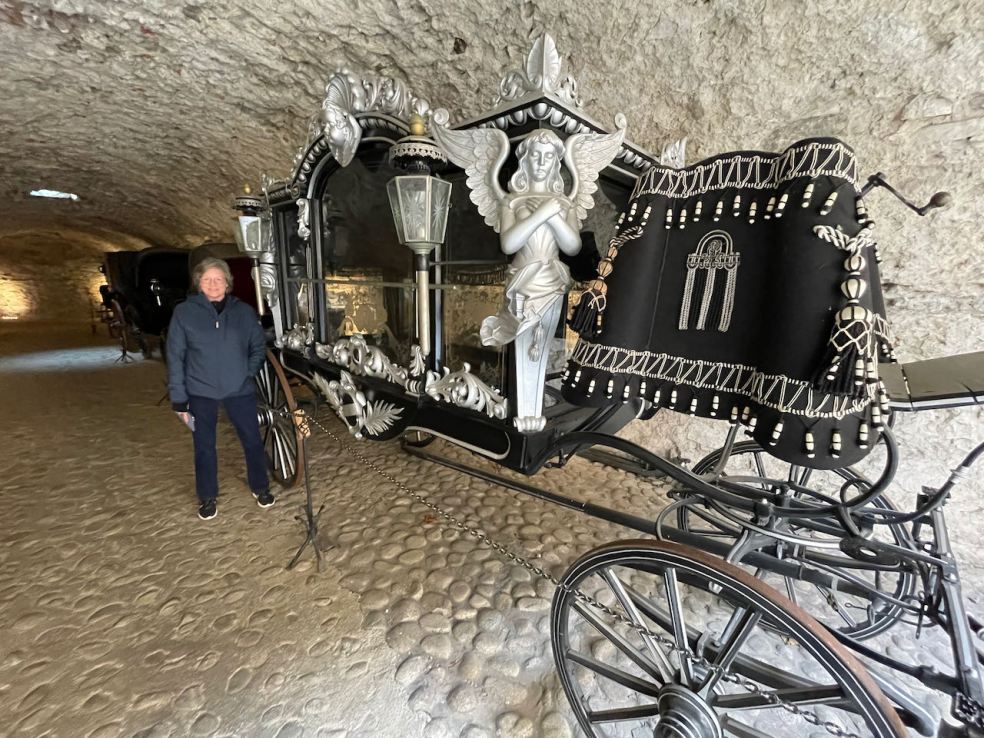
In addition to the views, Carolyn scored another Door of the Day, while I scored a Dress of the Day, a Window of the day, and a Carriage of the day. Our trip was already so Of the Day fulfilling!

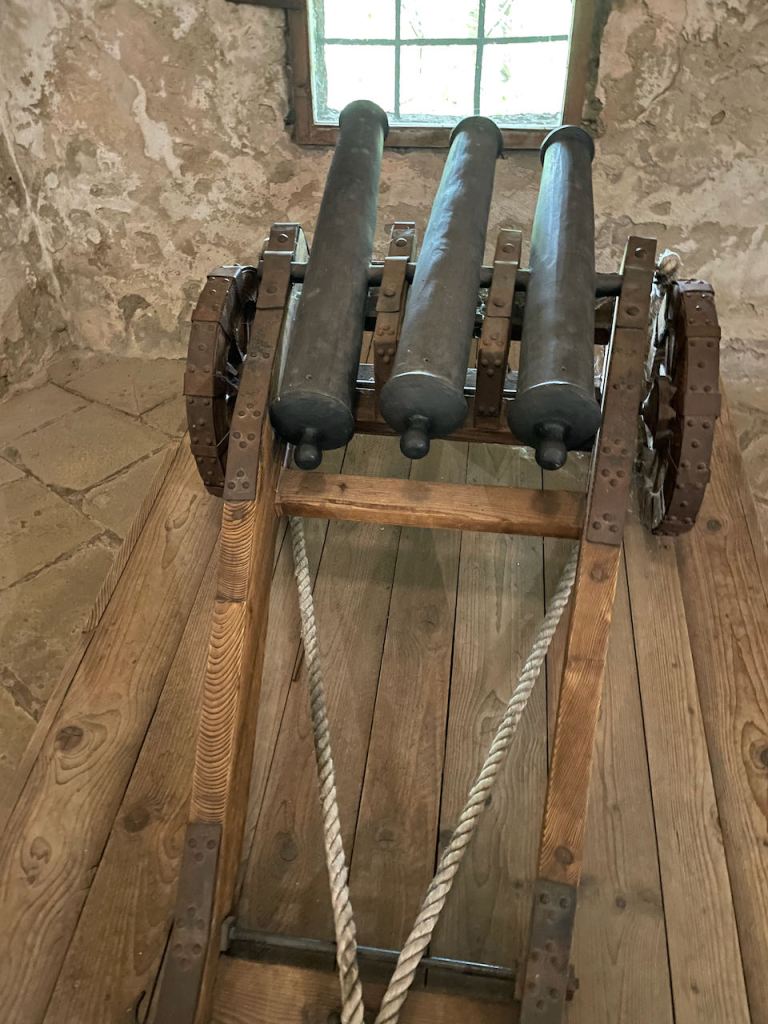
I was thinking this cannon probably wasn’t all that efficient given that if the aim is just a little bit off, like it is in the photo, after all the smoke and dust clears you’re going to see that you inadvertently expanded your window size quite a bit. They eventually moved the three barrel design over to big battleships, which was great in WWII, but have now been rendered obsolete by $100 drones.

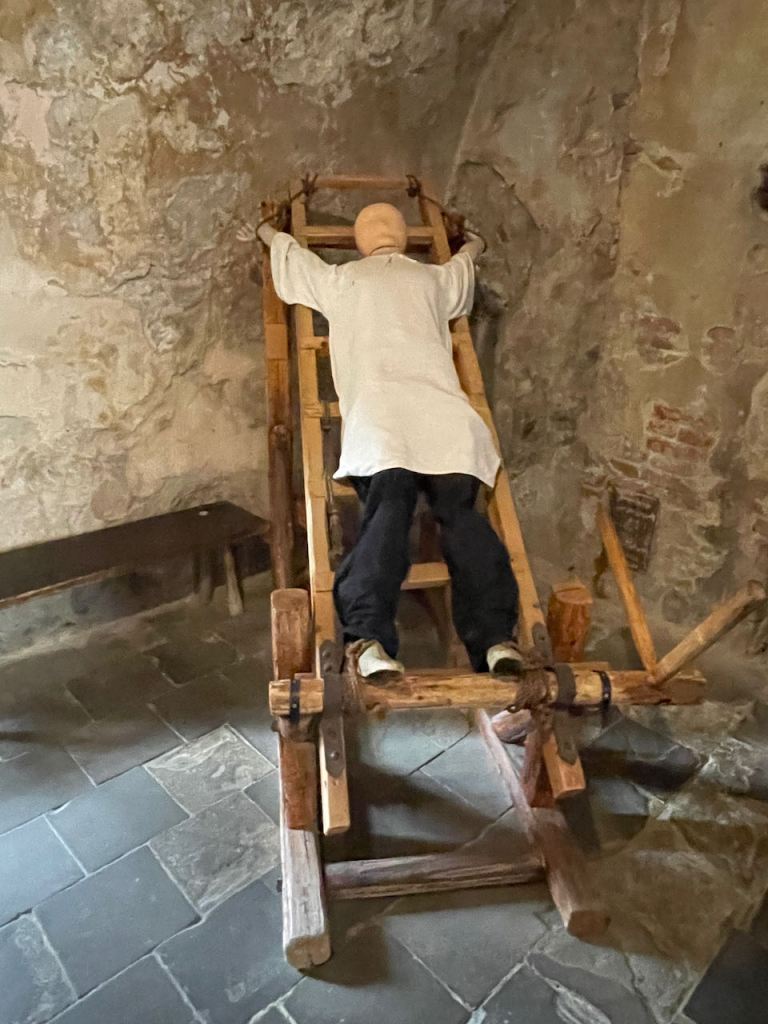
But you know, they always had comfortable sleeping arrangements available for those who screwed up. While it’s obvious you’d have to be a real dummy to end up being tortured like that, I still feel for them because their clothes are pretty bland plus everyone knows you don’t wear white pants after Labor Day. It’s just all so sad.

Speaking of sad, you see, these are the challenges we face with different languages. I hope that’s not a Roasted Grandma in there, you never know what weird customs all these foreigners get themselves all up into. Plus everyone knows you don’t eat Roasted Grandma until Easter. Still, that is a pretty good price.

Up next: Krakow, Poland!