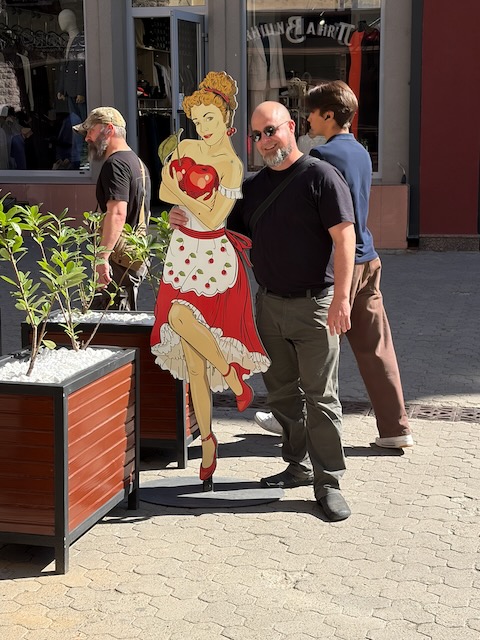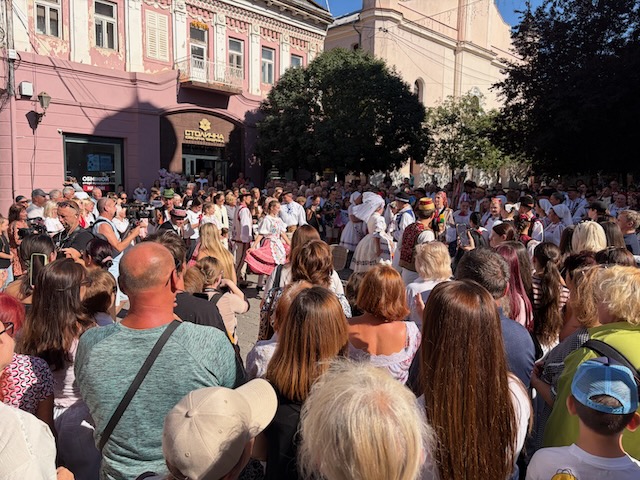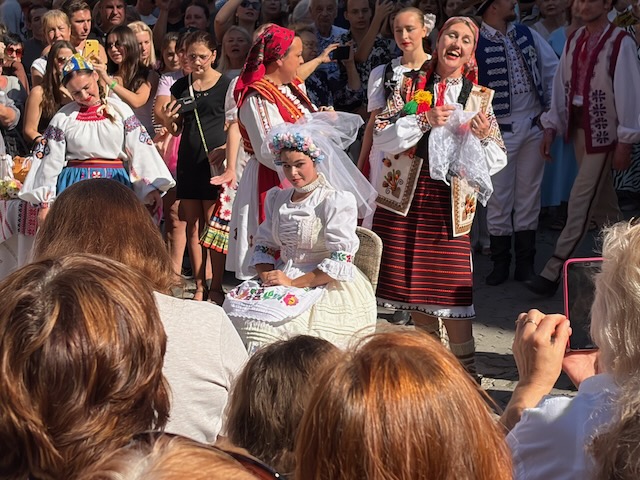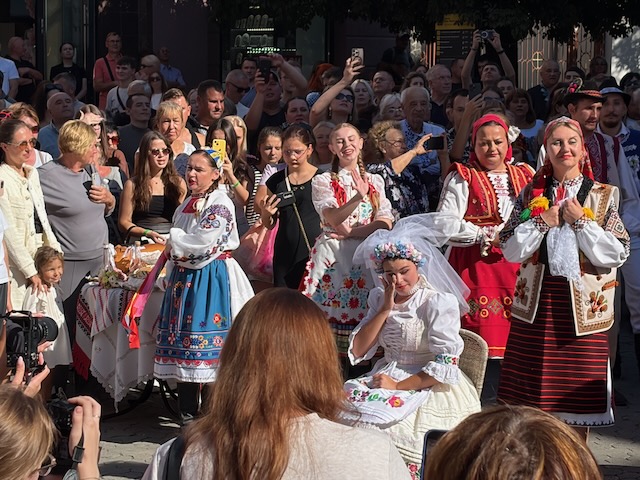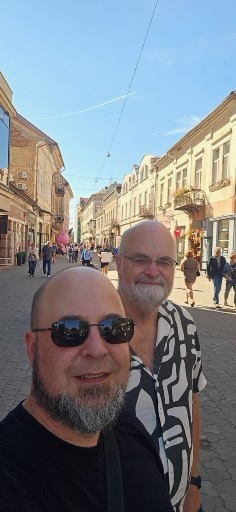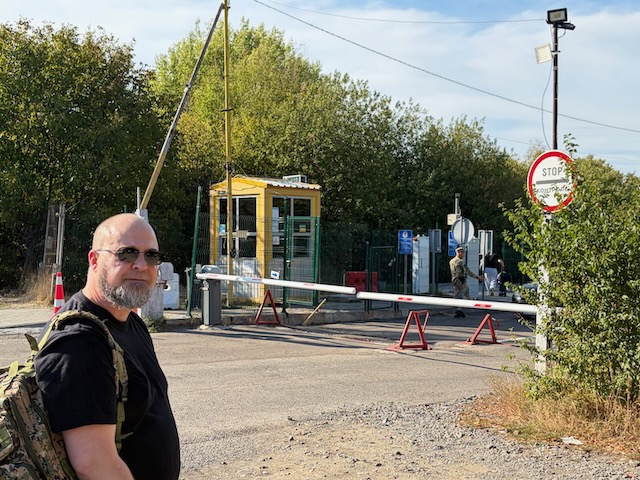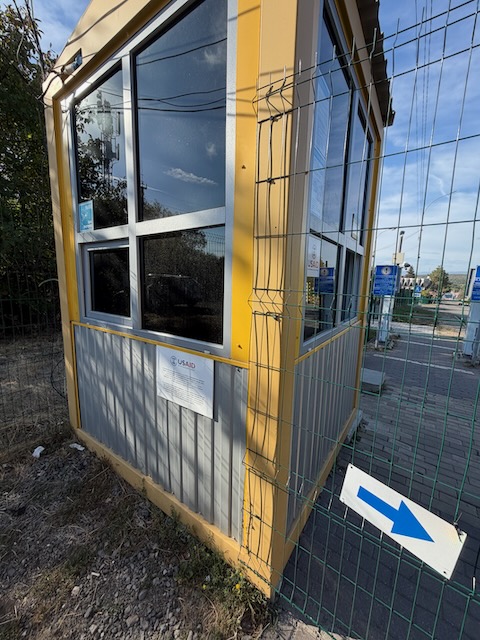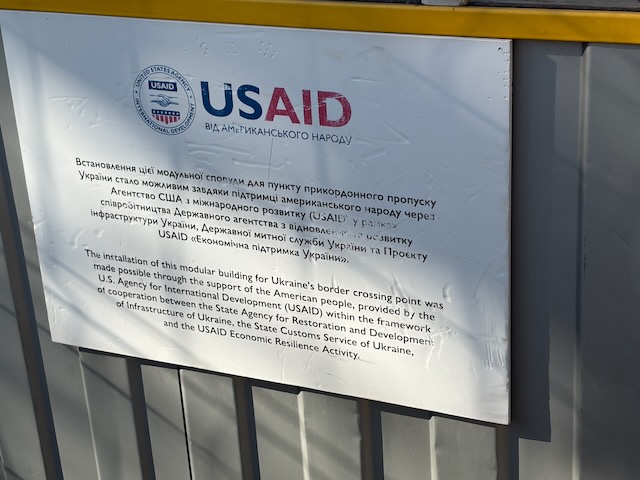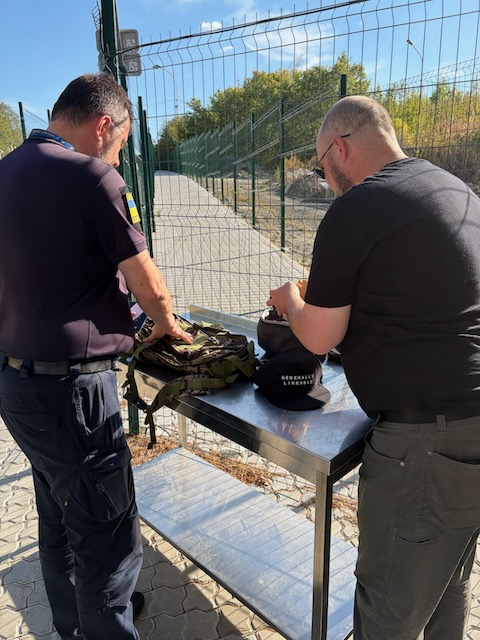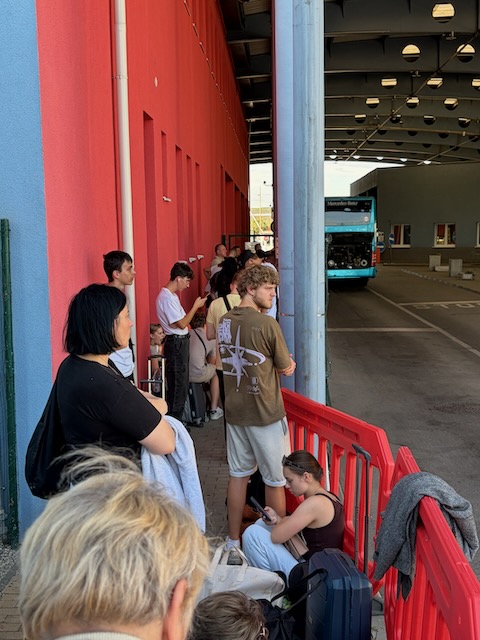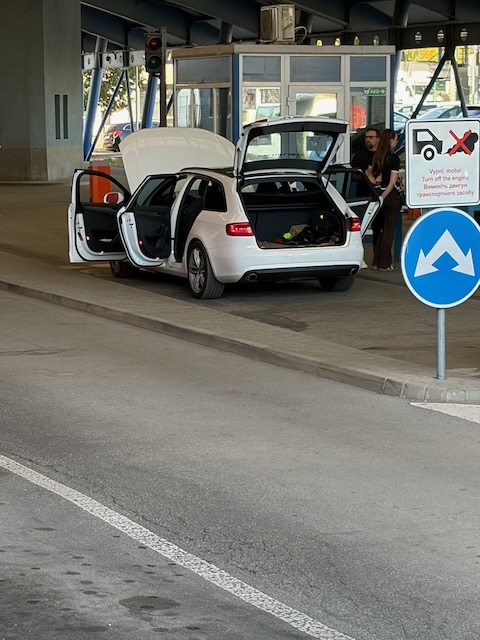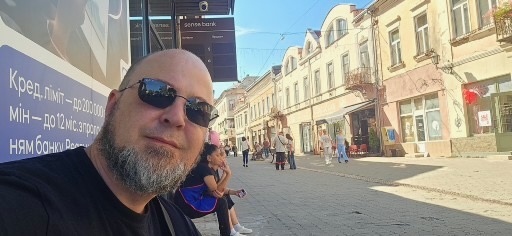
Once Luke and I were free from the worry of being bombed into oblivion while visiting Ukraine, we headed southwest toward Budapest for a one night stay. I had visited Budapest about a year prior (as documented here), and while I happily offered Luke my services as a one-week’s-worth-of-experience-so-obviously-I’m-now-an-expert tour guide, he wanted to continue to focus on places I hadn’t been yet, so we did a quick one-day lap around the city and then set off for Croatia.
I did express lamentations and concerns about the fact that there we were in one of the world’s great cities and we were rushing through it like locals on crack, but he was content with seeing what we saw, and so I stopped lamenting and began lawomenting.
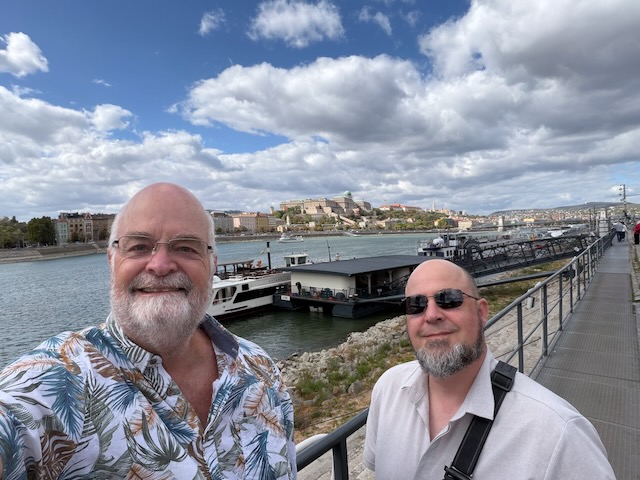
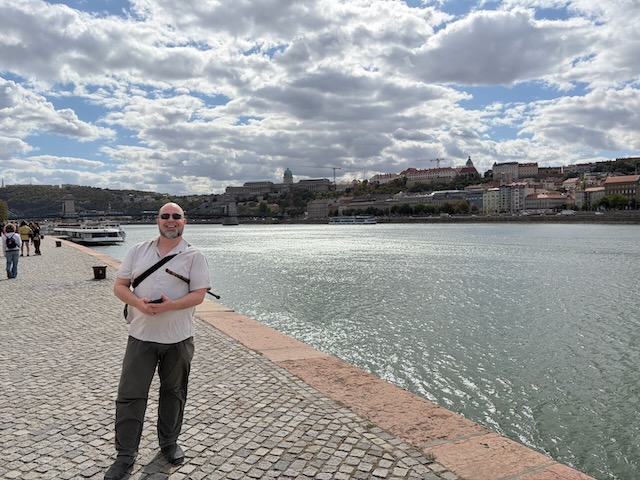
Budapest is very famous for its thermal hot baths, but this was the second time I completely passed up that experience, thus turning thermal into thismal, to beat my bad genderist dad jokes into a bloody pulp. Speaking of bloody, Budapest also has quite a pugnacious history, starting with the Romans, then the Magyars, then the Mongols, then the Ottomans, then the Soviets, then Viktor Orbán, until the Hungarians finally had enough with all the despotism and freed themselves via election in April 2026. With all that history to plow through (I read 13 expansive Hungarian history books just to write this paragraph), my head was spinning so much that I have no idea how they came up with the name Budapest, and I don’t feel like reading any more to find out. Anyhoo, the Danube is of course one of the defining features of Budapest, dividing the original Buda area from the Pest area.
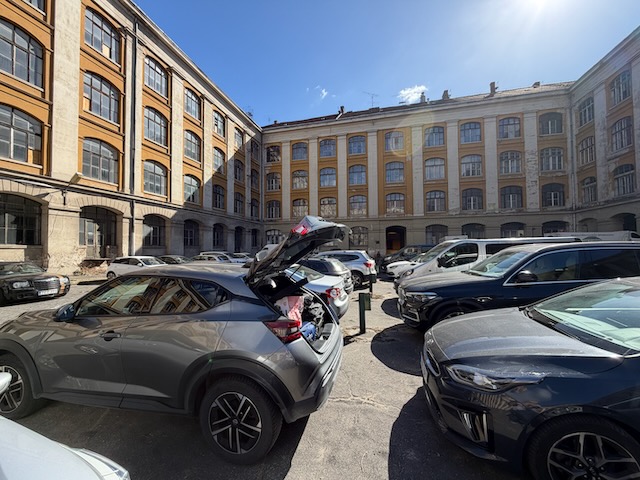
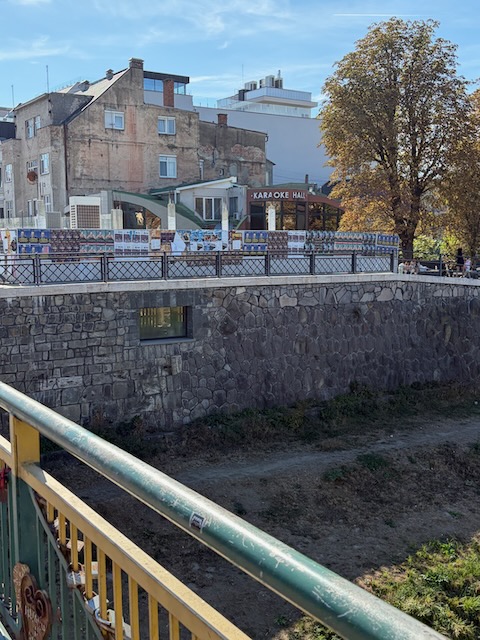
Across the river from the Pest side is the beautiful Buda castle as well as other lovely structures. But instead of taking any pictures of those, we took a picture of the parking lot where we had parked overnight. To be fair, it was interesting in that it seemed the only current purpose for this grandiose building was to house a parking lot, because most of those windows looked to be devoid of anything behind them, just like Putin’s eyes.
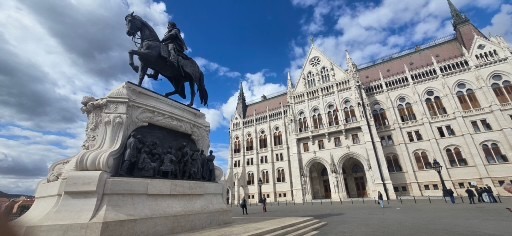
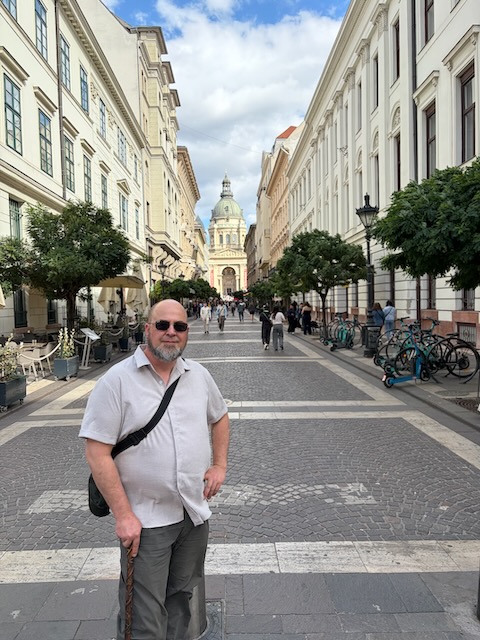
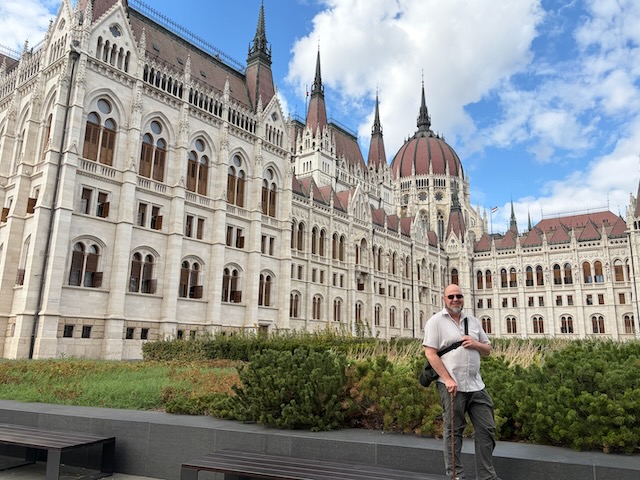
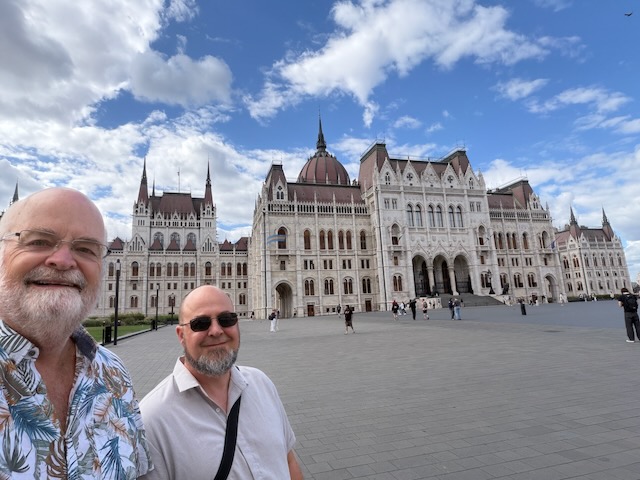
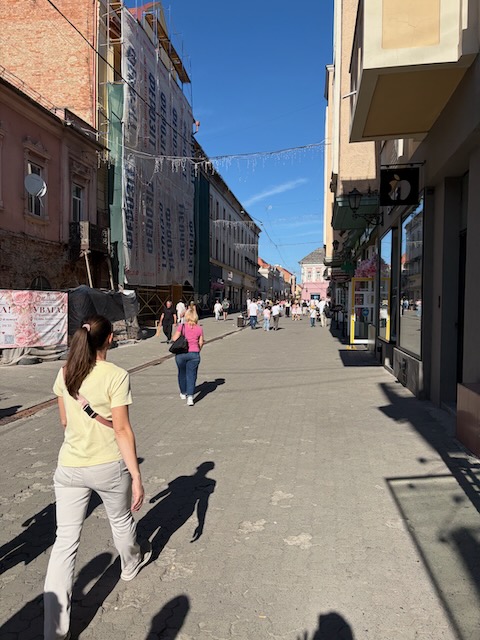
To be fair to the Pest side, there were plenty of beautiful buildings to look at, so who needs da Buda anyway… which would make a great title for a rap song.
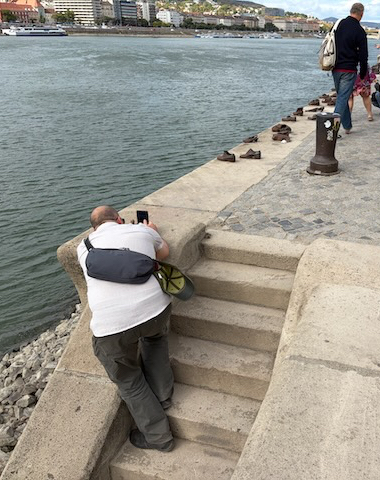
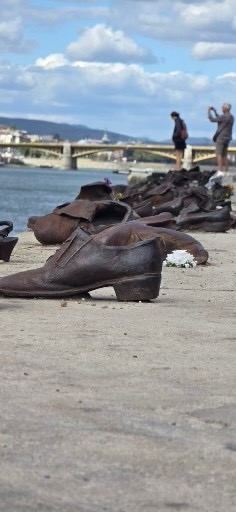
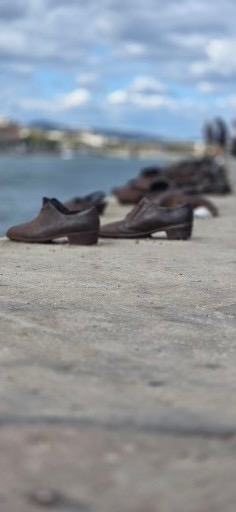
Besides, it’s hard to pay attention to grandiose buildings across the water when there are sixty pairs of old-fashioned shoes made of rusted iron to look at. Okay, it’s a little risky to poke fun at a monument based on something so solumn and tragic, so I’ll get serious for a moment. The shoes are a memorial and a monument to the Hungarian Jews who, in the winter of 1944-1945, were shot on the banks of the Danube River by the members of the Arrow Cross Party (effectively Hungarian Nazis). If you really want to know how horrific it really was, consider that in some instances Arrow Cross militiamen bound the hands of two or three Jews together, adults and children alike, before shooting just one of them. When the executioners positioned their victims properly at the water’s edge, the person who was shot would drag the others into the Danube as he fell. Thus, the victims, bound together by shoelaces or rope would either sink beneath the surface or drift downstream. If the militiamen noticed that any of the victims had survived, they used them for target practice. Most, however, particularly the children, simply died from the shock of the freezing water.
So indeed, this was an important scene to spend some time on and remember how absolutely horrific human beings can sometimes be.
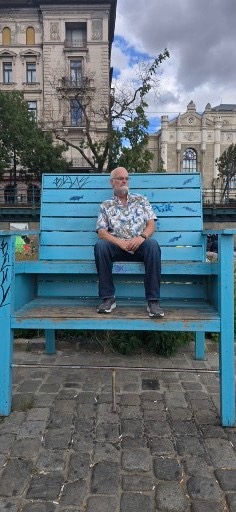
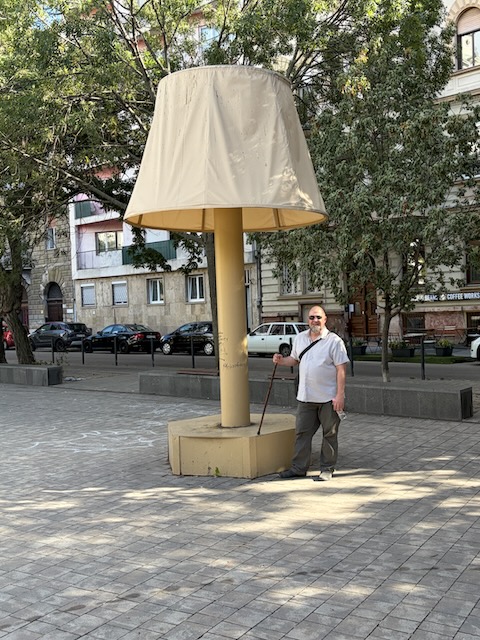
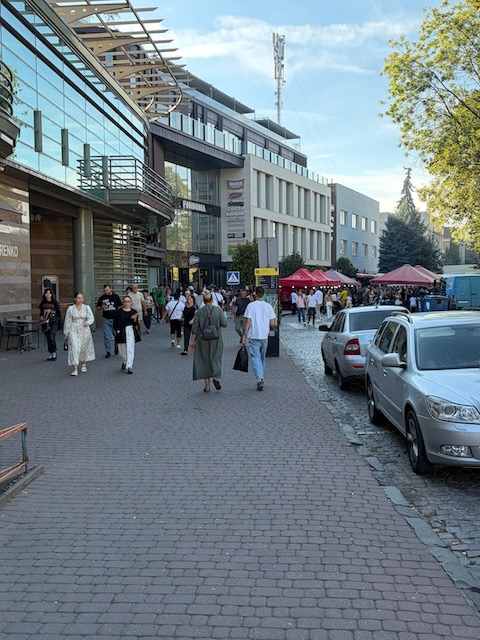
Here are another couple of instances where Budapest makes you feel a little small.
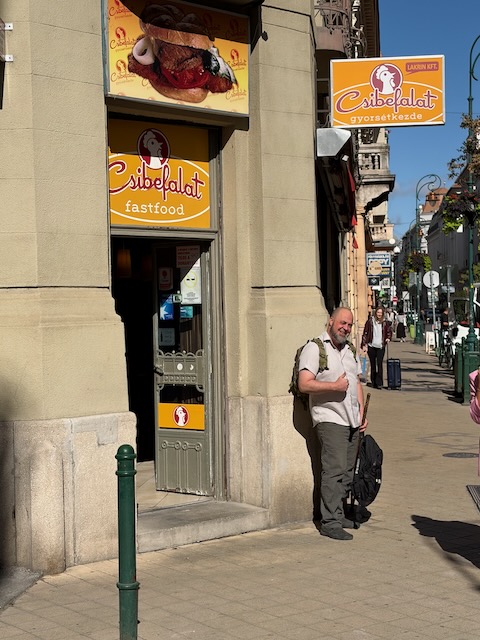
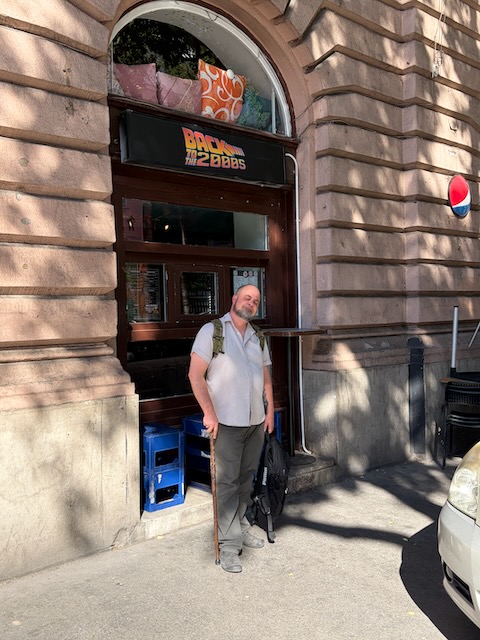
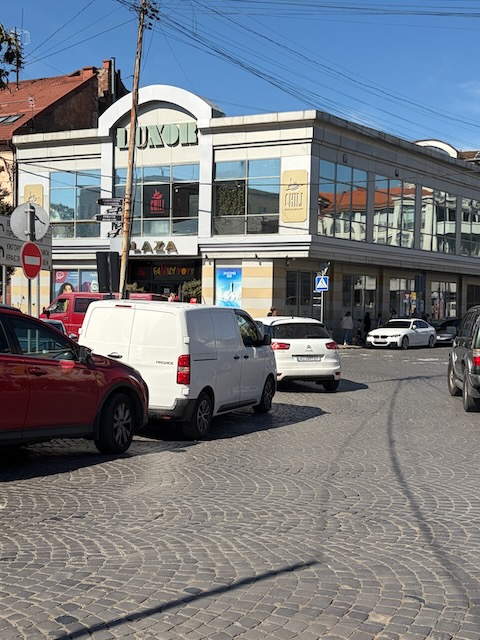
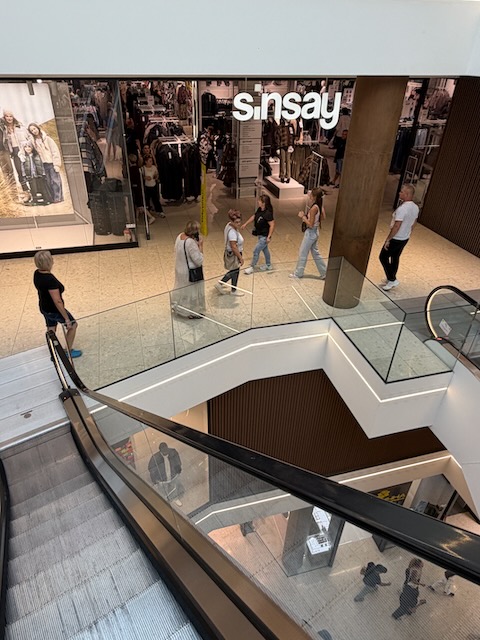
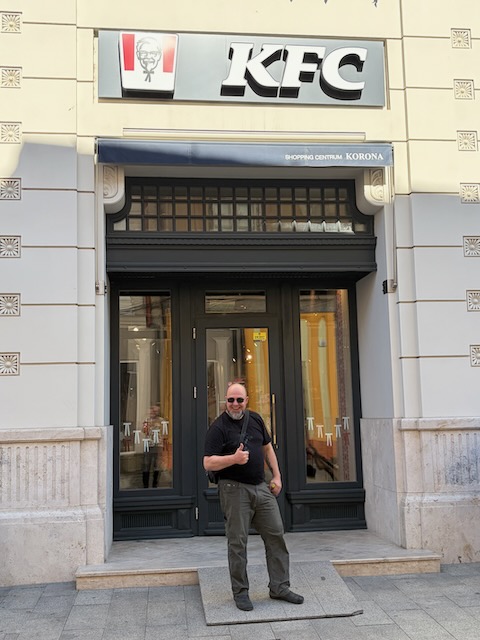
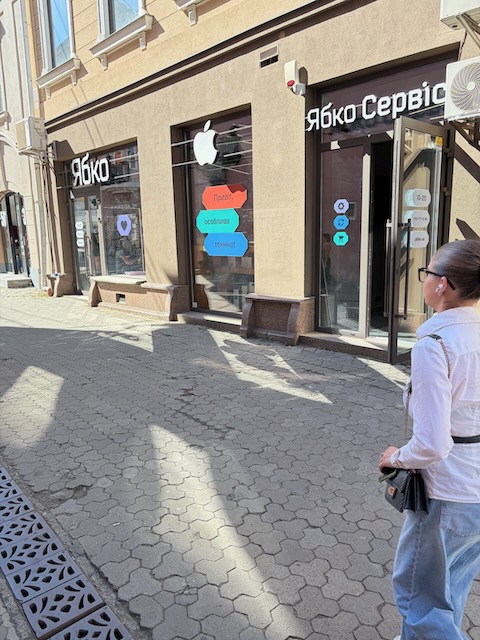
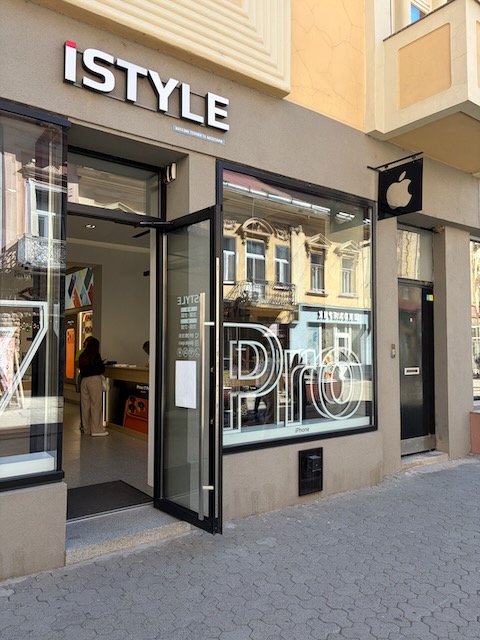
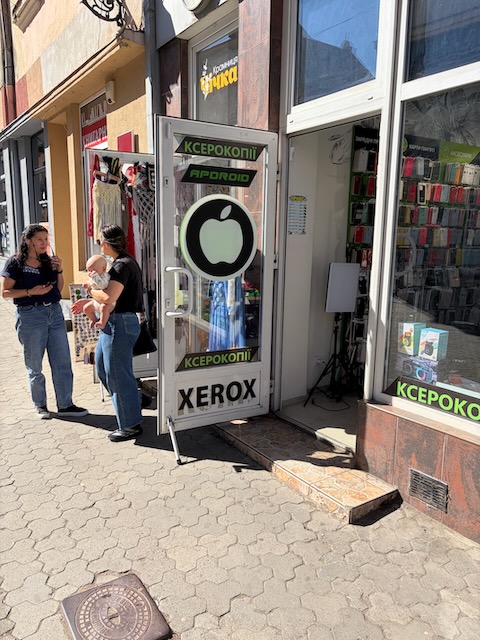
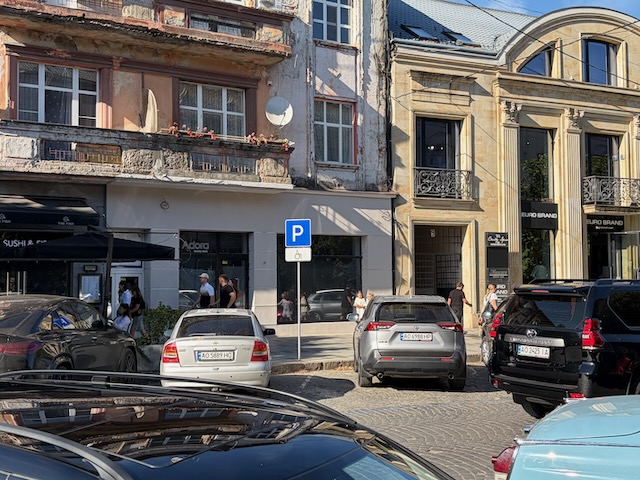
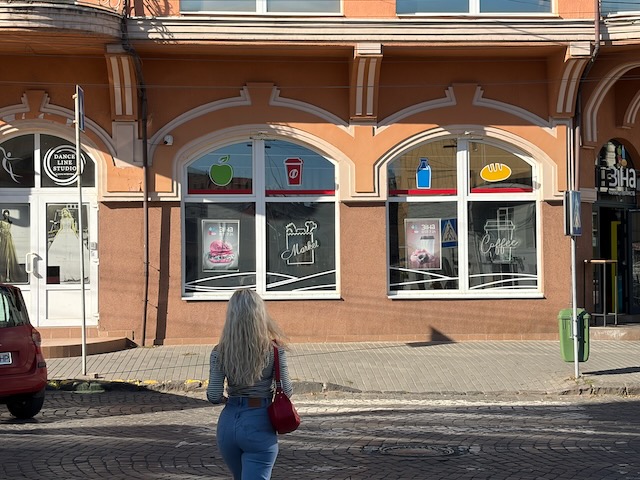
During my travels, I have noticed that American influences can be seen just about everywhere. Here, “fastfood” becomes part of the Hungarian lexicon, and the Back to the Future logo is used to create this store’s identity, despite the fact that “Back to the 2000s” makes little sense when you’re still in the 2000s. I also wonder about two other things: who’s tall enough to shop for those pillows, and what do pillows have to do with going back to the 2000s? Which we’re still in.
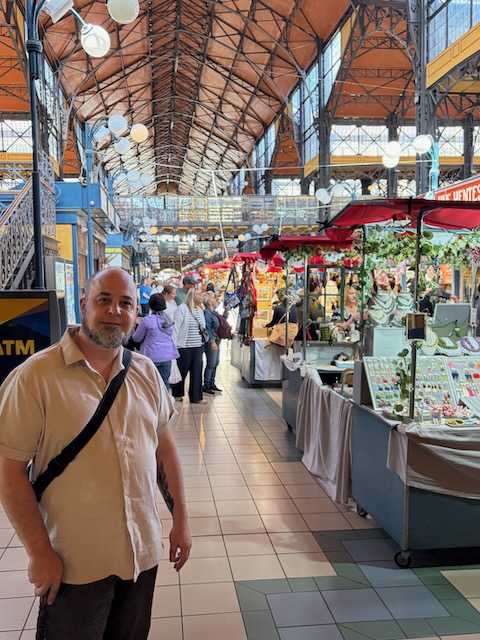
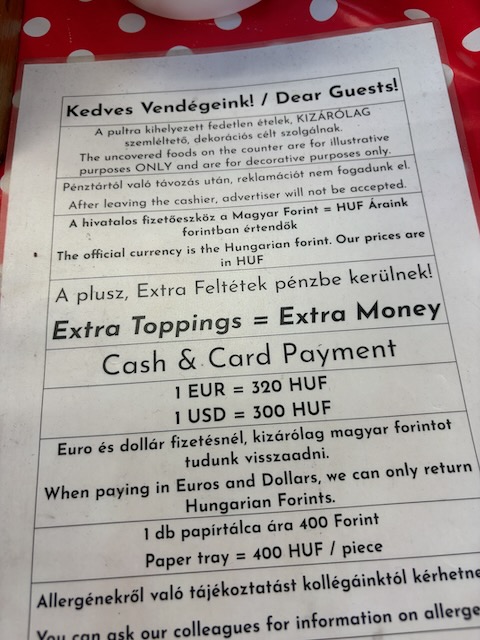
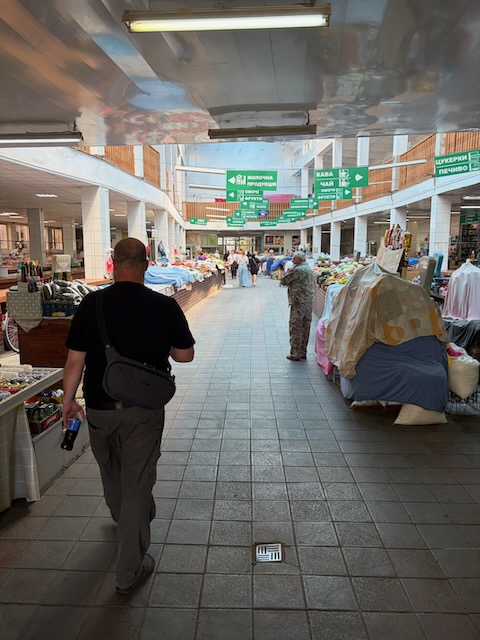
I did return to the Great Market Hall, where less than a year previous I had been ripped off by one of the food vendors who had dumped all sorts of extras on my plate without me realizing that it would run the bill for the single lunch (ultimately diarrhea-inducing as an especially unappreciated bonus) to the equivalent of over 30 bucks. I wanted to see if the same bit–er, um, woman, was there so I could figure out a way to cost her even more money than I already had in retribution (described in this entry), but I was happy to see that they now prominently displayed a notice with the boldest font proclaiming, “Extra Toppings = Extra Money.” Additionally, the location’s sign had changed and the woman was nowhere to be found, so I’m guessing that one of my loyal readers is a Hungarian government official and immediately after reading my post he or she marched down there and threatened them with a beheading if they didn’t post this notice and fire the woman immediately. Well, I mean, you never know. But I was glad to see someone made sure that practice came to an end. Maybe she was a relative of Orbán’s after all, and when he fell, she fell. Whatever. In any case, I wasn’t stupid enough to order from there again especially since they didn’t bother to say whether they were now diarrhea-inducing-free as well.
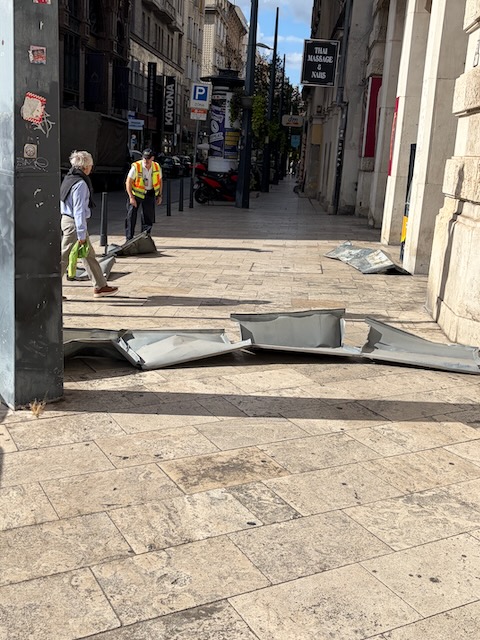
We’ll leave Budapest with this slightly amusing anecdote I wanted to make sure I remembered to write about by taking this picture. Some construction workers were doing an upgrade on the roof of a building, and every so often a big piece of metal like this would come crashing down onto the sidewalk. There was a guy wearing a safety jacket trying to direct people away from the drop zone, because I guess safety cones and caution/barrier tape are on short supply in Budapest. So they only had him to prevent disaster, but all sorts of people kept walking through the area before he could stop them. We stood and filmed for a while, being certain that some hapless pedestrian was gonna get clonked on the head, and we’d have one of those videos that would be included in a fail video with a title like, “Watch While Innocent People Get Hilariously Maimed or Killed!” and we’d be become famous YouTube influencers and I could retire from my career of retirement. But alas, we lamented that we saw no one injured on that day, much to our dismay and disappointment. Still, it’s a good example as to how every day can present a risk to your life, especially if you’re wandering the streets of Budapest.
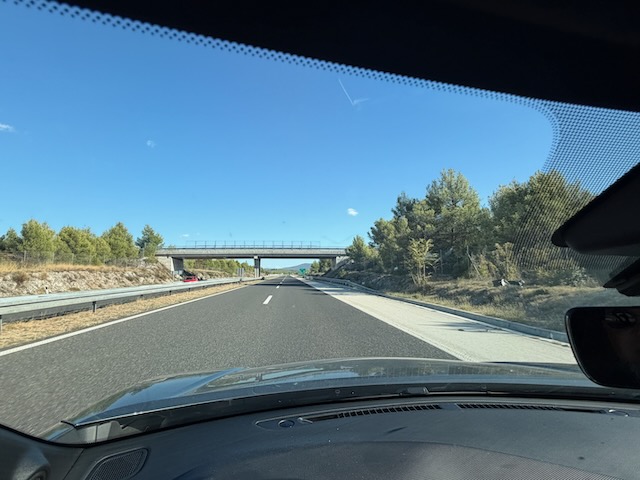
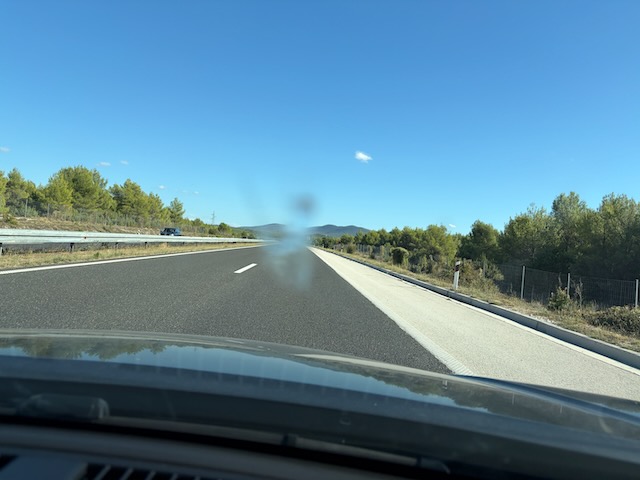
One of the things I’d hoped for on this trip was to see some awesome sights between the cities, especially in Hungary, because after I’d visited Budapest, I lamented (apparently I’m doing a lot of lamenting lately) that I hadn’t gotten out of the city to see the countryside, since there are Unesco heritage sights and more to see. However, what we learned by actually driving through it is that unless you really research and make plans to drive directly to somewhere other than the next major city, pretty much the only thing you see on the freeways is road, some bushes, and the occasional insect splat. And so that’s pretty much all we saw between Budapest and Zagreb.
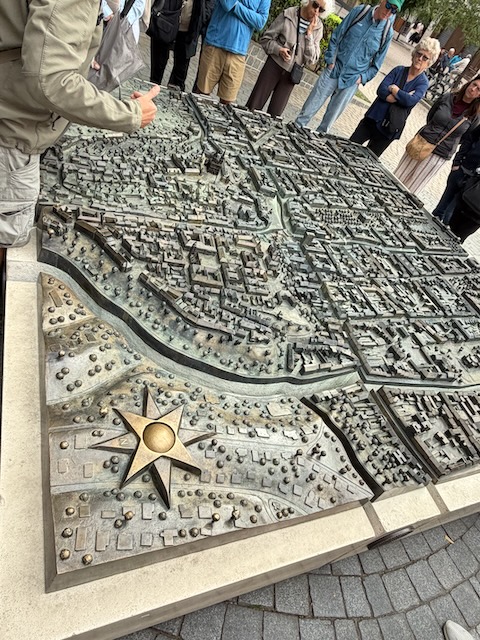
Zagreb is a pretty cool city to walk around in, as exemplified by this very helpful 3D map they provide for tourists. As I document our visit below, I’ll reference the places we were on this map by using a grid, so imagine an A to Z on the left and 1 to 100 on the bottom. Accordingly, if I say “B12” for instance, you can yell, “Bingo!” when you pinpoint it on here. One thing though, as hard as we tried, we could not find that big star building anywhere, so this map may not be completely accurate.
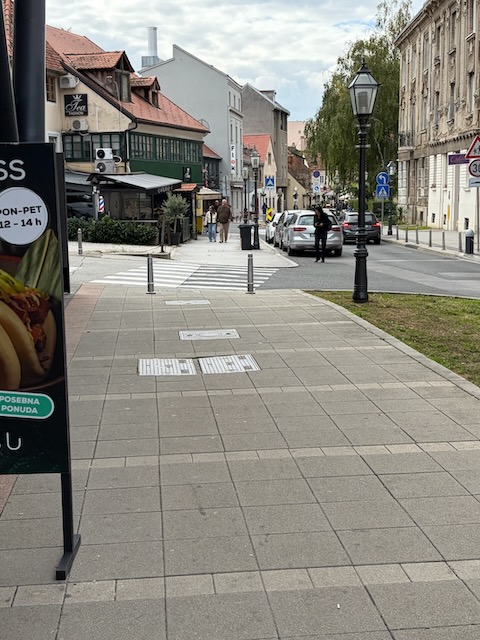
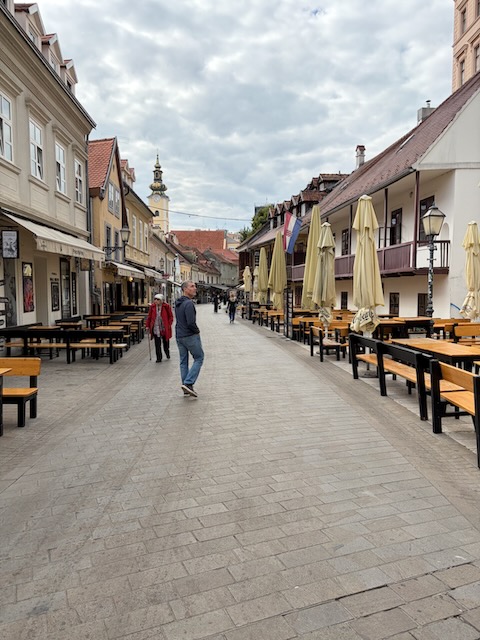
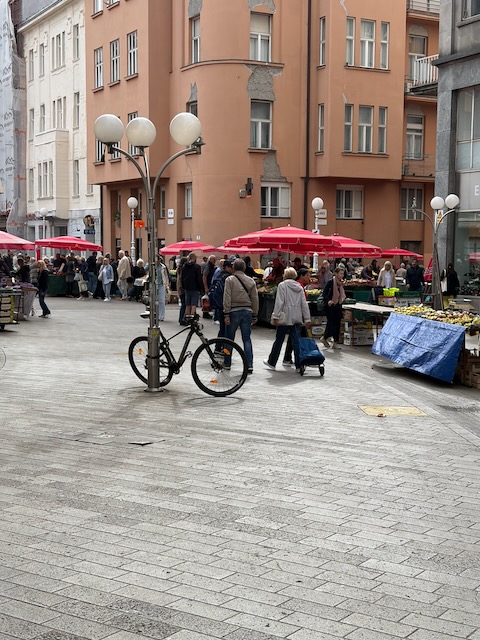
One thing we wanted to make sure we documented in photographs was the fact that they have buildings and paved walking areas. O13.
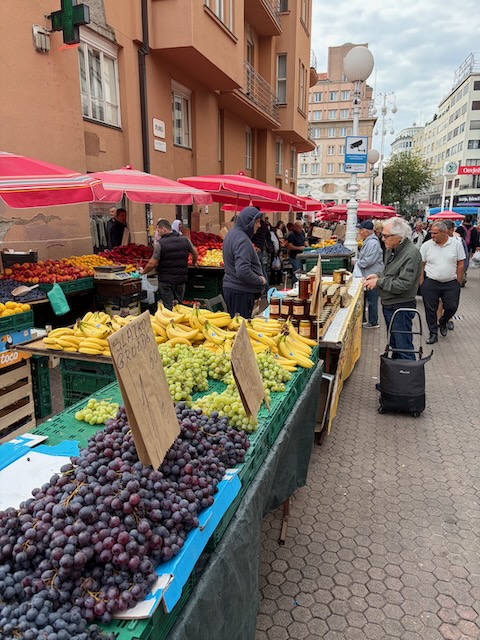
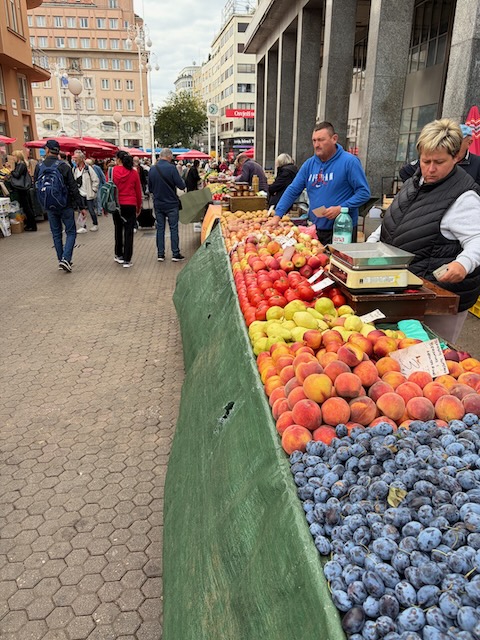
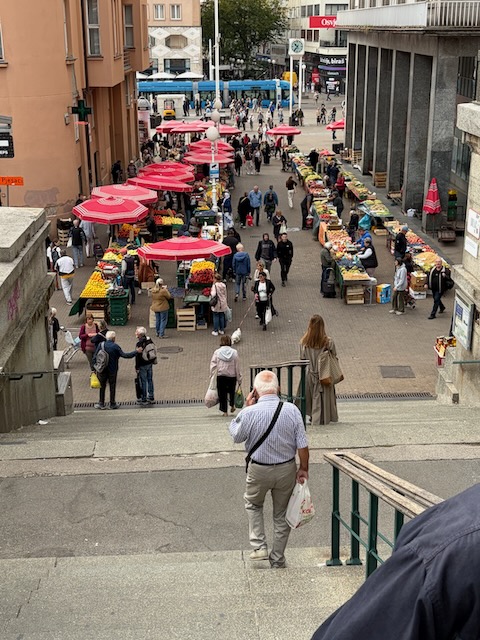
They also have fruit. (I hope you didn’t really try to play bingo.)
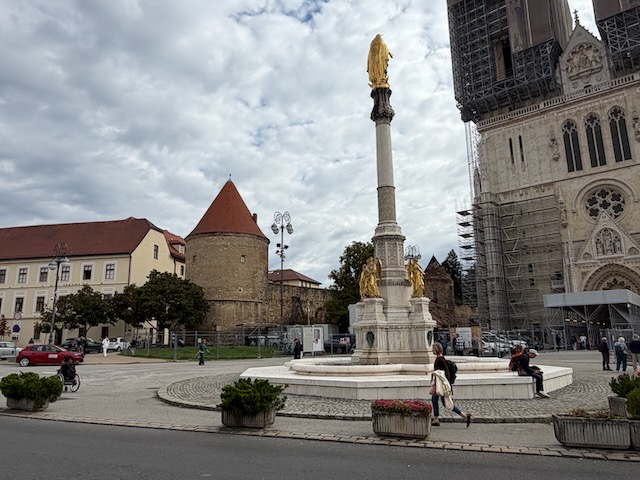
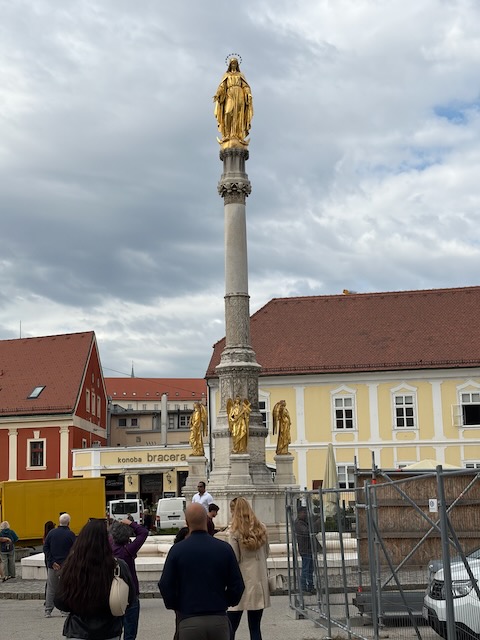
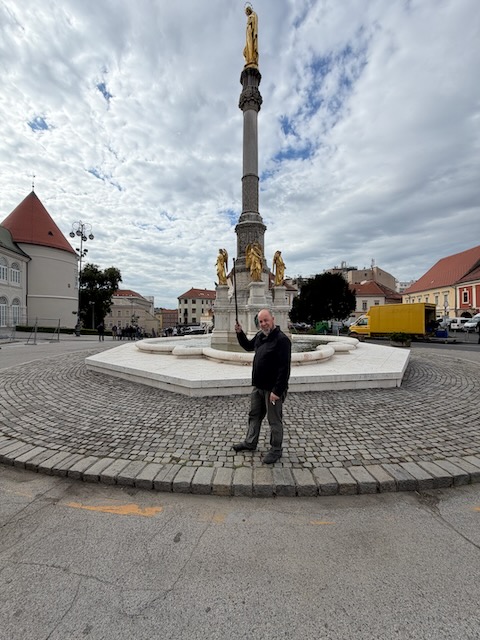
They also have statues of acrobats balancing on top of pillars. Well, only plural if you keep taking pictures of it.
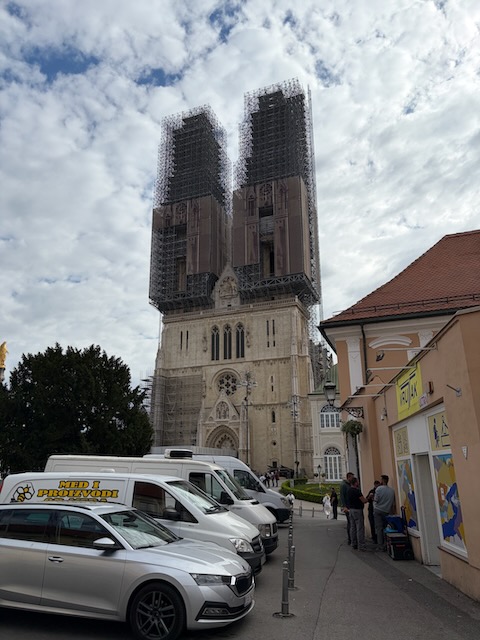
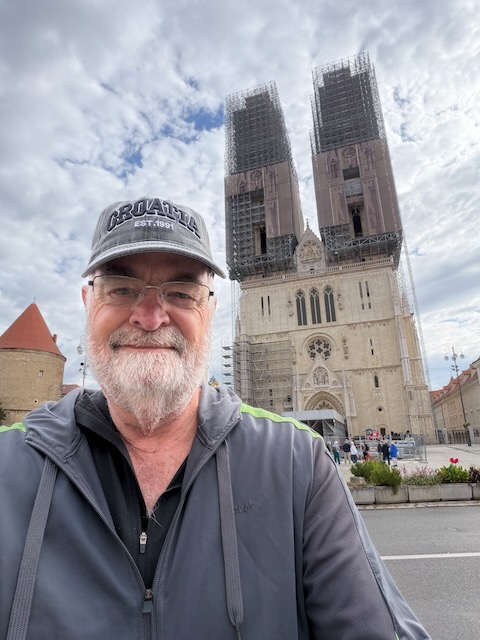
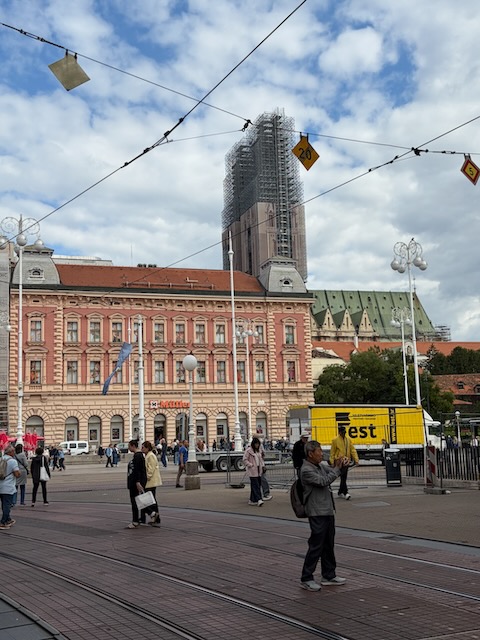
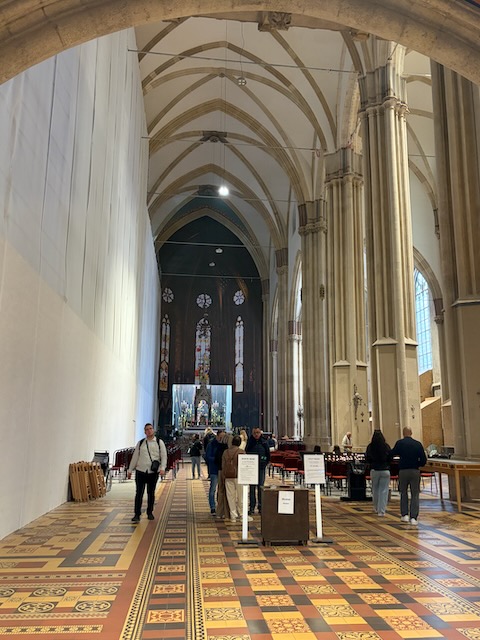
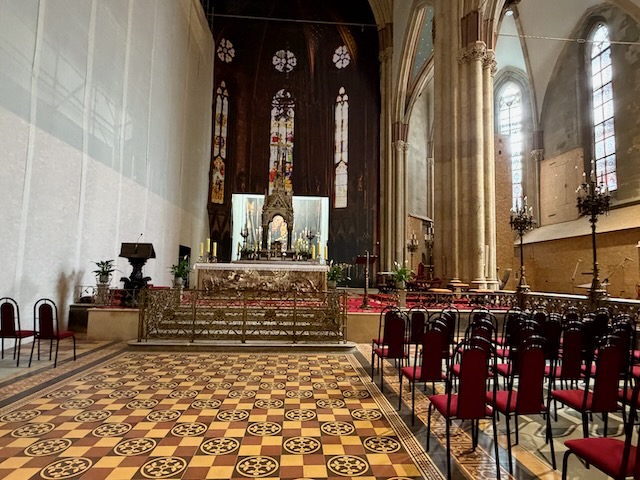
They also have a church with an interesting history. The short version is this: Other than this blog, the Zagreb Cathedral is the most famous symbol of the city of Zagreb. The history of the cathedral is the history of the city and the diocese, which begins at the end of the 11th century, more precisely in 1093/1094, when the Hungarian King Ladislav founded the Zagreb Diocese. On Sunday, March 22, 2020, a major earthquake hit and the cathedral was severely damaged and the stone top of the southern tower, on which a gilded cross with a lightning rod spike was attached, was demolished. This explains why the towers in the photos above are still shimmering with electricity.
The long version is here: https://katedrala.hr/hr/povijest-zagrebacke-katedrale/753 in case you’re really interested in the topic of Zagreb Cathedrals getting damaged due to major earthquakes and subsequently having to use stacking chairs for pews.
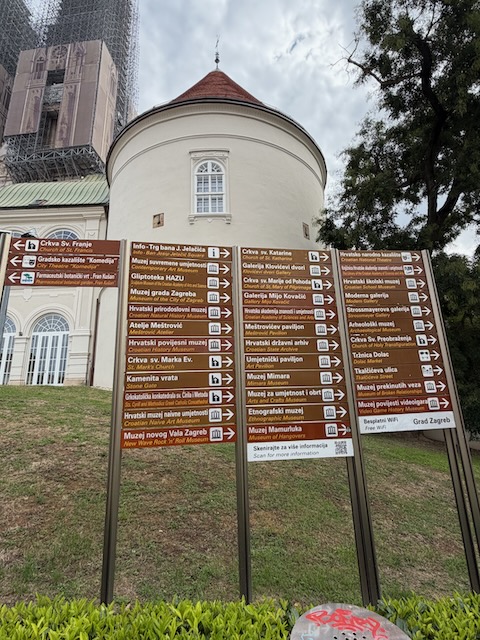
Once we saw the church and the Monument of the Assumption of the Blessed Virgin Mary (also known as the Marian column and fountain –my bad, she wasn’t an acrobat after all, as far as we know anyway), we figured we’d seen all the sights and then… oops: holy mother of God they apparently have a lot of tourist attractions. Which makes sense because Zagreb is the capitol of Croatia as well as its largest city, plus it’s the last one alphabetically, so it has a lot going on.
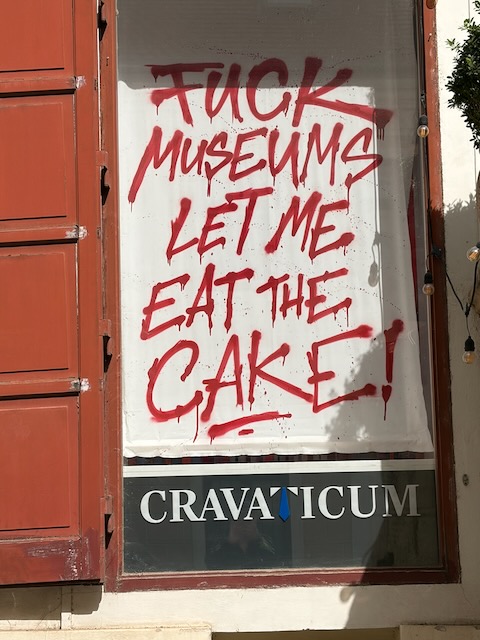
Of course, there is always someone with the opinion that you don’t have to go into all the museums.
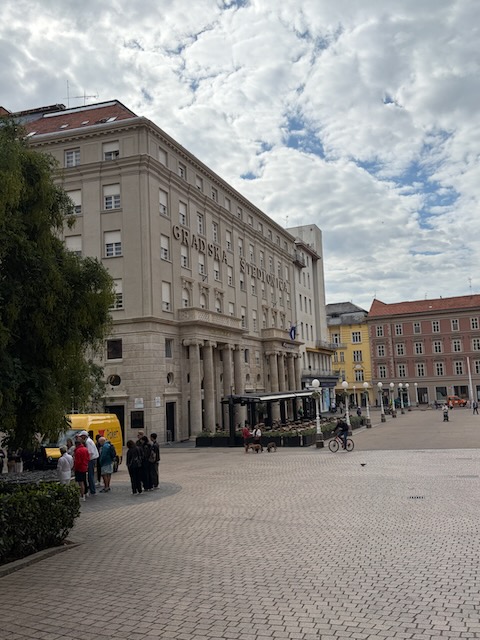
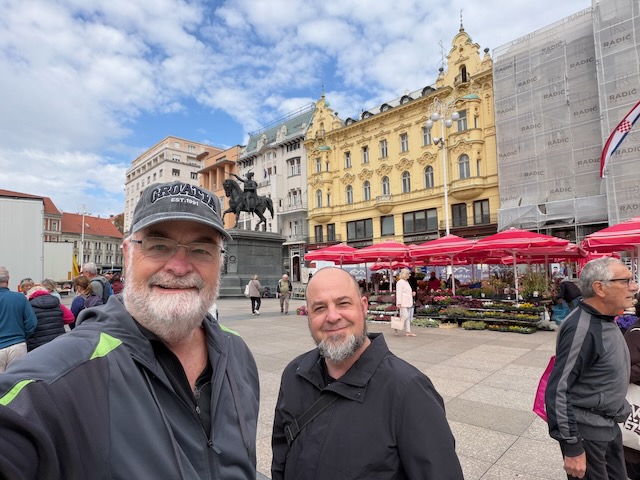
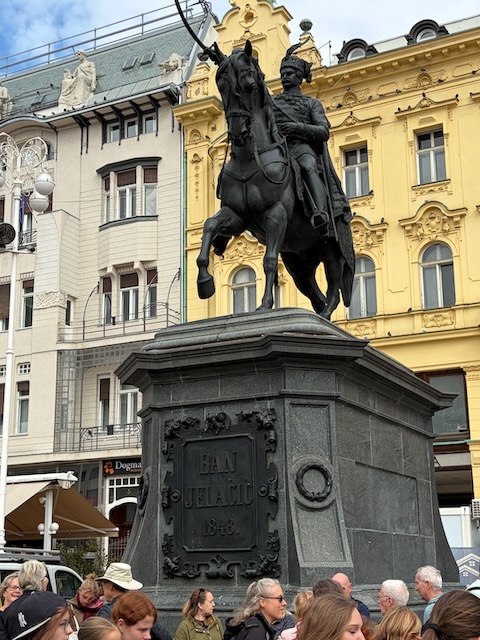
The problem with following those brown tourist signs is once you walk away from them you can’t remember what all is in the direction you started walking. But we followed the signs as best we could and took pictures and did what I usually do when visiting a foreign city: just wander around and look stupid and let the sights show themselves and see what there is to see. I’ve long accepted the idea that no matter where I go in this world, I’ll never see everything there is to see, so I content myself with what I stumble across after looking up the top 5 or 10 things to see in TripAdvisor or AI, just to make sure I don’t miss something particularly awesome, like a statue of a guy on a horse.
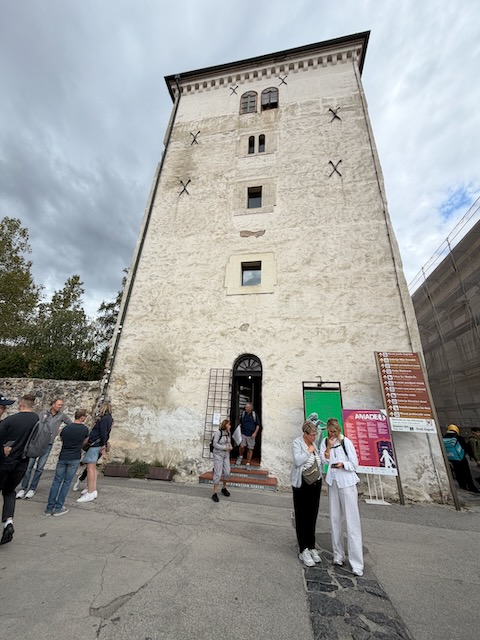
One of the sights that was very much worth seeing at a very specific time was the 30 meter tall Lotrščak Tower (Kula Lotrščak), located in the historic Upper Town (Gornji grad). Built in 1266 (1266) in a square Romanesque style (like I know what that is), it is one of the best-preserved parts of Zagreb’s medieval defense system (system).
To this day, it has a cannon called the Grič Cannon (Grinch Boomstičk), which sits in a southern window on the fourth floor and has been fired daily at precisely noon since January 1, 1877, originally to help set the city’s church bells, and later just to scare the shit out of any tourists, because that’s what Grinches do.
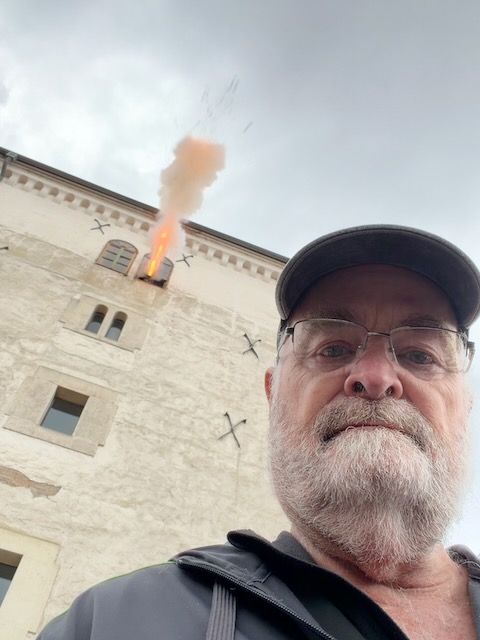
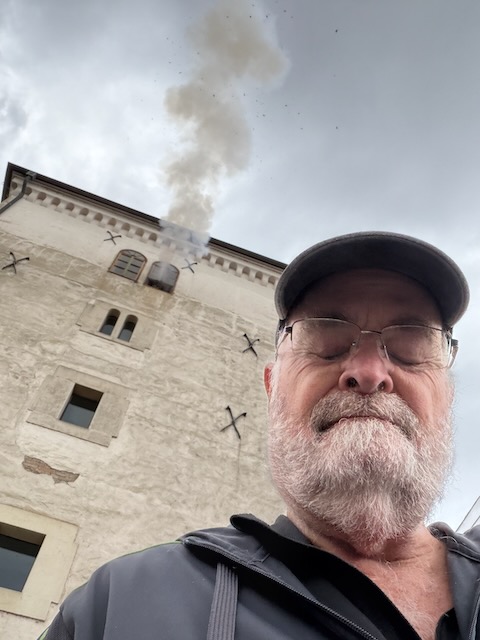
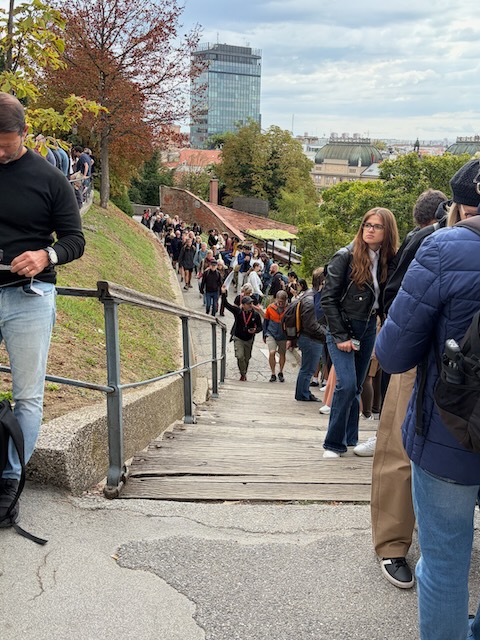
So we trudged up the steep hill and waited with a bunch of other expectant tourists (no, I don’t mean pregnant ones), and precisely at noon the thing went off, and I gotta tell ya, it was LOUD. Louder than Melissa McCarthy giving birth even. I’m not sure where the cannonball lands (and wherever it is I’m sure they’re tired of it by now), but if that’s even a fraction of the sound of modern artillery, and I know it is, then I have a feeling that over the eons, all the soldiers and men who were involved in battles, which historically means just about all of them, had damaged eardrums. As a result, human DNA has been affected, and it’s all passing down to most men, and that’s why, whether they served in the military or not, they can’t hear as well as their wives think they should. I mean, c’mon, not one of you looked at that face and thought, “He sure looks like he hears good!” am I right?
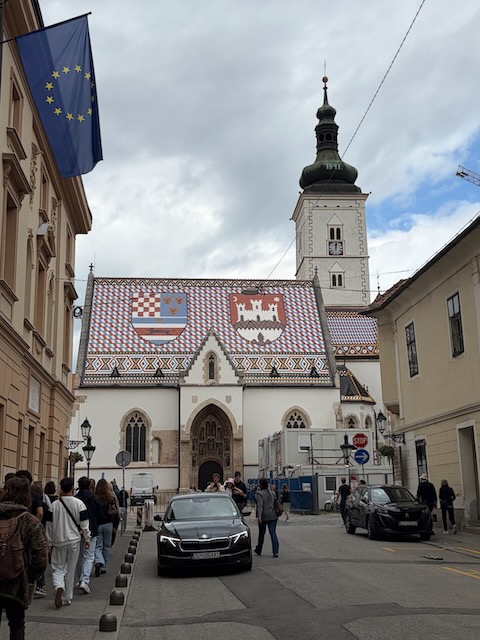
In the same neighborhood sits the now-famous (well, especially now that you know about it) Church of St. Mark, although we did notice that this one isn’t in Venice. It is one of Zagreb’s oldest architectural treasures despite the name plagiarism, and it dates back to the 13th century and has managed to remain quite photogenic for all these years, which is amazing because photography, and thereby photogenicitismness, wasn’t even invented until about 600 years later. Its standout feature is the wonderfully colorful tiled roof, decorated with the medieval coat of arms of the Triune Kingdom of Croatia, Slavonia, and Dalmatia, along with the emblem of Zagreb. It has become one of the city’s most recognizable symbols of history, tradition, and, apparently, a very talented medieval roofer.
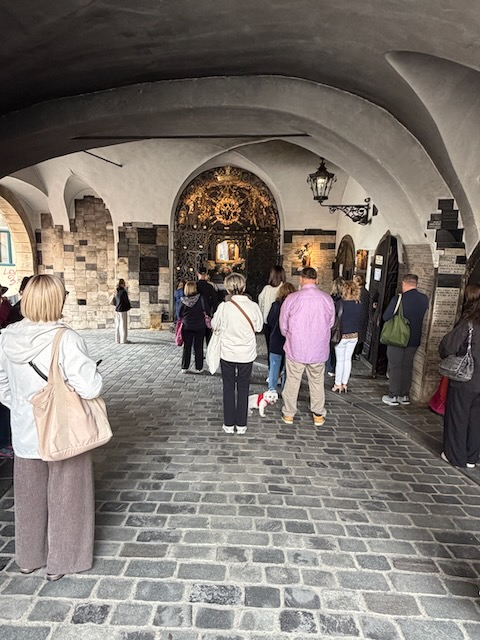
There was also a basement kind of place where they were having a religious ceremony of some sort. With it being in what is effectively a tunnel/walkway, it felt a little odd, because anybody could just walk through, which is crazy because everyone knows God only likes people of a specific religion (I can’t wait to find out which one), so how do you keep all the heathen and cats out?
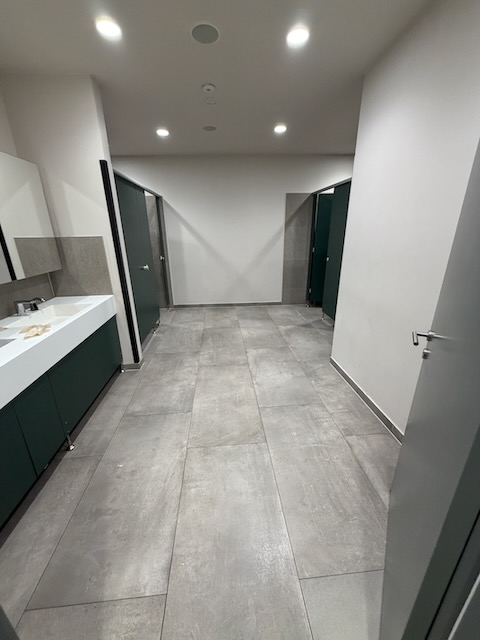
I’m sure you already know that a picture of a Croatian restroom must have a story behind it. We were in a mall, and both of us had to use the toilet. So we found the restroom sign and went in. Over the years, I’ve gotten used to there being a diverse assortment of European toilet facilities, so the fact that this was so open and clean and without urinals didn’t faze me. In fact, it even impressed me, so I took this photo to add to my ever-growing European toilet facility photo collection. After I finished my business, I was at the sink washing my hands when a woman walked in. I immediately thought, “Oh, nice! It’s a unisex restroom! Well aren’t the Croats progressive!” That reverie was interrupted by the woman, somehow sensing that I wouldn’t understand Croatian, telling me that, in fact, I was standing in the women’s restroom.
“Oh!” I replied, followed quickly by, “Oops!” She laughed and explained that her husband had made exactly the same mistake earlier. I was relieved (in more ways than one) to discover that this wasn’t simply a case of two clueless tourists being unable to decipher Croatian signage. Apparently, even the locals were getting it wrong.
Then I remembered Luke. “Hey Luke, uh, we’re in the women’s restroom.” His muffled response came from behind one of the stall doors, “Yeah, I heard. But I’m kinda pot committed here,” using a common poker term. For those unfamiliar with poker terminology, once you’ve invested enough in a hand, sometimes you just have to see it through. Apparently, Luke had reached that point, and there was no folding now. I apologized profusely to the lady and walked out, letting Luke go all-in (another poker term), hoping he’d be able to escape before he terrified some other less understanding woman.
Looking back, I have no idea why I didn’t take a photograph of the signage to illustrate just how confusing it was. Probably because standing around photographing the entrance to a women’s restroom might have made me look like considerably more of a creep than I already did.
But it was clearly an easy mistake to make. And, in the end, there was one small consolation: at least I put the seat down.
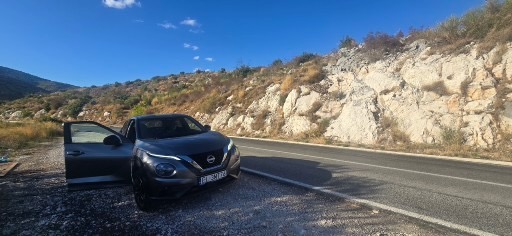
In hindsight, our main mistake in executing this entire trip was going to Split, Croatia. We had the idea of driving all the way down Croatia to Dubrovnik. We thought about even more destinations further south, including Serbia, Montenegro, maybe Kosovo and Albania, maybe even Antarctica, all of which would have been pretty awesome to add to our “Aw, shucks, ma’am, sure I’ve been to that place!” list. Unfortunately, the side trip to Ukraine effectively took a couple of days out of the trip, and we were driving (actually, I drove the whole trip because I mistakenly told Luke he didn’t need an International Driver’s License, because I hadn’t needed one when I first visited years ago and a US license is generally accepted pretty much anywhere. Apparently the rental car company in Poland disagrees, despite the fact that they only wrote, “A valid driver’s license” in their list of criteria online), anyway, as I was saying before I rudely interrupted myself, I was driving a helluvalot already and realized since we had to make it to Prague on a certain day for our return flight, we just couldn’t go any further than Split. Which we shouldn’t have even gone to because that turned out to be a long drive down, and a long drive back up the same way, and was only marginally worth that kind of time and effort. Oh, well, “no plan survives first contact with the enemy” as they say.
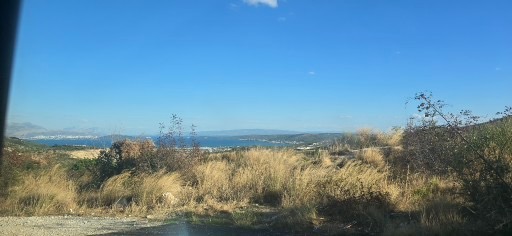
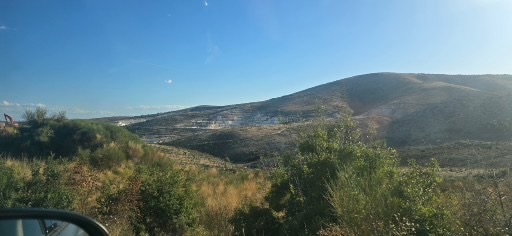
And so, another five hour drive from Zagreb to Split yielded the spectacular scenery of sky and bushes. While we were driving, I commented to Luke that a lot better way to do this kind of trip would have been to fly a helicopter from city to city. All we’d need is an EASA (European Union Aviation Safety Agency) license, and then find someone willing to rent us a helicopter, chart out all the landing and refueling spots, and voila! I was upset that I didn’t think of all that while we were in Ukraine, where there are a lot more helicopters to steal, plus many have eco-friendly air conditioning due to the bullet holes.
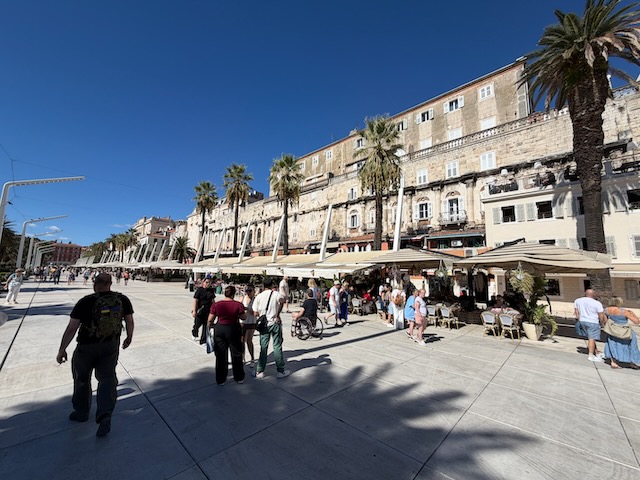
Split is the second-largest city in Croatia after Zagreb, and sits on the eastern shore of the Adriatic Sea. The city itself has a population of over 160,000, while the metropolitan area has about 310,000. Contrary to popular belief, Split wasn’t the place where the banana split was invented. I looked up its etymology, and it’s quite complicated, I’ll just summarize it by saying that in the end Split won out over the previous Spljet, as voted by the city council in 1910. And thank god, because I wouldn’t have been able to pronounce Banana Spljet and I’d end up looking like an Ethiopian refugee without those.
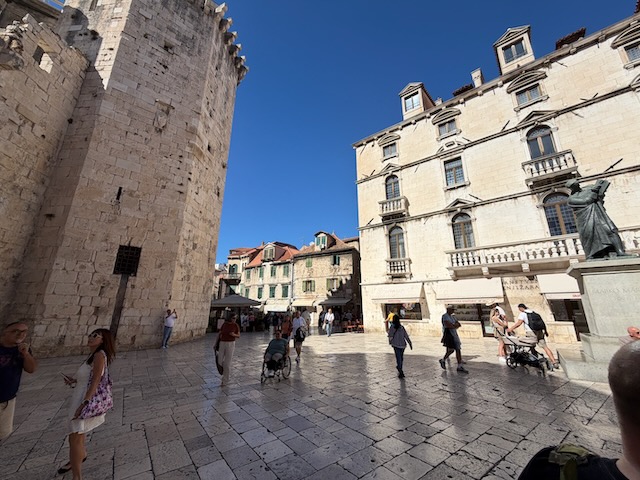
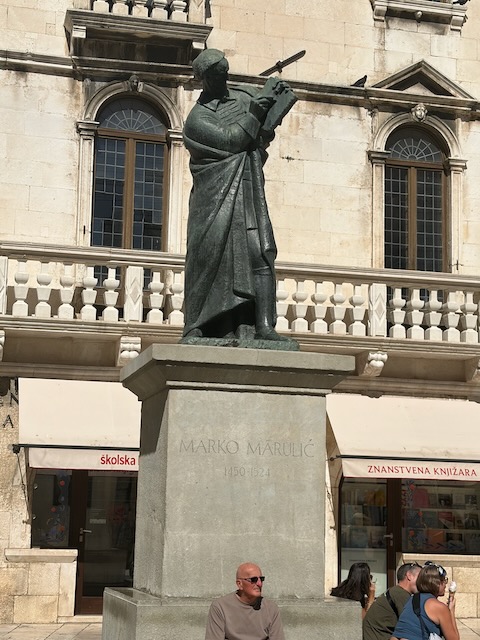
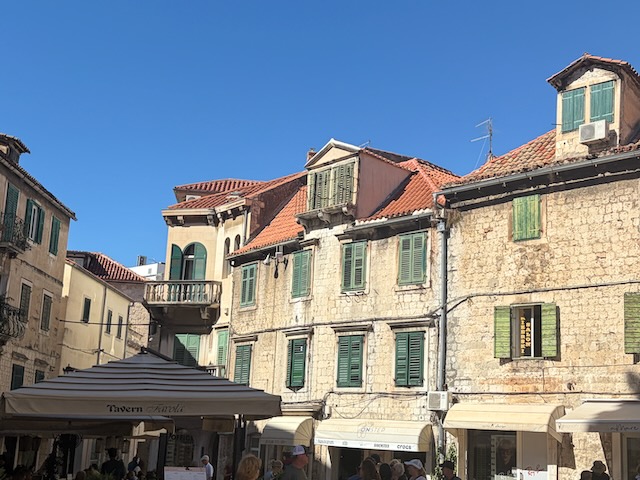
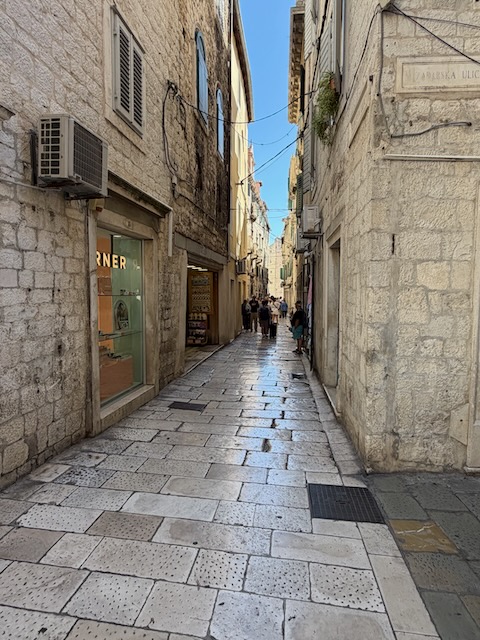
Split is steadily becoming a very popular tourist destination, despite its lack of banana splits. The main tourist area is a nice-looking combination of a port as well as old and new construction. A main street was turned into a pedestrian-only zone some years ago and is quite pleasant to walk along. There is also of course a big city square with a bunch of historical buildings as well as a few ice cream shops, which, to my amazement, did not even offer banana splits.
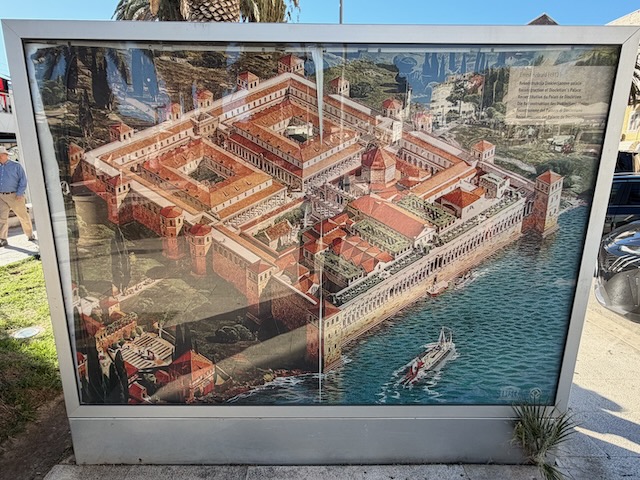
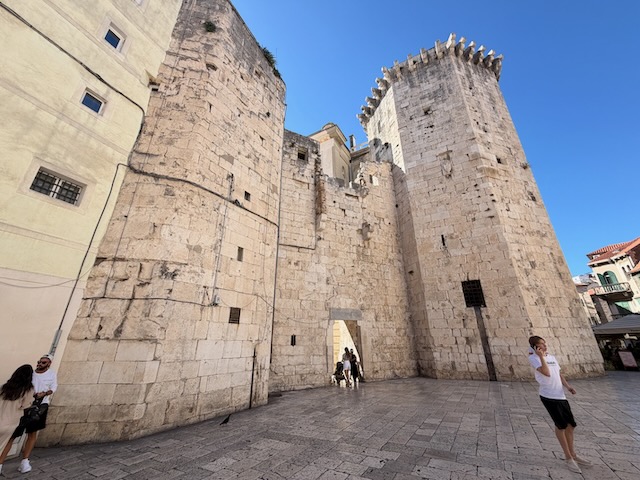
The history of Split is full of conquest and ownership changes, as per the usual it seems most of the cities of Europe. This is how the city looked when it held the Palace of the Roman Emperor Diocletian in 305, which is bananas because they didn’t even have drones that could fly an artist that high. The city was founded several centuries earlier as the Greek colony of Spálathos, which is a lot cooler name than Split. It fell under Roman rule until the Pannonian Avars –who I’ve never heard of– sacked and destroyed it in 639. Prior to all that, it has a spectacular history dating back to The Game of Thrones era, but more on that later.
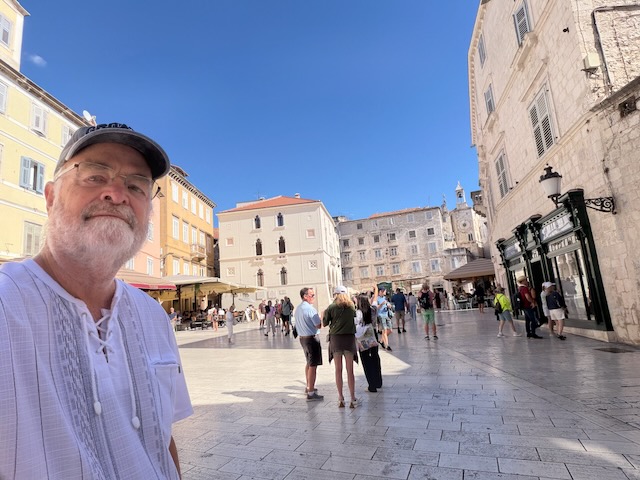
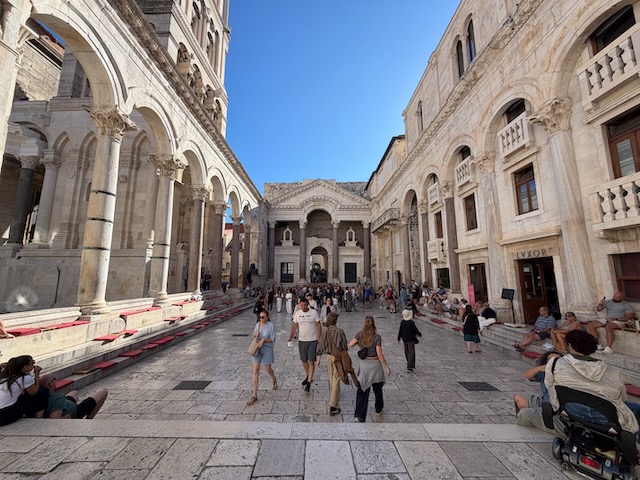
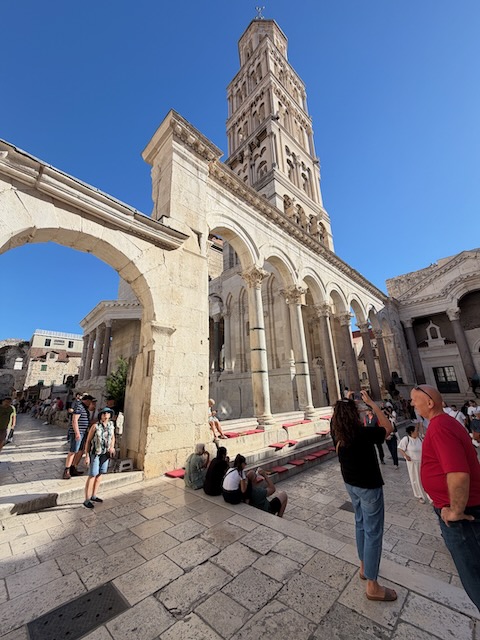
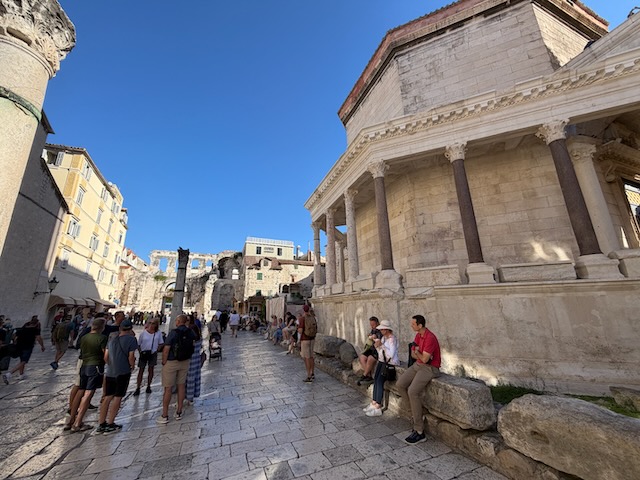
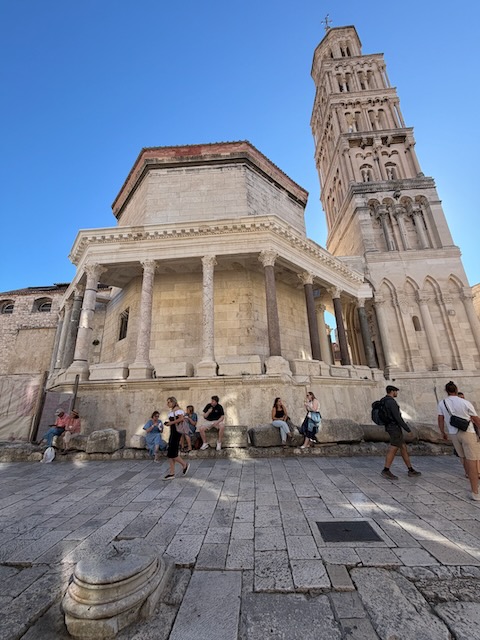
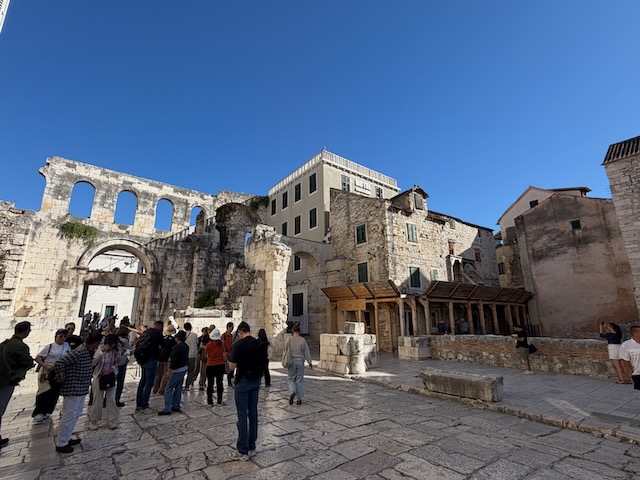
Next to the busy pedestrian zone is essentially the inside of the palace, looking a bit like a gigantic outdoor museum with these gleaming white buildings and stone paving. Everything looked so clean and the paving stones were so smooth I realized there was actually a good reason they didn’t have bananas there.
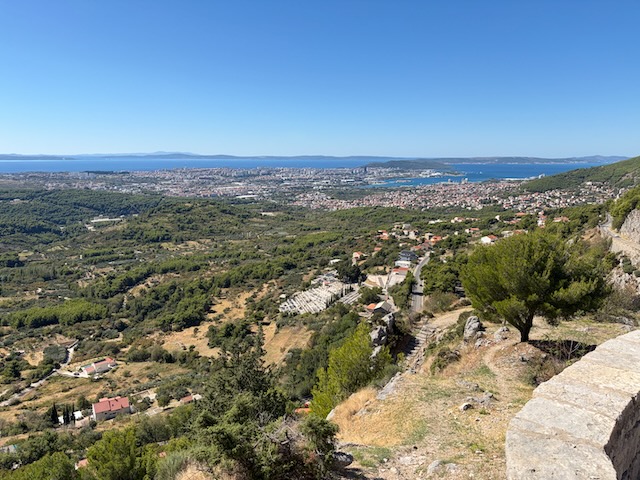
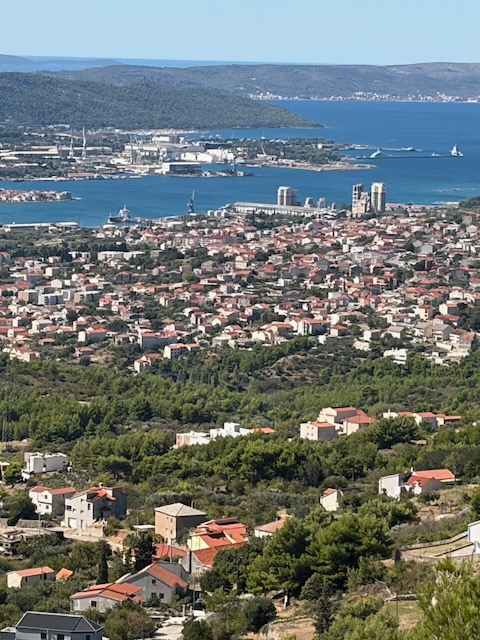
Here you can see Split from the view on top of the hill that holds the Klis Fortress, which was the other main highlight of the city.
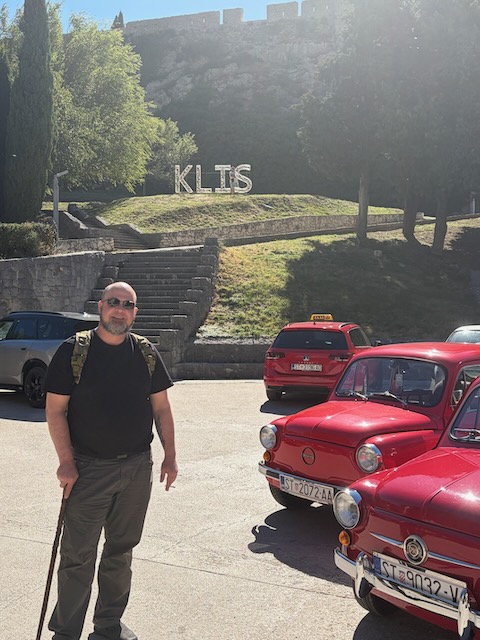
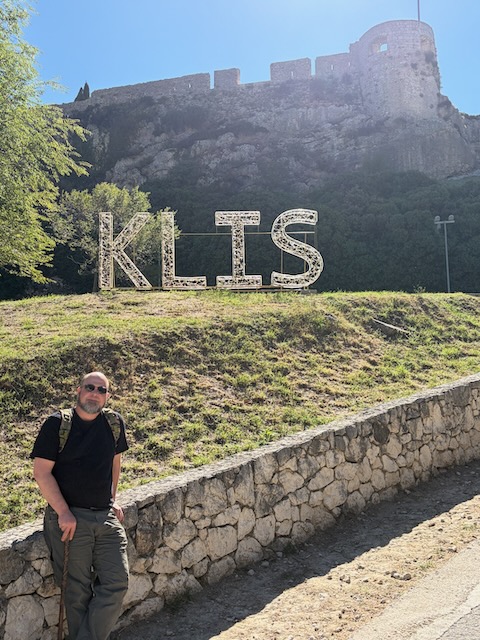
Klis is a suburb of the city of Split, but it’s main claim to fame is the fortress and little red cars, not to mention the very fancy Klis sign that very much looks like the Noel sign I used to put up in my yard in the U.S. during the holidays and cost me about 75 bucks. It’s also famous for being the only city in the world that spells silk backwards.
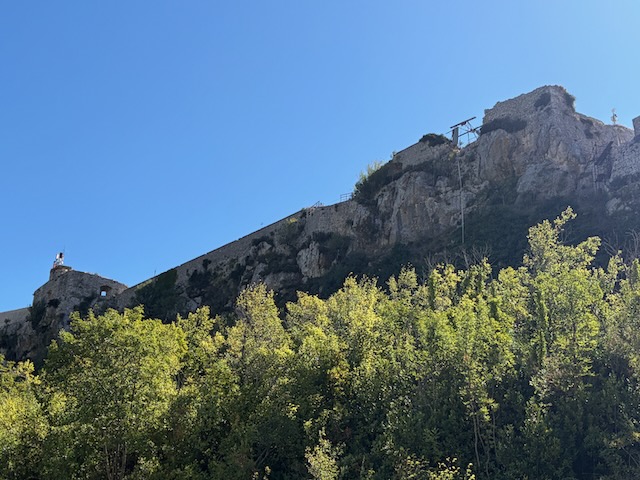
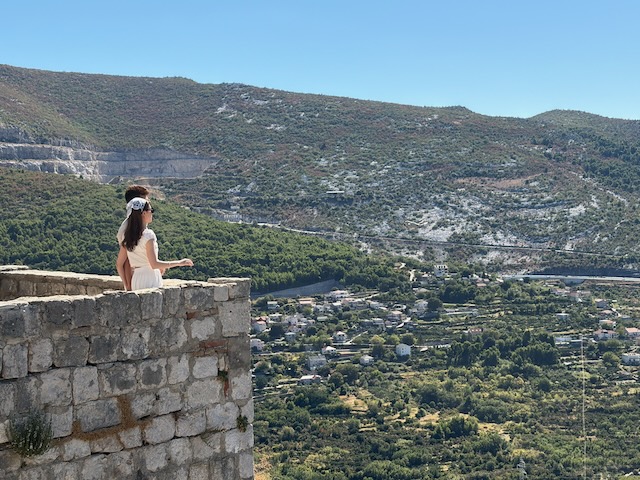
From its origin as a small stronghold built by the ancient Illyrians –who I’ve never heard of– the fortress played a huge role for 2,000 years in guarding the frontier and overlooking Split. It served as a major source of defense especially against the Ottoman Empire, and served as a crossroad between the Mediterranean Sea and the Balkans. It’s also a very photogenic spot for people like this couple, who were being filmed by a drone to either celebrate an engagement or as a tryout for a TV show. The fortress is so scenic it maybe should have been the setting for one of the greatest television shows of all time, like Gilligan’s Island or The Bachelor, but naw, it’d be crazy to use that for a TV show.
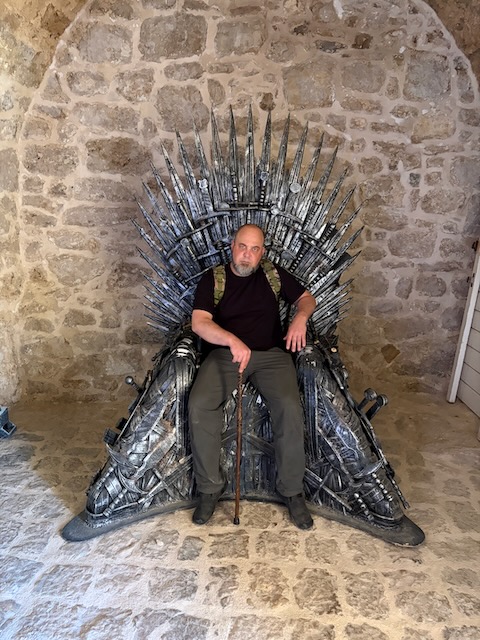

Oh wait! Unless we’re talking about a minor little epic called Game of Thrones! Only the greatest TV series in history with the word “thrones” in the title! Yes indeed, they used the fortress to film scenes depicting city of Meereen in Game of Thrones, and I could hardly hold myself back knowing I was standing on the same hallowed ground as Emilia Clarke while she pretended to be Daenerys Targaryen, looking absolutely ravishing in her long white wiglocks. She was one of the main reasons I kept putting up with scenes of swords going into people’s eyes, severed heads flying to and fro, eyes being gouged out, skulls being smashed while the brains were still in them, mass slaughters, burnings at the stake, a man being torn to shreds by dogs, boiling liquid gold being poured over a man’s head, all for the occasional boob.
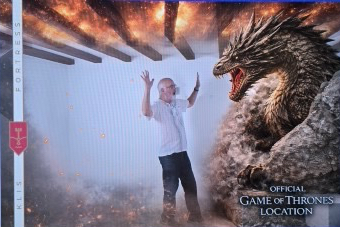
The fortress of course played up the connection, with a recreation of the Iron Throne, photographs of various scenes from the show on the walls, and cheesy tourist pictures so you could see what you would look like while being attacked by a small dragon.
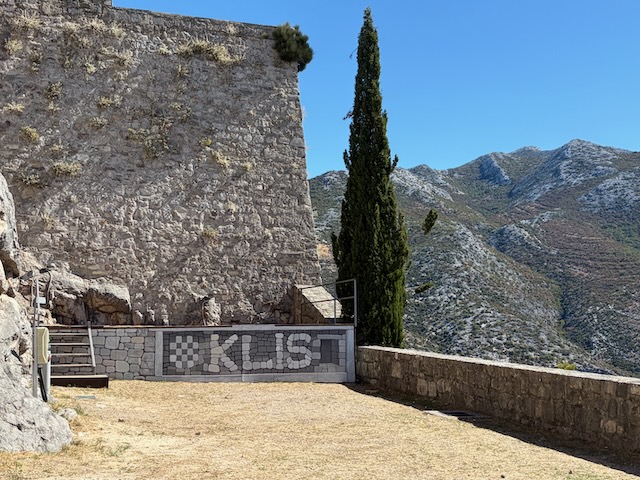
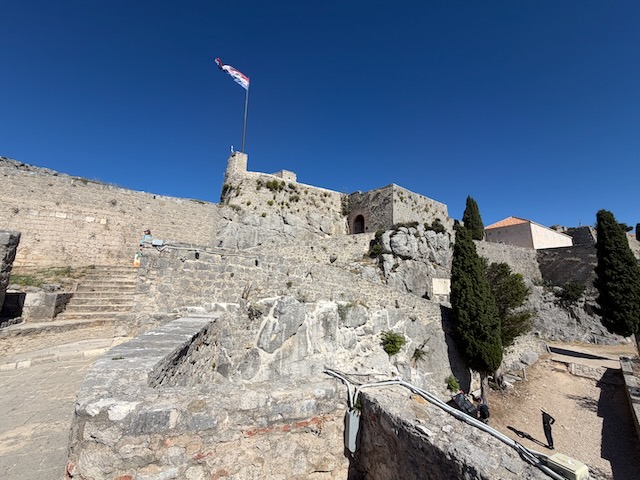
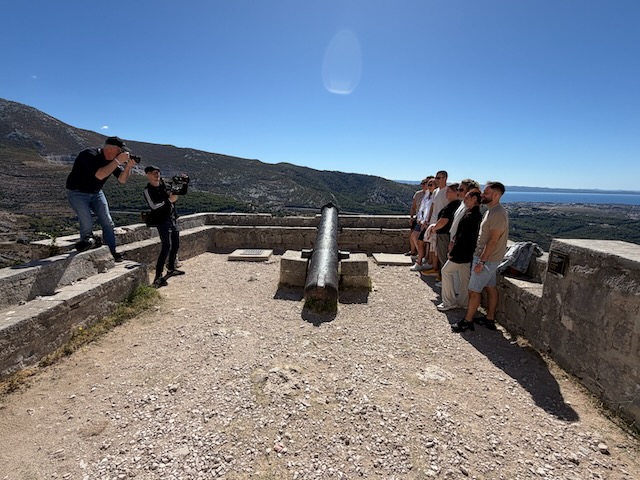
Other than walking around trying to see if I could sniff out Emilia Clarke’s perfume, the fortress was worth a wander. The structure has undergone numerous changes over the years, and the original appearance of it is no longer known. But several buildings from the 17th through 19th centuries are partially or entirely preserved.
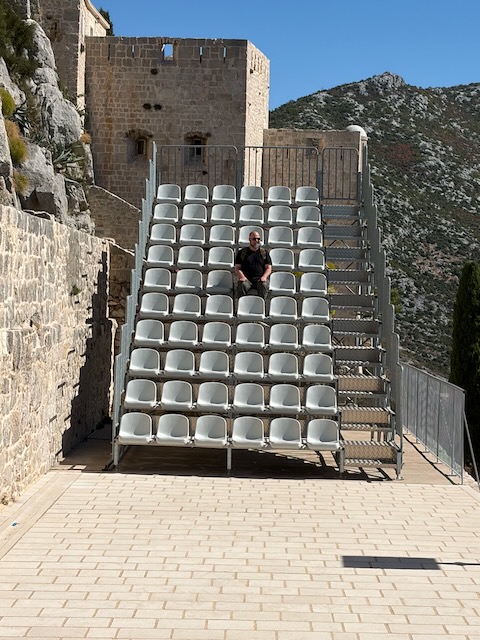
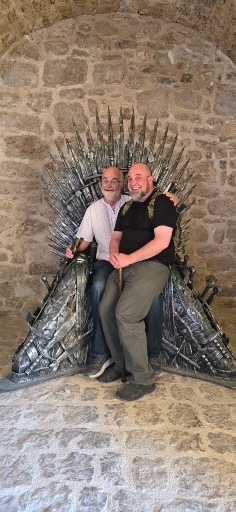
Luke sat there for hours waiting for the film crew to show up. I finally had to take him onto my lap and explain that Game of Thrones happened a long, long time ago, and camera equipment wasn’t even invented then and that there were no such things as dragons. I bought him an ice cream later to help him feel better.
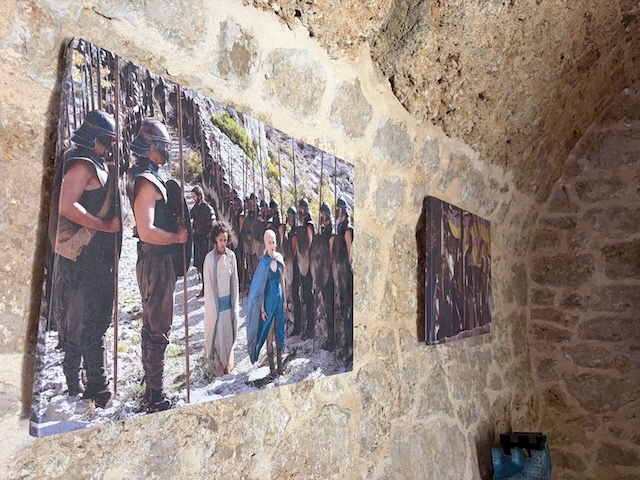
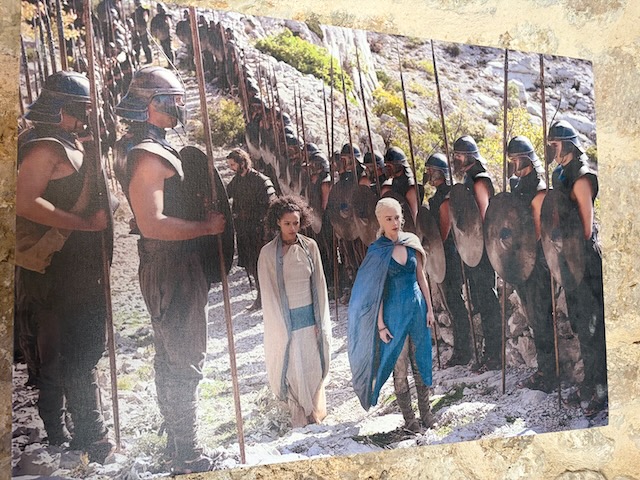
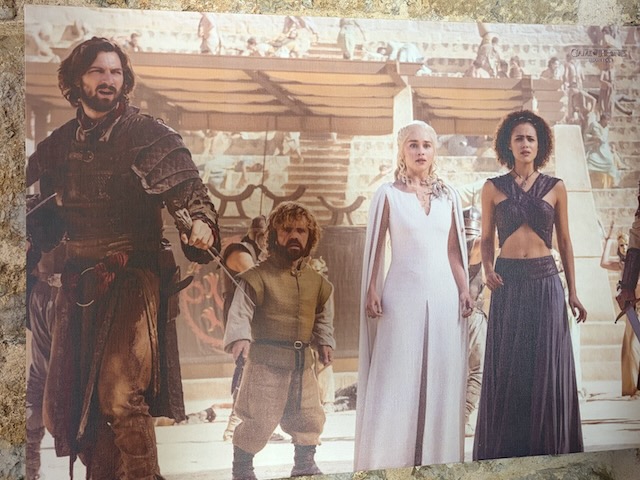
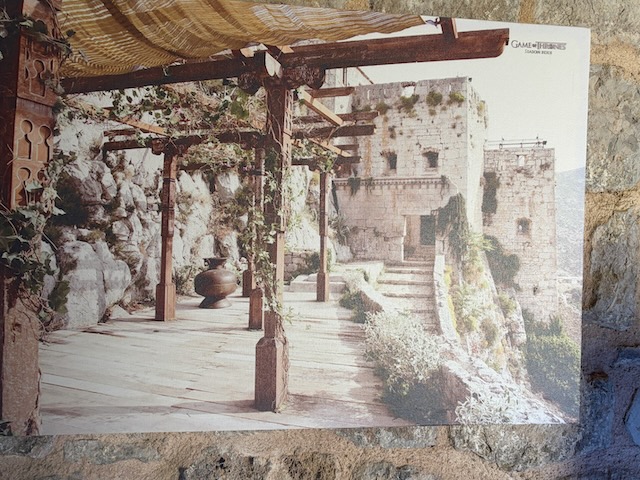
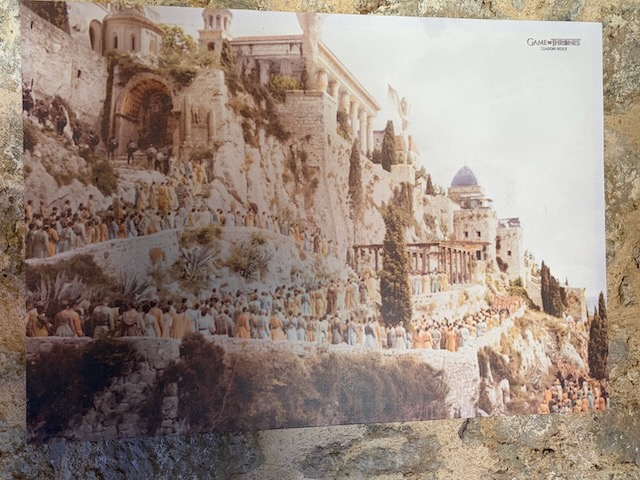
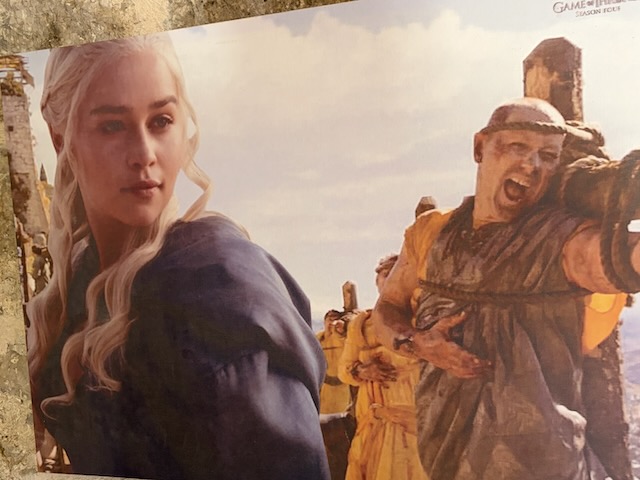
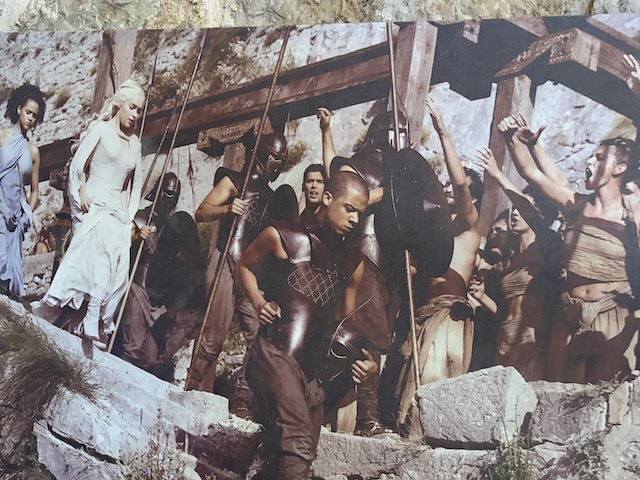
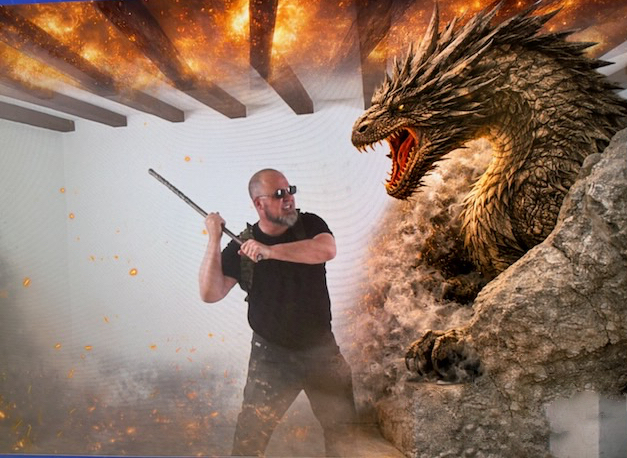
These are some of the photographs they had hanging on the walls to remind everyone that no matter the rich and complex the 2,000 year old history of conquest and defense and governance of a place, nothing beats a good TV series with a hot babe in it.
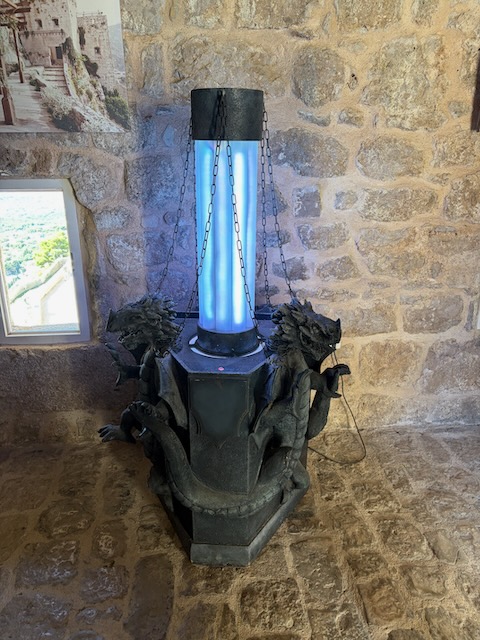
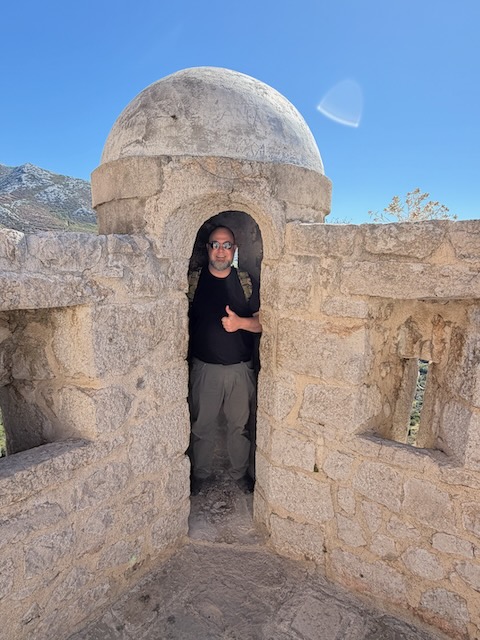
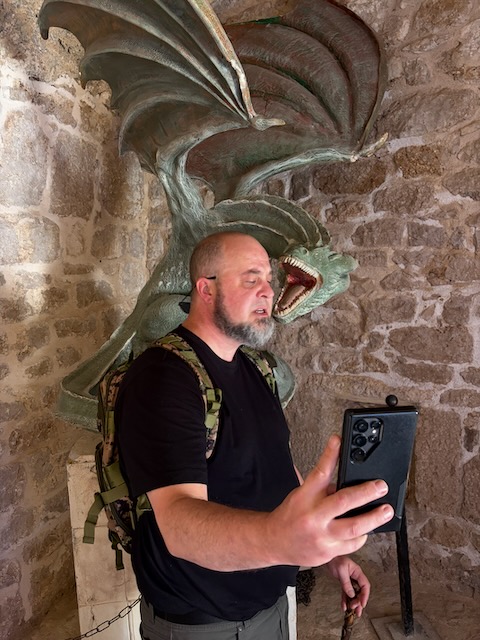
I can’t remember what the blue light special thing was all about, but whatever it was, at the time I thought it was stupid so it exited my memory banks immediately. In the middle photo Luke was glad to find a restroom, and then later he sang a duet with a dragon.
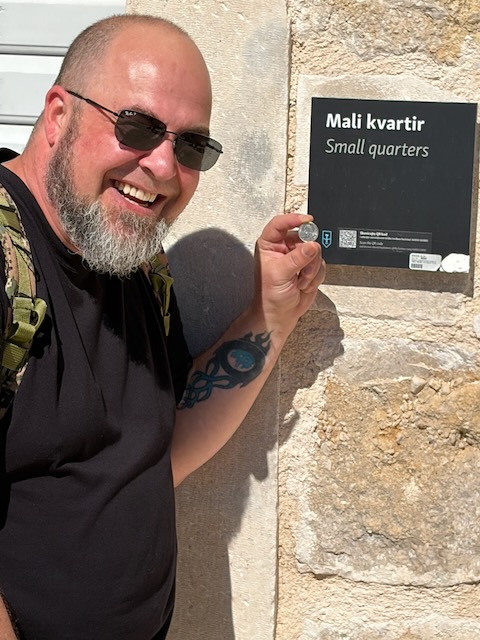
In American currency, twenty five cent pieces, also known as quarters, are all the same size. So this sign was particularly stupid.
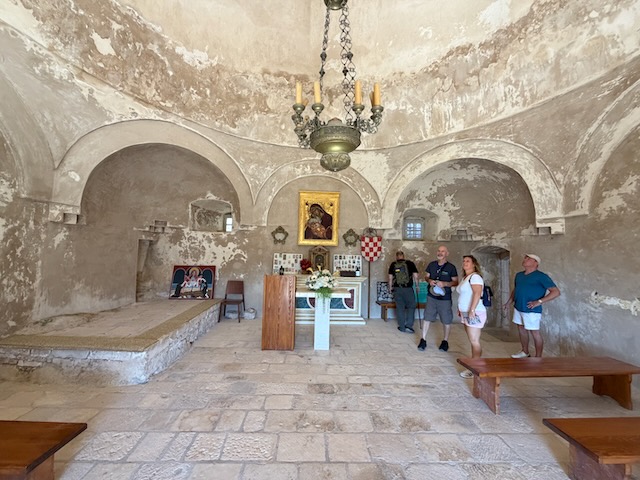
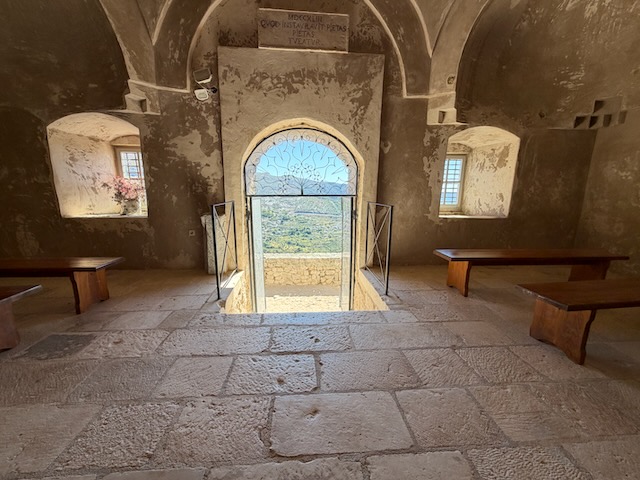
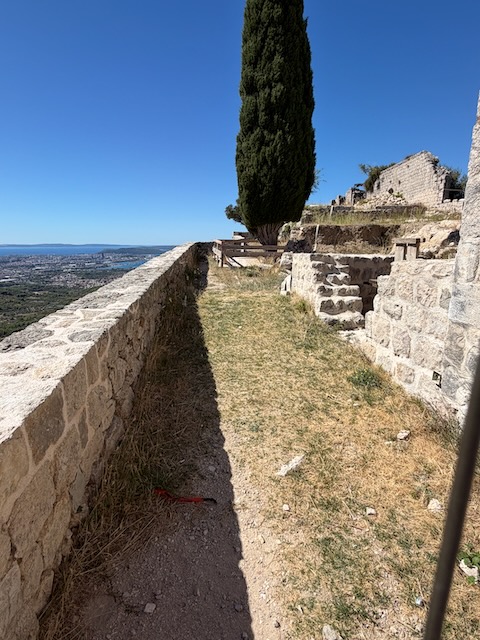
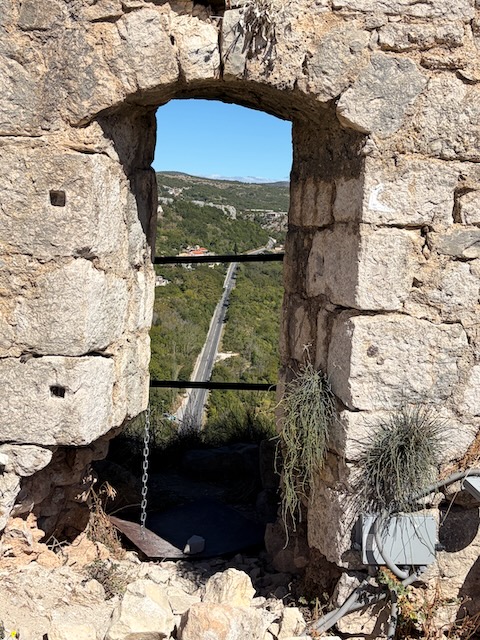
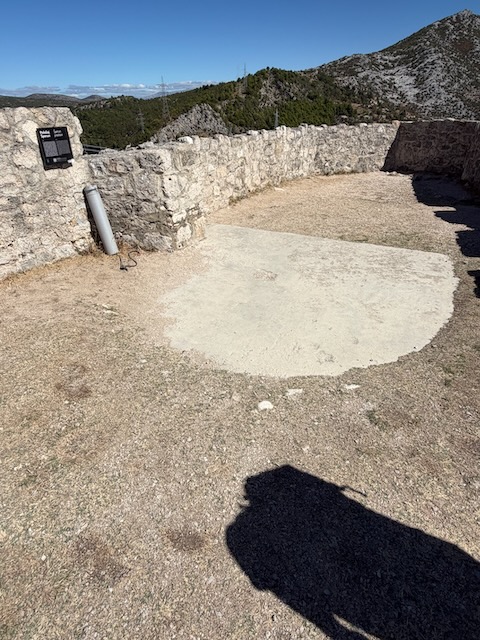
After a long history of warfare, somewhere around 1800, Klis was acquired by the Habsburg Archduchy of Austria by treaty. Subsequently, the fortress lost its strategic importance, and at some point during Austro-Hungarian rule in the 19th century, the military fully abandoned the fortress. However, it had one last military occupation, and that was by the Axis powers during World War II, where it served as a military stronghold and defensive position, until October 1944 when German forces withdrew from Klis Fortress and the surrounding Split area to avoid total encirclement during a major Yugoslav Partisan offensive across Dalmatia.
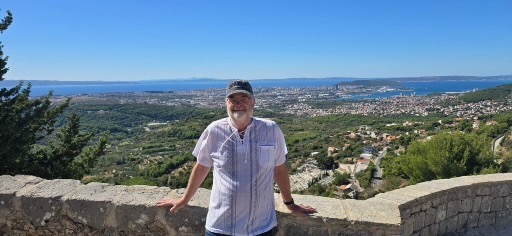
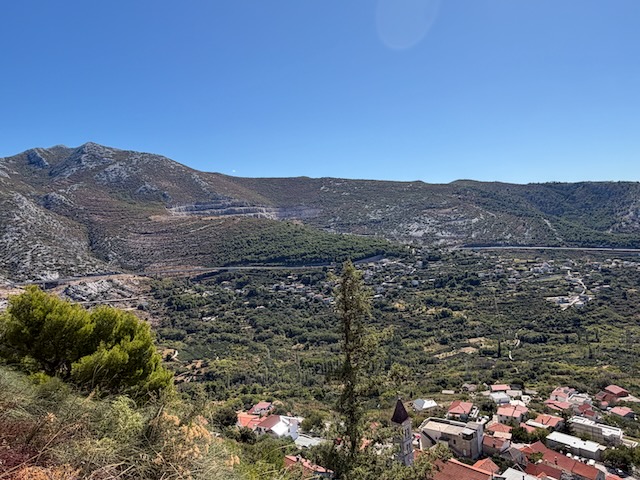
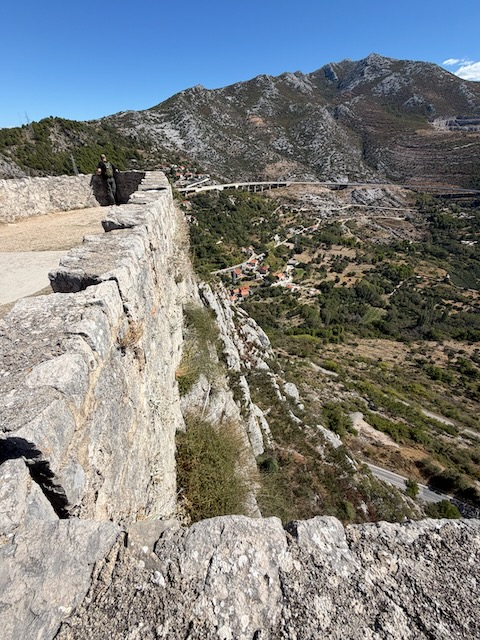
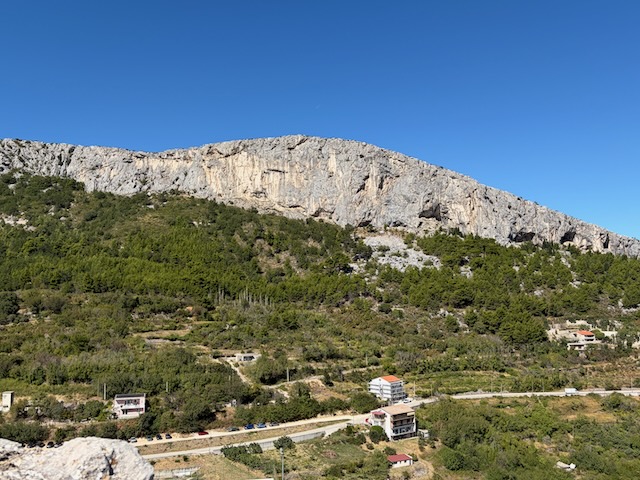
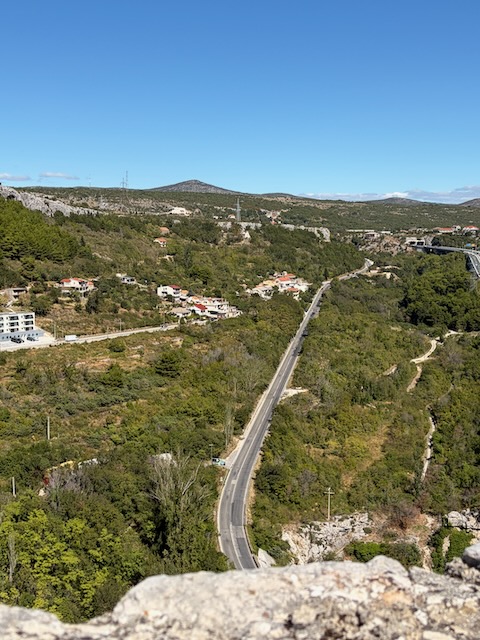
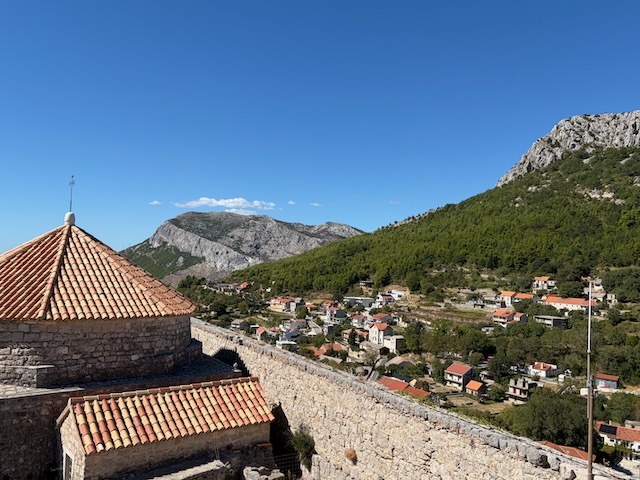
The views are of course stunning, all the way past Split to the Adriatic and with a full 359 degree view (360 if I would’ve gotten the hell out of the way).
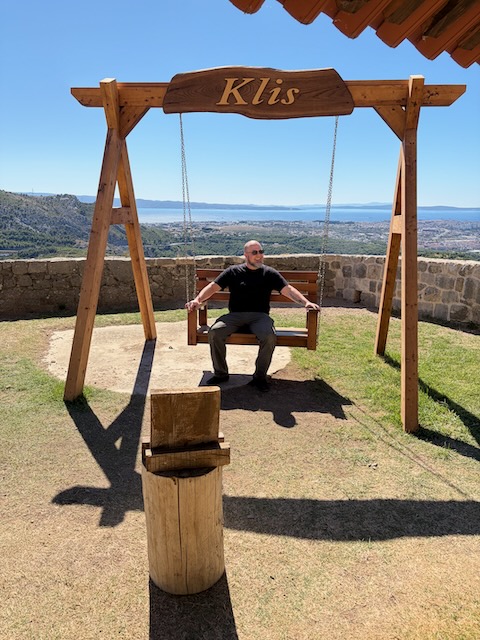
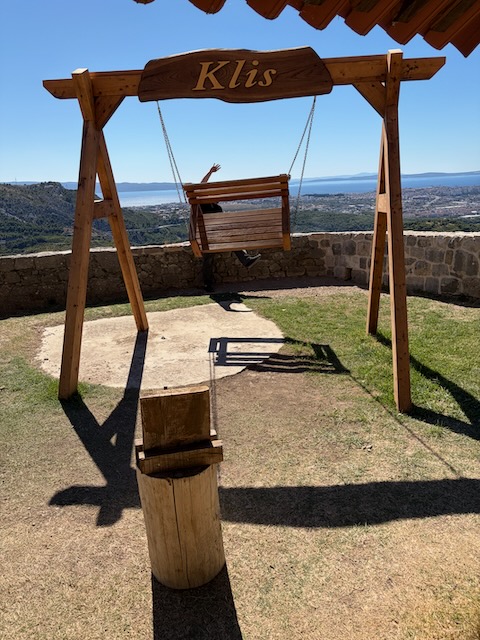
Luke of course had to screw around on the swing, and he pushed himself so high it threw him off, just inches away from the certain death he would’ve experienced by going over that wall.
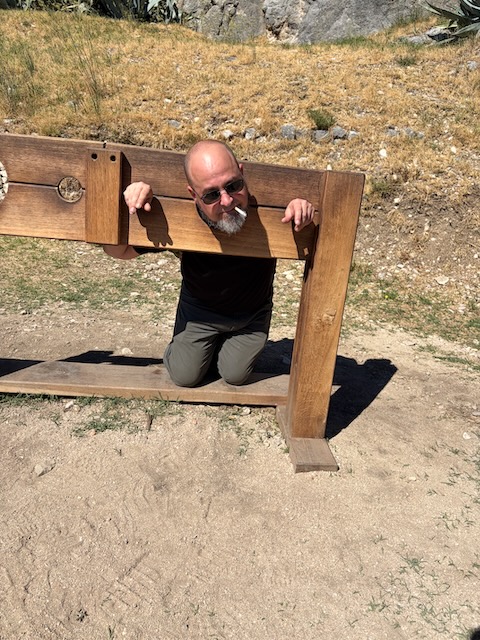
Fortunately, they had a handy means of punishment available nearby. I offered him his last cigarette because I thought that was where they did the beheadings.
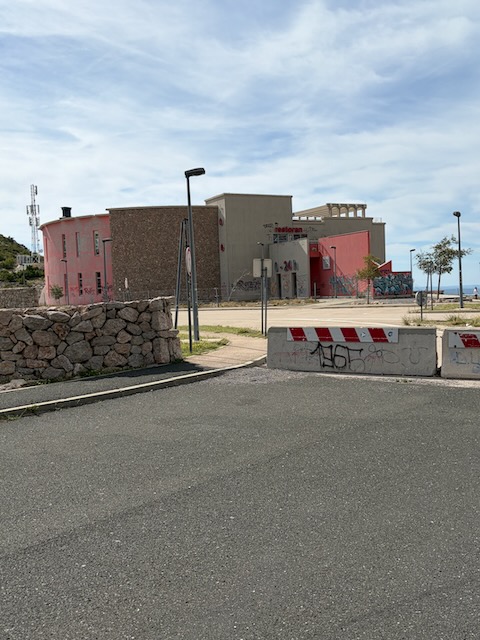
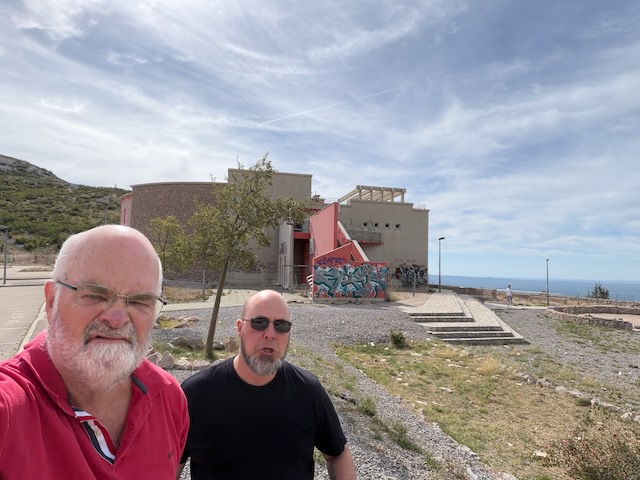
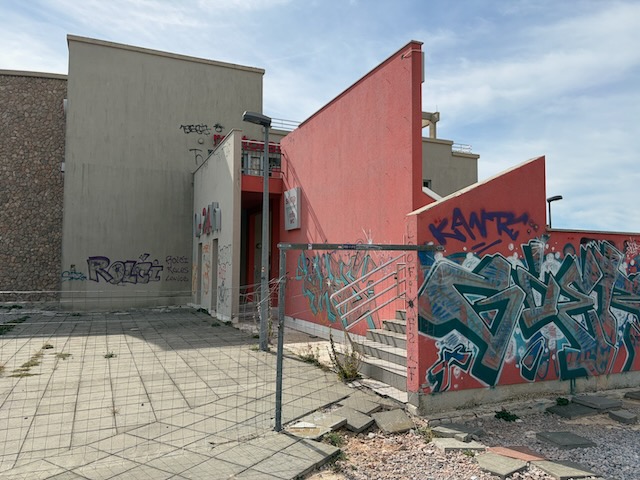
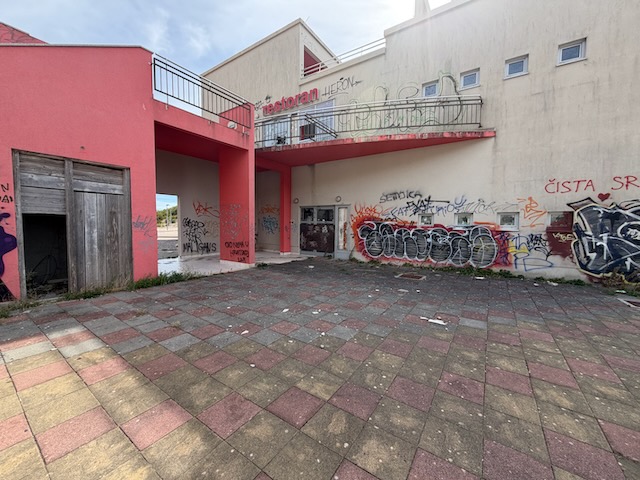
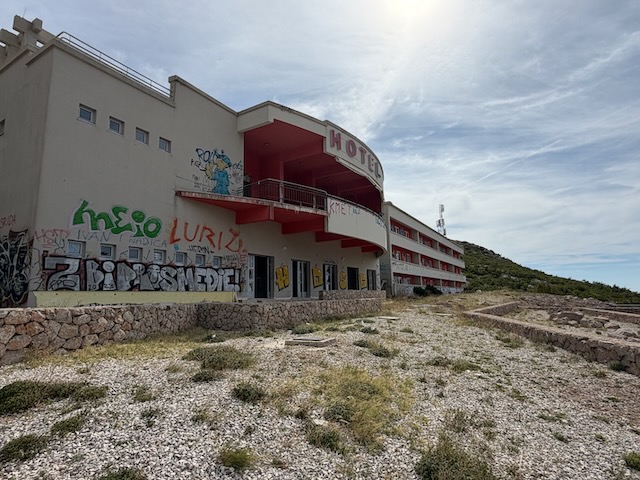
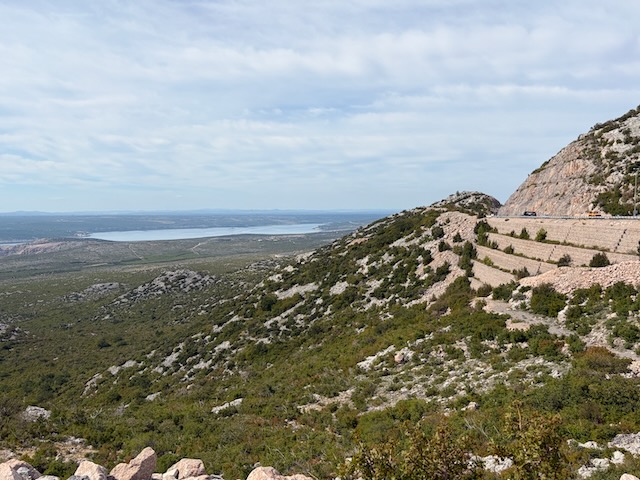
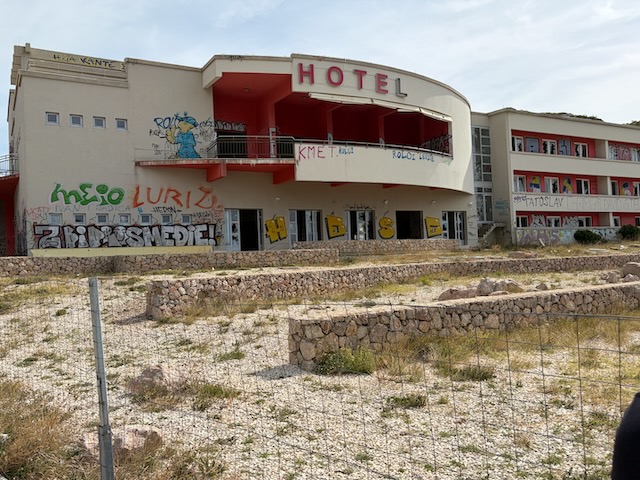
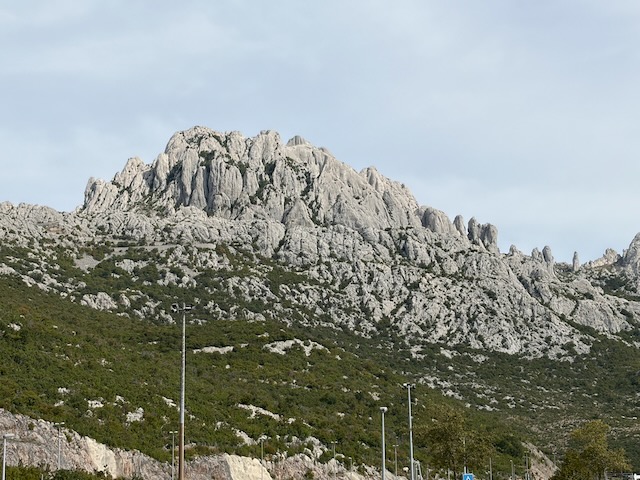
After we split from Split to head to Trieste, Italy (because we didn’t have enough countries on our itinerary), we came across this fascinating derelict hotel just off the freeway adjoining a rest stop. Finally, something besides bushes to see! So we pulled in and marveled at the Hotel Velebitska Kraljica. Built in the 2000s as an upscale highway hotel (which seems like a contradiction in terms) and tourist complex, with 36 rooms and an event room. Construction and operations were halted before its planned full opening, leaving the concrete structure abandoned and heavily vandalized, some of which we didn’t do.
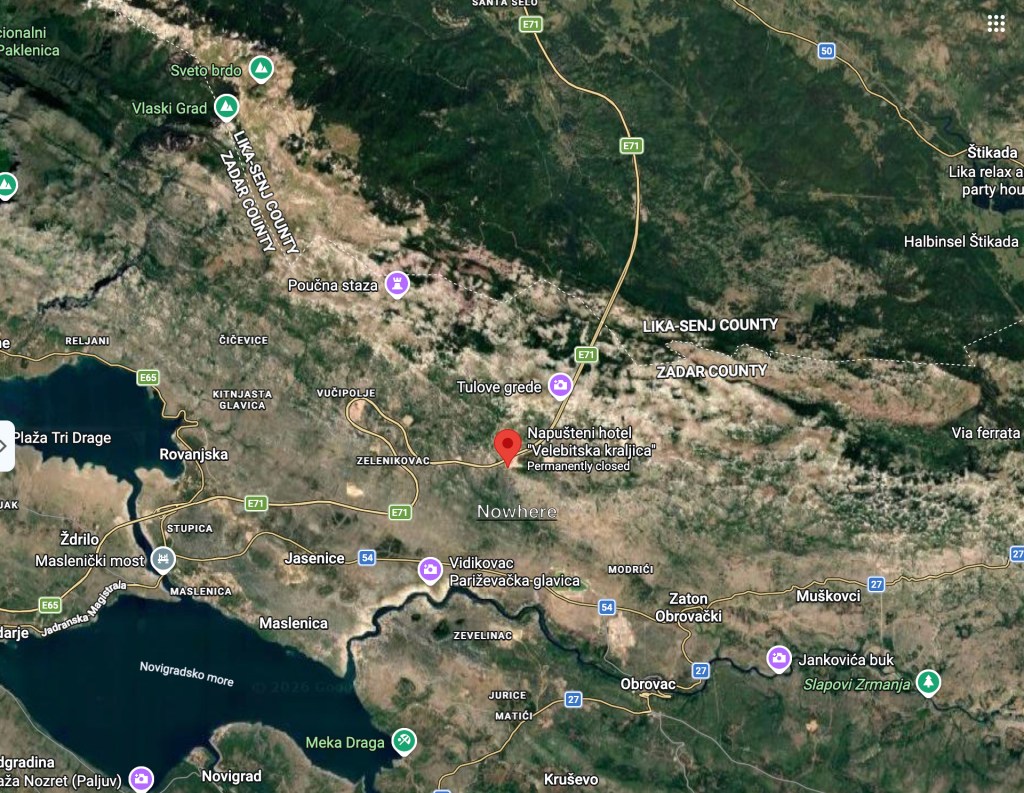
I don’t know what the hell the developers were thinking anyway, I mean look at this overview from Google Maps, it’s pretty much in the middle of nowhere. Why someone would think anyone would want to book a remotely located, slightly upscale highway hotel room ahead of time, or think, “Hey, this is great! It’s even upscale!” when they’re just passing by hoping for a cheap overnight stay, is beyond me. Besides, it’s hard to imagine a successful chain of hotels called the Hotel Velebitska Kraljicas.
I mean, the views are pretty good, but it is right next to a rest stop, which is something they usually put in the middle of nowhere for good reason. The developers are actually still hoping for investors to this day, which is a lot like hoping I could score a date with Emilia Clarke. Man, you’d have to be pretty stupid to throw good money after bad like that. The place was a little creepy too… it would probably make a good location for a horror movie, maybe something like The Shining 2: The Vengeance of the Hotel Velebitska Kraljica.
Anyway, we remained unkilled, so we continued on to Trieste, and unfortunately, with Emilia only in our dreams.

(Scroll down to see previous entries.)