
One of my favorite types of destinations in Europe are the small cities and towns that have retained their medieval charm, often with a castle overlooking the cobblestone streets and centuries-old buildings. Some time ago, I had saved an article from a travel website citing the top ten best small cities in Europe to visit, and Toulouse, France, was one of them. The only thing I knew about Toulouse at the time was that someone famous had that in their name. Turns out it was Henri Marie Raymond de Toulouse-Lautrec-Monfa. (Which would’ve been quite a mouthful when his exasperated mother used his complete name, as mothers often do, when she was fed up with him for not doing his chores; like throwing out the contents of the chamber pot into the street, where it belonged.) Frankly, if you would’ve told me that Toulouse-Latrec was the most famous Pure Finder ever, I might’ve believed you. What’s a Pure Finder you ask? Well, a Pure Finder collected dog feces from the streets and sold it to tanneries. It was used in the processing of animal hides. Yes, that was an actual occupation. You never know what you’re gonna learn on Bald Sasquatch!
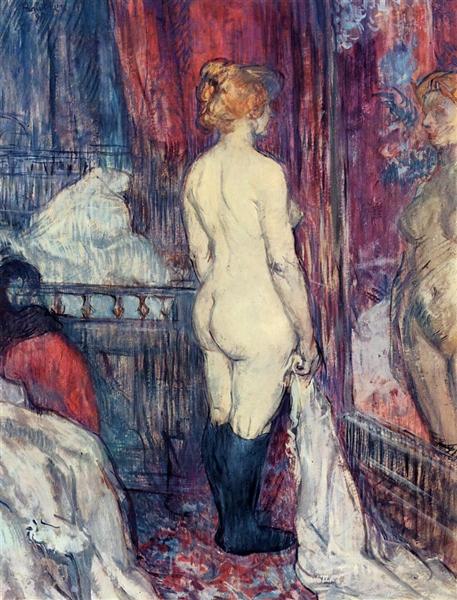
I’m guessing that most people probably feel the same way about Toulouse-Lautrec as I did: it’s a name which sounds familiar, but perhaps you have no idea why, like I used to before I got all cultured and everything. Maybe you thought he invented the horse-drawn seed drill? No, that was Jethro Tull in 1701. Maybe you thought he was a guy they named a steam-powered prosthetic dildo after? No, that was a dildo called “Steely Dan III from Yokohama” in the novel Naked Lunch… the band Steely Dan was in fact named after that. I do think it’s kinda weird that you were thinking about dildos, but hey, I’m not here to judge. Although maybe you were subconsciously tying it all together, because Henri was famous for painting prostitutes, so I can see the correlation. Hey, while we’re on the topic, the word “dildo” translates to “godemiché” in French, which looks a lot like “god’s mitt.” Makes sense to me.
Anyway, as an artist he had to make a living because most of those historical painters’ artworks only went stratospheric in price until after they died, and he didn’t want to do that yet, so as you can see in the picture on the right he also painted advertisements for toilet paper companies.
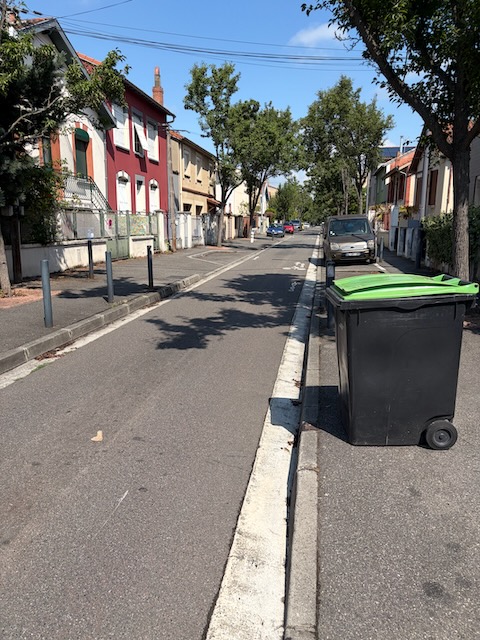
I rented a small flat outside Toulouse on this semi-charming street, although the apartment wasn’t flat at all so I don’t know what the Brits go all on about. My gracious new landlady gave me instructions on getting into town, recommending I take the subway rather than pay the exorbitant prices for parking. It turns out Toulouse mass transit is so simple even a mass transit moron like me was able to figure it out, and so off I went to see the sights.
Per Google: Toulouse is the fourth-largest city in France and the capital of the Occitanie region, located in the country’s southwest along the Garonne River. Known as La Ville Rose (the Pink City) for its distinct terracotta brick architecture, it is a major hub for Europe’s aerospace industry, a lively university town, and has a mass transit system that even morons can figure out.
Also, it’s sister city is Toutight.
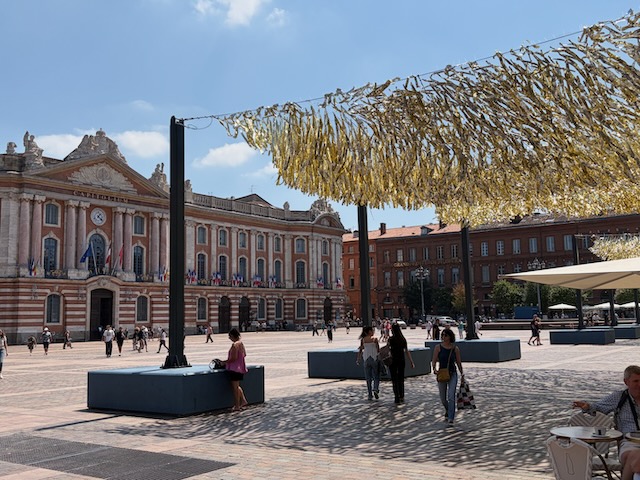
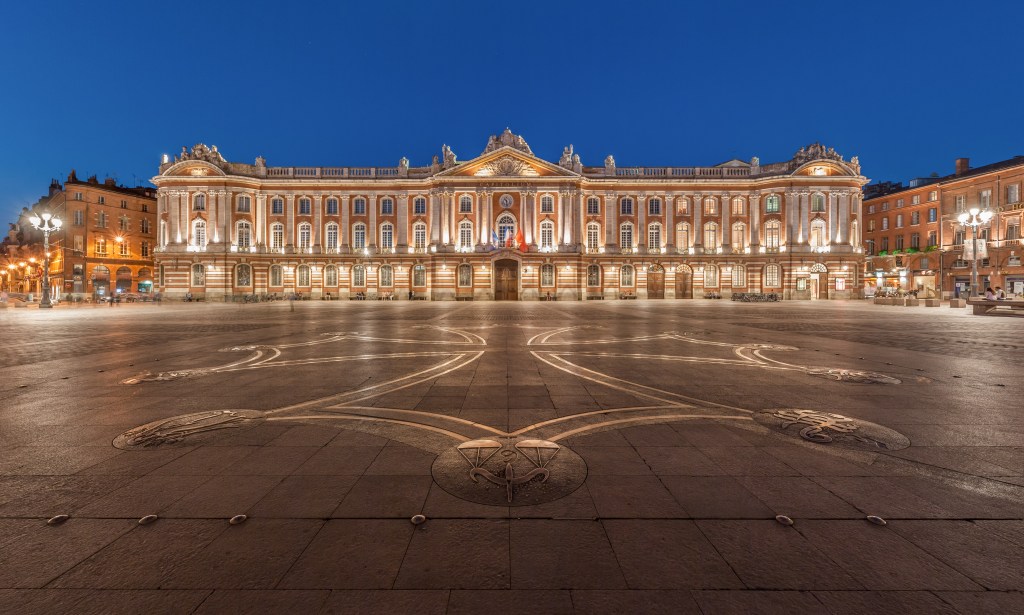
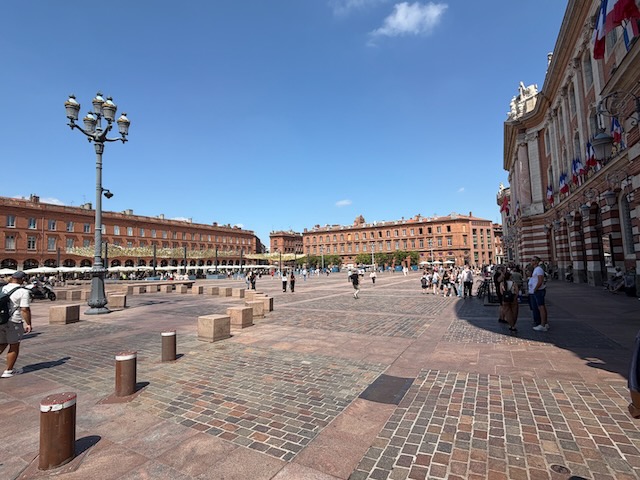
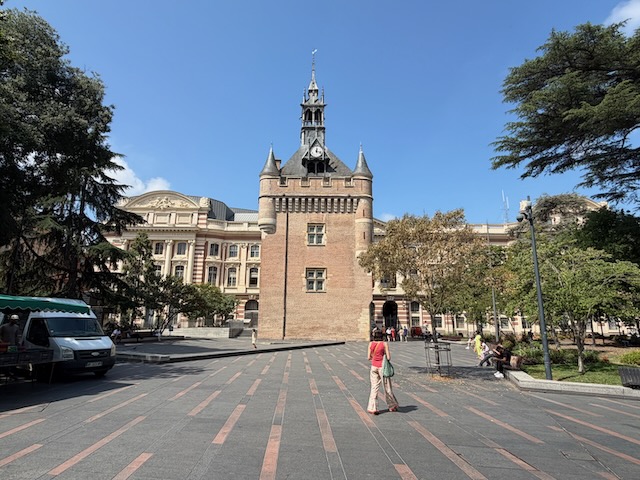
The subway dumped me out right in the middle of Toulouse’s most popular area: Place du Capitole, the large central square housing the city hall. There’s also a museum in there called the Salle des Illustres, but I didn’t visit it because, well, I don’t actually know why. I wandered the streets of Toulouse all afternoon and thought I’d gotten the gist of things, but I also had planned to go back on the tail end of my trip since I planned to drive all over southern France and return to Toulouse for my return flight, but upon my return I just didn’t feel like going back into Toulouse. Man, I’m such a lousy travel blogger. But hey, how many travel blogs have you read that talk about dildos? So yeah, at least I have a niche market cornered.
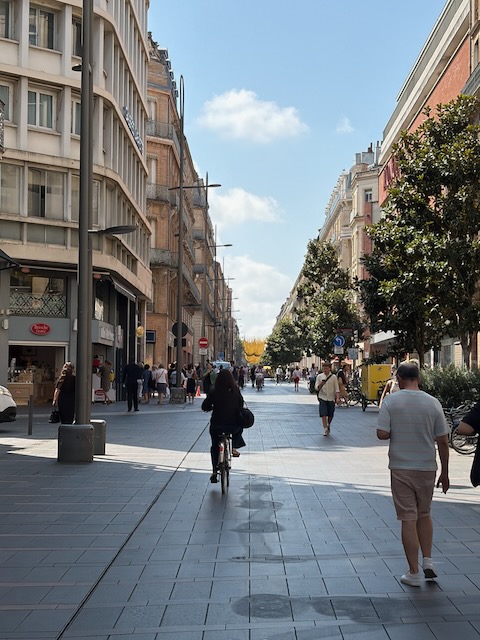
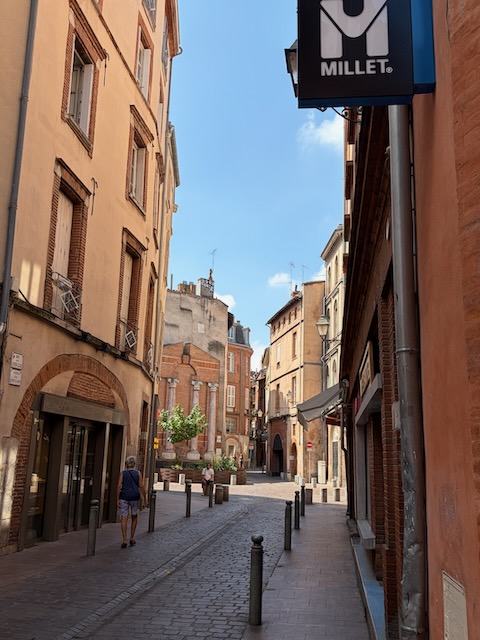
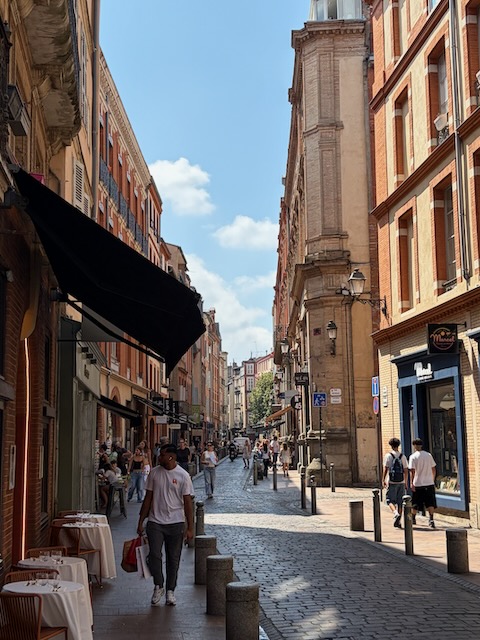
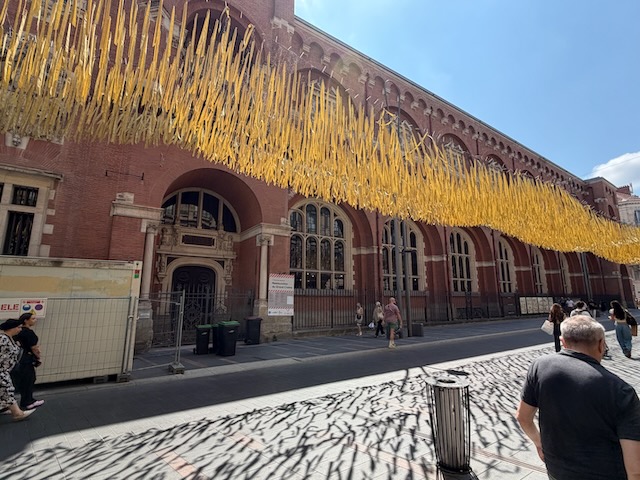
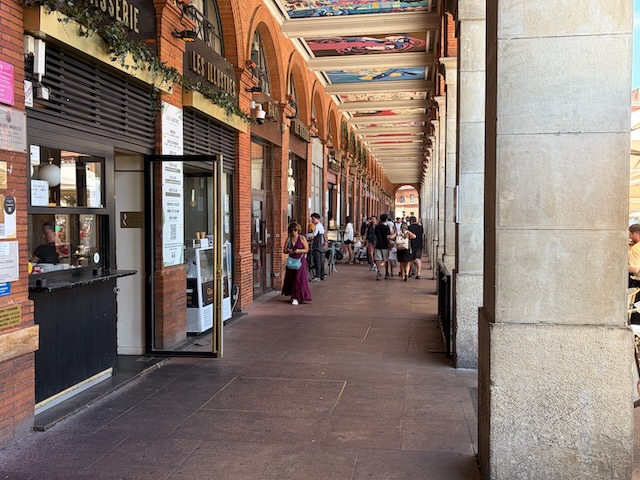
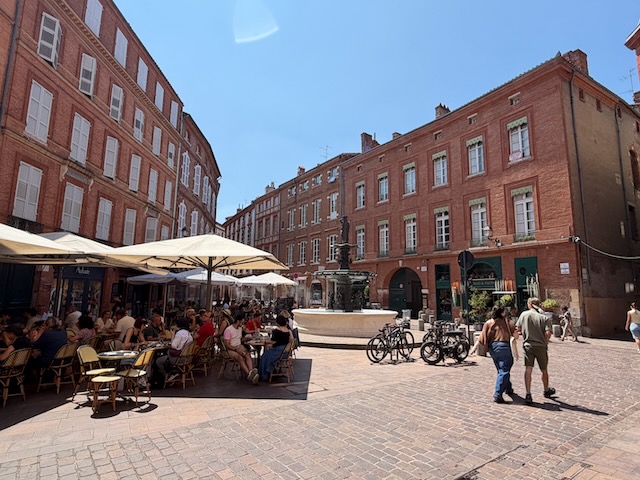
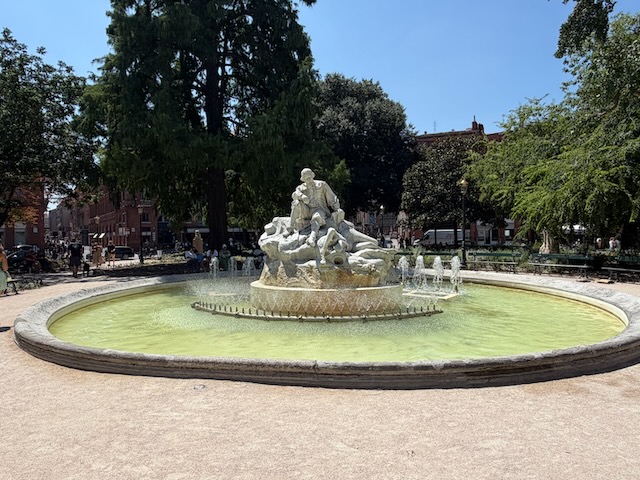
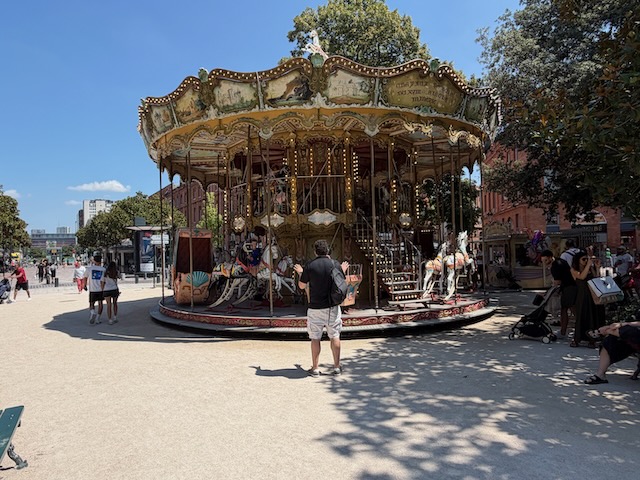
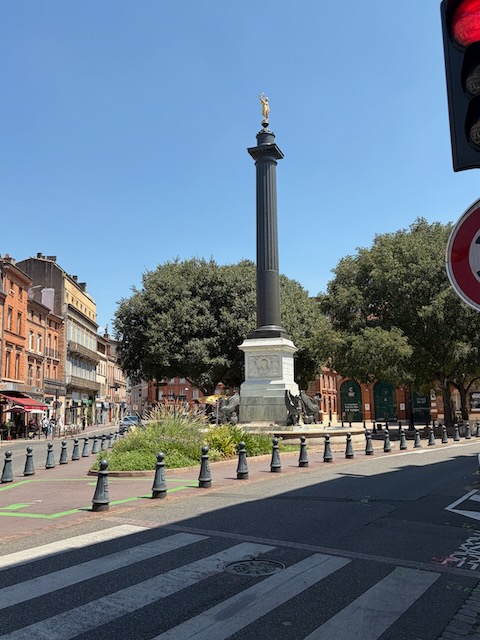
I’m lumping all these photos into one gallery just to give you the flavor of the city. The top three photos could have had 100 more added with essentially the same look. To me, Toulouse is like a small medieval town except a whole lot bigger and without a castle. I simply wandered the streets to and fro, marveling at how beautiful street after street was. I came away thinking it really would be a nice place for a romantic getaway. The city is absolutely charming everywhere you turn, and when you combine that with French cuisine and plenty of shopping, well, I can see a happy couple enjoying a weekend here; unless one of them likes to shop a bit too much and the other ends up irritated and then they have a big fight and don’t speak to each other for the rest of the trip.
As a lone traveler I get to dodge that risk (although I did lose a couple of arguments I had with myself), but I was once again a little miffed that so many of the French women (okay, all of them) abruptly and sometimes even rudely turned down my repeated requests for a french kiss. Even the ugly ones! I mean, what good does it do to have a whole kiss named after you but you refuse to do it? Hmmph. I couldn’t even find any bread labeled French Bread in the grocery store. Also, I ordered French Toast at a restaurant and all I got was toast. These French are scamming us, I tell you.

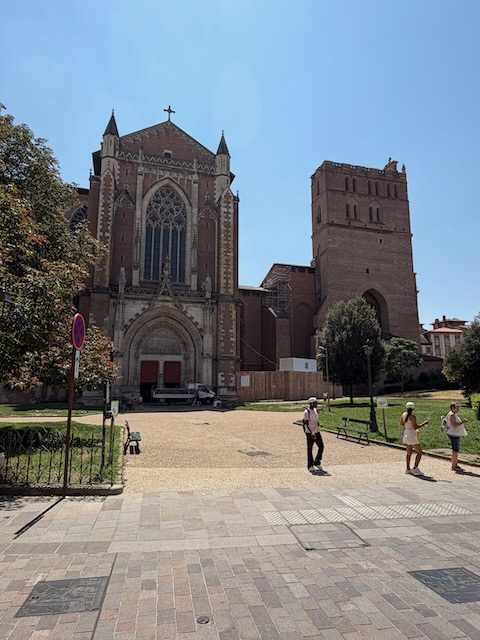
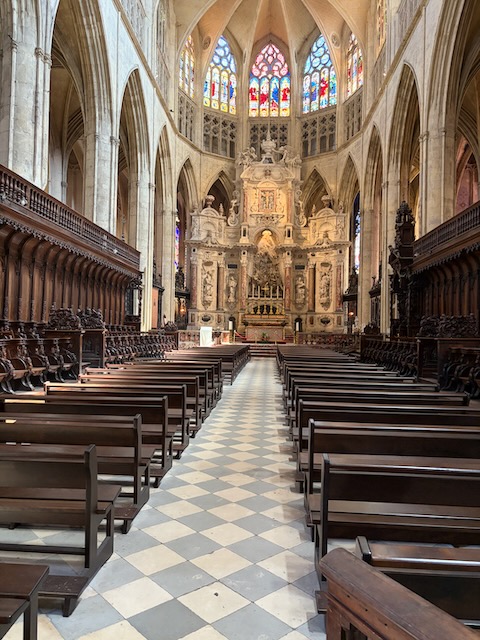
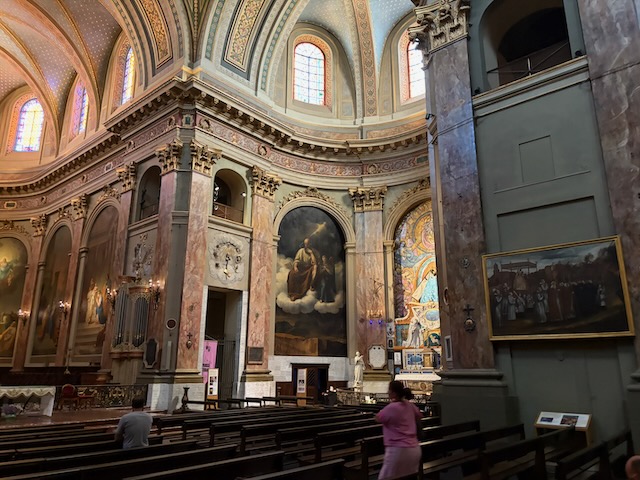
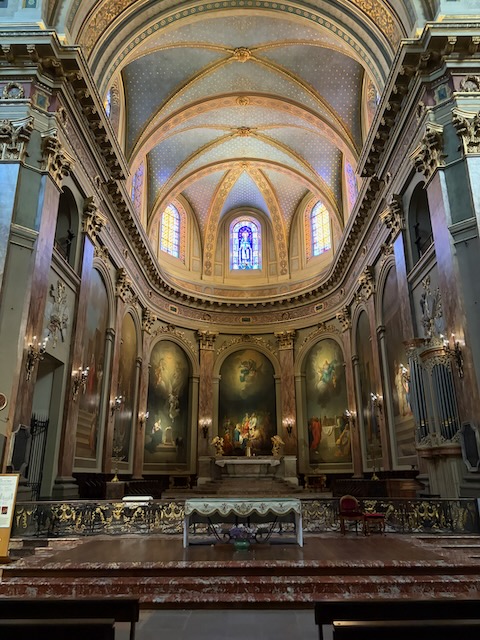

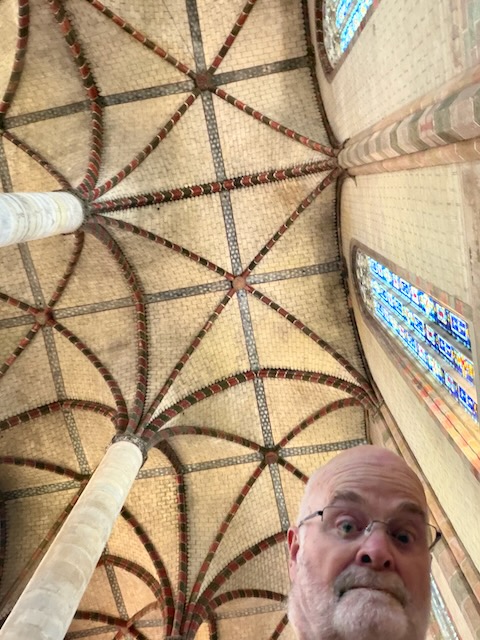
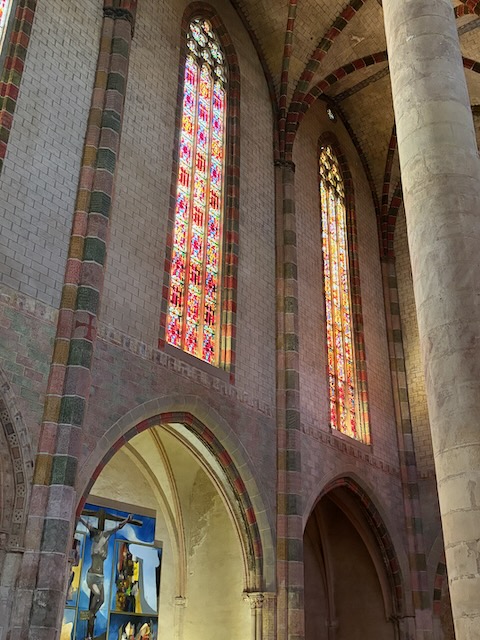
As usual, there were plenty of must-see cathedrals. Nowadays, after having seen approximately one million and thirteen cathedrals in Europe, I tend to pop in, snap a photo or two, and maybe ask God how he and the missus are doing, and then scamper back out into the sunshine. On one hand, they are beautiful and magnificent examples of the kind of architecture humans were capable of creating hundreds of years ago, with ceiling heights that go all the way to the top, but on the other hand they do all look pretty similar. Plus I get annoyed that religions invested so much money into gaudiness instead of using it to help the poor, or even those worse off, like bad travel bloggers.
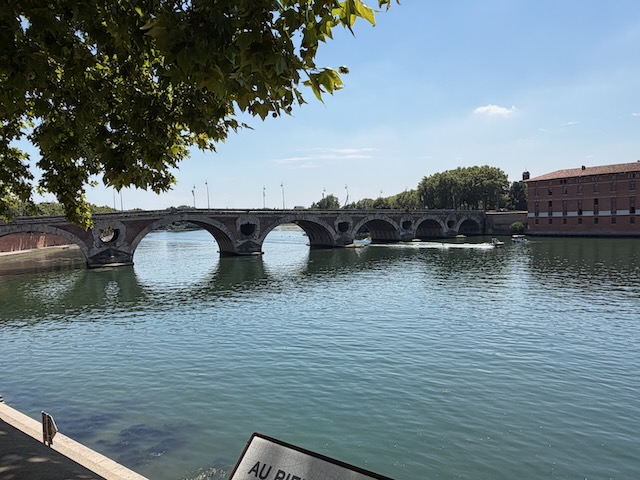
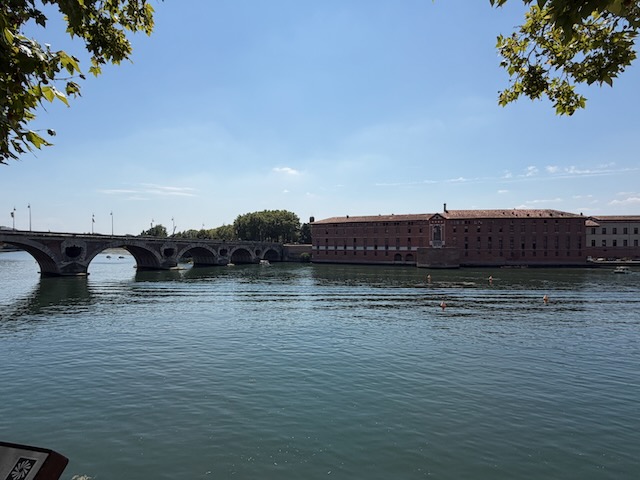

The Pont Neuf, which is French for “New Bridge,” (which doesn’t reflect well on French foresight and intelligence, because it’s pretty stupid to still be calling something new when it’s now lasted almost four hundred years) is a famous bridge despite the stupid name, and was completed in 1632, and is considered a masterpiece of the Renaissance, again, despite its stupid name. Its construction was difficult, especially since they hadn’t invented Bridgemaker 3.0 software yet, so it took 88 stupid years to complete.
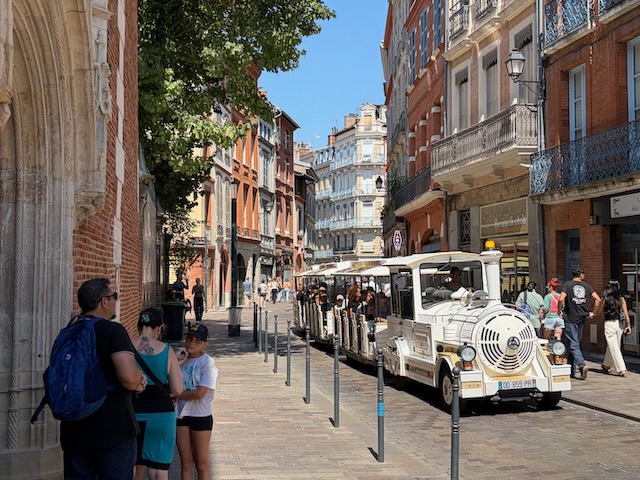
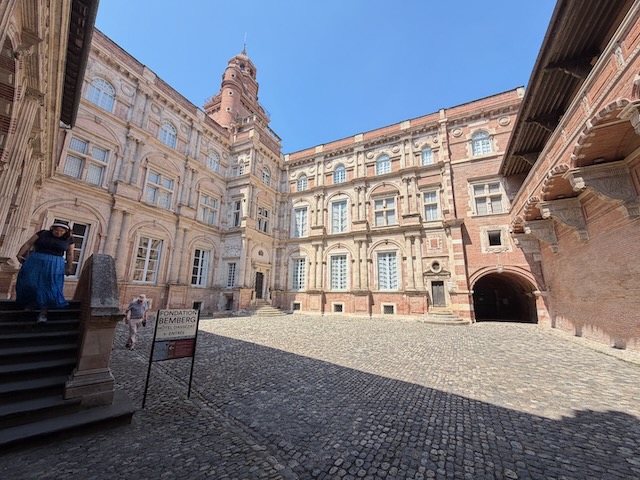
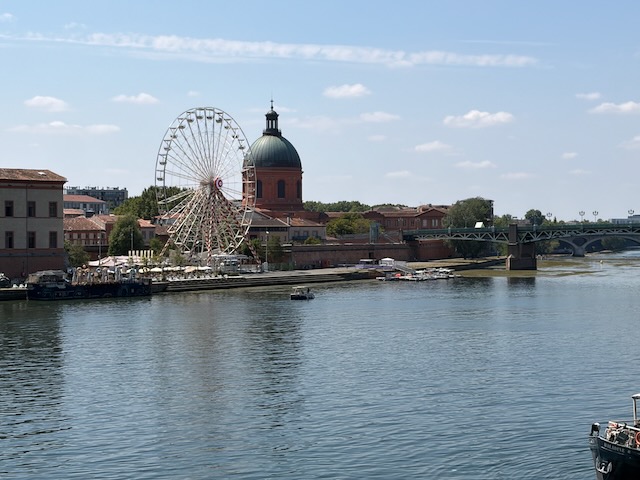
You can always tell when a city is a bustling tourist mecca when they have small trains or horse-drawn carriages to ferry tourists around so the pickpockets can tell who they are. Toulouse also had a lot of bike lanes, a bit like Amsterdam, with the difference being bikers were few and far between, but those who did take advantage suddenly came upon you like bats out of hell. I nearly got run into more than once because I kept forgetting to wave my baguette around before crossing the lane.
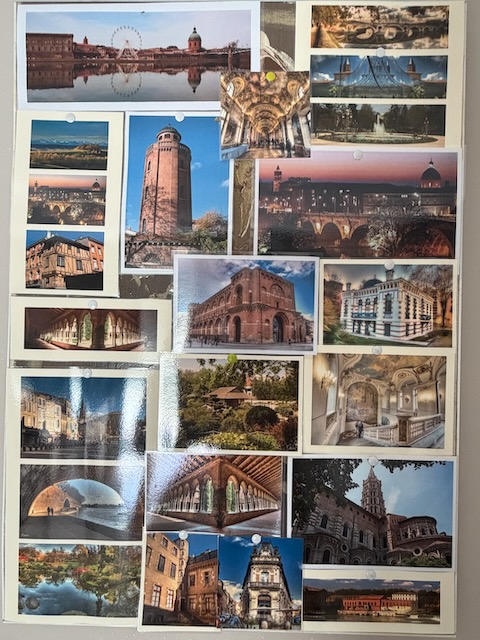
Since I didn’t make it a point to see every last cathedral and old building, I took a photo of a picture mounted in the apartment I rented so there’s no way this entry didn’t cover all the Toulouse sights.
After spending a day in Toulouse I hit the road to set out and explore as many small French towns as ChatGPT offered up, because for this trip I had decided to try using ChatGPT as my tour guide, which mostly worked pretty well. I figured that way at least I wasn’t likely to miss something I should’ve seen. However, since all these little towns kind of became a blur to me and I have no idea in what order I saw them all, I’m just gonna start alphabetically and work my way down. So, first up: Albi.
ALBI
(“I already said Albi.” “I know, but I have to make it look official.” “Okay, fine, have it your way.” “Okay fine.” “Fine.”)
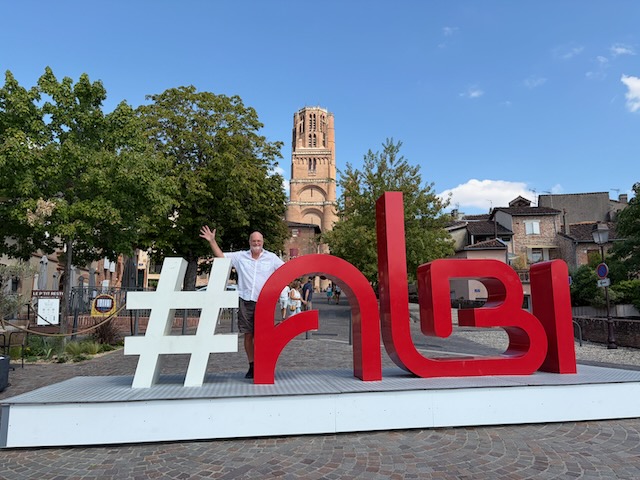
Albi is town of about 50,000 people, whose inhabitants are called Albigensians, not Albinos like I thought. The city is on the UNESCO list of World Heritage Sites.
It was easy to tour Albi because all of its most important bits are pretty much in one place. You just have to look for the bricks. You’ll see in a second, but I gotta say whoever was in the brick business when they were building up Albi must’ve brought in a lot of french bread, if you know what I mean. I asked AI to estimate the number of bricks it took to make the whole Albi Episcopal Complex, and it came up with an estimate of around 60 million bricks, 22 million of which make up the cathedral itself, which is touted to be the largest brick building in the world. If you laid 60 million bricks in one perfectly straight line, the line would reach around the Earth more than 300 times. All together, the bricks would have the mass of roughly 730 Statues of Liberty, or 120 same-sized statues of Trump, although none of the contractors would have been paid for that work, as is his habit.
Rumor has it that when the pope asked for a quote for the entire project, when he saw the bill he said, “Well I’ll be,” and his assistants thought he meant the name of the whole city should be changed to Albi. Etymology is a passion of mine, you see.
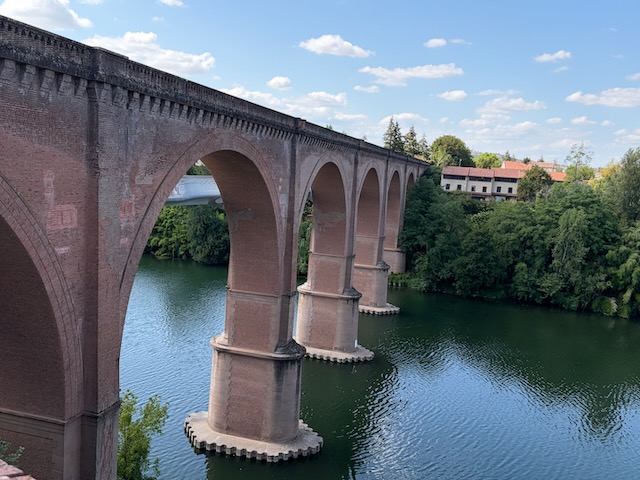
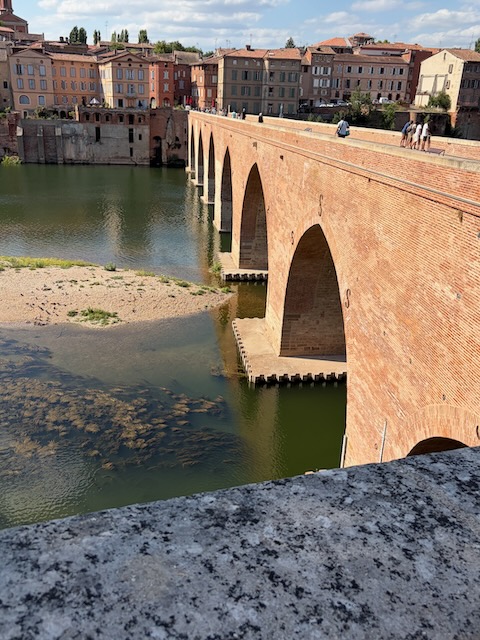
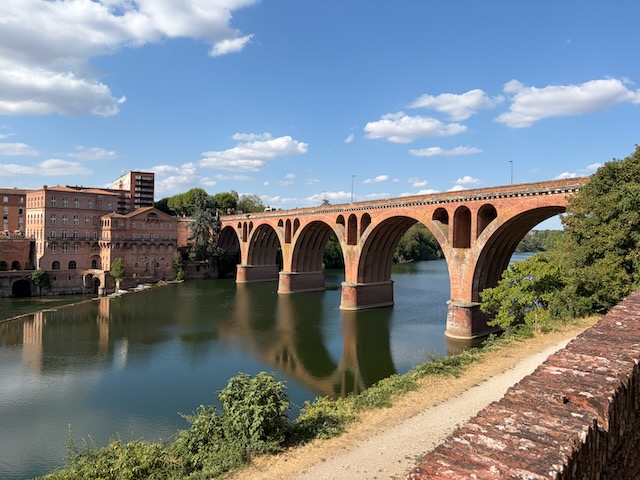
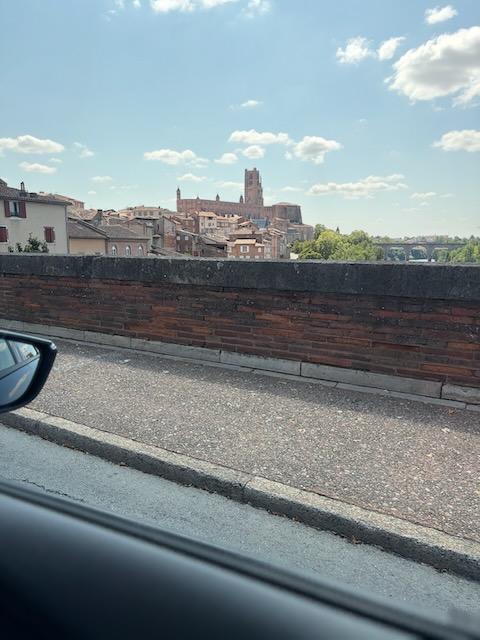
As you drive into town the Big Ass Cathedral (aka the Cathedral of Saint Cecilia of Albi) dominates the skyline, as I’m sure was intended. Albi also has a New Bridge as well as an Old Bridge, apparently the French naming stupidity wasn’t restricted to one town. I mean, c’mon, they could’ve gone for Pristine Bridge, Contemporary Bridge, Modern Bridge, Newer Than The Other Bridge, or even Bridget Fonda. If I ever build a bridge I’m gonna name it Bridget Fonda.
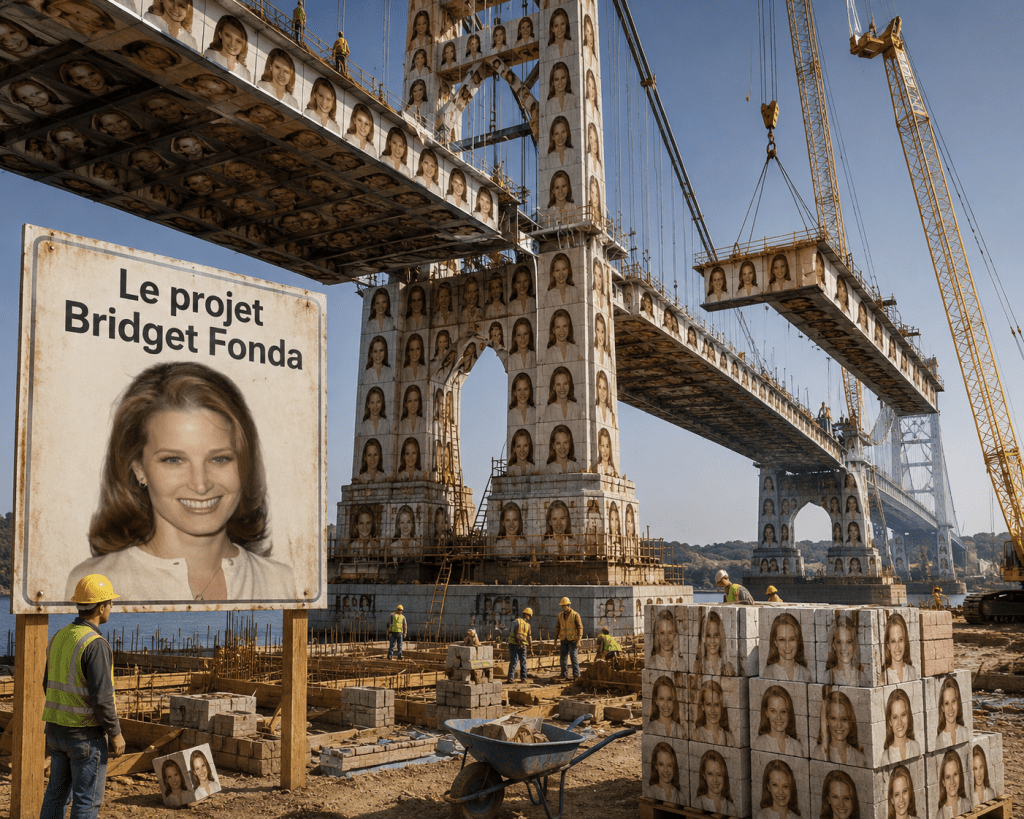
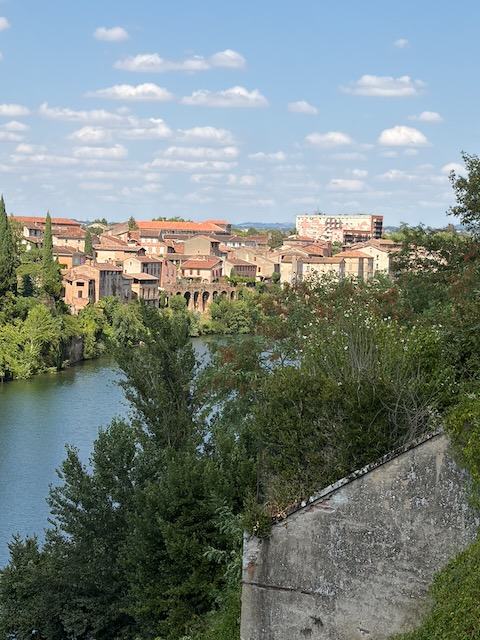
Above you can see I took pictures of three different bridges. One of those is the New, one is the Old, and the other is the Forgotten Middle Child. It’s up to you to figure out which is which, if you must. But if you do get musty, and get it right, you qualify to receive… ta da! A free autograph from me.*
*As long as you send me the request with a self-addressed-stamped envelope and whatever you want signed plus a twenty euro or twenty dollar note (either is fine, I’m bi-currency, to the chagrin of my parents) to cover processing fees and a donation to climate change or maybe Taco Bell or something.
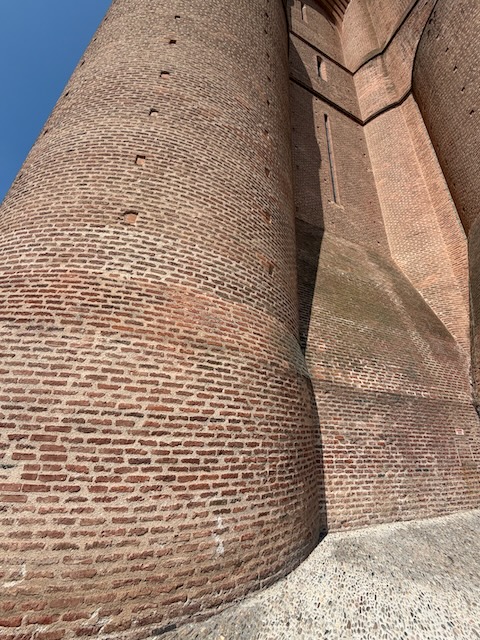
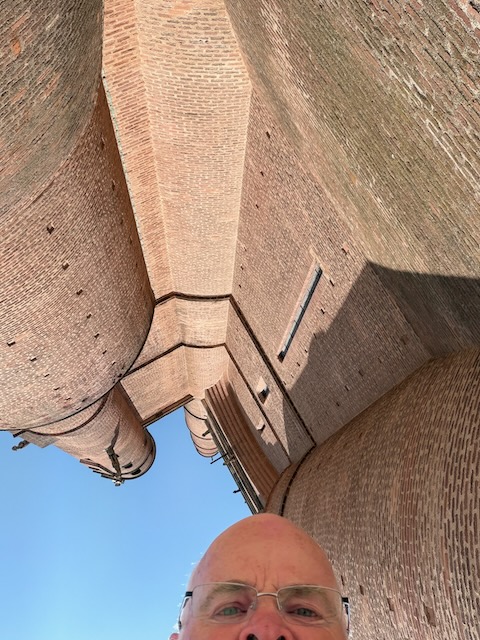
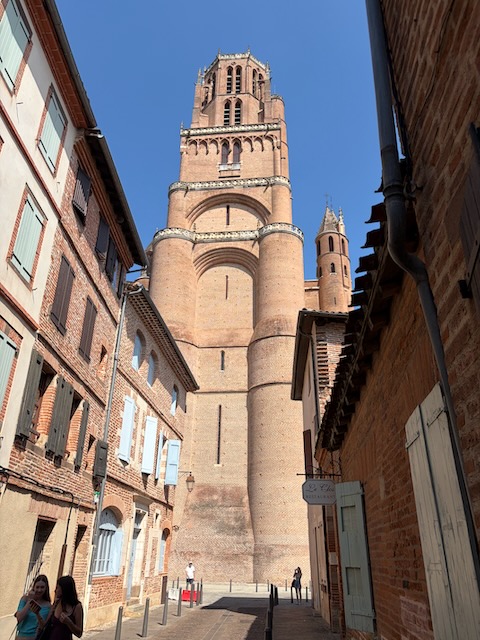
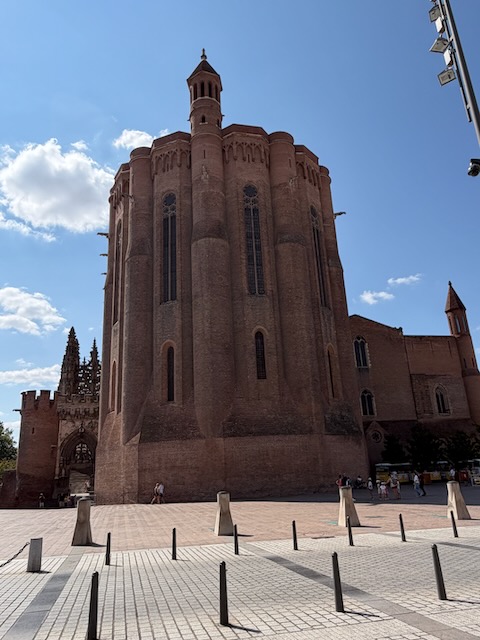
Here you can see the cathedral in all its bricky glory. From left to right, I took a picture so you could see all the bricks, the next photo goes all the way to the dome… oh wait, that’s my dome. The next is of the Taco Bell Tower. (For some reason as I write this I got in the mood for a burrito.) And that fortress-looking thing in the last picture is the cathedral itself. 22 million bricks. If you had to take inventory of 22 million bricks and counted one per second over an eight hour shift, working six days a week, it would take you almost two and a half years to count them all. And that’d just be for the cathedral. For the whole complex, it would take over six and a half years. And that’s only if you took no vacations or sick days, like an American Taco Bell employee.
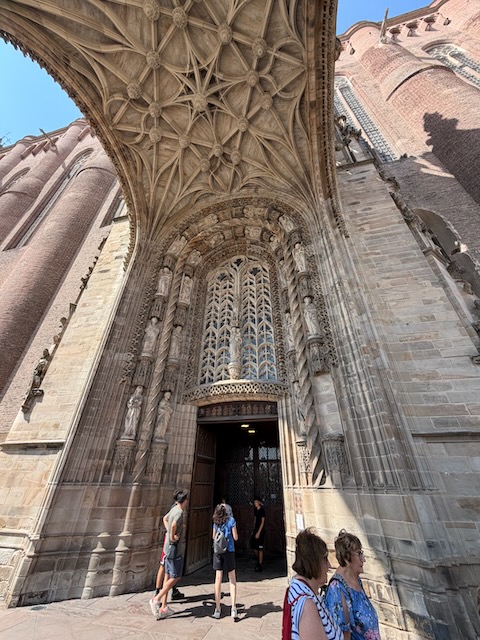
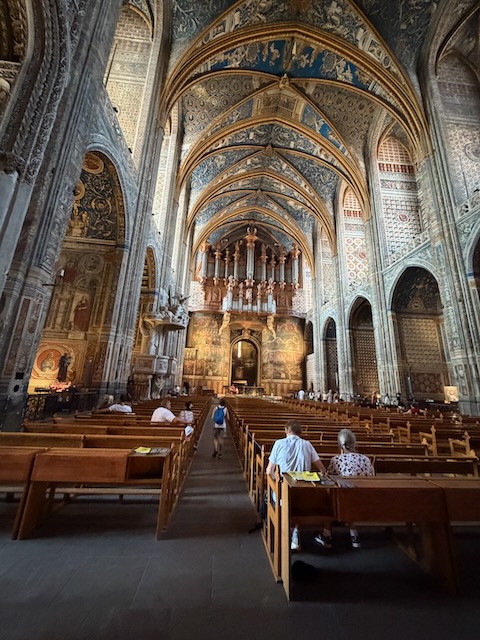
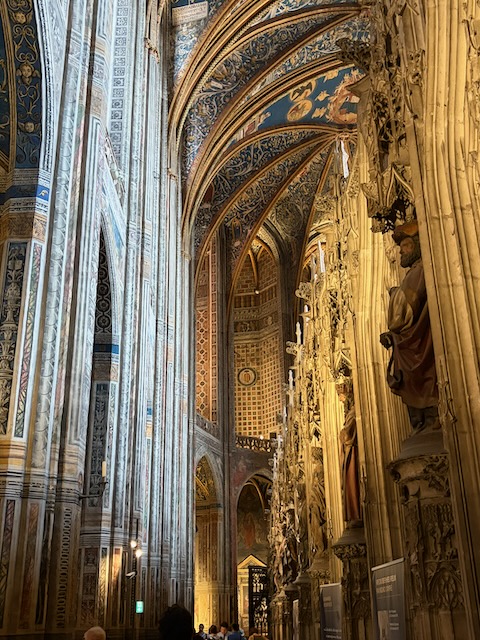
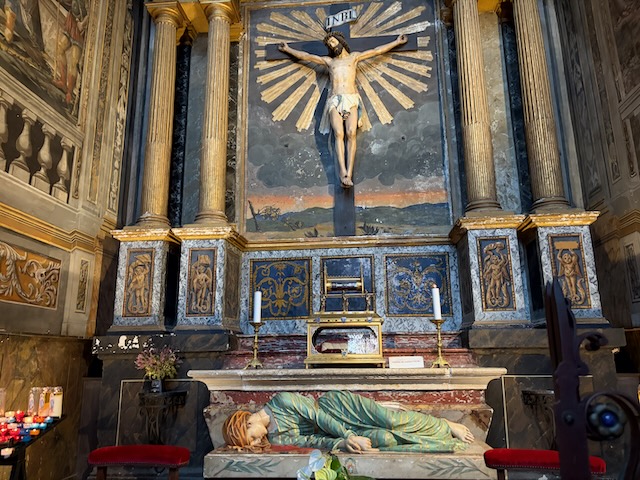
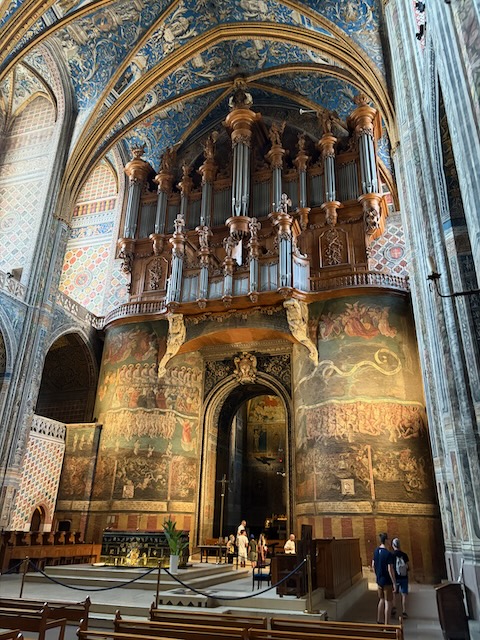
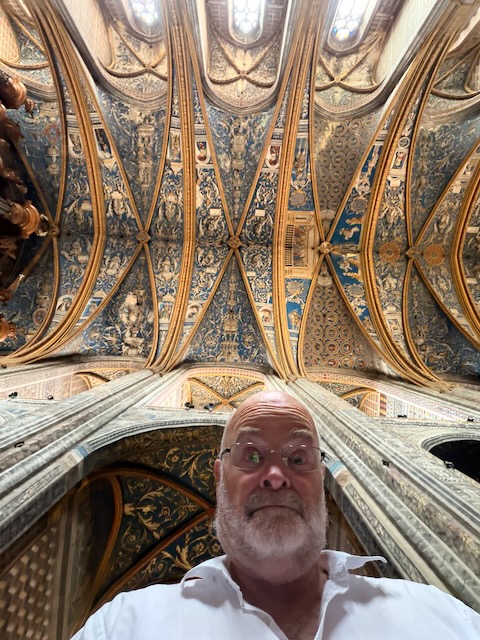
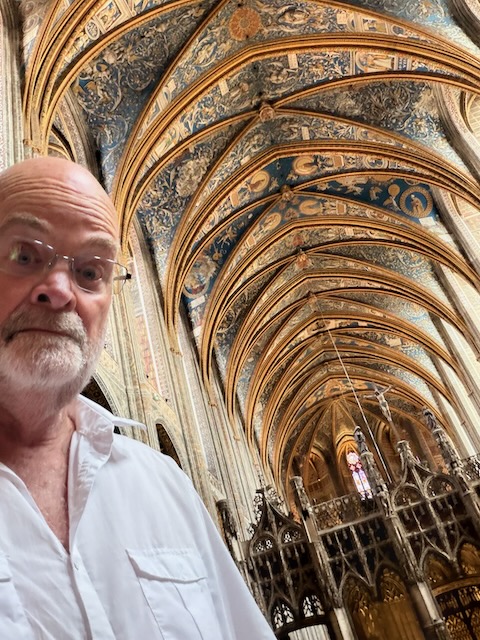
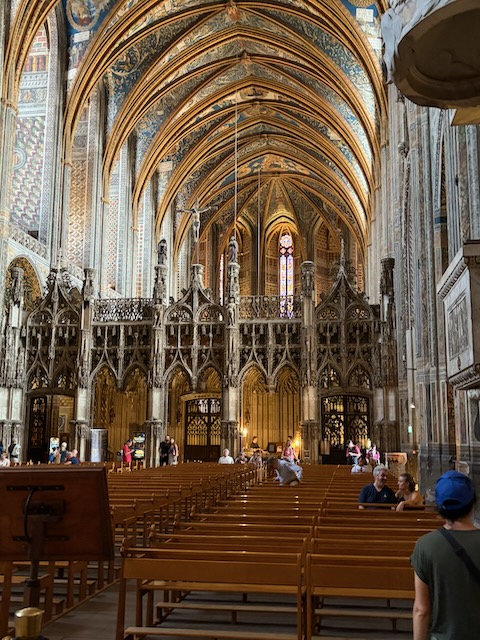
The inside is as ornate as you might expect. Construction was begun in 1282 and took over 200 years. The completion of the 78 meter-high tower was finished in 1492, the same year Christopher Columbus was searching for… a way off his boat before his disgruntled crew killed him for being such a lousy navigator… and for not offering tacos for lunch.
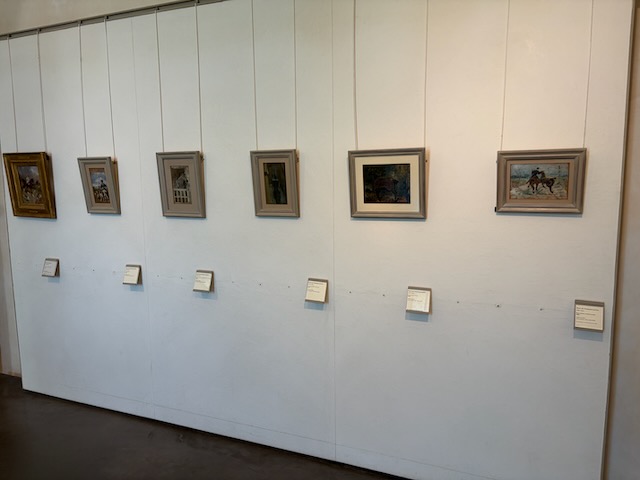
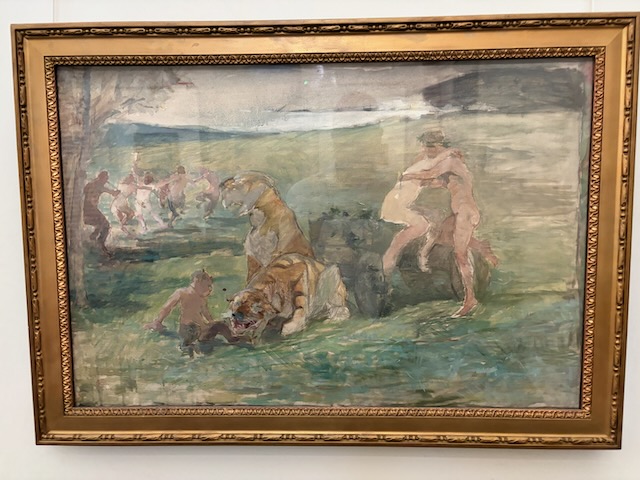
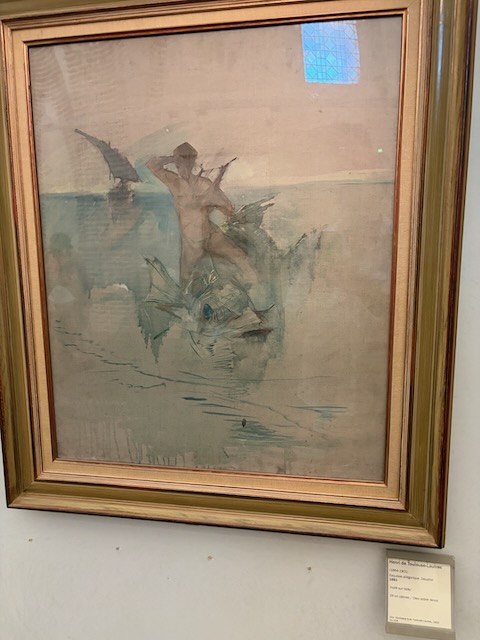
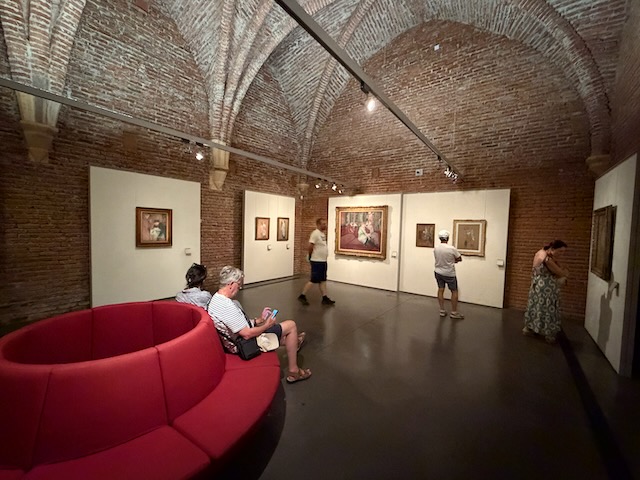
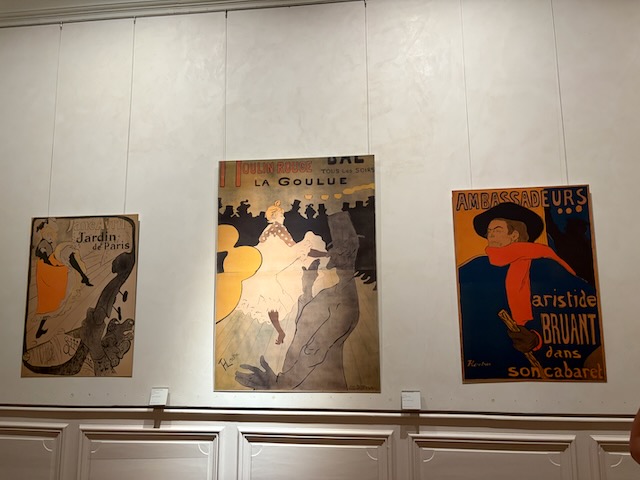
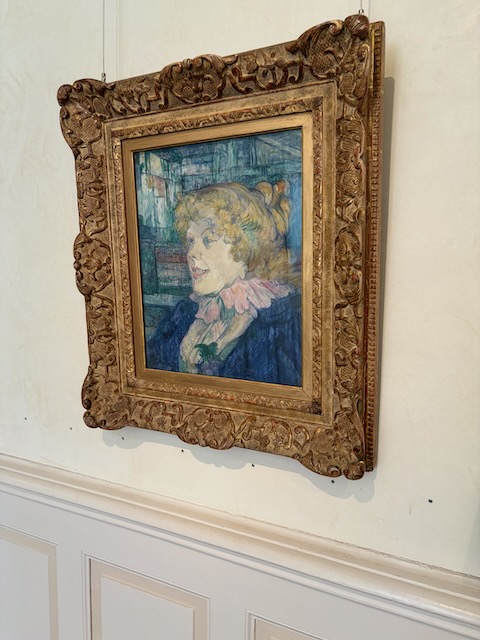
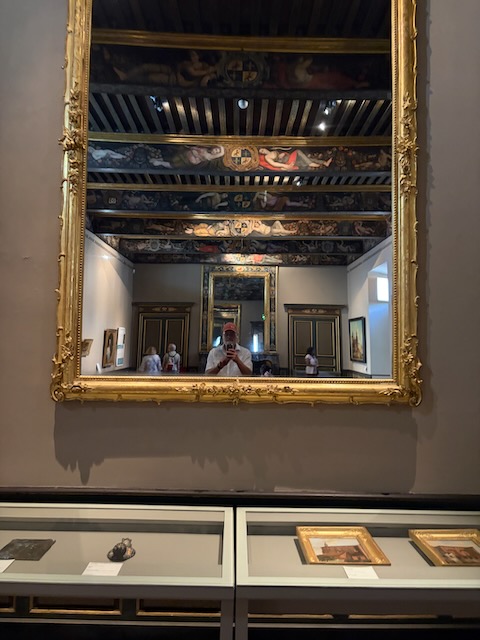
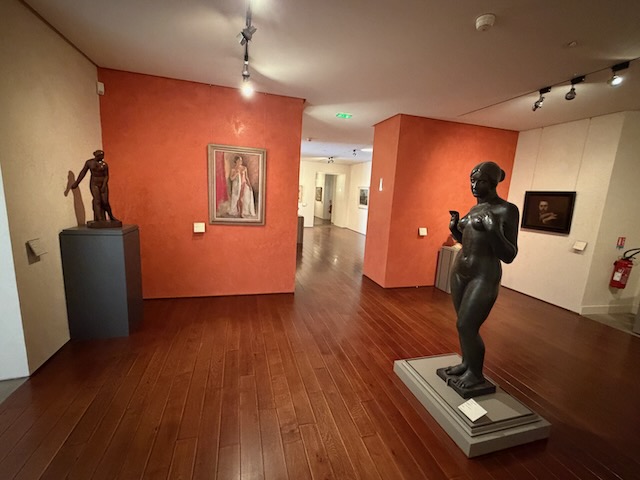
Right next to the cathedral is the Musée Toulouse-Lautrec art museum, dedicated mainly to the work of the painter– you’ll never guess this: Henri de Toulouse-Lautrec– who was born in Albi. The 13th-century building in which it is housed was originally the palace of the bishop of Albi.
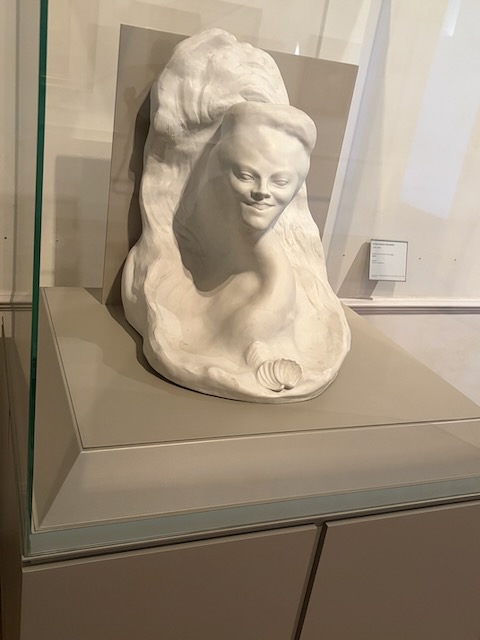
I decided to go into the museum so I could become an expert on Toulouse-Lautrec, but I quickly realized I really didn’t give a shit, and so I snapped some shots and exited before they figured out how I had snuck in. I did see a few paintings and statues of naked ladies though, so it wasn’t all a waste of time. The white sculpture of the woman wasn’t actually made by Lautrec. She just reminded me of an alien in a sci-fi movie I can’t remember the name of. She looks like she has a giraffe-like alien neck, although I think it’s supposed to be her shoulder. Anyway, if you want to guess the movie and send it to me, I’ll give you the same autograph deal I mentioned above, even if you’re wrong. But don’t forget the twenty bucks.
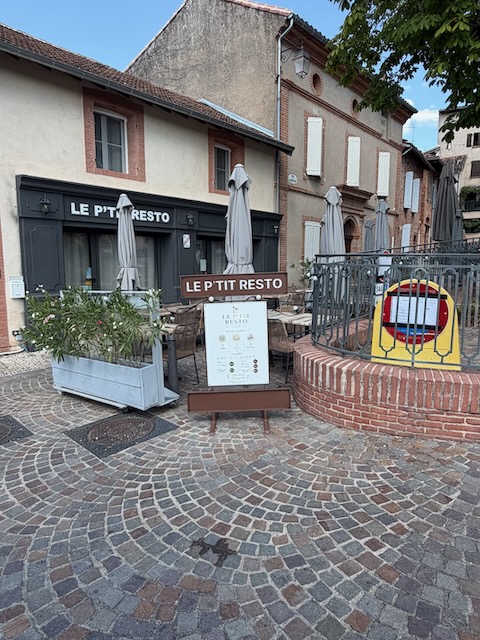
Speaking of naked ladies, I’m a little confused as to whether they allow you to eat while resting your head on a woman’s breast, or if they specialize in breast meat from whatever animal a “Le P” is. They were closed, which sucked, so I had to nip my research in the bud and go off to milk jokes from another areola of the city.
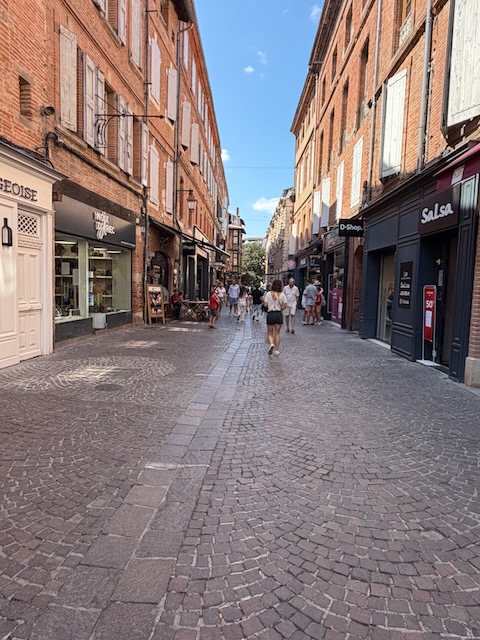


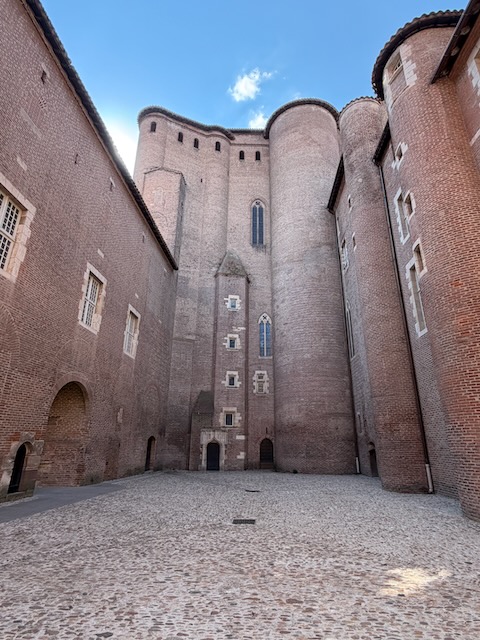
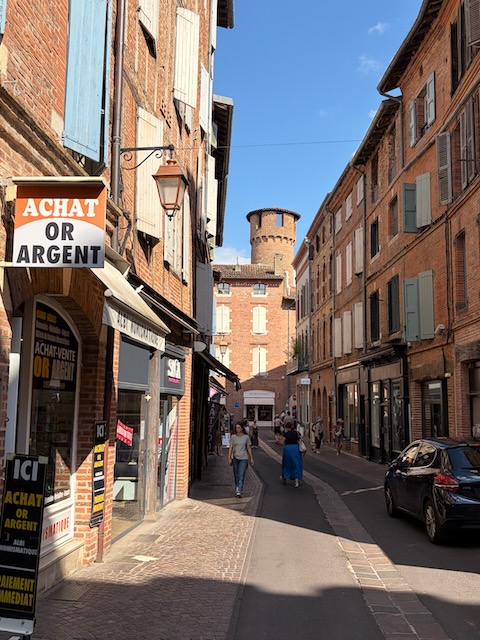
The town surrounding the cathedral complex is very cute and just as brickalicious as the cathedral. It was actually a lot like Toulouse except not nearly as big and with a different name. In the last picture of the above group I saw that sign: “Achat or Argent.” Now, I know Argent, they had a killer rock song in 1972 called, “Hold Your Head Up.” I’ve never heard of the band Achat, so I know I’d vote for Argent, but I figured the whole voting system would be in French so I didn’t bother to vote.
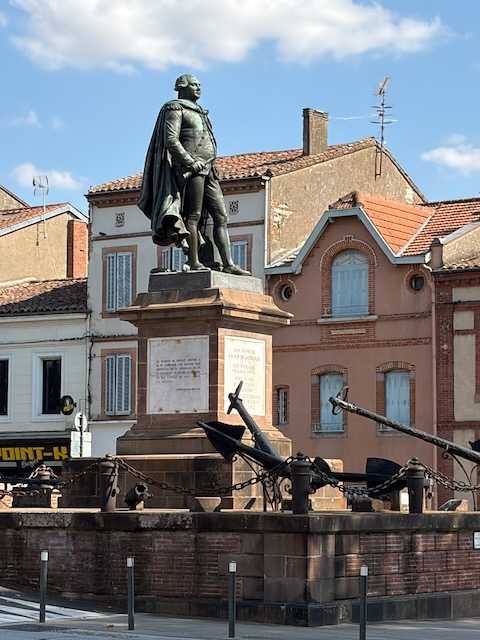
This is a statue of some guy.
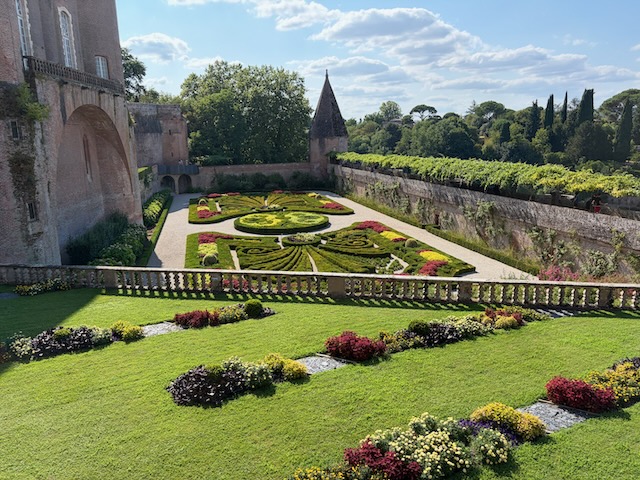
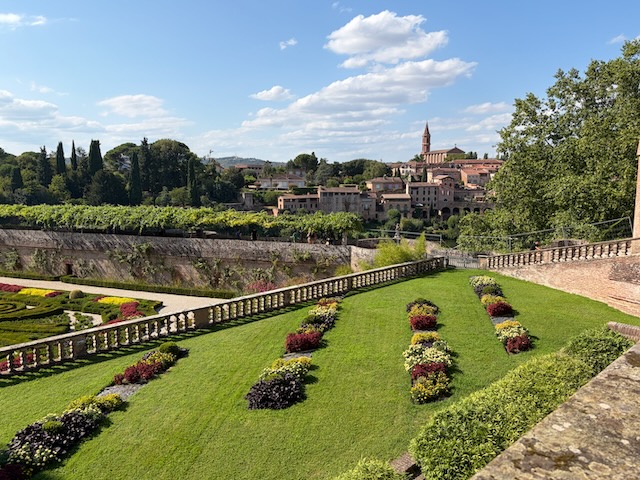
Behind the cathedral is this beautiful garden. And Aaal-be, that’s all for Albi.
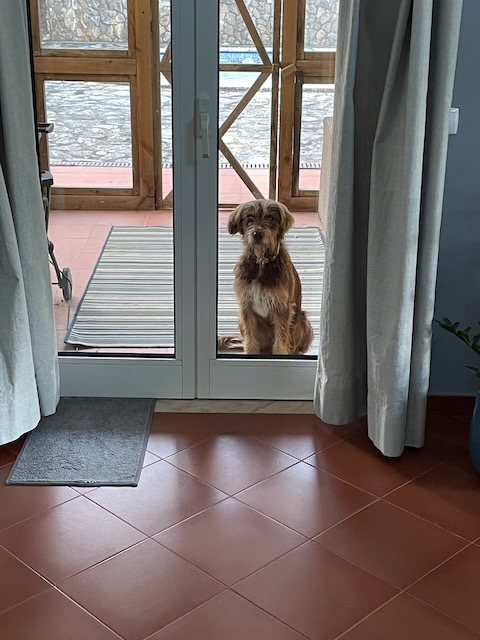
Okay, I know we only got to the “A’s,” but this all seems long enough for one entry. Although I will close on something I found to be rather cute and endearing. If you’re a regular reader of this blog, you’ll remember that not so long ago I did an entry on my neighbor’s dog, Mel, who adopted me as her best friend and quickly made herself a mainstay of my daily life by hopping over her owner’s fence and then hopping over mine virtually every day. Most mornings I’d walk out of my bedroom to find this scene at my door:
Well, while I was gone she would still jump over both fences and I suppose wonder why I wasn’t coming out to greet her. Her owner sent me the following photo while I was away, taken after they went looking for her and tried to bribe her to jump back over the fence. But she wasn’t having it, as you can tell by the look on her face. It was heartbreaking and heartwarming all at the same time.
It’s nice to be loved.
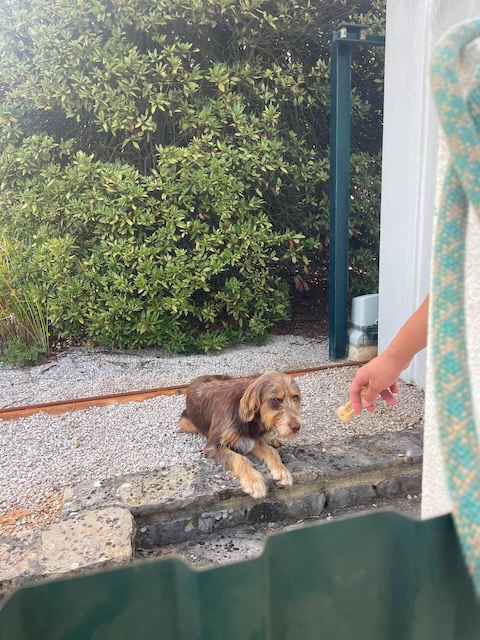
Anyway, we are reunited and she’s happy again!
Au revoir for now, until I post the rest of my French Adventure!
(Scroll down to see previous entries.)





















 baldsasquatchdotcom