Coimbra.
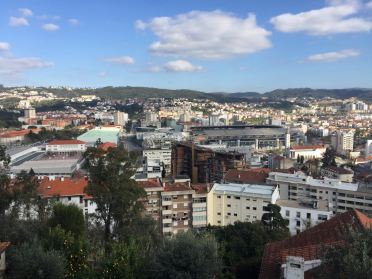 Coimbra is a university town in the middle of Portugal that deserves its own entry in this blog, even though we only spent part of one day there.
Way back when (1131 to 1255) it was the capital of Portugal. It is the fourth-largest urban area in Portugal (after Lisbon, Porto, and Braga), with roughly 150,000 people.
It’s one of the few towns we visited on this trip where we didn’t go to a castle. The main one in or near Coimbra looks to be Castelo da Abrunheira, but from what I can see on the internet, it’s pretty derelict.
Like most towns and cities in Portugal, Coimbra is chock full of ancient buildings, twisty/turny roads through hilly areas, and lots of history. Much of that history is centered in the University of Coimbra, which was founded in 1290, making it the oldest academic institution in the Portuguese-speaking world. Its historical buildings are classified as a World Heritage site by UNESCO.
So that was where we spent most of our time.
The first four photos are the views from the university grounds.

The next two are from a walk we took in a nearby park.
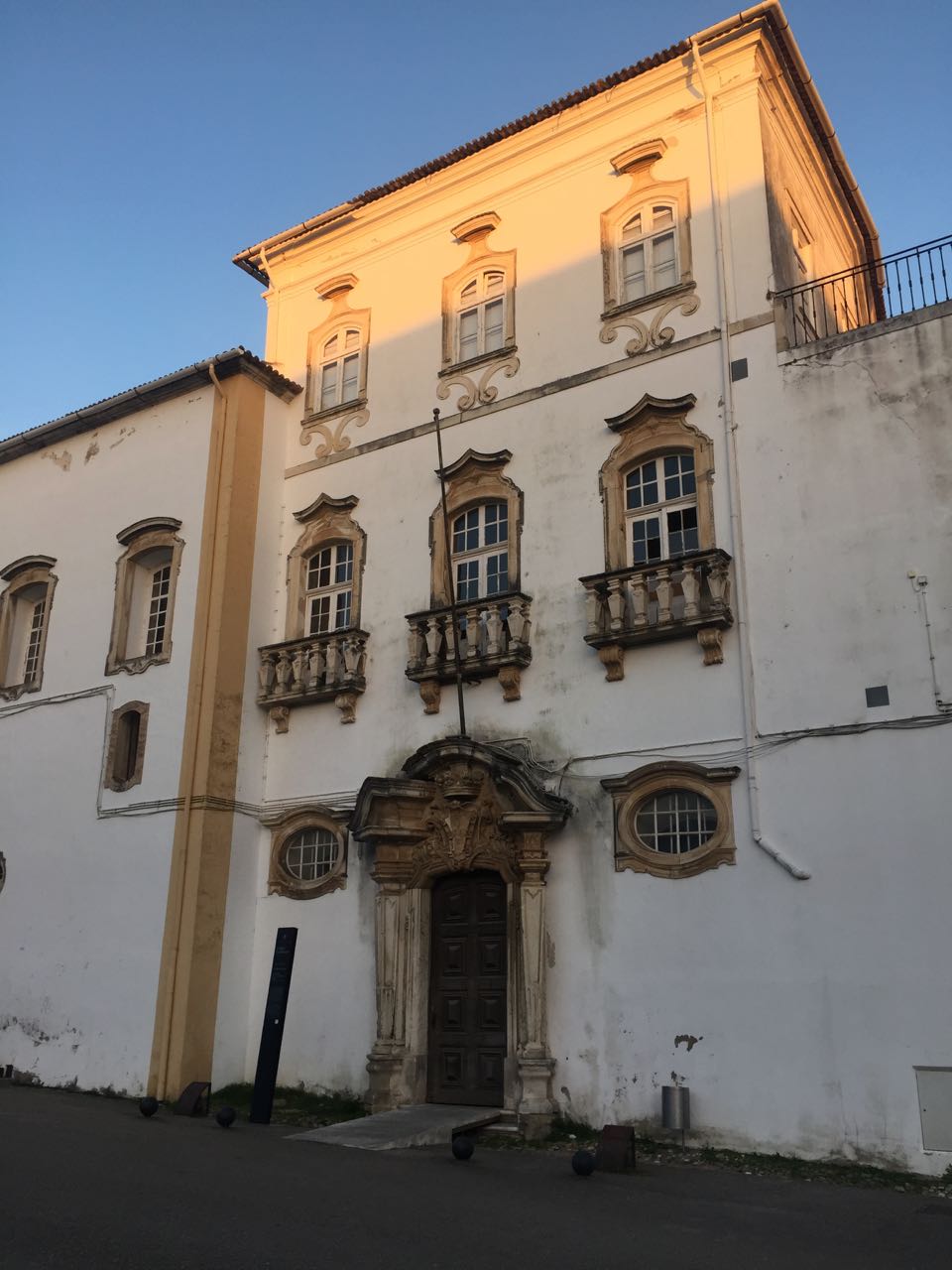
And this next one is of a building… just in case you’re reading this in braille and can’t see the photograph.
And now on to the University of Coimbra!
 This is a panoramic shot of the main square in the university. The buildings here offer three very interesting tours of some cool historical stuff, as you’ll see below.
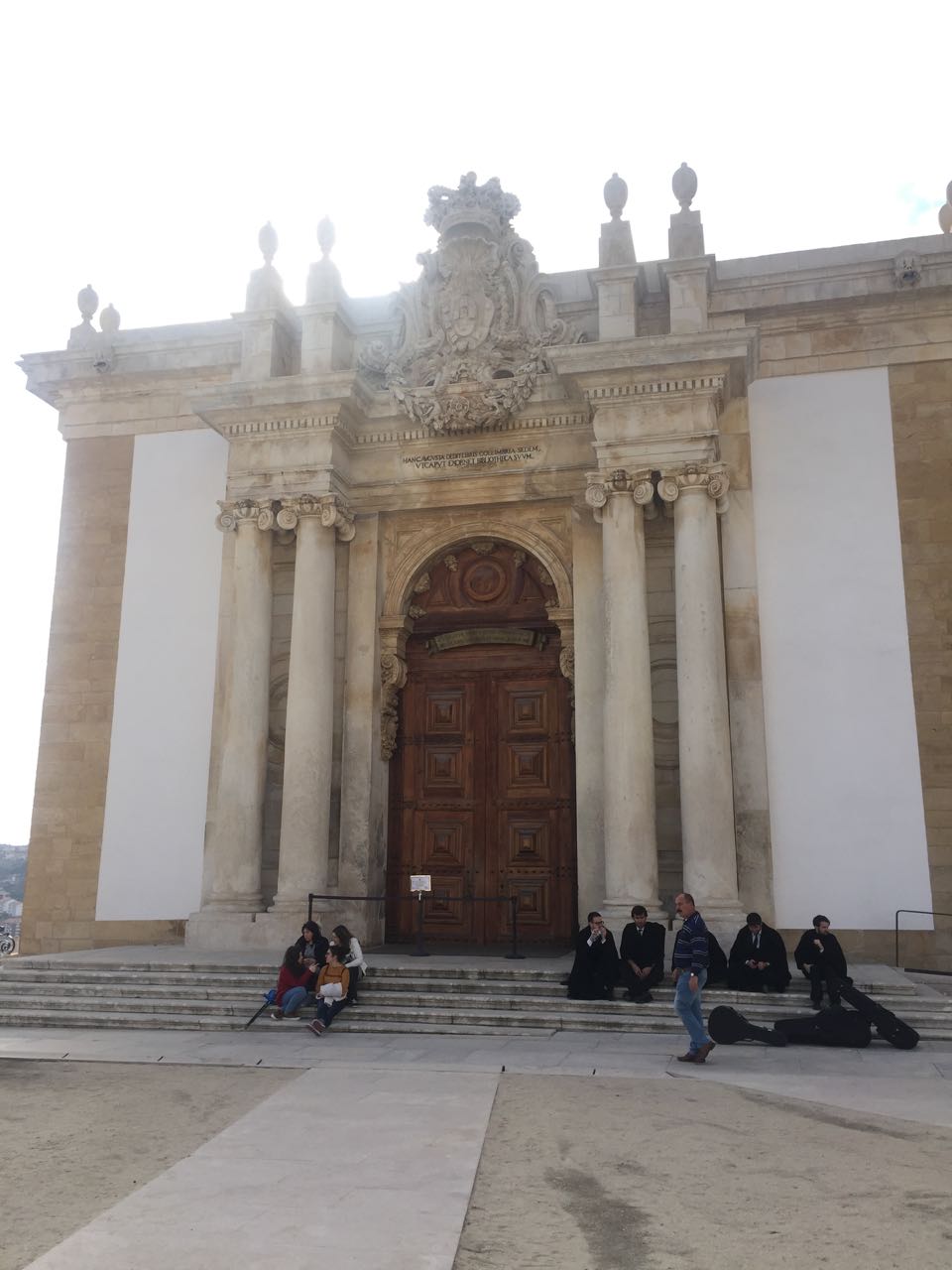 This is the front entrance (used as an exit) of an amazingly decorated old library, which you’ll see the inside of below. Note the smartly dressed cape-and-tie students.
 This is a church on the University grounds. You walk past it to get to the science museum, the inside of which you’ll see below.
 This is a statue of King João III, or as his close American friends from New Jersey called him, “King Johnny da Turd.” Actually, since he ruled from 1502 to 1557, there was no such thing as New Jersey. But they woulda called him that had there been, I’m sure of it. Of course he might have had them beheaded if he thought they were really saying “turd” instead of “third,” so maybe it’s a good thing New Jersey hadn’t been invented yet.
 We’re not from New Jersey and we speak a little Portuguese, so we don’t call him King Johnny da Turd. We call him King João the Wow. During his reign he colonized Brazil (earning him the nickname of “The Colonizer”, which sounds like a great TV show), and led the Portuguese to become the first Europeans to make contact with both China and Japan, which led to a lot of tea, which ended up in Britain, which resulted in them invading –and this is true– 90% of the world’s countries. By 1913, the British Empire ruled over 412 million people, which was almost a quarter of the world population at the time. I’m sure all that happened because of all the caffeine in the tea. So see, the British Empire was all Portugal’s fault.
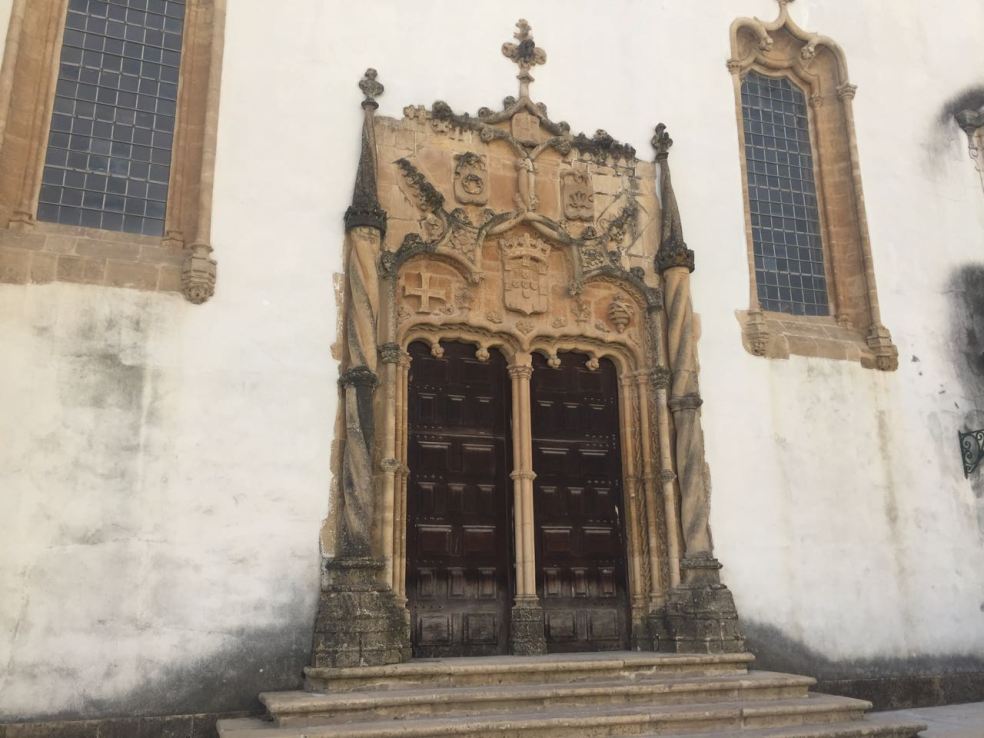 We’ll call this the Door of the Day since I can’t remember where it was exactly. Looks a little holy-ish though.
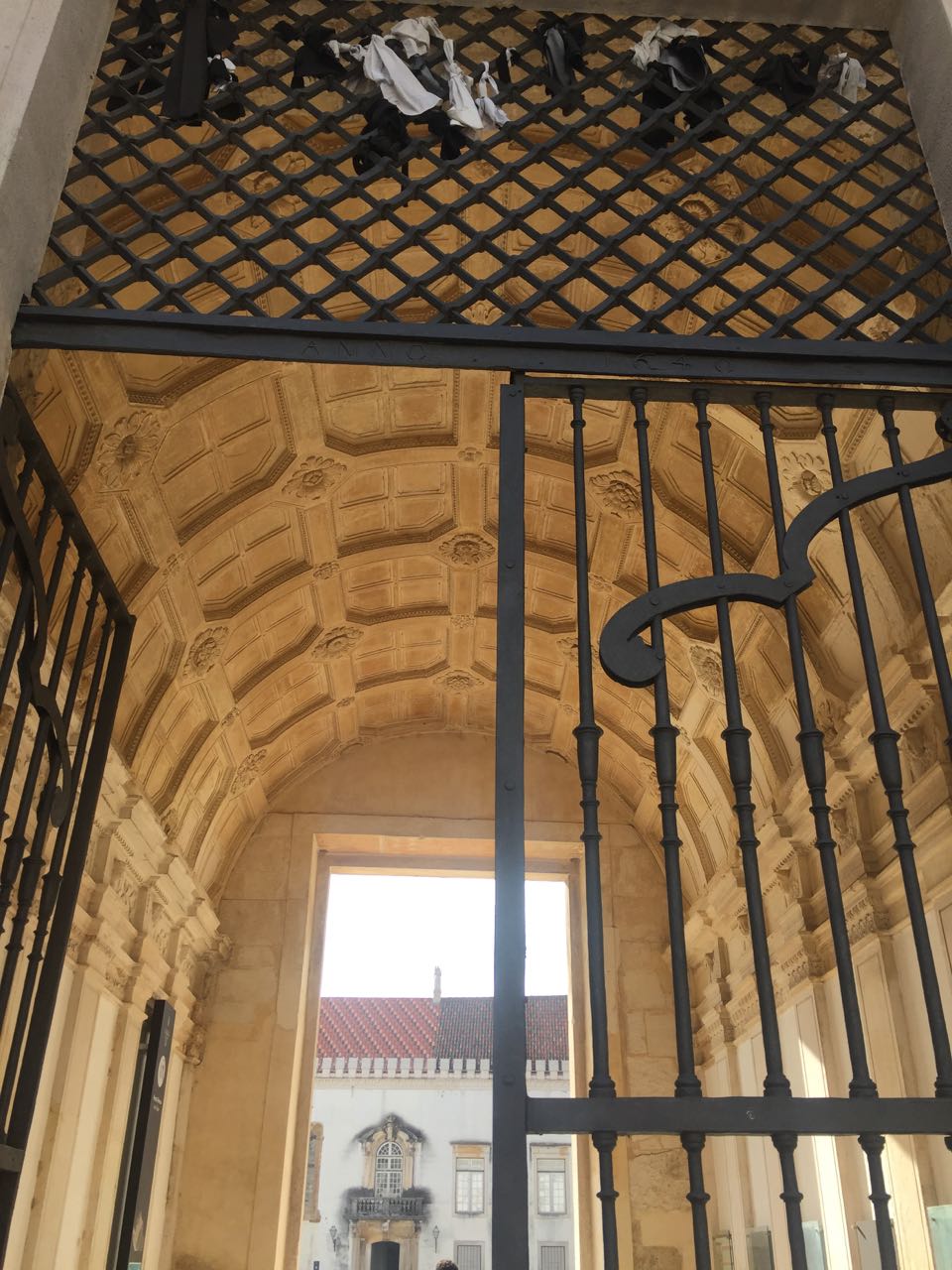 You walk through this to get into the historical inner square of the University. I’m guessing the clothing at the top is the result of college dares, hazing, or perhaps it’s actually the underwear of the workers who were installing the grate but kept falling off, except for their underwear which tended to get snagged on the grate. Then no one wanted to move any of it because, you know, it’s men’s underwear, which should never be touched by anyone but the owner, their wives, or their mothers, and even then only with a lot of mental griping as to why men are so stinky.
On closer inspection, maybe they’re socks or handkerchiefs. Oh well, this is what you get when we travel without a guide.
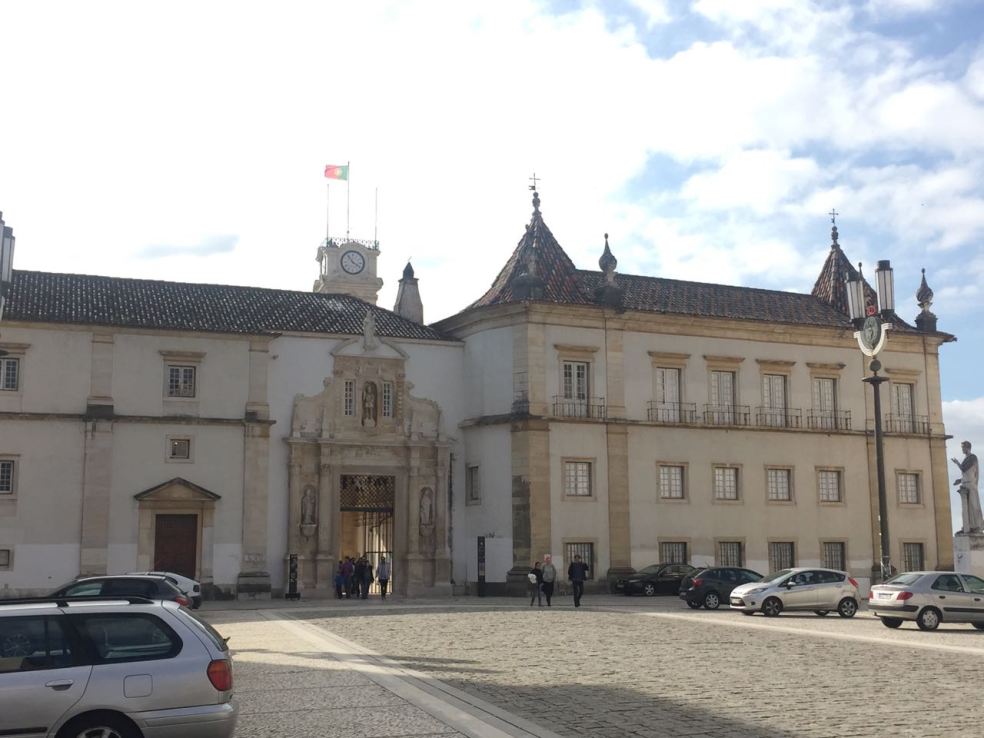 That’s where the door is from the previous photo in case you were thinking I made all that up.
 You can walk down these stairs to go into the library, unless you have no legs, then you have to roll.
 This is the central square. It was all once a royal palace. In fact, the first one in Portugal.
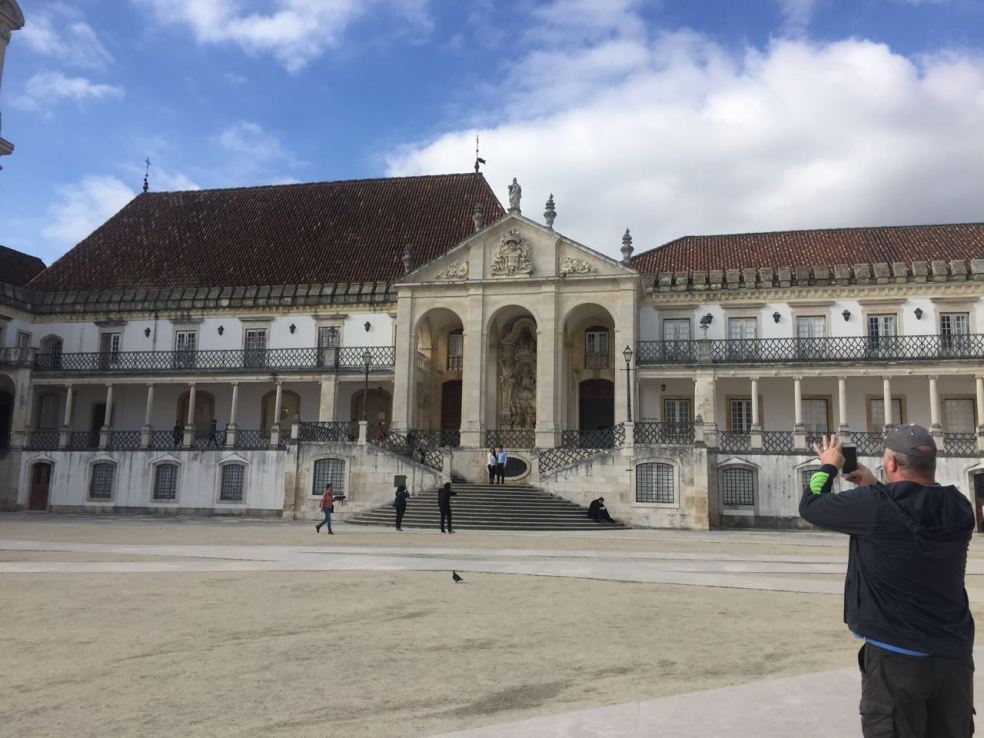 This is the Via Latina, erected in the 18th century. My high school Spanish would translate that as “The Road of a Latin Woman” (even though “via” is more of an Italian word), but I’m guessing that’s not what it really means, especially since we’re not in Spain or Italy… or Kansas.
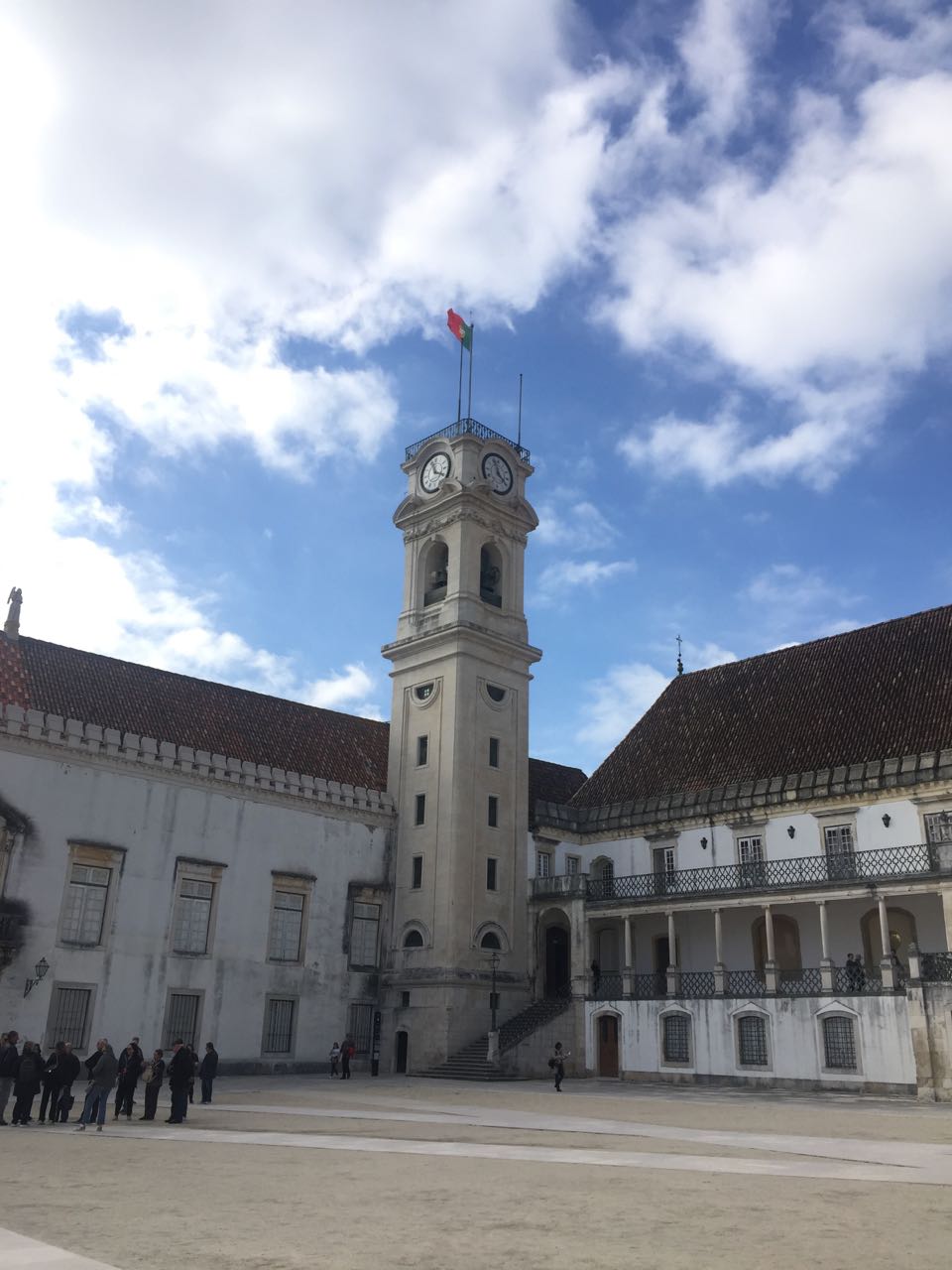 This is simply called “The Tower.” And of course they would have built a phallic building right next to a Via Latina. Anyway, it was built in the early 1700s, and has bells that still chime plus a staircase all the way to the top. We didn’t bother going up because we’ve walked up plenty of ancient spiral staircases over the last few years, and we’re two years older than we were two years ago, as you probably are as well.
 This is a picture of a red car. An old building just happens to be behind it. In all seriousness, red cars are a little bit of an exception in Portugal. It’s something I noticed when we first got here: almost all the cars are either grey, silver, white, or black. Dunno why.
 A view across the square.
 A view from the square, overlooking the Mondego River, which is the longest river located exclusively in Portuguese territory. It begins its journey from the Serra da Estrela mountains, which we visited and you can read about later.
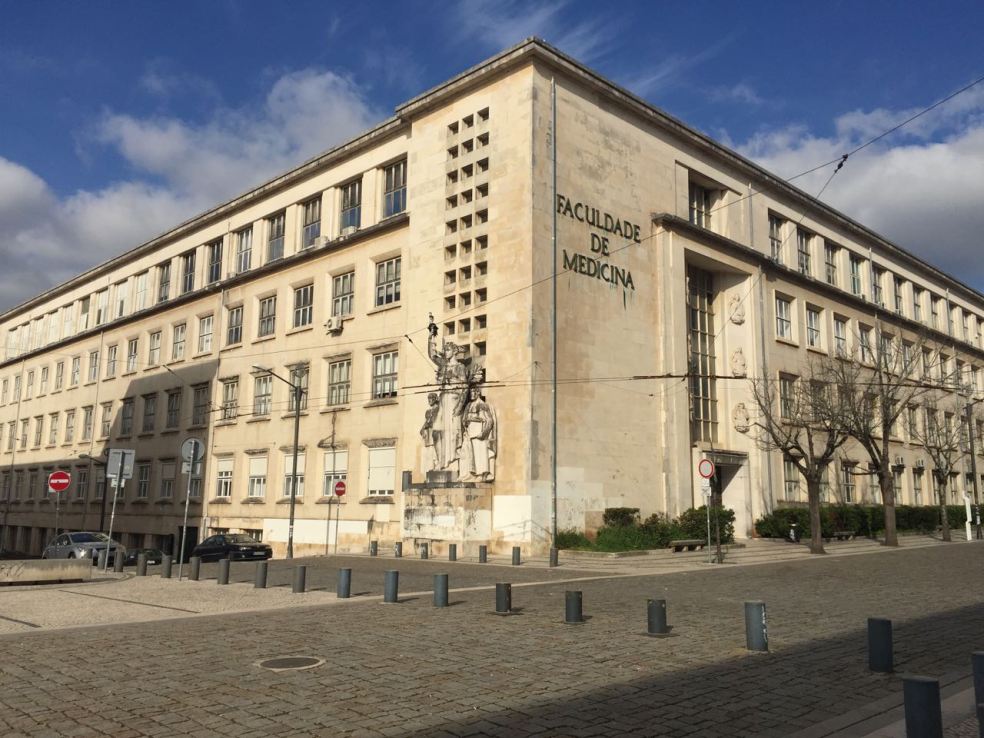 Unlike a lot of university buildings I’ve seen, this one does a very good job of being labeled. It means Faculty of Medicine, in case your mental faculties are waning.
 The first part of the three-part tour was into the Biblioteca Joanina. They didn’t allow photography in the library itself, so I had to steal a couple of pictures off the internet. I wanted to do that because it truly is an amazing place. We just stood and gawked in awe at the number of old books and the grandeur of the rooms.
 It was built in the 18th century, and is now a priceless National Monument.
 The floor below the Biblioteca Joanina is a depository of many other old books, some of which are gigantic in size.

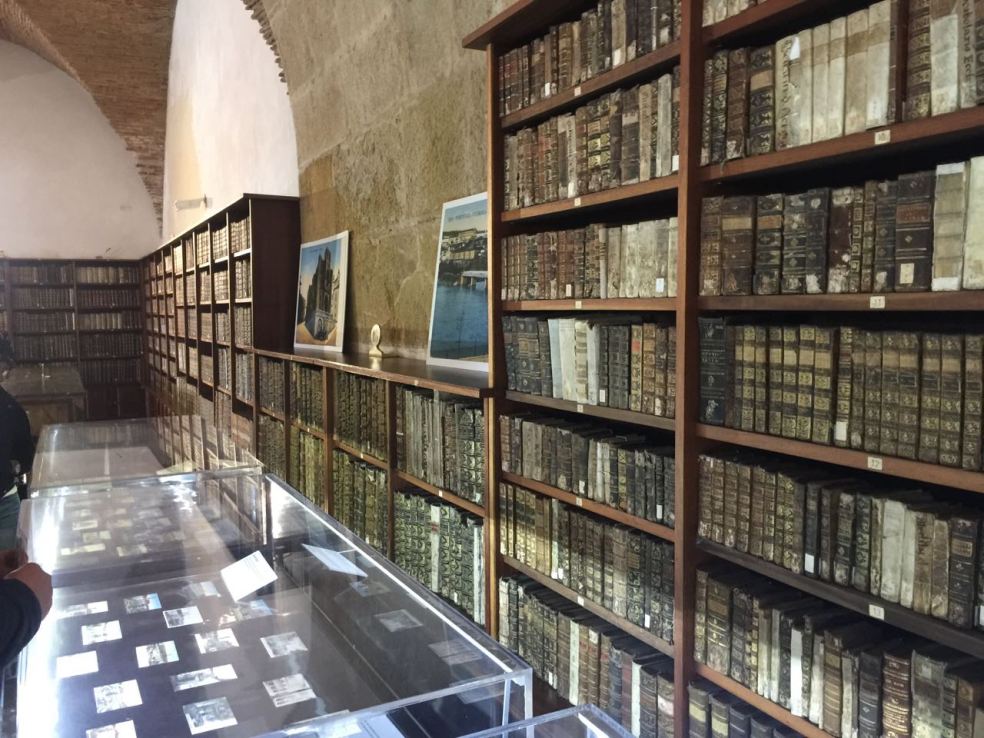
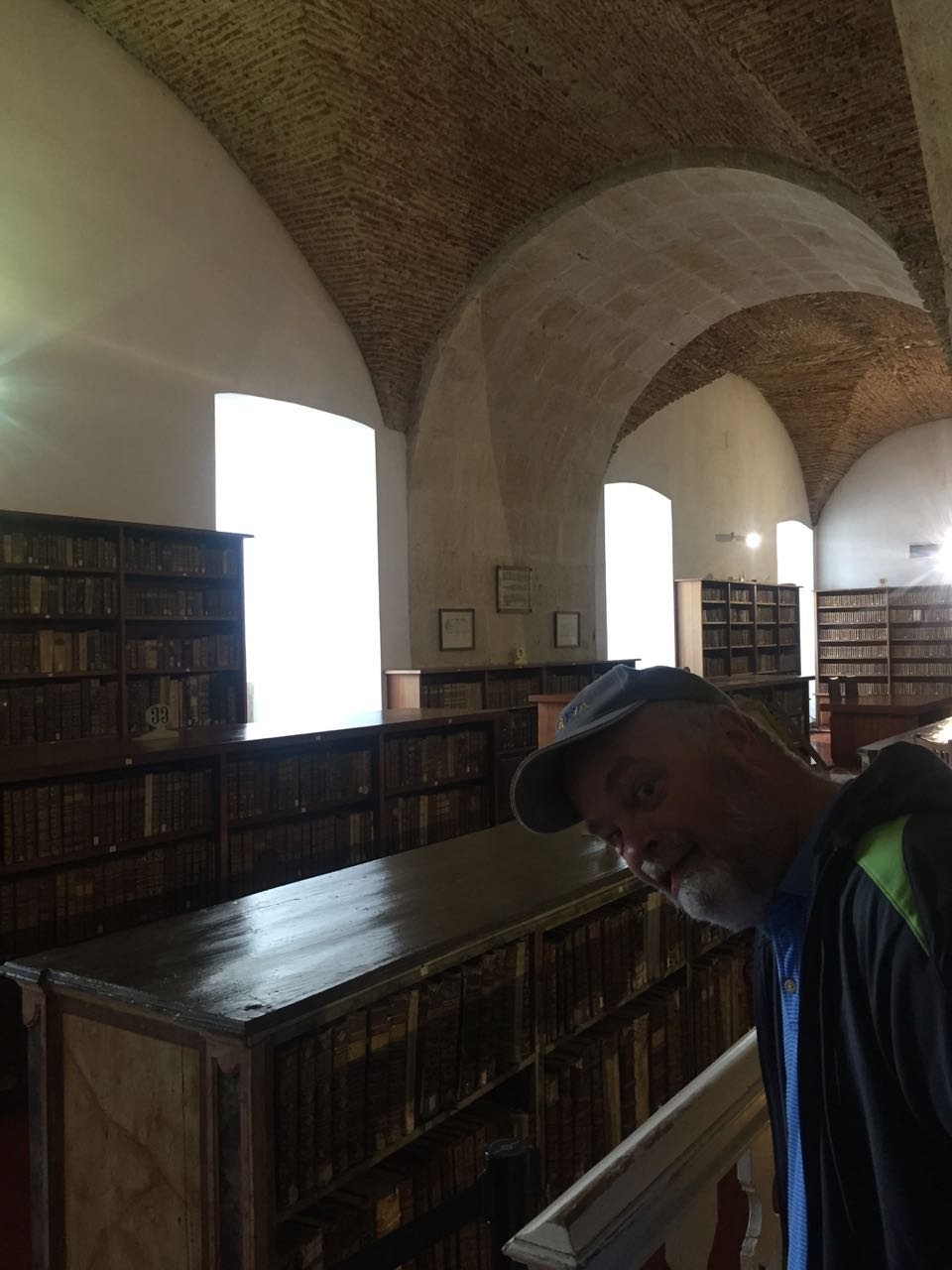 “Ssssh!”
 Inside the complex is a small chapel, as usual, ornately decorated.
 This is a courtyard near The Tower. I’m guessing it’s called The Courtyard.
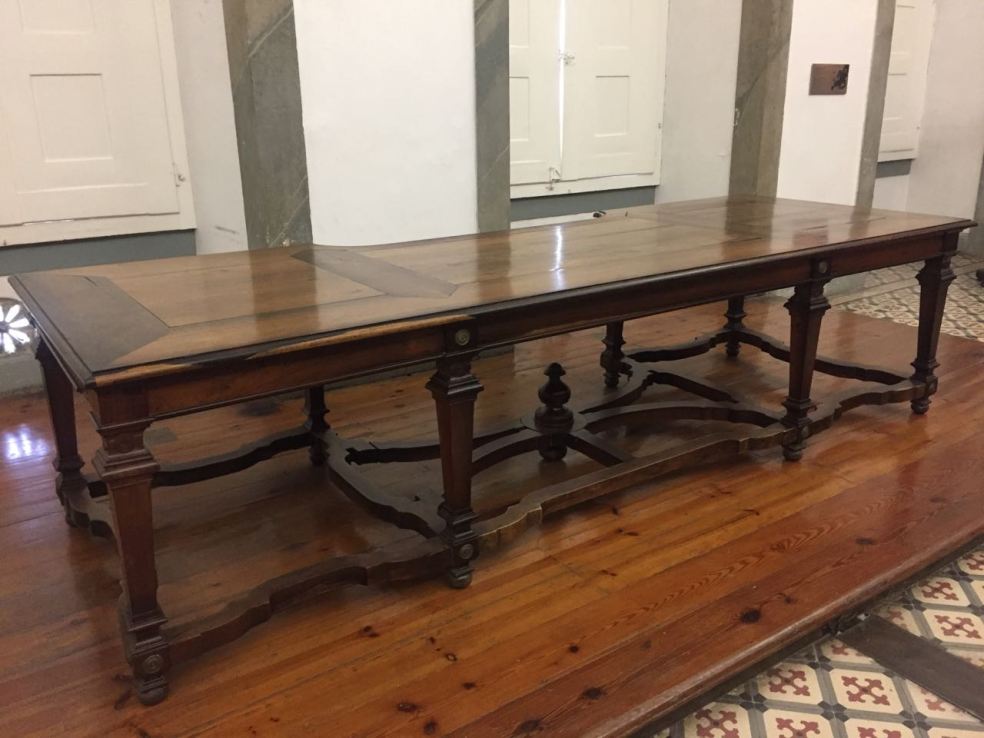 We wanted this table for our dining room, but apparently it’s not for sale. Bummer. When I tried to explain to them that “priceless” means there’s no price and so therefore it’s free, they just looked at me funny, as the Portuguese often do.
 It isn’t every day we find a door customized to fit my large American bulk.
 They apparently hadn’t learned about blueprints yet.
This is an assortment of floor, wall, and ceiling decor Carolyn found especially interesting.
Near the University complex is a science museum that isn’t so much dedicated to science as it is to the history of the dedication to science. In other words, their displays were mostly of the things that were on display way back when. So it’s a sort of museum of old science. We found it interesting, except…
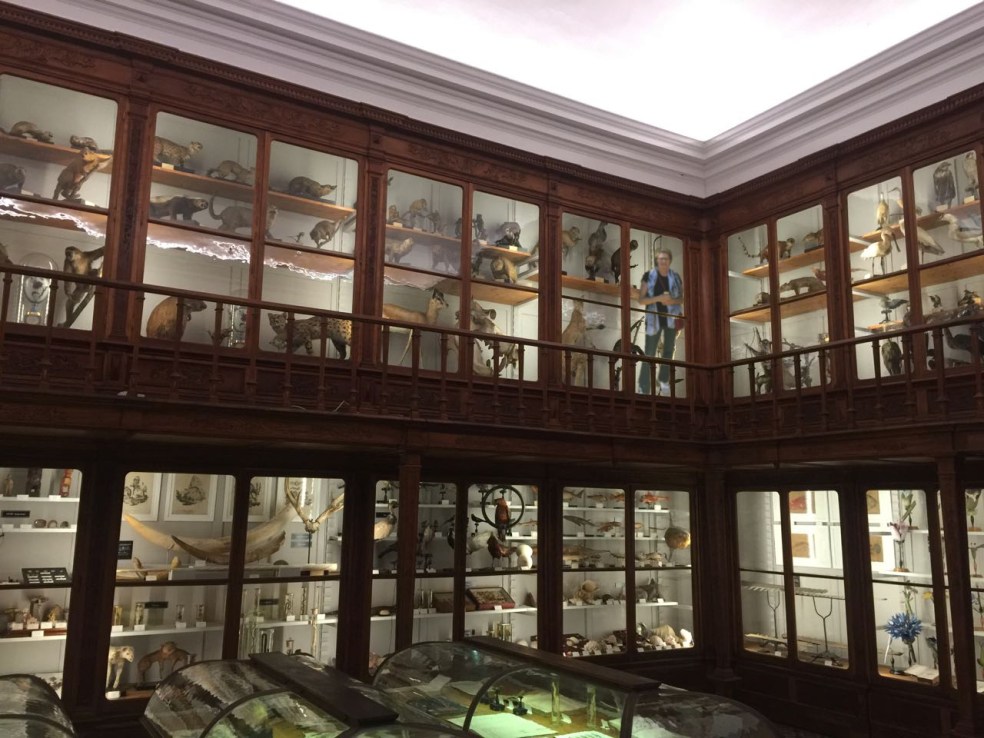 Once again, Carolyn found herself trapped inside a display case in a museum.
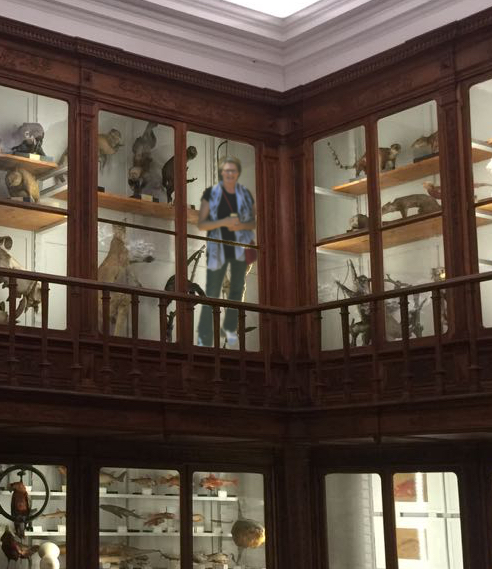
Here’s a close-up. To get her out of there I had to explain that sure, she’s old, but she’s not that old. Once they checked her ID, they let her out of the case. Whew! Crisis averted! I keep telling her to stay on the beaten paths, but she’s an explorer, that one.
 This is a whale of a picture. I wrote that on porpoise.
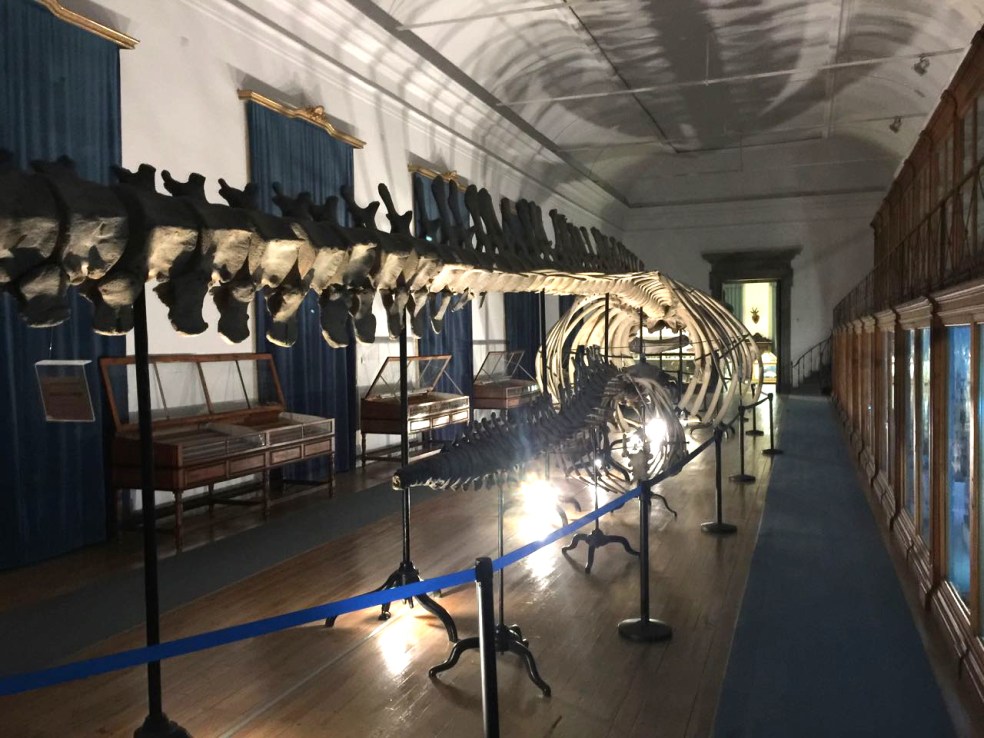 Whales are so ginormous, it’s almost hard to fathom. Get it? Fathom? Ha ha! No? Anyway, I found it interesting that recently scientists discovered the prehistoric bones of a four-legged whale in Peru. I wonder if it turned into a very large frog later. In any case, this one had already evolved past the leg thing, saving the female whales untold millions in razor costs.
 Fierce pussies aren’t afraid to use their teeth and claws.
 Even in death, these animals can’t get away from their herd mentality. Oh deer!
 This room contained all sorts of old scientific instruments. Don’t know how they sounded in an orchestra, though.
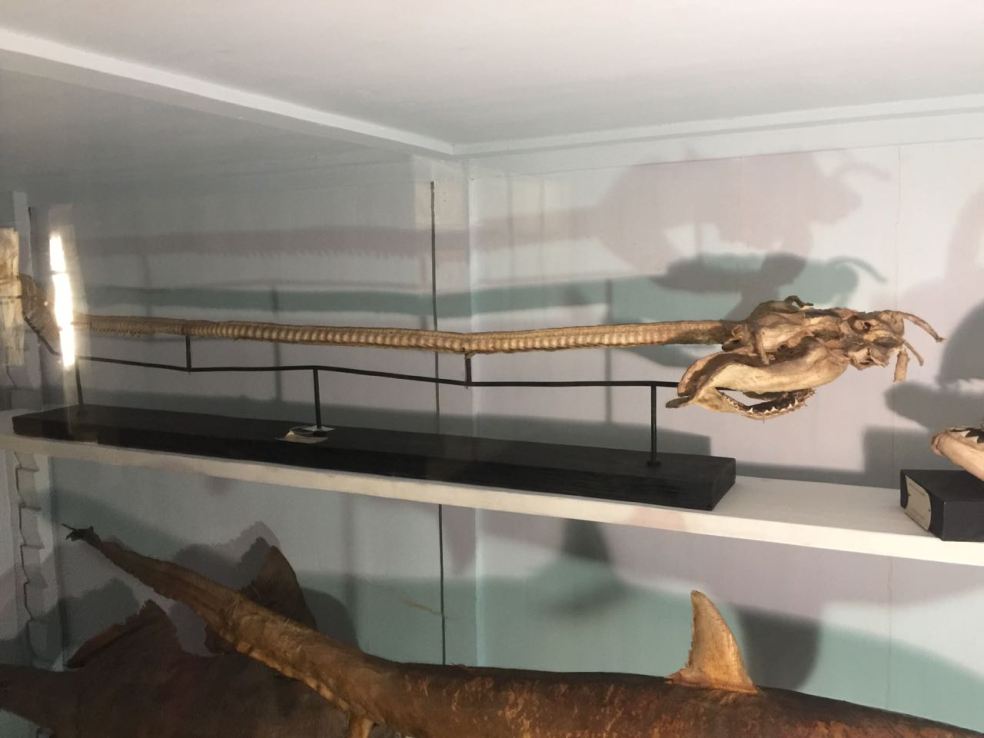 If that isn’t one of the weirdest skeletons ever, I don’t know what is.
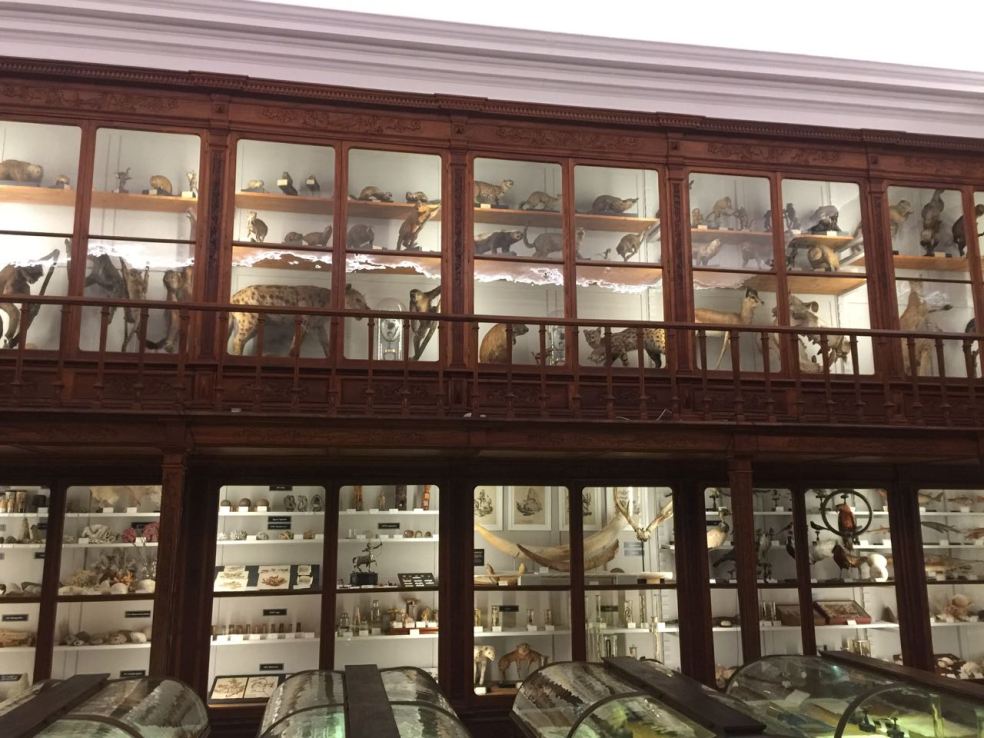 Lots of old taxidermy, although today they call it Uberdermy.
 These skulls demonstrate why I avoid being bitten by animals with big teeth.
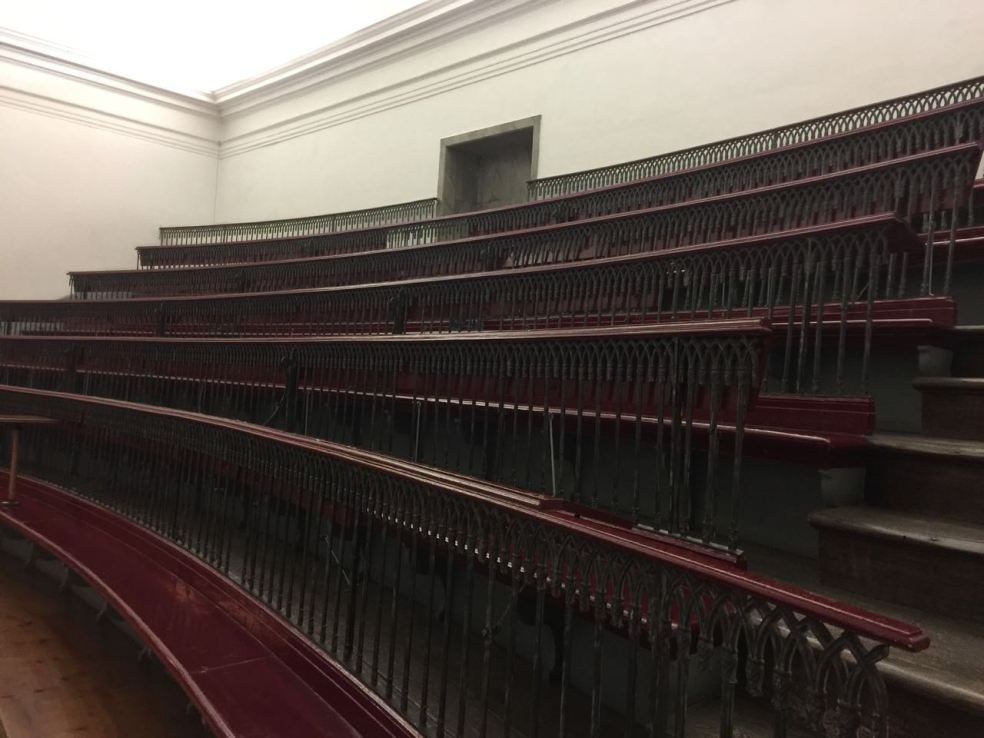 The museum used to be a place of learning with seats designed to keep you wide awake because they were so uncomfortable.
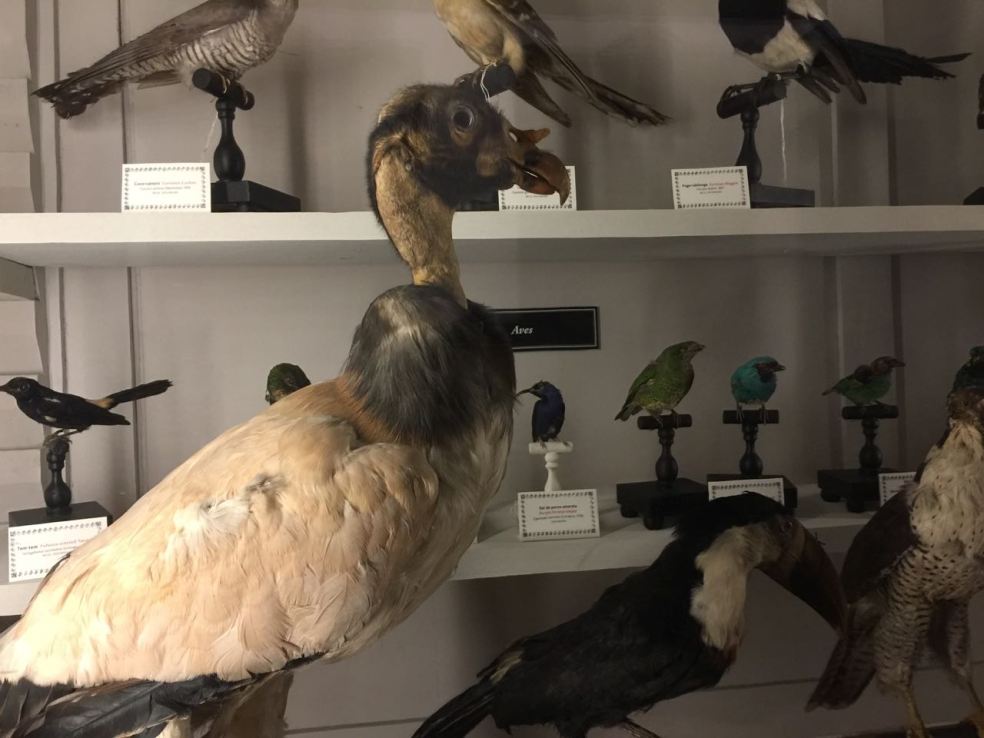 When you’re dead, he’ll pick your bones.
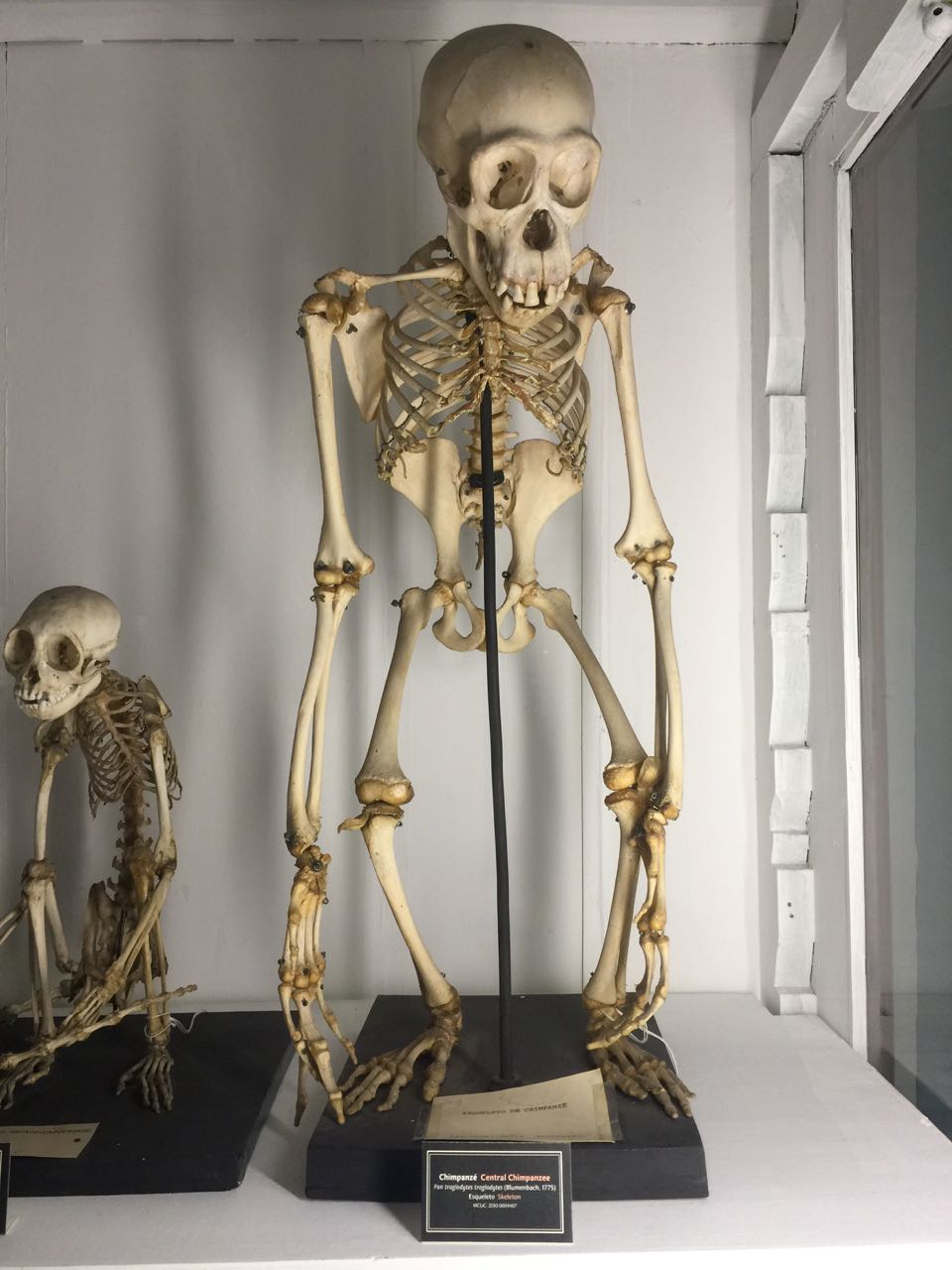 Guess he picked these clean too. But seriously, those are freaky long arms. As humans evolved from the apes, I think the friction from the ground is what shortened our arms. However, they definitely had an easier time clipping their toenails, so I’m not sure this whole evolution thing is all that smart.
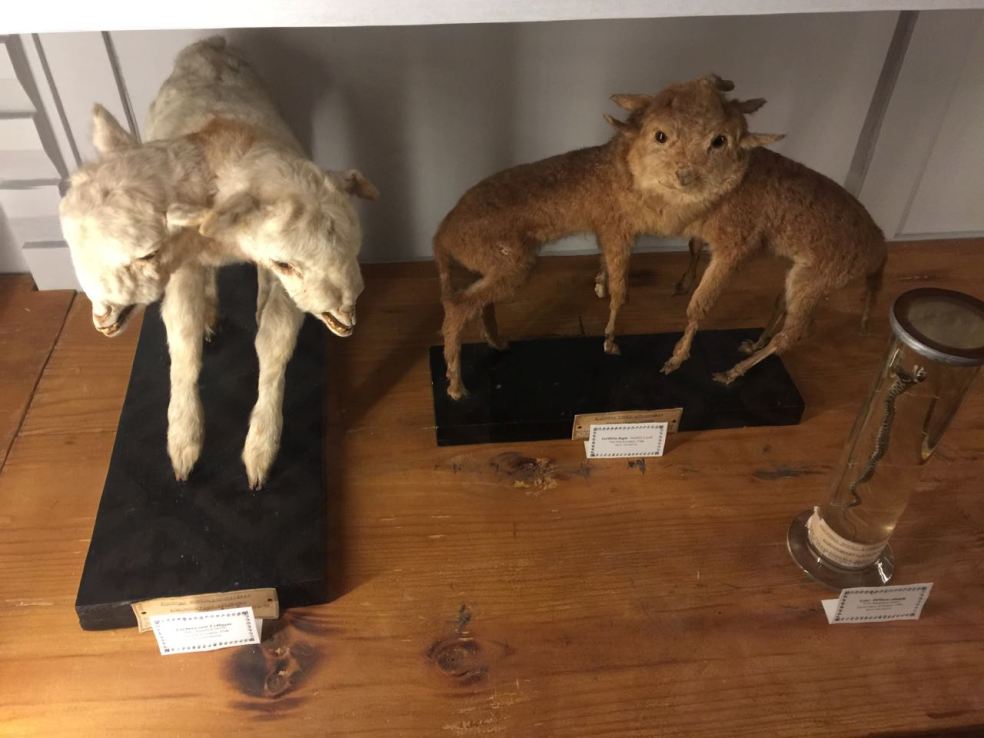 Not all genetic accidents lead to adaptations in species, otherwise we’d have two-headed animals all over the place. On the other hand, if a human developed that way and one head was a right-winger and the other a left-winger, it sure would be entertaining to watch them argue! Or what if one was religious and the other an atheist? The religious one would go nuts worrying that his other head would land them both in hell! That might be quite an issue for conjoined twins!
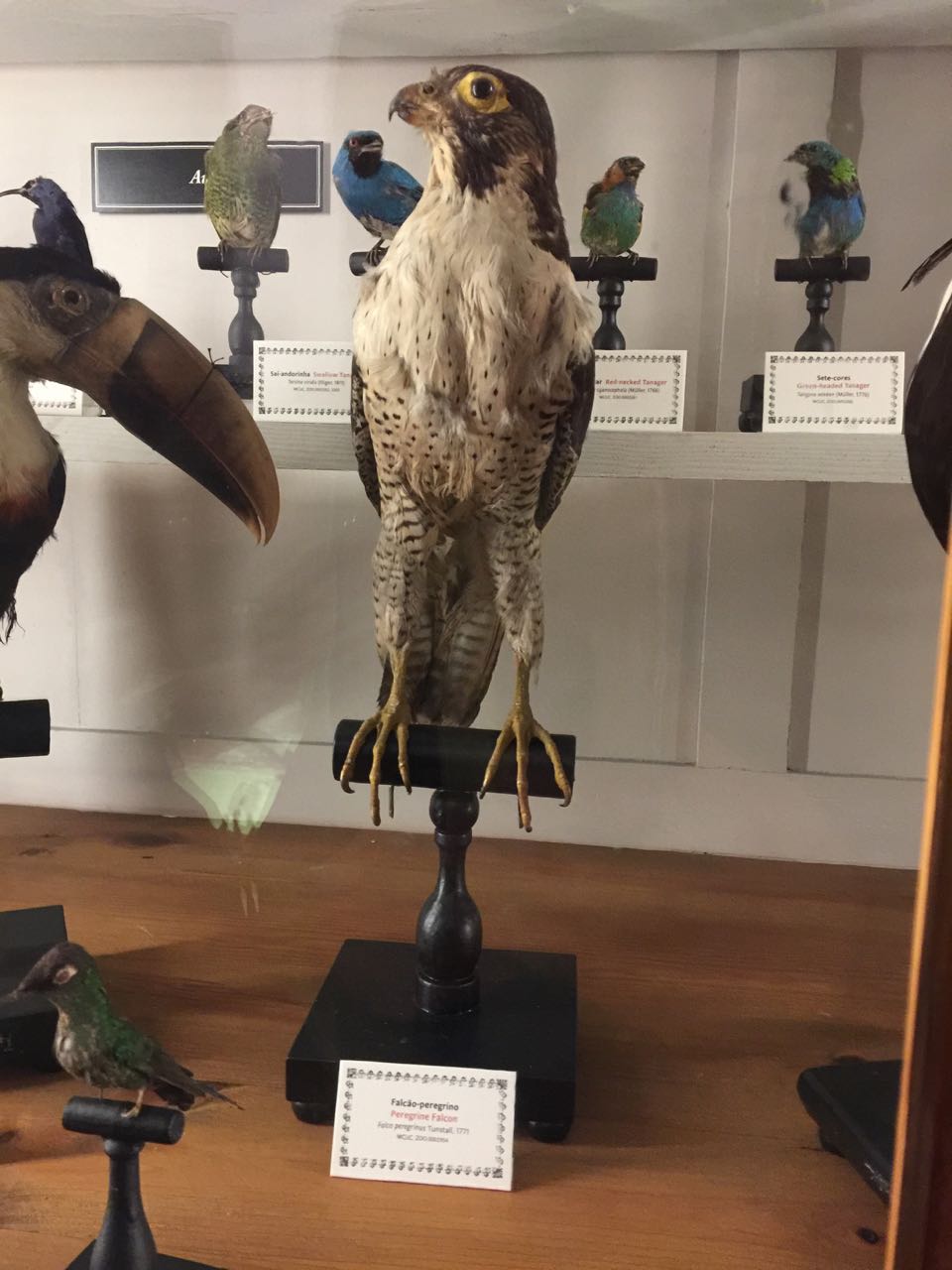 P
P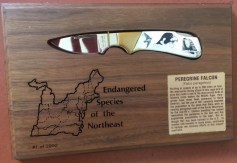 eregrine Falcons are near and dear to me because I developed a limited edition scrimshaw knife set back in the early ’80s which highlighted their status as an endangered species. Their decline was largely due to the extensive use of DDT, something my very conservative boss at the time scoffed at; he thought DDT was awesome. Fortunately, they didn’t listen to knuckle-headed anti-environmental conservatives like him back then, and so the cessation of the use of DDT allowed this magnificent animal to recover enough to be taken off the endangered species list in 1999. Maybe my little collector’s item helped with that!
 Here’s another table we wanted to buy as well. But again, not for sale. Haven’t the Portuguese heard about free enterprise? Sheesh!
Well, that’s it for Coimbra. That was a long entry! Thanks for sticking with it and getting all the way to the end, honey. By the way, what’s for dinner?


 Here are some panoramic shots from atop the mountain. The temperature was almost exactly 32 degrees, or in the much more sensible measurement of celsius: zero. It was easily the coldest we’ve been since we’ve been to Portugal, except for that time I got locked in a walk-in freezer after thinking it was the men’s room.
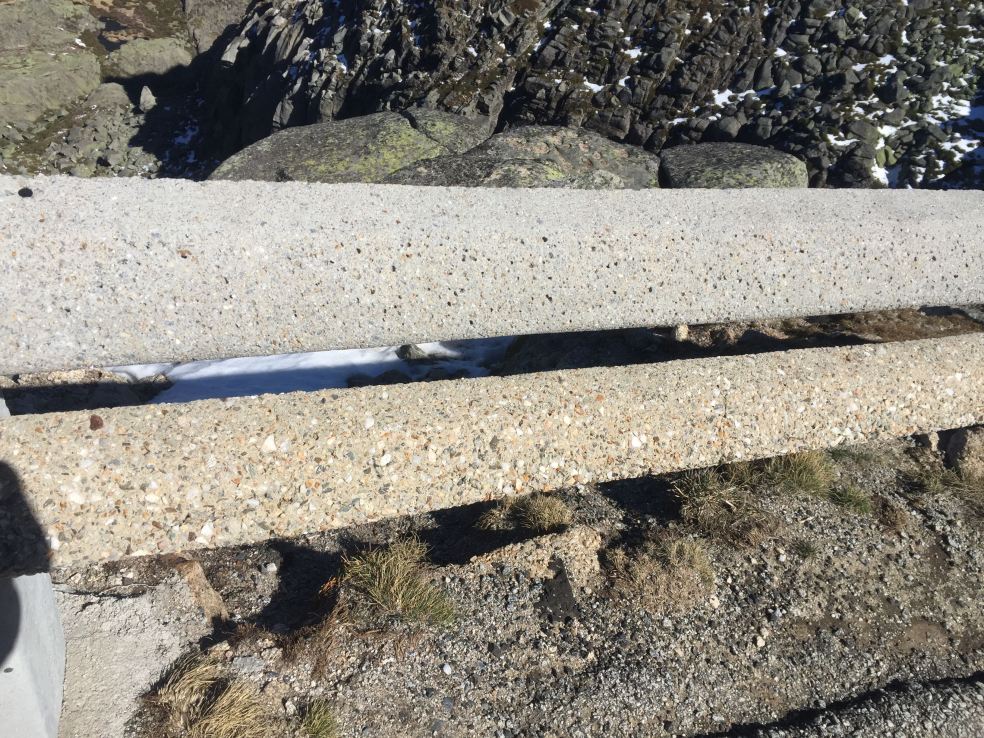 We drove up one side of the mountain and down another, and both were slightly harrowing, made all the more so after we noticed many of the guard rails were made of stone. I’m not sure I’d trust the stone not to break in a thousand little pieces if rammed with any amount of force, meaning we’d break into yet another thousand pieces when we hit the ground two million meters below.
 But as you can see, we made it safe, sound, and chilly.
 road led by this massive wall, the other side of which was crawling with crazed zombie Mexicans just like in World War Z. Oh wait, those weren’t Mexicans, those were Spaniards! Good thing Portugal already built a huge wall! Actually, it is the non-water side of a dam. At least we hoped it would stay non-watery.
 At the top, they have about five different stores, each offering various cold weather gear, cheeses and meats. Because nothing says “keeping warm” like cheese and meat.
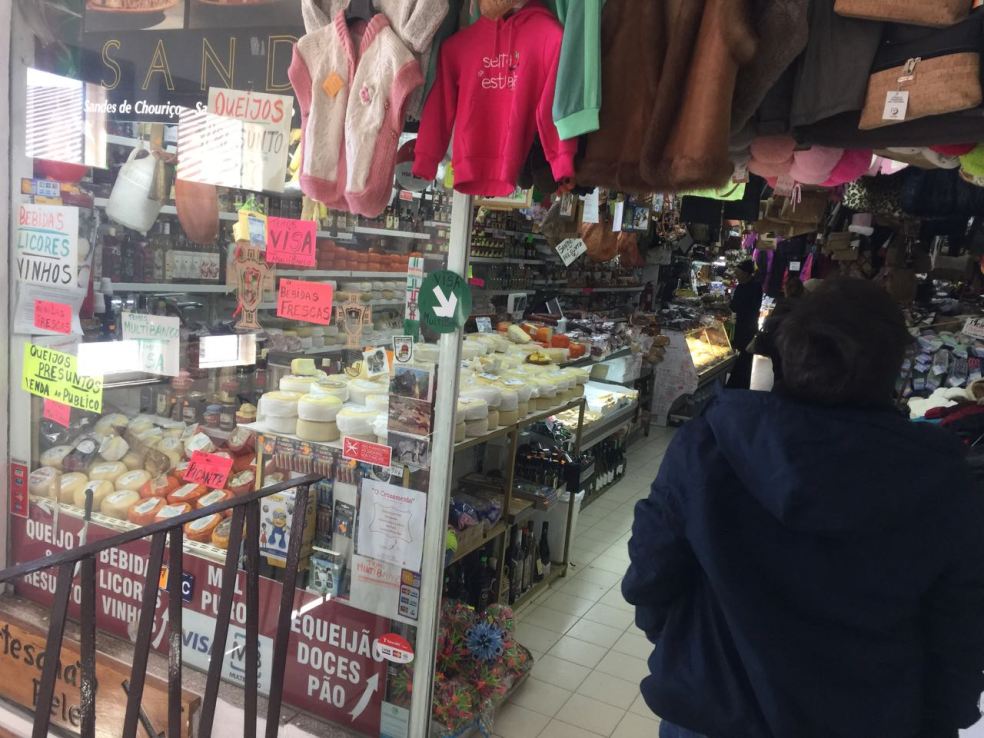 The funny thing was, each of them offered almost exactly the same thing, even though some of them were side-by-side and even shared the same entrance.
 They each had display cases filled with aromatic cheese and meats, always with a friendly offer of some samples, and each of them had snow gear and souvenirs, apparently all purchased from the same very talented distributor salesperson.
 It was like being in a strip mall with five 7-11’s in a row.
 On the plus side, you could try on a hat exactly like this in five different stores!
 During our explorations, we took a small detour on a road with no idea as to where it led. It ended up being a pretty hairy drive, with drops off the side that would’ve turned our VW Polo, Marco, into a pancake… covered with raspberry syrup from our bodies, if you know what I mean. But we survived, with the added bonus of confirming that the sweat glands in our hands work just fine, thank you.
 As you surely must know by now because of all the Portuguese lessons you’re taking in preparation for your visit to us in Portugal, “Manteiga” means “butter.”
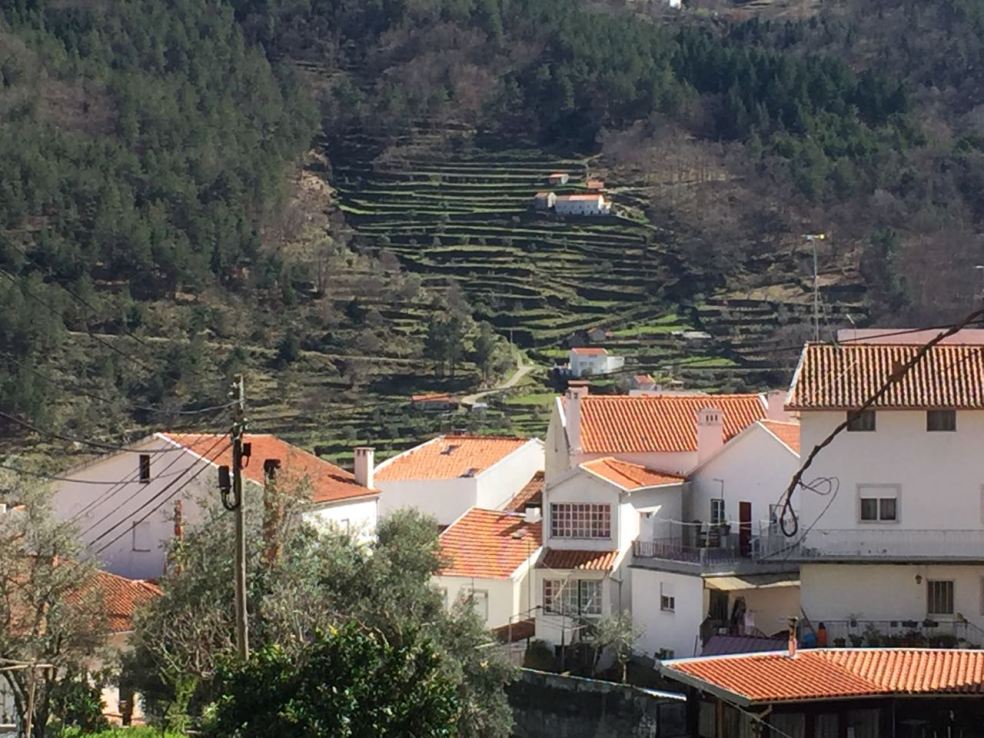 Accordingly, I assume those are terraces are where they grow buttercups. Because buttercups are what they make butter out of, right? Carolyn says “no way.” I say “whey.” She says, “I curd of told you that.” I say, “Tit for tat!”
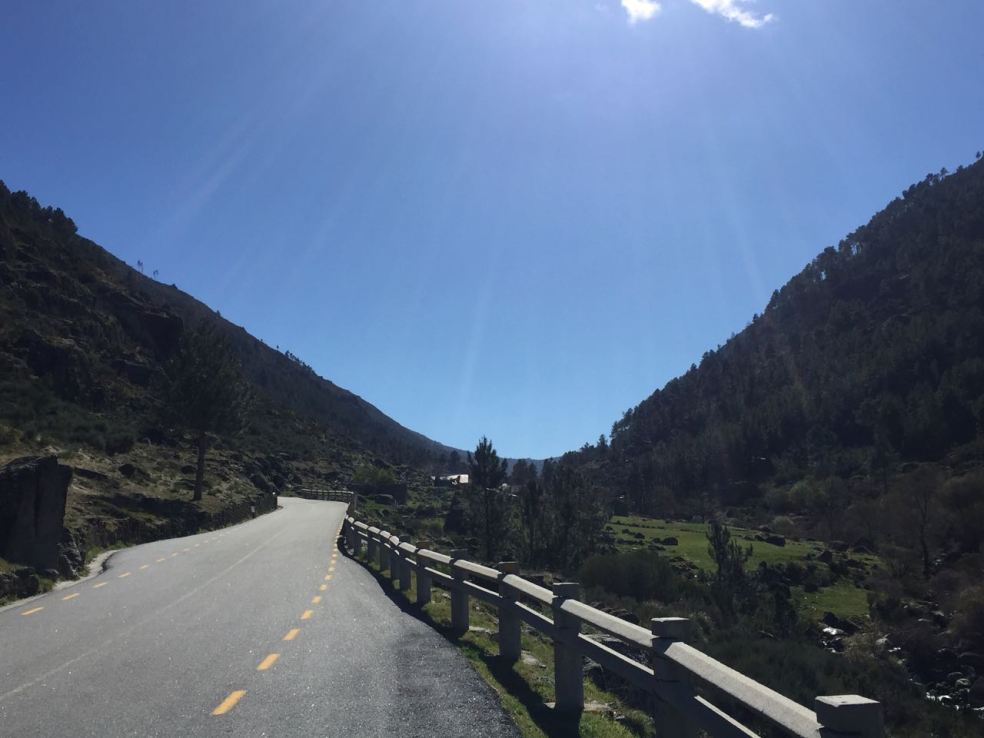 You don’t want to have butterfingers when you’re driving on the roads leading to the town. You’d turn into butter squash pretty quickly.
 I think this is a butter stream where they churn all the butter, kind of like Willy Wonka did with his chocolate rivers. Or maybe they were churning margarine, it was hard to tell because at that point in its production butter is clear, as we all know.
 Despite the fact that butter can be a little fattening, it was a charming village. We had some pizza there, because everyone knows when you go into a Portuguese town named “Butters” you have to have pizza. The crust was, of course, buttery. We were going to have pepperoni, but we decided on da udder one.
 A picturesque view of a butter farm. You can tell by all the buttercups and milkweed.
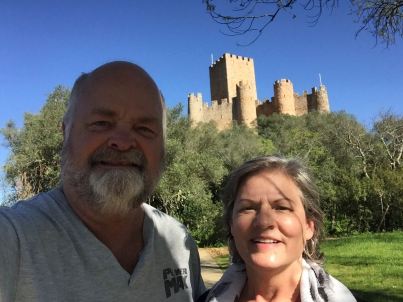 Ha ha! It’s not really part thirteen, it just feels like it.
 Unfortunately, it wasn’t quite as cool as the pictures make it look. But I guess you could say that about most models and movie stars too.
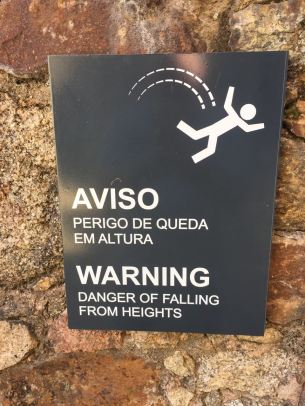 But, intrepid explorer that I am, when I saw this bilingual sign (which means I could completely understand it despite the lack of French), I had to have some fun with it.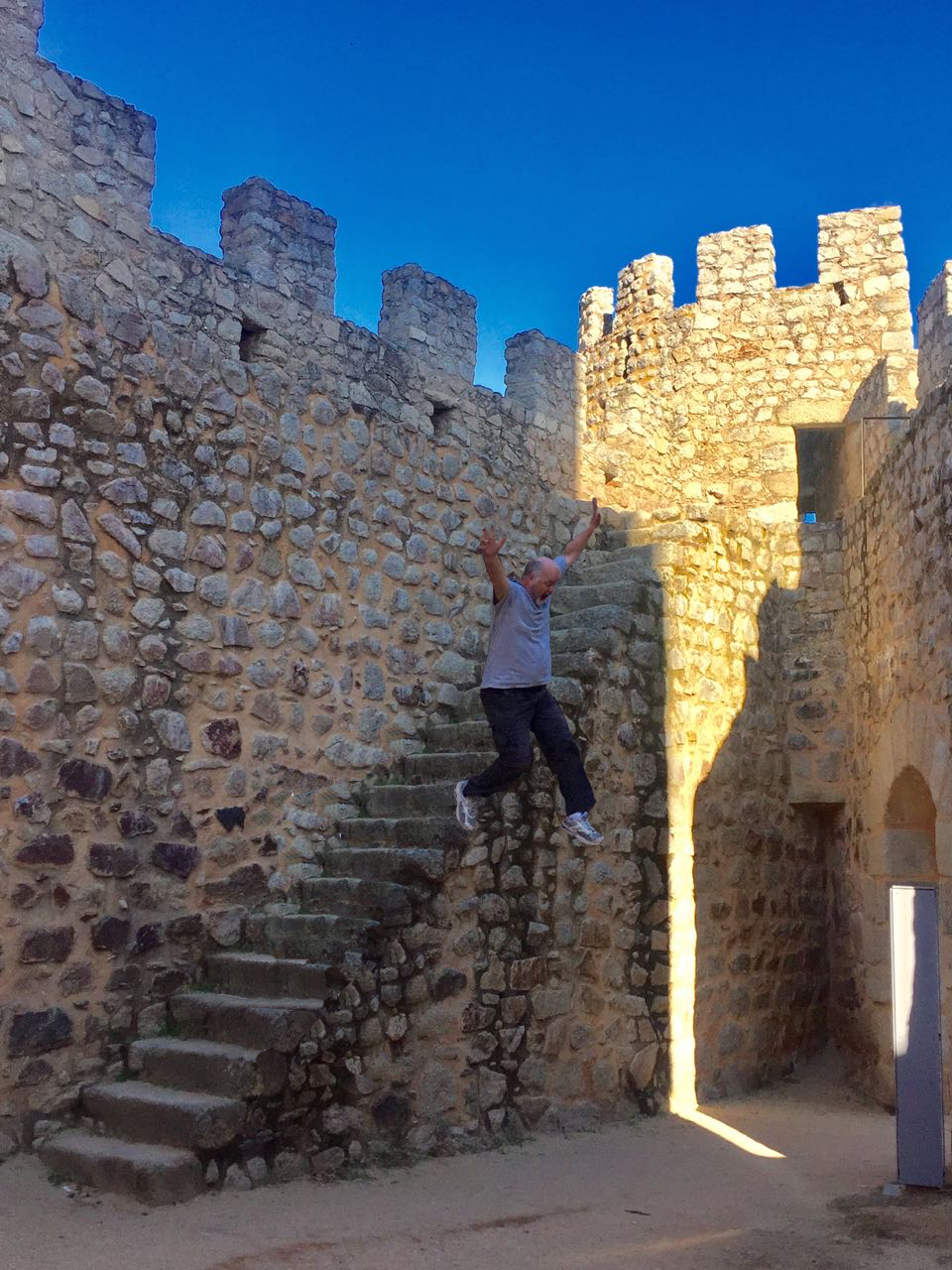


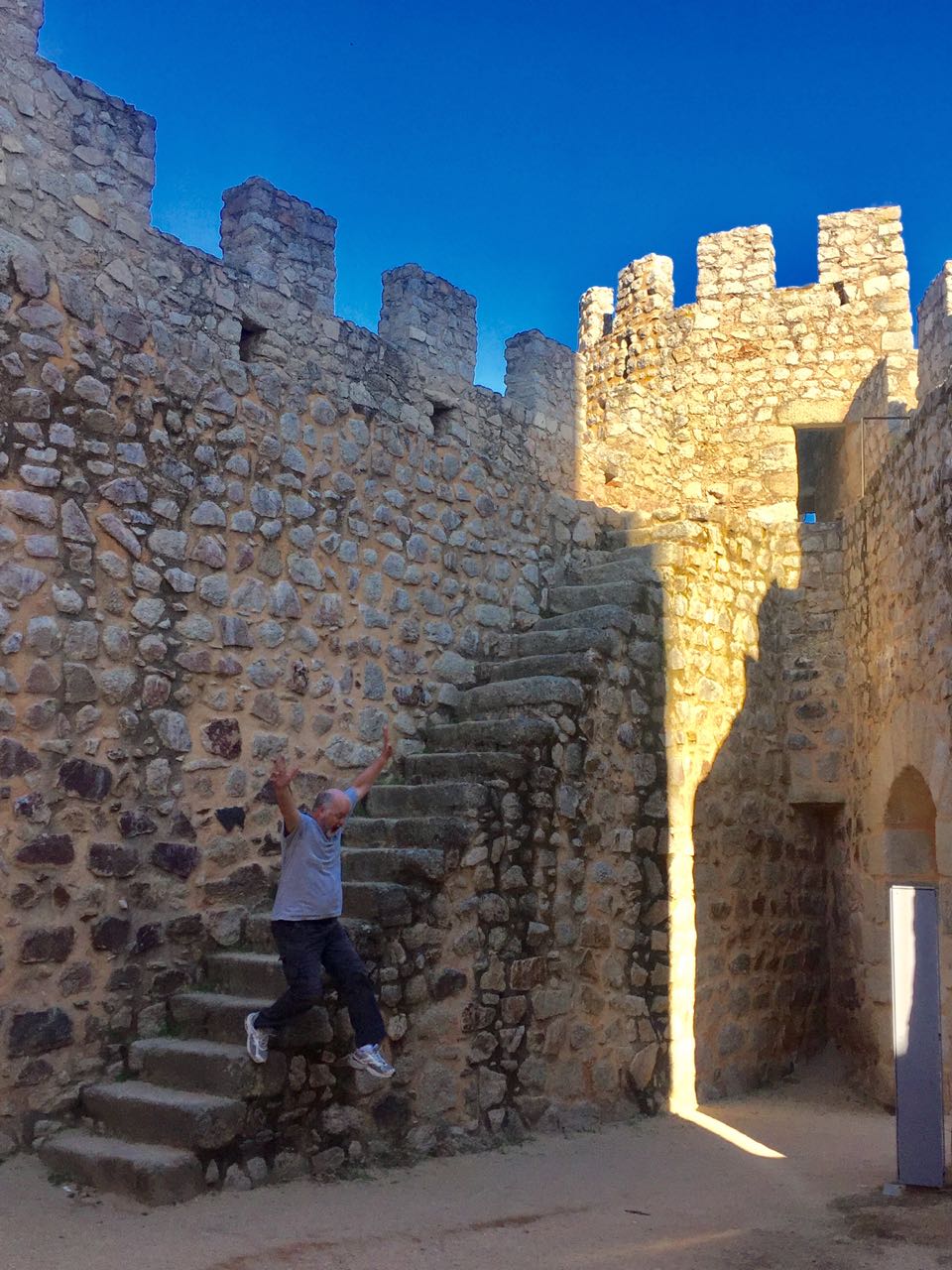 This is the un-Photoshopped version that caused my gruesome injuries, as well as the destruction of my favorite pants.
 So the first thing you gotta do before you go to the castle is pass inspection by these fearsome army men. Actually, they’re the aforementioned soldiers who are still attacking visitors. Okay, best one out of three: there’s an army base not far from the castle and they were there to escort some dignitaries (besides Carolyn) to the castle for sightseeing. They were kind enough to pose for a picture in exchange for not shooting me.
 You have to walk the plank to a large cruise ship which takes you to the castle for a few euros.
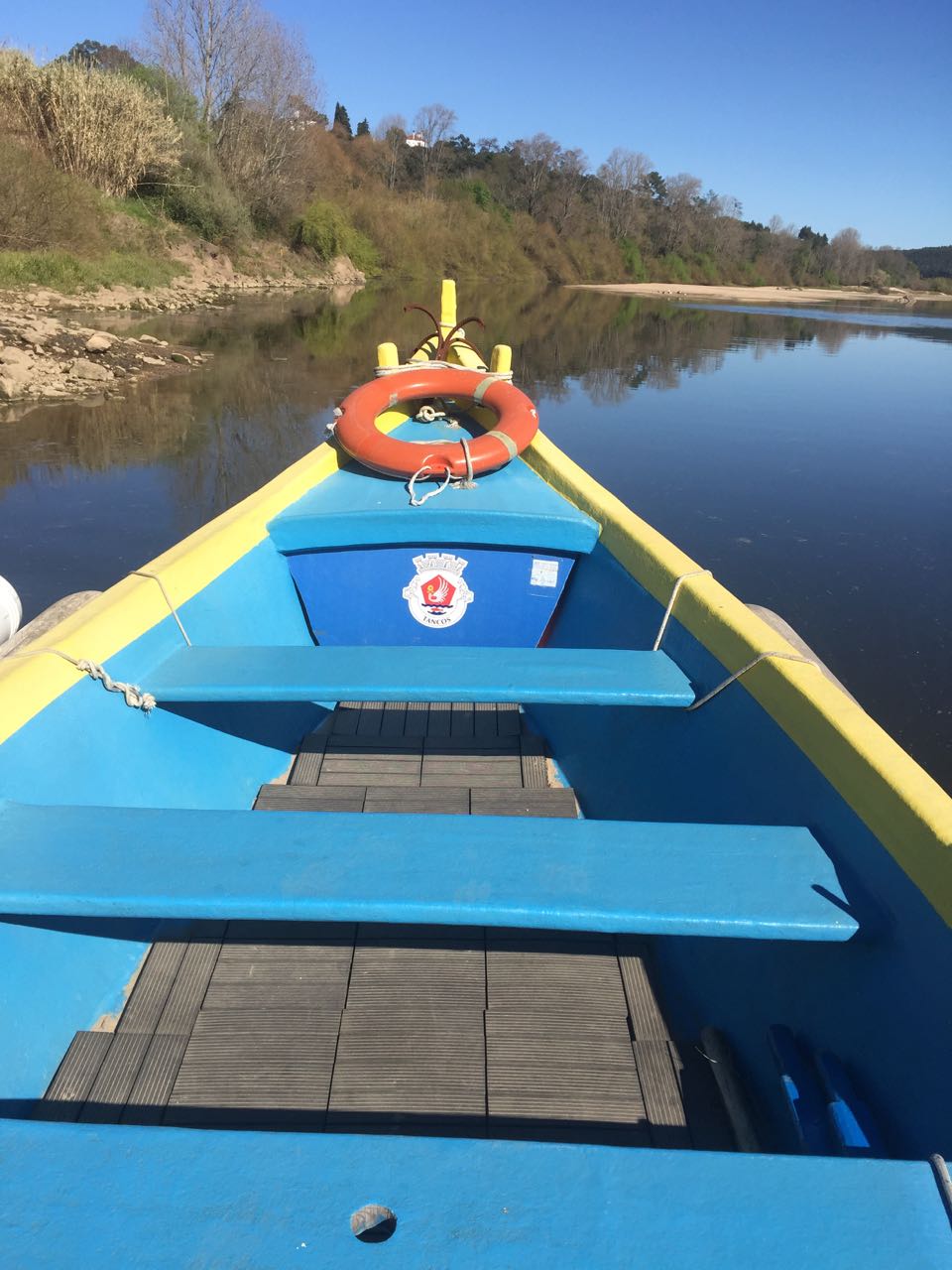 This is the bow of the ship. There wasn’t enough room to do the “Titanic” scene, unfortunately. Our hearts will still go on.
 This is the cheerful and garrulous Captain of the ship. Just kidding. He was none of those things. But he was quite adept at steering a small boat for a couple hundred meters.
 Once you land, they like to see if you’ll take these steps to nowhere, and if you do, everyone laughs hysterically.
 If you take the correct path, you get to walk under a bridge of cactus. My speculation is they might have once served as a eco-friendly defensive tactic way back when, which means those cacti probably weren’t there in 1129 when it was conquered by Portuguese forces. Indeed, none of the historical writings mention any kind of massive sticker shock.
 Once in the castle, you can look down and see where the boat docks, as well as our trusty Marco the Polo. Not sure if you can tell which one it is in that sea of cars, but it’s the dark one.
 But here’s what I found interesting. They take you in a boat to the castle, but this is the size of the river channel you would otherwise need to cross to get there.
 And here’s how wide it is right next to the castle.
 In fact, here’s a little crossing you could take without even getting wet! All they have to do is build a walkable path beyond and voila! No more boat needed! I’m guessing they keep the boat because it’s sort of a nice story that you have to take a boat to the castle.
 But that means when you’re all done with your visit you have to wait at the dock for the boat to return. He gave us about twenty minutes to look through the castle. We got back to the dock in nineteen. Despite that, he was already on his way back to the original dock when we got there, so we had to wait some more. Oh, well, we’re retired. We can wait. I decided not to even give him a dirty look when we returned because I didn’t want to be dragged out to the middle of the river and keelhauled.


 This is one of the main drags. Not the guy in the picture, he never poses in drag. Publicly anyway.
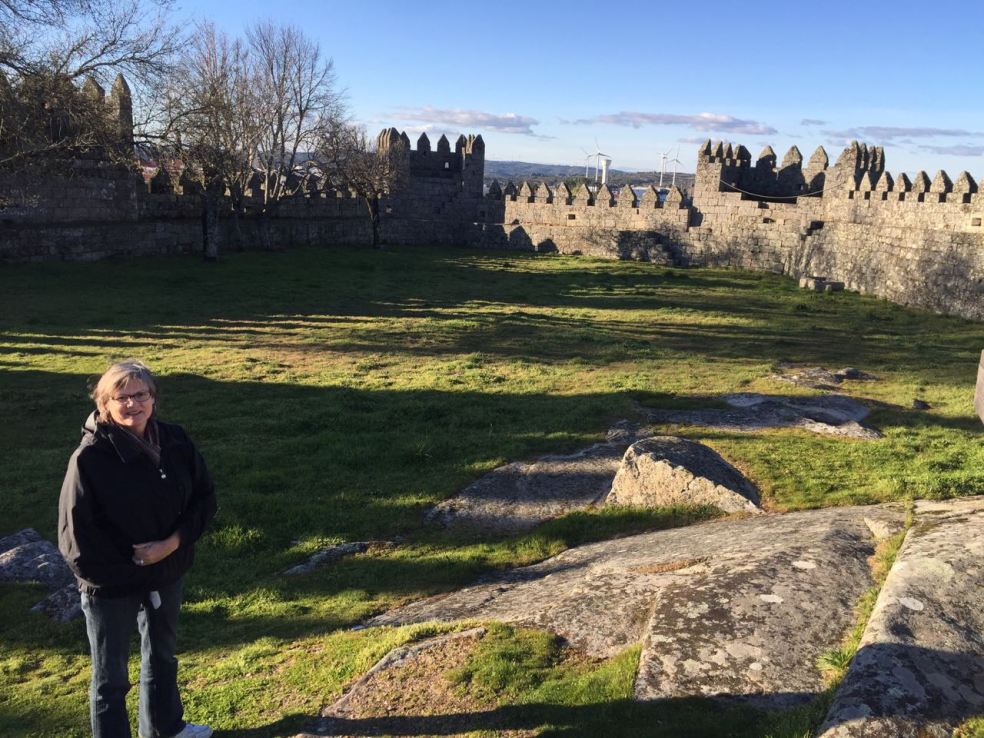 The castle was mostly grass and walls. In the old days, that area would have been filled with wooden structures and smelly people. Now there’s only one. Wooden structure, I mean.
 One of the reasons we love castles is because they’re almost always built on top of hills, where we can gaze over the landscape and be on the lookout for invading Mexicans. Oh, wait, that’s only in the U.S.
 You’re always on your own when it comes to safety. You have to pay extra for guard rails, except you can’t pay anyone, and there are no portable guard rails. Just be sure to wear New Balance shoes.
 Most days we figured out where we were going to go the same morning, sometimes only after fighting over the phone and its map as we drove away from the hotel property while dodging pedestrians and going through roundabouts the wrong way.
 I mean, who wouldn’t want to come home to that?
 Or this?
 But, in the meantime, you can still see vistas like this until the internet is replaced by something else.
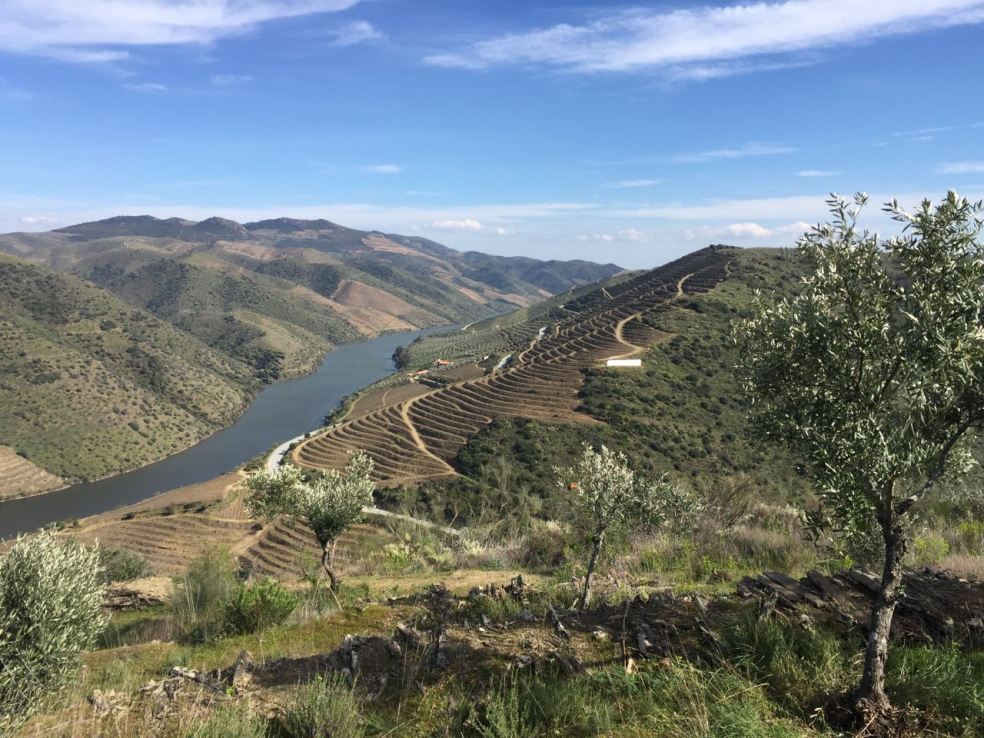 The prehistoric art in Côa Valley was discovered when they were building a dam. The whole project stopped so they could investigate the priceless art.
 Which also means we still get to gaze at the beauty of the valley.
 These are artifacts from 24,000 and 30,000 years ago. BP means “Before Present, ” and is a time scale used in archaeology. Since of course the “present” time changes (unless you’re dead, in which case you really don’t care much about any of this), the present in “BP” is generally assumed to be January 1st, 1950. That’s also the month that U.S. President Harry S. Truman ordered the development of the hydrogen bomb, which may or may not be a coincidence. It may also mean that in the future, “BP” will mean “Before Pulverization.”
 In any case, this is what little Johnny Caveman doodled while his teacher was droning on about how to kill antelopes or drag girls by their hair some such. Little did he know he’d be famous 20,000 years later.
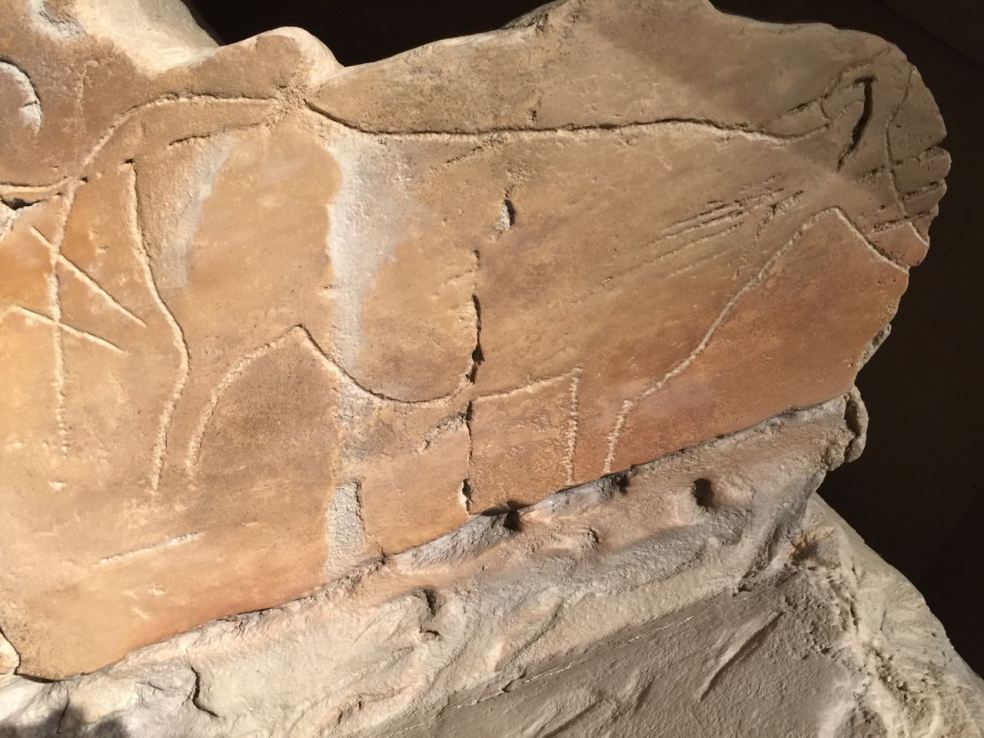 Johnny Caveman’s sister apparently tried to one-up him by drawing a picture of their pet ox. I think she has it farting.
 There was a large and modern museum where we learned all sorts of stuff about what these drawings probably meant, and how they cleverly depicted movement and things like that. Since we arrived late because, as usual, we had no plan or idea as to what we were doing, we didn’t get to take a tour down into the valley to see the actual drawings. So after we left I stopped off the side of the road and etched my own drawings into some rocks, giggling all the while at how confused archeologists will be 1,000 years from now since of course we will never otherwise find ancient cave art of a dinosaur.


 Monsanto is a name that, for some, conjures up the horrors of genetic engineering, bullying corporate practices, and poisons that can melt your skin clean off. That company is now owned by Bayer, which means they can sell you a pain reliever to take care of the pain they just caused. Aren’t huge corporations wonderful?
 In the 12th century, King Afonso I of Portugal took Monsanto back from the Moors. Unfortunately, the medieval castle was largely destroyed in the nineteenth century because of an explosion in the ammunition depot of the castle. Fortunately there’s enough left to make the steep hike above the village plenty rewarding, including of course some awesome views of the countryside.
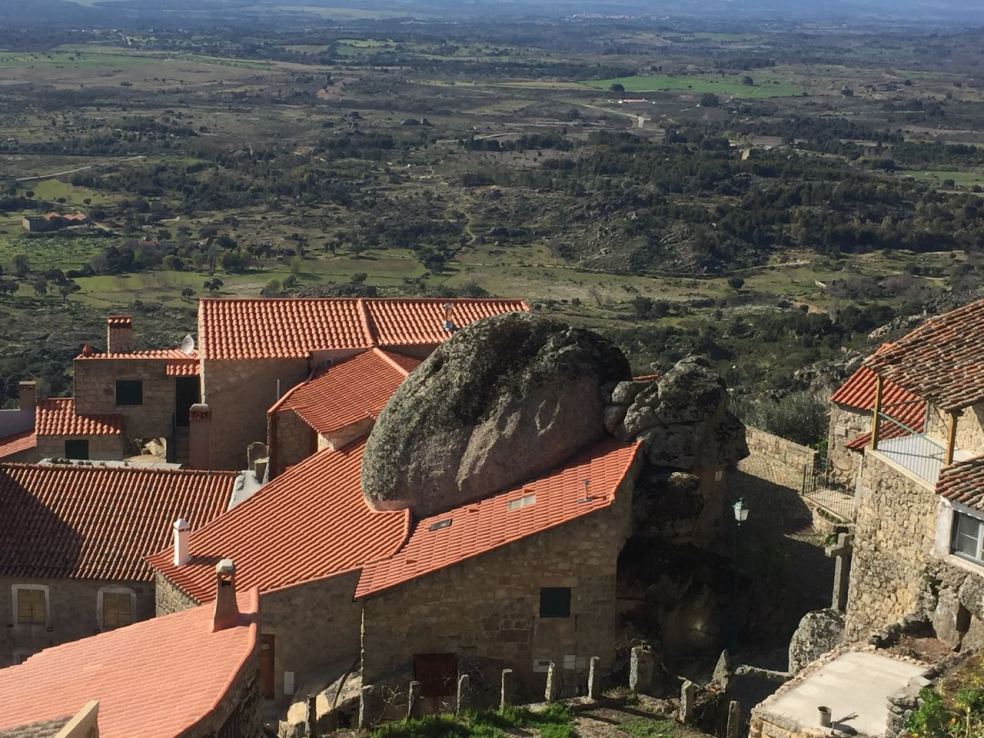 Granite abounds in the area, and some of the rocks are absolutely gigantic. They are so prevalent that some of the houses were built right around large boulders, as you can see here. Clearly, this house rocks!
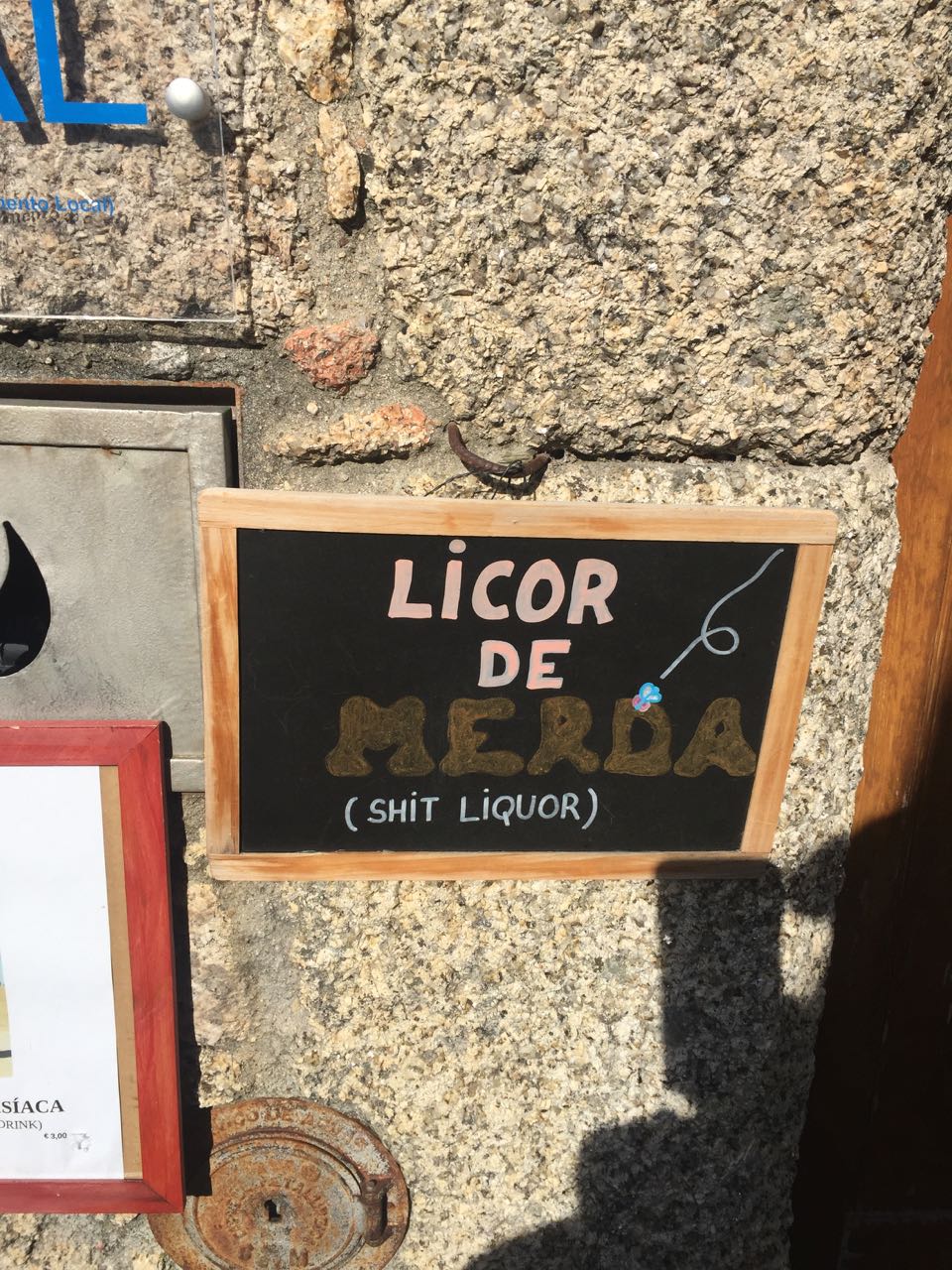 The Portuguese are honest to a fault, even when it comes to their marketing. In this case, this was the sign on the outside of a little bar in the village. I decided not to try it because, well, I just don’t like the taste of shit, even if there’s alcohol involved. Unless I’ve already had a bunch of alcohol, then of course I’ll try anything and even think it tastes good, even if it’s that shit, or anything shitty. Except for actual shit. That’s always gross.
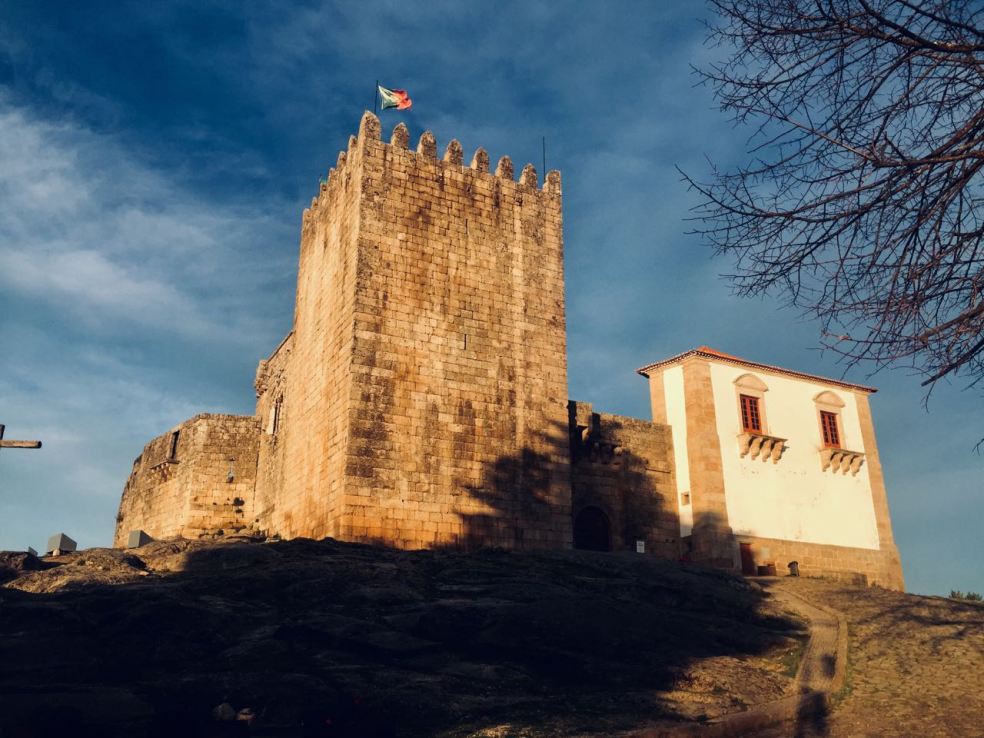 Belmonte is a castle we stopped by after we were somewhere else and saw on a map it was only about 20 minutes away. Unfortunately, by the time we got there, the inside was closed. Still, it didn’t look like we missed much compared to some of the other castles we saw, so we settled for a few photos and made our way back to our hotel.


 “Where is everybody?”
 It’s a little known fact that the ancient Portuguese invented recycling, and here’s the proof. I promise I didn’t Photoshop those in. They literally had recycling bins in an ancient castle. Who knew?
 The picture of a little kid with glasses was installed in 1350 to instill fear in potential attackers that they might be going up against nerds. Even then, barbarians knew the nerds were the ones who invented all the coolest stuff, especially when it came to armaments.
 This exhibit demonstrates why the Neanderthals went extinct: they tried building things with bricks made out of paper. Stupid Neanderthals.
 Oh, well.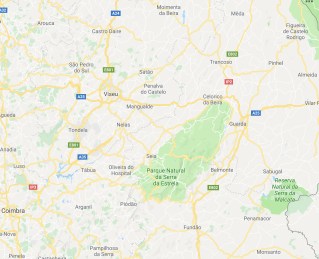
 car, Marco the Polo.


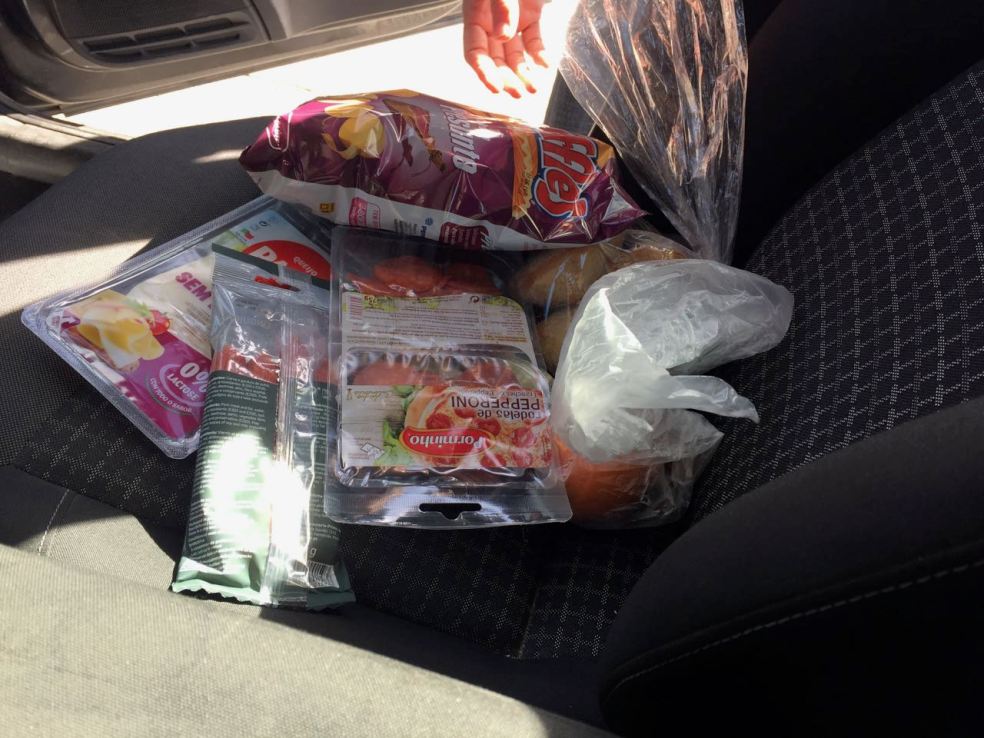 As a result, our lunches often looked like this… a bunch of flotsam and jetsam purchased at a grocery store.
 Which is fine except that sometimes you end up with a really crumby wife.
 I did have a tasty turkey burger in White Castle. What? White Castle you say?
 This is about as good as it got in terms of Castle-ish scenery.
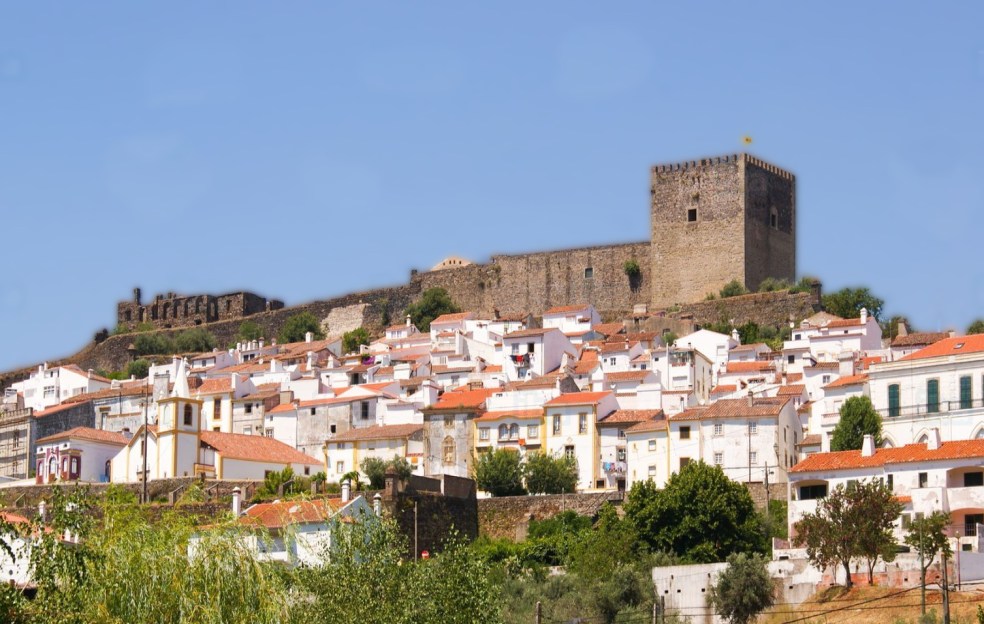 The above photo makes it look interesting from the outside, but in truth it was pretty barren and didn’t offer much to see, other that the typically great views of the countryside from the castle walls.


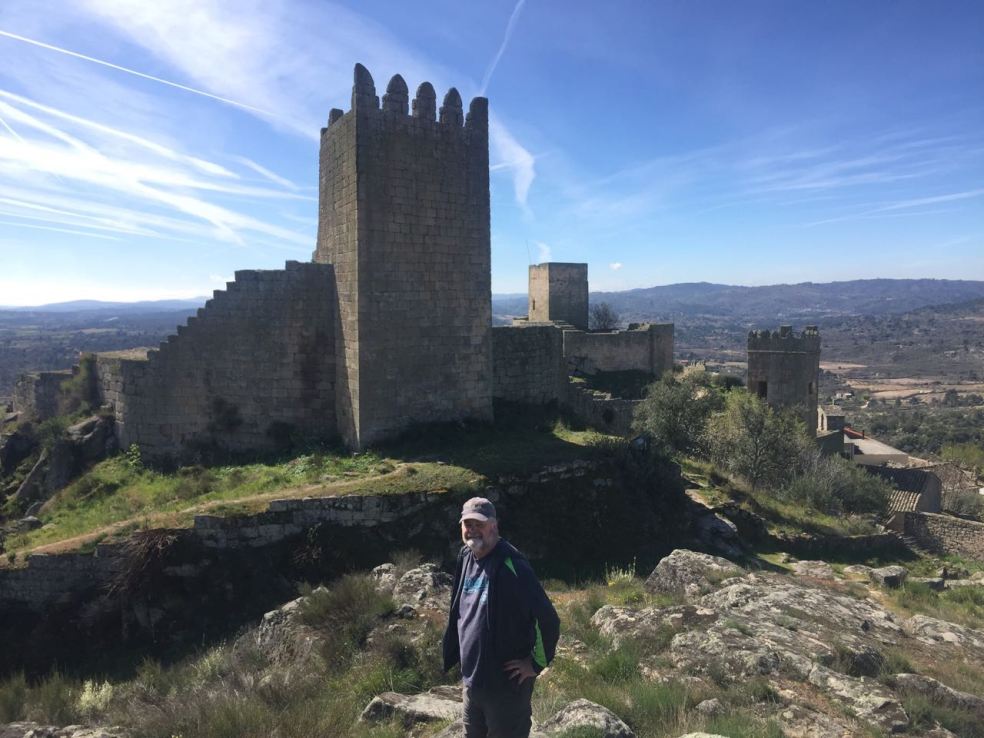
 They have a suggested trail of the most important historic towns and castles, and while we didn’t follow those instructions, our route throughout the area looked an awful lot like that Family Circus-esque trip as well.
 Usually you get a great view from atop the castle walls. But it can be even better when you climb up above the castle itself!
 Carnaval is a festive season that occurs before Lent, and the festa-loving Portuguese go all out in their celebrations.
 Okay, so maybe Photoshop is the only thing that made us King and Queen. But we enjoyed ourselves anyway, even if we’re just the peasants.
 Moving back to reality, the crowds were plentiful as the parade made its way down the Sesimbra boardwalk, which fronts the ocean.
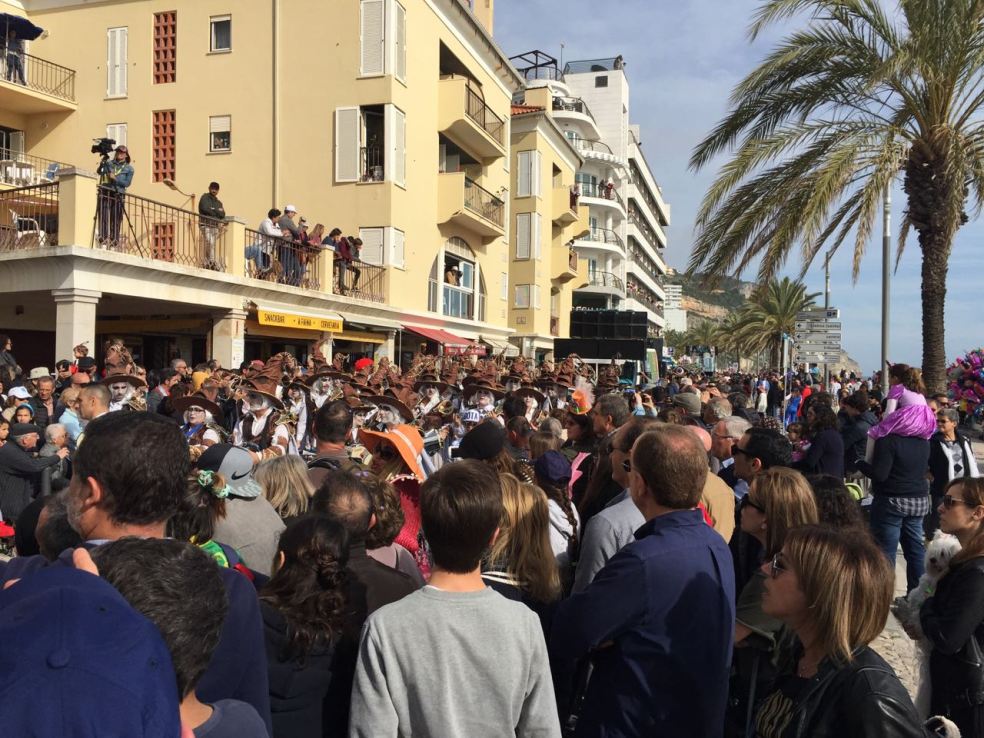 They even lined the balconies above, like in New Orleans. No one’s throwing beads here though!
 This clever float had these poor souls hanging on for dear life.
 Okay, so it was the clever use of a mirror. Kind of like real-live Photoshop!
 At the beginning of the parade route.
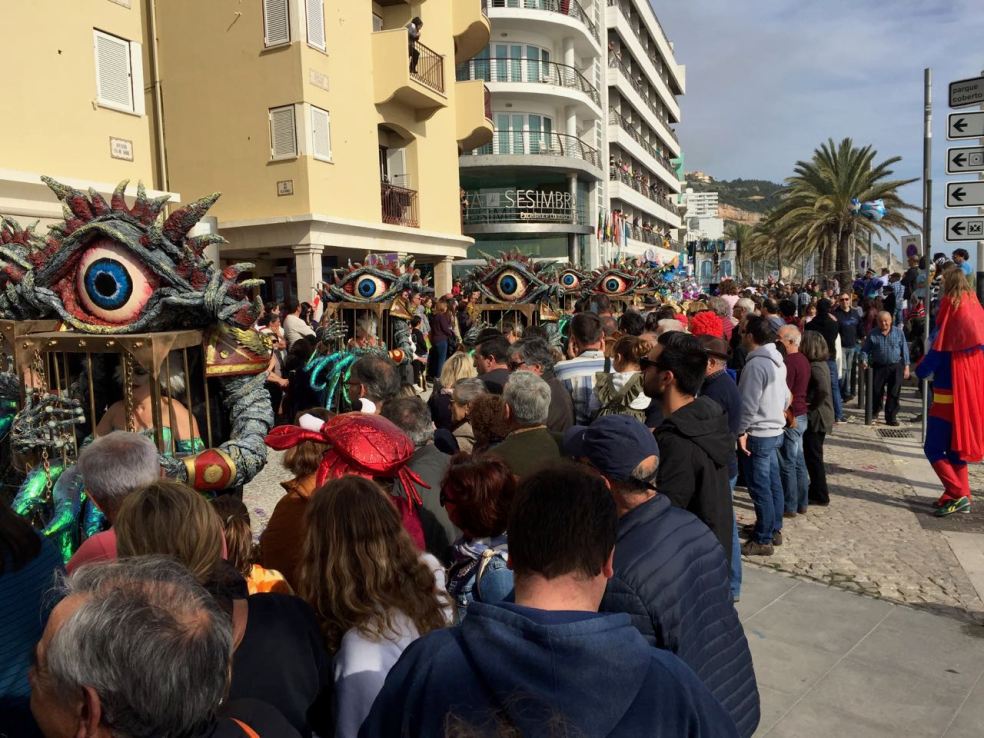 The eyes have it!
 When people hear the word “Carnaval,” they often think of racy outfits like these.
 But in Portugal, this is what you get. Ha!
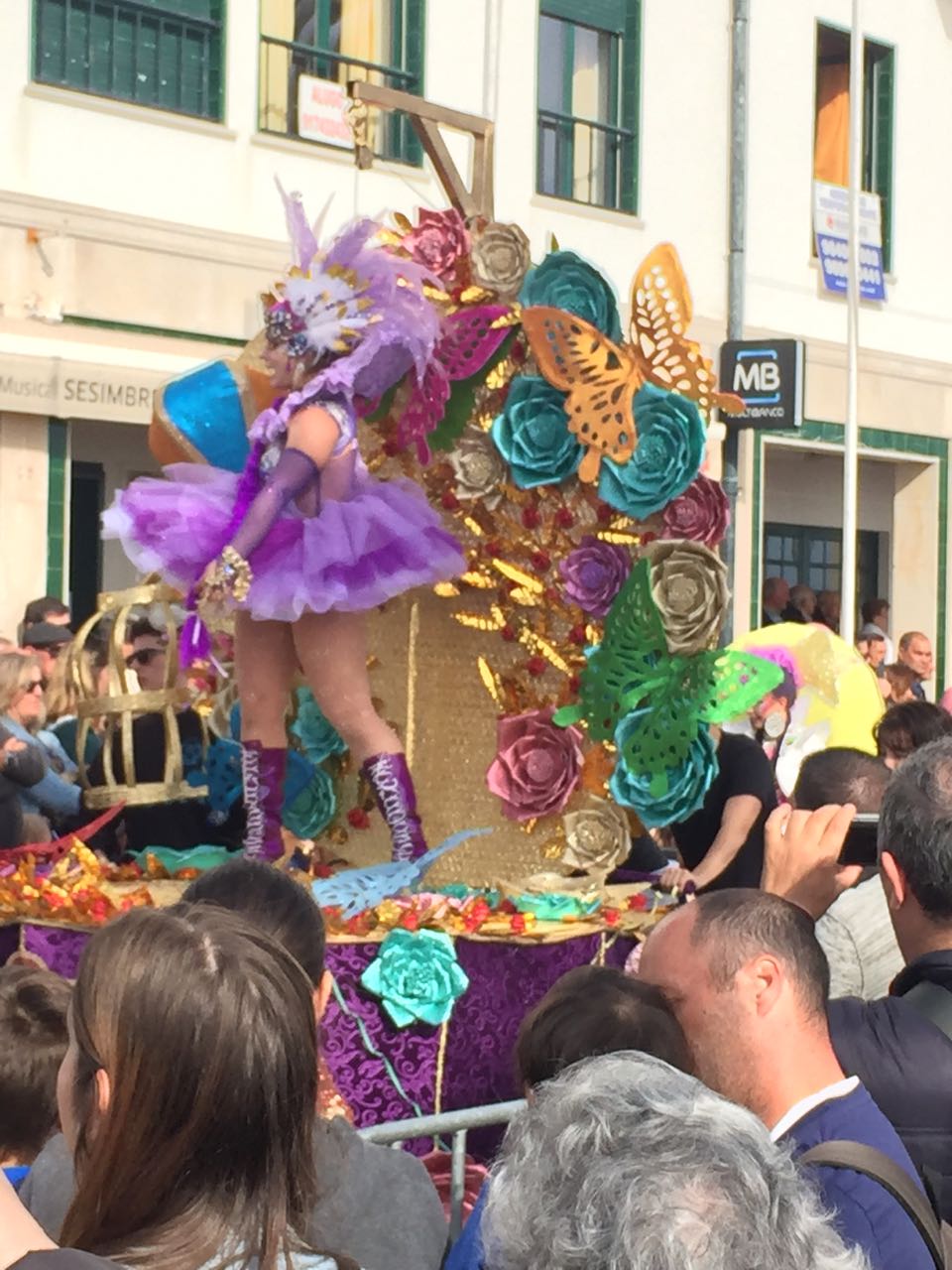 People dress up just as colorfully, but generally it’s a lot more PG than R-rated.
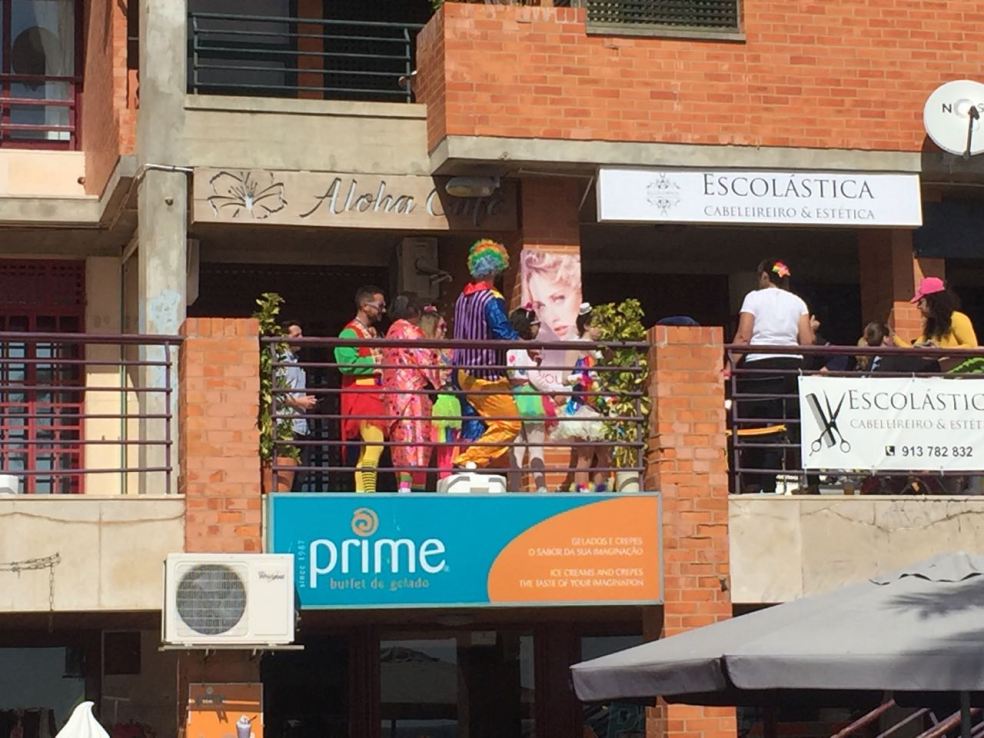 It’s party time everywhere you look!
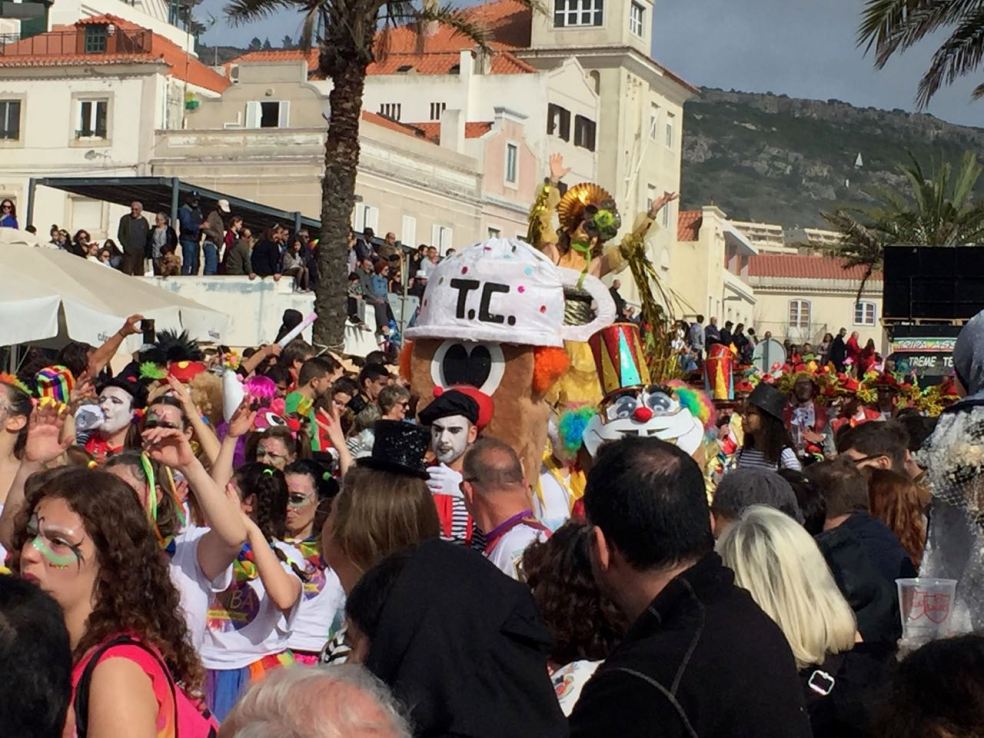 They even had mimes. Mimes! Who does mimes anymore? The Portuguese, that’s who!


 Pipocas means popcorn. We think it’s a cute word.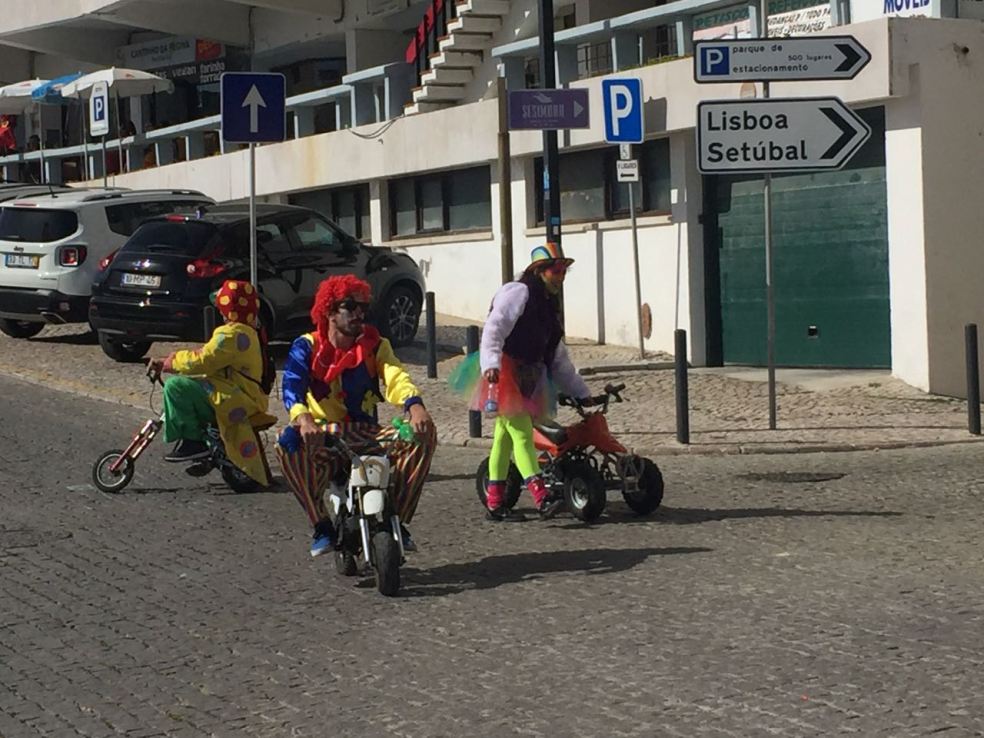


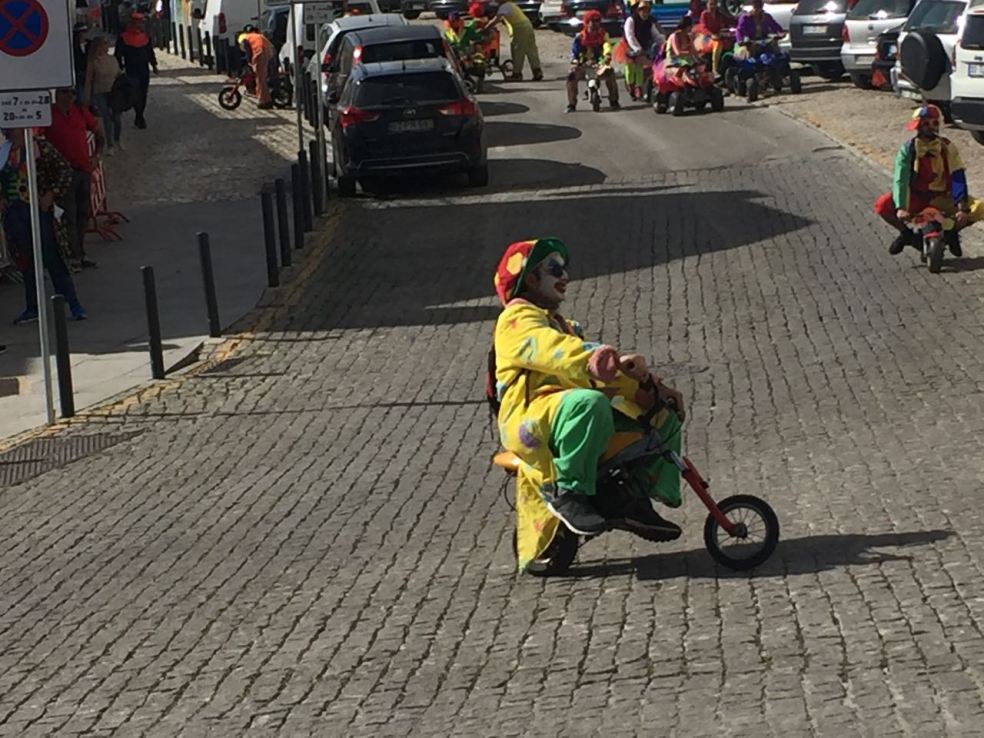 The thing I love most about Carnaval here, especially on Clown Day, is that almost everyone participates, From one to ninety-one, people are dressed up as clowns. It’s especially nice that even teenagers participate and have the same kind of playful fun.
 On top of the hill you can make out the outline of “Our Castelo.” The Portuguese don’t think much about their castles and the like, because they’re so used to them. But we still love our castles!
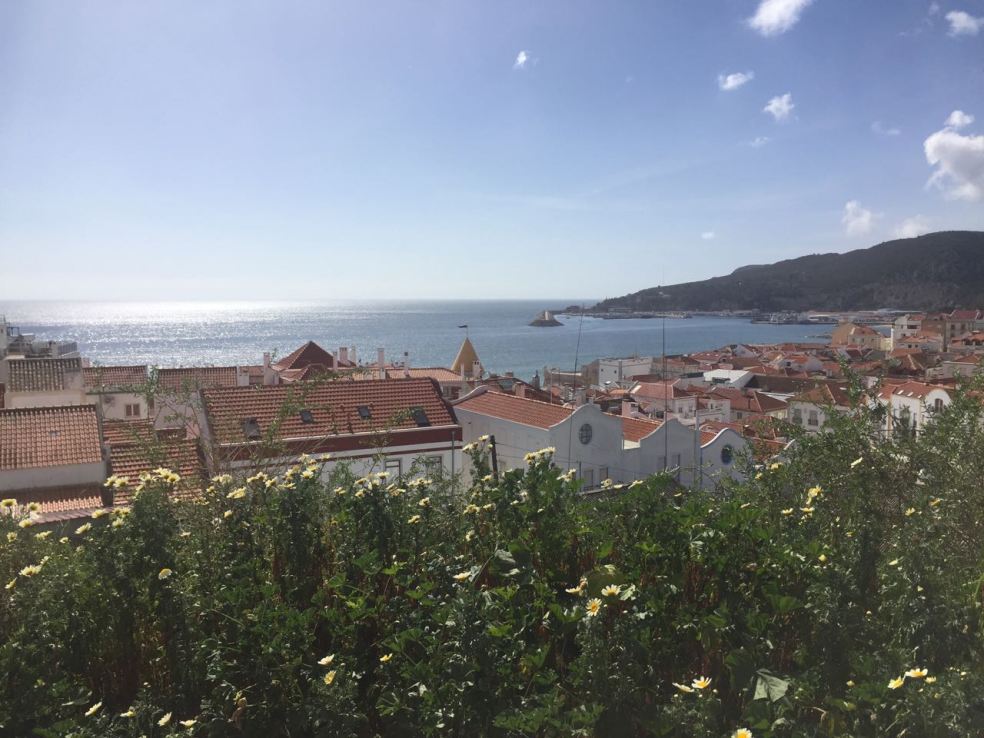 The March weather was kind, in the sixties (upper teens celsius). Just a lot of beautiful blue like it is so often in Sesimbra!
 Even in our Aquasize class everyone got into the spirit of things. In the above picture we’re the ones in back, me with the big red nose. Below, we’re on the left hand side. We always occupy the deepest in the pool on account of our differences in height. 🙂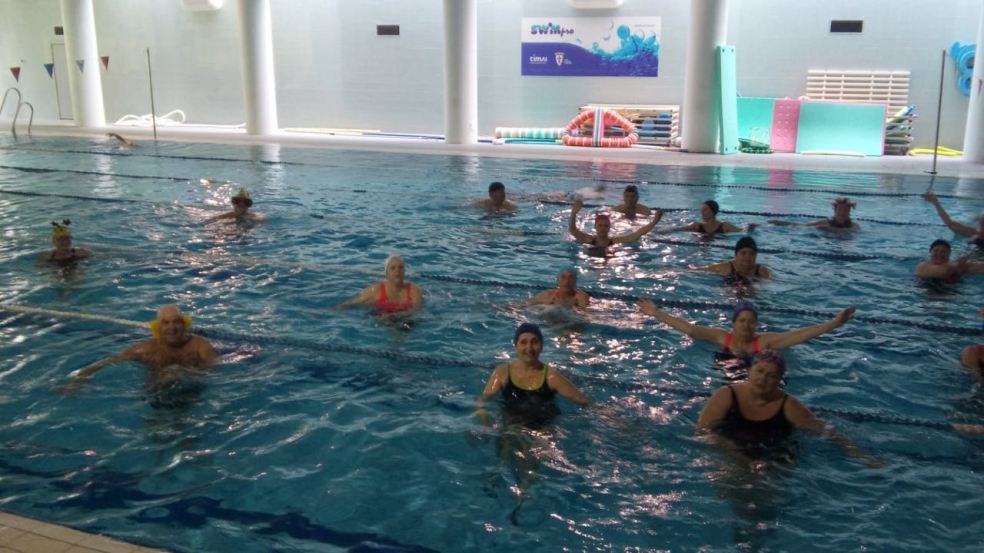
 There we are with our instructor, Patricia. She’s an awesome teacher. She makes it easy to enjoy exercise!
 Did you know that “mafra” means “worm” in Portuguese? No?
 Mafra’s headliner is the cleverly named Palace of Mafra, construction of which began in 1717. It wasn’t fully completed until 1755, which was just in time to allow the Portuguese to watch the beginnings of the American revolution on TV. It was used as a secondary residence for the royal family, which tells you something about the enormous resources they used to spend back then just to pamper royalty. The thing is huge. The whole complex covers over 400,000 square feet (for you Europeans: 37,790 m²) with about 1,200 rooms (1,200), more than 4,700 (4,700) doors and windows, and 156 (holy hell there are a lot of stairs in this house!) stairways.
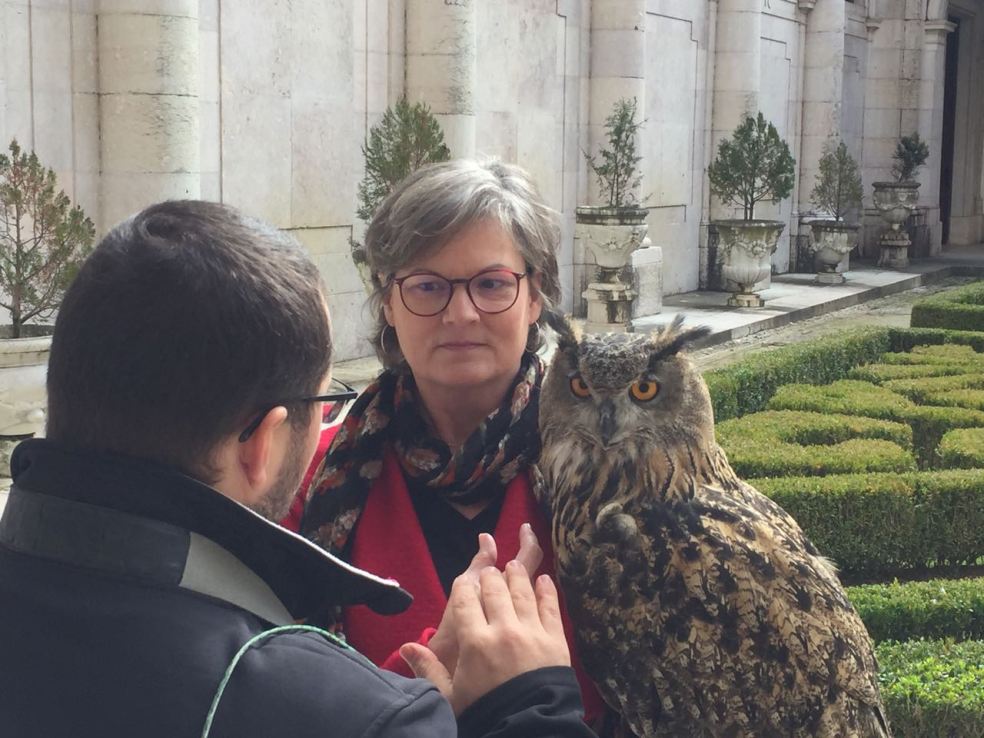
 Since it was Carolyn’s birthday, she got to have the solo pic with Fiona the owl, who kindly donned that particular coat of feathers in order to match Carolyn’s scarf.
 We paid eight euros for this picture, but we wouldn’t have gotten the other snapshots without the investment. She looks like a natural with a wild creature, doesn’t she? And I think Carolyn does too! Fiona is a European Eagle Owl, one of the largest breeds in the world. Carolyn is an American– wait, I better not make a joke here or I could get into trouble.
 As soon as they let me in the picture Fiona turned her head in a fit of jealousy. In all seriousness, multiple breeds of birds, including owls, have exhibited homosexual behavior. We now know Fiona is one of them. There goes the neighborhood!
 They had five separate birds on display, three of which were owls. This bird clearly isn’t an owl because its head is on straight. It’s a falcon. While it’s not a Peregrine falcon, a little piece of trivia about the Peregrines is that they have been recorded diving at speeds of 200 miles per hour (320 km/h), making them the fastest-moving creatures on Earth. So the next time some punk first grader tries to tell you cheetahs are the fastest animal, correct the little know-it-all brat and let him know that only refers to running speeds.
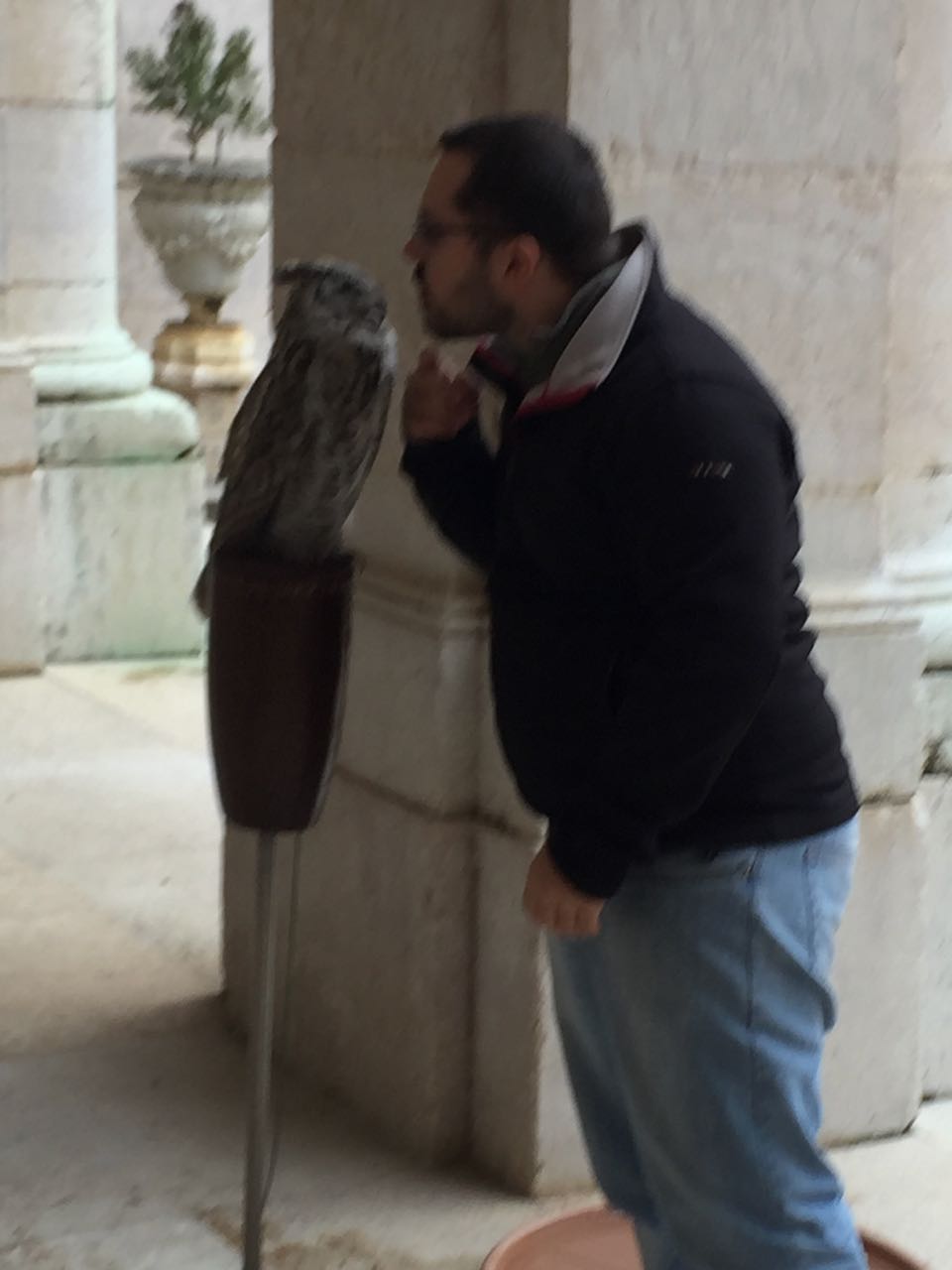 The handler goes in for a kiss. He’s been on the job since he replaced the previous handler, Carlos “No Lips” Johnson.
 Owls are the third coolest birds ever invented, just after the hummingbird and the one that’s always being flipped but is otherwise invisible. This is a Pretty Good Horned Owl. In the wild they’re called Great Horned Owls.
 Carolyn carefully holds her owl while the handler keeps it from eating off her nose by slipping a fiver under his feathers.
 Here he provides instructions on how to abort the mission if the owl begins chewing on her face. But I don’t think Mr. Owl would do that to someone who looks as smart as him!
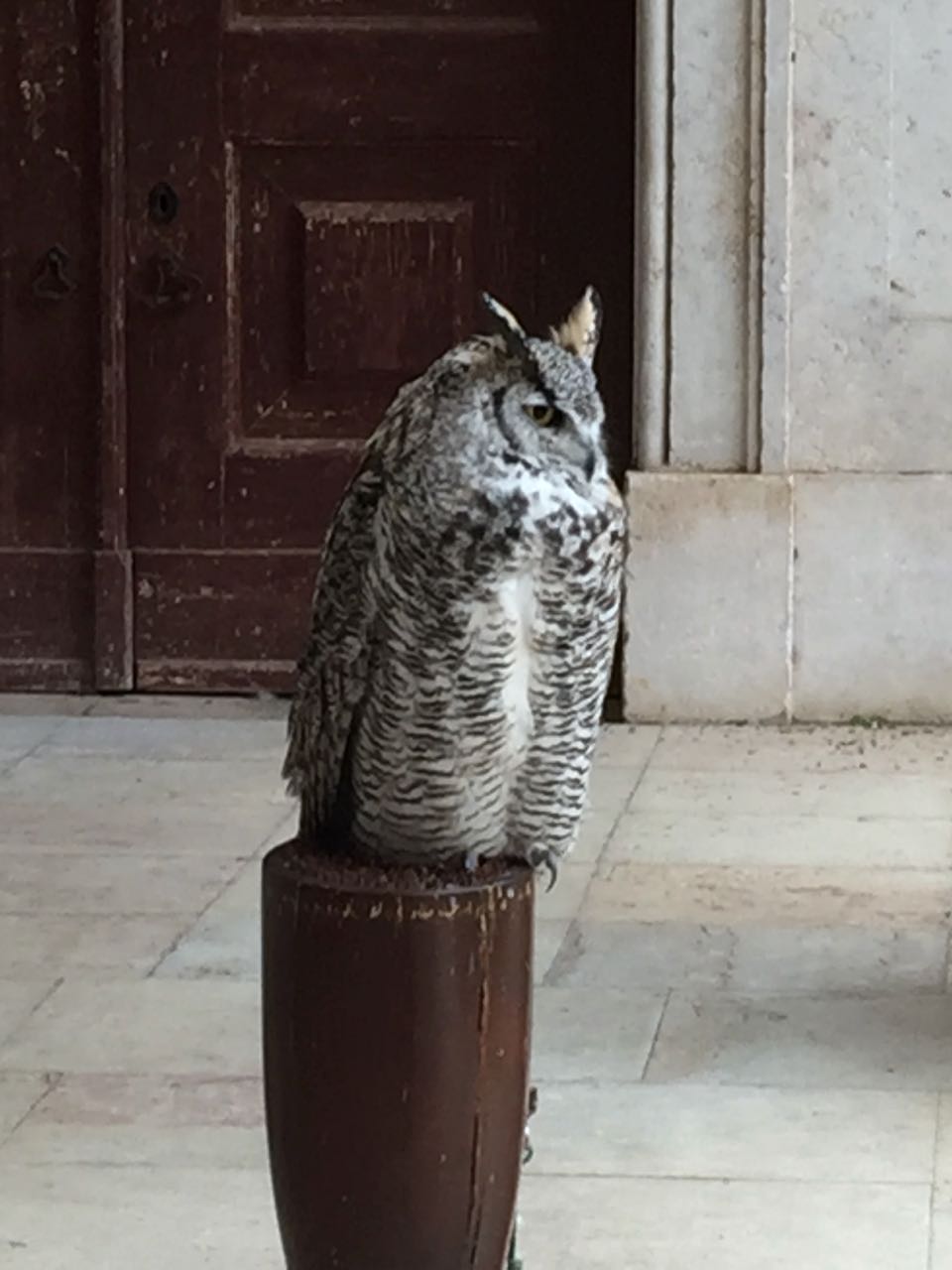 Owl I want for Christmas is an owl in my yard, an owl in my yard, an owl in my yard.
 The falcon is preparing for lift off. He wouldn’t have gotten far, since he’s tethered. They do let them fly around without the tether after the tourists are gone… the falcons are particularly notorious for frequenting tetherless bars.
 In the foreground is a red-tailed hawk. In the background is the photobombing falcon.
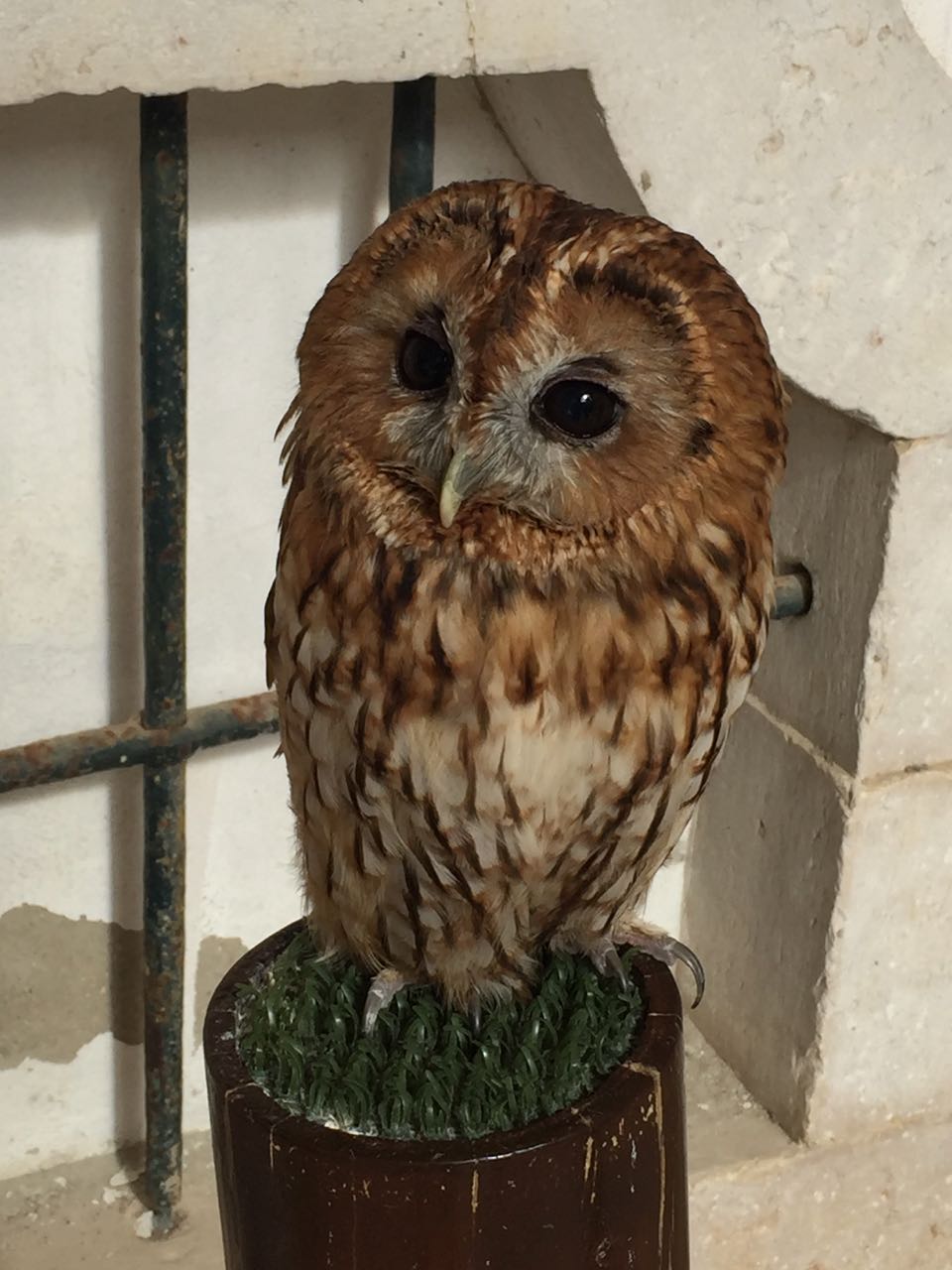 This little Tawny Owl cutie was my favorite. Can a meat-eating stone-cold killer of a raptor get any cuter than this?
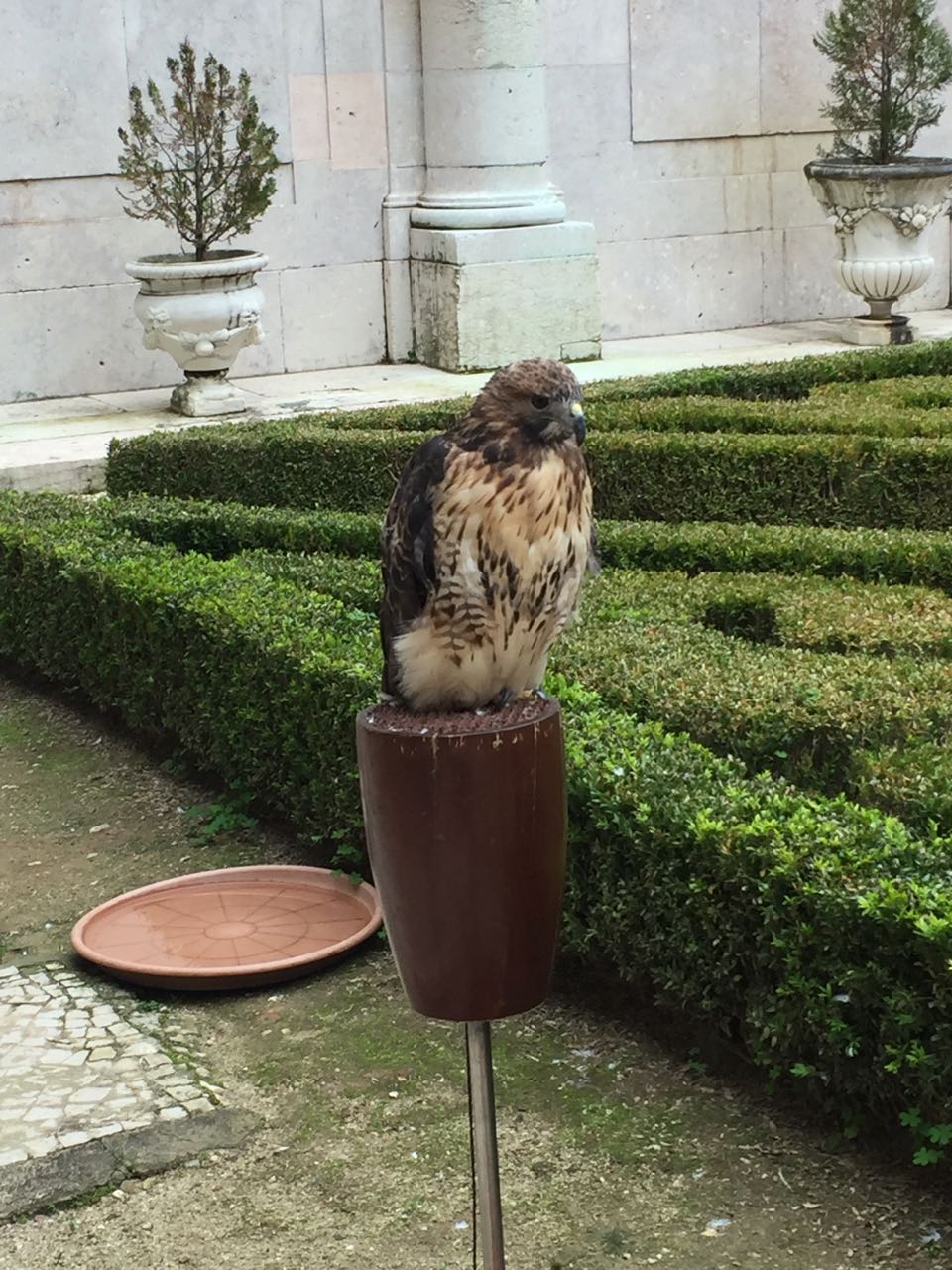 It’s not a great job, but hey, it pays the bills.
 Once in a while I take a photo that almost makes it look like I know what I’m doing.
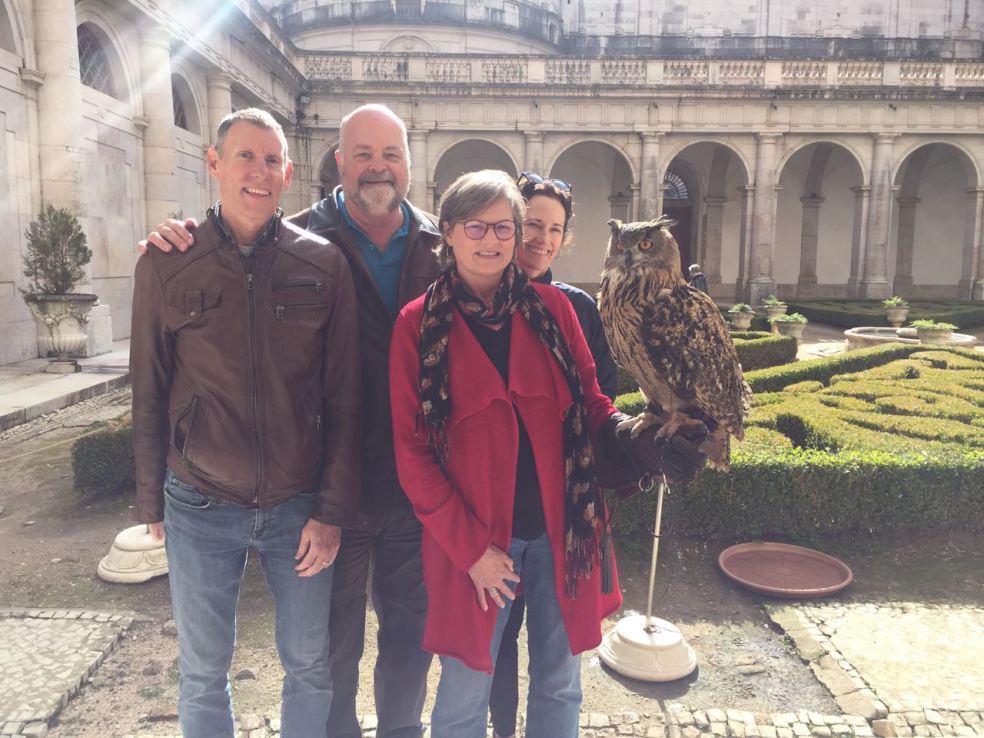 The group hug with an owl. Actually, we eschewed the group hug precisely because we didn’t want to get chewed.
 This is the garden where the birds are kept. I tried walking through the maze but got lost.
 Once inside the palace, we quickly found out why the royals were in such good physical shape. It takes twenty minutes to walk from the bedroom to the bathroom!


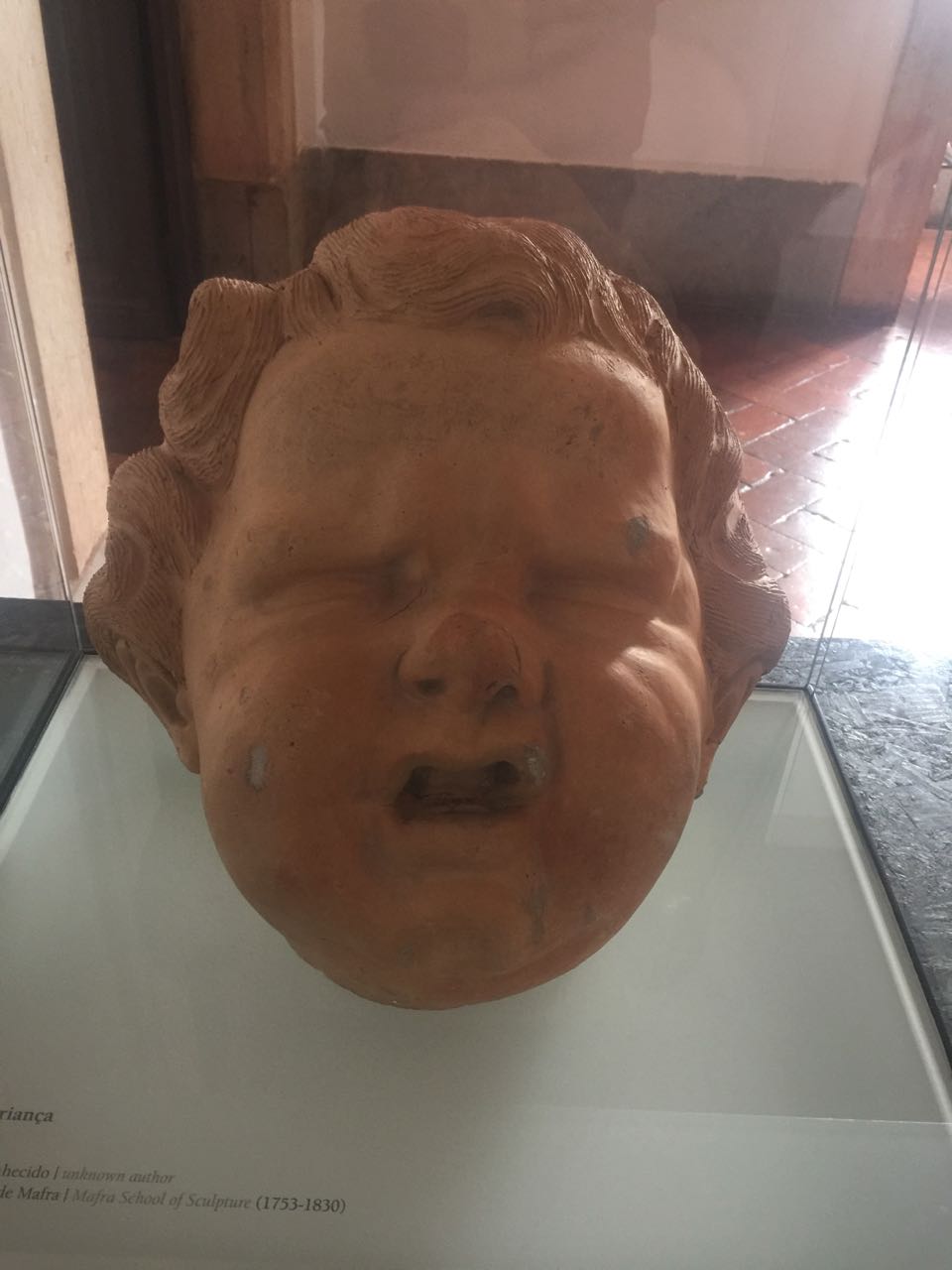 Apparently they did.
 This is a row of statues that are smaller versions of larger statues on the property. Conversely, the big statues are larger versions of these.
 I took a picture of this informational plaque because the library was so impressive and it contains more thorough information than I could otherwise provide (plus of course a welcome lack of bad jokes). If you read all the way to the bottom, you can see why I didn’t steal any of the books from the place. Going to hell for stealing a book seems like pretty harsh punishment, but this was before anyone thought of the three strikes rule.
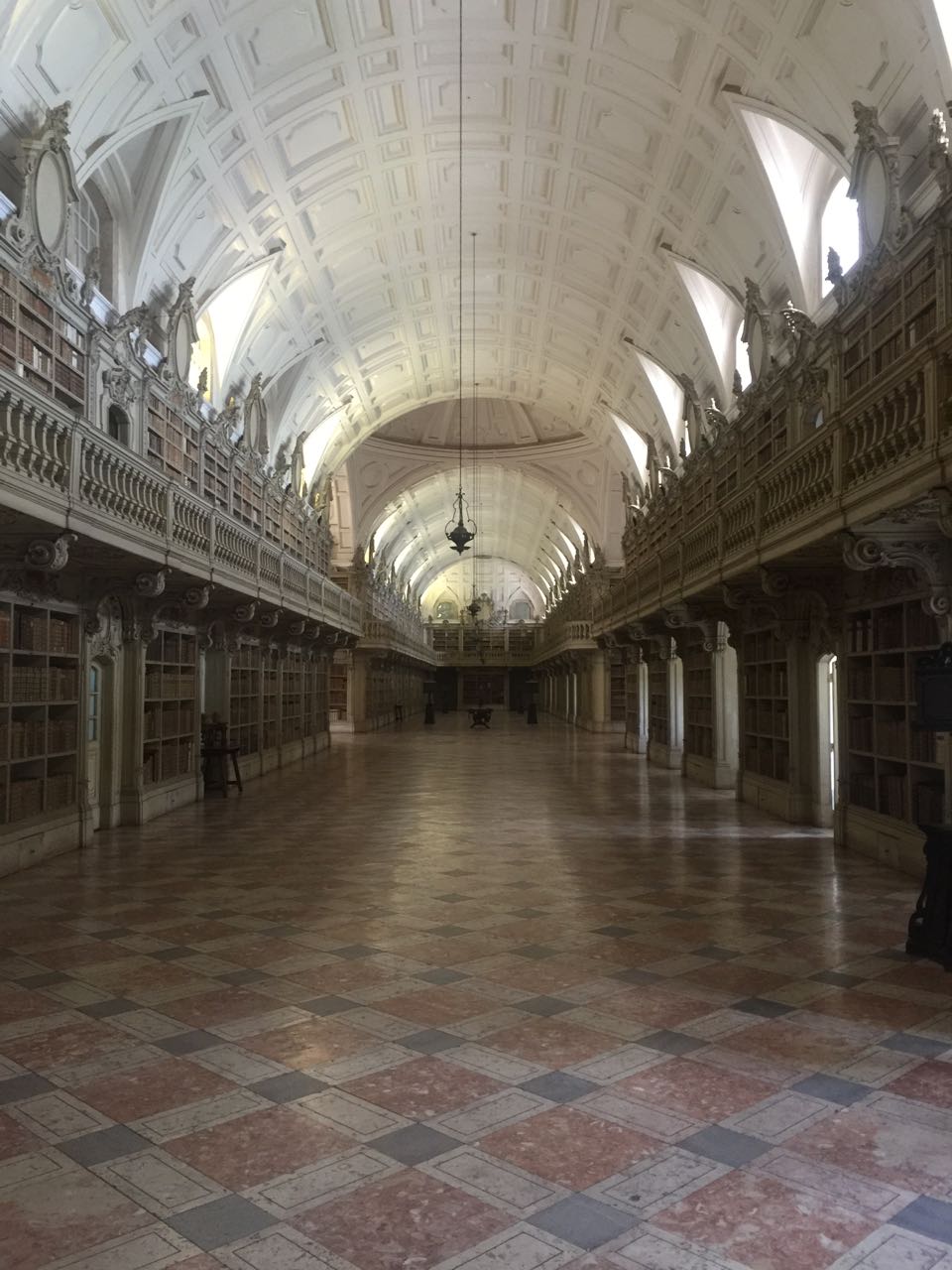 In this library, if you’re too noisy and someone shushes you, the “sssshhh!” reverberates around the room for fifteen minutes.
 Sandy is either taking a picture of the ceiling or protecting himself from owl droppings.
 Okay, maybe it was the ceiling.
 From ceiling to floor, there was artful decor.
 I couldn’t stop stairing at this tree. Get it? Stairing? Oh, jeez, quit rolling your eyes (they may stick like that!) and just go on to the next picture.
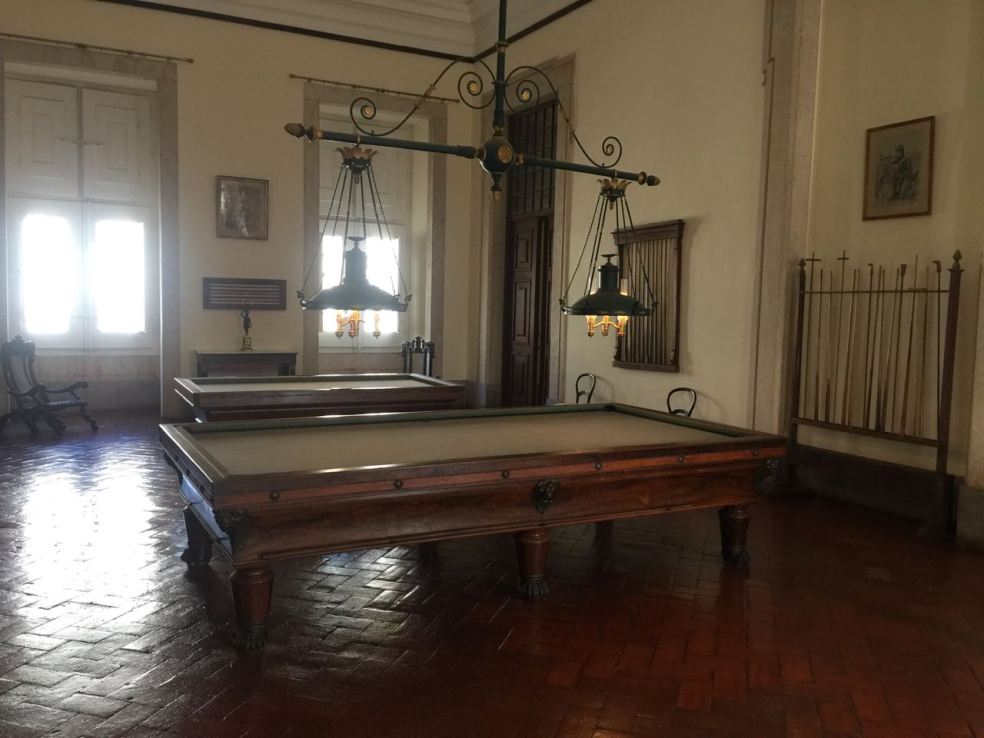 This billiard table is so large you need a bazooka to shoot a ball from one end to the other.
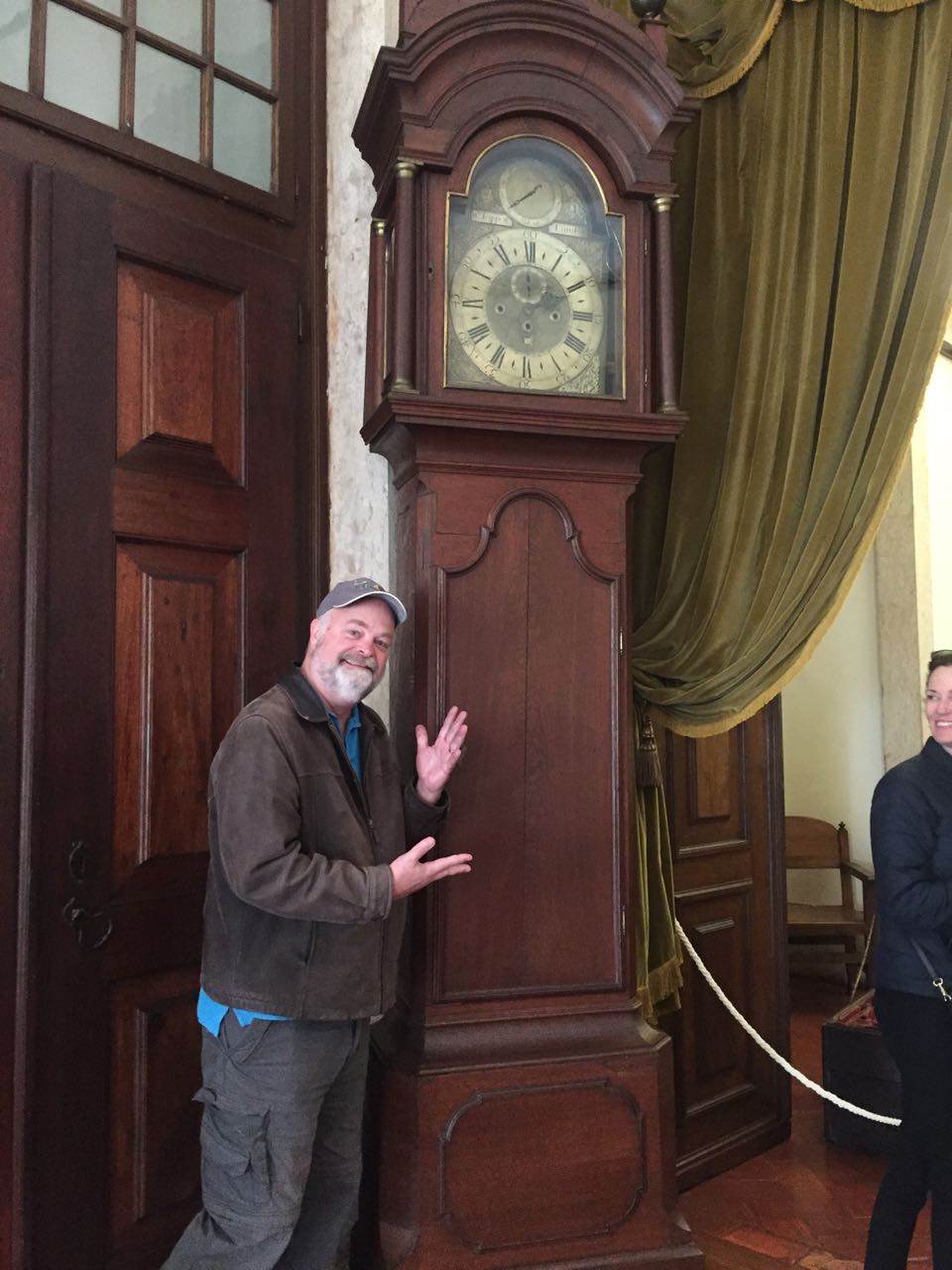 As you can tell this grandfather is huge, er, grandfather clock that is. Between that, the billiard table, and the mile-high ceilings, either the royals were giants or the architect was in the process of switching to metric.

 This is the infirmary, which might seem bleak to our modern eyes, but in the context of the times, wasn’t too bad of a place. Every cot had its own little room, and there is a chapel up front in case you need to communicate with heaven real quick like.
 As we’ve seen before around Europe, they were awfully good at creating pictures that look like real sculptures. But to prove how slowly humanity sometimes progresses, it took hundreds of years to go from this to Jaws 3D.
 They were also very good at making large paintings of tourists looking at other large paintings.
 Her carriage awaits.
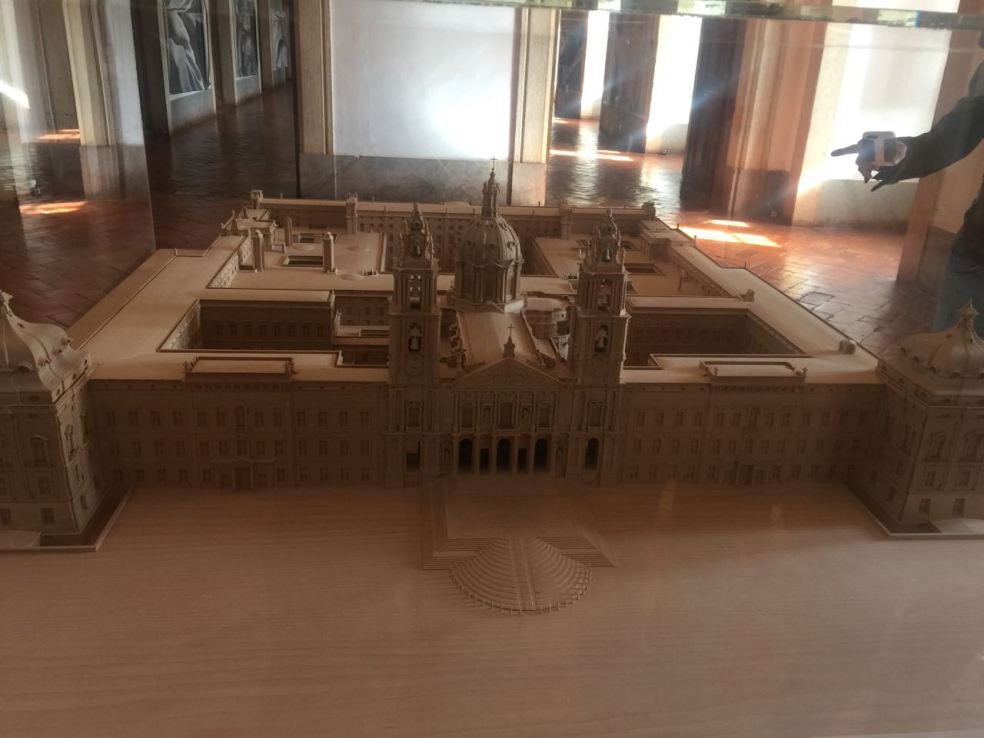 This is a model of the palace complex, which features a big ol’ basilica front and center. Because it’s all attached, the royals could just walk down the hall and watch a service without ever leaving the palace. You could also huck some gnarly spitballs onto the crowd below because, you know, you were a royal and everything.
 Here’s our happy group expressing their delight after a visit to what is one of the largest palaces we’ve ever seen. It was well worth the visit. If you come visit us, we’ll put it on the agenda. We’ll go owly to beat the crowds, unless you come in the winter, because there ain’t no crowds. There were times we had all 3,000 meters of a hallways all to ourselves. We lamented forgetting our bowling balls.
 The Palace of Mafra.
 During lunch, Angella kindly provided the answer to my question as to what the difference was between ordering squid with or without ink.
 At the beach in nearby Ericeira.
 We finished up our trek by stopping to some of the great nearby sea views (as if we don’t live five minute’s walk from very similar views. But somehow, they never get old). It was a wonderful and relaxing way to wrap up a delightful visit to the town of Mafra.
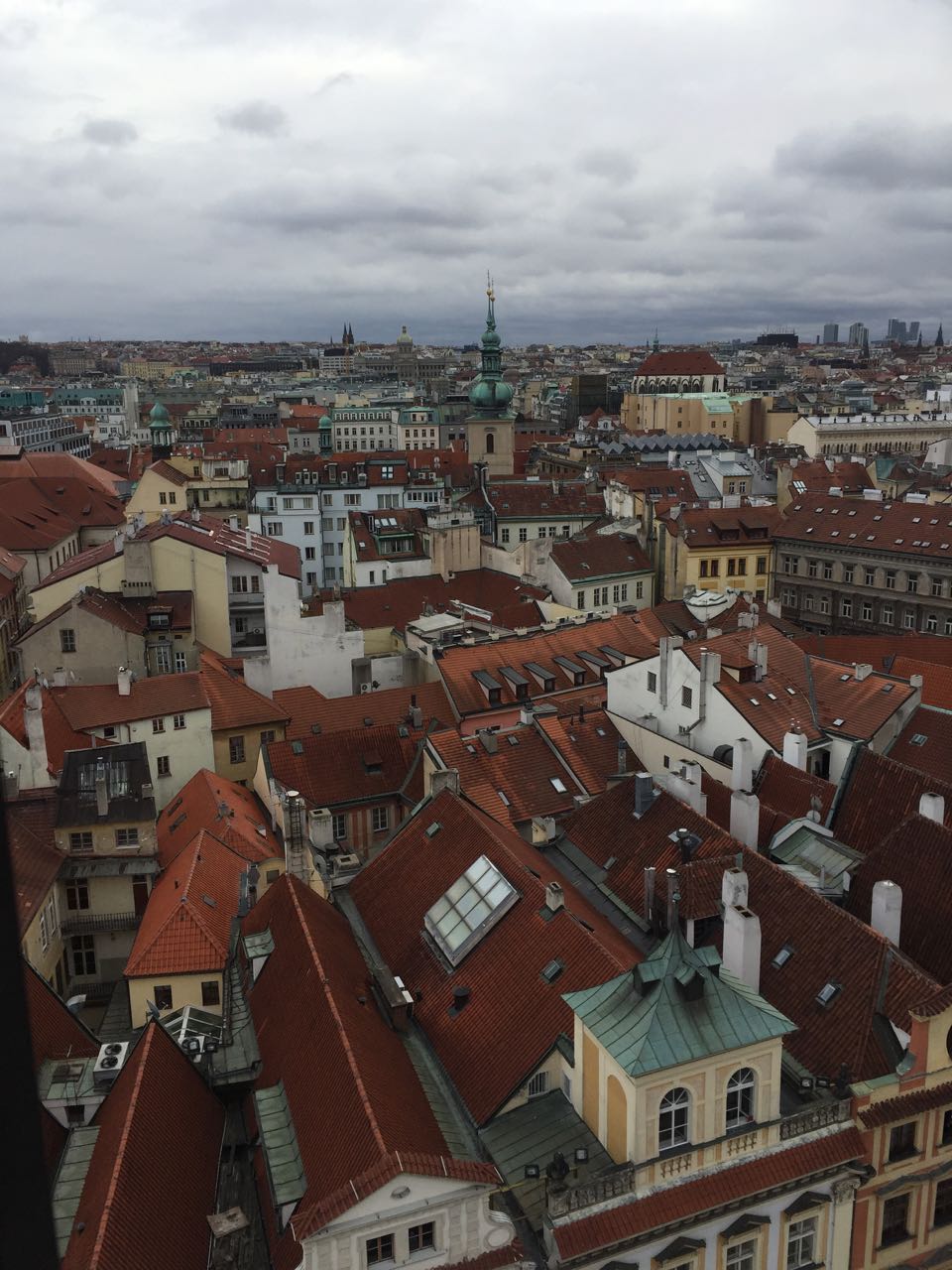
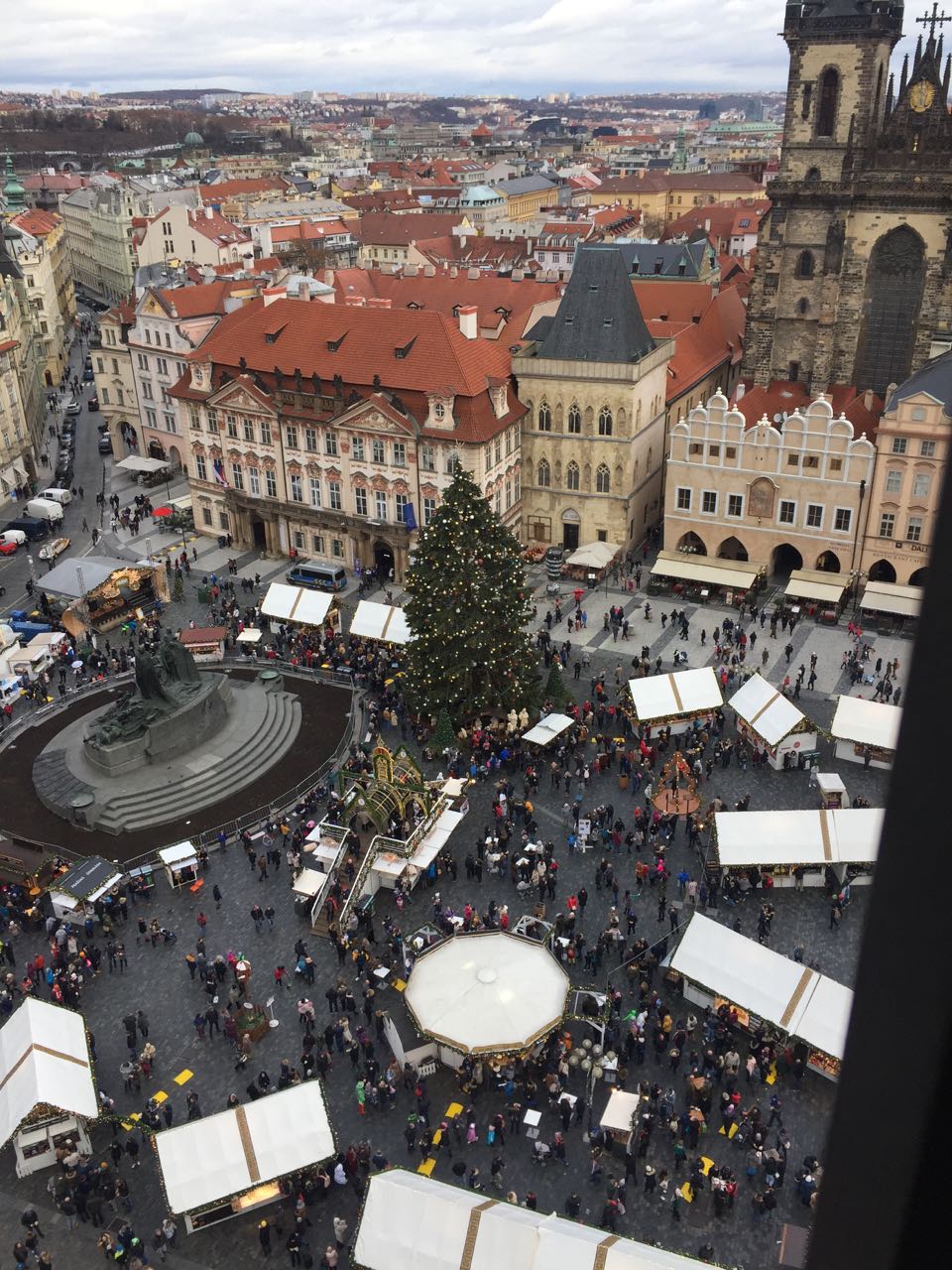
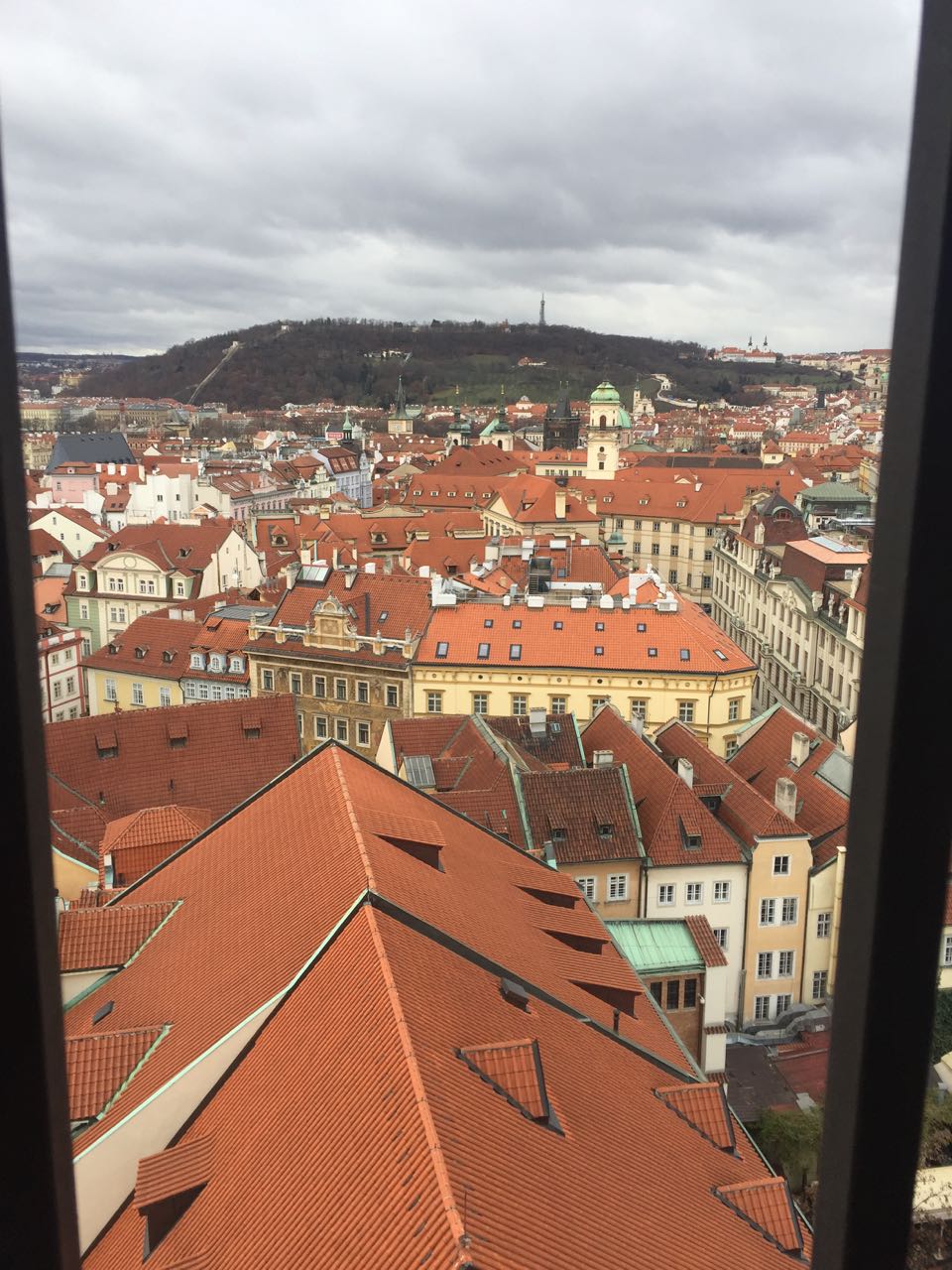
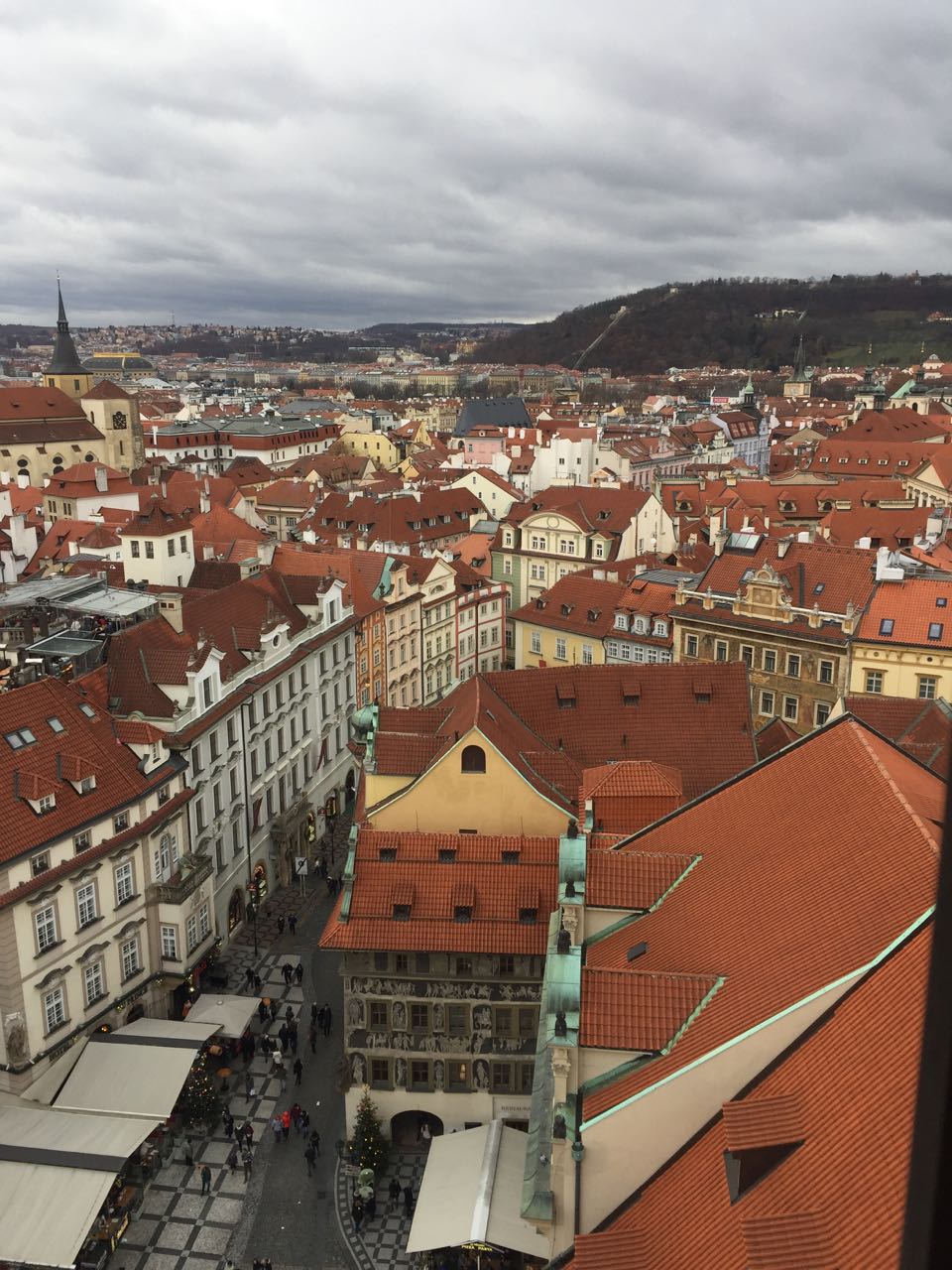
 There’s nothing like seeing a city from above. All the flaws and imperfections disappear, leaving only a panorama of color and beauty.
 Speaking of old… um, anyway, since it was December, things were a little brisk up there, but I snuggled Carolyn up to me with one hand and took photos with the other. I accomplished this particular photo by setting the phone timer to a 3 second delay and then artfully tossing it in front of us. By the 15th try I had the perfect shot, plus a very beat up iPhone. Well, okay, maybe a kind stranger took the shot for us, but I like my story better.
 “Rapunzel, Rapunzel, let down your hair!” Okay, if we had to wait for Carolyn’s hair to grow long enough to escape we’d be long dead. So we settled for, “Elevator, elevator, move up the shaft!”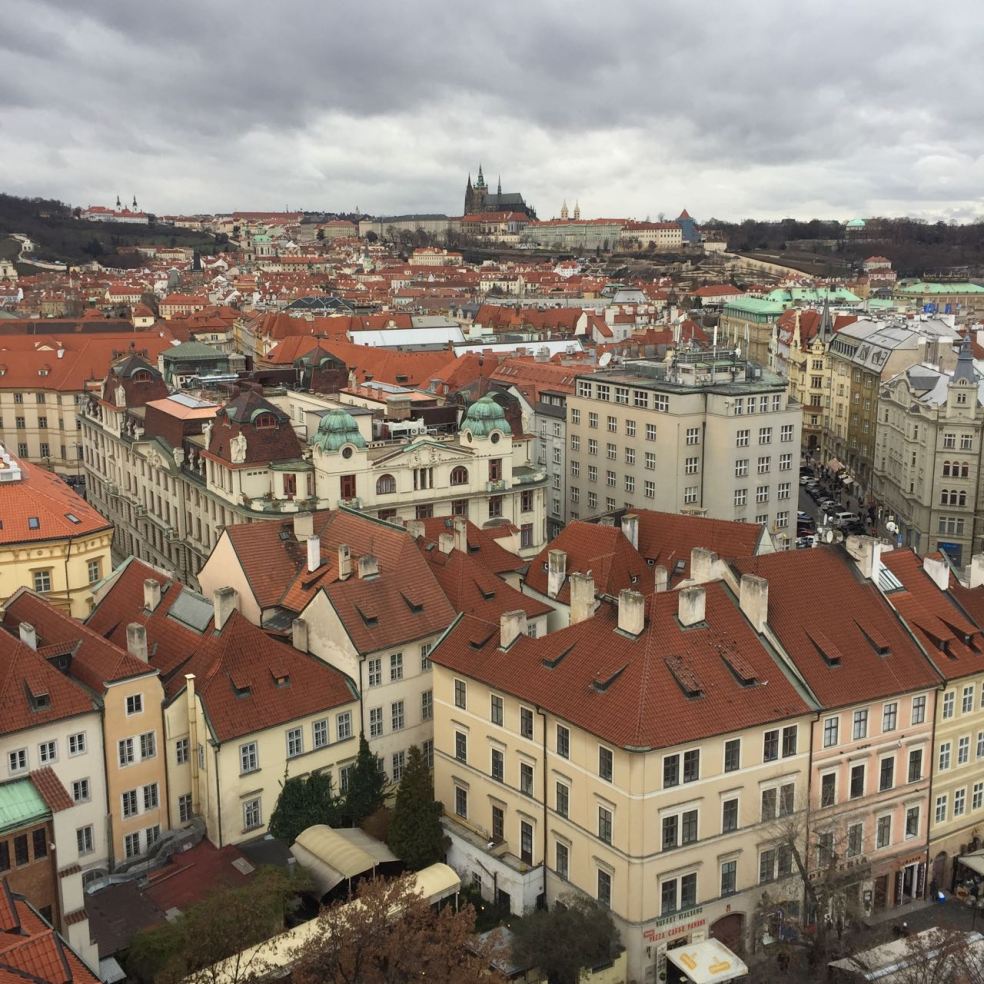





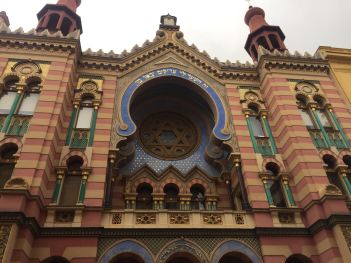 The one that was larger and a bit more interesting was the Jerusalem Synagogue, the front of which is pictured here. In the balcony they had interesting displays with stories of the history of Jews in Prague. It is a sad, solemn thing to go through. We should never forget how easy it is for groups of people to hate other groups of people, usually for no reason whatsoever. Anyone who calls for people to belittle, hate, ostracize, or instill fear about any other group of people should be ridden out of town on a rail. Unfortunately, there is a little too much of that coming back, even in Europe, although that call for fear and bigotry is more marginalized than it is in the US.
 We got a kick out of these bathroom signs. I give kudos to them for not only making sure everyone understands which gender is supposed to use which room, but doing so without a hint of embarrassment or shame over body parts.
 Czechs drink more beer per capita than anyone, so it’s only appropriate that they insist you either get hammered by beer, or an actual hammer. Otherwise, Praguians (Praguesters? Praguemen? Praguetonians?) generally enjoy a meaty cuisine with lots of sausage and potatoes, not too different from their German neighbors.
 And so we usher you to the exit, with memories of Prague still dancing in our heads, and the results of drinking too much beer still interfering with our dancing.
 Arguably the single biggest must-see in Prague is the Prague Castle, which dates all the way back to the 9th century.


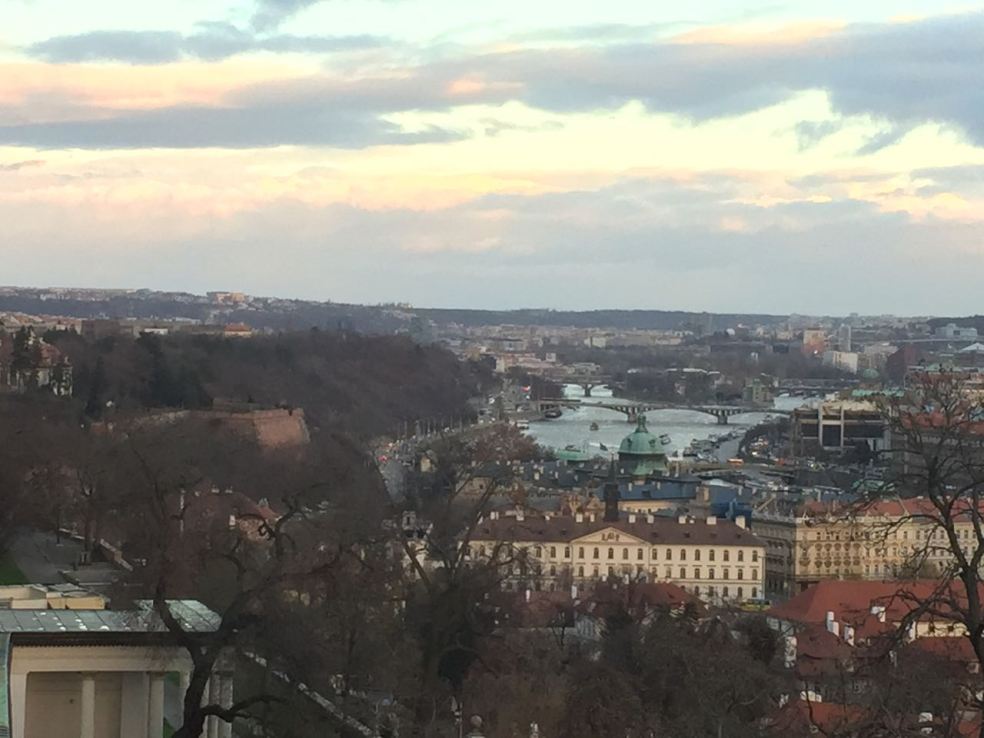 Once you climb the multitudinous stairs to get to the complex, you’re treated to a wonderful view of Prague.
 We were fortunate enough to go there in the afternoon and stay into the night, which meant we were also treated to wonderful evening views.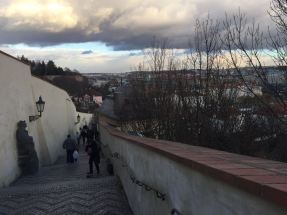
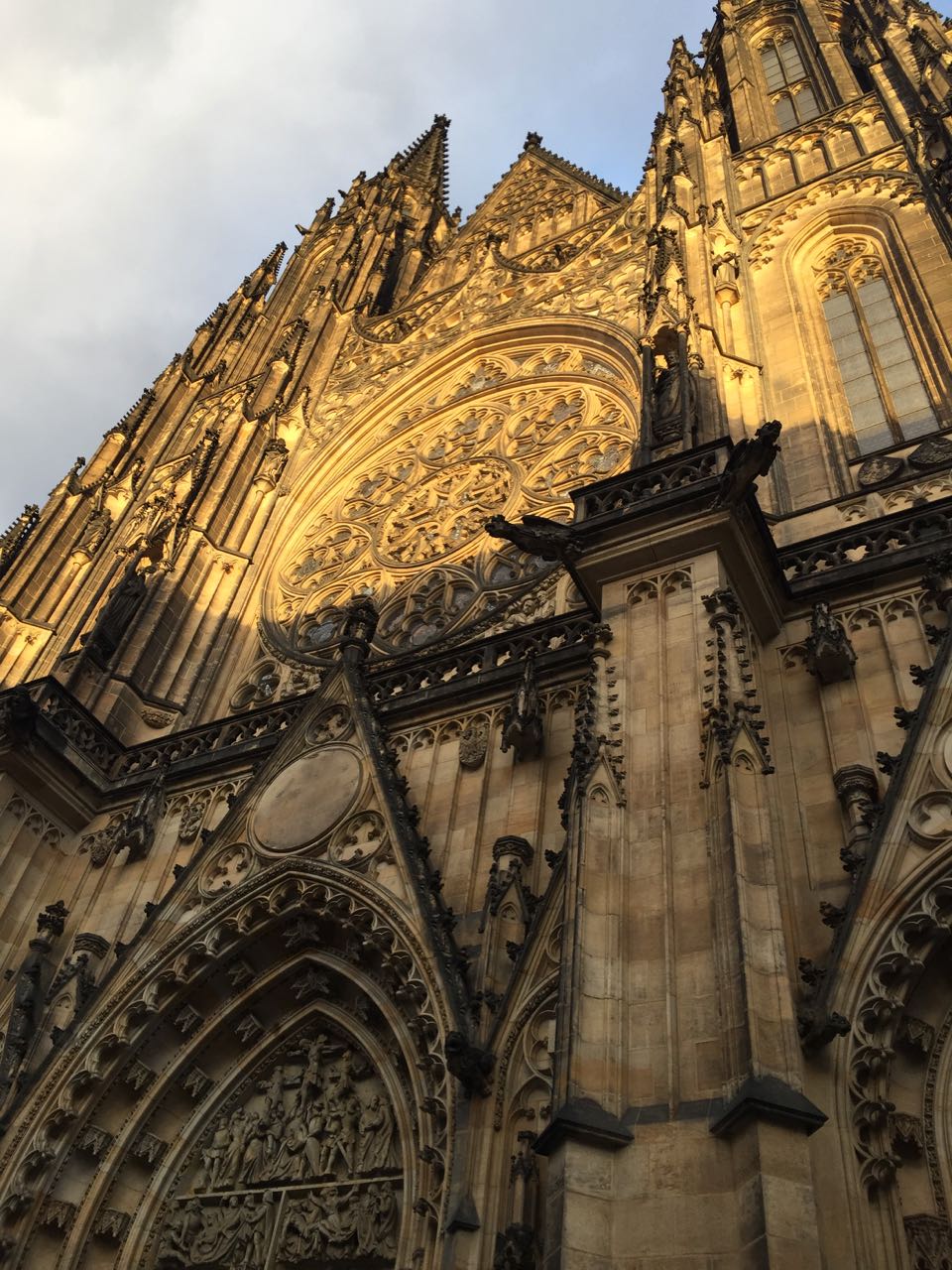 Inside the castle complex is St. Vitus Cathedral, construction of which began in 1344.
 The outside of St. Vitus is both imposing and gothically beautiful. It is easily one of the most impressive churches we’ve seen since we’ve been here.
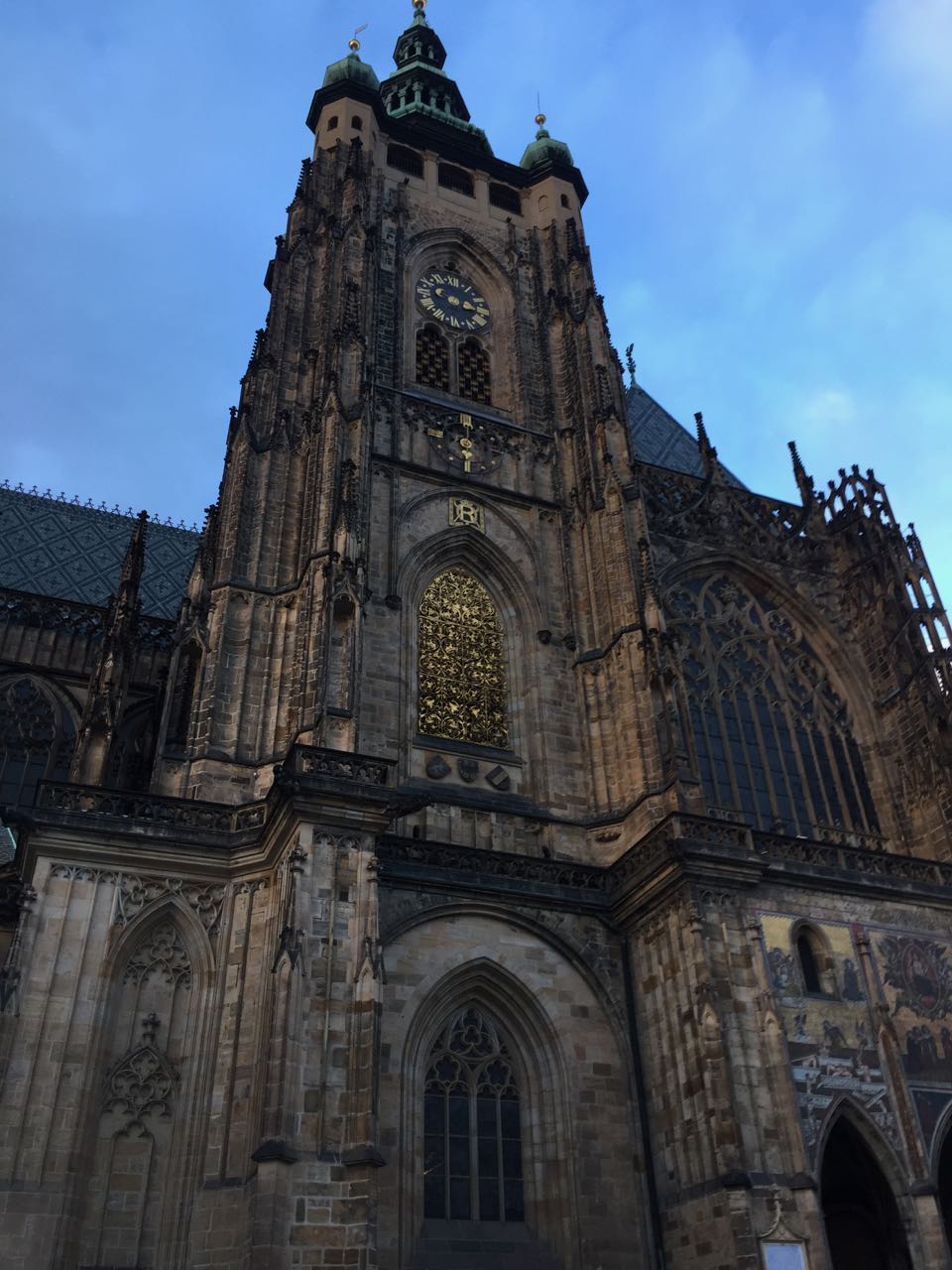 When buying tickets to see whatever you want to see, you’re presented with three choices, or “circuits.” We chose Circuit B after doing rock, paper, scissors. Turned out to be the right one, especially with our limited time budget.
 Amazingly enough, the construction of the Cathedral wasn’t completed until 1929, almost 600 years from when it began.
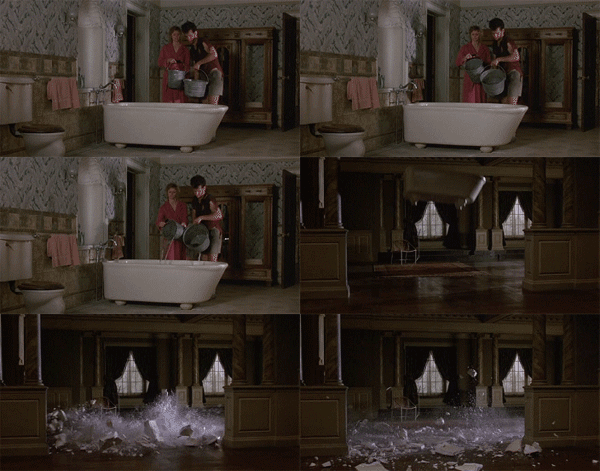 If this had been the focus of The Money Pit, when the foreman was asked when it was going to be finished, instead of “two weeks, two weeks,” he might have said “two centuries, two centuries.”
 There was a lot of controversy over art like this, with critics complaining that the kids would just sit around inside and stare at it instead of going outside to play like they did back when they were kids. The controversy abated once television was invented.
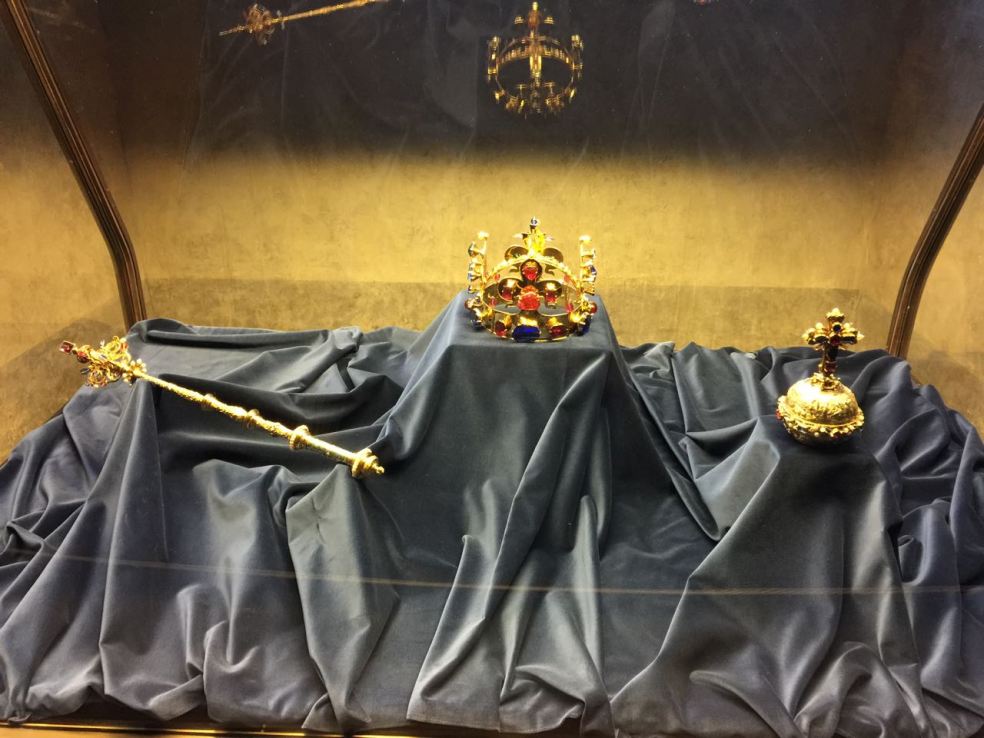 The Czech Crown Jewels. Or more accurately, reproductions of them, not that anyone could tell. The crown was made for Charles IV in 1347, making it the fourth oldest crown in Europe, just after one in Queen Elizabeth II’s mouth.
 This is one of the souvenir shops on an alley called “The Golden Lane,” so-named because goldsmiths used to work there. Apparently one of the job requirements of a goldsmith was to be not much more than five feet tall.
 While the Golden Lane wasn’t particularly impressive, they did have dozens of suits of armor on display as part of the attraction. It’s hard to imagine walking around in one of those things, especially on a hot day. And they hadn’t even invented anti-perspirant yet. And how do you take a leak?
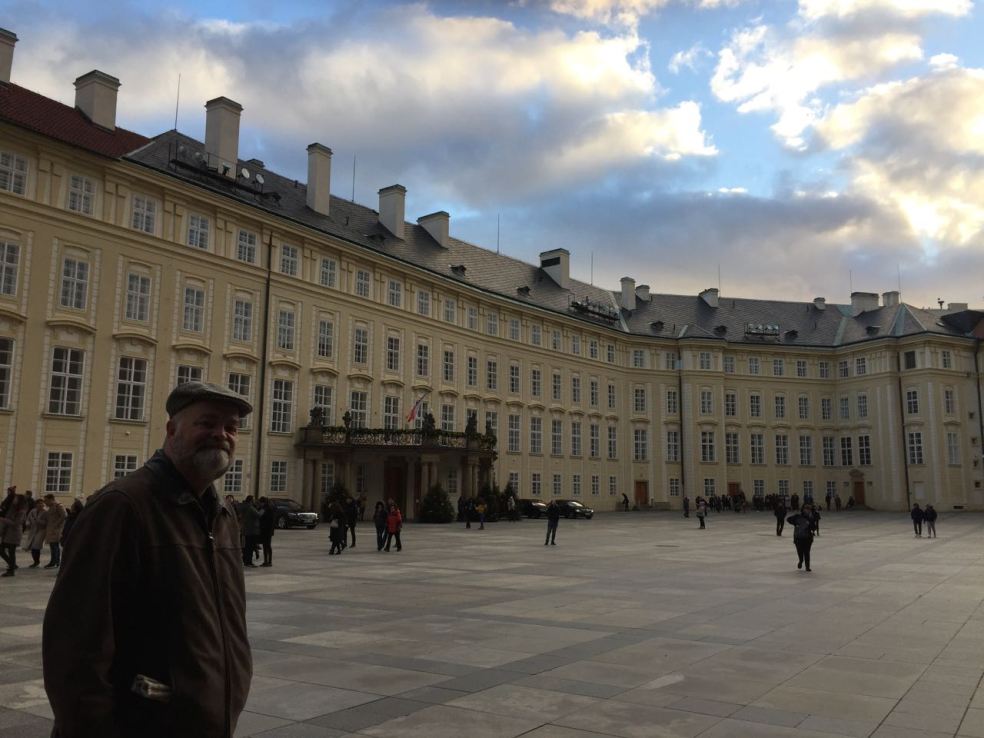 On the grounds is the Rosenberg Palace, which was originally named the Renaissance palace. We peeked inside but most reviews are fairly blah on the place, so we used our limited time for other, more interesting things.
 I can’t remember what this is, although I know it’s a building.
 The changing of the guard. All thoughts of stealing the fake crown jewels abated once I saw their fierce weaponry.
 Another view of Prague from the castle.
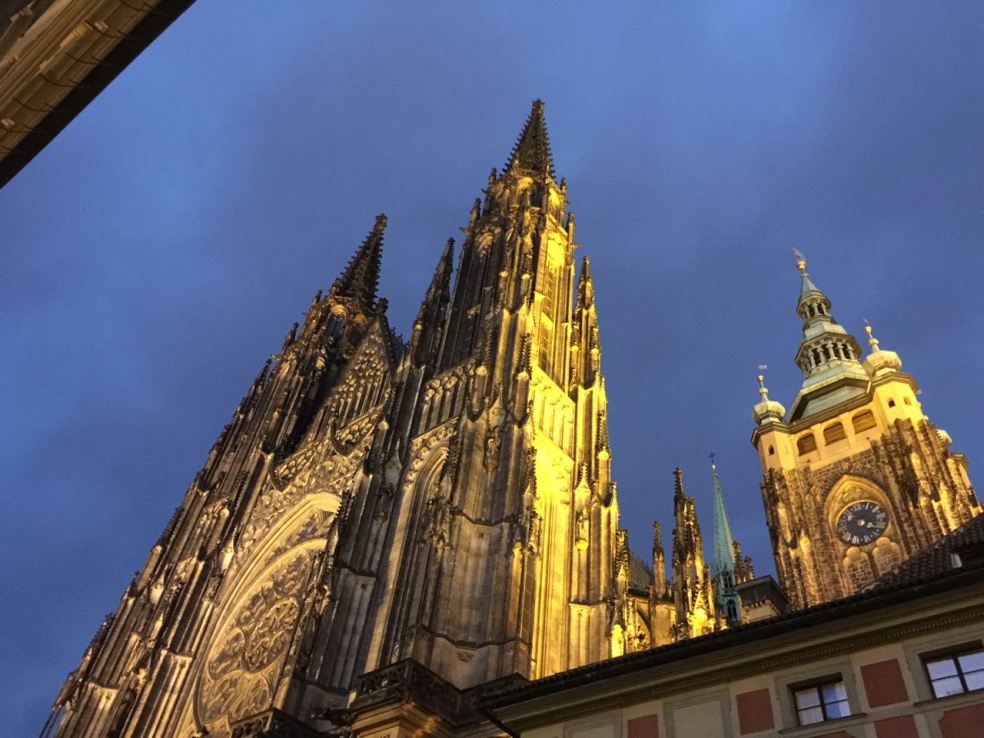 When the sun goes down and the lights come up, the church looks like something from an old horror movie.
 In the end, the castle was certainly a sight to behold. With a little extemporaneous planning we were actually able to see everything we wanted to see without spending the entire day there.
 baldsasquatchdotcom