
 Roundabouts
You might ask, what kind of top ten list is this anyway, if roundabouts make a top ten love list for Pete’s sake?
I understand Roundabouts may seem like a small detail compared to the bigger issues you might usually consider when evaluating a country and its culture, such as food, weather, music, crime, and most importantly, the quality of their ice cream. On top of that, roundabouts are certainly not exclusive to Portugal; they’re all over Europe, although, excusing the pun, they have made a few inroads into the US.
But roundabouts are a great example of clever efficiencies other countries use that the US has been slow to adopt, so they get extra appreciation from us Americans. In Portugal, we almost never have to stop at a stop light or stop sign, other than occasionally on some side streets or downtown. Oodles of electricity are saved by eliminating the need for stop lights. Watt?
I’d be curious to know how long it would take to pay back the construction of a roundabout by eliminating said electricity. Even if it takes decades, using less energy to power anything that can be replaced with no power at all is good for the planet.
 They aren’t without their challenges, to be sure. Portuguese drivers fully understand that when you’re approaching a roundabout, you will look almost exclusively to your left, and if anyone’s coming, you stop. Since every driver understands that, lots of drivers come barreling into the roundabout and stop only at the last second. Approaching cars already in the roundabout don’t pay them any mind, because they know they’ll stop; they always do. Of course there’s always that one time someone might not, which is what Americans like us worry about. Carolyn still jumps in her seat and eeks! a frightened exclamation every time that happens. After a year or two or ten of avoiding that one guy, I’m guessing she’ll be as steely-nerved as any Portuguese round-abouter.
The other challenge involves pedestrians. Pedestrians have the clear right of way in Portugal, as long as they’re walking in the “zebra” (which is what they call the thick-white-lined crosswalks). It also seems they have the right-of-way if they look in its direction as they approach it from down the block, or had a dream about doing it a couple of days ago. If a step inside the zebra is signaled by even a wayward glance, drivers better slam on their brakes or risk public humiliation.
 On the other hand, if you, as a pedestrian, step into the street outside of a zebra, cars will not only ignore you, they will actually speed up and aim the front bumper right at your groin. I think this aggressive intolerance for jaywalking stems from all the times drivers have had to slam on the brakes when someone makes a move toward a zebra, even though, when taking on the pedestrian role themselves, they have often been the beneficiary of said behavior. Besides, there are more zebras here than an African veldt with no predators, so step into a crosswalk or risk your life.
Portuguese walkers are so confident of their rights-of-way that parents with baby carriages will blithely lead with the carriage without so much as a glance into the street. Or maybe they just don’t like their babies, I dunno. I’ve actually had someone dressed all in black step out right in front of my speeding car… at dusk… without looking either way. I swear I’m gonna take someone out one of these days, and it’ll be all my fault.
 Despite their presence on our top ten list, roundabouts are the scariest in this regard. When you approach, you are looking intently to your left, ready to speed into the intersection ahead of the oncoming cars as you mentally calculate the speed vs. momentum vs. distance vs. the square root of an isosceles triangle vs. reminiscing why you didn’t pay more attention in physics class –and actually your physics teacher was pretty hot– and did you remember to turn off the iron? And then you have to factor all that in and compare to the risk and cost of the damage to your car and physical well-being should you have missed a decimal point in your calculations. And you have to do all that within the 1.2 seconds it will take for the oncoming car to hit you should your calculation be in error.
Meantime, to your right, an unconcerned pedestrian will simply start walking across the street, whether or not you’ve decided it’s safe to steer your car into his or her direction.
It’s best not to be chewing gum or otherwise be distracted when approaching any roundabout. I’ve learned to focus solely on driving, with eyes scanning back and forth like Arnold in The Terminator, especially when I’m driv ing downtown. No music, no conversation, no screams of panic before I plow into another car. Don’t say nuthin.’ I’m on the hunt for wayward pedestrians.
Despite all that, roundabouts make our list at Number Ten because in the end, they make more sense, save electricity, get us to where we’re going faster, and occasionally improve our blood flow by increasing our heart rate. So you see, roundabouts are so awesome they even help you live longer… as long as you’re not a pedestrian stepping in front of an American driver.
 More than six months after we packed all of our remaining belongings (at least those that wouldn’t fit in the four suitcases we schlepped through the airports) into 32 boxes, we finally received them. It was like Christmas! Except we knew what we were getting. And it’s May. And the wrapping paper was plain white, and there was no tree, or lights or any other decorations signifying the holiday. And it’s about 80 degrees outside.
 The only casualties were onion salt and onion powder of all things. We packed all of our spices along with our kitchen stuff, and we’re glad we did because the Portuguese have an unfortunate habit of labeling all of their spices in another language. And of course there’s always some spice you might buy once a decade, so I’m sure we’ll be happy to have that one a recipe calls for but that we would have never thought to have purchased ahead of time. In addition to that, the spice selection in American grocery stores is much broader than it is in Portugal, so I’m sure we have some unique items. Heck, a couple of them might be illegal for all I know.
 Anyway, for some reason, the onion salt and powder expanded and hardened to the consistency of a rock in their little jars. Nothing else did that. Now I’ve got to go to my translate app and look up onion (ok I just did it, and it’s cebola), and spend the 27 cents it probably costs here to round out our spice collection.
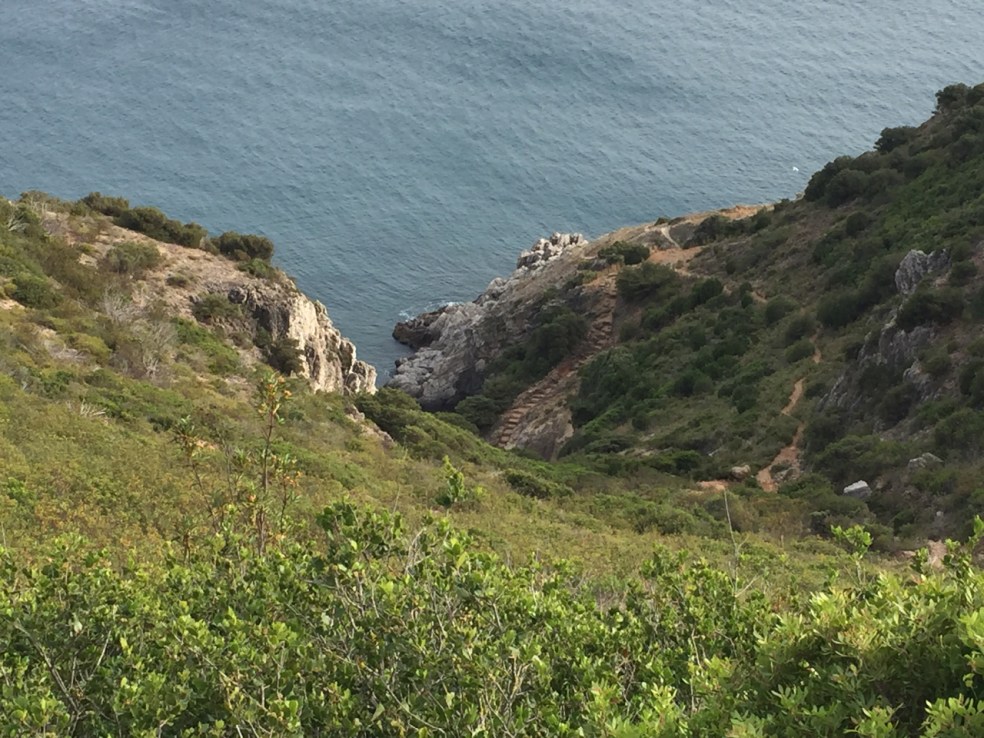
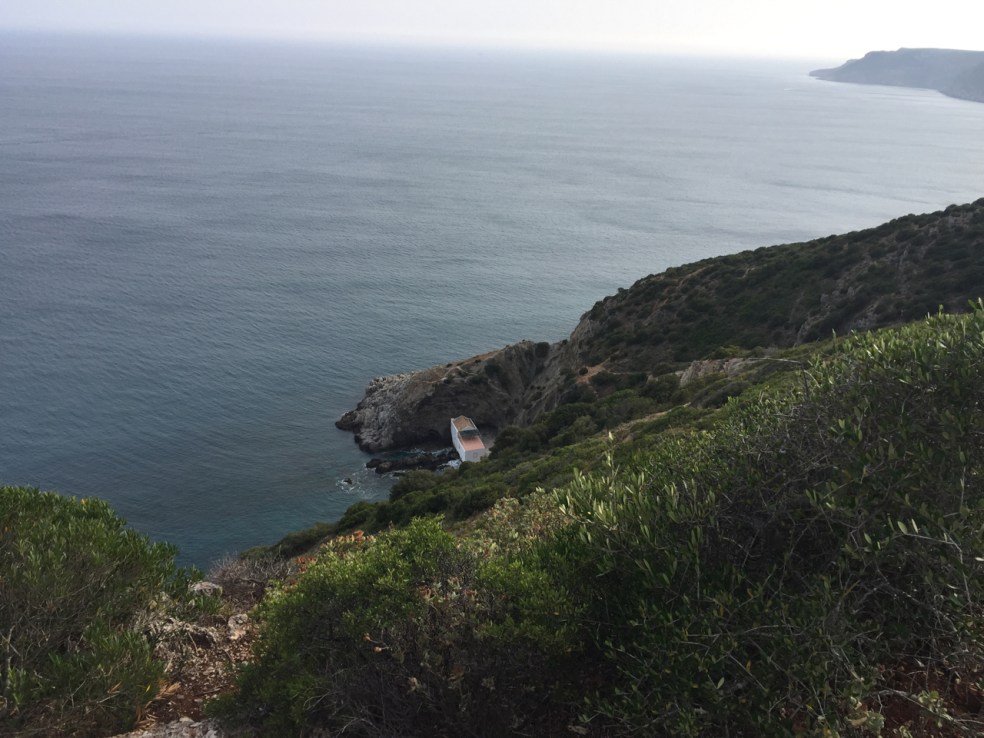
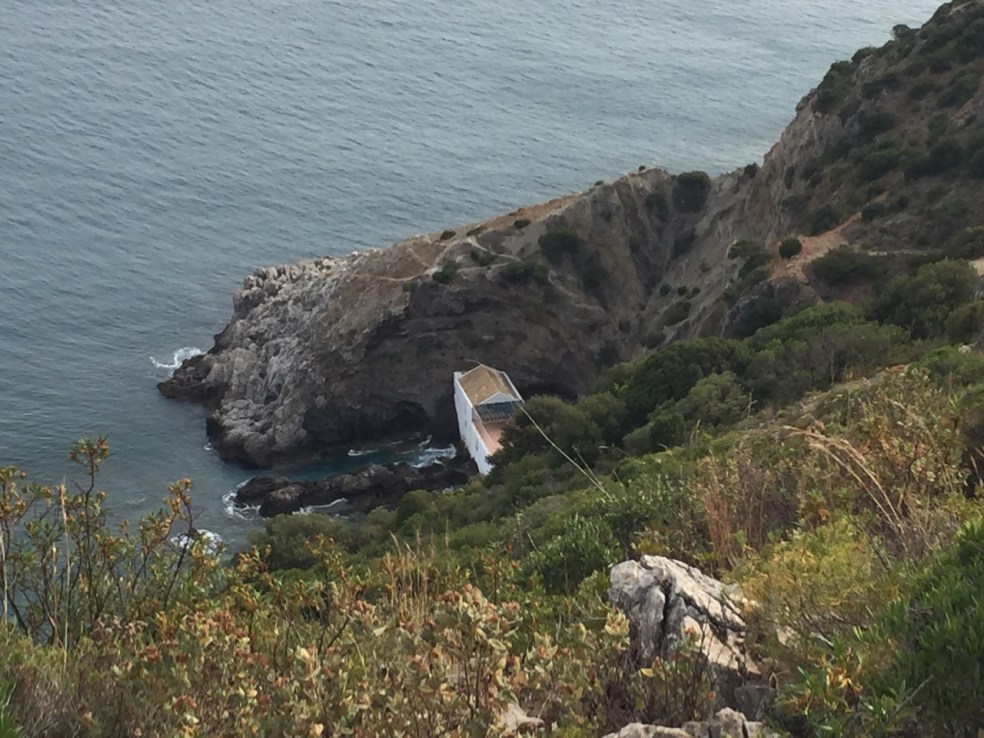
 The Atlantic ocean is about a ten minute walk from our house. Well, at least the cliffs bordering the ocean are. It’d take another four or five seconds of falling straight down to actually meet the ocean.





 I said “I do” almost four years ago to the wonderful amazing man I now call my husband. He is kind, generous, funny, and smart. He keeps me grounded, showers me with grace and love, and has helped heal wounds so deep I feared they would never heal. I am blessed, I am loved, and I am accepted for who I am. What more can love give?
 , but also every time we go out, we read all the street signs and advertisements aloud and debate what we think they’re saying. When we go into any given store, we look at tons of products and attempt to decipher their purpose. Sometimes we see products unique to Portugal and can’t help but be impressed at their ingenuity.
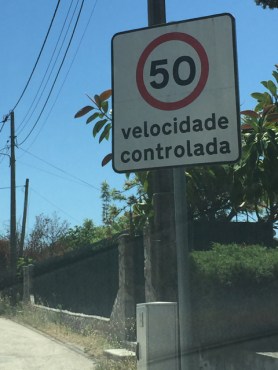 Some translations are easier than others. For instance, the sign to the left is obviously telling people to control their velociraptors. We were surprised to learn that dinosaurs are apparently still alive and well here in Portugal. In fact, not only are there signs pointing to where you can find them, as seen below, but they even have dental clinics dedicated solely to the care of their dinosaur teeth. The top sign must mean, “lots of dinosaurs,” and of course it’s easy to translate the one below it to “dental clinic,” obviously intended for the dinosaurs mentioned above.
 Otherwise, how are our Portuguese lessons going, you ask? Well, it’s progressing, we answer. We have been inching our way toward a little more understanding of things. We are catching more words spoken by passersby. As already illustrated, we can obviously translate more signs than ever (although accompanying illustrations are always appreciated). And of course the more Portuguese we throw around at strangers, the more we can confuse them as to what the hell we’re trying to say.
 Carolyn still hasn’t gotten used to cars racing up to the roundabout just as we’re passing in front of them. So far, they’ve always stopped in time, but we don’t know if that’s due to Carolyn’s screams or whether they all understand they have to give way to anyone coming from the left.
 posed to Portugal’s amazingly inexpensive yet delicious wine, the beautiful (albeit rainy, at least during our visit) streets of Lisbon, and some cramped living quarters, especially in the steep stairway of our rented apartment.
 bra just minutes away from a sandy beach that stretches beyond sight. We pass by a medieval castle every time we drive into town. And while we have had some of the same May rain we did a year ago, it quickly gives way to 75-80 degree days, which is perfect weather for the beach or our ever-warming pool. I describe it thusly because it’s still too damn cold to swim in. I’ve jumped in a couple of times for an immediate cool-down. But it’s straight to the ladder after the cold water wreaks its bodily-shrinkage-havoc.
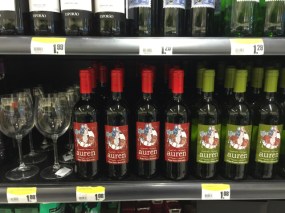 e hillside, reminiscent of a seaside town in Greece. And the wine is still as inexpensive as it was a year ago.


 She was more than a little nervous, although the pedestrians of Lisbon should have been more so. Just kiddin’. She’s a good driver, but the tiny streets, confusing street lights, and chaotic traffic are not for the faint of heart. Needless to say, we made it home in one piece. Although it took us a bottle of vodka to recover from the trauma.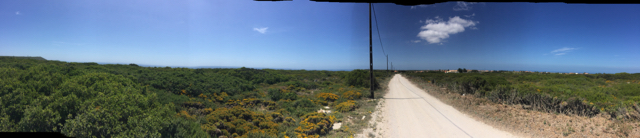



 Like most Americans, Carolyn and I had been indoctrinated into the horror stories about socialized medicine, often juxtaposed with friend-of-a-friend anecdotes about how much better American medicine was than anywhere else in the world.
 but this is also in addition to our paying the most per capita in the world. Let me repeat that: We spend more on health care per person than any other country in the world. Surely that has to buy us something?
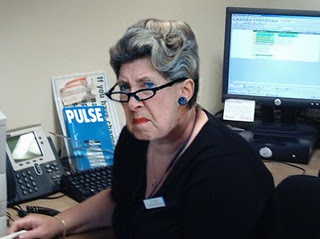 We gave her our particulars. Not once did she ask why we wanted to see a doctor. I found that refreshing. What business is it of anyone besides the doctor anyway? But in the U.S., you’re usually forced to offer up a detailed description of all the bumps on your private parts, when you last went pee and what color the urine was, plus your shoe size, all to a receptionist who takes ten minutes to find the right color yellow to fill in the little box with the accurate rendering of the color of your pee.
 After about twenty minutes (See! Five minutes off!), he appeared, and waved us in to his office… us as in both of us. I was a little confused at first, because the only other time I’ve been allowed into a medical office with my wife was when she was giving birth, or we were receiving very bad news. However, as he showed us to our chairs, it occurred to me that it was quite smart to do so. There was no need for a nurse to be on hand with a male doctor and a lone female patient. Her husband was right by her side. Cost savings right there, kaching!
