When you decide to move to another country, one of the first things you have to think about is what you’re going to with all the crap you’ve accumulated over the years.
If you’ve lived on your own for more than three or four decades, the accumulation can be mind-boggling, even if you don’t know it will be. When someone goes through all of your closets and drawers and corners of your garage and everything in between and puts it all on tables, you first ask yourself, “Where did I get all of this stuff?” Then, as you wander around the tables poking at all the stuff you own, you find yourself exclaiming, “I didn’t know I had that!” or “I always wanted one of those!” or “How in the world did I end up with six hammers?” (True story. I have no idea where they all came from.)
Before we decided on an estate sale, our ideas as to what to do with everything ranged from renting a room in a storage facility, to shipping it all overseas, to setting the house on fire and just living with the insurance payout (not really). In the end, we decided to have an estate sale and just pretty much sell everything. Shipping is expensive, and it’s actually rather liberating just to get rid of everything and start again with a lot less stuff.
Besides, when it all comes down to it, over the course of any average week, one tends to use maybe five percent of everything you own. Especially if you own six hammers. On those rare occasions when you use one of the hammers, you’re still only using 16.6% of your total hammer ownership. Of course, if you hit your thumb with the hammer, you’re likely to use about 100% of the swear words you own as well, but those are free and easily reused.
In any case, In addition to starting a new life in Portugal, we decided to start over in regards to almost everything we own. Except we did keep one hammer.
So we researched estate sale companies. As usual with the internet, you get tons of information, much of which is of dubious assistance. There were pages of professional tips and advice as to what to look for in an estate sale company, many of which came from estate sale companies as well. Some of that helped, but it became pretty clear very quickly that you really were a bit on your own when you start walking down that road. The estate sale industry isn’t regulated, which is really too bad because there’s almost nothing more intimate or needing of trust than an estate sale company coming into your house and turning it inside out… other than perhaps a visit to a proctologist.
Dr. Ben Dover, my personal Proctologist
And that, my friends, is the key word when it comes to putting on an estate sale. No, not proctologist: Trust.
If I were to give one piece of advice to an estate sale company as to what they should virtually exude as they’re talking with potential clients and conducting the sale, it would be to do everything possible to convey trustworthiness. Not the white-shoes-Johnson kind of “truuuuuust me” trust. But above-and-beyond behavior that constantly says, “Hey we know you’re gonna have to trust us to do this properly, and this is how we’re going to make sure you do.”
I contacted and interviewed about five different companies after first checking their BBB scores, online reviews, and websites. I learned pretty quickly that you’re very beholden to their own timing. If you want to have, for instance, a sale on a specific weekend, that’s going to eliminate X number of estate sale companies because they may already be having a sale that weekend. Most of the time, they can’t handle more than a couple or so a month. So if they’re booked up, you either need to be flexible with your time, or find another company.
Ultimately, we settled on a company named A&S Estate Sales, run by a husband and wife team, Arnie and Sura. As the preparation for the sale began, I became more and more pleased with my choice. They were professional and friendly, and we developed a nice rapport. Which is a good thing because we were not only letting them into our house to go through pretty much everything we owned, but we ended up working side by side with them for pretty much a full week. Since they are a husband and wife team with delightful personalities, it became pretty clear that we could trust them.
And the sale went very well; better than all of our expectations. They have a nice following, which meant that the house was virtually mobbed during the two-day sale.
That said, as a result of our experience, I developed some advice for both the estate sale companies and their clients:
Once the process begins, you have to understand that all the stuff you want them to sell more or less becomes their stuff. They fix the prices, they do the negotiating, and they try and move everything they can. With roughly a 40% cut, they’re as motivated as you are to get things sold. In the end, while we discussed minimums on several items that I’d prefer to have kept than to have been sold for too little, I can’t actually be sure what sold for what, because you don’t get an itemized receipt. You just have to trust that they did the best they could, and hope that they got the amounts you wanted on whatever things you were most concerned about. You’re pretty much only left with TRUST, and, if all goes well, a check in the mail a week or so after the sale is over.
Virtually everything you own (except for the stuff you hide behind closed doors), is brought out, categorized, and priced. They do an amazing job of organizing everything. After they swarmed through the garage, putting things as small as nuts and bolts into separate baggies and so on, I told them they should sell garage organization services. In just one day, they can come in, and –bam- your garage will be organized like it never has been, and you might discover you own six hammers.
While we loved working with Arnie and Sura, I would’ve appreciated a thorough sit-down, or a pamphlet, that really spelled out in detail what to expect. Since they’re so familiar with their own industry, when they make a comment in passing they expect that the information has been conveyed. However, since most of us only have an estate sale once or twice in our lives, we may not understand clearly what was said or implied. Since Arnie and Sura were so trustworthy, we didn’t end up with issues over it, but if something had gone a little haywire, it certainly could have.
My optometrist said I needed new glasses, so I bought a bunch ahead of the sale.
As for whether giving someone almost half the value to sell your stuff is worth it, I’d have to say absolutely yes. It takes a lot of man-hours to sort, price, and sell all that stuff. They had security, and they have a following, and they pretty darn near blanketed Wilsonville with Estate Sale signs. There’s no question that had we done it on our own, we’d have ended up with a lot less money while still owning most of our crap with no idea what to do with it after that. As long as you have enough stuff to make it worth their while, it’s worth it.
They also hauled everything that was left away for donation, making this perhaps the easiest move we’ve ever made. (It’s like having hundreds of elves descending on your property, hauling away everything and even leaving money behind!) We’ve heard stories of estate sale companies who haul things out and keep it for themselves, and to be honest, I have no proof that everything was taken to the donation spot, but I trust Arnie and Sura, and that, in the end, is pretty much all I have, except for the check.
After the sale. The couch was sold, just not picked up yet.Our first box to be shipped to Portugal. Despite the sale, we still had a bunch of clothes and knick knacks we had to keep.Ultimately we ended up with about 25 boxes to ship. This is now pretty much everything we own!
Only a few people know of my deep, dark past, when I served as an operative for the CIA. Since I come across as anything but (as a good spy should), and despite the fact that I’m essentially inactive, occasionally my handlers will still evoke their special code words, delivered via special courier (in this case, an otherwise seemingly innocuous catalog from Pottery Barn), asking me to once again assist in protecting this great nation of ours.
Over the years, infiltrating Burning Man has been a difficult process for the CIA. Certainly, some have made it in, but the majority of those were never heard from again. Those who made it in successfully usually found themselves ostracized because of their dress. You simply can’t wear suits, sunglasses, and an earpiece to Burning Man and not be flagged as a Fed.
And so they asked me to finagle my way into the camp. I wasn’t delighted at the prospect, seeing as how I’d given up camping after an unfortunate incident with a roasted marshmallow. I can still see it flying through the air, all flames and smoke like a black & white meteor, headed toward the campfire next to us, where a white biker dude the size of Shaquille O’Neal unwittingly advertised the perfect landing strip with a long stretch of butt crack as he bent forward to tend to his own fire.
We’ll leave the rest of that story for another day, or perhaps better yet, to your imagination. But suffice it to say that I swore off camping once the dust had settled, the bail had been paid, and we’d buried the remains of our campsite, including someone’s little dog and a biker’s pinky finger.
Anyway, I knew of a person who had gone the year before and was going again, my friend and employee (at the time- Burning Man was my retirement party) Joe (name redacted), aka “Joey Broey.” By using some of the mind control techniques gleaned from my training, I asked a couple of innocuous questions, to which Joe unwittingly had no choice but to follow up with a: “Why don’t you come?”
Joey Broey and Steady Yeti
My CIA handlers were ecstatic.
I learned from our small Northwest team leader, Mike aka “Shidog,” what things would be important to bring. He also gave us playa names, I think so the government has a harder time tracking us down. Mine was Steady Yeti. If you’re not sure why, look at the name of this website. Shidog’s must-haves included goggles, lots of ladies’ outer garments, hats, and scarves or anything to cover your mouth against the sandstorms. A good tent. Penicillin. Sleeping bag and a very good mattress. Portable blinking lights. Just kiddin’ about the penicillin.
I secretly flew to DC to find out what the government really wanted to know about Burning Man. I was shocked to discover that what amounts to an entire city, roughly 75,000 people (or the third largest city in Nevada for a week), operates almost entirely without money. I was flabbergasted. Floored. Flummoxed. Can you imagine? The very backbone of American society, discarded like some dead cat on a heaping pile of stinking refuse. Who were these obvious subversives? How did it all work? The government wanted to know. I wanted to know. I was all in. I would find out and we’d stop these Anarchist/Communist/Socialist/Atheist/Boobie-watching scumbags in their tracks.
Shidog and Steady Yeti
My long-held assumption: that this shindig was mostly just a bunch of nutjobs taking over the desert so they could dance naked around a burning man just for the hell of it had now been stomped dead and dumped into an overfull porta-potty. Surely the roots of this anarchist scheme lie at the feet of the likes of Putin, or Kim Jong-un, or maybe even George Carlin’s estate. This had all the earmarks of a revolution in the making.
It took me fully ten minutes to empty the cash out of my wallet and close it up again. My hands felt like lead. My forearms felt like they’d been through a significant forearm-only workout because it’s very hard to hold up that much lead. The idea of no cash in my wallet was like having no gas in my car, or no pasta in my spaghetti, or no battery in my vibrator. There was just something wrong about it. I moved as if in molasses. This thing was going to be harder than I thought.
“Ask not what your country can do for you, but what you can do for your country.” I actually did ask once, but all I got in reply was, “A gallon of milk,” which made me suspicious that someone other than my country was telling me what it wanted.
Before leaving, I also did some research on the internet (making sure, of course, to avoid all of the obviously planted Commie sites), just to test my assumptions. I also talked to various people I know, as well as a few I didn’t, most of whom seemed to move a lot quicker away from me afterward. Every person I talked to (none of whom had ever attended Burning Man) had a different impression of it. My son told me I wasn’t in college and that I’d come back with herpes (my incredibly supportive wife Carolyn knows me far too well to worry about that). Others were concerned about past events where people had gone missing. Most assumed it was just one big frat party or some such. My mother even thought it was some big festival in the desert, attended only by men.
Proof that there were more than men at Burning Man
Many males assumed it was a great place to check out the seldom-seen bare-breasted American boobie awash in nothing but sunlight. Trust me, after the first four (two sets of two, although it would probably still hold true if you saw one set of two and two singles), you forget to even notice. I could’ve had an entire conversation with a bare-breasted woman and after she left, wouldn’t have been able to tell you whether she was or not. Okay, I’m lying, I would’ve noticed. But I wouldn’t have cared. Still, as a preference, sure, I mean, you might as well see ‘em if they’re there. But it really doesn’t matter after the first two sets of two, or four total, however they’re displayed.
What no one I talked to beforehand understood was that there was this city created out of thin air, operating for an entire week without money. I didn’t want to upset anyone, so I never volunteered that knowledge. But I found it interesting that that concept was so well concealed from the clueless public. Clearly, I had some work to do.
Once we were packed up and ready to go, we drove for seven or so hours, stopping in the teaming metropolis of Cedarville, which is a couple hours outside of Black Rock, which is the name of the town “Burning Man” becomes, and is so-named because of the expanse of white dust as far as the eye can see. I guess maybe because if you put a black rock anywhere on that expanse, you’ll surely see it. So it’s metaphorical or something. Personally I might’ve named the town White Dust. Or just Dust. Or maybe just Du, because during a whiteout you can’t see the “st.”
Anyway, we had a surprisingly delicious dinner provided by a chef who was clearly out of his element. You simply don’t get that kind of big city cooking in a town of about 500 people, and so I immediately knew he was a foreign agent, probably Communist. I made sure other people ate a bite of the food before I did in case he had made me.
After surviving the night, we ate breakfast and then headed toward the Man. Due to the savvy experience of Shidog, we pretty much drove right in with nary a wasted moment in line. The wait can last for hours upon hours if you get there at the wrong time, so I was grateful to be with such an experienced leader.
Immediately upon our arrival on the playa, I could see that it consisted of two things, and two things only: air and dust, both of which continuously battle for preeminence, each of them gaining the upper hand only to lose it again.
Upon entrance, they make the “virgins” lie down in the dust to make sand angels, and then hit the bell to signify who the hell knows what. Once covered in dust, it coats your entire body, really more as a protective shield than anything, until you get home and take your first real shower.
There are no bugs, no scorpions, spiders, snakes, or even elephants. Nary a fly was ever spotted around the porta-potties, which sit there for hours in the hot sun, baking their fetid contents until they are cooked to juicy and delicious perfection, appealing to the palate of even the most discerning fly. I wondered if any flies hitchhiked within some of vehicles, only to find themselves in the open air, thinking they were free to explore all the delicious tastes and smells that only a group of unwashed hordes of people can provide, and then dropping dead from playa dust grainy enough to fill a fly’s lungs to capacity in a matter of seconds.
On my first night at Burning Man we went next door to what is essentially a continuously operating bar. They have a famous drink called “Pussy Juice,” which I think is so-named because they put everything possible into the drink, including a dead cat. They then cover up all the taste with Kool-aid or some such. I only had one glass of it, and subsequently found myself back at camp, dancing like Fred Astaire. Or at least I thought I was dancing like Fred Astaire. In truth, I was probably dancing more like Elaine on Seinfeld. And then I did a face plant. And then I dragged myself to my tent and slept it off, my feet hanging out of the tent, turning it into some sort of human/tent popsicle. Fortunately, the playa is forgiving and The Dust granted me a reprieve from a hangover.
After spending a week at Burning Man, walking and riding across the playa, dancing and listening to techno music with earth-shattering bass tones, and visiting camps that dispense free whatevers- from booze to pancakes to getting your ass stamped with a black ink tattoo, I was finally able to summarize what Burning Man is all about.
The thing about Burning Man, however, is that it defies being described in simple terms. Indeed, virtually everyone who attends Burning Man comes away with a different perception and description of the event. It is truly whatever you make of it, or want it to be.
Here is the list of definitions I provided my handlers by the end of the event:
A big hippie lovefest
A 24/7 dance party with some of the most amazing sound systems you’ll ever hear
Artistic expression provided only for art’s sake, with virtually no boundaries
A complete lack of judgmentalism; everyone is accepted and embraced (literally)
A continuous hugfest. Hugs outnumber shaken hands by 10,548 to 1
75,000 people embracing of all that which makes us human
A social experiment: a community that functions without money
A social statement: everything is ephemeral
A challenge to adapt to one of the harshest environments on the planet
A demonstration of the beauty of giving
Proof that self-reliance and generosity go hand-in-hand
Artistry that is likely to define an entire genre for decades to come
Pick one or more of the above, or all of them, or none of them. It will still be Burning Man, and more importantly, your Burning Man.
As for the last bullet point above, someone told me that the fusion of art and music at Burning Man will be considered one of historical significance. I understand that, because I certainly have never seen anything like it. The incredible quality and creativity, much less the miles-wide scope, may truly be a combination to which other events can only hope to aspire. I’m not an art connoisseur, so I’m not sure what you would call all of this, but it certainly feels like the notable genesis of an entire artistic genre unlike anything we have ever seen. It was, through and through, incredibly beautiful and immersive, even if you weren’t stoned or drunk.
And much of the artistry was designed to live one week, and then burn.
As far as the nuts and bolts, living at Burning Man is a bit like extreme camping, depending on the quality of your living quarters. Those in tents without any kind of covering suffer the most. The sun is hot and the grainy wind is incessant. Indeed, the removal of our shade structure when our fellow campmates left on Sunday, before the burning of the Temple, caused our sub-camp to decide to leave as well. Subjecting the tents to the sun, wind, and dust was just more extreme than we preferred to handle after a week.
The decision proved prescient when we learned that the Exodus (which is what they call the mass departure) had been shut down due to an Amber Alert. My understanding is that whoever was missing has been found, and may have been a case of parents being separated from their child. So that’s the good news; the bad news is spending an extra 3, 4, or 8 hours sitting around in the hot sun when you’re ready leave pretty much sucks. But that’s Burning Man. You get a side of torture served with your fun.
Speaking of which, while I kinda understand why Burning Man allows children, it’s really not a good place for a kid of any age. Most of the activities are adult-oriented, and the environment is really harsh. That said, they were few and far between, which is a good thing.
The rest of these observations are presented in no particular order:
While there is no dress code, there is actually a kind of expected manner of dress. Dress any way you want (or in nothing), as long as you don’t look like you just walked out of Nordstroms, REI, or just got done with filming a GQ shoot at the beach. At night, wearing lights is a must; you’ll get run over by something if you’re a “darktard:” someone who isn’t wearing any lights. Wearing anything that could create “MOOP,” (Matter Out of Place), like feathers and such, is extremely discouraged. Indeed, it wasn’t unusual to see a hapless feather-wearing playa rider dragged out to the dark reaches of the desert to be pummeled by MOOP-less enforcers and then made to eat all the stray feathers. Okay, I’m just kidding about that; actually with all the liquor flowing it almost surprised me that I never saw one hint of violence (other than the controlled melee in the ThunderDome).
Ben (Brosephus), Joey Broey, Steddy Yeti, and Nick. Four of the five Northwest team in a camp of about 32.
Burning Man is a peaceful place, and the idea is to leave the playa exactly as it was found: nothing but air and dust.
Burning Man really consists of two cycles: Day Burn and Night Burn. During Day Burn, you walk or pedal your bike through the camps, partaking of whatever freebies various camps happen to be giving out that day, whether it’s gin and tonics, fruit smoothies, waffles, or just music. A lot of people walk around handing out various chachkies; for instance, a kind soul worked up baggies full of essentials for virgins. When she found out I was a virgin, I got the baggie, we exchanged hugs, and the world was wonderful.
You can of course also walk or ride out to the playa during the day to see the art installations. To do so, you risk getting stuck in one of the many whiteouts that happen as soon as the wind picks up a little. The playa is like one big concrete bowl covered in a layer of dust. As soon as the wind blows, the dust permeates the air. If it kicks up enough, you can’t see a foot in front of you. Unless you’re looking down at your feet, then you can; unless you’re a double amputee, of course.
At night, the playa lights up like Las Vegas ate a carnival and then threw up all over the desert immediately afterward. You can spin 360 degrees and see nothing but twinkling lights. The playa is filled with sound stages, both stationary and mobile. The esplanade that fills the gap between the campers and the playa is also filled with sound stages. Much of Night Burn can consist of walking or riding to various sound camps, dancing until you’re tired of that music, and then wandering off to start it all over again (even though the next camp has music that sounds largely the same). There were nights where we started Night Burn at sundown, and then staggered into camp at sunup. In between, our bodies never stopped moving, whether it was riding, walking, dancing, or even climbing up any one of the structures that made it possible.
The sound systems dotting the playa are nothing like I’ve ever seen before. They also sound like nothing I’ve heard before. One of the mobile sound systems, dubbed the Mayan Warrior, has sound so impressive that you can stand near it and converse in a normal voice while it blasts electronic music over your head. You can hear every individual sound as if it were the only sound playing. Multiple lasers shoot across the sky as it plays.
The Mayan Warrior
And then, every so often, it would begin moving across the playa, a rhythmic techno-chant beating from its speakers, while dozens if not hundreds of colorfully lit bikes follow behind and around it like a flock of neon ducklings surrounding its mother.
I was pleased and surprised that my 58-year-old body never got sore or particularly tired. I probably averaged a return to camp of maybe 3-4 AM, after sunup once, and just before sunup another time. And then maybe 3-5 hours sleep, a Day Burn, and back out into the night again. And I don’t even drink coffee.
Of course, little did anyone in the camp know that I was actually under deep cover as the oldest guy in camp- they never knew about the trained killing machine that lurked under my aging, potbellied exterior. But I refused to feign misery for their benefit. Sure, maybe I got a little too much attention for hanging with and sometimes outlasting those younger than me. But nobody ever said a spy couldn’t have a little ego.
Speaking of potbellies, most people experience what is called the “Playa Diet.” The truth is, you just don’t feel like eating much. Most days I had the equivalent of one meal in the “default world,” spread out over the course of the entire day. You must drink plenty of water of course, but whatever causes the Playa Diet, it’s actually kinda cool because I surely should eat a lot less than I do in the default world, and am endeavoring to maintain that now that I’ve returned.
Our camp’s contribution to the spirit of giving was an afternoon barbecue of over 150 pounds of tri-tip steaks, delivered only after the recipients confessed their sins. I think it was truly one of the highlights of the camp giveaways… lots of people don’t eat much of anything cooked during the entire week. Everyone had a ball. Except those who took a peek at those playing naked Twister. Some things just can be unseen.
On the last night three of us got stuck out on the playa at about 4:00 AM in the midst of a whiteout. We found an art installation that provided just a flag of fabric to protect us from a surprisingly chill wind. One moment everything was fine, and the next moment the wind was howling, and we couldn’t see more than a few feet in front of us. After it continued to blow and blow we realized we might be stuck standing there until sunrise, when we hoped the sun would alter the wind patterns.
Our respite during the whiteout
Sure enough, as the sky lightened, the wind began dying down, and we began to get our bearings. During most of the hour and a half we stood there, my two companions debated on what our exact location was. Being the virgin and all, I was content to let them figure it out; I’d just follow them home, whether the journey was direct or eventual. Ultimately, it was a combination of both I think.
When we went to retrieve our bikes, we couldn’t find mine. Someone must’ve taken it during the storm, whether desperate to get back to camp and without a bike, or in a case of mistaken identity. Bike “transference” happens regularly at Burning Man, but I’d like to think most of the time it’s either a mistake due to excess intoxication, or minor desperation. It’s hard to paint “stealing” in a sort of good-natured light, but in a sense, at Burning Man, it is. It’s a society of sharing without asking for anything in return, and most of the bikes are pieces of crap that probably don’t see much use outside of Burning Man. In any case, we shrugged, and walked home, no worse for the wear.
Three hours after our heads hit our pillows we had to wake up to help take down the covering tarp, which was quite elaborate and impressive. And then we decided to leave early as well. So, fueled on three hours sleep, we hopped into our two vehicles and made our way out of Burning Man. Our wait in line was about two hours, which is a lot better than it can be. And then we had an 8-9 hour drive ahead of us. My friend Ben and I decided we’d rather go for it all night, while Joey Broey and Shidog elected to get a good night’s sleep first and come up the next day.
Despite three hours sleep over a two day span and a long drive, I actually never felt like nodding off. It’s as if the playa dust continued to caress and protect me all the way home. And make no mistake: my entire body was coated with a fine layer of playa dust, so it had plenty of square footage on which to work its magic.
In my report to my CIA handlers, I simply told them this: Burning Man proves one thing: that you must have ice and coffee in order to run any kind of society. And those, coincidentally, are the two things you can buy at Burning Man. So no, it is not a cashless society. And the occasional spotting of a bare-breasted American boobie doesn’t make you want to pledge loyalty to Kim Jong-un. Nor does dancing until sunup mean you’re un-American.
For me, Burning Man represents a word we toss about so often without thinking about it: freedom. For so many, freedom really means: “Freedom to act the way you want as long as I approve of it.” But when you experience true freedom, freedom without judgment, freedom without commercialization, freedom to do or be whoever you want to be (as long as you don’t hurt anyone else), you realize that all the dust and sun and wind and other miseries are truly worth enduring, simply in order to experience what real, true freedom feels like.
Take what you want from Burning Man, but my take was the complete and utter enjoyment of freedom like I’ve never felt before in my life.
I’ve returned my Pottery Barn catalog, and will never open one again.
One of many sound camps dotting the playaWord was they spent over a million dollars on fireworksAnother sound campUpon burning the Man, these whirlwinds spun out from the main fireI would’ve used all my iPhone memory filming just the fireworksBut it was impressiveSteady Yeti and BrosephusJoey Broey and Steady YetiMusic and light like you’ve never seen beforeJoey Broey cooling his jets after a long day of Day Burn and drinkingNW team leader Shidog with Steady YetiThe ManArt made from toothbrushes. This is why I love artistic people.Joey Broey cracking upCenter Camp with lots of exhibits and hands-on stuff to do, like learning acrobaticsBars that made no bones about the fact that 1) you ain’t gonna get served if you don’t have ID, and 2) it’s free, so they can say and do anything they wantThe Mayan Warrior. Truly the most impressive sound system I’ve ever heard, or seenThe lighthouse went up in flames later. This structure was just a small one attached to the much larger lighthouse.Shidog dispensing advice to the playaSandals made of playa dust
Yes, the rumors are true. Carolyn and Kevin are retiring to Portugal this Fall.
Even less than a year ago, retirement was about the last thing on our minds. We both enjoy what we do, and at 57 and 55, we’re a little younger than most to even consider retiring.
But we both believe in the philosophy of living life to the fullest, experiencing all that we can, that life is short, and that we only get one shot at it. We also love the saying, “if your dreams don’t scare you, then they’re not big enough.”
Armed with these beliefs –as well as getting a taste of traveling around Europe– cemented our plans.
We have been asked, “Why Portugal?”
As you can see by looking at a map, Portugal is a perpendicular country that borders the ocean. It has a pleasant climate, with average temperatures that range from the low 80’s in the summer to the low 60’s in the winter.
The cost of living is among the lowest in developed countries, ranking 56th in the world, right below Iraq, believe it or not. The top three? Bermuda, Switzerland, and the Bahamas. The cheapest? India, surprisingly.
Since Bermuda and the Bahamas were, as a result, out of the question, and we’re not much interested in living in India, we looked for another place that was on the ocean and also gave us easy access to traveling around Europe, which is the Main Thing We want to Do in Retirement.
And if you happened to notice that the map on the right is South America, congratulations. We’ve been asked more than once if Portugal is in South America. No, it is in Europe. The black country there is actually Chile, and if you read the text above closely, you’ll see that I never said that the map to the right had anything to do with the story. Thank you John Oliver. And if you don’t get that reference, that’s okay.
Anyway, as you can see on the Political Map of Europe below, Portugal is that little yellow country off to the left of Spain. If the Spanish had a mindset more similar to the United States, Portugal would already be the California of Spain, but somehow this little country carved itself a small portion of the Iberian Peninsula (the word “Iberia” originated from the ancient Greeks, and is rumored to mean “definitely not South America”), and sits there quietly, largely being ignored whenever people think of Europe, which is exactly why we thought it would make a great place in which to retire.
When we approached Retirement, we were initially told, “Are you crazy? You’re not old enough! You don’t have enough money! By the time you get to Social Security some war that Trump started will have gutted all the benefits! Now get back to work!” So we went and killed the witch and grabbed her broom and walked back down the yellow brick road, and again approached Retirement. This time he said, “Fine, go off to someplace like Portugal, where no one ever hears from people again. Now quit bugging me. I’m watching The Price is Right and I think this lady just bid way too high.”
The truth is that you need something to do in retirement. You can only watch so many episodes of The Price is Right before your brain turns to mush and you start telling other potential retirees to go find a witch’s broom. Both of us like to travel. I’m personally the kind of guy who will look at a stretch of beach that curves around in the distance, stricken with curiosity as to what’s on the other side of the bend, even though it almost always is just more beach that looks the same as the beach I just came from.
Aside from that, Portugal has some terrific programs for people who are willing to invest a little money in their country and stay for a while. In doing so, we can qualify for a Portuguese passport and eventually for things like their health care services. Europe is miles ahead of the US in overall health care, and with all the turmoil in the world nowadays, it’ll be kinda nice to have a foot in both places. If Europe goes to hell in a hand basket, we’re still Americans. If the US does, we’ll have some roots in Europe.
You might consider hitting the link to follow this blog as we make our way over there, because we’ll be posting on all the interesting things we’re planning to see and do, but it’ll be more sporadic.
We won’t be strangers and we’ll very likely be back to the US after we’ve exhausted everything we can do (or are just exhausted). And of course we’ll love seeing any friend or family if you can make it to Portugal; we will be sure to find a place to live in that can accommodate visitors.
Part of our plan is to learn Portuguese as quickly as we can; it’s a tough language to learn, but that’s also one more thing to do in retirement. By the time you get there, we’ll be able to be first class tour guides!
Portugal was a bit of a whirlwind in that we only had about three days to see it and one of those days was largely taken up with some non-tourist business we had to take care of, as well as recovering from one of the, shall we say, benefits of being in Portugal.
What benefit is that you might ask?
How about an extensive selection of wine at the local grocery store for as low as 1.08 euros? That’s $1.22 in American dollars. For a bottle of wine with a cork in it.
We’re not sure if the wine the owner of the apartment we stayed at was of the 1.08 or 1.89 euro variety, but after drinking a provided bottle, we both woke up with a bit of a headache. However, that surely had more to do with the music that was being played somewhere outside the apartment until, and I kid you not, 5:00 AM. On both Thursday and Friday nights, we could hear a rhythmic pounding drumbeat interspersed with the deep bass DJ echoes you normally might hear at midnight at a nightclub in the Caribbean. And it went on, and on, and on. We covered our heads with pillows. We stuffed kleenex in our ears. At various times during the night the music would stop… and we’d hold our breaths, hoping we were finally going to be able to drift to sleep. Our eyes would flutter and start to close, with our minds drifting to thoughts of bunnies and sunsets. And the longer the silence went on, a very slight smile of relief would grow on our lips, and then suddenly the BOOM POP BOOM POP POW POW POW HEEEEEEEEEYYYY YAAAAAAAAAAAH! would start all over again.
We’d look at the clock. 2:00 AM. 3:00 AM. And incredulously, all the way to 5:00 AM.
Maybe that’s why wine only costs a couple of bucks. You need to drink yourself into a coma to sleep through the music.
We were sad to have to leave a negative review on AirBnB (which, again, is a better apartment-rental system than VRBO) because Silvina, our host, was so nice. But between a location near an all-night disco and a living space designed for hobbits, we just couldn’t.
Here is Carolyn squeezing through the front door of the place. Just beyond it is the ladder, -er, stairs, to the third floor apartment.
This is the view from the apartment. The street was in the midst of a six month reconstruction project, but since we didn’t have a car, it wasn’t a bother.
I took a picture of this sidewalk just to comment on its construction. This design, using small square stones, is pervasive throughout Lisbon. While it’s kind of pretty and certainly durable, as well as I’m assuming fairly inexpensive, it really does a poor job of dealing with rain, which we saw plenty of during the entire visit. Puddles accumulate almost immediately due to the uneven surface. It has its charm, but if you’re going to visit Lisbon and you see a lot of rain in the forecast, bring your rubber boots!
Leaving Portugal was kind of interesting because we got to the airport in plenty of time, checked in our luggage, passed through security, found out what our gate was, and sat down to eat some breakfast and wander around the airport until it seemed like a good time to go ahead to the gate. We rounded a corner and came upon this huge line of people, all waiting to go through another security checkpoint. We weren’t the only ones taken by surprise. It was interesting to watch our fellow travelers round the corner only to see their eyes grow wide at the unexpected crowd. Employees had to regularly walk up and down the sides shouting out flights for those unfortunate enough to be booked on them but still be in line.
A simple sign upon check-in or in the main concourse would certainly have eased the problem. Once you’re in the main area and have your gate and having already passed through one security checkpoint, you don’t expect to encounter this. Fortunately, we were there in plenty of time and had no issues.
Carolyn even got to enjoy a huge cup of coffee prior to the flight. Upon purchasing this, she adds this story: Despite being in Portugal, the employee who took her order was French, and she greeted Carolyn with a big smile and a greeting in French. When Carolyn responded in English, her face immediately fell and her lips pursed and she reverted to the famous French rudeness we’d encountered in Paris. Oh you silly French people.
Anyway, here’s a handful of the remaining shots we took in Portugal, both of the apartment as well as around Lisbon and Cascais:
This slideshow requires JavaScript.
So off we went back to Ireland. We were originally scheduled to spend about ten days in the western part of the country, but we cut that short in order to return in time for Carolyn’s Dad’s funeral. Still, we were lucky enough to hit the main highlights of what we wanted to see.
The first was the town of Galway. Galway is the fourth most populated urban area in the Republic of Ireland, and is known as Ireland’s Cultural Heart. It has numerous festivals and celebrations, and is a sort of epicenter of Irish-speaking culture.
We hit Galway on a day with absolutely stunning weather; something unusual in this rainy part of the country. People were out in droves, both walking through the town as well as just sitting by the sea in the parks, soaking up the sunshine.
It’s a beautiful town we’d have loved to have spent more time in. We didn’t stop to see any of the touristy stuff; they have some cathedrals and castles and the Spanish Arch (which isn’t much of a thing), but with the weather so beautiful and with lots of gratitude at just being able to see and experience a little of it, we were glad to have been there.
This slideshow requires JavaScript.
We stayed one night in a quaint little place called The Bellbridge House Hotel, wanting to be relatively near to the Cliffs of Moher, the grandaddy stop for this part of our journey.
Along the way, we captured this image of the setting sun; as usual all around Ireland, it was a beautiful place.
Also as usual in some of the places we stayed, the shower in the room provided about enough space to wash one butt cheek (don’t drop your soap!), and there was of course no cooling in it as well. Which was a problem because with the setting sun shining directly on to the room, it was a near oven in temperature, with only the ability to crack open the window a smidgen to help mitigate. So we hightailed it out of there and went down to dinner.
Which turned out to be a very good time. We stayed late enough to listen to the live music begin. Upon check-in, I had asked the clerk if the live music was traditional Irish music, which was something we wanted to experience before we left the Ireland. He assured us it was.
Apparently Frank Sinatra, Elton John, Fleetwood Mac, Elvis Presley, Patsy Cline, etc. are all traditional Irish singers. We had hoped for a fiddle or something, but the “band” consisted of a middle-aged husband and wife team. The husband played the music tracks and the wife sang the tunes, a bit karaoke-style. However, she really did have a nice voice and we stayed and enjoyed what became a bit of the “traditional Irish pub experience.” Because it turned out that most everyone there was from Ireland, and we sort of stood out as the lone Americans.
It wasn’t long before a couple of them (the larger man in the peach-colored shirt was absolutely plastered, btw), coerced Carolyn out on the dance floor, where she had a rollicking good time dancing with the fun-loving Irish.
The Irish brogue in that part of the country, particularly if there is alcohol involved, is quite a bit harder to understand, so we nodded and laughed and didn’t understand half of what they were saying or asking us, but we did make out that multiple times they were really wondering if we were enjoying our visit to Ireland. Which we of course were.
As we left the hotel the next morning, I couldn’t help reflect that, despite traveling halfway around the world in order to rid ourselves of the stresses of the daily grind, we STILL COULDN’T GET AWAY FROM DONALD TRUMP:
Speaking of Trump, we talked to a number of folks in different countries about the U.S. and the world and politics, etc. Every single person was well-versed in American politics, I daresay much more so than the average American. Every single person was pro-American and anti-Trump, and not a one would give up their universal health care, despite freely acknowledging its imperfections. To a person (of course, none of the French would talk to us at all), they were very appreciative of the U.S. and genuinely like Americans.
When I pondered the difference between the cultures of the U.S. and these European countries, one major difference became clear: the very U.S. culture is virtually defined by the embrace of profit. It’s the reason we have ten times the advertising and twenty times the retail space per capita. It’s why we think paying an athlete over $100 million dollars (think about that– who needs anything close to $100 million dollars?) is perfectly reasonable. It’s the reason why a man like Trump could even hope to run for President, let alone succeed: because he’s the very embodiment of American culture.
If you look at, for instance, dining out, the difference in the U.S. and Europe is clear. In Europe, they want you to sit for dinner as long as you want. Once you’re served your meal, the server (actually servers… most of the time multiple people assist with the serving of the meal) virtually disappears. You have to hunt them down to get the bill. Once you do, the bill is charged at the amount of the meal price. Only rarely did we see another space to put a tip, and that was only in heavily touristed areas. What you see on the menu is what you’re charged, and if you choose to put a small 5-10% gratuity on the table, it’s certainly welcome, but not expected.
“Tips” supposedly stands for “To Insure Prompt Service.” That’s the culture in America: we have an assumption/certainty you have to be incentivized to do a decent job. Eating out in Europe refutes that notion. They provide even better service than what we generally see in the U.S., even without the need for the special tip “incentive.”
And I believe that’s why those who are going to vote for Trump can never be talked out of it, no matter how boorish he is, how ignorant of world affairs he is, or what stupid thing will come out of his mouth next. Because he represents what America is all about: making a profit. Sure, sometimes making a profit means telling a lie, or twisting the truth, or being boorish, so when Trump does those things, it simply doesn’t matter. To you Trumpsters, Donald is a prophet- er, profiteer. That is the unspoken underpinning of the culture of America. If there is no profit involved, such as the government, or virtually every climatologist in the world being convinced that climate change is at least partially caused by humans, then there is no credibility. Indeed, climate change deniers are often absolutely certain that it’s a conspiracy for someone to make a bunch of money (even though shifting all that money away from the massively polluting gas companies would probably be a great thing for us all), because it’s so hard to understand how a scientist could just be doing his or her job, without the need for extra tips/profit. So it must be there somewhere. And if not, it’s simply not a credible source.
Europeans don’t suffer from that mindset, and so Trump is seen as a clown, albeit a dangerous one that makes them nervous. Americans who have embraced the American culture as the world’s best culture of all time, will never see him in the same light. That’s why there is no changing of any opinion, no matter the facts. It’s a lot like telling a Parisian to stop being rude. You can present a bunch of data to that person, telling him that the tourist dollars alone would be a boon to the French economy, and he would just shrug his shoulders, and still be rude, probably having no idea what you’re even talking about.
And now on to The Cliffs of Moher.
The Cliffs of Moher were certainly one of the top bucket list items of things to see for Carolyn. They are cliffs that rise dramatically over the Atlantic ocean to a height of about 700 feet. As a bit of trivia, they were used in that great film, The Princess Bride (called “The Cliffs of Insanity.”) The cliffs get about a million visitors a year… and it’s very understandable why.
We also were privileged to be there on what had to be the most perfect possible weather day to see the cliffs. Clear as a bell, and warm enough to not wear a coat, with virtually no wind. It was simply mahvelous.
Upon arrival, you’re greeted by these cute little buildings built by Hobbits. They house the visitor’s center as well as various gift shops. But no shoe stores because Hobbits don’t wear shoes.
The background in the picture on the left are part of the cliffs, on the right is O’Brien’s Tower, built in 1835.
Along the way was a lady playing a beautiful harp. It was the closest we came to hearing traditional Irish music live, but it set a very nice tone for the visit.
The walk to see the cliffs, once you got past the government-owned area, was generally divided by a rock wall, allowing the sane people to walk safely and the daredevils to get closer to the actual cliffs.
I asked one of the rangers on the grounds how often someone fell off the cliffs. He told me that actually having someone accidentally fall was rare, despite, in his words, the frequent stupid behavior of standing too close. However, it is a site that is used by those who wish to commit suicide. He said at times there were up to eight a year of those. Which is why this sign is also posted:
Despite that, some people just have to stand as close as possible to the edge in order to take a picture. The thing that made me the most nervous was people walking around with little kids. I wouldn’t have held one of my kids anywhere near the edge. Unless they were really pissing me off at the time, of course.
This is the look from one side of the cliffs, toward the tower, with a view of the Aran Islands in the background:
And this is the iconic view that you may have seen elsewhere:
And here follows a slightly edited collection of photos of the cliffs. It was hard not to take a picture, move over a couple of feet, and then snap another one. And on and on. And then on the way back, wonder if you had taken just exactly that picture. So even though this is edited, it totals 69 different –or sometimes just slightly different– shots. But we’re glad we have ’em, because it’s surely one of the natural wonders of the world.
This slideshow requires JavaScript.
In the end, we’ve been so happy and grateful during all this to be able to take such an extended vacation. So many vacations are either just to relax or perhaps only see the highlights of a city, as we did in Amsterdam, Paris, London, Dublin, and Lisbon. But it was surely a highlight of the trip to have multiple weeks and a car to drive all around the Emerald Isle, seeing so many beautiful things, taking our time, and having what you might call both a relaxing and adventuresome trip all in one.
And throughout, our love and appreciation for each other has grown. While we were already both very confident in our relationship, there’s nothing like being shoved together for six or either weeks, enduring uncertainties and challenges and a lack of road signs to prove that we not only are good for each other, but that we belong together. We both feel very grateful to have found each other at this stage in our lives.
Our worst fears about taking an extended trip were realized when Carolyn’s father, Ray Worden, passed away unexpectedly. He was 89, and died almost instantly while doing what he loved: golfing. During the time I’d gotten to know him, I found him to be a funny, intelligent, sometimes goofy and self-deprecating man with a huge heart, and a keen mind. He will be greatly missed.
While dying at 89 doing the thing you love best, and doing so after avoiding any kind of extended illness is something to which any of us might aspire, it still puts a huge hole in the heart of this trip.
But our journey to Portugal was already on its way, and it has actually offered itself up as a bit of a distraction despite the loss. While we’re not enjoying ourselves in the same way as before, we are still experiencing a new land with new wonders, and since this blog serves to document our memories so that we can look back and remember what we’ve done, it marches on.
We had rented an apartment through AirBnB about 20 minutes outside of downtown Lisbon. Upon our arrival, the first thing we noticed was that the street in front of the apartment is completely torn up and is under six month’s construction.
The second thing we noticed, after squeezing through the outside door, which may generously be described as “not wide enough for most Americans,” was that the stairway to the third floor apartment might be better described as a ladder.
The door into the apartment was probably designed for leprechauns, the top of it reaches only to my chin.
There is no washer/dryer, dishwasher, oven, or closets, or even hooks for clothes. The TV is about 7 inches diagonal and plays only one Portuguese news channel. The shower is even smaller than the one in the B&B we had in Ireland that I described as reminding me of what it would like to shower on a boat. The plastic curtain sticks to your butt as you try to shower, and if you turn around it pulls along with you, resulting in the floor being pelted by water. The stairs to the bedroom are as steep as the ones to the place; getting up to pee at night is met with a great deal of trepidation. There’s not an unreasonable chance that one of us will end up with a broken neck as we lay at the bottom of the stairs, surrounded by a pool of long-held pee. The walls of the place are thin enough that we have literally heard our neighbors sneeze, and they seem to like talking to each other at 1:00 AM.
Despite that, it’s actually kind of charming and we’re happy to be here. It does, however, remind me of when you read the word “historic” when looking at a hotel. Experience has taught me that it generally means the bathroom will be the size of a closet and it’ll be draftier than sitting on the deck of a boat. But it’s historic! Yes, which means it’s just plain old.
The next morning we had our first meal in Portugal. What we’re finding pretty quickly is that while some people will occasionally speak broken English –and the Portuguese seem generally kind and polite and so will work with you– it is more common than not to find that they only speak Portuguese, or at least not any English. Most signs and packaging are in Portuguese only, so you would be well served to bone up on a few words, and if you’re here for an extended stay, learn a little Portuguese. We’ve had no problem figuring things out, but in our obligatory trek to a grocery store, we found ourselves guessing at what we were looking at as often as not.
This slideshow requires JavaScript.
So we wandered around Lisbon just to get our feet wet… literally. It rained for most of the afternoon, including a very serious thunderstorm. So we bought another umbrella and soaked our feet and the bottom of our pants and still very much enjoyed the exploration.
Lisbon is one of the oldest cities it the world, and is the oldest in all of Western Europe. There are places where it looks it, but again, that’s part of its charm. The Portuguese apparently enjoy erecting large statues of their heroes; there are a number of them throughout the city, often on pedestals taller than eight or ten Shaquille O’Neals standing on top of each other.
Their mass transit is pretty easy to navigate. We’re staying in an area called Belem, and all you have to do is catch the “15” train for a 20 minute ride to downtown. It costs a euro. For only a couple of euros, we also ventured in the other direction on a larger commuter train to a place called Cascais, which is a sort of resort area 30 minutes north of town. It has a sandy beach and a nice resort-y collection of shops and restaurants.
It also has a “Jumbo,” which is a store that is, well, jumbo. It reminded us of a couple or four Fred Meyers stitched together, complete with a laundromat, bar, bank, food court, hair salon, and virtually everything you might need to buy in the course of a normal lifetime, including a very large seafood area. Which is a little unfortunate because of the smell that we believe to be their dried salted codfish. We’re not 100% sure because we apparently missed the Gas Masks for Tourists display outside the store, and so we were only able to get so close. It smells a bit like a combination of a fish that has sat in the sun for about two weeks and, well, death. As we approached the seafood area, passing by rows of food on one side and appliances on another, the smell continued to deepen, to the point that if there had been a car for sale for one euro right next to the seafood area we might’ve still turned back. I’m sure it’s something you get used to, but boy…
Next to the Jumbo they had an American-style mall; the first we’ve seen on our entire trip. We noted that in the food court, which didn’t feature any international chains, they actually serve you on real dishes, and then clean up after you when you leave.
Otherwise, it’s a cute area of Lisbon. We’re not hitting the tourist scene, whatever that may be here, very hard. Just wandering about, feeling the vibe of Portugal, and occasionally pondering our loss as we do so.
By that I mean the driving in Ireland. I have fully given up the idea of trying to navigate without Siri, but even that is problematic.
Virtually every time I’ve tried to chart a course from the house to our ultimate destination, thinking I wouldn’t need the often unintelligible voice of Siri telling me when to turn, I’ve looked at a map and said, “This looks to be a straight shot. Just this one highway change and that’s about it.”
And virtually every time we’ve gotten about halfway there, we’ve ended up, instead, listening to Siri give us about 28 turns and direction changes. At times I’ve had the iPhone balancing on my knee, trying to shift with my left hand without dropping the iPhone on the floor of the car, while Carolyn pokes at a map spread in her lap shouting “turn here! turn here!” while I’m screaming, “What? That’s not what the map on the iPhone is showing!” while Siri’s unemotional voice is telling us to turn down a road whose signs (if there are any) bear no resemblance to what she’s saying, while three Irish drivers are honking their horns and flipping us off (not really, Irish drivers are actually quite polite) all the while trying to enter a two-lane roundabout without creaming someone. (I have no idea why they ever have two lanes in their roundabouts because everyone just treats them as one). We almost got T-boned in a roundabout when I originally and erroneously assumed two lanes meant that they’d actually use them as two lanes. I’m pretty sure the other driver threw a few “feckers” our way, which is the way they say the “f” word.
Somehow we always get to where we’re going (and usually with some very pretty scenery along the way), but the map, Siri, and reality often bear no resemblance to each other.
Today we embarked on a sort of “B” list excursion, having either seen or eliminated all the A-list destinations we could find. The destination was ultimately Waterford, the home of Waterford Crystal and the “Viking Triangle,” which, apparently, isn’t actually the favored instrument played by the 8th century Viking choruses while they sang, “All By Myself” like I thought.
Carolyn for President!
Anyway, our first stop was the Dunbrody Famine Ship (they were also known as “coffin ships”), which is a museum and a recreation of the vessel that hauled multitudes of Irish to America during the potato famine in the 1840’s. During the famine, approximately 1 million people died and a million more emigrated from Ireland,causing the island’s population to fall by between 20% and 25%, and McDonald’s french fry sales even more.
Despite the sad theme, it was a pleasant exhibit, made more entertaining by a lively tour guide and a couple of actresses who portrayed passengers. It certainly makes you appreciate what we have, because that was a pretty rotten stretch of life for many in Ireland, but resulted in America being heavily influenced by the lineage of the Irish.
Anyway, here are our pictures:
This slideshow requires JavaScript.
From there we drove to the town of Waterford, which is a bit more industrial than most of the other towns we’ve seen. It is Ireland’s oldest city, and its name is the only one that came from the Vikings, who originally settled it.
Reginald’s Tower is the oldest urban civic building in Ireland, and the oldest monument to retain its Viking name. To this day, it remains Waterford’s most recognizable landmark, so that was our first stop.
Reginald’s tower is the old round thing to the left.
In honor of Mother’s Day, I could help but snap this picture from one of the exhibits, showing that perhaps mothers weren’t always the warm and cuddly source of love and solace they are for us today.
Otherwise, it was a nice little stop and an interesting old tower. Certainly not worth going way out of your way or anything, but we did learn a little history about Ireland, which has a lot more Viking in it than most non-historians might realize.
This slideshow requires JavaScript.
Just a block away were a few other attractions. One was the Waterford Crystal plant, which isn’t even a plant anymore since the company went out of business, but then was eventually purchased by Fiskars, and now they make their crystal in other parts of the world, so this is now simply a visitor’s center.
The other was the “Bishop’s Palace,” which is an 18th century residence converted to a museum. We knocked it out in about 45 minutes, but it had some impressive Waterford Crystal items in it which made us feel perfectly fine about missing the Waterford visitor’s center.
This slideshow requires JavaScript.
From there we made a short drive and a short ferry trip to Waterford Castle, which is really a hotel and golf resort made out of a converted 16th century castle on an island. Carolyn was quite smitten with it, but it’s not really a tourist destination. Anyway, you can decide if the photos smite you as well.
This slideshow requires JavaScript.
So I have to admit that this probably wasn’t the most exciting blog, but hey, we’re the ones who lived it, sparing you the torment and torture of living through the B-level Irish attractions.
Besides, things are going to perk up real quick because tomorrow we’re flying to Lisbon, Portugal!
Before we get into the blog, I’d first like to give a shout-out to me mum on this Mother’s Day (even though they celebrate it on a different day in Ireland), because without her, you couldn’t be reading this blog, because I’d have never been born.
Speaking of not existing, our first stop today was to the Glasnevin Cemetery, which first opened for customers in 1832. It contains some of the most famous Irish people ever, most of whom Americans don’t know because, well, most Americans barely know their own famous dead people.
A movie we’ll want to see now that we’ve been there.
Glasnevin is the final resting place to a whopping 1.5 million people, almost three times the current population of Dublin, and 1.49 million more than the hairs on Donald Trump’s head.
As you walk into the place, you’re a bit blown away by the huge monuments and the enormity of the place. It covers about 124 acres.
You’d think that visiting a cemetery wouldn’t be very high on most visitors’ must-see list, but it’s truly a spectacle, and was recommended to us by two different Irish folk, and we’re glad they did.
Carolyn in front of the entrance, and another view of the big tower. The tower was nice to have because no matter where you walked on the grounds, you could always see where the entrance was.
Also, the picture on the left is notable for two things: The first is proof that there really can be blue skies in Ireland. No, this wasn’t photoshopped. So far we’ve seen rain, hard rain, light rain, really hard rain, hail, more hail, snow, wind, and today, 70 degrees and sunshine followed by rain and thunder. When they say Ireland’s weather is unpredictable, they really mean it. The second thing the picture proves is that Carolyn really does wear different outfits under her coat. She’s starting to feel a little self-conscious about always looking the same in this weather!
The high wall with watch-towers surrounding the main part of the cemetery were put there as a defense for all the people dying to get in.
Seriously, though, it was actually built to deter bodysnatchers, who were active in Dublin in the 18th and early 19th centuries. The watchmen also had a pack of bloodhounds who roamed the cemetery at night. I’m not sure where they buried the dogs.
As mentioned in a previous blog, Irish law prevents the government from messing with gravestones. Despite that, the above was the exception to the rule; generally the stones and monuments are in very good shape.
I’m not sure how they got all these guys into one grave, but note on the bottom it says “also served prison sentences.” This may be the Irish’s way of saying these guys are headed straight down so just throw ’em in the hole and they can go to hell.
It’s obvious that some families spend more money in the graveyard than others, but these guys really take the cake. I mean, c’mon, they’re only burying a hand? How cheap can you get?
One style of memorial, presumably for family gatherings, is to have a door in the ground. Behind the doors are either rows of urns or caskets, or maybe they’re just family storage sheds, I dunno. One thing’s for sure, it’ll take a skeleton key to open ’em. Har har.
I’m not sure a picture can really capture the extensiveness of all of these graves. But once you’re inside, there are simply tombstones everywhere you look. I daresay I’ve seen more tombstones on this trip than when I delivered Tombstone Pizzas for a living. Which I never did, but it woulda been true had I done that.
The saddest part was this section, called the “Angel’s Plot,” which is where stillborn babies are buried in consecrated ground. Glasnevin is one of the few cemeteries that allows that. The graves are covered with dolls and toys.
This slideshow requires JavaScript.
And here are the rest of the pictures of the cemetery.
From there we drove further into Dublin in order to see the Kilmainham Gaol (which is Irish for “jail”). Many Irish revolutionaries, including the leaders of the 1916 Easter Rising, were imprisoned and executed in the prison by the British. It’s now a popular museum and on most tourist lists as something you should do.
Unfortunately, this was the sign that greeted us. Doh! I guess it pays to read up on these tourist sites a little closer. Apparently you want to book a tour online beforehand.
But hey, we got a couple pictures outside the place.
And this is the entrance to the Museum of Modern Art just across the street, which we also didn’t go into. But it’s a pretty cool entrance.
If it’s one thing we’re both all about, it’s being flexible and adjusting to things on the fly. That’s one benefit of being in one place for a long time… you’re not pressed for time and if one door shuts you just go through another one (or take a picture of it). And so, even though the Guinness Tour was lower on our list because it’s so touristy and doesn’t involve a castle or graveyard, we decided to hike the mile over to the Guinness Tour and do that.
We could hardly contain our excitement. The truth was, it’s not a bad place to visit, but we both felt that the 20 euro admission was a bit overpriced. Sure, you get a “free” pint, but they run you through the store full of their labeled souvenirs twice, and the rest of it is like one big advertisement. It’s polished and well-presented, but not really worth 20 euros each.
The Guinness harp is on display. Surprisingly, there was nothing about the Guinness Book of World Records there at all. It wasn’t until this visit that it dawned on us that the two organizations are related. Should have been pretty easy for them to make their own beer world records!
You have to take a steam bath of your face before they’ll allow you to sample one of their beers. No, actually, this is a place to sniff some of the flavors from the beer, like hops and so on.
One floor is dedicated to their advertising, which apparently included a fish on a bicycle and a whistling oyster. Which made me wonder if it’s really hops they were experimenting with when making up these ads.
They said “butt!”
They had an impressive video room where they played some of their best ads, some of which were quite entertaining. A deep bass sound like thunder might give some people seizures, it was so loud and bass-y. I thought I was watching The Towering Inferno in a theatre again. That last line just went over the heads of almost everybody younger than me.
I just could help but snap a picture of these three young gals all standing in line, all nose-deep into their smartphones.
We were taken in small groups to a tap, where we were all given lessons on how to pour the perfect Guinness. I kept pretending to screw mine up and would chug the glass and insist on pouring another. After the fourth time doing that, the guide finally caught on and kicked me out of the line.
Despite that, we both got a diploma, which makes me think that it’s not much of an accomplishment, since I’m pretty sure everyone gets one.
Here was our group shot. Apparently we were “The best group ever!!” I’m a little surprised the girls on the right had enough time to look up from their cell phones to have their picture taken.
Afterwards, we took our glasses up to the top floor, where you’re treated to a terrific view of all of Dublin.
Very cool taps up on that floor. By the way, we must’ve been told a dozen times before we went on this trip that in Ireland the Guinness is different, and that it’s served warm. Wrong. It tastes the same, and it’s served chilled.
This slideshow requires JavaScript.
And the slideshow of the rest of the pix.
On the walk back to the car, we discovered that my last parking job wasn’t so hot, and they had barricaded us in. So we hacked our way through the back, snuck into the car, started ‘er up as quick as we could and then crashed through the barrier like we were in Fast and Furious 18.
Actually, we saw this vehicle in the front yard of one of the houses. Generally, the area around the place didn’t look like the best of all areas. In fact, as we were walking to the tour, we saw a group of ladies sitting on the sidewalk minding their own business, and a car drove by and an idiot inside threw a half full cup of soda at them just for kicks. I guess teenage boys all over the world are brain damaged.
And of course, no visit to Ireland is complete unless you order up one of their famous Irish pizzas. On the back window is the menu. There’s nothing like Irish pizza, let me tell you!
The road to Kilkenny. Some of our drives have been simply beautiful.
My most formative years were spent in Kilkenny, and so returning to the land of my youth was quite emotional for me.
What’s that? Oh, yeah, sure… heh heh. The Kilkenny I spent those years in was Kilkenny Drive in Lake Oswego, Oregon, but hey, can it be a coincidence that a country with a St. Kevin also named a town after the street I grew up on? I think not!
The day started with a drive to the Rock of Cashew, which is famous for having really hard nuts. At least that’s what I thought until I re-read it and saw that it was the Rock of Cashel. Cashel can be literally translated from: “castle, as pronounced when drunk,” and Rock means, “What you invariably hit your head on when you’re too drunk to even pronounce that.”
When seen from a distance, the castle is quite stunning. The Rock of Cashel refers to the rock on which this structure is built, not the music they were playing when they built it.
This is the Cross of St. Patrick. Cashel is reputed to be the site of the conversion of the pagan King of Munster by St. Patrick, way back in the 5th century. Centuries later, The Munsters recreated some of the hilarity of that time.
This is a reconstructed example of the kitchen they had back then. The microwave is in the far right corner, just out of the picture.
As usual for these kinds of castles, the view was stunning. 360 degrees and as far as the eye can see.
No, this isn’t the Door of the Day. But it’s a great door, next to the Wife of the Day. Well, all my remaining days anyway.
The castle is being protected and restored; the scaffolding is actually there to hold up a temporary roof they had to install in order to dry the place out.
Considering how old this is (the majority of buildings on the site date from the 12th and 13th centuries), the cathedral is quite impressive. A rope for a bell on top dangled through that hole, so they could let everyone know when the next Taco Bell grand opening was occurring.
Carolyn felt a little cross.
I see dead people. Actually, one of the stories about these graves we got from the tour guide was that by Irish law, gravestones are private property and cannot be touched by the government or anyone except the owner. The tall one at the left is from a family named Skully, and the Celtic cross that was on top was blown off in a storm. They can’t restore it unless a Skully comes forward as an heir and authorizes it. Vin? John? Are either of you Irish?
This gravestone dates back to 1748. Obviously a lot of them were illegible. Irish law allows the remaining descendants to also be buried here, but that’s it. Apparently there are about ten people left, and after that, the graveyard is closed. So in addition to tombs from 1748 and before, there are also current ones in the graveyard.
The abundance of Irish redheads is not a myth. These two cuties were climbing on a piece of the castle that was left in place after it crashed down during a storm, before they started making efforts to fix up the place. I couldn’t find the witch’s shoes underneath it, however. Probably looted.
This slideshow requires JavaScript.
And here’s the slideshow of the remaining pix.
From there we drove to the town of Kilkenny, as mentioned, the street name on which I spent most of my teenage years.
You can’t really tell here, but the traffic on the “Medieval Mile” was very clogged. It almost took longer to drive from one end to the other than it did to walk it. The streets are narrow and just nothing about it is designed to handle two lanes of cars.
The highlight of Kilkenny is the Kilkenny Castle. Remarkably, it was essentially a private residence from its construction in 1195 all the way through to 1935, when it was more or less abandoned. It was then sold to the people of Kilkenny in 1967 for £50.
The view from inside the castle. Those are a couple of cathedrals in the distance. But you probably already guessed that.
This is the Hall of Portraits, which they needed before the invention of YouTube.
This is the way it actually looked in the 1800s. When you own a house for almost 800 years, your ancestors are bound to accumulate.
In that same room, they incorporated stereo fireplaces so you could hear the fire crackling in both ears. This was produced after they first attempted to make fireplace headphones, which failed disastrously.
This guy was named “Larry Long Arms.” To be honest, this was the first sign we had that the place wouldn’t have the luster of a Tower of London, or the ancient authenticity of Trim Castle.
Because the castle was used as a residence into the 1800s, some of the displays had a Downton Abbey-esque feel to them. I dared Carolyn to go sit on one of the chairs real quick for a great photo opp, but she wisely declined. Given the alarm notices posted all around, that was probably a good thing.
On the other hand, there was no alarm notice on this old toilet, so I took great offense that they chased me from the place when I decided to try it out.
I told them that based on the color of this wallpaper alone, I was already ready to take a hike anyway.
Seriously, the castle was just really so-so for us; it was sort of a combination of Kensington Palace in London and one of the old castles here. I guess we really like the ancient castle thing. So while it was interesting and we were glad we visited, it definitely ranked lowest on our list of favorite Irish castles.
This slideshow requires JavaScript.
Here’s a slideshow of the rest of the pix.
In addition to the castle, Kilkenny features the aforementioned “Medieval Mile,” which is simply a charming collection of little shops all scrunched together along a too-narrow street for two lanes. At the opposite end of the mile from the castle, are a couple of cathedrals that are impressive. We arrived too late to get in to see anything inside, but here are the pix we took of them anyway.
This slideshow requires JavaScript.
This is St. Canice’s Cathedral, also known as Kilkenny Cathedral. The present building dates from the 13th century and is the second longest cathedral in Ireland.
This slideshow requires JavaScript.
The construction of Saint Mary’s was begun 1843 and finished in 1857.
Today we have three Doors of the Day, because they’re all cool in their own way.
Driving in Ireland presents some challenges. Aside from driving on the left and negotiating some incredibly narrow roads, in Dublin you have two additional things to contend with: traffic and non-existent street signs.
When charting a route from where we are into downtown Dublin to see Trinity College and The Book of Kells, this is what I wrote down:
M9 to M7 -> Turns into N7 -> Turns into R110 -> Turns into R810 -> Turns into R108 -> Turns into R137 -> Try and find some parking.
On Google Maps, it looked like a straight line from when we first got on the freeway to Trinity College. So other than the road names changing every couple of miles, it looked easy-peasy.
Except once you’re on the N7, which is supposed to turn into R110, there are no signs indicating when that happens. And the straight line doesn’t end up being a straight line when you’re forced to turn right or left at some random intersection. Before you know it, you’re heading to Belfast or London via the Irish Sea.
Very few streets have signs on them, and the number of signs indicating that you’re headed toward M50 or M9 or whatever are few and far between. Despite that, one way or another we managed to get close enough to the college and found some parking. Phew!
On our way to the college, we were accosted by these fun-loving Irishmen, who asked where we were from when they saw us taking pictures. After posing for a picture, they began yelling, “Trump! Trump! Trump!” They were clearly either inebriated, brain damaged, or they really hate America.
Trinity College was founded in 1592, just shortly before I was born. It’s the top university in Ireland, and is famous for housing the “Book of Kells,” which we’ll get to shortly.
The campus is quite beautiful, with many old buildings that date back hundreds of years.
This music student took us on a 30-minute tour of the campus. He does the job as a way to assist with his expenses. Like so many enlightened countries, college is free in Ireland, but of course you still need some money to eat and get haircuts. Well, maybe just eat.
This beautiful tree was in the middle of the courtyard, and actually is responsible for helping to keep one of the buildings from collapsing for a third time. Why? Because the campus was built on marshy ground, and the first two attempts in the construction of one particular building ended in collapse both times. Between the river retreating further from the campus and the planting of these… wait for it… imported Oregon Maples… the third time was the charm. The Oregon Maples apparently suck up a ton of water, drying the ground even further. Who would’ve thunk Oregon could have helped Ireland by drying something out?
This is a “sphere within a sphere” bronze sculpture in front of the library. It spins if you push on it, and has matching pieces in more than a dozen places around the world, including Tel Aviv, The Vatican, The University of California Berkeley, as well as the inside the kids play area at a McDonalds in New York. Except the latter one doesn’t spin on account of the Kid’s Meal toy that got stuck in the gears, and is covered in smears of ketchup, milkshakes, and snot.
After going through the tour we went into the library, which houses the Book of Kells. The Book of Kells is a famous illustrated book of the Gospels written in Latin, and dates back to about 800 AD. It was named the Book of Kells because it was held in the town of Kells for a long time before being donated to Trinity College. Which means that it’s a good thing that it wasn’t originally written in Intercourse, Pennsylvania.
They don’t let you take pictures of it, but they had a big exhibit with lots of close-ups of the incredibly detailed artwork. Amazing what can be accomplished without computers and the patience of a saint.
But for us, the place that took our breath away was the Long Room, the home to over 200,000 Very Old Books (Or VOB’s, as they’re known in the trade). It is known as one of the most impressive libraries in the world, even surpassing the one in Wilsonville. It was simply amazing… not sure the pictures do it justice, but it actually was a more impressive exhibit than the Book of Kells was for us.
Lots and lots of VOB’s.
The books are arranged by size, which is great for aesthetics, but sure made searching for the book you want a challenge unless you knew ahead of time how tall it was. True story.
Busts of luminaries such as the philosopher Socrates (pronounced So-Krates), who achieved worldwide fame due to Bill and Ted’s Excellent Adventure, line the hall.
They also had the world’s oldest surviving Irish harp on display, and is the model for the emblem of Ireland, as well as Guinness Beer’s logo.
This is inside one of the study halls. A pretty cool scene to greet you every day as you walk into class.
They also had the skeletal remains of Bullwinkle on display there as well. Or maybe they were extinct deer, I can only remember so much.
From there we wandered over to see the Dublin Castle. Unfortunately, by the time we got there they weren’t handing out any more tickets for the day. It’s a fully restored castle, unlike so many of the others we’ve seen that have been cleaned up but not restored. We both prefer the unrestored castles that let you in even if you show up at 3:00 PM.
Still, we were able to get into the courtyard. It’s an impressive building, and we may be back to see it later in the trip. Stay tuned! Don’t touch that dial!
From there we went to the Chester Beatty Library, which is an exhibit of the collection amassed by Warren’s brother. I think. Anyway, it was interesting, and free, and I’m sure delights many an aficionado of old religious and Asian art, but it wasn’t really our cup of tea, and we soon wandered back to the streets in order to find our car.
Along the way, we passed by this 400 foot steel sculpture, which was a monument to the 1st place finish Ireland had in the prestigious World Crocheting Tournament held in Serbia in 1988. Either that, or it’s called the Spire of Dublin. My theory is that it’s an example of what it would look like if Google Maps really did plop a real live pin in the middle of the city.
The River Liffey flows through Dublin, and looks great from this angle.
Unfortunately, it doesn’t look so great when you look down in it. Apparently “Liffey” ain’t full of “lifey.” At least not anything that wouldn’t star in a horror film.
Today we have two Doors of the Day. The first is Carolyn in her seldom-worn black ensemble in front of a dark blue door. The second is Carolyn in her seldom-worn black ensemble in front of doors in Trinity College.
Lastly, our drive back from downtown Dublin to our house just outside of Kilcullen was something right out of the Twilight Zone. We have Siri on the iPhone GPS, but I like to use that sparingly because even with sparse use, I’m really going to be squinting my eyes, opening them ever so slowly, when I look at our AT&T bill. Hitting the GPS regularly surely racks up the charges, even with the international plan we bought through AT&T, so I tend to turn it on, get our bearings, and then turn it back off.
But since we were in rush hour, and in no big need to get home at any particular hour, we decided to try the old fashioned way of navigating… by map. But not only is Dublin’s rush hour traffic pretty much standstill, the lack of street signs keeps you guessing the entire way. On top of that, long lines of cars get backed up in two lanes, and it isn’t until you get to the intersection that you realize you really needed to be in the other lane. And despite their reputation for Irish friendliness, when it comes to trying to butt in line with a car, most of ’em ain’t havin’ it. Despite that, I got away with it a couple of times, shouting, “We’re just stupid Americans! Get off our backs!”
Anyway, we’re tootling along, moving away from Trinity College and Dublin Castle, and we get a few miles away after driving about 45 minutes, but then have to take a turn we didn’t want, so we drive another few minutes through some back streets, and lo and behold, we’re passing right by Dublin Castle again. I swear we were transported in front of it like in a Twilight Zone episode. 45 minutes to get away from it, five minutes to be right in front of it again.
So I finally gave in, and we turned on Siri and the GPS and she found a way out of town lickety split. It helped that by that time most of the rush hour traffic was already dispersed since they actually know how to get home.
Yes, she is. But the keep at Trim Castle is pretty cool too!
We ate dinner at a randomly selected restaurant, and have finally decided that our initial assumption –that European restaurants wouldn’t serve as big of portions as we tend to find in American restaurants– just isn’t true. Here, Carolyn begins devouring an enormous dish of beef and Guinness stew, along with a huge plate of vegetables. So far, while we haven’t visited that many restaurants because we like to travel on the cheap and buy food at the grocery store and eat it at home, the ones we have visited have plied us with enough food to keep us fat & happy. This isn’t a weight-losing expedition boy howdy.
Today we put on our time travelers cloaks and visited some very, very old things. In fact, we visited the oldest manmade structure ever found on earth.
The place is called Bru na Boinne, and dates back to before the Pyramids in Egypt, built some 5,000 years ago. It was amazing to stand inside this thing and see the layers of stones laid with amazing precision and engineering. They moved stones weighing over ten tons from 50 miles away or more. And then piled them on top of each other to create a room, that even after 5,000 years, hasn’t allowed a single drop of water to seep through.
It’s basically a huge mound on top of a cliff that overlooks the countryside about as far as you can see. The outside was rebuilt using the same stones and style in which it had originally been built, but inside, virtually nothing has been changed.
This is the wall on the outside… layer upon layer of rocks that were originally hauled from miles and miles away.
This is the entrance. Most of these prehistoric “passage tombs” have these big rocks in front of them, meaning the ancients had to scramble over the rock just to get it. The circular designs etched into the rocks are a mystery to everyone. In fact, no one even knows what these mounds were really used for.
The window above the door was built solely to allow the sun’s rays to shine into the room at the winter solstice. For five days surrounding the solstice, as the sun rises, it illuminates the room for about 15 minutes. Something right out of Indiana Jones.
The area around the mound consists of beautiful countryside. So peaceful and green.
They wouldn’t allow you to take pictures inside, but here’s one from the internet. It consists of a very narrow passageway; at one point, you have to turn sideways to get through. And then you enter a small room, with three smaller alcoves surrounding it. One has a bowl-shaped rock in it, another a flat rock, another, not much of anything. No one really knows what these mounds were used for; they found a smattering of human bones here and there but they may not have been tombs. It’s simply a mystery… but again, to stand in the oldest structure man has ever found on this planet… that was something special!
From there, we drove to the town of Trim, which has a well-preserved castle with a Keep in the middle of it. We went on a tour throughout, presented by a lively Irish lass who made it very entertaining.
This is the keep… our tour took us to the very top.
And this is the house where Jonathan Swift lived, the author of Gulliver’s Travels. This was a view from atop the keep.
This slideshow requires JavaScript.
And here is the slide show of the keep and grounds. We finished up the day with that hearty dinner, with more plans set for tomorrow!



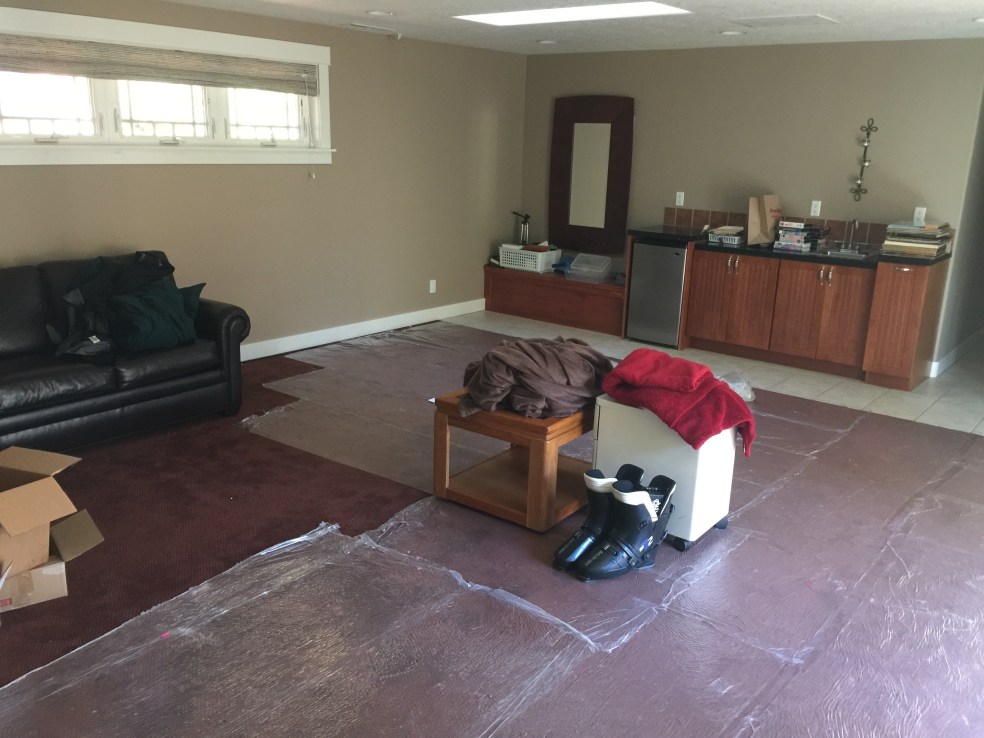


 Upon entrance, they make the “virgins” lie down in the dust to make sand angels, and then hit the bell to signify who the hell knows what. Once covered in dust, it coats your entire body, really more as a protective shield than anything, until you get home and take your first real shower.
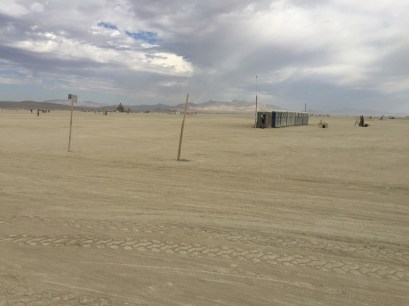 vehicles, only to find themselves in the open air, thinking they were free to explore all the delicious tastes and smells that only a group of unwashed hordes of people can provide, and then dropping dead from playa dust grainy enough to fill a fly’s lungs to capacity in a matter of seconds.
 The thing about Burning Man, however, is that it defies being described in simple terms. Indeed, virtually everyone who attends Burning Man comes away with a different perception and description of the event. It is truly whatever you make of it, or want it to be.


 depending on the quality of your living quarters. Those in tents without any kind of covering suffer the most. The sun is hot and the grainy wind is incessant. Indeed, the removal of our shade structure when our fellow campmates left on Sunday, before the burning of the Temple, caused our sub-camp to decide to leave as well. Subjecting the tents to the sun, wind, and dust was just more extreme than we preferred to handle after a week.


 . When she found out I was a virgin, I got the baggie, we exchanged hugs, and the world was wonderful.
 You can spin 360 degrees and see nothing but twinkling lights. The playa is filled with sound stages, both stationary and mobile. The esplanade that fills the gap between the campers and the playa is also filled with sound stages. Much of Night Burn can consist of walking or riding to various sound camps, dancing until you’re tired of that music, and then wandering off to start it all over again (even though the next camp has music that sounds largely the same). There were nights where we started Night Burn at sundown, and then staggered into camp at sunup. In between, our bodies never stopped moving, whether it was riding, walking, dancing, or even climbing up any one of the structures that made it possible.


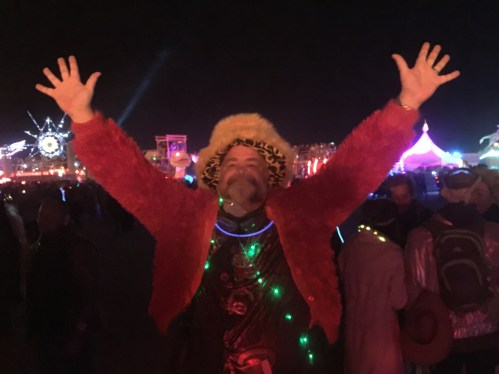


 of sharing without asking for anything in return, and most of the bikes are pieces of crap that probably don’t see much use outside of Burning Man. In any case, we shrugged, and walked home, no worse for the wear.
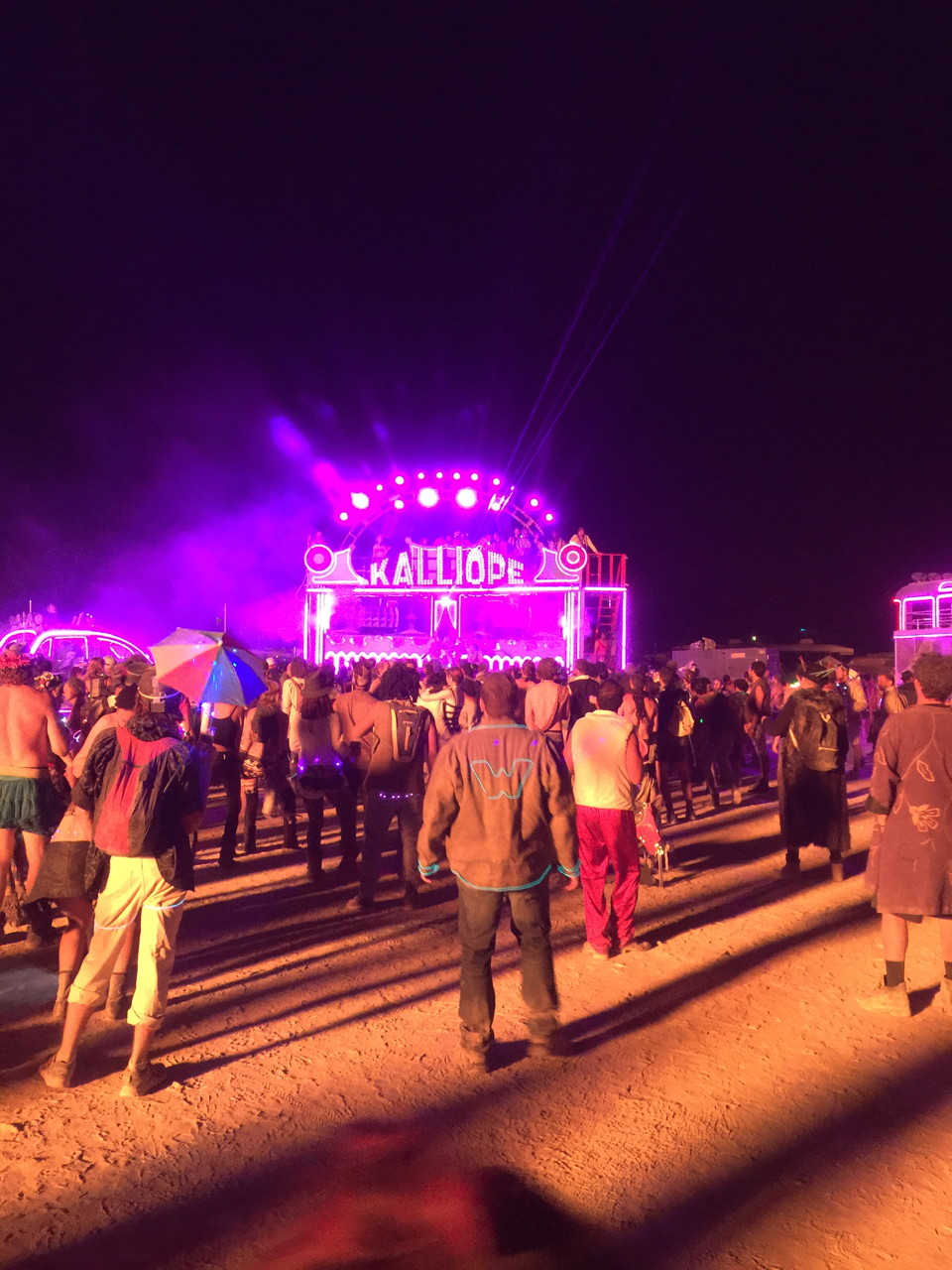





 Yes, the rumors are true. Carolyn and Kevin are retiring to Portugal this Fall.
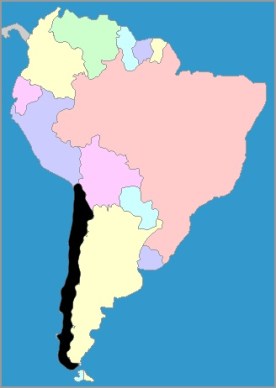
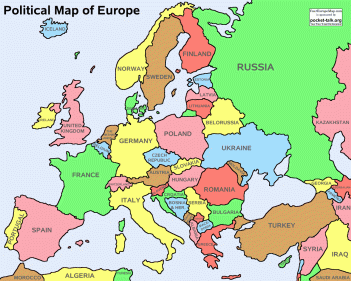 small portion of the Iberian Peninsula (the word “Iberia” originated from the ancient Greeks, and is rumored to mean “definitely not South America”), and sits there quietly, largely being ignored whenever people think of Europe, which is exactly why we thought it would make a great place in which to retire.


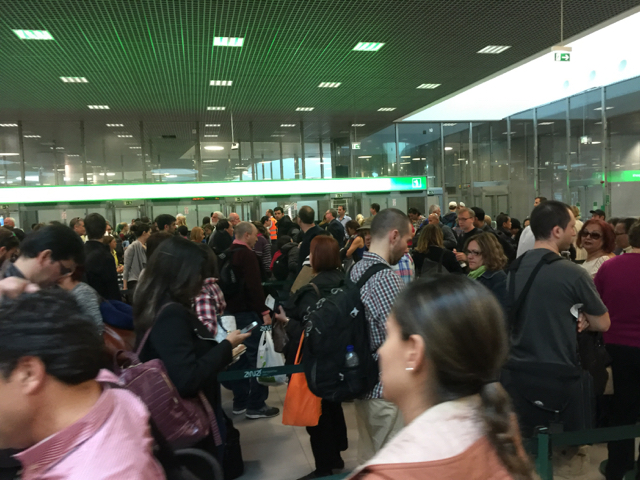


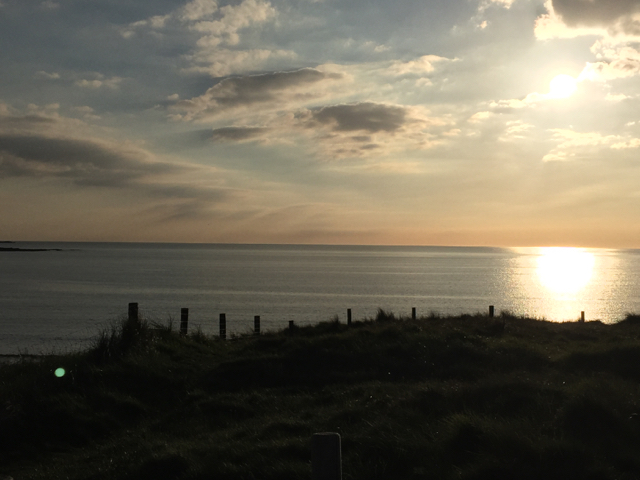


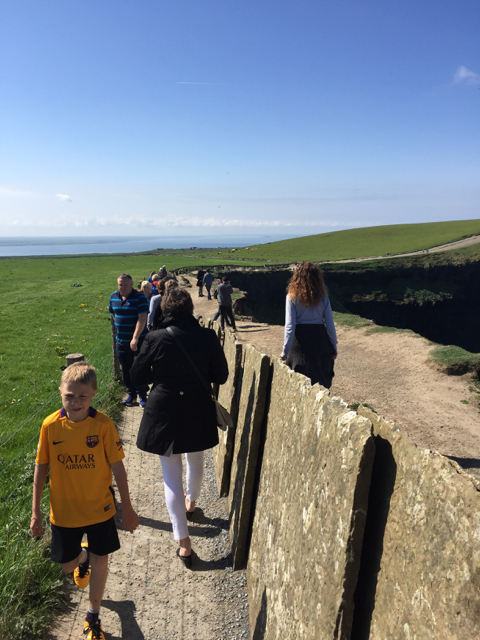
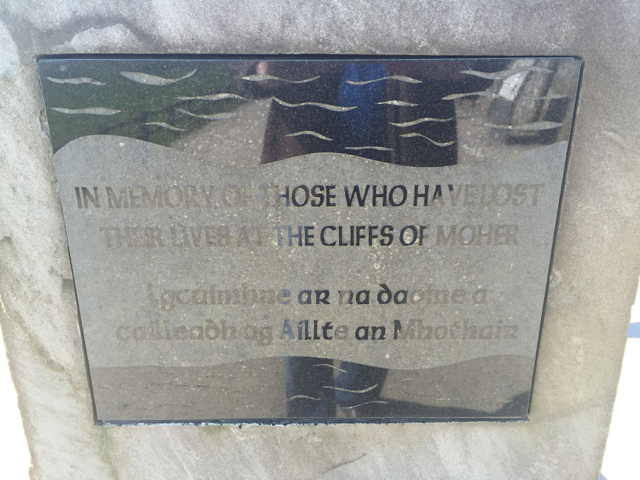
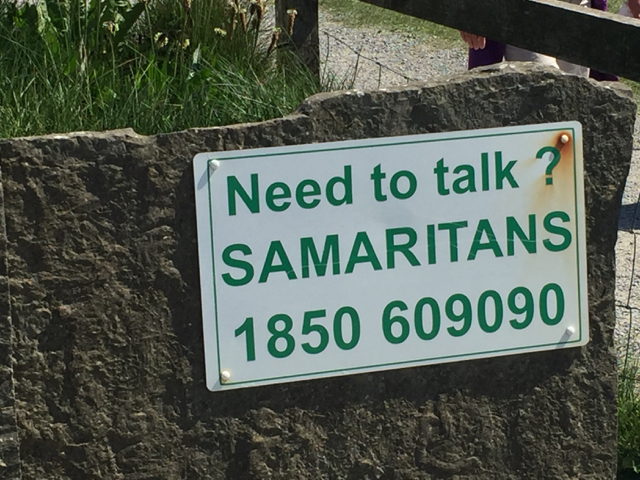


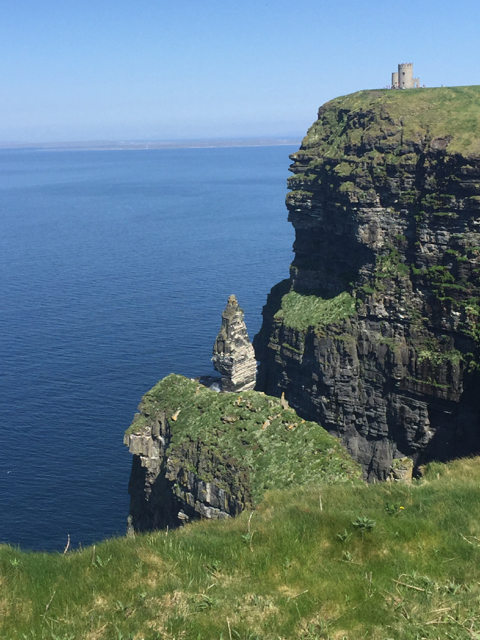



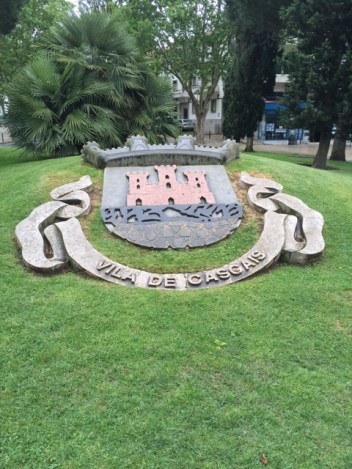 Their mass transit is pretty easy to navigate. We’re staying in an area called Belem, and all you have to do is catch the “15” train for a 20 minute ride to downtown. It costs a euro. For only a couple of euros, we also ventured in the other direction on a larger commuter train to a place called Cascais, which is a sort of resort area 30 minutes north of town. It has a sandy beach and a nice resort-y collection of shops and restaurants.


 Reginald’s Tower is the oldest urban civic building in Ireland, and the oldest monument to retain its Viking name. To this day, it remains Waterford’s most recognizable landmark, so that was our first stop.

 Just a block away were a few other attractions. One was the Waterford Crystal plant, which isn’t even a plant anymore since the company went out of business, but then was eventually purchased by Fiskars, and now they make their crystal in other parts of the world, so this is now simply a visitor’s center.


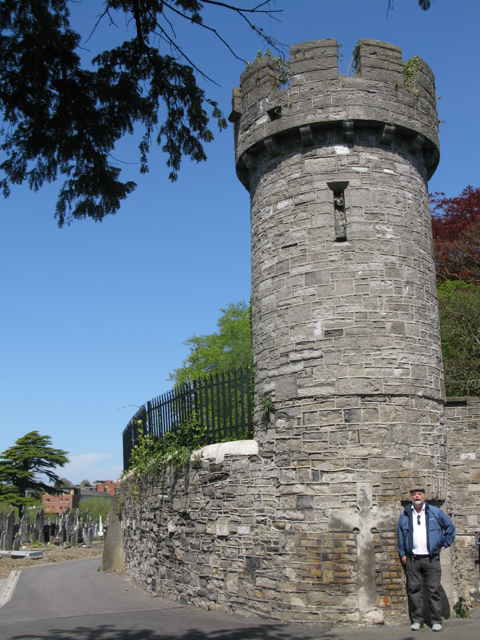


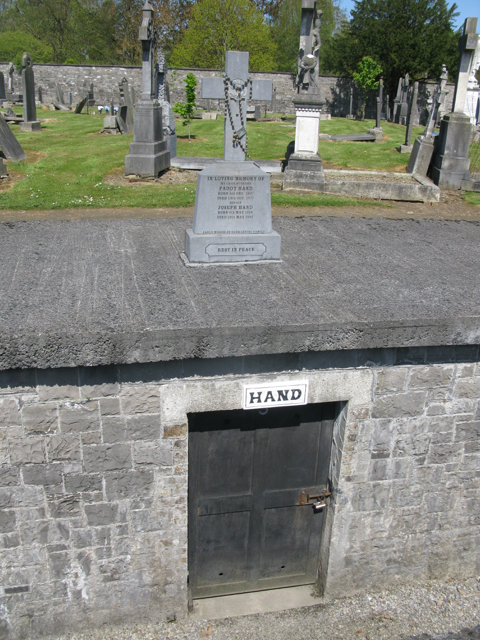


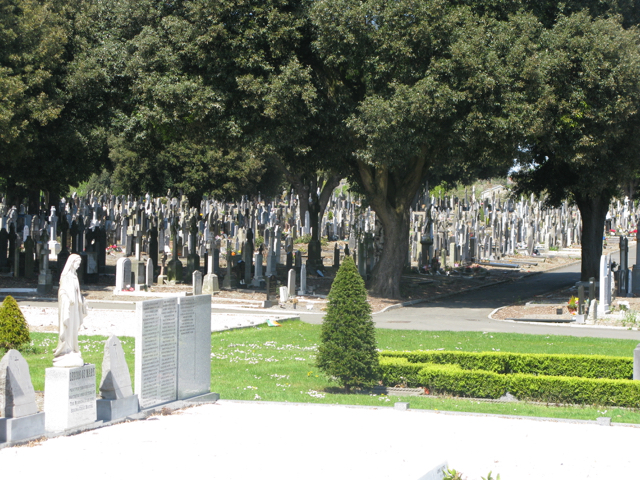


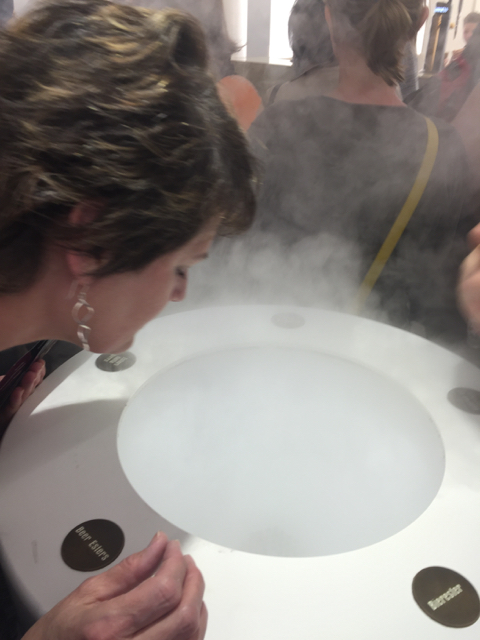


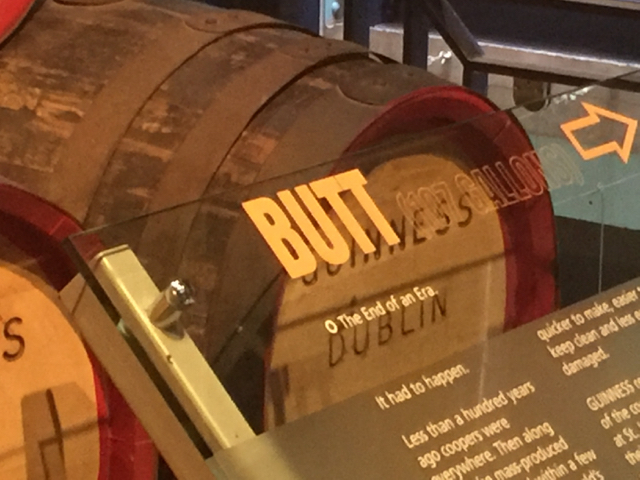
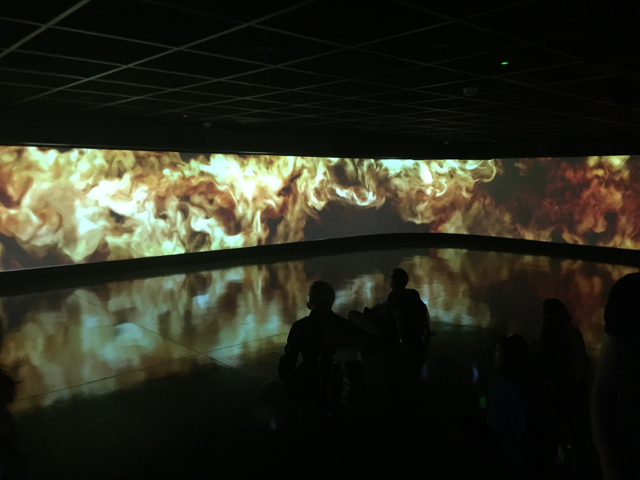


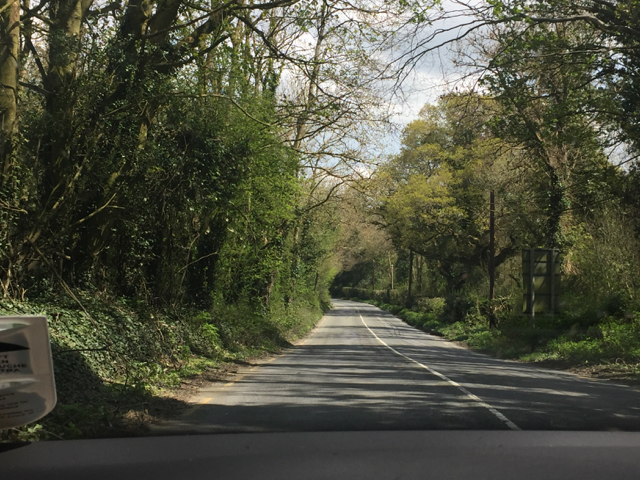


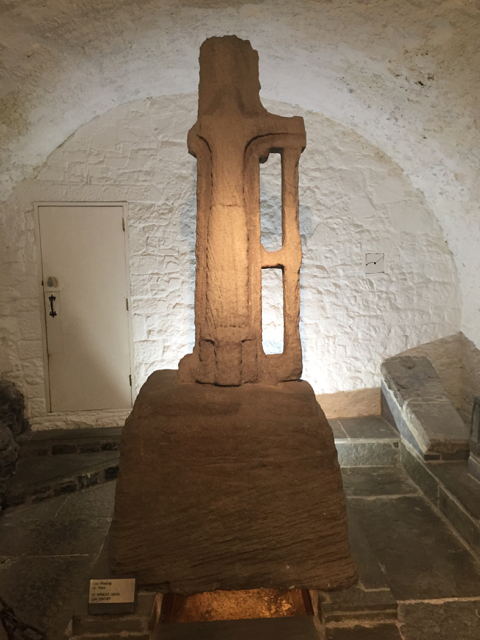


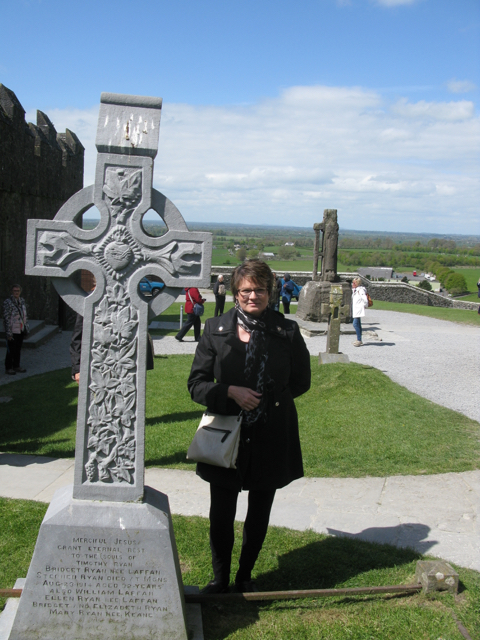


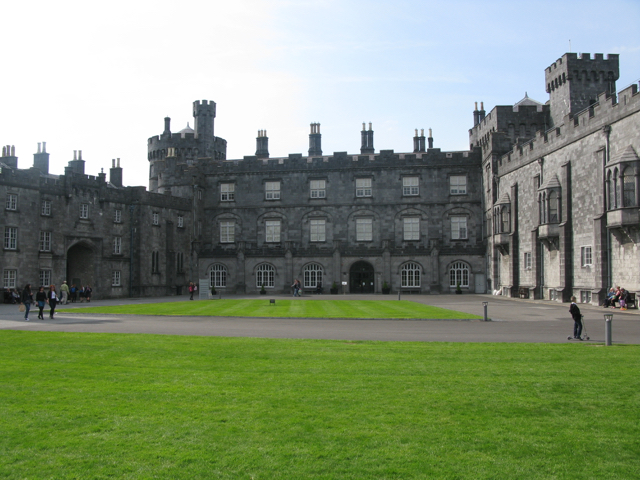


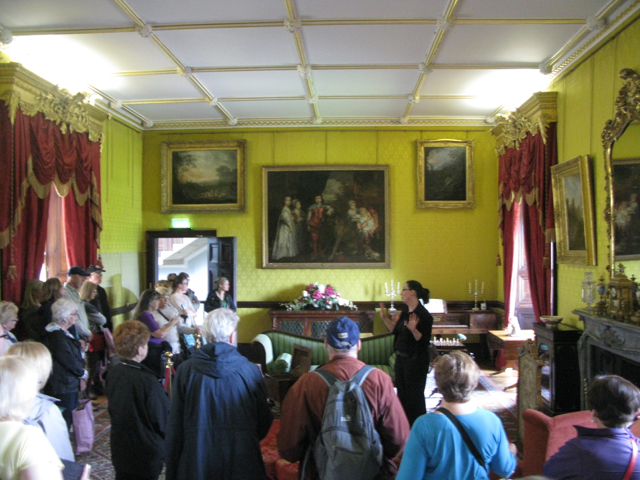


 Driving in Ireland presents some challenges. Aside from driving on the left and negotiating some incredibly narrow roads, in Dublin you have two additional things to contend with: traffic and non-existent street signs.