
 On June 6, 1944, the allies used the largest armada ever assembled to invade Nazi-occupied France.
75 years and three days later, Kevin & Carolyn ventured to the beaches of Normandy to see how well it was going.
As you can see below, apparently some of the troops didn’t get the memo that we won the war. They’re still out there bringing their vehicles to the fight.


One of these days they’ll pick up a newspaper and figure it out.
We ended up in Paris because of a delayed flight from Crete, as detailed in the previous entry. This was our second visit to the City of Light, so we decided to stay in the outskirts and rent a car. We looked over what we considered the “Tier Two” attractions in Paris, since we’d already been to the Louvre, the Eiffel Tower, and the Monument to Rude Parisians.
One of the places I’ve always wanted to see was the beaches of Normandy. The beach views are so iconic that when I sent a picture of one to my son Josh, who is well-versed in World War II lore, asking if he could guess where we were, he got it on the first try. I was hoping he’d still think we were in Greece, but he’s too smart for that.
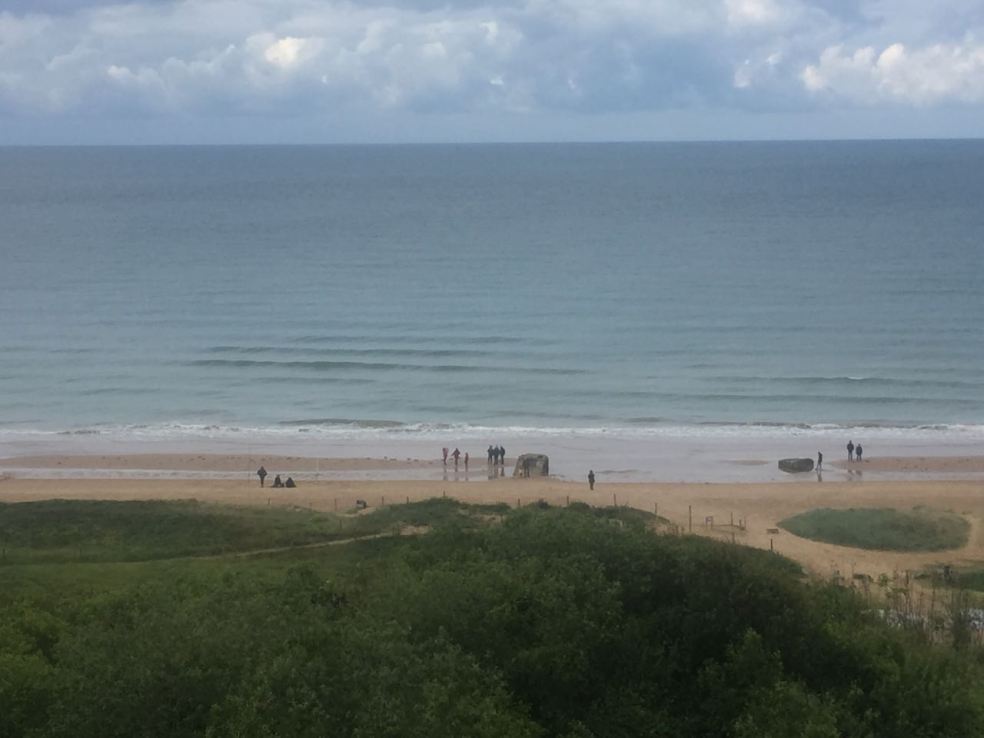 I gotta tell ya, the thing I didn’t expect was the emotional feeling of standing on the beach and looking over the water, picturing the mass of ships greeting the Germans who woke up that morning. You just can’t mentally picture that the same way on any other beach.
 It was and still is the largest seaborne invasion humanity has ever known.
 There’s an interesting monument on the beach: the Les Braves Omaha Beach Memorial.
It consists of three elements:
The wings of Hope
So that the spirit which carried these men on June 6th, 1944 continues to inspire us, reminding us that together it is always possible to changing the future.
Rise, Freedom!
So that the example of those who rose against barbarity, helps us remain standing strong against all forms of inhumanity.
The Wings of Fraternity
So that this surge of brotherhood always reminds us of our responsibility towards others as well as ourselves.
On June 6th, 1944 these man were more than soldiers, they were our brothers.


The sculptor said:
“I created this sculpture to honour the courage of these men.
Sons, husbands and fathers, who endangered and often sacrificed their lives in the hope of freeing the French people.”


This is the 1st Infantry Division monument. It stands in the middle of the area of Wiederstandsnest (WN62), which was one of the strongest defended positions in that area. It says, “In honor of the valiant Americans of the 5th Engineer Special Brigade who gave their lives in the assault on this beach on 6 June 1944.”

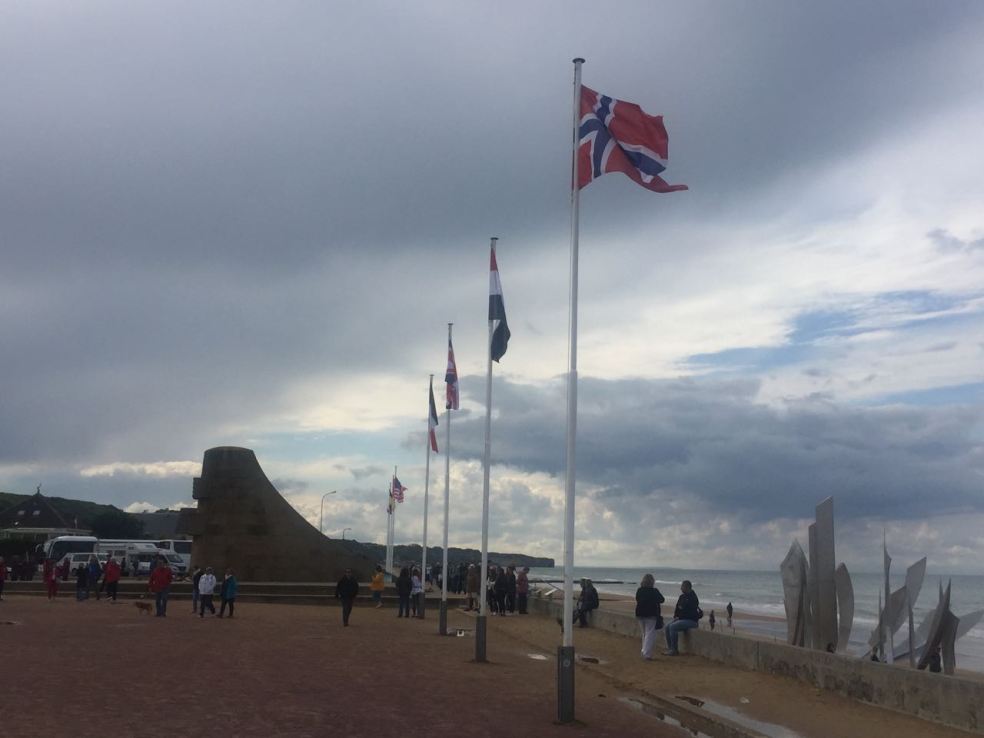 Flags of the allies stand guard over the Les Braves Omaha Beach Memorial.
 And yet another memorial, this one is called the Omaha Monument to the Allies. It says:
THE ALLIED FORCES LANDING ON THIS SHORE, WHICH THEY CALL
OMAHA BEACH, LIBERATE EUROPE – JUNE 6th 1944
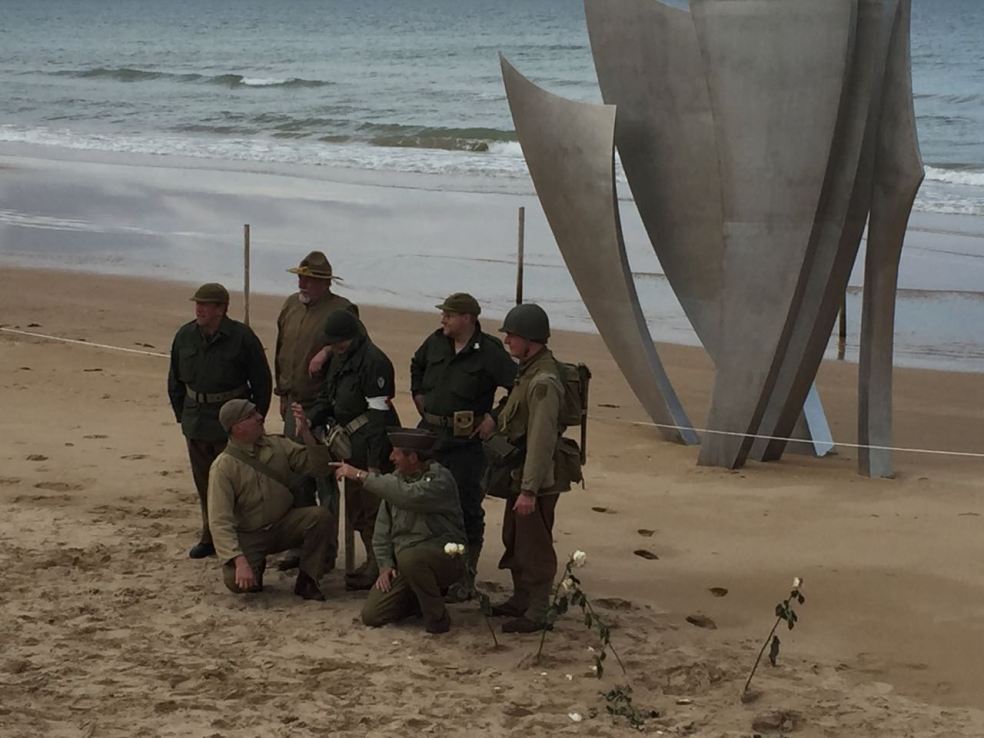 I presumed these soldiers weren’t a part of some sort of time-traveling expedition.
 Having not been there before, I don’t know if they were there for the 75th anniversary or if it’s a usual touristy thing.
 Other than this sign, and whatever leftovers we saw from the 75th anniversary celebration, it wasn’t particularly touristy otherwise. A few restaurants, but mostly the focus is on the monuments and the beach, which it should be.
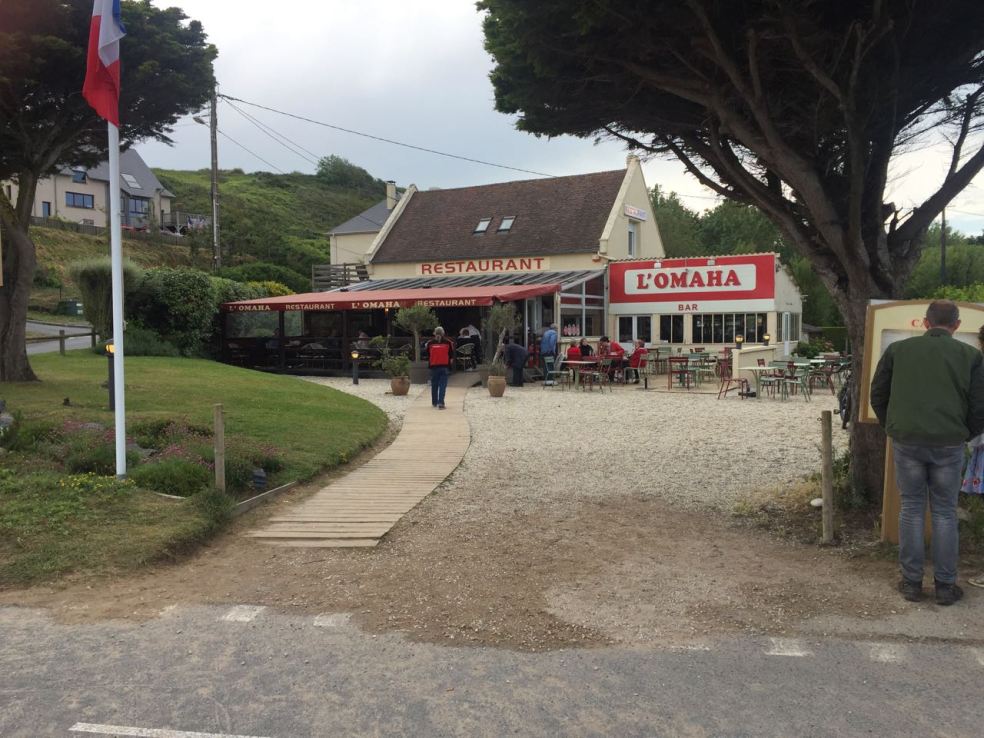 You can even eat at the L’Omaha. We checked the menu and it was overpriced, which was no surprise. What was surprising is that they didn’t offer Omaha Steaks.
 Lots of signs around the area give you an idea as to what transpired.
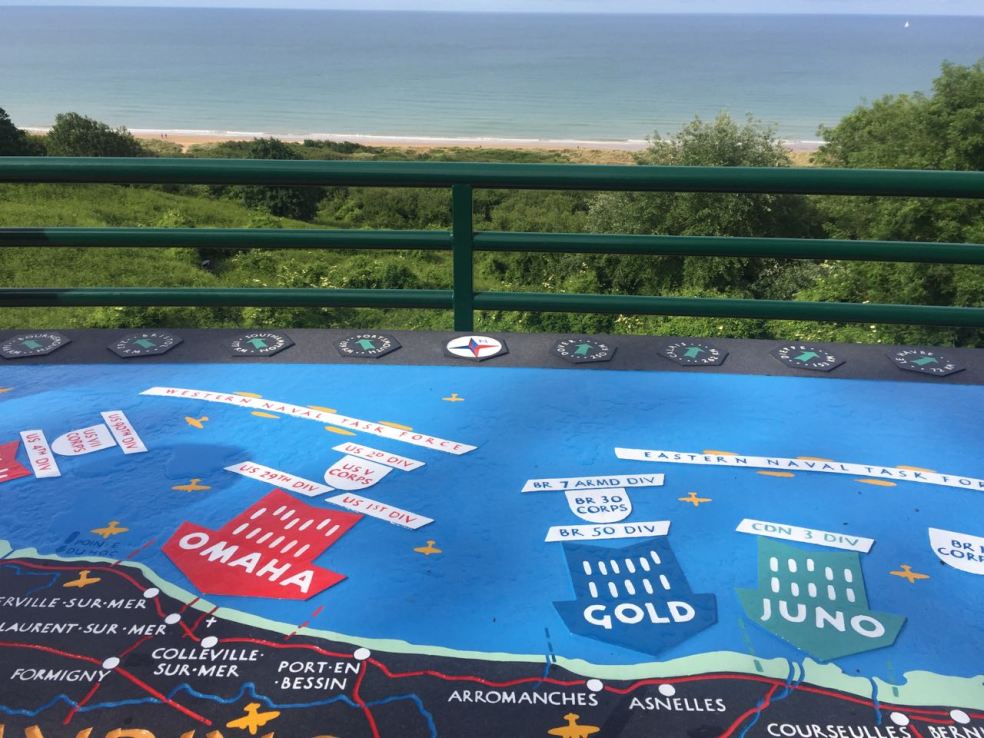 Including detailed maps of the invasion force.
 Or just a sign telling you you’ve found the right beach.


There’s a bunker/pillbox beneath yet another memorial. It was sobering to stand in a place where men died violent deaths.


Otherwise, we just spent a fair amount of time gazing over the water, being damned glad we were born after the disaster that was World War II. And all it took was one knuckle-headed demagogue and about 40% of a country that thought he was great… until they finally realized he wasn’t.
At least 70 to 85 million died in WWII, which was about 3% of the world population in 1940.


There’s a Normandy American Cemetery Visitor Center nearby with a water feature commemorating the beach.
 There’s also an Overlord Museum. I assumed it was put there to commemorate me.
 We didn’t go inside because we got there a little late in the day, but they have lots of vehicles outside you can take a gander at.
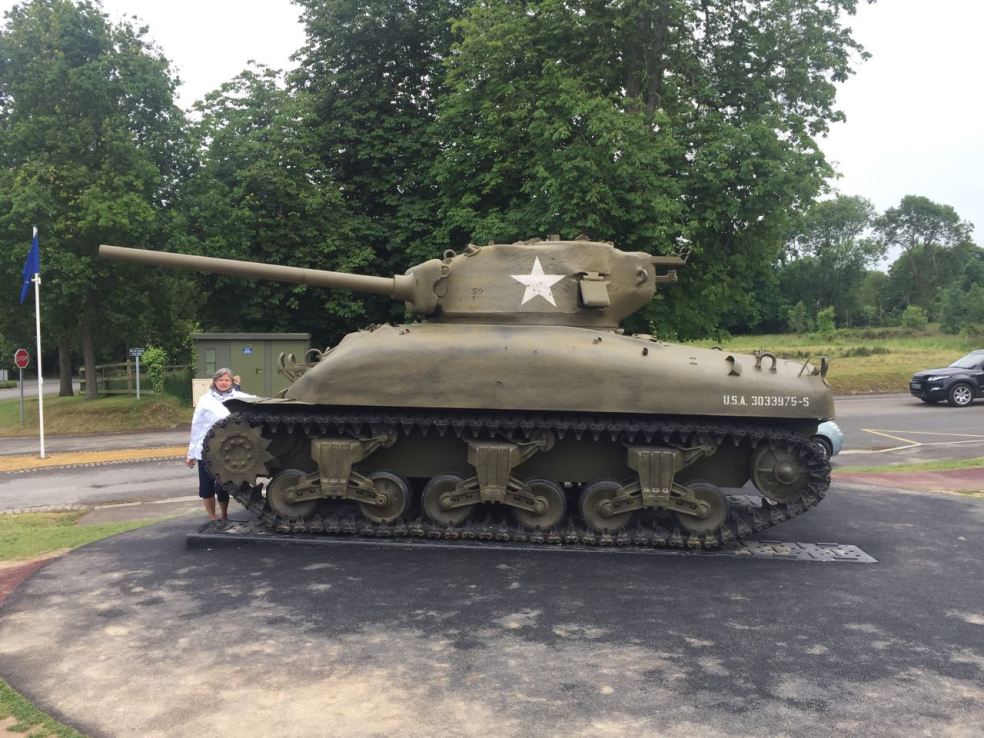 Carolyn’s tanked.
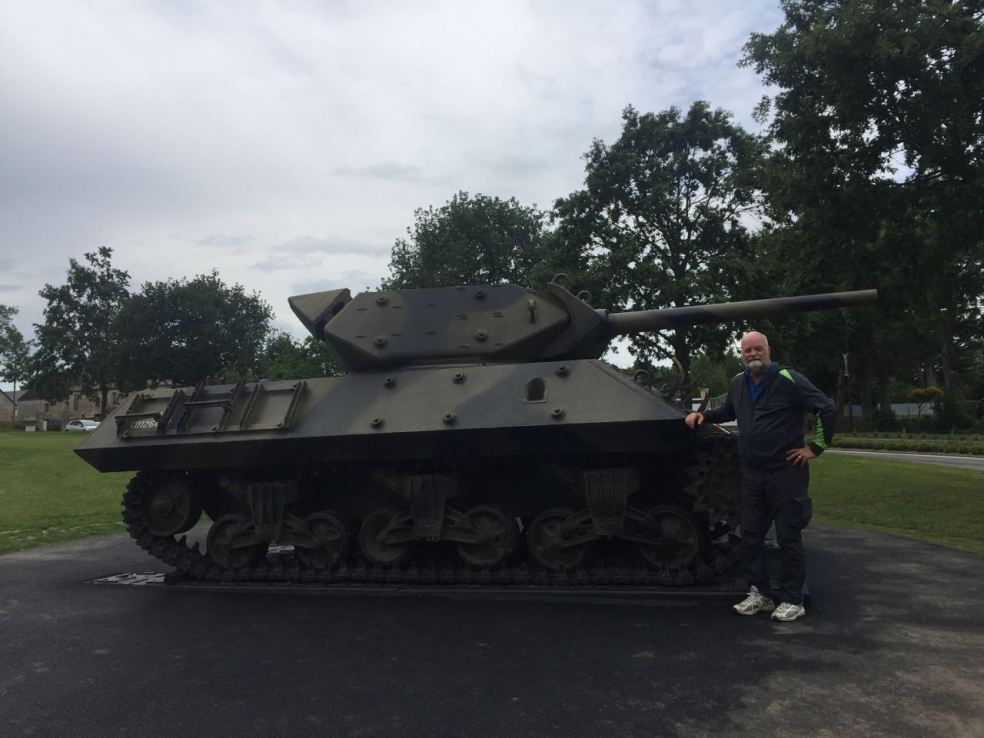 Which means I had to get tanked too.
 I’m pretty sure our car couldn’t roll over these.
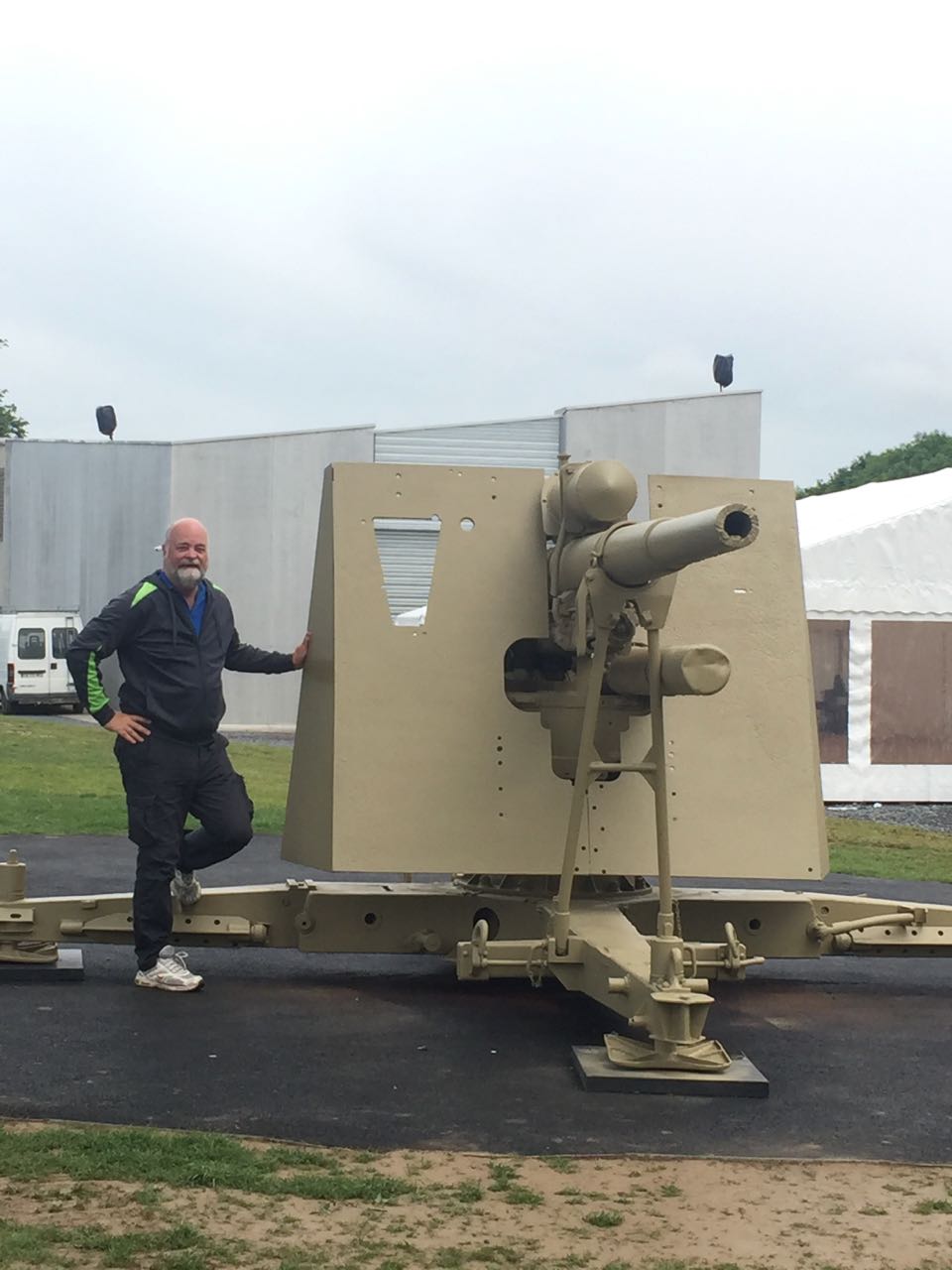 Putting the “art” in “artillery.”
 It’s all Greek –er French, to me.
 And then there’s the cemetery. It covers 172.5 acres and contains 9,388 burials.


Pictures don’t do it justice especially in terms of how the monuments cover the ground almost as far as the eye can see. It’s a somber place.
 And not one where we felt it very appropriate to take a big smiling selfie.
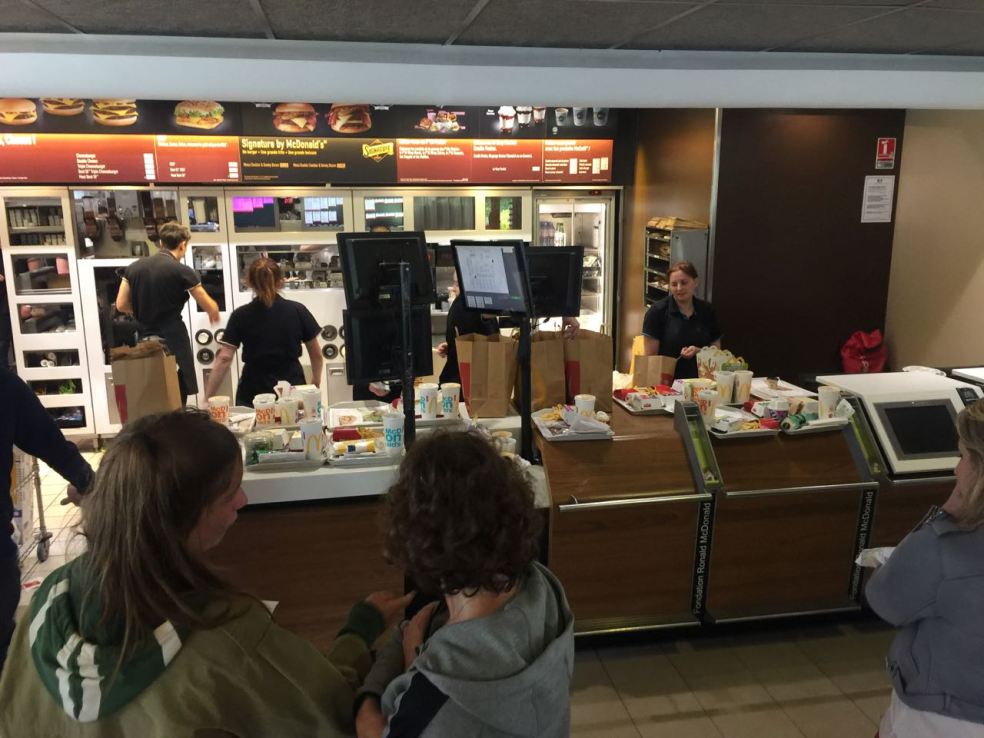 Once we left there we stopped at a -–gasp– McDonalds, just because we were in a slight rush and besides, we wanted to commemorate what the victory eventually brought the Europeans: McDonalds! Burger King! Disneyland! Heart attacks! The reason I took this picture is because the place was so busy, they were stacking food on the countertops. But it wasn’t just busy, it was haphazard. Probably these least organized McDonalds I’ve ever been to.
We don’t want another war just to straighten out how they do McDonalds in France…
 Actually, it should be: Phaistos then the City of Light.
 The only problem was that it was a Saturday night and the middle of busy season and some sort of convention was in town besides, so the travel agent simply could not find anyplace for us to stay in Athens. He even looked well outside of Athens, and then he got down to one-star hotels, and then to cardboard boxes on sidewalks, all with no luck. Well, to be fair, the cardboard box people never answered the phone.
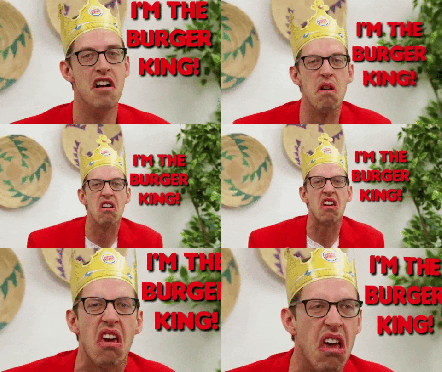 Oh, the joys of retirement! Of course, that still meant we had to spend the night in the airport, which is why you see me in the picture above with a sleeping mask on. We actually got kicked out of a Burger King where we had hunkered down, because you can’t have indigents sleeping in your restaurant, I guess, even in an airport.
 But before we get to Paris, there’s one last place in Crete I want to share, a place called Phaistos, or faistos, according to that sign.
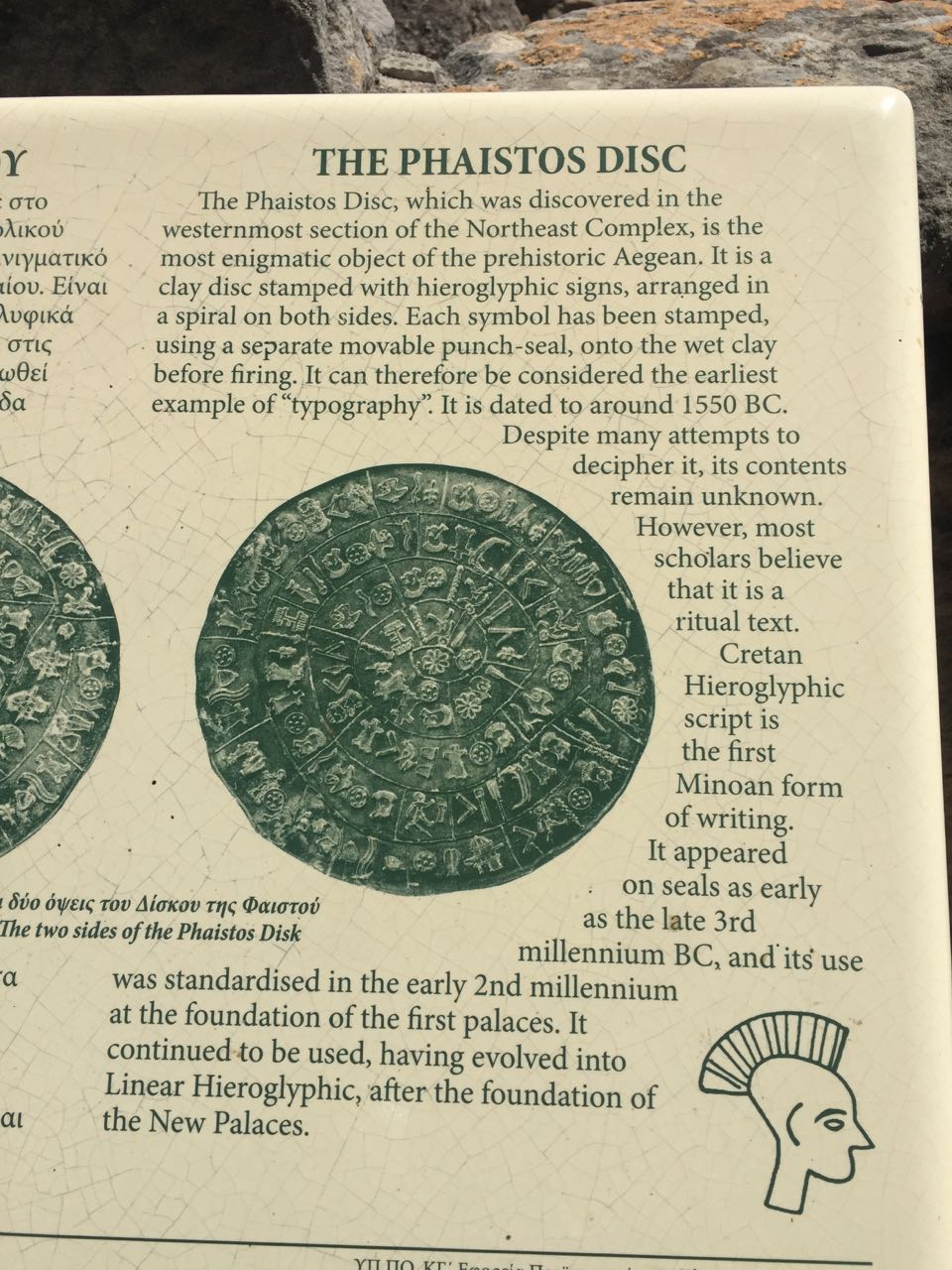 Phaistos is the place where they found the famous Phaistos disc, which may be where they got the name for it I’m thinking. Anyway, without the Phaistos disc, you may not have been able to read this blog, because they’re the ones who invented typography! Of course, I’m sure some of you may wish they hadn’t after reading some of my dumb jokes. Since the Phaistos disc has never been translated, I’m rooting for it to be a dumb dad joke.
 We hired a tour guide to show us all the particulars… oh, wait, that’s Carolyn. No wonder the tour was so cheap!
 Here’s a question for you: How many jars do you see here?


 And I thought stairs weren’t invented until the escalator.
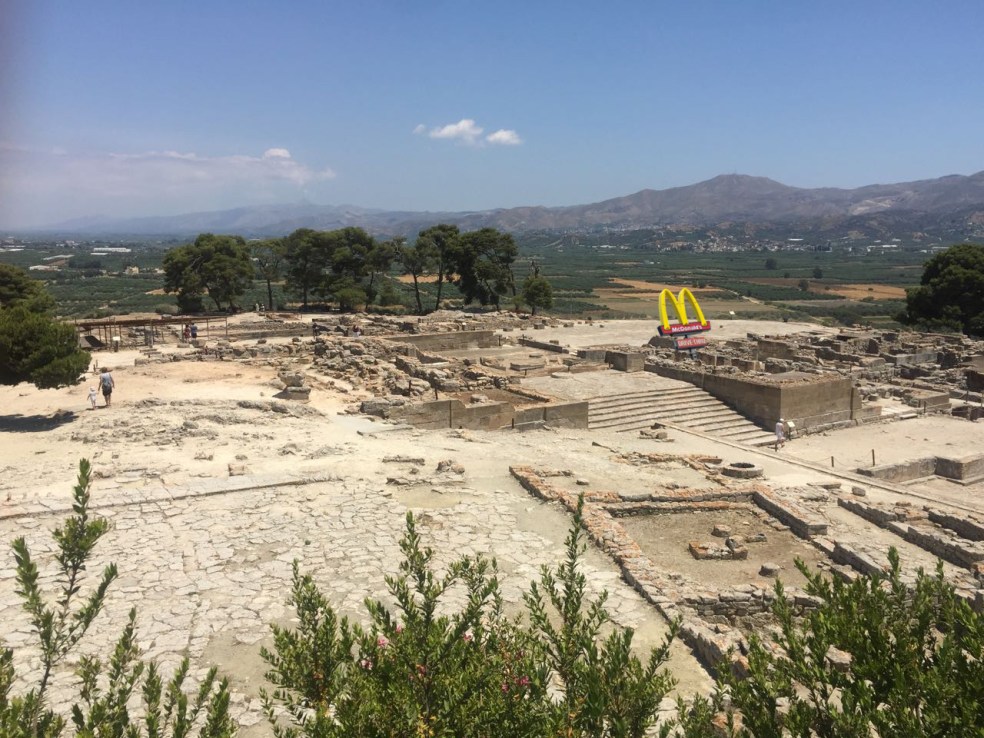 Here’s a view of some of the city from above. As you can see, the Minoans invented a lot of things we take for granted today, like fast food. It’s what ultimately led to their doom.
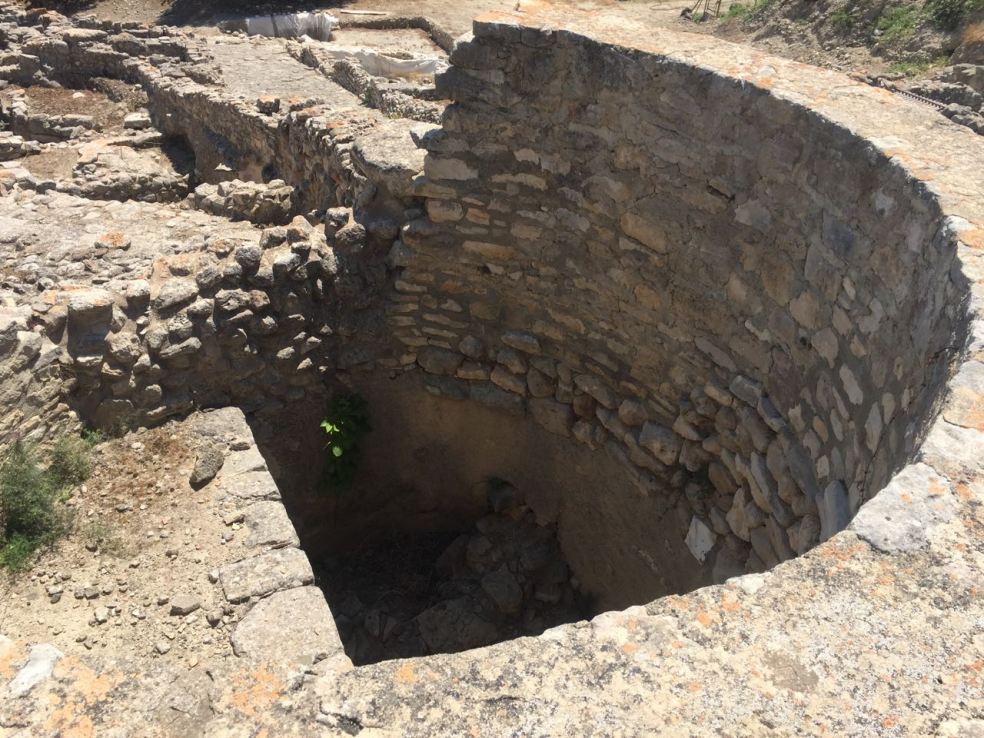 Phaistos was the home of Radamanthis, the brother of the king of Minos. In Greek mythology, Minos was the first King of Crete, and the son of Zeus and Europa. Every nine years, he made King Aegeus pick seven young boys and seven young girls to be sent to the labyrinth to be eaten by the Minotaur. Sounds like a lot of bull to me.
 Phaistos is the second largest palace of Crete after Knossos.
 Just like the other palaces of Minoan Crete, the palace was destroyed three times. This was rebuilt on the ruins of the old buildings in 1700 BC.
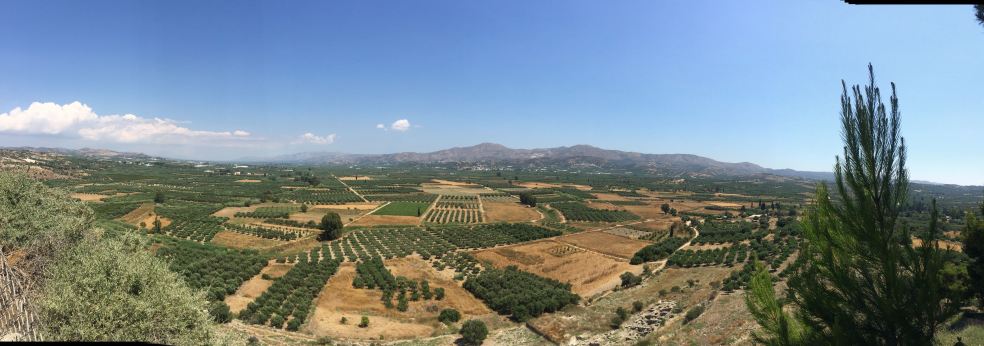 Despite its age, we were impressed at the sophistication of the layout, as well as the spectacular views afforded from its hilltop location.
 The palace continued to be used even after its destruction in 1400 BC. It gradually lost its power until nearby Gortyn finally destroyed it in 200 BC. And no, Gortyn wasn’t the name of one of the minotaurs, it was another city/state on Crete.
 This room rocks.
 Pink Floyd would be proud.
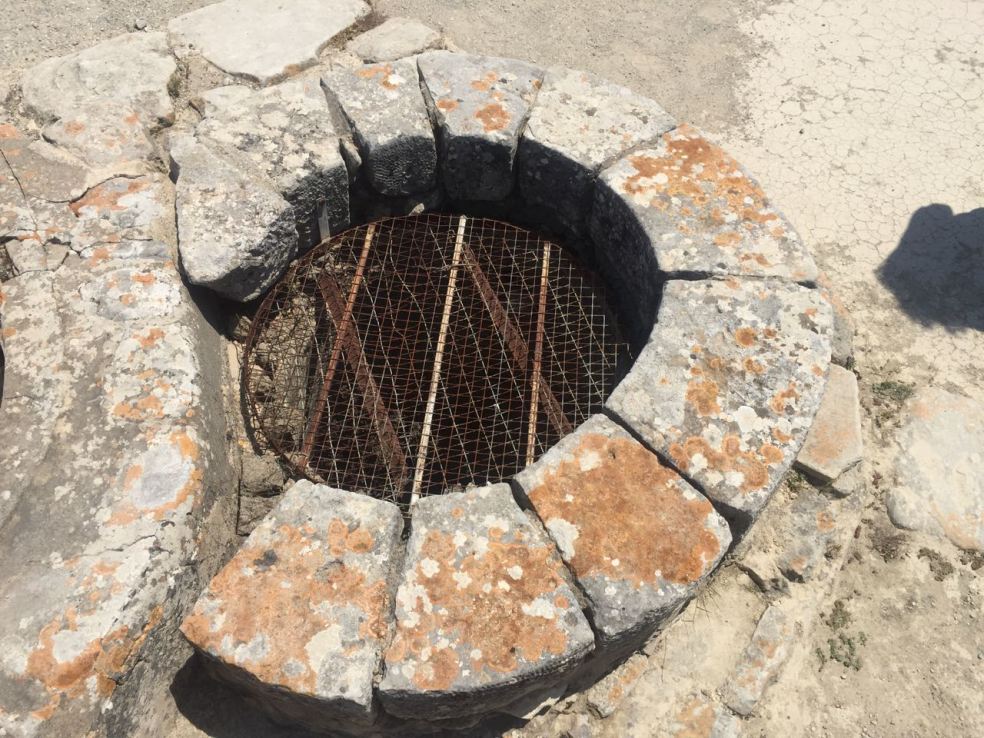 Well: that’s a deep subject.
 Why is it every hole is used as a garbage can, even in such an historical area?
 In addition to the palace, they had a theater with a great view of both the palace and the panorama. There are no records as to which movies played in the theater.
 Carolyn does her best Rocky impression.
 This are the queen’s quarters. The fact that archeologists can figure stuff like that out will always impress me. I woulda thought it was the TV room.
 … A few days later, we were sleeping in an airport waiting for an early morning flight to Paris. I was embarrassed to be seen with a sleeping mask on, so I wore the sunglasses to disguise myself.

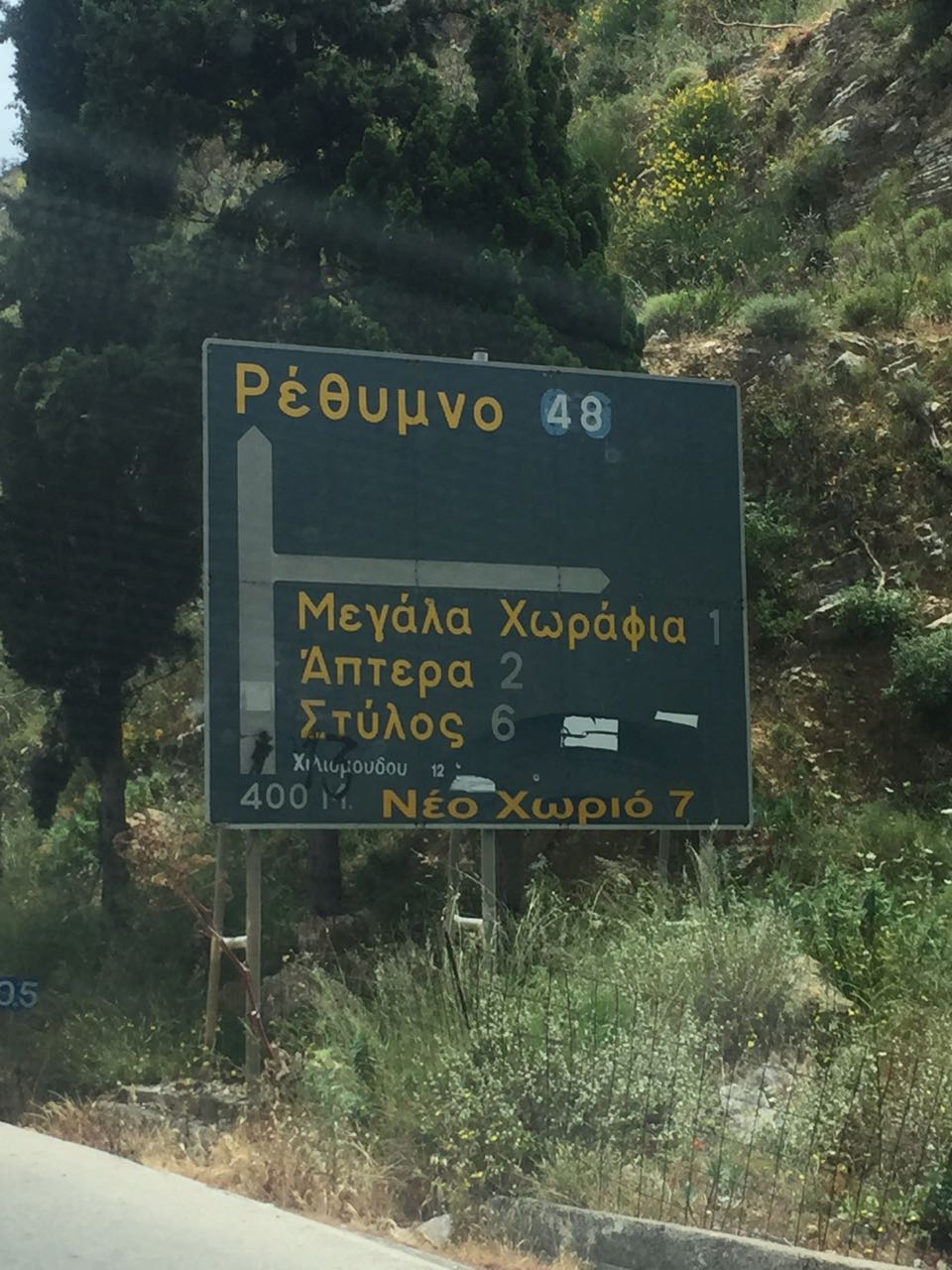 Driving in Crete was a minor challenge since we couldn’t make heads nor tails out of the signs.
 Especially the ones that were all shot up. We learned there was at least one village that became uninhabited after an all-out war between another village due to some sort of revenge feud. I’m not sure Cretans should own very many guns.
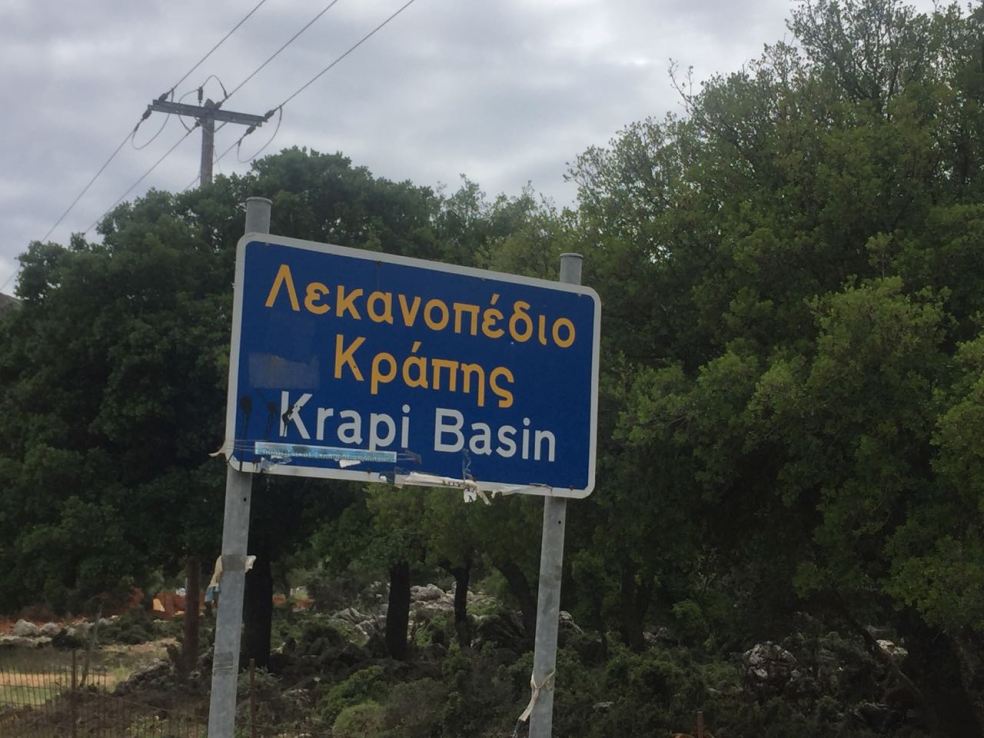 Some of the signs direct you to crappy places.
 While others direct you… everywhere.
 The many canyons and ridges make for some interesting roads.
 We occasionally ended up on dirt roads with no guardrails, often with drops up to, I don’t know, I’m estimating here, about a million meters straight down? One dirt road the GPS took us down was so narrow and dangerous we carefully backed up and went back the way we came.
 I’m not sure if this sign means be cautious about the cliff or the guy with the gun.
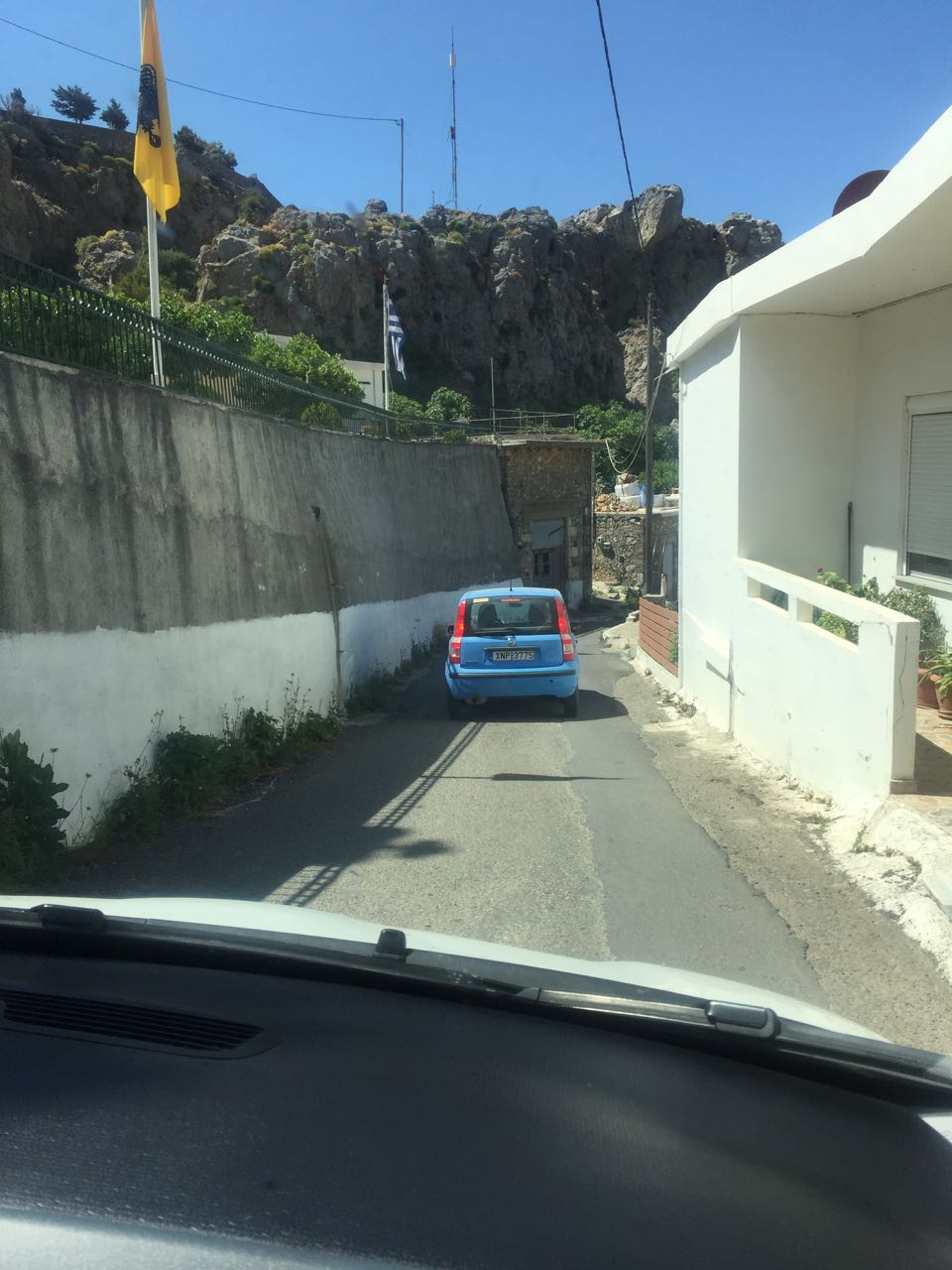 Many of the towns have two-way roads that aren’t any bigger than a one-lane. You just have to wait your turn (or sometimes back up… or maybe sacrifice your side mirrors) if you spot a car down the road.
 Even on the highways, they are a bit creative. This two-lane highway essentially functions as a three or four lane highway because everyone who isn’t passing rides the shoulder.
 I’d hate to be the guy who dented that guardrail: on the other side is a drop straight down to death. Many of the roads would have done the Road Runner cartoon proud. I could imagine something plunging off the side… and then I’d hear a long, fading whistle… and then a distant poof! as Wile E. Coyote meets his temporary doom.


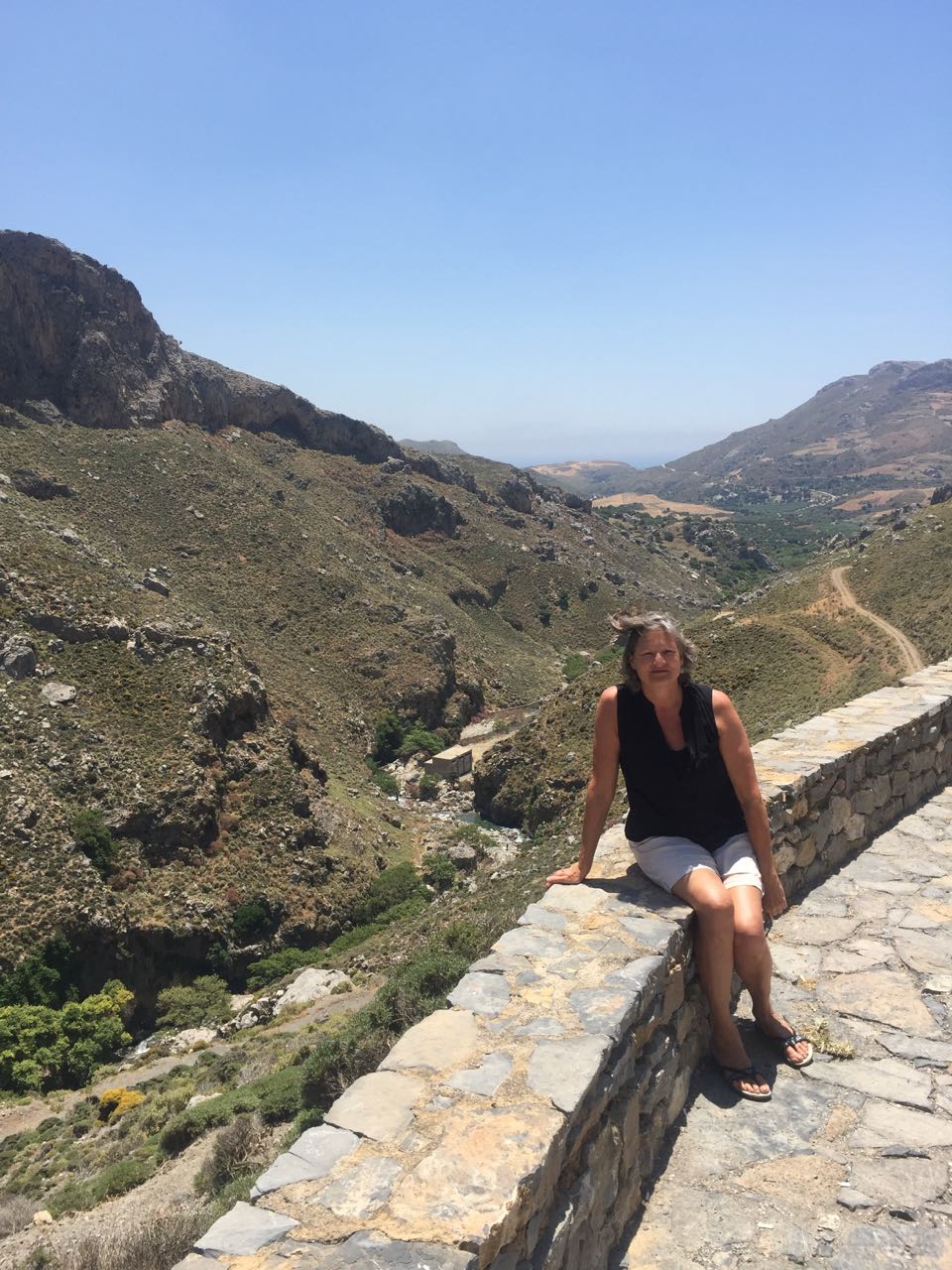 Sometimes it was better to just sit by the side of the road. But the many sightseeing areas also have huge drop offs, sometimes with no barriers. If she would’ve fallen over this one, she just would have just rolled downhill like a snowball in an avalanche instead of a straight plunge to instant death. So it’s possible she could’ve survived. I’m happy to report she didn’t test the situation.


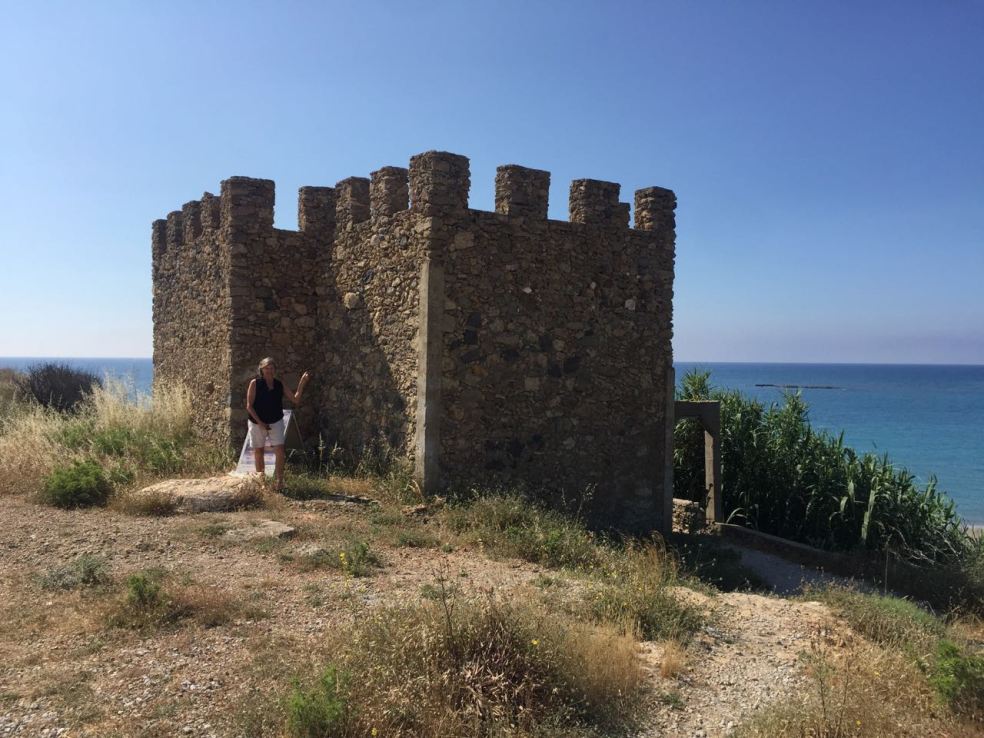 Even in ancient Crete, hobbits obviously built their own castles.
 There are two interesting beaches we wanted to see: Balos Lagoon and Elefonsi Beach. They are both quite out of the way, with lots of tiny towns and narrow roads, including this one-way tunnel.
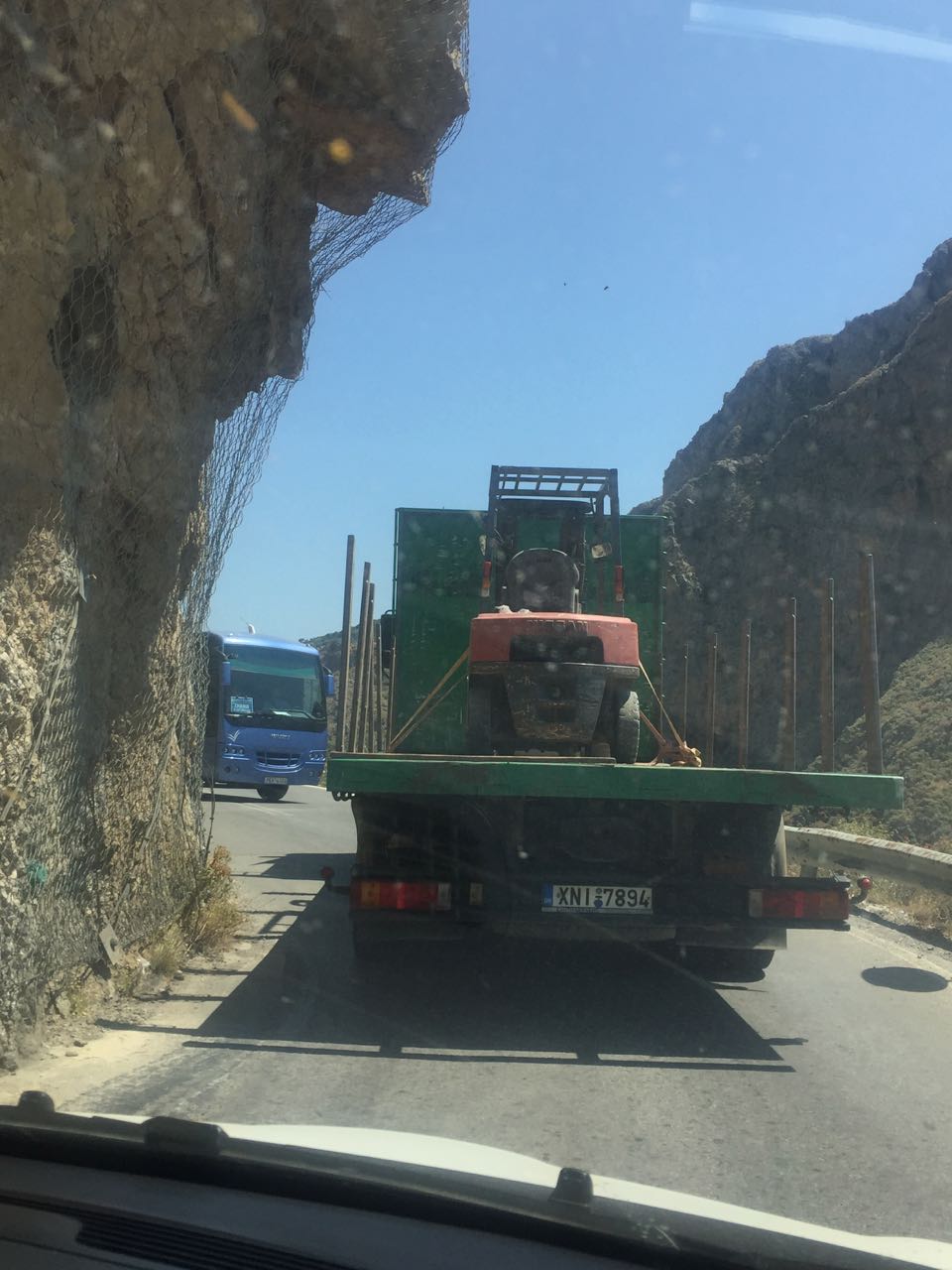 When you get behind a truck like that, you ain’t gonna pass him anytime soon.
 The road to Balos Lagoon is one of the most treacherous roads we’ve ever been on… on an island with a lot of treacherous roads.
 There are no guardrails next to a cliff called, “And we’ll never hear from you again.”
 A few natural barriers might help if you find yourself wrestling control of your vehicle with a madman. Carolyn rarely has to do that.
 Here it looks like a two-lane road, but there were long stretches were two cars couldn’t pass without one of them having its wheels halfway over the cliff.
 The goats keep a lookout to make sure everyone drives safely.
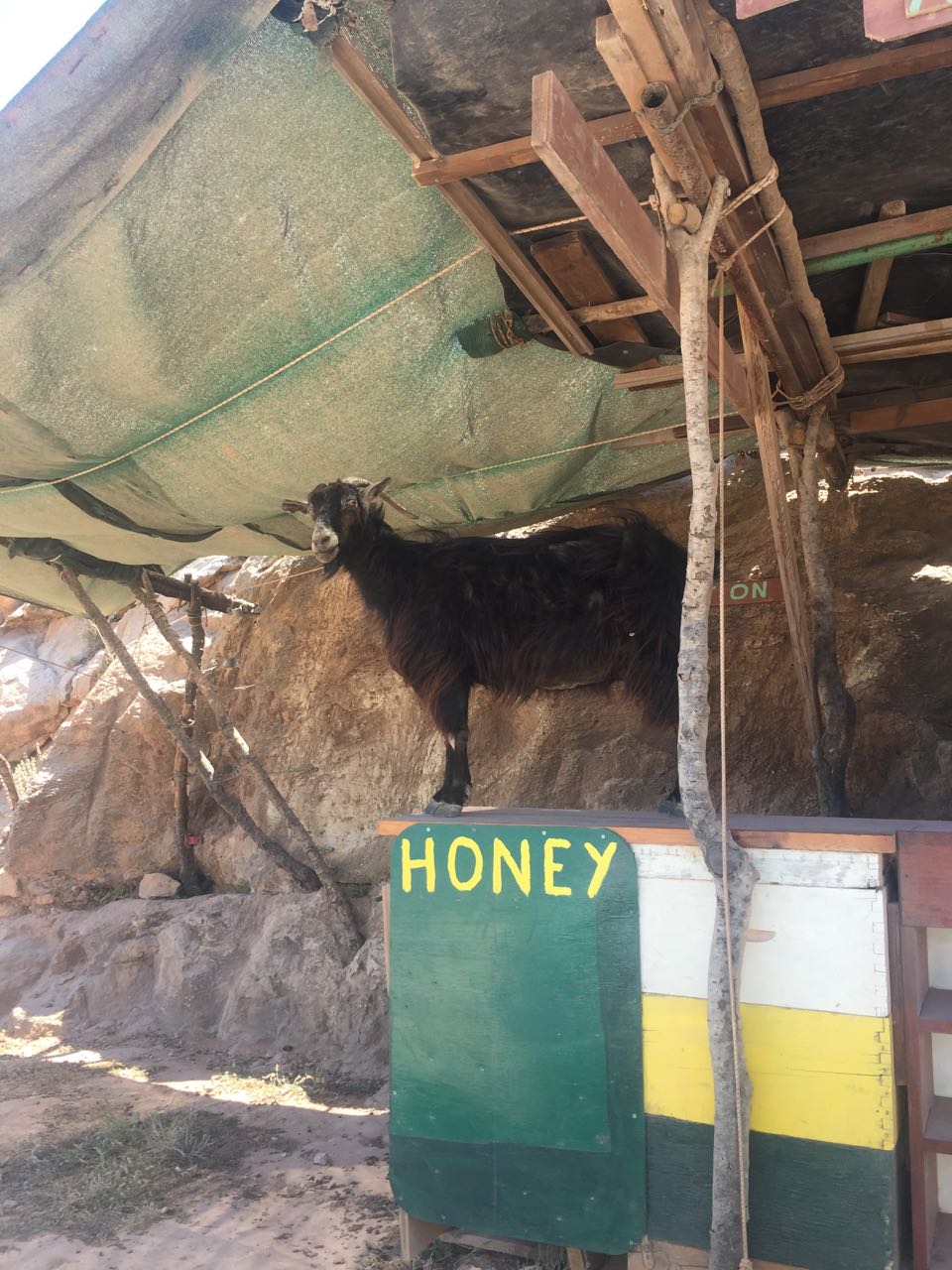 They even man (goat?) the roadside stands selling the ubiquitous Cretan honey.
 We just had to pay the occasional goat toll to be granted passage.
 There’s one lane, and then a goat lane. I guess it helps to be a little sheepish when navigating that road.
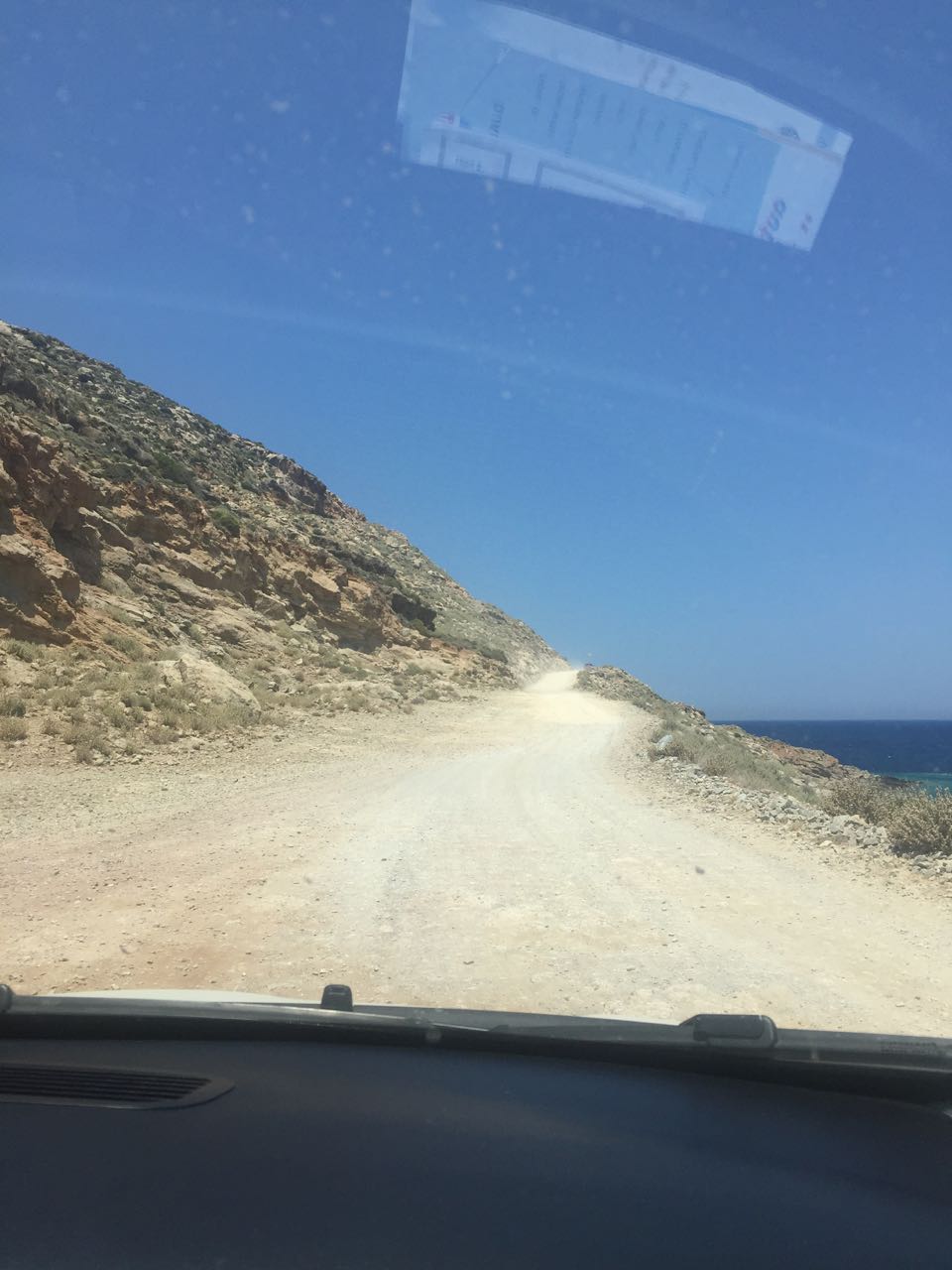 It went on for a good number of miles. I’d guess it took us about a half an hour to get all the way there.
 This gives you some idea why.
 This looks like a traffic jam, but is actually just cars parked ahead of the actual parking lot. It was our first clue that the place was gonna be packed.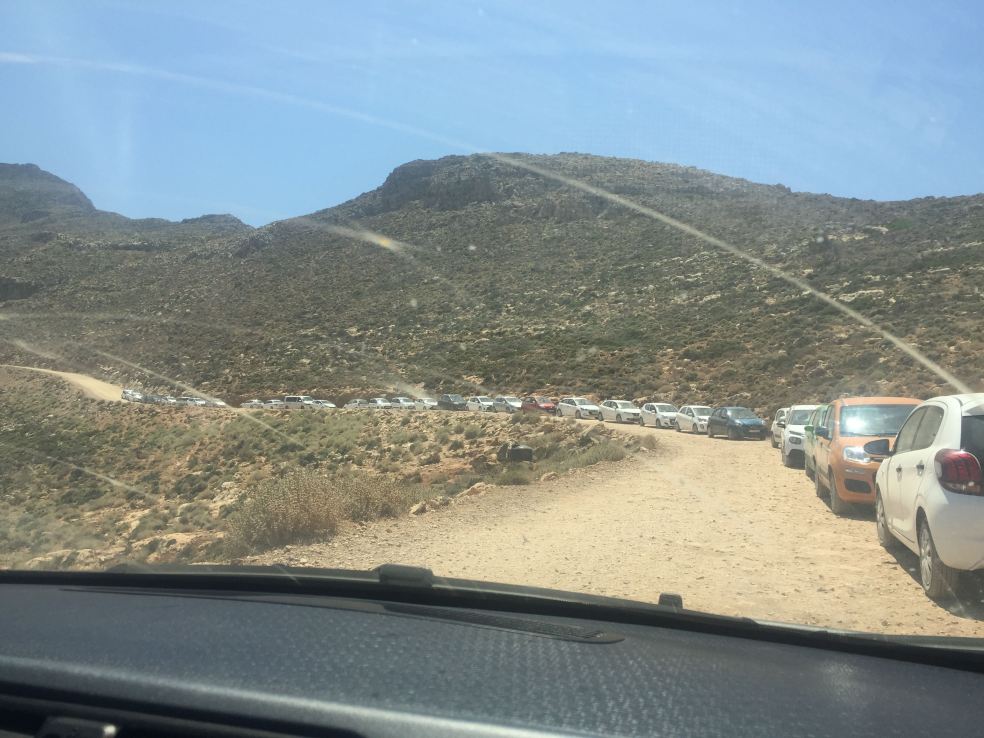
 One foot from Pancakeville.
 Upon our arrival at Balos, we were of course greeted by the Welcoming Goat.
 Now he’s off to greet the other new arrivals.
 Time for a cigarette break.
 Once in the parking lot, we discovered it was going to be a long walk just to get to the beach. So, while we didn’t have a lot of time owing to our impending flight that afternoon, these intrepid explorers made the trek.
 The path was marked for us by the considerate goats.
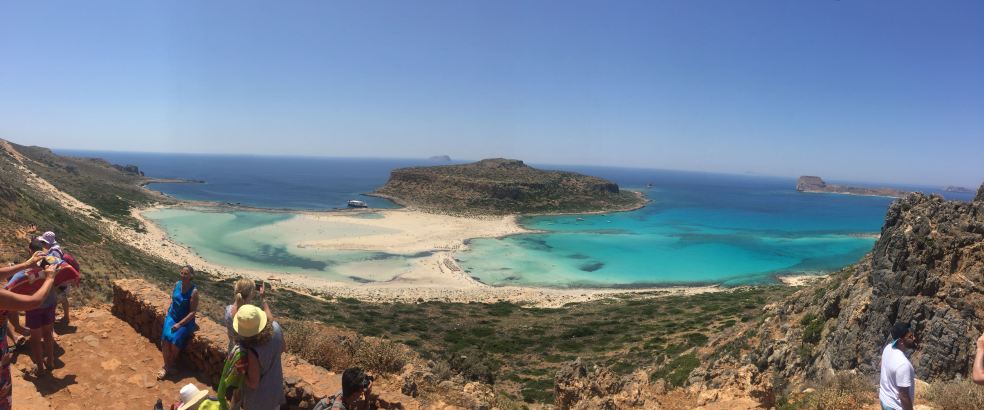 Once we crested the final hill, we were greeted with a sight that elicited oohs and ahs.
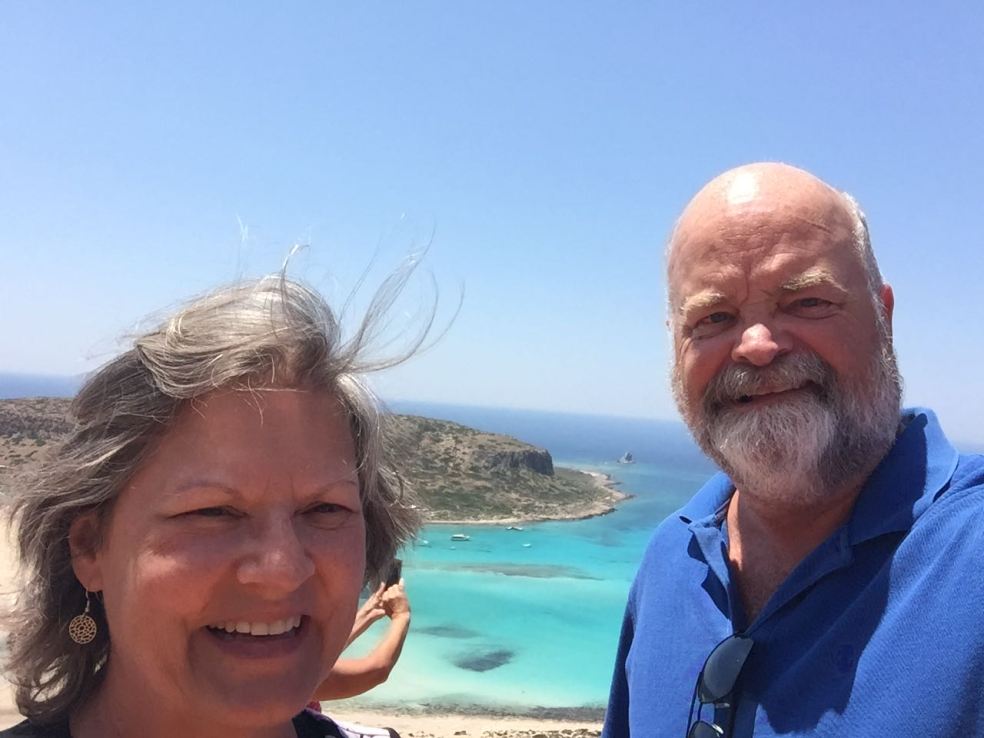 I think we’re mostly happy here that we actually made it, risking life and limb as well as a long, hot walk.
 Of course, the other thing we discovered was that the already-long walk was just to a vista of the lagoon. You have to walk all the way down there if you want to get to the beach.
 We encountered a few people returning, all of whom were desperately out of breath after making the long, arduous climb.
 So we settled for the gorgeous views of one of the most beautiful lagoons we’ve ever seen.
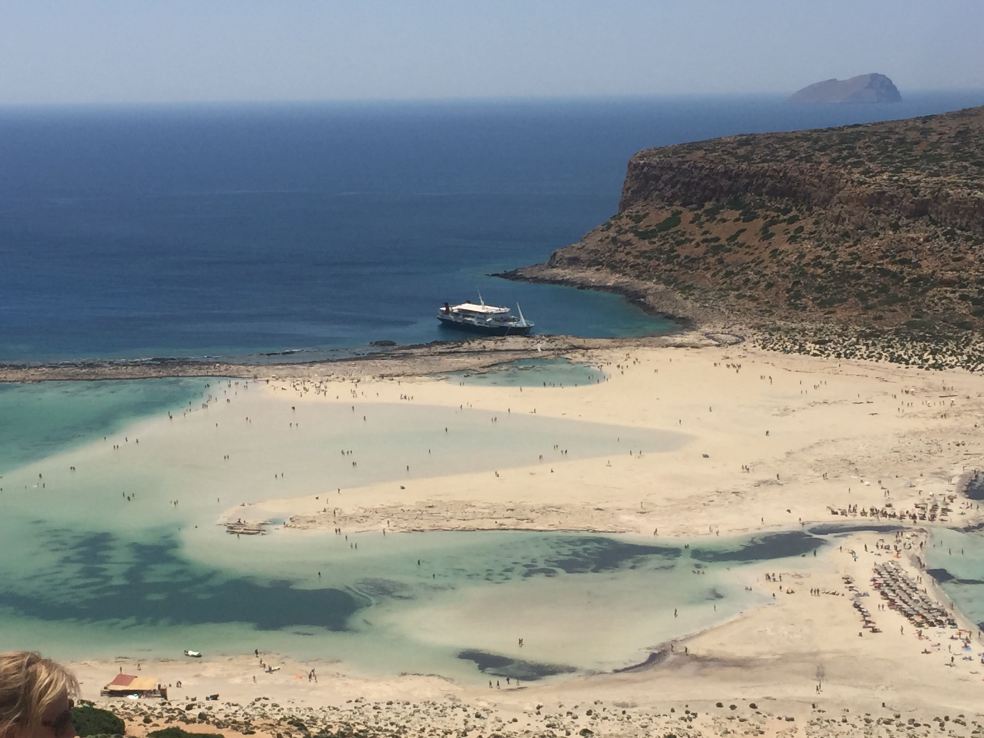 The smart people take a boat to the beach instead.
 Everyone else just admires the views and laments the fact that they’re not twenty-years-old anymore. This twenty-something is simply a wimp.
 The other beach we wanted to see is called Elefonsi Beach. Not long ago, Elafonisi Beach was a secret known only to some locals on Crete. Then, in 2014, TripAdvisor named it one of the world’s top 25 beaches, and all tourist hell broke loose.
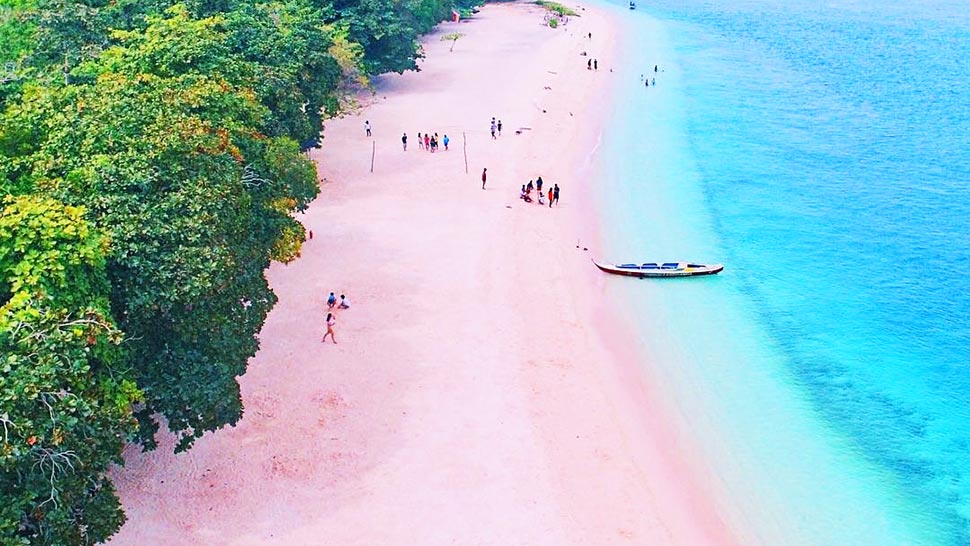 We thought we were going to see something like this beach in the Philippines.
 Instead, all we got was this.
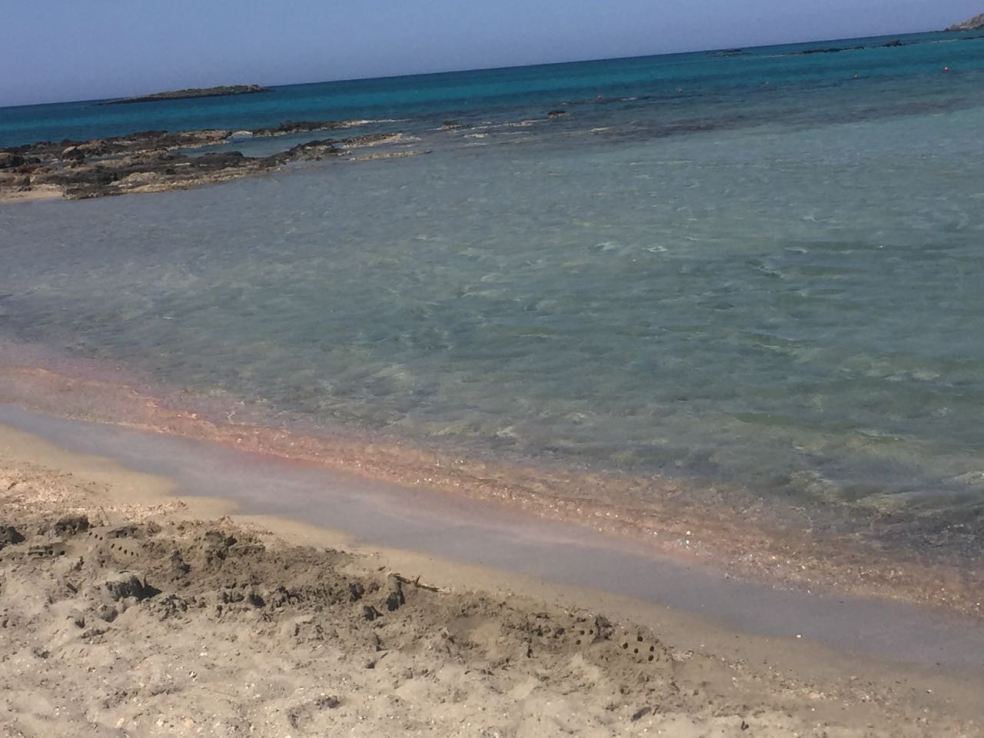 It’s really just a little tinge of red on the edge of the water. I think we were sold a bill of goods!
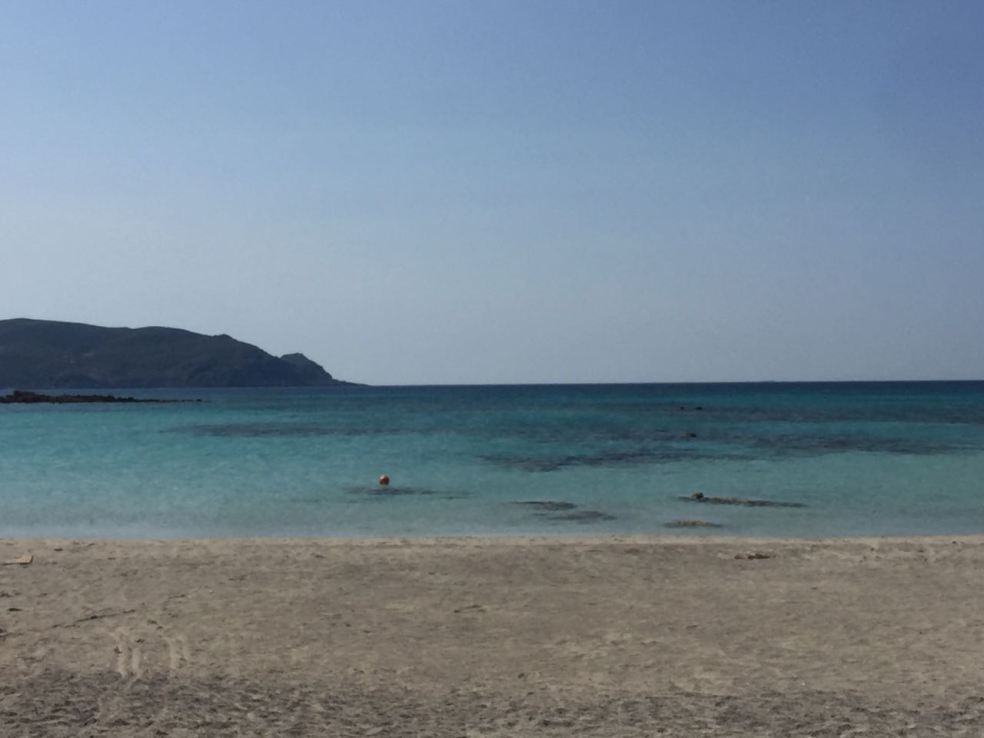 I mean, it is a nice beach and all…
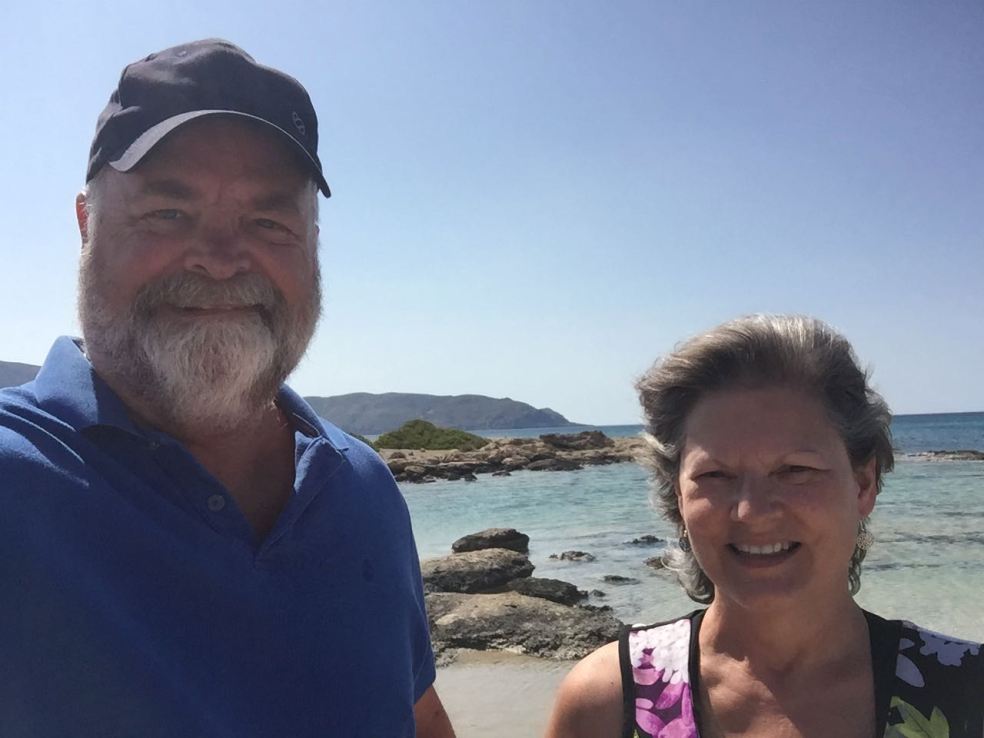 Appropriate for a selfie or two…

 And they have some nice flags.
 And truthfully, it is a pretty beach, and well worth spending a day there. We were only there to take a quick look because we didn’t want to miss our flight.
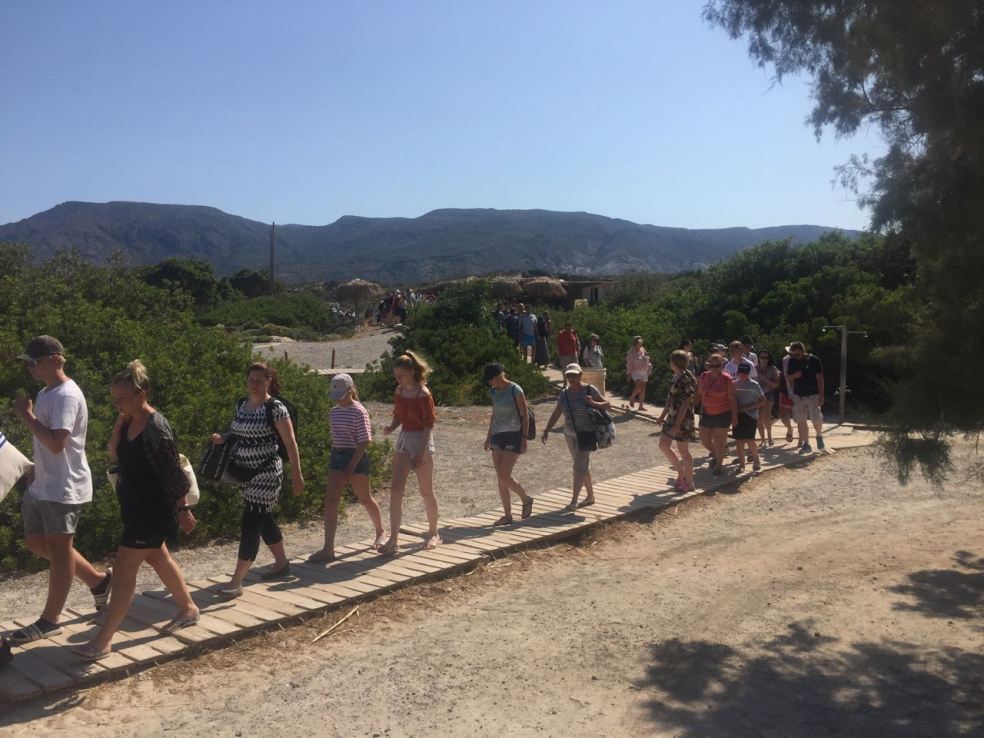 And then the busses started arriving. Thanks TripAdvisor! I’m sure the locals love that site now. Not.


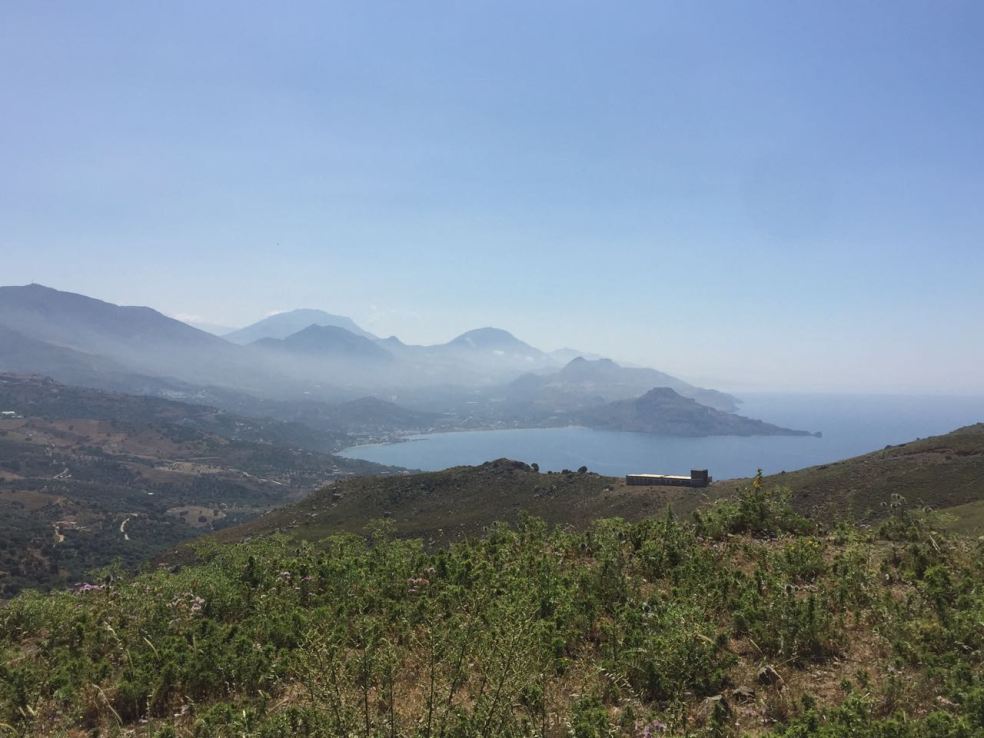
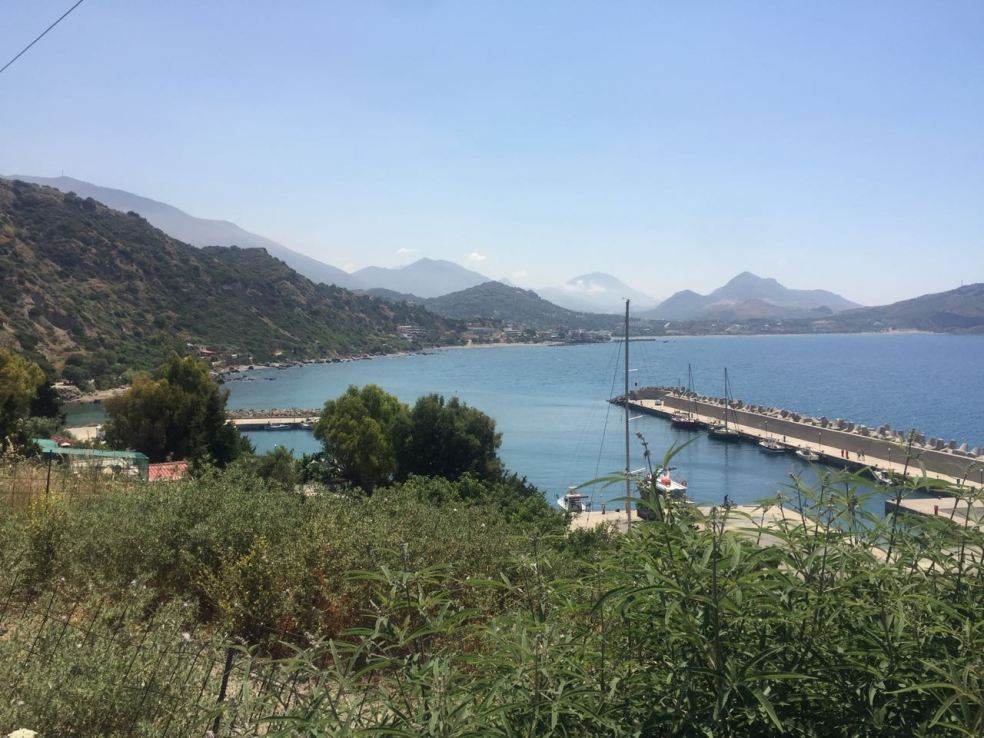
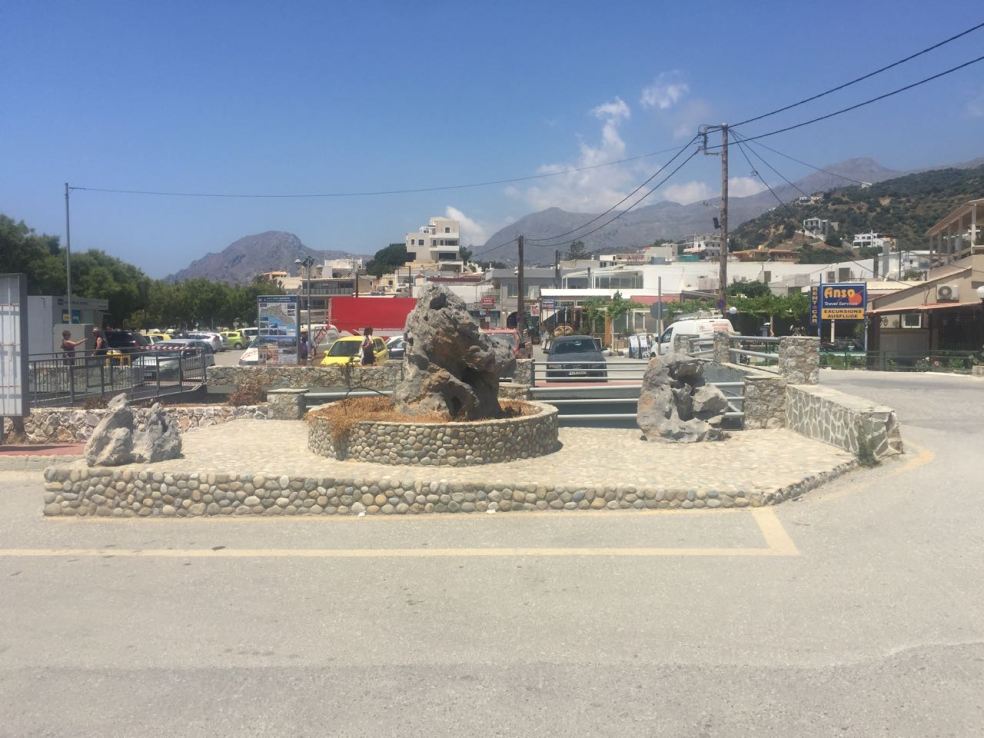

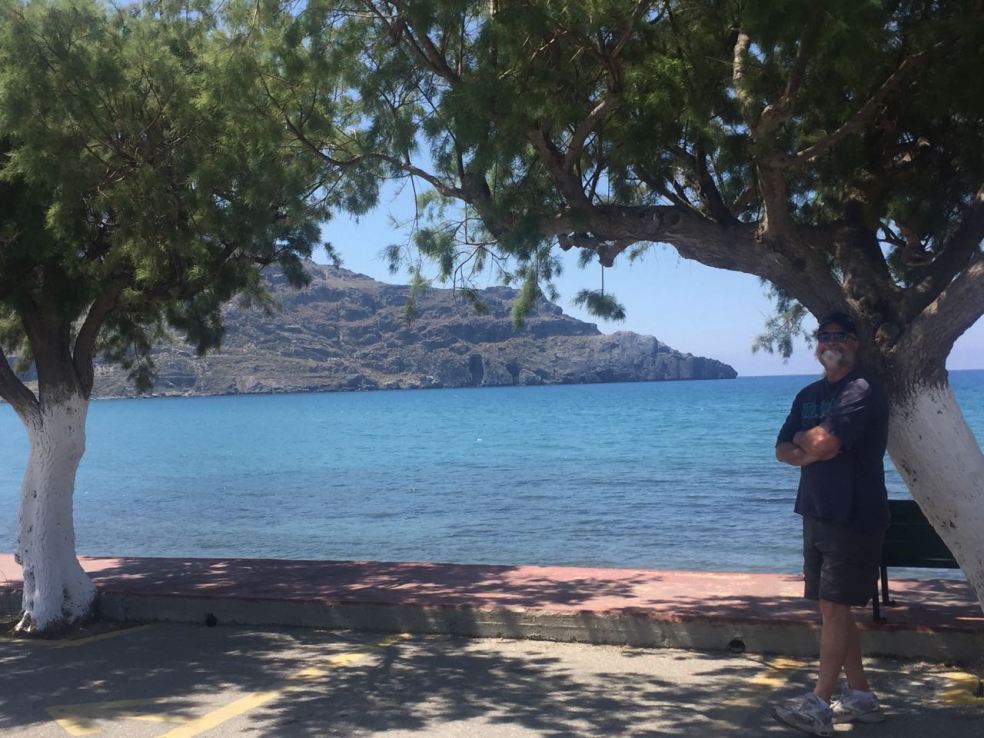
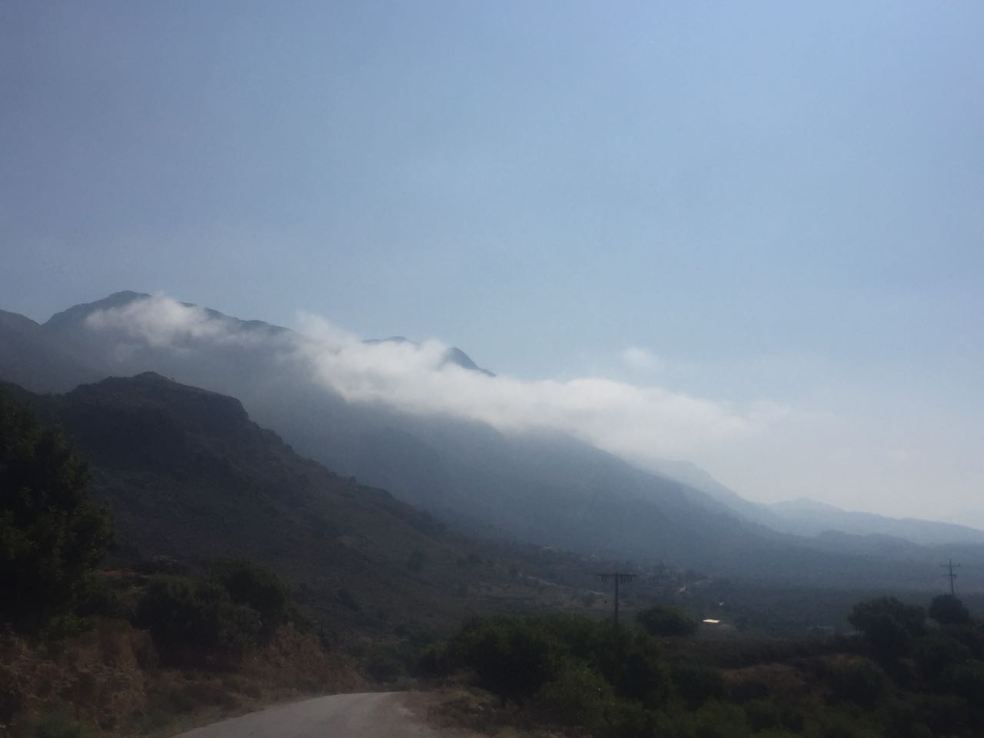
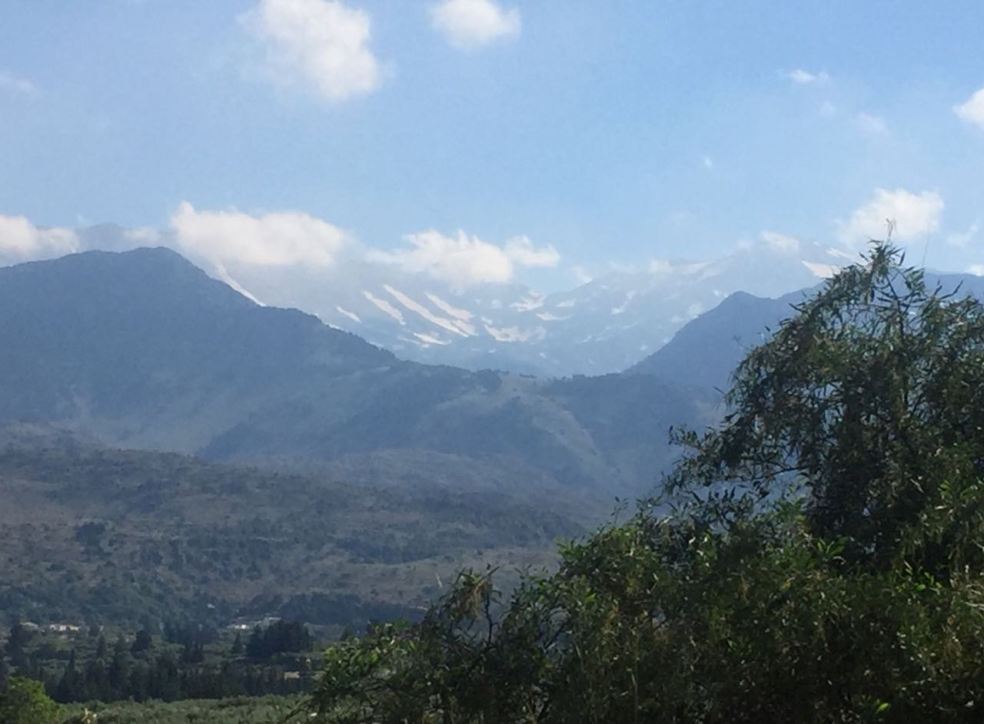
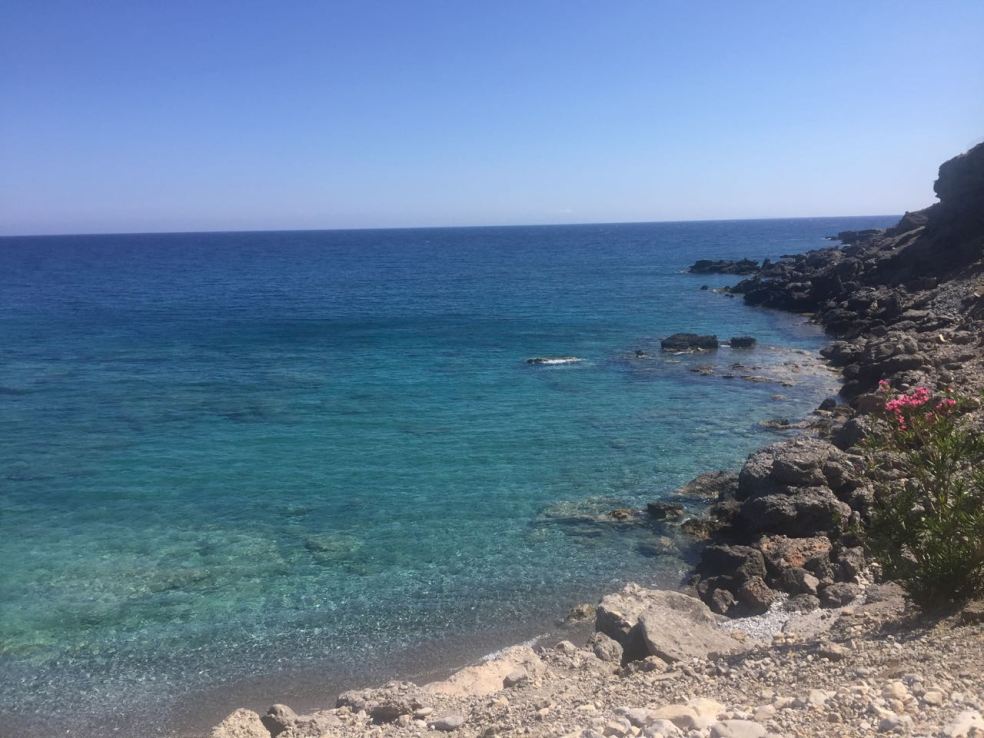


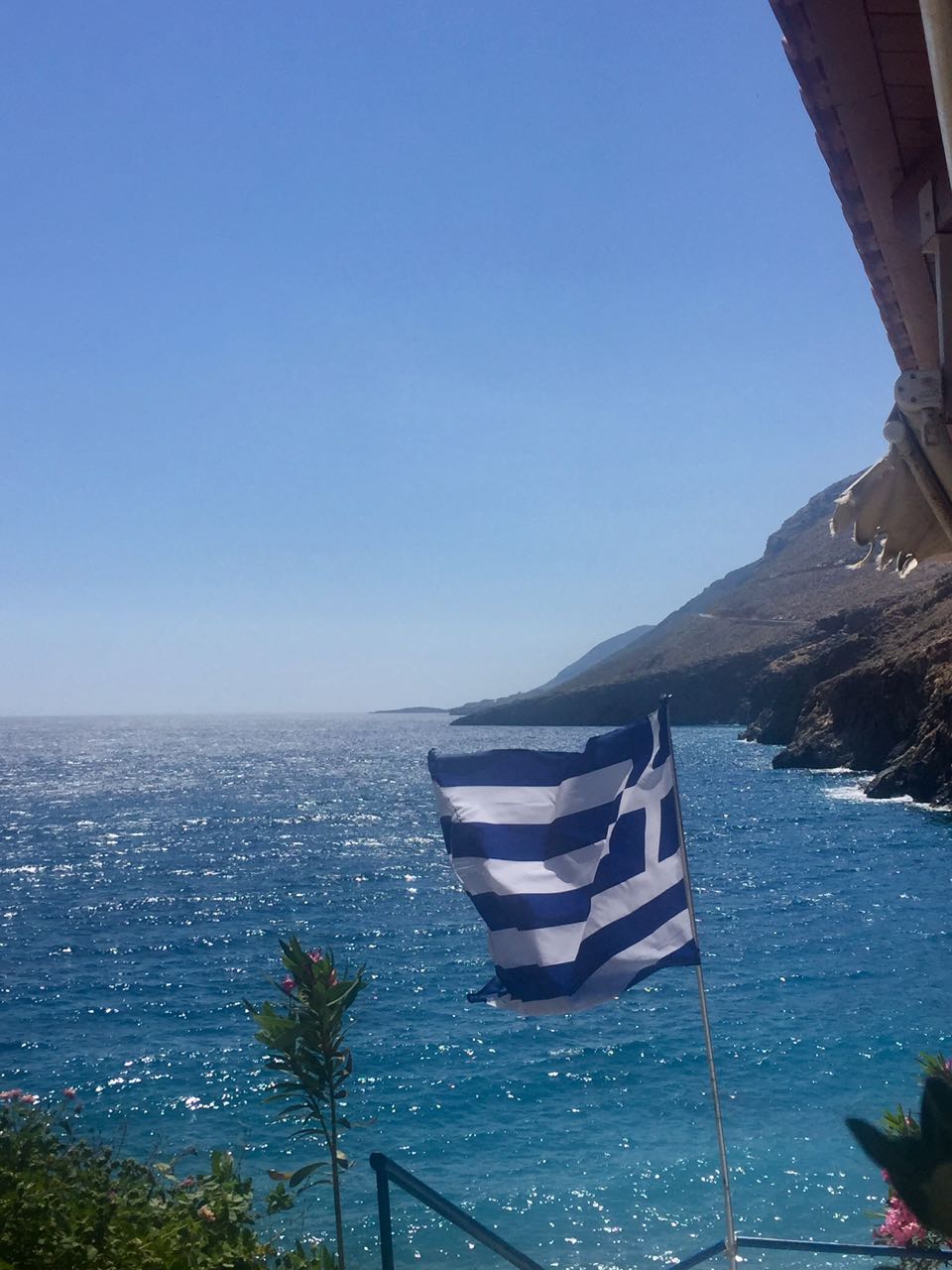


 After all that sightseeing, lunch is a welcome respite! Like the Portuguese, the Greeks are warm and gracious restaurant hosts. We had several lively conversations with our waiters.
 We gotta finish up with a kiss… because you gotta kiss-a-mo’ if they tell you to!
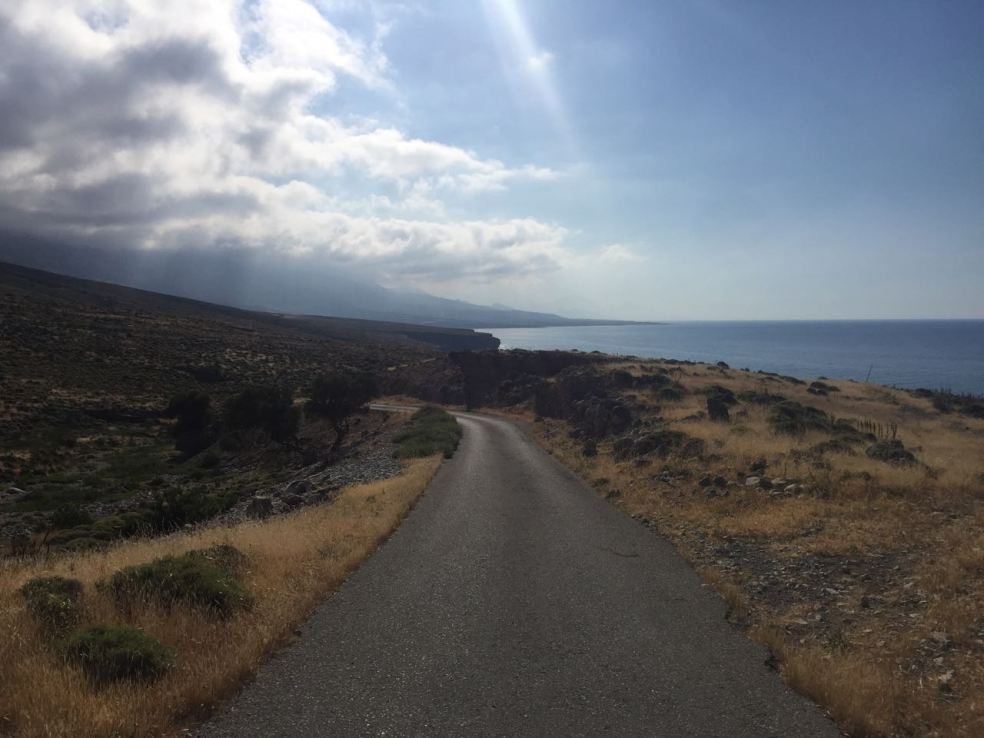 …and then we drove off into the sunset.
 Phtew! Phtew! We were hocking loogies all over the place in Crete.
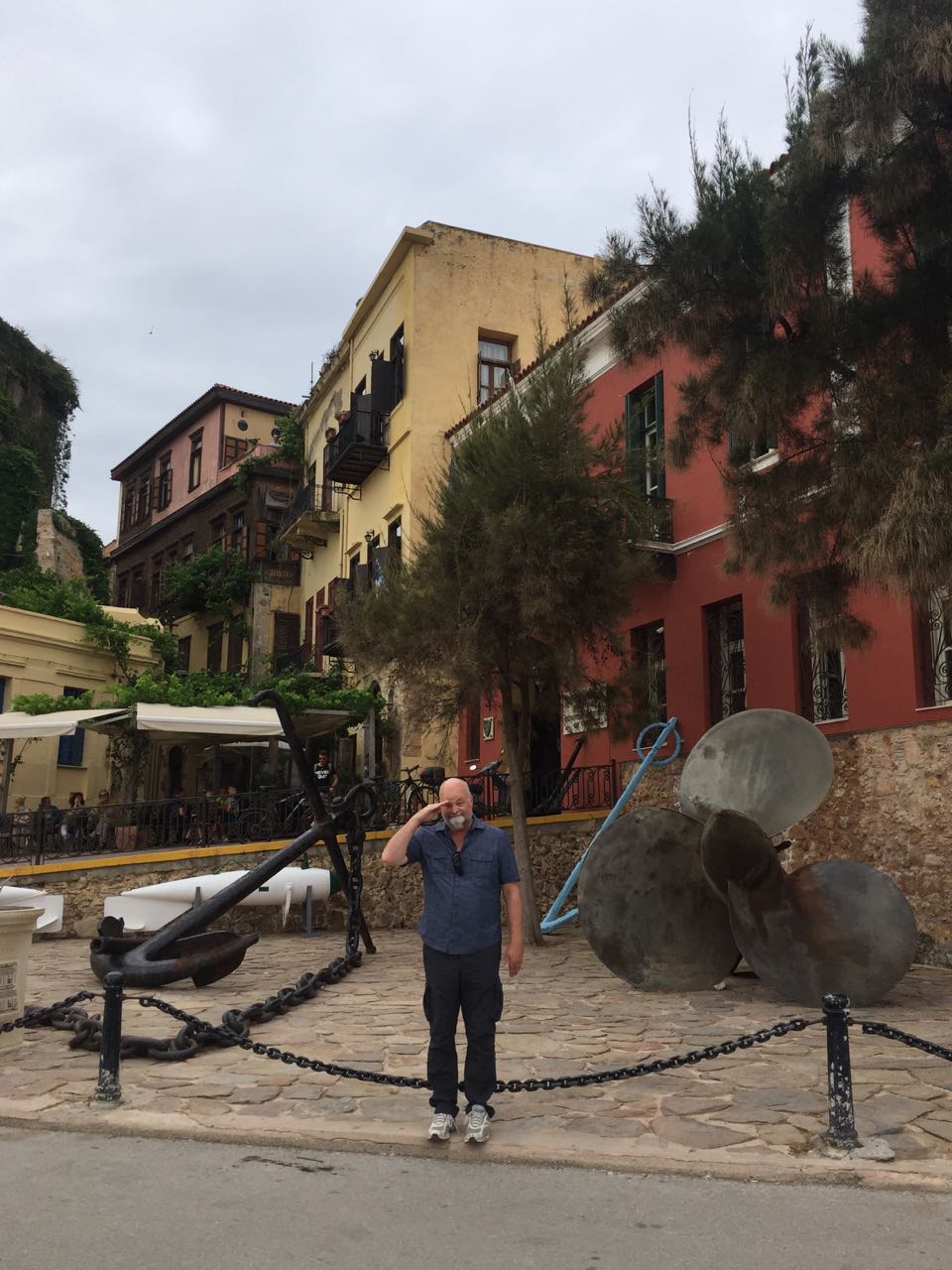 It’s a seaside town with a ring of stores and restaurants fronting the harbor. The artifacts in this picture (not the old guy) provide evidence of the town’s seafaring ways, and are one of the first sights you see when you first walk into Chania Old Town.
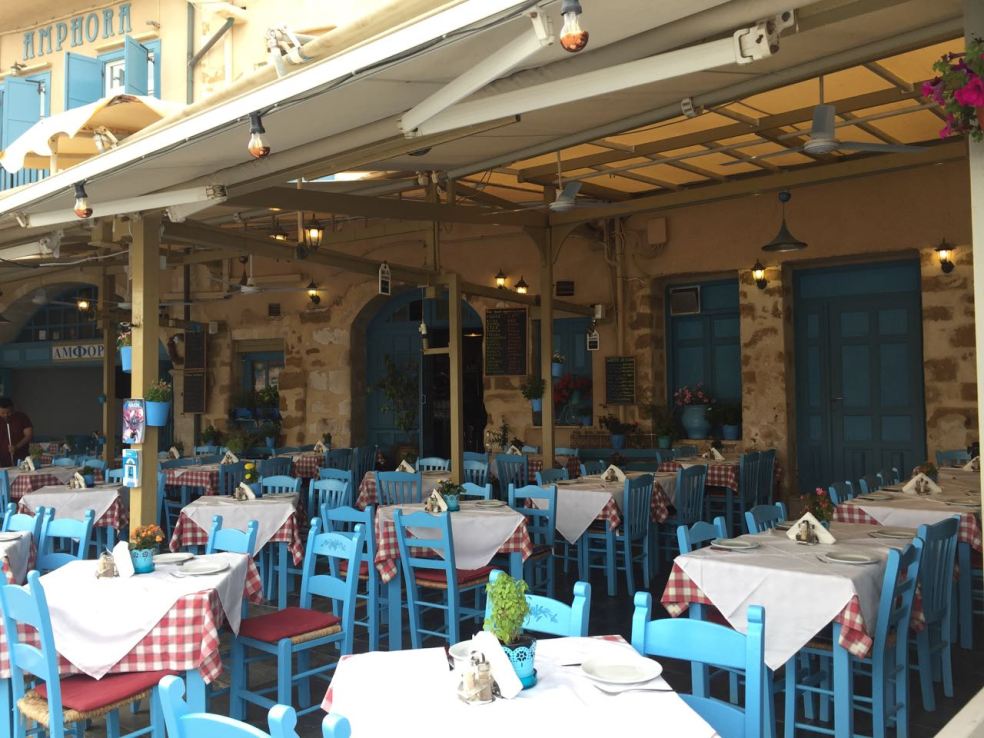 A whole slew of restaurants await for prompt seating and a great view of the harbor. Almost every one of them is fronted by a pitchman encouraging you to come sample their offerings… other than a few that feature signs saying, “We won’t bother you!” Except I noticed they sort of bothered you anyway, as if the sign gave them some sort of reverse psychology permission.
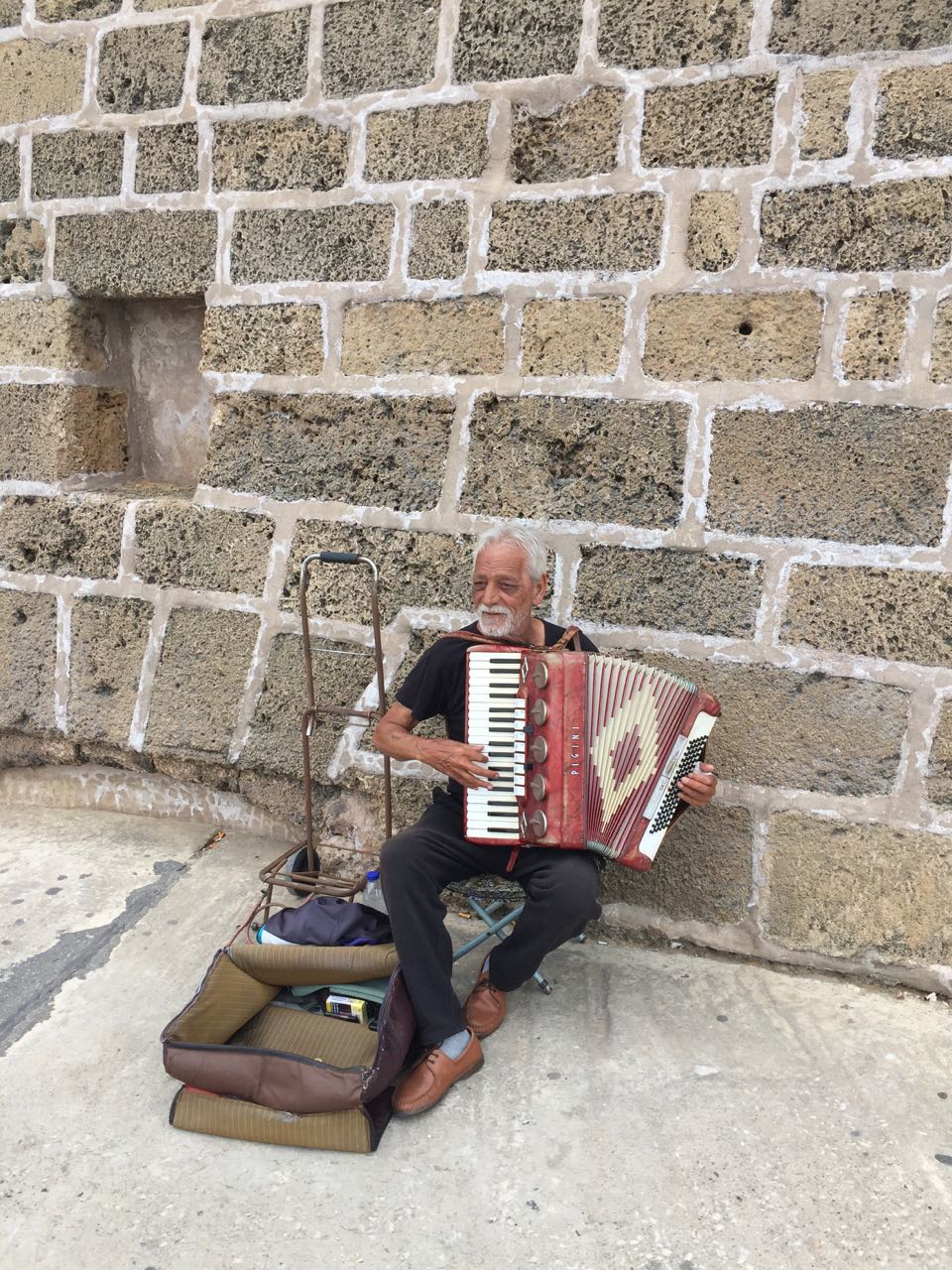 A few musicians and other street entertainers provided for a jovial entrance into old town. This guy was playing some AC/DC if I recall.
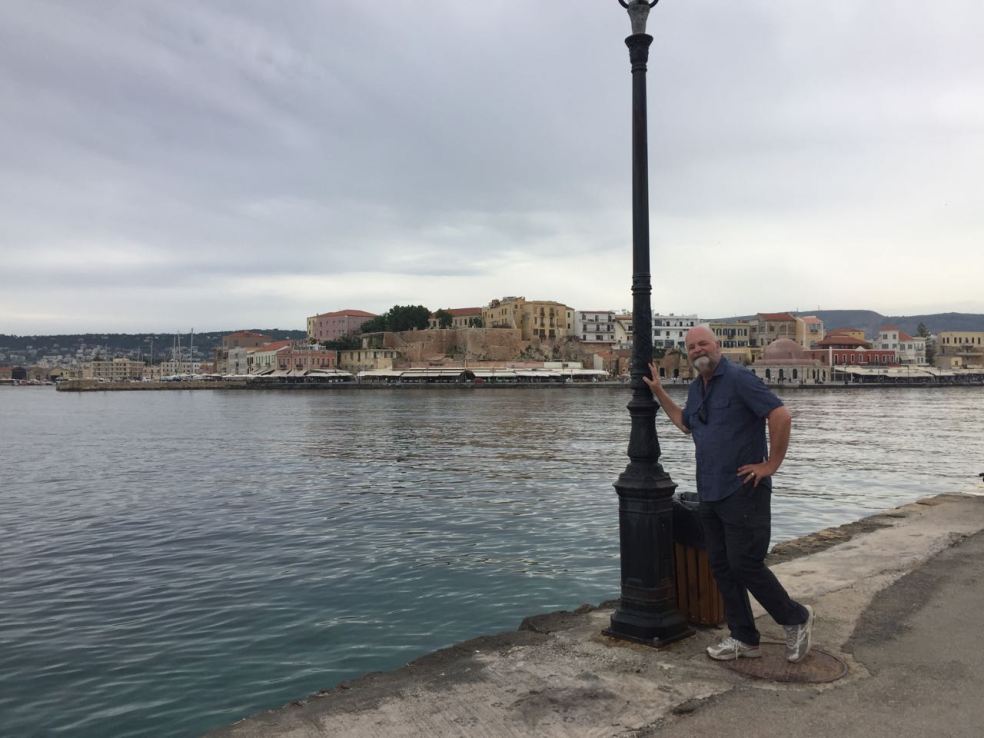 It took a bit of work, but I finally got this light pole all straightened out properly.
 So here’s Chania from the ocean view. As you can see, despite it being June, there’s snow on them thar mountains. We didn’t expect that in the middle of a Mediterranean summer.
 They really do a nice job of making things cute and clean. It was this way all around Chania Old Town. The rest of Chania was just like any other town, but they really know how to cater to tourists in the tourist area.
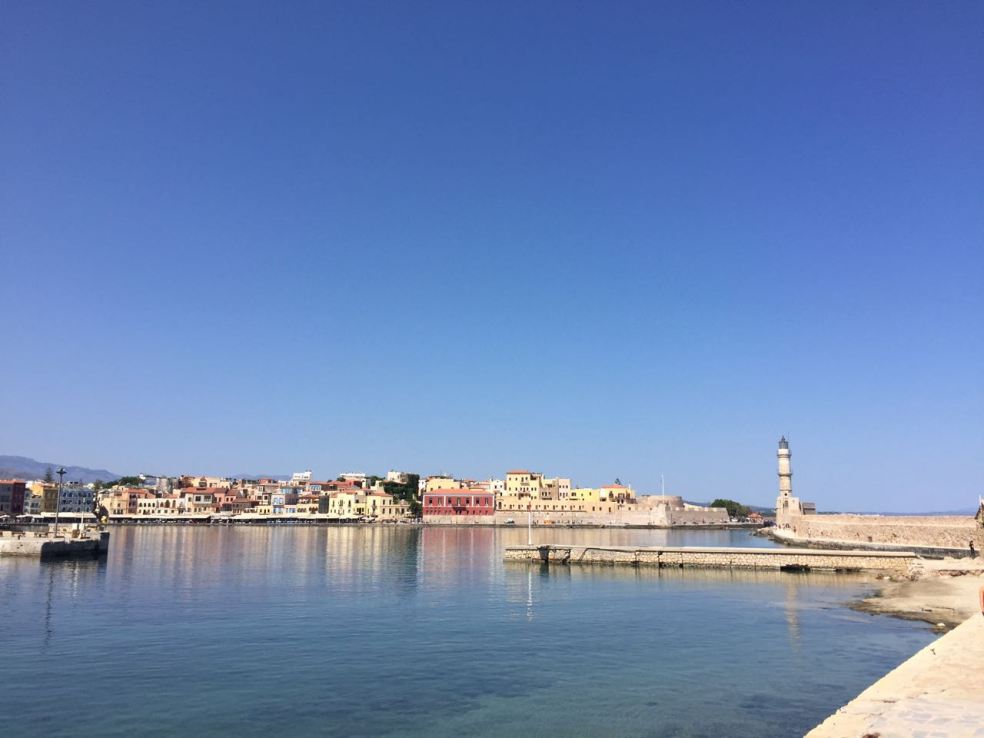 If you see many pictures of Chania, one of them is bound to be one with this lighthouse prominently featured. It’s an iconic part of Chania. It was originally a Venetian lighthouse built around the late 16th century, although it’s sometimes referred to as “Egyptian” because it was built during a time where Crete was occupied by Egyptian troops.
 Here’s a close-up, taken after a very hot fifteen minute walk around the harbor (the lighthouse is located at the end of a long protective breakwater that protects the harbor from the sea). During the Turkish occupation the lighthouse fell into disrepair. It was eventually rebuilt between 1824 and 1832, although they kept the original Venetian base. It was leaning badly due to bombings during World War II, but it was extensively renovated in 2005.


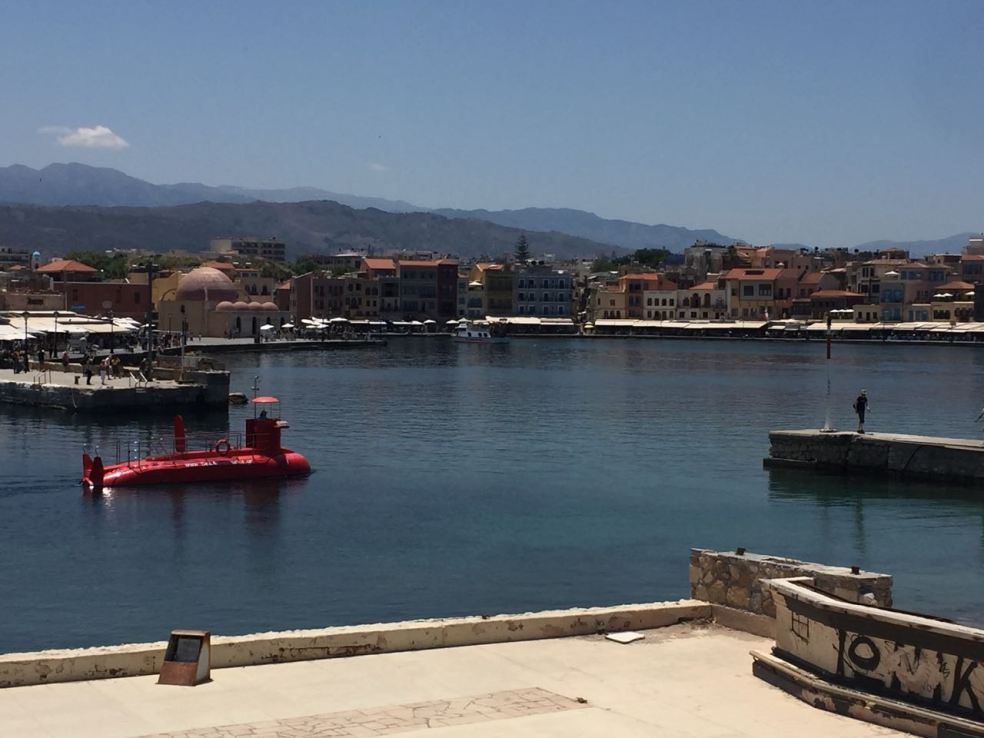 A tourist submarine is is on her way out of the harbor. We didn’t do many of the touristy things there, however; the town was charming enough all on its own…

 The Nazis bombed the hell out of Chania in 1941, especially Old Town. I think before that the town name was simply pronounced “Shania,” but the bombings rattled the residents’ fillings so much they couldn’t say the “sh” without sounding like they were hocking a loogie. I wonder if any of our Portuguese friends have ever heard the term “hocking a loogie?”
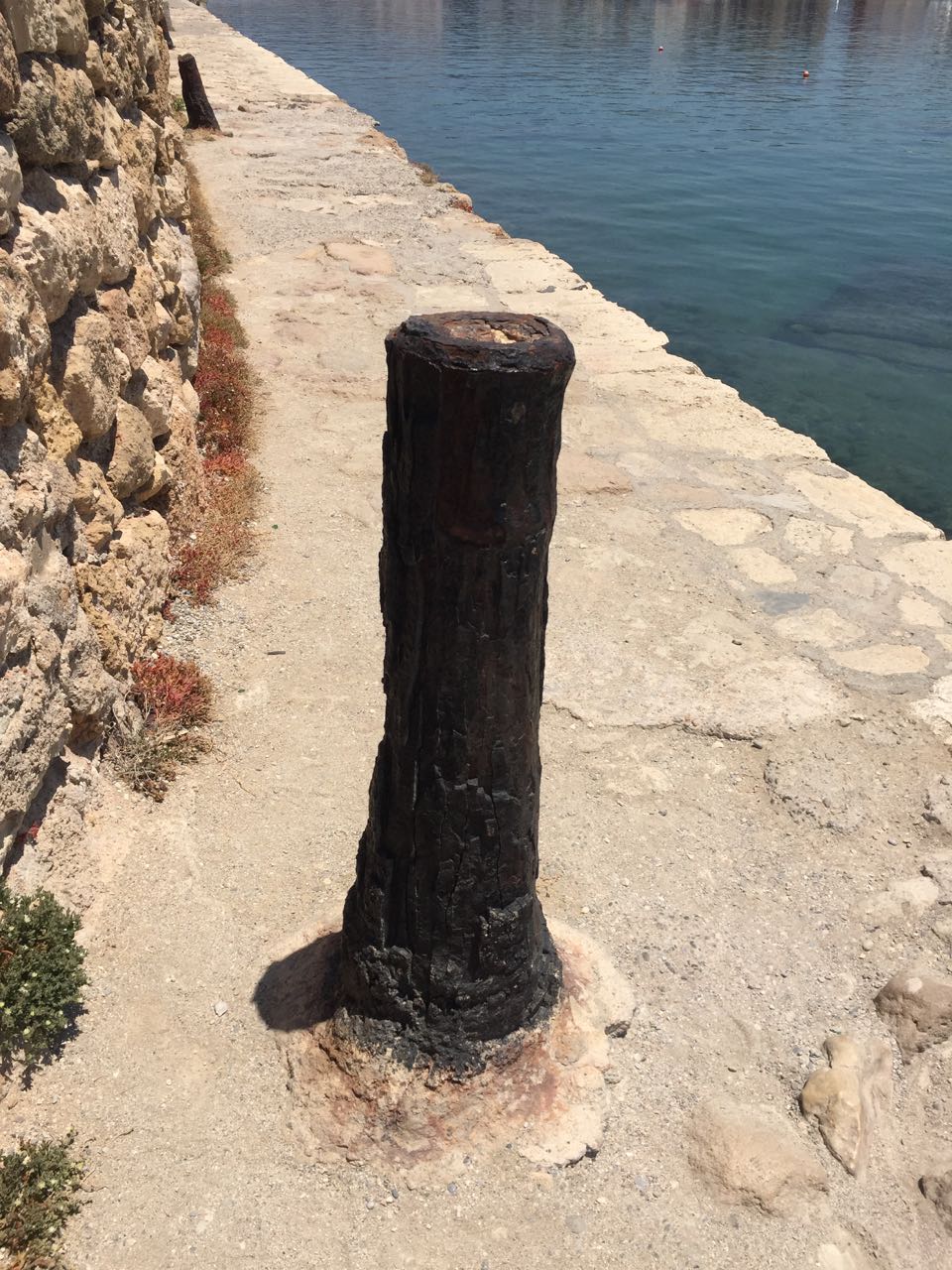 Apparently the Chanians pointed their cannons straight up to try and hit the German planes, but once they put them in cement this way, they couldn’t figure out how to put in the gunpowder and cannonball. No wonder Crete kept losing wars.
 They do much better in peacetime, as evidenced by these clean and friendly promenades leading from the harbor.
 Here’s a panoramic view of Chania from the seawall.
 Here’s a view of the seawall.
 You gotta admit it’s a pretty little town.
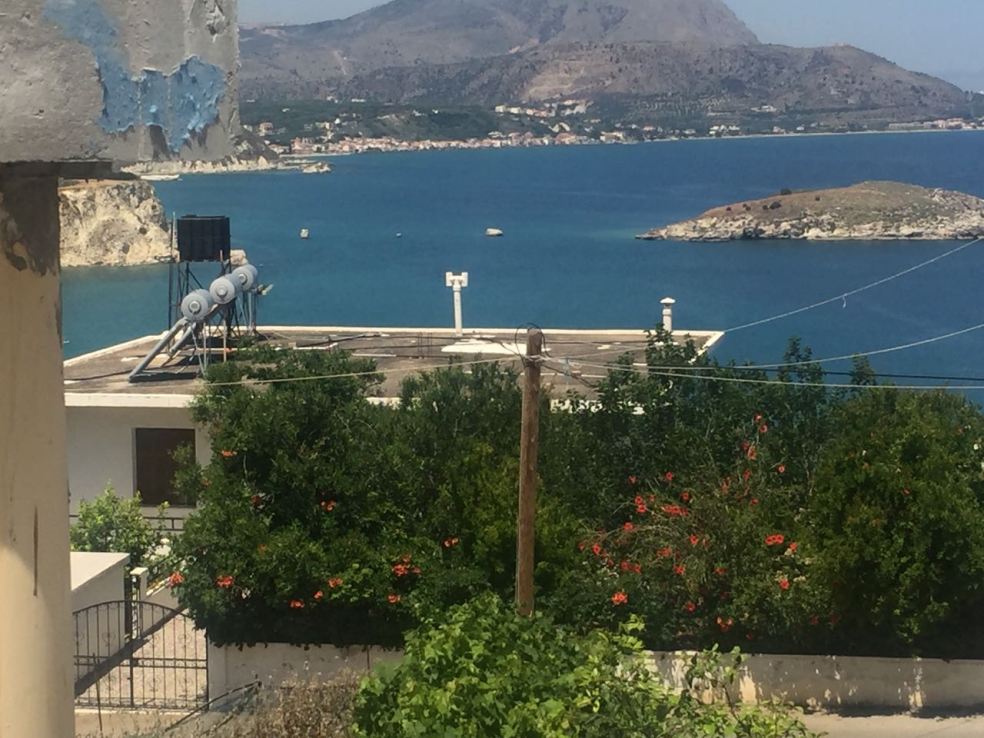 Here’s our view from the top of the hotel (really more of an Airbnb).
 And here’s what we did up there. As far as you know.
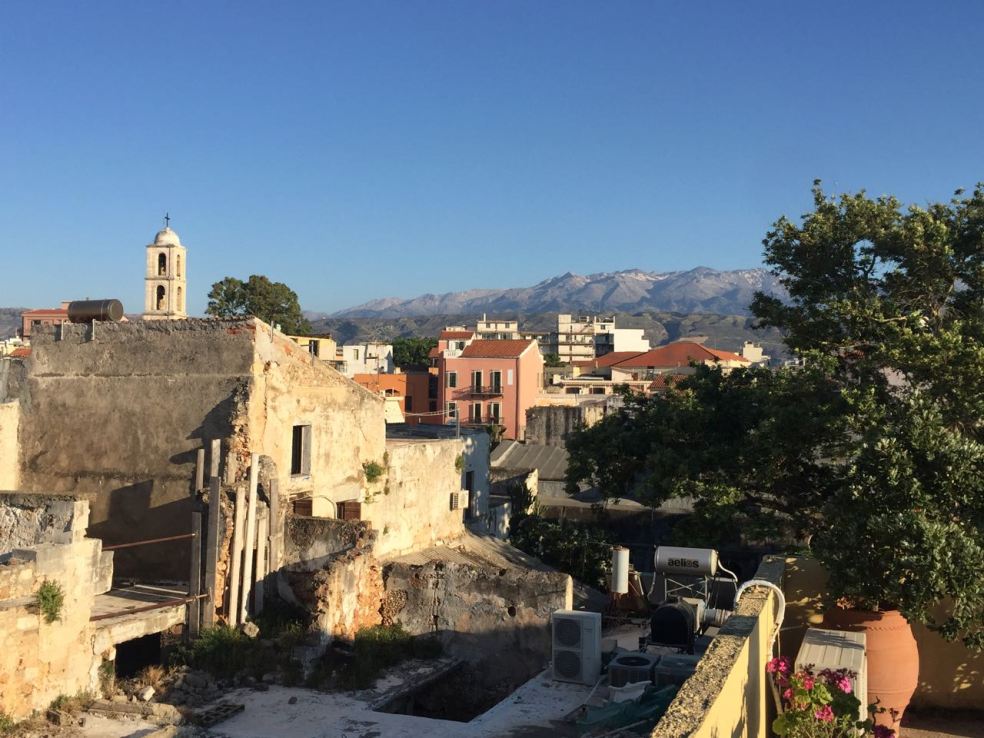 As with so many places in Europe, old meets new everywhere you go.
 And the sea meets land.
 And the man meets woman. So if you don’t think we’re happy as hell being able to do all this traveling and stuff? Of course we are! These are our expressions before we put on our happy faces for the camera!
 Horse carriages await tours around the town. We almost did that, but for no good reason we kinda missed it. Oh, well, maybe we only missed out on some horse farts.
 I thought this salad bar was a little odd, and was glad we didn’t eat at whatever restaurant it was a part of.
 Purple is one of my favorite colors. This tree (and my wife) is magnificent. I think she’d look good in purple hair, but I haven’t been able to convince her of that yet.
 I thought of my son and his wife when we saw this store offering nothing but honey and honey products, because they raise bees in the state of Washington.
 Honey is a big thing in Crete (so I’m not sure why this mannequin looks like the bees got put inside his hat). There are a ton of small shops and roadside stands around the island offering either honey, raki, or ouzo, the last two effectively being the national drinks of Crete.
 The history of Crete goes back to the 7th millennium BC, preceding the ancient Minoan civilization by more than four millennia. The Minoan civilization was the first civilization in Europe and the first, in Europe, to build a palace.
 A good view of the charming seafront.
 A panoramic view of the charming seafront.
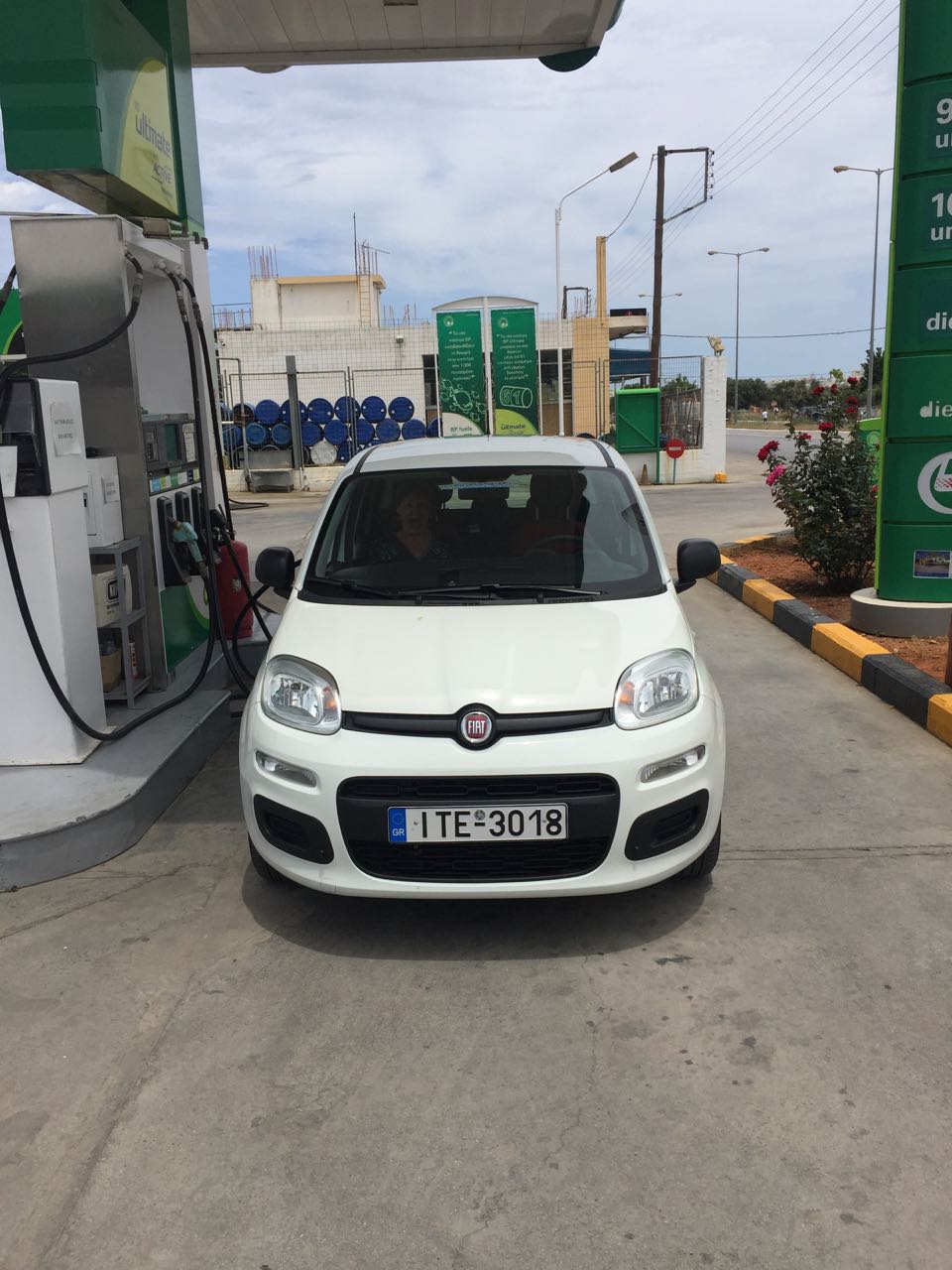 A great view of a car in a gas station.
 Anyway, finally after about a half an hour, a harried employee hustles into the small office and starts processing people. One rude man butted in line ahead of the rest of us, a circumstance much more common in Europe than in the US. I complained, but the employee just shrugged.
 Many world travelers surely list the Vermont State House in Montpelier, Vermont as first or second on their sightseeing bucket list. Okay, maybe not in the top two, or ten, or hundred, but the Vermont State House in Montpelier, Vermont is definitely something you’d want to look at if you were standing right in front of it.
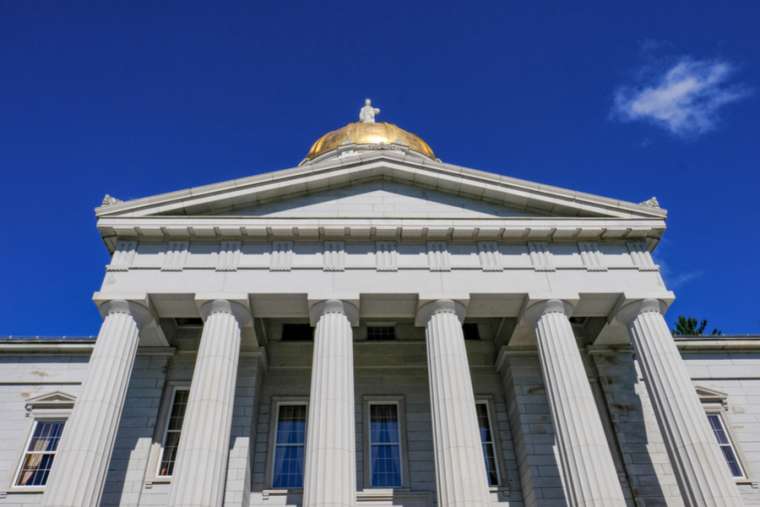 (This is the Vermont State House in Montpelier, Vermont, just in case you were wondering.)


 Fortunately, he disappeared without much of a whimper, as most gods do, leaving this impressive building in his ashes, –er wake.
 As you can see, this is a container for offerings to the dead. As you can also see, the dead already scooped everything up. Greedy bastards, those dead people.
 This building known as the Stoa of Attalos (we’re still in the Agora, or as I like to say, “O Aqui e Agora,” which means “The here and now” in Portuguese, which has absolutely nothing to do with anything except the word “agora” and my desire to show off my still-very-limited Portuguese skills). “Stoa” means portico or covered walkway. “Portico” is where you have to go after you’ve drunk too much port. “Walkway” is a word that turns into “runway” just by adding some planes. Accordingly, “Covered Runway” is just not a term you hear anymore, not after that one disaster anyway.
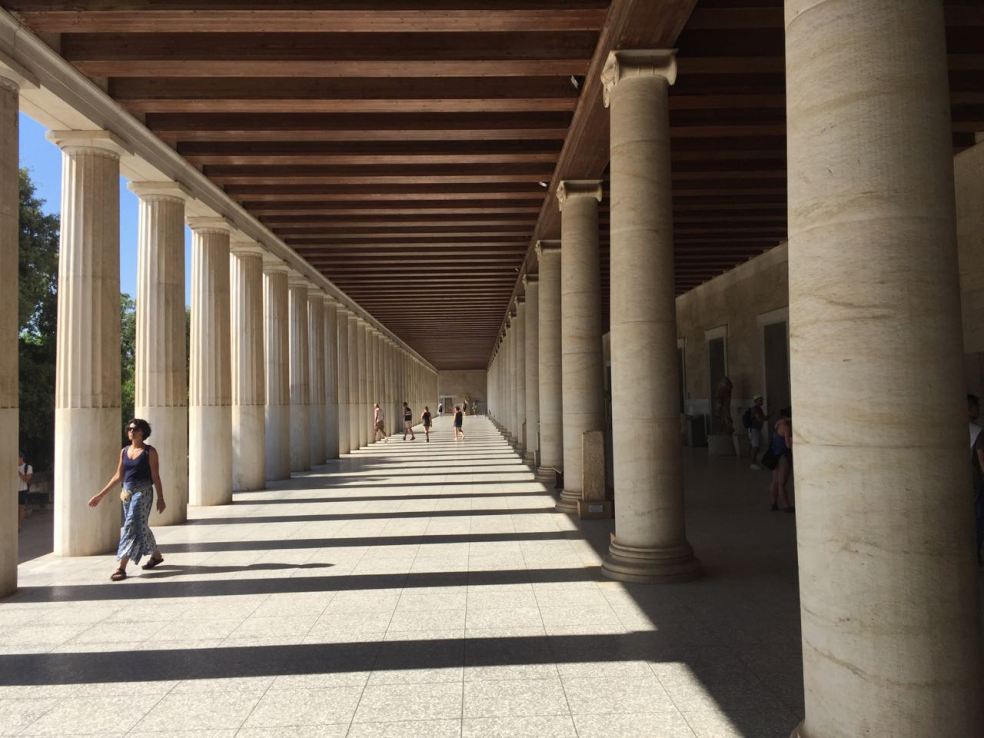 This photo provides some perspective. Ha! Anyway, i
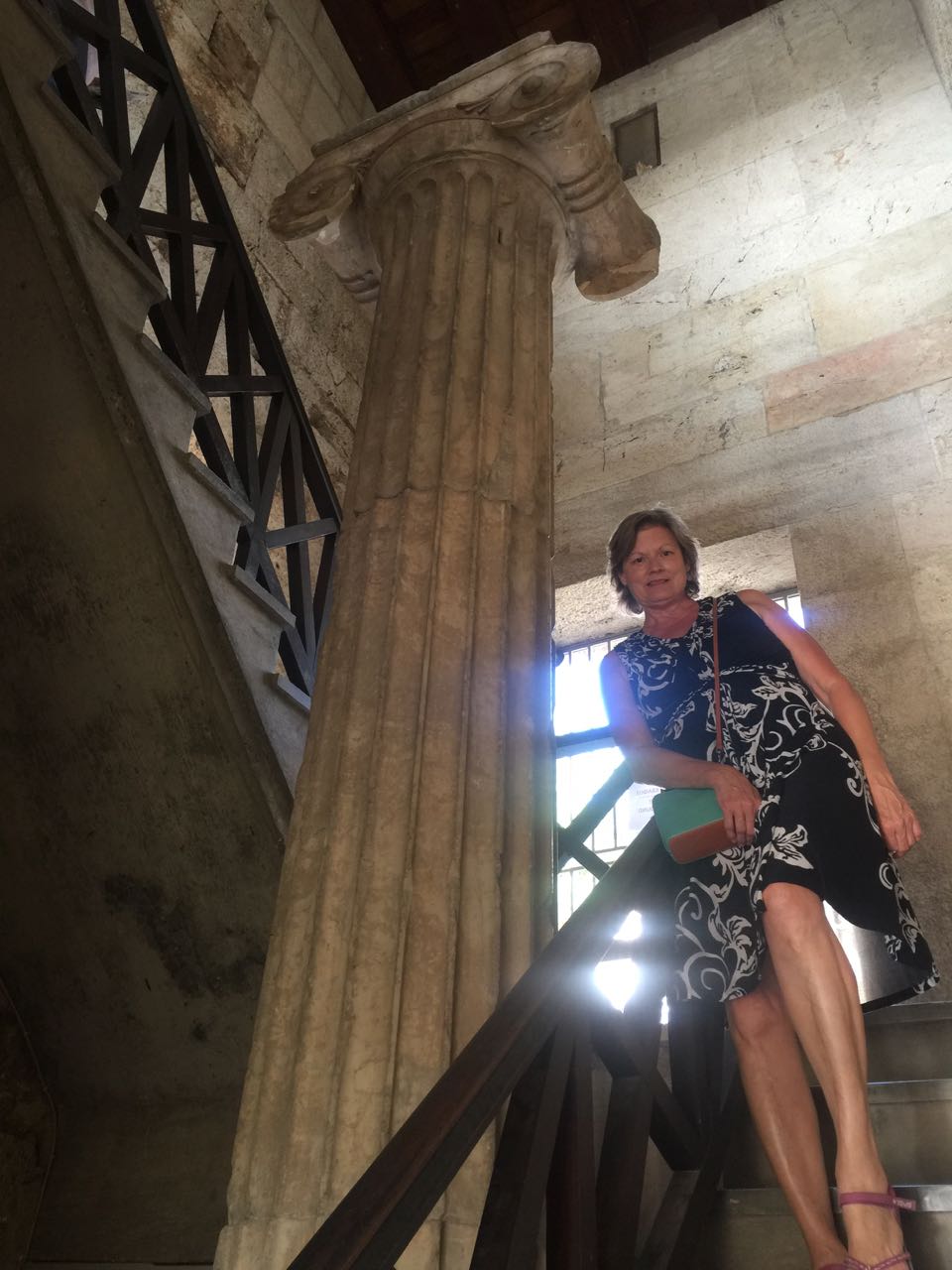 The Stoa of Attalos has a museum inside it and a second floor (or first floor in European). This photo gives you an idea as to the sleek beauty of those gams– I mean columns.
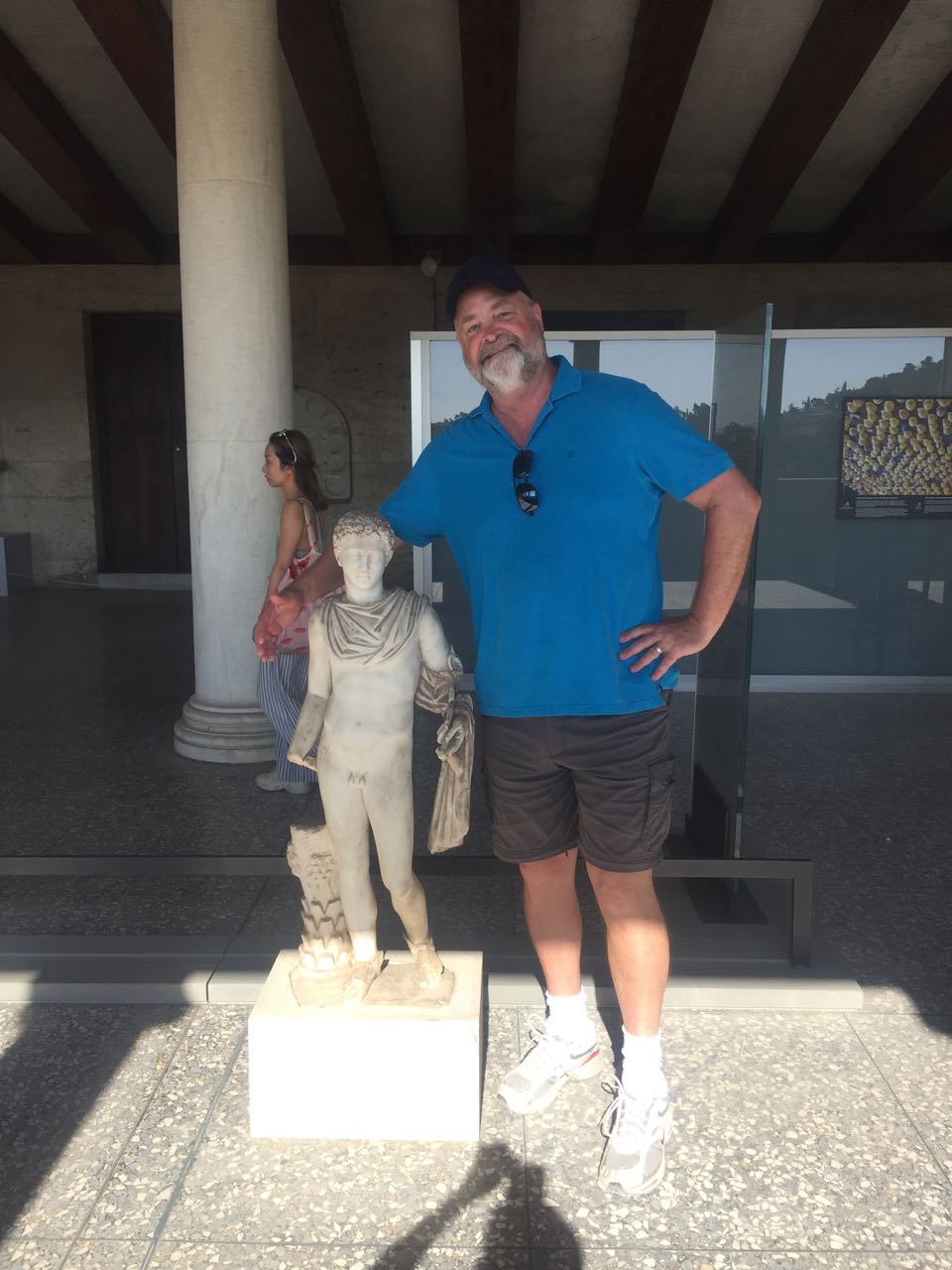 Everyone knows our species has gotten a little larger over the millennia, but few people know just how big a difference there is. And they say JRR Tolkien just made up the hobbits. This ancient life-sized sculpture begs to differ. This statue does explain a lot of the doors we’ve encountered.
 Carolyn’s got this guy’s gnome-ber.

 We thought it appropriate to deface the photos out of respect for the defaced.
 One example of the wares displayed in the museum. This vase demonstrates the mad jigsaw puzzle skills many archeologists find beneficial to their work. They have a hard time without the box top, however.


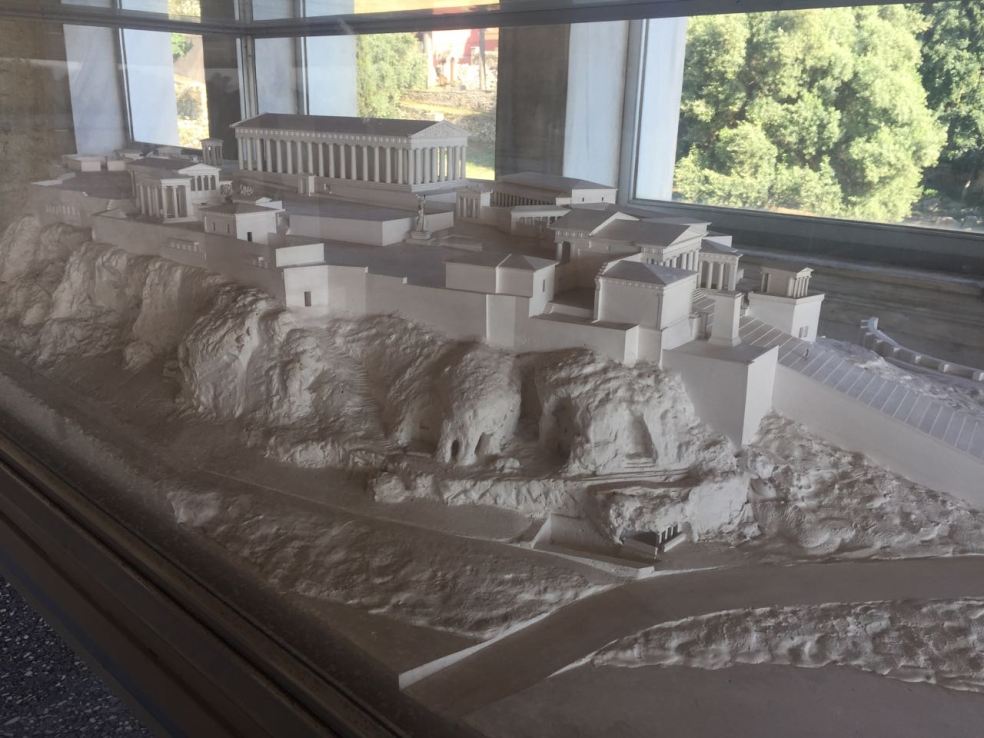 This is what the whole Agora area would’ve looked like back then. At least if you were either color blind or the whole thing froze over in a freak world-ending ice storm.
 Moving on from the Agora, this is the neighboring Library of Hadrian, who was the Roman emperor from 117 to 138, and is now the patron saint of overdue book fines. His own fines were not forgiven by his successor Antoninus, so it’s now up to $82,423,122 with interest. I mean, there ain’t no Italian named Tony who’s gonna forget about yer debts, y’know?
 Hadrian is known for being both personally generous as well as extremely cruel. He must’ve been generous to the right historian’s forebears because he made it onto the “Top Five Good Emperors List” (if he wouldn’t have been so cruel, he might’ve made the “Top Five Very Good Emperors List”… but alas). He also traveled a great deal outside of Italy, unlike most of his predecessors. When he passed by, the people would shout, “Yo Hadrian!”
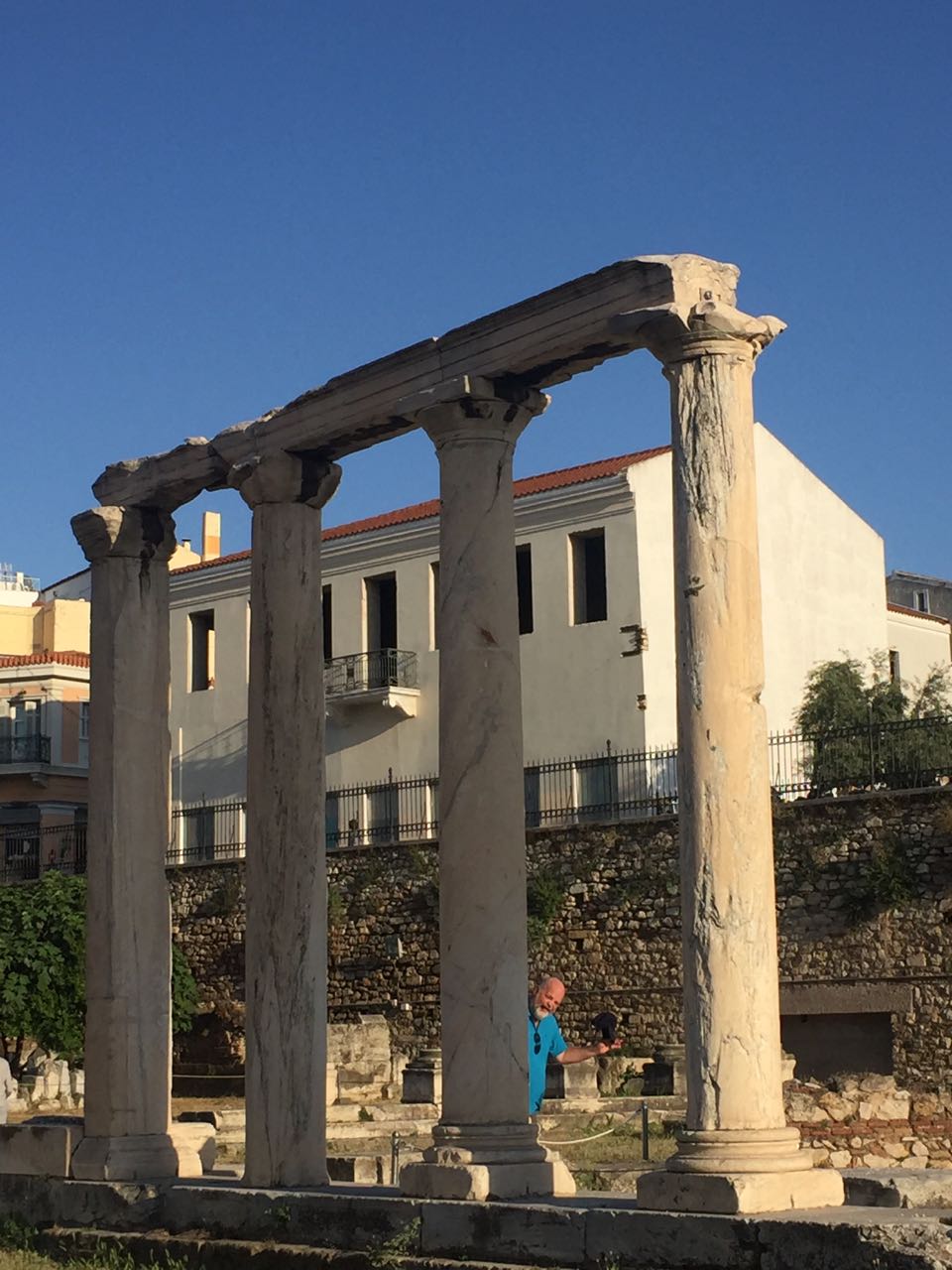 Another set of ruins in Athens is the Dipylon Ruins. So of course I had to act like a dip. Actually, the entire area is known as Kerameikos, or Ceramicus in the Latinized version.
 It’s a large area that resides both within and outside the ancient city walls. Since it was the potter’s part of the city, Ceramicus is what led to the world “ceramic.” True story.
 I always look closely at walls in ruins, being continually amazed at the preciseness of their construction and alignment and the fact that they’re still that way even after thousands of years.
 The Dipylon (The Thrasian Gates) was the most important gateway in the Athenian city walls. It was the main entrance to the city, and was at the time the largest gateway in the world.


 We simply stumbled across Ceramicus while taking a walk outside our hotel to places unknown. You never know what you’re going to find when you explore an ancient city!
 Like almost every place in Athens, feral cats were plentiful. Some were even friendly. This one decided to share some of its fleas with Carolyn.

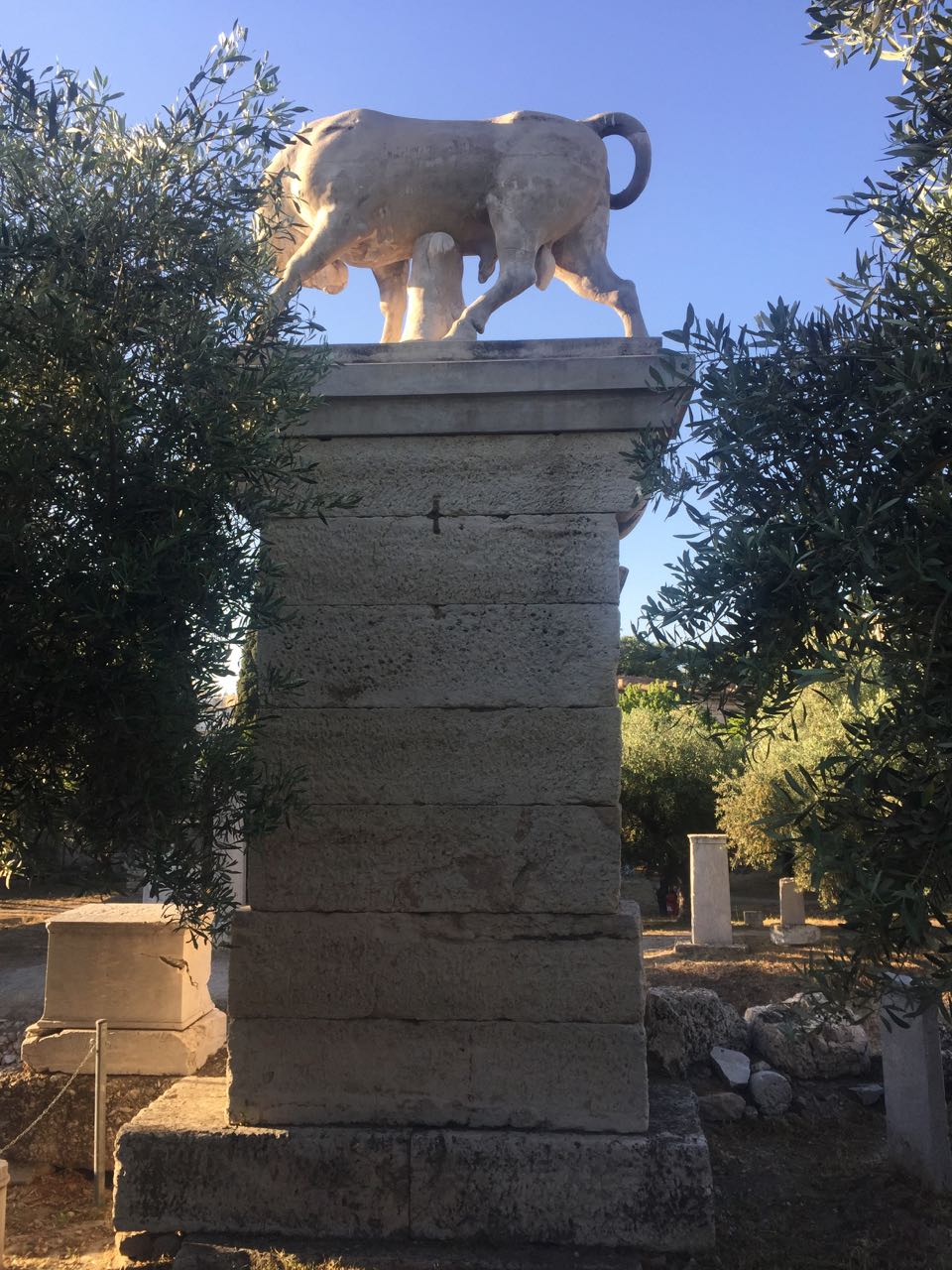 And that ain’t no bull.
 baldsasquatchdotcom