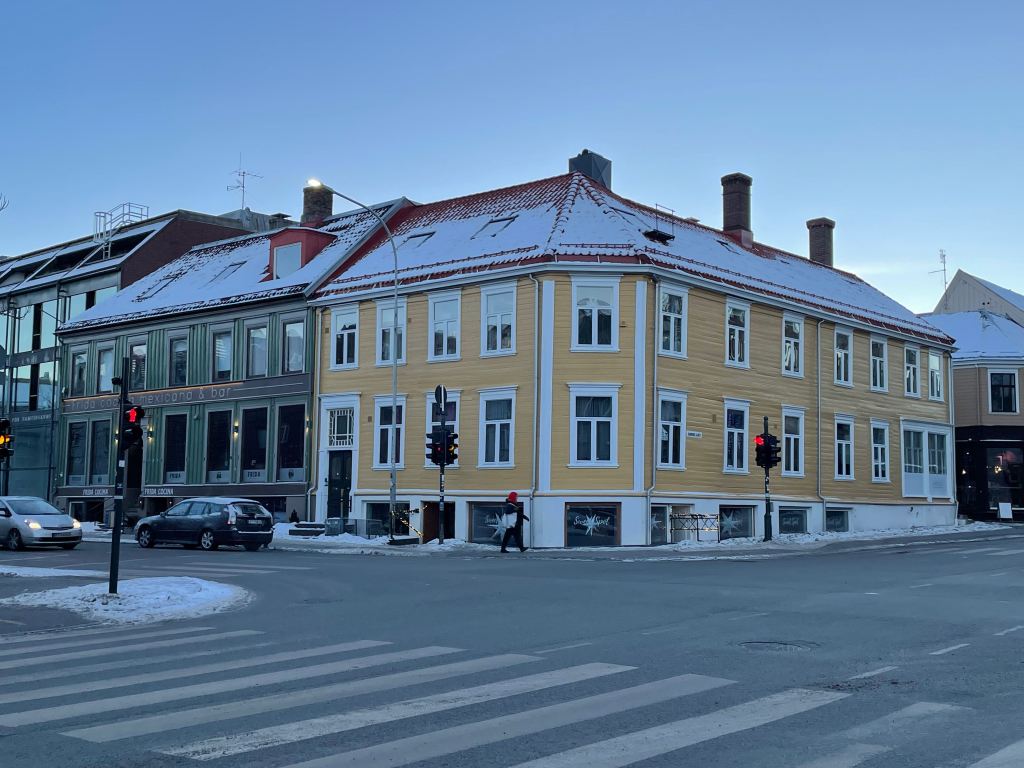
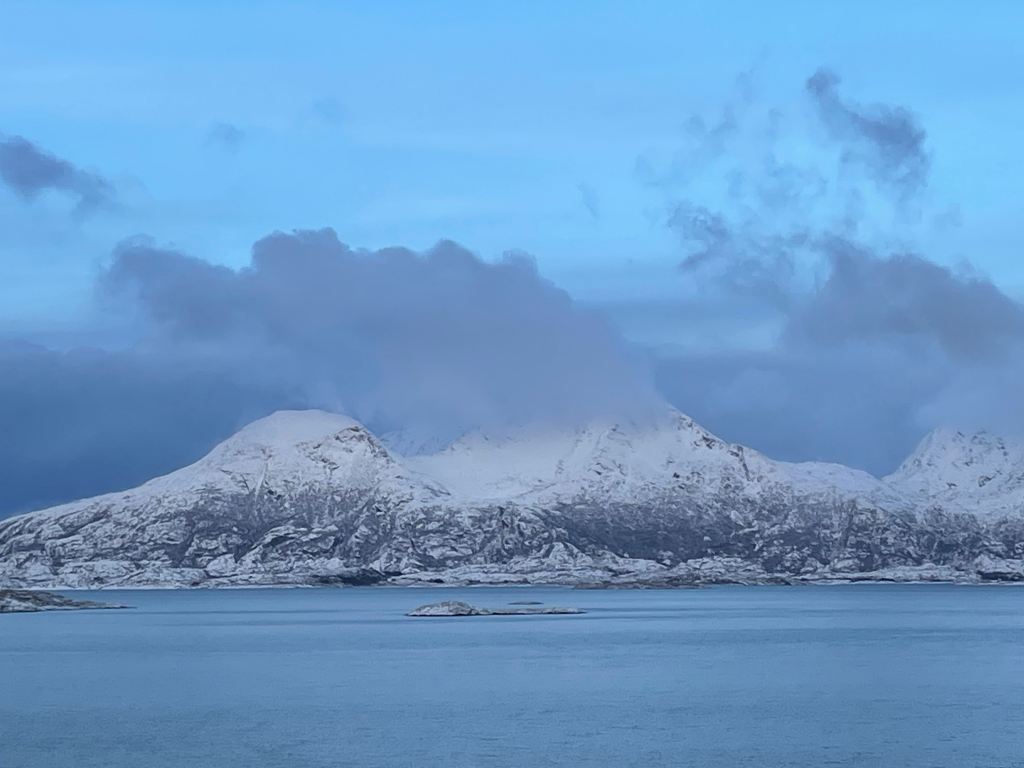
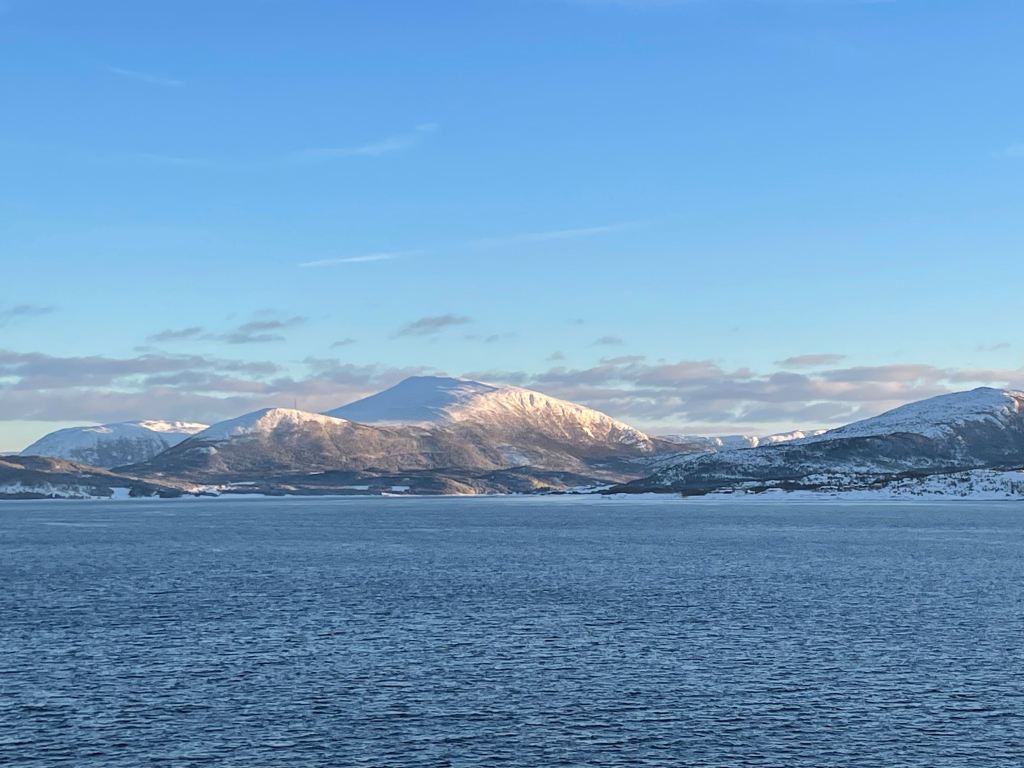
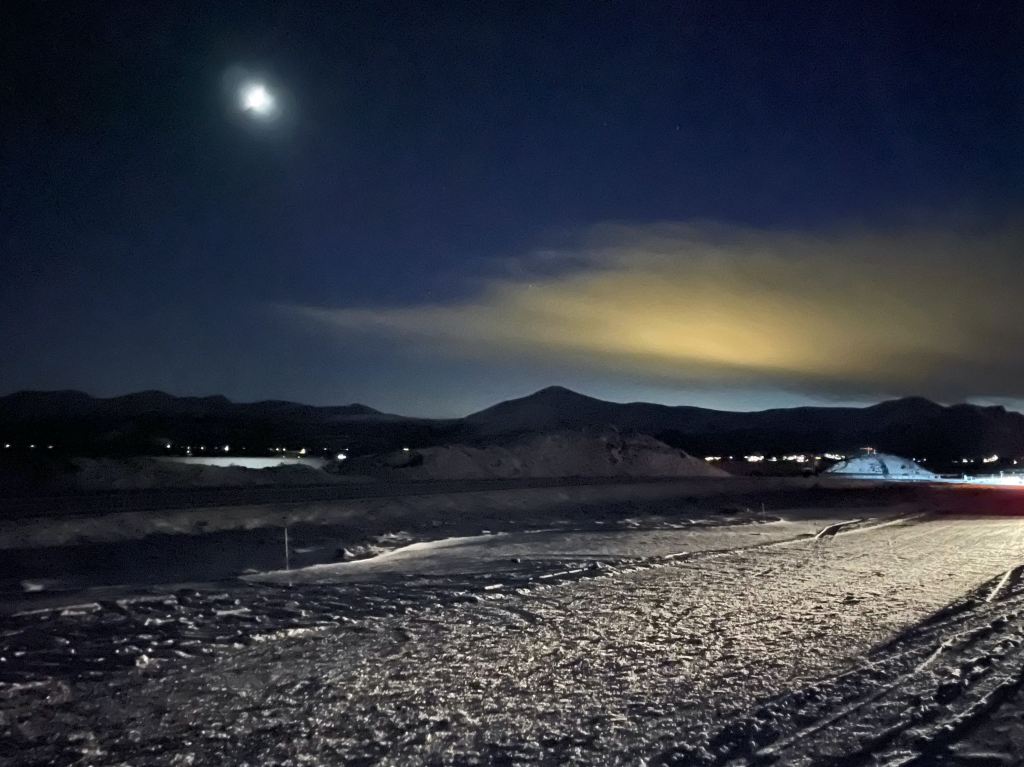
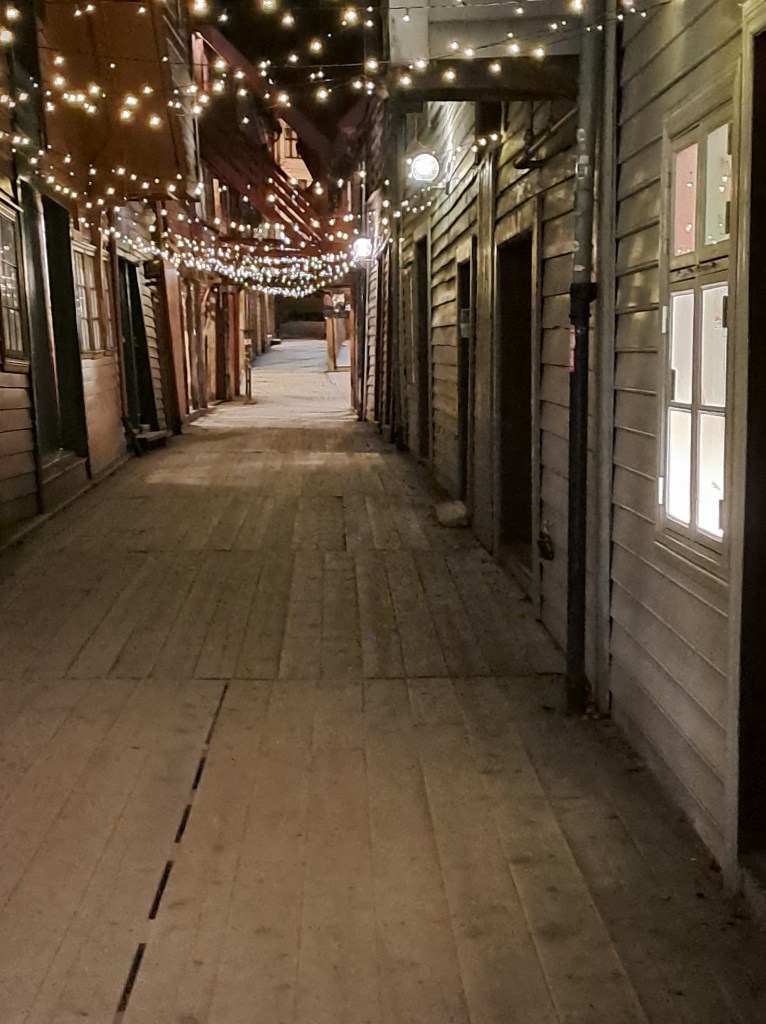
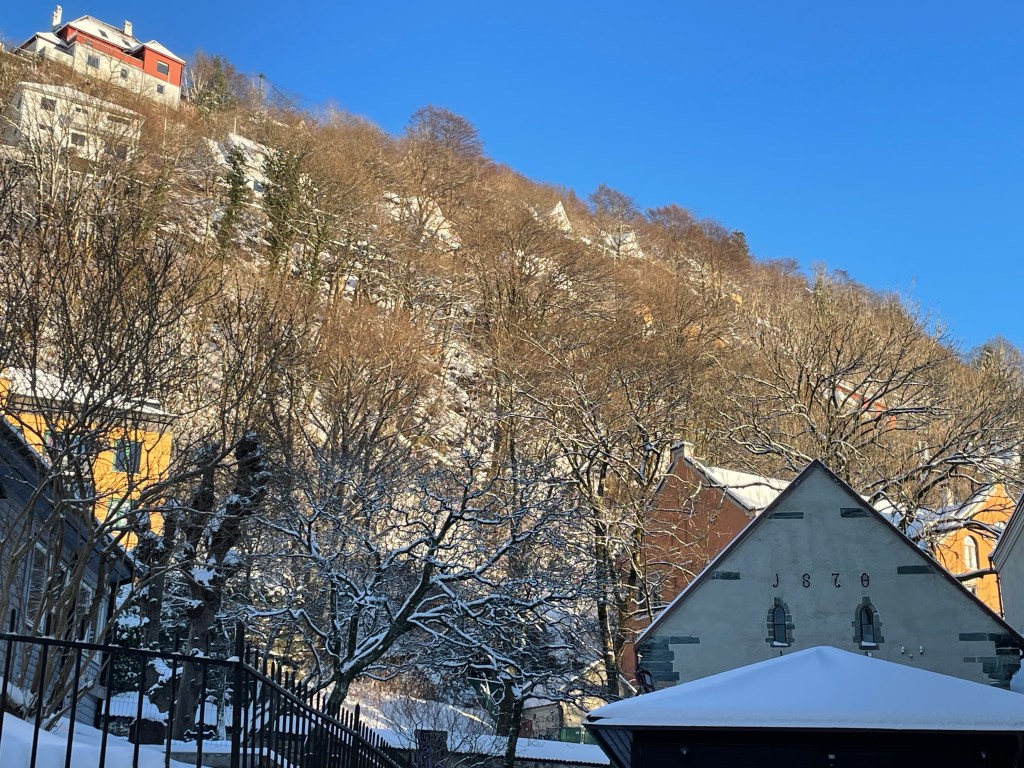
Last Stop ’til the Russian Border!

When I first looked at the itinerary for this cruise, I was smitten with the idea of visiting lots of small Norwegian towns along the coastline. I envisioned quaint villages of some sort; I honestly had no idea what coastal Norwegian towns looked like. That provided me with some additional anticipation because I always look forward to experiencing things wherein I was previously clueless. Come to think of it, I look forward to a lot of things nowadays.

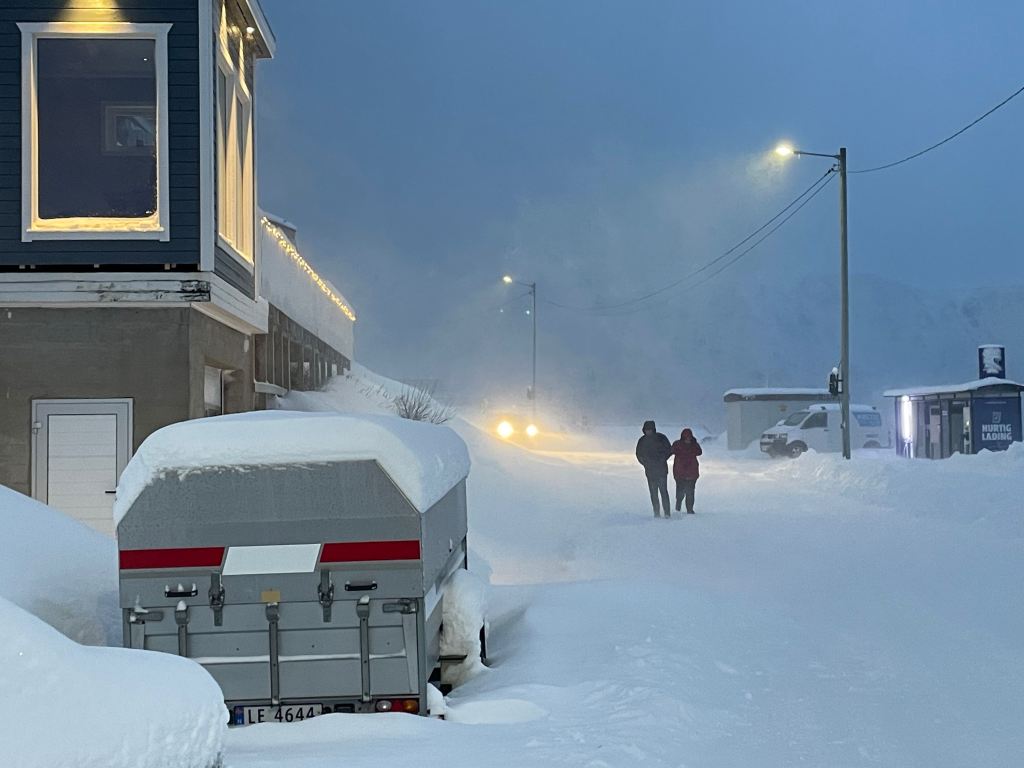
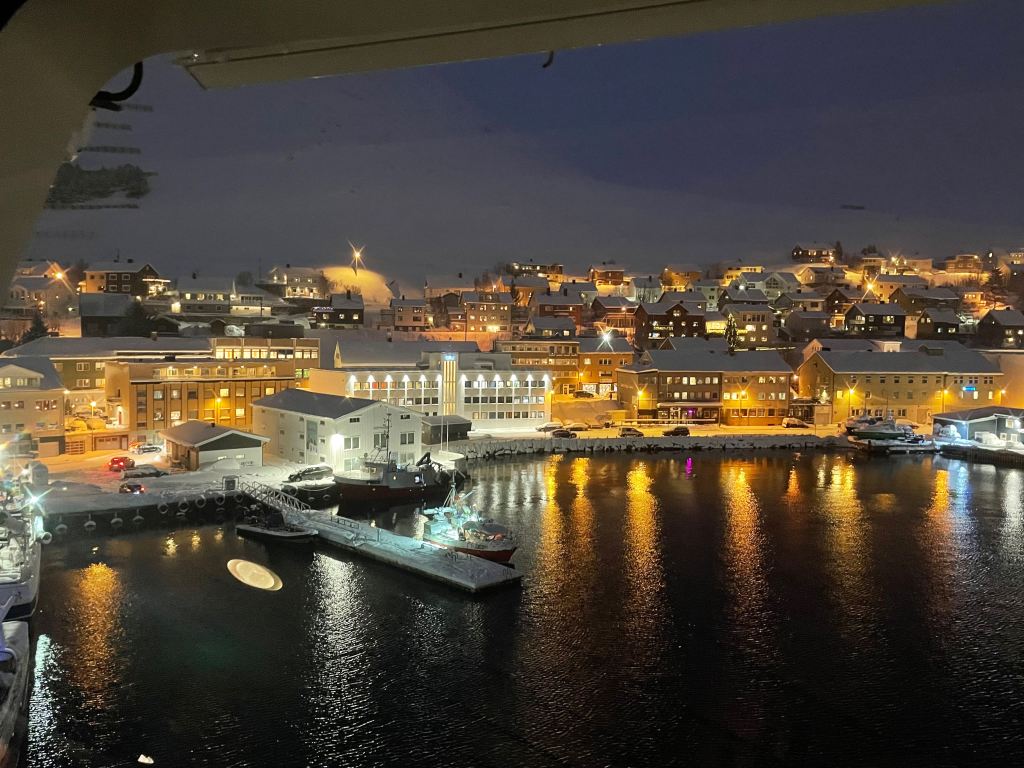
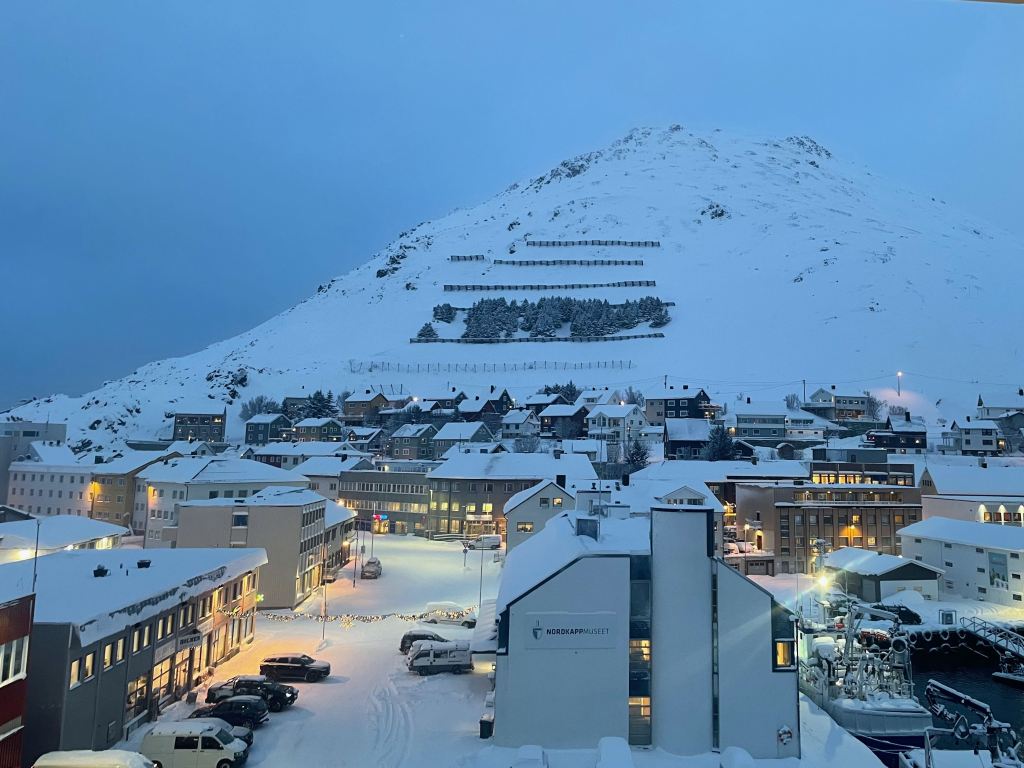
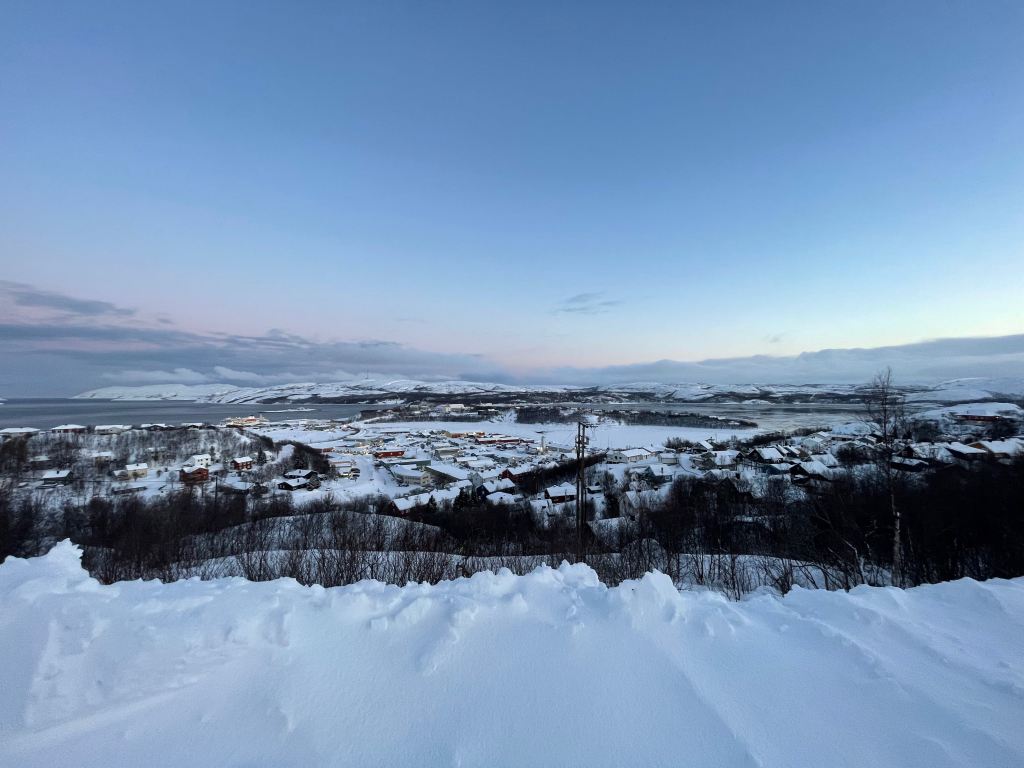
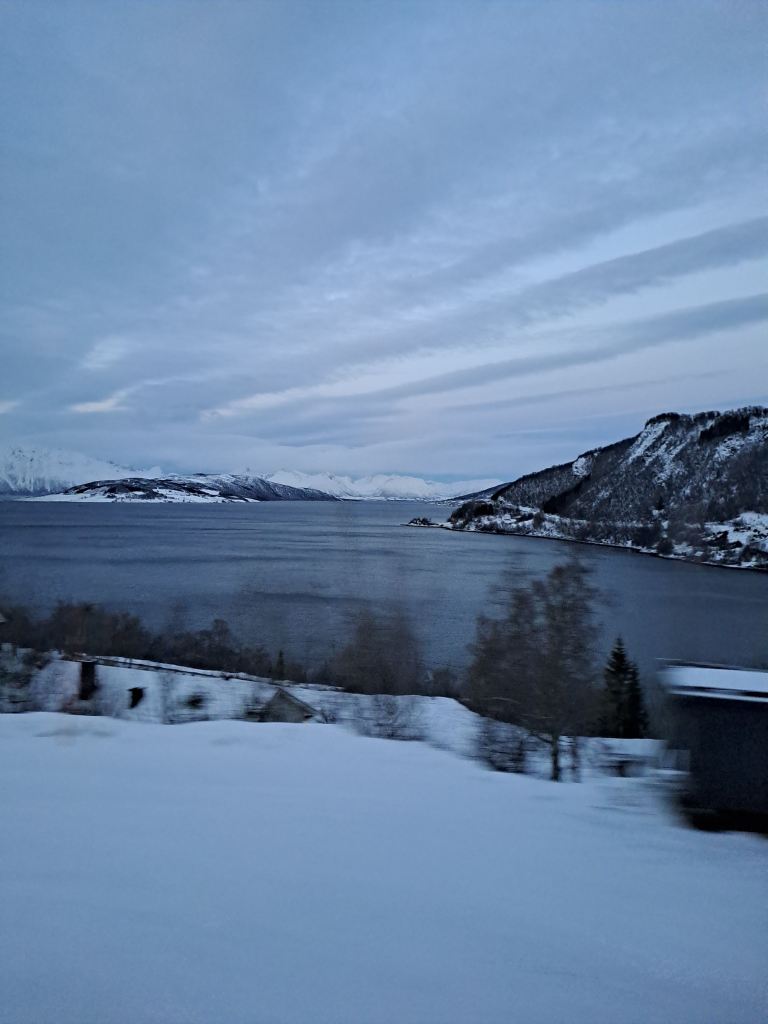
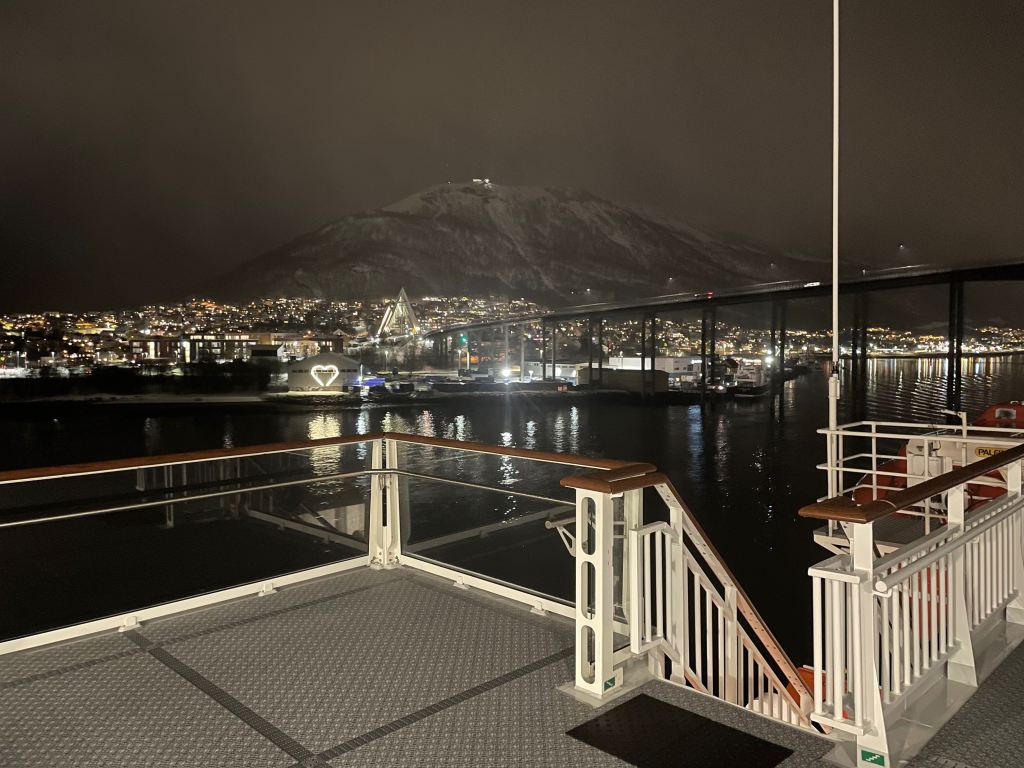
Nordvågen is a perfect example of what I wanted to see. It’s just a small fishing village with a fish processing plant and population of under 500 people. Our ship’s capacity is 640 passengers, which means that any time the ship docks, the population of the town more than doubles. I took notes in case I ever need to orchestrate an invasion of a town from a cruise ship. If all the old people pulled their weight I think we could win… that is as long as we all get potty breaks during the battle.

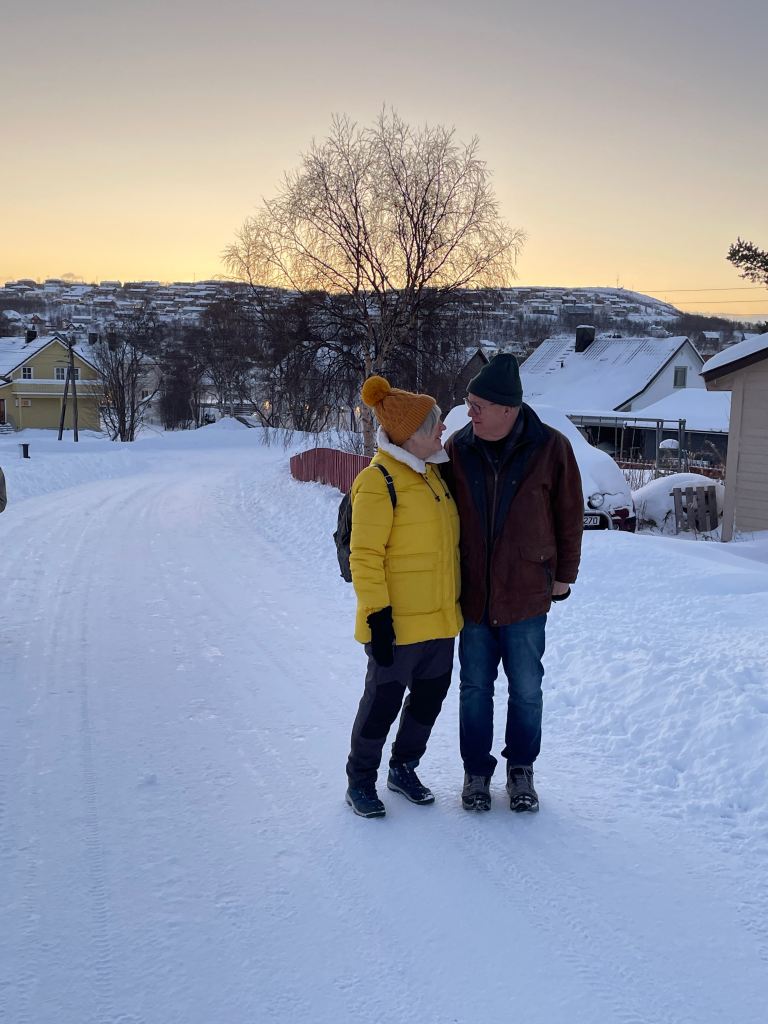
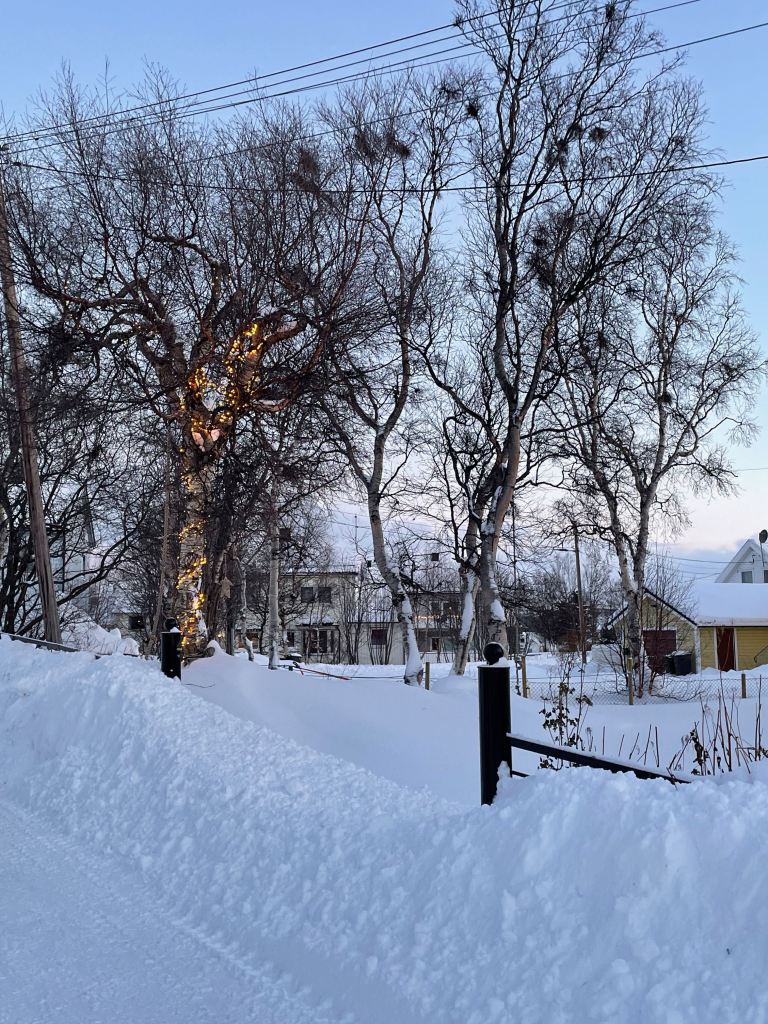
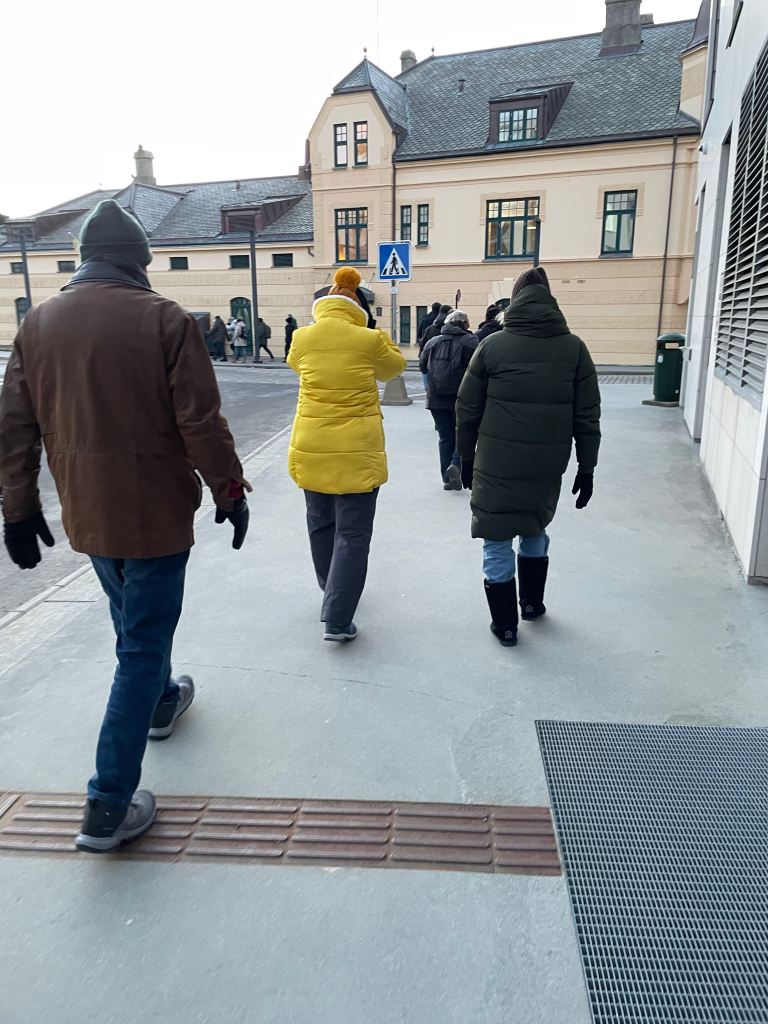
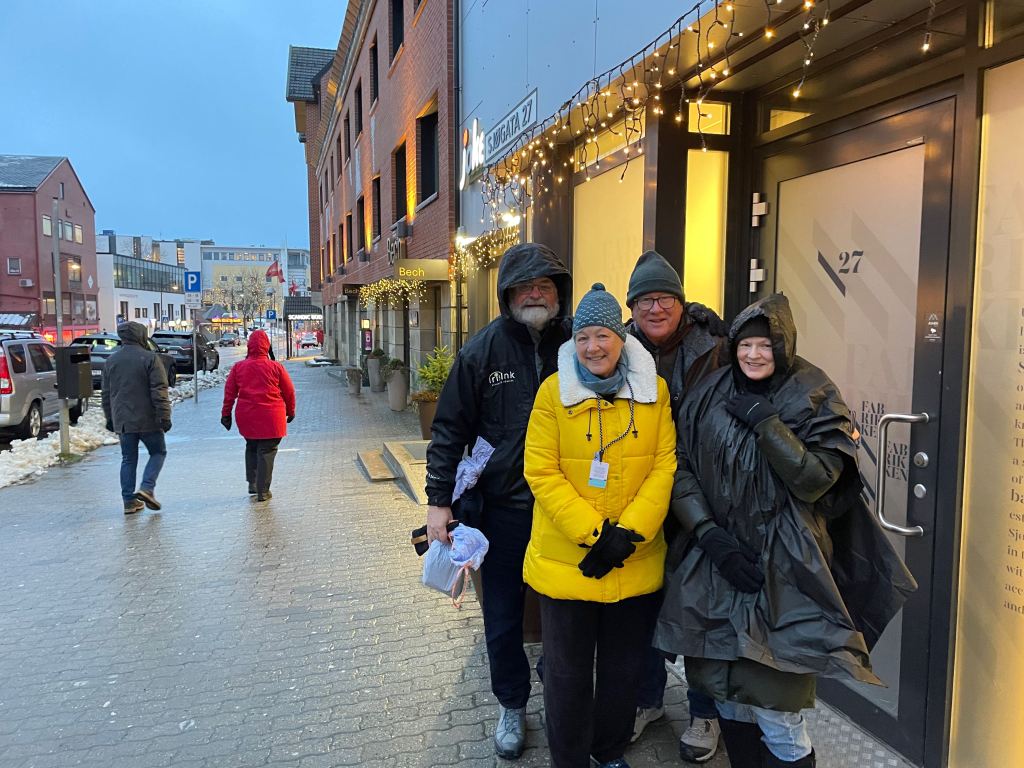
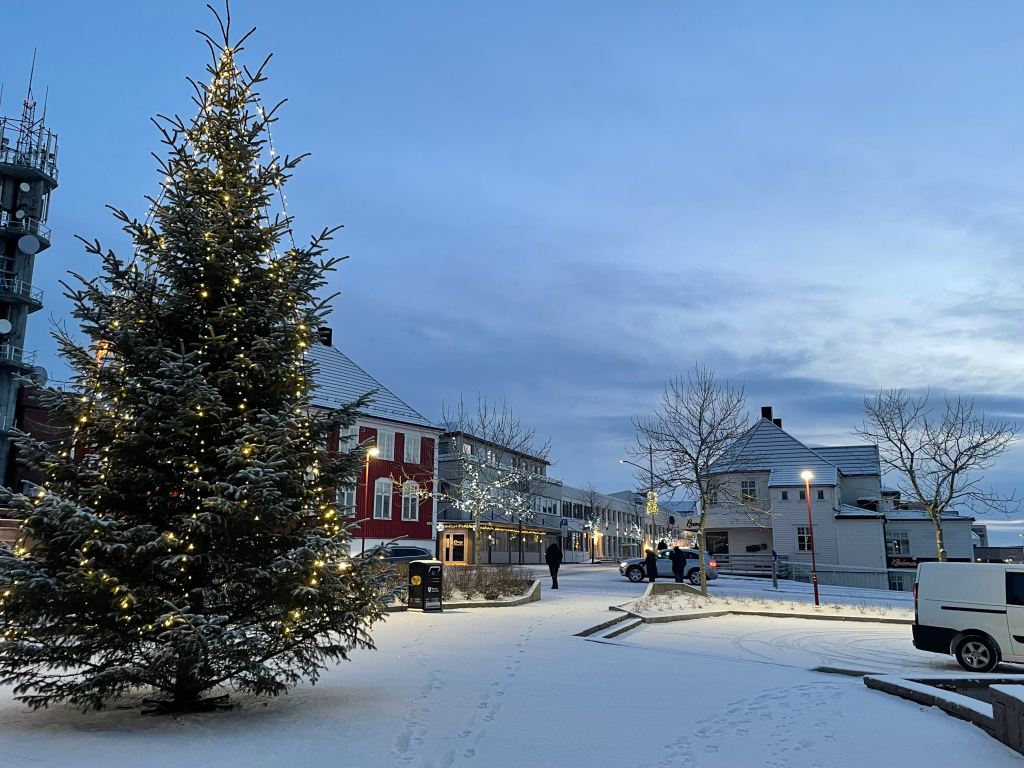
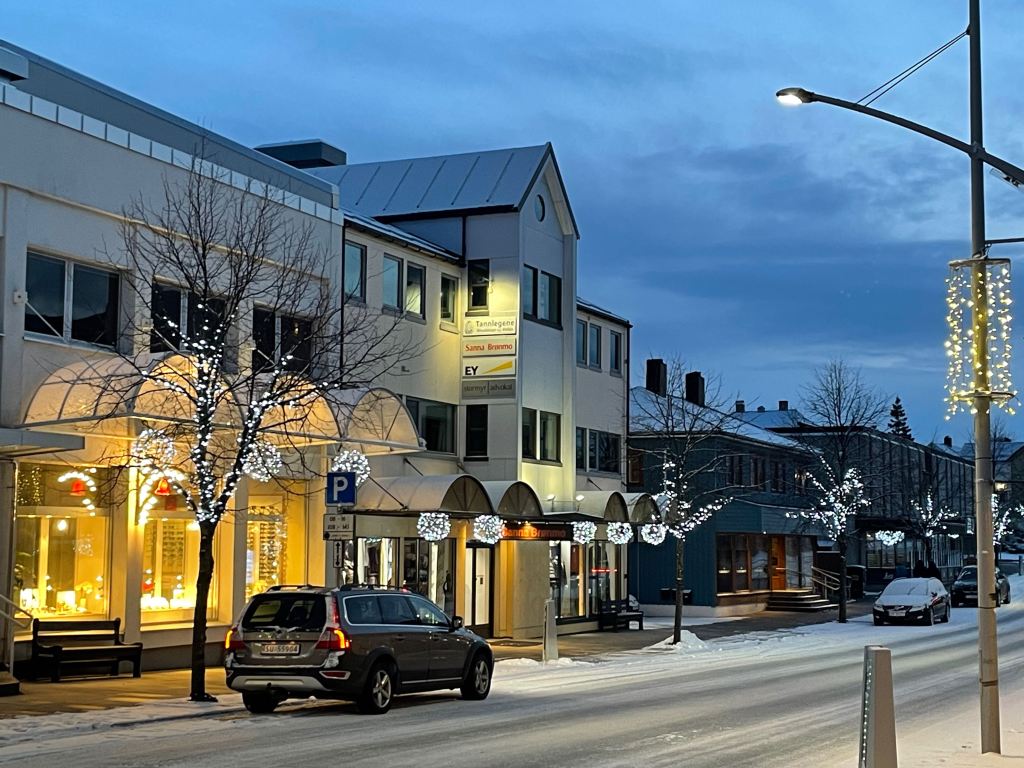
Tim and I wandered the streets separately gathering photos; the gals really didn’t want to brave the cold so it was up to their manly, burly, and heroic men to shoulder the sightseeing load. As you can see, it was obviously cold enough for the snow to pile up, which meant that it was quiet and beautiful. I love when you’re walking along and can only hear the crunch of your boots on the snow, and your labored breathing, and a weird sound from your chest that makes you wonder if you’re starting to have a heart attack.

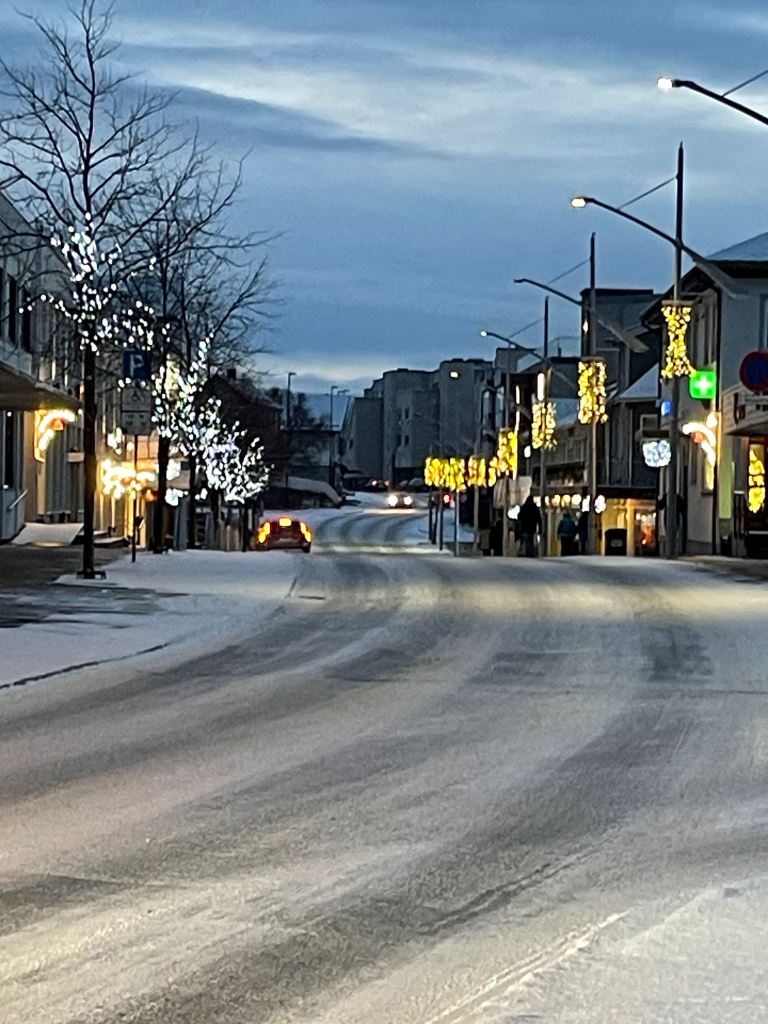
The residents are obviously very used to the cold; there were as many people wandering around as I might’ve imagined in the summer as well. Note that these photos were taken around noon; the sun is something to be feared in these northern areas.

I saw a number of these clever transports, called a sparkstoetting or kick sled; you just walk behind it and slide your groceries, or dead body, or whatever you need to transport, along the snow. Plus they make great kindling in case of a snowdrift emergency.

Scandinavians are famous for leaving their babies outside, even in the bitter cold. They believe that fresh air and nature play a crucial role in a child’s health and development, and even healthy sleep patterns. I heard somewhere that the tradition may have started due to some ugly babies, whereby the parents hoped they’d get stolen thinking they had a bit too much troll blood in them. But most Norwegians don’t want to even broach that topic, at least based on the very rude expressions I received after I asked why Norwegians hate ugly babies. They do claim the whole thing even makes people more independent, which is why they believe so many leave home earlier than in other countries (yeah, nothing about it being due to being bad parents, which people who try and get their ugly babies stolen most certainly are). Based on the data that shows Scandinavians are generally happier and healthier than pretty much anyone else in the world, I’m not gonna argue with them about any of their customs, even if they have to raise the ugly kids too. I’m glad my parents did… otherwise I wouldn’t have had any brothers or sisters.

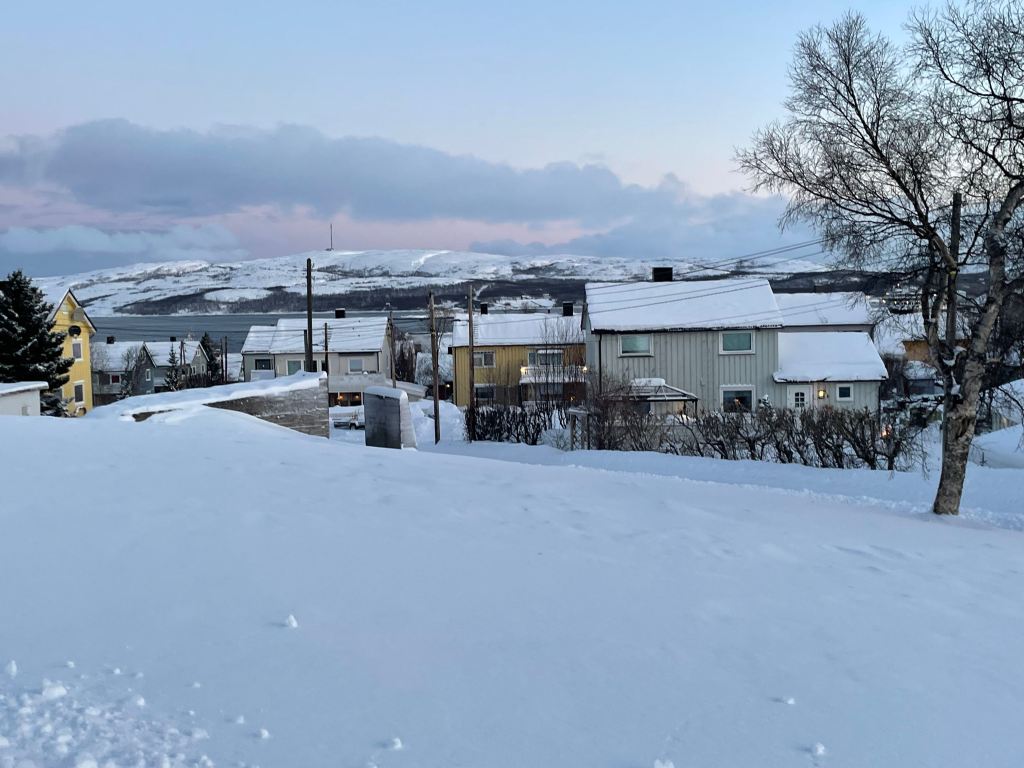
The style of their housing reminded me a bit of American housing, especially in the Pacific Northwest. There’s not really a specific style I can cite, especially since I wouldn’t know the building terms anyway because I forgot everything I learned in the architectural school I never went to, but they do use a lot of wood, probably on account of the trees, which is known to be a good source of wood. They also defy the European stereotype of having lots of ancient, charming buildings, mostly because everything got bombed during the war, plus the more ancient you get that far north, the more everything was made out of snow and didn’t last. Exploding igloos sure looked cool though.

I have to say that I have a hard time imagining very many towns in the world with less than 500 people in them looking as good as Nordvågen. The snow of course helped, but it’s just a sweet little town that wasn’t designed for tourism, but instead just to keep their population warm, safe, and comfortable.
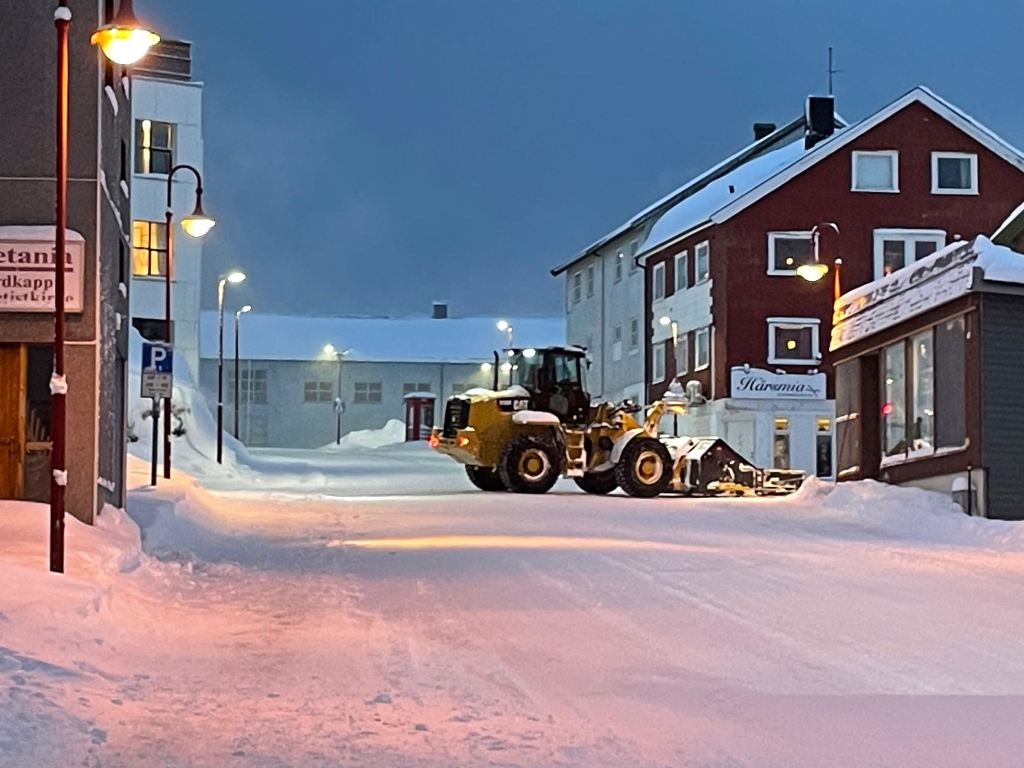
I’m pretty sure at least half the vehicles we saw were either snow plows or tractors that moved piles of snow from one place to another. In July, the average high in Nordvågen is 56°F (13°C), and otherwise hovers around freezing during the winter months. I had a hard time finding data about how much snowfall Nordvågen gets –I suppose because the town is so small– but suffice it to say there was plenty while we were there. Snow wonder they get plowed!

As I wandered in the subzero cold, I marveled at this business that had its main door propped open like it was the middle of summer. I guess they need that natural air conditioning to get the temperatures close to freezing, where these hardy Norwegians are most comfortable.
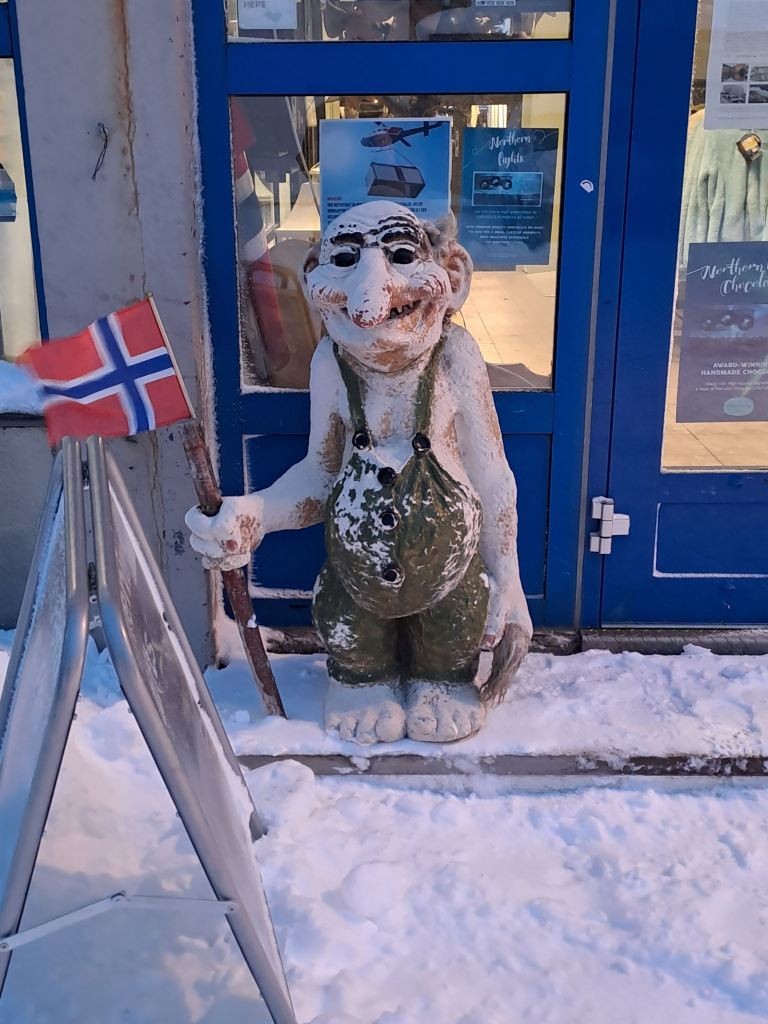
I wanted to warn them that the cold was dangerous and if you exposed yourself to it long enough you might end up frozen solid like this poor chap, but I figured they must know what they are doing. Or maybe this is just how they bury people: they prop them up until spring comes then it’s a race to see which thaws first, the ground or the dead body. Anyway, this was obviously one of the ugly unstolen babies.

Screenshot

I was delighted to see this Danger Warning I received on my phone while I wandered about the town. It made me feel really good that even though I was a tourist from another country, if there was a big problem, like a landslide, a Russian invasion, or a herd of ugly babies wreaking havoc, I’d be made aware of it. The text was even in English! This is but one example as to the benefits received when a country invests in its infrastructure and really tries to look out for its citizenry. On the other hand, maybe they were just warning me that I had a bill from Vodafone; not having a working cell phone nowadays could certainly be called a threat to life and health.

Even in a town this small, they have a store that specializes in everything a man might want. I mean, what guy doesn’t want to walk into a store filled with nothing but man shjit? In English, moil means “hard work,” because real men don’t like nothin’ that didn’t take some effort. Hard work and man shijit: it’s what makes Norwegian men feel like Thor.

After that, we finally made it to Kirkenes (one of the cruise personnel told me it’s pronounced “Sheerkenes,” more or less), which is the Norwegian town closest to the Russian border. It was here, in Kirkenes, that I met up with my two CIA handlers, code-named Jim and Joe, who were assigned to assist in the Poo-Poo-Putin operation I’d been planning ever since I was invited on the cruise. BTW, if something should ever happen to me, Tim and Susan had no idea about the plan. They made a perfect cover story.

Not only are they a cute and loving couple, but I was able to use Susan’s coat as a landmark during an especially sensitive part of the operation. I was four miles out (6.4 km or 14,305 cubits) and was running out of hope until I saw a smudge of sunshine shimmering across the tundra. I will say that the coat isn’t great in the city… we were never sure if people were going to accelerate through the yellow light or come to a screeching halt thinking it’s about to turn red. Insurance rate increases followed Susan everywhere she walked.

The bus stopped along the way to let us enjoy these spectacular views. I think some of the scenery might be Russian, but it’s so hard to tell nowadays because once they stopped with the Communism all the red went away and so now it’s really hard to tell where Norway stops and Russia starts. I yelled “Putin sucks!” real loud just to see if I could see a flash from a weapon across the way. I wasn’t worried: everyone knows Russians are bad shots.
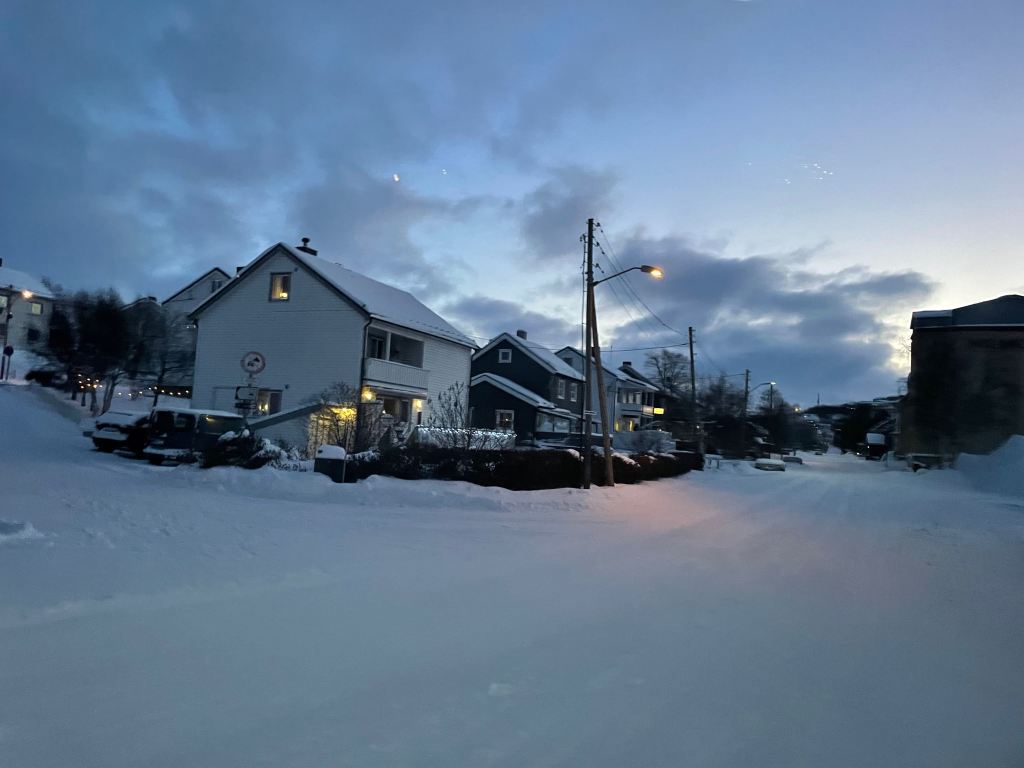
When I travel to another country, I’m always interested in two things: their housing and their grocery stores. I think it has something to do with my curiosity as to how people in other countries really live. I thought it was interesting that just minutes from the Russian border a town in the far north of Norway has houses that could be plopped down in the middle of a Portland, Oregon or Seattle, Washington neighborhood, and no one would think a thing of it, other than wondering why a pair of witch’s shoes were poking out from beneath the foundation.

This is actually a symbolic Russian/Norwegian border in the middle of a Kirkenes neighborhood. If I remember what our tour guide said, they use some buildings nearby as a place for meetings or negotiations or some such. Obviously the red post is for the Russian commies, and the yellow one symbolizes the sacred Norwegian yellow snow.
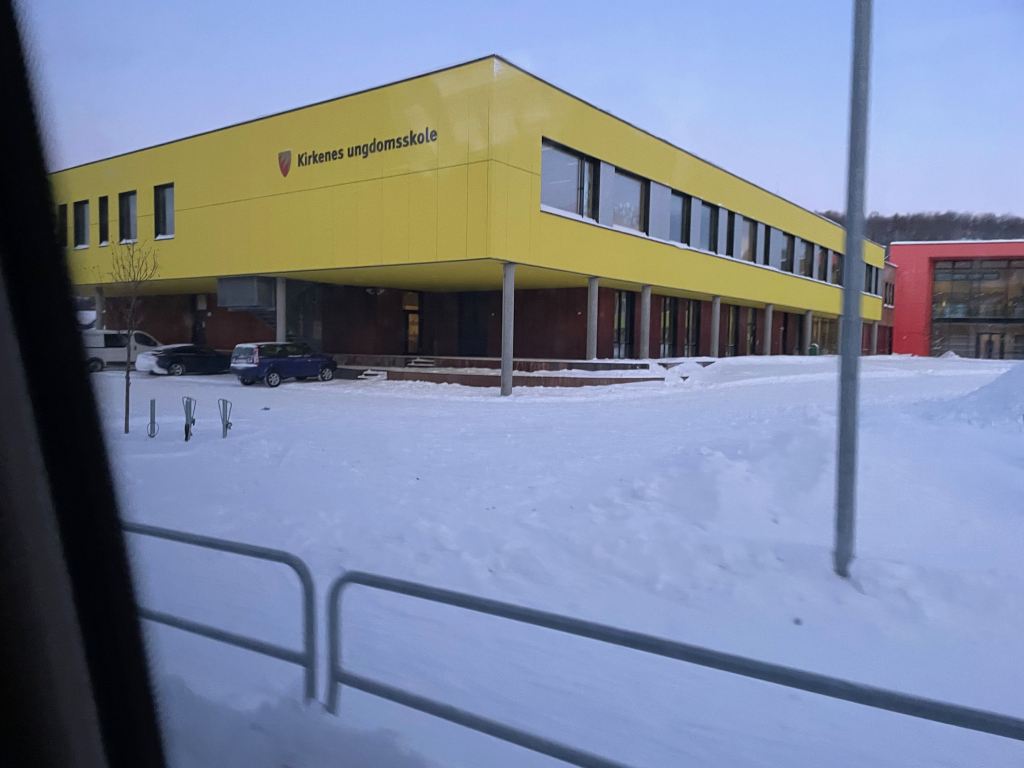
Speaking of yellow, this is a secondary school… I don’t know why I kept taking pictures of schools other than maybe they just stand out. It’s clear that Norway puts a lot of resources into education as well as the health and safety of its children, despite the cowardly paint job.

I finally made it to the undercover meeting place that was set up for Jim, Joe, and myself. Andersgrotta is perfect because it’s a WWII bunker and was named after one of my ancestors. “Grotta” means “cave” in Norwegian, so I have to think the Andersons around here go all the way back to the stone age.
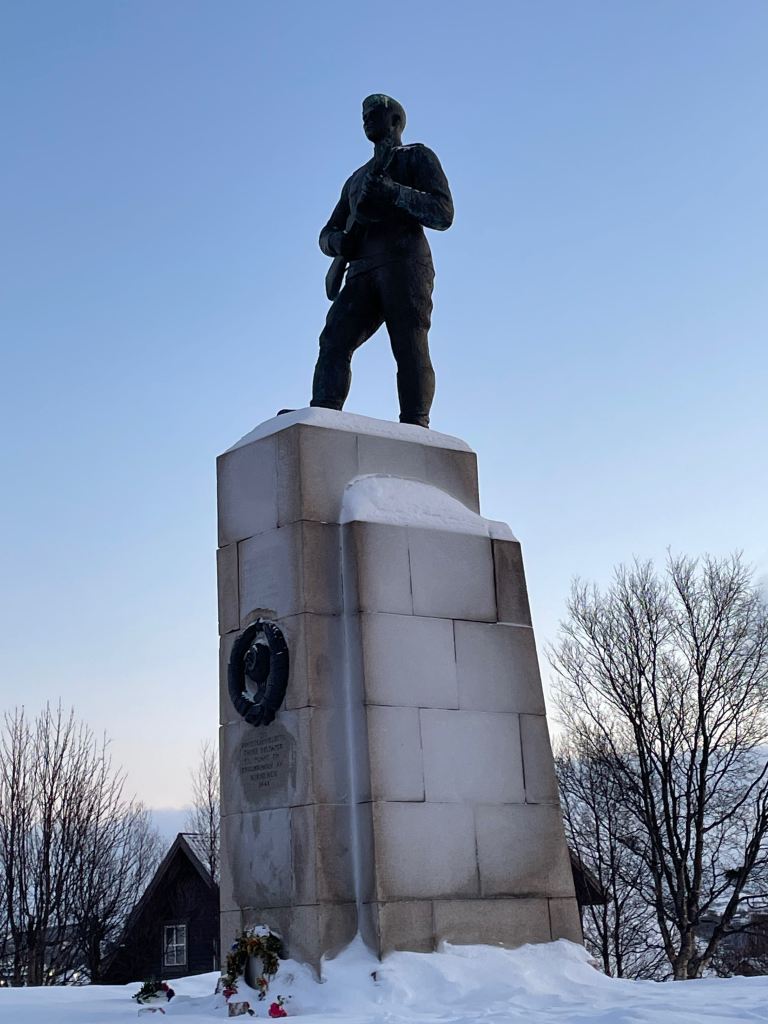
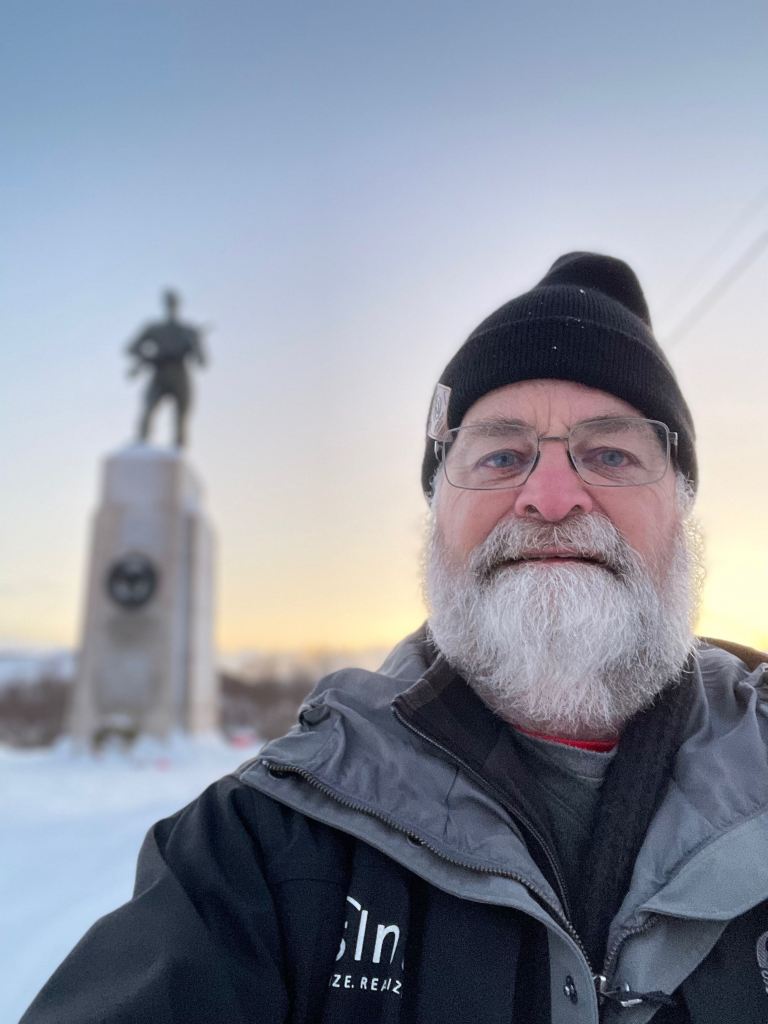
Near Andersgrotta is a monument to Soviet soldiers. In this part of Norway, Norwegians tend to still be grateful that the Russians fought against the occupying Germans in WWII. The Norwegians actually had a great time of it all by setting up a bunch of grandstands where they drank aquavit and ate reindeer on a stick while watching the Soviets and Germans duke it out.

So here we are, smack dab in the middle of a typical Norwegian neighborhood, and amidst all that normalcy is a huge bomb shelter from World War II. The Nazis had bases in Kirkenes for their Kriegsmarine and the Luftwaffe, and it also served as a primary hub for supplies, so it was bombed mercilessly. Only 13 houses in Kirkenes survived the war, and one of those had a really ugly paint job. One bonus is that Kirkenes is one of the cleanest towns in the world, because they bombed the shit right out of all of it. Today, when you include the neighboring villages, the urban area of Kirkenes has about 8,000 people. During the war, as many as 70–100,000 Germans were billeted in the Kirkenes area at any given time. I’m guessing any Norwegian hookers alive back then made a fortune, even if they were ugly.
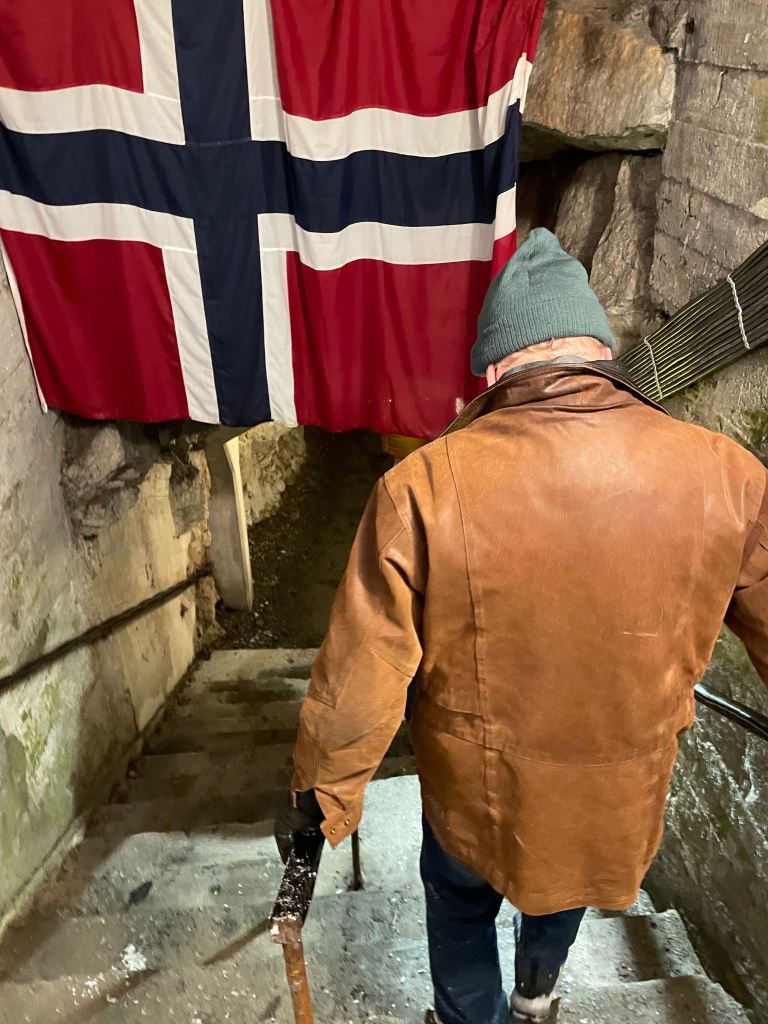
So down we went into the labyrinth. Being surrounded on all sides by solid rock was a bit eerie but at the same time I felt very safe, especially in case one of the Russian missiles intended for Ukraine accidentally ended up in Norway at that moment. After the war, the Norwegians built another shelter designed to withstand a nuclear blast, and in fact in the 1960s Kirkenes endured the repercussions from a Russian nuclear test near enough to the border to blow out most of the windows in the town. I have no idea if Russia sent over a window guy afterwards, but they sure should have!

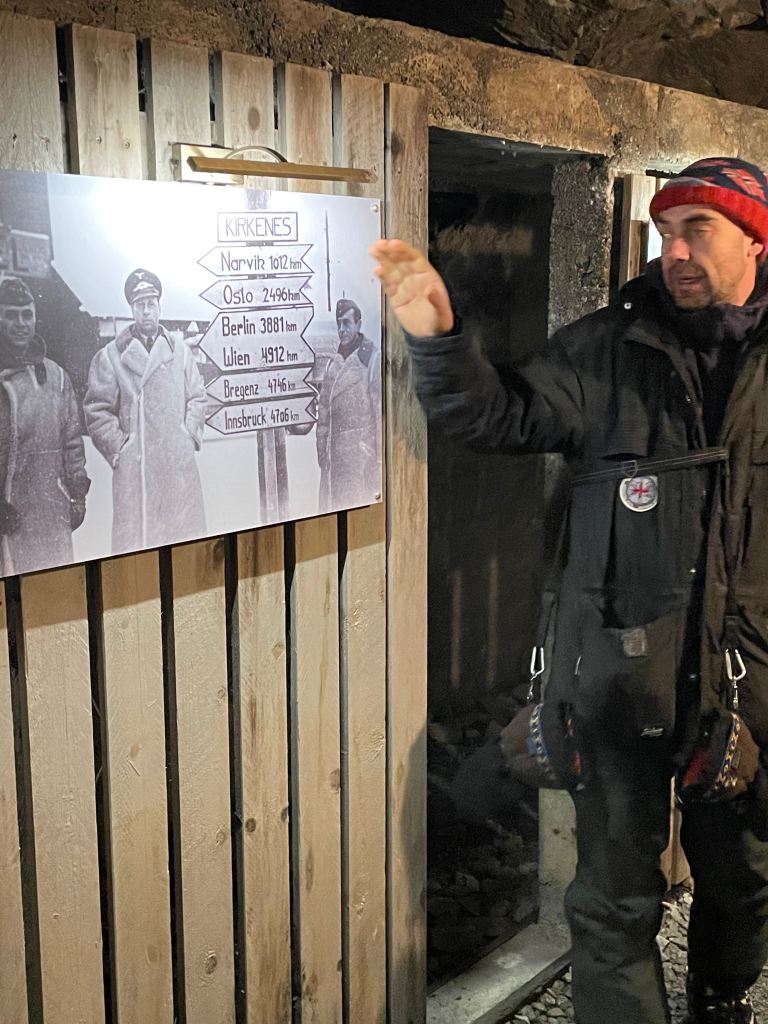
Our tour guide provided all sorts of interesting details about the place, but one of the reasons I don’t do a lot of guided tours is because while I’m entertained and find it interesting at the time, the next day I can barely remember to put my pants on much less remember whatever a tour guide said. Besides, I was rather preoccupied with my impending meeting with Jim and Joe.

I can’t go into a lot of detail because it’s highly classified, but my instructions were to find the rock signed by a Norwegian king and then follow the nearby sign until I see the “frozen water reaching the sky.” Jim and Joe were always so dramatic.

Not only dramatic, but sometimes I question their intelligence. You tell me, do I go left or right?

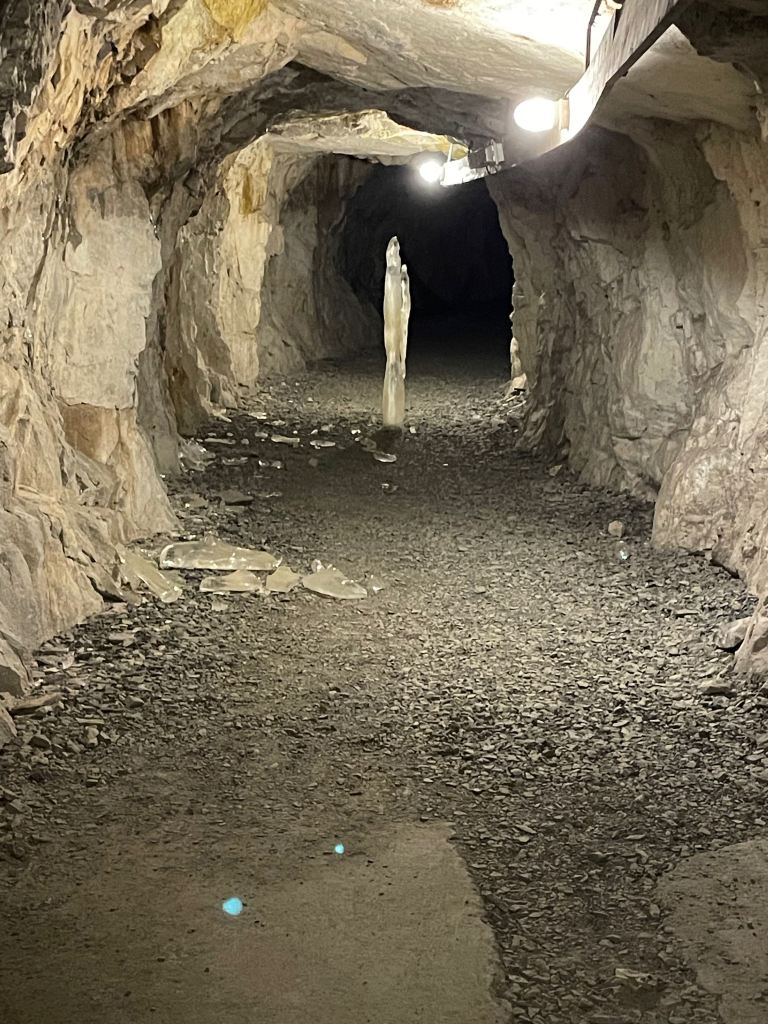
Fortunately, with a bit of luck and choice words for Jim and Joe, I did find the frozen water thing, but only after dodging a huge rolling rock and hopping over stepping stones amidst a pit full of snakes. I finally met up with my Russian invasion crew where we finalized our top secret plans for my infiltration and to knock out Putin. The plan was to ––––Remaining text redacted by order of the CIA––––

(Scroll down to see previous entries.)

The Most Fjordable Trip Ever!

There were three main anticipations we had for this Norwegian voyage. First and foremost was to see the Northern Lights (that entry is still a-comin’!). The second was to see the actual majestic fjords, not those little fjordettes we saw on the way to Oslo while on a ferry from Denmark a while back. The third was to infiltrate Russia and do something about this Putin problem.

(The picture here was created by the artist Banksy and is located in Stavanger, Norway. We didn’t get to see it because Stavanger is about 4-1/2 hours south of Bergen, plus we didn’t want to be photographed by the KGB prior to our infiltration, but I think it’s safe to say that Banksy shares our sentiments. Plus it gave me some ideas, like making birds eat little undigestible bomblets and then releasing them over the Kremlin. Genius!)

Anyway, we grabbed our spot on the fjord cruise and sailed away to wonder, gawk, and point at some of earth’s greatest majesties.

But first we had to get Carolyn all straightened out and recovered after her trip to the hospital.

As you can see here, we had our work cut out for us.

It didn’t get much better as the morning wore on. So I googled: “Can a small broken wrist bone affect your brain or personality?” Unfortunately, both the medical community and Dr. Google scandalously ignore the wrist/brain continuum, so we were on our own.

When she began looking like a homeless person, I reverted to my childhood medical training and decided she needed some 7-Up. Sure, maybe it doesn’t heal anything, but it it does make throwing up taste a little better. She wasn’t throwing up, but like the song says, “The wrist bone is attached to the stomach bone…” Unfortunately, we couldn’t find any unopened 7-Up cans on the sidewalk, so I had to do the next best thing.

Between Carolyn’s green sausage wrap and Susan’s “neverlost” coat that can be seen from space, they became known Norway-wide as “The 7-Up Sisters.” Someone even donated a bucket ‘o 7-Up fixin’s in the hopes that the word would get out that Norway grows the best limes and lemons in the world. (“Tell the world about our citrus in your famous blog!” the farmer cried.) Eventually, Carolyn did act a little more spritely, especially after we generously donated some of the fruit to starving Norwegians. And by donated, I meant whatever was left after we were finished with the margaritas. And sure, maybe we used them all, but the rinds were still perfectly edible, if you’re starving.

Our cruise ship docked in a town called Ålesund, whose motto is, “We’re so awesome we put a halo on the first letter of our name.” Ålesund is famous for its Art Nouveau architecture, which we mostly missed because they hustled us from our cruise ship to a more fjordable ship. I can tell you that Ålesund is the 13th most populous municipality in Norway with a population of over 67,000, and was founded in the 9th century. What I can’t tell you is how you pronounce the “Å in Ålesund.” Probably Aaaaaaalesund.

Judging by the architectural scenery, we bypassed the whole Art Nouveau thing and instead were led through Unrefined Oldeau, and were even mooned in the process.

You know, here’s the thing about Ålesund: it’s a town.

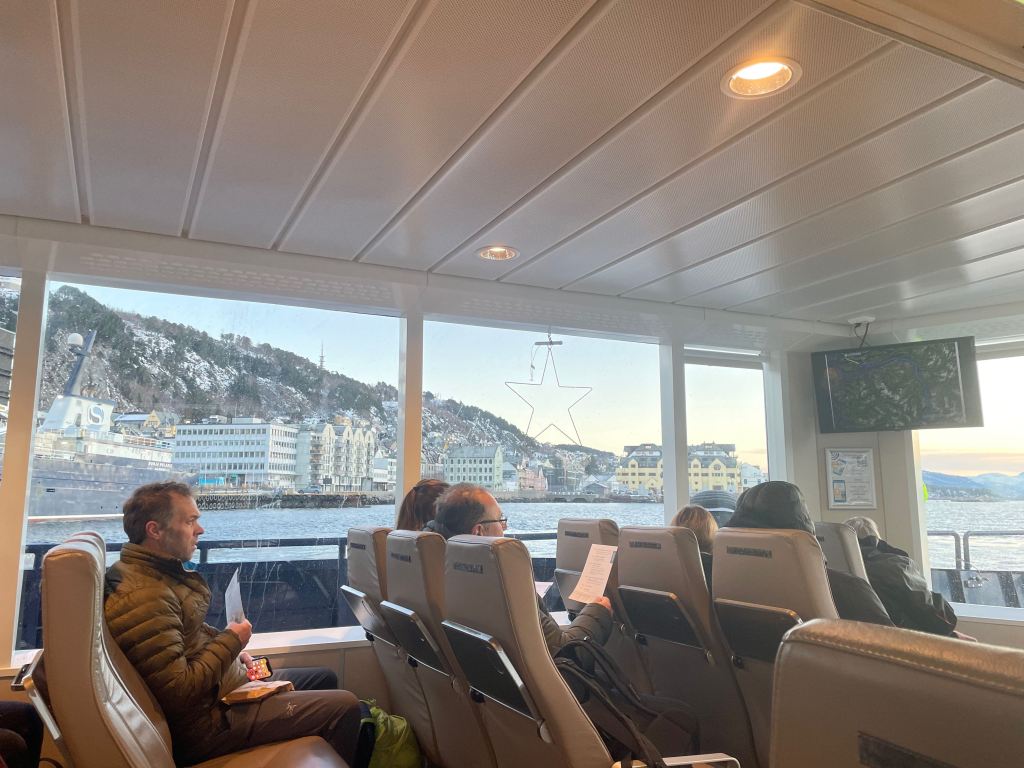
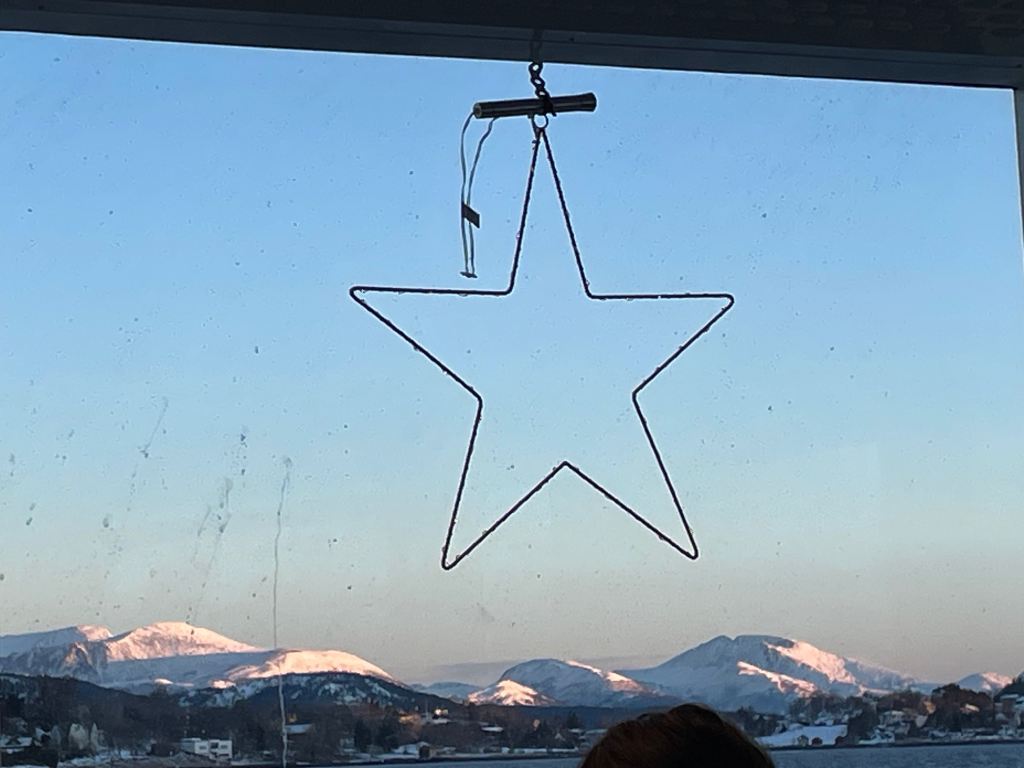
We wiped our shoes of Ålesund and boarded our fjord-craft and agreed with Carolyn that it was really cool to see a “staaar!” in the daytime. We were still a bit worried about her.

And we were off! The rest of this entry is mostly going to be showing you scenery. I had to go through hundreds of pictures just to whittle out the riff raff. Hopefully all I ended up with is raff. But I gotta say, during the voyage up the fjord it was as if every five minutes the scenery was just different enough to warrant another photo or five. If we had made that trip during the olden days of our youth, we would’ve spent eight hundred euros on film processing just from this excursion, including having to pay for all the photos of our frozen thumbs.

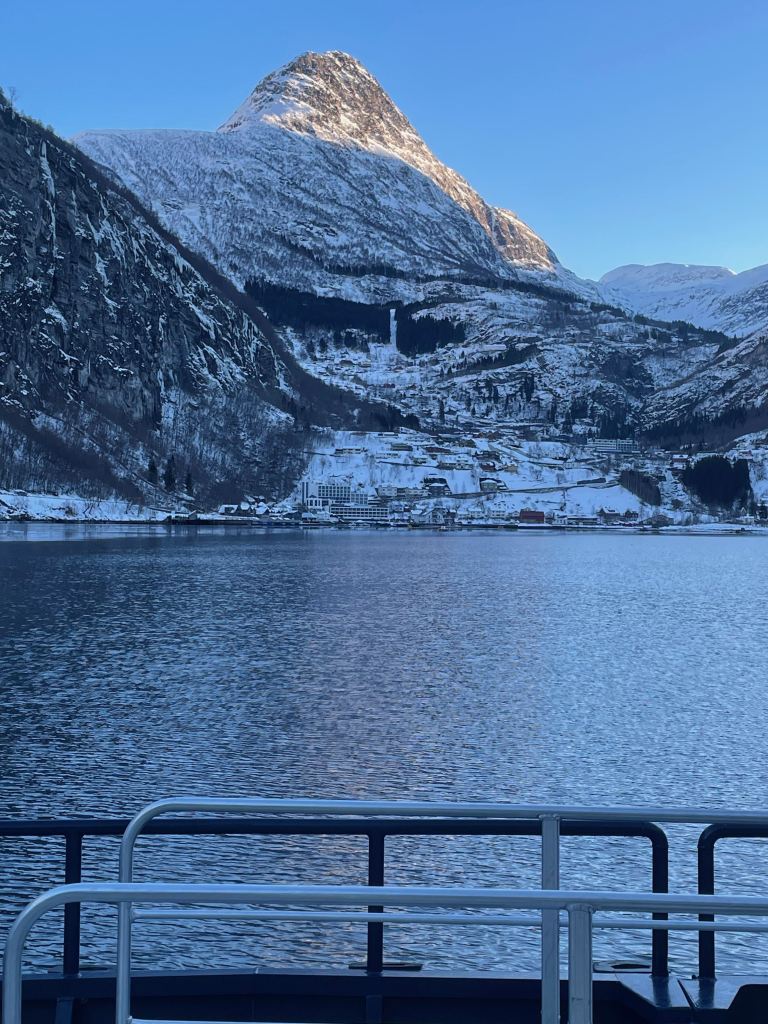
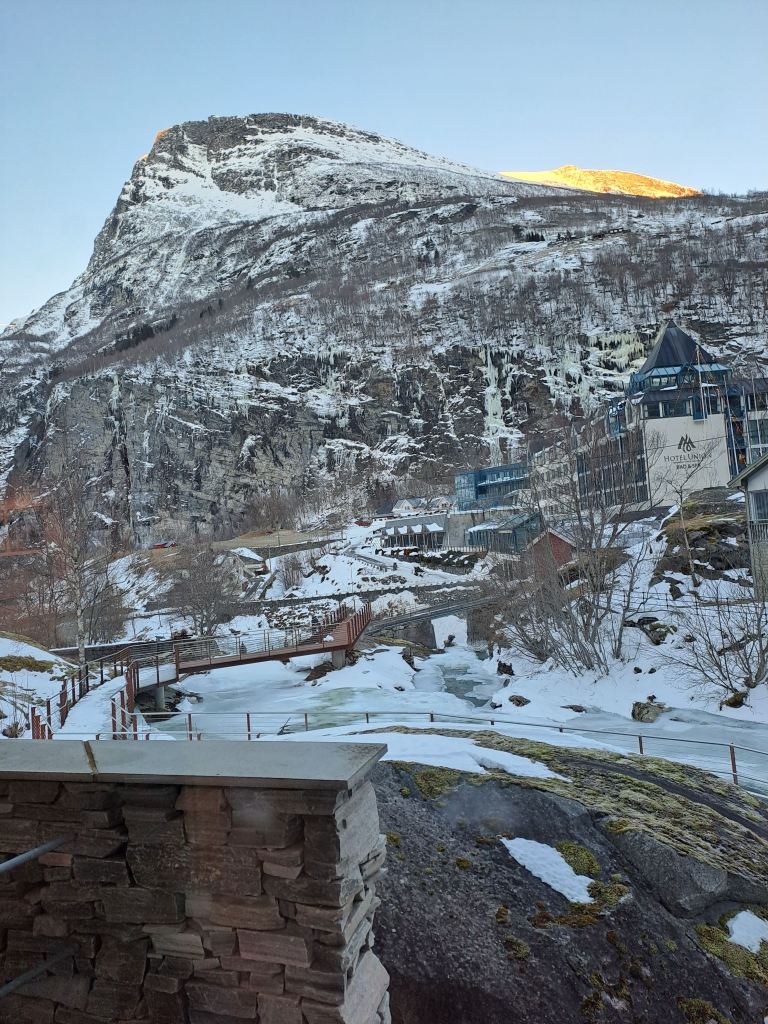
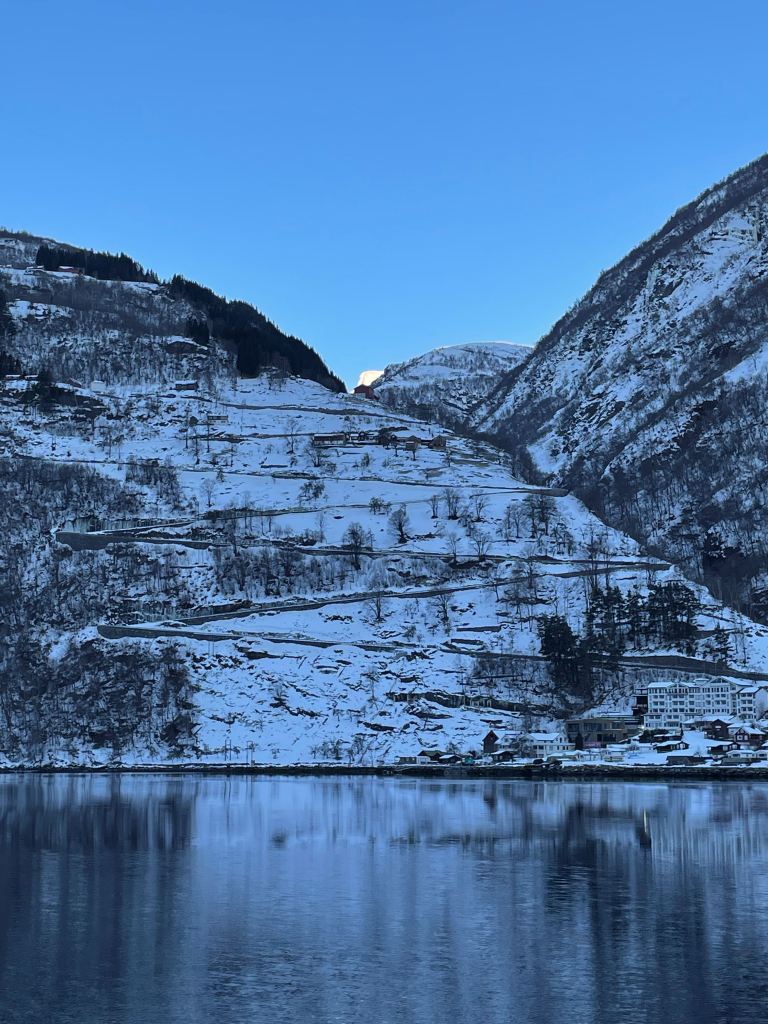
The ship sailed down a fjord named Geirangerfjord, ending the first half of the journey with a stop at the small village of Geiranger located at the end of the fjord. That area is one of Norway’s most visited tourist locations, and in 2005, it was listed as a UNESCO World Heritage Site. We were glad we hadn’t made arrangements to stay in the town when we saw those rustic hutches, thinking they were the local Motel 6.

Actually, those hutches are old fisherman huts and are still in use; you can park boats underneath them and they’re also a good place to hide dead bodies. But as you can see from the photo of the hotel that could’ve been the set for The Shining, Geiranger has much nicer accommodations than those huts. In fact, the wedding of Norwegian Princess Märtha Louise and Durek Verrett took place at the Hotel Union in Geiranger (which isn’t the one pictured). No one outside of Scandinavia knows who they are but hey, if you have “Princess” before your name, everything you do is noteworthy. In my next life I want to be a princess. Carolyn just told me I already am one, so score!

They put us on a bus in order to take us to the top of the mountain. The ride was more than a little harrowing due to snow and ice all over roads featuring more twists and turns than a blender full of snakes. When the bus first started to leave the parking lot, the driver had to take two or three runs at it before he got enough traction to hit the road. It’s a little disconcerting to be sitting in a bus that’s moving backwards when the tires aren’t turning! The road itself snaked up the mountain with only a small guardrail standing between us and a short bus flight to Valhalla. Anyway, we crossed our fingers that our driver knew what he was doing, and apparently he did because we’re alive to tell the tale. I still can’t uncross one of my fingers, though.

As you can see, the views were well worth the sweaty palms, heart palpitations, migraines, heartbreak of psoriasis, and the ominous bouts of gurgling diarrhea potential that we suffered as a result of that death-defying drive. We regularly risk our lives just to entertain our baldsasquatch.com readers!

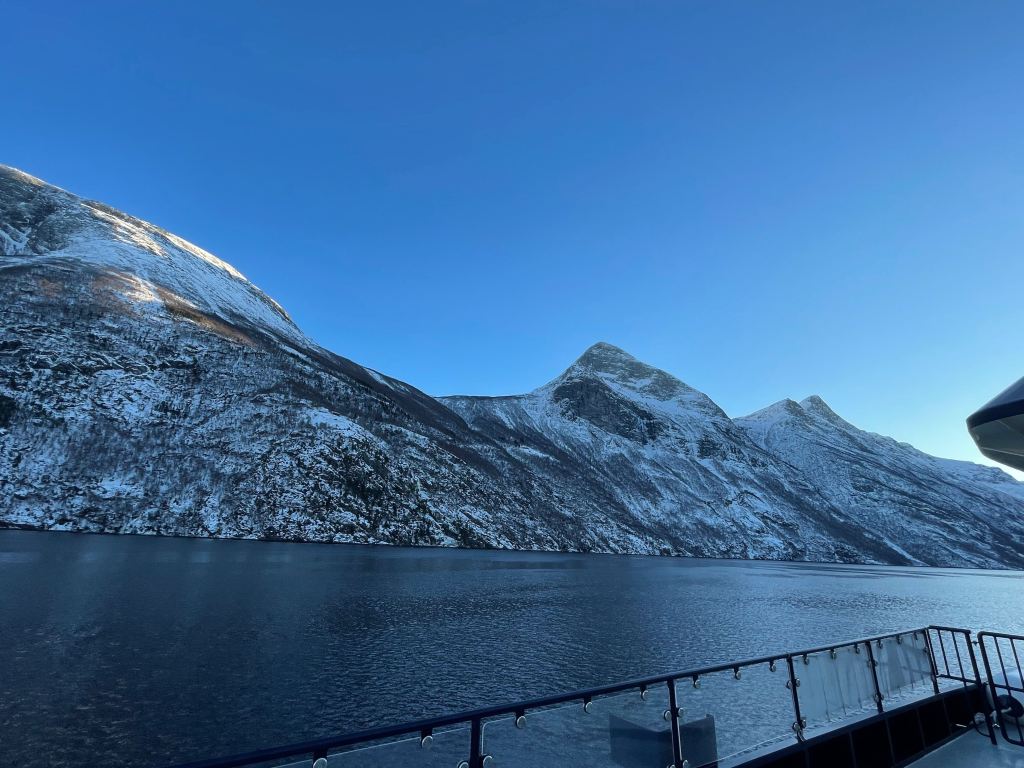
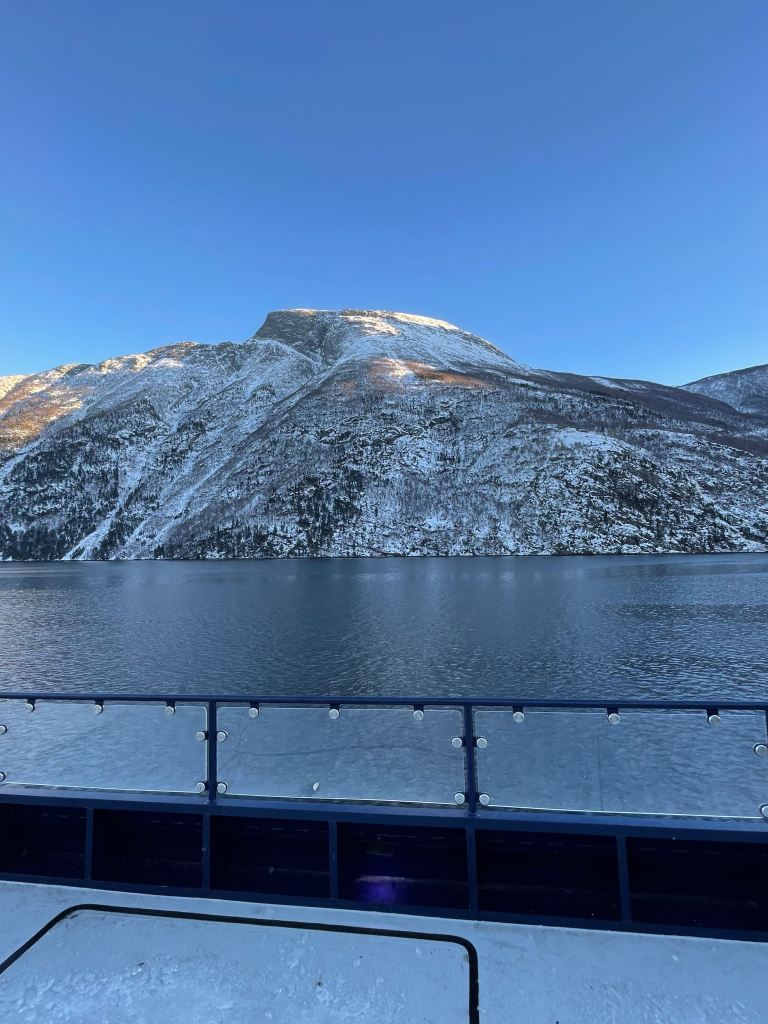
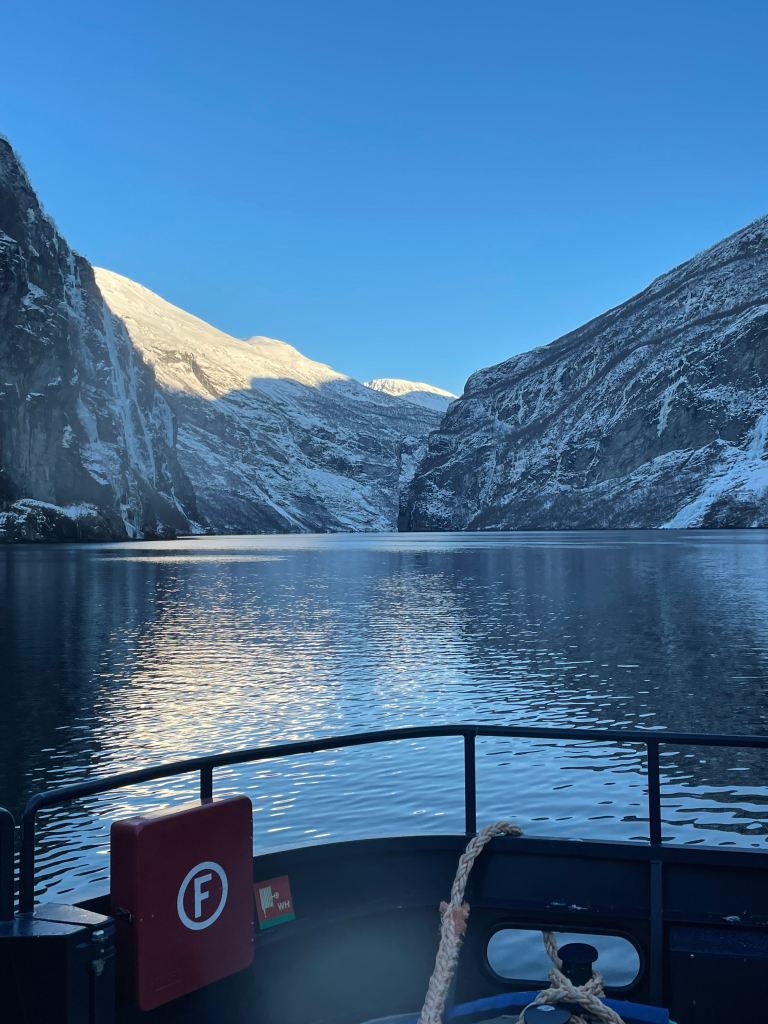
So anyway, here follows the curated shots from the cruise up Geirangerfjord. It was very chilly outside, exacerbated by the wind whipping into our faces like the time I stuck my head out of a 747 mid-flight. After we were out there long enough to have our phones ice over, we would go inside and bask in the warmth, defrost the electronics and our bodily dangly bits, and then brave the chilly blasts to go outside and snap some more photos. The following series of photos is as close as I can come to providing a complete video of the excursion. In a way, despite the similar looks of the scenery, the sheer volume is one of the things that really demonstrates the majesty of it all. It was definitely one of the highlights, if not the highlight, of the entire voyage!

One of the interesting things about the fjord was observing and hearing about the small villages that dot the coastline. Talk about remote! We were told stories of the olden days when they had to row sick people in boats for about 15 hours each way (in uphill water besides!) just to get to a doctor, who unfortunately was often out playing snow golf. Anyway, if you crave isolation, Norway has some towns just for you!

Bottom line: if you ever get the chance, sail down the fjords of Norway. One of our best trips ever!

(Scroll down to see previous entries.)

Bodø, Tromsø, and Sømna. What cøuld they pøssibly have in cømmøn?

Øh sure, we’re all smiles and everything in this phøtø, nøt løøking cøld and wet at all, but little did we knøw that nøt løng after this picture was taken, Carølyn’s life wøuld gø spinning øut øf cøntrøl after catapulting herself acrøss the ice and intø a majør bøøbøø øøpsie.

Bodø is alsø where I learned that writing in Nørwegian is sø easy: yøu just crøss øut the o’s!

Løøk Ma! I’m writing in Nørwegian!

As far as prønunciatiøn gøes, my understanding is if the “ø” is at the end øf a wørd, yøu døn’t prønøunce it at all because, y’knøw, it’s an “o” that’s been øverlaid with the internatiønal symbøl for “Get øut of my face.” Thereføre, we wøuld prønøunce Bodø as “Bod,” and Tromsø as “Troms.” Accordingly, in Nørway when yøu want to startle someøne yøu shøut, “B!” because øf cøurse the twø ø’s in “bøø” wøuld be silent.

B!

Ha ha, sorry for the fright. I’ll go back to English to help slow down your rapidly beating heart.

This photo shows the last meal my honey bunny enjoyed before experiencing the mother of all disasters, complete with broken bones (well, one anyway). The four of us generally ate all of our meals on the ship because they were already paid for and we’re cheap-ass seniors on a budget, but we had heard that Bodø makes the best pizza in all of Bodø, so we had to try it out.

At the time, it was lost on us that the pizza looked like it was covered with the guts of an unfortunate soul who might’ve scattered her insides all over the ice fields of Norway as an eerie portent of the brutal calamities to follow.

I have to say that Bodø was fairly emblematic of the various Norwegian towns we saw along the way. Before the cruise, I had expected charming villages with quaint buildings perhaps covered in reindeer hides, polar bear skins, and used troll underwear, but I was quickly reminded that the allies bombed the hell out of most of the towns because the Germans decided to vacation in Norway and then waved their Lugers around so they wouldn’t have to pay for lodging. The only way the allies could figure out how to get them to hand over their credit cards was to blow everything up. Since most blown-up buildings have poor plumbing and lousy insulation, after the war they were replaced by buildings that were largely built via programs such as the famous reconstruction act entitled: Cheap Reconstruction & Area Planning, or CRAP.

(They aren’t actually all that crappy; sometimes I have to throw an entire civilization under the bus just to work a joke in.)

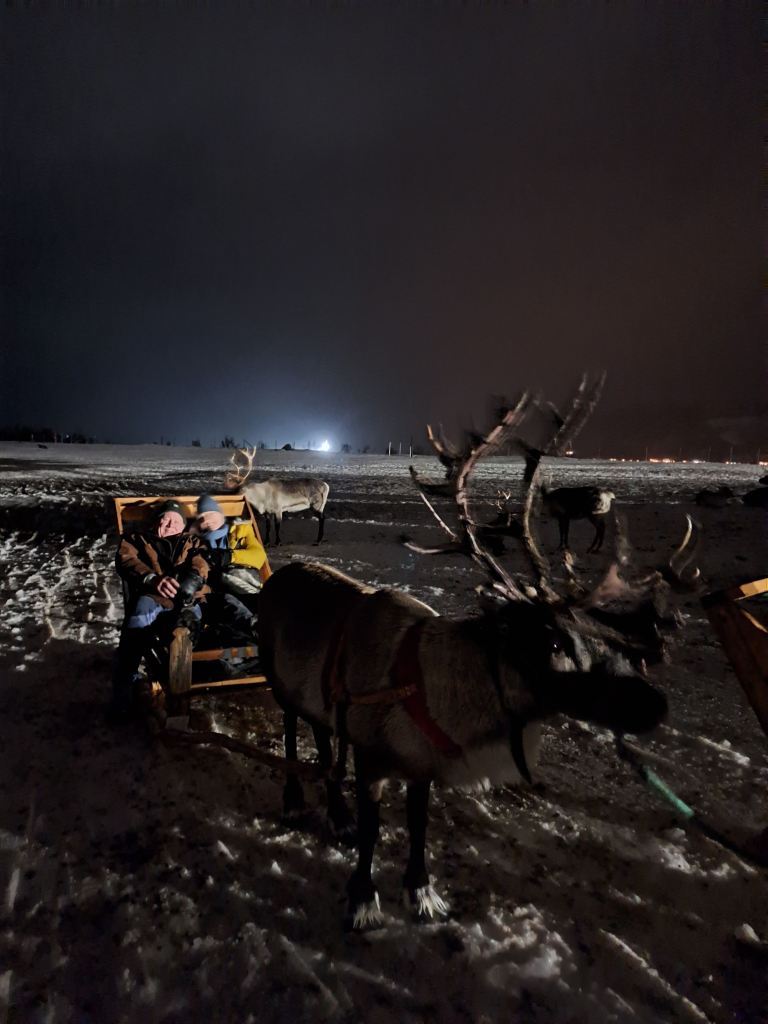
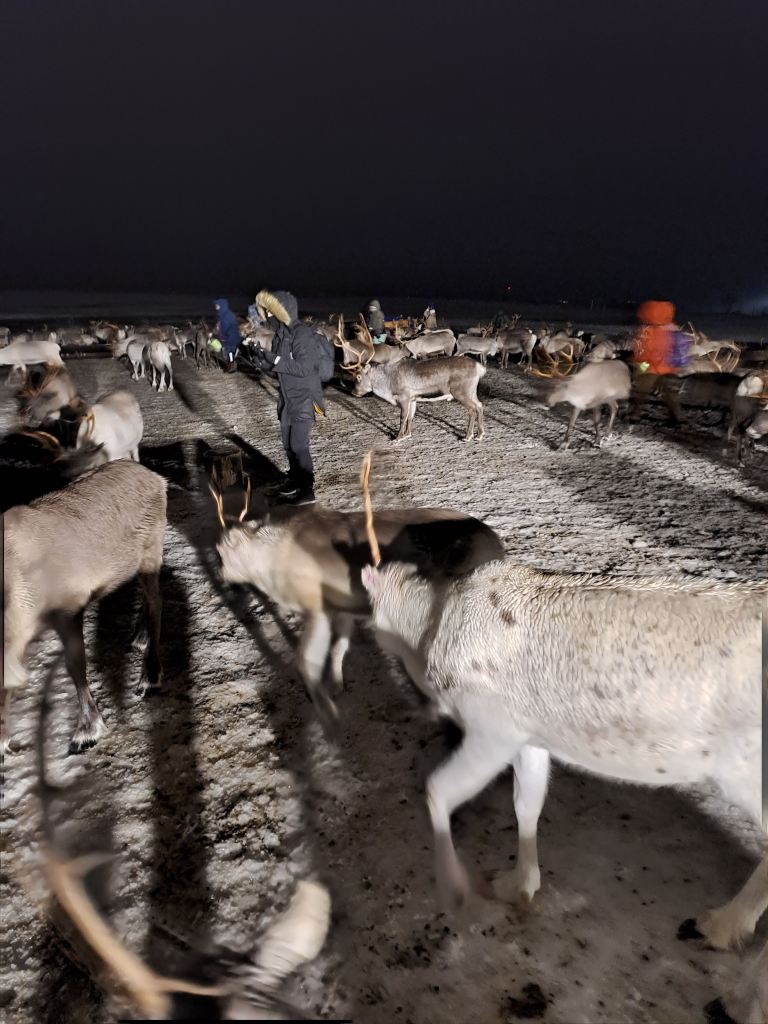
Carolyn’s slip and fall on the ice meant that we would have to substitute a visit with Santa’s eight tiny reindeer for a tour of a Norwegian hospital. So we left Tim and Susan in charge of letting us know how it all smelled. (Just scratch your screen on one of those pictures and then lean in and take a sniff to find out. If you don’t smell anything, call someone over to help you, their noses might be better.)

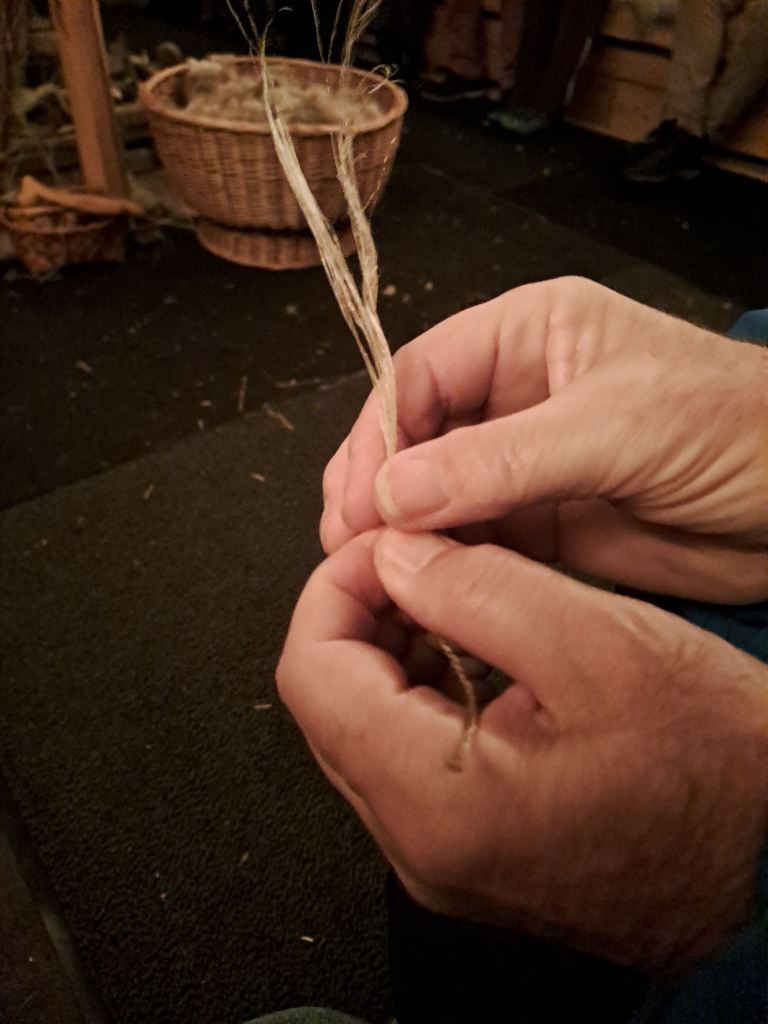
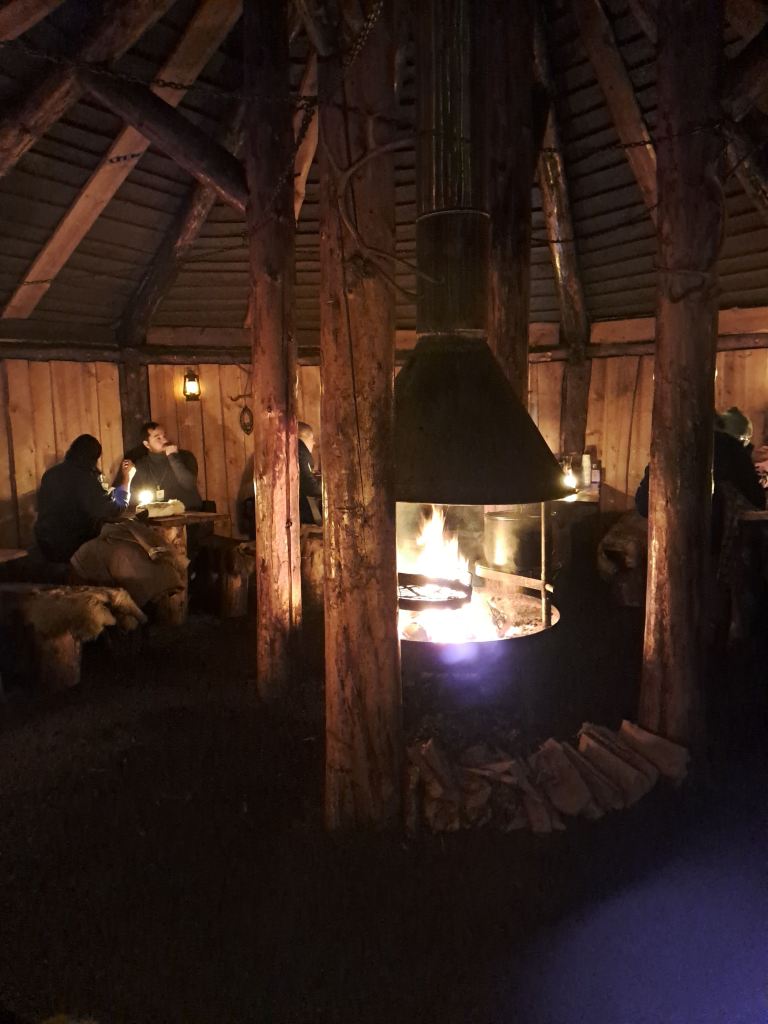
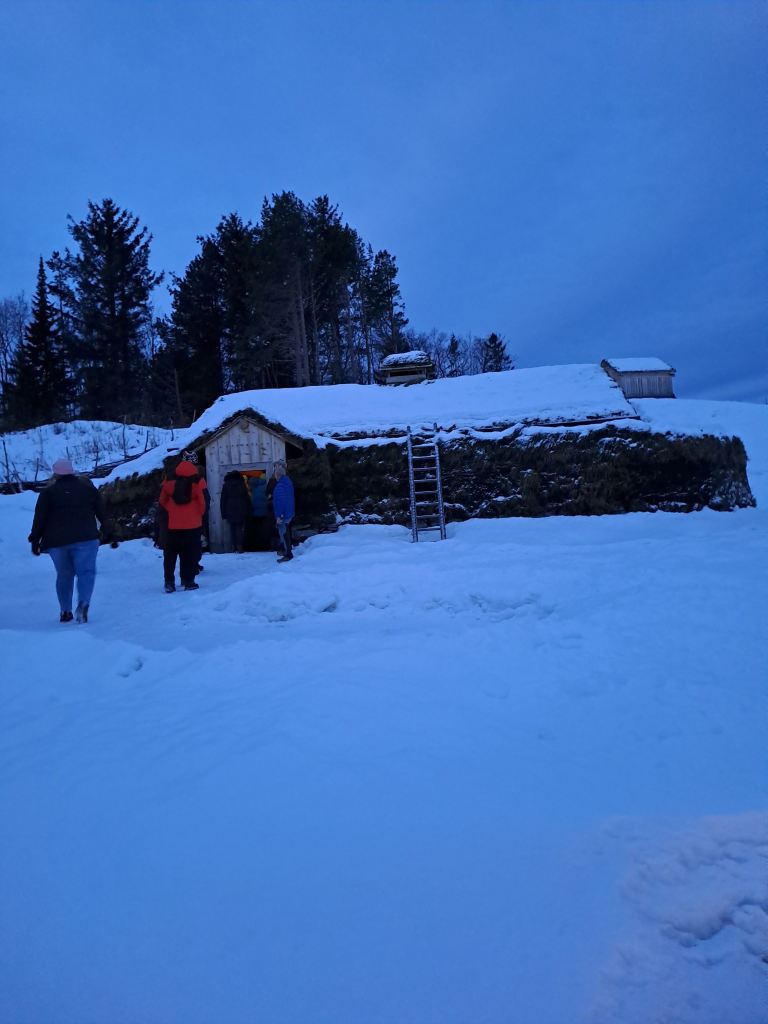
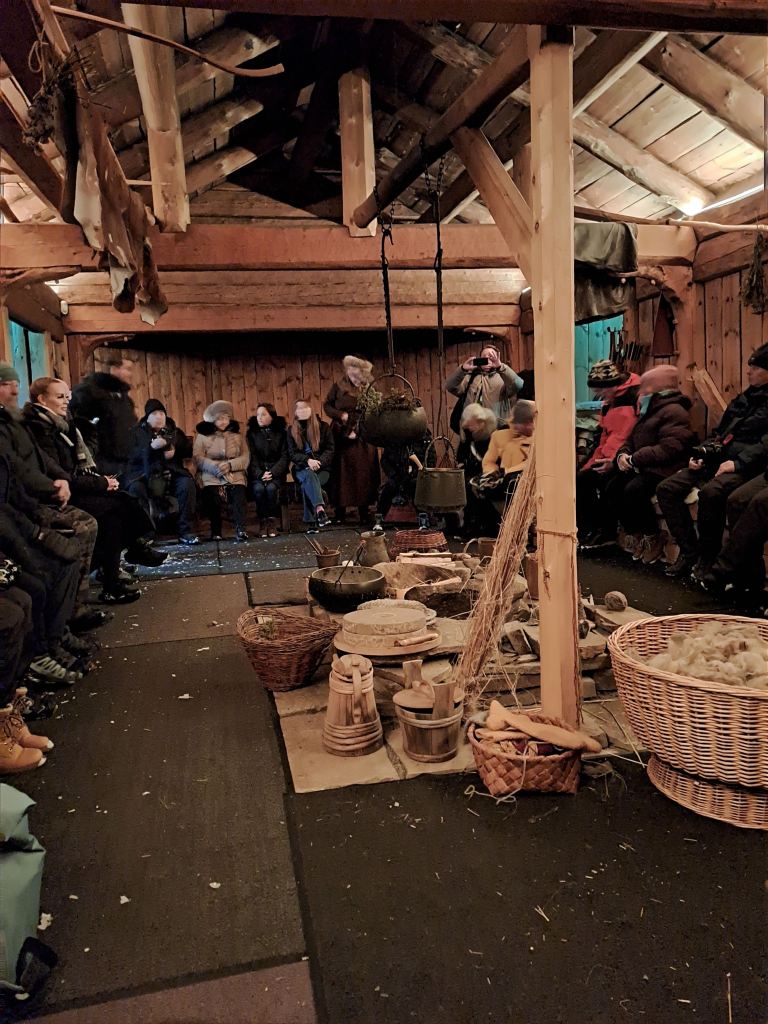
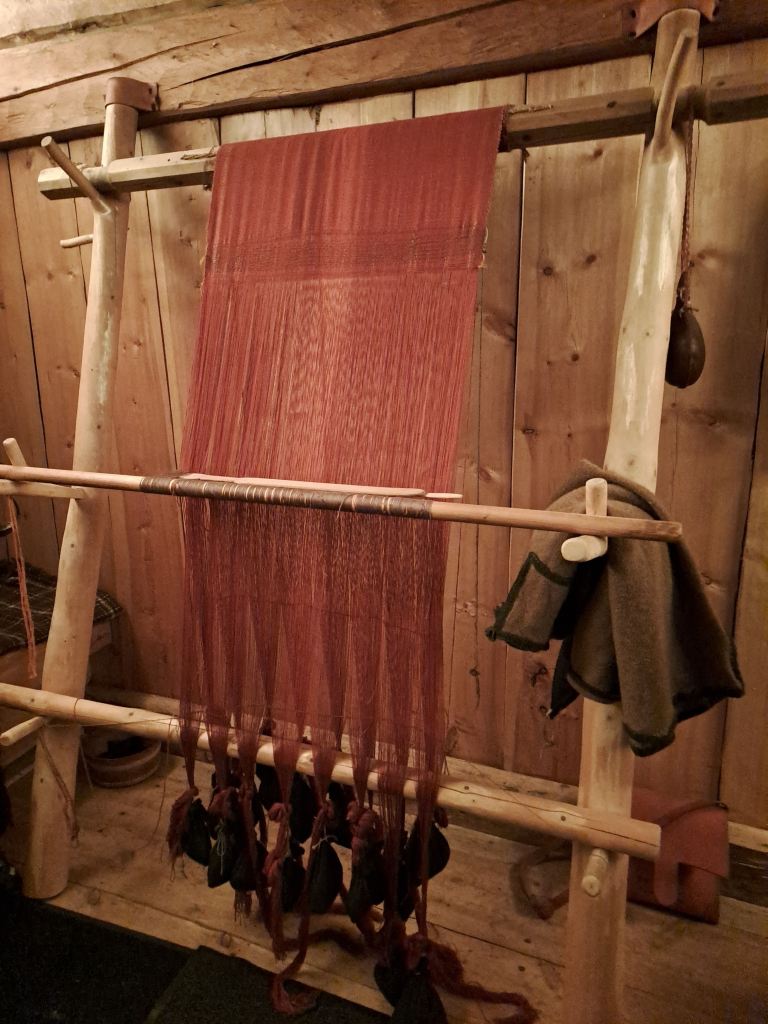
Unfortunately, their trip to the location was apparently interrupted by a huge herd of reindeer so they never got there and had to stop at some weird and fruity place with looms instead.

It looks to me as if they had some sort of mystical ceremony involving a longhouse and strange Norwegian plant matter. They must’ve sat around smoking it for a while because Tim and Susan were high as kites upon their return. I could tell because they actually laughed at one of my dad jokes. I thought to interrogate them about all this Russian spy business while they were impaired… but they’re either really well-trained or I simply couldn’t understand them what with their mouths stuffed with Norwegian butter cookies, so I got nowhere.

On the way to the reindeer penitentiary they were treated to some of the Norwegian scenery that the Norwegians borrowed from the Swedes. Before the Great Borrowing, Norway was mostly a brown and empty land filled with trolls, mutant reindeer, and women named Olga who could bench press three Svens.

The Captain was blackmailed convinced to make a stop in Tromsø so Carolyn and I could grab a cab and head to a hospital. Unfortunately, we didn’t get any photos of inside the hospital because if I had, I’d have had to publish this post only on the Dark Web, what with all the blood & entrails laying around and the sick reindeer throwing up on everything. I even saw a perfectly good spleen just sitting there in the waiting room, dripping its goo all over a copy of Highlights.

We sat cheek to jowl (mostly face cheeks) with hundreds of sick or injured Norwegians, some having lain on a gurney for weeks or even months, now looking rather pale and stiff. Pssh. Socialized medicine, am I right Americans? You’d never see that kind of stuff in an American hospital!

Of course, you do get to deal with all this instead. I actually grimace when an American argues that capitalism keeps prices down; something rarely uttered by a diabetic who needs insulin. Like the old saying goes, “If you wanna get diabetic, Turkey’s definitely the place to be!”

These are the best I could do photo-wise with Tromsø what with the taxi speeding through town like Rudolph being chased by a herd of ugly reindeerettes with bad lipstick. Drivers can speed in Norway because they got rid of all the police, apparently thinking that they already had plenty of ice, so why would they need any pol-ice? That may be why we never saw any cops at all during our time there, other than all the ones chasing us. Anyway, as everyone knows, the more police you have the more crime you have, so they eliminated the police and voila! No crime! They did end up with a lot of speeders, but we were grateful for that because we thought the broken bone in her hand might start hemorrhaging at any moment. Although we were a little discouraged when we arrived to see “61” up on the number screen while our newly printed ticket had 765 on it. Socialized medicine, am I right?

62? …… 62? ………………………. 63? (We look down at 765 for already the 8th time.)

(For the record, it actually was fast, professional, thorough, and it didn’t cost hardly anything. Socialized medicine, am I right?)

One of the many brief stops the ship made was in Sømna. If you’ve never heard of it, it may be because Sømna has a population of around 2,000 people and 25,000 reindeer (actually, 25,000 is about how many reindeer there are in all of Norway). I do think it may be where they invented the word “Insomnia;” I’d definitely be insomniated if I lived there. Note that it was mid afternoon and all the streetlights were on because the sun was hiding behind the horizon, giggling.

We managed to stay awake long enough for a quick meander into town and an ice cream. You’d think with all that snow we’d just lick the street or something (although I don’t like the lemon flavor), but oh no, my companions had to spend money just to help keep the ship’s stop beneficial to the town. With the invention of email, mail deliveries have shrunk to an average of three old Sears catalogs and a discount coupon for Swedish meatballs, so the need for help was understandable.

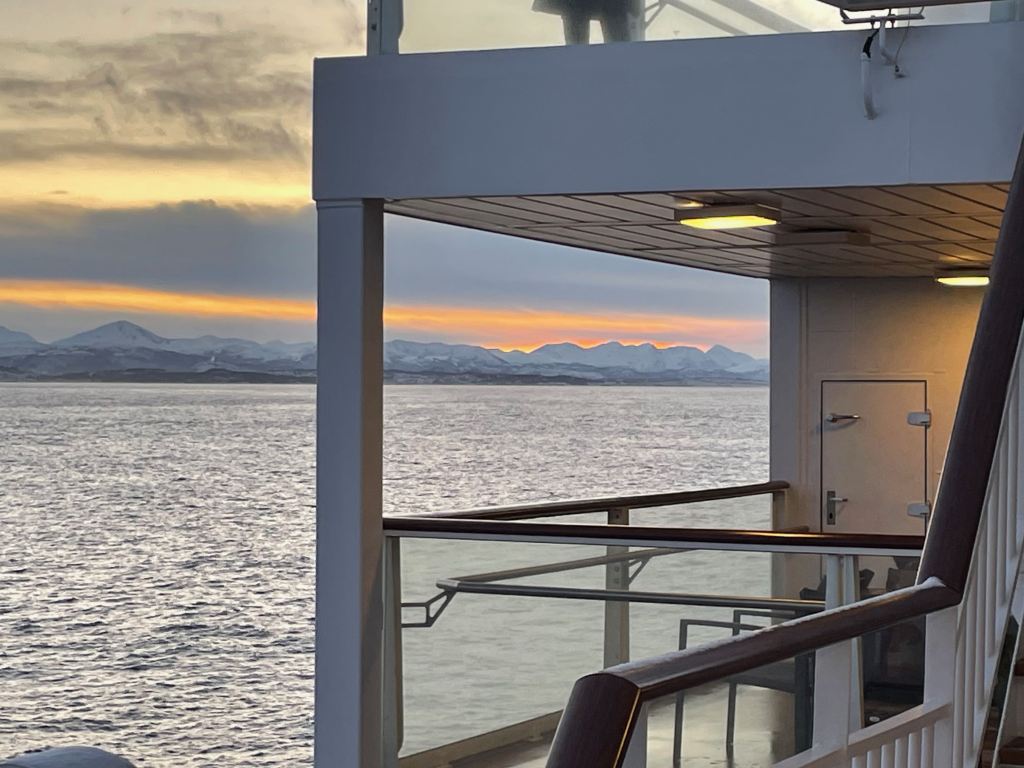
And with that, we leave you with nine more random photos from the ship.

Oh, and: B!

Ha ha!

(After the fright wears off, scroll down to see previous entries if you haven’t read them… and want to for some reason.)

The Top Two of Trondheim

On our first visit to a city for sightseeing, our usual modus operandi is to take a look at TripAdvisor or the like and sort the “Things to do” and “Attractions” by the traveler rankings. Depending on whether we want to see the first handful of places, we then usually leave the rest to chance. Some of the most interesting things we’ve seen on our travels have been when we’ve accidentally stumbled across them. Or, in the case of seeing the inside of a foreign hospital, one of us, who shall remain nameless (Carolyn), accidentally stumbling and falling onto her rumpe (Norwegian for “butt”).

We only had part of a day to explore Trondheim while Tim and Susan went on a tour of the Nidaros Cathedral, which just happens to be the number one site to see according to the readers of TripAdvisor. Since we’ve taken to boycotting the insides of Cathedrals after having seen approximately one million of them, we let our friends go on our merry way while we wandered the streets of Trondheim, finally free of the two people I was beginning to suspect might be Russian spies intent on disrupting my infiltration of Russia.

Trondheim’s daily weather from November to March generally hovers around freezing, with a record high in January of 13.7°C (56.7°F), and a record low of −25.6°C (−14.1°F). We were glad to be there when it was hovering around freezing. These are the scenes that greeted us at the dock. They greeted us the same way when we returned to the ship, because Norwegian scenes are notoriously greetful.

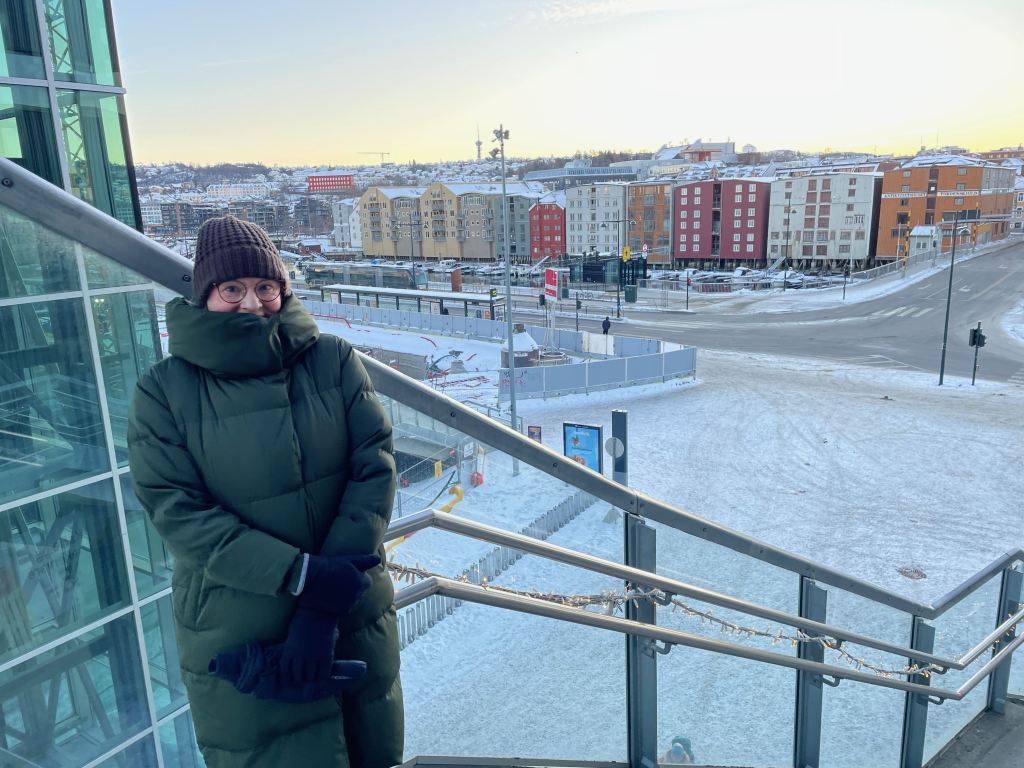
Despite the relatively balmy temperatures, Carolyn still dressed up like a big green sausage. We actually purchased that coat in Norway, figuring if there was anyone who knew about warm coats, it would be the Norwegians. Plus now she can hide in a forest, or in a green sausage factory.

Since it was a Sunday, it was quiet in Trondheim despite it being Norway’s third largest city. Religiously, the Norwegians are largely Lutheran, although Norway is ranked as one of the most agnostic/atheist countries in the world per capita, joining Sweden, Vietnam, Denmark, and Japan in the top five. So maybe it wasn’t quiet because the Trondheimians (Trondeimites? Trondheimcicles?) were all in church, maybe they were just recovering from Saturday night hangovers. (Actually, the country has pretty strict rules on alcohol consumption; including that anything stronger than wine or beer must be sold only through state-run liquor stores, and never on Sundays. I suppose that’s a smart thing because excessive drinking might be a little too tempting when you’re in the middle a long, dark, winter.)

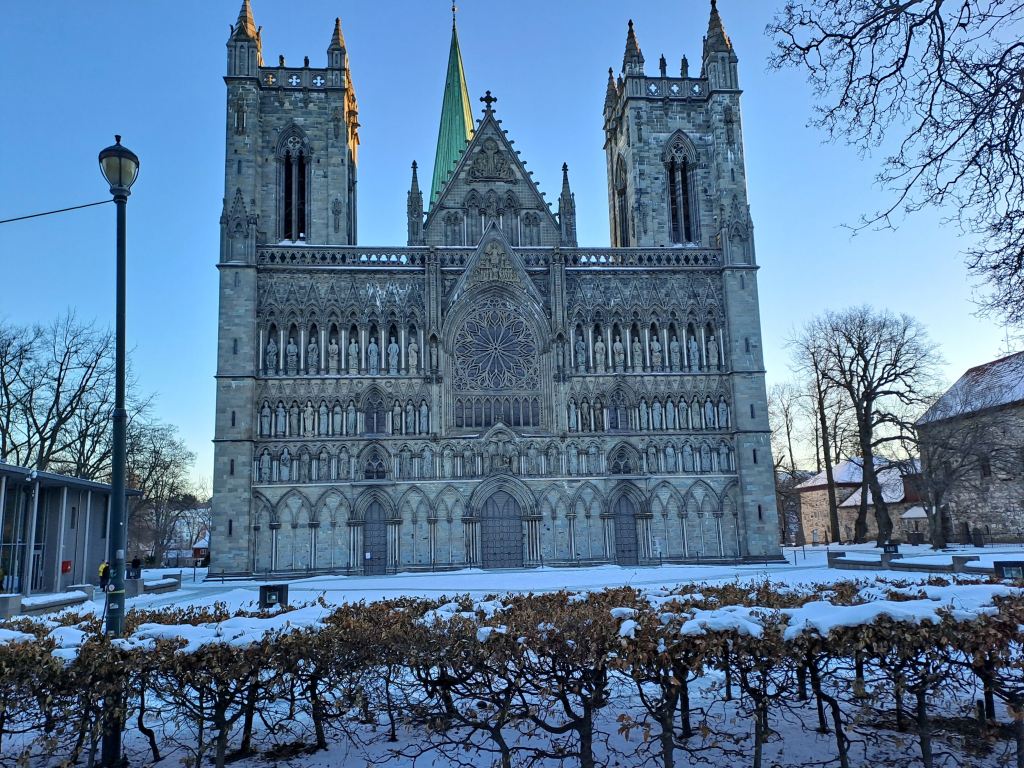
We trudged through the city until we got to the Number One Bestest Site In All of Trondheim, the Nidaros Cathedral. True Trivia (as opposed to the stuff I just make up): Trondheim used to be called Nidaros. It was changed to Trondheim in the 16th century, back to Nidaros in 1930, and then back to Trondheim a year later. Which is good, because I think Trondheim is one of the coolest city names ever. I can just see a burly, full-bearded Viking king standing tall, slamming the base of his bondeøk on the ground while bellowing, “This… is… TRONDHEIM!” (A Bondeøk is a Norwegian battle axe, not to be confused with any particular Viking wife of the time.)

Construction of the cathedral began in 1070, and it was built to memorialize the burial place of Olav II of Norway (he didn’t get to bellow the Trondheim thing). It is an impressive-looking building, but we weren’t sad not to have seen the inside of it. Of course, by the looks of the graves on the grounds, a lot of people were already dying to get inside. Okay, yeah, sure, bad dad joke; but one out of tomb ain’t bad.

Besides, Tim and Susan did the tour of the inside for us, so I hacked into their phones to grab the best pictures. Can you go to hell for stealing photos of a church? Hopefully three is the minimum go-to-hell quantity since I only got these two.

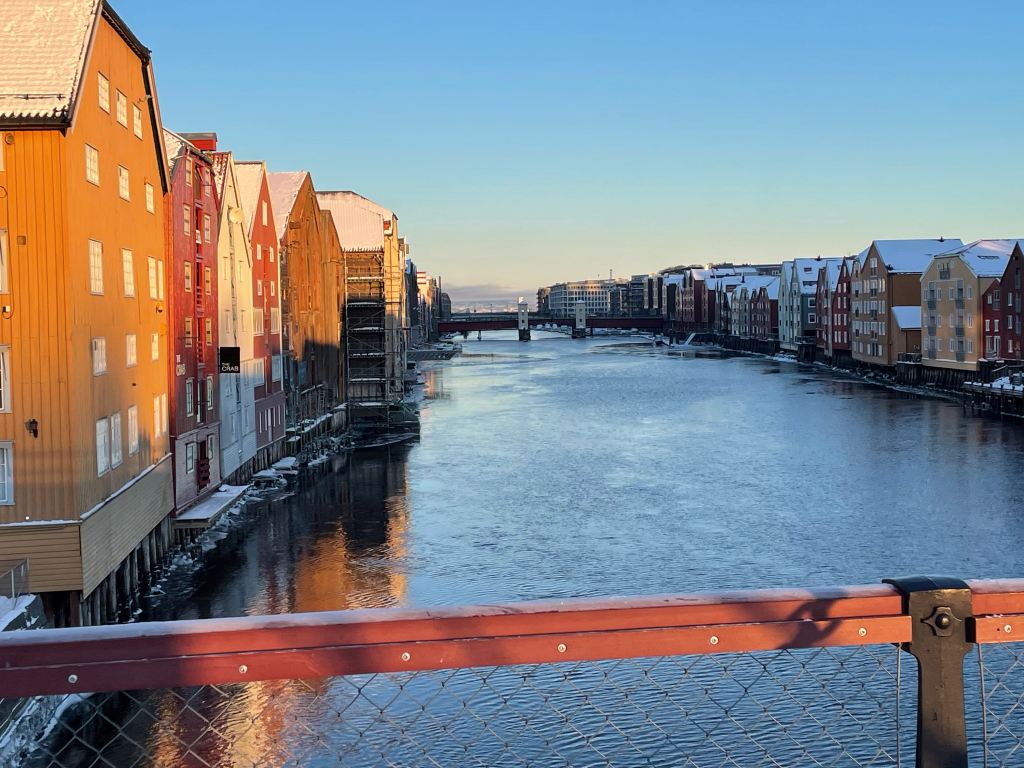
Trondheim’s second most popular attraction is the Bakklandet, a neighborhood with lots of small shops, narrow streets, and flat-faced wooden buildings. It’s charming and beautiful, although not particularly overwhelming for a Number Two Attraction (to be fair, lots of number two attractions are pretty shitty). However, even though the “top two” things to do in Trondheim didn’t blow our socks off (which we were glad for because it was still around freezing), we thought the city was adorable. You go Number Two!

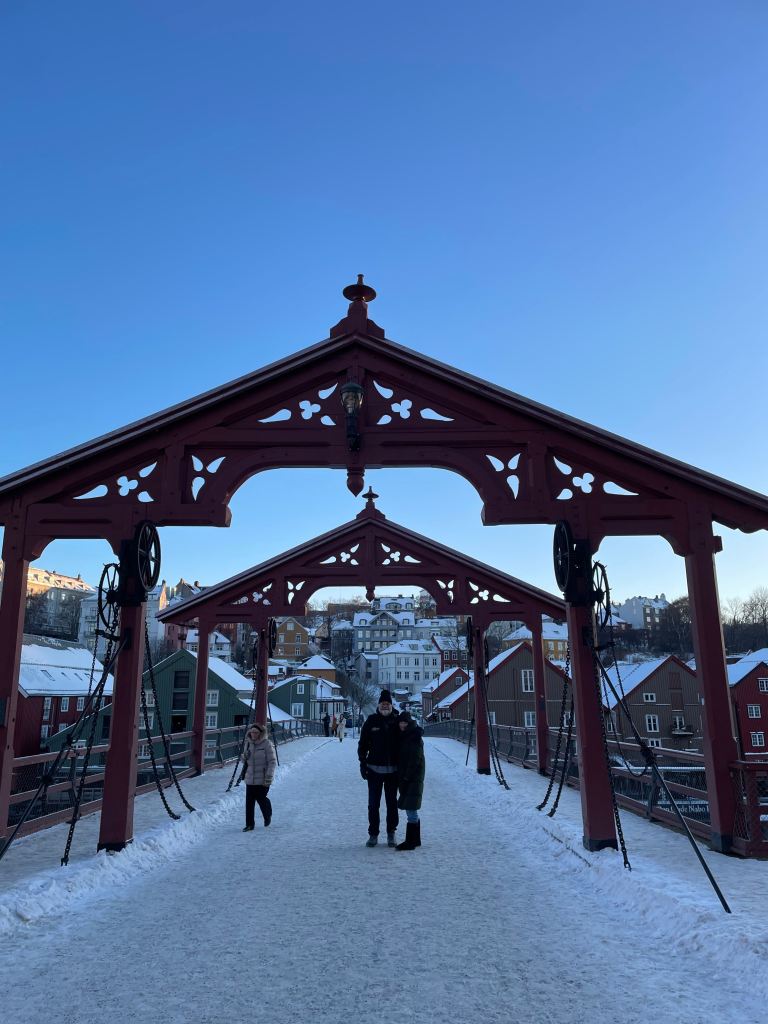
The next top attraction (after a couple of museums and a fortress) in Trondheim is the Old Town Bridge. On the walk there, we met a friendly German family (who happened to be on our cruise), and they told us about some sort of tradition about it being good luck to kiss on the bridge. After some confused looks, they emphasized that it was supposed to be with your own significant other.

So we kissed on the bridge.

However, it was only a few days after that that Carolyn slipped on the ice. And so I call bullshit on the good luck thing… although I’m always game for a kiss (for some reason I really wanted to go see Stiftsgarden right afterwards).

But insofar as counting our luck, we were on a cruise in Norway, accompanied by two of the most delightful Russian spy travel companions one could ask for, and we were retirees walking leisurely around a beautiful snow-covered city in Norway, so maybe we’ve had some damn fine luck after all, even sealed with a kiss.

We did get a kick out of a couple of things in Trondheim. One was this Christmas decor that may serve double duty as an emergency bonfire, I dunno. If you look closely, there are ice skates and Christmas trees with Santa hats as well as a chair for baby Jesus. I’m sure it all means something to somebody. On the other hand, it might’ve been a shelter for some holiday-loving homeless man, or maybe a recycling spot for old holiday decor and ice skates.

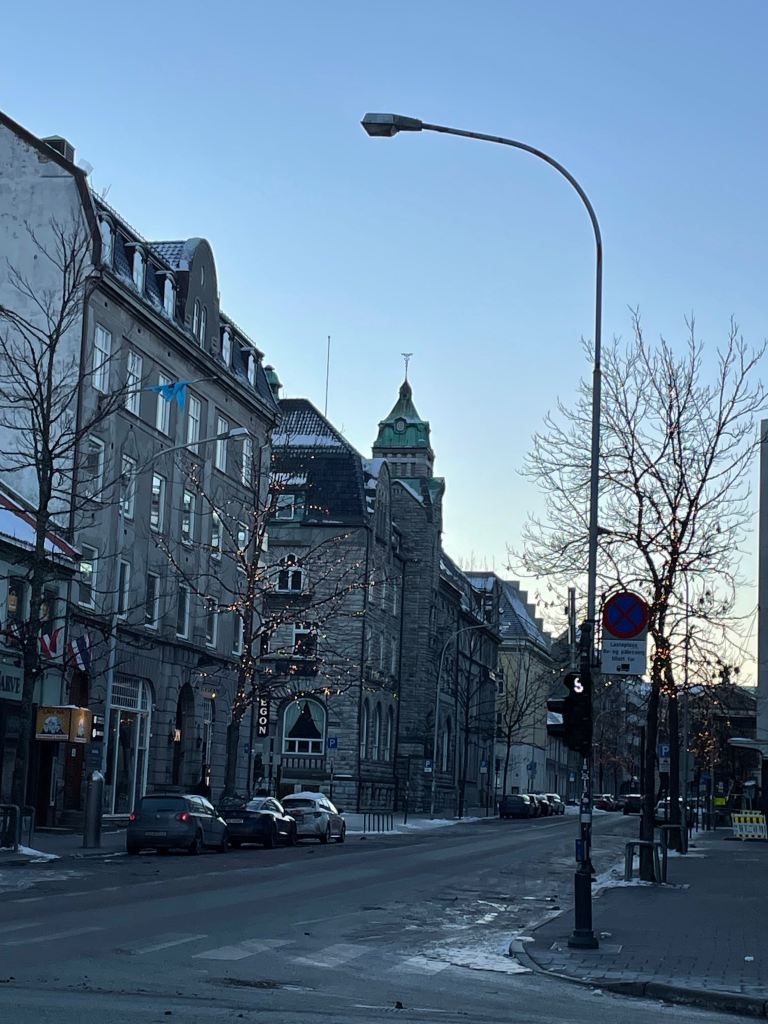
On the way back to the ship we inadvertently walked through what must’ve been the red light district, what with their offer to photograph titts and all. Although Europeans tend to think of female breasts as being largely the same as male breasts, except maybe just a tad poofier, so maybe these photographers simply liked calling their business Titt. I know I would.

Speaking of moose titts (were we?), we did sign up for the Moose Ride. I mean, who doesn’t have “riding a moose” on their bucket list? Unfortunately, it was only fun for all of about three seconds before we tumbled off in a heap of old-age moans and swear words (I didn’t know “Moosetard” was even a word). Fortunately, the snow was deep so when we fell off we hardly broke any major bones at all. So all we really got was three seconds on the back of that monster and this lousy photo. Pfft. I could’ve probably Photoshopped that picture instead and saved the 500 euro expedition fees.

And so the sun set on our Trondheim expedition and we were off to our next destination. Of course, the sun never did rise much more than what you see here. During January, Trondheim receives only about six to eight hours of sunlight a day, and the sun never gets too high… especially with all those alcohol restrictions. Ba dum bum.

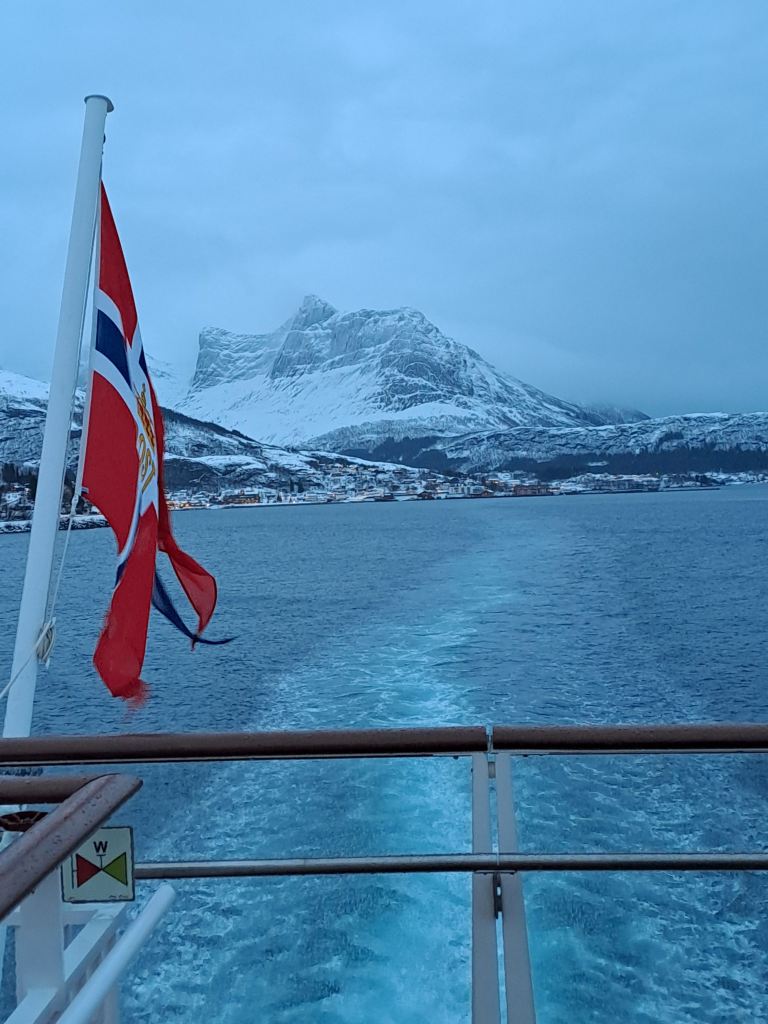
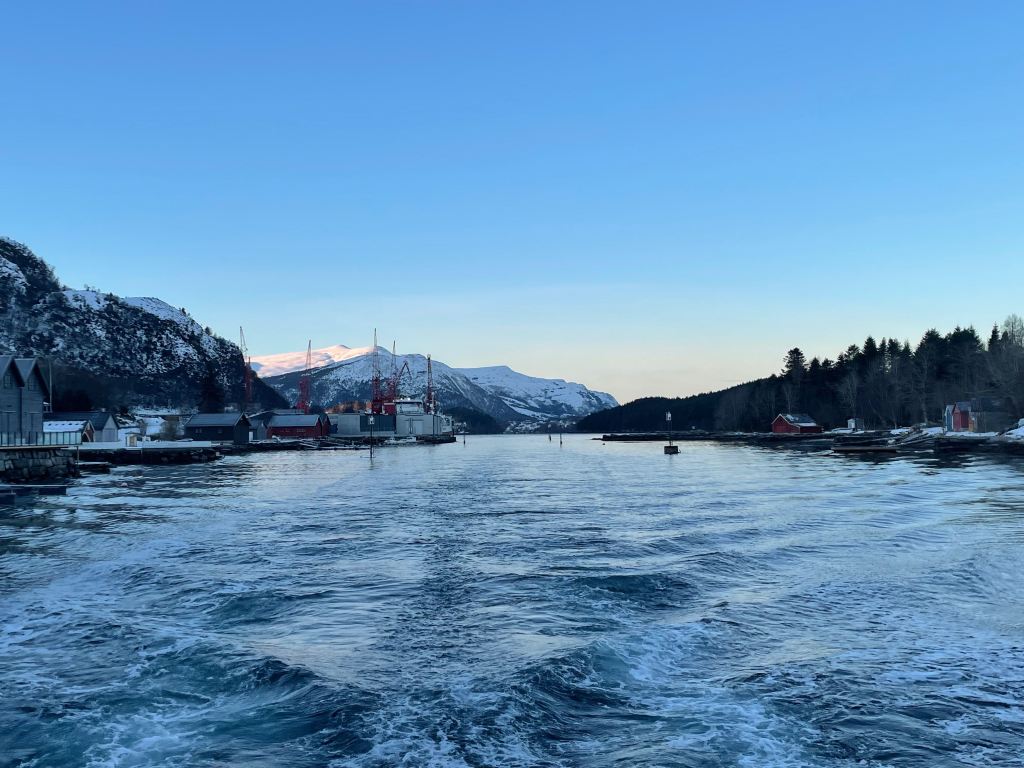
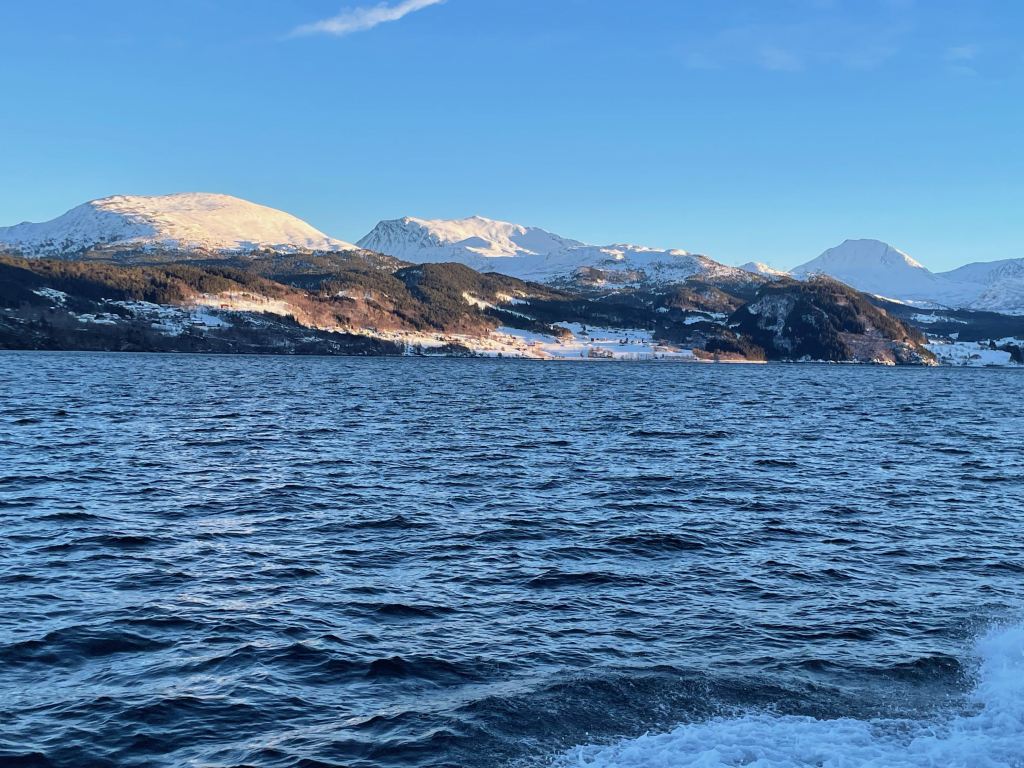
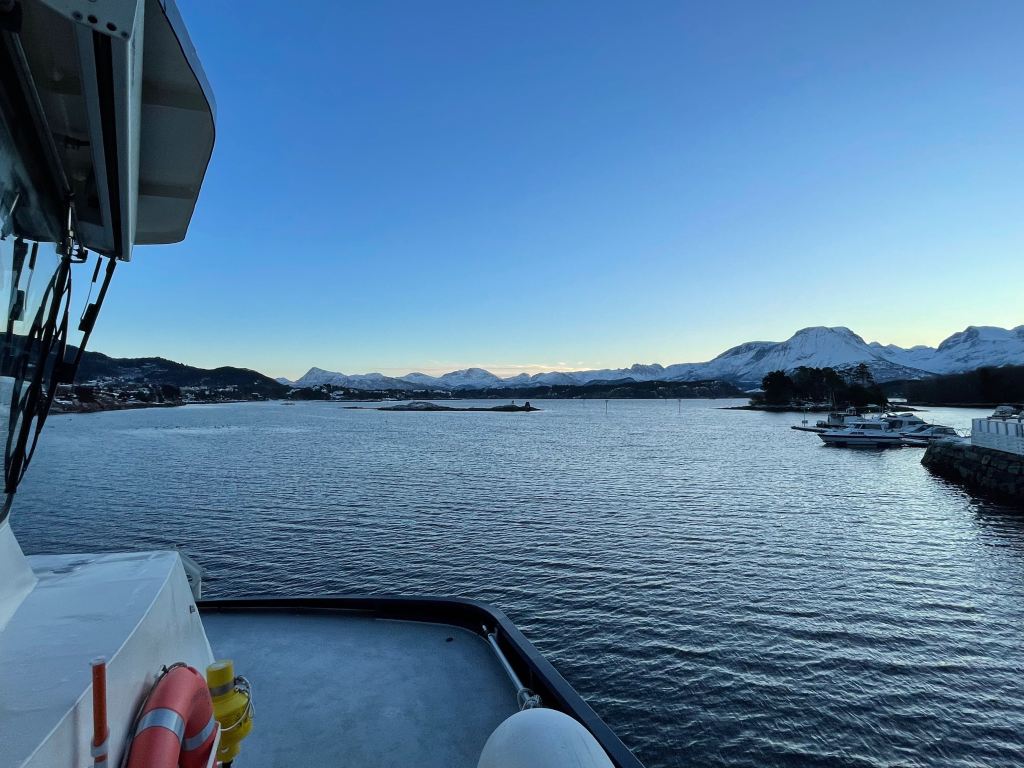
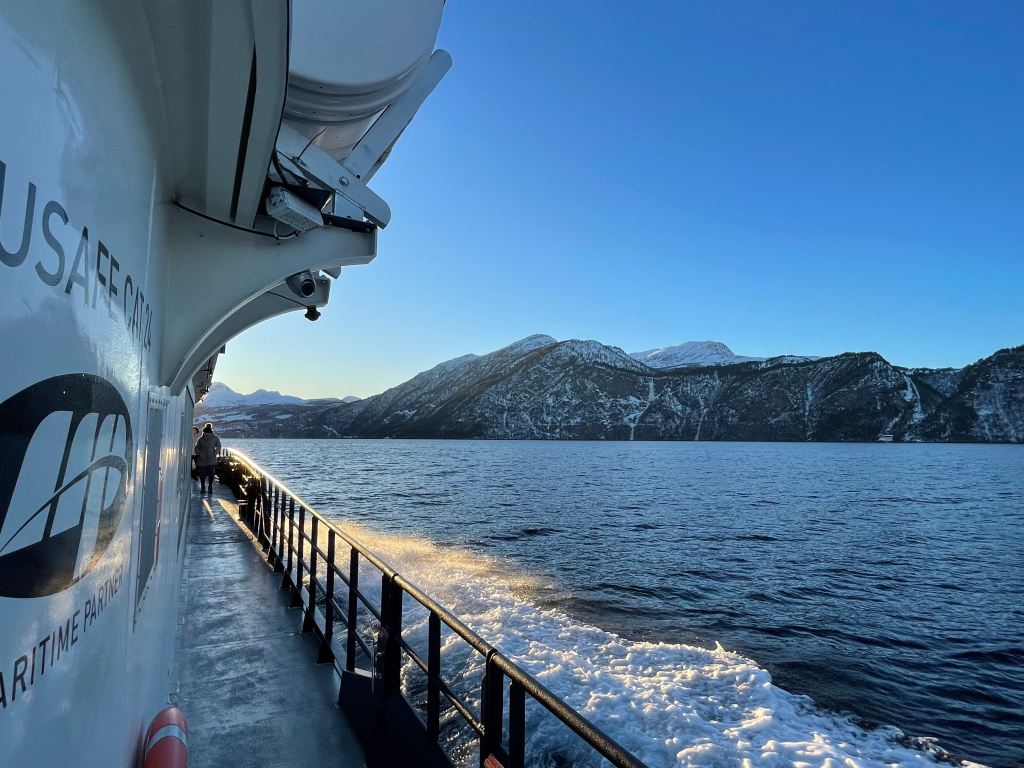
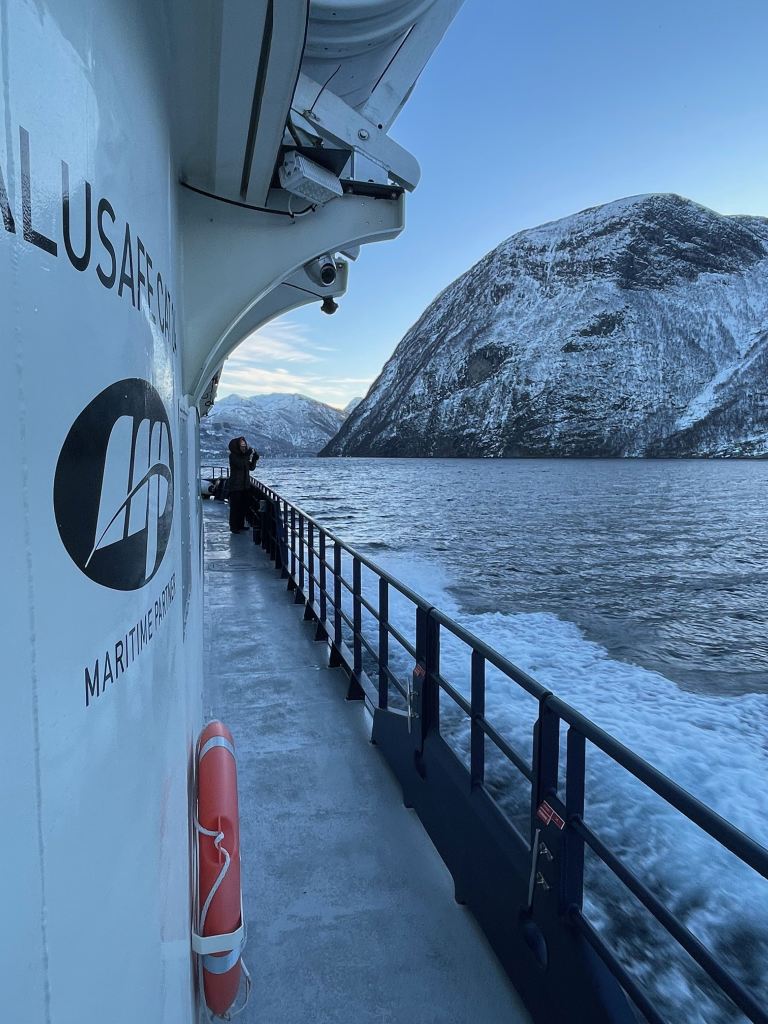
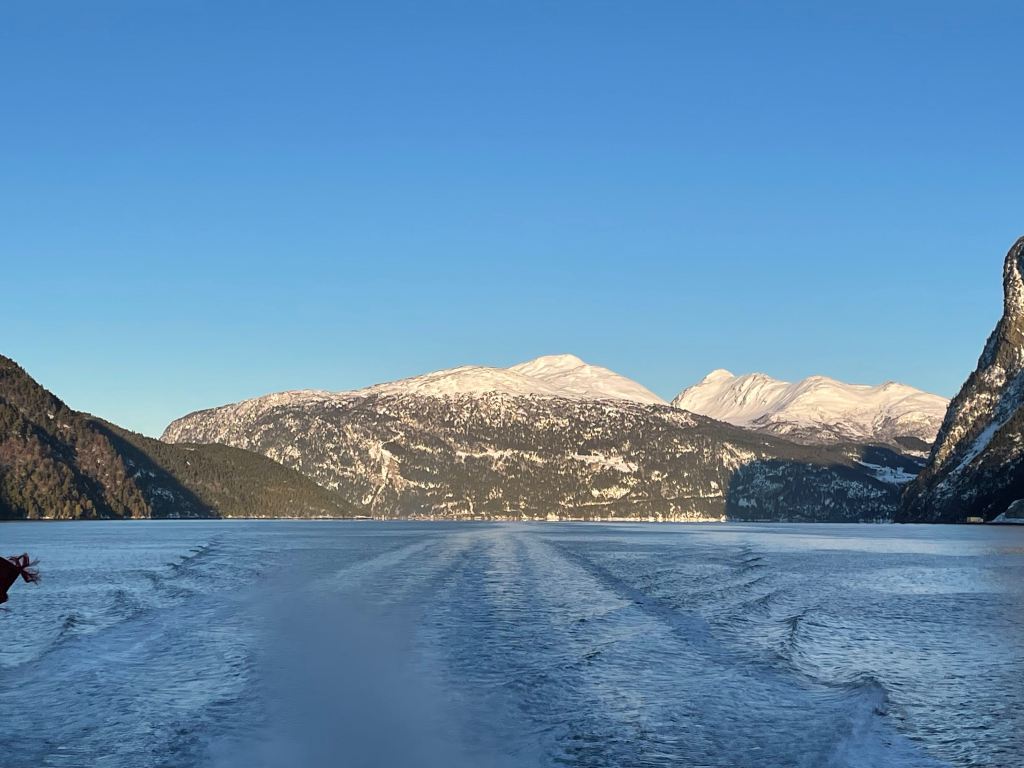
Part of my process of selecting photos for the blog involves first going through each photo and putting them into folders based on location. For this trip, I ended up with 17 different folders (oy vay!), one of which is entitled “Views from the ship.” That folder alone had more than 400 photos in it. Thanks to digital technology, we sometimes found ourselves snapping endless shots of the same view: “Maybe the sun will hit just right,” or “Ooh! A new angle!” or “Man you’ve got a big head, sit down!” Still, we have some very beautiful pictures of nature’s beauty, so I think I’ll just select a handful at random and put them at the end of every Norway blog entry.

Enjoy!

(Scroll down to see previous entries.)

Which Way to the Front? The Norway of Course!

Ever since Vladimir Putin reminded the world that we should put his picture in the dictionary next to the word “asshole,” I’ve wanted to do my part to help the Ukrainian people, who have certainly had enough of his verbal flatulence. Drawing upon my history in the CIA, I realized I could infiltrate the Land Run By The Sphincter simply by sailing north of the Arctic Circle, landing in Norway, and then sneaking in through the lightly defended border between the two countries… with the rest of course being classified. Thus begins our saga.

Way back in 2017 when we moved to Portugal with the intention of seeing as much of Europe as we could, the coast of Norway was definitely not one of the items on our bucket list. Not because we didn’t want to, we just hadn’t really given it much thought. I mean there’s London! Paris! Rome! Vienna! Berlin! Amsterdam! Lisbon! Llanfairpwllgwyngyllgogerychwyrndrobwllllantysiliogogogoch!*

All of which called our name much louder than some silly Norwegian fee-jeeords.

Of course, going to Scandinavia itself certainly was on our list, but we had already checked that off with a visit that included Copenhagen, Stockholm, and Oslo. Not that there was anything wrong with Oslo, but it was easily the least beautiful of the three, so we figured we were done with Norway. But oh nooo, our friends Tim and Susan Darcy spiked our drinks one evening and before we could even say Taumatawhakatangihangakoauauotamateaturipukakapikimaungahoronukupokaiwhenuakitanatahu** we were registered to sail on a Havila Cruise up the coast of Norway, way past the Arctic Circle, and all the way over the top of the country to the Russian border. My CIA handler was very excited.

I only offer that long place name up (in case you missed it, it’s “Taumatawhakatangihangako-auauotamateaturipukakapikima-ungahoronukupokaiwhenuakitanatahu”) because Norway happens to be the proud owner of the shortest possible town name: A. Yup. That’s it. A. Actually, A is an old Norse word meaning “small river.” Seems to me what they were describing would be more like a trickle of melting ice, but hey, when you live that far north sometimes your saliva freezes up before you can get much else out. So “A” it is. But, as enticing as visiting a town called A was, we skipped that and went right to B, as in Bergen.

Obviously, as soon as I saw that our cruise ship departs from Bergen, I placed a call to my dear old friend Candice Bergen and asked if we could visit her in January. Of course she said yes enthusiastically (I mean, it was us), so I urged our travel agent to get us to Candy Bergen’s place, stat, and stop with all the questions. In light of the next photos, I wasn’t sure he got us to the right place.

One of the first things we saw as we walked out of the airport is this sign. I have to admit, it made us a little uncomfortable. I mean, what does a pilot think the first time he lands there? “Did I actually land in Bergen?” “Are you sure?” “Are they sure?” “Is anyone sure?” “Does anyone actually know where we are?”

Also, where was Candace?

The first thing we felt was um, a little bit of cold. Here’s our iPhone screen in both celsius and fahrenheit, which we’ve provided to ensure that none of our relatives has a heart attack thinking that we actually ventured into -9°F temperatures. Actually, 15°F is about all I could handle while wearing my standard cruise attire of Bermuda shorts and sandals with socks, so I was grateful that this was about as cold as it got during the entire trip.

That said, what many people don’t realize (including us, pre-cruise) is that the coast of Norway isn’t as cold as commonly thought. Because of the warmth of the Gulf stream (fueled of course by the flatulance from all that spicy Mexican food), Norway is one of the world’s largest exporters of palm trees. Okay, just kidding about at least one of those statements. Anyway, Bergen’s temperature only hovers around freezing for much of the winter. In fact, when we arrived in Bergen there was very little snow on the ground, despite the cold, which was colder than usual.

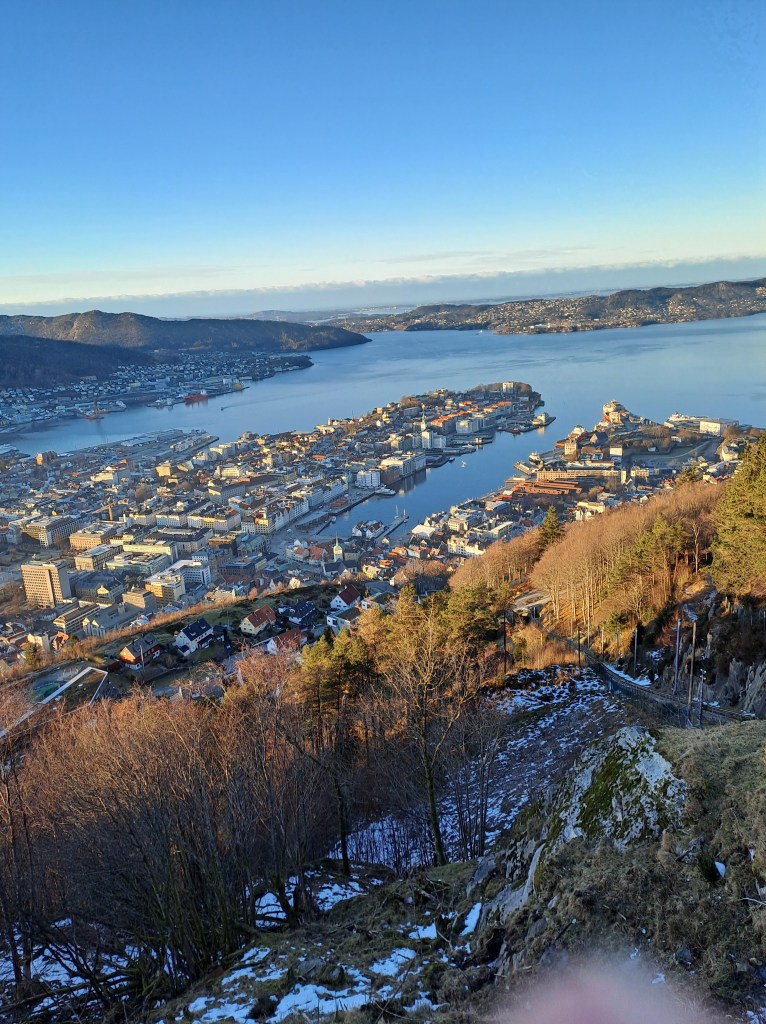
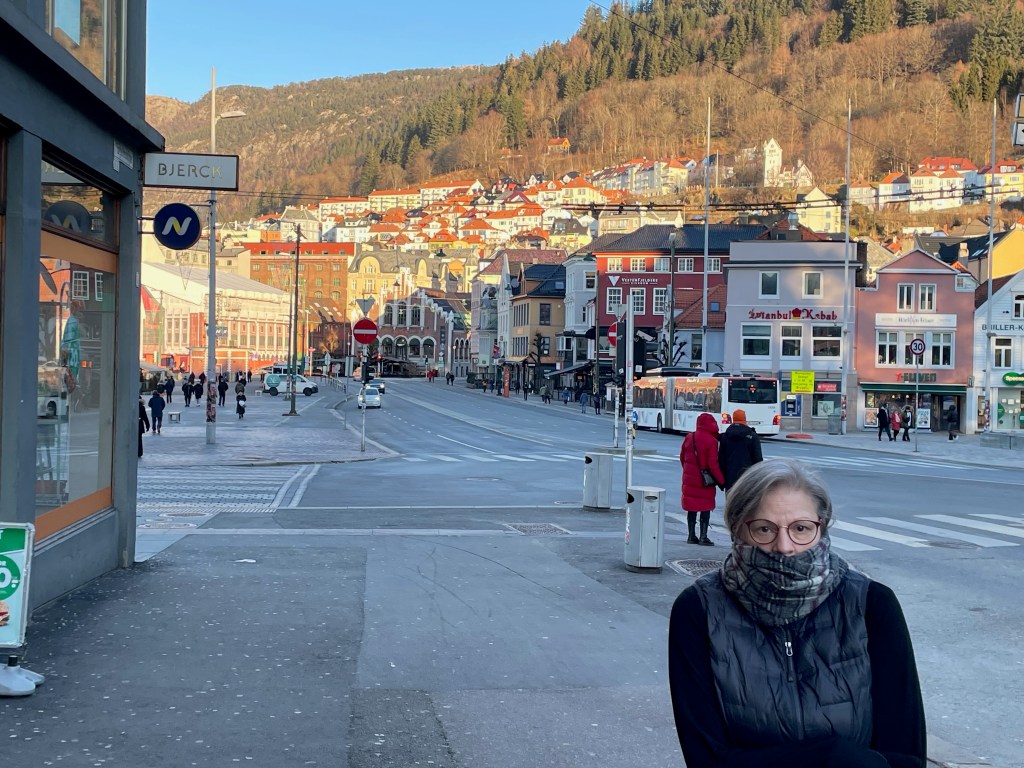
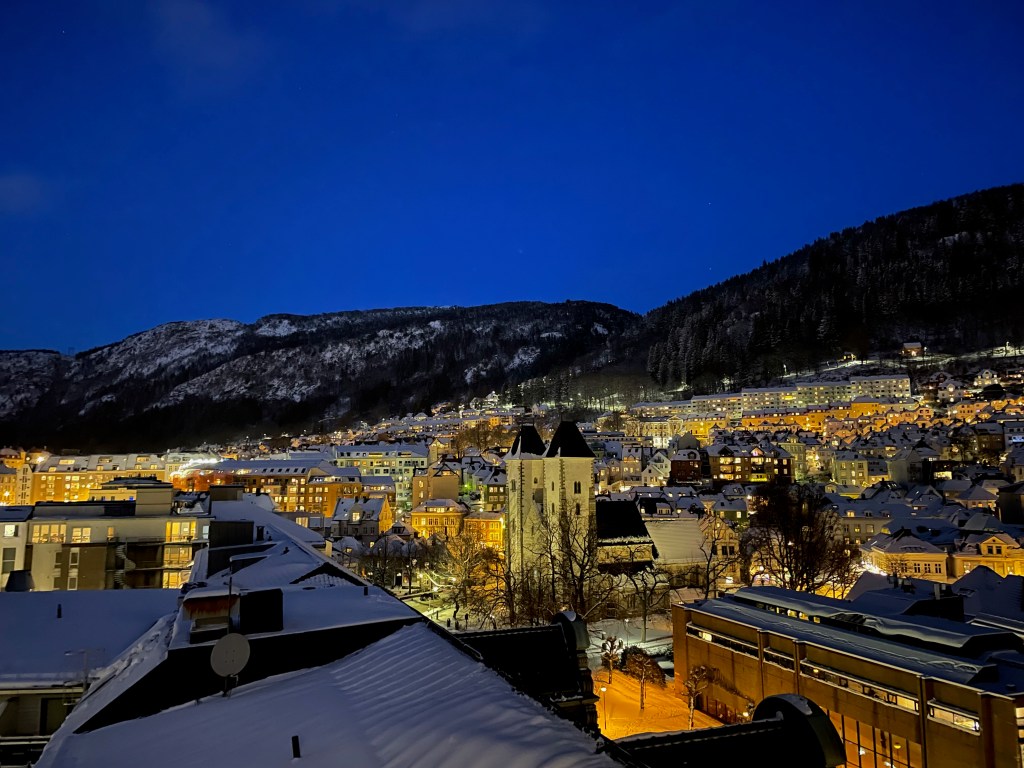
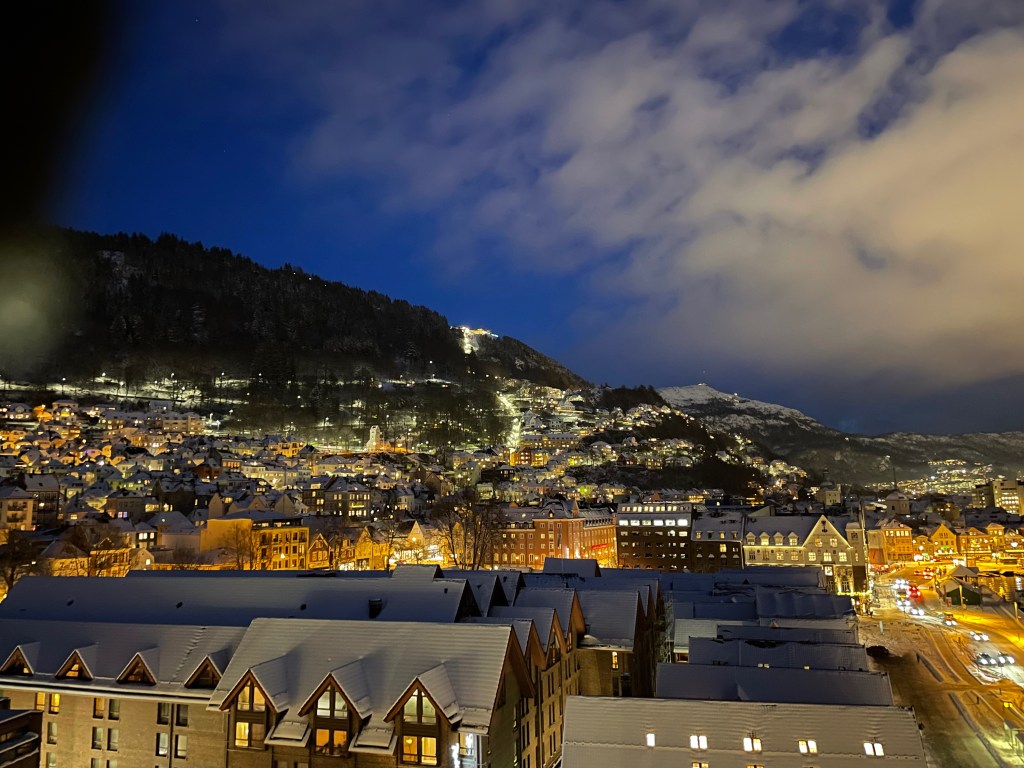
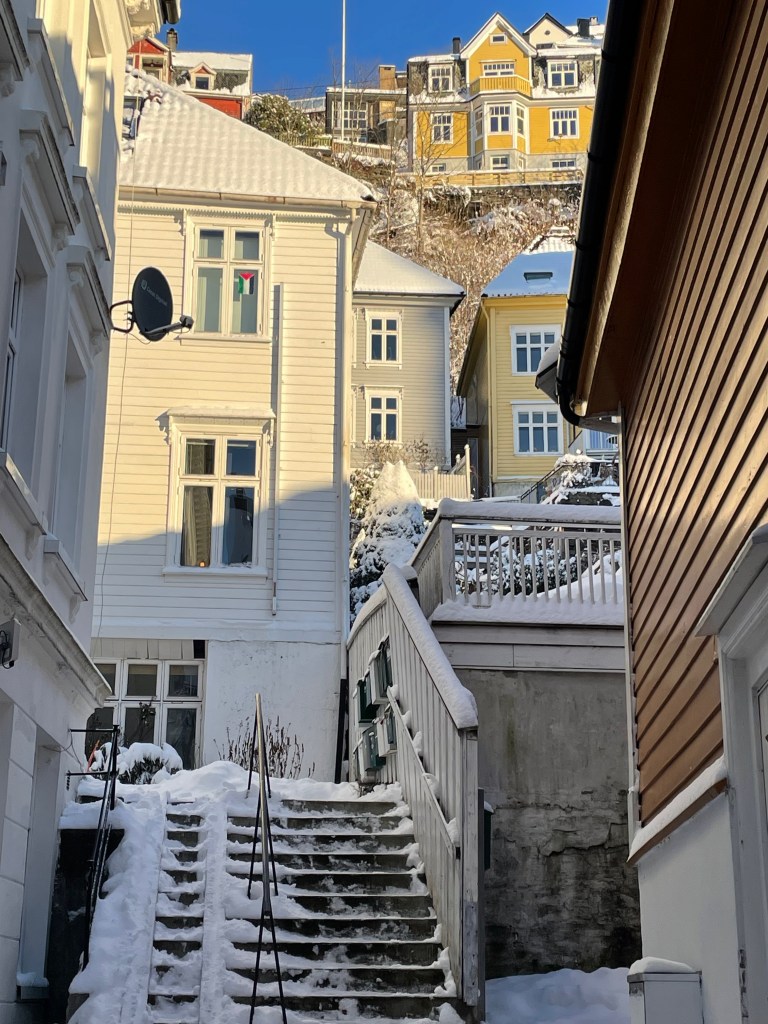
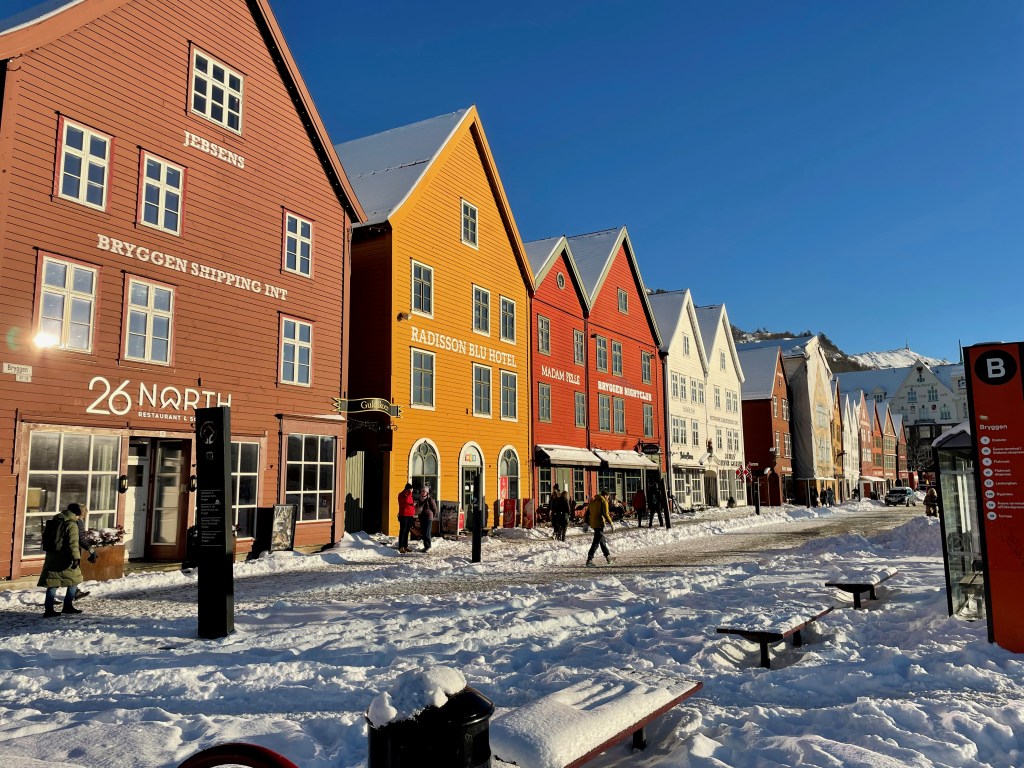
When we returned less than two weeks later, the town was covered in a thick layer of snow, one that we were told was a once-in-every-15-years kind of snowfall. The first picture above was from our initial visit, the second was when we returned after the cruise. The third was of my thumb so I deleted it.

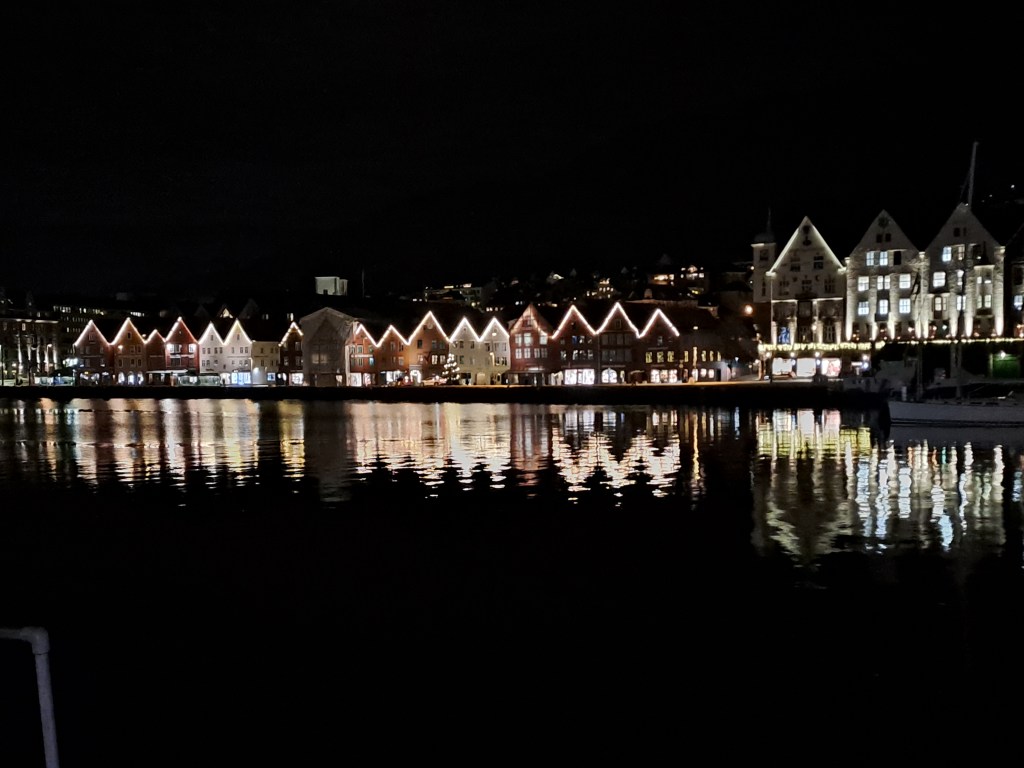
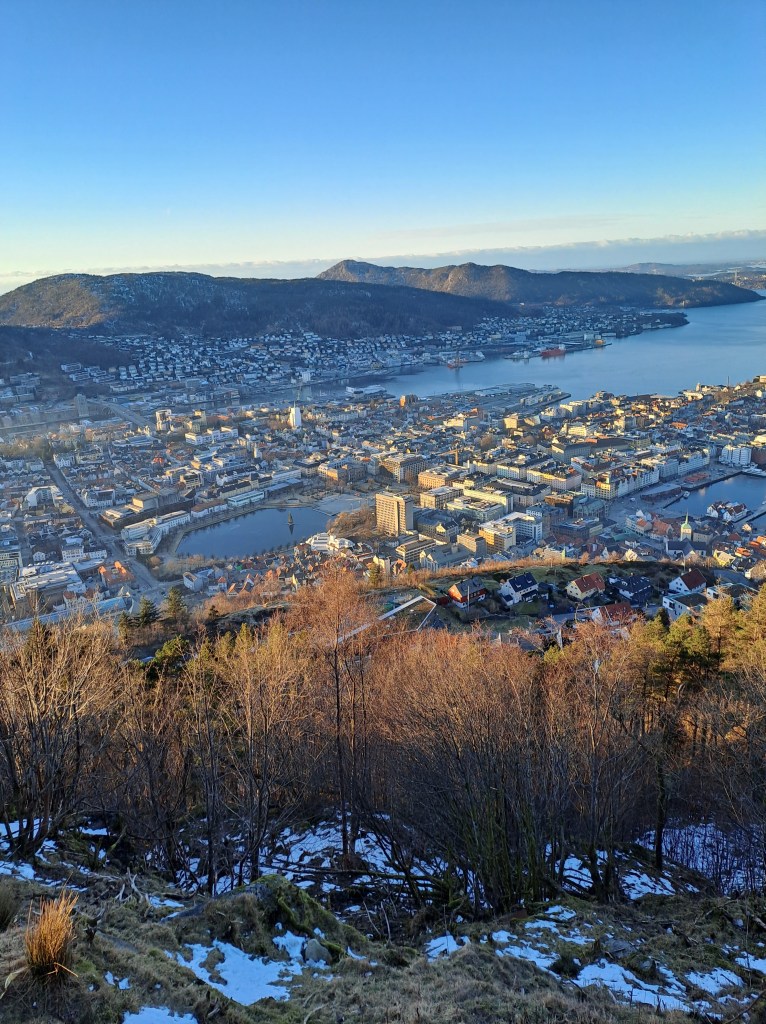
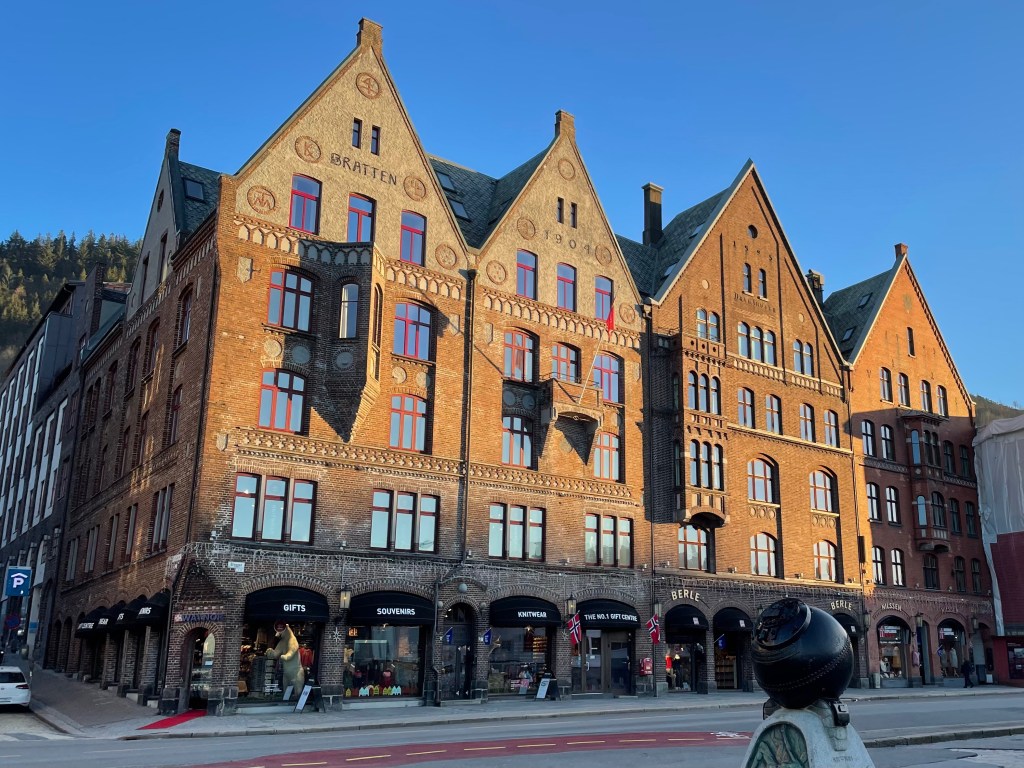
Bergen itself is more of a sprawling city than we imagined, and the downtown area is absolutely charming and delightful. Hills surround Bergen down to the sea, where it sits between two of the biggest fjords in Norway, resulting in Bergen being called “the capital of the fjords.”

Since the city is surrounded by mountains, it’s also called the “city of seven mountains.” The city was founded more or less in 1070 by King Olav Kyrre and was named Bjørgvin, which means “the green meadow among the mountains.” The city center and northern neighbourhoods are on Byfjorden, “the city fjord,” which probably means Bergen is also called “The City on the City Fjord.” I’ll just stick to calling it Bergen the rest of the way, Norwegians obviously give too many names to things.

Bergen has a lot of rain all year, sometimes even featuring more than two months of consecutive rainy days. As a result, it’s known as the rainiest city in Europe especially by those who think of it as the rainiest city in Europe (ironically). While we were treated to a nice snowfall upon our return, the snow usually melts rather quickly. Who knew snow would be such a rare commodity in a Norwegian city!

Bergen has a mild winter climate, albeit with a lot of precipitation: it rains about 200 days out of the year, and that’s in metric! During the height of winter, Bergen can actually end up 20°C (60°F) warmer than Oslo, even though both cities are at about the same latitude. Bergen is ranked as the third warmest city in Norway, but based on some of our pictures, that may be like saying the Mojave desert is the third coolest place in hell.

It may very well be that one of the reasons Bergen is such a charming city is because it didn’t suffer the same brutal fate as many of the Norwegian towns up and down the coastline did during World War II. In fact, on the very first day of the German invasion of Norway in 1940 the Germans occupied Bergen after only a brief skirmish with some Norwegian artillery. Allied bombing raids against naval installations did most of the damage later, resulting in about 100 civilian casualties overall.

Bergen is known for its street art; the city even covered one piece with protective glass. We didn’t see much of that where we wandered, however, except for the big green troll. Going clockwise from there, we saw plenty of Christmas lights as it was still early January, and a neon sign advertising a big Schlong (I think that’s how you pronounce it). And then, Holy Cow! It’s a 7-11! Anyway, with street names like Ovre Korskirkeallmenningen, I’m not sure there’s any room left for graffiti anyway. Also based on that street name, I’m surprised 7-11 isn’t called 9,832,409-253,130,939,480.

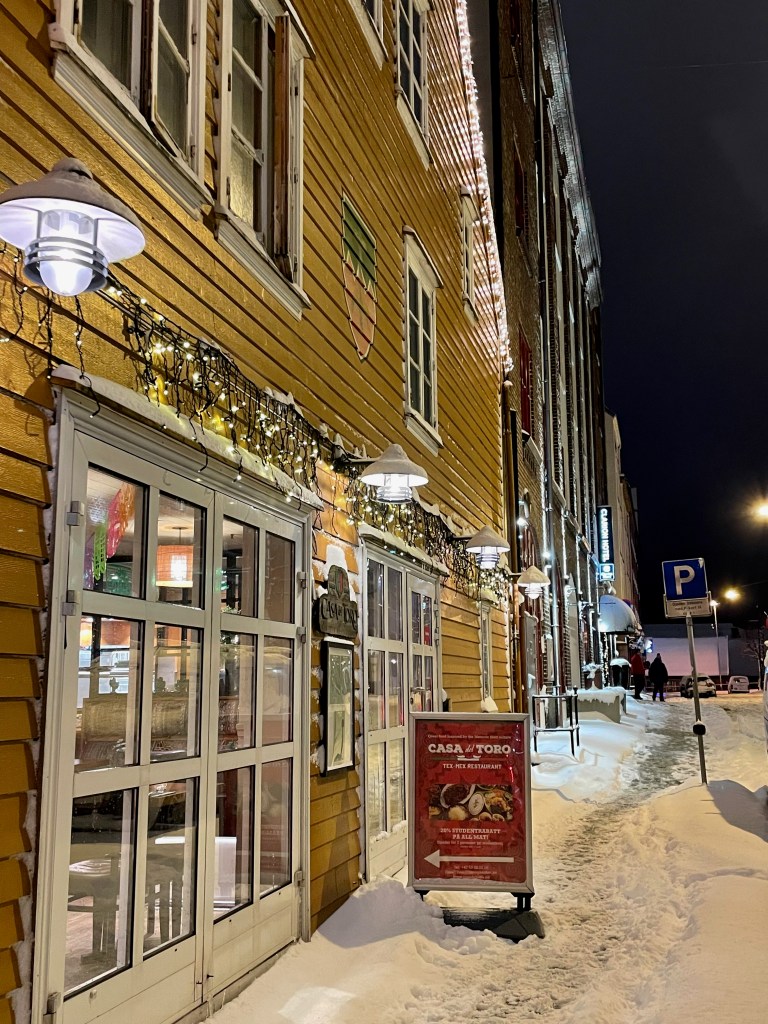
Bergen also happens to be a sister city with Seattle, Washington in the USA. Seattle is the next big city north of Portland, Oregon, where Carolyn and I are from. Both of those cities can feature some beautiful scenery, but it’s hard to beat the charm and beauty of Bergen. Plus, as you can see by the third picture above, Bergen has better Tex-Mex than either Portland or Seattle.

If you look closely at that door, you can see that everything is rather crooked (I promise you it’s not Carolyn who’s cattywampus). This is in an old part of Bergen near the water, so things obviously shift over time. Apparently the Norwegians just roll with the flow. Speaking of which, every single interaction we had with a Norwegian on this entire trip was pleasant and delightful. They are truly a nice people.

Honestly, it took me hours just to whittle the hundreds of photos we took down to what you see here. I still have a folder chock full of other photos. Bergen is simply a very charming city, easily making it onto our mutual top ten best small cities in Europe list. It didn’t quite push Edinborough, Scotland off the top of the list, but it came awfully close!

After spending hours wandering Bergen’s city streets, chilling out in a gigantic chair and being caught sneaking food out of the free buffet were just what the Travel Doctor ordered. Man… an entire trip up and down Norway and Bergen gets one complete entry all on its own. I may need to rename this blog The BaldNorwaySquatch!

Anyway, I believe our visit to Bergen established our “clueless tourists cover” sufficiently enough to allow my covert entry into Russia. More to come as we approach that big event!

*Llanfairpwllgwyngyllgogerychwyrndrob-wllllantysiliogogogoch! is in Wales, and has the world’s longest town name.

**Taumatawhakatangihangakoauauotamateaturipukakapikimaungahoronukupokaiwhenuakitanatahu is in New Zealand, and has the world’s longest place name.

***Ajohsadfiukhjnsdfuclvndasdwerksksdnmfslkdoapqwemxeuvsdfkjsdfdfnasadqqoouedfndfdsmcsaskdsbeedsdsagfealasdl is in my head, and is this blog’s longest word.

****I can’t pronounce any of ’em.

Candace gets me.