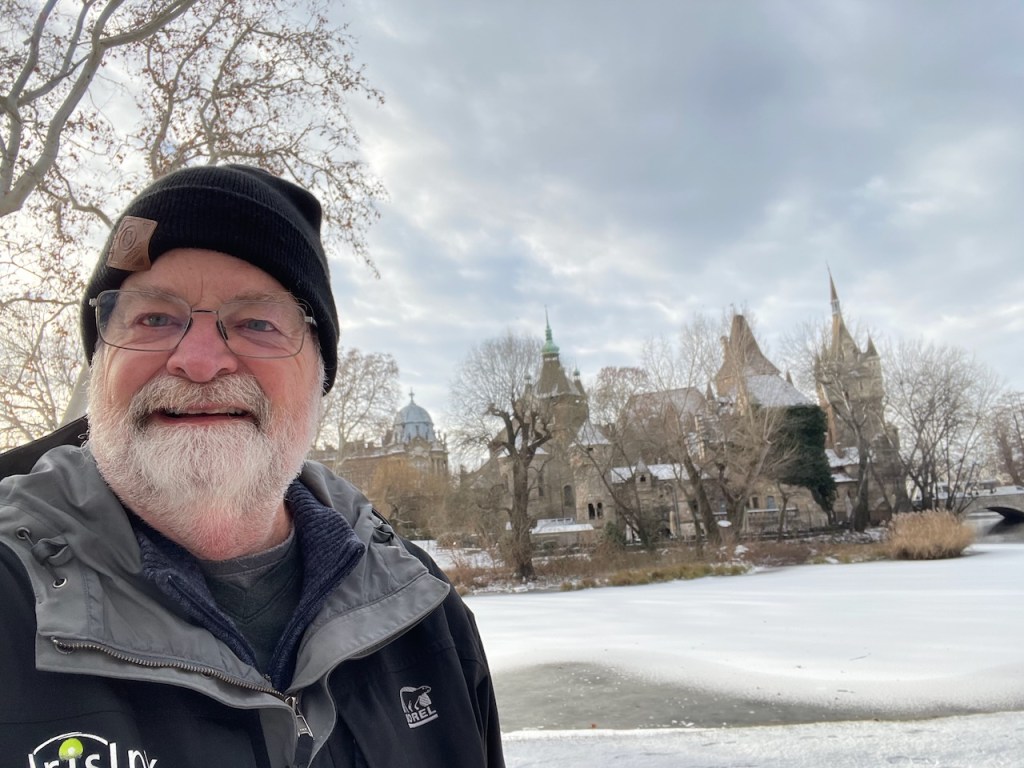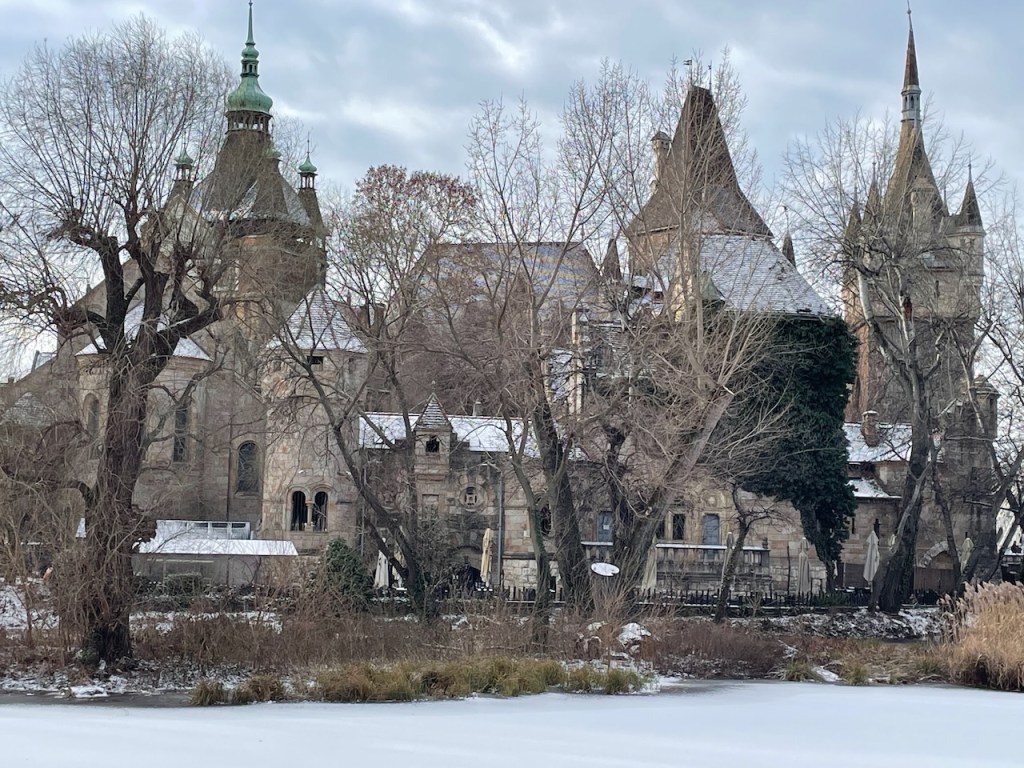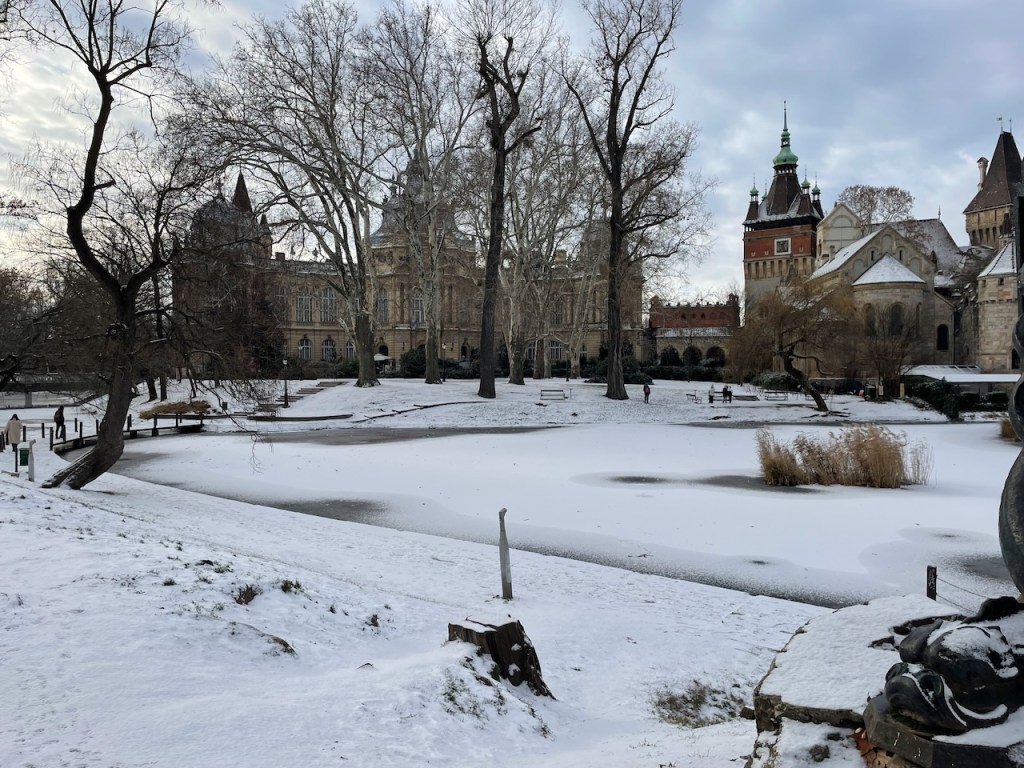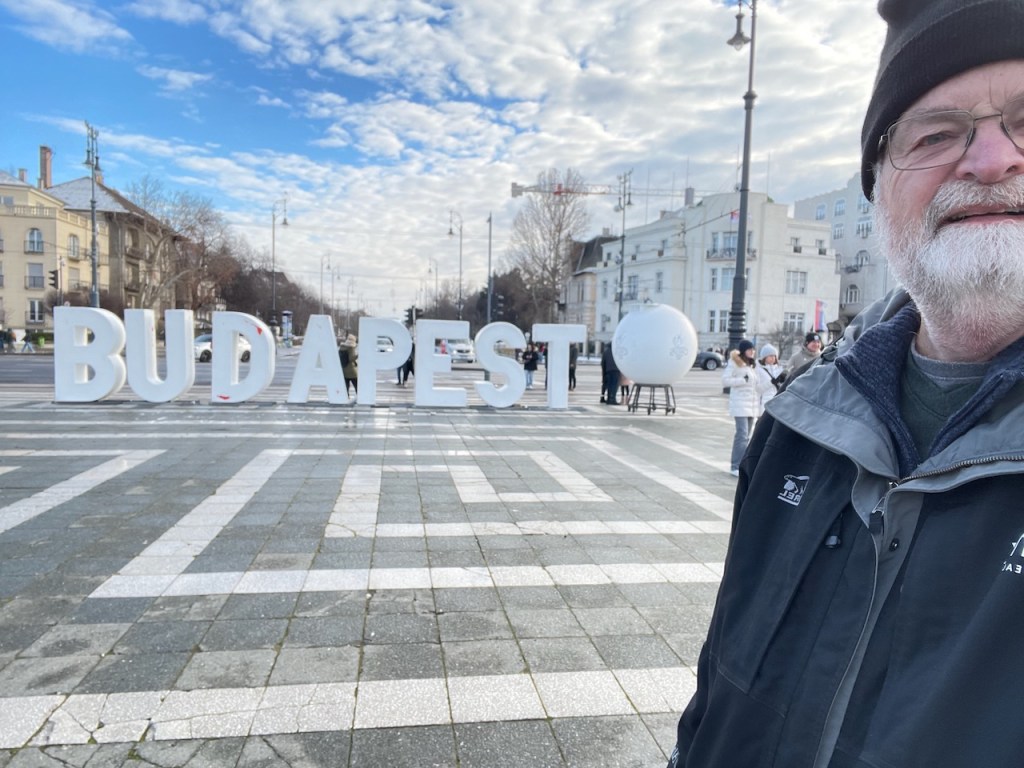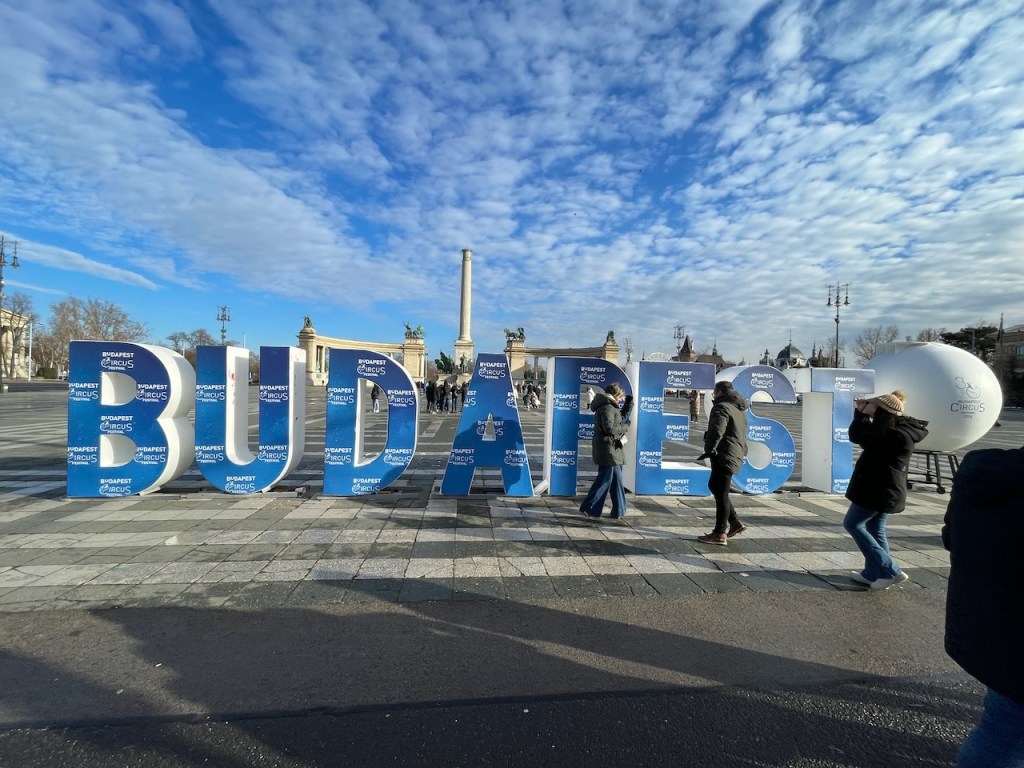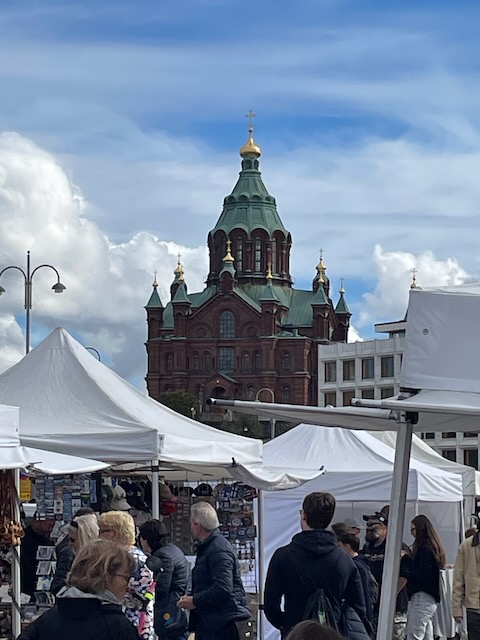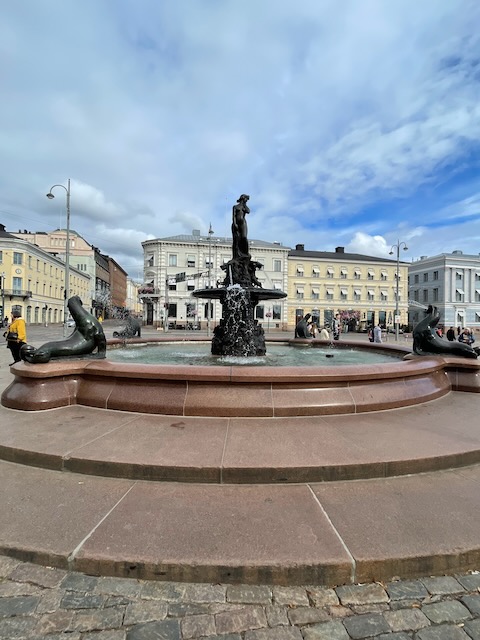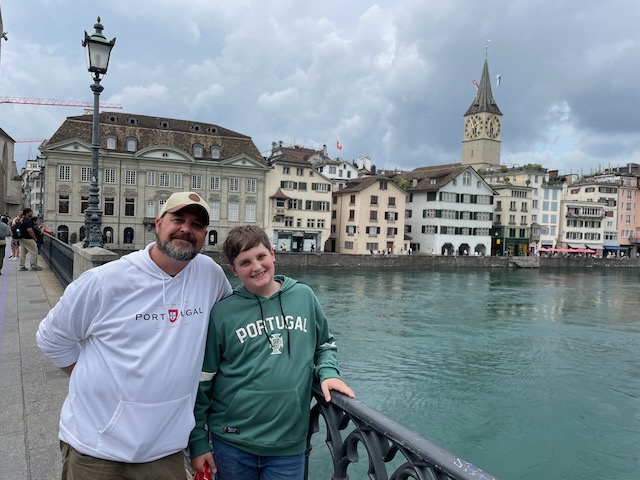
What the Helsinki am I doing in Finland?

After visiting every other Nordic country –and being impressed by each one of them– I knew I couldn’t leave out Finland because I really didn’t want to hurt its feelings. Besides, Finland is routinely rated as the happiest country in the world, so I hoped to find out what that was all about.

Turns out there are kiosks that give out free donuts on nearly every street corner, almost everyone gives random hugs to strangers, and unicorns gaily prance around town while pooping delicious flavors of unicorn yogurt.

No wonder they’re so happy.

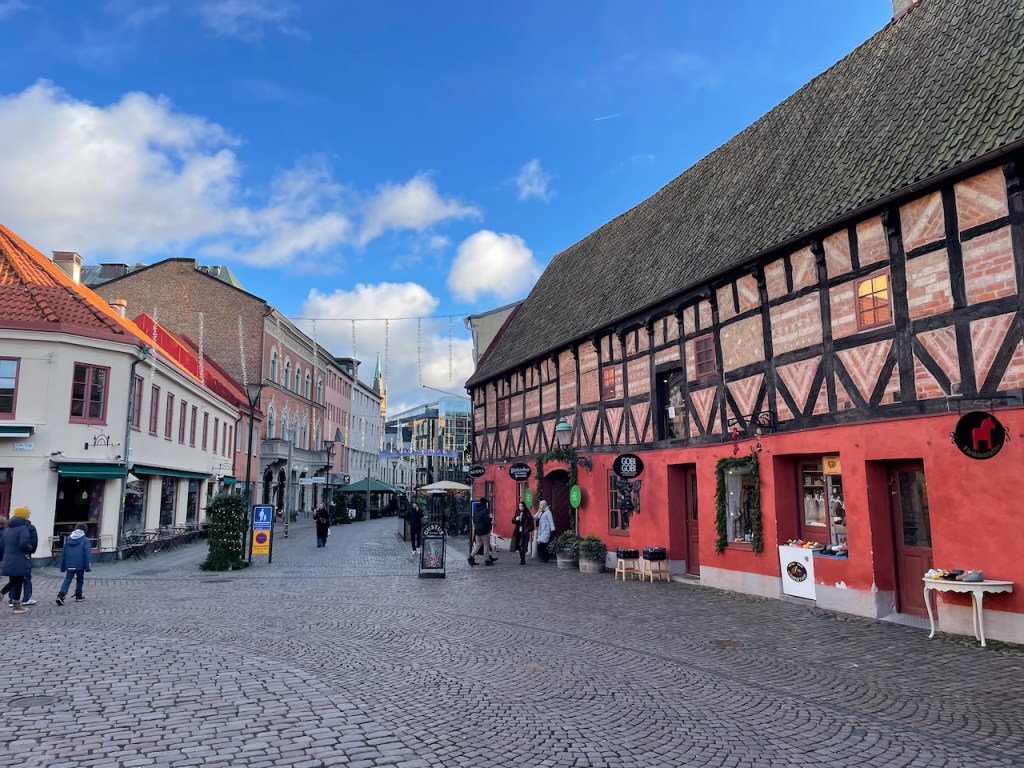
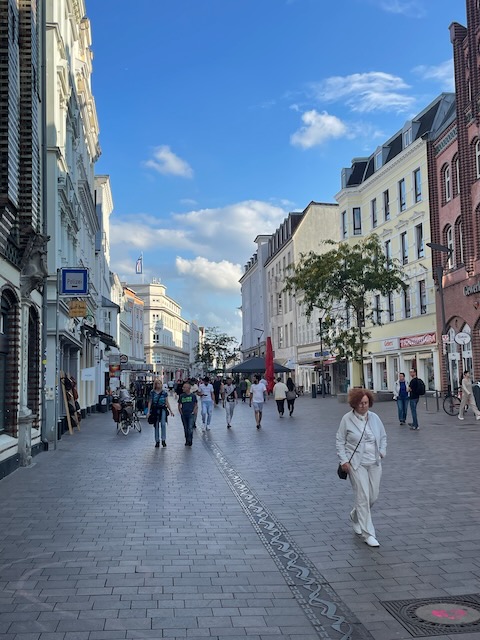
Okay, I may have exaggerated a couple or all of those, but what I did find was a very pleasant city, and like every Nordic city I’ve been to, absolutely spotless with no litter or graffiti or bloody corpses on the street. It has a population similar in size to Oklahoma City or Denver, with just about 700,000 people living in the city itself, and 1.6 million in the metropolitan area. But somehow it feels smaller than Denver, at least in the downtown area, where I was able to walk throughout most of it without suffering from exhaustion. Although I’ll admit that traveling alone allowed me to take a nap whenever the hell I wanted anyway.

Helsinki (pronounced Helsinki) is right on the gulf of Finland, which connects to the Baltic Sea. It has a “warm” season that lasts for about 3 months, from June to early September, with an average daily high temperature of a roasting 16.6 degrees celsius (62°F), although in July the massive heat waves can break Finnish thermometers when they reach a hellish 21 degrees celsius (70°F).

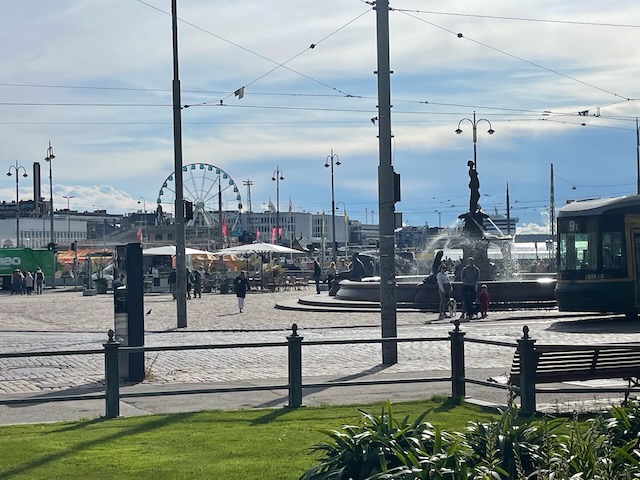
I took a boat tour around the harbor, but to be honest it wasn’t overly exciting. Since it was a “Hop on Hop off” boat tour, I assumed we’d be hopping off occasionally to see one site or another, but alas, it just puttered around the harbor with a loudspeaker describing some of the history and the buildings. I got just as much enjoyment out of chatting with two ladies from Washington DC for much of the voyage.

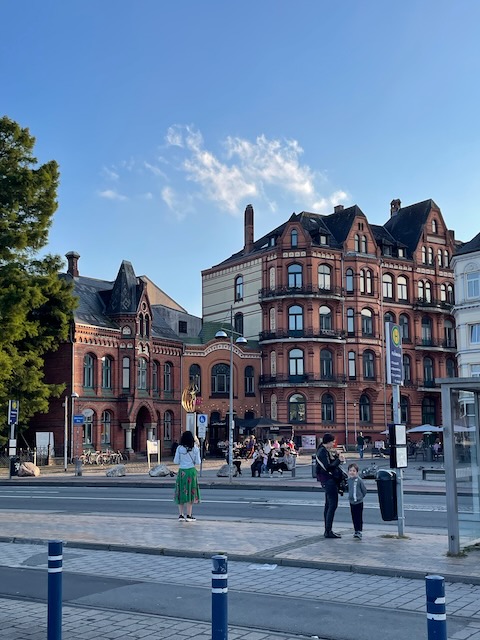
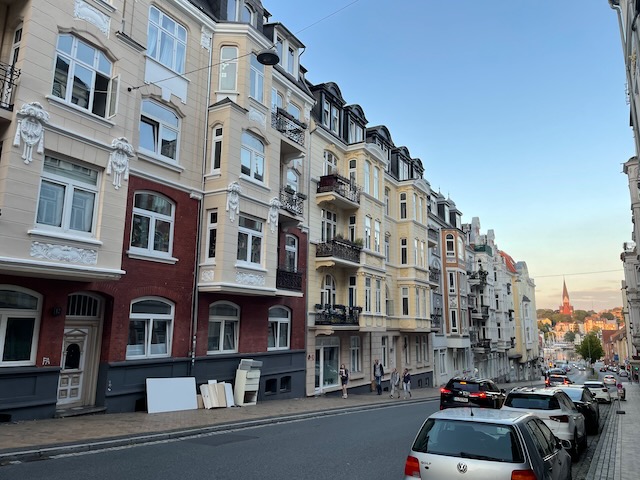
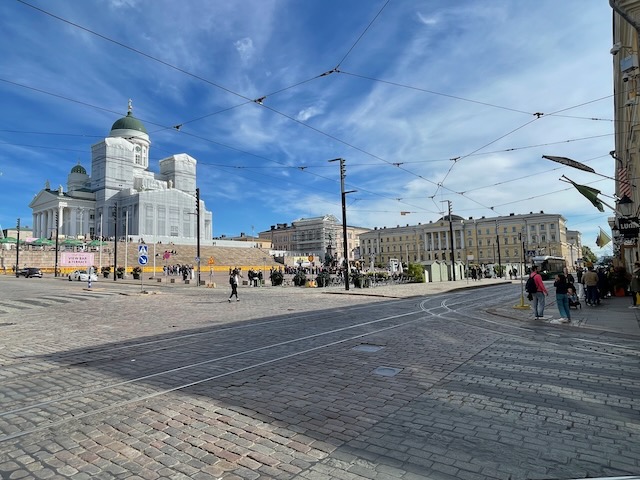
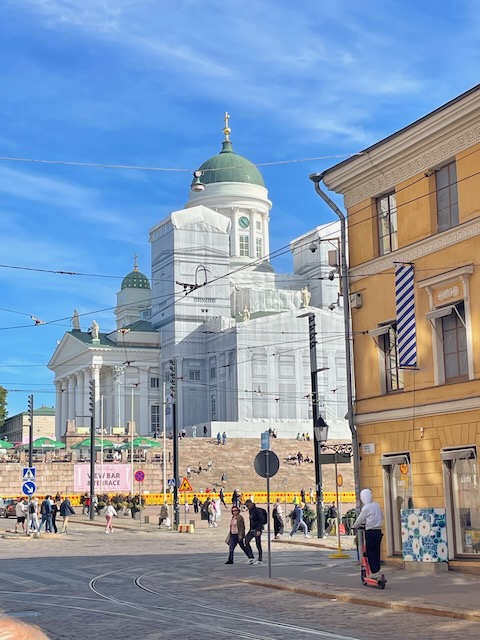
The port area where I boarded the ship was pleasant and, again, very clean. But there weren’t many real old and historical buildings that I could see in the city, especially compared to most of the other European cities I’ve visited. Helsinki isn’t a city built on tourism, which actually made it nice to get around; nothing was overly crowded.

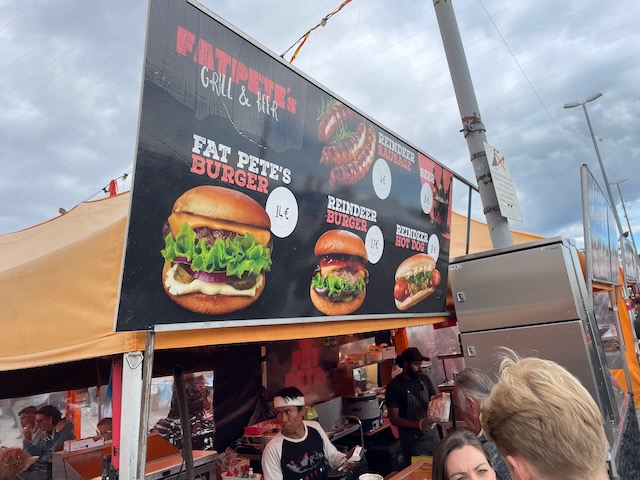
Of course I had to get a sample from the food kiosks at the harbor, and when I saw a kiosk that had reindeer hot dogs, well, I just couldn’t resist taking a bit out of ol’ Rudolph. It wasn’t too bad, but I have to say that pigs make a better hot dog. Fat Pete might be tasty too, I dunno.

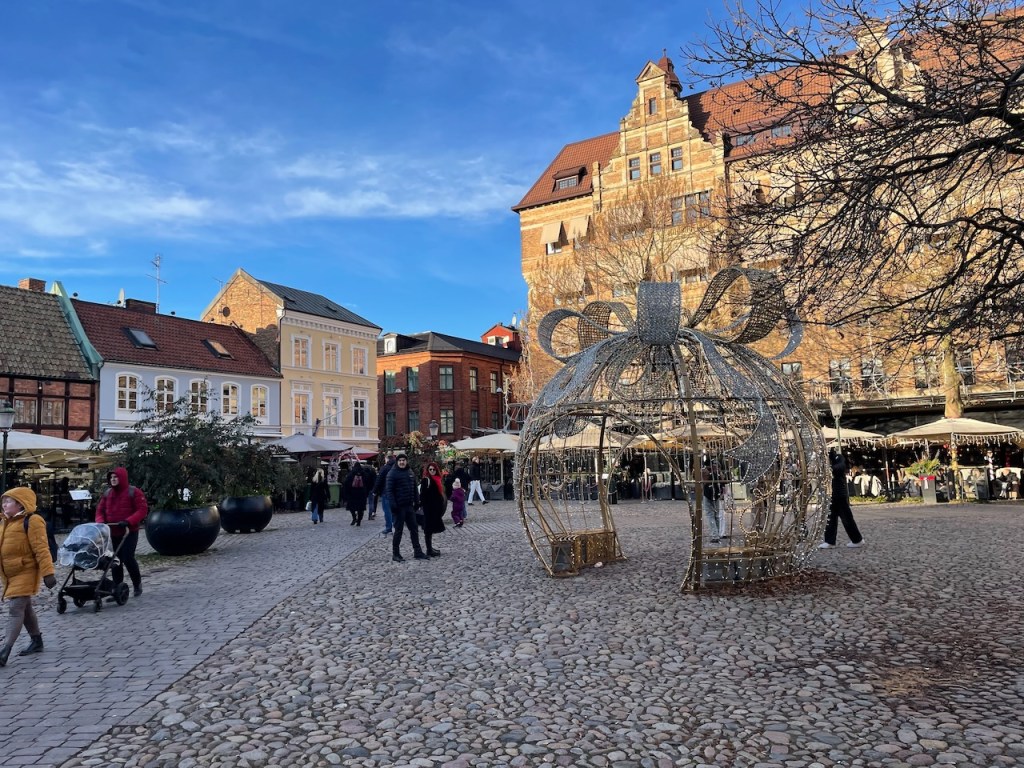
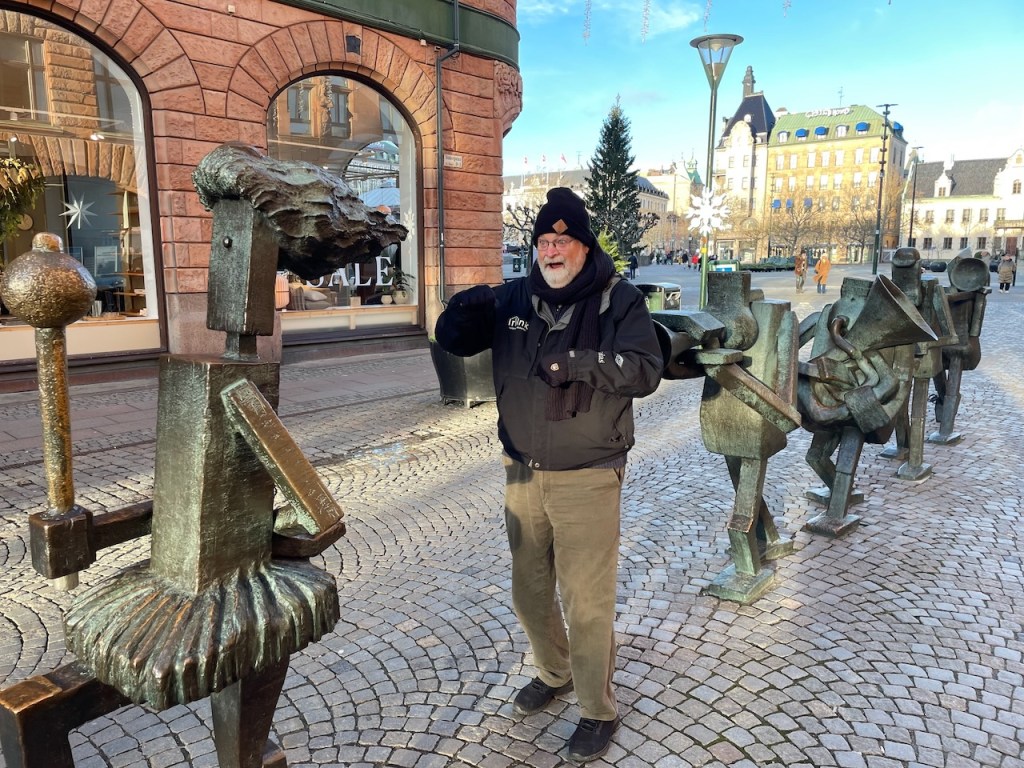
So I mostly just wandered around, not taking as many photographs as usual just because Helsinki is more of a collectively nice place, without many must-see monuments or historical buildings. Overall it’s a very hospitable place; I daresay it might be one of the most pleasant, calm, and safe cities I’ve ever been to.

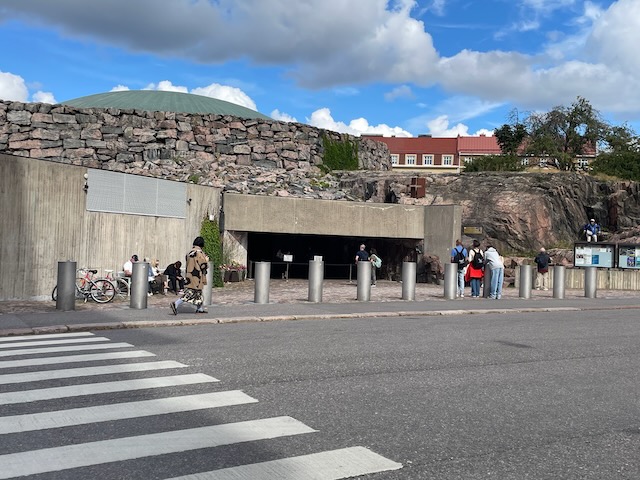
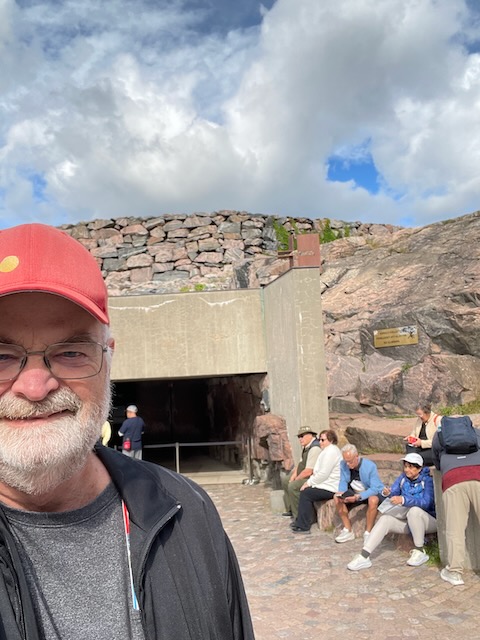
One of the popular tourist sites is the Temppeliaukio Church (pronounced Temp— oh, forget it). It’s also known as the Church of the Rock for some reason.

The church appeared to be closed, so I snuck in through a service door and snapped this photo before I was kicked out. At least I was able to uncover the mystery as to why they call it Church of the Rock. That huge threatening statue with those enormous muscles and sexy black under/outerwear nearly made me want to get all prostrated. You da man Dwayne!

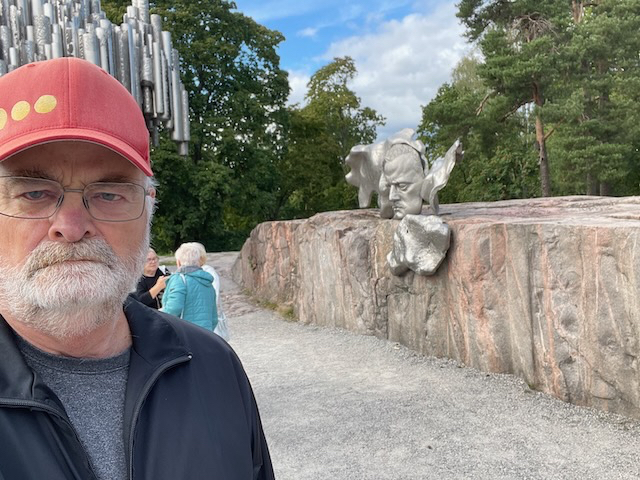
Another popular tourist site is the Sibelius Monument, which looks a bit like a bunch of metal wasps made a nest, or maybe a huge pipe organ that got scrunched in a compacter. (I wasn’t unhappy while taking that selfie, by the way, I was just trying to imitate the expression of that silver bust, who apparently didn’t like the artwork.)The material of the work is acid-resistant steel and it is 8.5m high; with a length of 10.5m and a depth of 6.5m. There are over 600 pipes, and the whole thing weighs 24 tons (I’m not sure if anyone has ever picked it up to double check that, but I’ll take their word for it).

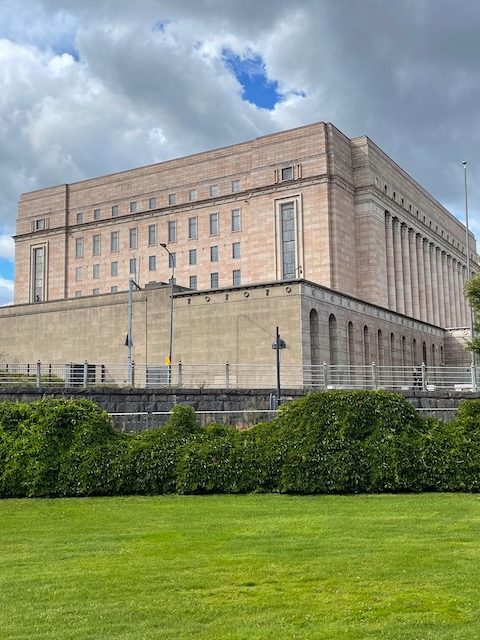
The Finns seem to like squared-off architecture, to me it looks like something from a 1920’s-era sci-fi movie depicting what it might be like in the distant future. In 1939, Finland fought the USSR in what is called the Winter War, which was eventually won by the Soviets, causing Finland to align with Nazi Germany as a sort of “the enemy of my enemy is my friend” deal. Eventually the Soviets were cast out of Finland by the League of Nations (not sure why the current United Nations doesn’t wield that same power), but Russia was allowed to keep over 12% of what was formerly Finland. I’m guessing Ukraine may end up with a similar experience. For decades after the war, the pragmatic Finns did their best to keep the Soviets relatively happy with them, knowing that the Russians were sons of bitches and might invade again under any pretext. I guess they haven’t changed at all. But after the Cold War, in 1995, Finland became a member of the European Union. In 2023, following the Russian invasion of Ukraine, Finland joined NATO. It’s now one of the EU’s most important buffers against Russia’s age-old aggressive tendencies. Damn Ruskies. You’ve already got the largest country by area in the world, in fact, almost double that of the second largest, Canada. So what the hell’s wrong with you?

I never thought I’d say this about any city, but one of my favorite places to visit was the public library. It was impressive enough from the outside, but once I got inside, I couldn’t stop smiling at the way the Finns use their public spaces for the betterment of all of their citizens.

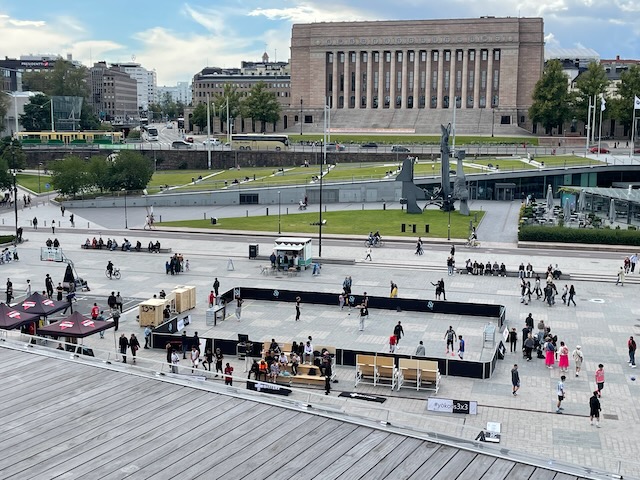
Right outside the library were courts for soccer and basketball, with a decided emphasis on everyone being welcome, confirmed by signs pointing out that bullying and discrimination were not allowed. I watched a mixture of players good and bad, all playing together with good humor and sportsmanship. It was downright heartwarming to watch.

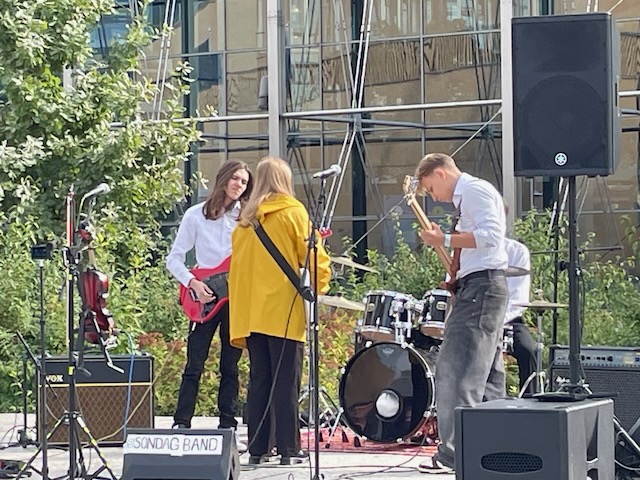
They also had a band playing, adding to the festive atmosphere. The fact that they kinda sucked made it all the more quaint.

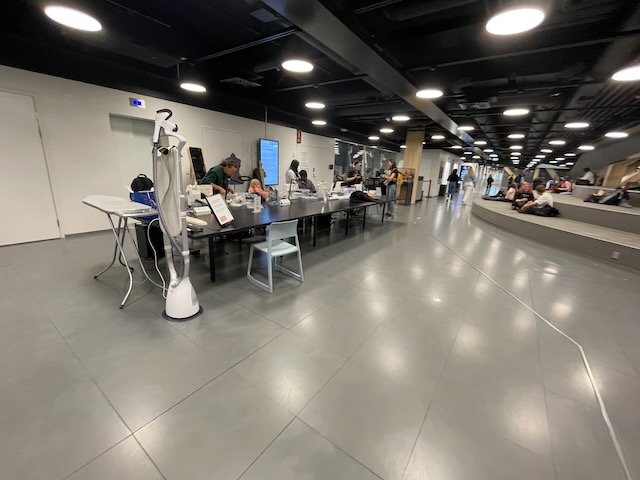
Once inside, the library had multiple floors with all sorts of things to do, from renting guitars to a line of sewing machines to computers to game rooms and more. I think they even had books somewhere. Lots of people lounged while reading or studying, I honestly couldn’t help having the cockles of my heart all warmed up as I took in the utopia-esque feel of the whole thing.

On the top floor there were indeed plenty of books as well as a cafe, and a balcony where you could watch the games and gaze out upon the beautiful city. I think my stupid little grin kinda fit right in with the ever-happy Finns.

As with all the Nordic countries, most of the time the Finns led with their native language when speaking to me, but as soon as I opened my mouth they would immediately switch to perfect English.

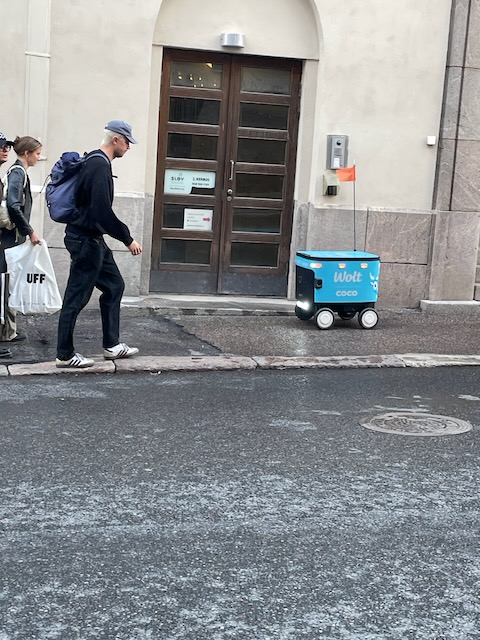
One way they keep the sidewalks clean is by using cleaning robots, which wander the streeets sucking up whatever detritus they can find. In a lot of countries I think that little guy would get stolen in a heartbeat, but apparently not in Finland.

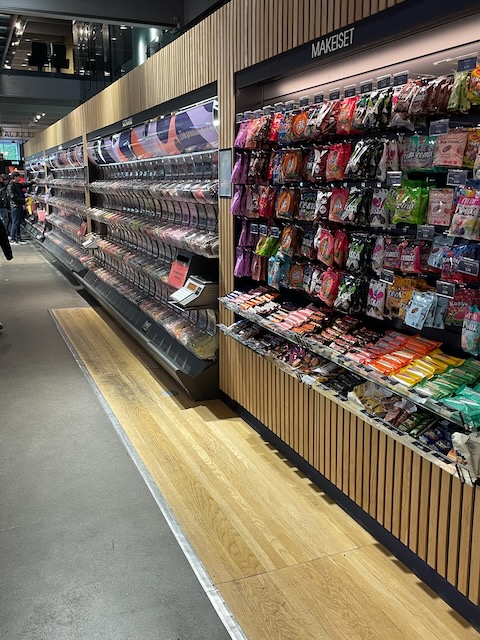
Originally, I was a bit apprehensive about traveling alone, since I’ve always enjoyed sharing the travel experience with another person. But it turns out that I had a great time anyway. I mean, I could do what I wanted when I wanted, including even trying out a movie theatre. And check out that monster row of candies! The whole multiplex was quite an impressive set-up. One of the other benefits of traveling alone is you can do really stupid things and no one knows. When the movie started, it began with an animated short, which I thought was cute, kind of like they used to do in the United States when Bugs Bunny cartoons ran before the films. But this particular short kept going on a bit longer than I expected. After a while, I realized that it warn’t no short; somehow I’d ended up in the wrong damn theatre. Since I was knee-deep into the film already, I decided just to stay and watch the whole thing. It was actually reasonably entertaining despite being a movie I surely would’ve never seen otherwise. The next night I tried to do it again and successfully entered the correct theatre. Such is the fun and excitement you can get from doing even mundane things in another country!

They even brought a little bit of Portugal to Helsinki. In Portuguese, “fazer” means “to do” or “to make” (among other things, it’s a very common verb used for just about everything it seems, apparently even fazering it’s way into Finland). And I thought that was quite the limo just for taking people to see rocks and crystals. What? Oh. Maybe not. While I figure it all out, I’ll keep you abreast of any developments.

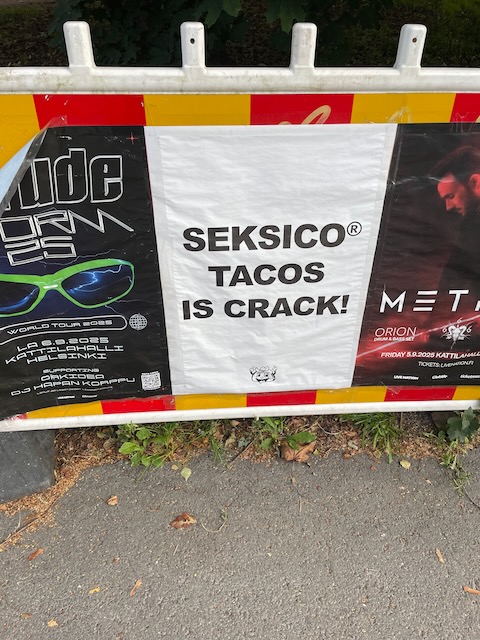
No trip I make to a foreign city would be complete without a collection of funny signs. From left to right, they get right to the point with the beer sign, that’s pretty much all that needs to be said. I was really tempted to go into the MyFlow store because at my age, flow is always a concern and I thought maybe they could help. Truthfully, I have no idea what they were actually selling. And in fact on the next sign I’m also not sure whether they’re promoting crack or tacos. Either way, they’re saying crack is a good thing? And lastly, I couldn’t help but be amused at the “secondhand vintage coffee” sign. Like, it was pre-drunk? Or worse? And all those lips on that pink background makes it look like a sex shop. Who knows, maybe secondhand lunch is some sort of sexplay for some Finns? Still, I don’t think I’ll ever be up for a reloved lunch.

When it was time to leave that fair city, I took a train by my own big boy self to the airport. I’m far from being a master of public transportation, so it was with a small sigh of relief when I actually arrived at the correct airport with plenty of time to spare.

As I gazed out upon the landscape during the ride I realized that if I had to do it all over again, I would rent a car and explore the gorgeous forests and other scenery outside of Helsinki. Helsinki really doesn’t need much more than a few days to see most of the things worth seeing, but I have a feeling the true gem of Finland is all the nature surrounding it. I doubt I’ll go back just to see that, but I’m very happy that I was able to add Finland to my list of visited countries.

As to their #1 happiness ranking, while visiting, I could understand why the Finnish people are so content. The government is designed to take care of all its citizens, maybe as epitomized by that awesome library. Additionally, their culture fosters a deep connection to nature, characterized by egalitarianism, honesty, and self-sufficiency.

I even noticed that many people walking the sidewalks, even alone, often had just a small hint of a smile on their lips. I have to think maybe they just don’t have the usual undercurrent of stress I see in the hubbub of other cities. They don’t have to worry about huge medical bills if something goes wrong with their health, and they’re less worried about the future since Finland takes good care of its elderly through a public system that provides a wide range of services based on individual needs, with the goal of enabling older people to live at home for as long as possible. They even have a family foster care program, where an older person lives with a foster family in a more home-like environment!

My takeway is that Finland focuses on being kind and helpful as a country, and that’s largely what makes them a happy people. In a world full of rage and extremist opinions, it’s nice to know there is an oasis of a country out there that prioritizes basic kindness and concern for all its citizens. Actually all the Nordic countries do a good job with that. Is it the cold, or maybe the long winters that do it? If that were the case, Russia would be a helluva lot nicer than it is.

Ultimately, it’d be truly marvelous to hear a little more kindness coming out of all politicians’ mouths nowadays, you know?

OK, I’m Finnished.

(Scroll down to see previous entries.)
Let’s go get drunk in Porto!

At long last, we three boys were rescued from an overdose of testosterone when Brooke, Luke’s wife and Masi’s mother and my daughter-in-law (that’s a lot of things to be for just one person!), finally arrived from the states. She promptly told us we were washing the dishes all wrong, took over the TV watching schedule, loudly told us which turns to make in the car even in places she’d never been before, and made us stop playing beer pong with Masi. Which was a bummer because we were making good money off of him.

Nah, I’m just kiddin’, she’s a sweetheart.

But after being with us for a while, she did ask me where the best place in Portugal was to get drunk (that’s exactly what she was saying in the picture there), to which there is an easy answer: Porto, where Port Wine and Portly people were invented.

Okay, she might not have phrased it that way, or even hinted at it, but I sometimes endeavor to not let the truth get in the way of a good story.

But we did go to Porto.

On the drive up from Lisbon we stopped in a town of about 50,000 residents named Pombal (to be clear, just the town is called Pombal, not all 50,000 residents), famous for giving Portugal the Marquis de Pombal. Marky, as some liked to call him, was a Portuguese leader in the 1700s. He is widely credited for being the driving force behind pulling Lisbon out from under the destruction caused by the November 1, 1755 earthquake and resulting tsunami, which had wiped out two-thirds of Lisbon. Since November 1st was a holy day, thousands of candles had been lit in celebration. Unfortunately, many of them fell over during the quake, which ignited all sorts of fires, resulting in even more destruction.

So first you get a quake, and then a bunch of fires, and then a tsunami rolls through the city. It was a disaster of Biblical proportions and sent Lisbon to the sidelines for centuries. It also resulted in most Portuguese abandoning the idea that God controls anything. Ever since, the Catholic church has been rendered essentially powerless within Portuguese politics. I guess it’s not a good idea to mess with the Portuguese. They’ll even give God a hard time if he annoys them.

At the time, Lisbon was one of the world’s top two or three cities. It’s really only been recently –just a short couple of centuries later– where it’s once again making its mark as a beautiful and important city. It’s now often nominated as the best tourist destination in the world, as well as the one with the most Lisbians living in it.

Pombal also features the 12th century Pombal Castle, with the usual awesome castle views as well as a charming young staffer who actually laughed at some of my jokes, so the whole thing now gets a five star rating from me.

We also made a brief stop in Coimbra, the fourth largest city in Portugal and home of the University of Coimbra, the oldest university in Portugal and one of the oldest universities in continuous operation in the world. I don’t know what you were doing in 1290, but to think about how long ago that was, 1290 is the same number of years away from 2025 as 2025 is to the year 2760. The song “In the Year 2525” seemed rather farfetched year-wise when it came out. Not so much when you think of it that way, eh?

Like Lisbon and Porto, Coimbra is a fairly hilly city, which makes for some great views of the non-hilly parts. Actually this might’ve been taken at the Pombal Castle, I’m not sure. Ach, quit whining and just enjoy the view.

Once we got to Porto we took these two photos to help those who are reading this while wearing 3D glasses.

Being a veteran visitor to Porto, I knew that the Livraria Lello (Lello Bookstore- click on that link if you want to see pictures of the inside, because we didn’t take any) would probably be busy, but lordy, I didn’t think it’d be that busy. I’ve been inside it before, and it is impressive, with a gorgeous red-carpeted spiral staircase, intricately carved wooden panels, a beautiful stained-glass skylight, and, not surprisingly, a bunch of books. It’s also famous for being an inspiration for J.K. Rowling and her Harry Potter stories, but she snorts derisively when asked about that. Well, maybe not snorts, but she does say it’s a misconception.

Since we were all so hopped up on the idea of seeing some books, we stopped into another store that happened to have them. They were only for decoration, actually, which was good because one of the ones on the top shelf really caught my eye. I mean, literally, my eye had popped out and… okay, sorry, nothing eye-popping to see here.

Luke’s camera takes these uber-wide shots so they sorta have to be placed here one at a time, but that works well for Porto because the panoramas do it far more justice than the narrowamas. Porto is a tale of two shores, with the Douro River creating both by running right through the city after its journey through the Douro Valley. The Douro River originates in Spain, and flows roughly 897 kilometers (about 557 miles, or 1.96 million cubits) during its journey to the Atlantic.

On one side is the main part of the city, with lots of tourist shops, restaurants, and historic buildings. On the other side, port and wine tasting shops dominate. Porto is sometimes referred to as the “city of six bridges.” This bridge is one of them. Duh. Which in Portuguese is pronounced Douro.

The city of Porto has a population of around 250,000, but perhaps more like a billion during tourist season. I mean, there were a lot of frickin’ tourists, more than I remember seeing the last time I was there in the summer. I actually walked around rather smugly because I have a long-term Portuguese residence card and so technically am not really a tourist, so I can give all the tourists the evil eye when I walk around the city. Because, you know, the damn tourists are ruining everything. My family doesn’t count because they’re family.

One funny little anecdote from the trip was when we first arrived in Porto, we struggled to find the short term rental house because sometimes housing numbers in Portugal go from 12 to 543 to 138 to B. Heck, on my street in Azoia there aren’t even any numbers, which often makes deliveries something of an adventure. Anyway, we looked like a gaggle of lost puppies, so an old Portuguese woman came out to see if she could help. After she ended up being almost as befuddled as we were, another elderly woman came out to try and help as well. The gaggle was growing but it was still not finding. After a while, a college-aged student, who spoke excellent English, strolled over and there we were, all seven of us, wandering up and down the block looking for a house. We finally found it mostly by process of elimination, but the help was so kind and very appreciated. You gotta love the Portuguese.

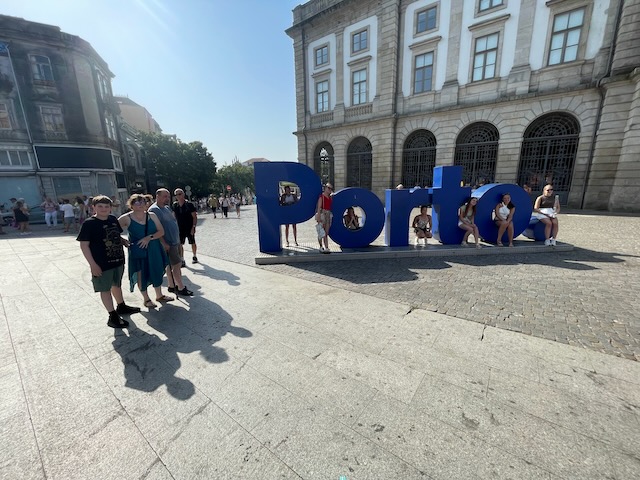
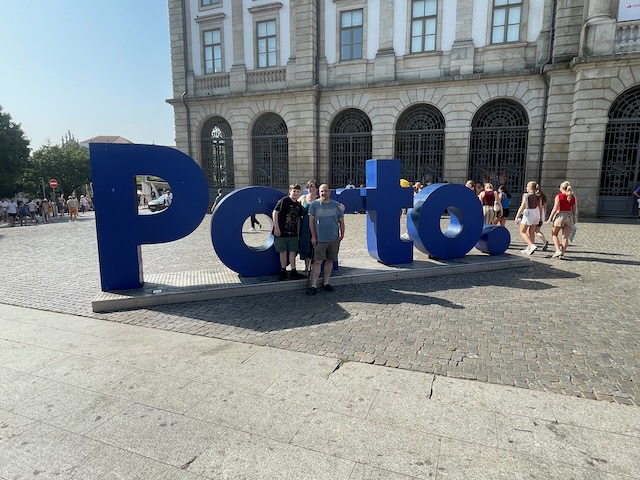
This was what we looked like after finding the house. Or maybe this was after all the port tasting, I’m not sure.

Behind Luke and Brooke is a statue of a guy pointing toward the direction he wants all the tourists to go.

Like Lisbon, Porto is home to a myriad of old buildings and even older hills. I tend to think of Porto as “Lisbon lite.” Of course, you expend just as many calories walking up and down the hills of either, so it’s not that kind of lite. Still, that might not be a bad name for a beer.

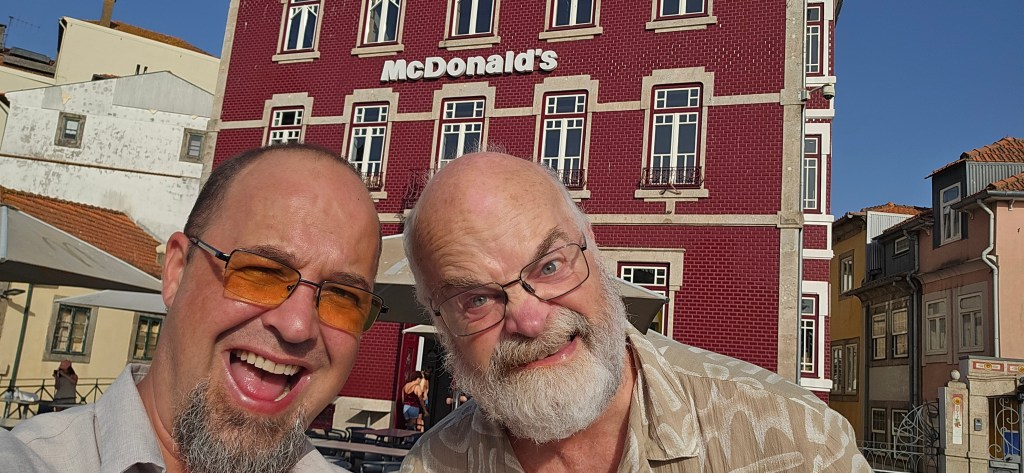
After all that walking around we needed to refill our tanks, so we stopped at the first Portuguese-themed restaurant we could find. Oh, well, at least it was the most impressive building to house a McDonalds that I’ve ever seen, but they still featured the same 15,000 calorie meals. Did you know McDonalds has about 44,000 restaurants around the world? It is estimated that 1.3 to 1.6 million calories of food are served per McDonald’s restaurant per day, which means that over 70 billion calories a day are served by McDonalds alone. If you put a piece of paper down and stacked all those calories on top of it, do you know how high the stack would go? Actually, you’d still only have a blank piece of paper because calories are units of energy and not physical objects.

(This blog is like the Swiss army knife of travel blogs: you got your travel photos, your trivia, your math, your history, and your science lessons, all wrapped up with a bow made of Dad jokes. And all for free!)

On the main walkway in a bustling and touristy part of the city is this ledge without any kind of railing or warning, just Darwin’s theory ready to pounce. I marveled at it because just about anyone could fall right off and break at least one bone or twelve. You can see the hubcap down there, I assume it was the only remaining evidence of some poor soul who took a wrong turn. The rest of the car has probably floated to the Atlantic by now. It was also interesting to see all these fish swimming in front of some sort of outlet that might have even been a sewer, I’m not sure. I just know I wouldn’t want to eat any of them until I knew for sure what they were swimming in.

Porto is the city that gave Portugal its name, and actually had that name from very early on, like 200 BC. (Hey, using the same calculation as the 1290 university thing results in the year 4250. Wow!) The Porto metropolitan area is home to over 1,700,000 people, making it the 13th most populous urban area in the EU. Since the city itself has only 250,000 people, if you have any amount of math skills at all you can calculate that the surrounding area is chock full of people, but you’d never know that by just driving around. (A “chock” is like a million or more things. Or something.) Unlike these gaudy American tourists, the Portuguese are pretty adept at keeping a low profile.

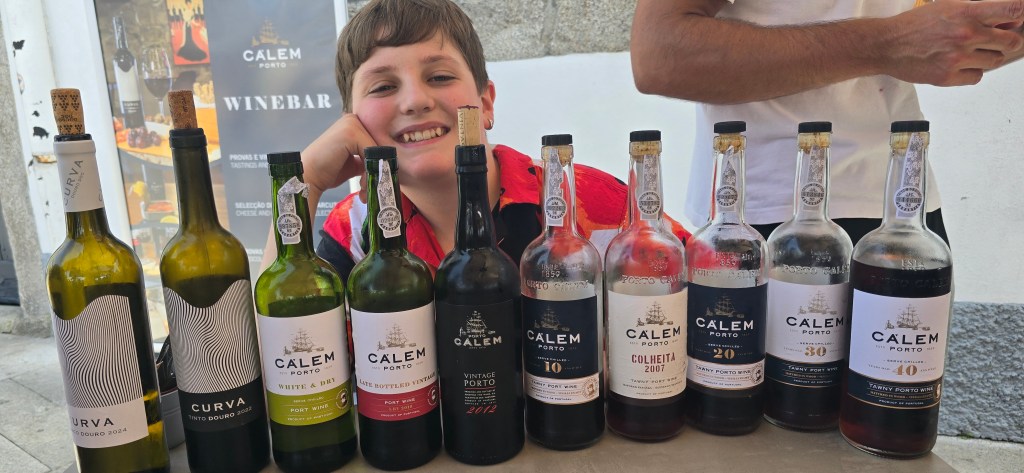
We took this as a sign from God that it was time to go port tasting. He sent a stream of light pointing right up the hill where one of the restaurants was.

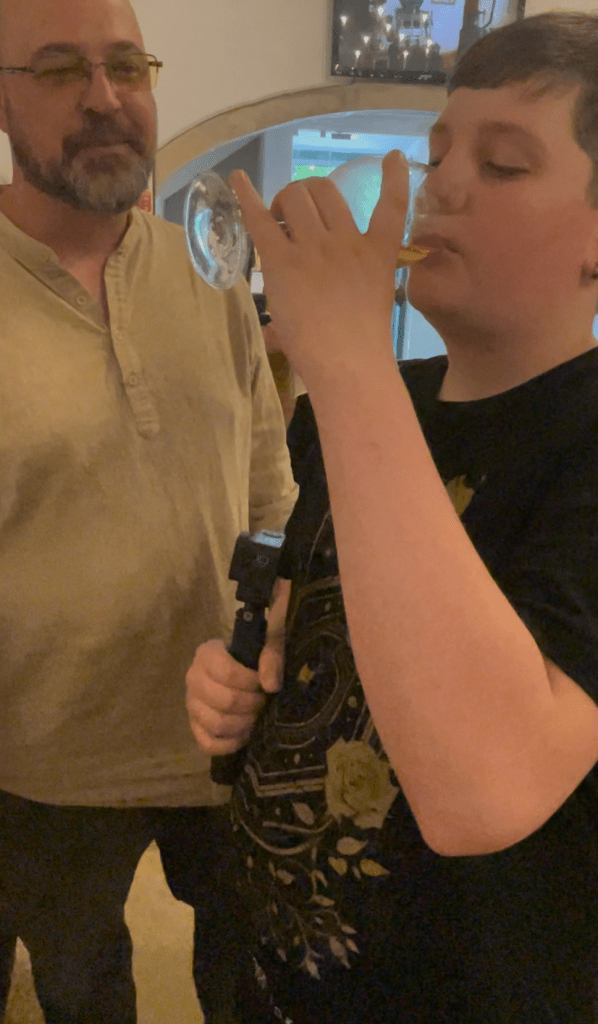
And nobody was happier about that than Masi. After downing his first full beer in Germany, he was primed and pumped to see what all this wine and port stuff was all about.

It didn’t take him very long to find out.

Facial expressions: like mother, like son! Actually, that was Brooke after more than a few port tastings. Like me, she began to laugh at everything. Masi just kept on drinking.

This was just one of the many tastings offered to us that afternoon. Brooke and I ended up giggling most of the rest of the day, while Masi staggered around trying to sneak in naps when he could, and Luke just looked at us like we were pathetic rookie drinkers. But we had a good time!

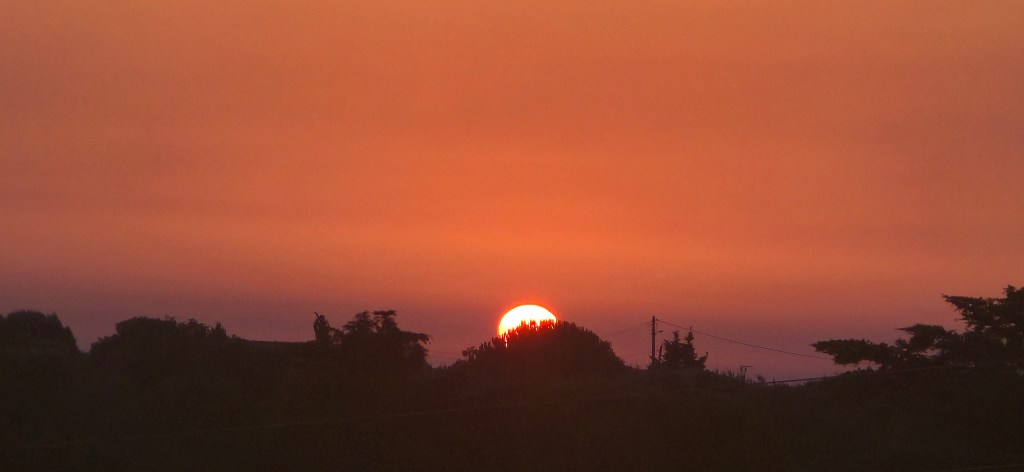
And so the sun set on another great adventure in Europe with my family. We will all remember it forever, except for maybe the last part of that afternoon after the port tasting.

(Scroll down to see previous entries.)
A Day Trip Mostly for the Statistical Accumulation of Countries Visited

Well that’s a rousing title, eh? Just makes you want to dig right in, right? So great, now I’m gonna have to be really entertaining just to keep you from nodding off and dipping your nose into your coffee. Who comes up with these stupid titles anyway?

So did you hear the one about… no, just kiddin’. I like my written humor to be subtle so you almost don’t notice it, because even if it isn’t there I can claim you just didn’t notice it. In any case, my son, grandson, and I decided to drive a loop from Stuttgart to Switzerland to Liechtenstein to Austria and back again. Four countries in one day is nothing to sneeze at, even if they lacked any kind of gotcha moment or monument or monofilament… or monoblob, which actually is a thing.

Zurich

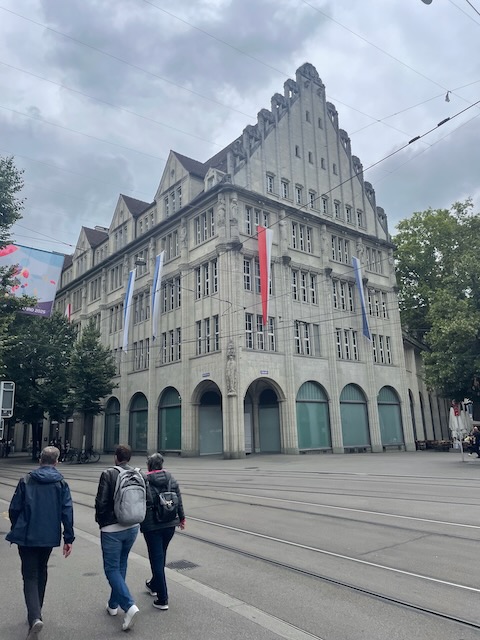
The only thing I really knew about Zurich was that they zur ar rich there. “Ge neva get better jokes,” he said. We thought about going to Geneva, but figured there’d too many conventions, because I guess they’re famous for conventions. In any case, none of us had ever been to the land of the Swiss, but as we expected, it was full of holes. I know, another cheesy joke. They’ll get better, I hope.

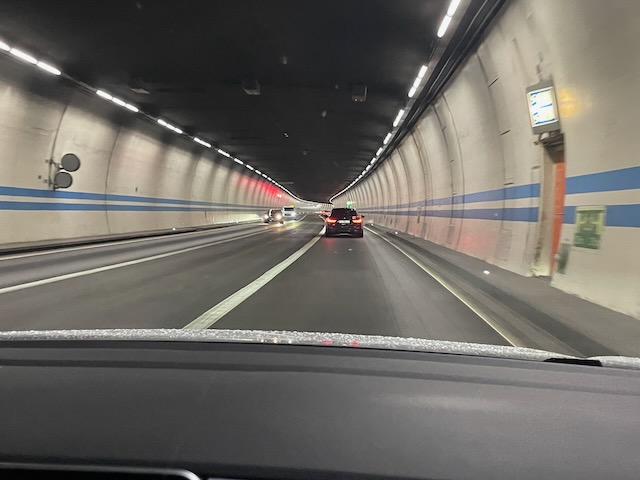
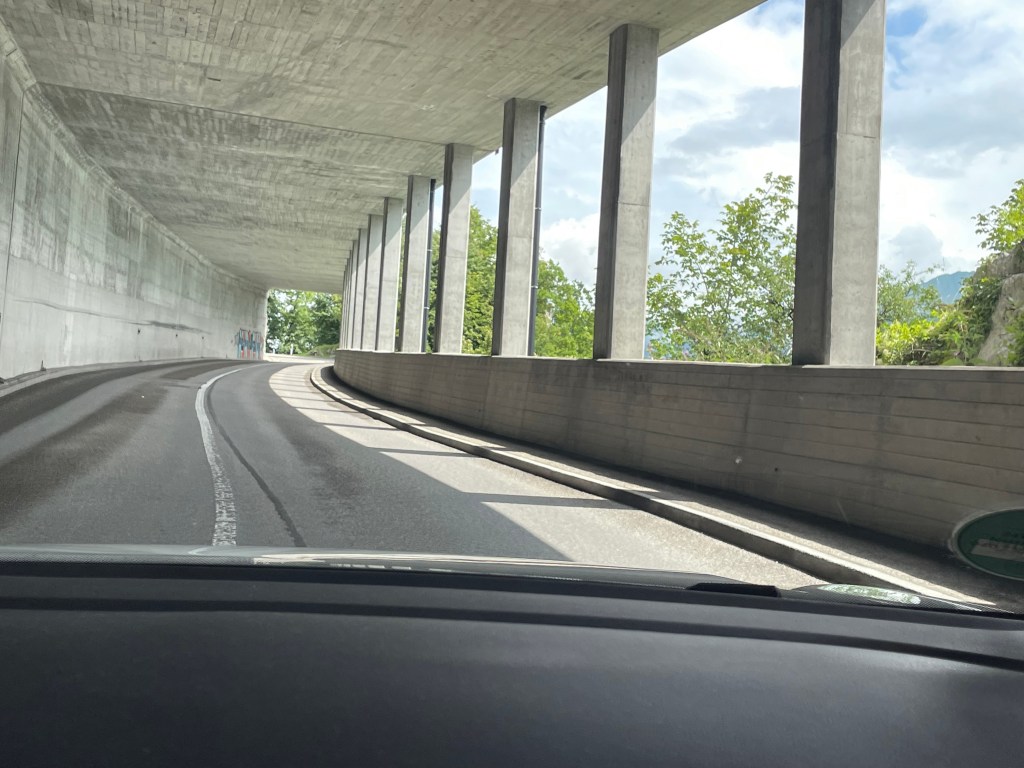
And by holes, I mean things like this neverending tunnel. Truly. I mean, we watched the entire movie, The Neverending Story, while driving through that tunnel. Masi started growing beard hair while we drove through that tunnel. One of my body parts fell off my aging body while we drove through that tunnel and I never could find it. I asked the car rental company to send it to me if they ran across it, but I haven’t heard back from them yet.

After we finally made it to Zurich, I overheard an American tourist couple, who, after seeing Masi, looked down at their map of Europe quizzically. Then she whacked her husband on the shoulder while saying, “I told you to take a left, now we’re in Portugal you idiot!” It was then that I really appreciated my single status. Plus now I figure it’s a good time to use this beer photo.

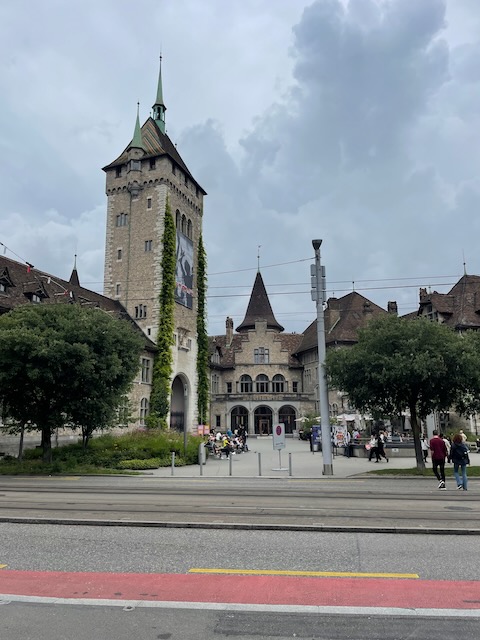
So Zurich is a nice city; but we were there on a Sunday which meant it was fairly quiet and many of the shops were closed. That didn’t bother us because, well, you know, we’re all males. Apparently there are a bunch of museums and galleries too, but we didn’t actually know if they were open on Sunday because we were there just to step foot in another country, and that’s pretty much it. It’s easy to achieve your goals if you don’t set them too high.

Zurich is Switzerland’s largest city, and is a hub for all the major transportation systems. Both the Zurich Airport and Zurich’s main railway station are the largest and busiest in the country.

Not only that, but they have the largest pink T-shirt with the number 9 on it inside a train station… get this… in the world. I looked for a Guiness World Record plaque for same, but Guiness must’ve been too busy measuring the longest distance pulled by a horse while on fire. And I’m honestly not making that up. They also have one for the farthest toss of a washing machine (also 100% true), probably set by a guy who told his wife they didn’t need to call a repairman, and eight hours and two feet of water later, the washing machine was seen hurtling through the air.

Zurich has been permanently settled for over 2,000 years, or almost the combined age of the last two US presidents. The Swiss speak German, although there are lots of Swiss dialects, and boy, those are the ones that really confuse me. Well, besides the German.

Despite its neutrality, Zurich was accidentally bombed during World War II, and there were some dogfights as well. With planes, not dogs. There was some suspicion from the Swiss side that the Allies “accidentally” bombed Switzerland to cajole them into stopping their relationship with the Germans, but somehow bombing never seems to cajole anything. Kaboom maybe, but not cajole.

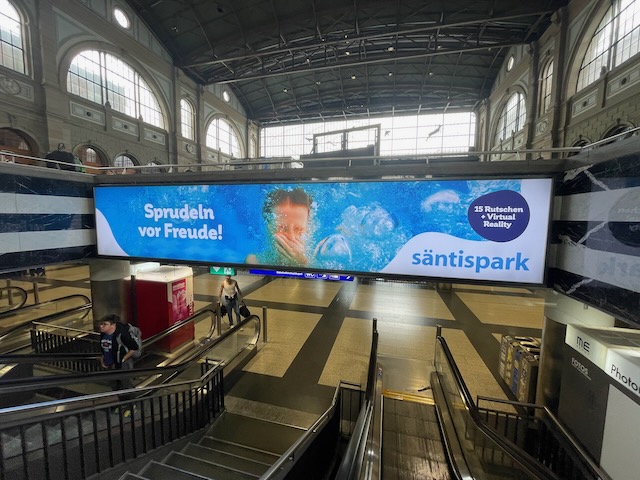
Here again in the main train terminal, I thought this was interesting in that Americans say, “Gesundheit” when someone sneezes, which I think in German means, “your snot is showing.” Ok, to be serious, it actually means “health,” even though in my childhood someone told me it meant, “God bless you,” which was needed because rumor had it demons could sneak into your body when you sneezed, which is why they wanted God to intervene. Which made me wonder, I’m not sure what’s worse than demons, so what exactly sneaks in when you fart?

Anyway, according to this advertisement, they really say “Sprudein vor Freude!” which may mean “Sparkling with joy.” So if you’re facing a sneezer, you’re now sparkling with all the joyous sneezy bits, and I guess their product will happily help desparkle before you become seriously de-joyed. Of course, maybe she’s not sneezing at all, but drowning. It’s hard to figure out all this different language stuff.

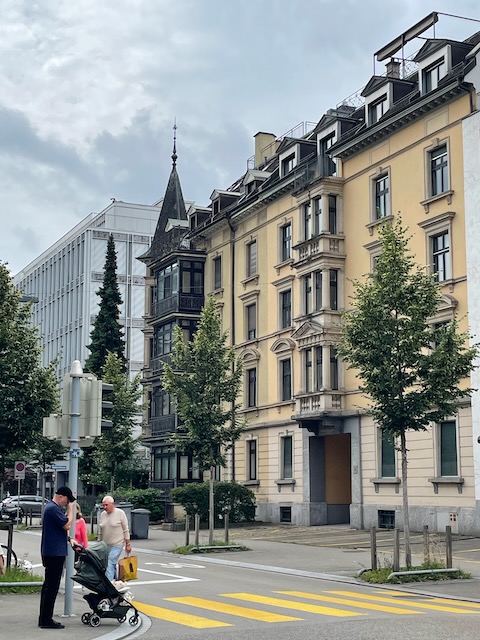
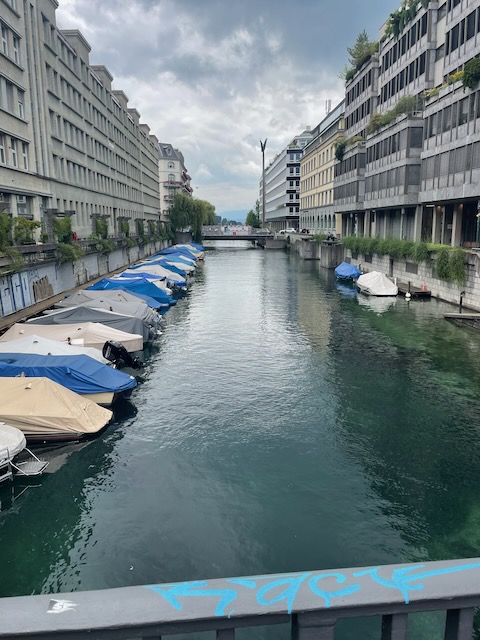
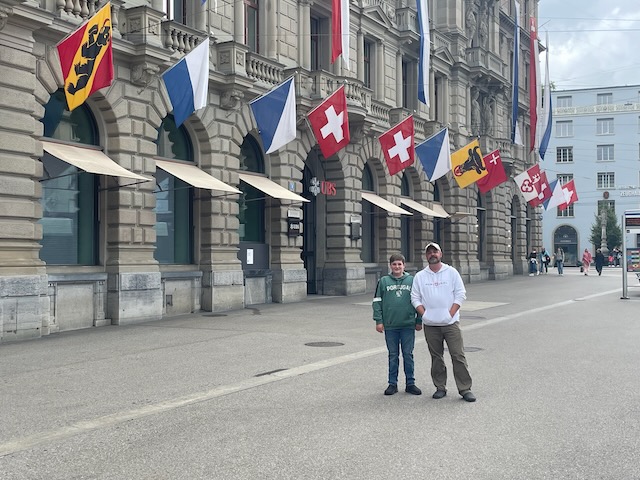
As you can see, Zurich is a pretty city with old buildings and lots of plus signs, since they’re really into banking. Indeed, Switzerland is chock full of powerful banks. A while ago, Zurich was ranked 9th among the “World’s 10 Most Powerful Cities,” and in the 2017 Global Financial Centres Index, Zurich was ranked as having the 11th most competitive financial center in the world, and the second most competitive in Europe after London. We voted it the best city in Switzerland we’d ever been to.

So it kinda bummed me out that we were there on a Sunday, and all the banks were closed. Because there I was, stuck with two pockets stuffed full of Euro coins ready to use to open up my first Swiss bank account. Which made me look a little bit like this woman. Okay, shut up, I’m not fat shaming, she just provided some graphical insight for my joke. If it still upsets you, well, all I can do is thiiiigh… But seriously, if she were a balloon, it’d just be a picture of a street because she’d be up in the sky dodging airliners. If she were a chicken, they’d need an entire KFC bucket for just one of the thighs. Aw, she’s actually a very pretty woman, much better looking than even the cutest chicken.

Otherwise, we spent the rest of our time making fun of their signs. Clockwise, I’m thinking fock.com is a porn site for bad spellers. Headsquarter must be a casino because I think they’re already calling heads on a flipped quarter. I took a picture with Heidi, which was the name of an old girlfriend I now wish I’d never broken up with, plus she didn’t look like that cow at all. Kalte Lust shows some spanking paddles in their logo so the rest is up to your imagination. But if you’re thinking of going through the previously mentioned door, you might consider getting your anus hair styled first. In fact, 33 euros is the best price I’ve ever seen for that.

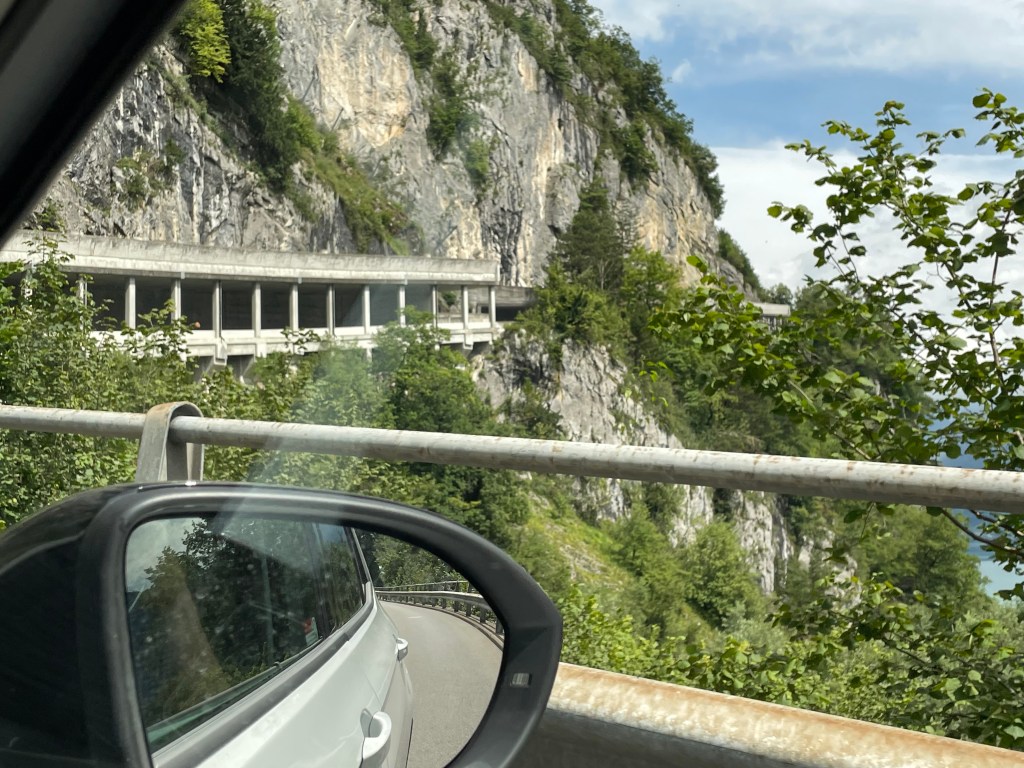
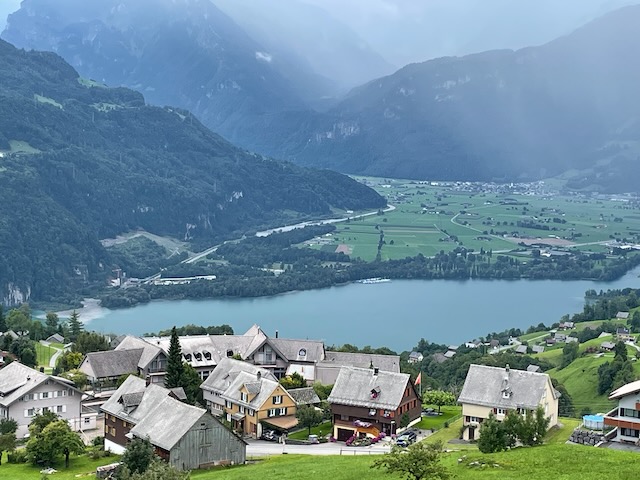
On the way to Austria and Liechtenstein, we took a side trip off the freeway to have some lunch. Little did we know we’d encounter some of the most beautiful scenery of the whole expedition while there. These photos were taken around a little town called Amden, in Switzerland. We had lunch in one of the few places that was open, it was kinda lousy, but y’know, I can’t taste the food anymore while I can still gaze at this scenery anytime I want, so it’s all good. We went up and up a winding road without knowing where the hell we were going, but it was all worth it for these awesome views. Of course, when we came down I think we ended up in Italy, but that doesn’t count here because we’re still not sure of it.

Austria

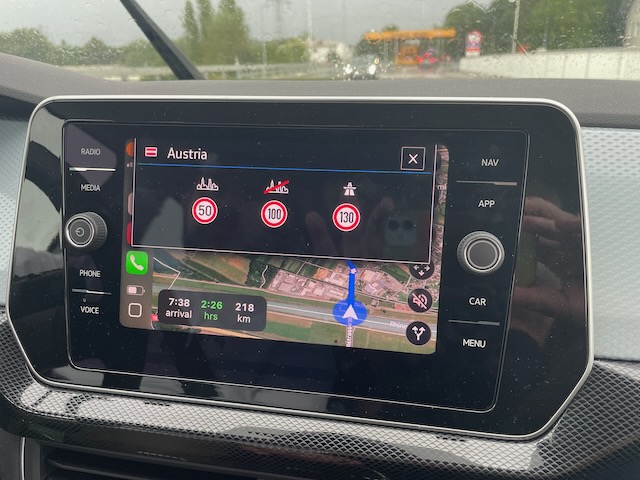
After the whirlwind tour of Zurich, we hopped into the rental car (the change in my pockets clinking like a hundred loose screws inside a dryer) and made our way toward Austria and Liechtenstein. And just in case you don’t believe we actually entered Austria, here’s proof from our rental car, because, as we all know, AirPlay never lies.

We didn’t really give a Fuchsberg where exactly we were, we were just there for the pushpin in our “Countries We’ve Been To” map. Maybe Fuchsberg is in Italy.

But the rewards from the highway were more than gratifying. While driving through these mountains, we merrily belted out, “THE HILLS ARE ALIIIIIVE, WITH THE SOUND OF MUS–” By “we,” I mean “I,” and yeah, that’s all I could get out before Rage Against the Machine was pumped up to full volume. Sorry, Julie.

The drive through Austria, short as it was, provided beautiful vistas that might only have been more impressive had they been they covered in snow. But then we might’ve ended up with one wheel up in a ditch, cursing the snow like it was snot from a demon who had snuck into our bodies during a fart.

But truly, Austria is a country with almost as much natural beauty as Catherine Zeta Jones in Zorro, or the “most beautiful young girl in the world,” or my late wife Dolly. That’s almost. Honestly, I’d give up the memory of every view I’ve ever seen, and pretty much everything else, just to see Dolly alive again. She still makes me smile when I look at pictures of her, which is an amazing gift she left for me. Her smile could light up a room, and even the photo of one still melts me inside.

Liechtenstein

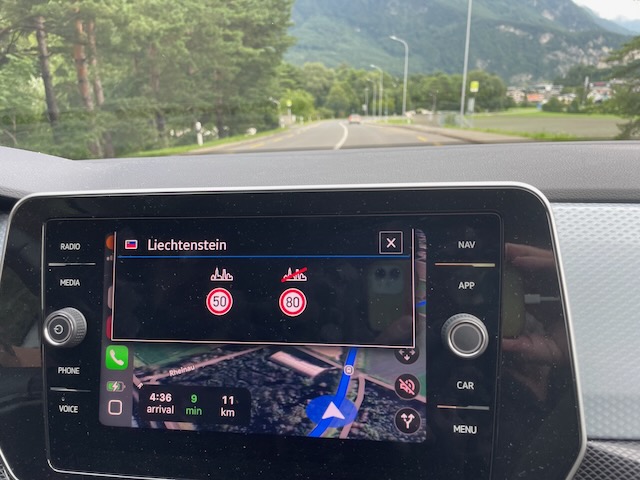
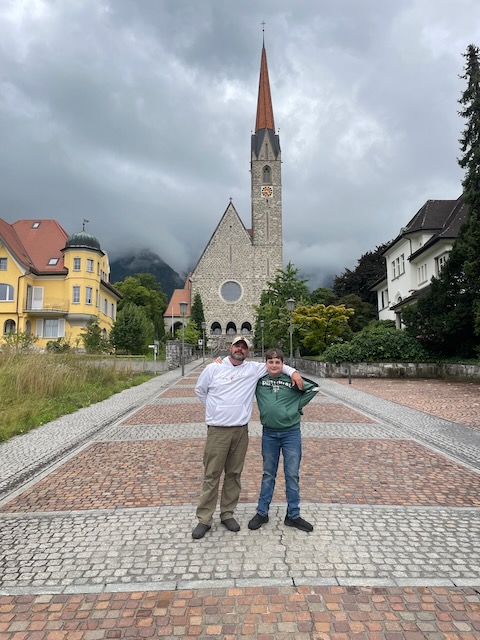
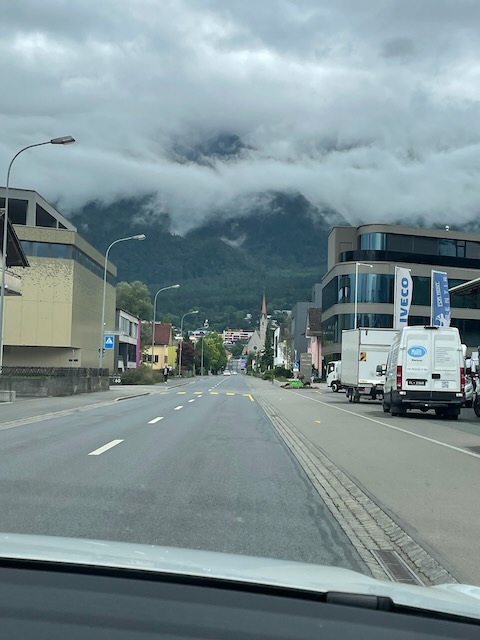
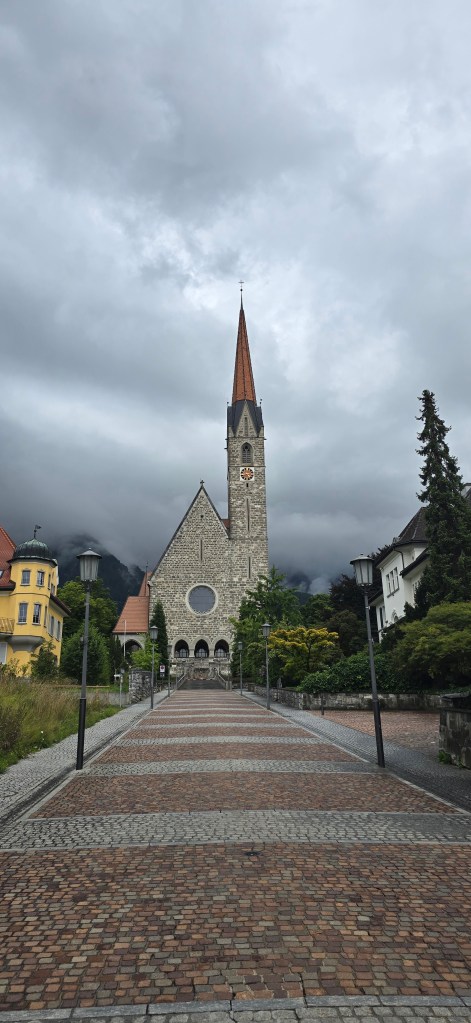
This is about all we got from Liechtenstein. After taking this picture, I looked up only to realize we’d already made it all the way across the country.

So, we returned to Stuttgart, with memories of scenery and funny signs and– okay, I’m joking, we actually took loads of pictures of Liechtenstein:

That is if you call six pictures a load, with four of them being of the same two things. We stood around downtown Schaan, Liechtenstein’s biggest “city” with about 6,000 residents, looking like the crew in Star Trek IV loitering aimlessly in San Francisco wondering what to do next. Since Liechtenstein is landlocked, we couldn’t even ask anyone if they knew where any nuclear wessels were.

Liechtenstein is Europe’s fourth-smallest country, with an area of just over 160 square km (62 square miles). To put that into perspective, Rhode Island, the US’s smallest state, is 25 times larger than Liechtenstein. In fact, Washington, D.C is about the same size as Liechtenstein. But Liechtenstein (I just like saying Liechtenstein for some reason) does boast a whopping population of about 40,000 Liechtensteiners. Liechtenstein is also one of the few countries in the world with no debt. In fact, Liechtenstein has one of the highest gross domestic products per person in the world. Maybe every country should only consist of 40,000 people. Like Liechtenstein.

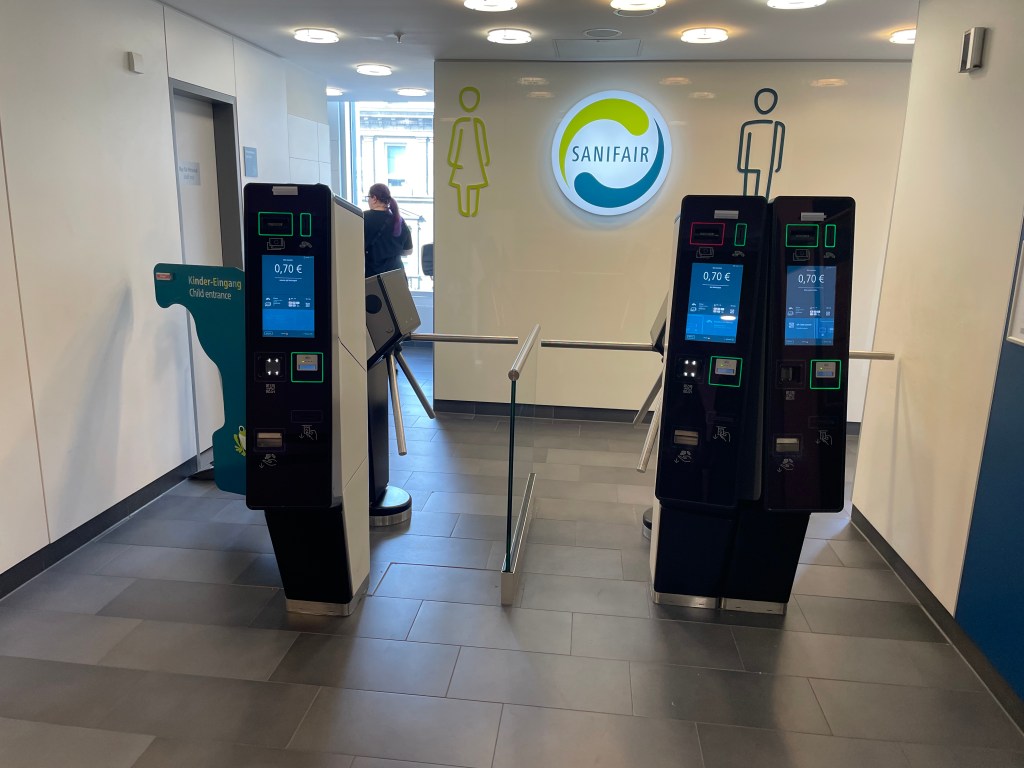
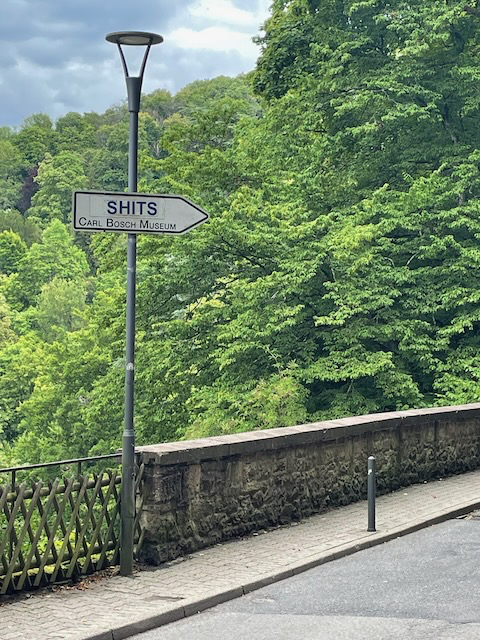
As a final note, that part of Europe seems hell bent on extracting money from those with weak bladders, even to the point of selling WC (Water Closet, aka toilet, aka shitter) access cards in vending machines. They must do a booming business with the Shitter Cards because there are more of them inside that machine than anything, even counting all the M&Ms.

Since we travel on a budget, Luke figured out his own way around that system.

On the flight back, we could see some of the fires that were plaguing Portugal at the time. So here’s a genius idea: it seems like the airlines could help put out the fires by having passengers buy a bunch of drinks (they would probably be tax deductible for Americans) and convert it all to urine if there’s time, if not, just pour the leftovers down the sinks, and then fly directly over the fires and have each airliner dump their whole waste tank over the area. That’s even a very environmentally friendly plan because it would make the planes lighter, saving on fuel. Plus, it would all be colored blue so people on the ground would know who to thank.

Of course, I hope the “dump waste” button isn’t anywhere near the “dump fuel” button, but otherwise, I’ll accept the Nobel Peace Prize for this idea anytime. My plan would’ve put out 8 fires already.

(I remind myself sometimes of Michael Keaton’s character in Night Shift: “Wanna know why I carry this tape recorder? To tape things. See, I’m an idea man, Chuck. I get ideas coming at me all day. I can’t control ’em. I can’t even fight ’em if I want to. You know, ‘AHHH!’ So I say ’em in here, and that way I never forget ’em. You see what I’m sayin’? Stand back! This is Bill. Idea to eliminate garbage. Edible paper. You eat it, it’s gone! You eat it, it’s outta there! No more garbage!”)

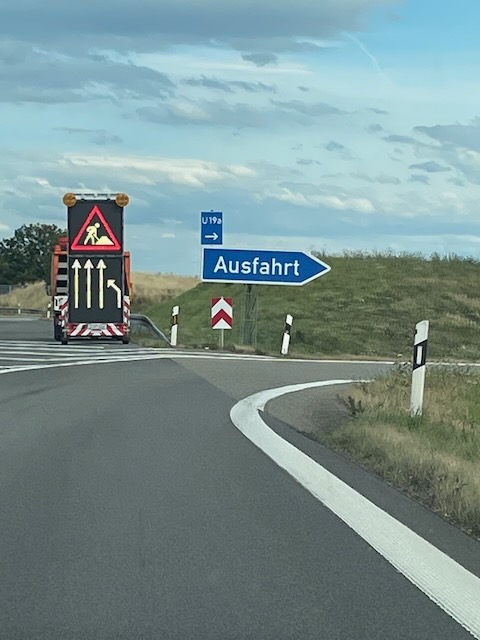
Exit here, please. I guess twice because you can never ausfahrt just once.

(Scroll down to see previous entries.)
There are bad museums and there are good museums, and then there’s Dachau.

The museums I’ve visited in Europe have largely been interesting and informative. While I don’t always seek them out, if there’s a decent-sounding one nearby I’ll generally venture into it.

Since I was staying in Stuttgart with my son and grandson, the Museum am Löwentor (the Natural History Museum of Stuttgart) sounded like it had promise, plus it was comparatively close to where we were stayring. So with promises of dinosaur memorabilia and some relatively decent traveler reviews dancing in our heads, we decided to give it a shot. Unfortunately, we probably would’ve been better off downing a shot or two instead.

It’s not that it was horrible, but it was definitely geared toward kids younger than Masi’s thirteen years. Okay, we got a couple of cute selfies out of it, but you have to admit, neither of them are very realistic. I’ve rarely seen sharks burst through tables, and dinosaurs are extinct. Finito. Dead-o. Gone forever. And no amount of Jurassic Park movies will ever change that. Also, why didn’t that dino just go through the glass door? Big dummy.

Many of the exhibits were just dioramas; no actual dinosaur bones or the like. In addition, almost all the written material was in German, so we just kind of wandered around for 30-45 minutes, shrugged, and left.

Truth be told, the most fun Masi had there was finding this play structure and climbing around while chatting up some cute German girls. I don’t think he got a date, but he probably bragged about drinking beer with his dad and grandpa.

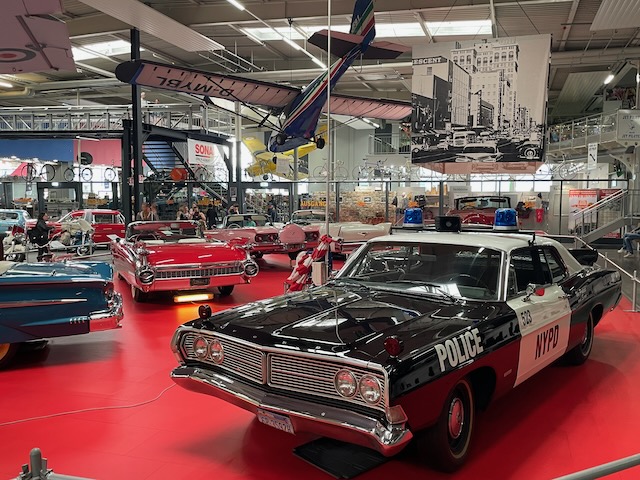
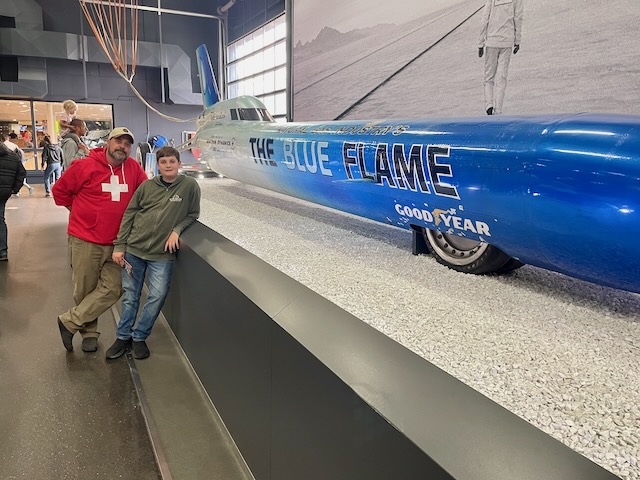
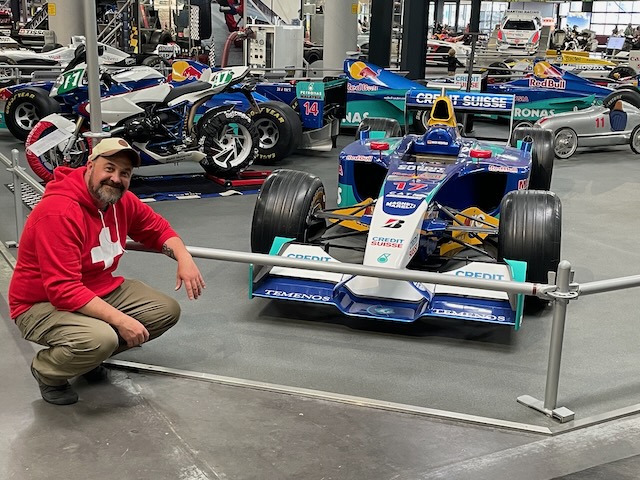
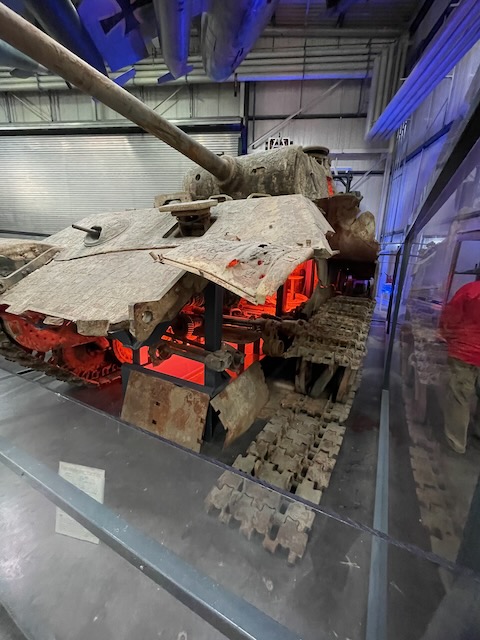
Fortunately, our faith in the whole museum experience thing was restored after a visit to the Sinsheim Technology Museum, just about an hour south of Frankfurt. I mean, all we had to read was that it has a U Boat and a Concorde and that you can go inside of both, and we were sold. Besides, I needed to get the taste of that previous museum out of my mouth. I’d accidentally licked one of the exhibits, you see.

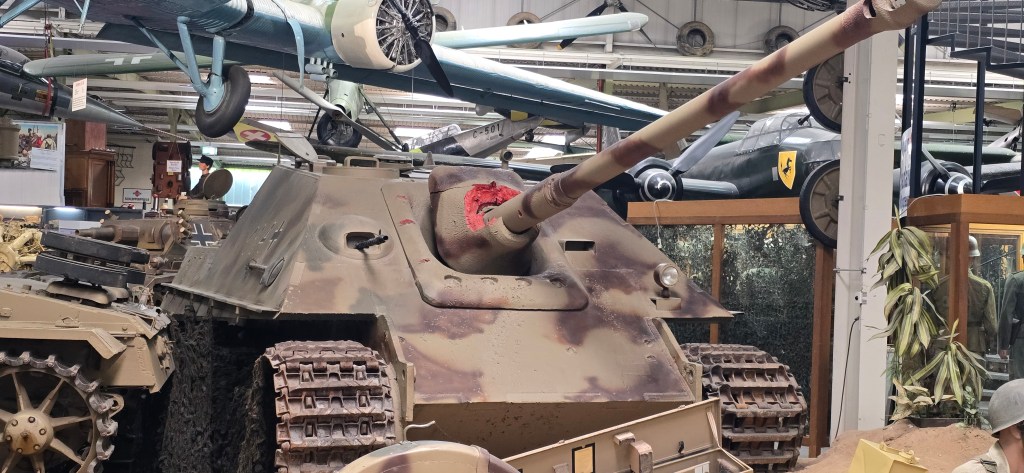
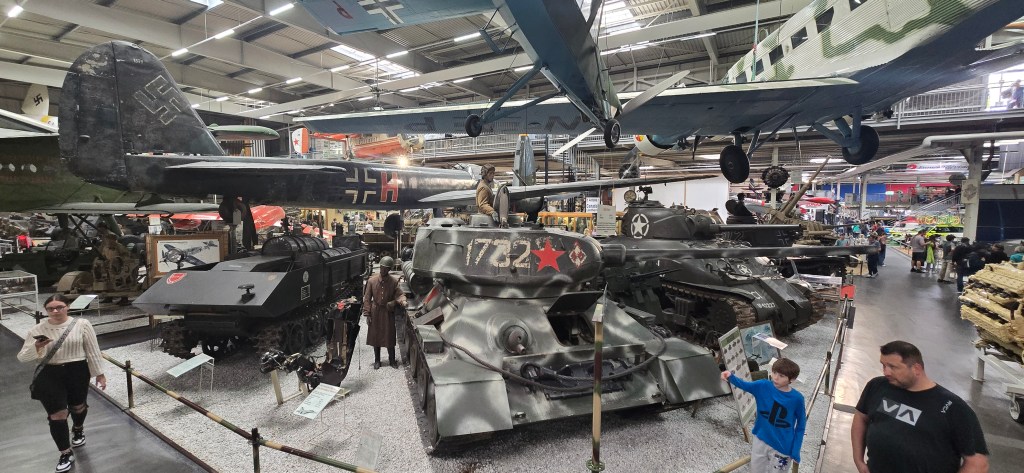
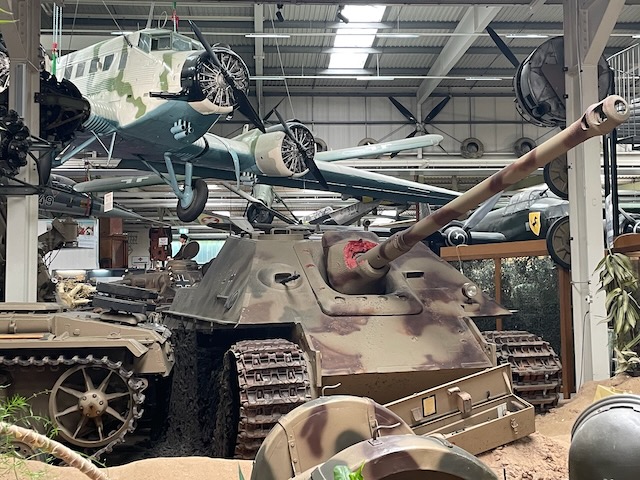
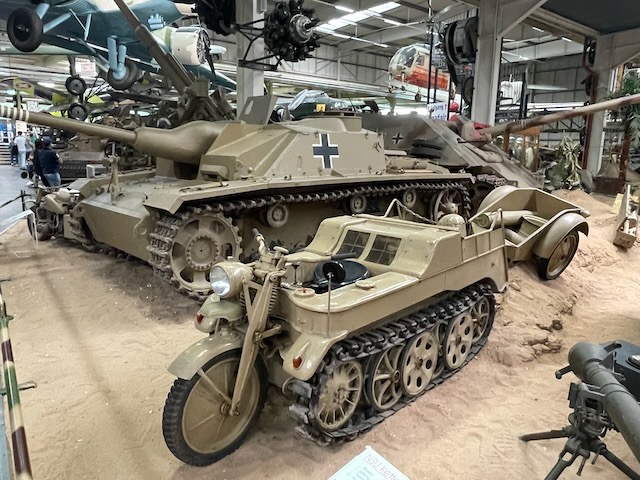
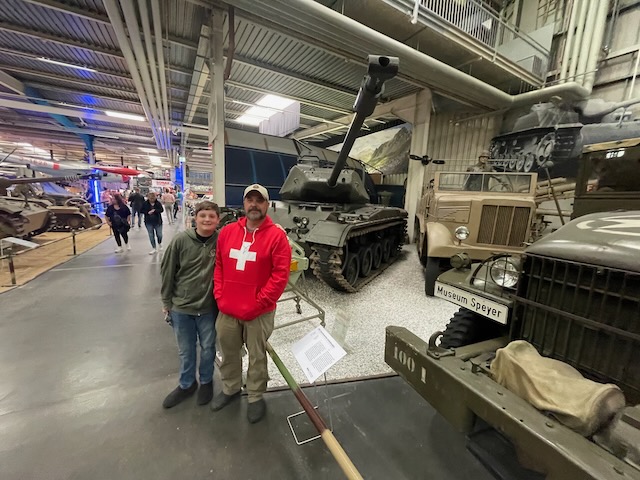
The Sinsheim museum features an extensive collection of military vehicles, mostly from WWII. Luke made sure to emphasize his neutrality by wearing a hoodie with a Swiss flag. It must’ve worked because none of us got shot at while we were there.

In the last photo you can see that they have so many vehicles they just keep a bunch of them sitting outdoors. If that had been in Russia I think they would’ve already taken them away and put them into service just to see them get blown up by the Ukranians almost immediately.

The museum also features the world’s fastest tractor.

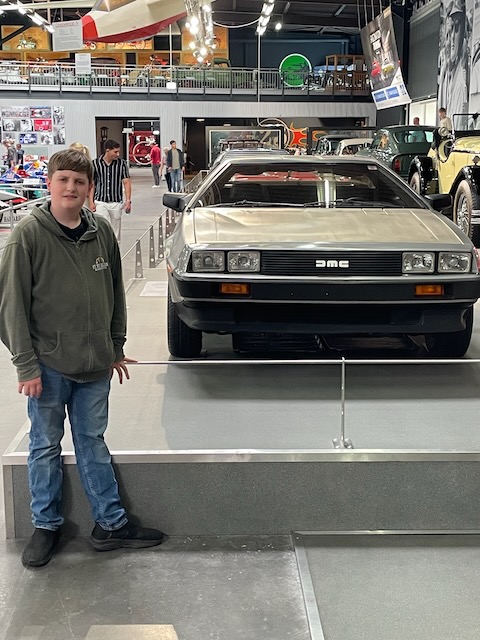
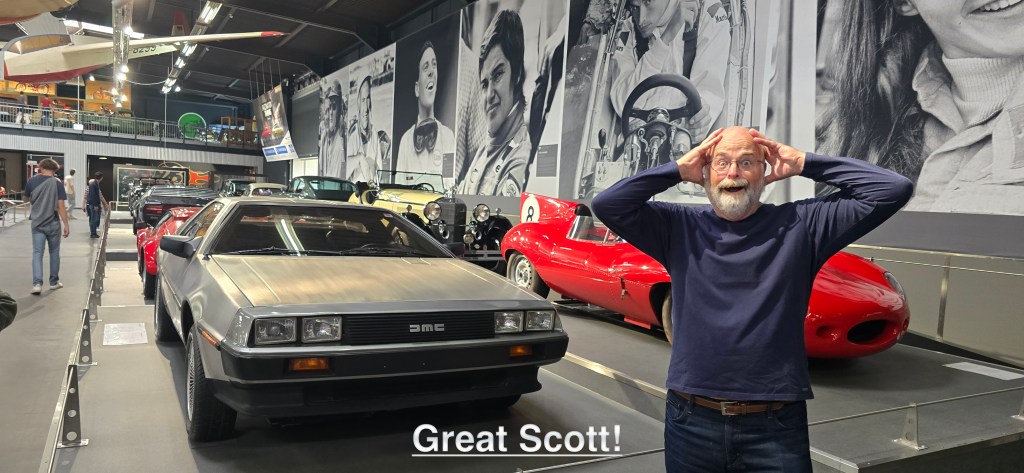
They also have the world’s coolest looking car failure that could go 88 miles per hour (142 km/h) within the length of a movie screen. In real life, the DeLorean DMC-12’s dashboard only went up to 85 mph, even though it could go faster. Great Scott!

I don’t think Masi understood any of those references.

But he started acting up so we made him do some training. Push harder, kid!

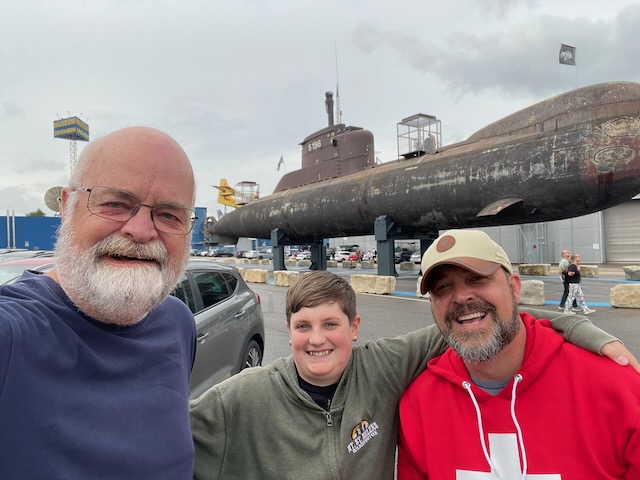
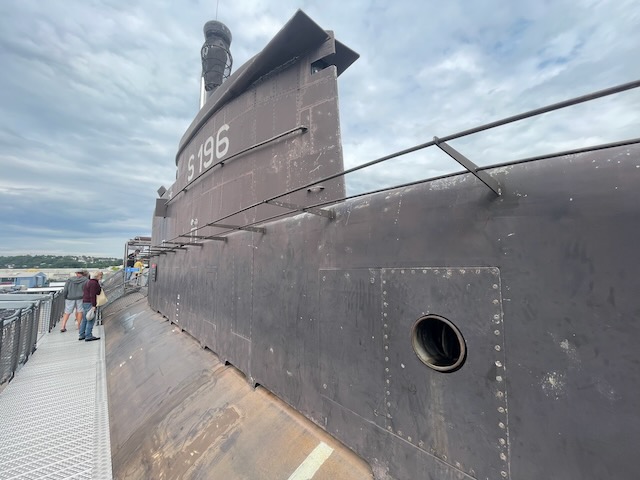
It isn’t often you get to see an authentic U17 submarine outside its normal habitat. Apparently it’s still fully functional, but now the poor sub can only look to the rain to get wet. Unless maybe she see’s a real hunky battleship lumbering by.

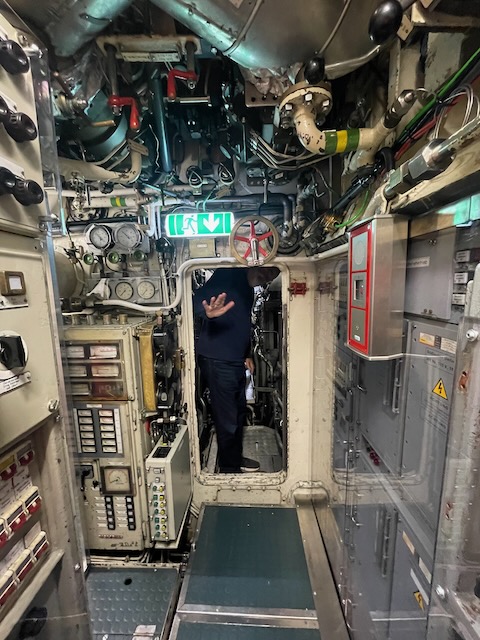
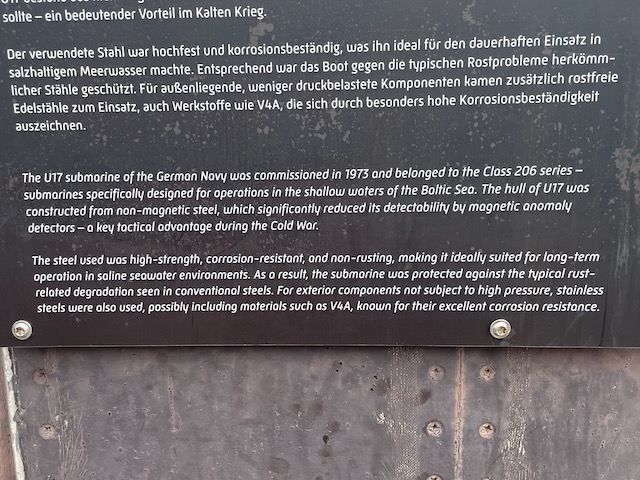
Masi disappears into the bowel of the beast. Truth be told, it didn’t feel all that claustrophobic, unless of course you envisioned yourself trapped in it underwater for days at a time with 22 other stinky sailors. The sub was in service from 1973 to 2010, so while the term “U Boat” conjures up things like Das Boot and WWII, this was more modern than that and had no blood on its ha– er, rudder.

Sometimes it’s just easier to take pictures of the provided information, but that can also screw up my made-up stories too. It’s a delicate balance, this game I play.

And this was a real racetrack, honest. Really. No I mean it. Why you lookin’ at me like that?

They had old classic cars galore.

And race cars as well, both old and new, and everything in between.

Some of us cared more about those things than others.

Do you know what happens when you sample a little too much of the wares from a beer truck?

Yeah, that’s right, you crash and burn your tank. Don’t get tanked in your tank is what I always say.

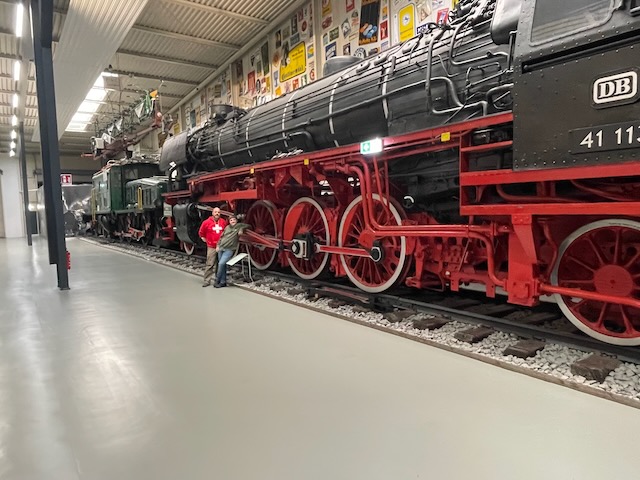
However, it’s okay to drink away if you’re driving a train. It’s not like you can make a wrong turn or anything, and based just on the size of that beast, you’re gonna win any confrontation you have with just about anything stupid enough to be in front of you. That’s why many big trains like that have huge minibars in their locomotives. And that’s why they go chug-a chug-a chug-a.

One of the highlights of the museum was of course the Concorde and the Russian Tupolev Tu-144. Since the Russians lost the space race, I think they were doubly motivated to be the first to put a supersonic airliner into the air. They won that contest, getting the Tupolev to go airborne on December 31, 1968, albeit with lots of duct tape showing as well as a few screws plummeting to the ground and in one case, killing a cow. On March 2, 1969, Air France gamely crossed the line in second place. Isn’t it kinda funny that oftentimes countries act like little kids, competing for some nonsensical prestige that no one cares about only a handful of years later?

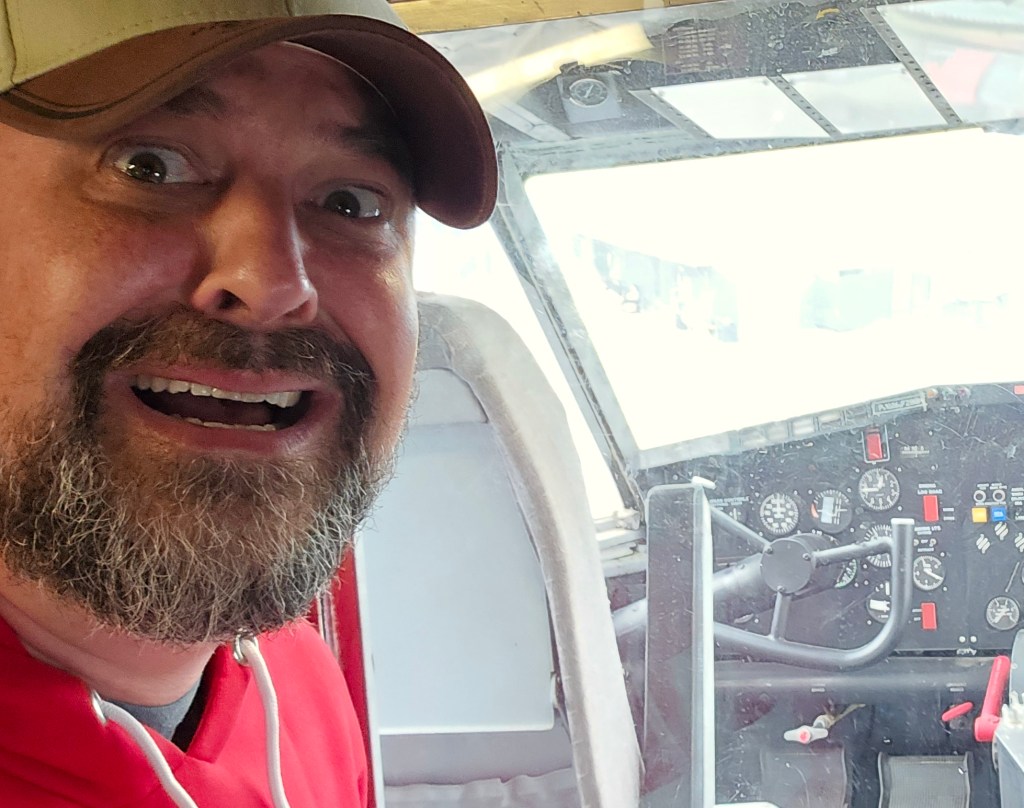
I think that’s a pretty typical reaction anyone would have if they saw that the pilot of a supersonic airliner was thirteen years old.

The exhibit was really mostly just a big empty shell, not unlike most airliners (except for the lack of seats), and the fact that it felt fast even while stationary. When it was in service, it could fly from London to New York in 3-1/2 hours, achieving speeds of twice the speed of sound. Meaning you could fart aloud to your heart’s content but the plane would outrun the noise. It made watching movies difficult, however, which is why they mostly offered up silent films.

A pretty majestic piece of machinery, that. Unfortunately, both the Concorde and the Tupolev suffered some crashes as well as a lack of financial viability… and so humanity’s march to the future did a U-turn, and we ended up back to the future with ever more shrinking and uncomfortable seats besides.

Dachau

Now this entry takes a decidedly more serious and somber turn. If you’ll recall a while ago I dedicated a whole entry to Auschwitz-Birkenau. After visiting that, I really wasn’t looking to see another example of man’s inhumanity to man, but I think it’s important that everyone understands what really can happen when hate is used as a cornerstone of a dictator’s message, so to me it was a must-see for my son and grandson. The fact that people are so gullible and so easy to coerce into hatred is still evident to this day, and that’s why it’s so freakin’ scary.

Dachau is less iconic and doesn’t have as many of the old structures still standing like Auschwitz-Birkenau.

But that doesn’t make it any less sobering of a site. Dachau was one of the first concentration camps built by Nazi Germany, opening on 22 March 1933. Unlike Auschwitz, it wasn’t purely an extermination camp, it was originally intended mostly to hold political prisoners. In 1935 it added Jehovah’s Witnesses, homosexuals and emigrants, and eventually Jews and any other undesirables from all over Europe.

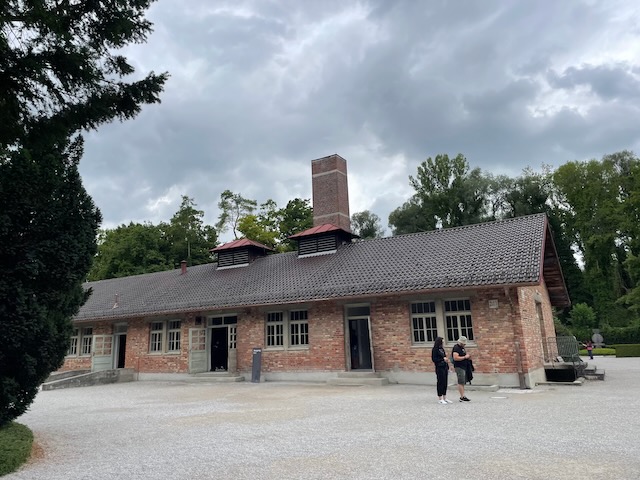
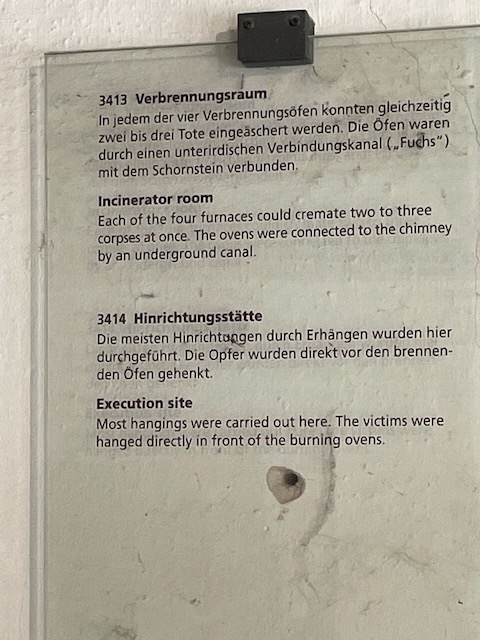
Most of the deaths in Dachau were as a result of inhumane living conditions, leading to disease and starvation, with some torture thrown in for good measure. These ovens were used to cremate the bodies. At least 40,000 people died in Dachau, but the exact number will never be known.

This is the building that housed the ovens.

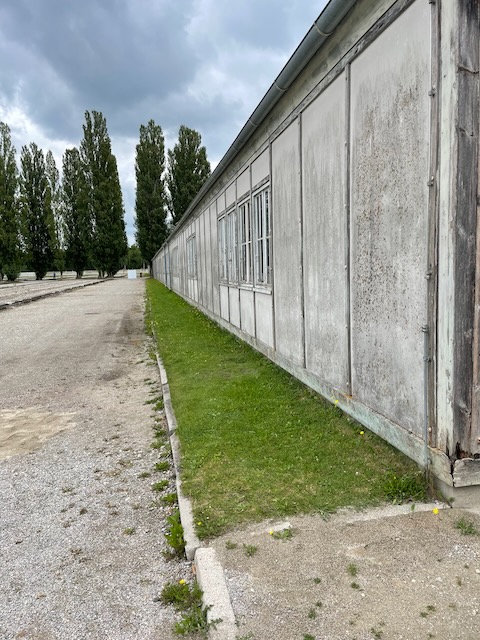
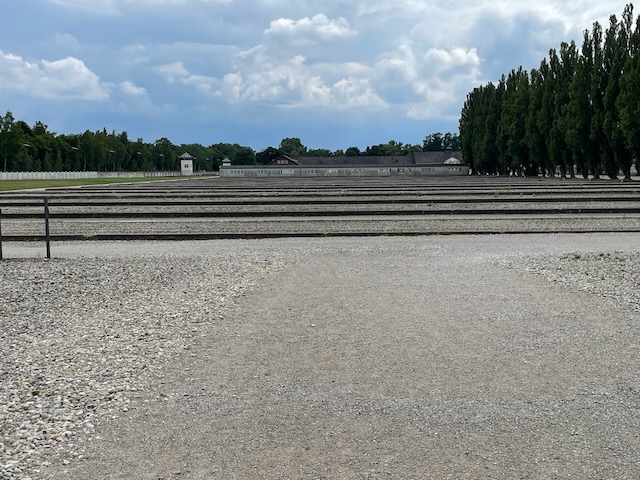
These grounds used to be lined with wooden barracks. The number of prisoners incarcerated in Dachau between 1933 and 1945 exceeded 200,000 people.

I dunno, but if I were an alien species and I visited earth and learned all about it, I think I’d put a “Do Not Enter” message around our entire solar system. Also, political events around the world lately seem to be screaming, “We do not remember or learn anything from the past!”

While visiting a notorious concentation camp doesn’t really make it the highlight of any trip, I think it’s very important that people learn and remember. It was not so long ago. The people who committed these atrocities were people just like you and me. It still amazes me that one man can manipulate so many people with lies and hate, despite all the evidence we have that it always leads to disaster. I can understand how it might happen the first time, but to see it maybe happen again? Blows my frickin’ mind.

We can make memorials, but we can’t ever forget that the people here were mothers and fathers, sisters and brothers, with people who loved them. The senselessness of it all can be staggering to the normal mind. So when any politician acts gleeful at the idea of opening up harsh prisons, or touts the death penalty, especially not as deterrent but as penalty, or vilifies and even prosecutes anyone who opposes him, those who support said politician would do well to remember that the people who are bothered by all of that are often bothered because they understand history. It’s not always about what is happening, but what history tells us always happens when we allow people to have too much power or wealth. That’s just a fact.

(Scroll down to see previous entries.)
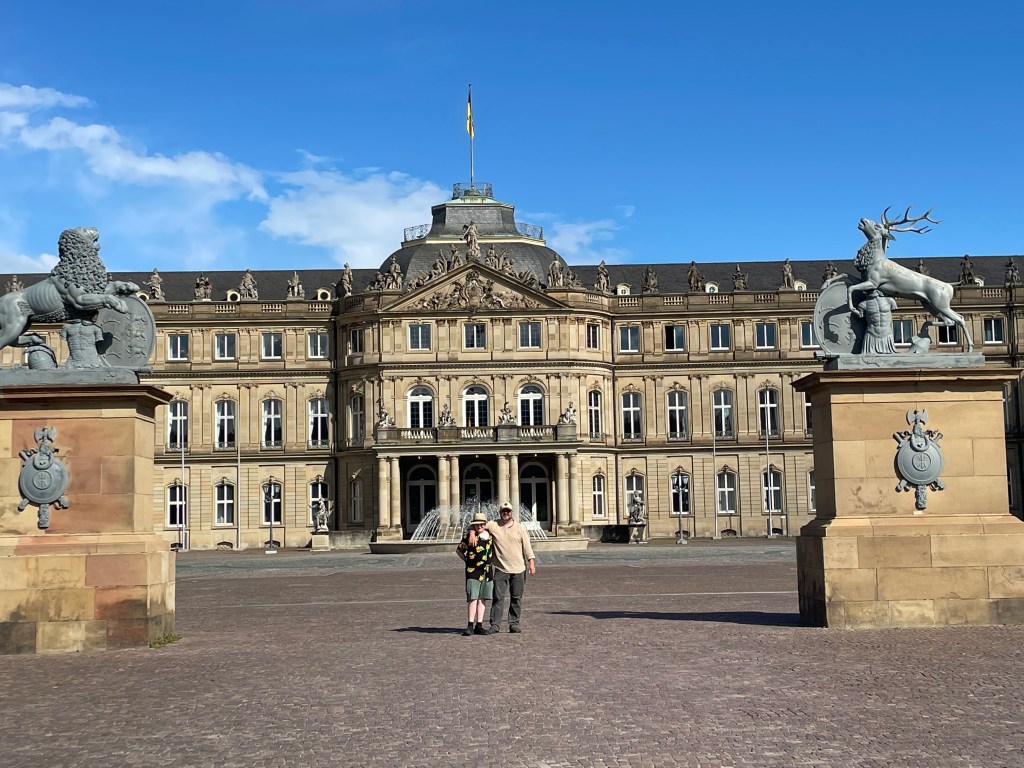
Time to castle! Check, mate!

Even as I struggle to learn Portuguese, I’m often grateful that I don’t have to learn English as a new language. Most Portuguese know at least some English, but it’s mostly spoken English. Even native English speakers have a hard time with spelling and grammar. In Portuguese, “castle” is “castelo,” pronounced just like it’s spelled. But English speakers pronounce it “cassle,” like “hassle.” Which learning a new language definitely is. Anyway, here follows our visits to two unique German schlösser (castles in German, or what happens after one too many beers).

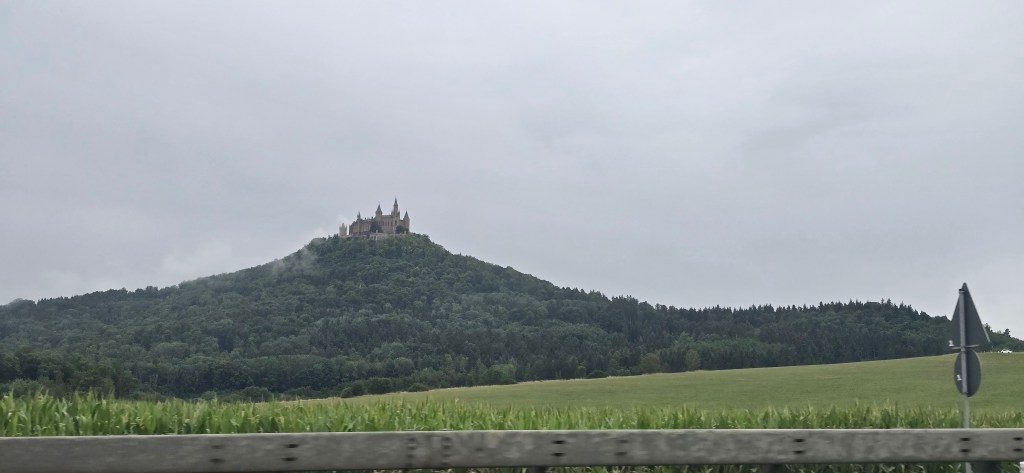
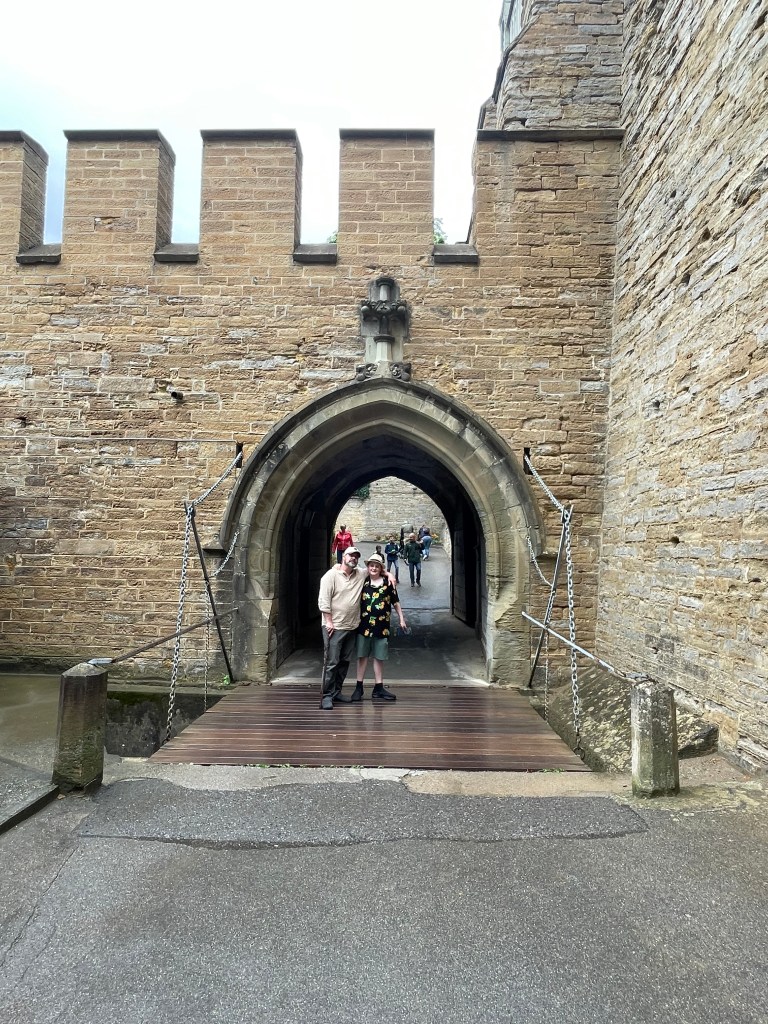
About 60 km south of Stuttgart is a town called Hechingen, which hosts a fancy German castle called Hohenzollern Castle, named for Herr Heinrich Henzollen’s ho.

From a distance, it looks very much like a castle. But the closer you get, the more you realize it looks very much like a castle.

This is what it looks like when they invite Satan over for brunch.

This is actually the third castle to be built on this spot. The first one was built in the early 11th century. It was completely destroyed in 1423 after a ten month siege by the pesky Swabians. I bet you’ve never heard of Swabia before, have you? It’s a region in Germany, I think it’s famous for inventing Q Tips.

In 1461 they completed the second castle, which was larger and swarthier, but eventually fell into disrepair, which was apparently a hole so deep they couldn’t pull it out. So they built this third and current one between 1846 and 1867, making it one of the most modern castles on that spot.

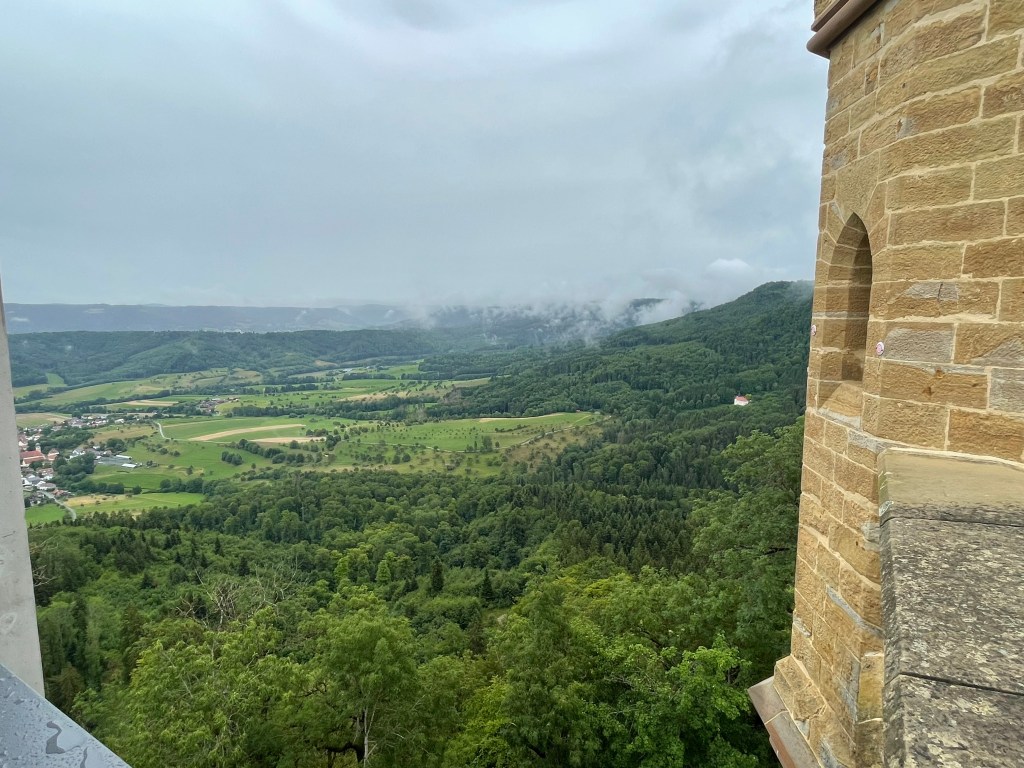
Like most castles, it has views to die for. Here Masi takes a break from all the sightseeing to enjoy the scenery. He lost his forearms in a horrific reaping accident, but we tried not to talk about it too much, especially when he attempted to count to eleven (he still has ten toes, but after that, he got a bit lost).

Fortunately for us, Hohenzollern Castle is renown for its healing properties, including miraculous limb regeneration. Unfortunately, he now has seven fingers and three thumbs, but at least he can count to ten now.

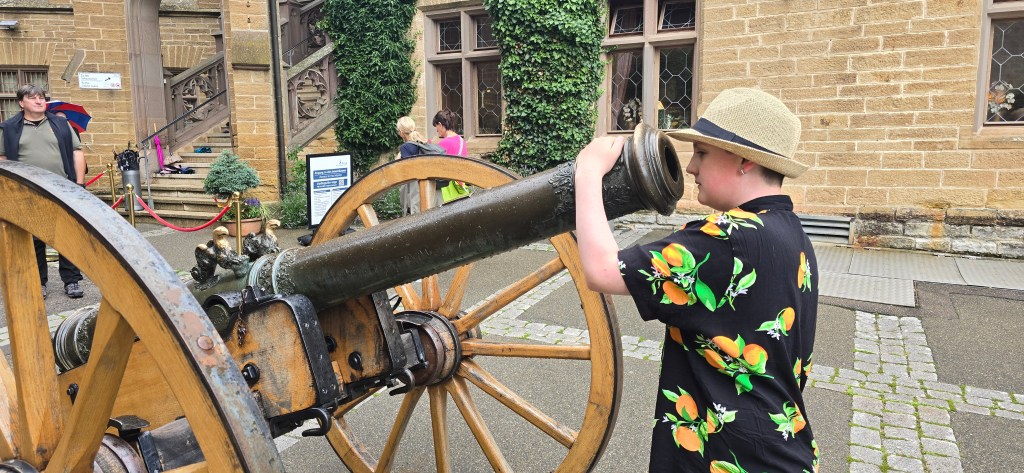
The last words of many a young soldier: “Is this thing load—“

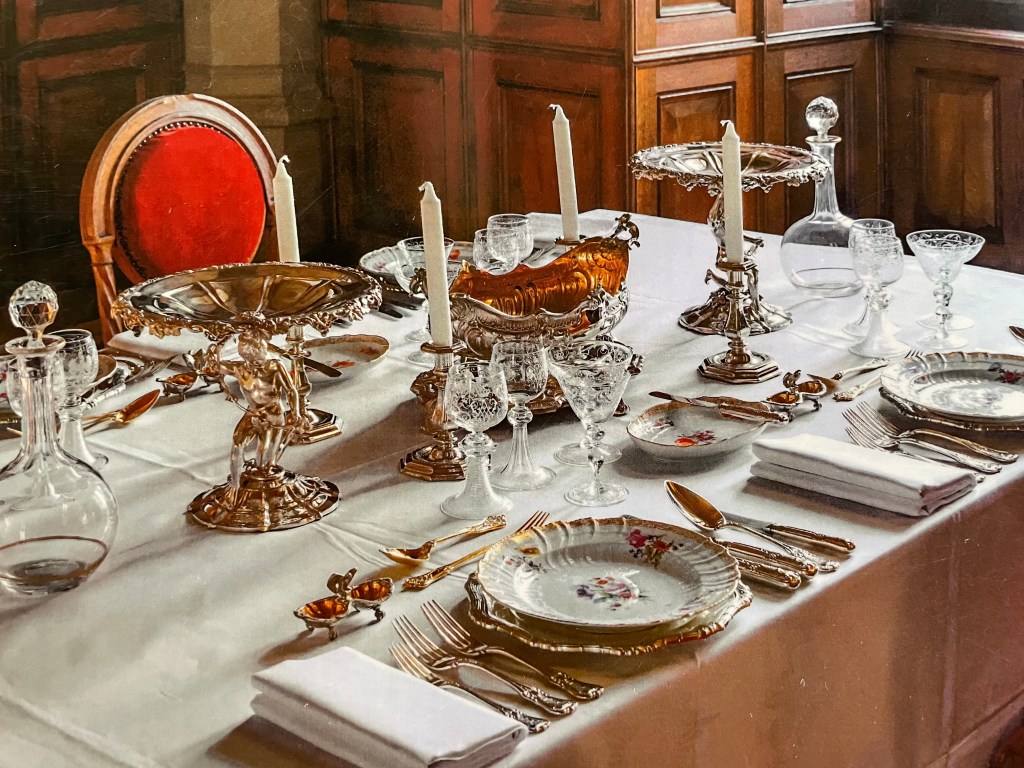
It’s much safer to stand in front of swords as long as they’re affixed properly. The castle staff kindly set out a table for our lunch, but we’re kinda snobbish and just thought the whole thing was a bit pedestrian. I mean, c’mon, only three forks? Pssh. What do they think we are, peasants?

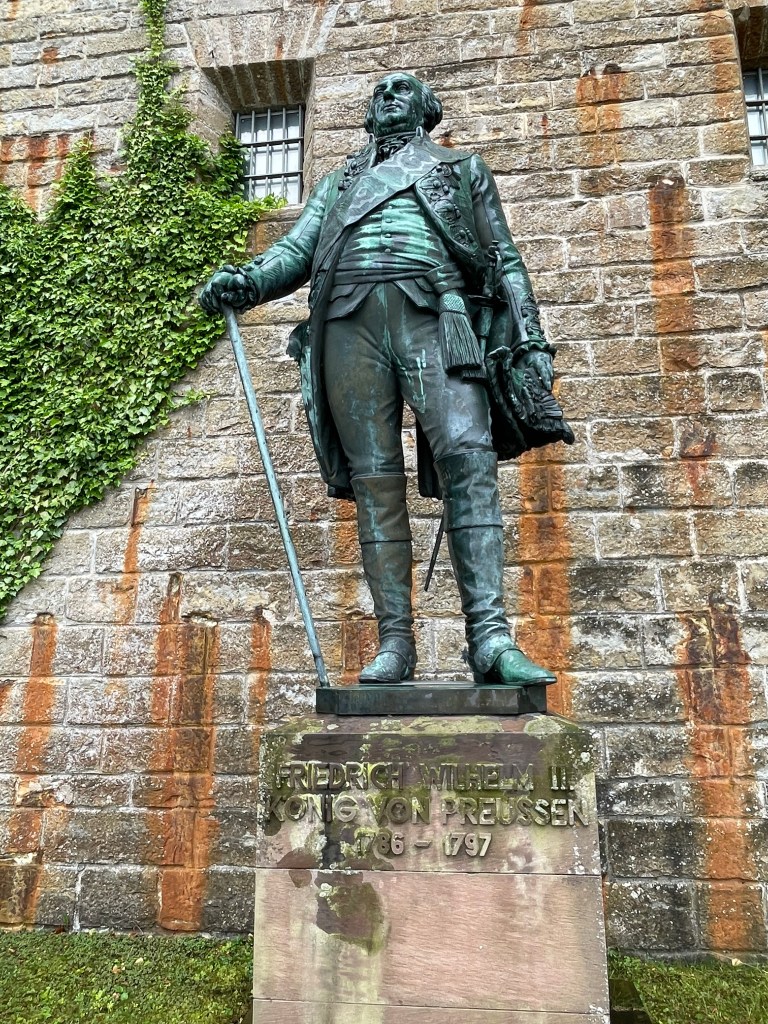
On the right is evidence that the olden Germans had some weird growth hormones in their beer. If you zoom in on the dates on this statue, it says Friedrich Wilhelm was born in 1786 but died in 1797, so this guy was only eleven years old when he posed for that statue! Hmm, I wonder how old Hitler really was… he did act like a toddler sometimes.

I wonder if men in untucked shirts and baseball caps would have had the same fearsome effect on any attackers.

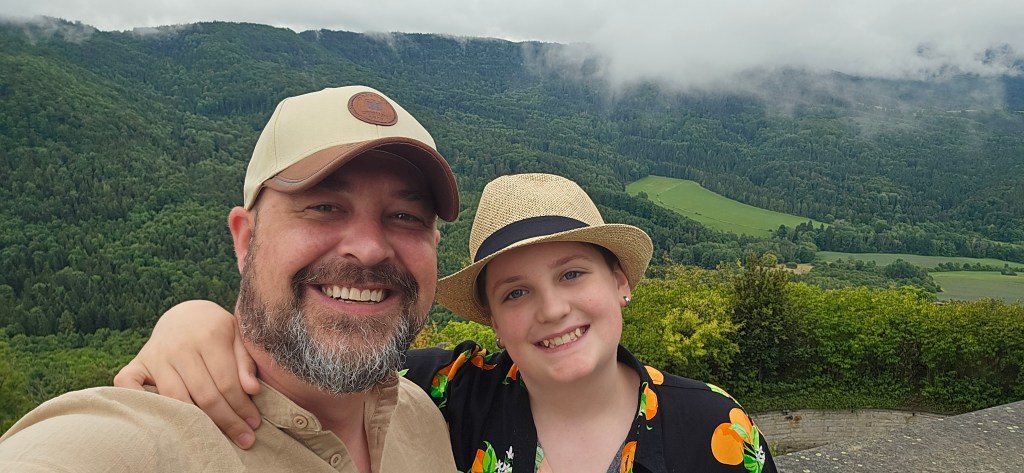
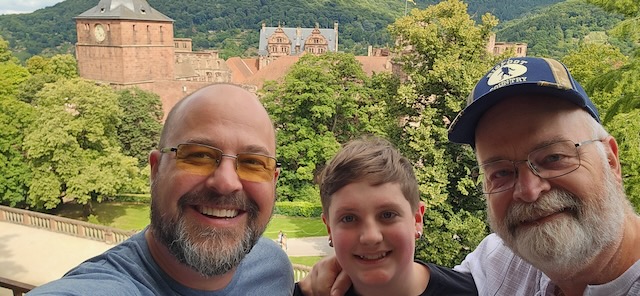
In the end, my two handsome boys enjoyed the visit and even managed to hold those smiles for the fifteen or twenty seconds it took for me to figure out why the photo button on my iPhone wasn’t working. Ah, turn it over, dummy.

Next on the castle-y tour was Heidelberg Castle, perhaps named after someone named Delberg to whom everyone said “hi.”

Actually, the name Heidelberg is derived from the German words meaning heath and mountain, apparently because it was unwooded at the time so the Germans just sat on the hill eating Heath bars. Perhaps the trees knew what they were doing by staying away because the castle has been struck by lightning at least twice. The first castle structure was built before 1214 and was later expanded into two castles, but in 1537, a lightning bolt destroyed the upper castle. Then in 1764 another lightning bolt caused a fire which destroyed some of the rebuilt sections. Whoa! Someone up there wasn’t happy with those castles!

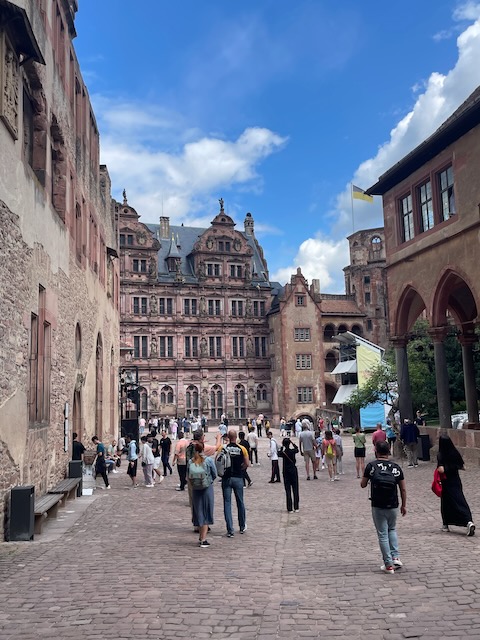
The castle has only been partially rebuilt, with some of it still in ruins. I thought the inside was just as interesting as the outside, although outside some of the buildings were impressive.

Like most castles, the views are spectacular, overlooking the city of Heidelberg. The city was largely spared bombing by the allies in WWII mostly due to its lack of strategic importance, and was occupied by the Americans at the end of the war. They of course also brought with them new McDonald’s and Burger King franchises, which resulted in the average Heidelbergian gaining about 10 kg (22 lbs.) during the first year of occupation.

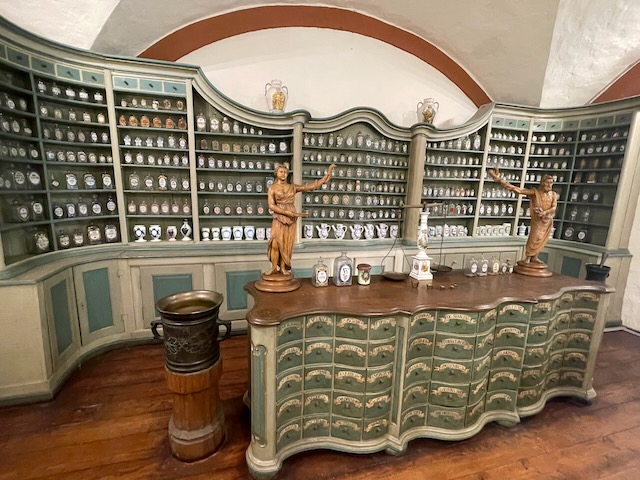
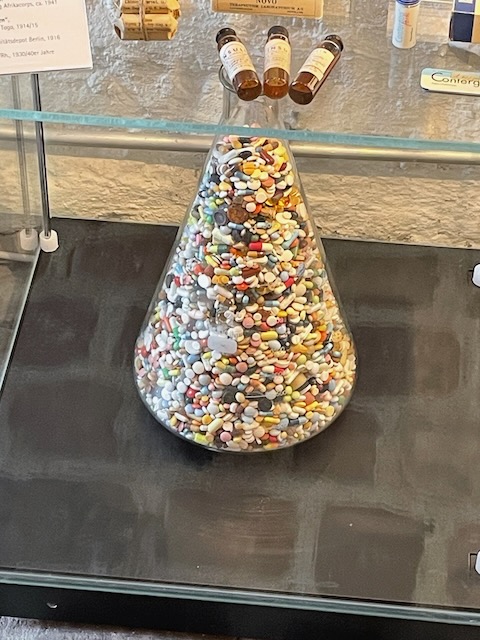
Inside the castle they demonstrated their pharmaceutical prowess of yore in the Apothecary Museum. The jar on the right held just enough pills to get through the day if you had a headache.

On the left is either a beer-making machine, a pill-making machine, or, based on the picture to the far right, some sort of auto-erotic device. Yeah, you go first. In all the top pharmacies back then, opium was an important medication for things like headaches, concerns about where pimples might happen, and when you otherwise felt fine and wanted to party. I can only speculate on what they did with the container on the right. Google Translate had no idea what “pichurim” is, so I can only guess it was something so nasty they decided to just banish the entire concept, but this appropriately shaped container seems to have survived the whitewash. I’m hoping that dish isn’t filled with expired testicles removed after too many nights of auto-erotic machines and opium. That would be nuts.

Someone once told me that Germans like beer. This gigantic beer barrel is all the proof one needs. Unfortunately, Masi figured out a way to tap into it and had downed a number of mouthfuls before we could get to him.

After a last look at this interesting castle, we rode the funicular down to old town Heidelberg.

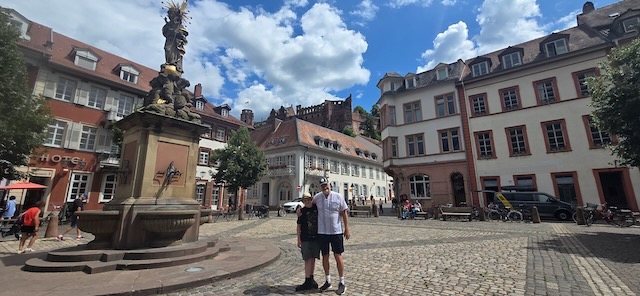
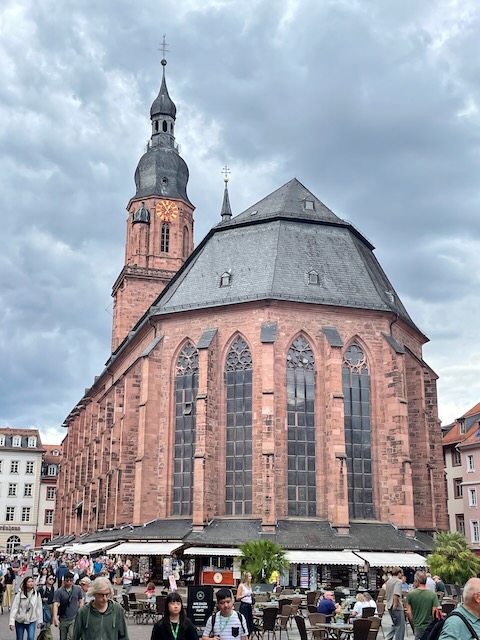
Old Town Heidelberg is very cute with some great old buildings (again, spared during WWII), and a fair amount of tourists (mostly made after WWII). We had a nice German lunch at an Italian restaurant, er– was it a nice Italian lunch at a German restaurant? …and otherwise enjoyed walking around the area.

The Germans seem a bit obsessed with bodily functions. Fortunately, no matter how much explosive diarrhea we had, it was always easy to find a sign pointing the way to go.

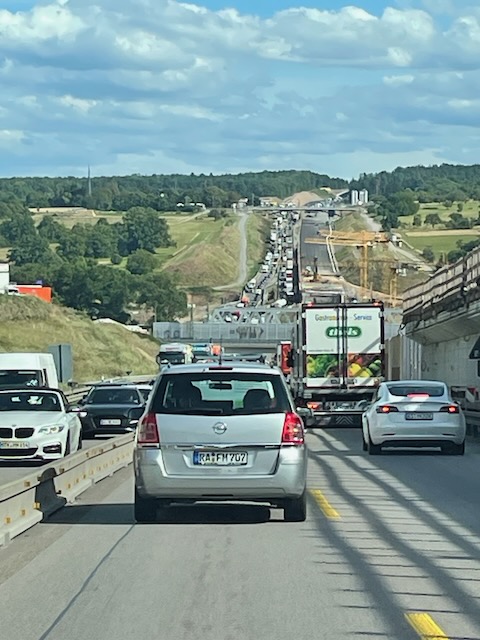
We settled in for the two hour drive– er, check that, I don’t know how many hours it took us because we encountered more than our fair share of jammed-up freeways as we made our way around the country.

Occasionally we would break out of the traffic jams and find a place to stop and see something interesting, in this case the Rhine Falls, known as the largest waterfall in Europe by average flow rate (the falls are actually in Switzerland, but I had some extra room). To be candid, it didn’t really seem all that impressive to us. Europe seems to be a little light on the waterfall flow rate department if this is the best they’ve got. The Rhine Falls are just the 23rd largest by flow rate in the world. Many Oregonians might be surprised to learn that the Willamette Falls in Oregon City is even more powerful, ranking 17th in the world, and no one there pays it much mind. There’s a small viewpoint on a busy highway where you will occasionally see a car stopped to view them. I guess everything is a little more exotic when it’s in a foreign country.

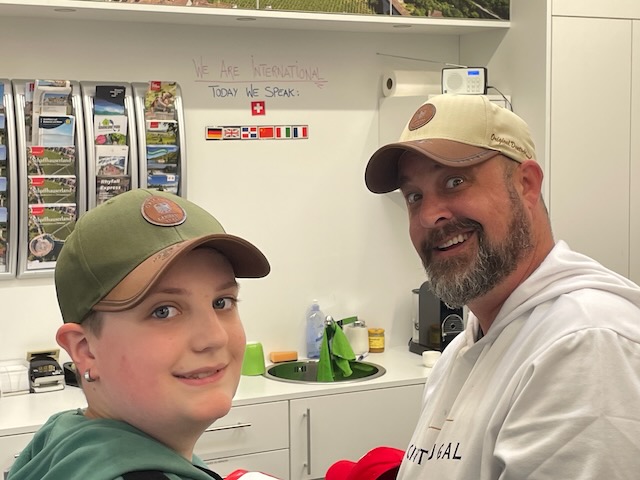
Ah, but they do have something the Americans don’t have, the need to speak multiple languages. In the gift shop they put up these little flags to show what they can speak on any given day. I tried some Swahili on them but was met with a blank stare, like I usually get when I speak Portuguese to a Portuguese.

A good percentage of Europeans are proficient at English. Except here I’m not sure who Off is, but I think it’s a little presumptuous of them to provide a suggestion like that. Does Off even know about this? Oh well, at least they care enough to offer some guidance, but a little more information would have been appreciated.

(Scroll down to see previous entries.)
Germany, where my grandson had a liter taste of adulthood.

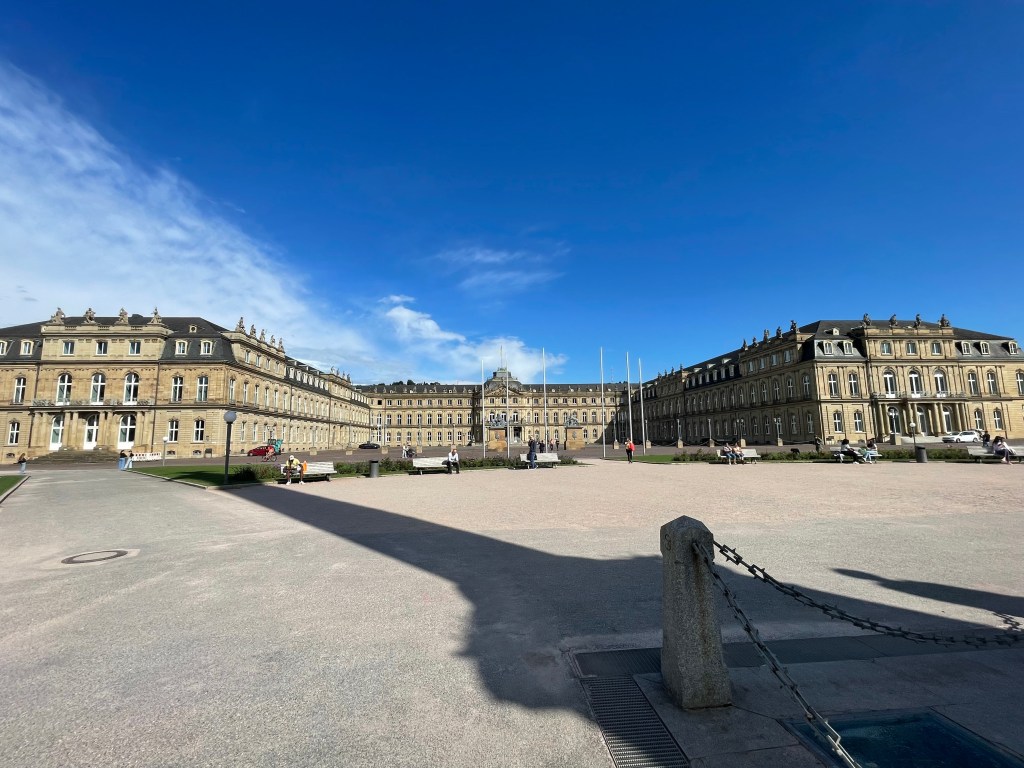
This was the summer of the long family (and very welcomed) visit. My son Luke and my grandson Masi came to stay with me for about six weeks, which was a great help in alleviating some of my occasional loneliness. His wife Brooke was only able to make it for the last two weeks due to work obligations. We mostly spent the first part of the visit just hanging out at home and seeing a few more of the sights around the area, but we also booked a trip to Stuttgart, Germany. Luke wanted to see Germany, but he didn’t want to go to a big city, so Stuttgart filled the bill. Plus, the name “Stuttgart” comes from the Old High German term “Stuotgarten,” meaning “stud garden” or “stud farm.” Since we’re three generations of studs, Stuttgart seemed like a perfect fit. And no, I didn’t even make any of that up.

I mean, that’s three generations of studliness right there.

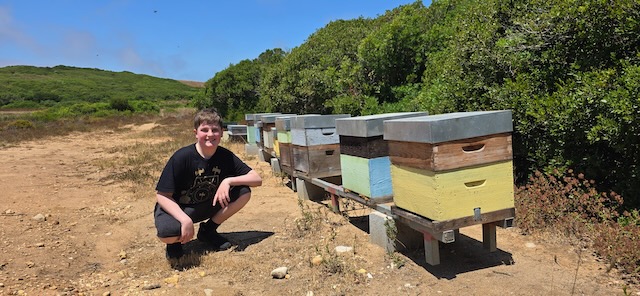
I took them on a tour of one of my regular walking routes; it’s hard to beat that scenery. We also found a bee farm. Since Luke & Brooke have been beekeepers in the past, they enjoyed seeing how the Portuguese do it. On a related note, I once asked my Portuguese teacher if couples ever called each other “mel,” because “mel” means “honey” in Portuguese. It’s only a three letter word, but no matter how I said it, she couldn’t understand what I was asking, I think mostly because it had no context and my accent probably made it sound like “mal,” which means “bad” …like my Portuguese. Anyway, after sorting out the question, she said “nâo,” which means “no” but rhymes with cow, and you have to plug your nose when you say it.

We walked all around Lisbon, and watched in amazement as a tower grew out of Luke’s head. We had to pry it off before he could get back in the car; it’s a good thing I had a crowbar in the trunk.

I had a brief conversation with Cristiano Ronaldo, but he declined to reveal what kind of underwear he wears. In fact, he seemed a little annoyed at the exchange, he just crossed his arms and stood still, staring at me.

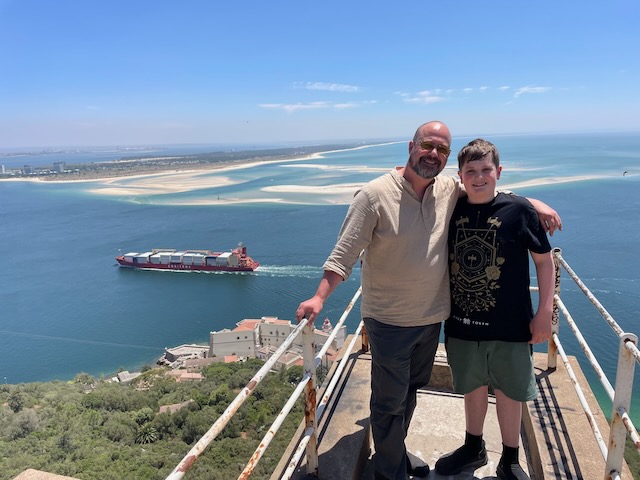
That’s Troia in the background in the middle picture, an upscale resort just a short ferry ride from Setúbal. And Praça do Comércio is a must-stop for anyone who needs to stop when they get musty.

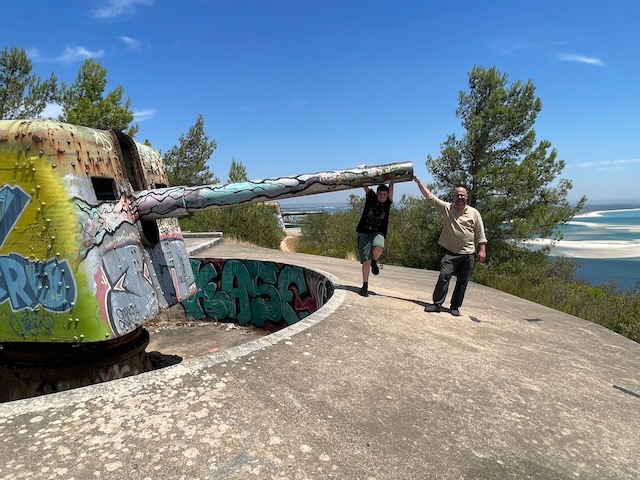
We also visited the World War II-era cannons I’d discovered with my good friend Per a while back. It was such an unexpected sight since Portugal was neutral during that war. Masi also learned that the Portuguese use many of the same swear words that Americans use. I don’t think they use “doggonit” or “shucks” though. And boy howdy, I can now say I’ve stared down the barrel of a gun and didn’t even flinch.

So off we went to Stuttgart via Lufthansa with these promotional-catalog-quality photos. That’s me playing the grumpy old man in the background. Do you suppose I could make a career out of that?

Later on they conked out, only to be jolted awake when I started screaming, “Oh my God, we’re going to crash!” I told the police at the gate that I have Alzheimers, so I barely got arrested.

Stuttgart is a nice enough city, but other than some museums, there wasn’t a ton to see there. According to TripAdvisor, the two top things to do there are The Mercedes Benz museum and the Porsche museum. Luke’s a car guy, but he knew Masi and I would enjoy either about as much as a hair follicle museum, so we basically used Stuttgart as a launching pad for a multitude of other cities and countries. Besides, we weren’t in the market for any studs from their numerous stud farms.

Both Luke and Masi are pretty strict rule followers, just like most Germans, so if the Germans want us to be gross, by gum we’ll be gross!

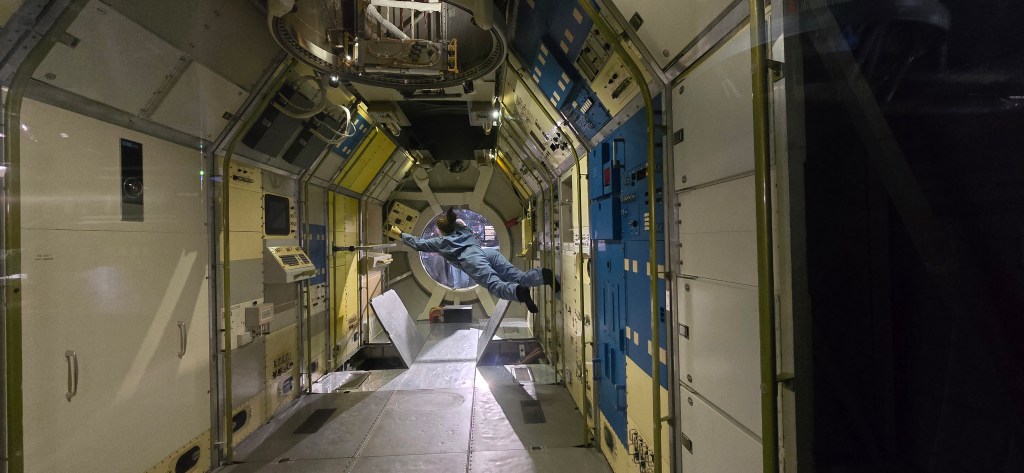
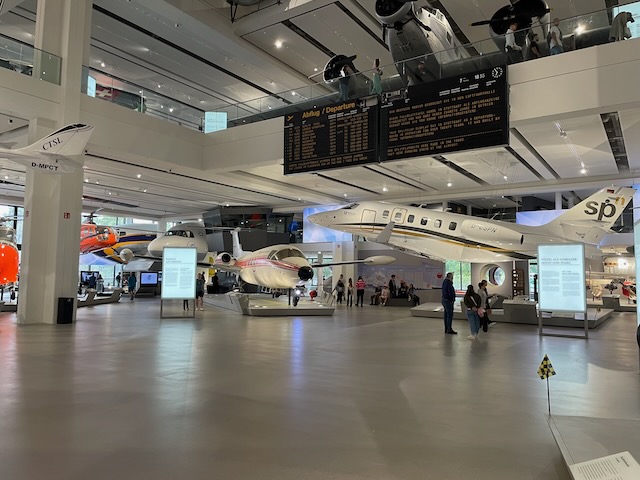
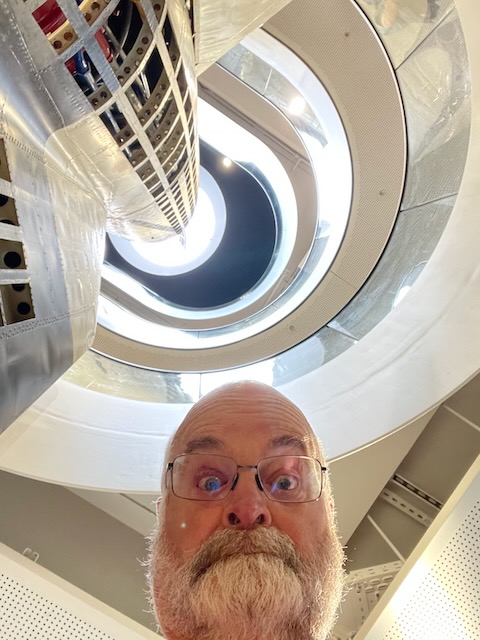
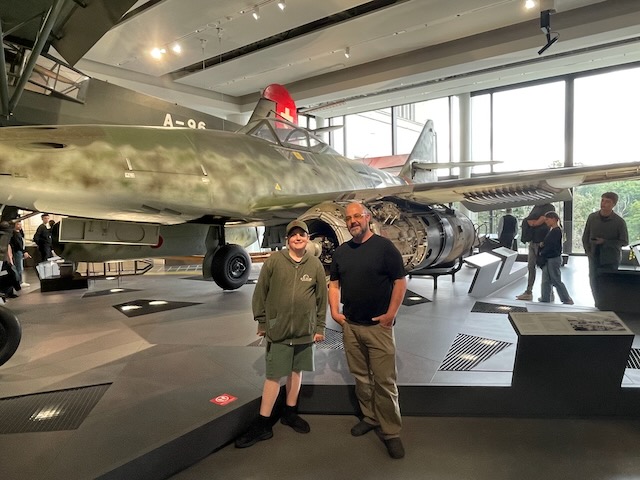
One of our expeditions from Stuttgart was to visit the Deutches Museum in Munich, which is the largest museum of science and technology in the world. Here are just 7 of the 1,823 or so pictures we took, I doubt anyone wants to see a bunch of museum pictures so I didn’t include any more than that here. But I did experiment with an AI feature for the first time by asking AI to provide captions. It did a serviceable job, if a little repetitious, but I couldn’t get it to tell any jokes. You’ll always be able to tell that Bald Sasquatch wasn’t written by AI because of all the alternative facts and other nonsense that somehow worm their way in, especially if I’m writing after a day of snorting mushrooms. Perhaps humor will be the only way we can distinguish between what’s human and what’s computer in the future! Dad jokes may save humanity!

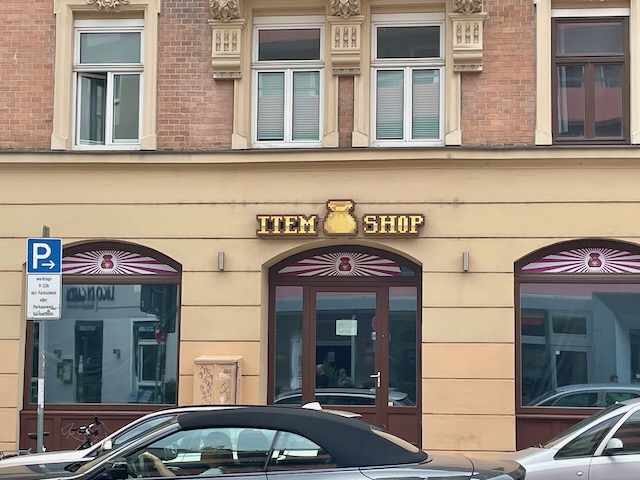
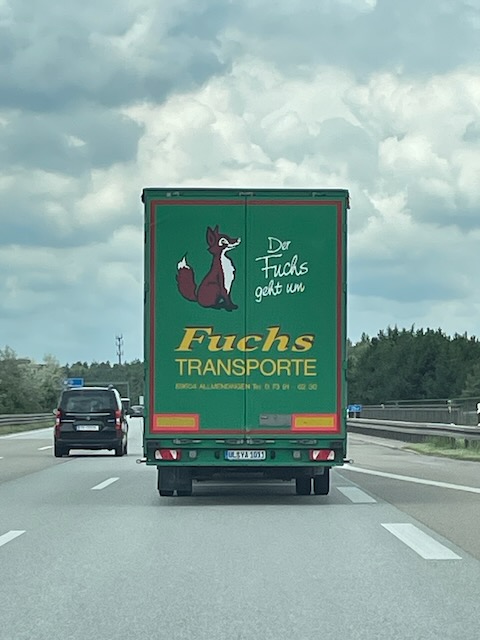
For example, AI will probably never understand why any of these pictures are humorous. I love the store name “Item Shop.” I suppose if you asked them what they are selling, they’d only need to reply, “items,” even if they have something dropped off by “I don’t give a Fuchs Transporte.” And I cracked up at what people did to the chewing gum sign. Even though not all of them were fresh, many of them still tasted fine.

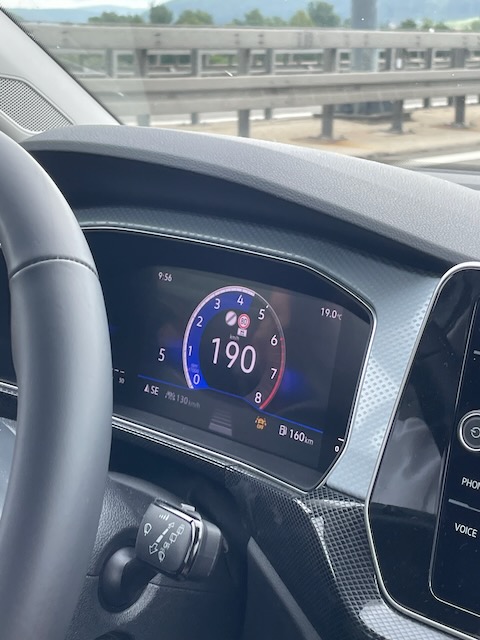
Driving on the Autobahn was fun for Luke, I think 190 km/hr (118 MPH) was about as fast as he went, but he probably went faster when I wasn’t looking or after the G forces made me pass out. I took the photo on the right simply to compliment the Germans (they love it when I compliment them) for their consideration and insight. Near the entrance in a large underground parking lot are these parking spaces with a sign indicating that they’re for women drivers only. Since women generally have to be hyper aware of their surroundings at all times, it’s a thoughtful thing to allow them to have a close place to park instead of wandering around a gloomy dimly-lit underground floor where rapists, neo-Nazis, or Ted Bundies might be lurking around every corner. The next thing we need to do is make sure women have double the public toilet capacity; I feel so sorry for them when I walk past a line of about 50 females and am able to stroll right into the men’s room. I think we need more female architects.

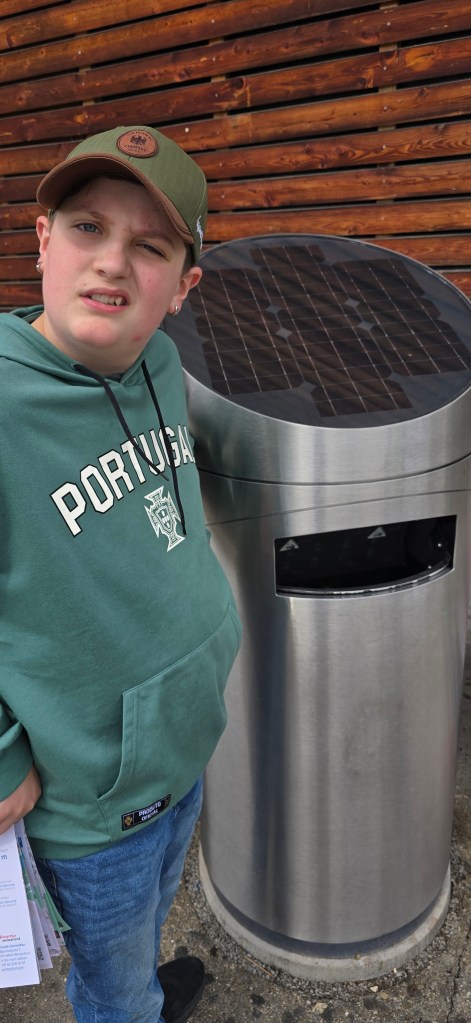
We had an authentic German meal at an authentic German restaurant (“Is this an authentic German restaurant?” I asked). But later Masi was a bit confused as to why a trash can needed a solar panel. I have to admit I didn’t have a good answer for him, but if he wanted to stick his hand in the slot to find out, that was his business.

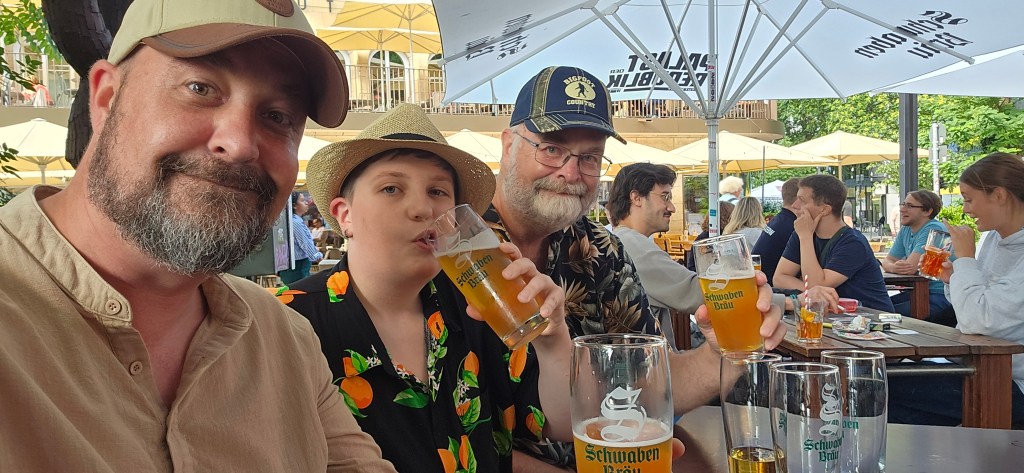
We started Masi down the road to alcoholism by letting him imbibe his first (or so he says) beer while in Munich. As long as you’re with an adult, anyone aged 14 and up can legally enjoy a beer at a restaurant in Germany. We did kinda cheat since he was only 13, so we penciled a mustache on him, but damn if the kid didn’t down the whole glass, even wiping the foam off his fake mustache with the back of his hand at the end (of course, the mustache came off too, but the beer was already gone at that point). But truly, I think it’s kinda cool that Masi will always be able to say he had his first beer in Munich, Germany, with his dad and granddad. That’s something I hope he always remembers. I won’t, because I wasn’t driving and so had eight of them. Or ten, or something. I can beerly remember anything anymore, even without alcohol.

I should mention here that Germany has significantly higher per capita alcohol consumption than the U.S., but lower rates of alcoholism and alcohol-related health issues. Simply put, the German approach to beer works better than trying to keep anyone under 21 from having any.

I will say that it was a good way to keep him quiet on the drive home!

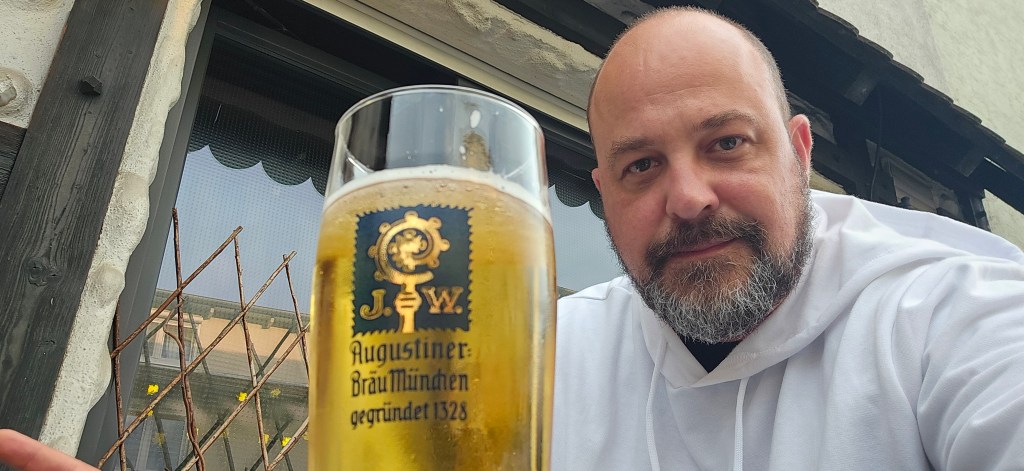
Luke was on a different-beer-a-day regímen at the restaurant across from our apartment. When in Germany, you gotsta have lotsa beer, I think it’s a law there.

Anyway, we had a good time during this portion of the trip. More cities and countries to come! But probably no more beer, I still have a headache.

Coping with Häagen-Dazs

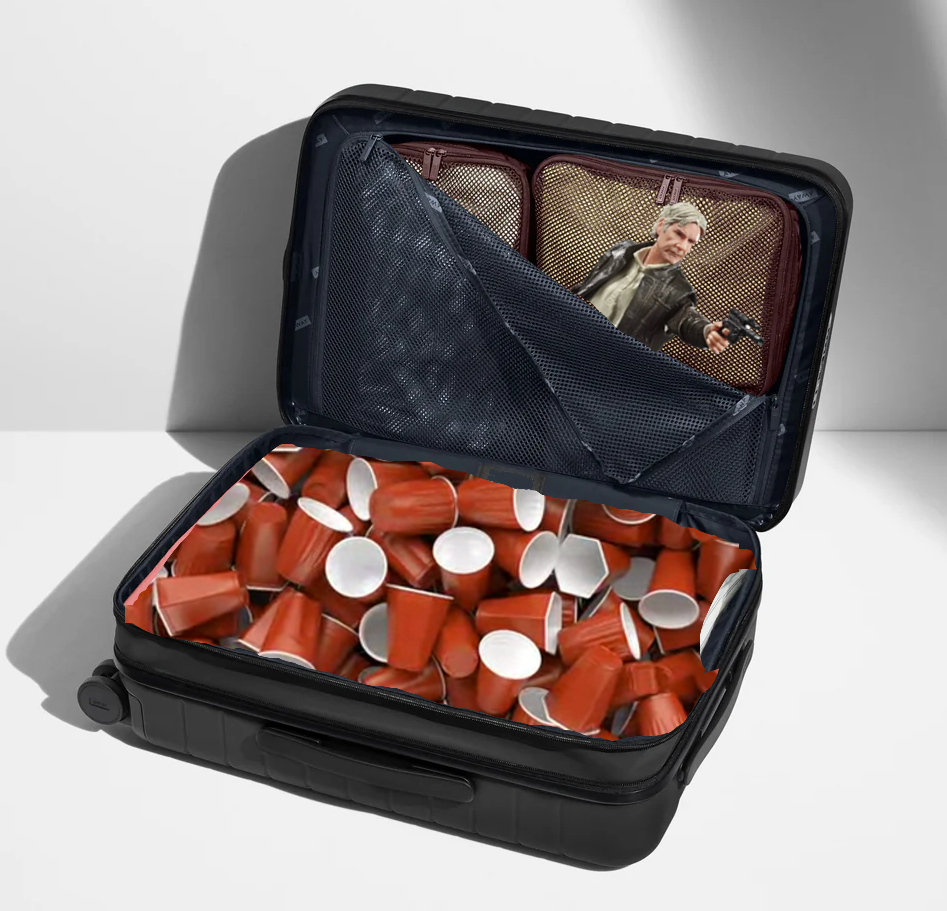
I’ve been reading online that Solo Travel is becoming a more and more popular trend (probably because everyone else seems to be so annoying these days). So I decided to try it out. Since I rarely bother with reading past the headlines, I loaded up my luggage with Solo cups and my favorite Hans Solo doll and set out on my first solo adventure. Unfortunately, I quickly learned that Solo cups make terrible underwear and that Hans Solo dolls are useless in real life except for pretend-shooting toe monsters in the hotel bathtubs.

By now you may be wondering what Häagen-Dazs has to do with solo travel, this blog, and elephants. We’ll start with the fact that, like many of the alternative facts proffered by Bald Sasquatch, Häagen-Dazs is a completely made up name. However, it was invented to sound Danish (and in fact was intended as a tribute to Denmark’s support of Jews during World War II, so now I can’t make fun of it). As a result of all my exhaustive research (which took me actual minutes), I figured my first solo venture should involve Danish things, so I put a Danish pastry topped with Häagen-Dazs ice cream on top of a small table made of Legos while wearing one of those Viking hats with horns that Vikings never actually wore, and called up the two greatest Danes I know, Pia and Per. I don’t know why you brought up elephants, I think you’re just trying to confuse me.

When Pia learned the specifics of my solo adventure, she rightfully became a little concerned and decided that perhaps Per should visit me posthaste to make sure I was right in the head. Later I mitigated her concern by showing her pictures of Per dressed up like this just to go to the grocery store. Touché, or as we say in the states, too shay.

Seriously, Per, being the good friend that he is, flew all the way in from Copenhagen for a long weekend just to keep me company as I adjust to living completely alone, except for the scary monsters that want to attack me but so far have been thwarted by anti-monster blankets.

Plus he’s even taller than me so the monsters really made themselves scarce during his visit.

The cool thing about this particular visit was that we discovered some things not too far away from where I live that I hadn’t seen before. For instance, I had been planning to go to Forte de São Filipe in Setúbal for some time but just hadn’t gotten around to it, but fortunately Per had a round tuit in his wallet so we ventured out to conquer the fort, as well as Setúbal.

However, before we even got there, Per asked about another small fort he had seen on Google Maps that was supposedly on the way to Setúbal. I scoffed and call him a dumb stupid idiot for even suggesting I didn’t already know of every fort and castle between Sesimbra and Setúbal, but he persisted, and so to humor him I drove to the coordinates on Google Maps.

So we turned onto a nondescript gravel road and promptly drove over a cliff and died.

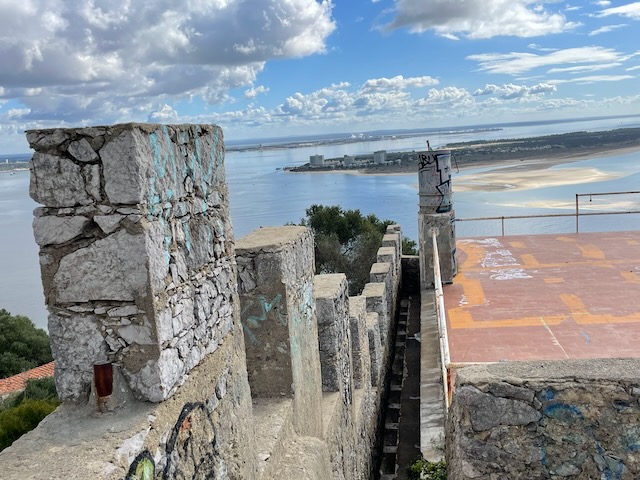
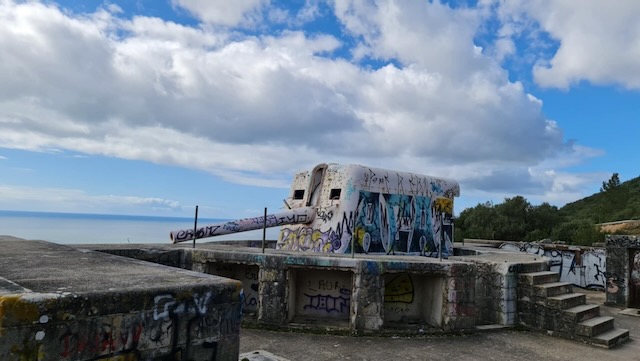
OK, not really, but I know I had you going for a second, because that was written by a ghost writer. We did actually find an old fort that apparently no one pays any attention to because it was covered in graffiti and had more than a few fairly hazardous areas including loose guardrails, wobbly steps, and unexploded land mines. There was also no entrance fee, so I guess you get what you pay for.

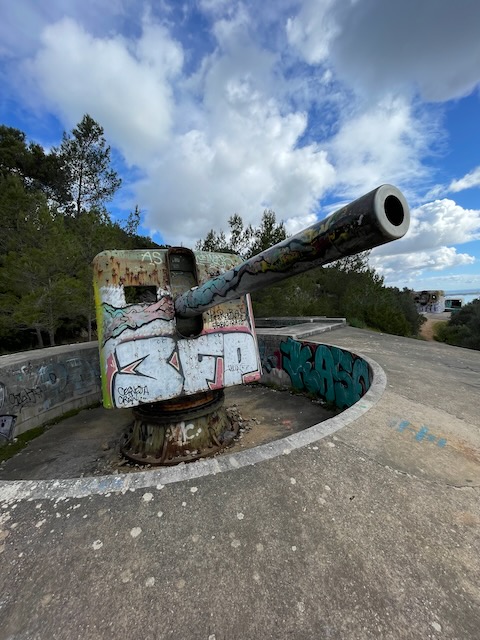
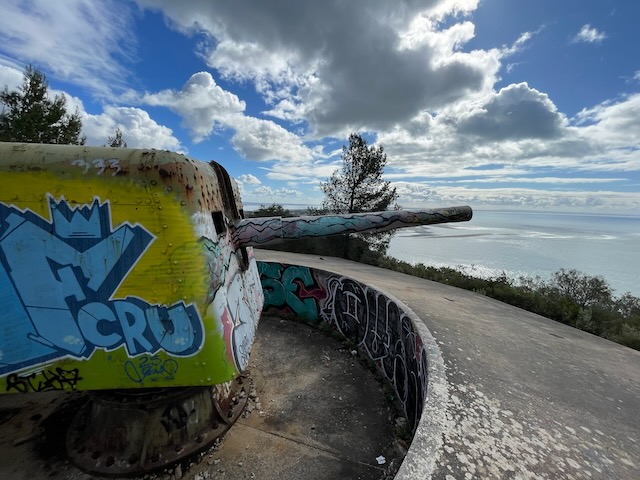
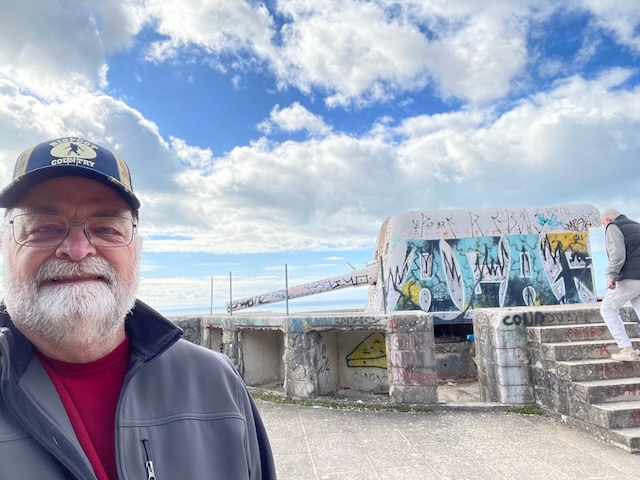
I noticed the road to the fort continued on around a bend, so I decided to explore a little. To my surprise I stumbled upon an old World War II bunker/artillery battery that I had no idea Portugal even had. Portugal was neutral during WWII, but I suppose they didn’t want to be completely helpless in case someone like the evil Spaniards or Mayans decided to attack.

Like the fort, the place has been completely ignored except by taggers and one very confused old German soldier who hadn’t heard the war was over. Anyway, I took measurements of the gun barrel dimensions and as my summer project I’m going to see if I can build an artillery shell and scare the hell out of some tourists on Troia, which is a resort area just across the bay.

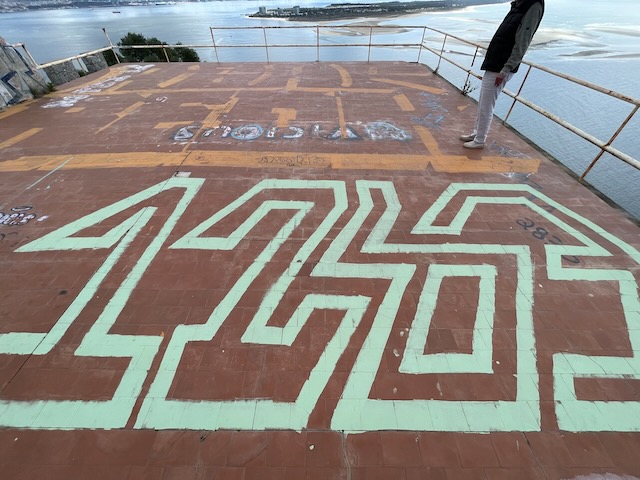
I have absolutely no idea what the writing in this photo means. I think it either might be a signal for aliens or the remnants of a lost Mayan civilization that somehow made its way across the Atlantic ocean. Or maybe it’s some kid’s Hot Wheels track.

There’s nothing here that a little paint and military-grade Viagra wouldn’t fix. I mean for the gun. Seriously. C’mon, man, I’m single now and trolling for babes, so stop with the Viagra jokes already.

After that heart-pounding discovery (there were stairs, after all), we went on to the Forte de São Filipe, which was interesting mostly because it’s an old fort, and old farts and old forts tend to attract one another.

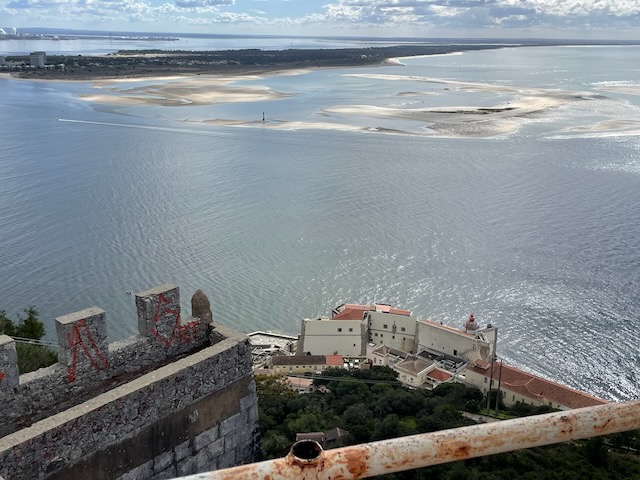
As usual with most forts and castles, it offered up some stunning views, here of Setúbal and its environs. After we quenched our thirst at the outdoor restaurant, we set out to conquer Setúbal.

By conquering Setúbal I mean walking around the place and enjoying a delightful lunch at a family-owned restaurant that proved my adage that the more unremarkable a Portuguese restaurant looks from the outside the better the food probably is. And I have no idea what that statue is supposed to be.

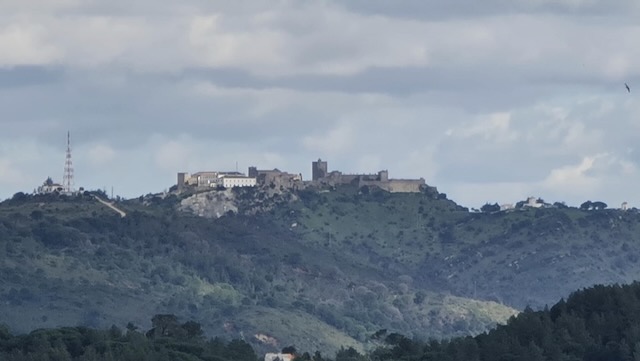
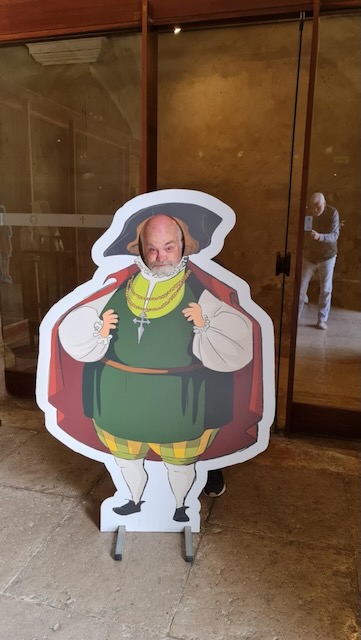
We also visited the Palmela Castle which overlooks Setúbal and catered to our wildest cross-dressing and costume fantasies.

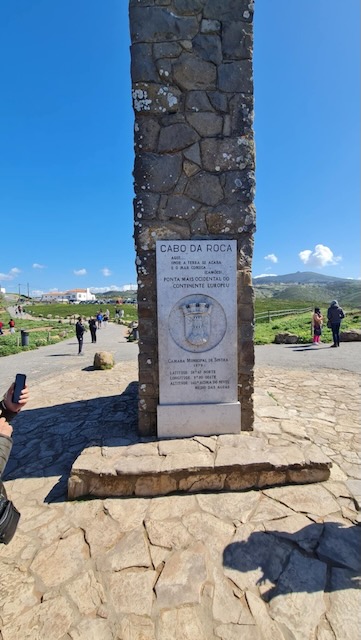
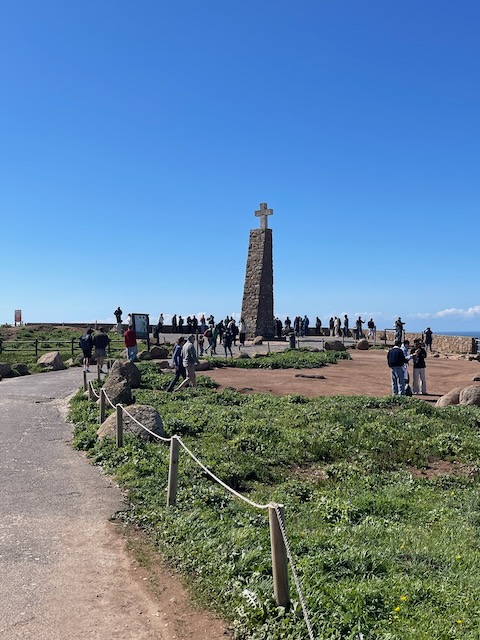
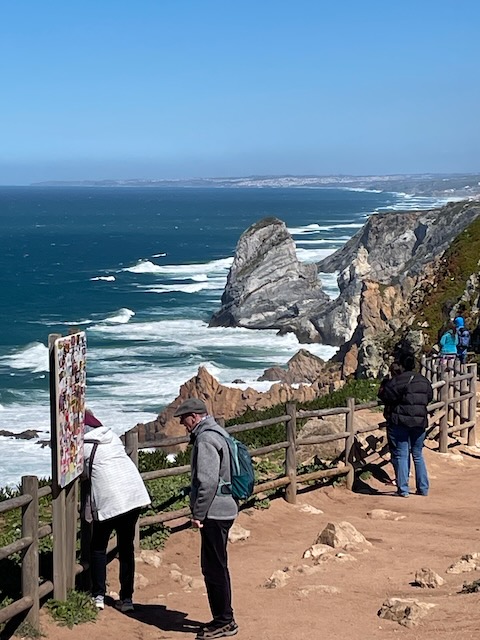
On another day we drove to Cabo da Roca, which is the westernmost point of all of continental Europe, and is where Almond Roca would have been invented if they had more almond trees nearby. The guy on the top left isn’t either Per or myself, but I figured if he was going to point his camera at me, I’d return the favor, leading to an old bald guy staredown that lasted for hours. He won because apparently he has a bigger bladder than I do.

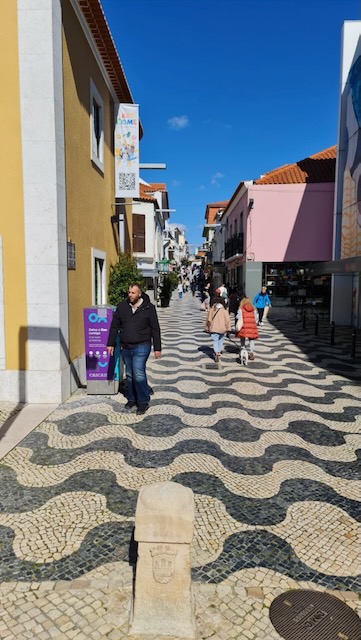
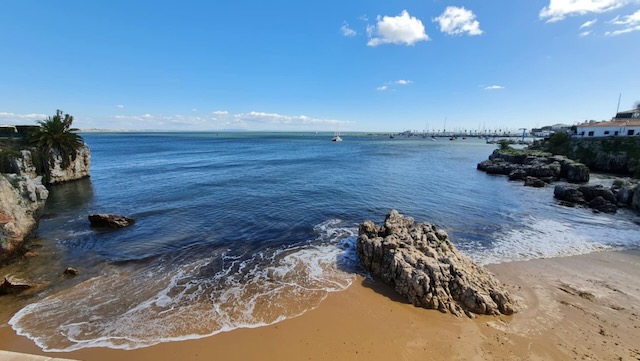
On the way home we stopped in picturesque Cascais and then got caught in a Friday night traffic jam that added at least two hours to the drive, but at least we got a terrific view of the freeway.

But before long we were all nestled into my sweet home of Sesimbra, with its silvery moon, wonderful seafood restaurants, a beautiful stretch of beach named California Beach, which the locals swear that the state of California was named after, and a harbor featuring cleverly disguised submarines.

Once Per cleared me for a visit to Denmark with a good chance of not needing to call in the authorities, I booked my ticket and a month or so later began the journey of learning how to cope. I knew I’d be able to learn all the skills I’d need in order to live alone in the capital of everything coping-ness, aka Copenhagen. As the Danes already know, “hagen” means “the chin” in Danish, so Copenhagen essentially translates to “Coping after taking one on the chin.”

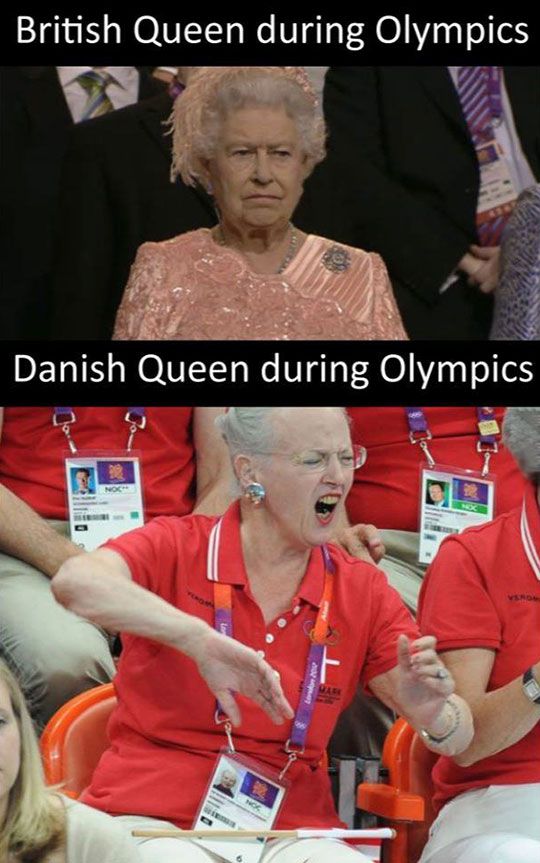
Besides, their royalty is bad ass.

But truly, what a great place to cope since Denmark routinely is in the top five or even first in so many important country metrics like health care quality, happiness, education… pretty much all quality-of-life metrics, mostly only competing with its Scandinavian brothers for the top spot. Copenhagen is the city every other city in the world should want to be when it grows up.

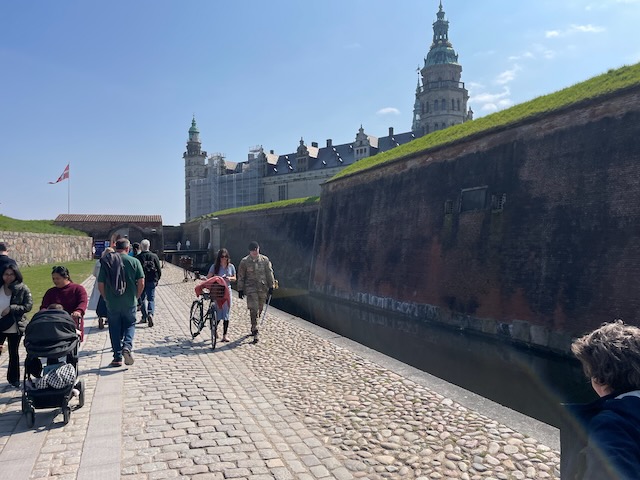
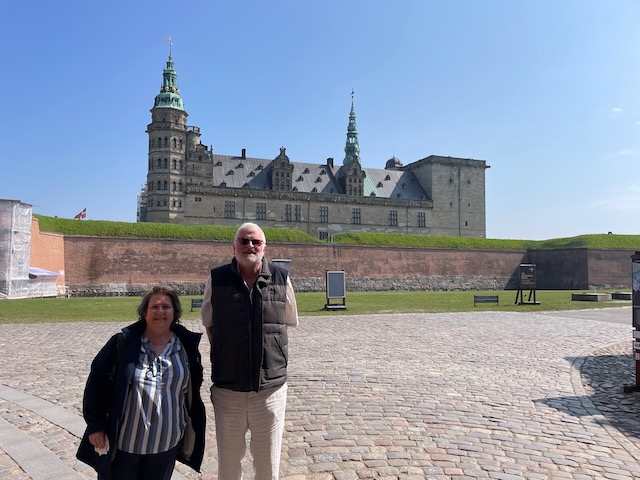
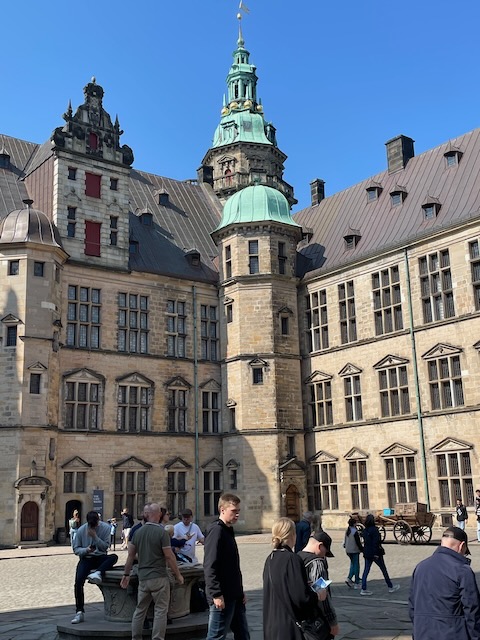
This was my second visit, so my gracious hosts took me ’round to places I hadn’t seen before, like the Kronborg Castle.

Kronborg is a very important Renaissance castle, with one of the reasons being that it is the setting for William Shakespeare’s play Hamlet, which I think is a story about a little pig.

So of course you can find all sorts of Shakespearean gift ideas, including this elephant condom with “To be or not to be” proudly displayed to ensure elephants think twice before doing whatever it is animals do to make baby animals. Anyway, it’s a great gift for the elephant owners in your life.

The castle is absolutely gorgeous and has been very well-maintained, although it could eventually need a good pressure washing which will cost millions of Danish kroner (they didn’t adopt the euro because they were already perfect), not only because it’s so large but because they can’t use any actual water pressure out of fear of damaging the old stone, so someone has to stand there all day just trickling a hose on one spot.

In case you’re wondering what the cannons were pointing at, across the water there is Sweden. An interesting piece of historical trivia is that Denmark and Sweden have fought more wars against each other than any other two countries in the world. The last one was in 1789, so now they just poke fun at each other with internet memes instead. But like two brothers, they can make fun of each other, but if an outsider tries to do the same, they’ll rush to the other’s defense. You don’t mess with that Viking blood!

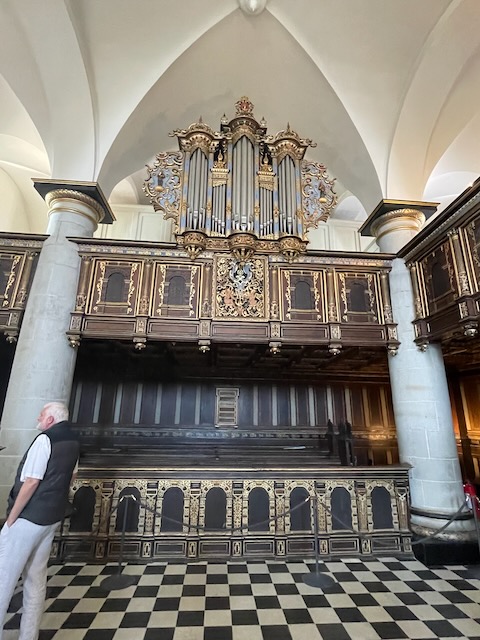
Speaking of Viking blood, the Danes are known for their huge organs.

Inside, they were kind enough to offer up a free buffet, but I found the flavor to be rather like plastic.

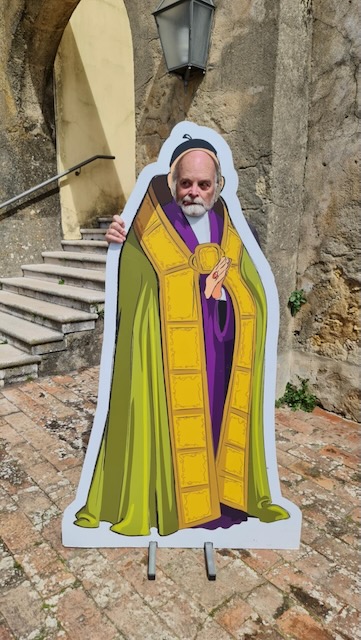
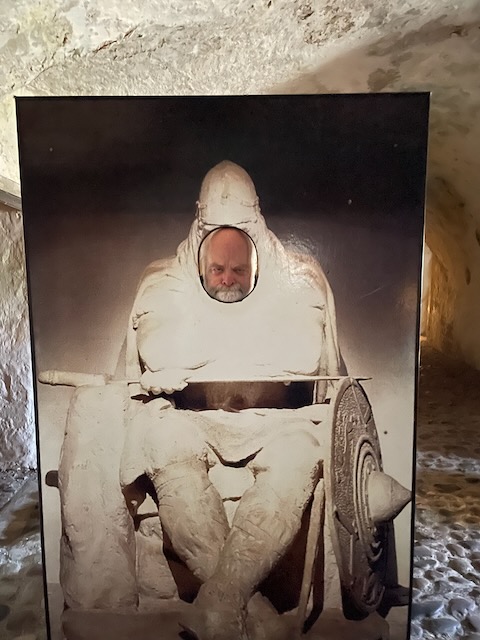
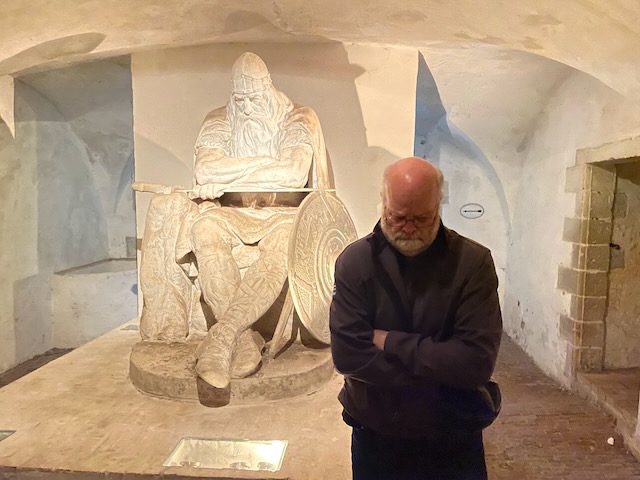
So the story is that this legendary king, Holger the Dane, will awaken and rise up and do some serious smiting should Denmark ever need any smitissery. I was trying to look like him but only succeeded in looking like an old guy sneaking a nap while standing, which is something I’ve perfected of late.

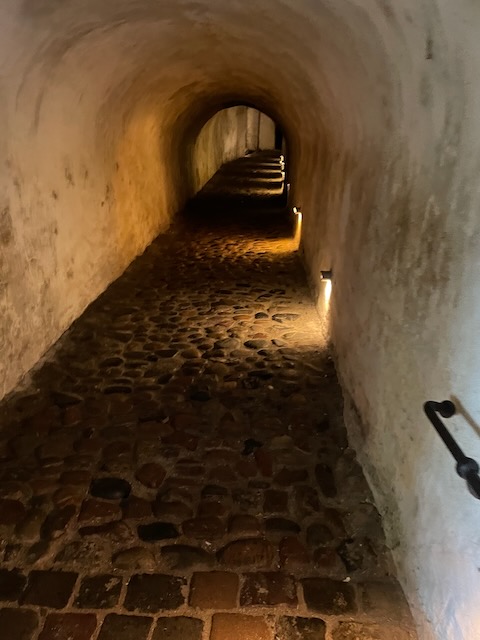
A typical day in the life of a Danish King involved walking down this long hallway to get to the dinner table and then off to bed. It must have made for an exhausting day.

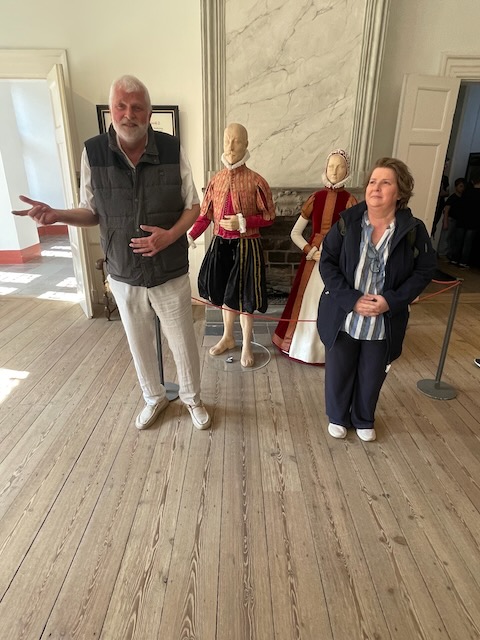
A diorama of four mannequins, with the two in front demonstrating what modern clothing would look like on today’s servants, as well as the significantly increased height due to today’s modern gravity.

Ever thoughtful, the Danes built a table with a mirror so you can take a selfie with the ceiling in the background without having to look up. I could’ve looked up, but would have probably cracked my head open after the fall.

The Danes hate it when you touch dusty windowsills.

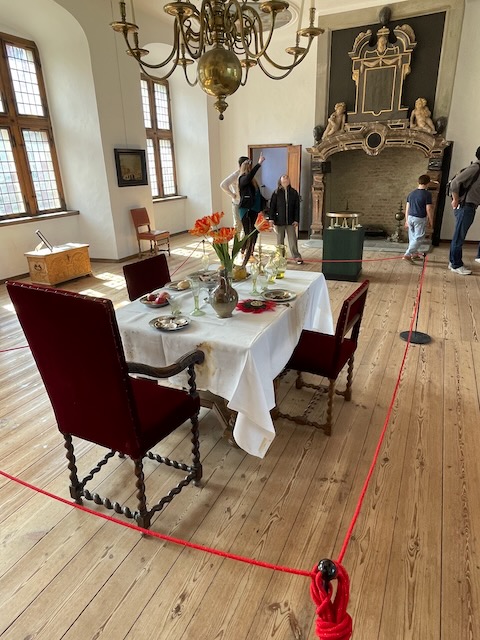
This is the great room. You wouldn’t know it with us in the way of the photo, where it really only seems to be a pretty good room, but once we’re out of the picture you can see it’s actually really great.

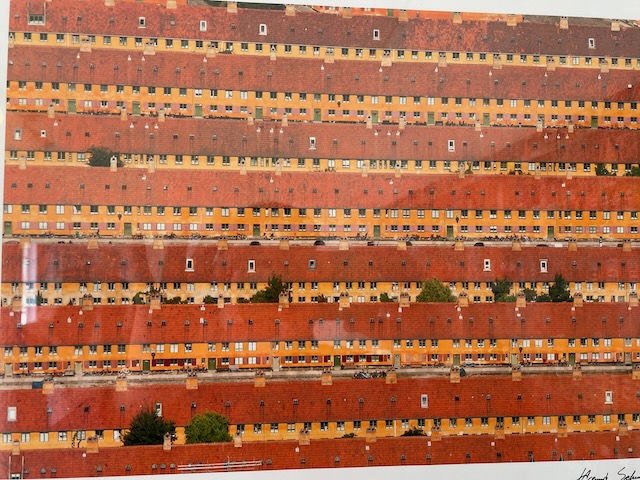
You might be wondering what these are.

OK, I said that about the pictures of houses because I was wearing this hat I’d purchased at a huge open air market and as a result was being a bit of a dickhead, because I was supposed to be.

Now that I have that hat off, I can tell you that these are some of the houses in those pictures, which were taken from the air and were not Photoshopped or anything of the kind. The view from the ground is always a bit different than from the sky, especially if you’re falling without a parachute.

We decided to see the Cherry Blossoms, which bloom for just a short time every year and we were at the tail end of the bloomin’ season. Nearby was Grundtvig’s Church, which is one of the more famous churches in Copenhagen due to its unique design. It also has two organs, whereas most humans have about 78, so we win.

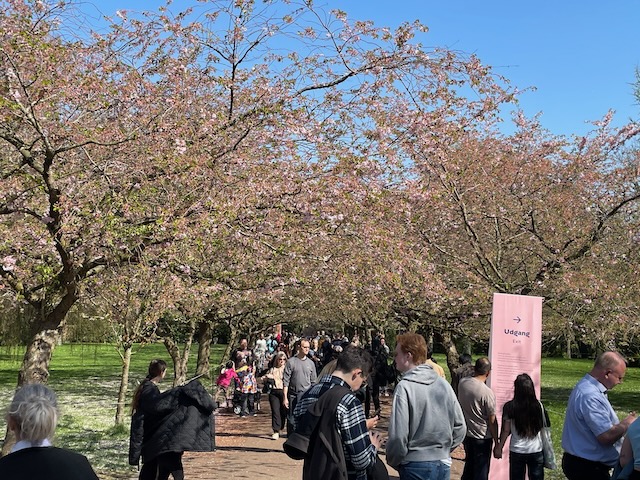
It’s a beautiful walk down the Path of Infinity to get to the blossoms. When we began our journey on foot, the blossoms were in full, glorious bloom. By the time we got there, half the blossoms had given up waiting and fallen to the ground.

While we were mildly disappointed at nature for not catering to our whims, Pia snagged herself a kindly groundskeeper and he drove her back to the car after doing some wheelies, making some jumps off a few ramps, and scaring the hell out of a few old people in wheelchairs, hooting that they were just rookies as he left them in his dust.

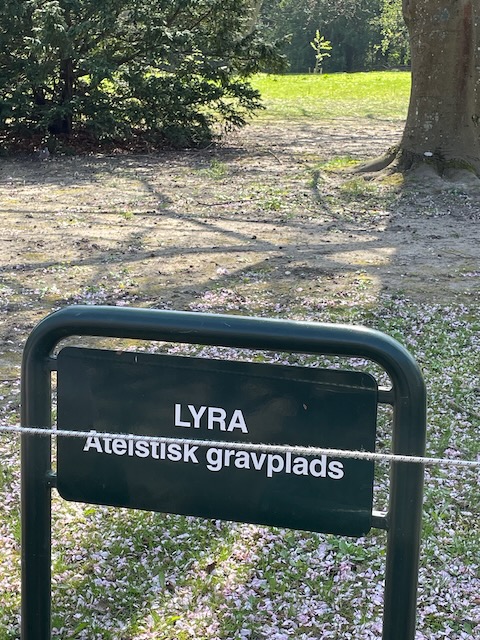
This sign, and you can double check me if you want, indicates that this is an area of the graveyard reserved for atheists. True story. I thought it was funny that I couldn’t see any gravestones, but then again, if there’s one group of people who couldn’t care less about what you do with their bodies after death, it’d be atheists.

Danes are so badass that they have signs directing you to London, which is 1,262 km (784 miles) away and would take you over 200 hours to walk, plus a ferry.

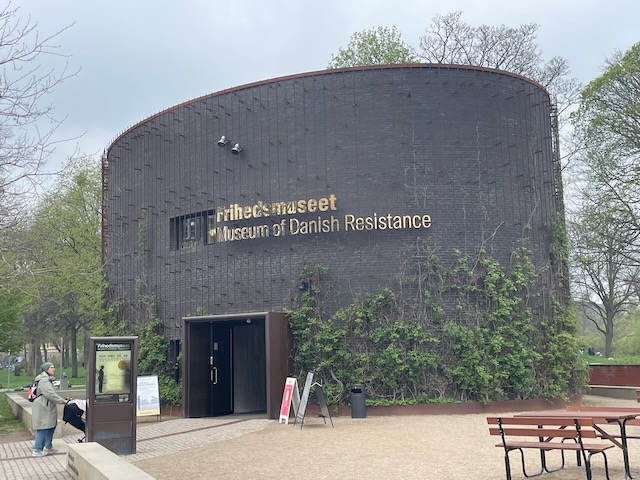
Speaking of badassery, in World War II the Danes, being very pragmatic, surrendered quickly in the face of a dominant German force, and then schemed to have the Germans allow them to govern themselves. Eventually that collapsed, especially in light of the ongoing underground resistance, which this museum documented for us. It’s amazing how many stories have come out of World War II.

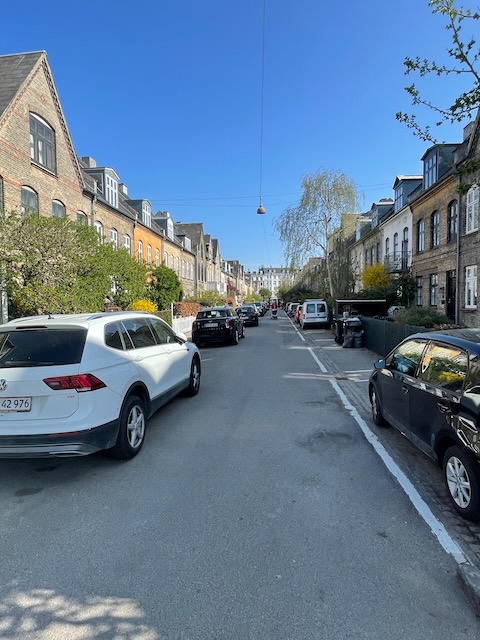
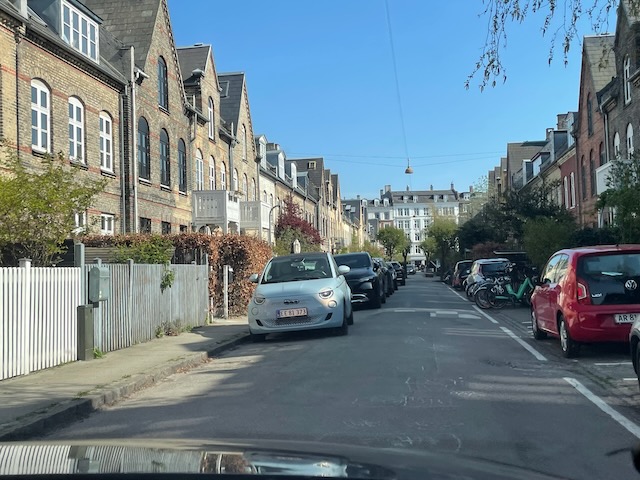
This section of housing in Copenhagen consists of old houses whereby the owners have to adhere to specific aesthetic standards. If you paint it the right color, you’re in. I said, you’re in. Just don’t piss them off, that’s all I’m saying.

The first time I was there, my Danish friends took me to this wonderful restaurant downtown with a very special Easter menu. It actually was one of the best lunches I’ve ever had. This time, it was maybe a tick less gooder than the first time, but that may have had something to do with higher expectations as well as slightly fewer shots of schnapps. Everything tastes better with schnapps.

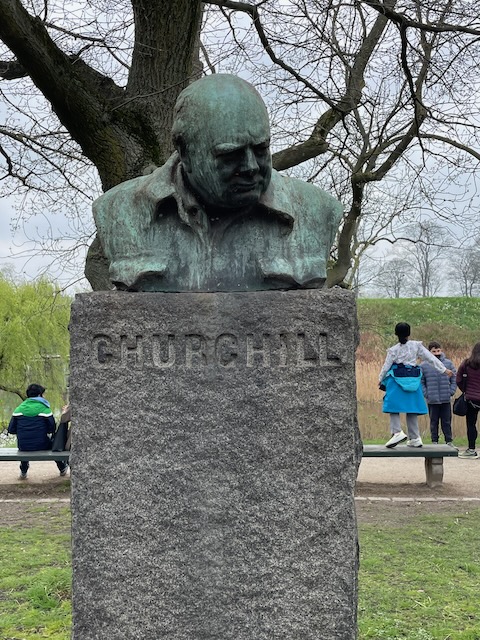
I gotta tell you, you can’t really see it here with these shots, but there were times when I sat in the car at a stop light or some such, watching the combination of all the bikers and walkers and friendly people, and it reminded me of a sort of utopia. I’m really not kidding. In fact, during my visit I discovered that I’d neglected to bring a sufficient quantity of pills to treat my glaucoma (I counted one a day, when I actually take two a day… boy, math is hard). Since it is utopia-like, Per simply got on the phone, was put through to a doctor, who understood the dilemma I was facing and so issued me a temporary social security number and a prescription, all done over the phone and entered into their system online. The next day we walked into the closest pharmacy, the pharmacist called up the record, and within minutes I had a bottle of 100 pills. On top of all that, they were pills she had never even prescribed before, and remember, I’m a complete foreigner. Maybe instead of tearing everything down in the USA, Mr. Trump, you ought to consider building systems like the Danes have… their lives are easier and they are happier and healthier as a result. I know it’s easier to destroy than build, but damn, there are people in the world doing this stuff right; everyone should be taking notes. That’s a Churchill we should be willing to die on.

You finally made it to the funny sign portion of this entry, which signals that it’s about ready to actually be the end. Sorry for the length, I would have made it shorter but I had too many words I had to use up.

Anyway, the first one on the left is from Portugal. The Portuguese are pretty straightforward, and “frango” is the word for “chicken” in Portuguese, and so here they’re offering some tasty chicken ass.

Not to be outdone, the Danes tell you where to go if your farts are really smelly in the middle picture.

I think the photo on the right speaks for itself.

Portugal welcomed me back with open arms and a beautiful sunset. I was glad to be home, but even more glad to be shown so much care and concern from two very nice and empathetic people. I still really haven’t taken a solo trip; for some reason sharing a travel experience with someone makes it so much more meaningful than seeing it all on my own. Maybe someday I’ll score the perfect travel partnering babe. Ha ha!

(Scroll down to see previous entries.)
Munchin’ on Some Germy Things

The last part of our Eastern European tour finished up in München, Germany’s third largest city. Since we were arriving in October, we expected Octoberfest to be in full swing. We looked forward to things like guzzling beer straight from drinking fountains, free steins of foamy brews being offered to us as we staggered around town, and seeing lots of beerded ladies.

Alas, it turns out that Octoberfest really starts in September, and was long over by the time we got there. Way to sneak one past us, Germans! One less set of tourists you didn’t have to worry about huh? Oh well, we really don’t like beer all that much anyway.

We settled into our rented apartment, which was a little bit of an odd one in that we were more or less in an office building and our apartment was the only one on the floor. We were surrounded by businesses of all kinds, as well as a fairly noisy construction project going on somewhere in the building, and they started with the drills about 6:00 AM. On top of all that, there was a party in the parking lot on a Friday night until maybe 4:00 AM, and we could hear them clearly even though we were about ten floors up. And I thought the Portuguese were late night partiers!

The above photo was the view from our apartment; not exactly nature’s scenic beauty. That building houses some sort of bean company; my theory is that the smokestacks were there to carry away all the, well, fartiness. We could only hope we were upwind.

The building we were living in was noisy seemingly all day and all night long. Then I took a closer look at the signs for the various businesses on our floor. It was only then that I understood why we would probably never get a good night’s rest in Munich:

Yeah, I guess it pays to research the floor of your rented apartment. The good news is I finally got some of that jackhammering I needed done.

As we drove around Munich, like Innsbruck, we found the city to be nothing worth going gaga over. I’m sure it’s a fine place to live with all the services anyone might need, but the only real tourist draw for us was old town Munich (the Marienplatz). And that didn’t disappoint, so we were glad to have experienced Munich overall, especially with some of the day trips available by using the city as a central hub.

Beautiful old buildings surround the Marienplatz. In WWII, Munich was originally spared much bombing because of its distance from the UK. However, as the allies closed in during 1942, the city became a big target, and then was nearly obliterated by 1944 with 70% of its buildings being destroyed.

Since it ended up in the hands of the Americans after the war and it didn’t have to labor under the yoke of the Soviet Union, the city was completely rebuilt, and used its pre-war street grid (which may not have been the best idea), restoring much of its former glory especially in the Marienplatz. Munich also hosted the 1972 Summer Olympics, which unfortunately became infamous when Palestinian terrorists took members of the Israeli Olympic team hostage and all of the hostages died during a failed rescue attempt.

Marienplatz is dominated by the “new town hall” and this column in the middle photo called Mariensäule, which was erected in 1638, and is still erect to this day mostly as a result of receiving regular doses of Statue Viagra.

Shopping abounds with lots of high-end stores and restaurants in the area. I did get a kick out the somewhat kitschy Nail & Spa shop using American flag decor to promote itself, as if somehow American nails are a thing? I’m not sure it’s still a good idea because America’s reputation in Europe has taken a huge hit what with the political goings-on there. Maybe they should go with an Iceland theme, no one hates Icelanders.

They went so high-end with the shops that they even opened a store just for Christ (featuring large repeating signs because after 2,000 years, of course he’s starting to get a little near-sighted), and who could resist picking out the juiciest earthworms ever from Wormland? I’m surprised that’s not a thriving worldwide chain by now. Mom: “Let’s go to Wormland!” Kids: “Yaaay!”

About an hour’s drive outside Munich is Linderhof Palace. Schloss Linderhof is one of three palaces built by King Ludwig II of Bavaria but was the only one actually completed. Unfortunately, they didn’t allow picture-taking inside the palace, which we toured, but our tour guide was not of the highest quality and while it was gaudy and somewhat interesting, if they’re not going to let me take pictures then this is all the attention they get out of this blog. Harrumph. Damn Linderhoffians.

The crown jewel of our daytrips outside Munich had to be this fairy tale castle called Neuschwanstein Castle, which I still can’t pronounce despite hours of trying. Okay, maybe once. Anyway, I’m sure you’ve already seen pictures of this all around the internet, it is, shall we say, slightly picturesque.

You get that photo by braving the crowds and standing on a bridge you hope like hell was designed to hold 100 people. I was also terrified that someone would jostle my arm as I tried to get a picture, possibly sending my iPhone deep into the chasm below. So I rushed to the railing shoving men, old ladies, and baby carriages out of my way, snapped my photo and then I got out there before anyone figured out why that one guy fell off the bridge. It was all just a little crazy. I guess there’s something to be said for taking your own photo, but it’s kinda funny to watch 100 people jostle and maneuver to get the exact same shot everyone else is, and the internet already has. Of course, I scoff, but I did the exact same thing. Damn tourist.

This is what that bridge looks like from the castle. I’m the third damn tourist on the left.

Neuschwanstein Castle is located above a small tourist-trappy town where there are also a couple of other lesser castles. We didn’t tour these; we were gunning for the big boy.

As it turns out Neuschwanstein Castle is a lot like dating a supermodel. She may look great from the outside, but once you get a peek inside her liver you discover she’s slightly overrated. That comment is certainly influenced by the fact that they don’t let you take any pictures inside, and even if you wanted to they wouldn’t have blown anyone away. It was just a bunch of old furniture with lots of liver spots. I kid, it wasn’t bad, but it was a small letdown from the grandiosity that seemed to offer so much promise. Damn supermodels.

As with so many castles and palaces on hills, the scenery was gorgeous, so the whole experience was well worth doing. It’s just that the best part of it was pretty much taking the same photos that the internet has in probably the tens of thousands. The above are unique though, with angles and lighting like the world has never seen before. I know I should sell them as tokens or whatever that crap is, but dammit, I maintain that I always want this to be a free blog for everyone! And that includes all four of my loyal readers!

Otherwise, that was pretty much all she wrote. The trip was long, tiring, but well worth the price of admission, covering five countries, countless castles, over 2,500 kilometers driven, and hardly any pedestrians doing damage to our front bumper. We had full insurance coverage in any case. Damn jaywalkers.

On the flight home we were treated to this amazing lightning display. Was it a portent of things to come?

(Scroll down to see previous entries.)
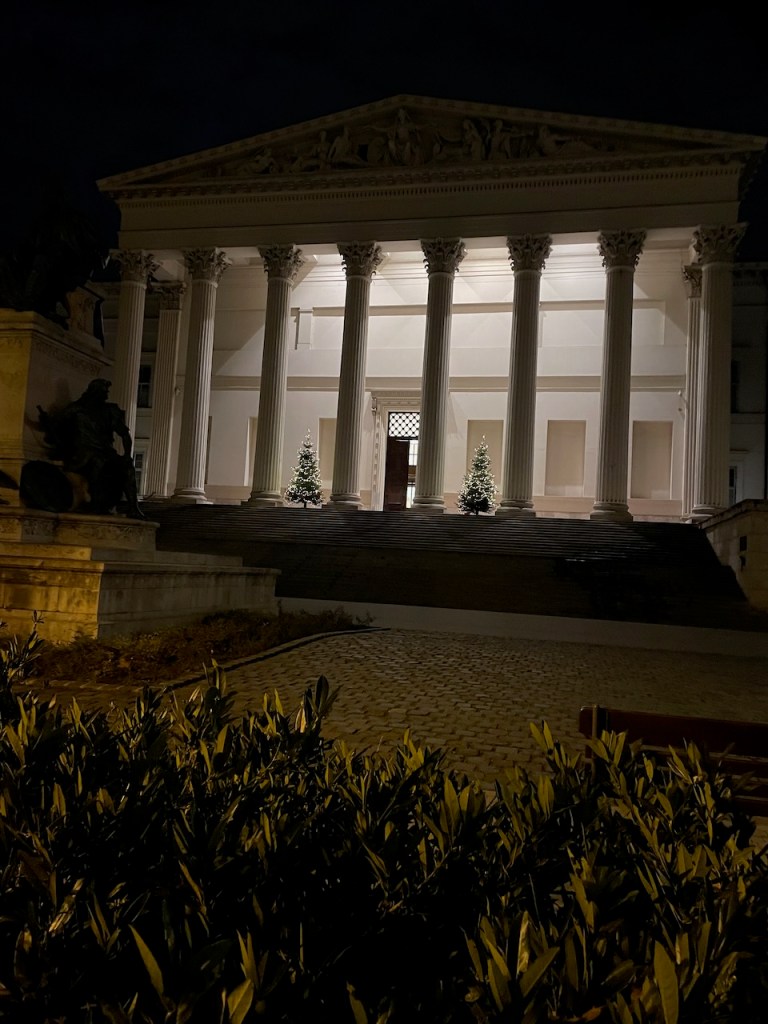
Inn and Outsbruck

Innsbruck, Austria was a tale of two places for us.

On one hand, we observed some of the most eye-wateringly beautiful mountain scenery we’ve ever seen during the drive in. Carolyn was snapping away from the car as we made our way through the mountains and into Innsbruck. Oohs and aahs could be heard throughout the drive. We never could figure out where the sounds came from, but it added to the experience.

I’ve actually already used a lot of photos from that drive in previous entries because they just ended up being a jumble of scenic photos in folders and I wasn’t always clear where they were taken. Besides, there are lots of photos of natural mountainous beauty on the internet. Of course it’s not nearly as thrilling as seeing them in person. Just like boobs.

Once we entered Innsbruck, we noticed the main part of the city was, frankly, rather boring-looking. It is heavily touristed, but the sightseers generally come there to look at two things: the Alps and old town Innsbruck.

As you can see, the mountains are kinda hard to ignore as they dominate the skyline of the city. In the winter, they magically change to the color of my beard, except the yellow parts on my beard tend to be from leftover spaghetti or lemon popsicle stains and not from whatever causes yellow snow.

Another claim to fame for Innsbruck is that it is one of only three places which have twice hosted the Winter Olympic games, joining St. Moritz, Switzerland and Lake Placid, New York with that distinction.

The old town area was picturesque, but we easily covered it in just part of a day. But I do have a little anecdote as a result of our being there. During all of our travels we never really encountered a horrible disaster, like having a car break down in the middle of nowhere in a foreign country, or getting mugged, or finding someone’s toenail clippings in our shower. But just to show how easy it is to end up in a catastrophe, as I was walking around the town I reached into my pocket for a slightly used mint or something, and I accidentally made my rental car keys tumble onto the pavement. They landed about a hand’s width away from a sewer grate. I stood and stared at the keys for a few moments, marveling at how just a few inches (equal to a few cms, or even more mms, or a whole buttload of μms) can spell the difference between disaster and a minor blog anecdote. Just then a kind young woman –probably thinking I couldn’t bend over that far because I was just standing there gawking at some dropped keys– walked by and picked the keys up and handed them to me. “Danke!” I uttered with genuine gratitude at such a kind gesture. Anyway, disaster averted, and additional humbling instilled to remind me that while we haven’t had any big disasters, that’s not all because we’re so good at traveling. A little luck here and there never hurts.

This is the spaceship that shuttles Austrians back and forth to the moon, but ssshhh, it’s highly classified. They hide it’s true purpose by calling it the “Top of Innsbruck,” pretending to be a cable car that takes you to the top of the mountains. But since we had packed our salt mining gear instead of moonwalk attire, we opted not to take the ride. We figured if they really did go to the top of the mountains, it wouldn’t really be worth it because we just drove through said mountains and there wasn’t enough snow to make it truly glorious. Plus it would’ve cost over $100 for the two of us. We’re not cheap, but we travel frugally, and that really didn’t feel particularly frugal to us. Although I did steal that bike and sold it for a tidy profit. Between the bike and our Top of Innsbruck savings, we pretty much paid for the day, including lunch and one ice cream each.

We did want to partake in some genuine Austrian food, but we had a hard time deciding between eating some glorious uncooked meat or sampling some naked indigo. I was unclear as to whether that meant you had to be naked to eat there, or perhaps just stoned enough where you’d marvel at how their nude shade of violet tastes a bit like the au naturel mauve you consumed the last time you were stoned. Of course, it could be a restaurant that caters exclusively to synesthesia sufferers (those who can taste colors). I am a bit allergic to chartreuse and and red gives me zits, so we stayed away just in case.

We opted for a beer instead. Actually, we had some delicious sausage (you’ve gotta eat some sausage and drink some beer in Austria and Germany or you’re never allowed in again) and thoroughly enjoyed our meal in a nearly abandoned restaurant, because no one there eats lunch at the time we did, apparently. Either that or it was the worst restaurant in Innsbruck and we’re too stupid to tell the difference.

I learn a lot about a place by checking out various travel sites’ “things to see” lists (when a children’s playground is the third most popular, you know you’re in trouble). One must-see destination that kept popping up was this golden balcony roof, made of gold by some Holy Roman Emperor to impress his wife.

Here’s my travelogue summary: It’s gold and it’s a roof.

Here’s the rest of Innsbruck old town. We’re glad we came to see it if for nothing else than the beauty of the Alps, and old town was worth a whirl, but it’s probably best as just a good old-fashioned ski town, albeit one that keeps your keys out of the sewer, so it’ll always have a warm place in my heart just for that. Plus I saw a gold roof.

One of our short detours we made as we drove around the countryside was a visit to Liechtenstein Castle, which sounds a bit cooler than what we found. The castle was closed on the day we visited, so we wandered around and snapped some shots and called it good. It wasn’t on a big hill with a vast vista to view anyway, which is normally one of our favorite things about castles. Hugo of Liechtenstein built the castle between 1130 and 1135 (those are years, not times) right next to some modern neighborhoods. Or at least that’s how it ended up.

For the last leg of this arduous journey, we made our way to Munich (or Munchin’, as the stoners call it), which offers up an amazing old town area as well as serving as a hub for visiting some of the most striking castles and palaces you could ever hope to see, and will in our next entries. Before I go though, I have to share these signs we saw in Austria as a final farewell to that magnificent country:

Sexual mores in Europe are decidedly less conservative than in the US, but I was surprised that even famous prostitutes (hor stars) could advertise on city streets. I’m not completely sure what “damit stemm ich alles” means but my best guess is that it’s a warning to anyone carrying an STD: “Dammit if your (stemmy thing) itches there!”

The advertising campaign continued down the street by reminding people that anyone other than a genuine hor star is most likely going to be a dog dirt bag. Remember, cheaper isn’t always better.

A candlelight dinner in Austria apparently comes with a well-risen (and rad besides) wiener. Not sure if they provide one themselves or just reminding everyone as to what to expect after a romantic meal.

They must have strong truth-in-advertising laws because this sign readily admits that the casino always wins (wiens).

I desperately wanted to see a show with lots of wieners waltzing. I guess it shall have to remain on my bucket list because we took a schlong turn somewhere.

I downed four straight beers to help wash away the mental imagery this conjured up. Why was this restroom sign even needed? You go to a public restroom and blow hot air on what? They even had to handwrite a version in English. I decided to use the outside of my pants to dry my hands instead of inserting them into that mosh pit of potential viruses.

When you put these two photos together, you’re gonna get an explosive result. As most people know, a wolf fart generates amazing power and explosiveness, and becomes a lethal weapon when ignited by a sparked ass. I figured this was probably an old relic from a WWII Wunderwaffe (Super Weapon) program. OK, I know that was more than a stretch, but, y’know, it’s not always easy to come up with yolks; whether good, bad, or scrambled.

Omelet myself out now, so until the next entry, auf wiedersehen!

(Scroll down to see previous entries.)
We Love Our Wieners!

When we first arrived in Vienna, I wondered what its residents called themselves. Viennese? Viennanamese? Vienna Sausagers? I wracked my brain trying to think of a word I could use to make fun of them in the blog. When I learned that Vienna is known as “Wien” in German, I knew what I’d call them: Wieners! Hilarious right? However, much to my dismay, I discovered that they do in fact call themselves Wieners, which kind of takes the fun out of it all.

That was also when I realized I could walk into the shop pictured here without hiding my face because it is, in fact, not a sex shop. They are bad at English apostrophes though.

At least I can honestly say that we’ve now both seen thousands of wieners. In addition, Vienna is the only city in the world where every dog is a wiener dog.

According to worldsbestcities.com, Vienna ranks 12th best in Europe, with 9 and 11 being Istanbul and Zurich, making those the only two above Vienna that we haven’t been to (the top five are London, Paris, Berlin, Rome and Madrid), so our visit to Vienna made it 10 out of the top 12 we’ve seen so far. It certainly was one of the most beautiful. Depressingly, we’ve only seen 44 out of the top 100 European cities, which puts an exclamation point on the idea that we’re never going to see them all. Accordingly, we’ve just decided to enjoy what we see and accept that in our lifetimes we will never see everything, which helps when we feel like skipping something and taking a nap instead.

We rented a small apartment that was just a short walk away from the Votive Church, which is located in Sigmund Freud Park, which we avoided walking in much because at our age we didn’t want any Freudian slips.

The apartment was also just a short walk away from Vienna’s Ringstraße, which is an area full of grandiose buildings, museums, statues, and strange double s’s.

It seemed that everywhere we turned, there was something magnificent to see, which was slightly amazing in that the Allies bombed the hell out of Vienna during World War II. While some historic buildings survived, many more were reconstructed after the war. We could only see any evidence of this by looking at rows of apartments, where some of them feature relatively new construction next to obviously older ones. Fortunately, they’ve cleared out all the dead bodies by now.

Even outside the Ringstraße, it seemed that everywhere we turned there was something magnificent to look at.

There was so much to see we barely had enough time to shove a sausage down our mouth plus take some Door of the Day pictures. But I think it’s important to partake in local cuisine, so although Vienna sausages are generally those little weiners in a can, we settled for some massive ones between the buns and called it good.

Not every building in Vienna is an old marble masterpiece of architecture. Here is a juxtaposition of new vs. old; one of their very modern buildings as well as a Roman excavation site in the heart of the city.

But boy did those old masterpieces dominate. Everywhere we turned, there were statues, monuments, and Weiners. The last picture on the lower right is of the Vienna State Opera House, which ended up being a little notable for us because it seemed as if wherever we walked, we somehow ended up next to the Opera House. We thought maybe we were in an episode of the Twilight Zone.

We noticed these pipes running through town, I learned that they’re there to pipe water from some subway construction. And here I thought they were probably Strudel Timely Delivery systems, which we avoided because we didn’t want STDs. Also, the picture on the right is only for fans of the Battlestar Galactica reboot. Frack off if you don’t get it, which is exactly what Carolyn is telling me to do in the middle picture. I imagine if one of the Galactica people landed on the planet and saw that sign, they’d be really confused as to what the company was selling. Anyway, that’s all the swearing you’re gonna get in this entry, I’m all swore out from the last one.

So this is Vienna, as beautiful a city as you’re likely ever to see.

And here’s the fracking Opera House… once again following us everywhere.

One of the key sites to see in Vienna is the Schönbrunn Palace. Construction of the palace started in 1696 and was completely redesigned after 1743. It is yet another UNESCO World Heritage site. It’s also a testament to the power and influence of the Habsburgs, and was built on a former hunting lodge site that the Habsburgs had used for centuries. The Habsburg dynasty was one of the most powerful dynasties of Europe, running from the 15th to the 20th century. To keep their power in the family, they engaged in a lot of Inbreeding, which spawned a name for one of their deformities: a jutting jaw, now known as a Habsburg Jaw. I suppose one of the benefits is that they had a place to hold an extra weiner while eating.

I was amazed at the design of this statue, which looked uncannily like Carolyn. It was about then that I snuck another look at her real-life jaw to make sure it wasn’t Habsburgian.

I took a picture of this sign because I found it slightly amusing that the vast majority of tourists walk to the “You are here” location, which is right by the entrance, way across a huge plaza. Once there, they discover that they have to walk right back all the way across the plaza again to go buy the tickets. We were so irritated about it all that we only ventured into the front entrance and snapped a photo so we could honestly say we’ve been inside the Schönbrunn Palace. Plus we didn’t want to end up with a Habsburg Jaw by seeing something jaw-dropping and accidentally replacing ours with one of theirs.

Europeans are apparently so casual about their toilet needs that they had this urinal right out in the open, at least that’s what I thought it was. Unless it was where Habsburg-jawed people are forced to wait. Okay, enough with the Habsburg Jaws already!

One of our other stops was to the Museum of Natural History. While we both feel a little museumed out lately, we thought it worth a visit, and we were right to do so. They had the largest collection of precious minerals, gemstones, and meteorites that we’ve ever seen. Room after room was filled with every imaginable variation of rocks and minerals. I learned that the great variety found on earth is due to all sorts of combinations of factors, including geological activity such as volcanoes, plate tectonics, and water-rock interactions, as well as biological activity, such as chemical reactions with oxygen and organic material. I’m not sure why so many of them end up so beautiful, but thanks Earth!

The museum is also the home of a large dinosaur exhibit, as well as a number of prehistoric displays. No, no, not the wife, she’s not that old yet. But she would barely make a sock for that monster’s leg.

This is a model of a sea scorpion from 320 million years ago. However, since it looks so much like a spider, it’s also Carolyn’s worst nightmare. If she ever really pisses me off, I’ll put a picture of this under her pillow. Actually, I’d never do that because I prefer my face completely un-clawed, my limbs attached, and my jaw decidedly non-Habsburgian. Okay, last one.

The museum did have a few skeletons in its closet, including this display of the first nudists in history.

It is also the home of the very famous Venus Von Willendorf, which is only 11.1 cm. (4.4 in.) tall. It is estimated to have been made about 30,000 years ago, and most archeologists believe it had something to do with fertility or sex. So the next time your wife or girlfriend asks if they’re too fat (right answer: “Of course not honey! I love you just the way you are!”), also point her to a picture of the Venus Von Willendorf and say, “Besides, this is what used to turn men on! See, you’ve still got a long way to go!”
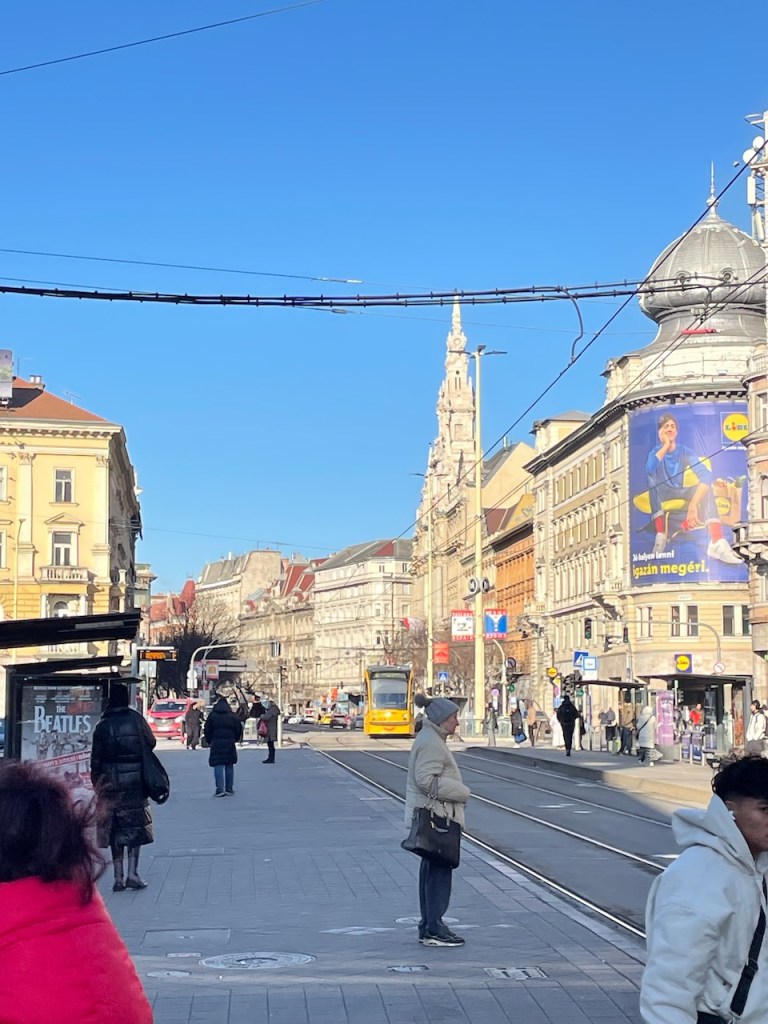
Lastly, I’ll turn to a professional to wrap it up with a few museum-y giggles.

(Scroll down to see previous entries.)