

The name taken from this small Polish town will be forever etched into history as the centerpiece of the worst genocide in the history of humanity. The town was known as Oświęcim until 1939, when it fell under German rule. At that point the town name was switched to the Germanic version, which is Auschwitz. The nearby camp was given the same name. The Germans cleared the area around the camp to create a large buffer zone, expelling around 17,000 Polish residents, destroying eight villages and leaving Oświęcim with around 7,500 residents as of 1941.
Today, Oświęcim has over 34,000 residents. When we asked our tour guide how it feels to live in a town with such notoriety, he shrugged and said, “We remember the past, but we look to the future.” Additionally, since the Auschwitz name is the German version and is now only used to reference the camp, Oświęcim doesn’t automatically carry the stigma it would if it still held the same name as the death camp. Besides, it was all about the Germans; the Poles were victims too.

It’s a little hard to make out the infamous “Arbeit Macht Frei” (works makes you free) sign here with the tree in the background, but it’s very sobering to walk through that gate. Perhaps the two most iconic images of Auschwitz are this gate and the Auschwitz II-Birkenau gatehouse with its train tracks that led to the gas chambers (first picture). Both were gateways to the unimaginable misery and deaths of more than 1.1 million people, over 90% of which were Jewish. Auschwitz was actually the name of a system of camps, consisting of the main camp, plus Auschwitz II-Birkenau, Auschwitz III-Monowitz, and dozens of subcamps. In the interest of brevity and clarity, we’ll just call everything we see Auschwitz, even though half the tour was outside in the former location of Birkenau.
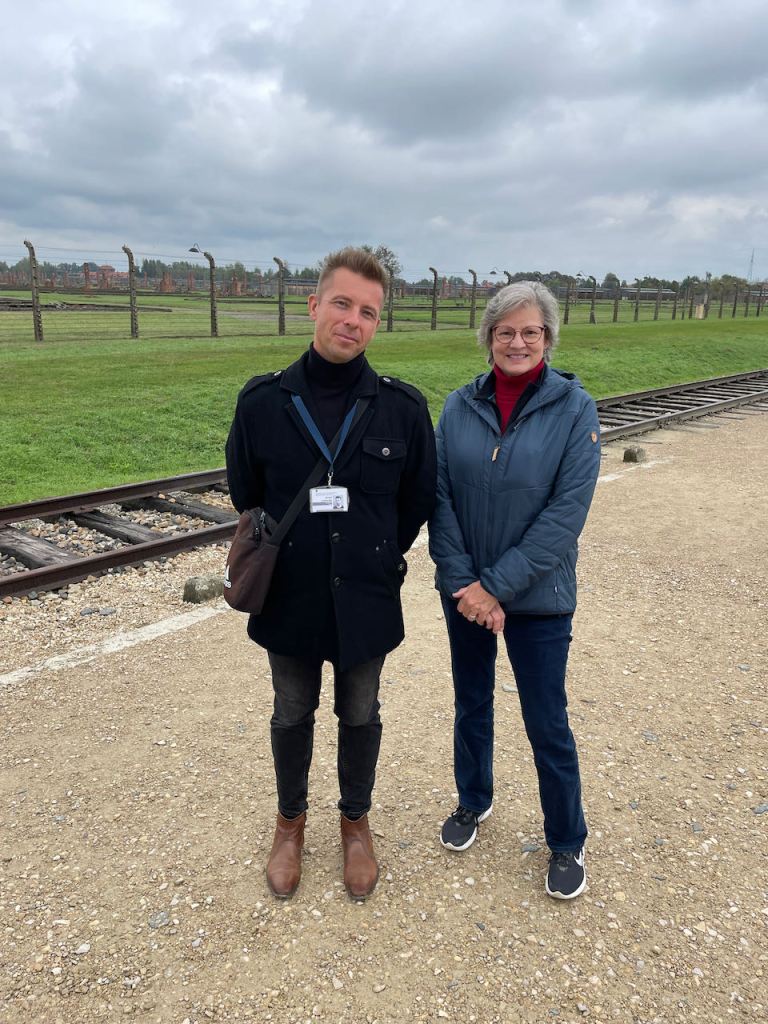
We had a pleasant and informative guide who took us on a private tour. If you ever get a chance to go to Auschwitz, I recommend booking a private or small group tour. We were allowed into a couple of places other larger groups were not allowed into, and it was nice to be able to ask any questions we liked along the way.
We fully expected to be emotionally overwhelmed by the visit. Strangely enough, neither of us were, although we both choked up when we saw a huge pile of children’s belongings. The Nazis separated anyone who would not be of any use to them in forced labor, meaning the elderly, sick or injured, pregnant women, and children were summarily dispatched to the gas chambers immediately upon arrival. Some infants were killed on the spot by being held by their feet and having their heads bashed in against the sides of railcars. Can you imagine? That should be hard to read. It needs to be hard to forget too, so we always remember what humans are capable of, especially when motivated by hate. As I reflected on our visit, I think we were a little bit emotionally numb, as if looking at the atrocities committed by a race of aliens. It’s hard to feel associated in any way with those monsters, but unlike what they did, I still have to acknowledge they were human. Human, but as far from humane as may be possible.


The brick buildings that were used to house the original inhabitants look surprisingly well built. The infamous structures that held Jewish prisoners destined for slaughter in Birkenau were made of wood and are mostly gone now.


Escape from Auschwitz was extremely risky and difficult, but not impossible. Known figures indicate that 928 prisoners attempted escape from Auschwitz, 50 of whom were women. Almost 200 prisoners actually got away. Most of the rest were captured, sometimes after weeks or months. It’s unknown what happened to some 250 of them. And of course the Germans always performed reprisals by killing a multitude of prisoners in retribution. I’m sure some didn’t think it at the time, but that would have actually been a blessing.

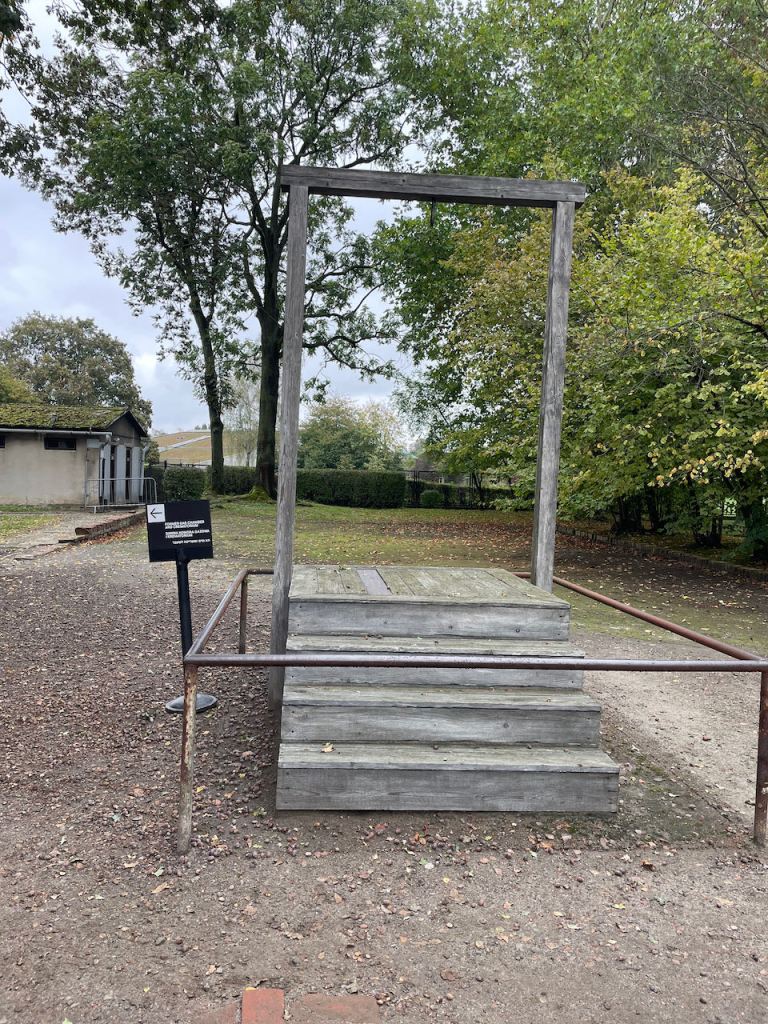

Auschwitz featured plenty of other ways to kill, including hanging and execution by gunfire. The wall above on the left is the infamous Death Wall (rebuilt after the war), where thousands of prisoners were shot. Auschwitz was a death camp, plain and simple. Thousands upon thousands of mostly Jews tumbled from stinking, jam-packed railcars and were led to the showers, ostensibly to be cleaned and deloused. The men were separated from the women in order to perpetuate this fiction. Those subjected to this extermination were not recorded or tattooed. They were simply vermin to be eradicated. Everyone had to remove their clothes, which were then scooped up and eventually sent back to Germany often for sale through thrift shops for the benefit of the German populace.

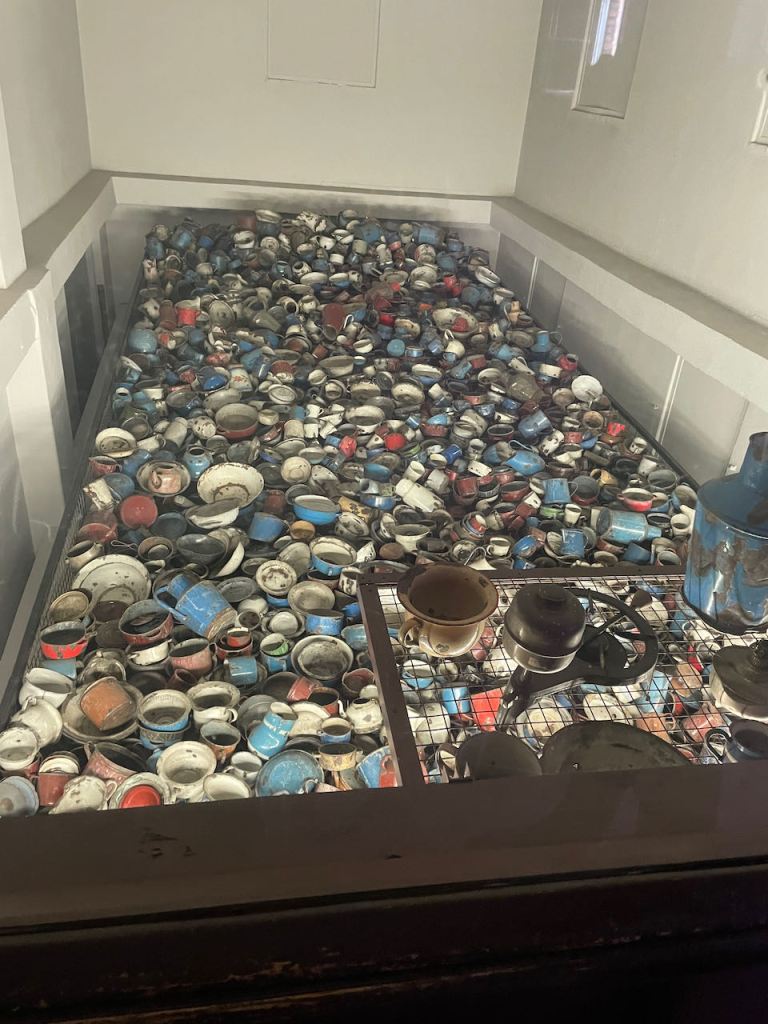
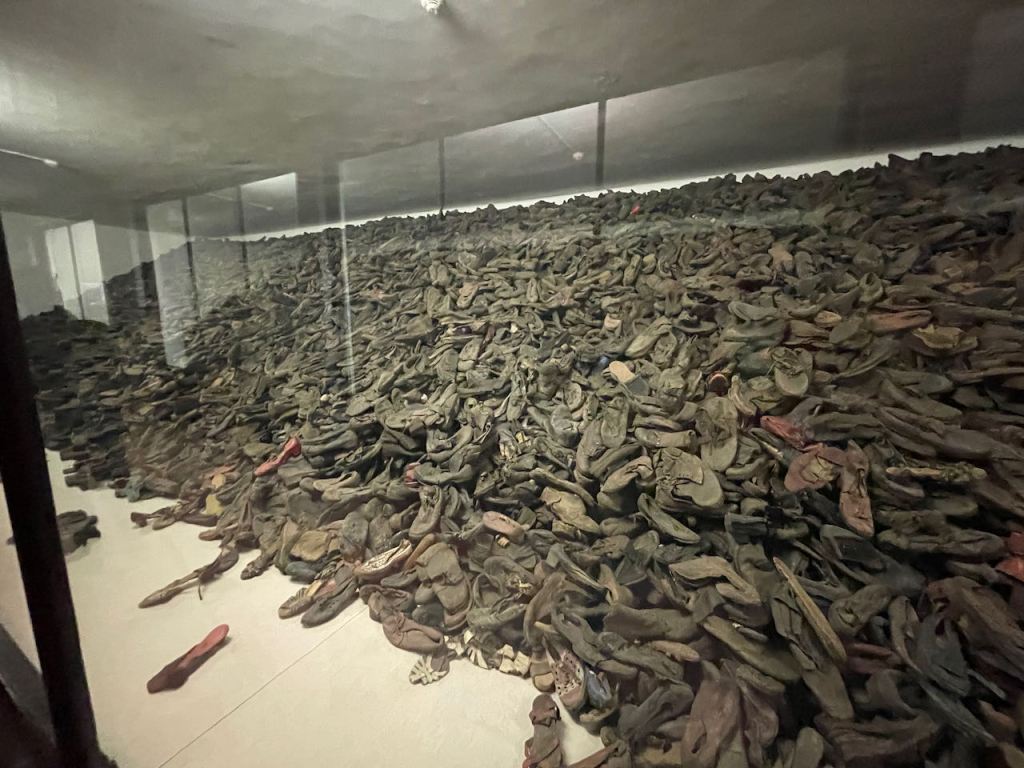
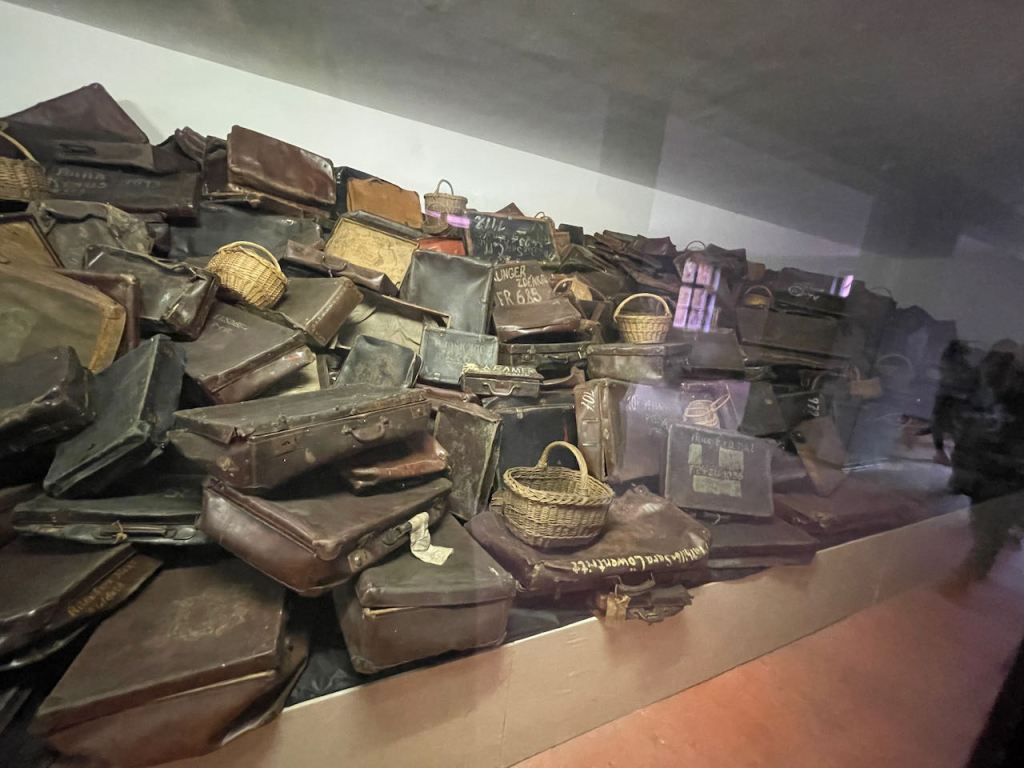
Everything was saved and put to use. Hair was shorn and used to make blankets and more. We were told the story of one of the commandants who noticed and admired a beautiful tattoo on the back of a prisoner. A short time later, that tattoo and the skin on which it was inked graced the wall of the commandant’s house as a decoration. They even experimented making soap out of the corpses. We’ve all heard stories of the lampshades made of human skin. All because one narcissistic sociopath with a lust for power decided his race was the master race, and “sub-humans” should be treated worse than animals. And scores of Germans supported him until he started losing the war. Madness.

These freight cars routinely carried 50 prisoners, but were often doubled in capacity to 100 people. It’s hard to imagine what a trip lasting days or even weeks would be like when everyone had to stand pressed together with no food, water, or sanitation. You might spend days standing next to a corpse whose body was simply held up by the people around it. The stench must have been otherworldly.

For those few who still try to either deny the Holocaust or diminish it, there is plenty of captured photographic evidence confirming that everything we know about these concentration camps is true. Still, there are always those who allow their cherished beliefs to twist their brains into undecipherable knots no matter the evidence, so we have to keep the history alive.

This was one of the few places in the facility that showed the actual faces of some of the victims. To that end, Carolyn and I both felt that the Holocaust Memorial in Berlin was more emotion-evoking. There, they tell the stories of various victims and their families, humanizing them and reminding us that they were simply people too, living their lives unaware that the sin of being born Jewish meant that you would be targeted for extermination.
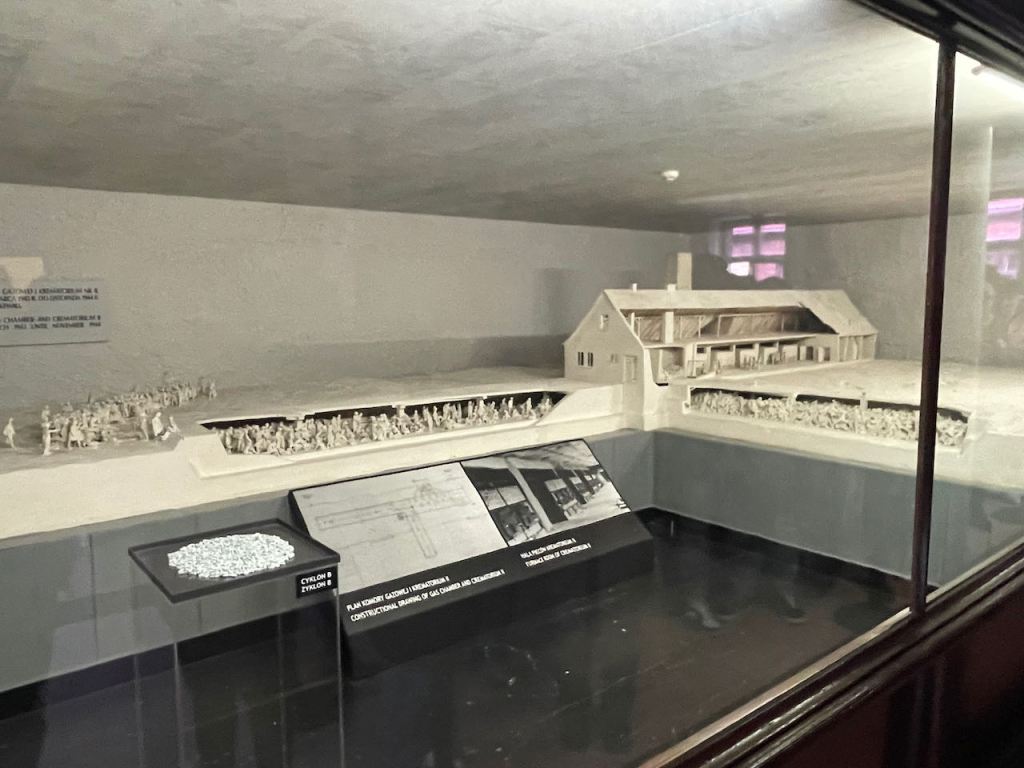
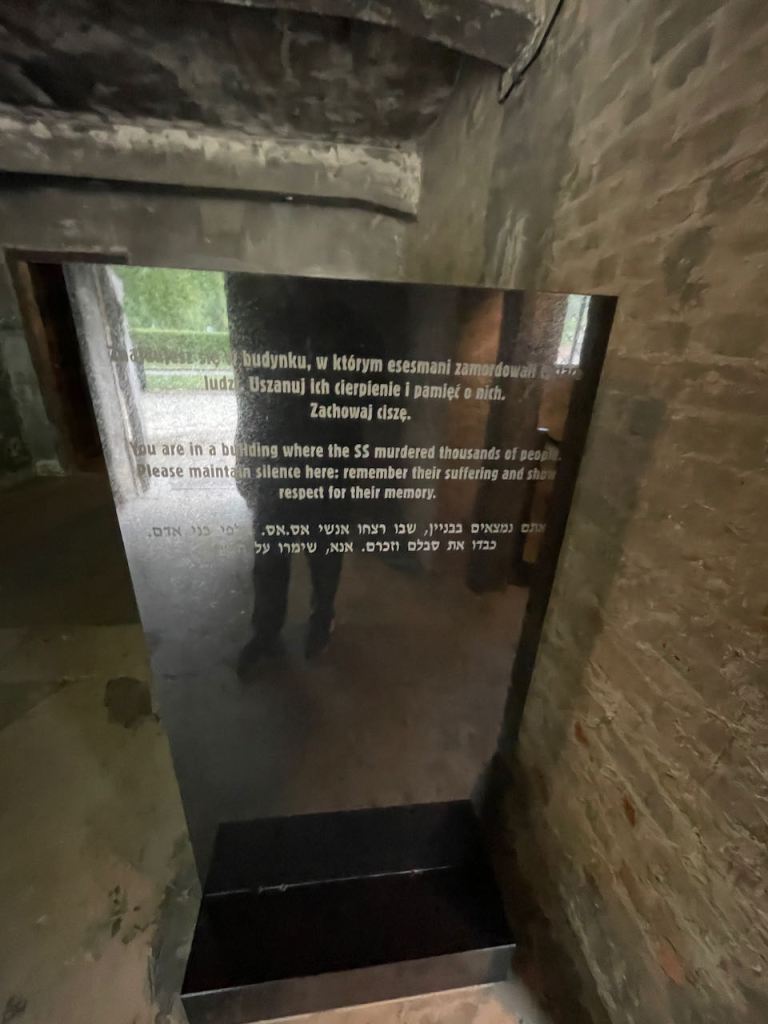
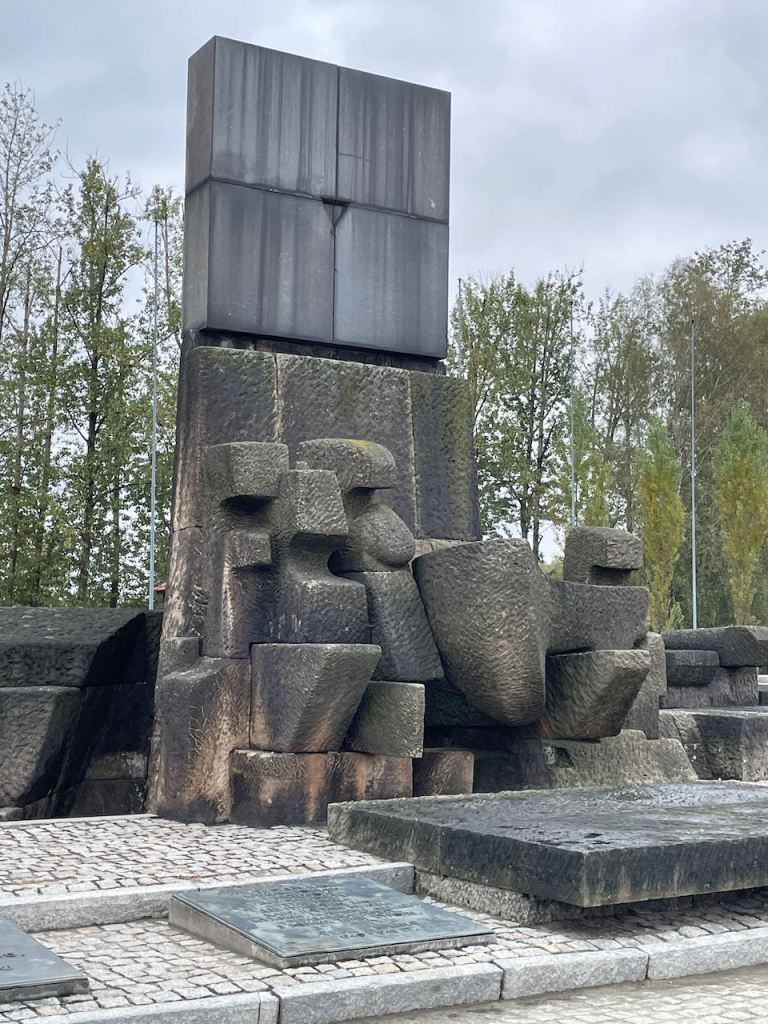
The tour offered some monuments and models, the latter of which demonstrated the efficiency with which people were herded from the trains to the gas chambers. The memorial on the right is the International Monument to the Victims of Fascism. The tour of the camp was not overbearing or dramatic in this regard, but more complementary; they mostly allow the place to speak for itself.
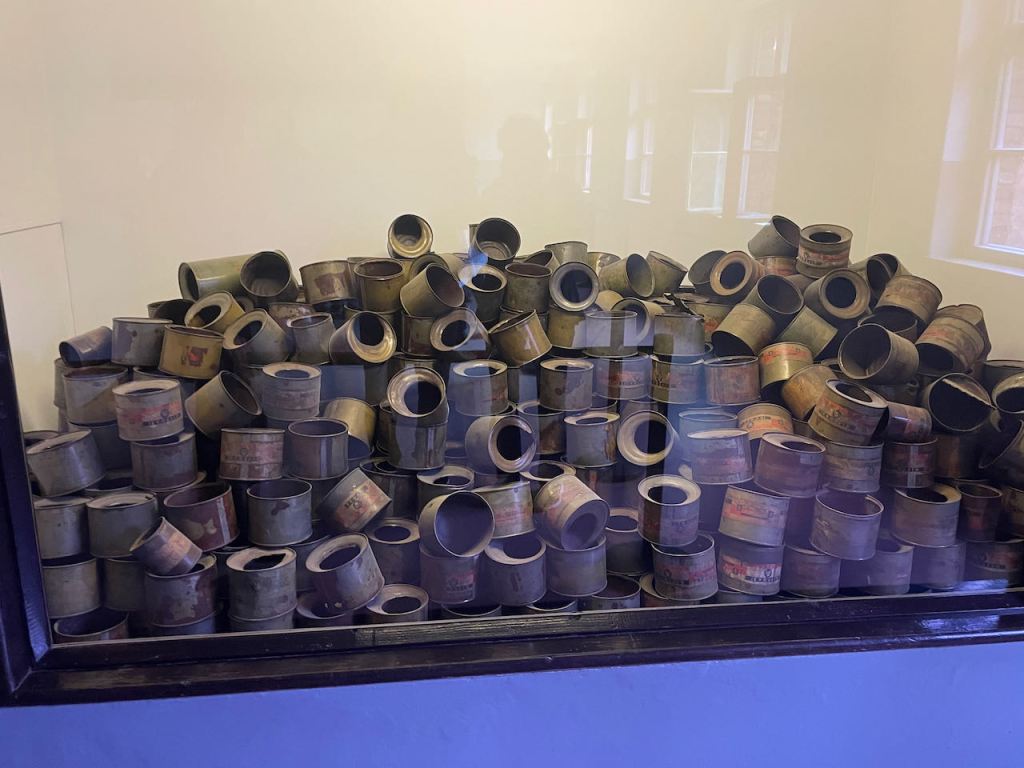

These are empty canisters of Zyklon B, a cyanide-based pesticide that was converted for use to more efficiently exterminate people. One of the comments our tour guide made more than once was that the Germans considered Jews and other undesirables to be nothing but insects. I had often wondered how anyone could treat people worse than they might treat even the lowliest animals, and I suppose thinking of them as insects is about as far down as you need to go to help justify your evil. To demonstrate how powerful yet ridiculous political propaganda can be, Dr. Josef Mengele, the notorious “Angel of Death,” an educated medical doctor, opened up Jewish people (without anesthetic), expecting to find their internal organs either different or in different places. After all, they were “sub-human.” It boggles the mind. Mengele actually escaped after the war and lived until 1979 in South America. I hope he had nightmares every night of his life.
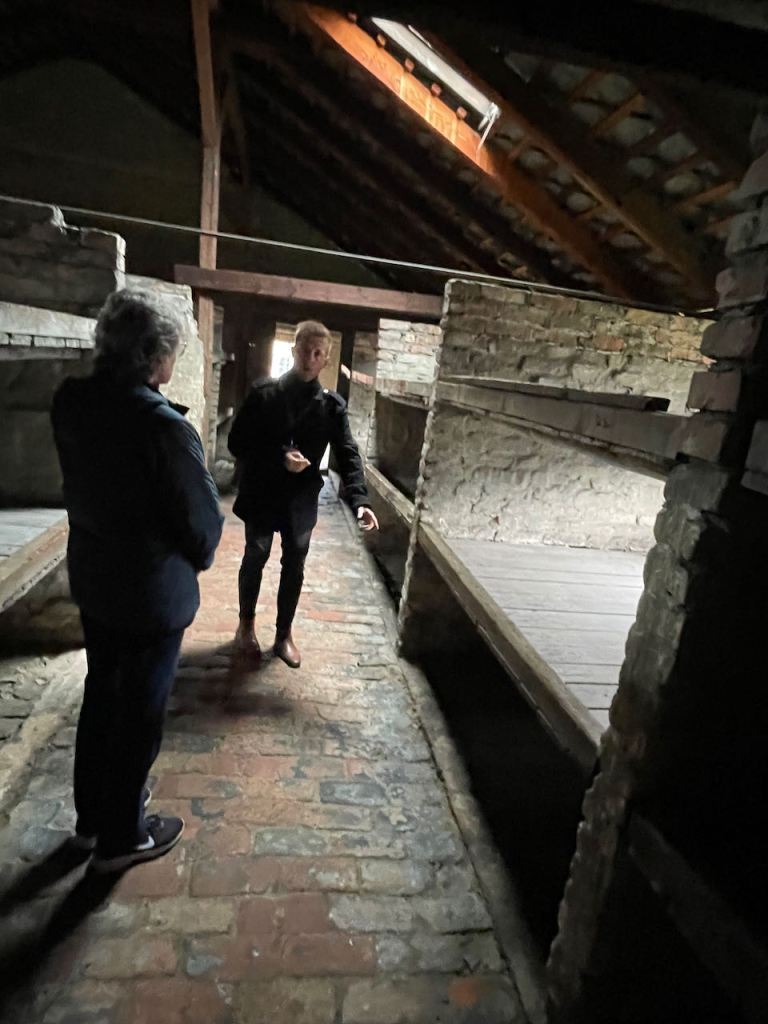

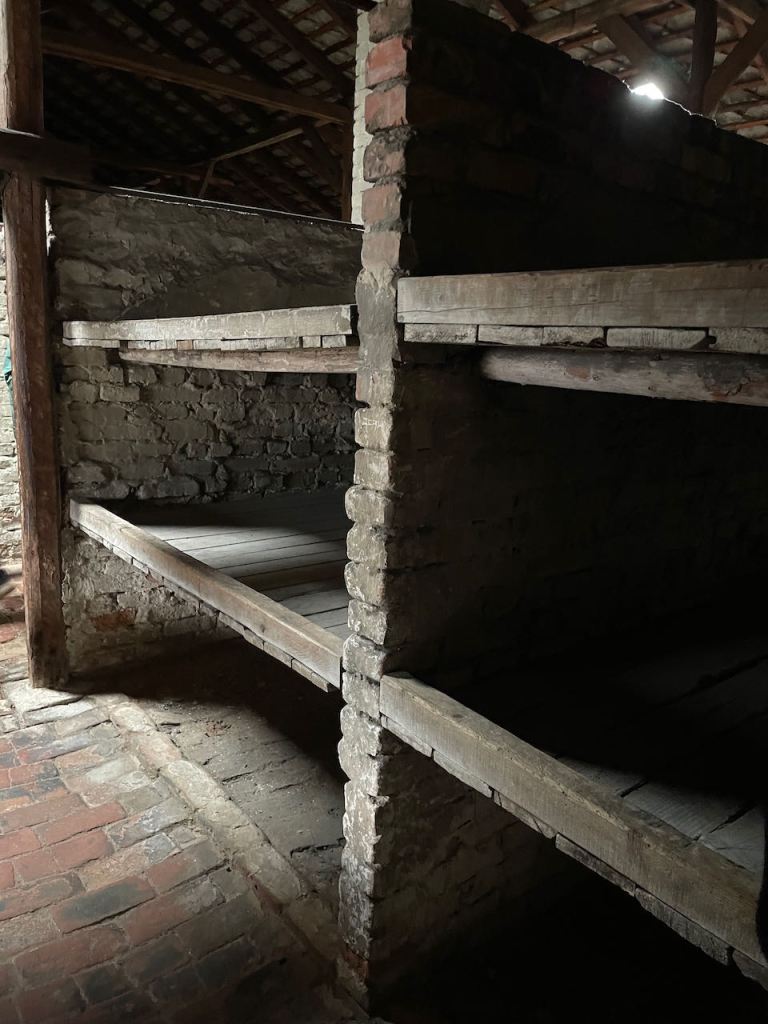
One of the most disconcerting things about being inside one of the barracks, where we could see the racks of bunk beds used by prisoners, was that the place still stank of urine. Nearly 80 years later, the smell has so permeated the wood that it may never go away. That was a little unnerving. The three-tiered bunks often held up to eighteen people, or six to a tier. FIrst thing in the morning, the dead would be carried out, and the remaining prisoners would be given a bowl of a bitter beverage similar to coffee for breakfast. For lunch, they might get a dish of thin soup made from rotten vegetables or meat, and then a crust of moldy bread and a little dab of margarine before going to bed. Make no mistake, you were brought to Auschwitz to die. You were either murdered immediately, or were put to work, where the average lifespan was 4 months.
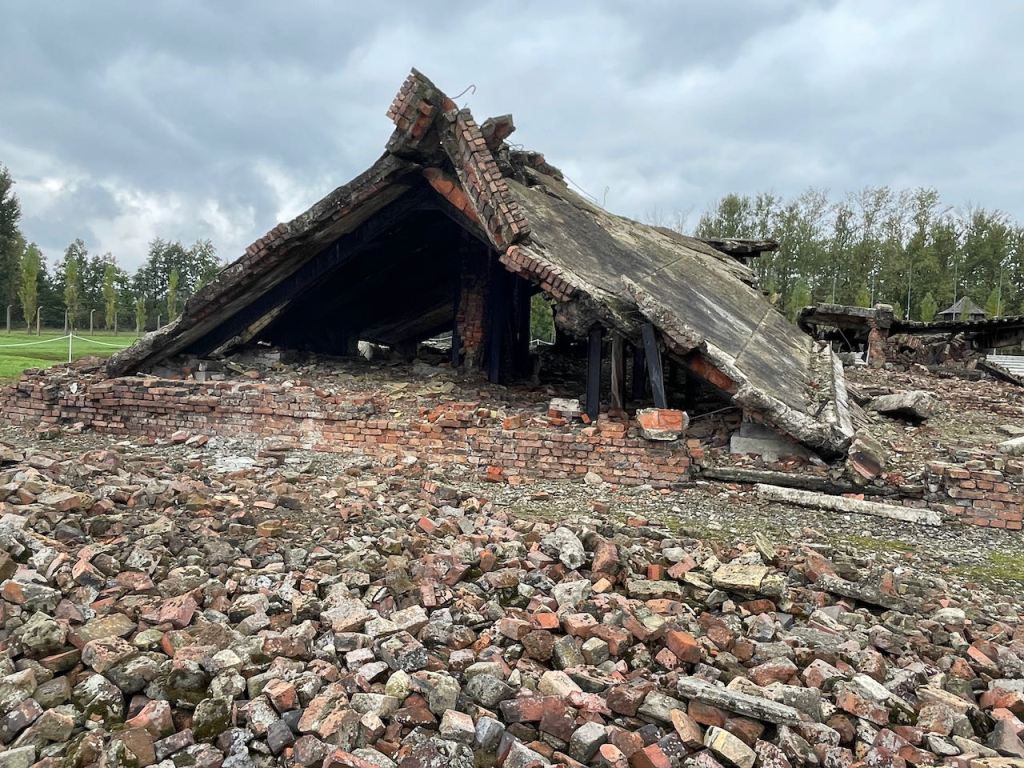
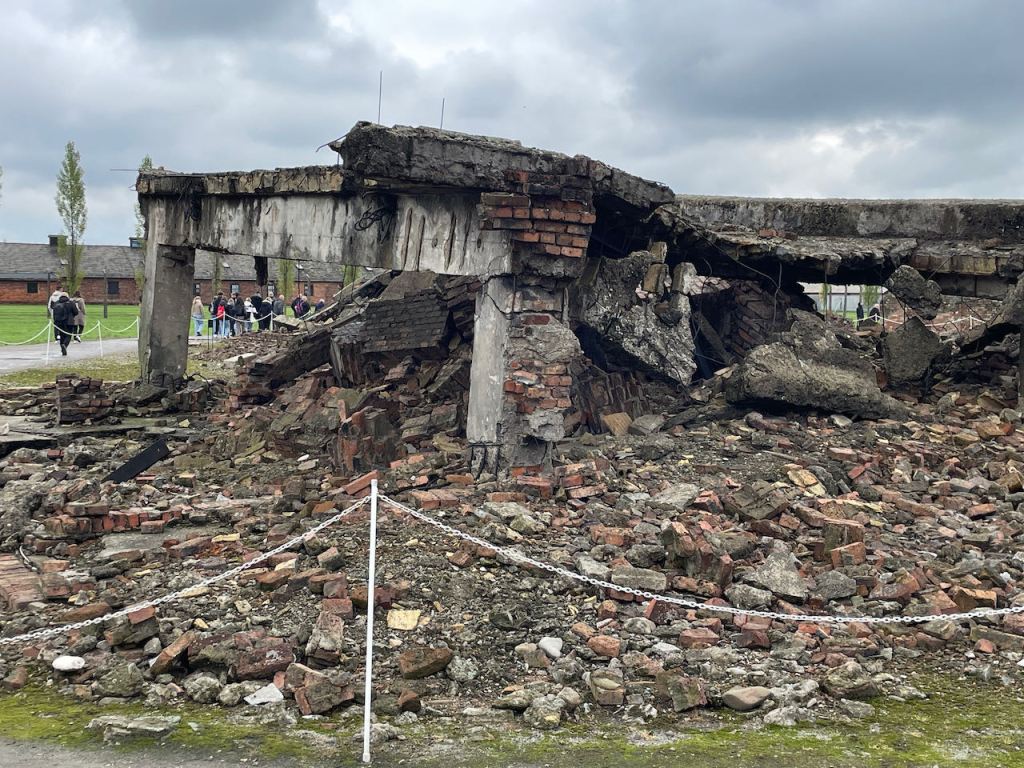

This is all that remains of the crematoriums in Birkenau. Remarkably, they’ve been able to preserve them just as they were after the Germans blew them up prior to the camp being liberated by the Russians.
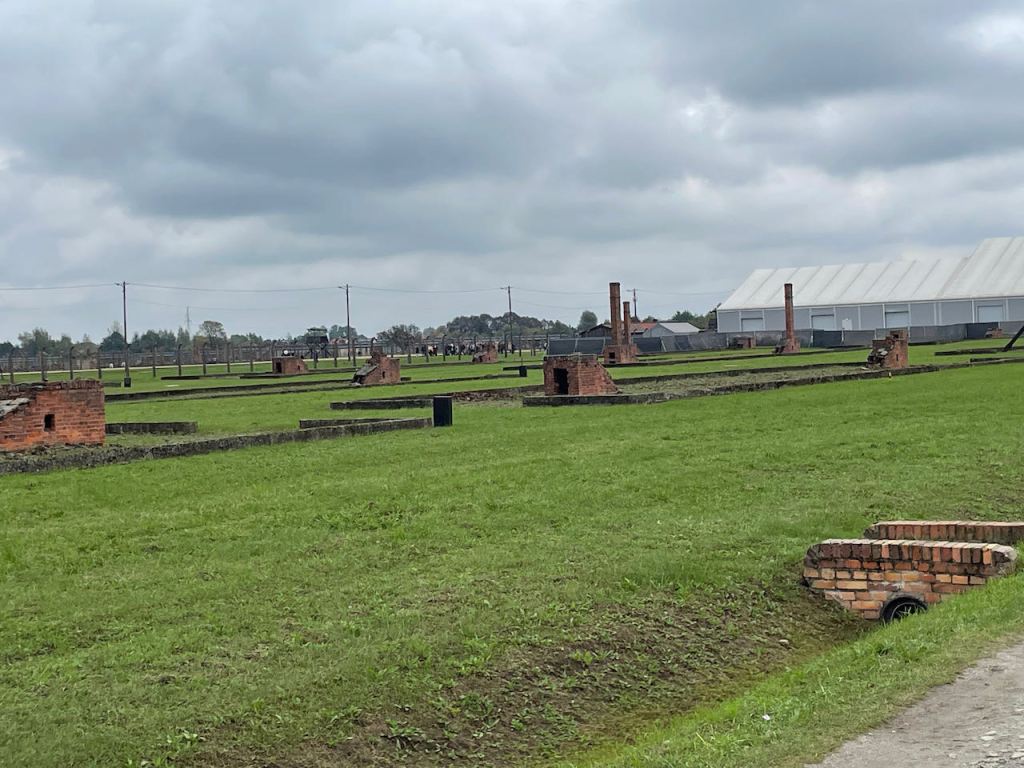
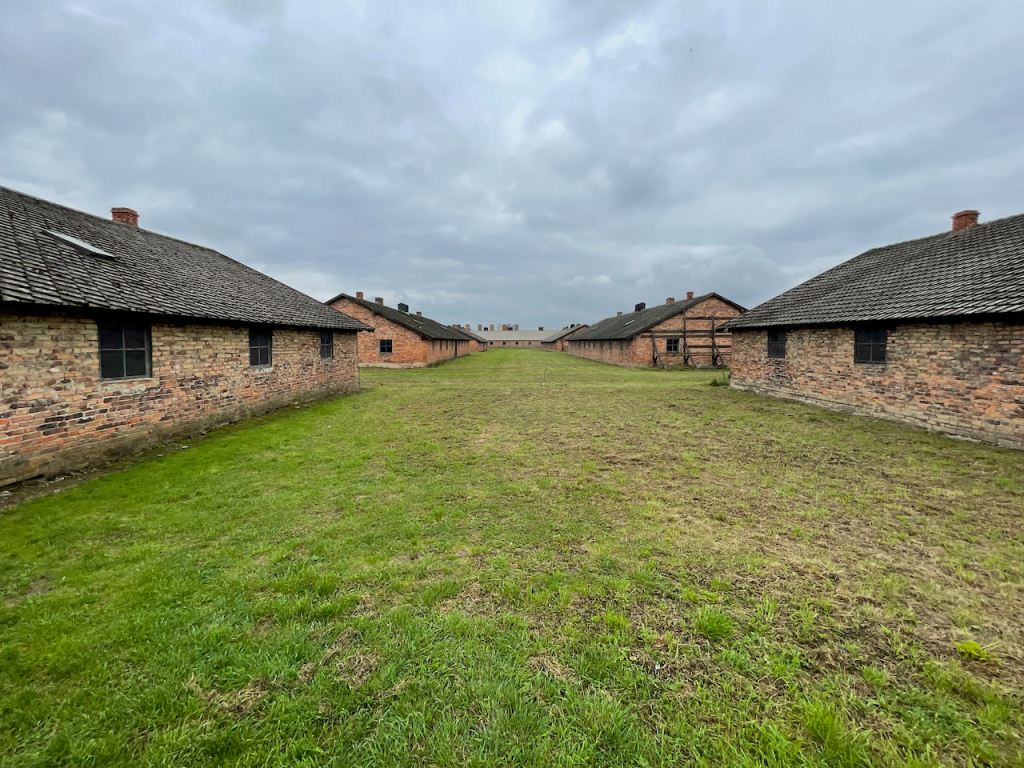
The Birkenau section of the camp is quite large. Areas that originally held scores of wooden barracks now only have single chimneys left standing. Essentially, you can peer at a death machine as far as the eye can see, which prompted one of my questions to our guide. I’m not much of a believer in ghosts or spirits, but those who are generally claim that spirits remain because they have unfinished business or experienced unspeakable torment or some such. So if there were ever a place likely to be haunted by tortured souls, you’d think Auschwitz would be filled to capacity with strange goings-on from the afterlife. He indicated he hadn’t heard of any reports like that, although some people can certainly be inclined to feel a little strange being in a place filled with the echoes of so much torment and death.

There is much, much more to Auschwitz and the other German concentration or death camps. My goal here wasn’t to provide a lot of detailed history, but to give you the highlights of a tour we experienced firsthand. I became so immersed in what I was experiencing at times that I didn’t always remember to take a picture, and I didn’t think it overly appropriate to take a selfie or the like. But I think we captured the gist of it.
I will add that on the short bus ride from Auschwitz I to Birkenau, a group of young ladies, roughly high school or college age, decided it would be an appropriate time to laugh and giggle together quite loudly, culminating in their singing some sort of lively, happy song. I so wanted to shout at them, “STOP! Just STOP! This is a place of unimaginable horror and agony! Some people on this bus are grieving! Show some respect!” But I held my tongue, thinking that the world will surely mature them beyond their current youthful ignorance and exuberance soon enough. Still, the incongruity was a bit jarring.
In some ways, I will never understand the human brain and the ease with which so many of them accept hatred as a concept to embrace. While the Nazis brought in plenty of criminals, sadists, and sociopaths to run things inside the barracks (not wanting to go into those disease-ridden cesspools themselves), the rank and file German either turned a blind eye or supported the prejudice against the Jews and others. As long as it wasn’t them. This is the reason we should never forget what fascism, hatred, or often simply the lust for power, can lead to.
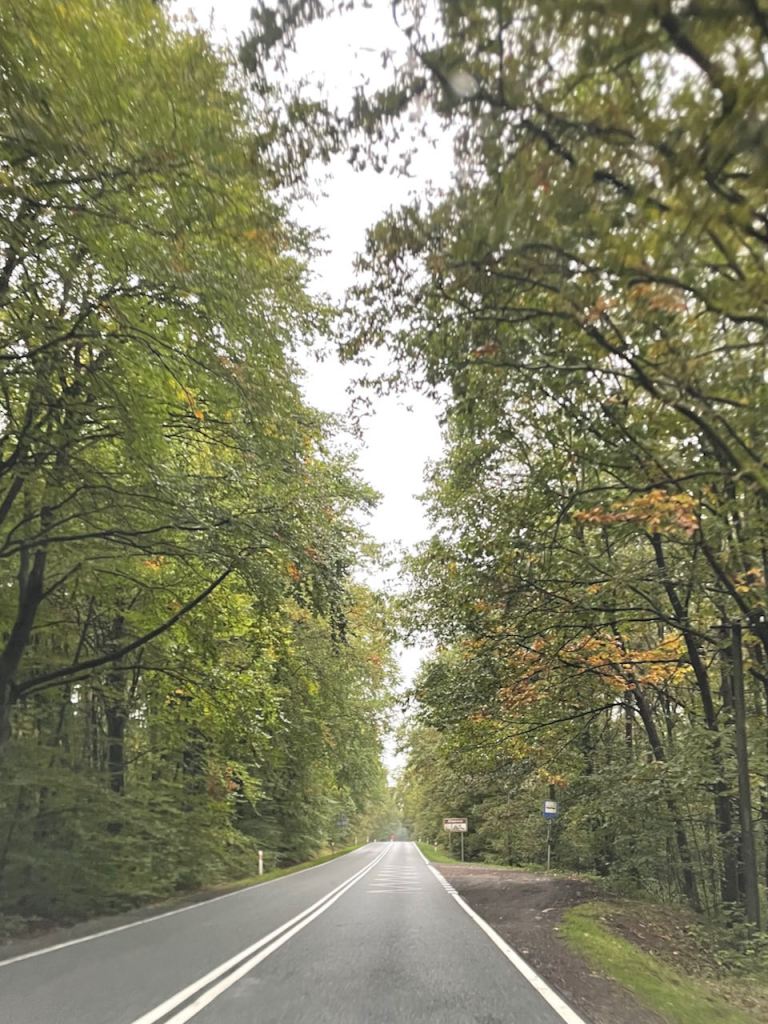
The drive back to Krakow was pretty, but we were somber. The tree-lined avenue offered its silent comfort to us, perhaps telling us that despite the horrors we had just seen, there is also a lot of beauty in the world. The only thing is… it absolutely can happen again. We must remember the past. Only with vigilance and a rejection of hateful rhetoric can we even hope that we’ll never see anything like this again. We can hope. But as I write this, Donald Trump has just been elected to a second term. Based on his autocratic tendencies alone, if this were, say, a decade or two after WWII, he wouldn’t have had a snowball’s chance in hell because the memory of what a dictatorial personality is capable of doing would still be fresh on people’s minds. But apparently memories are short. And so ultimately, we can only hope the worst doesn’t happen. Again.
(Scroll down to see previous entries.)











 baldsasquatchdotcom