

We were very excited to shop for Polish polish, figuring that if nothing else, the repetition of the word would confirm that you are indeed holding polish. Carolyn, being an Interior Designer, talked about Polish polish in almost mystical terms, kind of like Cuban cigars or yogurt-pooping unicorns. We never did find any, probably because “polish” in Polish is “pastować.” I saw a bottle of that and thought it was something you smash spaghetti with.
We made the four hour drive (well, it was supposed to be four hours anyway; bladders and castles wreak havoc on driving times) from Trenčín to Kraków, checking off two countries we had never been to, bringing our total to 21 European countries so far, give or take.
The above was among our first views of Poland’s landscape. We discovered that the countryside was largely the same as Slovakia’s. It’s almost as if nature doesn’t really care about human borders. Psscht. Stupid nature. Doesn’t she know that humans are the only things that matter?
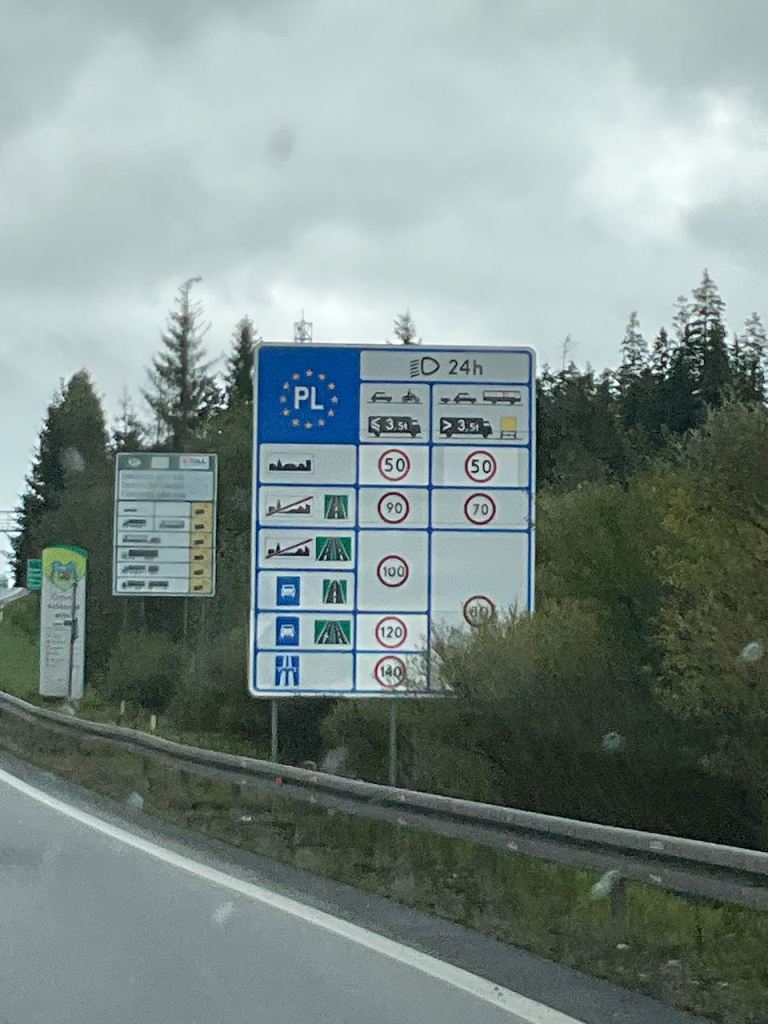
To show nature who’s boss, humans put up a big sign letting us know we were in, um, Ploland? The license plates in Portugal, which is the only other country in the EU that even starts with a “P,” simply have a “P” on them because Portugal joined the EU in 1986, whereas Poland didn’t make it in until 2004, so Portugal got first dibs. But why not use “PO?” Maybe it’s because in Polish, “po” means “after,” while in Portuguese, it means “dust,” while in American English, it means a penniless hooker. Oh wait, that’s actually “po-ho,” so we’ll settle for it being how they say “pour” in the south. Or poor. Or pore. My God I’m glad I’m not still learning English.
Whatever the reason for the “PL,” those in the know and who want to save time just say “Pluh” when referring to Poland. Now you can be an insider too! In fact, you can try it out on the next Polish person you meet. Just say, “I’m thinking of flying to Kraków, Pluh.” Your Polish friend will be so impressed!
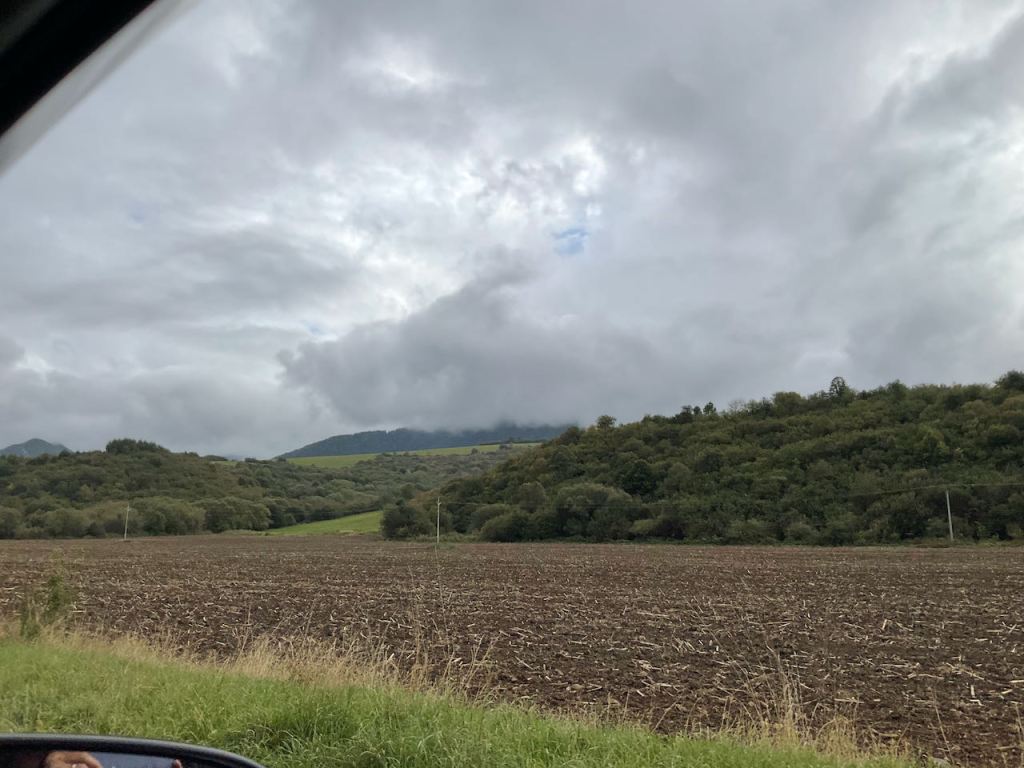
When I think of Poland, I think of potatoes, polish vodka, and long skinny sticks. However nowadays, Poland is only the eighth-largest producer of potatoes in the world. While I don’t know the above is a potato field, I’m sticking to my story that it is, especially since I don’t see any long skinny sticks.
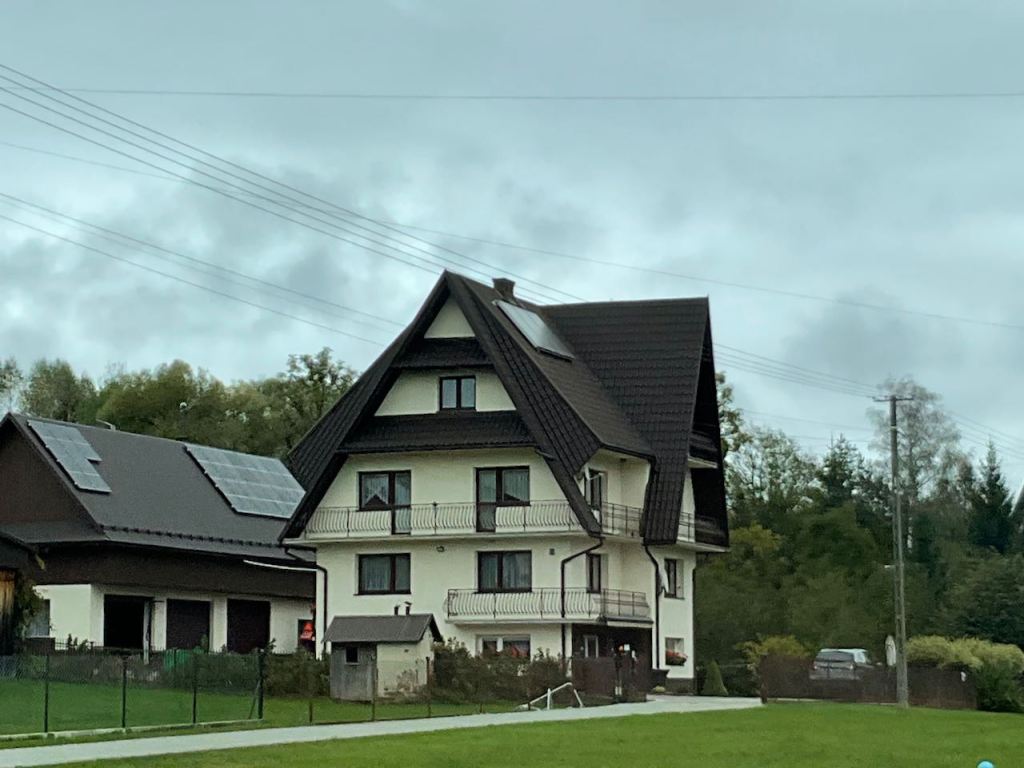

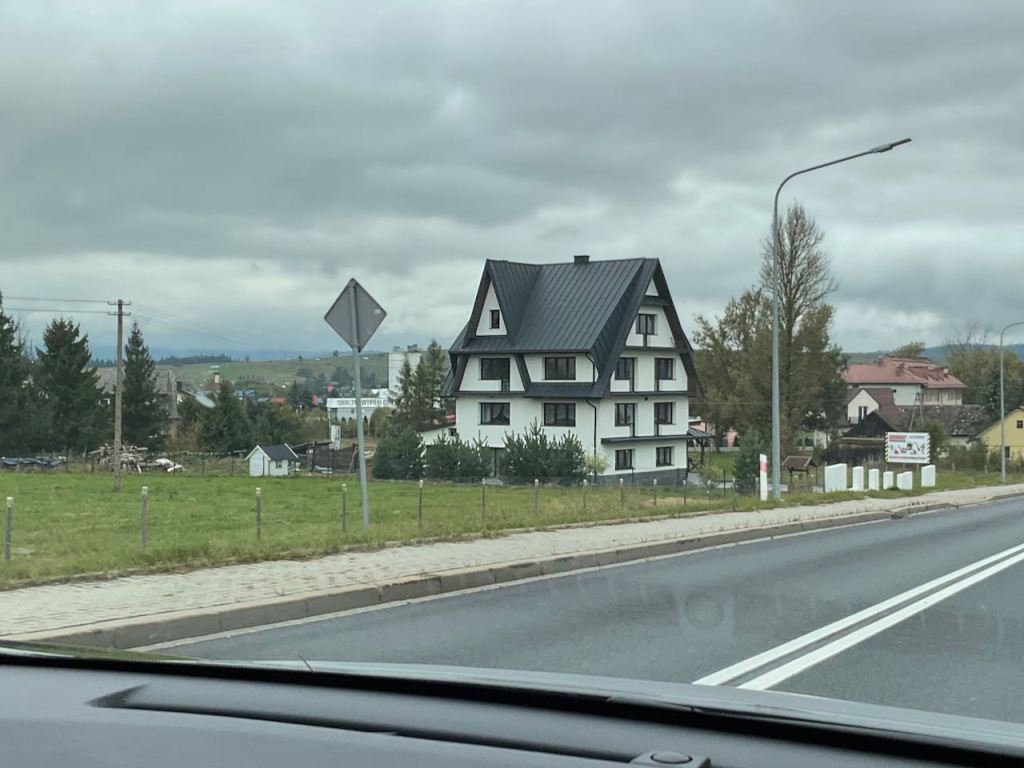
As we drove toward Kraków, we noticed a distinct difference in the housing from what we saw in Slovakia. Many, if not most, of the houses we saw were at least two or three stories tall, which each level being nearly identical to the one below. It seemed a little contrary to what we know of Poland, since it suffered through a Communist regime after World War II until 1989, and it usually takes a while for prosperity for the middle classes to catch up after being subjected to what really was just a dictatorship, controlled by Moscow.

So we asked a Polish guide why they had so many multi-story houses and he told us it was because during the Communist regime, people had to save money so those houses were designed to be multigenerational. So you just lived with your parents and maybe grandma and grandpa, like those lazy old people from Charlie and the Chocolate Factory who wouldn’t even get of bed until they learned that Charlie was going to get a tour of Willy Wonka’s factory. Oh then grandpa’s able to jump out of bed and dance a jig. Lazy old bastards; their muscle tone must’ve been just one step away from jellyfish, so I think grandpa might’ve snorted a bit of meth before doing that jig. Do you ingest meth by snorting it? I have no idea and I hope you don’t either.
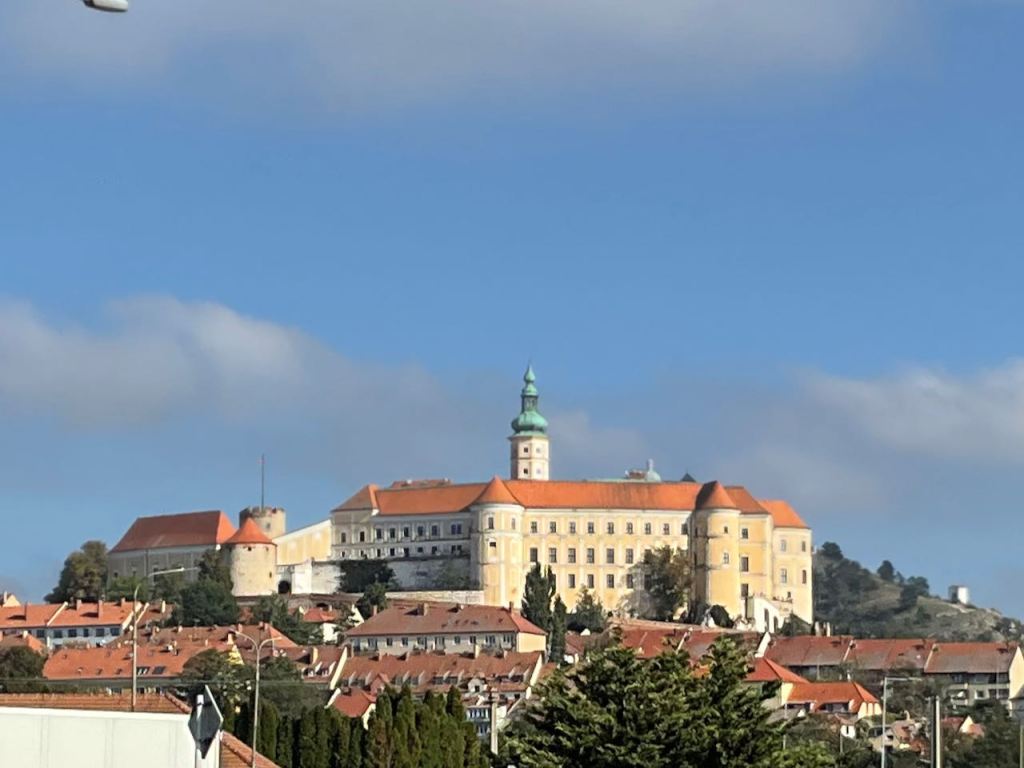
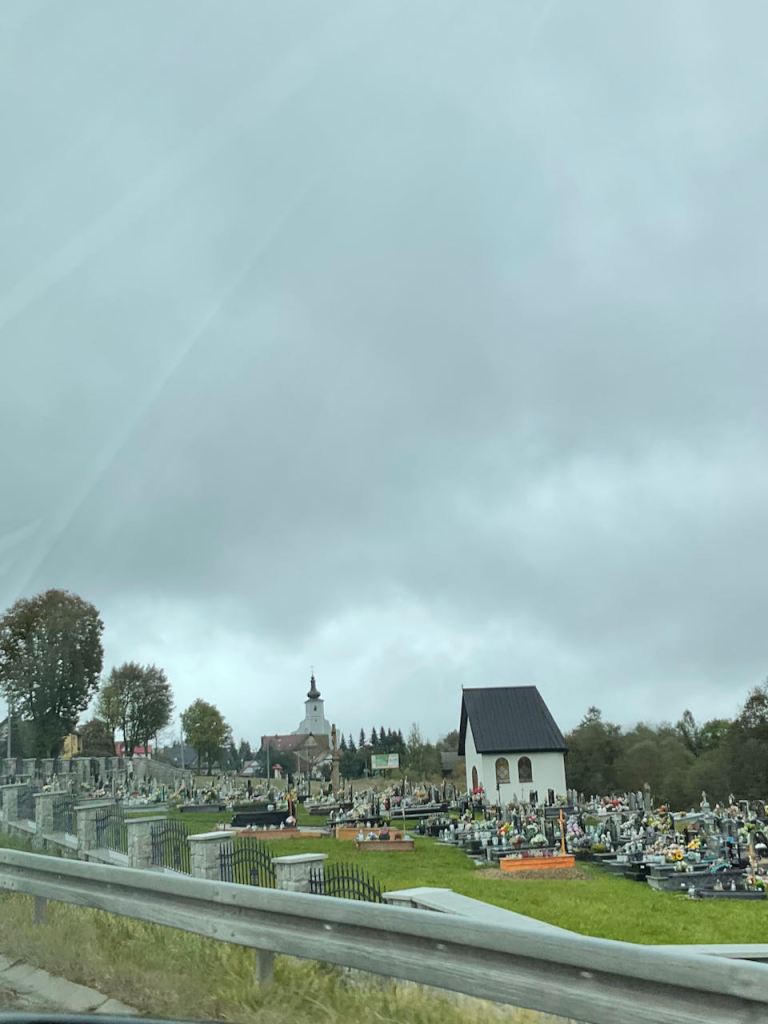
A couple of the residences we saw were capable of housing families the size of small towns while others offered permanent sleeping arrangements.
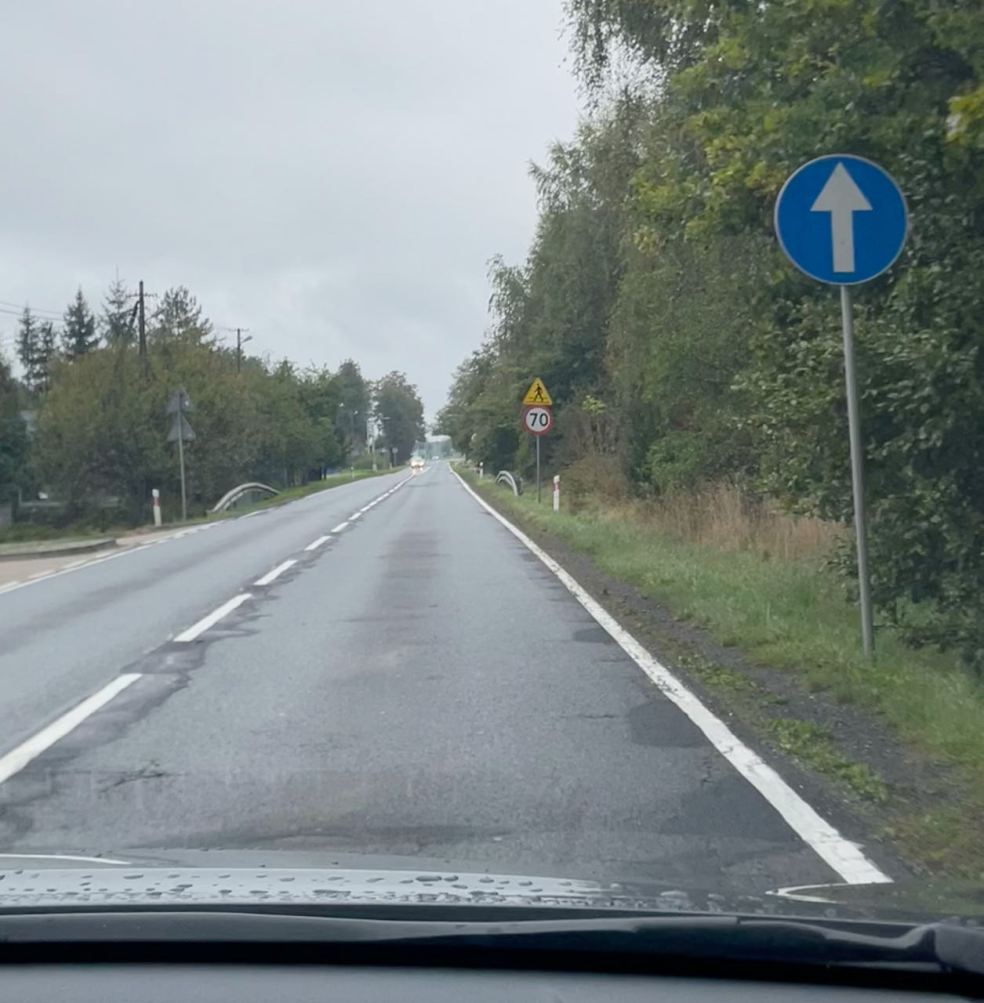
The purpose of this boring photo of the road is to remind me to tell the story of what it’s like to drive in Poland. At least on the two-lane roads (we were told there aren’t that many four-lane highways in Poland, although we found at least one), you discover that 70 km/hr is pretty much the standard cruising speed, but you have to lower it to 50 km/hr and sometimes 30 km/hr when entering a town. Often the towns are close enough together that within a minute you go from 70 to 50 to 30, and then just as quickly back to 50 and then 70 because many of the towns are quite small. This happens over and over and over again. It’s like driving in a mini version of Groundhog Day.
I try my best to drive the speed limit in foreign countries; but my best isn’t always good enough because they have radar cameras everywhere so I’ve gotten speeding tickets in about four different countries. The two hardest things about driving within those speed limits is that some cars have a little chime they spew –trust me, it’s spew– when you go even ONE kilometer over the speed limit. I’m trying to keep it at 70, but of course sometimes it slips up to 71, BING! Dammit. I go back down to 68, look at some sight and apparently press ever so slightly on the gas, BING! Our drives consisted of a lot of bings. And you can’t really use cruise control because you’re speeding up and slowing down so often.
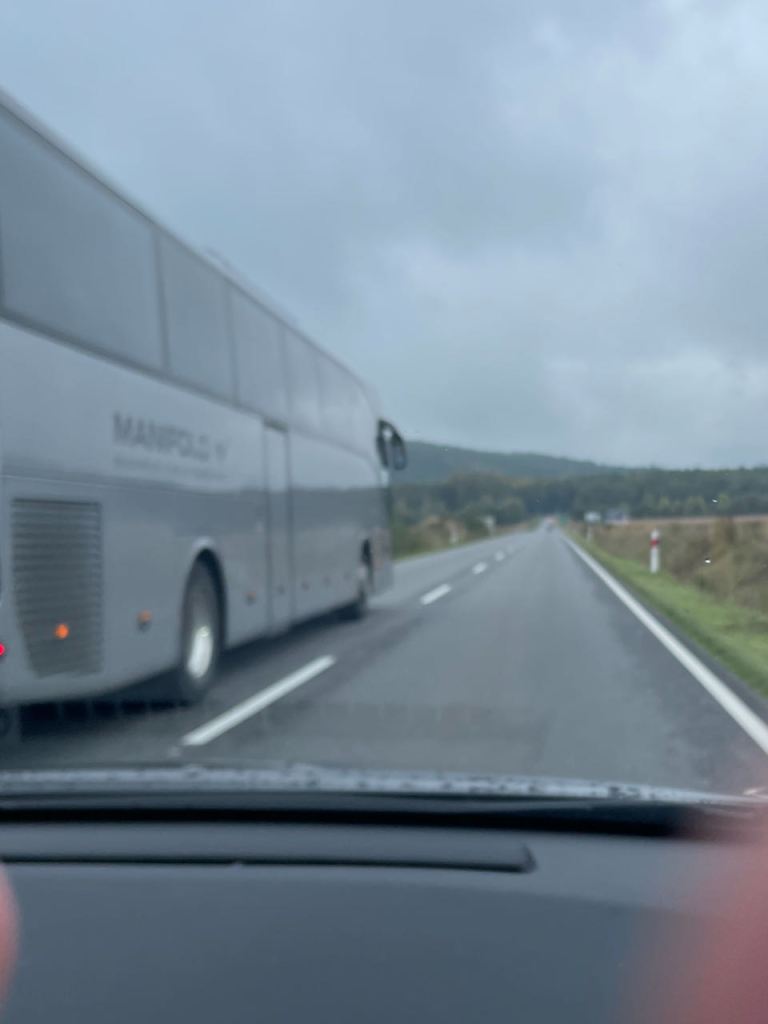
On top of all that, if you do adhere to the posted speed limit you end up with a long line of impatient drivers behind you who apparently don’t mind that there are cameras and who passed us whenever they got the chance.
We took a picture of this bus passing us because… a bus passed us. We were doing the speed limit. There was one time I was probably doing something like 10km or so over the speed limit for about ten seconds, we got a nice big flash in our face telling me that we’re gonna have yet another country’s ticket coming. You know, in Iceland we never saw one speeder. If the sign said 100, then by golly that’s what everyone did. Not so in Poland, despite the fact that they have plentiful cameras and they’re not afraid to flash drivers. Out of curiosity I looked up speeding ticket averages in Iceland and Poland. Perhaps predictably, Iceland’s ranges from USD $195- $460 or more, while Poland’s ranges from $25 to $100. I think I’ll be finding out how true that is soon enough.
So it’s either piss off the locals, or risk getting a speeding ticket. BING!

After all that stressful driving we needed to find someplace where we could get drinks to pour into our alkoholes.

One of the ideas I’ve embraced after traveling all around Europe is that if we’re going to use a hotel, which is almost always a good idea if you’re going to stay right in the middle of downtown, is that I favor American-branded hotels over any other. It’s not that European hotels are bad, it’s just that Americans, well, they’re pretty damn good at providing comfort, and their usual cheery helpfulness can be very appreciated when you’re needing help, and most American-branded services in Europe have at least a little touch of American customer service in them. That said, throughout my entire life I have avoided Holiday Inn. In my mind, they’re just a small step from Motel 6, and are often shabby or rundown. So look at the above picture and gaze in wonder on what is easily the most beautiful and amazing Holiday Inn I’ve ever seen. On top of that, it was right on the border of old town Kraków, which is exactly where we wanted to be. We had a lovely stay and I’d highly recommend it if you’re staying in Kraków. It’s affordable too, just over 100 euros per night for a standard room.
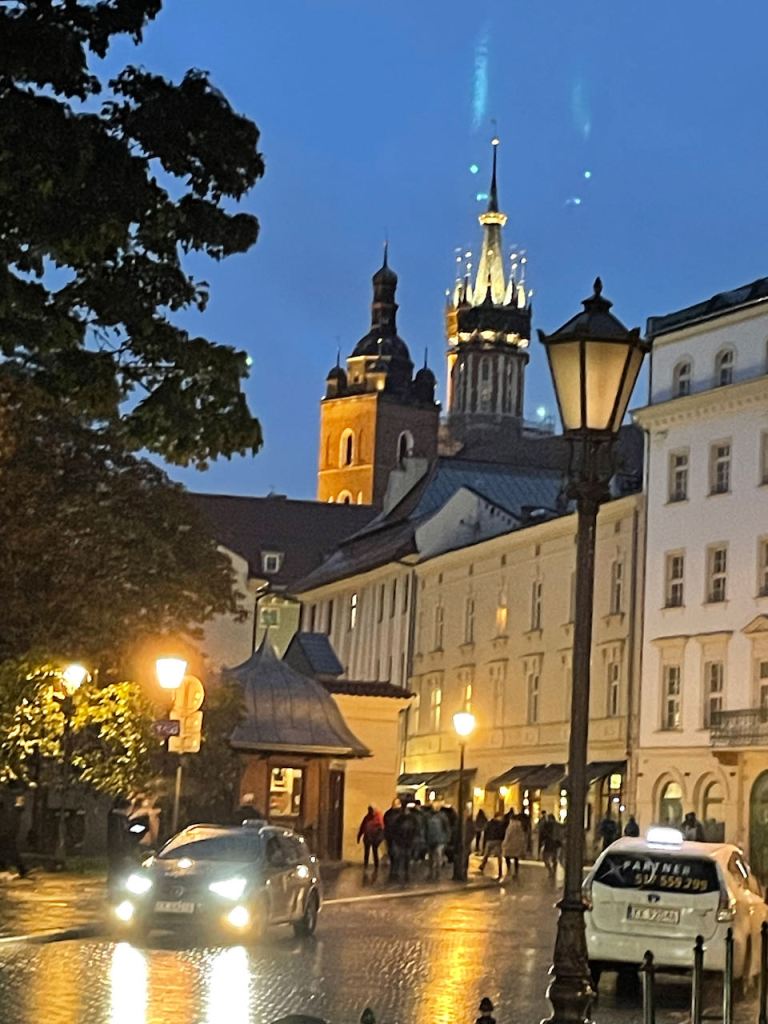


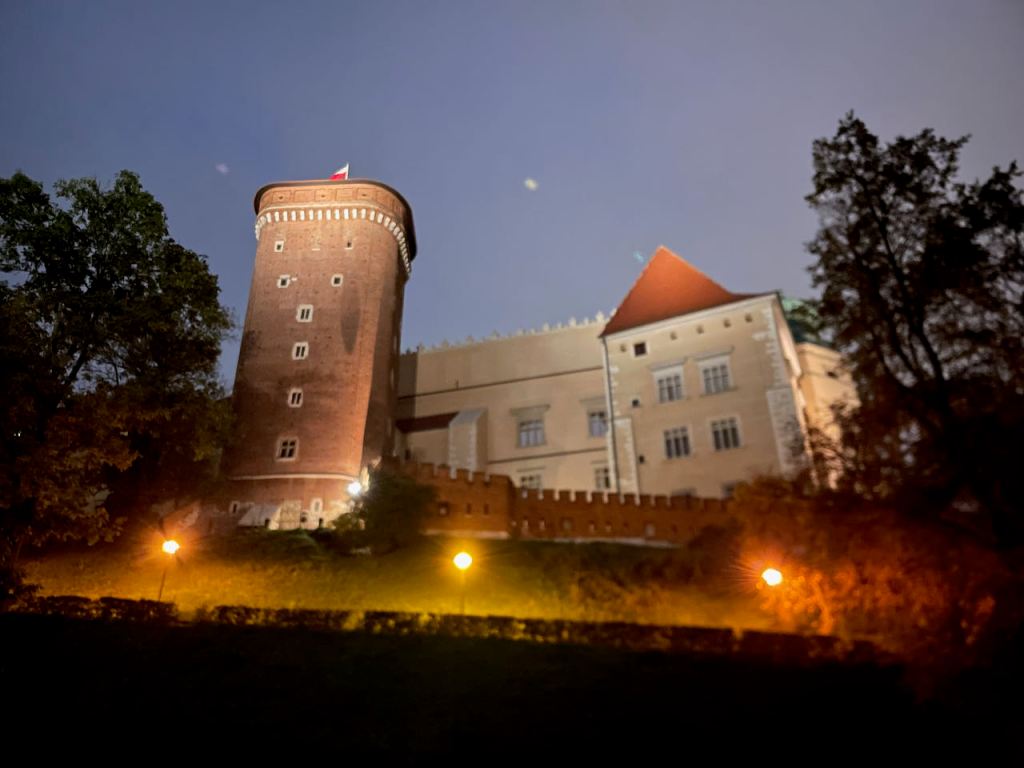
Without a lot of time to spare, we felt fortunate that the best sights of Kraków are experienced in old town, called “Stare Miasto” in Polish. Most city guides you see about Kraków pretty much focus on this area of the city, and our favorite Holiday Inn ever was only a short walk away.
The area didn’t disappoint. It was alive with tourists and beautiful old buildings, and even though it was well-touristed, the area felt safe and we weren’t bothered by any blatant touristy hassles.
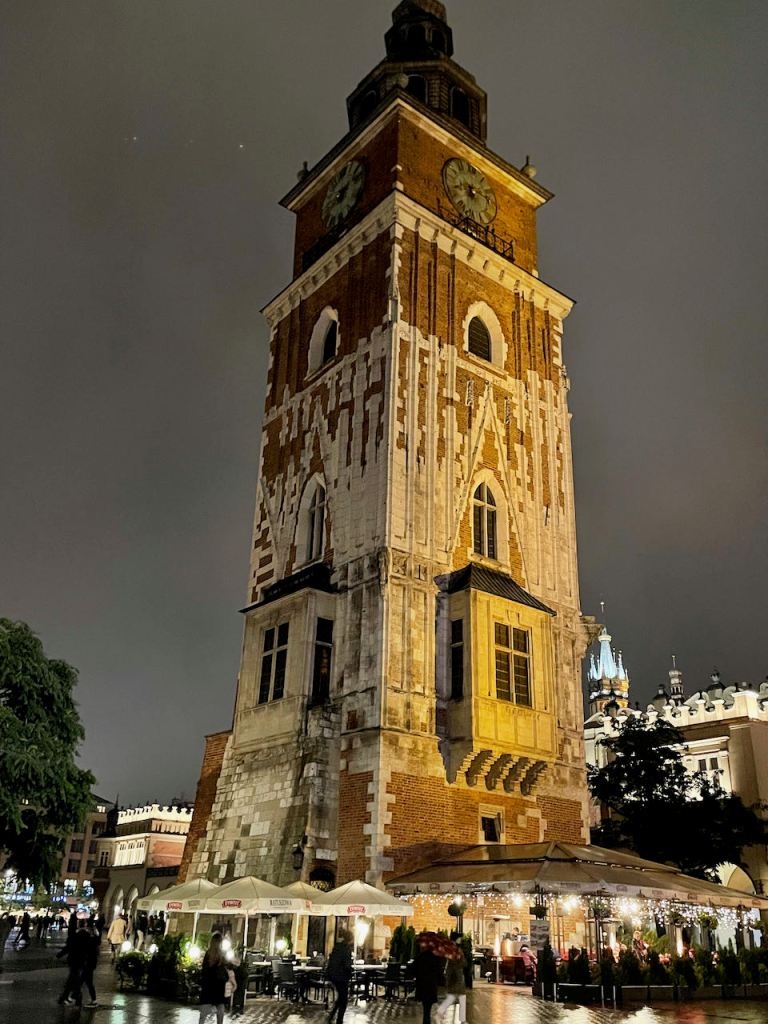


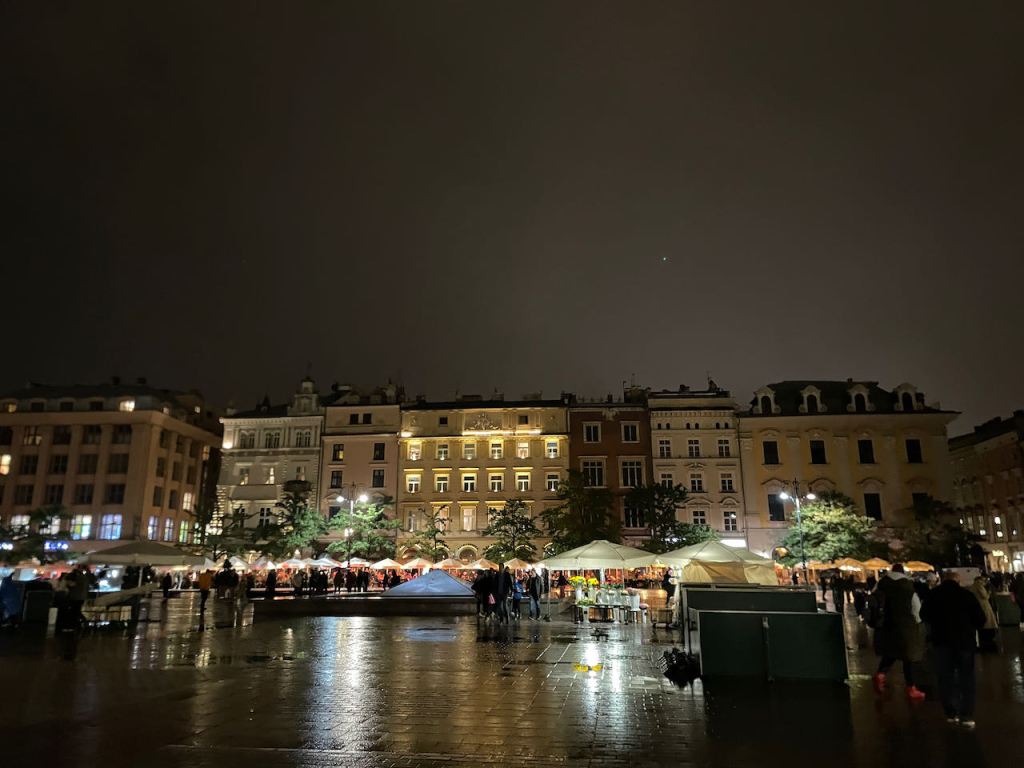
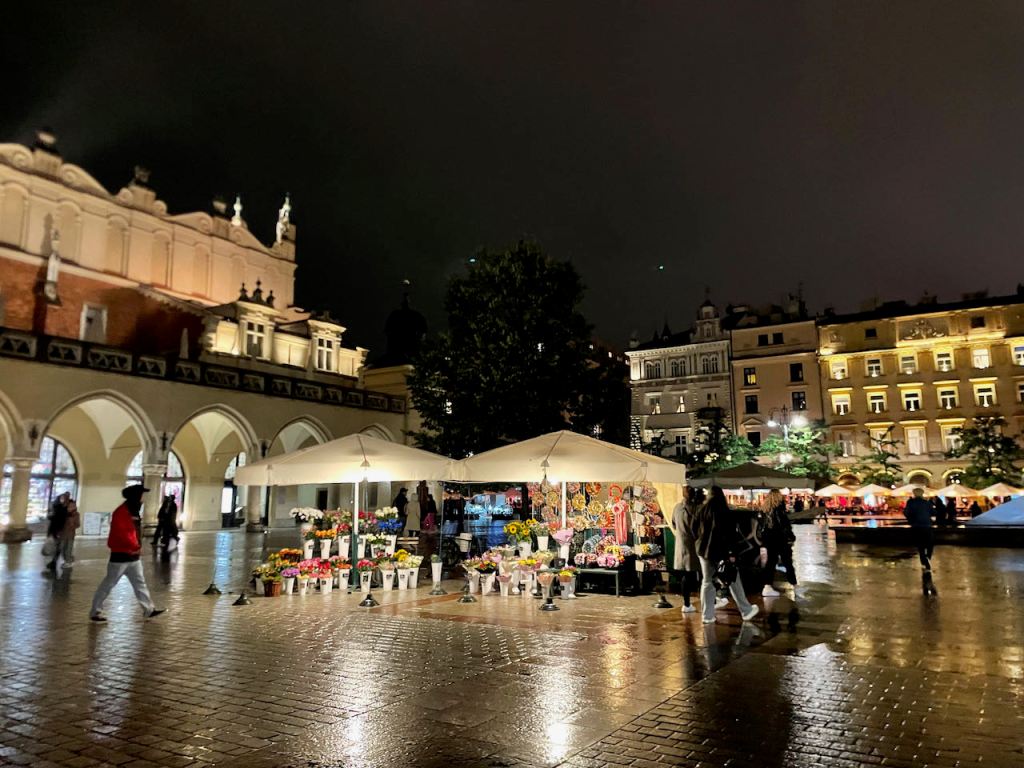


I could go do some research and detail the names and purpose of each building (actually, many of them were churches and castles so we hardly needed much help there), but the truth is we didn’t much care about the details while we were seeing them, so I’m imagining most readers wouldn’t either. We just enjoyed their grandeur and beauty. I did find it interesting that the largest and most imposing building is the Cloth Hall (Sukiennice), rebuilt in 1555, in the photo below. Basically it’s the world’s oldest shopping mall. We figured it had to be some sort of palace or government building, but no, it was, and is still, a shopping mall.

Kraków wasn’t bombed during WWII, which is part of the reason these buildings are still standing. They had the Kraków Ghetto, established to exploit, persecute, and terrorize local Polish Jews, because of course it was so obvious that the Polish Jews are the reason Germany lost WWI. Kraków has some WWII memorials and museums, such as the Jewish Ghetto, the Schindler’s Factory Museum, the former Plaszow Labour and Concentration Camp, and the original Gestapo Prison, but we were only going to have time to visit the biggest monstrosity of them all: Auschwitz.


If you were to tell anyone who asks how to find the most frequented tourist spots in a European city, just tell them to look for the horse-drawn carriages. Many if not most large European cities seem to have them out there in tourist areas. It looks romantic, I suppose, but after riding in one or two over the years we’re happy to settle for photos and fewer horse farts.
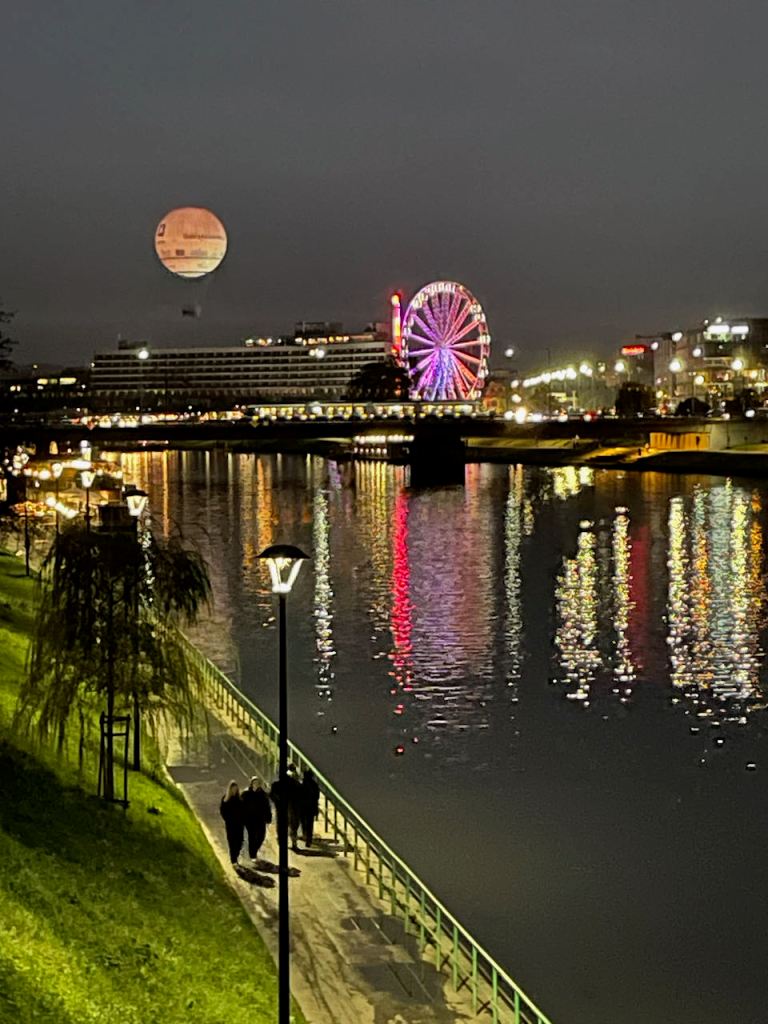
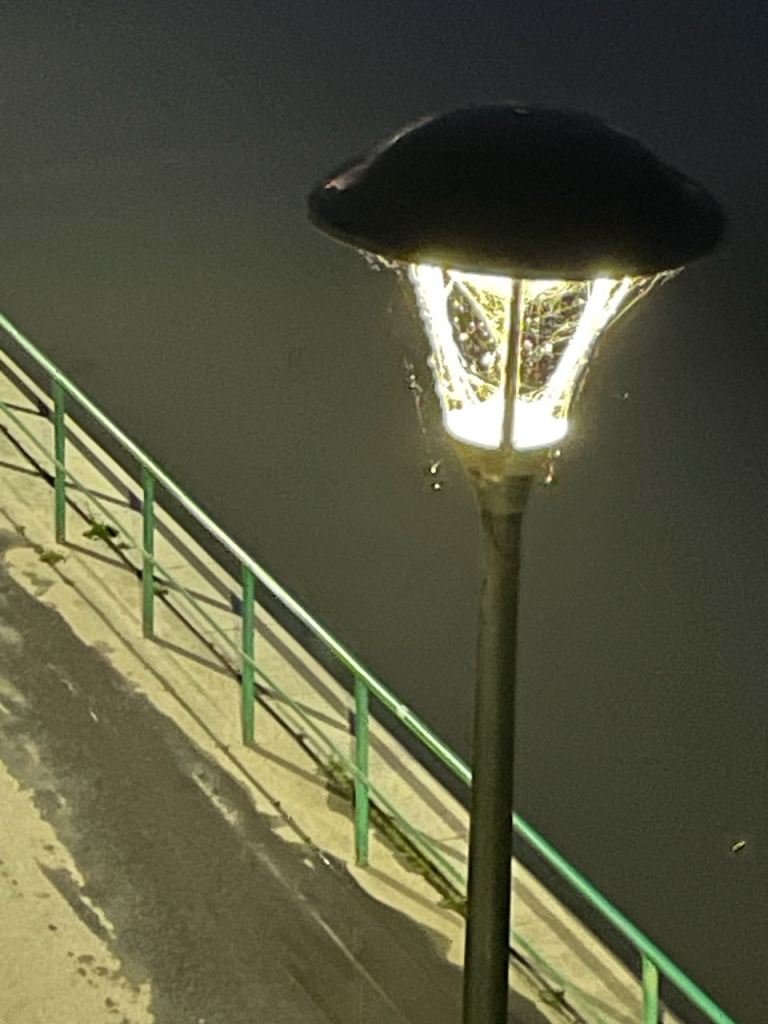
As we wandered around the area we spotted this amusement park across the water. That’s not the moon to its left, it’s a hot air balloon. We took a closer look at one of the lamps and saw that it was a feeding ground for what had to be some very fat and happy spiders. Letting them stay that way seems like a very eco-friendly way to keep the bug population down. It must work, we weren’t bugged by anything.
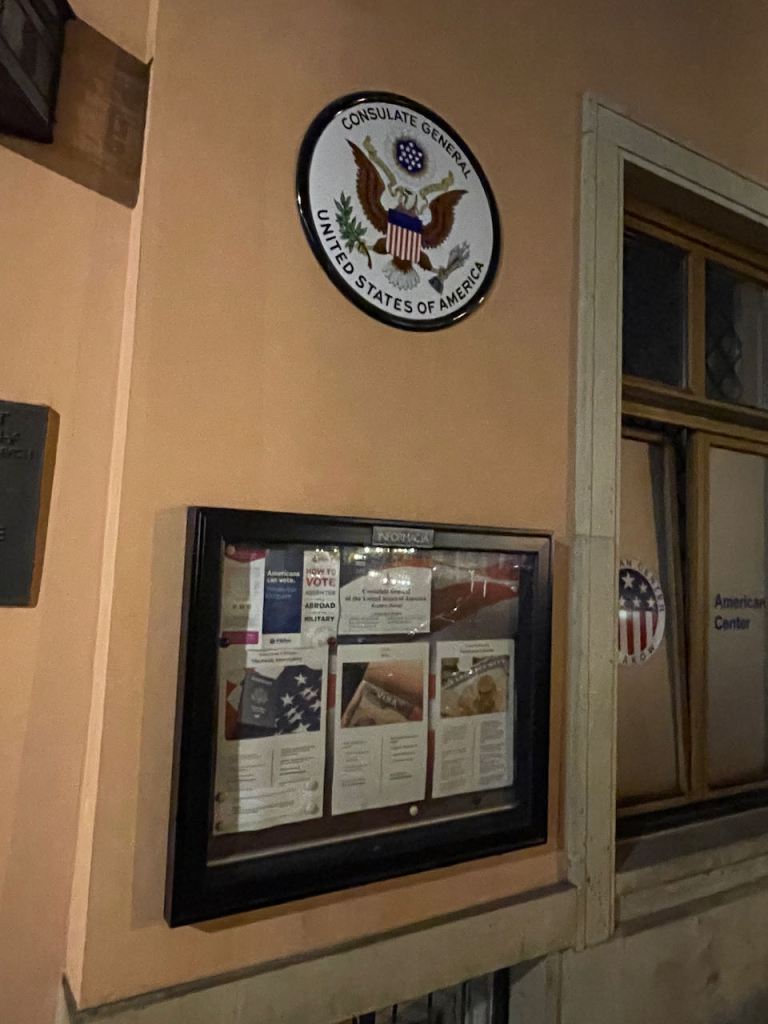
Somewhere along the way we spotted the American Consulate. I tucked its location away in my brain in case I succumbed to a desire to shoplift or beat up a local again. Of course, seeing as how my brain can only retain about the last ten minutes of information, I promptly forgot where it was and so decided I had better behave.
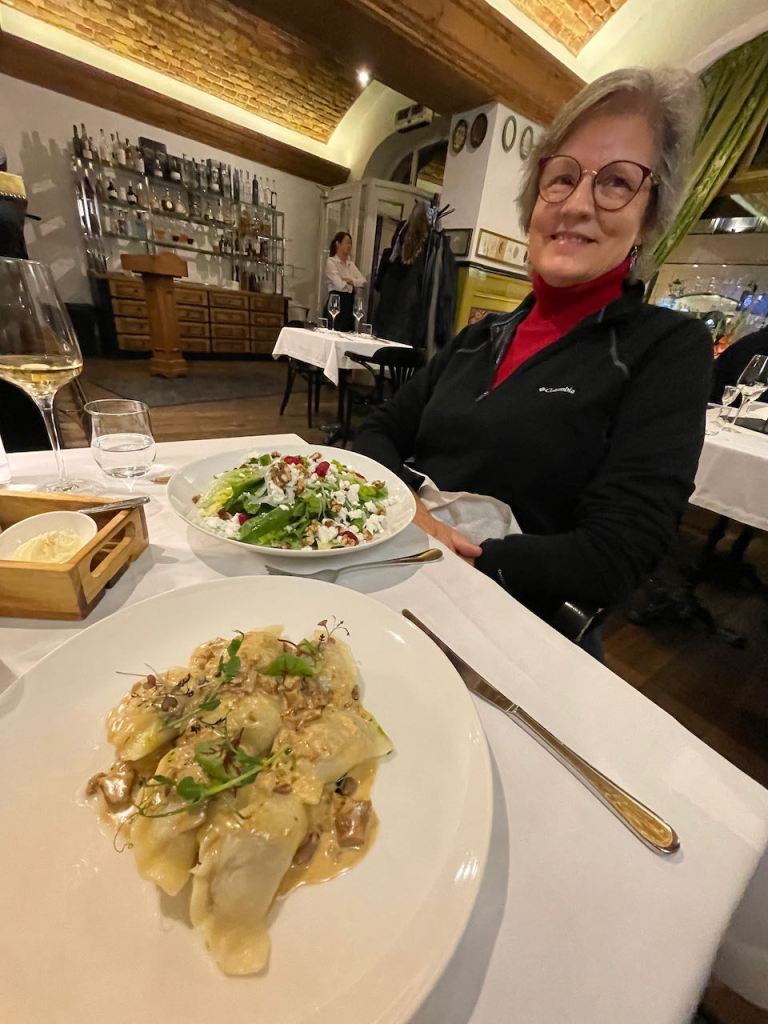
We found a nearby restaurant that featured good old fashioned Polish food (we’re not foodies, but I always try and seek out the local dishes just to slightly immerse into that country’s culture). I promised our friends who couldn’t make the trip with us that I’d try and report on pierogi: Polish dumplings, a common food in Poland. It’s a dish invented almost 800 years ago that stuck around because potatoes are a cheap staple. The dumplings themselves don’t have much flavor, so it’s all about what’s inside. They didn’t have any with hot fudge sundaes in them, so I had to settle for whatever this was, I don’t remember. But it was tasty.
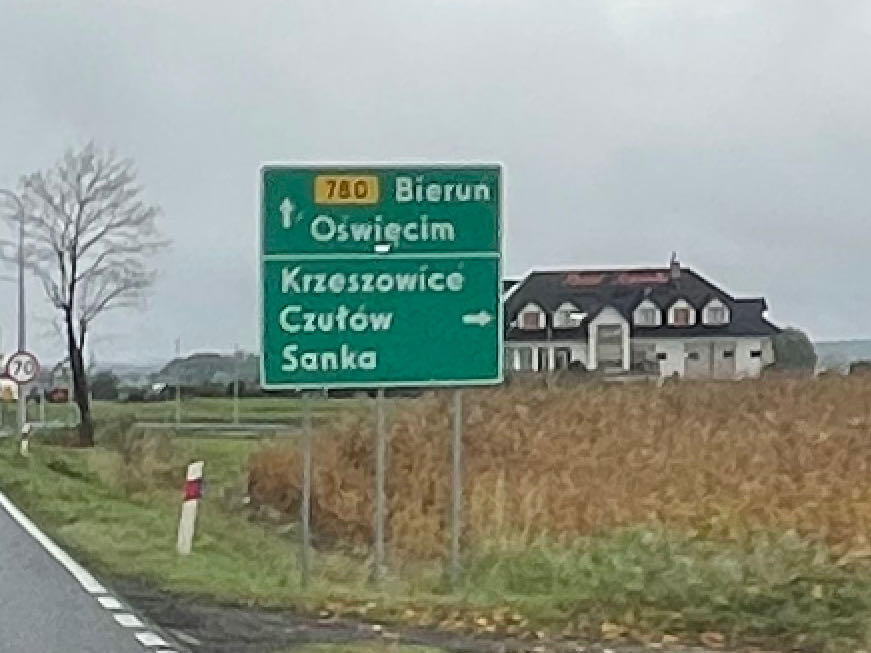
The next day we drove past this ominous sign. That’ll be the next blog entry.
(Scroll down to see previous entries.)











 baldsasquatchdotcom