
My good friends Per and Pia invited me to Copenhagen to experience a genuine Danish New Years, which is different than any other country’s New Year’s because they’re not Denmark. It was my fourth visit To Den Efficiency Mark, and while I’ve been thoroughly impressed each time with the efficiency of the Danish systems as well as the happiness of their citizens and the markedness of their dens, they managed to impress me all over again.
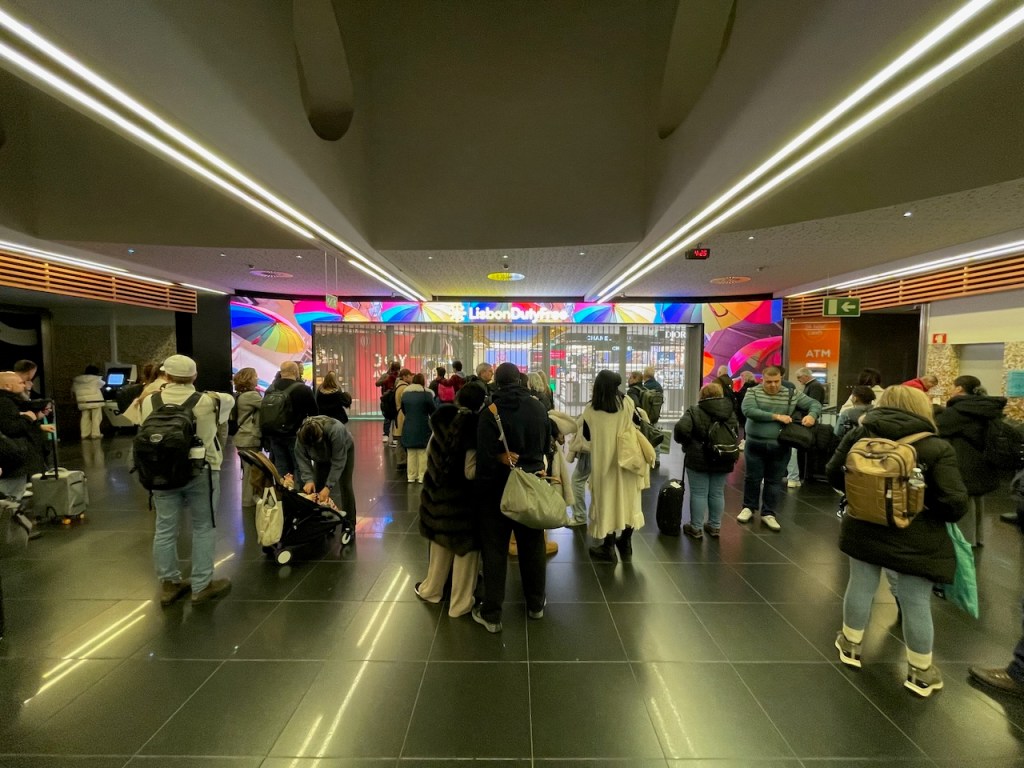
The trip got off to a rousing start at the Lisbon airport, when, after the crowd made its way through security, we were funneled into this room that ended with a locked gate. Most of us then took a nearby escalator down because that was the only way available and we were following someone’s lead like lemmings, but then we collectively realized it was a dead end: a room with no unlocked exits. So we followed ourselves back up the escalator, and stood around some more in confusion and hoping we weren’t all in the Stupid Group. Turns out the authorities just hadn’t opened the gates yet, but it was the only way in, and there were no signs or workers to abate our confusion. And I’ll be damned if I know where all the other travelers ahead of me in security ended up because there weren’t nearly as many people waiting there as were ahead of me in the security line. I’m guessing they were sacrificed to the Lisbon Airport gods because Lisbon Airport has had its share of difficulties lately, and obviously the gods needed to be appeased. I was glad I hadn’t rushed to the front of the line.

While I love Portugal and its people, efficiency isn’t exactly part of the country’s credo. They, along with every other country in the world, could learn a lot about efficiency from all the Nordic countries, including and maybe especially Denmark.
Apparently on New Year’s Eve, most Danes don’t want to be bothered with doing a bunch of cooking for their parties because, you know, they want to party! It’s New Year’s Frickin’ Eve! Christmas is different because you’re cooking for family and after twenty minutes even the most patient of us starts looking for excuses to get out of the living room and away from farty ol’ Uncle Frank ‘n Beans.
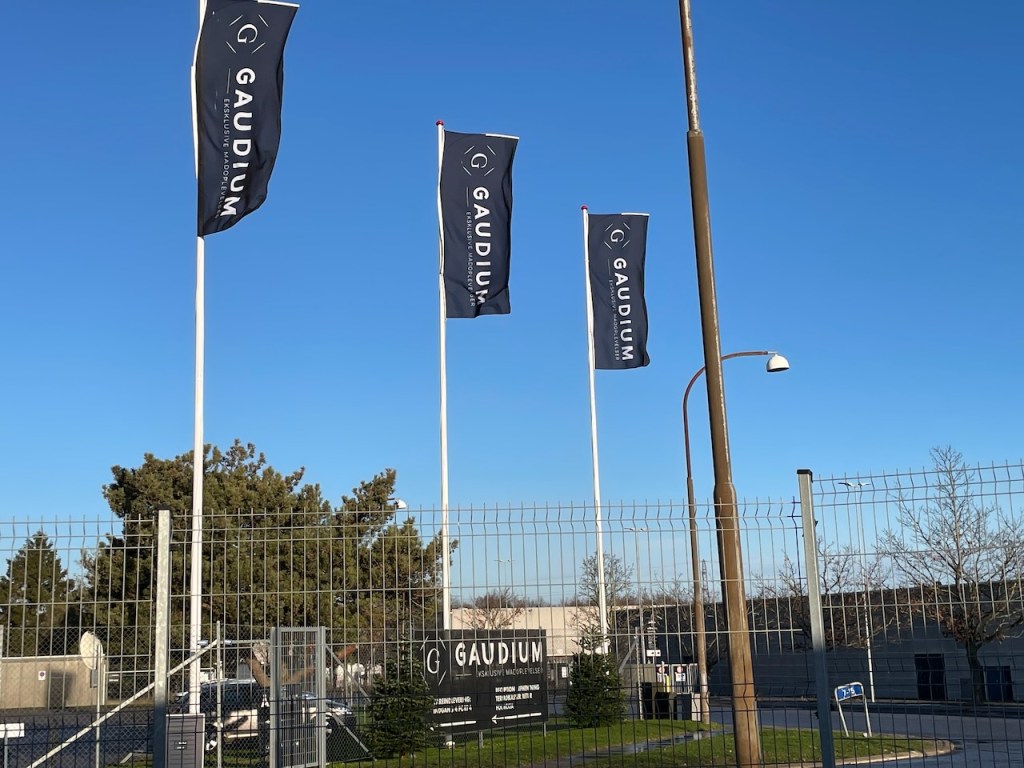
Per and I were tasked with driving to pick up a meal for his son, so I thought we’d be stopping at some Chinese restaurant or the like. But instead we ended up in a line of cars as if queuing for a Black Friday sale in the states, albeit without all the shooting and hair pulling and cursing and name-calling and stuff. As you can see by the flags, we were at a company called Gaudium (their slogan is “Oh My Gaudium Our Food is Awesium”), and while there’s no publicly available data as to how much revenue New Years Eve represents for them, it’s gotta be something like 40 or 50%, at least from what I saw as well as heard from the speculation of Per, who basically said, “I don’t know.”
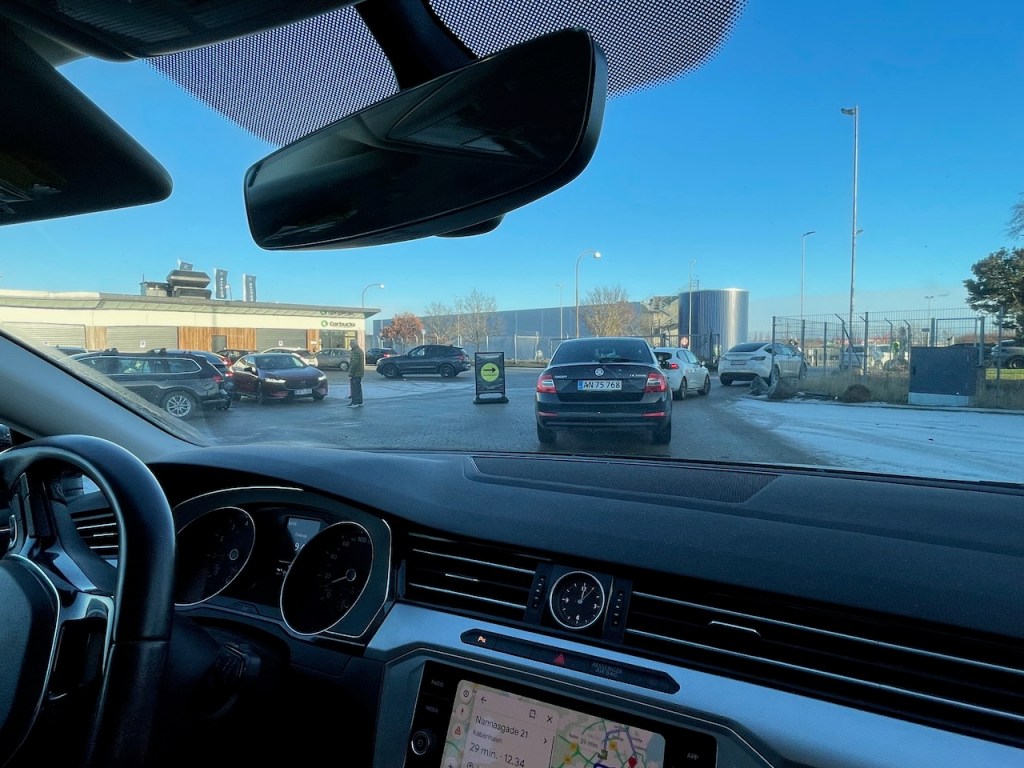
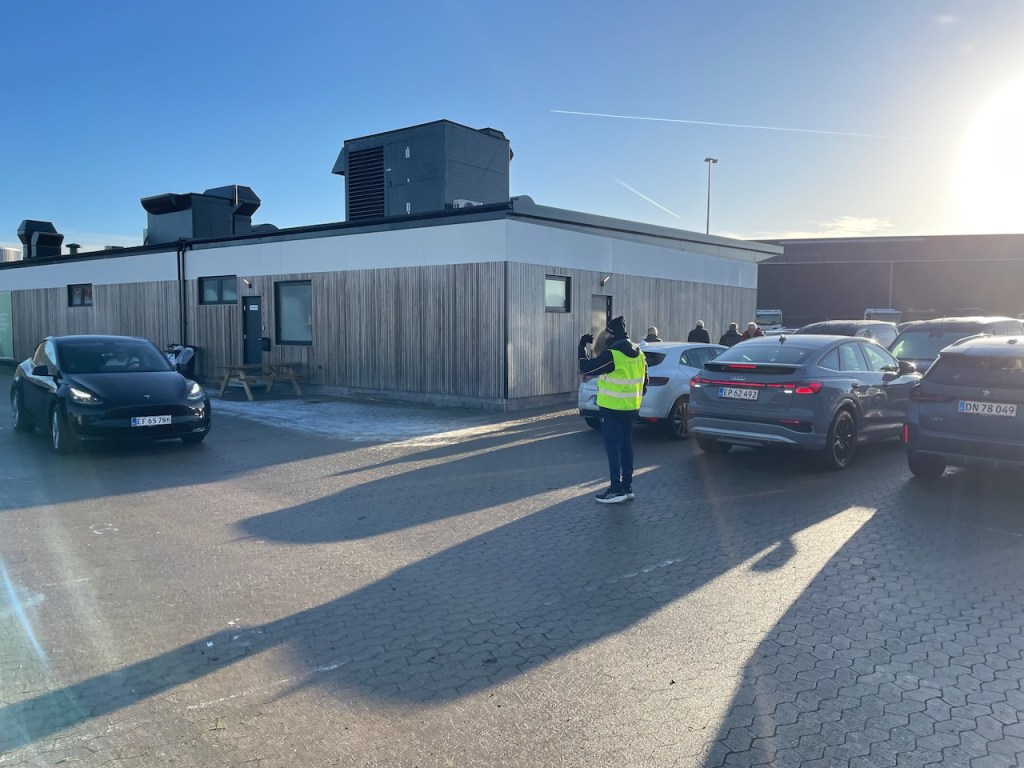
They had all these employees waving cars in and out; it seemed as if half of Copenhagen was out getting their New Years Eve meal. What astounded me was that once we parked, which didn’t take that long because they were… repeat after me, efficient, we walked into the place, which looked like an office in an office park. Per gave the clerk his son’s name (he did say he wanted it back though), the man scanned a list for about two seconds, turned around, grabbed a box, handed it over, and we were on our way. It all happened so fast I barely got some photos taken.
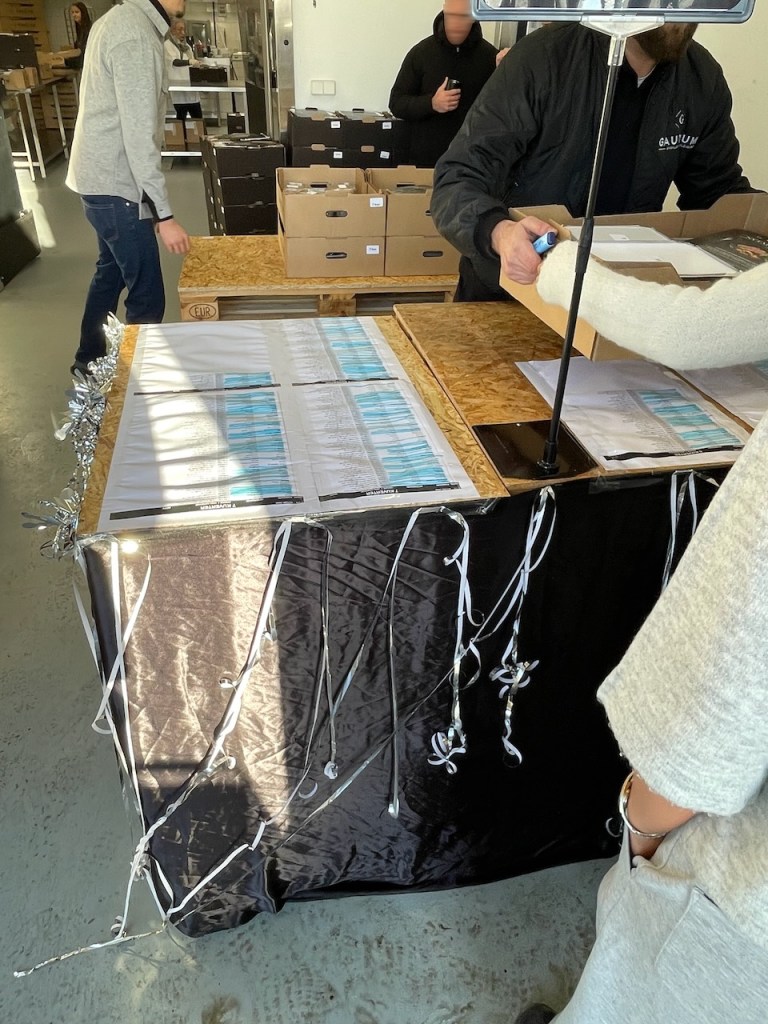

Now just imagine if, say, all the American McDonalds, which you have to admit is kind of a quintessential example of food efficiency, suddenly became the culinary tradition for New Years Eve, with an influx of customers on one day representing an order of magnitude (which is another way to order a Double Big Mac and its 780 calories) over its usual daily business. You’d have cars lined up all the way back to and onto the freeways, there’d be fist fights, all sorts of shootings, cars on fire, people screaming, protesters with signs chanting “Death to Consumerism!” while being harassed by big-bellied people deriding them for being woke and smelling like patchouli. And you’d still have to wait in line for three hours to get your food.
Yes, Denmarkian efficiency is a sight to behold because nothing like that would happen in Denmark. Plain ol’ efficiency is quiet and unseen. As I write this, Donald Trump is making fun of Greenland being protected by two dog sleds. Based on what I’ve seen, those two dog sleds could probably take out a few battalions of US marines.
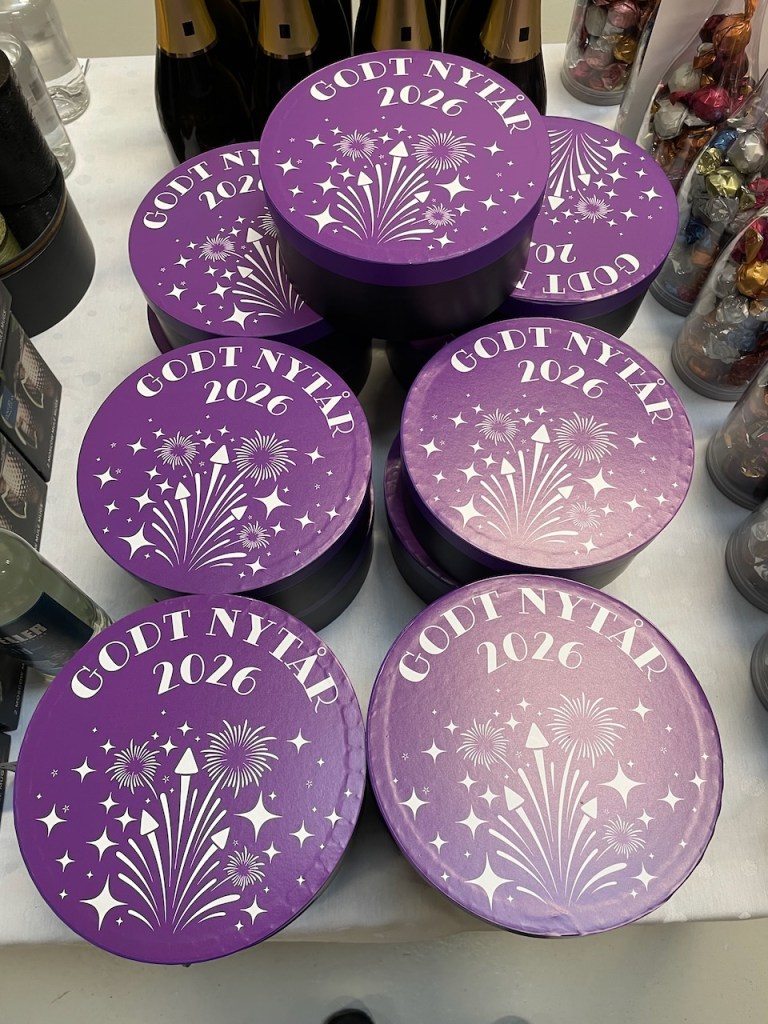
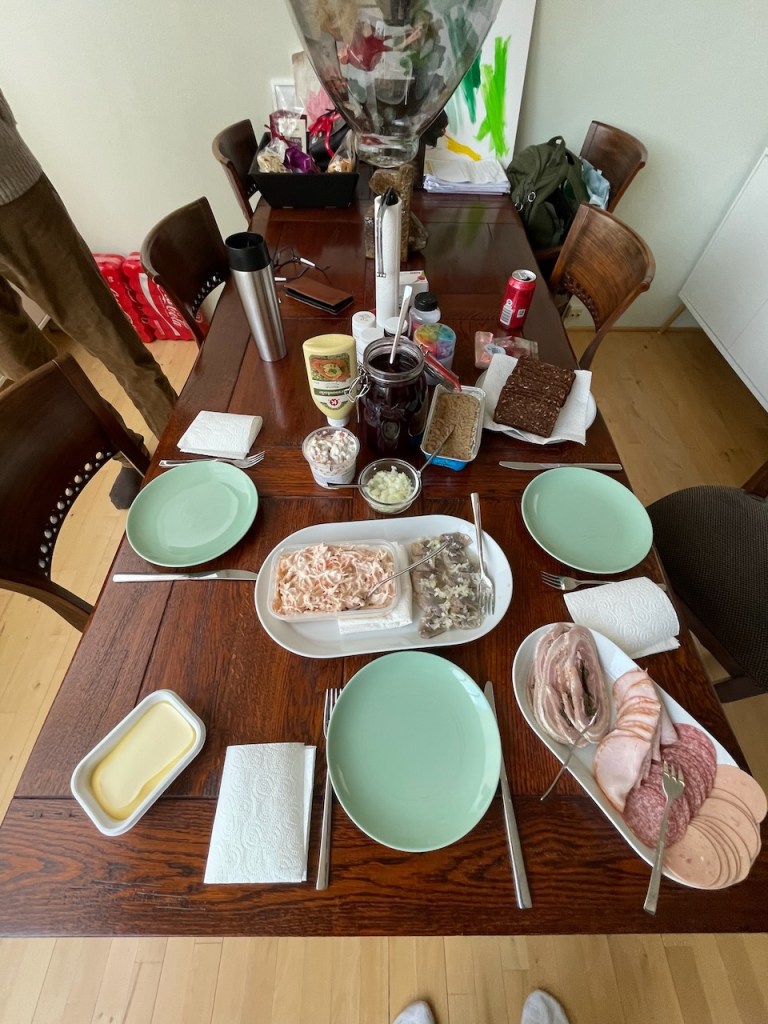
In addition to selling pretty boxes of candy with “Godt Nytar 2026” (which translates to: “God, I’m tired, is it 2026 yet?”) I’ve found the Danes to be both fastidious and traditional when it comes to eating. First of all, I learned that my ever-polite hosts were always a bit flummoxed when I woke up in the morning and served myself breakfast, like granola or whatever. They bit their tongues during my first three visits, but by the fourth they’d had enough and in the morning they burst into my bedroom, duct taped my mouth shut and my hands to the bed and told me I couldn’t come out until breakfast was ready. Obviously I jest, but I did feel bad about not knowing that especially since I think it’s a wonderful idea.
Anyway, it turns out they always eat breakfast together, and can’t even imagine this lone wolf strategy. My whole life I’ve just gotten up and made myself breakfast. In fact, in my childhood it was always a race to see how early one could get up after Mom’s weekly grocery shopping in order to be the first to attack the only box of Cap’n Crunch cereal, because after that all we had was Cheerios and store-brand corn flakes that tasted like used Dr. Scholl’s foot pads. But it turns out in Denmark I was inadvertently making a big faux pas that kept my hosts up all night tossing and turning. In other words, I was mucking up the gears of both efficiency and tradition, and that may be a capital offense in Denmark.
The second time I created distress (there were probably twenty or eighty others, but they’re ever so polite and reluctant to whack me upside the head except for the most egregious of transgressions), I was putting some fried onions or something on the meat on the open-faced sandwiches that are a Danish tradition. When my gracious hostess saw this, she shrieked in horror (that is if you define “shrieked” as “patiently explained”). Turns out that putting whatever I put on whatever the meat was is perhaps akin to pouring chocolate sauce over a steak, or putting M&M’s in your Dom Perignon. It just goes to show you, no matter how many times you visit a country, even staying in the house of civilized hosts, you learn something new every time… and also sometimes wonder why in hell they ever invite you back. Since Americans tend to free-for-all their traditions, proper or acceptable etiquette can vary from house to house. But I kinda like the national traditions I’ve seen here, I just imagine it takes hundreds of years to really lock into place, which is part of the charm.
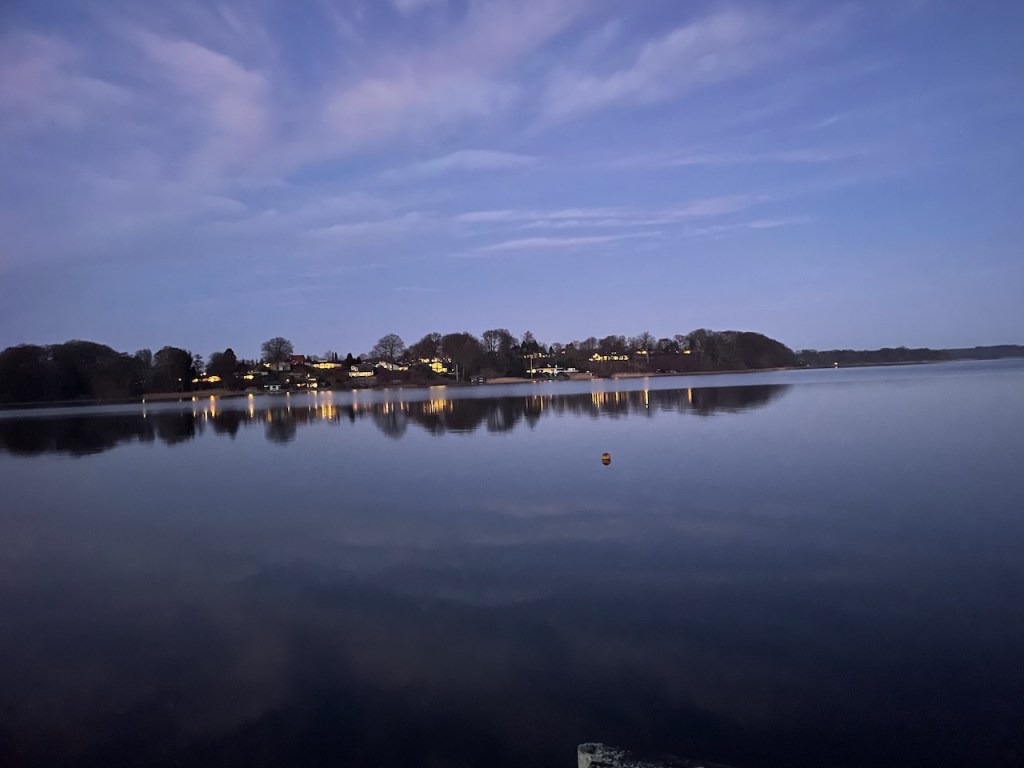

Near where they live is a lake called Furesø, with a smaller one named Farum Lake next to it. Furesø is the deepest lake in Denmark, going all the way down to the bottom. “Farum” is what an ancient Sámi answered when someone asked how deep the smaller lake went.
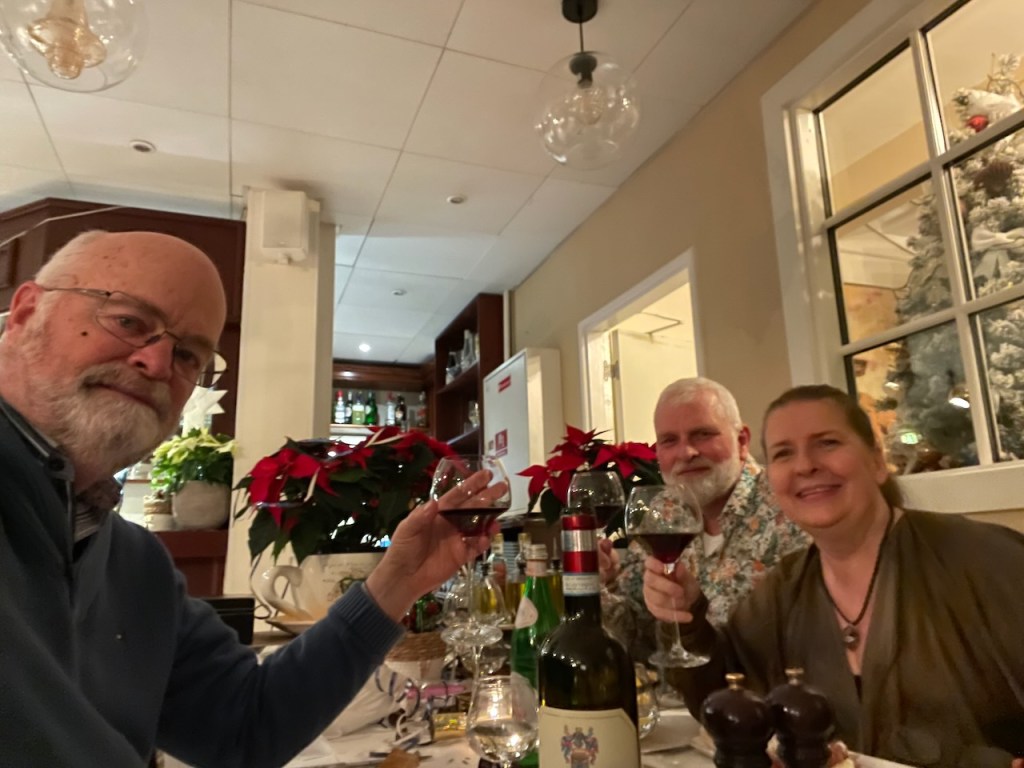
For New Years Eve we went to a fine restaurant where they served foods even I couldn’t screw up. The two major things about New Year’s Eve in Denmark is that the King makes a televised speech with about two million Danes watching, which is over a third of their population. While that’s impressive, the 2025 Super Bowl in the US had over 36% viewership, so the King’s gotta hire some cheerleaders or something to jazz up those ratings. “Yaaaaay King!” they’d squeal with their pom poms pomming and boobies boobing after he makes a particularly poignant observation. The other thing was that every single Dane, apparently, went out and purchased firecrackers and fireworks, so for two solid days one could hear nothing but pop-pop-pop! and see various fireworks jet up into the sky, only occasionally burning down buildings or setting people’s hair on fire. It was like living in a microwave with a never-ending supply of microwave popcorn being cooked.
Other than surviving the quasi military bombardment, one of the sights we decided to see was to visit the town of Malmö in Sweden. Malmö is the third largest city in Sweden, which might be worth remembering if you ever join a Professional Championship Trivia contest. Malmö used to be a bigger city, but the Vikings wiped part of it out by creating a flood, so ever since then that area is called Malnömö.
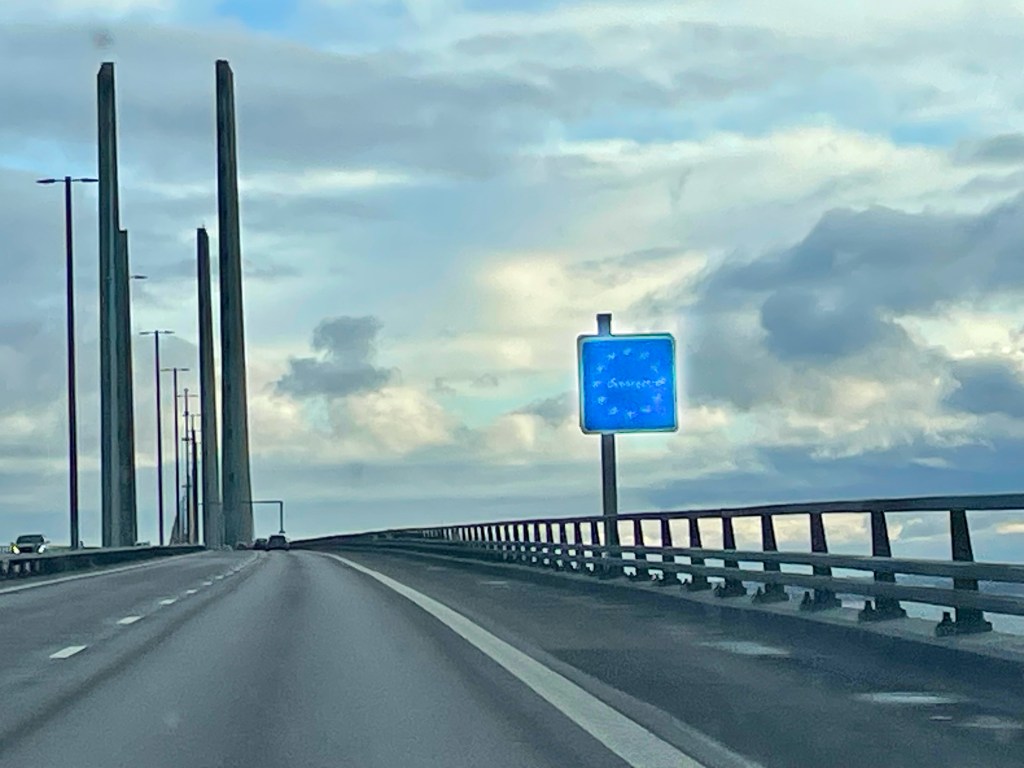
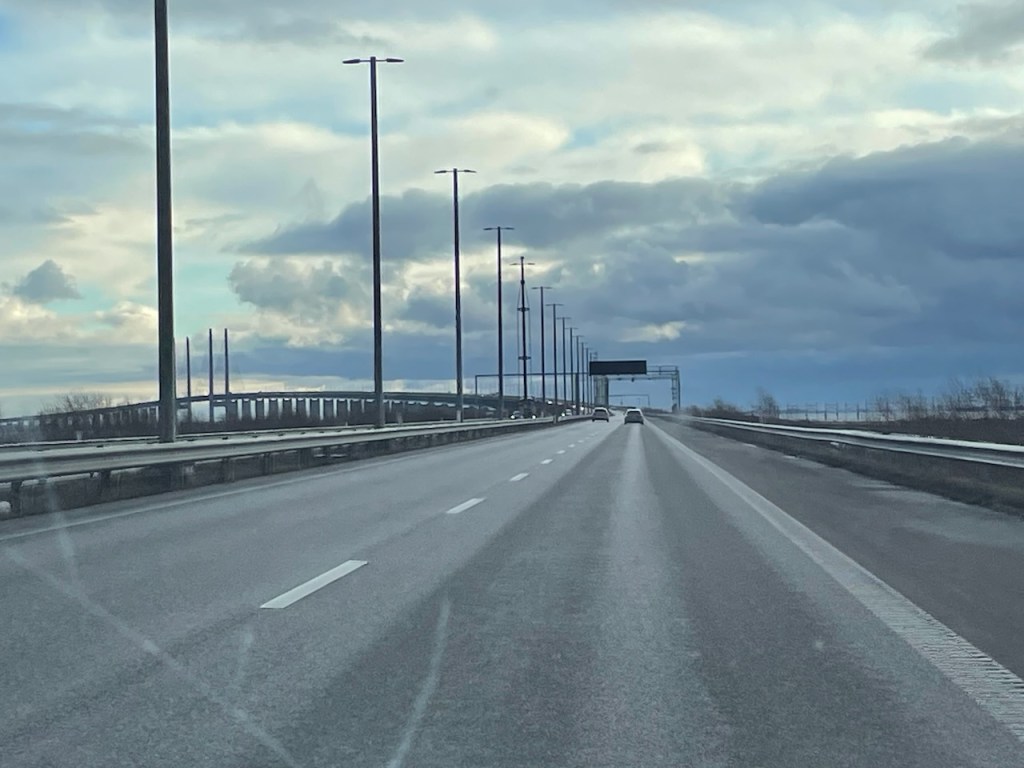
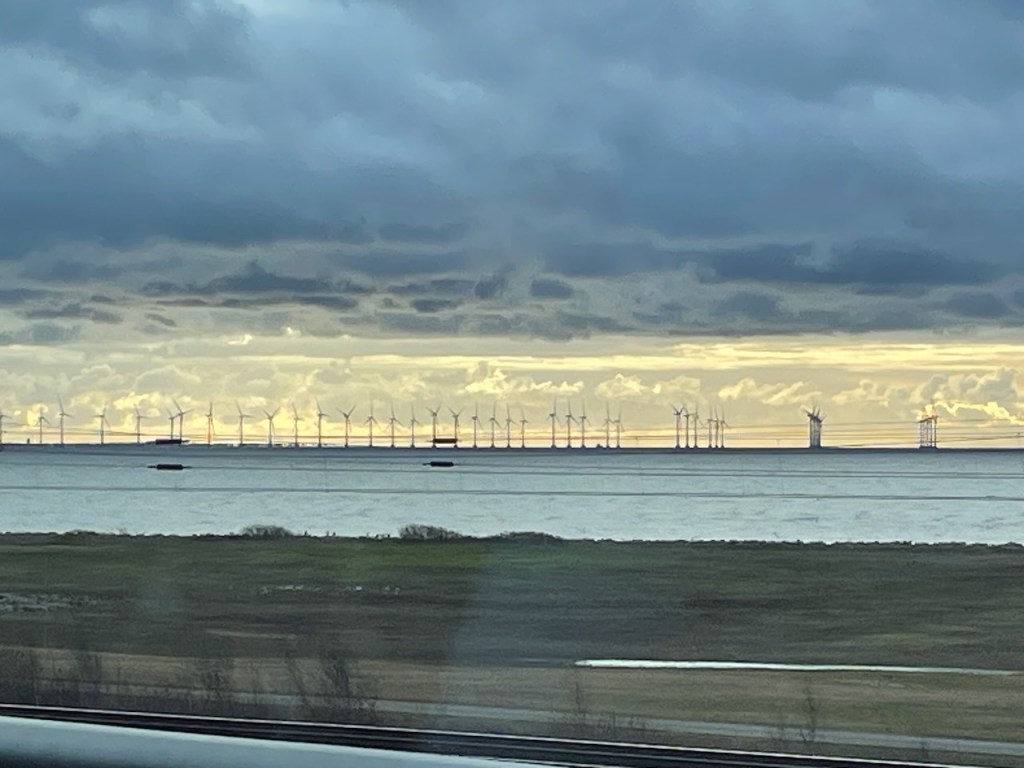
Malmö is connected to Denmark via the Öresund Bridge, which starts in Denmark and ends up in Sweden, unless you’re going the other way. You do have to rapidly change into Swedish clothes right after you cross the border, because Sweden and Denmark have made war against each other more than any two countries in the world, so the last thing you want to do is parade around looking Danish. To be safe, it’s also better to bring donuts rather than danishes.
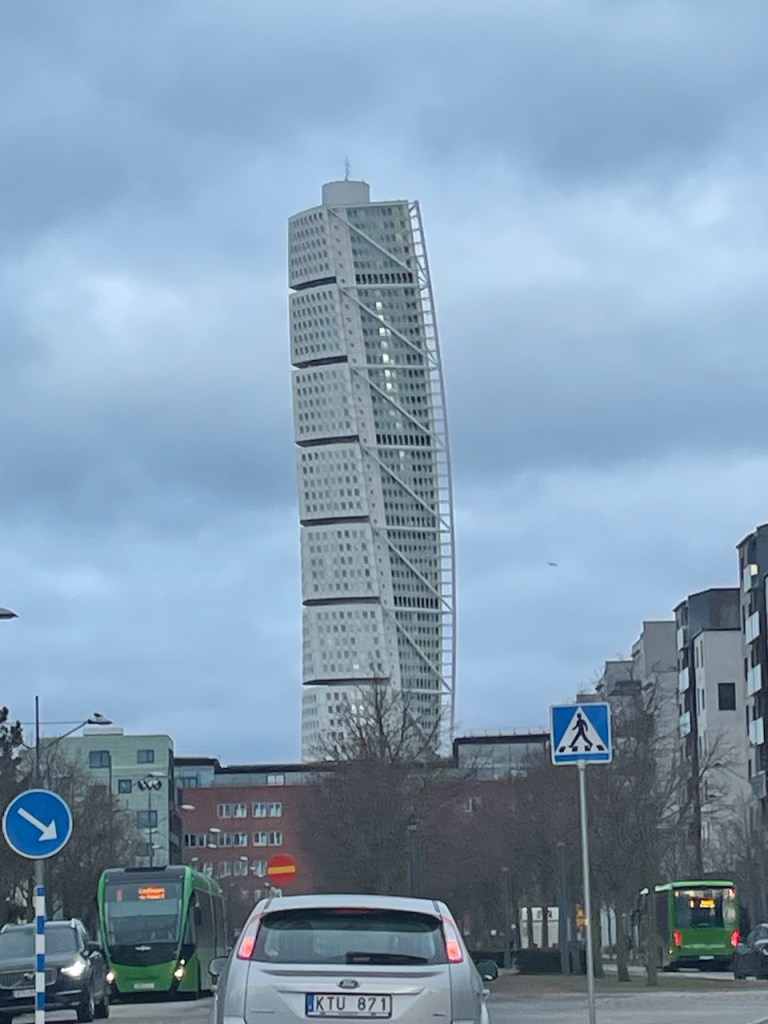
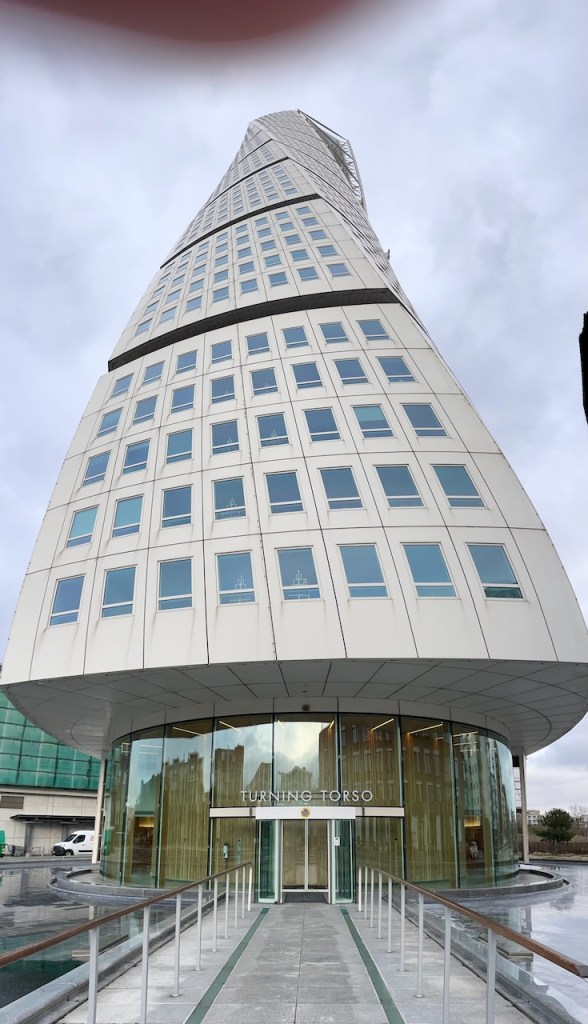
Malmö is pretty flat and without a lot of tall buildings, so this impressive one called The Turning Torso really stands out. The Turning Torso has 54 floors, with apartments, office space, and conference rooms. It’s considered to be one of the world’s most prominent skyscrapers and has won multiple international awards, including placing second in the prestigious Twistiest Building in the World competition.
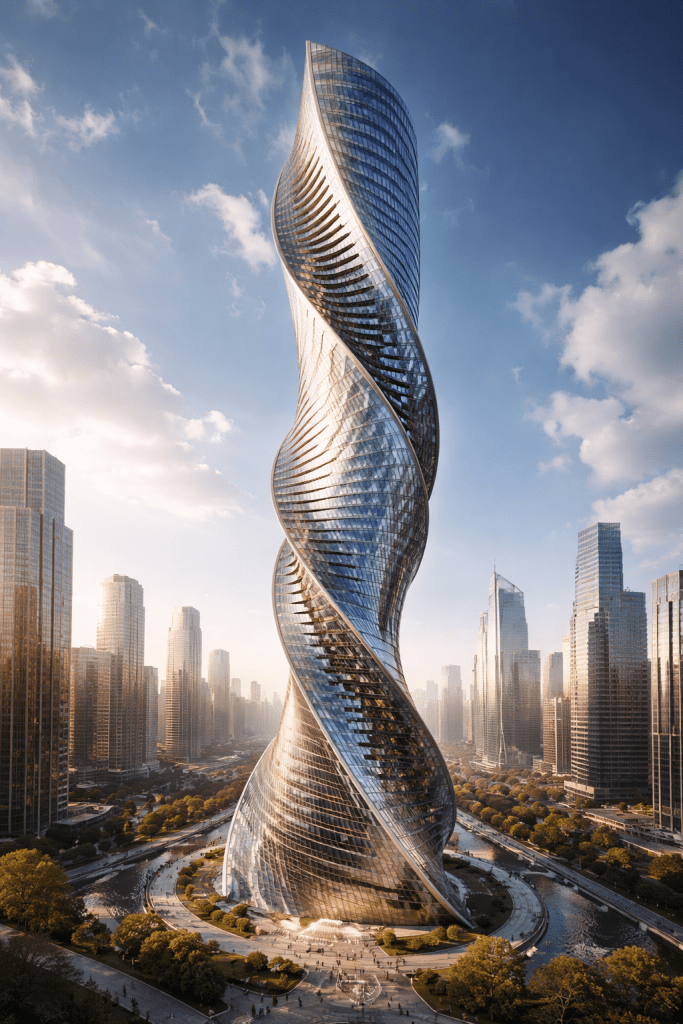
This one always gets first prize, the bastards.
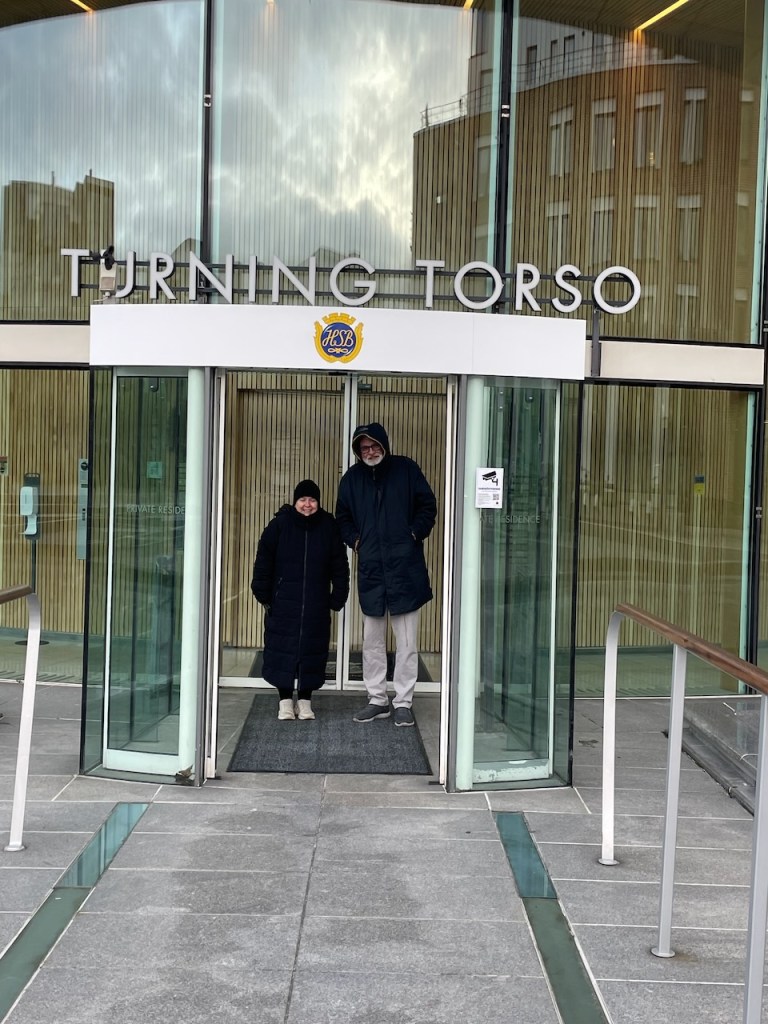
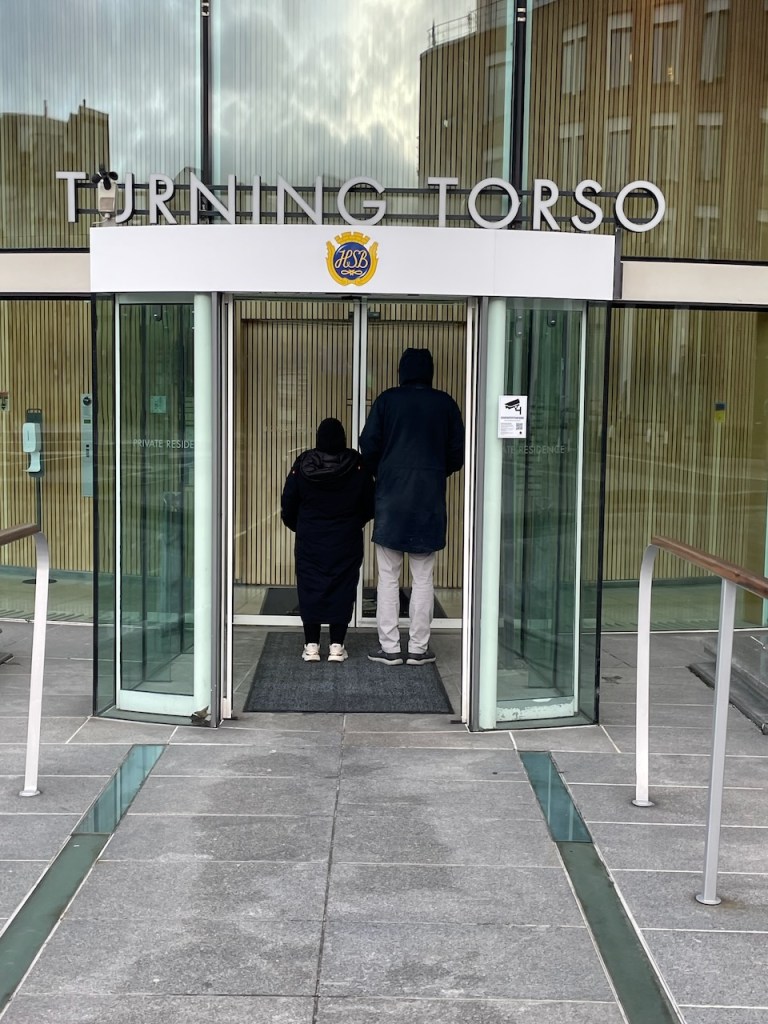
While these photos make it look like Pia and Per are turning round and round at the foot of the building, and while the building itself also looks like it turns, only the world turns. And As the World Turns, these are the Days of our Lives.
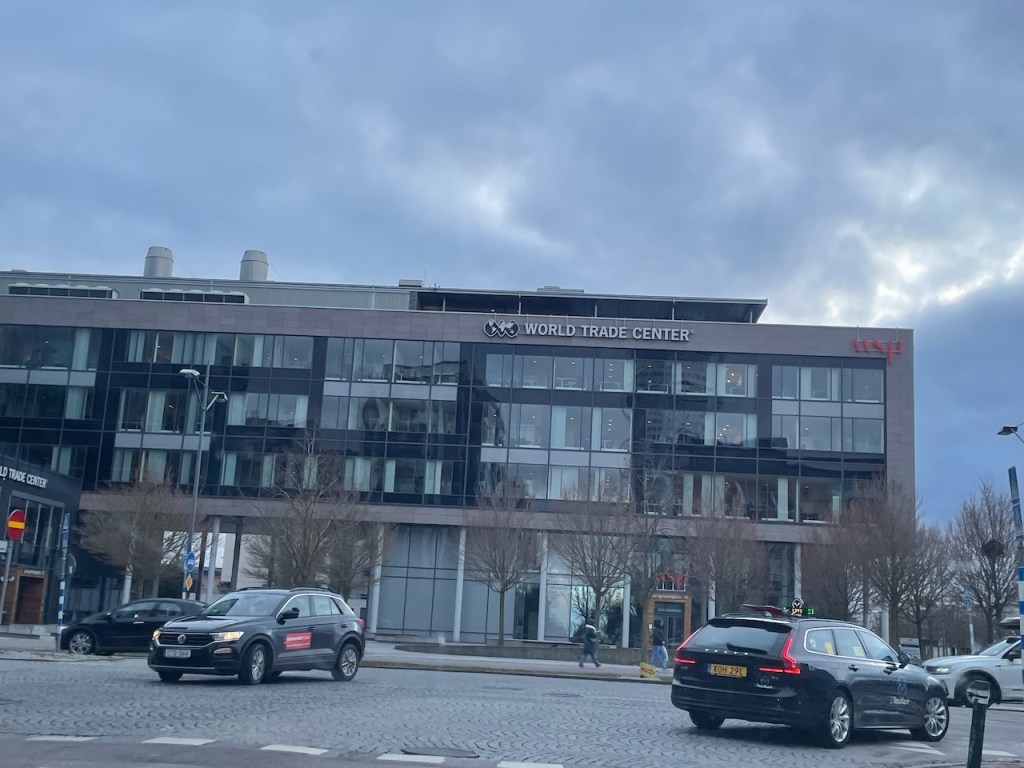
After the Sept. 11 attacks, the US government quietly moved the World Trade Center to Malmö in order to protect it from further attacks, mostly because no one’s ever heard of Malmö. Note the anti-skyscraper design for protection, too. Genius!
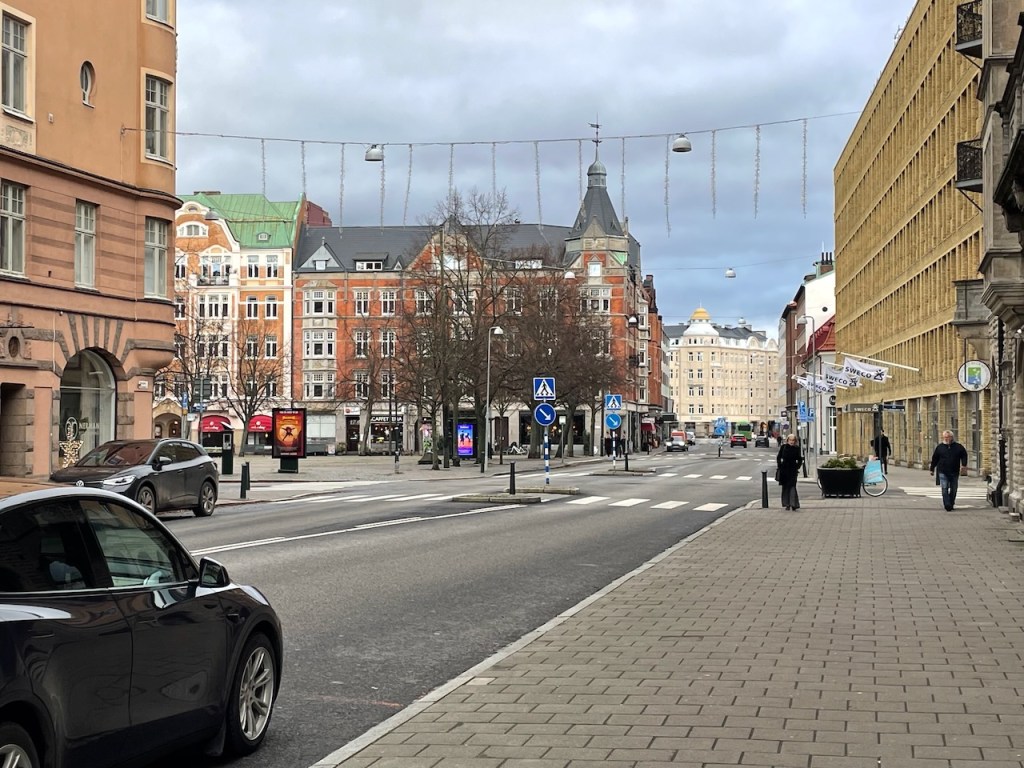
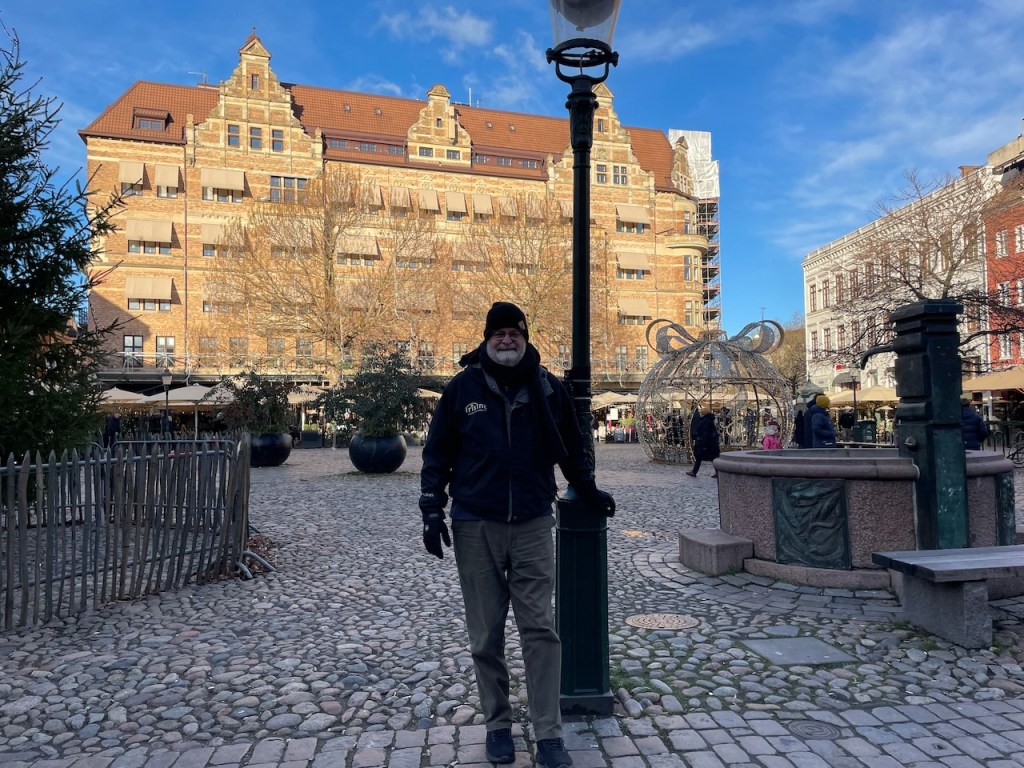
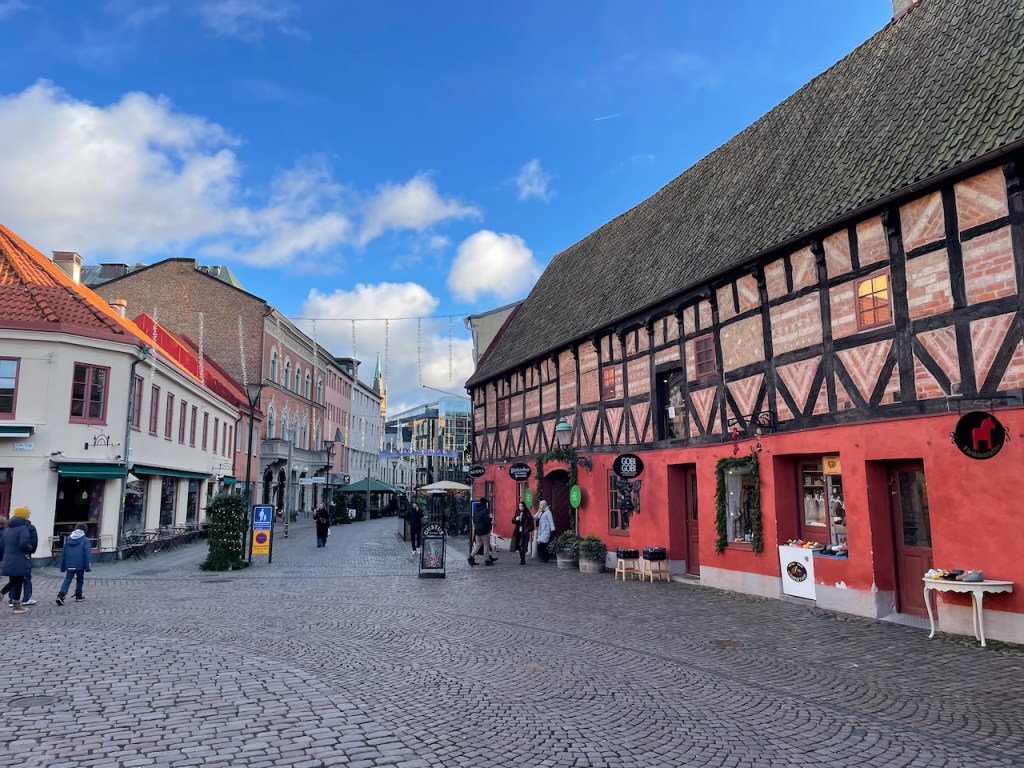
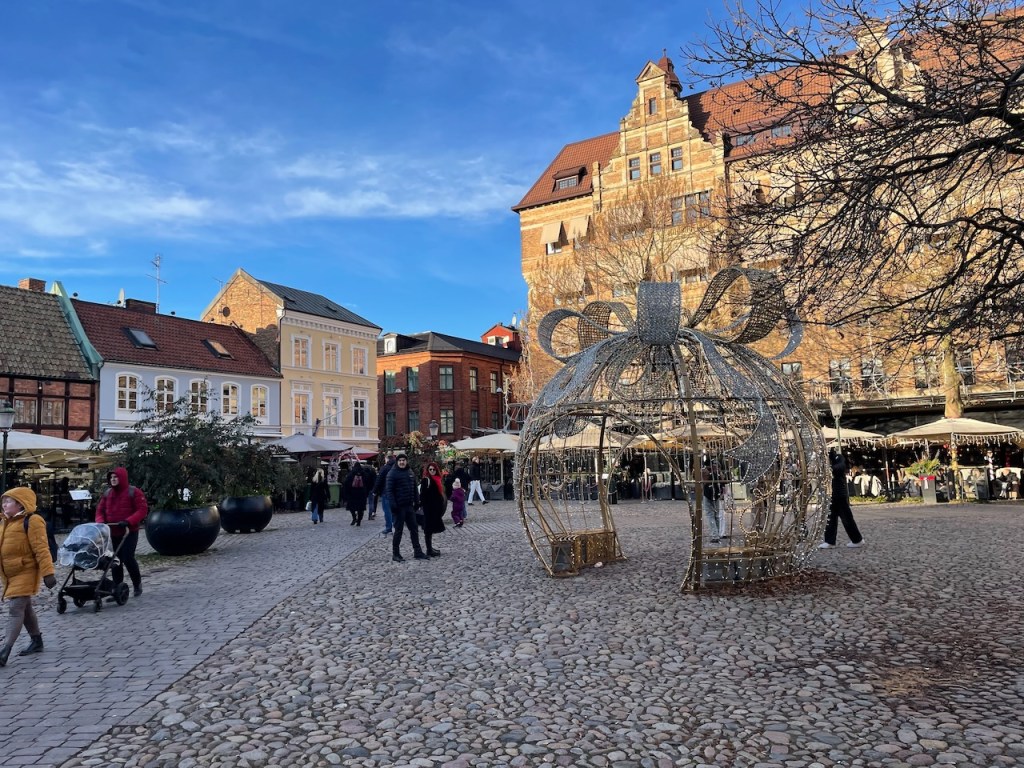
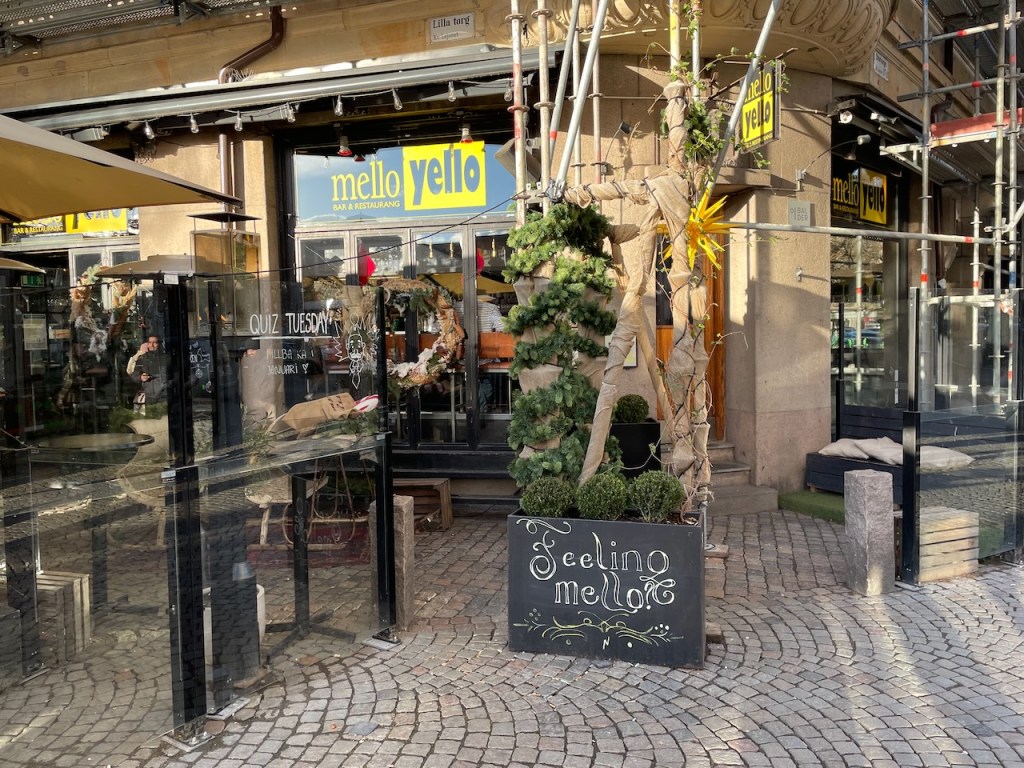
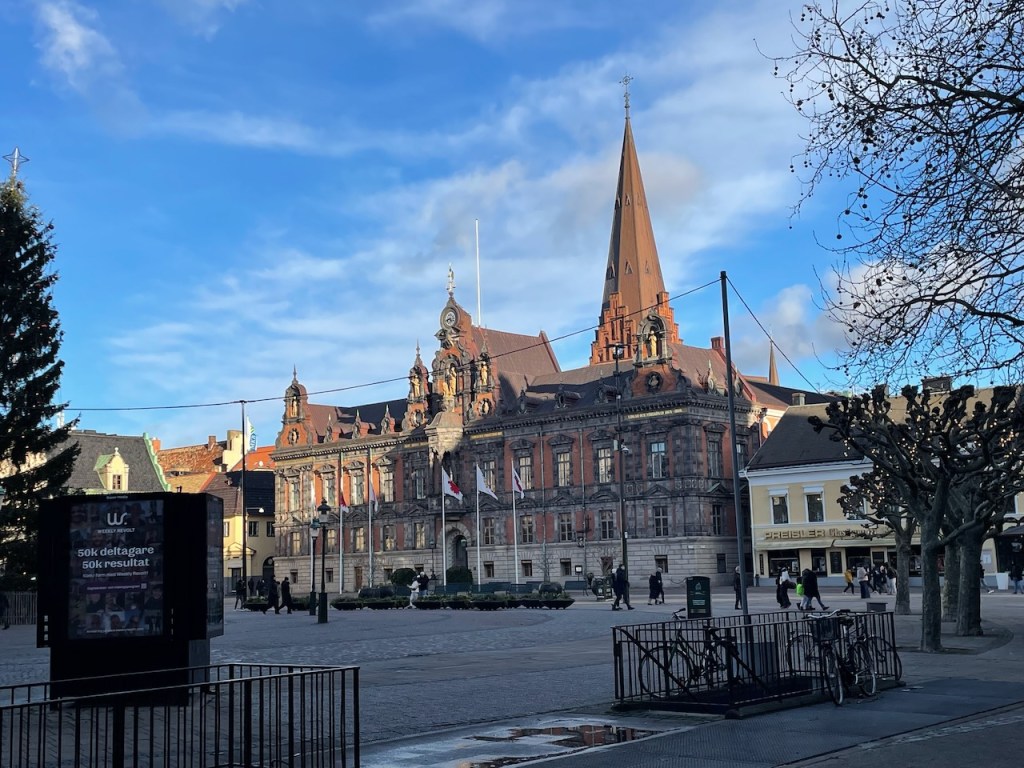
Actually lots of people have heard of Malmö, including many of the ones who live there. They do have an old town/town square area that’s charming, quaint, and old. I felt like I was on vacation again, or maybe I just felt at home because I’m also charming, quaint, and old. Well at least quaint and old. Ok, just old.
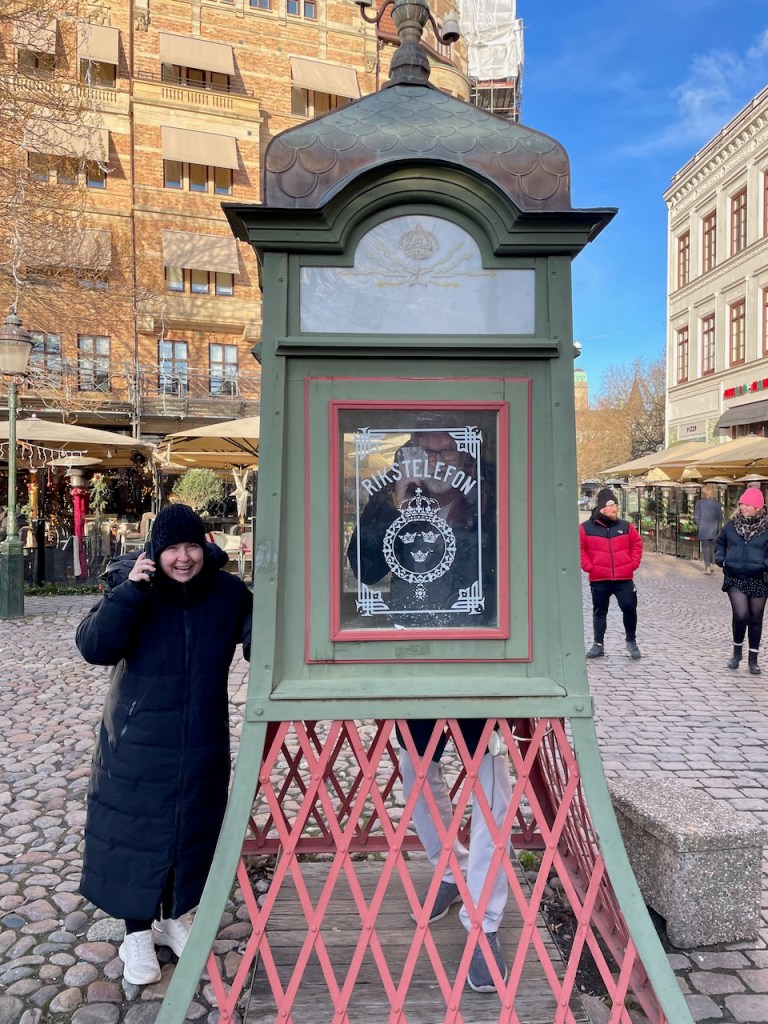
Their telephone system is a little behind the times though.
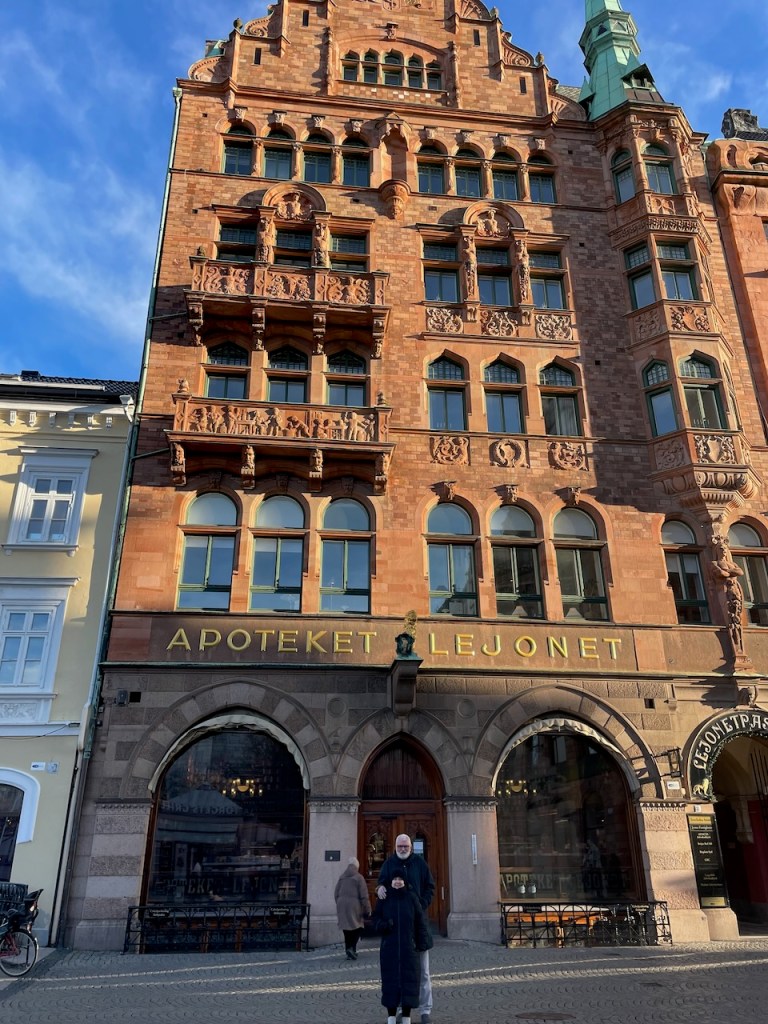
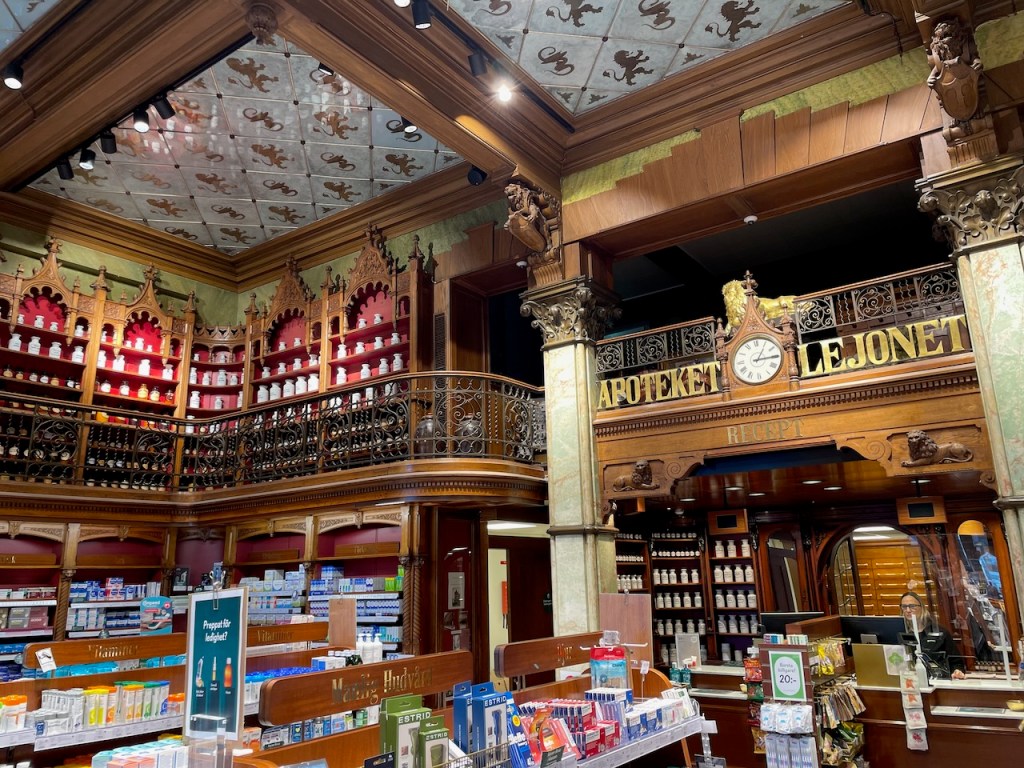
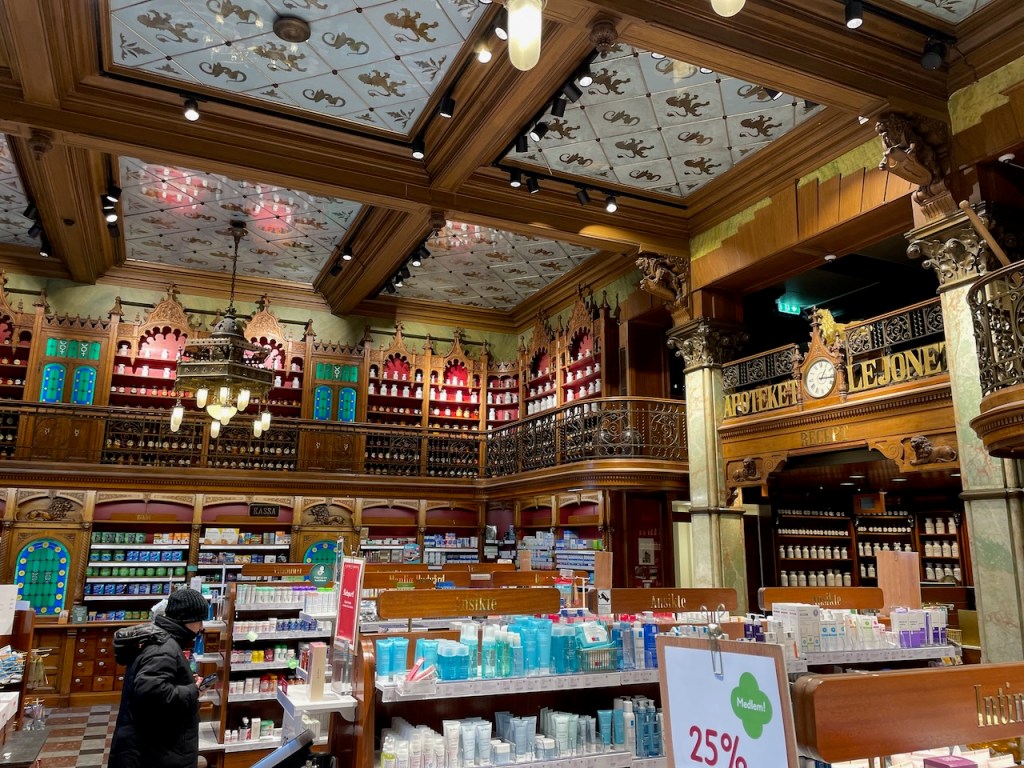
They do have a very old pharmacy, called the Apoteket Lejonet (The Lion), dating all the way back to 1571. But it can’t compete in the old-age competition with the Officina Profumo-Farmaceutica di Santa Maria Novella in Florence, Italy, which began in 1221 AD (i.e. 1221 After Der Christ). Although if you want to nitpick, after its founding, the Officina Profumo-Farmaceutica di Santa Maria Novella only serviced a bunch of monkeys for decades– er, what? Oh, monks. Sorry ’bout that. But anyway it didn’t open its doors to the public until 1612, so the Lejonet kinda beats the Officina Profumo-Farmaceutica di Santa Maria Novella on that score. And anyway, it’s remarkably beautiful and is the oldest one in Sweden, although they don’t sell Mandrake anymore and I refuse to take aspirin that’s 450 years old, so I’m not sure what good all that age does. I’m pretty certain they had a lot of expired medicines there, I’m sure just like the Officina Profumo-Farmaceutica di Santa Maria Novella, which in British English is spelled: the Officina Profumo-Farmaceutica di Santa Maria Novella.
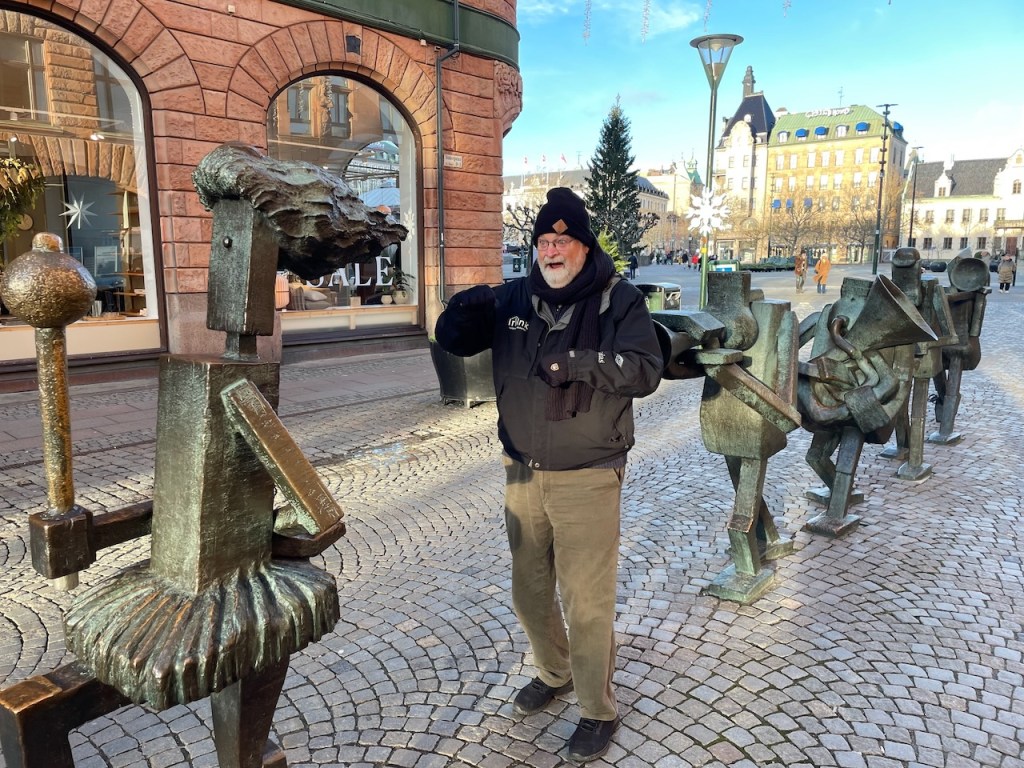
European countries have a fair amount of whimsical art, but it often gets ruined by goofy-looking American tourists. At least I can now say I played in a heavy metal band.
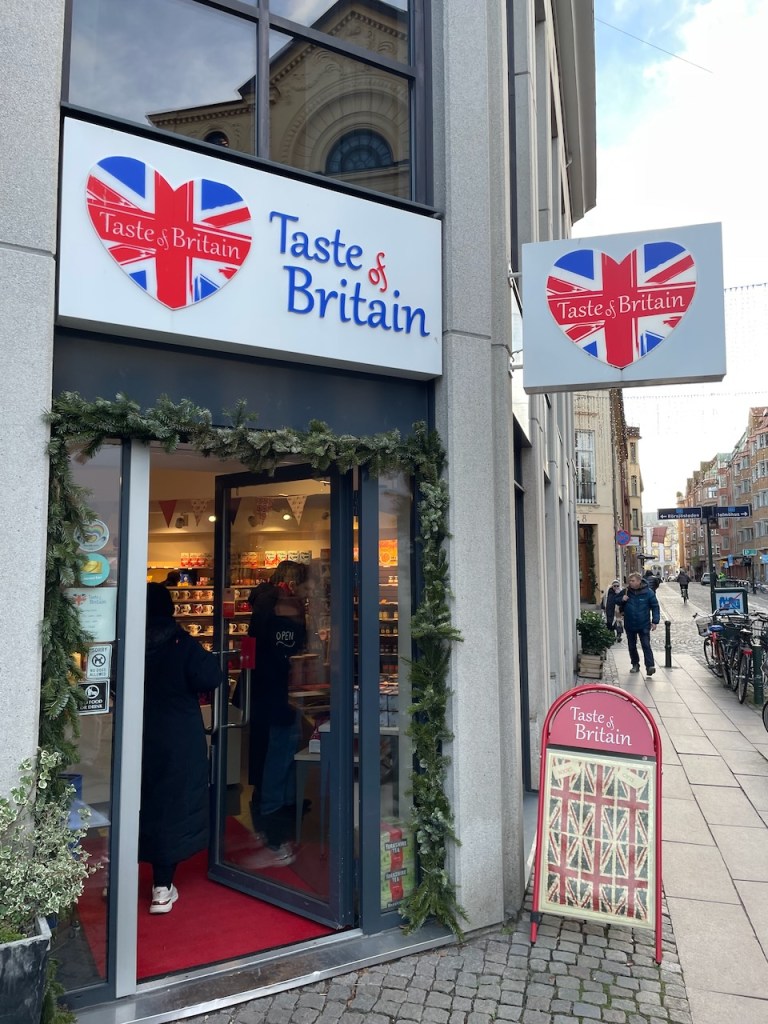

I enjoyed a laugh at the expense of the Brits after seeing the “Taste of Britain” sign by joking, “Man, it must be a really small store.” Because, you know, the cuisine of our British friends is often mocked, which can hardly be blamed when you regularly eat something called Spotted Dick. Anyway, turns out it really was in fact a small store, so I was able to laugh twice at the joke, meaning I really got my money’s worth. Pia was just happy to find some striped mustard, or whatever that is.
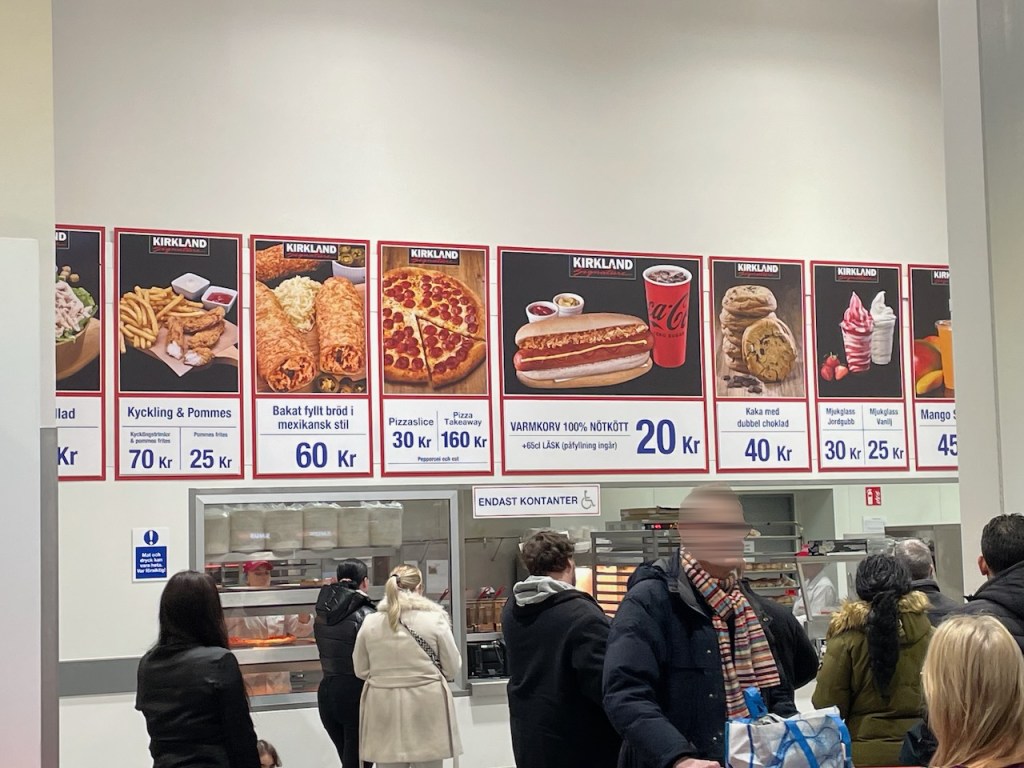
For all those Americans who wonder if Costcos around the world are the same, here’s photographic evidence that in fact, yes, they pretty much are, even in Sweden. The price of that famous hot dog/drink combo is the equivalent of US$2.15, so yeah, it’s hard to avoid Americana pretty much anywhere in Europe.
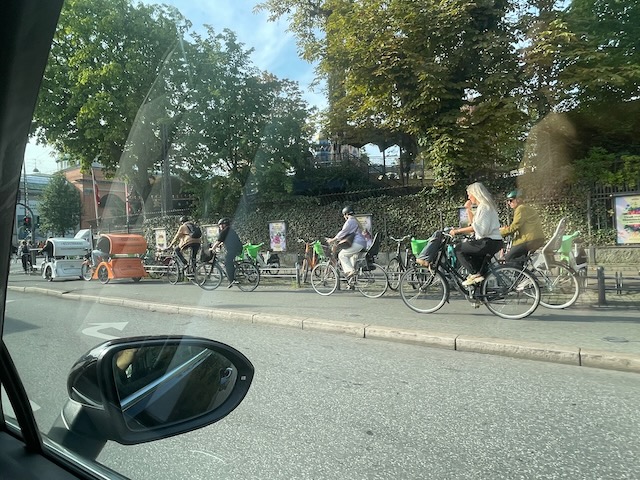
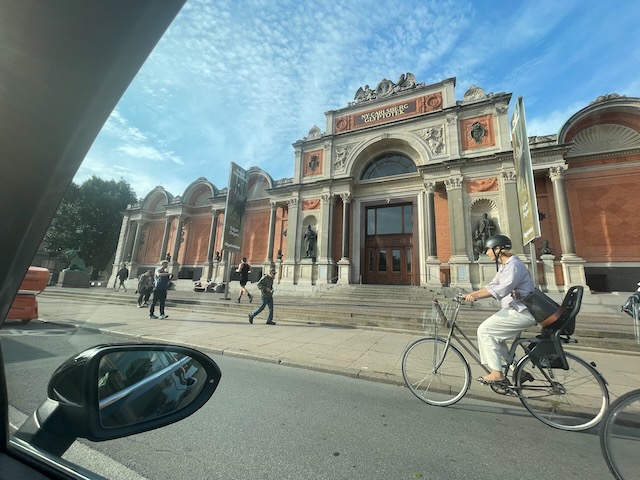
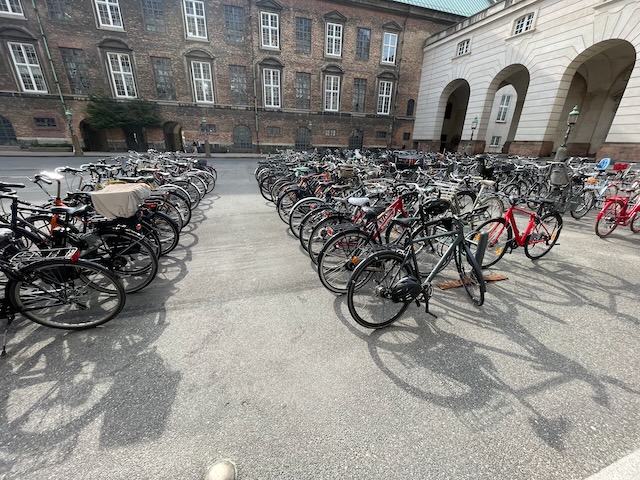
As I put this entry together, I suddenly remembered that in 2025 I had made a whole other visit to Copenhagen and had failed to create an entry for it. After all, I have been there four times, so maybe I was thinking it was a bit redundant. But’s a fabulous city and deserves all the acknowledgement and kudos it can get. However, in the interest of keeping your toilet-time reading resulting in only semi-deep impressions on your outer bum, I’ll limit the commentary some… even though I just proved that I might be incapable of that. But pedal on! Because a city with lots of bike riding has got to be wheelie wheelie great.
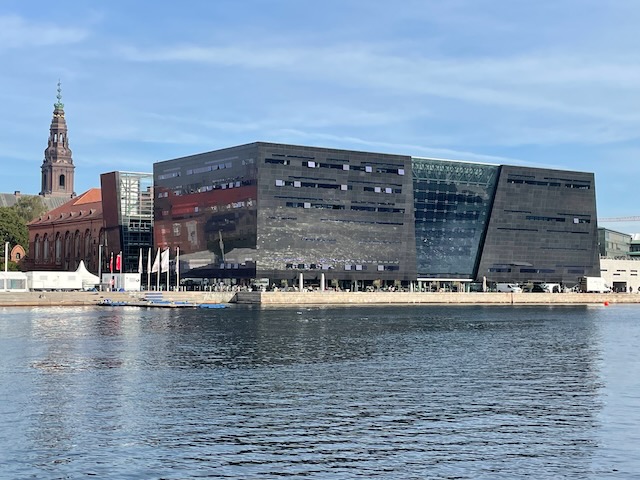
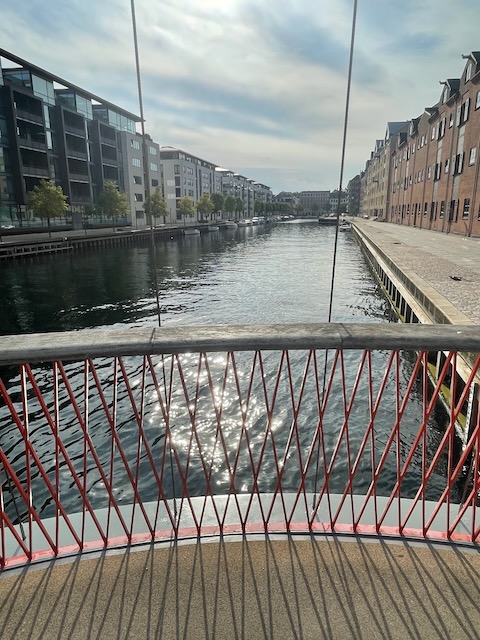
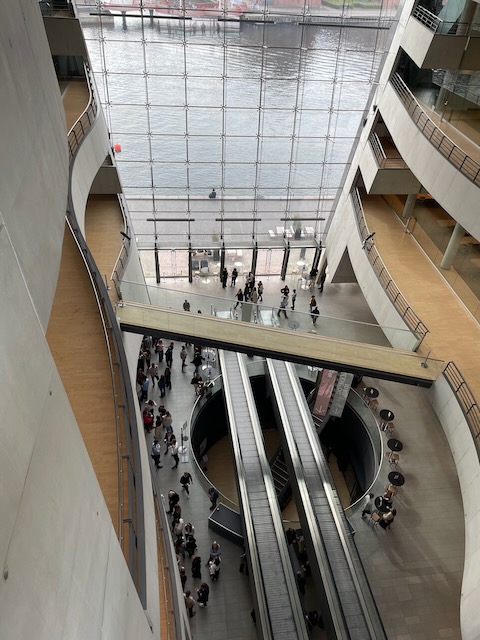
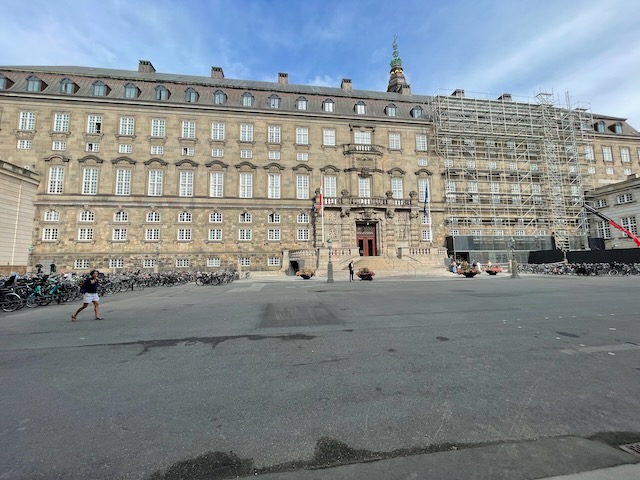
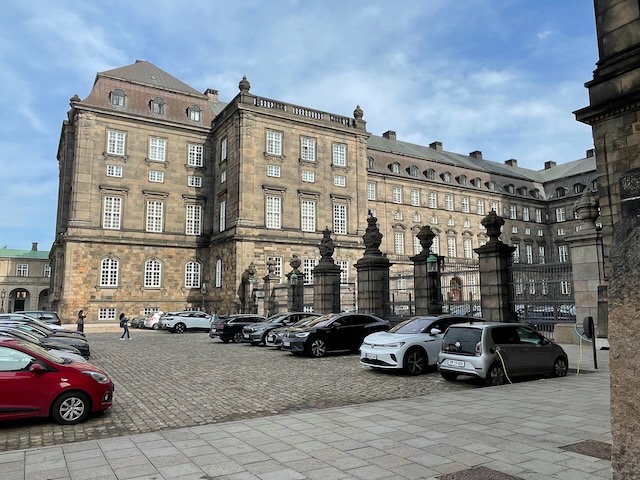
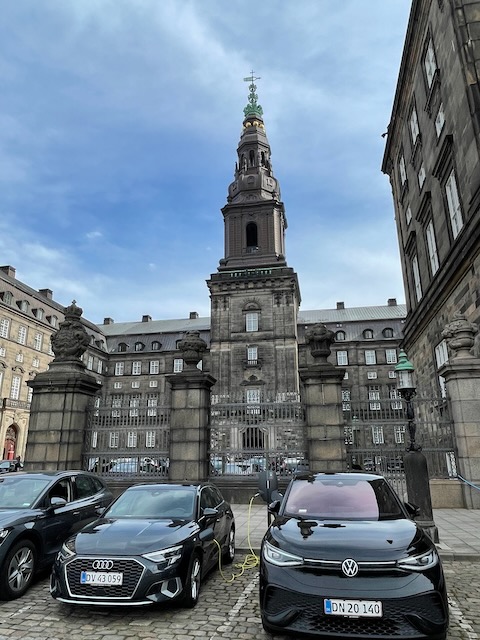

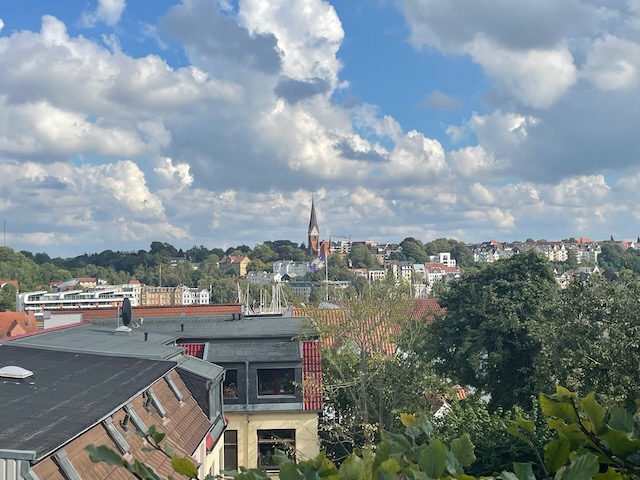
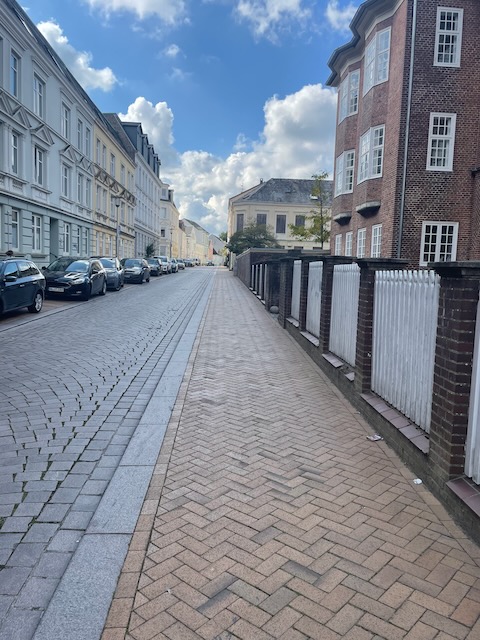
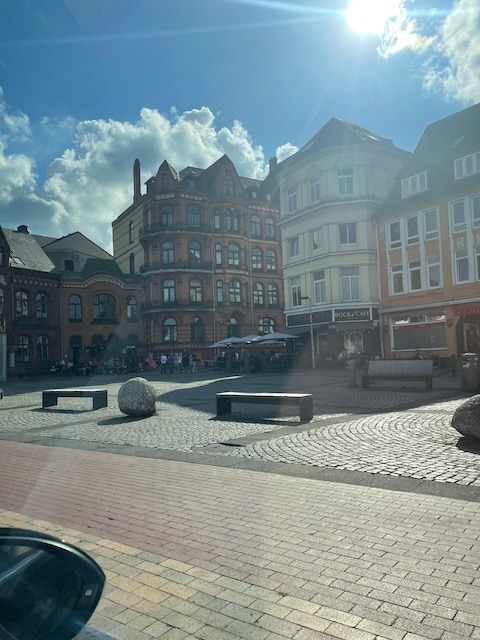
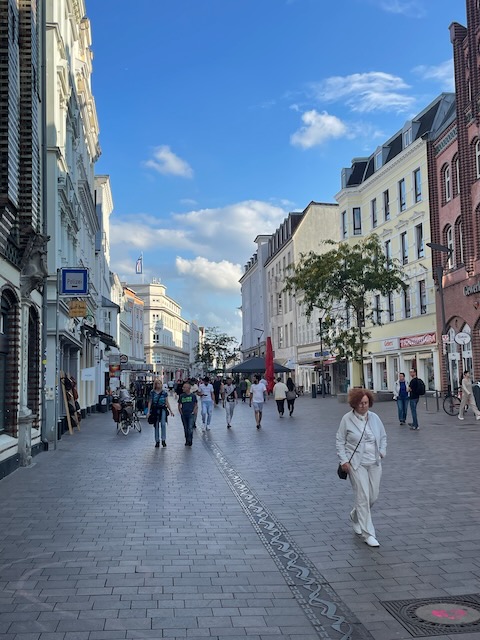
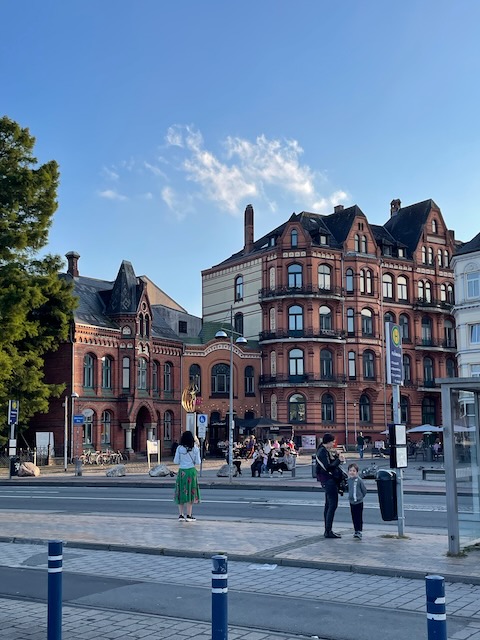
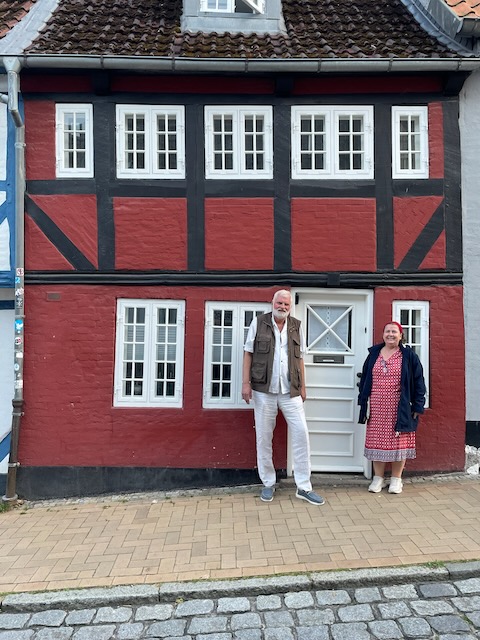
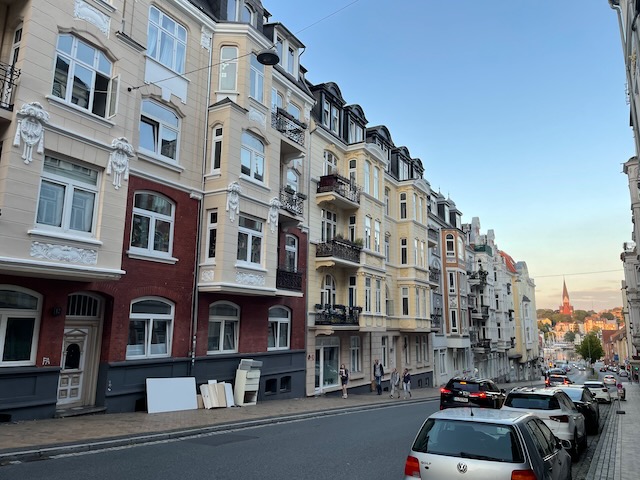
You can’t go anywhere in Denmark without being close to the sea. Øresund, or “The Sound” in English, is enjoyable to walk near in order to see lots of Danish architecture as well as government buildings, and if you’re lucky, occasional sightings of Per and Pia trying to lift up a house.
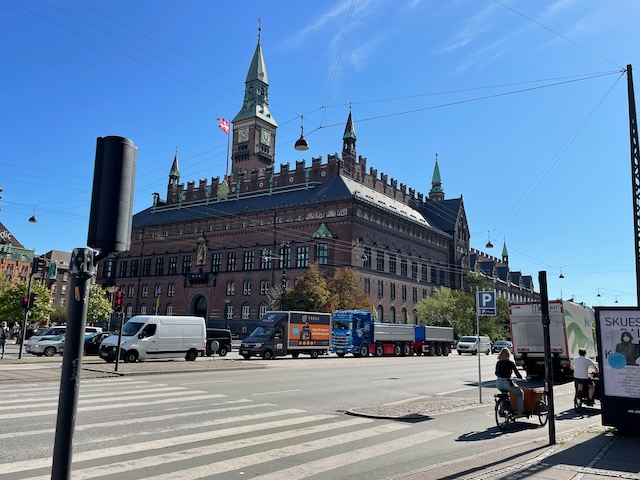

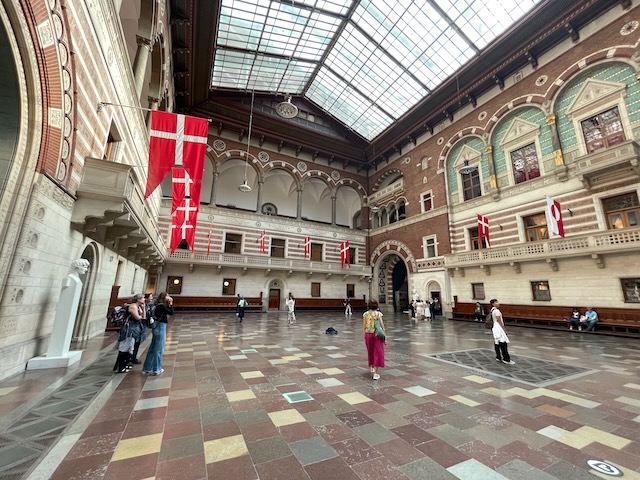
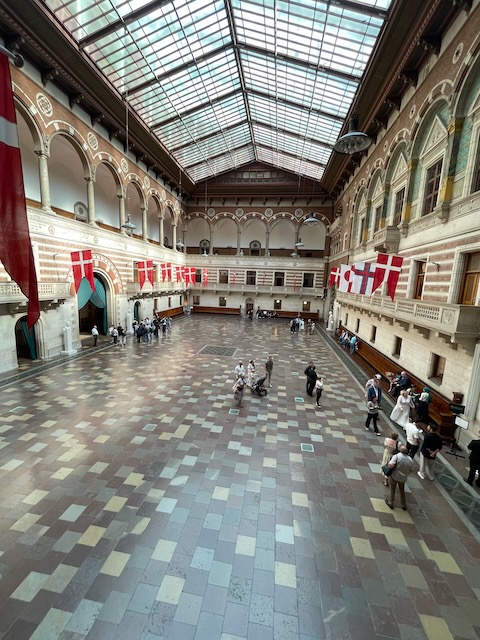
The famous Tivoli amusement park is right downtown, not far from Rådhuspladsen, or City Hall Square, which has lots of interesting things to see. Here they proudly display The Dannebrog, the Danish flag, which is the world’s oldest continuously used national flag, dating back to 1219, which my calculator says is a freakin’ long time ago.
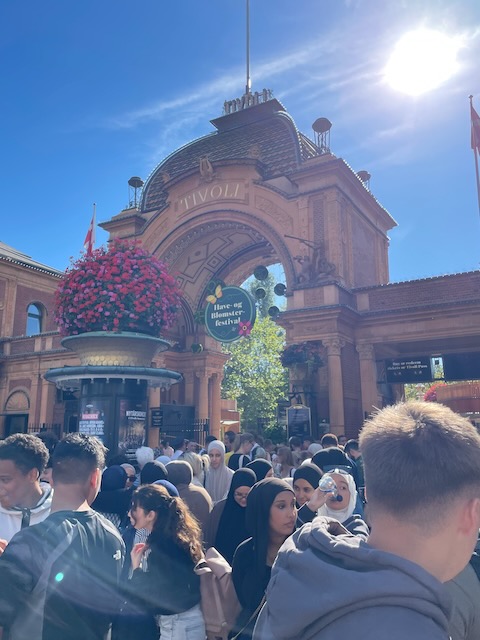
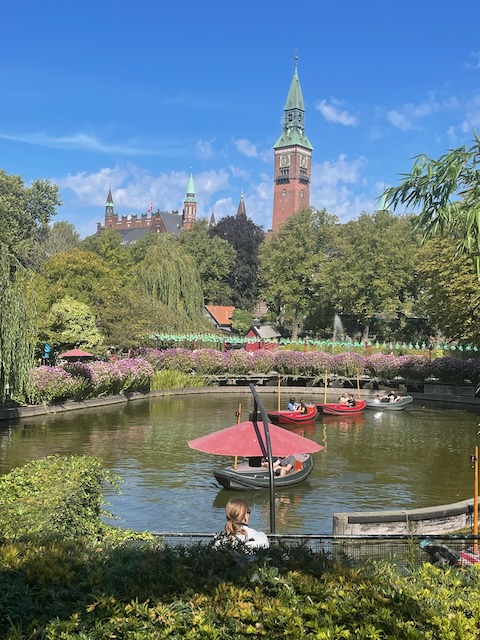
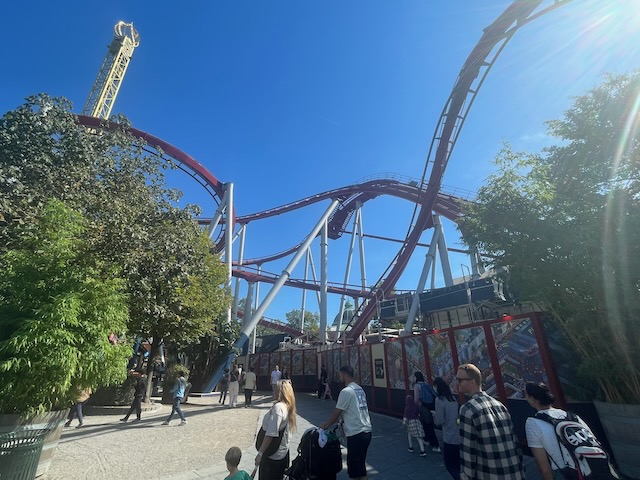
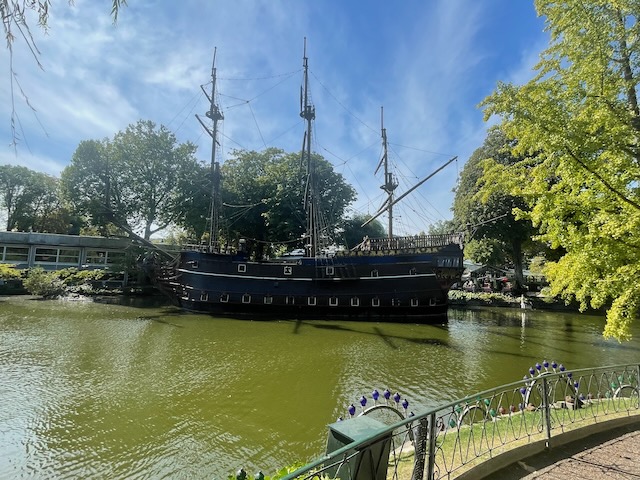
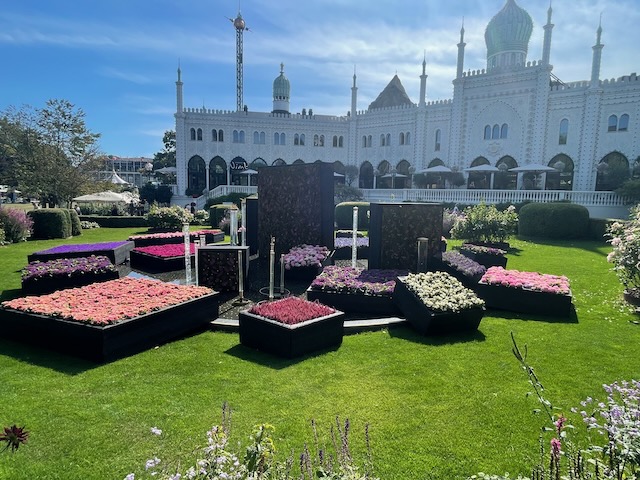

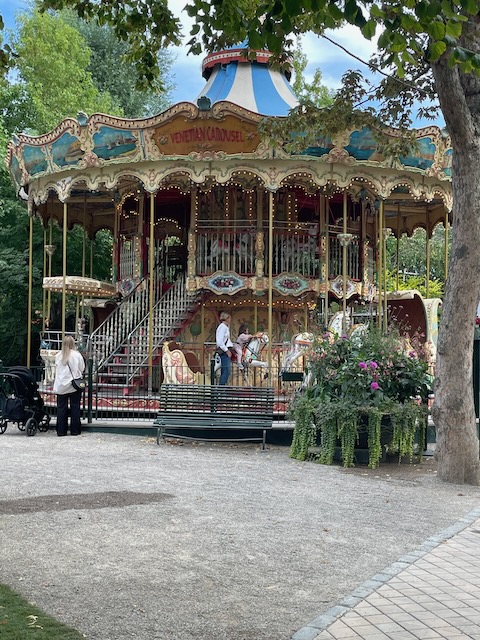
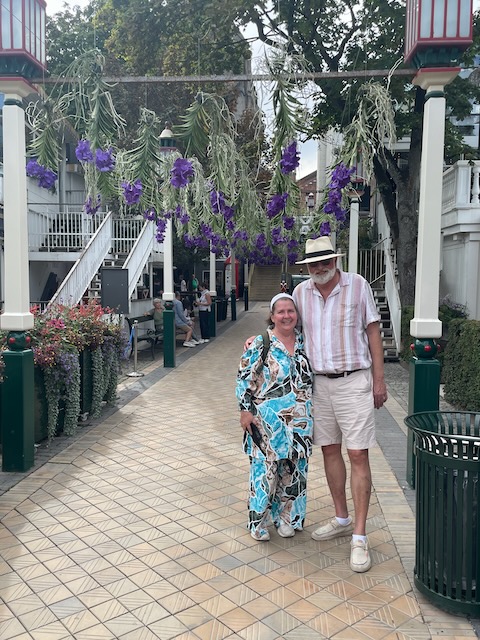
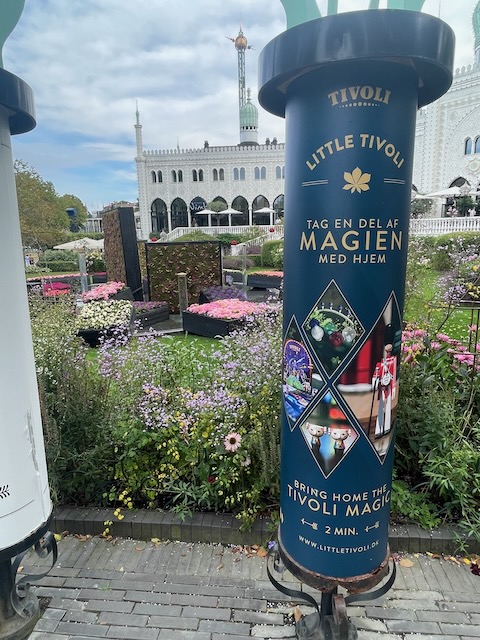

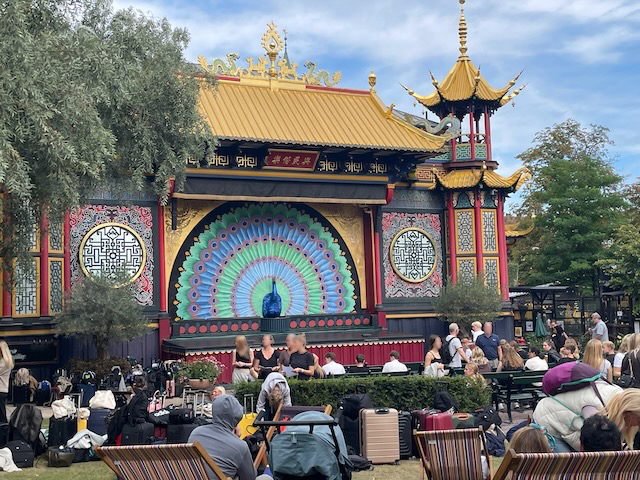
Tivoli opened in 1843 and is the second-oldest operating amusement park in the world, after Dyrehavsbakken, which is also in Denmark and also got a write up here in Bald Sasquatch.
Tivoli is the second-most popular seasonal amusement park in the world after Europa-Park, which, in a bizarre coincidence, is the most popular seasonal amusement park in the world just ahead of Tivoli.
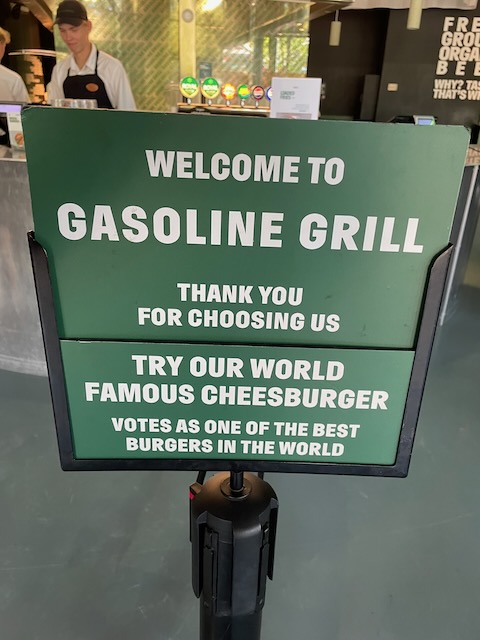
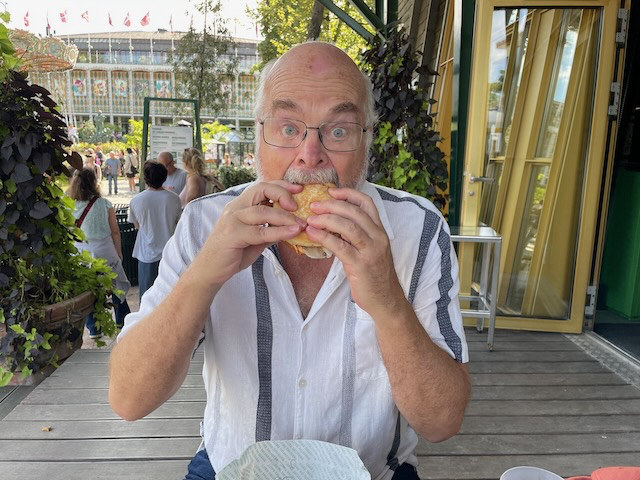
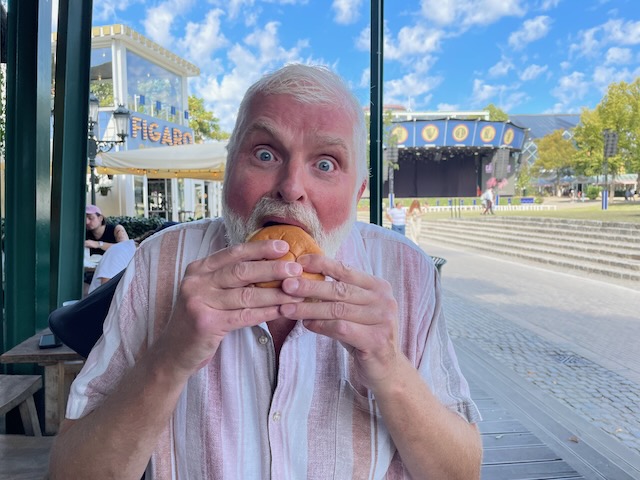
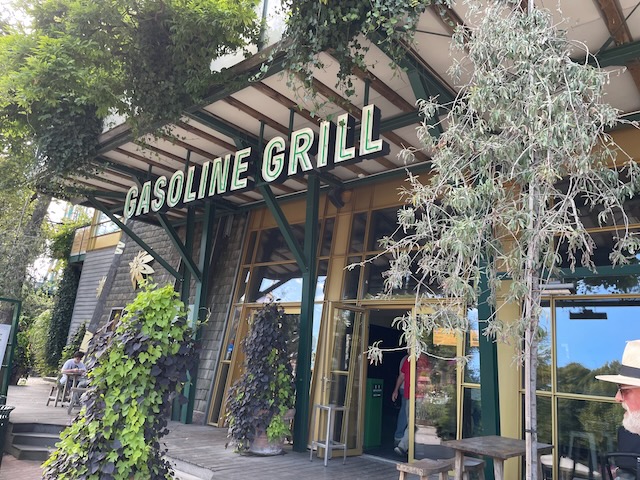
Inside Tivoli park we had to test out this brazen advertising claim made by the Gasoline Grill (not really the most appetizing name for a restaurant) and its world famous cheeseburger, “voted as one of the best burgers in the world.”
I couldn’t find the asterisk on the sign, but it needs one, surely pointing to: “Of course, we only collected one vote and it was from the mother of the owner.”
The burger wasn’t bad, mind you, but one of the best burgers in the world?
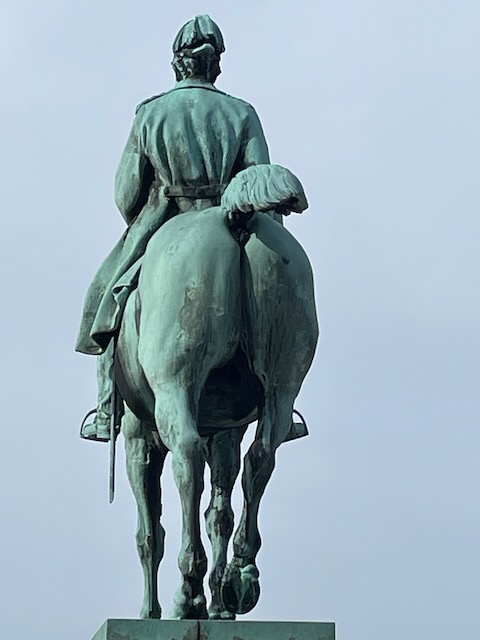
That’s just a bunch of horse patootie right there.
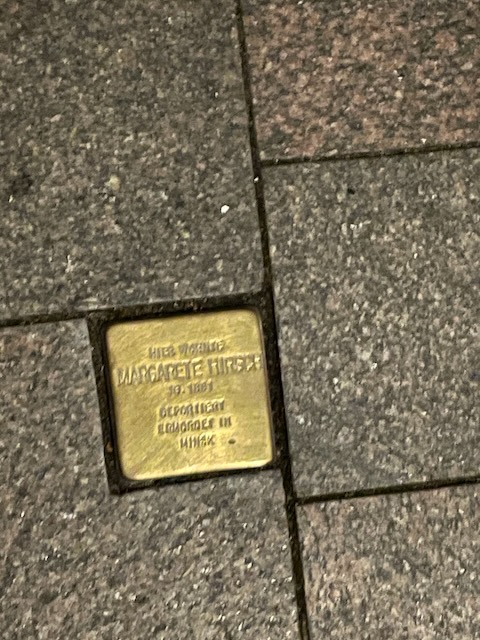
But this definitely isn’t. These small gold squares, officially called Stolpersteine (German for stumbling stones), are small brass plaques embedded in the pavement in front of houses where victims of Nazi persecution last lived freely. Each stone bears the name, birth year, and fate (deportation and death, if known) of an individual.
There are over 100,000 Stolpersteine across Europe, and I think is a wonderful idea, because damn if we aren’t already seeing too much collective amnesia about unspeakable tragedies that happened less than 90 years ago, risking their repeat all over again.
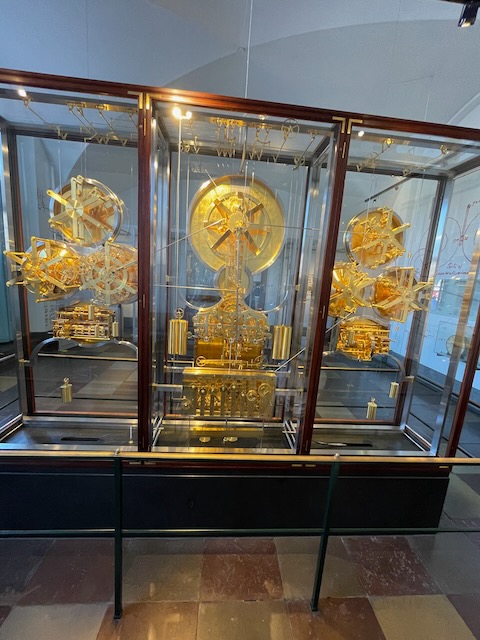
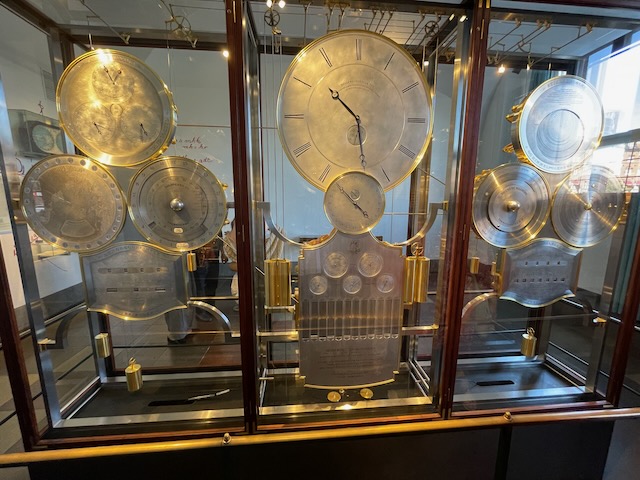


One fascinating exhibit they had nearby was this World Clock. It’s a clock designed to last for thousands of years, and in fact one of the clock’s gears makes a complete rotation only every 25,753 years. Since the clock was started in 1955, that will mean only the people in the year 23,798 will be able to see that thing complete its rotation. I mean, my word, the song “In the Year 2525” only got to the year 9595, and that was ridiculous and didn’t sound fun at all. I really think in an additional 14,200 years later than that humans will either be long gone or look like worms with big bulbous heads. But they will still have a clock.
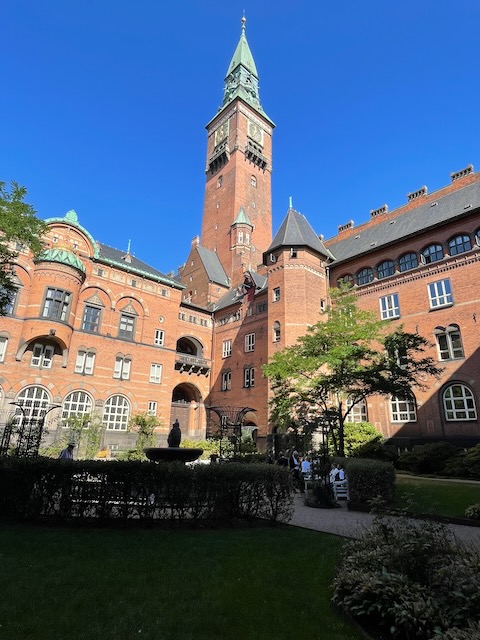
Speaking of time, which I’m almost out of (“Thank God!” exclaims a chorus of readers) the Town Hall also has the Town Hall Tower Clock, which famously chimes in the new year every year, except I suppose the ones that don’t actually have a New Year’s Eve, which I think is every 99 or 14,243 years or something like that.

So off I went to Budapest next, in freezing weather and all. And now you know how they de-ice planes, which turned out not to be necessary because I was on the plane:
(Scroll down to see previous entries.)
 baldsasquatchdotcom