Copenhagen: The land of Vikings, the World’s Oldest Operating Amusement Park, and a commune in the middle of the city

Our tour of Denmark continued with a visit to a Viking museum, the world’s oldest operating amusement park, a successful commune, ‎⁨an old graveyard, Frederiksborg Castle⁩, ⁨a drive across Denmark, a visit to the town of Frederikshavn⁩, some World War II artifacts, and then a ferry to Norway! Woof! That’s a lot, we better get started!

First up are the Vikings, because I don’t want to make them mad and get stabbed by one of the horns on their helmets. Which was actually never a thing, by the way; that depiction was simply made up during the 1800s. A thousand years from now, I wonder what weird ideas they’ll have about our current civilization. Maybe that a rapist was once elected the President of the United States in the 21st century? Oh right, like they’d ever believe that.

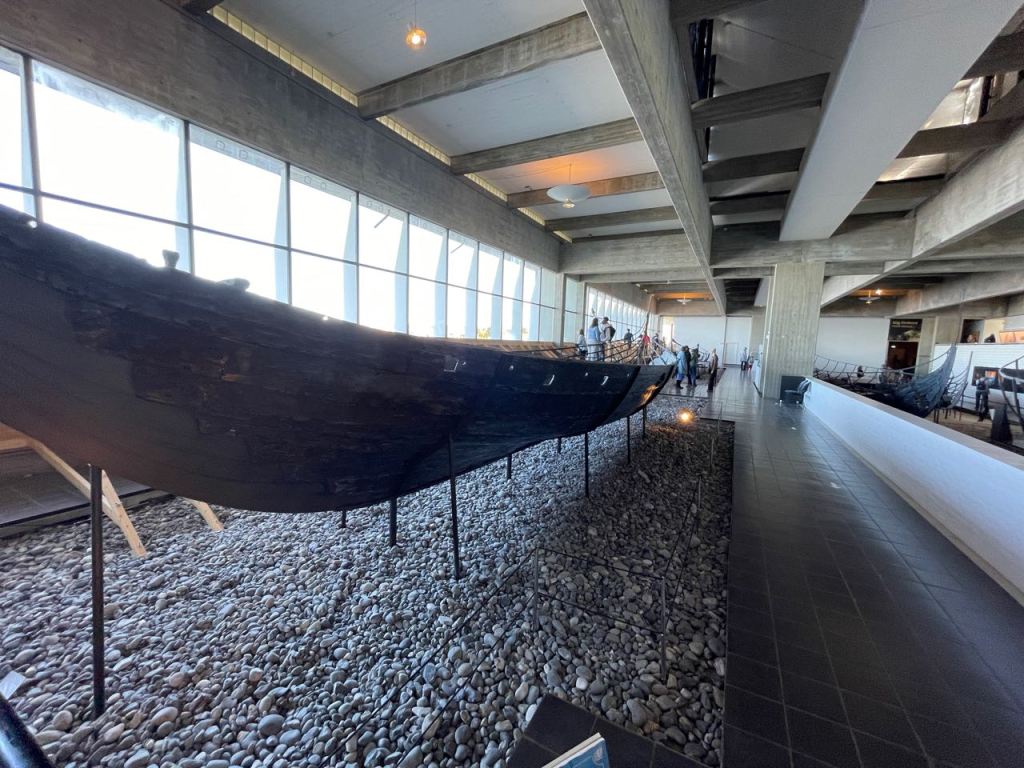
These are the genuine article: actual Viking ships that were pulled out of the water, or perhaps discovered in the basement of some Viking ship hoarder. The museum also built Viking ship reconstructions, so you can sail into the waters just like the Vikings did a thousand years ago. Speaking of which, another Viking myth is that they burned their dead while sending them off into the water on boats. It makes for a good movie scene, but you can rest easy: if you die on the water they won’t burn your corpse out there. They’ll probably just dump you in the ocean so you can feed the fishes. Recycling is big in Denmark.

But truly, it was very cool to see actual Viking ships. For whatever reason, Vikings have an outsized footprint in historical lore, even though a whole bunch of their legend consists of made-up stuff. So it was interesting to learn more about them and see their actual handiwork. I do have to hand it to them: sailing the seas in one of those relatively small ships all the way to England, Iceland, Greenland, and even on to North America is not for the faint of heart!

This is the way the ship would’ve looked once they installed all the tires.

This is an old Viking chimney that’s still operating today! Just kidding. This is actually a regular old smokestack, connected to a plant that burns garbage for fuel. It’s a great example of the Danish placing value in aesthetics by taking a mundane or even ugly object and turning it into art. I think that’s awesome!
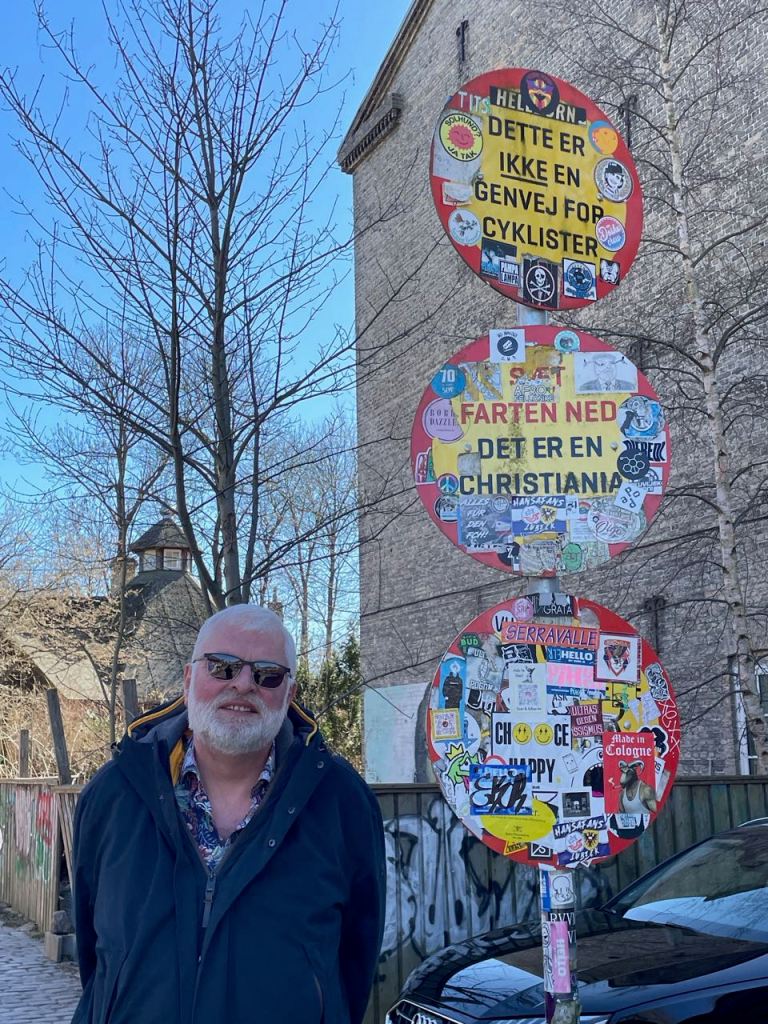
Of course, not every sign or object is pretty. Here’s our friend Per (who may not be pretty, but he’s sure handsome!) standing next to a rather cluttered sign forbidding him to fart in Christiania. Unlike the Norwegians and Finns, the Danes hate farting.

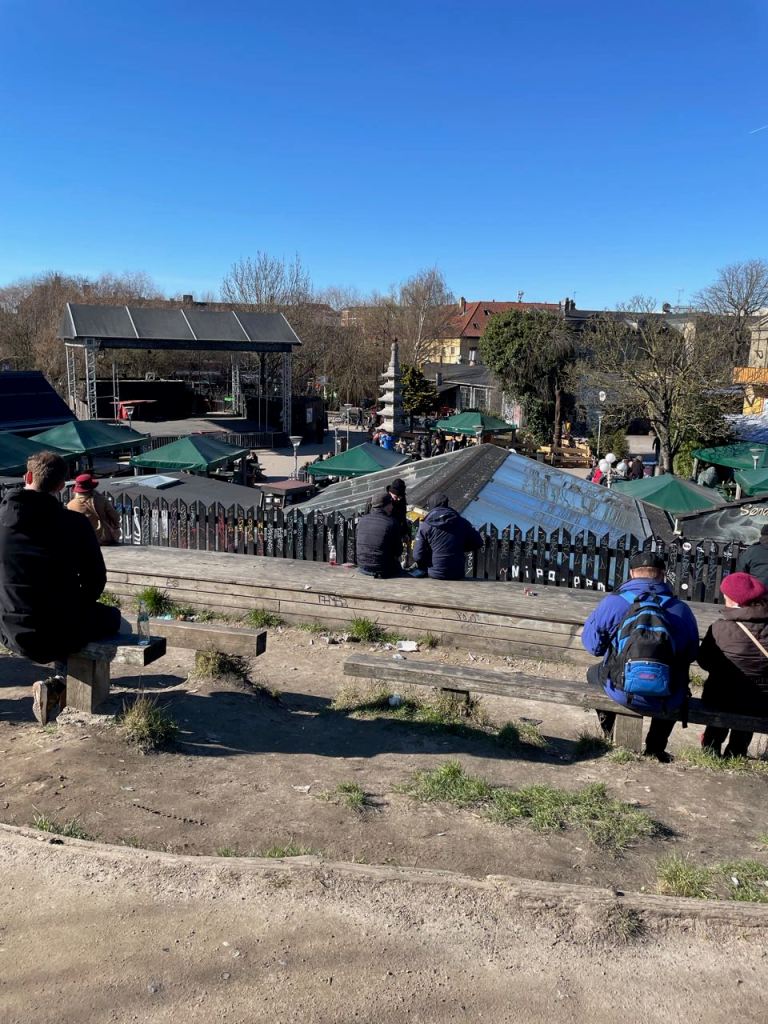
But what is Christiania, you ask? It’s actually a fascinating story. The short version is that Freetown Christiania, as it is also known, is essentially a squatter commune in the middle of Copenhagen. It sprung up in 1971 on a military base, and it remains there to this day, a more or less independent little slice of Copenhagen. No cars are allowed, they make their own rules by vote, and cannabis is openly sold. While the latter is not a big deal in the U.S. anymore with about half the states having legalized it, in Denmark cannabis is still illegal. So the Christianit (that’s what the residents are called) post guards around the edge of the commune, and if it ever happens that the Danish police conduct a raid, by the time they get to the Stalls o’ Cannabis, all the sellers and inventory are long gone.

I don’t have a ton of pictures of Christiania because the best place for pictures is where they sell the cannabis (also known as “Pusher Street”), but if you’re caught taking pictures anywhere near there, your phone or camera will most likely end up being smashed to bits, and possibly your face as well. They take the no-photographs prohibition very seriously, and since it’s “their town” they can pretty much do what they want or make sure you don’t do what they don’t want. Or maybe they want you to not do what you aren’t doing when you do it after you’re not doing the other thing they don’t want you to do. I might’ve written that after sampling some of their cannabis.

Anyway, as you look at these pictures, understand that they’re in a location that might otherwise be filled with a multitude of buildings housing condos worth millions apiece. The structures in Christiania range from very basic shacks to sophisticated buildings, and everything in between. All the residents and workers were very pleasant to interact with (I suppose other than the guys who would rip your face off for taking a photo, but I decided not to engage with them for obvious reasons). Christiania is the fourth largest tourist attraction in Denmark, (hopefully it’s ahead of the Little Mermaid), and they sell food, art, and tourist trinkets in addition to the cannabis, so there’s some incentive for treating visitors well, at least the ones who aren’t taking photographs.

The whole thing is of course fairly controversial, because Christiania is sitting on 19 acres of land in the middle of Copenhagen that is worth millions, and yet only has about 1,000 residents. Some Danes want to bulldoze the whole damn thing, others want to leave them alone. In the meantime, it’s an interesting place; perhaps one of the world’s most successful implementations of an actual, functioning, long-term commune.

Up next on our “boys day out” (Carolyn and Pia stayed home to paint their nails, watch chick flicks, eat pizza, and make fun of me and Per) was a visit to the world’s oldest operating amusement park. It opened in 1583, which is 83 years after Portugal discovered and claimed Brazil, 37 years before the pilgrims sailed to America, and slightly before my birthday.

I only took this picture because I got a kick out of both of those words: Motorcykel Parkering. That might be a good name for an actor. Either that, or the sign maker ordered the sign at the same time he was sampling the cannabis in Christiania. Unless it’s in Danish… hmm… I hadn’t thought of that.

While I was excited to see the world’s oldest operating amusement park, I didn’t think it through much further than that, where I might have realized that it’s not very feasible to have any rides from 1583 still operating. At least none I’d get on. They did have this little area showing off some old time stuff like that car, and there’s an interesting history Per regaled me with (the details of which might’ve been lost in either a cannabis or old-brain haze… it must be the latter because I didn’t actually sample any cannabis). The rest of the park is just like any good old-fashioned amusement park.

…. including this “exotic” American Diner with all that crazy American food. I think I gained two kilos just by looking at the menu.

They do have a wooden roller coaster that’s been operating since 1932. The world’s oldest operating roller coaster is in Lakemont Park, Altoona, Pennsylvania, USA, and was opened in 1902. Copenhagen also has a more famous amusement park called Tivoli Gardens, which is so famous I’ve heard the name… but don’t know a thing more about it. Except they also have a very old wooden roller coaster, the Rutschebanen, which opened in 1914. Plus they charge admission just to get in so I preferred Bakken.

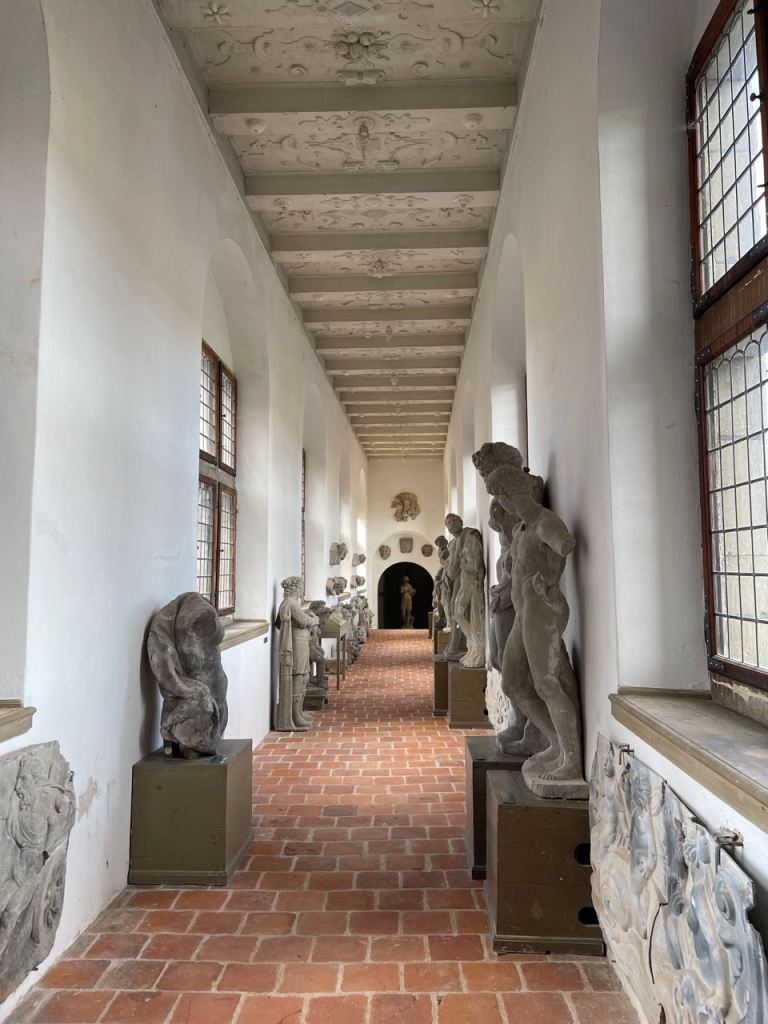
Next up is Frederiksborg Castle⁩. It was built as a royal residence for King Christian IV of Denmark-Norway in the early 17th century. Per is making sure we don’t see any naughty bits. But read on if you want to see some other ones.

Frederiksborg Castle is the largest Renaissance complex in the Nordic region. It is quite impressive.

They also designed a Door of the Day especially for Carolyn.

We didn’t really violate our no-more-cathedrals policy here because this chapel is part of the whole complex and you stumble across this view as you wander through the palace. It is kind of a cool looking one in any case.
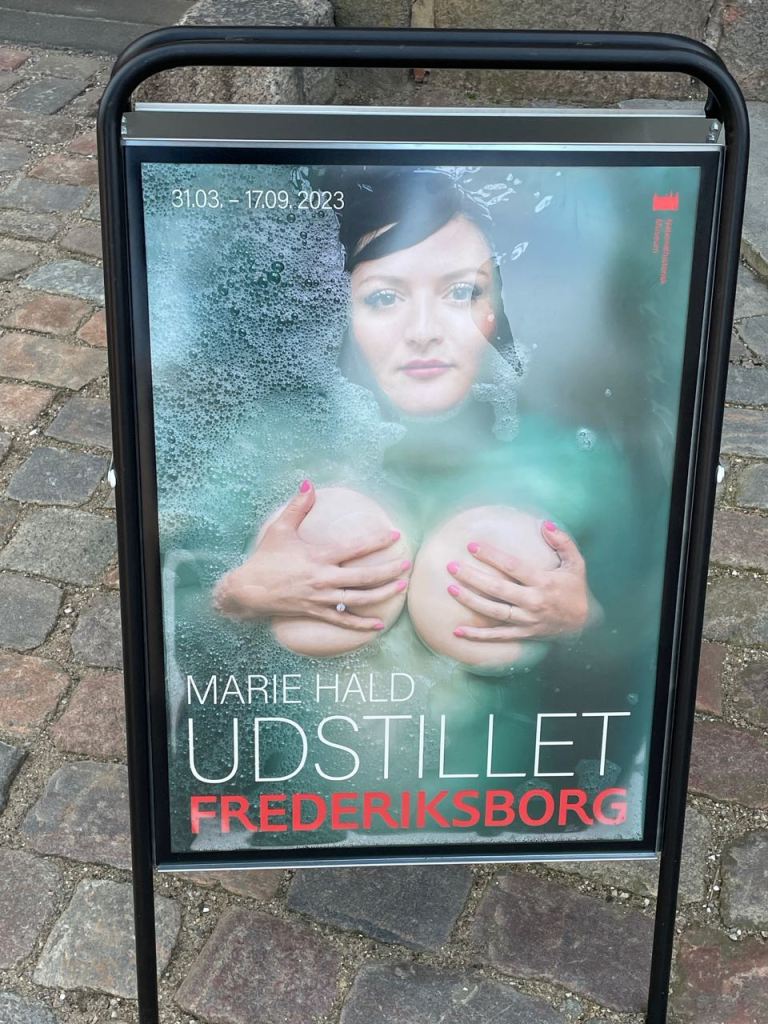
Speaking of chapels and boobs (okay, maybe I was just thinking about the latter), at the entry to the palace, we were greeted by this unusual sign of a lady playing with two beige balloons while in a bathtub. When Per told me that they had a show going on, I pictured some sort of burlesque performance on a stage. I thought that was a little strange for a palace/museum, but then I remembered we were in Europe, where exposing your breasts doesn’t get you arrested and thrown in solitary confinement for a month.

To which this model gives us her opinion about that. Turns out it was actually an exhibition featuring a photographer who takes very candid and uncensored shots, especially of people with all sorts of body shapes and sizes. Since people never do measure up to the “Hollywood ideal,” it’s a good message to send… everybody’s beautiful! I stopped taking pictures after this one because I didn’t want to look like a typical American male creeper.

Anyone who might be offended by a picture of two of God’s Baby Bottles is probably also very pro-gun, so a picture of this boy with a rifle ought make everything even, no? Of course, he looks like a forty-year-old in a child’s body, but he is armed with sword and gun so I don’t think I’d make fun of him or his dress to his face.

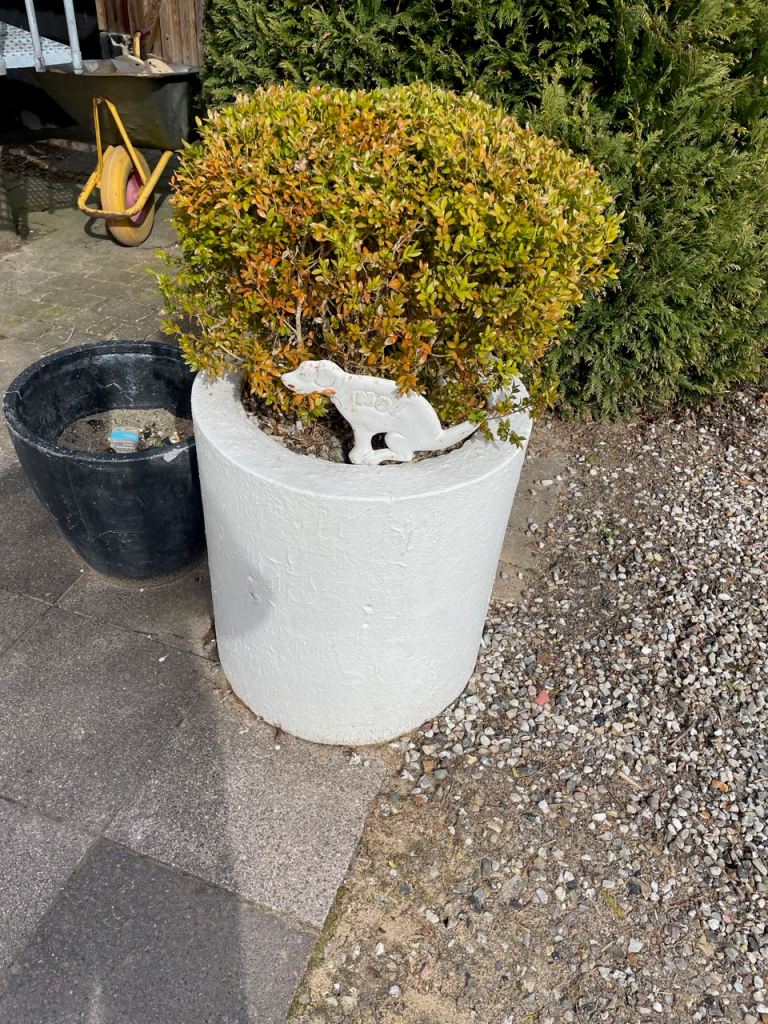
We stopped for lunch and I noticed a couple of things to take pictures of. This house features a sod roof. Which I think means if you don’t like it, you can sod off. I dunno if you have to haul a lawn mower up to the roof to keep it looking trim or not. Also, the nearby dog pooping planter confused me… is that an instruction for a dog to actually poop in the planter, or is that the general vicinity in which poop is expected, or does someone just find the silhouette of a dog pooping pleasurable? It’s gotta be one of those three choices, and I don’t understand any of ’em!

‎⁨We visited Assistens Cemetery⁩, ⁨which is the burial ground for two of Denmark’s most famous citizens: Hans Christian Andersen and Søren Kierkegaard. It was a different cemetery than I’ve ever seen before: very spread out and with some unusual headstones, including that oblong headstone which may be for a famous Danish porn star. I also got a kick out of the one where Professor Holton has a nice big gravestone, but his wife’s just kinda leans against it like an afterthought. Die first if you want the best headstone!

Per and Pia drove us all the way across Denmark (which takes about 4-1/2 hours) to reach Frederikshavn⁩, where we were scheduled to get on a ferry for Oslo. The bridge pictured here is a big deal: half of Denmark’s population used to rely on ferries to get to Copenhagen. The Great Belt Fixed Link opened for traffic in 1998 and changed all that. The system includes a tunnel and two different bridges. The bridge’s 254-meter tall pylons are Denmark’s highest structures, and the 1664 meters between the pylons make it the fifth longest free-spanning bridge in the world.

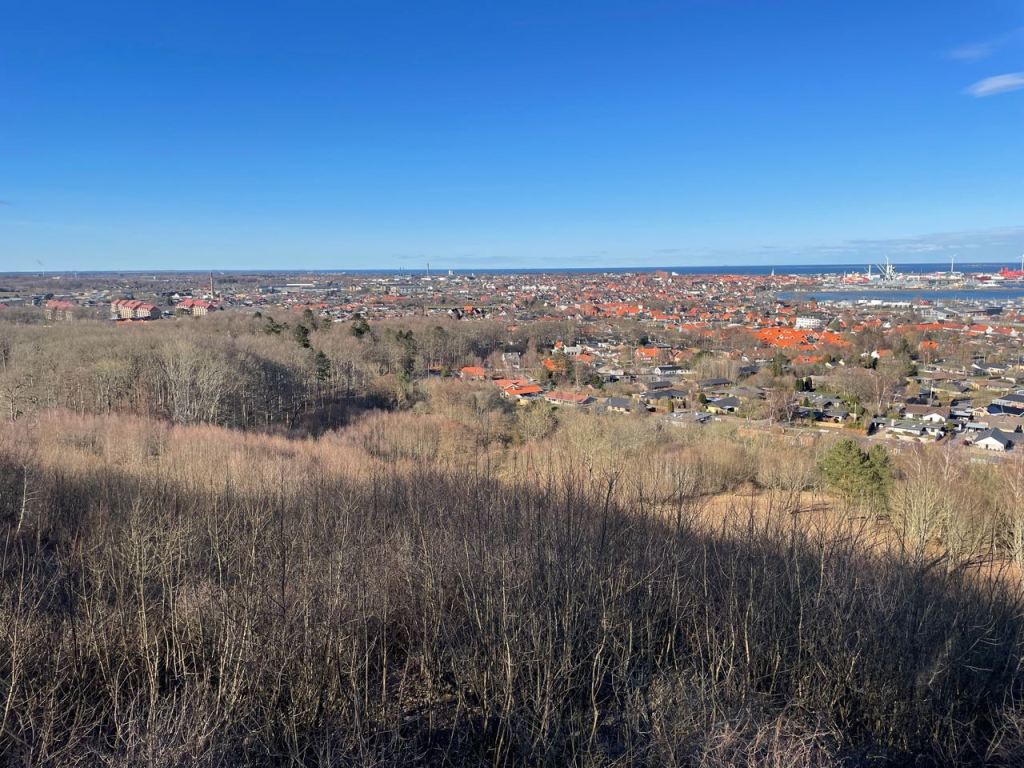
Once we were in Frederikshavn⁩, we were able to visit our host’s adorable little grandson. We were honored to visit their daughter’s house and meet the little guy; he’s definitely a cutie.

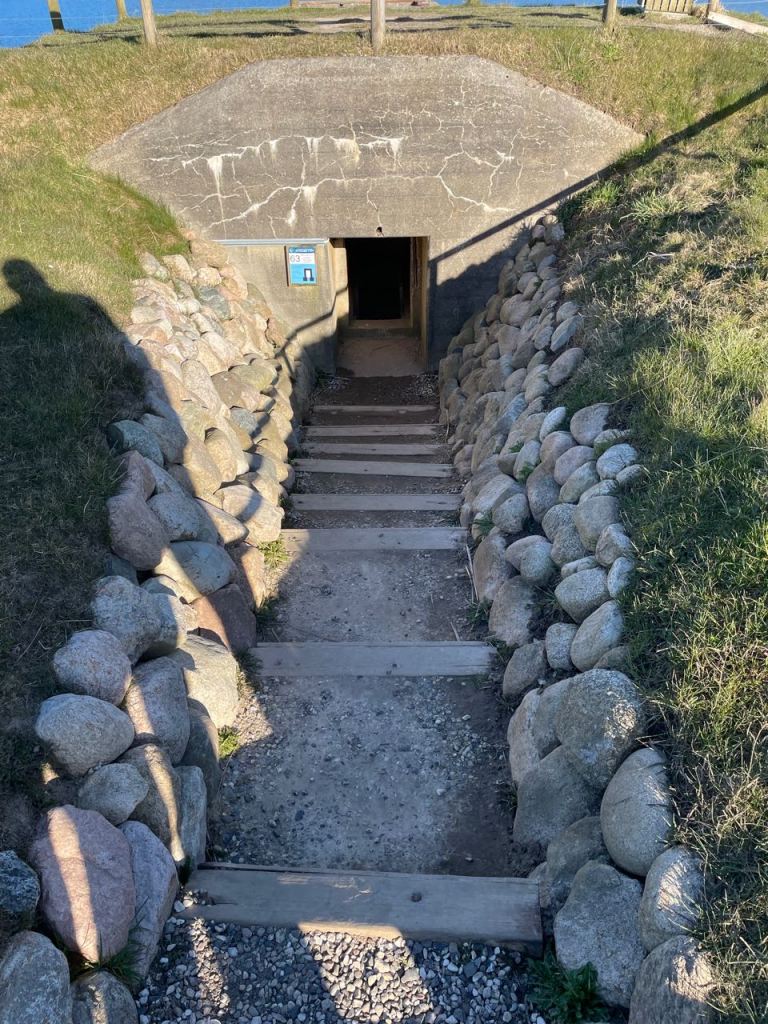
The town was the site of German occupation during the war, where it could harass enemy shipping and control access to Germany from the North Sea. Today, as with everything we saw in Denmark, it was clean, safe, well-kept, and beautiful.

Before we leave you to set sail for Oslo, we offer up a couple of signs that might amuse our English-speaking readers. I wasn’t completely sure what to spill out of Carolyn, so I just asked her to throw up. Better than a middle fart!

This was the very long walk we had to take to get from the parking lot to the ferry for Oslo. Not a walk for the faint of soles!

Denmark- Where every meal includes a Danish

I should be a little embarrassed to admit that when we were planning on visiting Denmark one of the things I most looked forward to was to eat a Danish danish. I mean, right? It’s just like when you have to eat french fries in France, or drink scotch in Scotland, or eat a hot dog in Hotdogistan.

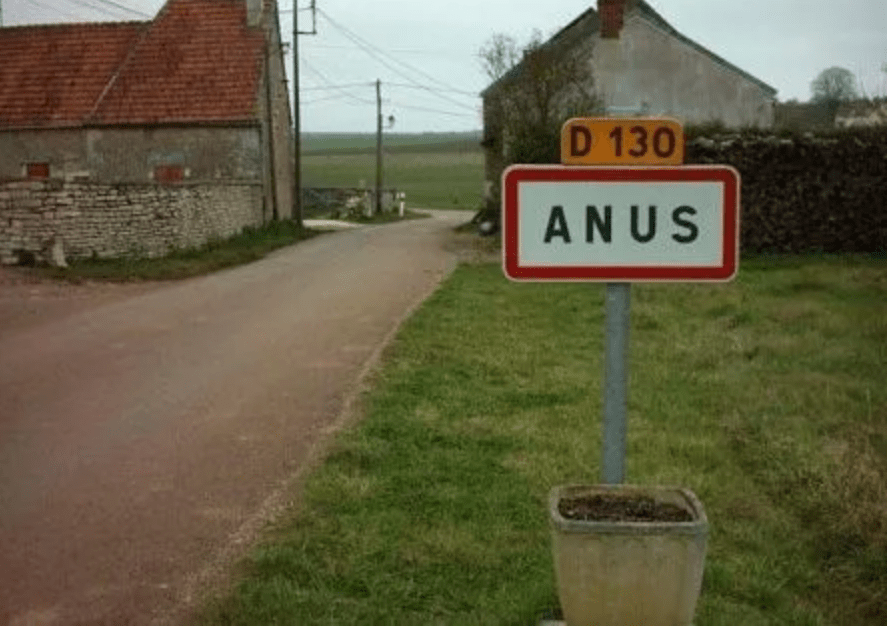
Or of course when you go to Anus, France, you… uh, hey wait a minute. I may need to rethink this entire concept.

It’s sad to say that we haven’t found ourselves in Anus, France yet, but if we ever do, I’m not going to be very inclined to do anything that pertains to its name. And yes, I already know there are lots of crazy place names, including: Pee Pee Township, Ohio, and Titty Hill, England, and Fucking, Australia, and Twatt, Scotland; and Dildo, Canada; and Humptulips, Washington; and Muff, Ireland… the list goes on and on. I don’t know how we’ve missed those during our travels, but now I’m thinking about taking a Crazy Name Tour of Europe.

Llanfairpwllgwyngyllgogerychwyrndrobwllllantysiliogogogoch, Wales, here we come! Actually we may never get out of Wales if it’s a Crazy Name Tour.

In any case, on one of our first mornings our gracious and generous friends and Danish hosts, Pia and Per, went shopping at the Danish Danishes for the Danish shop and came back with this assortment of lovely-looking treats. I silently gave thanks that we weren’t in Anus.

This is what authentic danishes in Denmark actually look like. They were everything I hoped for, except I don’t know why they bought four for me and none for anyone else.

This is what it looked like after we tried as politely as we could to have a taste of each one of ’em. And yes, they were as delicious as they look.

According to Wikipedia, “a Danish pastry is a multilayered, laminated sweet pastry in the viennoiserie tradition. The concept was brought to Denmark by Austrian bakers, where the recipe was partly changed and accommodated by the Danes to their liking, and has since developed into a Danish specialty.” So blame the origins on the Austrians, but the Danes made it all their own.

Since we’re on the subject of food: I’m not normally one to take “food selfies,” but this was such an unusual (for us) meal and had so many instructions and procedures, I just had to do it. The dish in the foreground is smoked eel, which I don’t recall ever eating before, at least sober. But it was absolutely heavenly. The traditional foods we ate included a series of open-faced sandwiches with various meats and fish on them. We were instructed to take a swig of schnapps with each bite. This transformed our mouths into a symphony of tastes and sensations like we’d never experienced before. It truly was one of the most interesting and delicious lunches I’ve ever had.

This is the restaurant that showed us how awesome Danish cuisine can be. We would have never even known about it, nor been able to even get a table, had we not been with Pia and Per. They also corrected my mis-assumption that danishes were commonly served with every meal. Dammit.

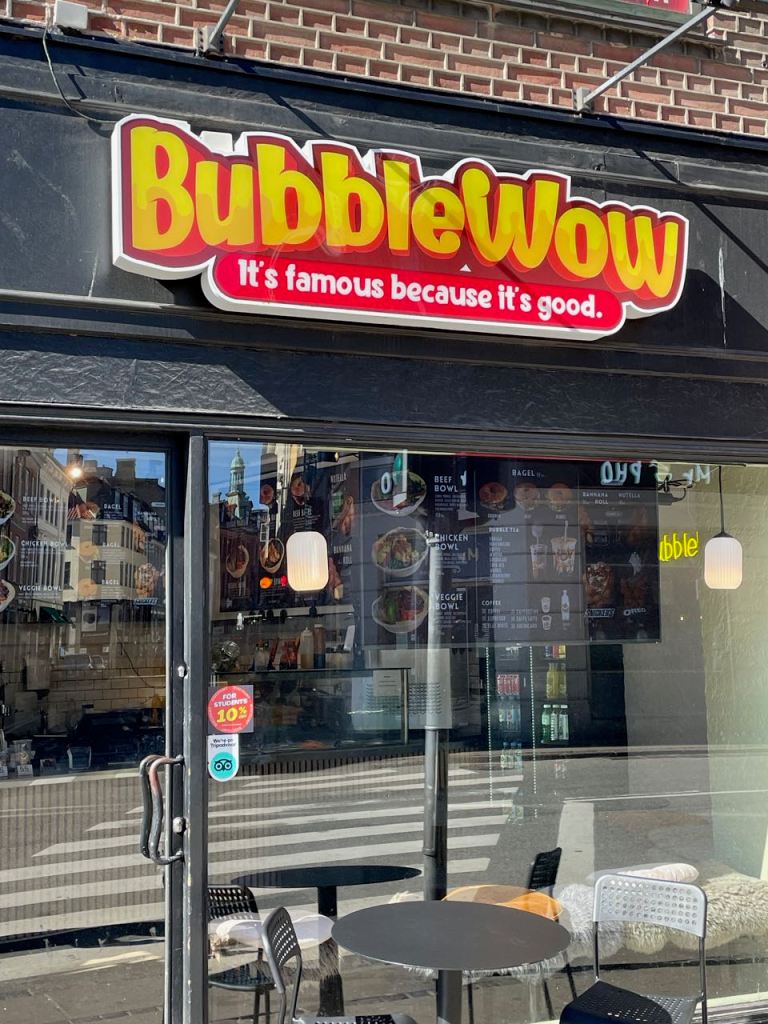
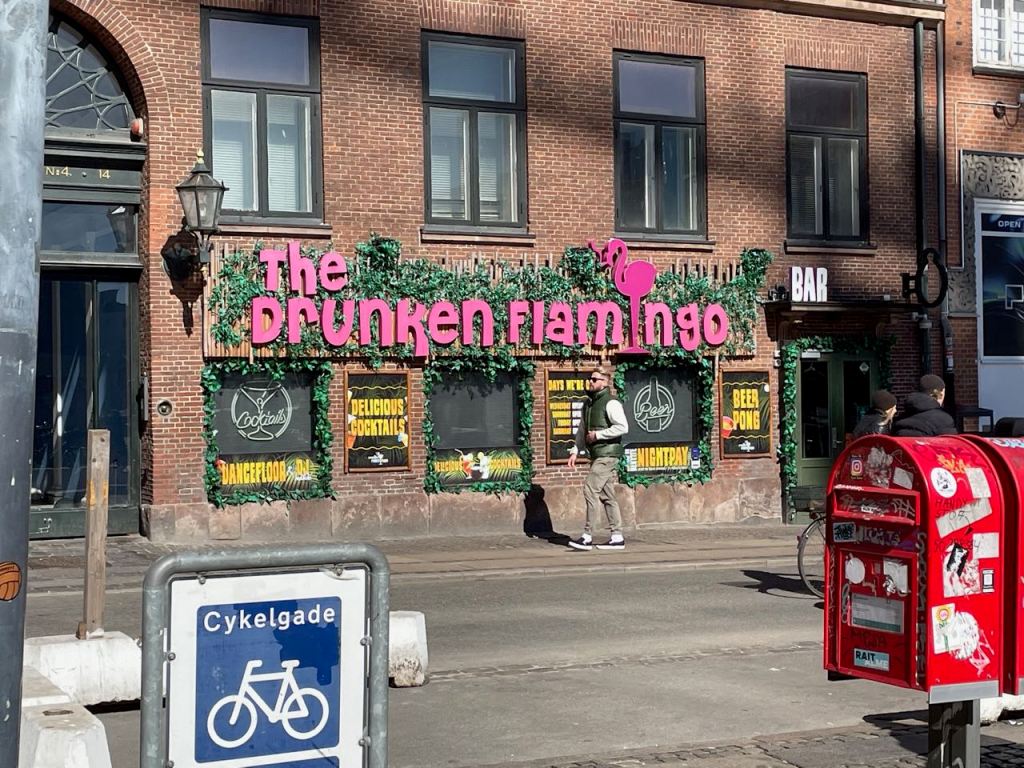
These are more likely the type of eateries we might’ve ended up in without our friends. BubbleWow is apparently famous, but it’s hard to imagine feeling “wow” after eating a bubble. Although I desperately wanted to visit the Drunken Flamingo, having never eaten flamingo before, much less one soaked in alcohol, but alas, my argument for going there had only one leg to stand on. Did you know flamingos get their pink color from their food? I really wanted to find out if that restaurant would put some pink in my cheeks. Either set would have been acceptable.

I got a little ahead of myself by plunging right into cuisine instead of sticking with our visit-timeline. This was taken out of our airline window as we came in for the landing into Copenhagen. I’d say that’s a pretty good use of resources since no one’s gonna be building a house next to all those cancer-causing windmills. For those of you who have forgotten or tried to forget, Donald Trump once said about windmills: “They say the noise causes cancer.” Also: “If you have a windmill anywhere near your house, congratulations, your house just went down 75 percent in value.” Well, even if that’s not in any way true, the Danes are asking, “how about the houses near these bad boys, Donald?” Maybe just the fish get cancer now.

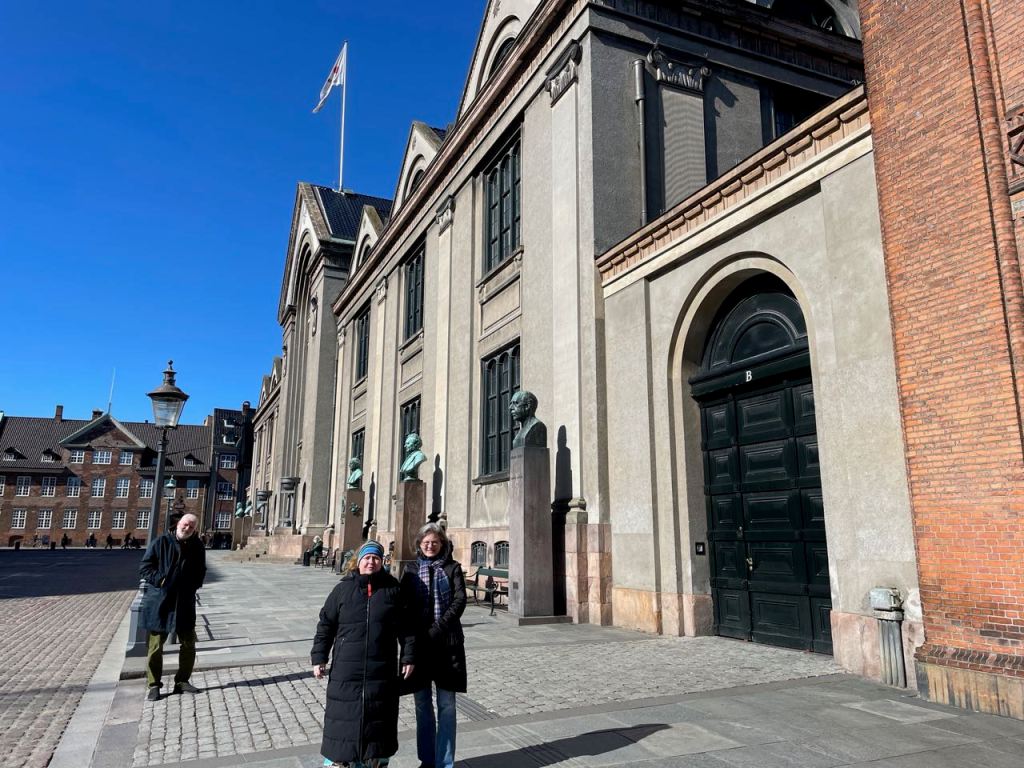
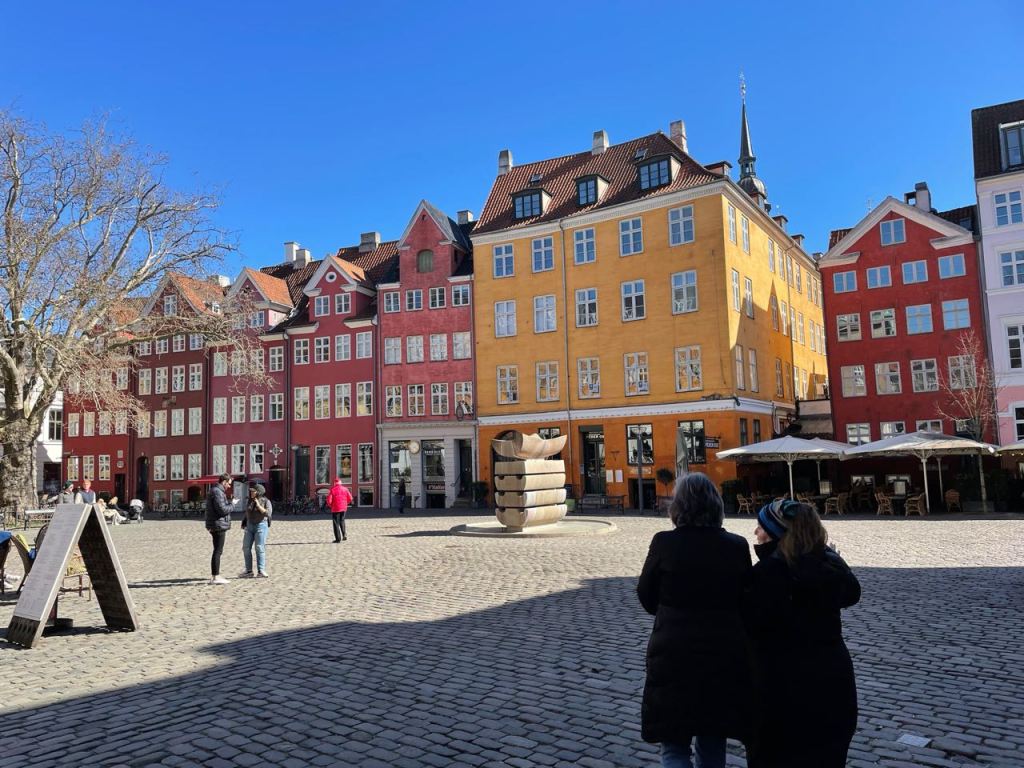
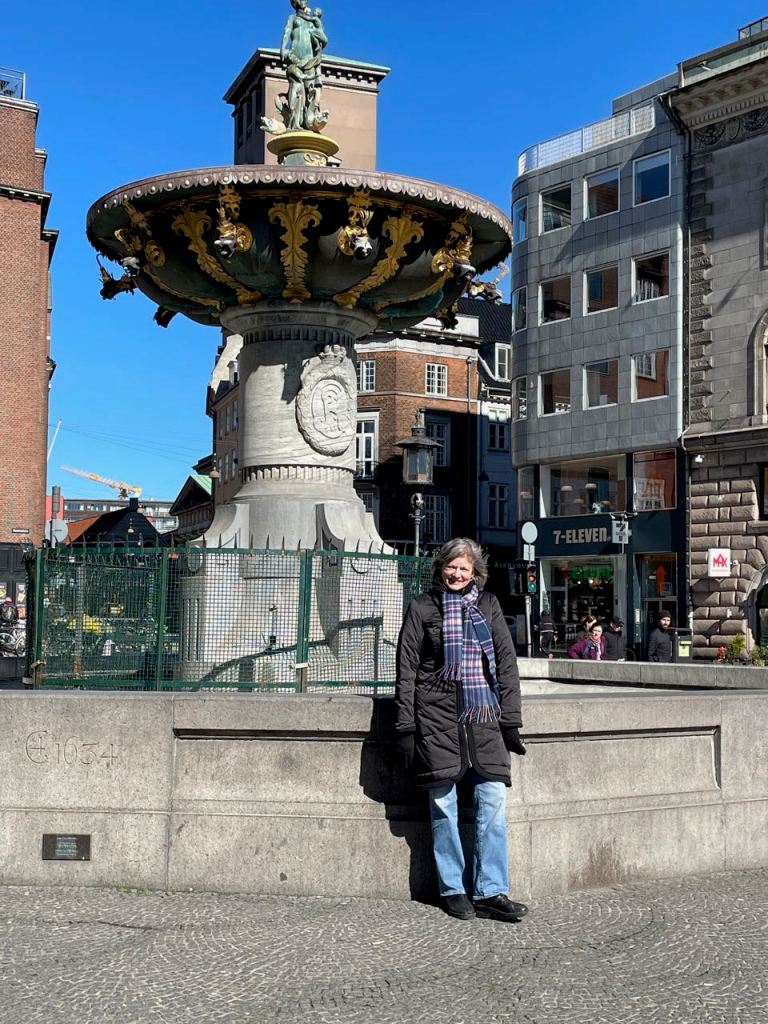
These are assorted buildings and monuments in the middle of Copenhagen. The weather actually treated us pretty well for April in Denmark. It stayed above freezing at least, and we didn’t experience much precipitation during the entire trip. We’ll call that a win!

Even though we’ve both gotten sick of seeing the inside of cathedrals, we still poke our heads in once in a while. In this case, we were rewarded with a very pleasant and –especially for a cathedral– a comparatively understated design. 72% of Denmark’s population are registered members of the Evangelical Lutheran Church, although they don’t consider themselves particularly religious.

Here are some more scenes from the old town area. Copenhagen is well known for its canals, cycling culture, strong economy, and happy locals. In fact, it often appears at the top of various “happiest city in the world” lists. Some of the credit for that is surely due to its shorter workdays, free college tuition, and more vacation days (employees are entitled to 25 days (5 weeks) paid leave). Of course, who wouldn’t be happy with a steady diet of danishes, smoked eel, and drunken flamingos?

We stopped inside this charming tea shop. Nothing but tea. If you like the smell of tea, you may never leave this store. If I recall correctly, this particular shop supplies tea to the Danish royals. They have some very special and unusual teas, including frog’s leg tea, caterpillar cocoon tea, hemlock tea, and pulling-your-leg tea.

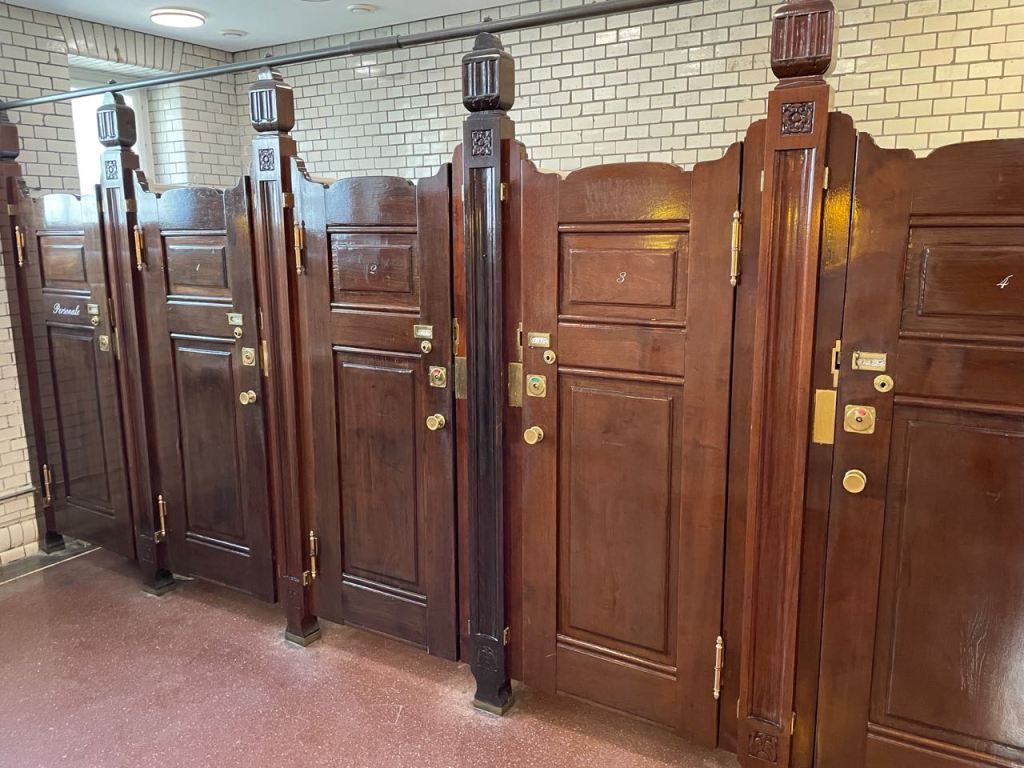
It isn’t often you get to see public restroom stalls in a travel blog, or any blog for that matter (although it’s probably a kink for someone out there), but I had to take a picture of these because they’re some of the most elegant bathroom stalls I’ve ever seen. The restroom itself is over 100 years old, and is staffed by an attendant (who is generally less than 100 years old) to make sure your bodily functions occur safely and in a clean environment. If it could be said that the cleanliness of public restrooms reflect directly on societies, and it’s not a bad thought, then the Danes must be some of the most cultured of all peoples.

That restroom was right next to the dock where you can board a boat for a tour of Copenhagen. We weren’t sure we’d be able to take a boat trip due to the variables in the weather; it could have easily been below freezing and/or windy. But as it turned out, while it wasn’t exactly warm, we didn’t freeze our patooties off while cruising on the water either. The blue sky followed us all the way from Portugal!

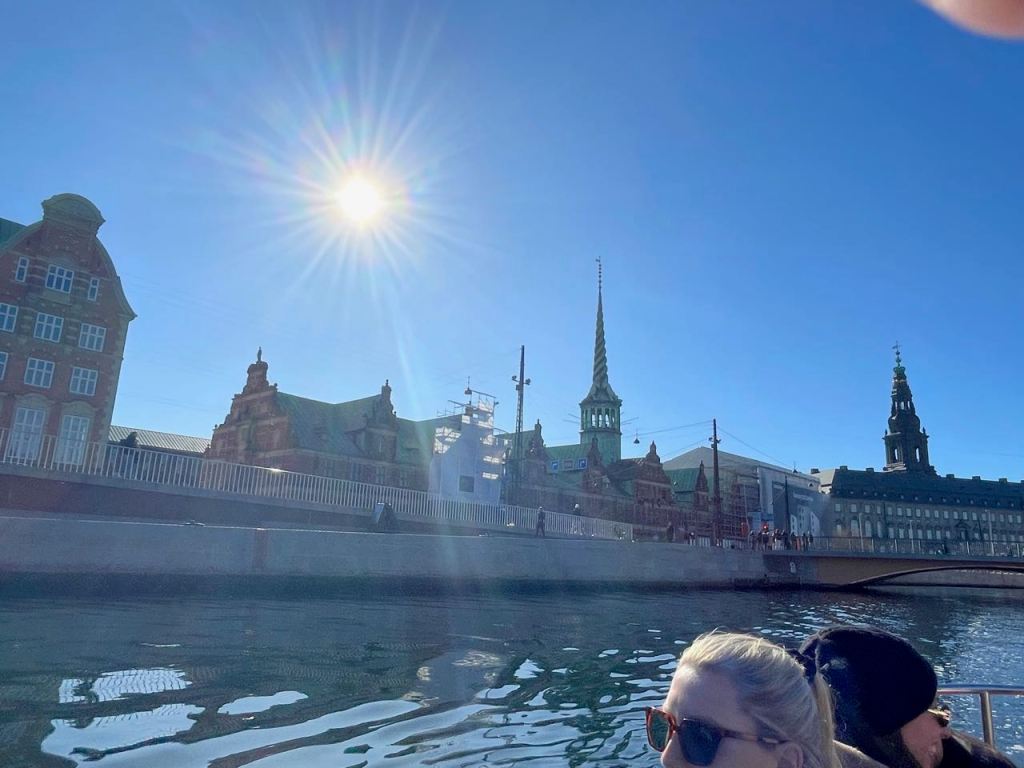
We love the colorful houses that line the canals and we were so delighted that it was warm enough to get these views from the water. Copenhagen is part of a large island, and Denmark consists of 1,419 islands altogether. In fact, the furthest you can be from the coast at any point in Denmark is only 52km (32 miles).

Here are some of the buildings and sites viewable during the boat tour. As you can see, it’s an amazing blend of old and new. Historical and beautiful modern design all at the same time. It’s also clean, safe, and vibrant. Can’t imagine what else you’d want in a city! Plus we’ll throw in a Pia and a Carolyn for good measure!

Of course, even paradise can have its issues. Here is the view of the Little Mermaid statue from the canal tour boat. Almost everyone we talked to about visiting Copenhagen told us to FORGET THE LITTLE MERMAID! Our Danish friends called it the most overrated tourist site in the entire world. I have to admit, however, it wasn’t underwhelming for me at all because I expected to be completely underwhelmed. In fact, I think my whelm is still sitting in the bottom of the canal. Anyway, she was exactly as I expected: just a little statue no one would think about at all but since everyone loves Hans Christian Andersen, well, there you go.

Once back on dry land, we were treated to a little touch of home by walking by the Portuguese embassy. It made us feel comfortable knowing that at least somewhere in the city, someone would be able to understand at least something we were trying to say. Actually, in all seriousness, 86% of Danes speak English; I don’t think we encountered one person who wasn’t pretty much fluent in English.

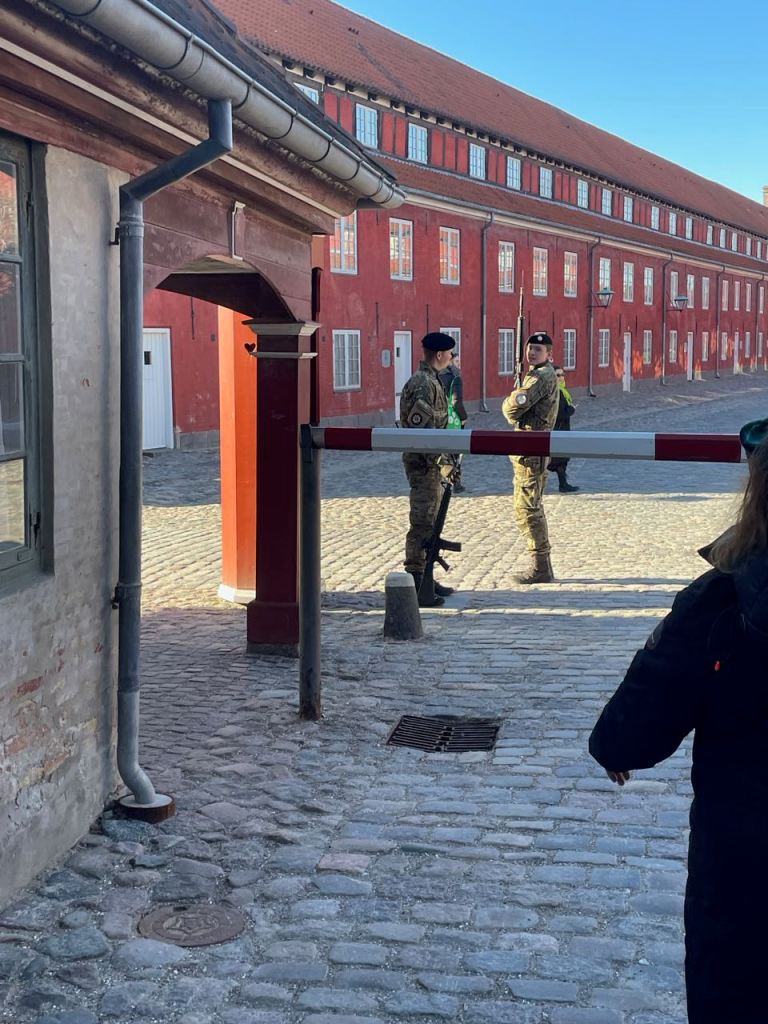
These are photos taken in and around the royal Palace, which is in the heart of Copenhagen and is the seat of one of the world’s oldest monarchies. It still functions as living quarters for the Danish Royals. We were hoping to see one taking out the trash, but alas.

And we finish this episode with a close-up of the Little Mermaid, because of course we ended up driving right next to it, and you can cheat and park in a restaurant parking lot that is only a hundred meters or so away, so I got the shot. As a result you can rest easy now… you don’t have to travel all the way to Copenhagen just to see the Little Mermaid anymore.

Hans Christian Andersen was a prolific writer, but is best known for his fairy tales, including: The Little Mermaid, The Emperor’s New Clothes, The Ugly Duckling, The Snow Queen, The Nightingale, and many more. His most famous quote was, “I wrote plays, travelogues, novels, fairy tales, and poems, and all I got was this stupid little statue of a mermaid.”

The Isle of Absolut

When Carolyn first told me about the Isle of Skye in Scotland, for some reason I pictured the heavens filled with Skyy vodka bottles (and I swear I’m not an alcoholic, at least when I’m not drinking). But it actually kinda bothered me because my preferred vodka is Absolut, not Skyy, so I wondered if I was betraying the trust of my first vodka love.

On top of that, Skyy is an American vodka and thus is more sour than Absolut, because of course Absolut is sweetish.

(If you didn’t get that joke, speak that sentence very slowly out loud. You won’t laugh in either case, but that’s okay, that’s why we call them Dad Jokes.)

Besides, if Scotland’s gonna fill its sky with any kind of alcoholic drink, it’s surely going to be Scotch, not some foreign vodka. To make matters even more confusing, no one involved seems to know how to spell the word “sky,” so I was really getting all twisted up in knots.

This Scottish journey was really starting to mess with my head, man.

In the end, when I reviewed all of that thinking in regards to the visit, I realized that I had better stop doing so many shrooms right before a road trip, so I took ten minutes to sober up and then we packed up our car in Glasgow and drove on the left (mostly) up north, into the Highlands of Scotland.

My main introduction to the Highlands of Scotland was from The Outlander books by Diana Gabaldon. Despite the inherent believability of those novels (I mean, duh!), I was a little dubious that we could find the sort of Stonehenge-esque rocks that would send us back in time. Still, just in case, I tore the stock market pages out of some old newspapers I “borrowed” from the local library and stuffed them down my pants. You can never be too sure. (As a side note, reverse newspaper print on your ding dong can look a little scary at first glance.)

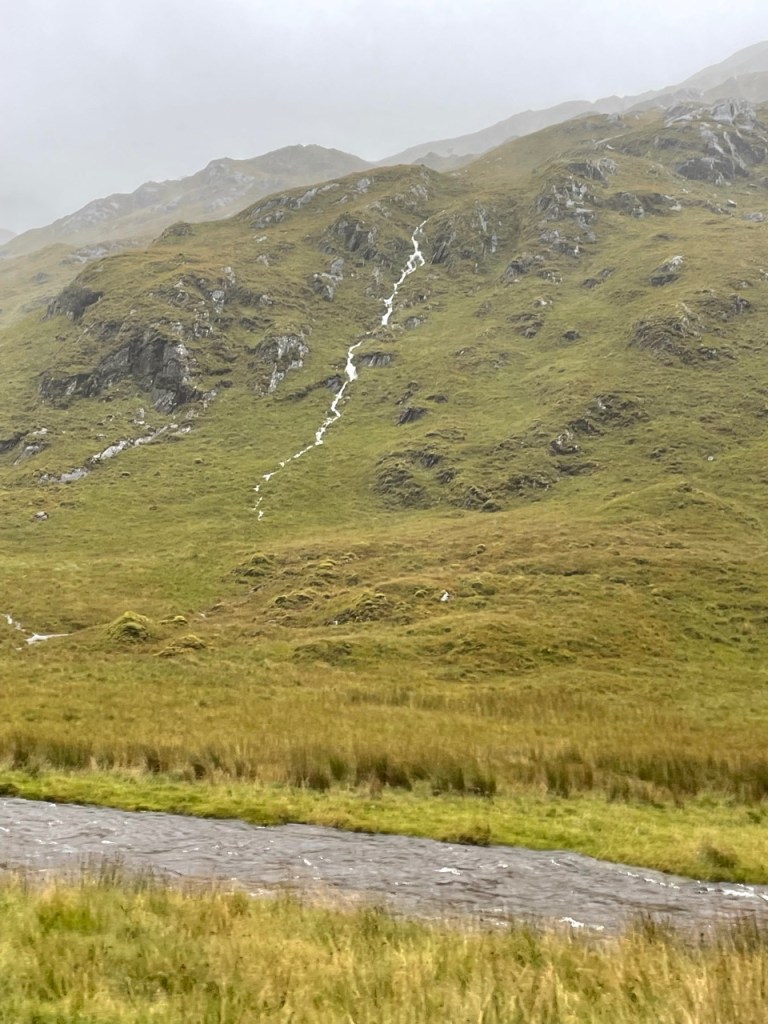
Along the way we spotted what looked like snow trails on the hills. Turns out they were simply fast-moving streams from a storm that had been blowing in as we arrived. The weather around the Isle of Skye is notoriously unpredictable and tempestuous (kind of like a marriage between Donald Trump and Roseanne Barr). We crossed our fingers that it wouldn’t be foggy and rainy the whole time, otherwise I’d never see the bottles of Skyy in the sky. Or Skye. Whatever.

This is the bridge that connects the Isle of Skye to the mainland. It’s 250 meters long, and in Scottish Gaelic, is called: Drochaid an Eilein Sgitheanaich. My American mouth is definitely not trained to pronounce any word starting with “Sg.”

Before I go to the original comment about this picture, Carolyn is making me say that this bridge isn’t actually on the Isle of Skye, but is before it, leading up to Eilean Donan Castle, which is, coincidentally, also not on the Isle of Skye. All of that may not be obvious because I posted this picture after the picture of the Isle of Skye bridge, which might lead one to think that all the pictures coming after it are actually on the Isle of Skye. But no-o-o-o, for the sake of a stupid joke (still to come– I can tell you’re waiting with bated breath!) I changed the pictorial timeline. So instead of just a dumb joke, you get this long diatribe about where the bridge isn’t, which is probably not as funny, depending on how long I can carry on about it, as the upcoming joke. And of course I’m willing to bet that absolutely no soul who reads this will care one way or another nor would spot the theoretical error. But when we’re 80 and looking back on this, at least now we’ll have that all straight in our heads. Not that we’ll remember it after breakfast. Anyway, on to the original comment:

This is another bridge, obviously older and shorter than the last one, and no I don’t know the name of it in either English or Scottish Gaelic and yes I know that means you’re not gonna leave me a tip.

At least now you can unbate your breath!

Here’s Eilean Donan Castle, with some old dude in the way.

When I met Carolyn, she was an ardent rule follower and wouldn’t have broken the law to save her life. Now look at her. Such a scofflaw. I guess that’s what living on the run with a criminal husband will do to ya.

Of course, who could blame her for taking up this life of crime when her husband doesn’t even know not to look down the barrel of a gun? You’ll poke your eye out with that thing! ––Oh wait, the whole head is gone anyway…

I was oddly relieved to find out the flag was flying at half mast for the then-recently deceased queen. When I first saw it, my stomach jumped thinking it was for me. I swear I’m not gonna look down the barrels of any more guns, drink any more bleach, or take any more pictures in front of signs telling me not to do so. I’m not ready to be half-masted yet. Half-baked maybe, but not half-masted.

When something is closed on the Isle of Skye due to severe weather, you better believe it’s severe. I think the normal daily weather is something like 45 degrees (7 celsius) and rainy, with occasional gusts of wind up to “holy shit!”

Which may be why they named towns Shithein. (I think the sign translates to: “All that’s left is this shit town.”)

One of the island’s attractions was this recreation of a small Scottish village as it might have been a few hundred years ago. We learned about the way they spun wool, had to walk or ride long distances for just about everything, what they did to try and keep warm (which Carolyn was failing miserably at despite her biohazard-looking attire), and the lack of television– even as late as the 1800s. But mostly how glad we are not to have been born anywhere near there at that time. It was a tough life! I mean think about it, no Gilligan’s Island reruns after school? The horror! The horror!

One piece of good news was that I didn’t have to remember to drive on the left so much, because most of the roads in the countryside on the Isle of Skye are only big enough for one vehicle at a time anyway. Much of the drive consisted of moving a few hundred meters, then pulling off the side of the road to let someone pass, and then driving another few hundred meters where we’d hope the other guy would be the one to pull off. It was like leap frog with cars. We could tell who were the residents because they didn’t stop for anybody. Everybody waved at each other though. My arm ended up getting tired from all the waving, not kidding.

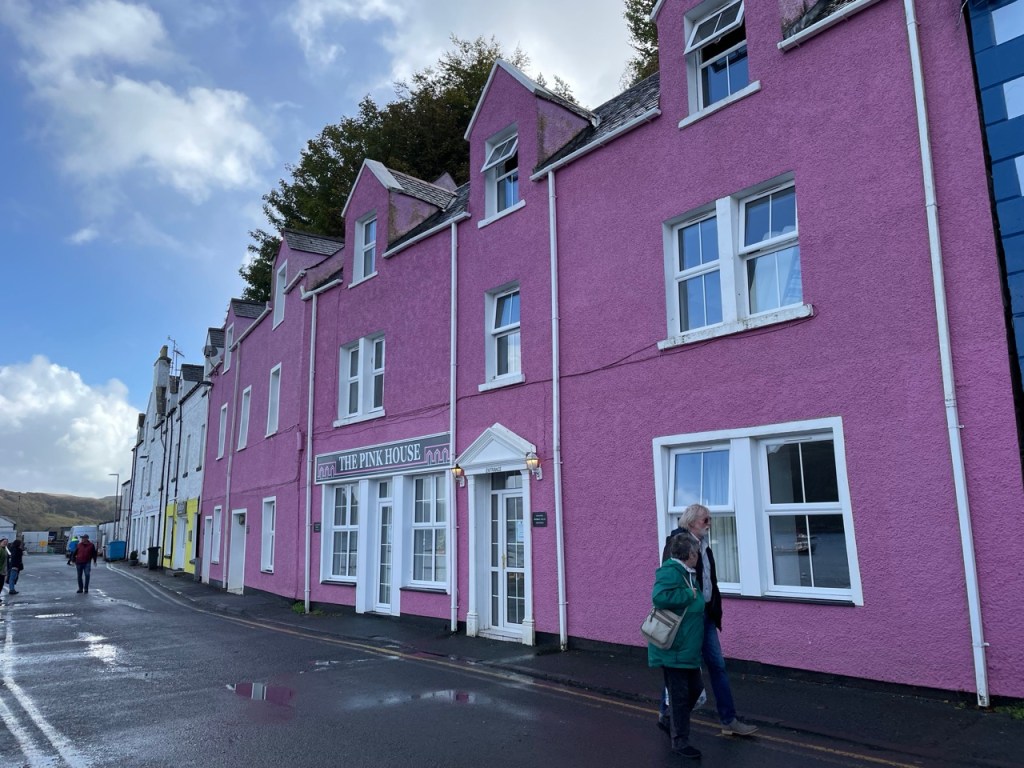
The quaint little itsy bitsy village of Portree had the colorful row of houses that always make these kinds of quaint little villages look so… quaint. It is also the largest town on, as well as the capitol of, the Isle of Skye, which has a population of just about 10,000 on the entire island. The population of Portree is listed at 2,310.

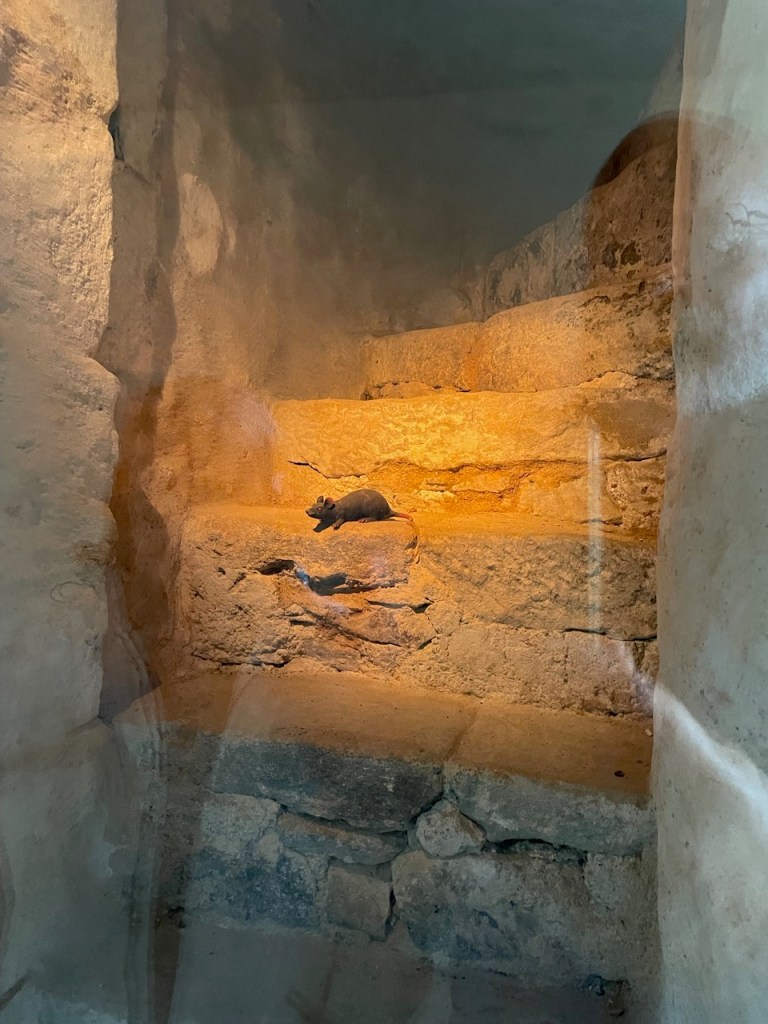
This was an old estate with spooky stairs full of fake mice, fake serving wenches, and fake tourists.

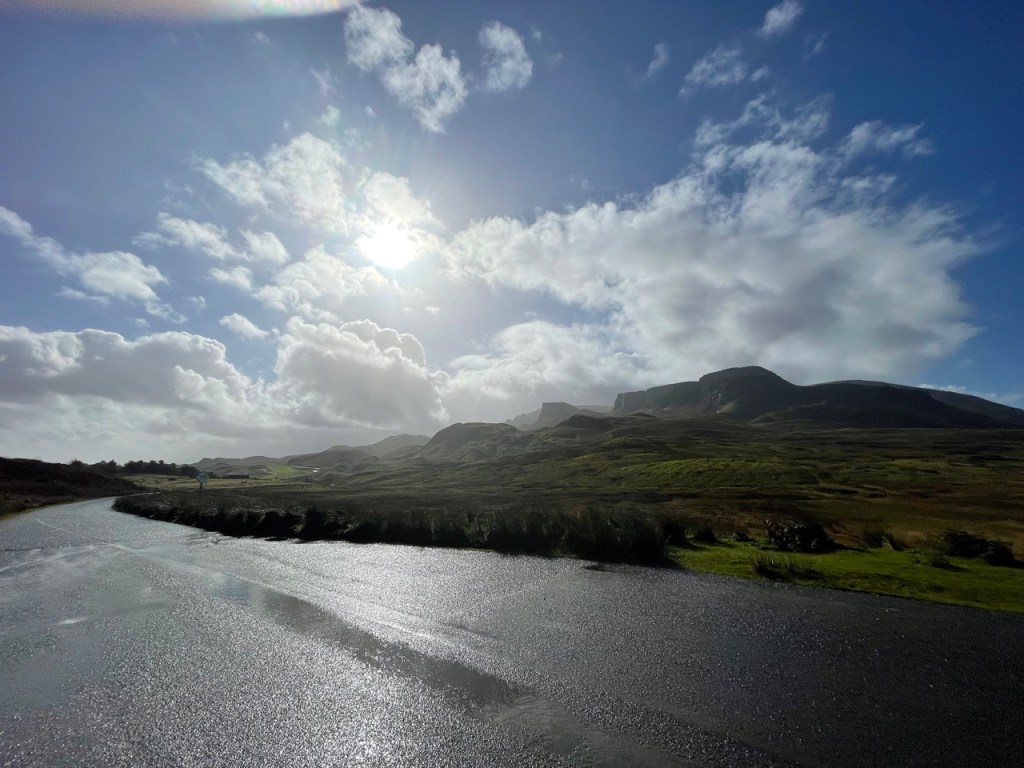
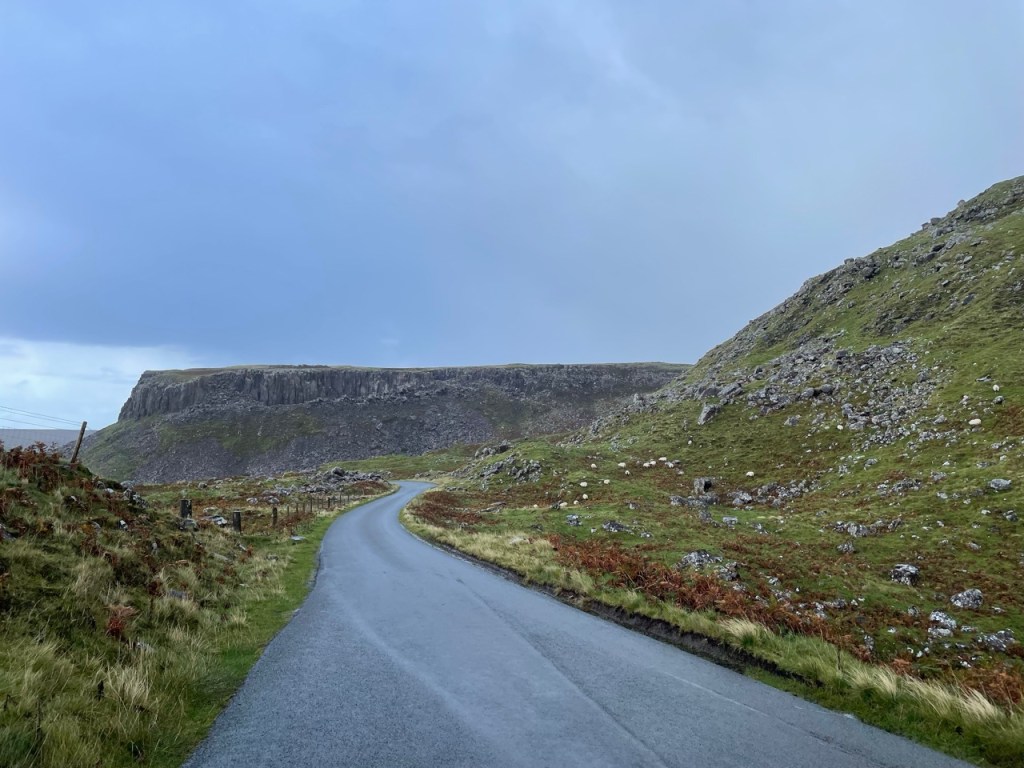
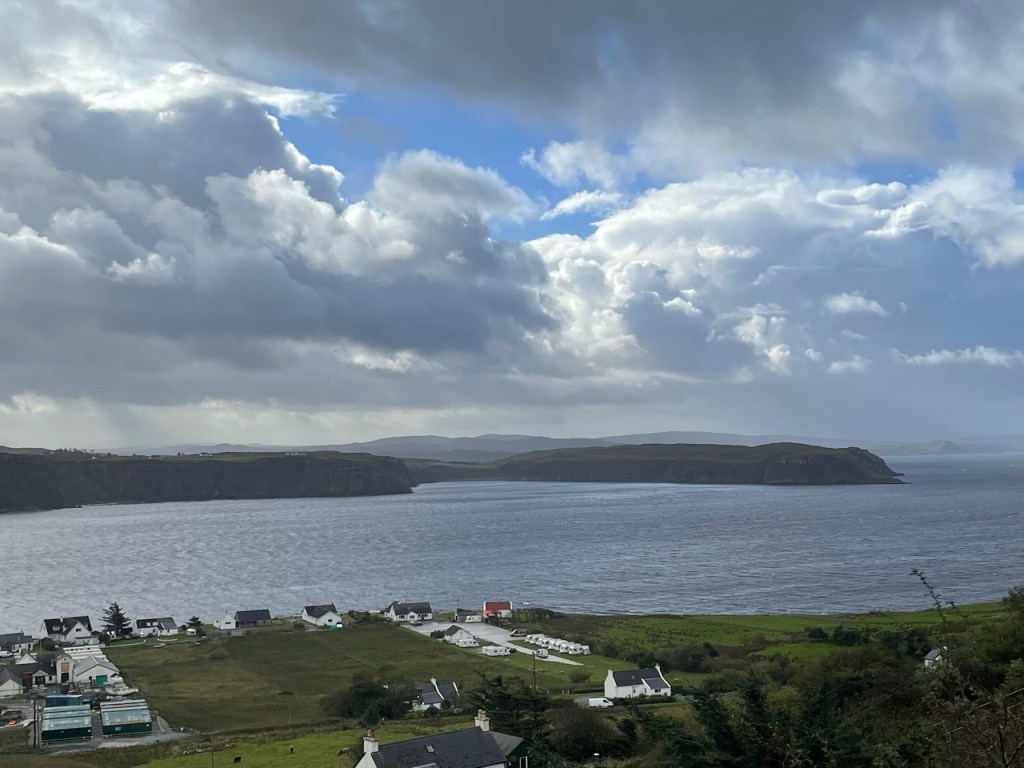
Since the Isle of Skye is mostly about the allure of its natural beauty, we’ll finish up this part of our entry with a series of pictures where we did our best to capture its wonder and majesty. We came up a bit short in that regard, but I think you’ll get the idea. There was absolutely stunning scenery everywhere we looked, and despite an occasional squall or windstorm, the weather actually treated us relatively decently for the duration of our visit. And not one bottle of vodka fell from the sky. Okay, perhaps a couple clattered onto the pavement when we opened the car door, but that’s it.

I have absolutely no idea what this road sign means. I suppose I could look it up, but I think it’s funnier not knowing.

On the way back to our “home port” of Edinburgh, we stopped in the city of Inverness. It’s not considered a hot-spot tourist destination, but it’s a nice little city and we enjoyed the one-day visit. We also had a good time with the Scottish waitress who was just so friendly and sparkly we had to take her picture. The restaurant itself was well over a hundred years old (not sure what that is in metric), but the food tasted newer than that.

This is simply an assortment of signs we thought were amusing.

The island outlined in red is the Isle of Skye.

Driving on the left in Scotland led us to Iceland!

After fifty years of doing just about anything, muscle memory (there’s one type of memory that doesn’t fade much with age!) is pretty firmly entrenched. Accordingly, having to drive on the left definitely takes most of whatever brain power I have remaining in my fading cerebellum and puts it to the test.

I do have a secret to navigating UK roads though: I recite “Leftleftleftleftleft” in my head as I get in the car, as I start the car, and pretty much the entire time I’m driving.

Leftleftleftleftleft.

I credit this to avoiding any close calls, other than one time where I almost entered a roundabout without first looking in the direction the cars were actually coming. That was the little fly in my leftleftleftleftleft ointment, because you have to at least look right before you enter the roundabout to go left. Fortunately, I remembered in time, which is good, because if we had crashed there might’ve been nothing leftleftleftleftleft of either of our cars.

So how did we end up in Iceland, you ask? Well, if you look at the picture of Carolyn, you’ll notice a red sign in the background. Iceland. It’s a grocery store in Scotland. Or maybe they just sell frozen water. “I only buy my ice at Iceland,” they probably say in the ad.

The country of Iceland is definitely on our (frozen) bucket list, but for now, this will have to do.

After taking the train from Edinburgh to Glasgow and riding busses around Glasgow, we rented a car to visit the surrounding areas as well as to travel to what was Carolyn’s most anticipated Scottish visit: The Isle of Skye, whose motto is, “Our sky is so big here, we had to add an ‘e’!”

Using a rental car added Scotland to an ever-growing list of European countries in which I’ve received a traffic ticket. Luxembourg, France, Spain, and now Scotland have all caught my scofflawishness on their hidden cameras. Not all were for speeding; the Scottish one had something to with being in a bus lane. I don’t remember that, but maybe the bus lane was on my left and there are actually two flies in my leftleftleftleftleft ointment.

There are a multitude of cute little towns dotting Scotland. One of them is called Oban. Oban is more or less a gateway city to the Scottish Highlands. It’s a holiday destination for many Scots, and is known as the seafood capital of Scotland. We didn’t bother testing that because frankly, there can be no better seafood town than our hometown of Sesimbra, so we try not to embarrass any towns by comparing the seafood.

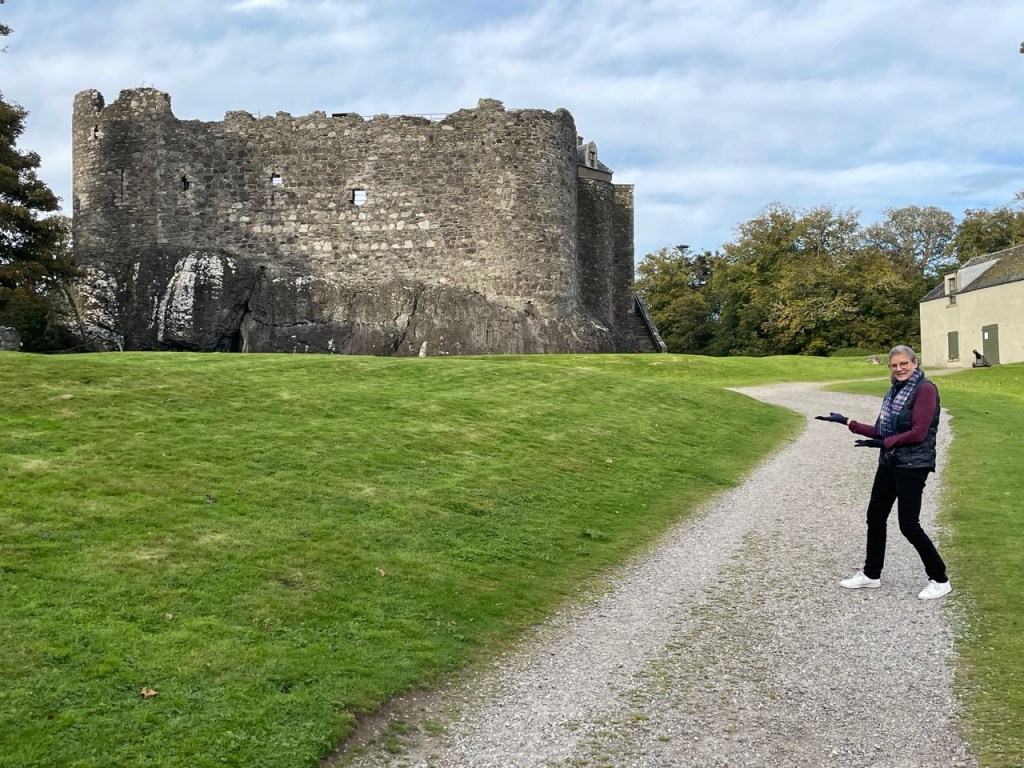
One site we visited was Dunollie Castle, which is in an area that has been fortified since the Bronze Age, which existed from 3,000 to 5,000 years ago until it was replaced by the Skin Cancer Age.

Get it? No more bronzing? Oh, to hell with ya then.

This is some additional scenery we spotted at various points of our drive up to and back from the Scottish Highlands. As you can see, it is simply gorgeous countryside. As it was reminiscent of the scenery of the Pacific Northwest, it made us feel quite at home. (Except for the Leftleftleftleftleft.)

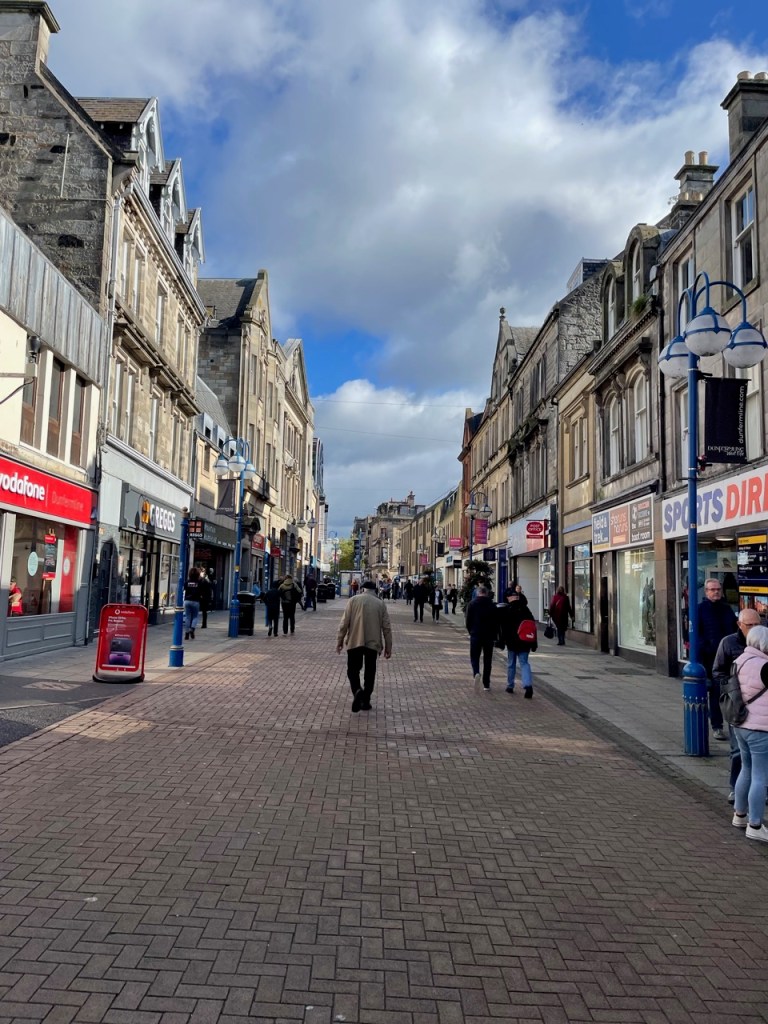
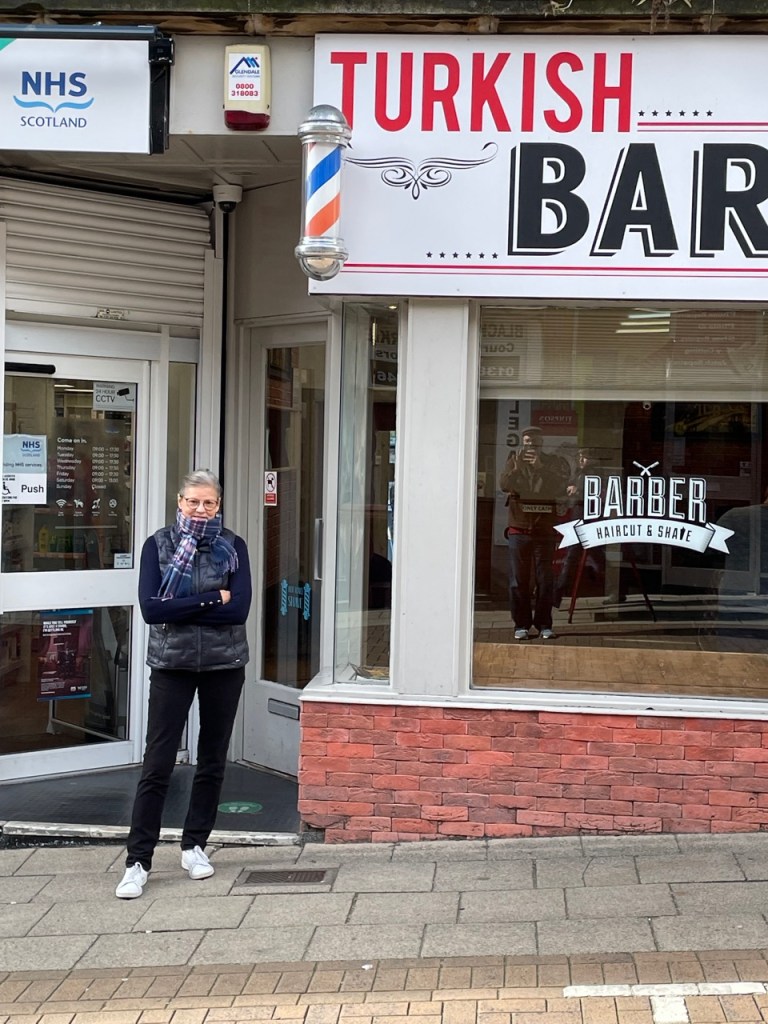
Another absolutely delightful town was Dunfermline. Northwest of Edinburgh, it has everything you would need in a Scottish town. It’s charming, historic, has at least one Turkish Bar (according to one of the photos above anyway), it isn’t tiny, with a population approaching 80,000, and also has a huge park. (Donated by Andrew Carnegie, as told to us by a kindly old lady who engaged us in a lengthy conversation and must’ve said “Carnegie” a dozen times. She also pronounced it “Car-NEG-ee,” instead of the CARnegie most Americans would use.)

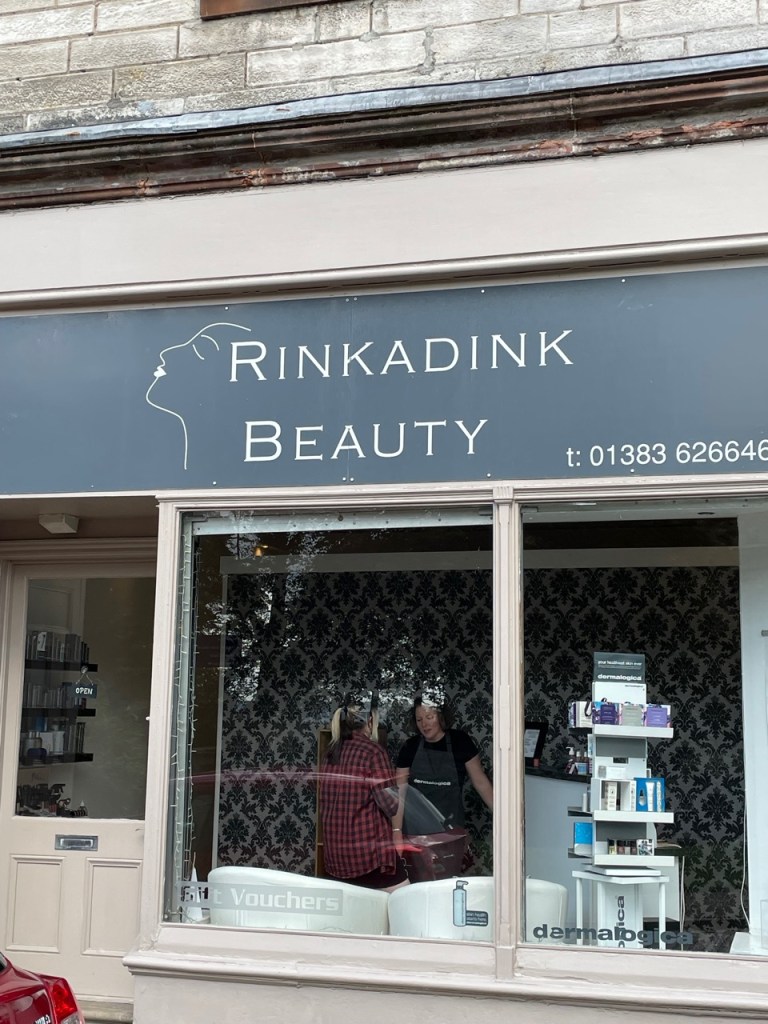
I did get a kick out of the hair salon pictured above: “Rinkadink Beauty.” I don’t think rinkadink means what they think it means. Or maybe they do know and that’s the point. Or maybe the American rinkadink is different from the Scottish one. Gawd this travel stuff is mentally exhausting!

Additionally, we were shocked to discover that Dunfermline is the actual home of the Garden of Eden, as proven by the presence of Adam’s tomb also pictured above.

It’s also right near the Firth of Forth, one of my favorite named places in all the world. A firth is an estuary, but the Scots obviously grew frustrated at trying to think of a word that rhymes with “estuary.” I guess they could’ve used “questuary,” and in fact I’d pay ten euros just to hear a Scot say, “Questuary of Estuary,” or just about anything else for that matter. But Firth of Forth it is.

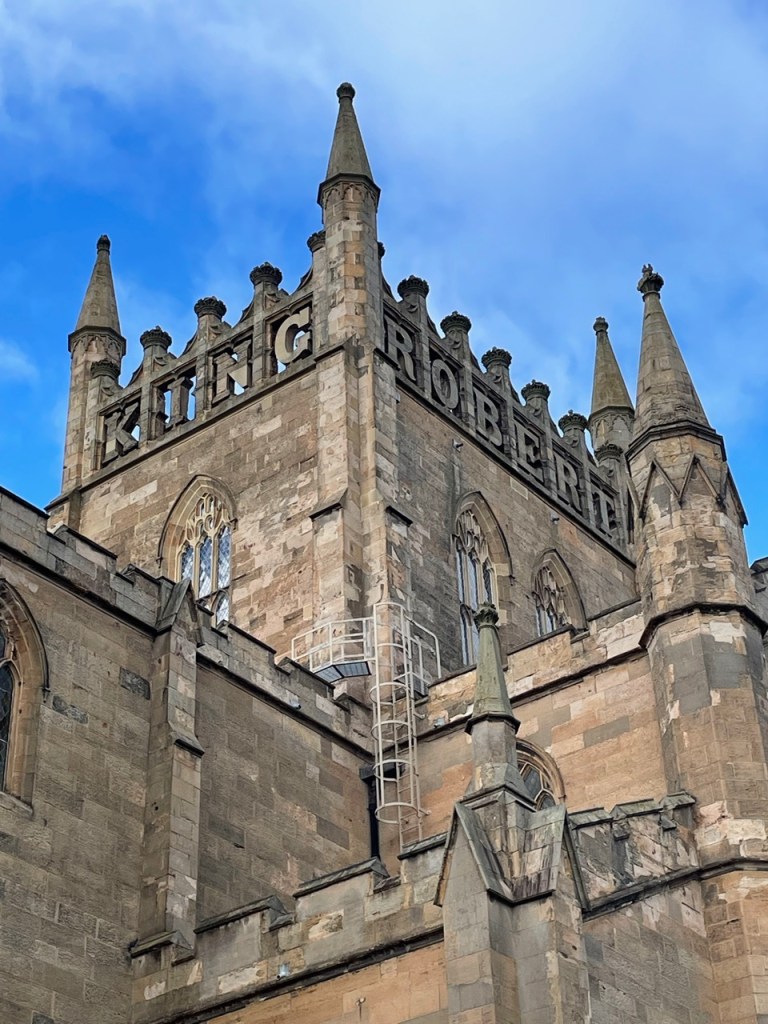
Dunfermline Abbey and Palace, which was a favorite residence for many Scottish monarchs.

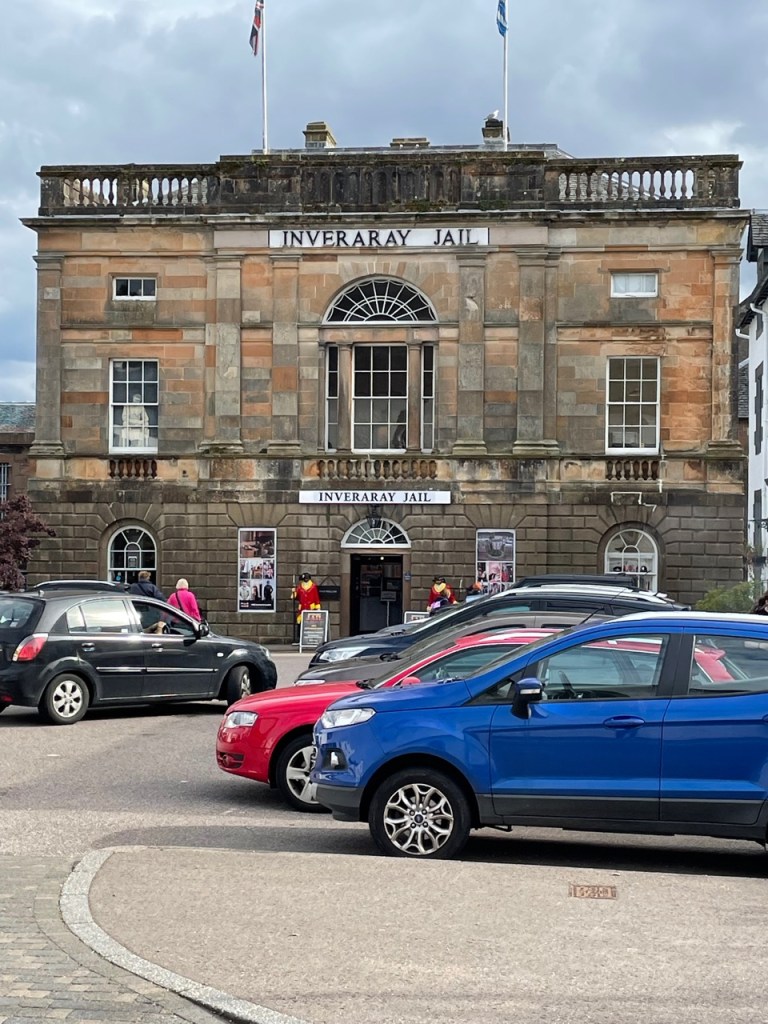
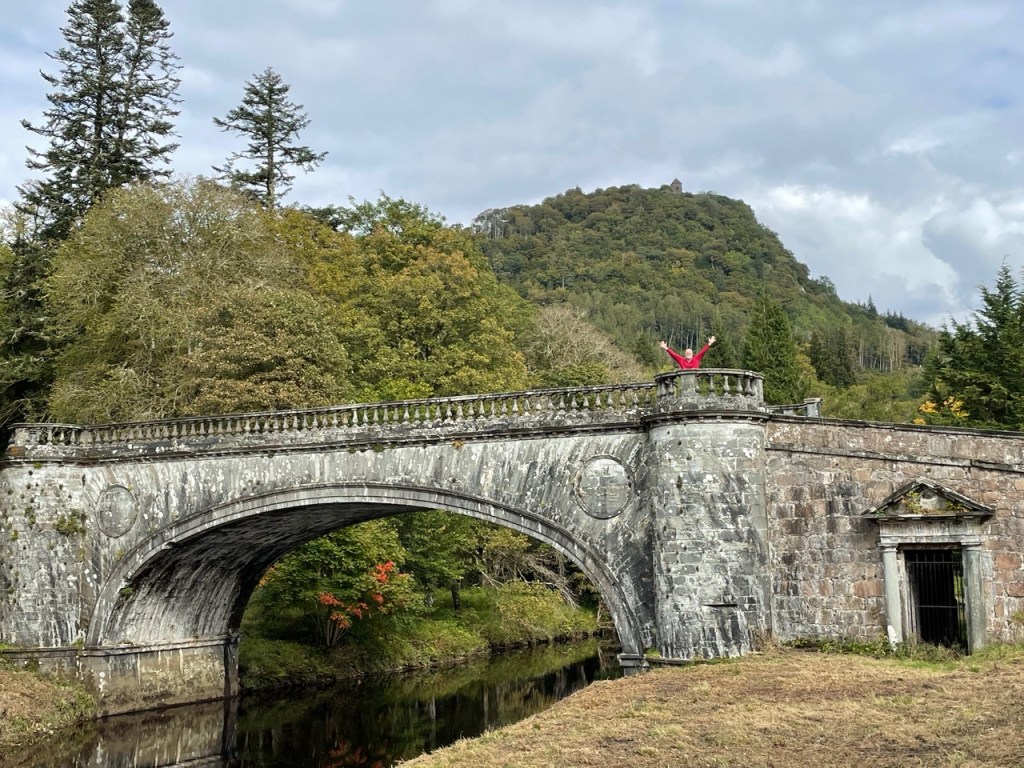
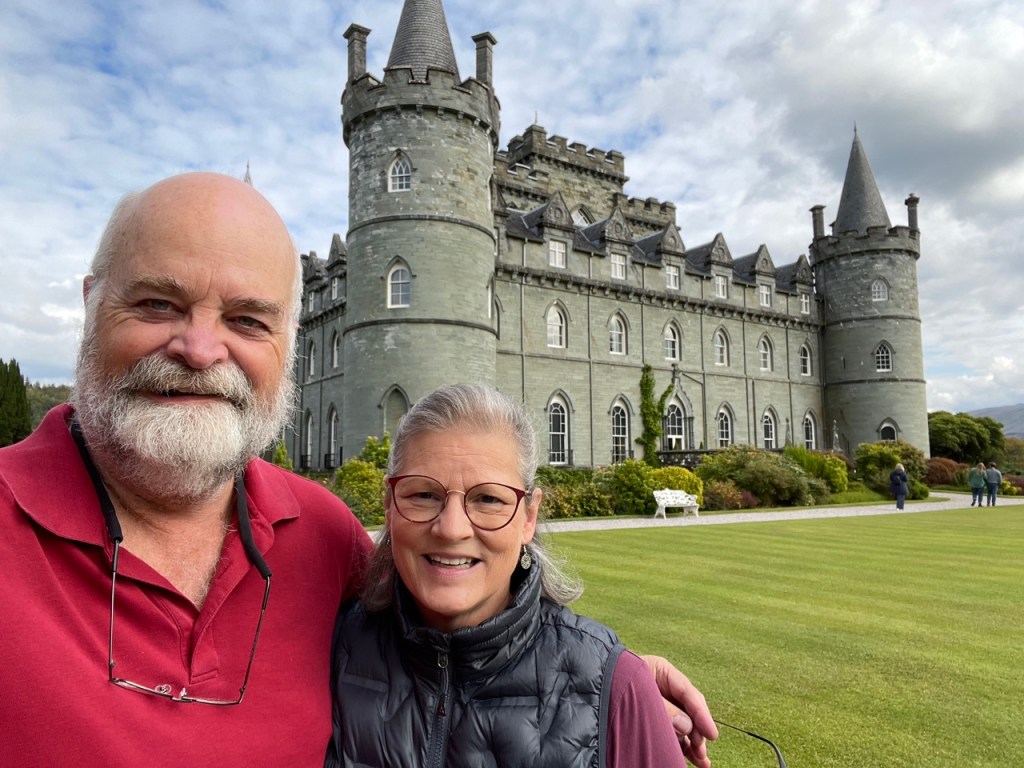
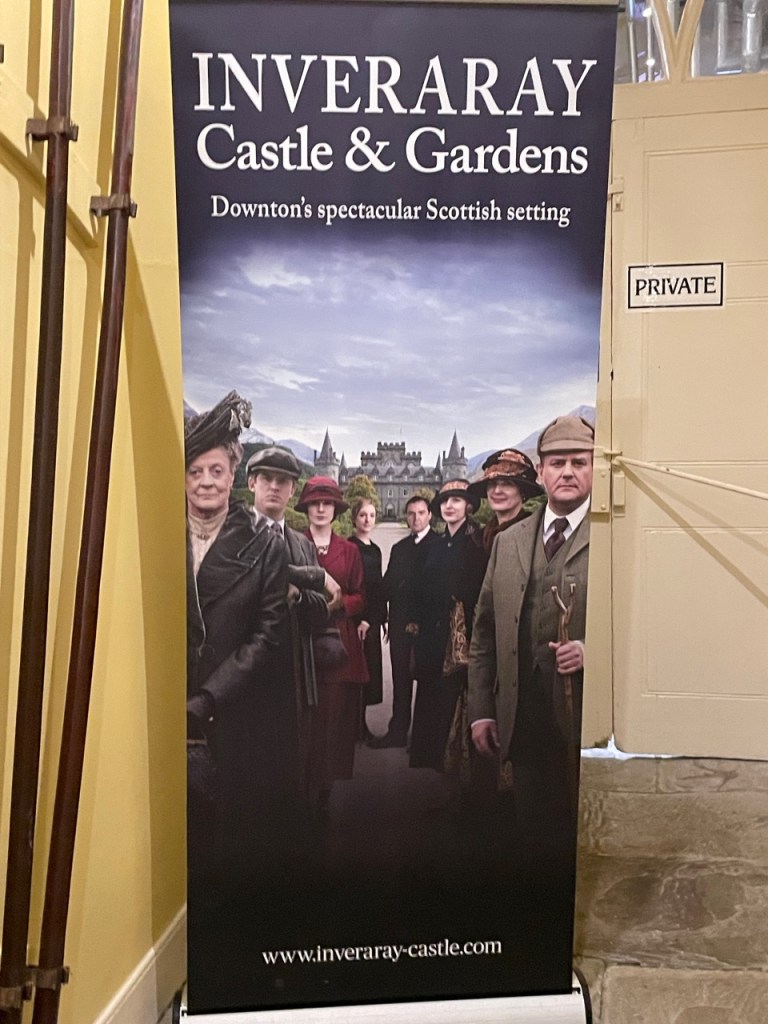
Another charming place is Inveraray, which features Inveraray Castle, which is more of a mansion than a castle, actually, and was used as a location in Downton Abbey. Inveraray is also where we encountered the only grumpy Scot we interacted with during our entire visit. Apparently, bringing dogs into restaurants is perfectly acceptable in Scotland, which wouldn’t bother me unless you bring in a little bitch (I’m assuming female just so I can call it a bitch) with a piercing, sharp bark that just about pierces eardrums. Our table neighbors had such a beast, and after the 3rd or 4th bark (for of course no reason, because that’s what those little yappy dogs do), which literally made me jump in my seat each time, I stood up and asked them as kindly as I could if they could please shut the dog the fuck up. Okay, I didn’t actually say that, I was very nice. But after the meal, when I stood to thank them for keeping the little, ah, bitch quiet, one of the ladies decided to give me a piece of her mind, calling me rude and mean for complaining about their dog. I waited patiently for her rant to end and then I showed them standard American justice (since I didn’t have my AK47) by stabbing her in the face with a fork. Okay, I didn’t actually do that. But I did slash the tires on her car. Okay, I didn’t actually do that either, but boy did I come up with some great comebacks about ten minutes after the encounter!

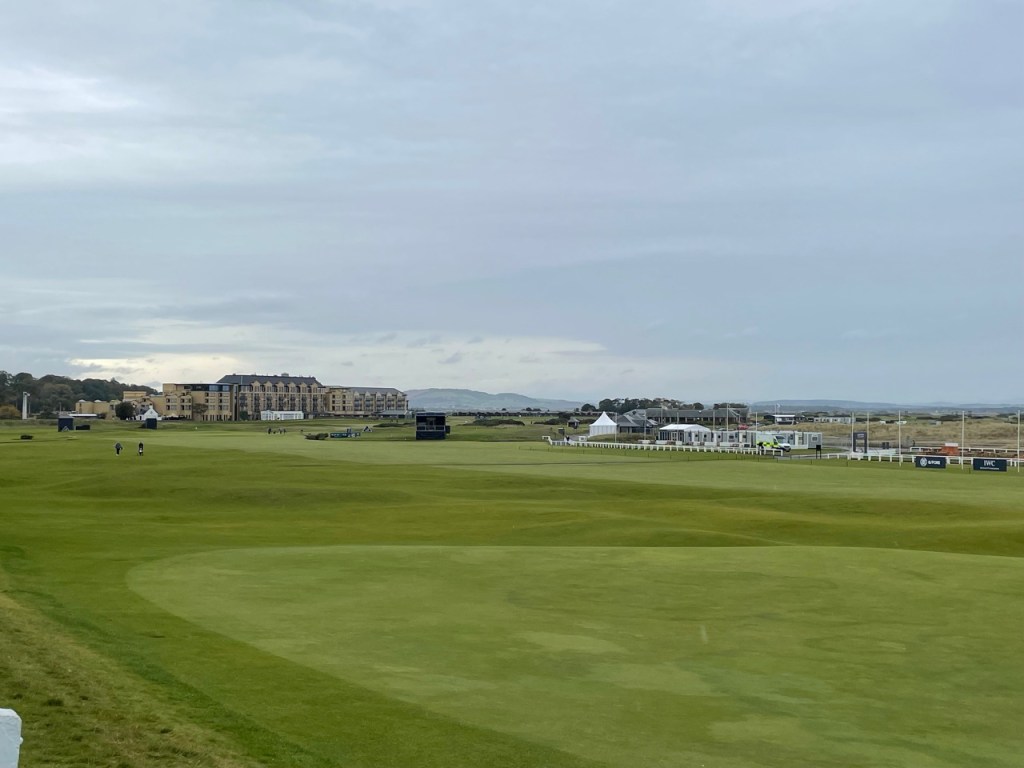
Another pretty town was St. Andrews, which is also known as the “home of golf.” partly because The Royal and Ancient Golf Club of St Andrews, founded in 1754, is more or less in charge of the rules of the game. You don’t get to have a hole in one unless you go through Scotland first, or are wearing two pairs of pants.

It’s also the home of to the University of St Andrews, the third oldest university in the English-speaking world and one of the top universities in the UK.

Mostly the driving journey through Scotland was full of pretty scenery and a bunch of leftleftleftleftleft. At least we didn’t depart from Scotland, or this life, with the words “deeply regretted” forever above our bones. Hopefully the only reason I’d have something like that on my gravestone is if it was about one of my bad jokes.

We Glaswent to Glasgow… but it wasn’t very punny

Spoiler alert! There are fewer bad puns than usual in this entry!

Glasgow (more or less pronounced “Glâs-go,” although I’m not sure what the little hat over the “a” actually does. I added it to make it look like I knew what I was doing) is the most populous city in Scotland and the fourth-most populous city in the United Kingdom, with roughly 650,000 souls (or 1,300,000 soles, if you don’t factor in the people with one or no legs).

We took the train from Edinburgh to get there. At first the ride was calm and quiet as we had the car mostly to ourselves. However, shortly after take-off (as it were), a bunch of twenty-something Scottish hooligans invaded our previously peaceful car and carried on with voices loud enough to wake Sean Connery. And he’s dead. They were loudly bellowing “fockin’ this” and “fockin’ that, and “that guy was a real focker” as they whooped and hollered and drank wine and beer out of paper sacks, except they didn’t bother with paper sacks because it’s, you know, Scotland.

After throwing a concerned glance or two their way, I eventually stood up, gave them a long and grumpy look, and then smiled and asked them if they’d mind having their picture taken with Carolyn. They thought that was a grand idea, especially when this straight-laced looking woman old enough to be their mother stood up and called them all motherfockers. They laughed uproariously and invited us into their camp. We took some photos, shared their fortified wine (which we bought a bottle of later– hoo boy, that stuff is indeed fortified!), and shared names and histories. They were off to a concert of some sort; I had thought due to their rowdiness they were going to a football (soccer) game.

There were times we had a hard time understanding a couple of the ones who had thicker accents than the others (other than “fockin”), but it was great conversation overall. When the one-hour ride was over, we wished them a good concert and we parted the best of friends. Better to make friends than be fockin’ annoyed!

So with that entertaining welcome to Glasgow, we got off the train and took in our surroundings. Since it is a good-sized city, it looks like one. Imagine that. It’s definitely not as pretty or touristy as Edinburgh, but our hotel was right in the thick of things and we were happy to be exploring another Scottish city.

Along the way, we got a nice view of the Scottish countryside. You can’t really tell here, but the green and trees reminded us quite a bit of the Pacific Northwest. After we got into the fortified wine, we didn’t think much about taking more pictures. Hic.

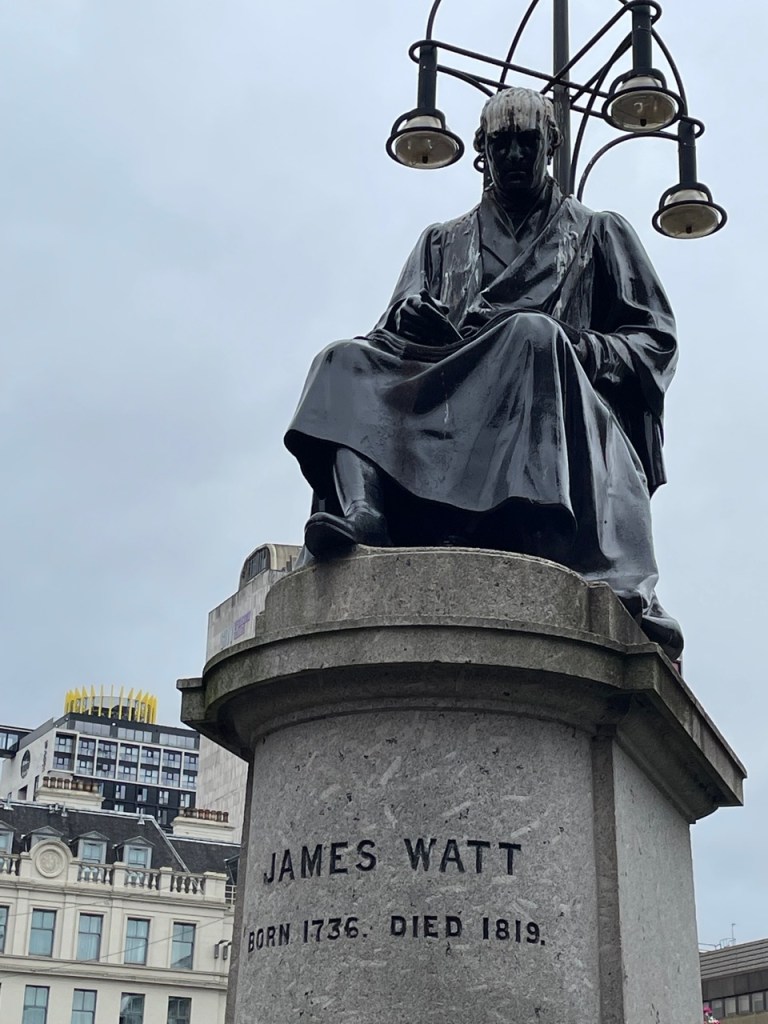
We assumed some rowdy drunken Scots (actually, we wouldn’t have put it past our new friends) recently climbed up the statue to give him that cone hat. Later on we discovered that whoever had done it had actually done it some time ago, and the authorities just left it on its head simply because the Scottish are a rather cheeky lot. That right there warmed our cockles (whatever those are) toward the Scottish. Playful and with the most loveable accent on the planet? Bring on the Scotties! And the scotch!

This is a different James Watt than many Americans will remember, and many of those not fondly. Watt was the US Secretary of the Interior from 1981 to 1983 and might be best described as “anti-environmentalist.” One of his famous quotes is ““We will mine more, drill more, cut more timber!“

Apparently the pigeons, who unlike many American politicians, actually appreciate the environment, mistook this statue for the American version as you can see by his very white hairdo. “Bombs away, James Watt! We doodoo poopoo on your head for being so obnoxious!” Apparently pigeons can read, but they have no sense of history. Stupid birds.

This is the River Clyde, which runs through Glasgow. A bonnie river indeed.

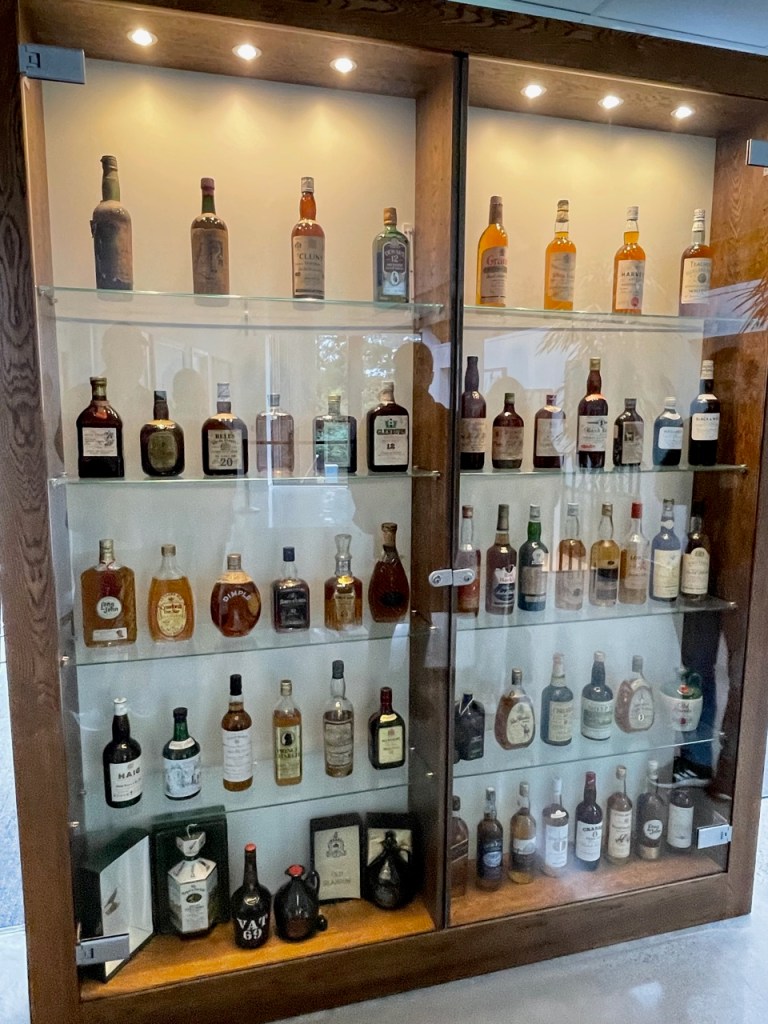
In addition to being the primary source for future starship engineers, Scotland is famous for whiskey and scotch, so we took a tour of a whiskey distillery. Some of those bottles on the left date back into the 1800s, and are still drinkable. But some of them are worth thousands, too, so you’d better be thirsty! Carolyn looks less than impressed, but that’s only because this picture was taken right after we imbibed our samples.

The auditorium on the left is affectionately known as “The Armadillo,” a nickname that ended up becoming its official name. Just another example of the Scots being fun and cheeky! The big building on the right is the “OVO Hydro,” and is a concert venue with seating for 14,300.

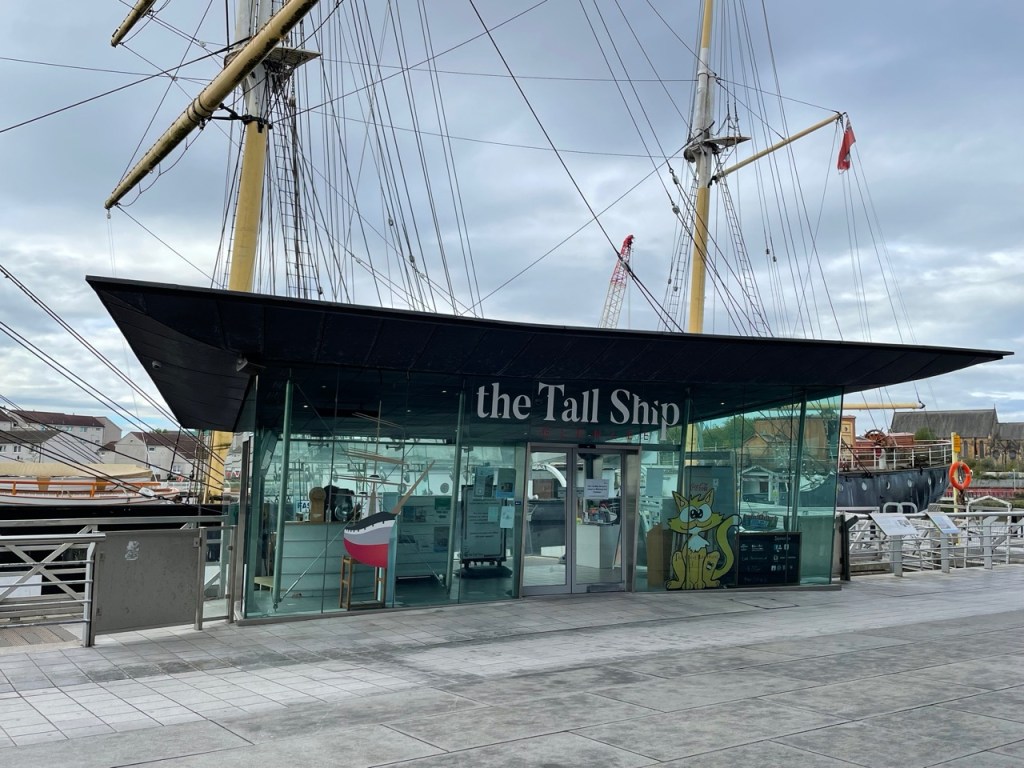
Near the distillery is a transportation museum, where we dodged rampaging horses, prepared ourselves for our last carriage ride, got lost in a train that wasn’t moving, and marveled at how people were able to park those cars on ledges. And I thought parallel parking was difficult! We did appreciate the Scottish telling it like it is. They named that ship “The Tall Ship” for those who have no idea what a ship, or tall, is.

Here is a picture we discovered in the museum. It literally was taken in the ’20’s, which is 100% true. Regardless, it’s a spitting image of Carolyn! Amazing!

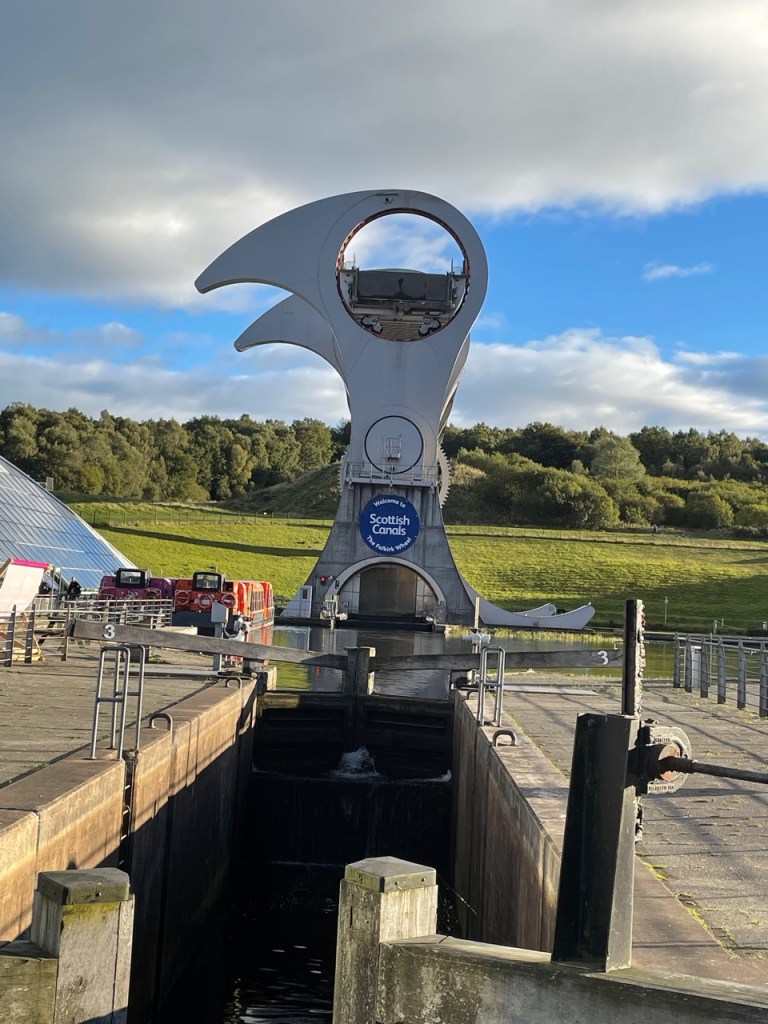
This interesting construction is called the “Falkirk Wheel.” About 20 miles outside of Glasgow, that bird-beak looking thing actually rotates, moving boats from one part of the canal to another like a mother bird feeding its chicks. The place was about to close, however, so there weren’t many chicks around that I could see. Except there was this one cute Muslim lady…

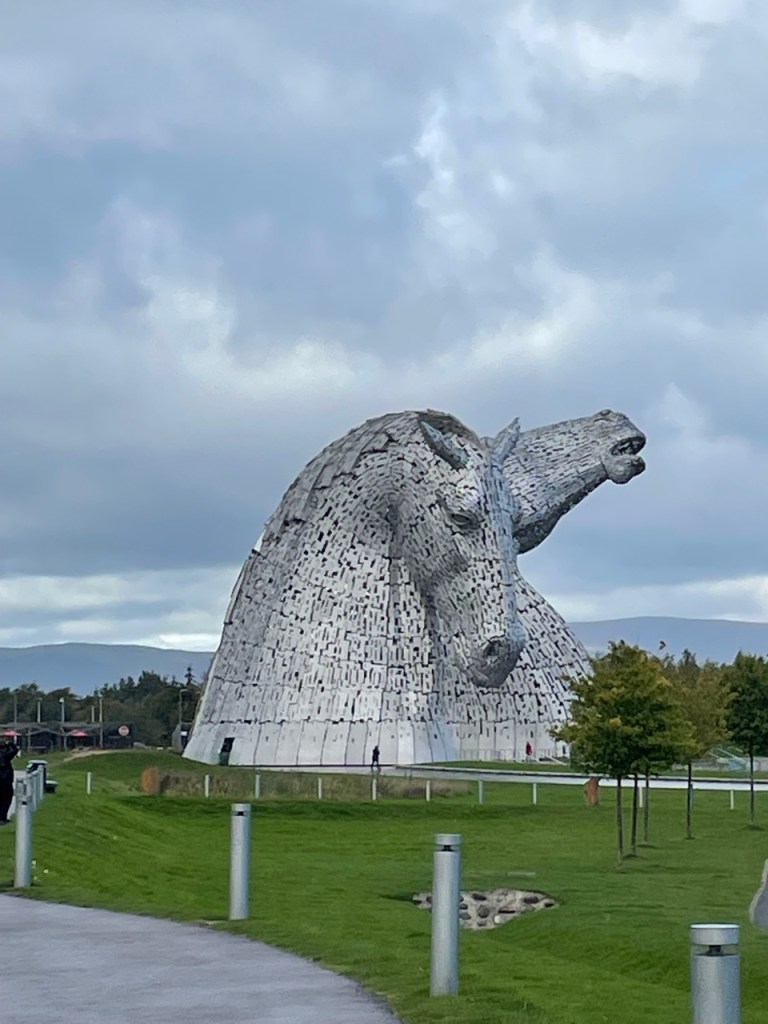
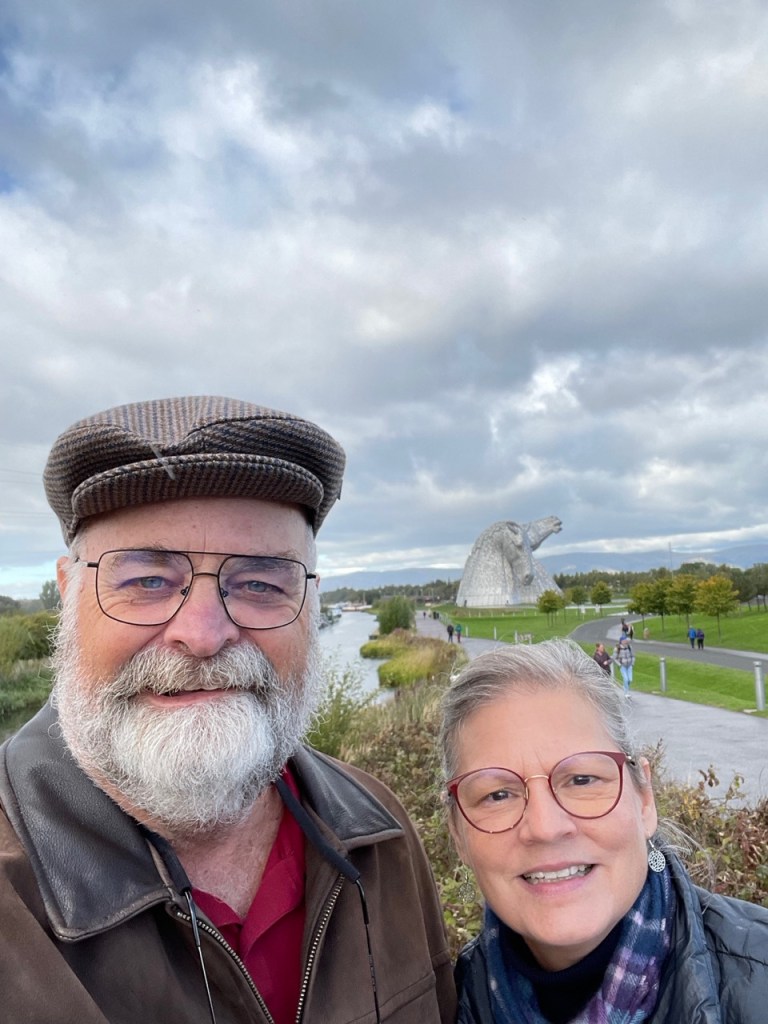
About 25 miles outside of Glasgow is an art creation called “The Kelpies.” The Kelpies are a mythical creature, described as a shape-shifting black horse spirit that’s able to adopt human form, and inhabits the Scottish lochs (which is how you say “lakes” with a Scottish accent, or it can also be the sound you make when you’re getting ready to hock a loogie). The art was also created to commemorate the large canal horses that, previous to the Falkirk Wheel, pulled boats down the canals.

They were so impressive that Carolyn decided to convert to Islam, as you can see above. I didn’t have the heart to tell her the Kelpies have absolutely nothing to do with Islam. But at least now she has to do everything I say, plus since I’m the only one who gets to see her hair in private I’ve got a whole new otherwise hidden body part to get turned on by. Oh behave!

They were impressive pieces of art to be sure! I tried to think of a pun right there but I needed helpie.

I got a kick out of this nearby sign. Is it “no swimming danger” because the water is deep? I would think deep water would actually be a little safer unless you’re wearing cement galoshes. Or maybe use some punctuation?

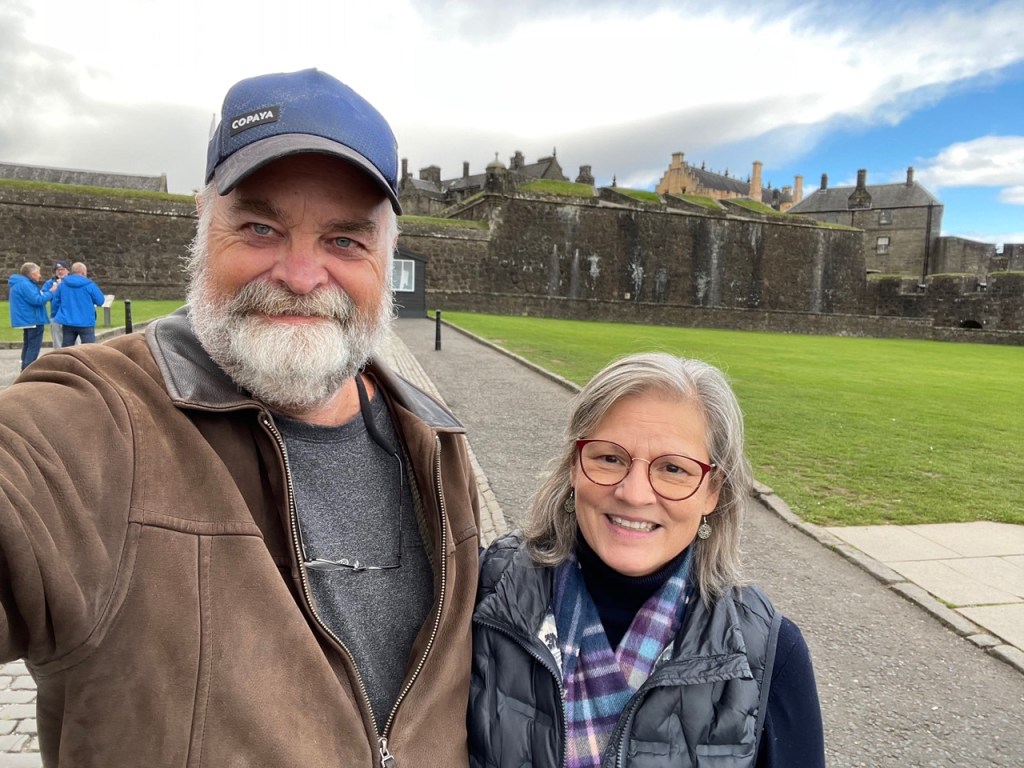
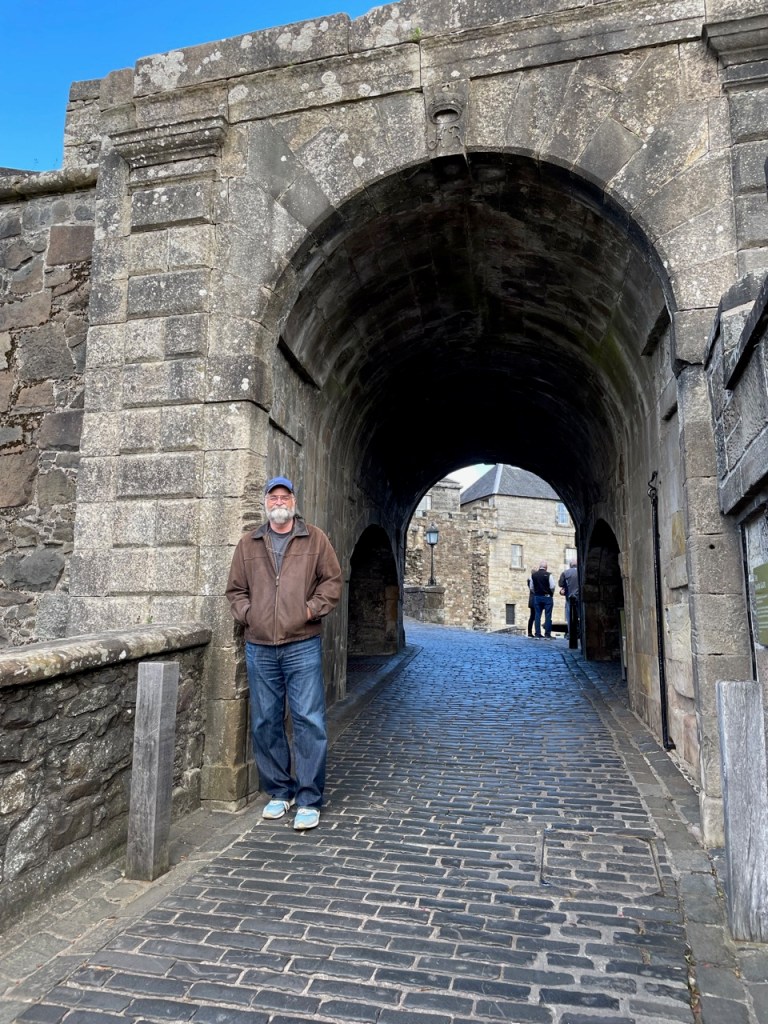
Lastly, about 30 miles outside of Glasgow is Stirling Castle. Stirling Castle is known as the centerpoint between the highlands and lowlands of Scotland. Today it is still a potent symbol of Scottish independence and national pride. Famous Scots who have links to the castle include:
Robert the Bruce (I guess that’s better than “Bruce the Bob”), Bonnie Prince Charlie (who was so pretty he was given a woman’s first name), Mel Gibson– er, William Wallace, whose life was not depicted accurately at all in Braveheart), and Mary Queen of Scots.

Mary lived there for about four years as a child. She was later beheaded, because of course she was, but the executioner must have been an ancestor of Mr. Bean, because it took several strokes to get the job done, with the first one glancing off her skull instead of hitting her neck. Fortunately, a couple more whacks finished the fun and frivolity. I say fortunately because she didn’t have any aspirin for that short-term headache, and aspirin was extremely expensive back then mostly because they hadn’t invented it yet.

In the end, we enjoyed Glasgow, but probably more for the surrounding sites than the city itself. They have numerous (free) museums which we didn’t see because we figured all the plaques would be written in whatever language these foreigners write in.

Edinburgh… sans toilets

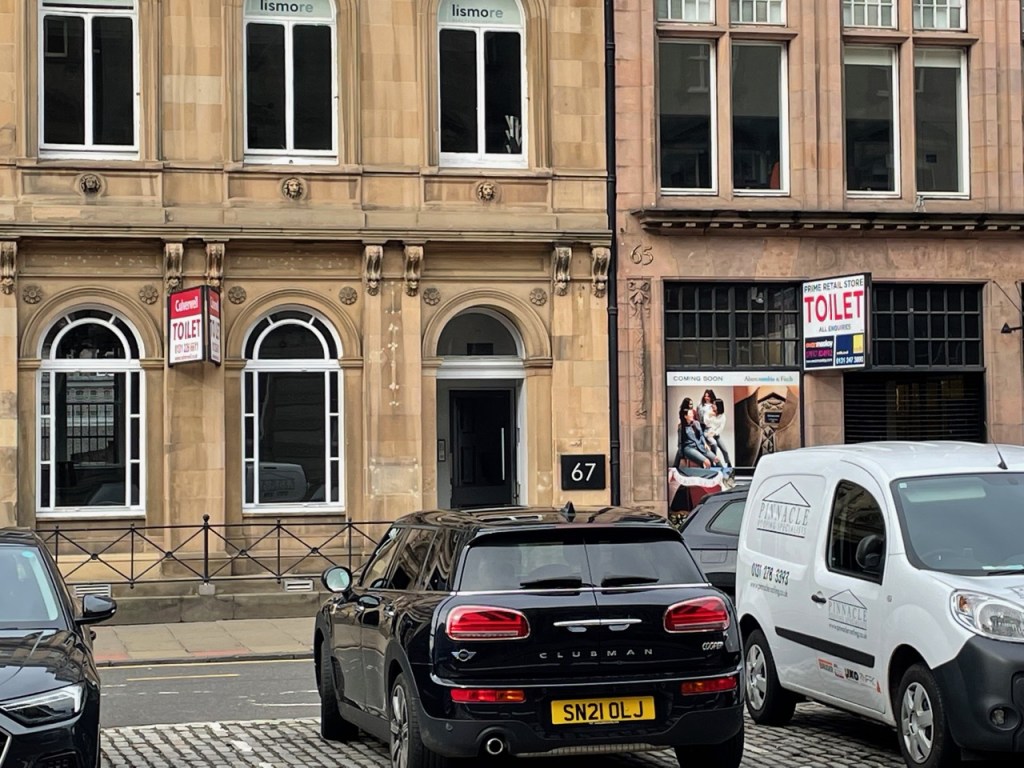
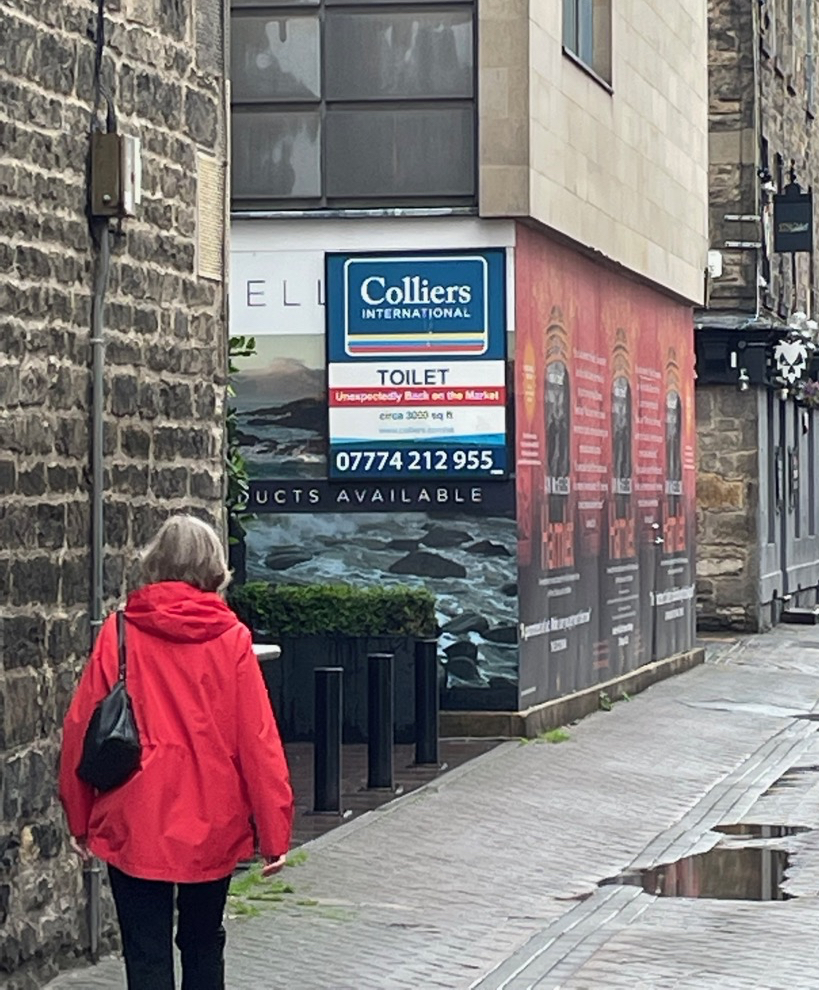
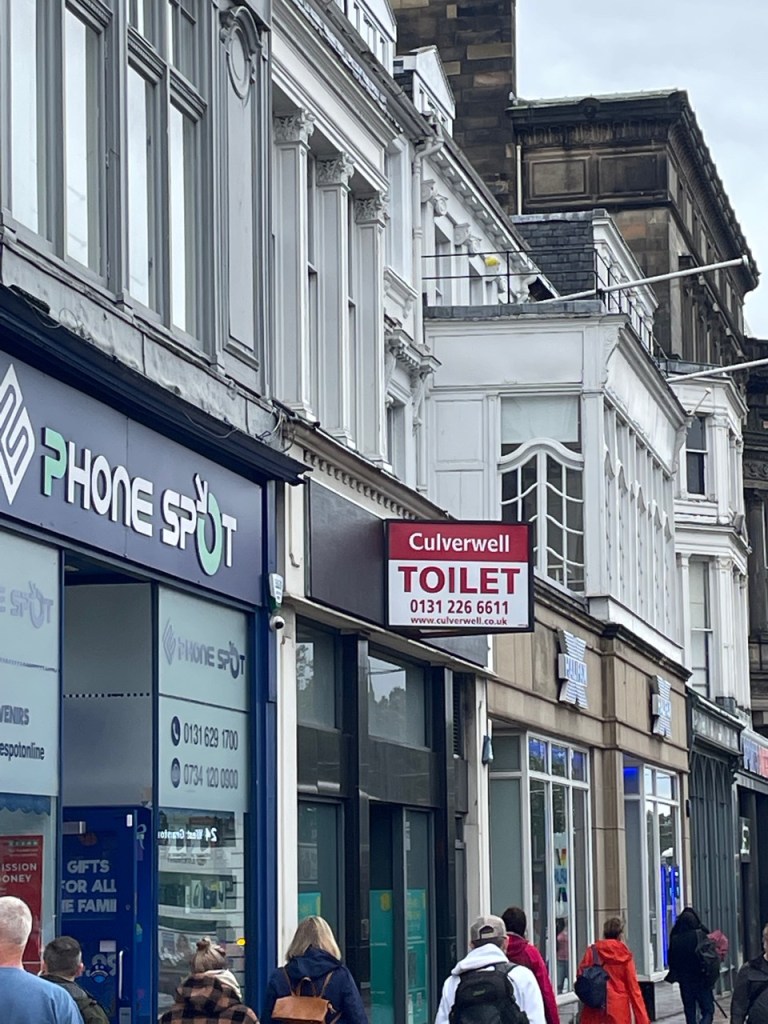
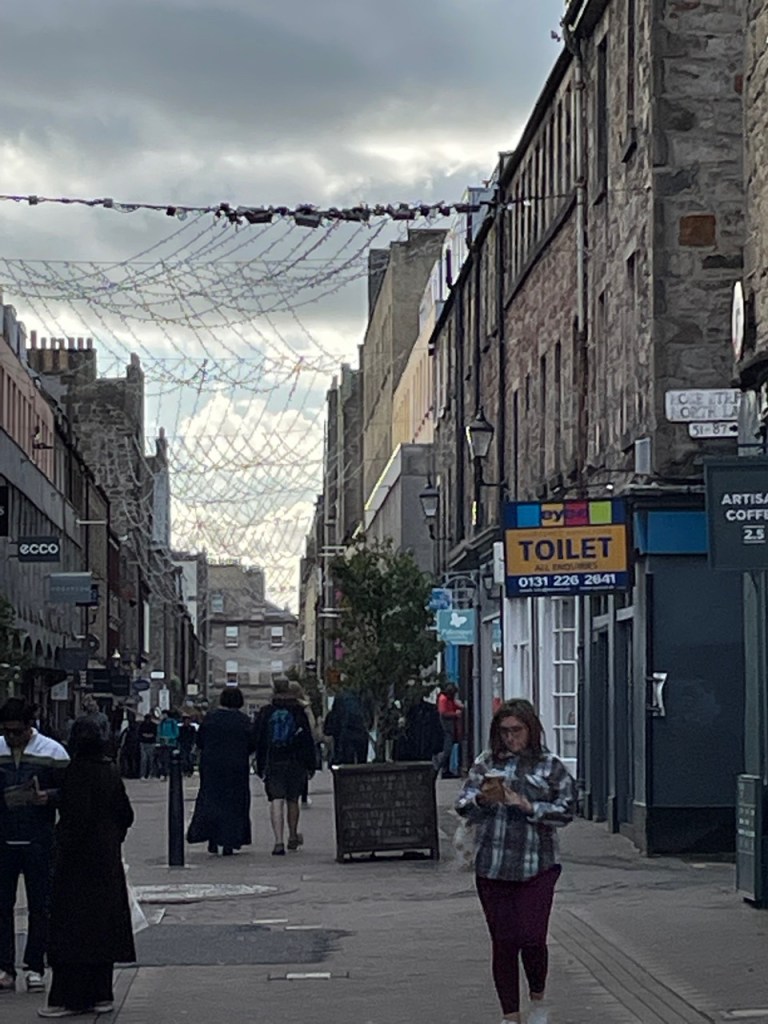
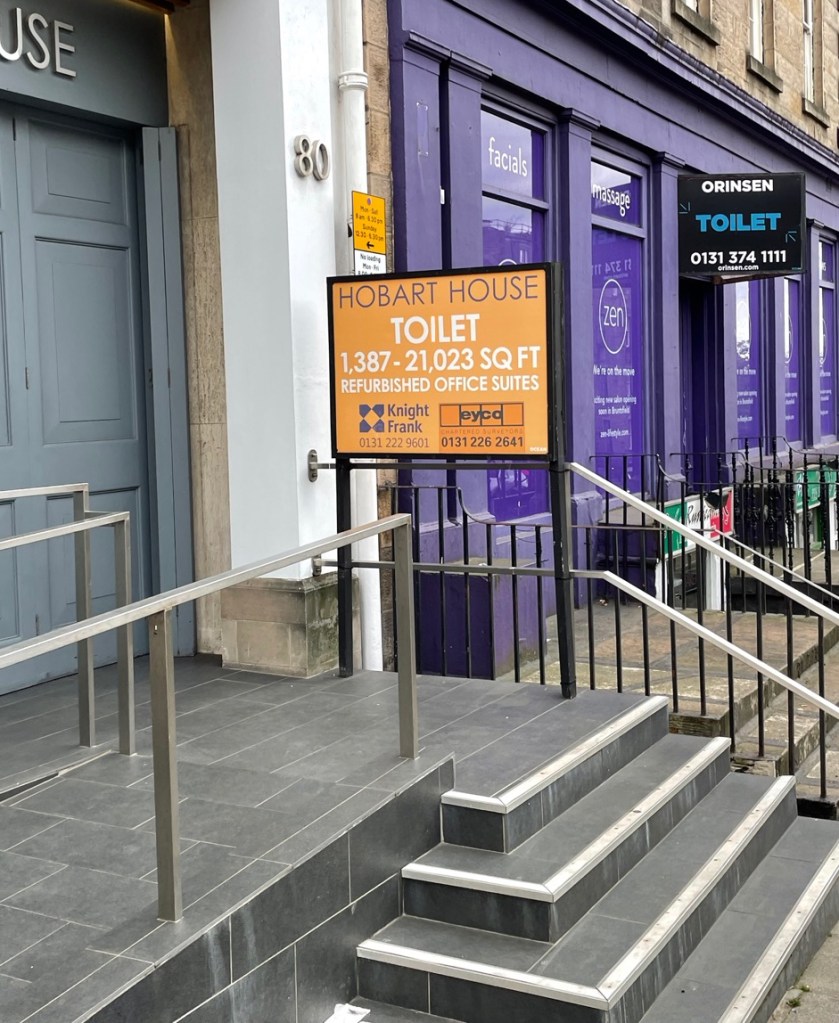
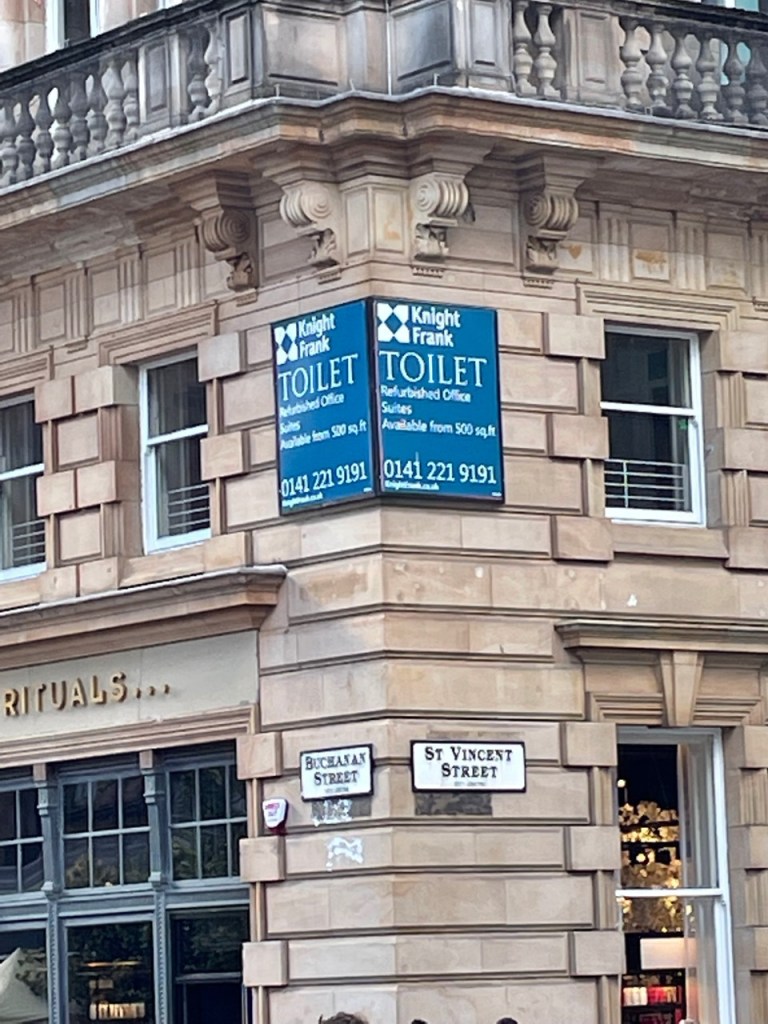
Welp, Carolyn warned me that not many people would “get it.” And I think she was right. In our last post we put up a whole bunch of pictures of signs that said “toilet.” I thought today’s technology-savvy people would automatically know that nowadays you can’t trust every picture you see. But I guess I’m too good of a Photoshopper- ha ha! The truth is that when both Carolyn and I spotted the first few “To Let” signs, we had the same immediate reaction in that we both thought they spelled “toilet,” until we paused a second and read them a little closer. There were so many of those signs everywhere, I came up with the idea of inserting the “i” and having a bit of fun with it.

As you can see, there’s no such thing as an 8,000 sq. ft. toilet (albeit possibly subdivided). The one on the left is the original, the one on the right had the crap Photoshopped out of it, or into it as it were. Still, Edinburgh sure seemed to have a lot of storefronts available for lease, it was hard to let some of the to let signs go by without having to let in another to let shot.

That said, other than quasi-toilet pictures, we promise all our other photographs are 100% genuine, just like the one below. We spotted Barack across the plaza, and while he was initially a little annoyed to be bothered for a photo, I told him it was for a good cause (I can’t remember what, I just muttered something liberal). After spending a little time with us, he got a little clingy, as celebrities seem to do with us for some reason. This shot captured Carolyn trying to whisper, “How do we get rid of him?”

Other than asking them to name the only black President in American history, there were two main questions we were dying to ask the Scottish upon our arrival. This first was, “What do they really wear under their kilts?” We received a reply from an old gentleman who gently pointed toward a rack of refrigerator magnets for sale to help us find our answer. Indeed, it is a little known fact that if you really want to understand anything, look for the appropriate refrigerator magnet. Just another little factoid they don’t bother teaching you in school! Or maybe they did teach us, but it went in one rear and right out the other.

The second question was what the proper pronunciation of Edinburgh was. The response sounded pretty much like “Ed in burro.” Coincidentally, that happens to be one of several reasons Ed’s wife doesn’t let him go to Tijuana anymore.

Thus armed with a complete lack of desire to flip up any man-wearing kilts (any females in kilts might just have gotten the better of my curiosity) as well as the deep, comprehensive, and utterly important knowledge as to how to pronounce Edinburgh, we confidently traversed the city like two non-Scots in a Scottish city, with this gorgeous architecture constantly looming over us like a bunch of gorgeous looming architecture.

Speaking of looming, this is the Nelson Monument, obviously named after Callum Stewart Campbell of Madeupname.com fame. Believe it or not this is actually a telescope. It’s an upturned telescope (as opposed to the ones that point straight down), and was built between 1807 and 1815. Unfortunately, it’s now closed until further notice for unknown reasons, although I reckon it’s possible it’s because they finally figured out “Nelson” isn’t anywhere in Callum Stewart Campbell’s name, and they have no idea who Nelson was.

WIth its hilly landscape, awesome views can be had for everyone except the blind. Oh stop, that’s not offensive, the blind can’t even read this!

Charming side streets led every which way, reminding us of much of the charm of Lisbon, except they always drive on the left in Scotland, and they only do that half the time in Portugal.

Even a Radisson Hotel looks like something from the 15th century, although as we all know that would be impossible because they hadn’t invented credit cards or room service yet.

There’s so much old stuff around Edinburgh that they even build buildings around tombs. This was in the basement of a restaurant, just outside the toilets, which is handy because the tomb can be blamed for bad smells if they forget to clean the Water Closet for a while. Ooh, look at me talking all European and everything, saying “water closet.” I feel so sopissticated!

As long as we’re on the subject of tombs, we explored a couple of cemeteries and found one of my ancestors. Anderson is such an unusual last name it surely has to be one of my forebears! Or fivewolves!

We often take pictures of hobbit-sized doors, but it’s not often we see hobbit-sized hallways! This was in our hotel; we can only say thank God they made the door open inward. If they hadn’t, whatever crew was in there might find more appropriate accommodations in one of the tombs above. Of course, that actually may be intentional, as an ingenious way to keep your staff in shape. “Just go right through the Skinny Hallway to get your paycheck!”

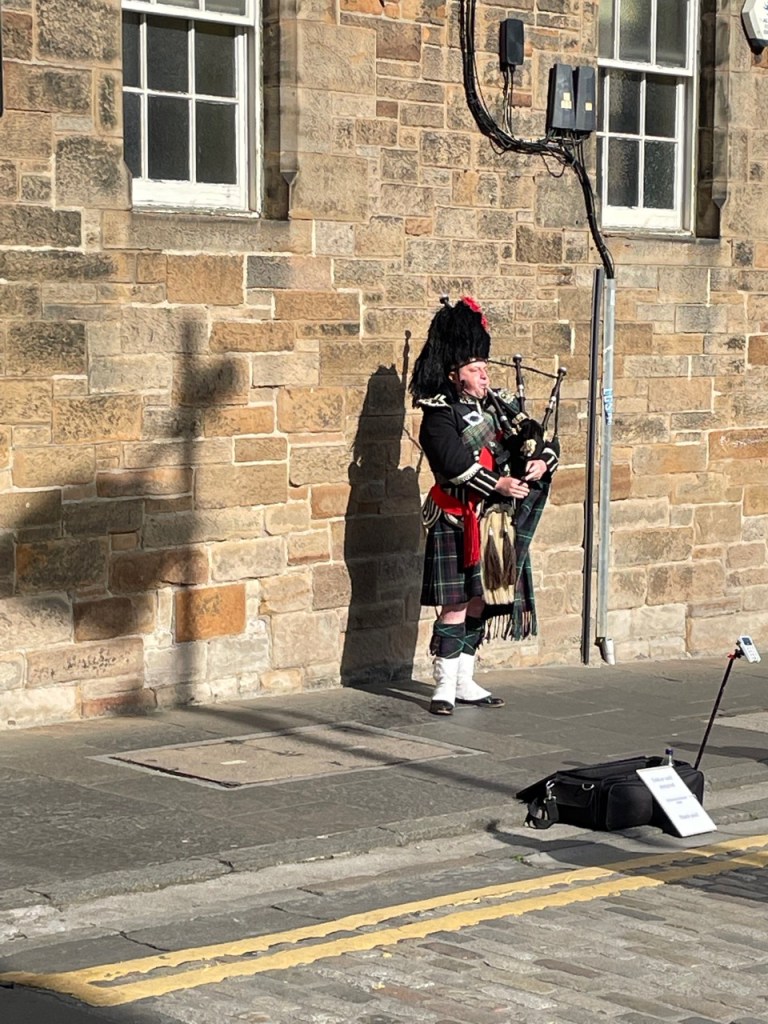
Nothing screams Scottish more than kilts and bagpipes (other than Scottish McPherson’s mother I suppose, who was always getting after him for peeking up men’s kilts). The twosome on the left combined guitar and the bagpipes for a rather distinctive sound. The guy on the right is playing for cash and photos. A bunch of blowhards, I tell ya.

We were visiting shortly after Queen Elizabeth died. People laid all sorts of flowers in a small park near the the Palace of Holyroodhouse, pictured on the right. One of the most famous streets in Edinburgh is the Royal Mile, with the Edinburgh Castle on one end and the Palace of Holyroodhouse on the other. I assume the palace was named by a Japanese tourist who took a wrong turn on his way to Los Angeles.

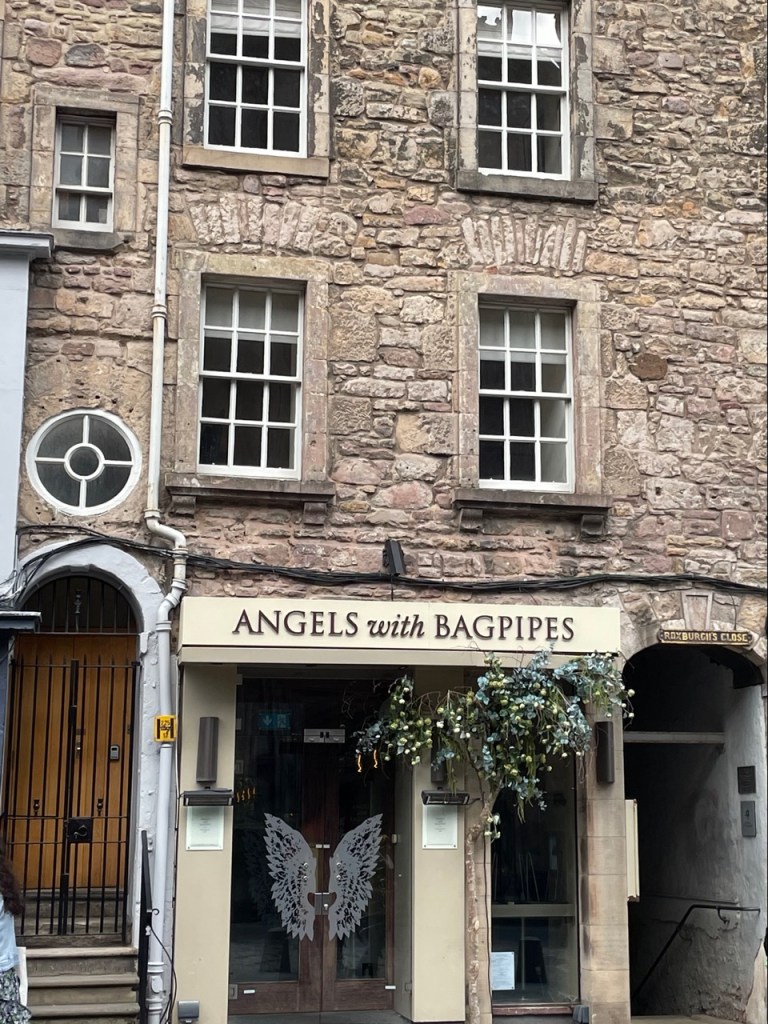
The Royal Mile is chockablock with stores selling kilts, tartan clothing & scarves, whiskey, shortbread cookies, bare-butted refrigerator magnets, and as you can see, angels. This restaurant apparently specializes in angels with bagpipes (not sure who eats what), which is surely meant to be a humorous contradiction in terms because everyone knows Jesus hated bagpipes: “And lo! And behold! Verily I say unto you and to all thoust family, refrain thusly from all bagpipiness, as it is certainly an affront to the ears of God, man, and even the lowliest of beasts!” I can’t remember exactly which verse that came from, but I’m pretty sure it’s right after he turned the water into wine and then right after that turned the bagpipes into electric guitars. I understand quite the party resulted, although of course the best parts were edited out.
I also got a kick out of these two businesses. American Candy & Soda was wall-to-wall with every type of American candy you’ve ever heard of, and some you probably haven’t. Some of it appeared to be leftovers from flavors that didn’t quite catch on, like blueberry-flavored Snickers. We also saw some M&M’s that were obviously a bad batch because they were spelled with “W&W.” Still others were candies and candy bars I hadn’t seen since childhood, when my older brother stole them from my Halloween stash. But at least the restaurant on the right was able to tell us where to go for “proper” fish & chips. I was starting to get tired of the improper ones. BTW, I hated getting fish & chips in my Halloween bag. My brother never stole those.

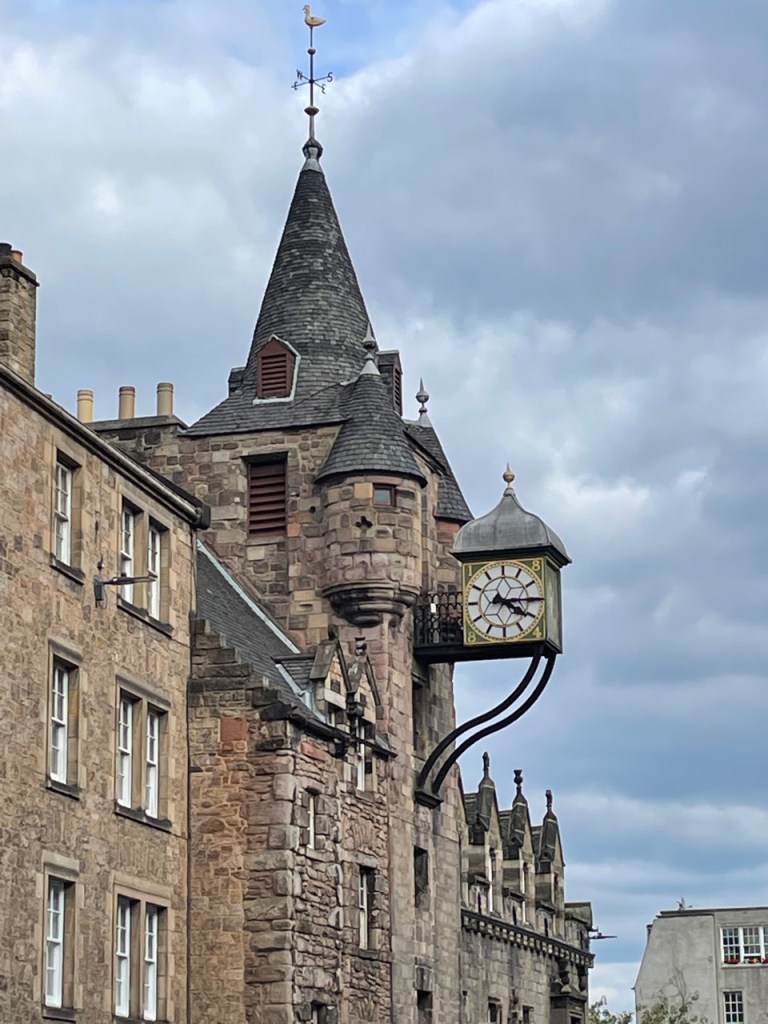
Some more of the beautiful architecture around the city. I mean, if you can’t get charmed by all this charm, you need to go back to charm school!

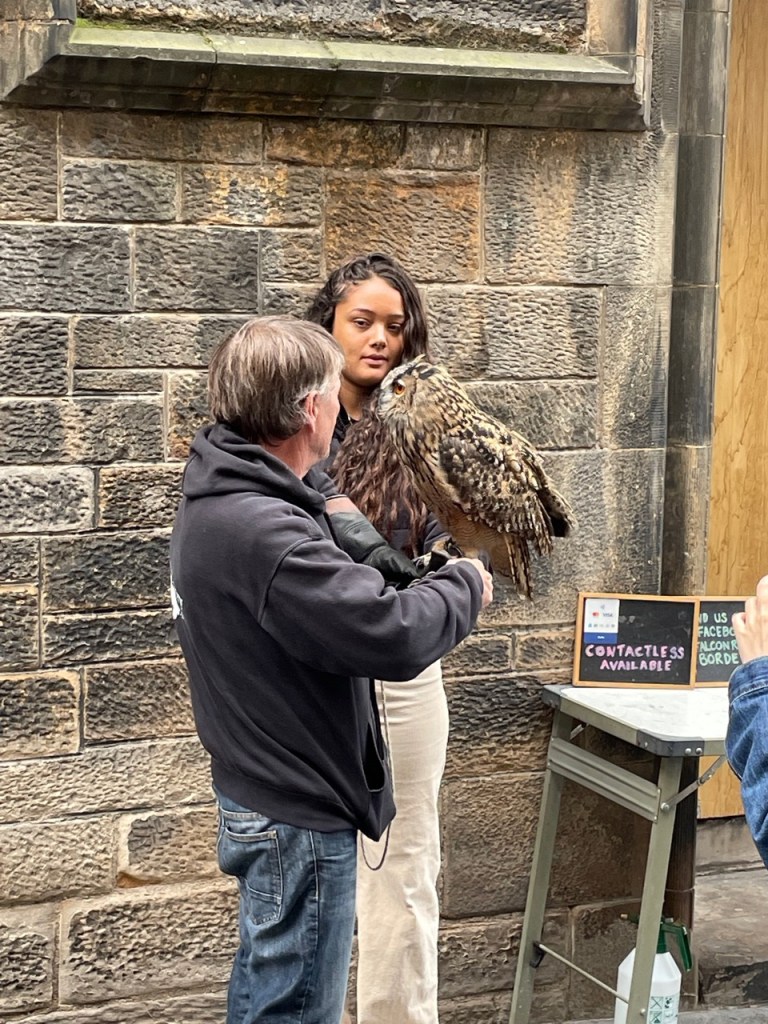
Speaking of charming, one of the tourist attractions on the Royal Mile included playing with these owls. Owls are one of the most remarkable creatures on the planet, truly.

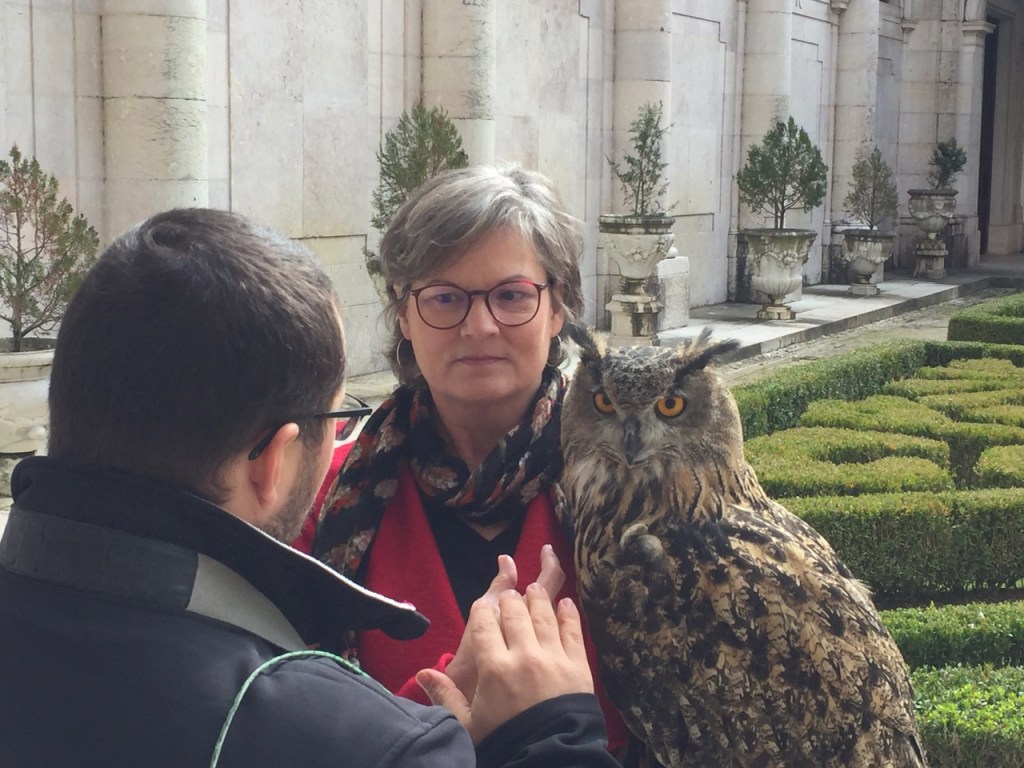
Back in 2019, Carolyn got to hold an owl in Mafra, Portugal. Here she’s receiving instructions from the trainer as to exactly what she should do if the owl happens to bite her nose off.

After a long day of sightseeing and looking up kilts, it was time to eat. Carolyn’s eating improper fish & chips, and that’s my meat pie in the foreground, washed down with a bit of beer foam.

Edinburgh quickly worked its way up the ranks of our favorite cities. With its beautiful buildings, long history, and of course the absolutely delightful Scottish accents, it’s a place anyone can love. However, we did do an underground tour (no photos allowed), and I gotta tell ya, as great as the city is today, living in it back in the old days was not for the faint of heart. Between buckets of sewage being thrown about and single-room housing inhabited by entire families… of both rats and people, it was a big stinking (literally) mess. In fact, Edinburgh used to be known as the “Auld Reekie” and was even named the “smelliest city in the world” as late as 2003 by a travel website.

Which is why we bought a couple of crow’s beak masks as soon as we landed. That mask was actually invented for use by doctors during the plague, thinking that crows would scare off the demons causing all of it. The guy who wore it longer than anyone lived in Edinburgh, but is now thought to have survived the whole thing simply because he had been immune. But after the plague was over and he demanded the agreed-upon payment from the city for his services, he was strung along for years until he finally died of other causes. Apparently the city hadn’t ever allocated the money to pay him, thinking he’d never survive the job. I hope he haunted the hell out of them.

Maybe not the World’s End yet (depending on what our modern day Russian Hitler does), but it is the end of this blog entry!

Edinburgh is lovely… except for all the toilets

It was a lifelong dream fulfilled for Carolyn, who wanted to see Scotland ever since she was smitten by Scotty’s accent in Star Trek when she was three years old. But since we couldn’t beam ourselves there, we channeled Planes, Trains, and Automobiles instead. We flew a plane into Edinburgh, took a train to Glasgow, and then rented a car and drove all around the rest of Scotland. Fortunately, we avoided most of the mishaps experienced by the characters played by Steve Martin and John Candy, although at one point in the far north we did feel a bit like these guys. “What do you figure the temperature is?”

“One.”

Ok, I guess our movie would have to be Planes, Busses, Trains, and Automobiles,” because we took a bus from the airport to downtown Edinburgh. This is the very first thing we saw as we stepped off the bus and scrambled for our iPhones. I mean, a TK Maxx very first thing! How lucky were we? (Actually, TK Maxx is the same company as TJ Maxx in the US. They changed the name to TK because they had a competitor in the UK named TJ Hughes and wanted to avoid confusion. And that, unlike many of the fun facts in this blog, is completely true.)

Nothing says Edinburg Scotland like Kentucky Fried Chicken! Hello back at ya, you crispy hunks of hormonally enhanced chicken coated in chemicalized carbohydrates and then deep fried in delicious liquid plaquiness!

Also true.

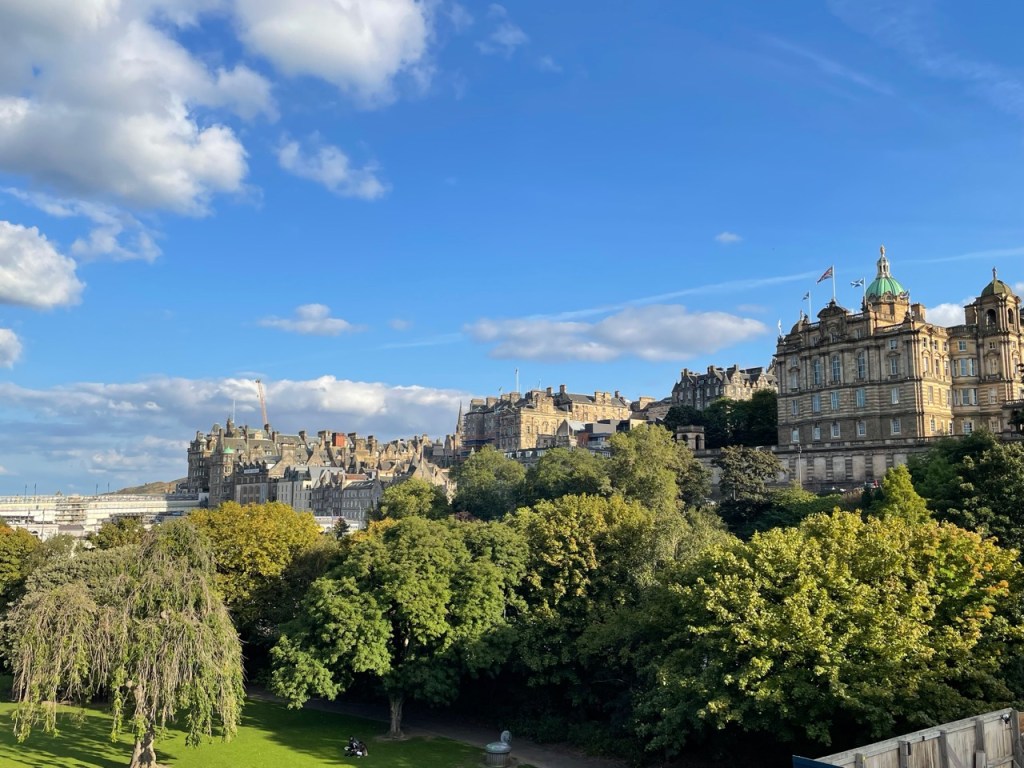
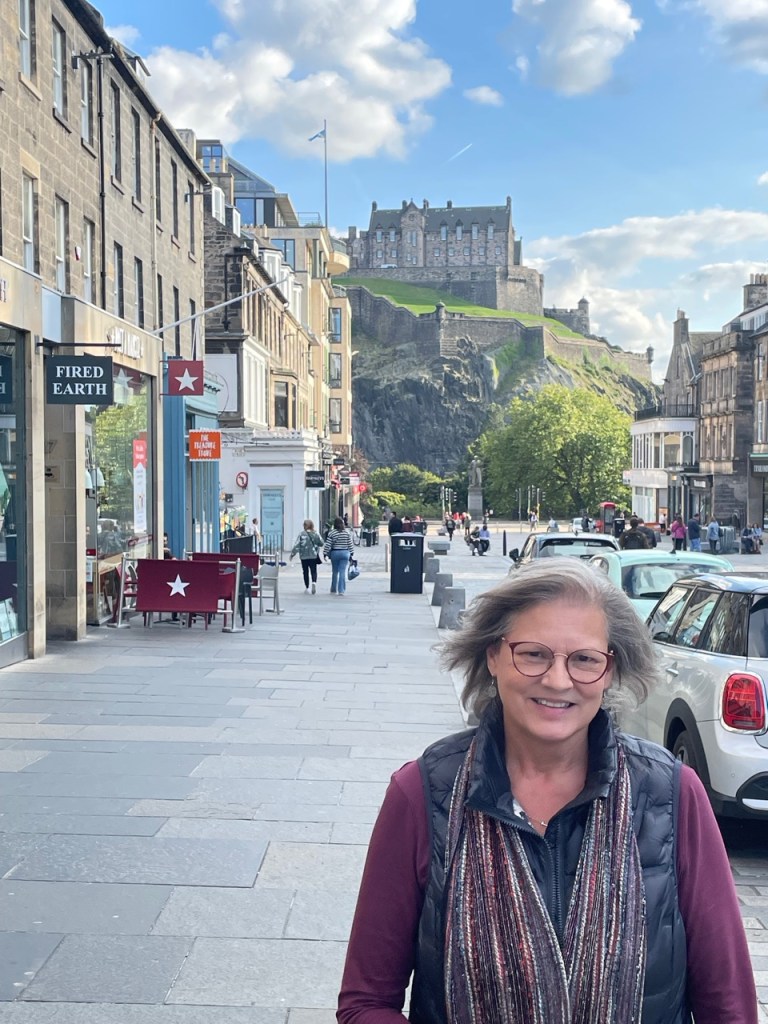
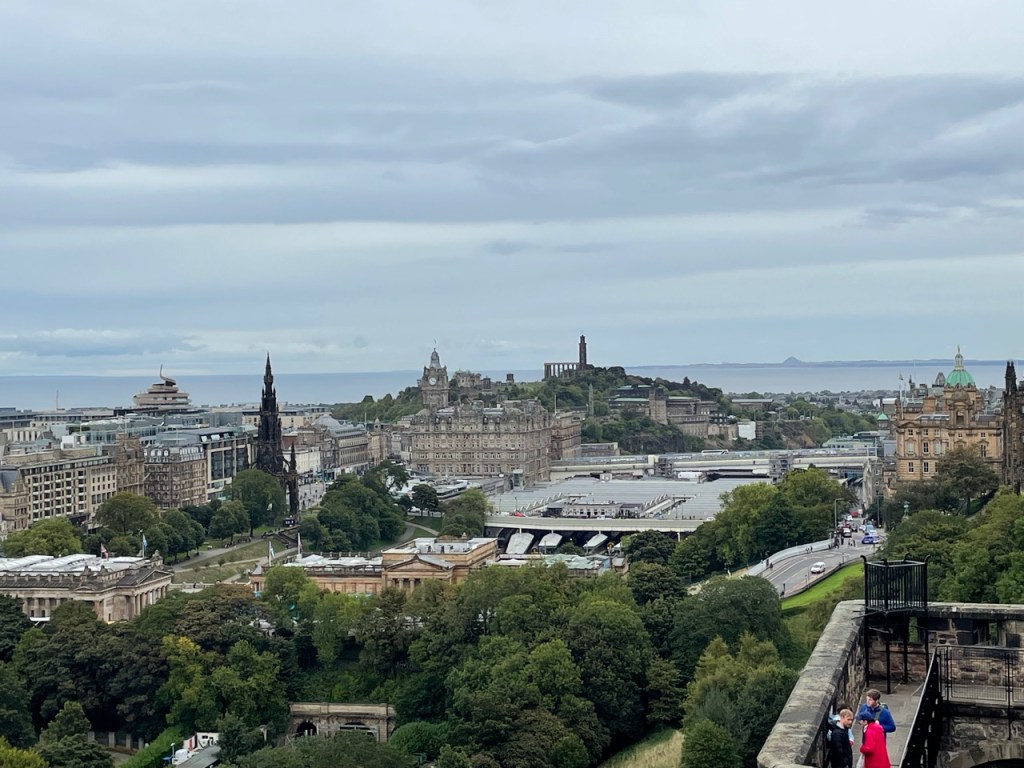
The first thing you notice in Edinburgh is the imposing buildings next to the castle that oversee the main part of the modern city. It’s a magnificent skyline, and really makes it difficult to think of Edinburg as anything but impressive and beautiful. Just like you…mostly because you’re reading this which obviously makes you impressive and beautiful.

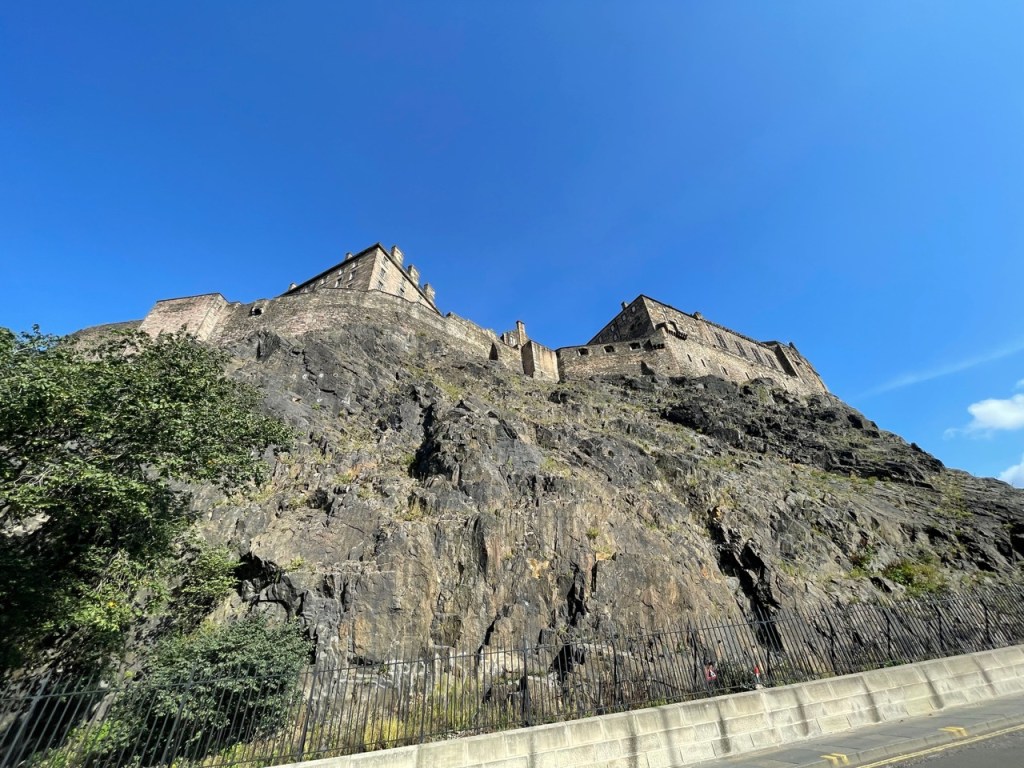
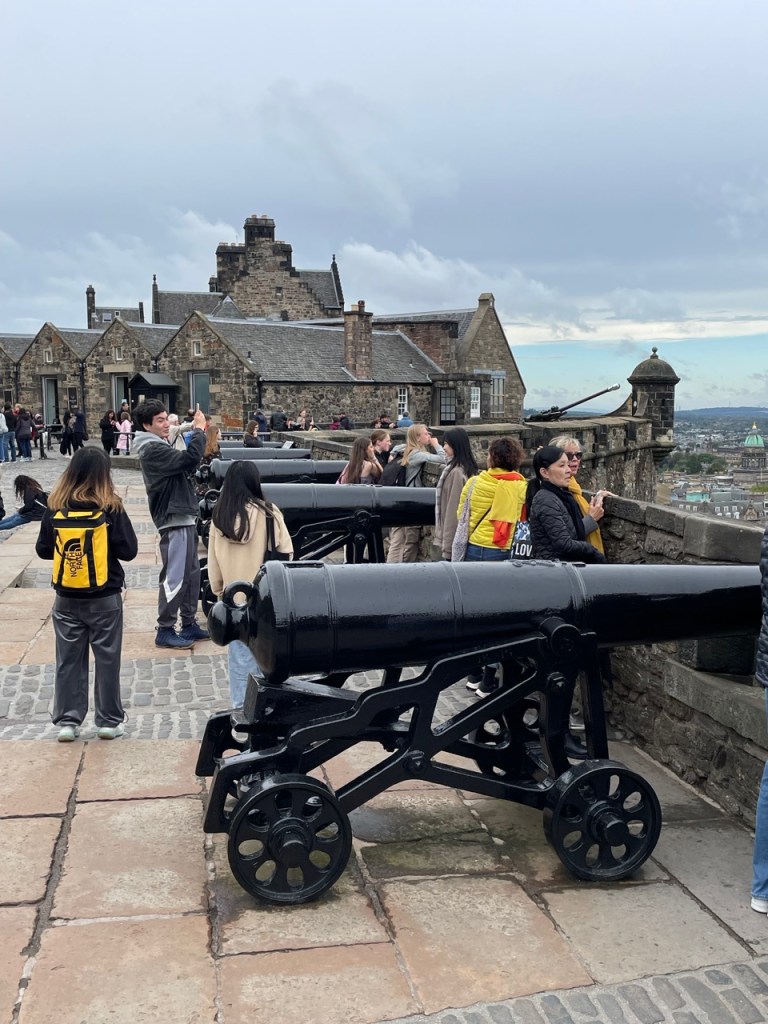
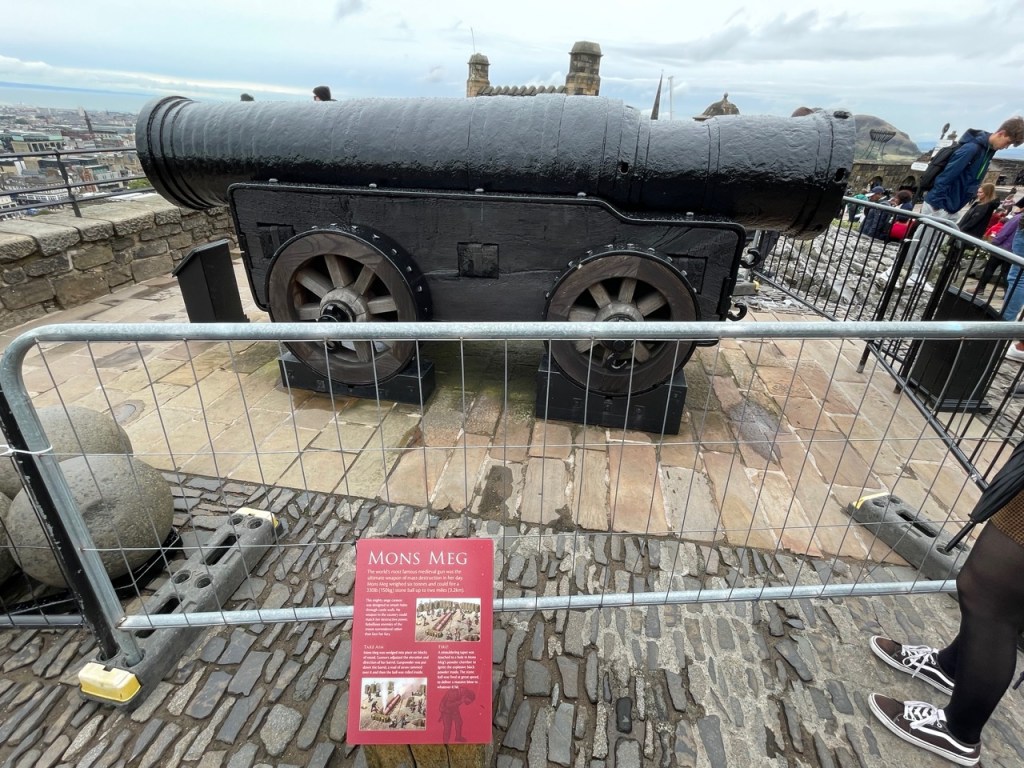
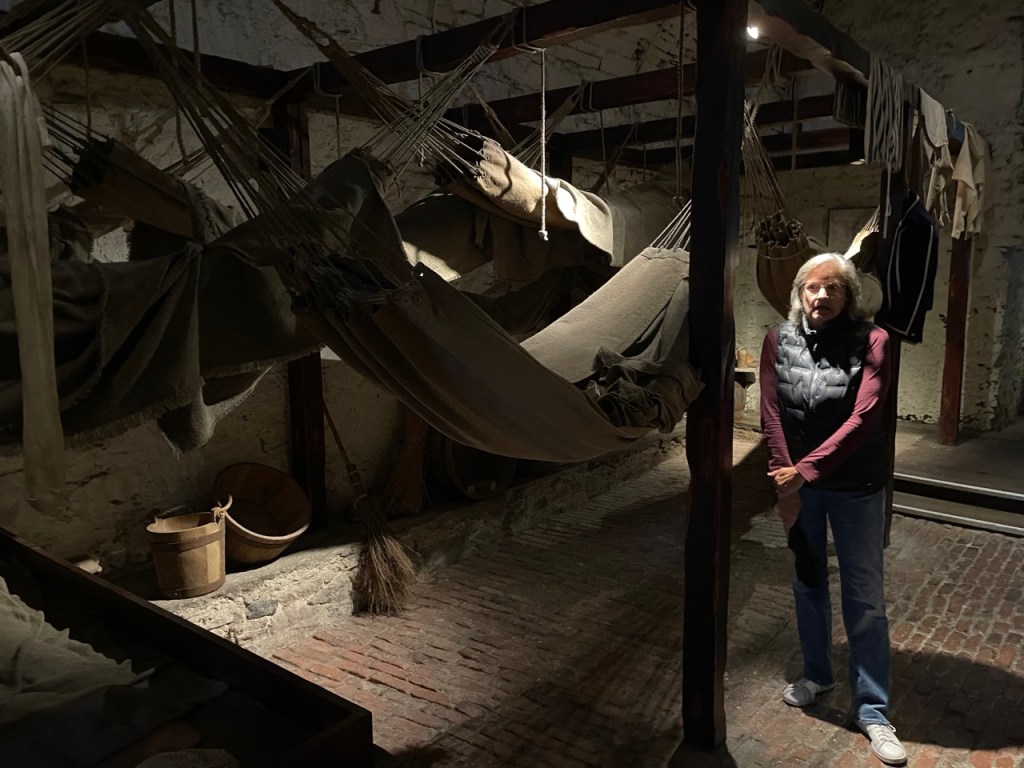
These are the views of and from the inside of the castle. Edinburgh Castle is one of the oldest fortified locations in Europe, and is also the most besieged place in all of Britain. I’m thinking the Scots must’ve won in the end, because everywhere we looked all the writing was in Scottish.

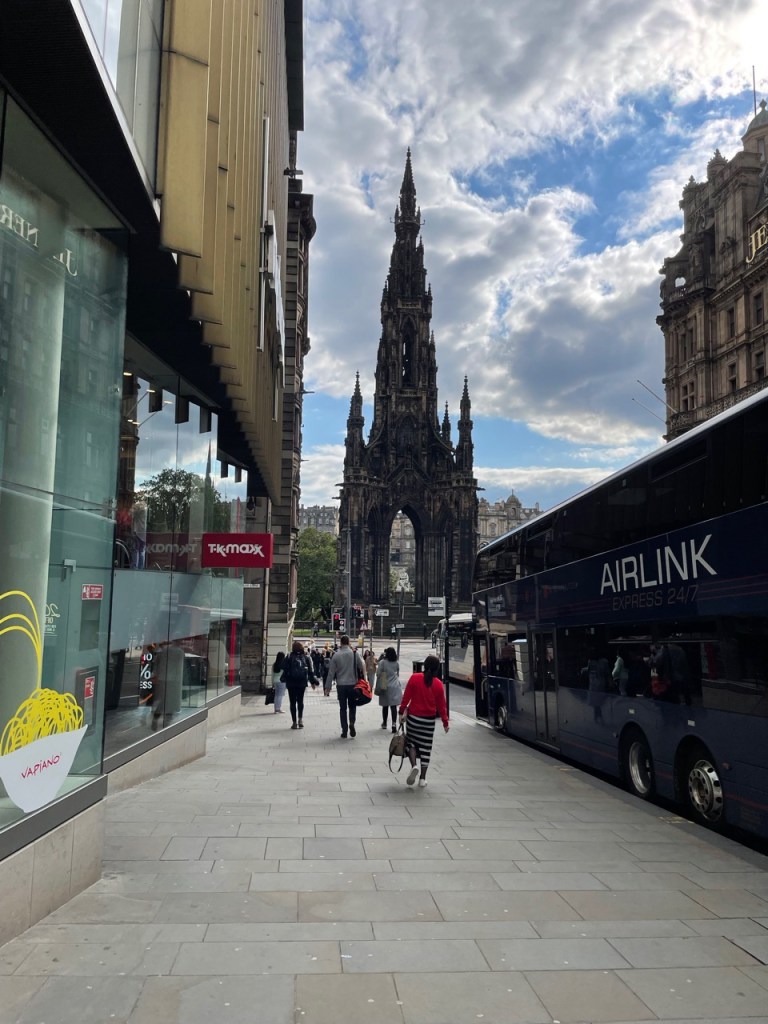
From afar I thought this was a church. Turns out it’s a Gothic monument to Scottish author Sir Walter Scott. It is the second largest monument to a writer in the world after the José Martí monument in Havana. You’re welcome for giving you some great answers for your next trivia contest.

Edinburgh is well-trained.

So is Carolyn.

“Wait- wha-? Whap Whap! Ow! Whap! Whap! Whap! Okay okay, I give!”

I guess she’s not well-trained after all– “Ouch!”

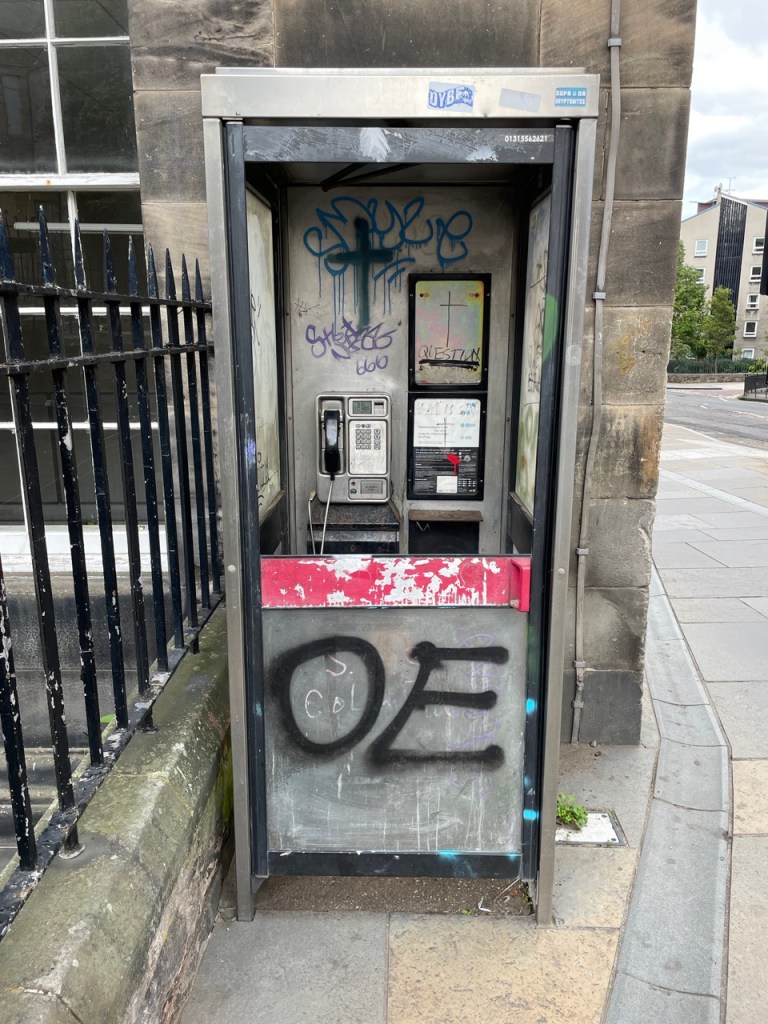
I don’t think there are many places in the world that still have telephone booths. This phone actually works: I picked up the receiver gingerly with two fingers after pouring most of a bottle of rubbing alcohol over the entire mechanism, donning rubber gloves, and then a gas mask. Can you believe we used to just grab those things and rub our lips on strangers’ spit residue just to make a collect call from prison? I mean, er, some of you, not me, he he. Anyway, after retiring this booth from being a Covid Hot Spot, I think it has now been converted to a canvas for graffiti artists. Albeit with a working phone in case they need to order more spray paint from Amazon.

This peak is named Arthur’s Seat, apparently because King Arthur had a really flat butt or something. You can walk up there for a great view of Edinburgh, but we saved all the effort by staying at the bottom and just holding a mirror toward them so we could see what they were seeing without doing all that walking. Genius!

Seems that no matter where we go, Roman ruins follow us around. You’d think after all these years they’d be stationary, but no-o-o. Actually, they tricked us, because this is the National Monument of Scotland, and is a memorial to the Scottish soldiers and sailors who died fighting in the Napoleonic Wars. I would’ve thought they’d have made a carving out of neapolitan ice cream or something instead. I’m pretty sure that’s me thinking of a funnier joke when I took the picture, and that’s Carolyn, pretending it was.

In addition to never being far from Roman ruins, it seems Portuguese things are now following us everywhere as well. They call this the Portuguese Cannon even though it was made in Spain. The Spanish have never forgiven the Portuguese for this slight, which is why to this day they get very agitated whenever you point a loaded cannon at them.

Ok, I’m sure I’ve already lost half our readers because we’re way past the Tweet Maximum, which is where the eyeballs of most people start rolling into the back of their heads because there are way too many woooords! So I’ll interrupt this blogcast with what I meant by the headline of “Edinburgh is lovely… except for all the toilets” before any remaining readers lapse into a coma.

You see, as we walked around that beautiful city, I couldn’t help but notice signs and/or advertisements (maybe warnings?) everywhere for toilets.

I mean, you see a sign like this and think, “Hmm, pretty big sign for a toilet, but whatever.”

And then you see another, guessing that they have to advertise because it’s on an upper floor.

And then you see them getting pretty specific with what they’re for. We assume the “WBF” stands for “Wide Butt Fit.” This would have worked well right next to the KFC. Despite the Wide Butt Fit, they do accept all inquiries. Now I’m wondering, is “inquiries” the word the Scottish use for fart? “Excuse me, I just inquired.” Hmm. Not a bad ring to it and with that you can admit that you farted right in front of the Pope.

They even had competing toilets right next to each other. I mean, c’mon, are the Scots simply defecation crazy or what?

We took this shot mostly because Slug and Lettuce has got to be one of the weirdest names for a pub in the history of pub-naming. It may explain how the toilet craze started, however. Note the toilet advertised right upstairs. I’d be running up the steps in a hurry if I’d just taken a bite out of a slug in my salad too.

This left us with a whole host of questions. Why is toiletry so lucrative in Scotland? Do they make sure you’re done with it before they sell it out from under you? Is it only “may sell” if you bomb it so bad they have no other choice? So many questions, but as friendly as the Scots were, they all gave us weird looks when we asked about Scottish toilet traditions.

I have to say I’ve never in my life seen such a big advertisement for a used toilet.

And what the hell is a yard toilet? Are the Scots mad? On a separate note in regards to that lower sign, what’s Kebabish? Kind of like a kebab but not quite? And does that have anything to do with all these toilets? And don’t get me started as to why David didn’t just give them the street.

I tell you, traveling in a foreign country can be confusing!

With all this toilet obsession, I can now see why they sell tissues by the actual buttload. Yep, that package of toilet paper is the literal definition and official measurement of buttload.

Overall, we saw so many signs for toilets, I just started snapping away. You will not believe it:

And yeah, in that last photo, an 8,000 square foot toilet?? Even Donald Trump doesn’t need one that big!

In this one they get all fancy with the lettering, capitalizing the Let in Toilet. Like it’s French or something.

Finally, this photo helped me to understand exactly what is going on.

Does it for you?

Aaaggh! I’m trippin’ out!

One of the goals of this blog was to keep track of all the places we’ve been. It can be a bit of a blur to try and remember each trip, especially when every couple of months we find ourselves galavanting around Europe like a couple of international jewel thieves evading Interpol.

But you know it’s really bad (or you’re just getting too damn old) when you forget to do the thing you’re supposed to do so you won’t forget the thing you did before you forget you ever did it. Or something.

Anyway, I realized the post before this was about Paris, including our unforgettable trip to Bruuuuuuuge, but that we left a couple of things out and I got so wrapped up in, um, being retired I guess, that I forgot to post them.

Like the Eiffel Tower here. I can’t figure out how my iPhone was able to see through my ‘shroom haze (to demonstrate my vast knowledge of hallucinogenics, I once called shrooms “stools,” to the great amusement of anyone within earshot), but obviously the Eiffel and I were tripping big time for a while. Fortunately, only good trips get blogged on Bald Sasquatch.

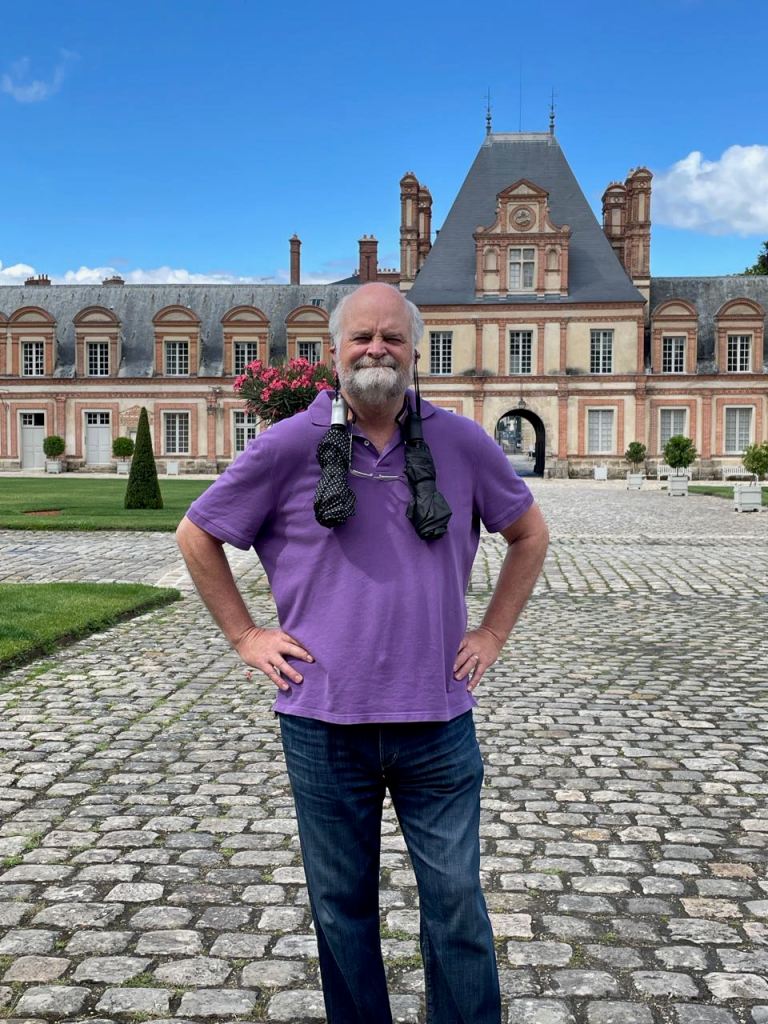
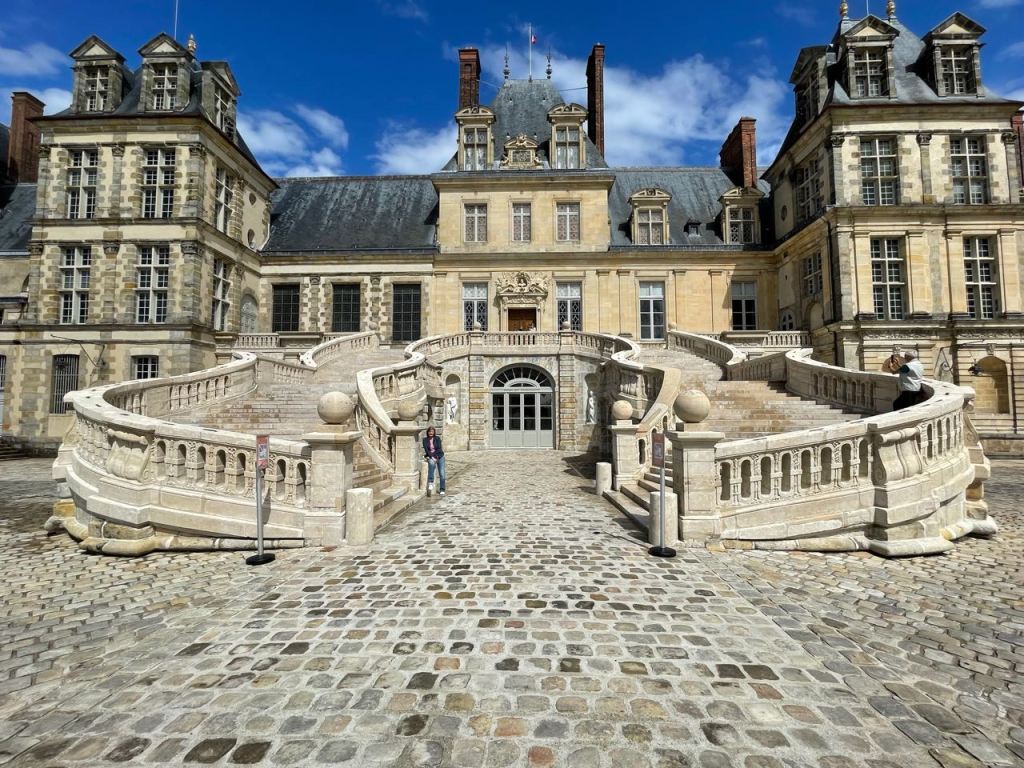
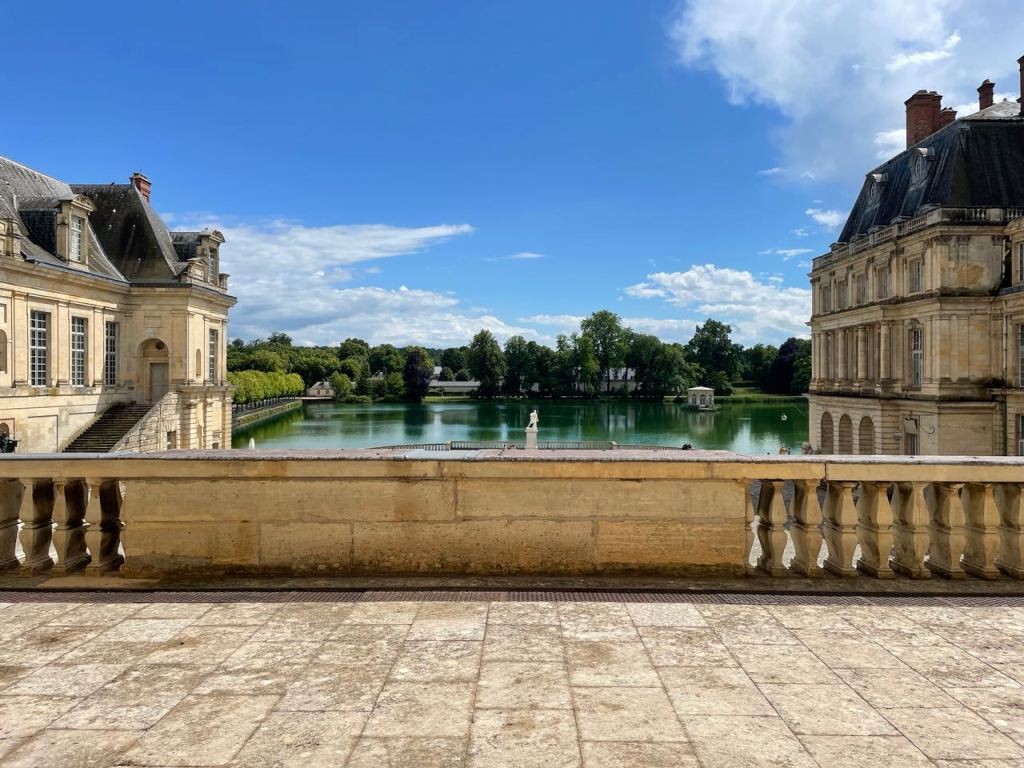
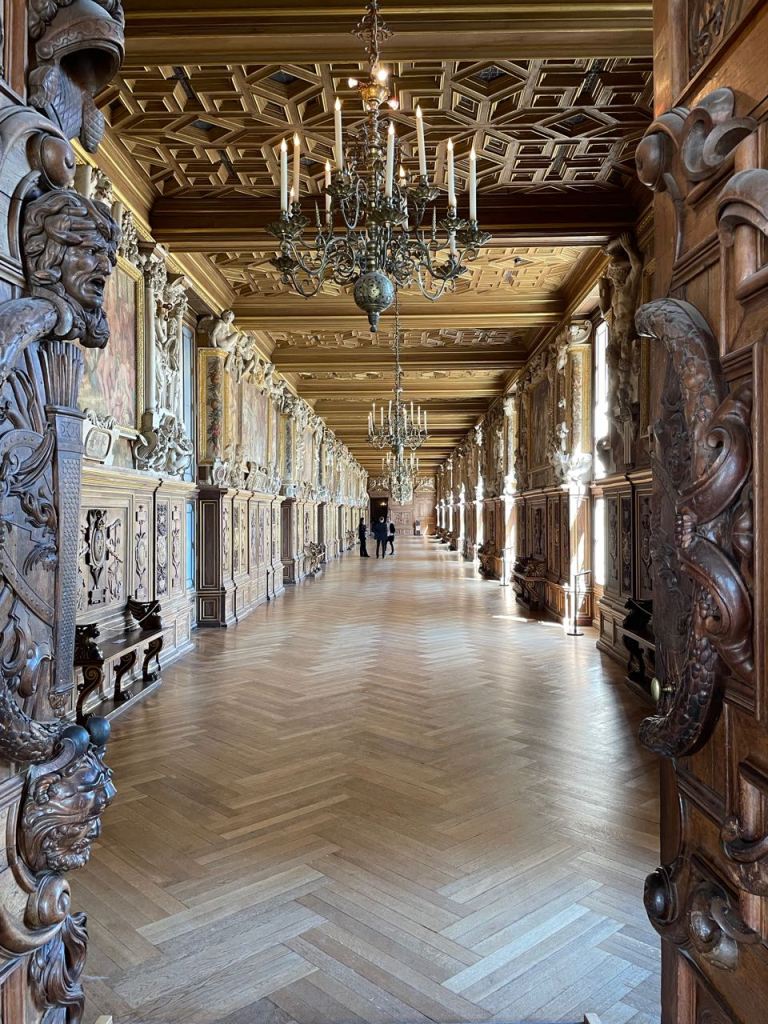
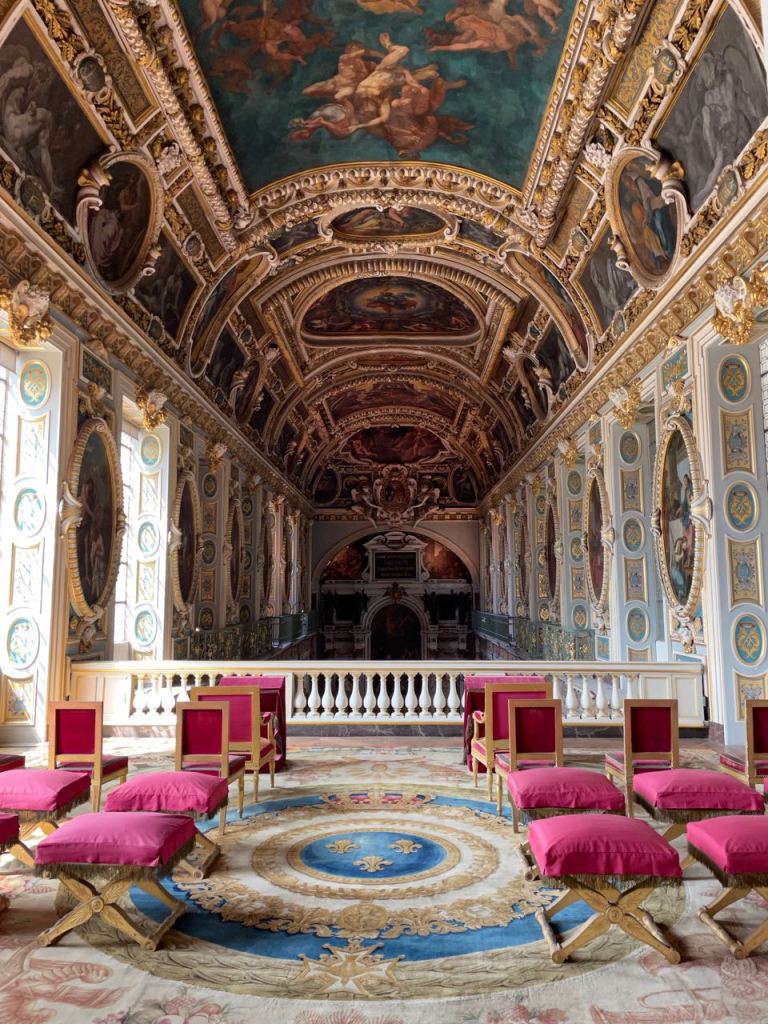
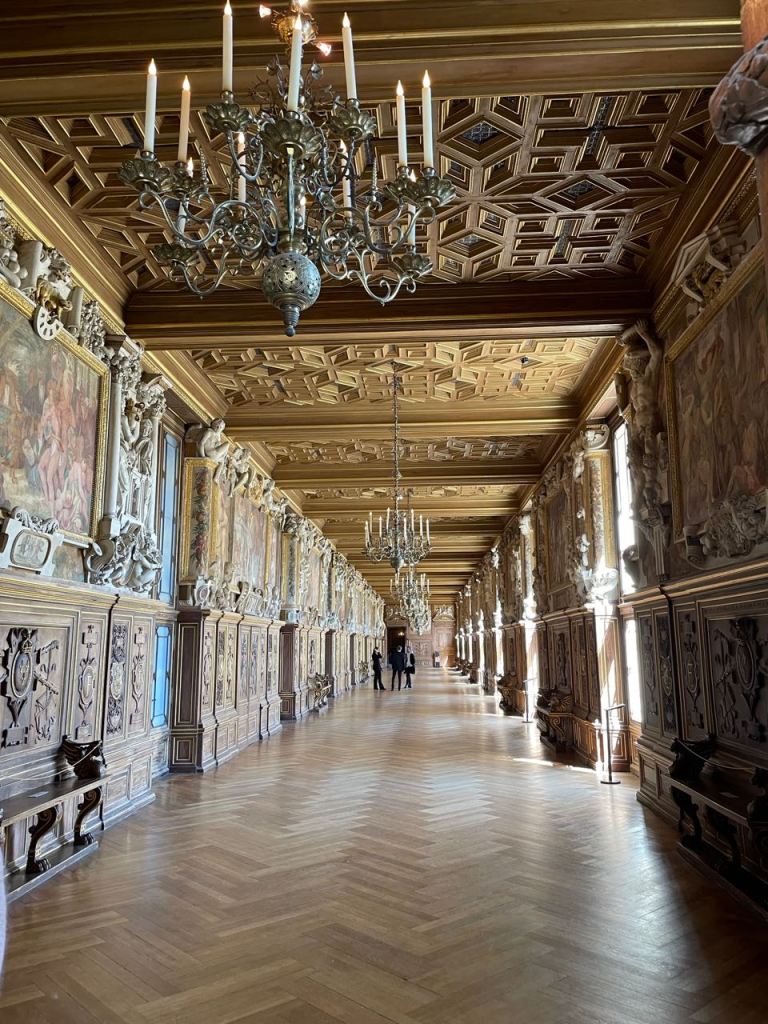
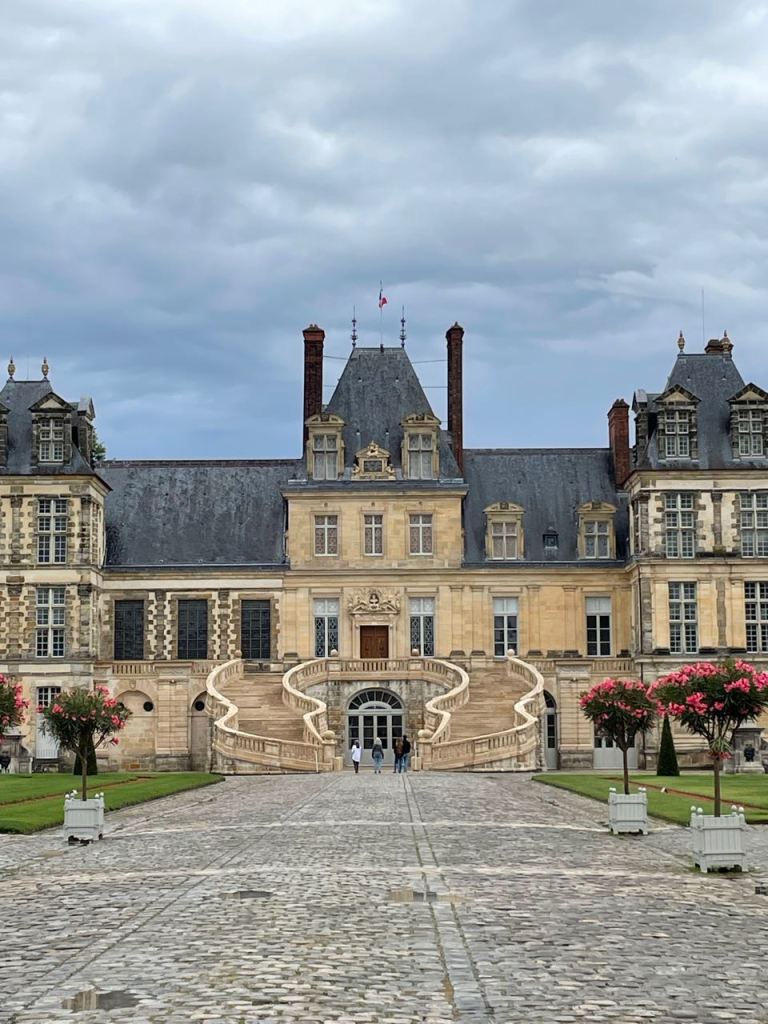
During our Parisian excursion, one of the places we drove to (apparently too quickly, I’ve now expanded my country speeding ticket collection to include Luxembourg, Spain, and France) was Fontainebleau, also known as “The Poor Man’s Versailles…” as long as your definition of “poor man” is “less rich than a couple of people in the world.”

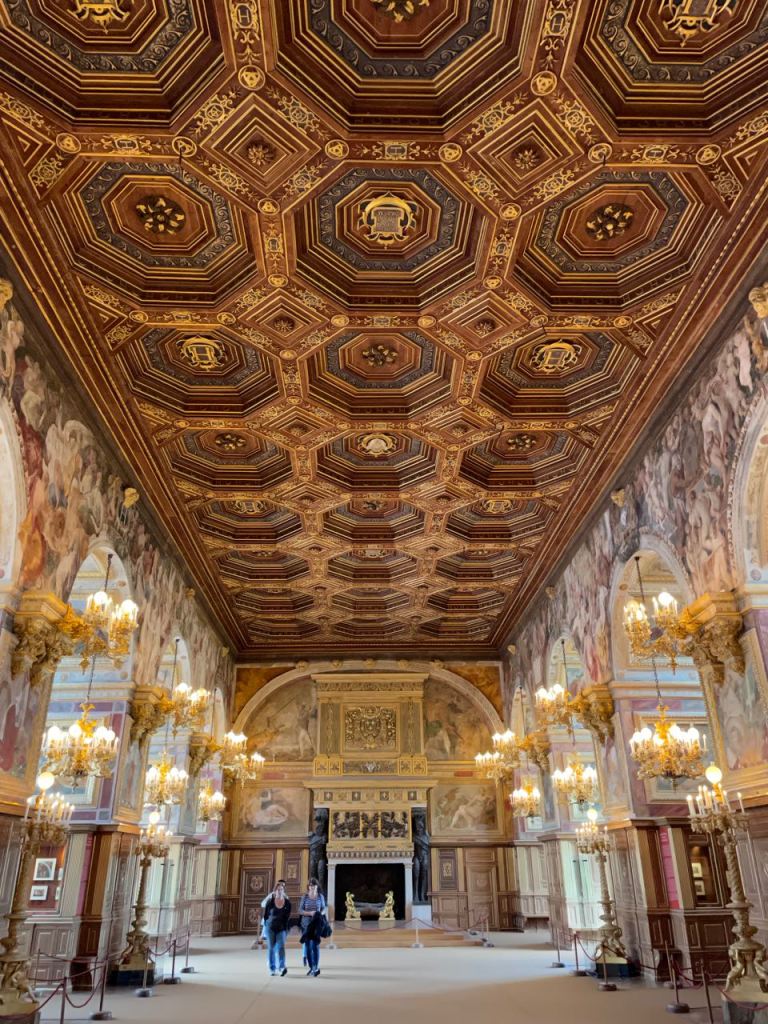
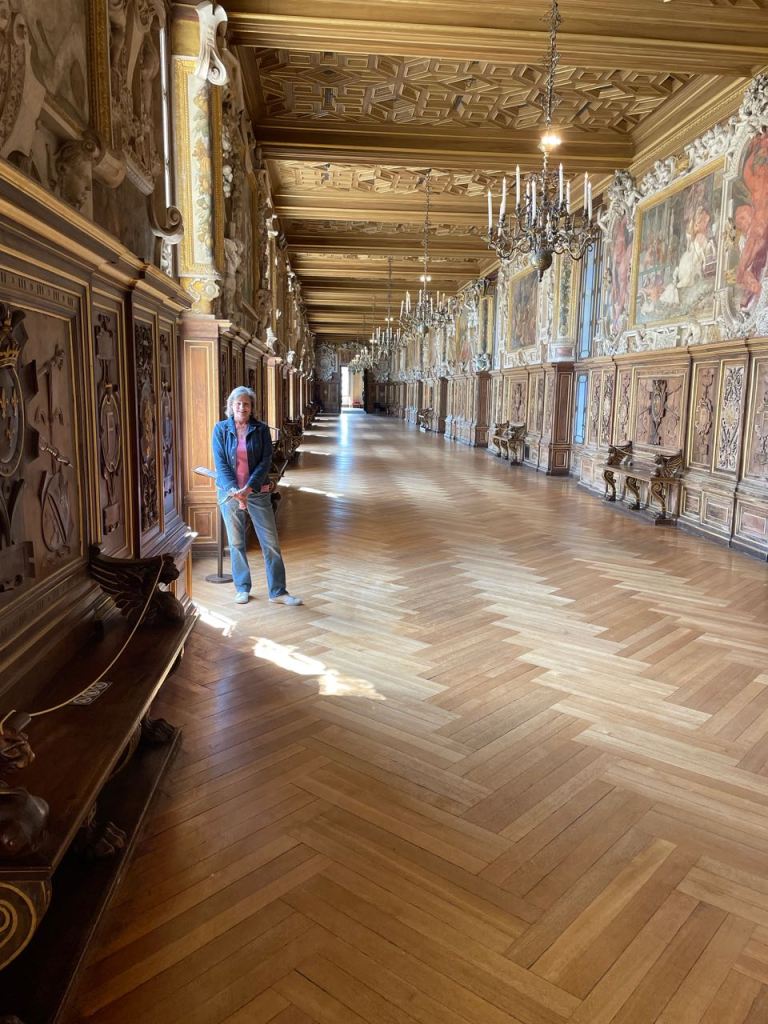
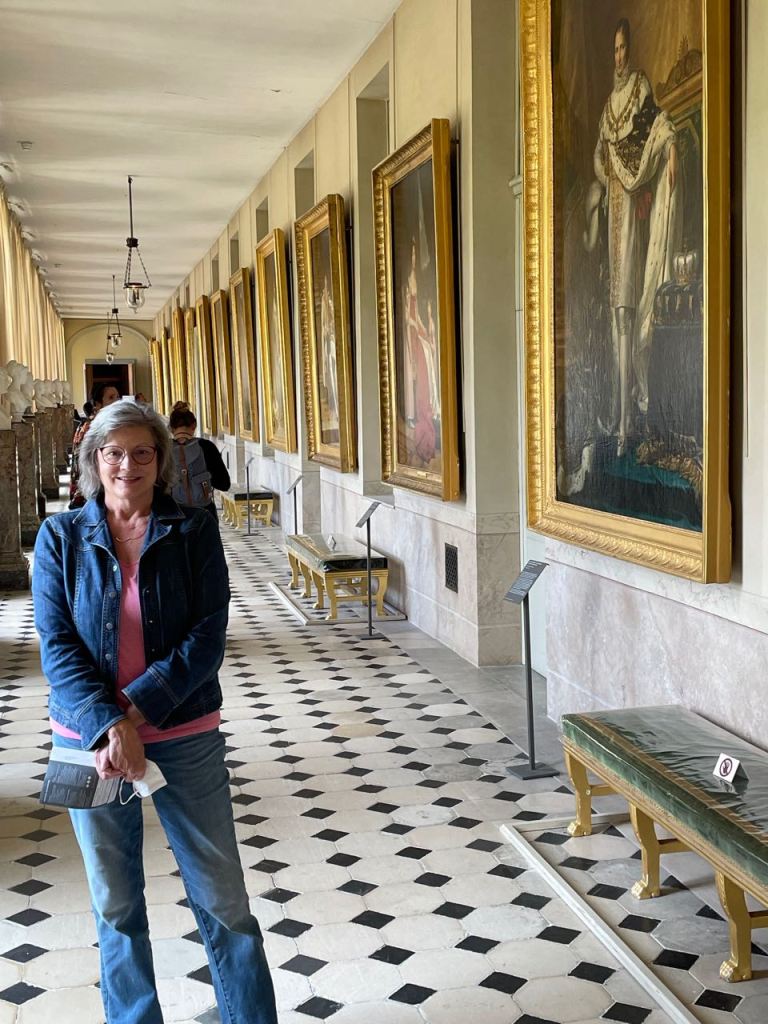
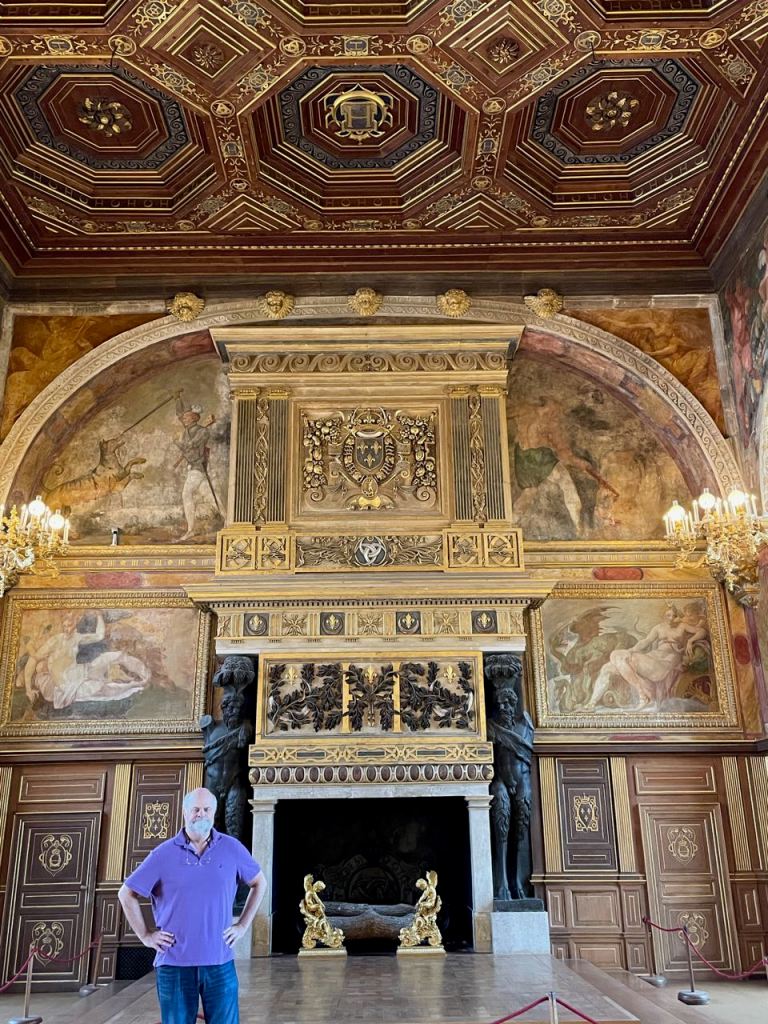
The Palace of Fontainebleau served as a residence for a number of French monarchs, from Louis VII to Napoleon III to Fred KJSU (if they can use letters for numbers I can too!). As with Versailles, the palace is positively dripping with opulence. In fact, there was so much opulence-dripping we had to bring umbrellas, and while doing so I invented a new hands-free way to carry them around. ©2022 BaldSasquatch.com so you can’t steal the idea.

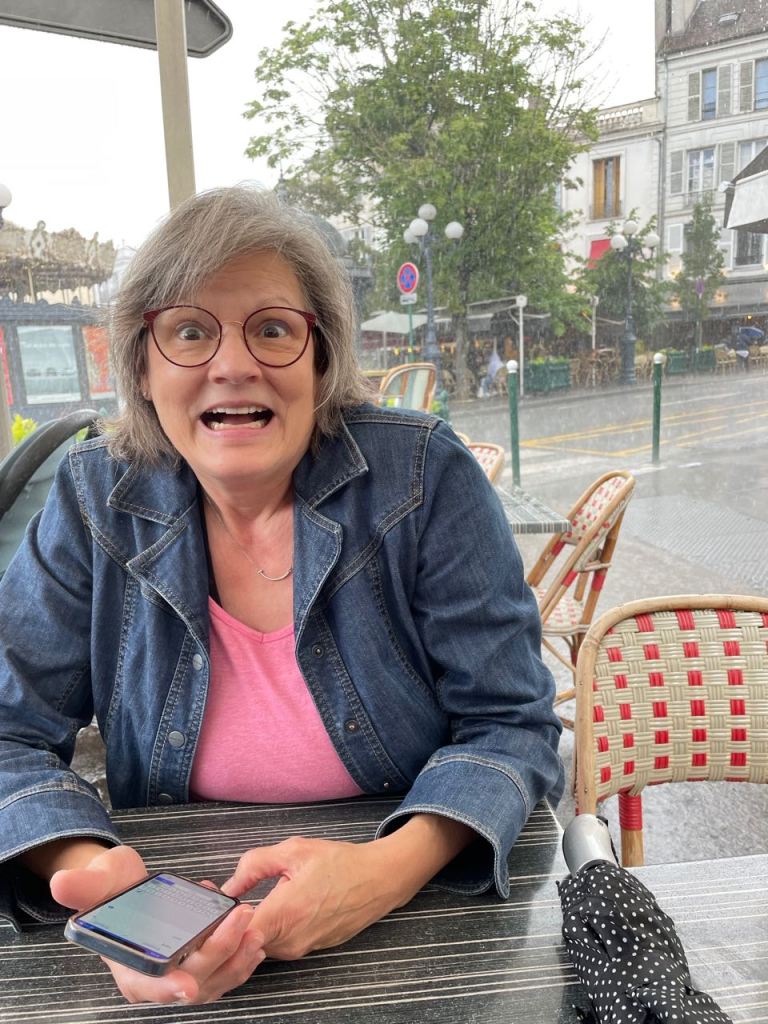
Carolyn, on the other hand, reacted like the mushroom tea just kicked in when the rain started pouring. After five years, I think she’s forgotten all about Oregon rain, so she was pretty amazed over the whole thing.

Fontainebleau translates to: “blue fountain.” (I bet you never could’ve figured that out… but it does mean every time you use the toilet in an airliner you’re pretty much doing the Fontainebleau. By the way, it’s good to announce in a loud voice that you’re “going to the Fontainebleau!” on a French airline so they’ll be impressed).

Fontainebleau is actually a welcome respite compared to Versailles, mostly because of the crowds, or lack thereof. Everyone goes to Versailles because it’s close to Paris, but apparently 55 kilometers (or 34 miles with the Caveman Measuring System) is too far to go to see even more, as the French say, of the “Three Big O’s:” opulent, ornate, and ostentatious. For some reason, the best words to describe these places all begin with an “O.” That’s why the royal seal has an opossum on it. Of course, the Brits decided to jab at the French by taking the “O” out of “possum.” But, did anyone ever pronounce the “O?” The Opossum/Possum saga has always baffled me. It is the same animal, right? No wonder they play dead all the time, we’ve confused the hell out of them.

Imagine driving to this home from a long day at work. I’d probably feel even more tired just realizing I was going to have to walk a half a mile to the bathroom. Keep in mind they hadn’t invented those speakers some American houses had, you know, the ones that no one ever used. I think the people who thought they were a good idea completely forgot that yelling had already been invented. Especially in big families.

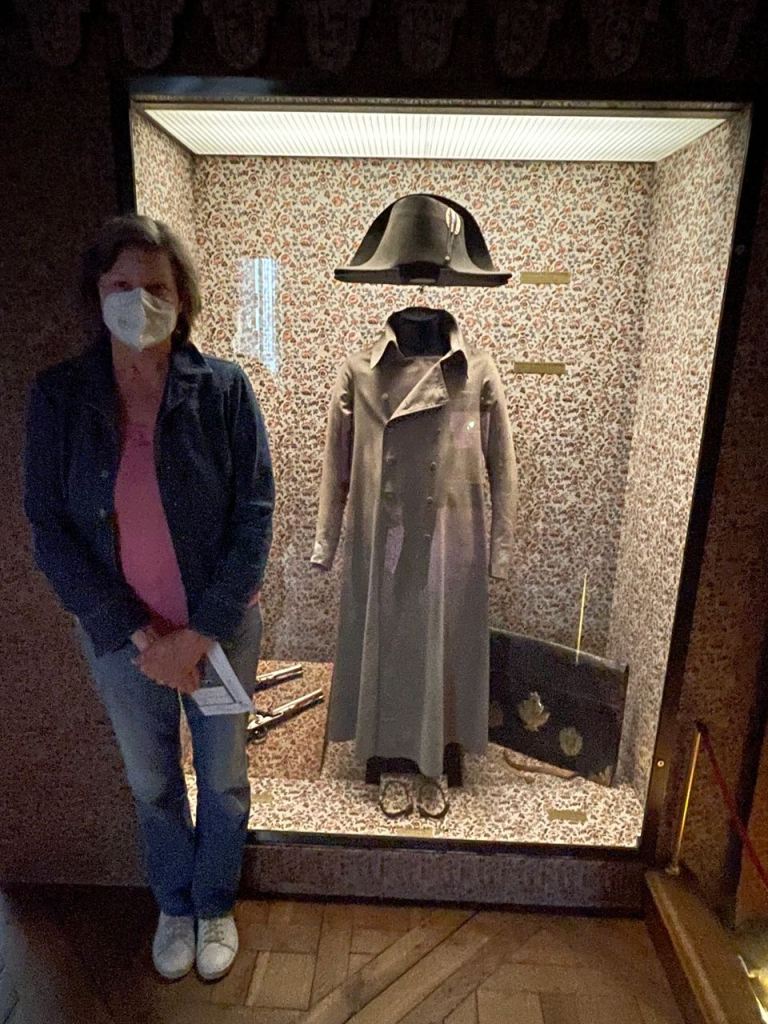
If you want to know how effective propaganda can be, Napoleon (I get confused at all the Napoleons, III, IV, whatever. When I think of Napoleon I think of that short guy who conquered lots of places and was always itching his belly button when his portrait was painted), was actually of average height for the time. The Brits threw shade at him just to make him seem less impressive. Of course the French threw shade right back by making sure everyone in the world thought that English cuisine sucked. Oh wait, is it still propaganda if it’s true? Anyway, you can see here that obviously Carolyn could have pounded the crap out of the little guy, but since the average height of most people was two stone and forty quid (I don’t know what those things mean, but I like to pretend to sound like I do), it’s obvious he would’ve had to tap out while she squeezed the life out of him with her thighs. Sadly, if she would’ve really been alive back then at her current height, they would’ve probably either jailed her for being too threatening or used her as a circus freak.

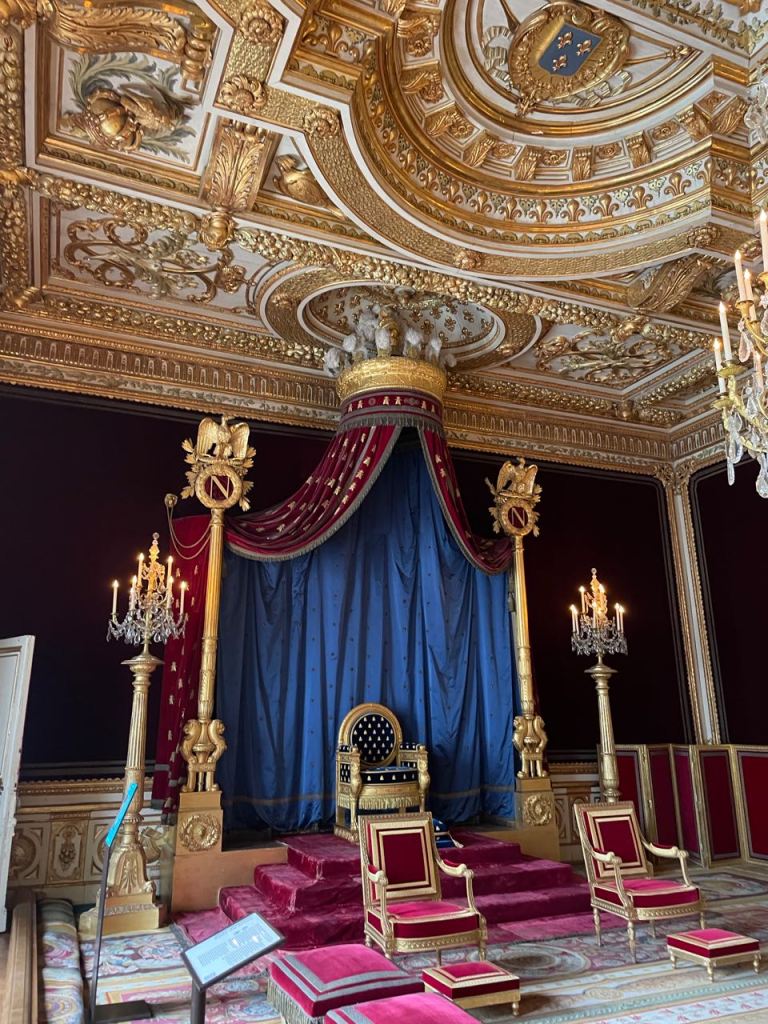
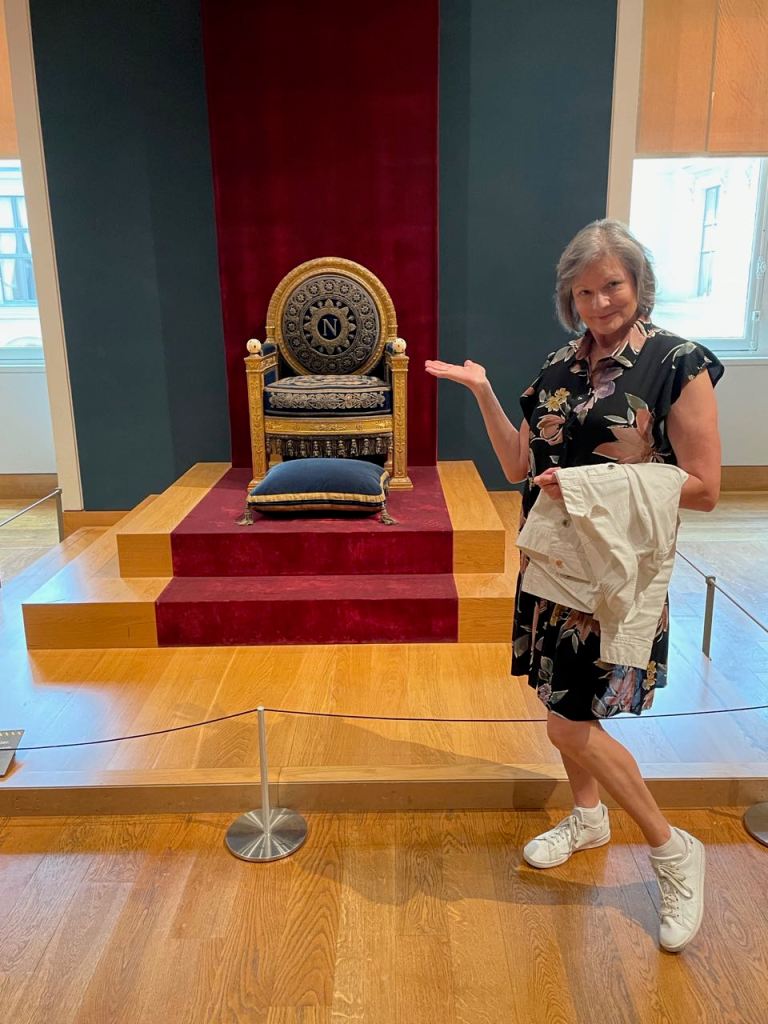
Napoleon the Belly Button Fondler actually sat upon this throne.

Sure, they didn’t have telephones back then, but they figured out plenty of other ways to keep abreast of developments around the country.

It’s kind of funny to think that one of the world’s most powerful men used this as a bathtub. Based on all the other opulence, I would’ve thought he would’ve had a tub the size of an olympic swimming pool. Did you know they used to allow commoners to drink Napoleon’s bath water in order to “give them the strength and wisdom of an emperor?” No? I didn’t either, I just made that up. I have, however, always wondered if a Pope’s excrement is considered holy shit. Holy shit! I can’t believe I wrote that.

The first Royal Decorator who suggested the idea of “white space” was immediately beheaded. The subsequent designers got the hint.

Here, a globe symbolizes what the earth would look like if it existed in a wooden stand in a big long room.

Like Adolph Hitler, Napoleon was a wanna-be artist. But while Hitler had some actual artistic talent (gawd why didn’t someone give him a job as an artist- the world would’ve been spared a lot of misery!), the only talent Napoleon had was threatening to behead anyone who didn’t think his drawings were awesome. “Ooh, Nappy, you captured the splashes so perfectly!” she says as she silently puzzles over why the man is peeing out of his feet.

It’s a little known fact that the only reason Napoleon ended up invading a couple of countries is because he took a wrong turn trying to find his bedroom.

I took a picture of these guys just in case they are famous, because they were being filmed while performing a rap song in front of the palace. So if they are famous and you know who they are, be sure to drop me a line so I can add to my strut a little at having been so close to fame. Ooh, I get all tingly at the hopeful prospect!

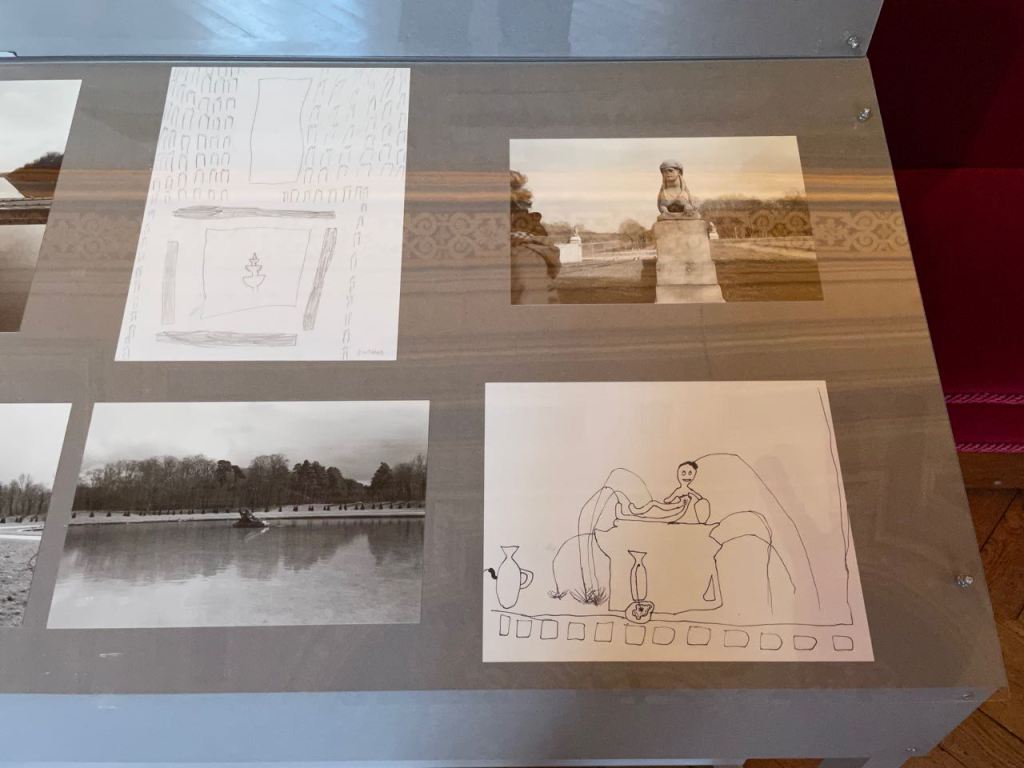
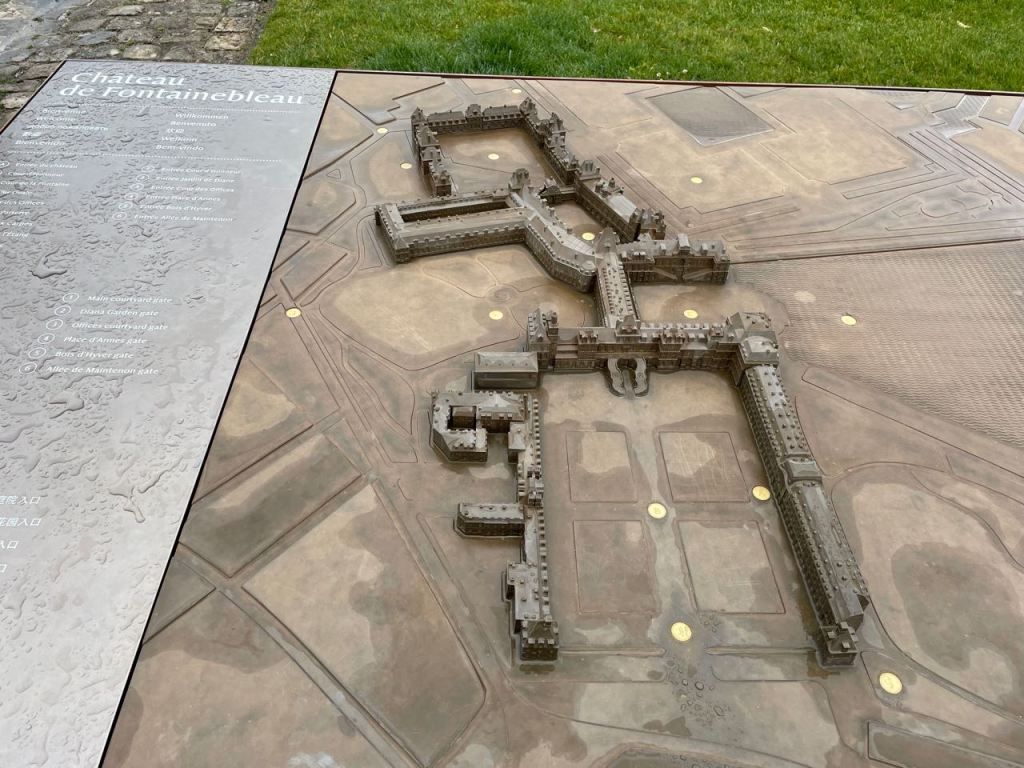
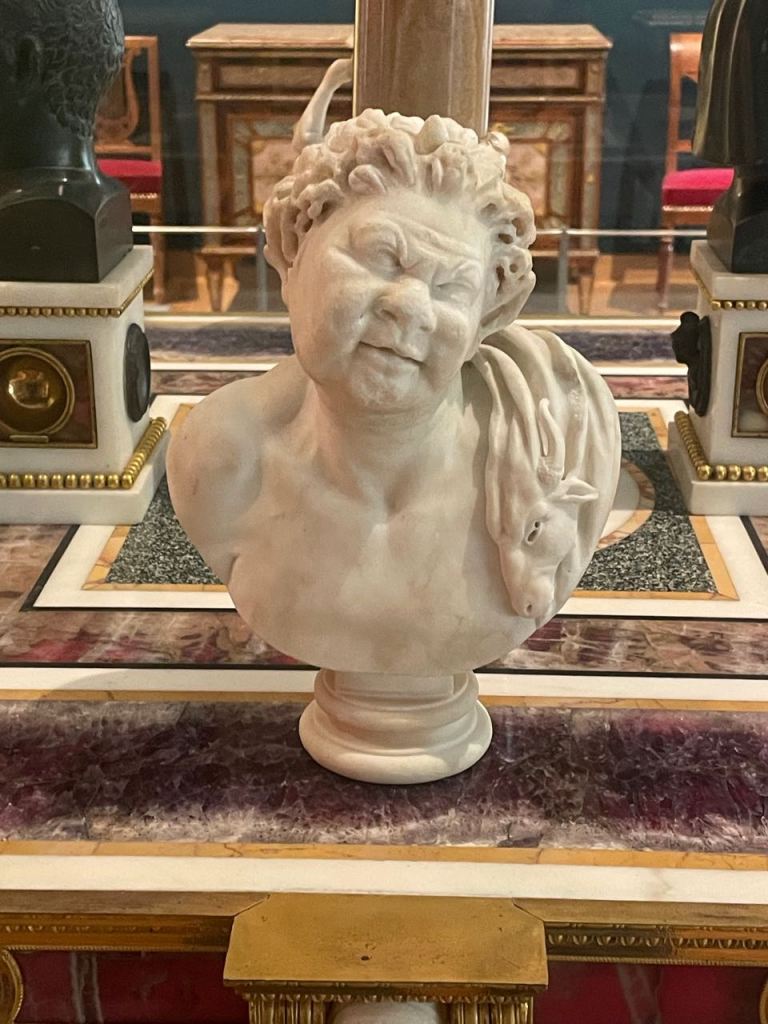
Here follows the rest of the pictures of Fontainebleau. I completely forgot which hilarious and/or witty comment I was going to make about each of them. But trust me, you’d be rolling right now if I wasn’t too old to remember, um, whatever thing I was supposed to remember just then. Time for a nap!

This is the actual town of Fontainebleau. Nothing particularly special, the palace is the only reason you’d really want to go there I think. Although we had a delightful lunch.

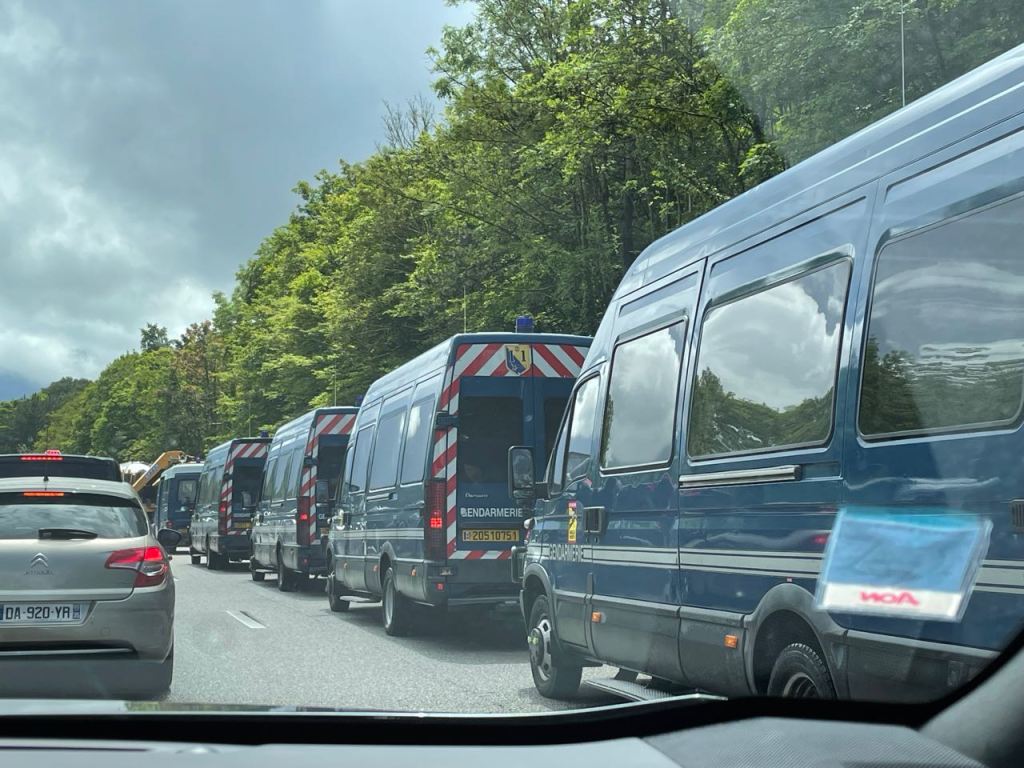
Don’t follow my example. I learned the hard way what happens when you speed in France. I would’ve thought one cop van would’ve been enough, but no-o-o-o.

Oh crap- I almost forgot. That was going to be the end of this post, but I just saw my folder full of shots of the Louvre. I’ll make it quick, because I know you probably have a text to see on your phone or something to itch soon.

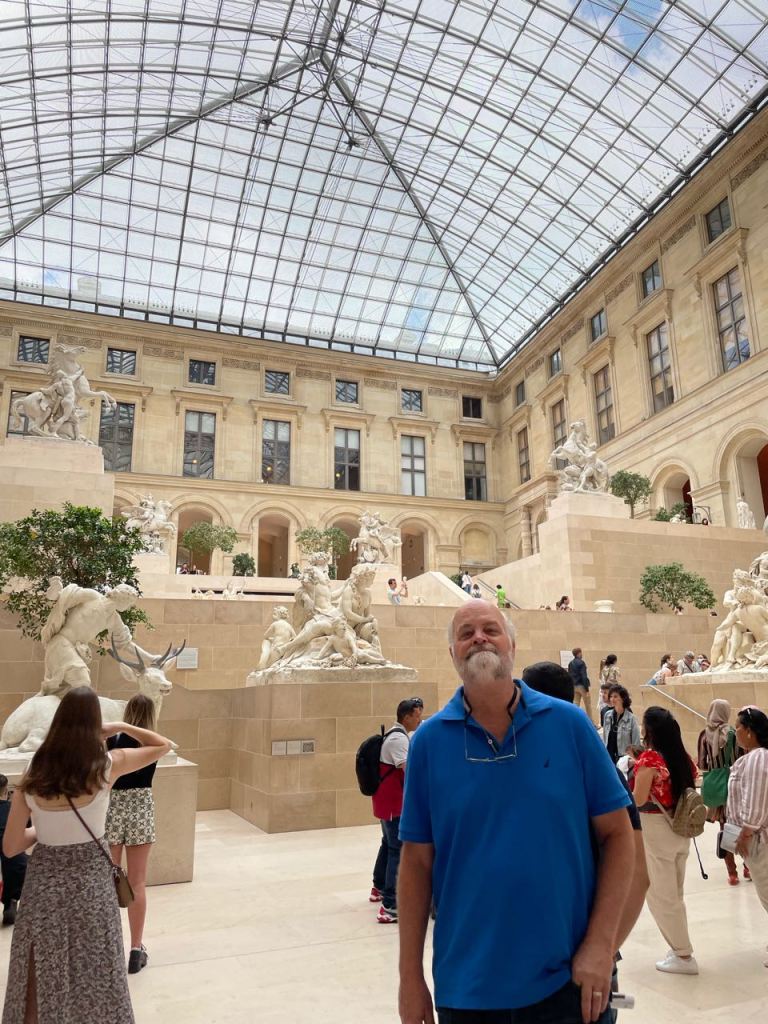
A very nice benefit of being at a place the second time is that you can just take this shot of the Mona Lisa from the entrance to the room and call it good. Either that, or I thought that bald guy was incredibly interesting and Mona was just photobombing me.

Napoleon also lived at the Louvre (clocking in at a paltry 652,300 square feet or 60,600 square meters) as well as Fontainebleau, because of course one ostentatious, opulent, ornate residence is hardly enough to befit an emperor. In fact, he only used this room to change his socks.

I took these shots because I had something hilarious to say about ostriches, but damned if I can remember what it was. So do me a favor and snort a bit for me while you look at these so we can pretend to wring a little humor out of it all anyway. Maybe it was ostrichtatious? Damn. I give up.

OK, I can’t top that ostrich joke (if I ever think of it), so here are the rest of the Louvre shots:

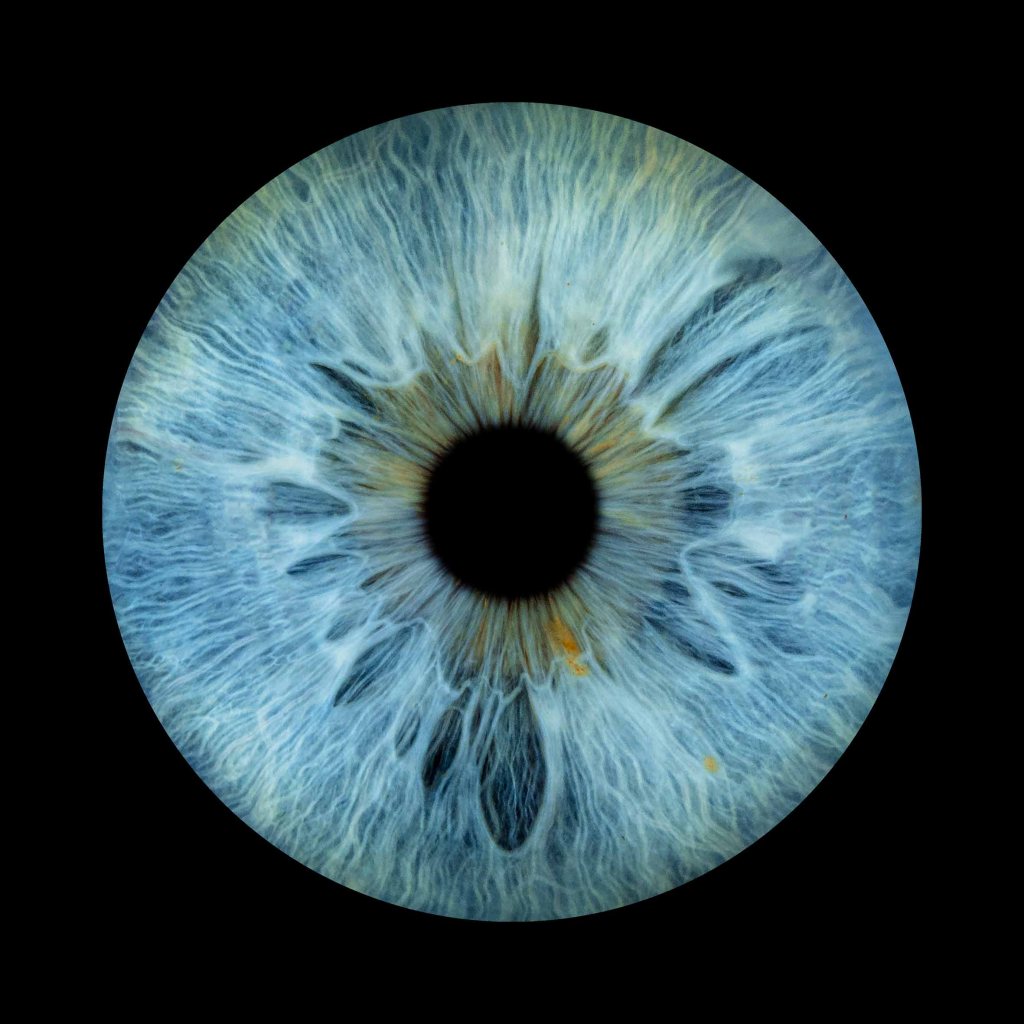
Last but not least, this is an actual picture of my eye. A store in the Louvre markets this, selling you both an electronic and printed image of your eye. But the actual truth is, now that you’ve looked into the all-seeing eye, I’ll always be able to watch you. In fact, there’s a little broccoli in your teeth. I’m glad to see you’re eating well, but you might want to take care of that before you get botulism. Or rabies.

In Bruges with Colin Farrell

Back in 2008, a movie named In Bruges, starring Colin Farrell, Brendan Gleeson and Ralph Fiennes, was released to the theaters. As I watched it I found myself smitten by the scenery of the locale. It looked completely authentic; I was certain it wasn’t filmed on a sound stage. I left the theater hoping that some day I’d be able to see the town in person.

Like so many actors, Colin’s not that tall, but I still have a bit of a man crush on him. He is a hoot to watch on screen.

So when we ended up in Paris for the third time, I noticed that Bruges was only a three hour drive away. Since my friend Colin Farrell had been bugging me for a meet-up anyway, I decided to give him a call and we agreed to meet in Bruges. He said he’s always felt bad that one of his first lines in the movie was, “What a shithole.”

Because of course Bruges is anything but.

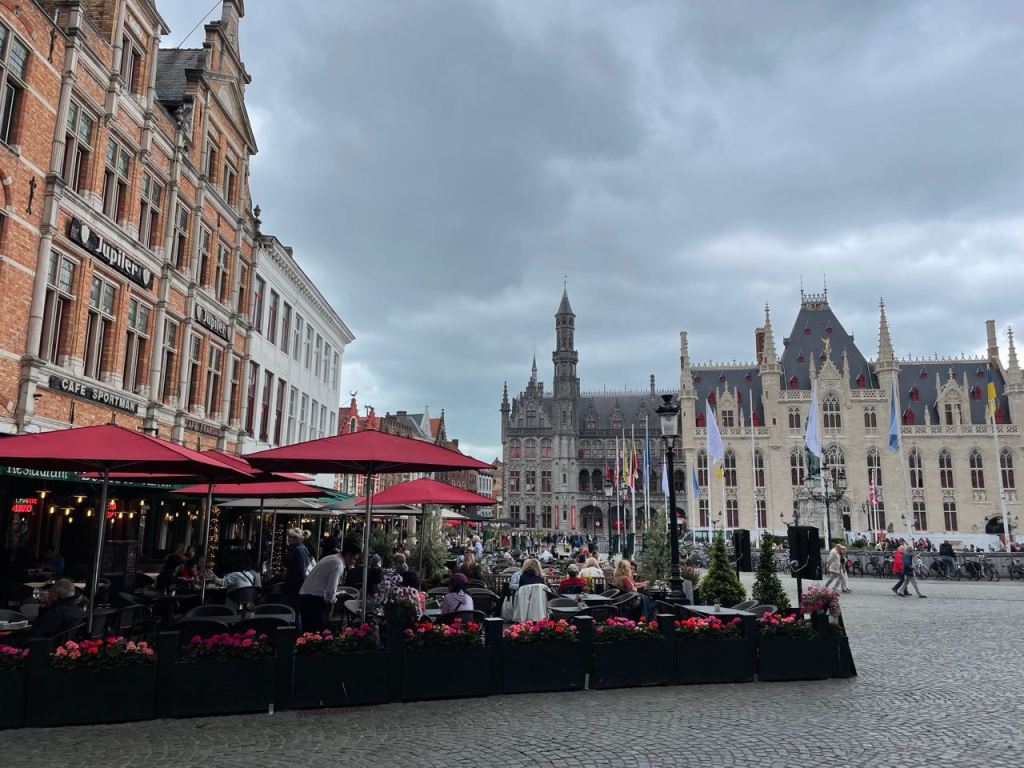
If you haven’t seen In Bruges, and can deal with a bit of violence and a lot of cursing (it’s about a couple of hitmen after all, and as we all know hitmen are always swearing up a blue streak; it’s why I never invite them over to dinner with my parents), then you’ll find yourself enjoying a delightful and droll comedy/thriller. The bonus is that the setting is so charming, even after over a dozen years its siren song was still calling out to me. I watched it again when we returned home, and sure enough, we had wandered through virtually every outdoor scene in the movie. Much of it was filmed right in the main town square. Additionally, the movie’s charm held up for me all these many years later, so it was a win all the way around.

Colin couldn’t spend all day with us because I’d already told him numerous times that no one wants to spend all day with an actor, but he did ask us for some photos because he understands that most people wouldn’t believe we are friends without the photographic evidence. We assured him that the evidence wasn’t really necessary, and that we’d be happy to confirm to any of his friends that we all knew each other. He seemed satisfied with that. We don’t only associate with royalty, after all; we can slum it with the best of them.

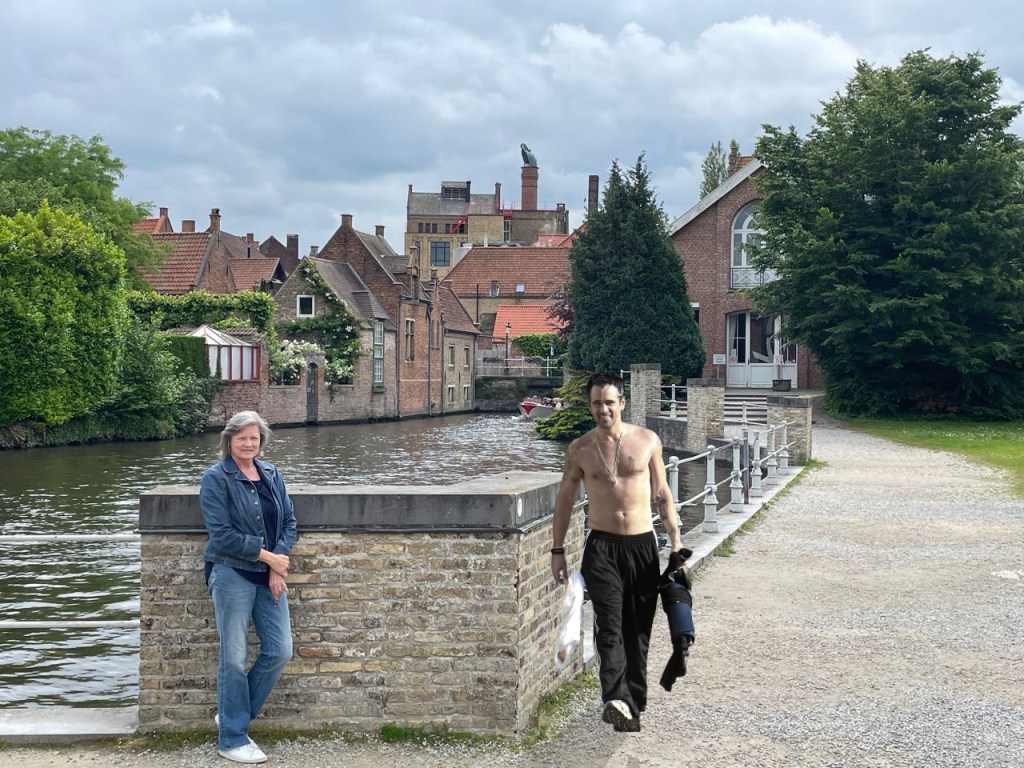
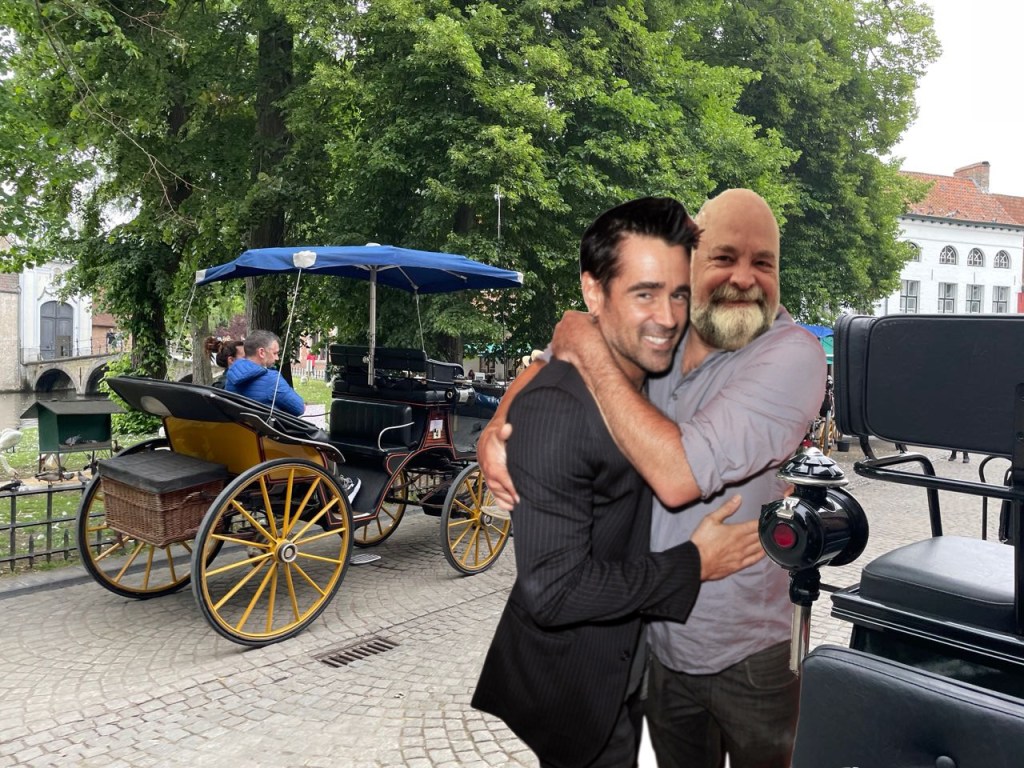
Colin poses with Carolyn after calling after us across the square. We didn’t recognize him at first, but fortunately this blog has made us world famous so he recognized us right away. Crisis averted!

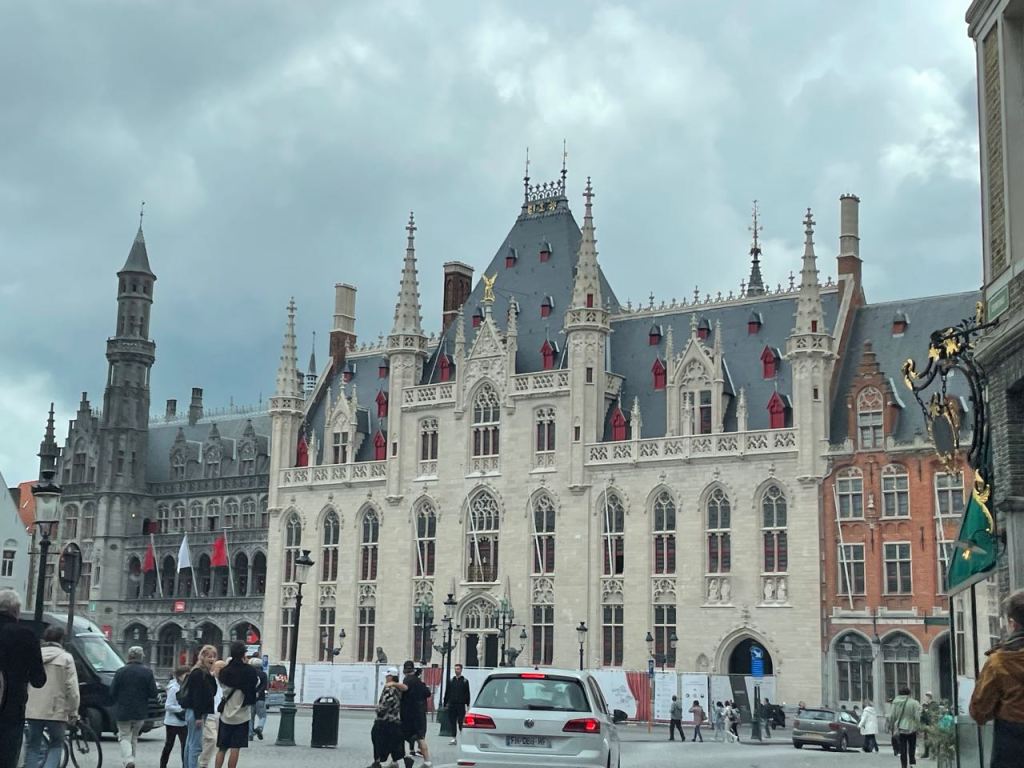
Of course we had to get a shot in front of The Belfry of Bruges, a medieval bell tower in the center of old town, originally built around 1240. We didn’t see any bats in the belfry. But here’s a funny little anecdote: we decided not to walk up all the stairs to get to the top because, well, Colin’s a smoker and we didn’t think he could make it without hacking up a lung. The good news is some of the scenes in the movie were filmed right in the tower, so when I rewatched the movie I could see all the scenery we missed! There wasn’t as much shooting in real life, however.

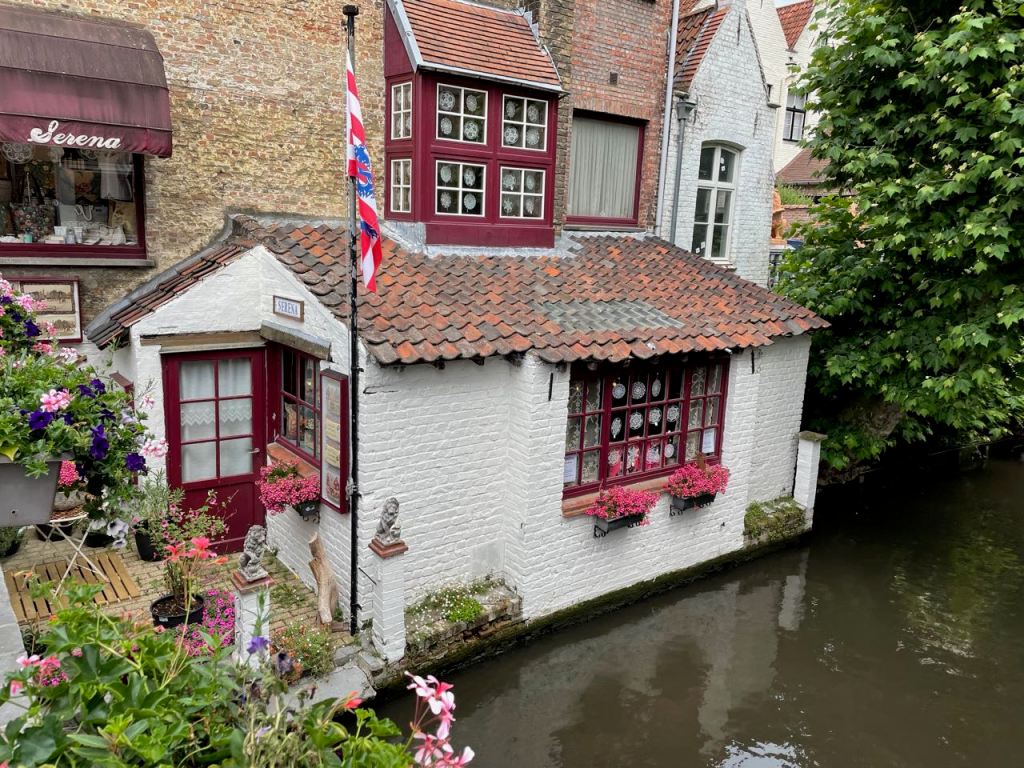
Like just about every town in the universe with canals, Bruges is often called “the Venice of…” in this case, the North.” I suppose there must be a “Venice of Mars.” I call my inner ear “The Venice of my Skull.” The rest is alimentary, my dear Watson.

Here Colin is just being Colin, he simply had to take his shirt off to show off a little, joking that he was going to dive into the canal. Carolyn suggested he put his shirt back on, but only after tossing his shirt in the water so she could ogle his trim physique for a while longer. Oh behave Carolyn!

After drying off and making yet another wardrobe change, one of the horse & buggy drivers recognized him and stopped her carriage. Colin did what Colin has done for us numerous times over the years and bought us a ride. I mean, even I would have stopped for that hunk of roasted man meat if I were driving the carriage, so I can’t blame a pretty blonde!

He wanted so badly to ride with us, but we told him we really preferred a romantic ride on our own, and it was probably best that he be on his way anyway. I mean, you can only play with a Colin for so long before things get, you know, irritated. He begged to buy us lunch, but we demurred and I gave him a big hug and thanked him for the ride and sent him on his way. What a special treat to see such a charming city and at the same time catch up with our good friend! Good luck to you Colin! I hope your next movie is better than Alexander!

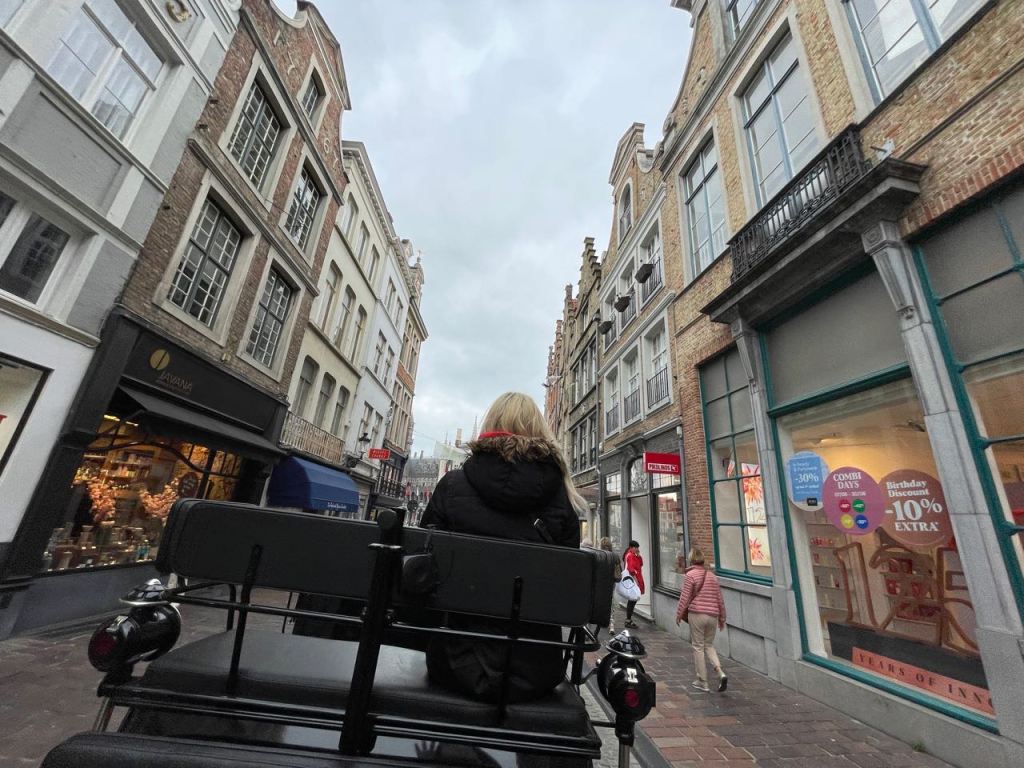
We finished off the ride with a nice tour of the town. It was not only romantic, but also helped us make sure that we’d seen all there was to see… although it’s not a very big town so it wasn’t a very long ride. But now that Colin was out of our hair (well, Carolyn’s anyway, but maybe my beard hair?), we were free to explore without any more interruptions. I mean, he’s a nice guy and all, but just a little clingy.

Swans live up to 20 years in the wild, and mate for life. Here’s some other swan trivia for you: the term “swan song” came to be because swans supposedly sing the most beautifully before they die. The term originated in ancient Greek culture, with the first written reference in 458 BC. That’s a couple thousand years of swan song hits!

Way down upon the Swanee River, far, far away.
That’s where my heart is yearning ever, home where the old folks stay
!

If you were to base your understanding of Belgian cuisine solely by using Bruges as your guide, you might come away with the idea that the three main Belgian food groups are waffles, chocolate, and beer (in fact, Belgium used to serve light beer to kids in grade school).

I’d never really given a lot of consideration to the thought that Belgian waffles were any more of a thing than, say, French toast or English muffins. But it appears the Belgians either take their Belgian waffles very seriously or simply got tired of answering tourists’ questions about where they could score some Belgian waffles. Also, it seemed as if every other store was a chocolate shop. We also saw plenty of macarons, which make for pretty pictures.

Here’s some true chocolate trivia for you: Belgium produces more than 220,000 tons of chocolate per year, and Belgium’s Zaventem airport has the highest number of chocolate sales in the world.

As you can see, Bruges is charming beyond words, it really is the quintessential medieval tourist town. In fact, Bruges became one of the world’s first tourist destinations back in the second half of the 19th century, so this town is old hat at putting out the tourist shingle.

In Dutch, the name is spelled Brugg, and is pronounced Brooj. The name probably derives from the Old Dutch for ‘bridge’: brugga. Why it was turned into “Bruges” in English is beyond me, other than maybe someone was confused about the two g’s and called it, you know, “Bru with the g’s,” and so eventually just became Bruges. But it’s still pronounced Brooj.

Bruges is one of the best-preserved medieval towns in Europe. While it was occupied by the Germans during the war, no significant damage was done either time it changed hands, even to the waffles.

A fitting picture for all the people who skimmed over all my words while only thinking, “Blah blah blah.” Yeah, well they named a hotel just for you buddy!

Third Time’s the French Charm!

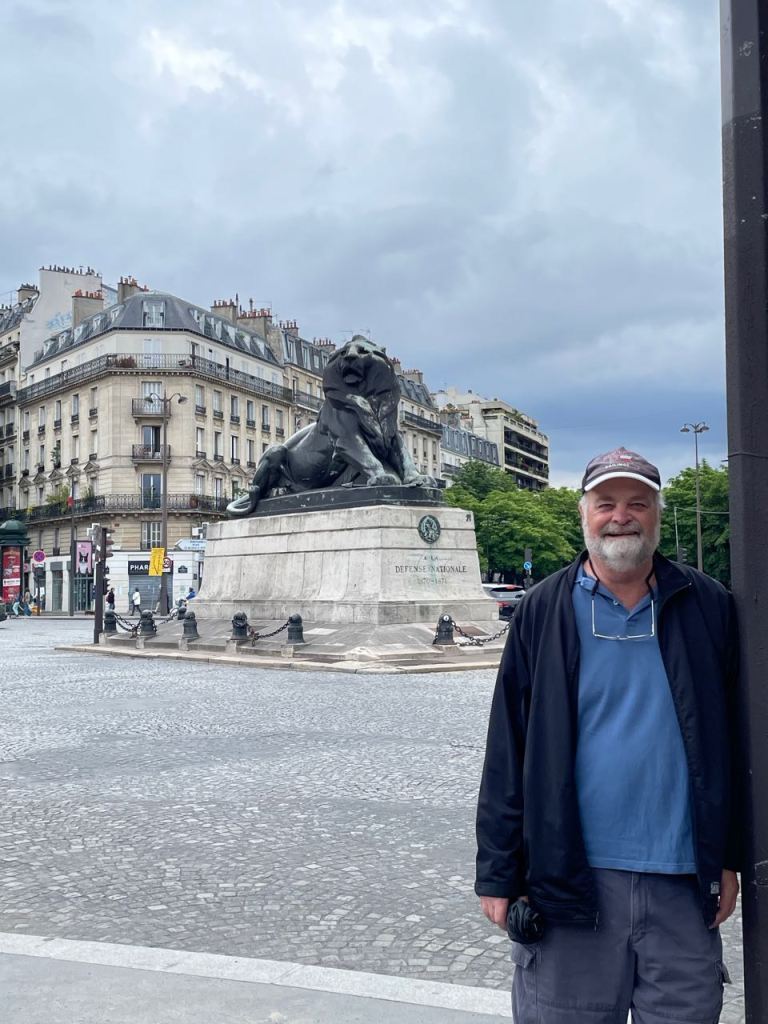
For some reason it took three visits, but after our third visit to Paris I came away realizing that you know what? The French are actually a very nice and friendly people!

I have no idea if my belief that they were rude, snooty, and snobbish was instilled by the ever-competitive Brits or the Americana belief system whereby everyone who’s not American must have something wrong with them, but for pretty much all my life I have felt some degree of disdain over the haughtiness of the French. Indeed, if you were to go back into this blog, I’m sure I poked fun at that more than once.

We’d definitely rather deal with pickpockets than mass shooters.

But after some very enjoyable restaurant meals with animated and friendly servers, as well as interacting with helpful guides at the Louvre and elsewhere, engaging in friendly banter when buying anything, or saying, “Bonjour” to strangers as we passed by and actually getting the same in response, it dawned on me that we’d been giving the French, and especially Parisians, the short shrift all this time. Obviously, in any big city there are going to be people in a hurry, or who are abrupt, or who want to pickpocket you, but overall this visit completely changed my outlook on the French. I’m sure they can all rest comfortably now.

The funny thing about Paris for us is that only the very first visit was planned. We went there again a few years ago when our flight from Crete to Athens was delayed, so we ended up booking a flight to Paris because the next flight to Lisbon was god-awful expensive for some reason, and decided to stay there most of another week (one of the benefits of being retired!). This time, we only went because my son and his family were coming to visit so we thought we’d show them one of the world’s most beautiful cities, but alas, major surgery scuttled those plans and they couldn’t make it this time. But we had non-cancellable tickets we didn’t want to let go to waste, so here we go again!

Obviously, once in Paris, the first thing you enjoy seeing is the Eiffel Tower, even if you’ve already seen it multiple times. As we drove in from the airport, I couldn’t help but wonder why it looked so skinny as compared to my memory of it. It really flummoxed me until Carolyn gently pointed out that what I was gawking at wasn’t the Eiffel Tower. “Oh, of course I knew that!” I said haughtily while quickly pocketing my iPhone.

One thing we did experience in Paris this trip was a lot of crazy traffic. Traffic jams were everywhere. We saw more car accidents in five days in Paris than we have the previous five years in Portugal. And we thought the Portuguese were crazy drivers! I have no idea if what we experienced was the norm or if everyone in Paris was upset that there was an American couple using their roads, but I was just glad that we didn’t have our own accident, especially since many car rental companies in Europe pull out a magnifying glass and try to charge you for even the smallest scratch when you return the car. We used Sixt this time, but never again. I think it may be their business model to rent cars with the tiniest of dings on them and then charge the customers 300 euros for a ten cent repair that isn’t even needed especially because no one would have noticed it in the first place. But now, with the power of the BaldSasquatch blog, we’ll bring them to their knees! Take that you Sixt bastards!

During our first foray into Paris we turned a corner and unexpectedly directly up ahead was that iconic structure. Despite the fact that we’ve seen it now a number of times, it still looks impressive. There’s little doubt you’re in Paris when you see the Eiffel Tower! Unless you’re in Las Vegas.

In the wild, cranes flock together for safety.

The architecture throughout Paris is so striking and beautiful. This visit reminded us that the center of Paris, with its gorgeous buildings, the Louvre, the Eiffel Tower, the gardens, the museums, the River Seine, and so much more, makes it one of the most beguiling cities in the world. Even UNESCO is headquartered in Paris. I’m surprised they have the time to investigate any heritage sites outside of the city!

Everywhere you look, there are flowers, expansive gardens, magnificent old buildings, old farts posing, and even Doors of the Day.

As if that weren’t enough, they even have one of the world’s longest urban motorway tunnels. Once you’re in, you’re committed to a 10.1 km (6.3 mi) journey underground, claustrophobia or no. The ceiling is low because it’s only for cars… and truckers who have been pining away for a convertible.

I suppose this is appropriate time for a segue to show pictures of the Catacombs, because, you know, it’s underground, potential death lurks around every corner, and no one’s driving an AMC Pacer.

First, they make you walk down 3 or 4 or 50 flights of stairs (we lost count when thinking about walking back up) and then about a hundred miles (lots of kms in old people parlance) through this tunnel.

Once you survive that, you come face-to-face, er, skull-to-skull, with thousands of remnants of people who used to breathe, fight, make love, kick their dog… but never drove an AMC Pacer. And yet died anyway.

It’s estimated that there are over 200 miles of tunnels underneath Paris. The Catacombs were originally created due to overcrowding in the cemeteries. By the 18th century, they had grown so overcrowded those who lived close to them complained of strong odors and even started to get sick themselves. Kind of like living next to Steve Jobs in his fruitarian heyday.

This is called The Barrel. I always wanted to be a bone artist. I wonder if the Portuguese would mind if I dug up a few graves?

I swear I didn’t notice anything amiss until after we got home and I saw it on my laptop and photoshopped it.

My final analysis is that if you are really itching to see human bones, the Catacombs will do the trick, although the Chapel of Bones in in Evora, Portugal will scratch the same itch for a lot less money and a lot less walking underground. Since we are veterans of the Chapel of the Bones, it didn’t do as much for us as it might have. But who knows, we might feel different to-marrow.

We’ll finish off this chapter with something much more pleasant, and one of the things that no one can argue with: French food. We ate too many pastries, but you know, when in Rome, er- Paris…